EU law on due diligence: industrial workers won't accept failure
Three years of intense debates and political compromises have passed since the European Parliament kicked off the process for drafting the first-ever transnational law on due diligence, which would turn the respect of environmental standards, human, workers and trade unions’ rights mandatory all along global supply chains. From industrial workers in the Global South to broad coalitions of businesses and NGOs in Europe, millions of people have raised their voices to say “enough”. Enough to decades of soft law regulation through codes of conduct, charters, or “comply or explain” mechanisms, which have failed to anchor socially responsible management in companies’ DNA.
These millions of voices felt heard when all three EU institutions reached a political comprise in the early morning of December 14, 2023 for an EU law which was said to see the light of day after just a few formalities, including last formal votes at the EU Parliament and Council. IndustriAll Europe and IndustriALL Global Union welcomed the news and reiterated their commitment to implement mandatory due diligence in companies through social dialogue and full trade union involvement.
Yesterday’s news of several Member States flipping positions at the Council’s vote to eventually block the formal adoption of the EU Due Diligence law thus came as a shock. With EU elections looming, there are only two weeks left for EU political leaders from Germany, Italy, France, Sweden, Finland and other doubting Member States to resume talks and agree to stick to their promises.
Atle Høie, general secretary of IndustriALL Global Union, said:
"Seldom has a European Directive had the potential to change the world of trade to such a degree. IndustriALL Global Union truly regrets the EU inability to stand by its long overdue compromise. We ask the institutions to work hard to get the HRDD Directive back on track, so that finally we can have a serious attempt to overcome the haphazard way business deals with fundamental trade union rights."
Judith Kirton-Darling, general secretary of industriAll Europe, said:
“The time when companies could make profit out of the exploitation of the environment and on the back of their own and/or their suppliers’ workers’ fundamental rights around the world must end!
“IndustriAll Europe has always been a strong advocate for a Social European Union which delivers quality jobs and social progress through a democratic, transparent and inclusive decision-making process. We will not accept that EU political agreements could be so easily jeopardised by counter-bargaining and opportunist games happening behind closed doors. “We urge EU political leaders to stick to their own agreement and adopt the Due Diligence Directive NOW!”
Nigerian unions protest increasing cost of living
The demands include unions’ call to reverse the current anti-people and neo-liberal economic policies. Workers demand urgent measures to address food insecurity, to stop the free fall of the local currency, the naira, reconsideration of the removal of the petrol subsidy and implementation of the wage award of 35000 naira (US$22) which has depreciated in value by more than 50 per cent since the signing of the memorandum of understanding with the government in October last year. Unions are also demanding the payment of arrears, living wages, social protection for all working people, job security, and an end to insecurity in the country.
The protests were called by the Nigeria Labour Congress (NLC) and supported by IndustriALL Nigerian affiliates who joined the industrial action.
Joe Ajaero, president of the NLC and general secretary of IndustriALL affiliate, the National Union of Electricity Employees (NUEE), said:
“We are saying let there be food available to the people, let the people live in safety, let the people live a life of dignity devoid of suffocating International Monetary Fund/World Bank policies.”
In Kaduna State, North West Nigeria, John Adaji, the co-chair of IndustriALL Sub-Saharan Africa region and president of IndustriALL affiliate, National Union of Textile, Garment and Tailoring Workers, led the protests with the state NLC chairperson, Ayuba Suleiman.
John Adaji, said:
“We want a conscious effort by the Federal Government of Nigeria to revive the labour-intensive textile industry and enforce the government’s Executive Order 003 on patronage of locally produced goods and services. This is one of the sure ways to save the naira and protect existing jobs in the textile and garment sector.”
Paule France Ndessomin, IndustriALL Sub-Saharan Africa regional secretary, said:
“We will continue to reiterate and support Nigerian workers’ demands because they must be paid living wages to enable them to support their families. Social protection is also important to cushion workers against poverty wages especially precarious and informal workers who are the most vulnerable,”
IndustriALL affiliates in Nigeria organize workers in the automotive, energy, chemical, oil and gas, textile and garment, and other sectors. The affiliates are Automobile, Boatyards, Transport, Equipment and Allied Senior Staff Association, Chemical and Non-Metallic Products Senior Staff Association, National Union of Chemical, Footwear, Rubber, Leather, and Non Metallic Products Employees, National Union of Electricity Employees, National Union of Petroleum and Natural Gas Workers, National Union of Textile, Garment, and Tailoring Workers, Petroleum and Natural Gas Senior Staff Association, and the Steel and Engineering Workers of Nigeria.
Revised minimum wage in Bangladesh is not enough
The current minimum wage of textile workers is BDT5,710 (US$51), last fixed in 2018. Following the revision of minimum wage RMG workers last year, workers in textile mills also raised their voices for a wage increment. The cost of living in Bangladesh saw an unprecedented rise last year and in the absence of a wage hike in over five years, textile workers and their families had a difficult time meeting their daily needs.
Unfortunately the workers’ demand to secure a living wage and to be aligned with RMG workers, remained unmet. The proposed new wage for the lowest grade worker, that is helper, in textile sector is BDT10,000 (US$90) which includes allowances for housing, medical, food as well as travel. The wage hike is too little when viewed in the context of the inflation rate in the country. The annual inflation rate rose to 9.86 per cent in January 2024 from 9.41 per cent in December 2023. Prices have risen for clothing, housing, transportation as well as healthcare.
Kutubuddin Ahmed, IndustriALL Bangladesh Council’s general secretary and president of the Bangladesh Garments, Textile & Leather Workers' Federation, says:
“The situation of textile workers in Bangladesh is pitiable. We strongly denounce the proposed wage hike as it is not sufficient to meet the daily needs of workers and their families. It’s terrible that the wage board has overlooked workers’ demand of living wages, both in RMG as well as textile sector.”
The committee set up by the labour ministry to fix the wage for the textile sector did not have proper representation. The sectoral representatives from employers’ side and workers’ side were from only one factory. The workers’ representative in the committee was from the national centre affiliated to the ruling party, and no broad-based consultation was held.
Atle Høie, IndustriALL general secretary, says:
“Bangladesh’s wage board needs to take into consideration the rising cost of living while fixing minimum wage. It’s unjust that workers are forced to work for poverty wages. IndustriALL calls on the government of Bangladesh to engage with our affiliates and other trade unions, and seriously consider their demands.”
Photo credit: Crozet M. / ILO
The Hong Kong Convention is ratified – what next?
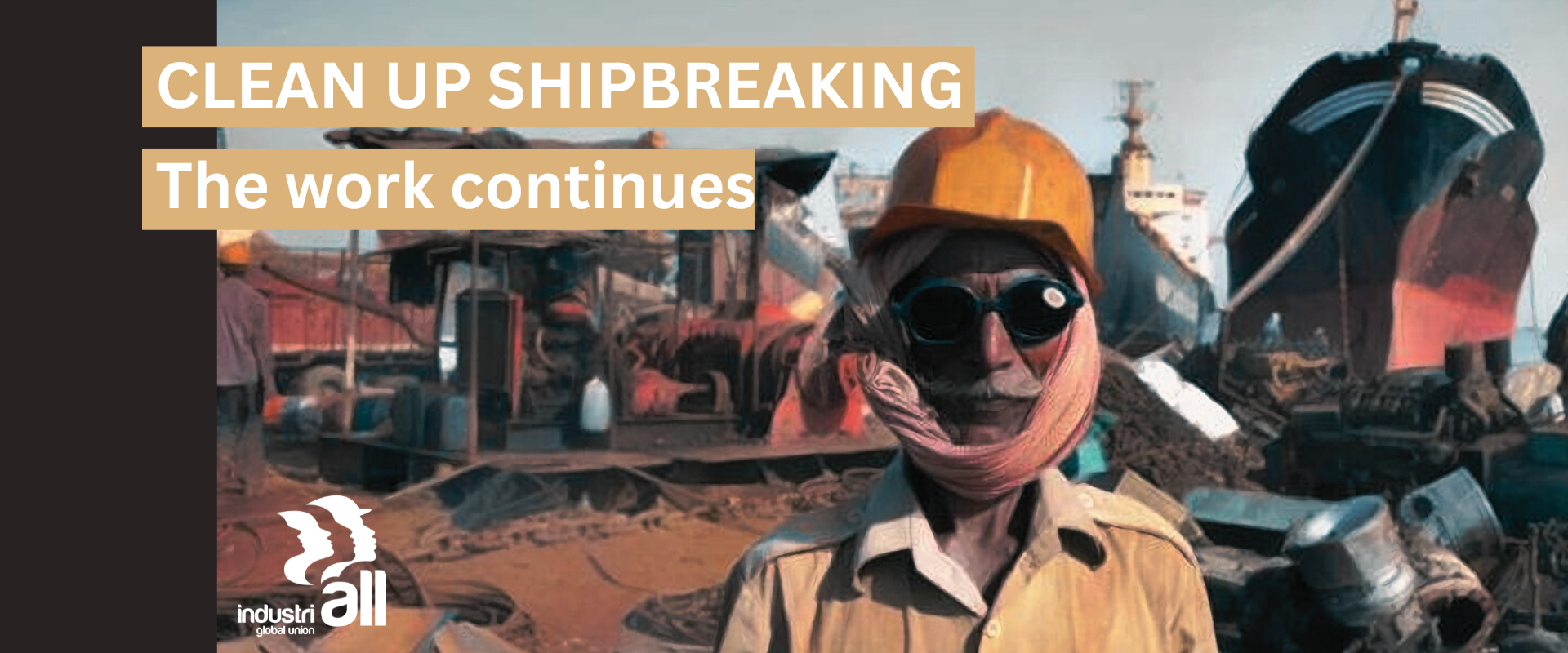
Shipbreaking has been called the most dangerous job in the world, and IndustriALL has campaigned for a long time for the ratification of the Hong Kong Convention (HKC) as the most practical first step to clean up the industry. Supported by affiliates, together we maintained pressure on governments, ship owners, financiers, and other industry stakeholders to promote the Convention.
Due to the terrible death rate in shipbreaking yards, the primary focus has been on improving worker safety – both from accidents and industrial disease – and subsequently on precarious work, low wages and poor working and living conditions. While the Convention doesn’t guarantee a transformed industry, we believe that we can use its ratification as a starting point to improve these aspects.
2023 was a year of excellent news in the world of shipbreaking. When Bangladesh and Liberia ratified the Convention last summer, it meant that all the conditions for entry into force were met. Potential loopholes were closed with Pakistan and Marshall Islands also ratifying, which means that all the major shipbreaking and flag states have now ratified the Convention. There is a large consensus across the industry about the need to clean up shipbreaking, and to create a level playing field.
Alang Ship yard India
How will the HKC improve conditions for workers if the guidelines are implemented correctly?
Yards owners will have to record and make available details of all workers, including contractors.
For a shipyard to receive authorization to break ships, it will need to present a compliant Ship Recycling Facility Plan to the competent authorities – the relevant government department. This should include a record of all workers employed at the yard, including contractors, as well as a health and safety training programme. No worker will be allowed to work on the yard without completing the training.
This is an important change in an industry that relies on casual labour. Yard owners have typically relied on a pool of unregistered migrant workers. A major issue has been workers getting ill after working in the shipyards, returning to their home villages and not receiving treatment or compensation. This change also makes union organizing easier. When trying to organize shipbreaking workers, employers fire union members. Because the workers are casual labourers, it is difficult to prove their status as employees to prove union busting. This will become more difficult because of the registration requirement. The need to provide training should also lead to a shift towards more investment in a better skilled workplace.
All personnel must have the appropriate level of safety training
The health and safety training must specifically address the materials involved in shipbreaking, and include instructions and plans for dealing with hazards such as asbestos, polychlorinated biphenyls (PCBs), ozone-depleting substances (ODSs), anti-fouling compounds and systems, cadmium, hexavalent chromium, lead, mercury, polybrominated biphenyls (PBBs), polybrominated diphenyl ethers (PBDEs), polychlorinated naphthalenes (PCNs), radioactive substances and certain short-chain chlorinated paraffins. Since these are the hazards that are responsible for the occupational illnesses suffered by workers, this will make a substantial difference.
The training programme must also cover provision of PPE and training on its use, fire safety, emergency response and evacuation, safety and health training, environmental awareness and first aid.
Employers must show management and accountability structures and maintain records.
This includes having a dedicated safety officer responsible for hazards assessment, prevention strategies, safe for entry criteria and safe for hot work procedures.
The yard owner must also provide:
Health and sanitation, such as washing and toilet facilities, provision of clean water, eating and recreation areas, changing and laundry facilities to stop workers taking toxic waste home.
Medical monitoring for occupational illness.
An emergency response plan.
A hazards list and treatment procedures.
The entry into force of the HKC depends on domestic legislation for implementation. This means that the ship recycling countries need to develop national laws that cover ship recycling, waste management and so on. The International Maritime Organization is currently working with the government of Bangladesh to develop appropriate laws and enforcement mechanisms through a project called SENSREC, while India has completed the process and similar work is planned in Pakistan.
Alang Shipyard, India
Towards Just Transition
The ratification of the HKC is a minimum and important first step to improve worker safety. It will be important to evaluate how effective it is in practice, and whether elements of it need to be improved, particularly to match the Basel Convention on the treatment of hazardous materials. However, to address the gaps and risks, we need to go further, and work for a Just Transition in the South Asian shipbreaking industry.
This would involve recognizing unions, and creating tripartite social dialogue – between unions, employers and government – to negotiate the implementation of the HKC and the transformation of the industry. Cooperation between the relevant government agencies, ship recyclers, and the unions representing workers on the ground would focus on joint health and safety committees, providing education and training, ensuring access to social security, monitoring and inspection of yards and ensuring that workers’ rights are respected. Workers and their unions need to be recognized as full partners in the industry.
There are many opportunities to transform a dirty and dangerous industry into one that provides a net benefit to the world by safely recycling ships and providing a reliable supply of green steel.
This may involve transforming the local steel industry so that steel is recycled using electric arc furnaces instead of downcycled in rerolling mills, and developing the recycling industry. Other stakeholders in the industry – particularly ship owning and flag states, shipowners, financiers and cash buyers – should be brought into the discussion to provide the financial, technical and political support.
However, none of this potential can be reached without a Just Transition, and the active participation of the workers and communities affected
The Ship Recycling Facility Plan requires a comprehensive health and safety training programme for all workers, and the creation of a safety officer and medical monitoring. However, years of bitter experience in other sectors has taught unions that a safety programme controlled by the employer, however well intentioned, is not enough. Shipyards are subject to commercial pressures, which means there is a conflict of interest in leaving employers in charge. A joint health and safety committee is the best solution.
The questions to ask are:
Who is making decisions on safety?
Who is trusted on safety?
Who has power?
Workers may be confronted with conflicting instructions: safety procedures from the safety officer, and orders to get a job done quickly by a foreman. This creates confusion and can lead to accidents. Workers are also much more likely to trust and follow safety instructions that come from a union rep rather than an employer.
There are three fundamental safety rights that must be guaranteed in the workplace:
The right to know about health and safety matters.
The right to participate in decisions that affect health and safety.
The right to refuse unsafe work, which is enshrined in ILO Convention 155.
The inadequacy of law
There is a risk that India, Pakistan and Bangladesh will fail to fully enforce the new laws covering ship recycling. There are reasons for concern in this area:
There are ten fundamental ILO Conventions that cover the world of work. Three are particularly important to shipbreaking.
C87 – Freedom of Association and Protection of the Right to Organise Convention
C98 – Right to Organise and Collective Bargaining Convention
C155 – Occupational Safety and Health Convention
India has ratified none of these three Conventions. Pakistan and Bangladesh have ratified C87 and C98, but not C155. However, even when these countries have ratified Conventions and transposed them into domestic labour law, they have often failed to uphold them, either through a lack of enforcement capacity, or a lack of willingness to challenge powerful employers.
The ILO has a process during the International Labour Conference that considers cases of failing to uphold Conventions, called the Committee on the Application of Standards (CAS). IndustriALL, UNI and the ITUC brought a case to CAS against Bangladesh in 2017 for violations of freedom of association, including arbitrary arrest and detention of trade union leaders and activists, death threats and physical abuse while in detention, false criminal charges, surveillance, intimidation and interference in union activities, as well as mass dismissals of workers by garment factories following a peaceful protest.
While the case focused on the garment industry, it gives a worrying insight into the Bangladeshi’s government’s attitude to unions. In addition, in 2019, several workers’ organizations made a complaint under Article 26 for failure to observe Conventions 81, 87 and 98.
As a result of this complaint,, in July 2021 the ILO published a Road Map of actions, laying out in detail the steps the government needs to take to improve the situation. Three of the steps which will be particularly important to shipbreaking workers are:
Simplification of trade union registration. In the past, registering a trade union in Bangladesh has been very complicated, and shipbreaking workers have been unable to register sector-wide unions, and have had to create numerous yard-based unions instead.
Improving labour inspection and enforcement. Currently, if an employer breaks the law, there is very little opportunity for a worker to get remedy,
Addressing anti-union discrimination and violence against workers. This will be done by providing training to employers, police and security guards.
Pakistan is another country where there are concerns about enforcement, due to the federal nature of the state, where decisions are devolved to provinces, and a weak labour inspectorate. After two workers were killed in the Gadani shipyards in January 2024, our affiliate the NTUF alleged that yard owners, government and police had colluded to cover up the incident.
The problem of asbestos
The HKC requires a proper disposal plan for asbestos, and some shipyards have started to build high quality facilities for processing this dangerous material. However, India, Bangladesh and Pakistan have not banned asbestos, and have helped block the inclusion of chrysotile asbestos in a list of banned substances in the Rotterdam Convention. Asbestos still has commercial value in these countries, where it is used in building materials.
Mechanisation and job losses
A concern for workers is that, as yards upgrade to meet HKC requirements, yard owners introduce mechanization and need fewer labourers. Jobs lost in shipbreaking yards could be offset by jobs created elsewhere if business and national governments invest in develop the downstream energy, for instance in plants that create green steel and in recycling centres.
Downstream workers
Another concern is that the HKC doesn’t make any provision for downstream workers, such as those working with scrap steel outside the yard gates, or the women processing ship waste.
Bangladesh’s government must sincerely implement ILO Roadmap
The Roadmap is a time-bound action plan drafted by the GoB addressing the outstanding issues mentioned in the Article 26 complaint. The complaint was filed by several workers’ organizations to the ILO in 2019 on the non-observance of Conventions 81, 87 and 98 by the GoB. The Roadmap prioritises four areas for intervention: (i) labour law reforms, (ii) trade union registration, (iii) labour inspection and enforcement, (iv) addressing acts of anti-union discrimination/unfair labour practices and violence against workers.
In the latest GoB report, dated 16 February 2024, concrete details regarding actions taken by government to guarantee workers' rights and workplace safety in the country are starkly missing. According to news reports, Bangladesh’s President has withheld assent to the amended labour law bill as it raised the fine for workers to BDT20,000 (US$180), but the penalty for employers which is BDT5,000 (US$45) remained unchanged in the context of strike or lockout. This provision results in blatant discrimination against workers and trade unions.
In the tripartite consultation process to amend labour laws and rules, including those applicable in Export Processing Zones, IndustriALL’s affiliates were neither consulted nor were their suggestions considered. The consultation process without IndustriALL’s affiliates’ involvement is a farce given that they represent more than 80 per cent of unionized workforce in the Ready Made Garment industry which contributes about 86 per cent to the country’s export earnings.
Last year 27 proposed unions, supported by IndustriALL’s affiliates, filed for union registration but only eight were approved and 19 rejected. The reason cited by the Department of Labour was that there is less than 20 per cent of the workforce mentioned as the proposed membership, but that is incorrect.
The GoB report mentions that 81,210 inspections were carried out from July 2021 to December 2023. This indicates that about 90 inspections daily. This is an inflated figure especially considering the number of labour inspectors available, which is 450 according to the GoB report, and the type of work that needs to be done before and after an inspection.
IndustriALL’s affiliates indicate that there is a huge backlog of cases in labour courts, and there isn’t an adequate number of staff to deal with such volume of cases. They also inform that recently the courts have started demanding the national identity card and passport size photos for submission of a court case which workers find extremely difficult to comply with every time.
The use of violence by security forces and Industrial Police to crush minimum wage protests, late last year, show that the government of Bangladesh has not delivered on the fourth priority area of the Roadmap. At least two workers were killed while many others were injured in the brutal suppression of the protests by the police force. The GoB report does not mention any of this and instead mentions that sensitisation seminars were conducted for Industrial Police.
IndustriALL assistant general secretary, Kemal Özkan, says:
“IndustriALL calls on the Government of Bangladesh to engage in good faith discussions with IndustriALL’s affiliates and other trade unions, and implement the Roadmap in a serious manner.”
Photo: ILO Flickr
Beyond the sparkle: advancing workers' rights in the diamond sector
The diamond industry value chain includes mining, rough trading, cutting, polishing, manufacturing, jewelry setting and retailing.
The 20 participants, from the Global Diamond Network came from diamond mining countries such as Botswana, Lesotho, Namibia, South Africa, and Zimbabwe. The other participants came from Belgium, home to Antwerp, a historic hub for diamond traders, cutters, and polishers.
Reports from the mining countries on violations of workers’ rights and decent work deficits which included precarious working conditions of low wages, absence of job security, long working hours, gender discrimination, violations of maternity protection, and union busting and bashing. The meeting heard that diamond mining companies also failed to provide adequate personal protective equipment and did not comply with health and safety standards.
Participants committed build union capacity in collective bargaining through focused training and learning initiatives aimed at improving negotiation skills in mining, polishing, and cutting. They argued that this will strengthen and promote knowledge transfer through exchanges and solidarity activities among the unions. Furthermore, the meeting underscored the importance of gender equity in the diamond industry, advocating for better representation of women.
The network encouraged unions to join the Initiative for Responsible Mining Assurance (IRMA) and to use the IRMA Standard for Responsible Mining as it is comprehensive and makes mining companies accountable through audits and assessments. Additionally, the meeting discussed cooperation with non-governmental organizations on human rights due diligence. However, the network urged unions to remain focused on making the diamond industry comply with national and international labour standards.
Emphasizing the developmental potential of diamond mining in the Global South, the network highlighted the need for mining companies to engage in responsible mining practices and ethical sourcing to contribute to job creation, economic growth, and sustainable development.
Through the network, Belgian union ACV-CSC Transcom and IndustriALL supported the building of the Independent Democratic Union of Lesotho’s office at Kao Village to facilitate better access to recruit and organize mineworkers.
Yves Toutenel, general secretary responsible ACV-Transcom Diamant and IndustriALL diamond network Co-chair, said:
“As we convene this network meeting, nestled in the heart of Southern Africa, we are not only surrounded by the breathtaking landscapes of this nation but also by the rich heritage and potential of the diamond trade that pulses through its veins.”
“Lesotho holds a special place in the world of diamonds. Its mines have yielded some of the most remarkable gems, captivating hearts and minds across the globe. Yet, beyond the glimmer of these precious stones lies a deeper narrative – one of resilience, community, and shared prosperity.”
Commending the network, Annelies Deman, Federal Secretary of Algemene Centrale ABVV – Centrale Generale FGTB said:
“I met and engaged with comrades who are doing a great job in the diamond industry, shared our challenges, learned from each other, and set up priority action points for the future of the network.”
May Rathakane, IDUL, general secretary said:
“We are grateful for the support and solidarity that we received for our organizing drive to unionize Lesotho’s diamond workers.”
“As trade unions we must not tolerate unfair labour practices in the diamond industry and must use collective bargaining, global framework agreements, and ILO standards as tools to attain decent working conditions,” said Mpho Phakedi, the National Union of Mineworkers, acting general secretary.
Glen Mpufane, IndustriALL director for mining, diamonds, gems, ornaments, and precious stones emphasized:
“It is important for the network to develop strategies that enhance collective bargaining which remains one of the trade union’s most effective tools.”
Solidarity still strong with Ukraine
Participants from the international trade union movement, including Global Union Federations (GUFs), The International trade Union Confederation (ITUC), national trade unions from across sectors, national centres from around the world, and representatives from the International Labour Organization's Bureau for Workers' Activities (ACTRAV) came together to show their solidarity.
The assembly began with a moving video, juxtaposing images of Ukraine before and after the invasion, concluding with a powerful plea:
"We need your support now more than ever."
This was followed by a moment of silence honouring the sacrifices of military personnel, trade union members, and all Ukrainians who have lost their lives, been displaced and who have suffered due to the war.
Participants heard first-hand accounts from miners turned soldiers, energy workers working tirelessly to maintain infrastructure, and public sector employees striving to keep the nation's heart beating amidst turmoil. These stories underscore the diverse impacts of the war, from the front lines to the home front, where every day is a battle for survival and resilience.
The president of the Federation of Trade Unions of Ukraine (FPU) presented an overview of the war's toll: nearly 5 million jobs lost, 26% of Ukraine's territory under occupation, and a significant population decrease from 42 million pre-war to approximately 27 million. The Federation, a major union body in Ukraine, has seen its membership halved and thousands of primary union organizations lost.
The Chairperson of the Confederation of Free Trade Unions of Ukraine (KVPU) and the Independent Trade Union of Miners of Ukraine (NPGU) voiced a strong message of resilience and appreciation for international solidarity, he expressed that:
"Despite facing dire challenges, the support from global trade unions and democratic nations worldwide strengthens Ukraine's defence of democracy at home and abroad."
Luc Triangle ITUC general secretary addressed participants saying:
“We condemn Russia's aggression, its inhumane acts, and the occupation that has devastated lives and infrastructure, forcing those in occupied territories under unjust laws.
Your fight is not just for Ukraine but for democracy, freedom, and the principles of free and democratic trade unions worldwide. We've provided financial support and will continue to rally resources to aid your cause, acknowledging the critical role trade unions play in providing humanitarian aid and advocating for workers' rights.”
The statement released by the FPU and the Confederation of Free Trade Unions of Ukraine (KVPU) on this 2nd anniversary underscores the ongoing crisis and the critical need for continued international support. It highlights the destruction brought by the Russian invasion, the massive economic cost, and the resolute spirit of the Ukrainian people.
As Ukraine continues its fight for freedom, democracy, and sovereignty, the solidarity event was a reminder of the war's far-reaching effects on workers and the importance of global unity in facing such challenges. The call for increased international aid and support resonates more strongly than ever, emphasizing that the struggle is not only Ukraine's but a testament to the resilience of human spirit in the face of aggression.
Kemal Özkan, the Assistant General Secretary of IndustriALL, delivered a poignant address to the participants. He highlighted the courage and resilience of the Ukrainian people, workers, and trade unions in their defence of democracy, human rights, and their nation's sovereignty amidst adversity. Özkan’s message of solidarity was clear:
"You are courageous as you defend your country. You are courageous as you fight for your future. You are courageous as you give a historic lesson to the whole world in showing how to defend democracy and fundamental human and workers’ rights.
Let’s continue to speak up together, let’s continue to stand up together, let’s continue to be united, and let’s continue to fight back together in solidarity for peace, democracy, rights, dignity, and future of all."
Mass demonstration at Liberty Steel calls for urgent support amid crisis
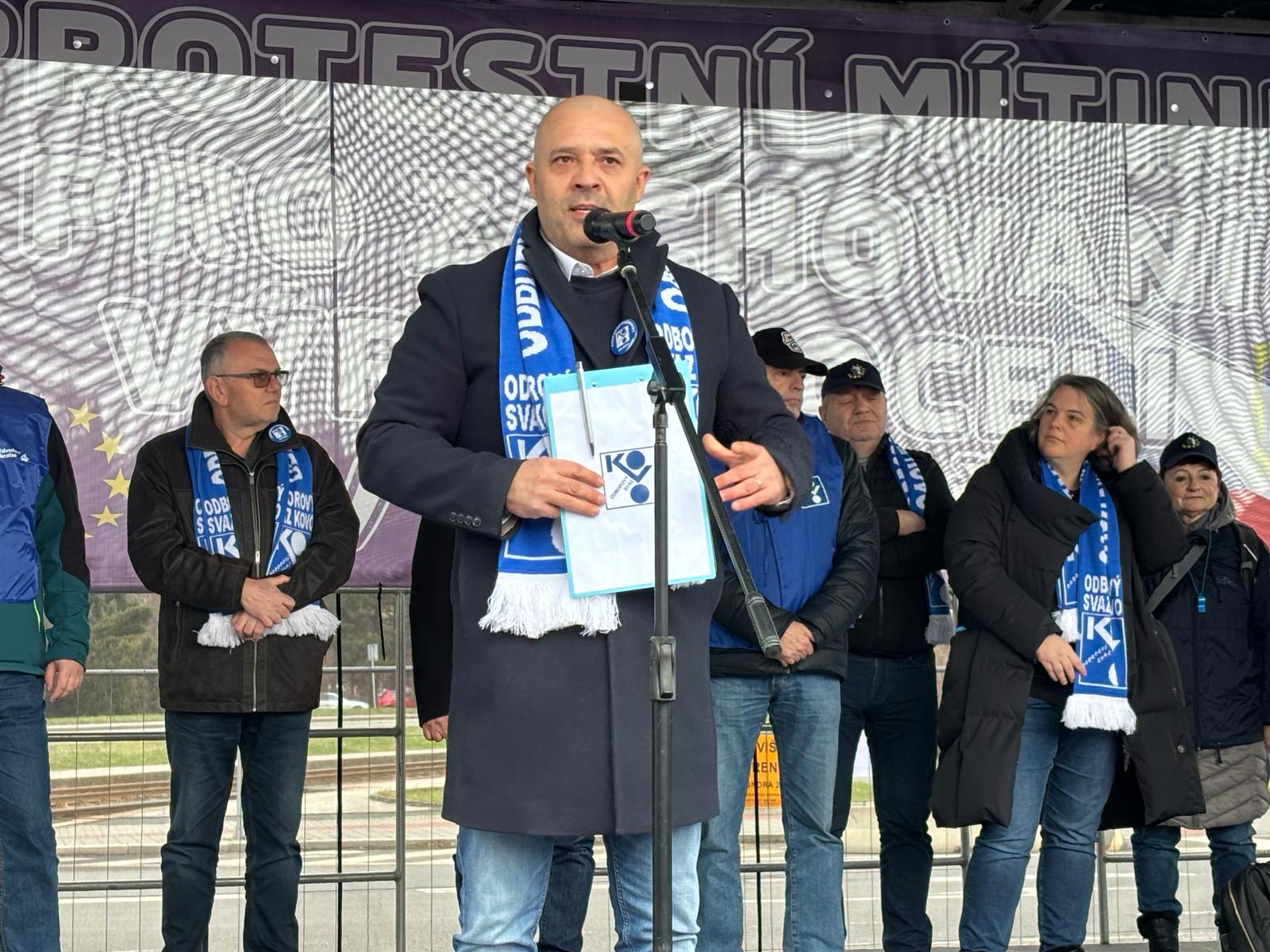
Roman Ďurčo, president of OS KOVO adresses crowd
"It is disgraceful to keep thousands of workers in limbo week after week. This has been going on for too long and we are not seeing any positive developments. We need support in solving this situation. It affects tens of thousands of people and politicians should not be indifferent to such a serious social problem!”
said Roman Ďurčo, president of Czech Metalworkers´ Federation (OS KOVO)
The crisis at Liberty Steel is symptomatic of a larger, continent-wide emergency facing the steel sector. With production halting for weeks and no clear path to resumption, the future of 6,000 workers at the Ostrava plant hangs in the balance. This uncertainty extends to the broader region, threatening 30,000 indirect jobs and the livelihoods of 900 SMEs dependent on Liberty Steel's operations.
The recent insolvency of Tameh, Liberty Steel Ostrava's energy supplier, in December 2023, has exacerbated the situation, leaving 117 subcontractors without essential services like heating or water. The Czech Minister of Industry and Trade has called on Liberty Steel to deliver a viable industrial strategy to secure the plant's long-term growth, a call that remains unmet.
The challenges facing Liberty Steel Ostrava reflect a broader crisis within the European steel industry, marked by high energy costs, plummeting orders, and the idling of several steel plants. This turmoil has led to a sharp decline in European steel production and fears that up to half of the continent's steel capacity may be permanently lost. Contrastingly, the global steel market, particularly in countries like China and India, is expanding, further skewing the balance.
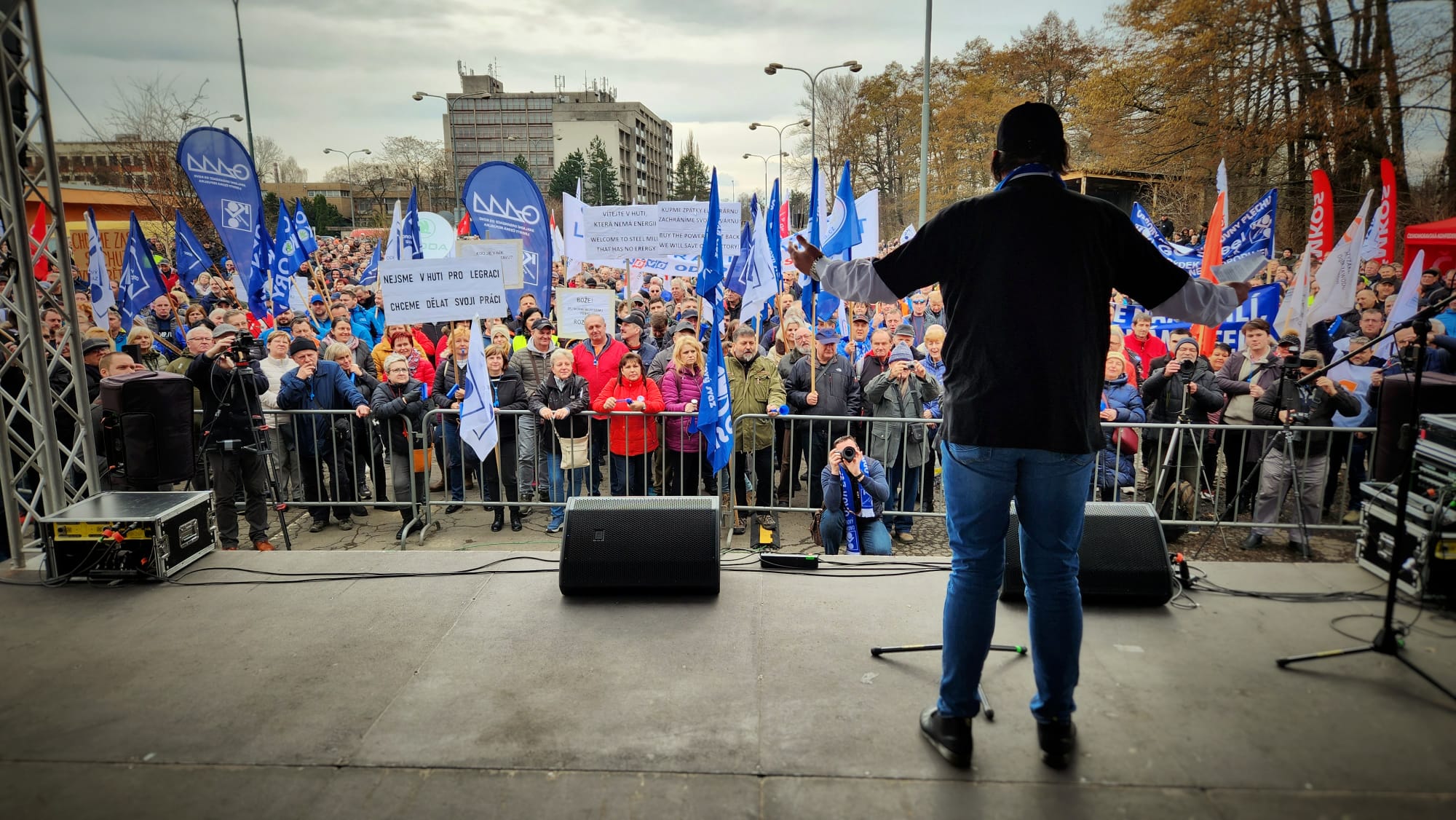
At the heart of the demonstration there were impassioned appeals for change. Judith Kirton-Darling, IndustriAll Europe general secretary, emphasized the strategic importance of the steel industry to Europe and highlighted the urgent need for support at Liberty Steel.
"Workers cannot and should not pay the price for mismanagement, lack of investment and lack of respect. And this in an industry that is strategic for climate action and our security!
"We insist that Europe cannot afford to lose this strategic industry, which is so important for Europe's autonomy in the context of energy transition and geopolitical conflict. The protests in Ostrava are just the beginning and policymakers must listen and act. European steelworkers expect decisive action to support steel in Europe.”
Kemal Özkan, IndustriALL assistant general secretary adresses crowd at rally
Kemal Özkan, IndustriALL assistant general secretary echoed this sentiment, calling for an industry that values its workforce, commits to sustainable practices, and operates transparently.
“To the management of GFG Alliance, we say: the time for change is now. It is time to engage with us in genuine dialogue, to open your doors to constructive solutions, and to recognize the indispensable role of workers in the industry's future.
Our international solidarity is our strength. It is the bond that unites us across borders, languages, and cultures. It is the force that will drive us forward in our fight for a just and equitable world.
Today, as we stand together, let us remember that our cause transcends national boundaries. It is a call to action for trade unionists and workers around the world to unite in solidarity for the rights, dignity, and future of all workers.”
The rally underscored the strength of international solidarity, uniting workers across borders in a common cause for justice, dignity, and a sustainable future.
In solidarity, the participants stood not only for the employees of Liberty Ostrava but for all workers affected by unjust corporate practices, reinforcing the message that together, they are a force for change.
Reviving IndustriALL Cambodia women’s committee
A group of sixteen women union leaders from nine IndustriALL Cambodian affiliates gathered in Phnom Penh to review the current state of women workers' rights in the country.
Despite the women's committee's inactivity during the pandemic, the union didn't stop defending women workers' rights. Many new committees were formed within factory-level unions.
Women leaders have been active in pushing for the adoption of international labour standards, like ILO Convention 183 on Maternity Protection and Convention 190 on Violence and Harassment. They have also been involved in events for March 8, International Women’s’ Day, and the 16 Days of Activism against Gender-Based Violence.
During their meeting, the women’s committee updated their operating guidelines to allow more members to participate in their quarterly meetings. They plan to offer training and leadership development for women unionists and to use social media and video platforms to connect with more women workers.
They look forward to participating in international exchange programs organized by IndustriALL to learn more about Convention 190 and how to combat gender-based violence.
Nim Phalla, chair of the Cambodia Labour Union Federation (CLUF) Women Committee, shared :
“Restructuring the women's committee makes me delighted. Many efforts that directly improve women's benefits have been implemented since 2017. We hope to do so after we have a strong women's committee in Cambodia soon. We need to take action together.”
Ramon Certeza, IndustriALL's regional secretary for Southeast Asia, underscored the critical role of women and young women workers in strengthening their voices within the union and in decision-making processes.