IndustriALL Global Union file OECD complaints against fashion brands over labour rights violations in Myanmar
IndustriALL, together with banned Myanmar unions CTUM and IWFM, have filed complaints against three brands, Next, New Yorker and LPP, at OECD’s National Contact Points in four countries: the UK, Germany, the Netherlands and Poland. The complaints are over the companies’ breach of OECD Guidelines for Multinational Enterprises on Responsible Business Conduct, which call for, among other things, companies to operate ethically and responsibly regarding human and labour rights.
“Brands that stay in Myanmar are benefiting from an environment of fear, forced labour, and exploitation. There are widespread, comprehensive reports on the extensive violations of workers’ rights and there is no freedom of association in the country. Human rights due diligence requires worker involvement and independent verification, which is impossible under the military rule,”
says IndustriALL general secretary Atle Høie.
The textile and garment industry has become an important way for the country’s military rulers to inject foreign money into a collapsing economy. Meanwhile, Myanmar’s military junta has banned unions and arrested union leaders. There is no freedom of association; unions and other workers’ organizations can’t function. There are reports of forced labour, workers’ rights violations, increased precarious work and collapsing wages. A tracker developed by the Business & Human Rights Resource Centre monitors abuse in Myanmar’s garment industry. 556 cases of alleged labour and human rights violations at 266 factories linked to international brands were documented by the end of June this year.
“We have been urging multinational companies to exit from Myanmar as their existence contributes to the severe violations of human rights and labour rights in the country. The brands pretend they comply with the OECD guidelines and human rights due diligence, which is impossible under a military dictatorship. Industrial zones are under martial law and the right to freedom of association is banned. The ILO's Commission of Inquiry investigated and confirmed the severe violations of freedom of association and forced labour in Myanmar, and yet companies continue their business and ignore international guidelines and ILO conventions,”
says IWFM president Khaing Zar Aung.
IndustriALL is campaigning for brands to safely disinvest from the country. In 2022, discussions between IndustriALL and several garment brands operating in Myanmar concluded with a Framework Principles of a Brand’s Responsible Business Disengagement from Myanmar, outlining a responsible exit from the country. Primark, New Look, Inditex, H&M, Lidl and Fast Retailing have followed this agreement.
“There is significant evidence of systemic violations of workers’ rights and brands that remain in Myanmar cannot claim ignorance of the abuses. The largest global brands have already left the country – brands that stay prioritize profits over human and workers’ rights. We are considering filing further complaints regarding other brands that remain,”
says Atle Høie.
IndustriALL women tackle AI bias and GBVH
With AI’s growing influence, the Women’s Committee emphasized the need for a gender-transformative approach to its integration in the workplace. Muriel Garnier from French Equality Lab highlighted AI's gender biases and the risks of reproducing stereotypes within algorithm-driven systems. Garnier shared that
“88 per cent of AI developers are men, and when algorithms are designed by men, they often perpetuate stereotypes and gender bias.”
She stressed the importance of addressing the lack of female representation in tech, with only 15 per cent of women in France working in digital tech sectors.
Olle Brynja, from Unionen (Sweden) echoed these concerns, noting the potential for AI to either reinforce or dismantle workplace discrimination.
“If AI decisions are based on prejudiced data, the technology risks reinforcing discrimination rather than breaking it,”
Brynja stated.
Both Garnier and Brynja emphasised the importance of accountability, calling for stricter evaluations and audits of AI systems to ensure they do not perpetuate inequality. This approach aligns with IndustriALL’s commitment to developing an AI policy that champions gender equity as a foundational principle in its design and deployment.
Jane Pillinger spoke on IndustriALL’s toolkit to prevent GBVH, particularly within the battery supply chain. Pillinger introduced Convention 190 as a transformative framework for integrating GBVH prevention into human rights due diligence, an essential step in promoting safe and equitable workplaces.
“Gender-based violence and harassment aren’t just workplace issues; they are human rights abuses that must be addressed across global supply chains,”
Pillinger stated.
She outlined a six-step process to help companies adopt responsible business practices, from defining policies to mitigating and tracking outcomes. This structured approach empowers trade unions to hold companies accountable, ensuring that GBVH prevention is embedded in every layer of the supply chain.
Pillinger also emphasized the role of trade unions in advocating for and negotiating gender-responsive risk assessments, suggesting that “trade unions can help identify risks and provide evidence where companies fall short in their duty to protect workers.”
This gave fruit for thought when it comes to IndustriALL’s continued campaigns against GBVH, misogyny, and sexism, which will include awareness initiatives like the upcoming 16 Days of Activism and the #NoExcuse campaign.
The second day highlighted new IndustriALL’s mentorship initiative, supported by LO Norway,aimed at empowering 27 young women in Tanzania, Malawi and Ghana in Sub-Saharan Africa and in Peru and Colombia in Latin America. The project’s progress was highlighted with testimonials from mentees and mentors from both regions, showcasing the program's transformative impact on women’s leadership development.
Mildred Addo, a mentee from PUWU in Ghana, shared how mentorship has boosted her confidence
“Mentorship has empowered young women like me to step into leadership, giving us the confidence to influence both nationally and internationally. Six months ago, I wouldn’t have dared,”
she said.
Her experience highlights the mentorship program's potential to create a cycle of growth, where mentees gain skills that they can later pass on to others.
Joyce Maku Appiah, from the same union who mentors young leaders, shared the importance of mentorship in building independence and self-confidence.
“Mentorship isn’t just about guiding; it’s about pushing young leaders to stand on their own, to be innovative, and to lead confidently,”
she said.
Co-chairs Hashmeya Muhsen Alsaadawe and Ilvana Smajlović emphasised the need for collective action to drive change. The committee reviewed IndustriALL’s ongoing campaigns against GBVH and sexism, including updates on the UGTT Garment Women Center and KTCU’s IMAGINE education programme in Korea to engage men in gender equity initiatives.
Discussions also looked ahead to the IndustriALL Congress, with a focus on mainstreaming gender in the Statutes and Action Plans. This session explored proposed amendments to incorporate a stronger gender perspective. Finally, the committee laid out priorities for 2025, including efforts to mainstream gender in occupational health and safety (OSH) and to ensure equitable wage negotiations.
“we are committed to building workplaces that are truly equitable and inclusive,”
said Christina Olivier, IndustriALL assistant general secreatry.
“From establishing AI policies that actively prevent bias to embedding human rights due diligence in addressing gender-based violence, our discussions have laid out a powerful roadmap for real progress on gender equity. The inspiring mentorship program is proof of how we can lift up young women, equipping them to lead and drive change. By uniting policy advocacy, mentorship, and robust due diligence, we’re paving the way for a future where women can thrive across all sectors.”
Trade unions call for public investment and fiscal policies to support steel sector recovery
The situation facing steel and industrial workers is the consequence of decades of poorly designed national policies that have supported excess capacity in the steel industry and promoted export-led competition at the expense of domestic demand, workers’ wages, and working conditions. Trade unions call for an end to these harmful practices and for the creation of quality industrial jobs that provide fair wages, decent working conditions, and job security for all workers.
While global steel demand has plummeted, global excess capacity has hit new record high. Public intervention is needed to kick-start infrastructure projects and safeguard jobs. Austerity measures, under the pretext of fiscal responsibility, will lead to severe cuts in public spending, impacting industrial production and employment. Such measures disproportionately affect the already vulnerable – the workers who manufacture the steel and build and maintain the infrastructure that drives our economies.
Trade unions call for immediate expansionary fiscal policy and urge governments to increase the current low levels of public investment to stimulate the demand for steel. Public investment is vital for key areas like infrastructure development, technological innovation, and R&D in the steel sector. Governments must put in place necessary measures to ensure demand for good quality, green steel made by workers with decent working conditions, including through public procurement systems.
Veronica Nilsson, TUAC general secretary, said:
“We need the OECD to move away from economic reforms that wind down public investment and dismantle labour market institutions. If we want a future for the steel industry, we need to speed up investment in infrastructure, defend quality jobs and strengthen working households’ purchasing power to actually consume the products we manufacture.”
Christina Olivier, IndustriALL Global Union assistant general secretary, added:
“The steelworkers who drive this industry should not be the ones paying the price for austerity measures. We demand policies that promote long-term growth, innovation, and investment in a sustainable future for steel production. Multinational companies must not focus solely on paying dividends to shareholders; they have a responsibility to contribute to the effort. Public support must come with strong social conditions, ensuring that investment in the green transition benefits workers, with good working conditions and wages, not just profits for the few."
Judith Kirton-Darling, general secretary of Industriall Europe, concluded:
“The European steel sector is in crisis with production cuts, mothballing of plants and site closures linked to record low demand and record high imports. European steel workers call for a fair level playing field and the end of a race to the bottom on lowest cost production which only puts workers against each other. We want green steel made by workers with good working conditions both in Europe and beyond, and we call on governments to invest in green steel with strong green and social conditionalities.”
Kazakh unions demand decent wages
Asylbek Nuralin, president of Qazaqmetal, highlighted the union’s ongoing efforts to advocate for a fair wage system, calling for the ratification of ILO Convention131 to establish a minimum wage linked to inflation. He stressed the need for reforms aligning Kazakh wage laws with international standards.
Qazhimprofsoyuz’s president, Kerim Pirimkuly, echoed the concerns, noting that wage improvements are a priority for all Kazakh unions. Participants, including officials from Kazakhstan’s Ministry of Labour, ILO and industry experts, discussed barriers to fair wages and potential steps for wage growth.
IndustriALL assistant general secretary Kemal Özkan underscored the global need for fair wages, emphasizing workers’ rights to organize and engage in collective bargaining. Patricia Valicu from IndustriALL Europe briefed attendees on the EU’s Minimum Wage Directive, comparing wage strategies across Europe.
In the bilateral meeting, Satybaldy Dauletalin, president of the Federation of Trade Unions of Kazakhstan (FTURK), discussed initiatives to increase the minimum wage and establish a fair wage-setting methodology. He urged employers to engage with unions in determining fair wages, as required by Kazakhstan’s Labour Code.
Increased cooperation as part of the development of the union movement, problem solving and the respect for workers' rights in the new economic conditions were also discussed.
A long standing supporter of oil and gas workers’ struggle for better working conditions, IndustriALL also met with Larisa Kharkova of the Confederation of Independent Trade Unions of Kazakhstan (KNPRK/CITUK) and Kuspan Kosshigulov of the Industry Trade Union of Fuel and Energy Complex Workers to discuss union rights and the possibility of joining the global union.
“The Kazakh economy is growing, and workers deserve a fair share to strengthen their purchasing power,”
said Kemal Özkan, reaffirming IndustriALL’s support for unionised Kazakh workers, their right to collective bargaining and their right to strike.
Ending gender-based violence and harassment in the textile and garment sector
Last year the TGSL women’s expert committee recommended a sector-specific campaign – please see the poster below for your use during the 16 days.
Send us pictures of your actions and when posting on social media, please tag us and the two hashtags #NoExcuse and add #GarmentWorkersNeedSafeFactories
Unions in Asia-Pacific call for sustainable worker centric industrial policies
This year’s Asia-Pacific (AP) regional thematic meeting on 4 November and executive committee meeting on 3 November focused on sustainable industrial policy. Union leaders expressed the urgency to advocate for sustainable industrial policies in the region as the challenges for working people and trade unions are expected to grow further as the world undergoes energy transition.
Discussions in the AP executive committee examined challenges in the world of work together with the curtailment of democracy in many of the countries in the region, making it difficult for unions to engage in social dialogue with their governments. Union leaders from Myanmar, Bangladesh and Indonesia gave detailed accounts of massive labour rights’ violations and also of union action taken to counter government attacks on workers’ rights.
IndustriALL vice president and co-chair of the region, Akihiro Kaneko, said:
“The 2024 elections in many countries in the region have had a major impact on workers. We must continue the social dialogue with governments and push for our demands. The massive protests in Bangladesh led to a change of government. We have to keep up the fight to safeguard and advance workers’ rights: To achieve our goals, we need to organize more.”
IndustriALL assistant general secretary, Kemal Özkan, South Asia regional secretary, Ashutosh Bhattacharya, and South East Asia regional secretary Ramon Certeza, presented reports on actions and campaigns, as well as on IndustriALL’s 4th Congress in 2025.
AP women’s committee co-chair Jenny Kruschel briefed participants gender mainstreaming in IndustriALL’s statutes and action plan. She also commended the global youth ad hoc working group’s efforts to increase young women’s participation and supported their inclusion as observers on IndustriALL’s Executive Committee.
Youth representatives gave an update on activities and appealed to affiliates for support in increasing youth representation and ensuring diverse integration within affiliates and across all levels of IndustriALL structures.
IndustriALL’s co-chair for Asia-Pacific, Prihanani Boenadi, said:
“We must ensure greater participation of women and youth in our union structures. They are the future of the trade union movement, and we need to include their voices in our agenda.”
In the thematic meeting on sustainable industrial policy, union leaders shared concerns that despite the increasing investment in manufacturing industries, workers are suffering more than ever from skyrocketing inflation, stagnant wages, precarious work and growing attacks on workers’ rights. Leaders stressed that these challenges are expected to further grow as the world undergoes energy transition.
Giving an overview of different aspects of industrial policy, as well as IndustriALL’s campaigns on the issue, Kemal Özkan said:
“Challenging the existing system is not enough; we must also come up with solutions for a fair and just world. One is developing sustainable industrial policies with workers’ interest at the core. We must chart out a plan and execute at all levels- global, regional and national.”
During the panel discussions on securing workers’ rights in global supply chains and enhancing safeguard mechanisms in trade agreements to advance workers’ rights, union leaders from India, Bangladesh, Indonesia, Japan and Australia spoke about the situation of trade and manufacturing industries in their respective countries. Issues of taxation, clauses on workers’ rights in trade agreements, transparency in supply chains, ratification of ILO’s core labour standards, and holding multinational companies accountable through various legislations, were discussed.
Participants expressed the need to campaign for sustainable industrial policies at national levels, and decided to form a regional platform on trade to exchange information and develop joint strategies.
Grangemouth closure to cut thousands of jobs
Petroineos, the owners of the century-old Grangemouth plant, announced plans in October 2023 to shift the site to an import-only facility, transforming it into a distribution terminal for finished fuels. This decision spells the end of refinery operations that have been central to the area for generations.
Unite the Union, an IndustriALL affiliate, has fiercely condemned the closure, demanding urgent intervention from both the UK and Scottish governments to invest in safeguarding the plant’s future and protect the livelihoods of workers.
Unite’s general secretary, Sharon Graham, called the move “an horrific act of industrial vandalism,” asking: “How can Scotland’s only oil refinery be allowed to close? The future of the workers at Grangemouth must be at the heart of any plan to save the plant.”
IndustriALL general secretary, Atle Høie, expressed strong support for the workers, stating:
“This decision to close Grangemouth is unacceptable. We stand firmly behind Unite’s efforts to protect the workers’ livelihoods and demand government investment. The UK Labour government and Scottish government must act now to deliver on their promise for a Just Transition to net-zero that secures high-quality jobs and decent working conditions at Grangemouth.”
The impact of this closure also affects the livelihoods of thousands more in the supply chain serving Grangemouth, threatening to ripple through Scotland’s industrial heartland.
Building trust is vital in organizing white-collar workers
Participants said white-collar workers are of the opinion that they don’t need a union to defend their rights as they have the impression that they receive higher salaries and better benefits compared to blue collar workers.
This resulted in most trade unions not attempting to integrate white-collar workers into their organizations, as organizers focus on organizing blue-collar workers. There is a consensus that organizing white-collar workers requires strong convincing power, concrete and strategic organizing tactics will be crucial.
Patrick Tay, co-chair of IndustriALL white-collar workers sector mentioned that trust-building and one-on-one conversations are essential to break down resistance and foster interest among white-collar workers. He emphasized the importance of collective action to positively impact white-collar workers globally.
“I am elated that we are bringing our leaders in South East Asia together at this training workshop to share and brainstorm ideas as we join hands to organize white-collar workers across the globe. This collective effort will be able to positively impact white-collar workers in our companies and industries. A call out also to white-collar workers to be part of the union movement,”
said Patrick Tay.
Union organizers participated, in the four-day training, who are currently organizing and have targets in white-collar workers. The training included participatory exchanges, role-play and identification of target companies in electronics, pharmaceuticals, chemicals, energy and automotive sectors.
Each participating union develops their campaign plan. The plan will be the basis of evaluating how the organizing of white-collar workers progress.
In her concluding remarks, gender and white-collar workerss director, Armelle Seby hoped that each organizer obtained the information and appropriate skills required in organizing white-collar workers.
IndustriALL South East Asia regional secretary Ramon Certeza said:
“In a rapid transformation of production due to technological innovations, digitization and demographics, there is a growing trend of white-collarization of the workforce. Organizing white-collar workers becomes more relevant to protect their rights, advocate for fair treatment and ensure a collective voice in shaping a just and equitable workplace.”
Why human rights due diligence is crucial for African industrialization
The conference was held one month ahead of Africa Industrialization Day, 20 November Africa. Industrialization Week will take place from November 25 to 29 in Kampala, Uganda, themed: Leveraging Artificial Intelligence and Green Industrialization to Accelerate Africa’s Structural Transformation.
Organized by IndustriALL Sub-Saharan Africa region with support from United Federation of Danish Trade Union 3F, 72 participants from 18 African countries participated and 22 from Germany, Switzerland, Belgium, and other African countries joined online. These included participants from ILO Addis Ababa and FNV.
Topics included whether Africa’s developmental agenda is being hampered by a resource curse, and how this curse can be cured. According to United Nations (UN) agencies and experts, Africa’s vast mineral resources fail to develop the continent due to illicit financial flows, conflict minerals, corruption, unfair trade agreements and anti-poor economic policies. Instead, poor working conditions, high unemployment, child labour, environmental degradation, poverty, and inequality continued to prevail.
Also on the agenda: challenges facing trade unions in the changing world of work, including the rise of digital technologies and automation, limited access to reliable internet and the shift from permanent jobs to precarious working conditions.
Speakers emphasized the need to enforce compliance with national labour laws, for multinational corporations sustain international standards for human rights due diligence in their operations, and the potential for the Ethiopian model of industrial parks to stimulate economic development on the continent.
Unions were urged to organize actions for African Industrialization Day and human rights due diligence domestically. There was emphasis that debates were shifting towards binding due diligence laws to ensure multinational corporations’ and local enterprises’ compliance. Participants identified promoting gender-transformative due diligence and ensuring a just transition to renewable energy sources as crucial.
The presenters were drawn from the Confederation of Ethiopian Trade Unions, ITUC-Africa, UNDP Africa, UNECA, FES African Union office, FES Ethiopia, and labour support organizations that included the Sam Tambani Research Institute (SATRI) and the Labour and Economic Research Institute of Zimbabwe (LEDRIZ). Affiliates from Europe, IGBCE and ACV-CSC also participated.
Hod Anyingba, executive director, Africa Labour Research and Education Institute, ITUC-Africa, emphasized that industrialization created jobs, beneficiated raw materials, and increased the resilience of African economies. Other factors that needed attention were the promotion of regional economic integration, boosting human capacity, infrastructural and institutional development, and better trade facilitation.
However, to protect the economies from volatile markets, local content laws can require extractive industries to invest in domestic manufacturing and value-added processes. He cited Nigeria’s content laws in oil and gas sector which created tens of thousands of jobs.
Discussions that followed the conference resolved to develop an African trade union policy perspective on critical transition minerals, and advocate for policies that promoted local beneficiation of critical minerals.
Brendah Phiri-Mundia from regional integration and trade division at the UN Economic Commission for Africa emphasized on the potential of the African Continental Free Trade Area (AfCFTA) in promoting regional integration and intra-African trade. Unions’ demands for double transformation in the rules of origin in the textile and garment sector were also discussed.
Victoria de Mello from regional service centre for Africa, UNDP, explained why it is important for trade unions to use strategies and tools that include the African Court on Human and Peoples’ Rights and other AU instruments.
National action plans (NAPs) on business and human rights were identified as important entry points for union engagement with governments, national human rights institutes, and other stakeholders at national level.
Germany’s due diligence legislation and implications for Sub-Saharan Africa were also on the agenda. Susanne Stollreiter, FES Ethiopia representative, said the law had potential to strengthen human and workers’ rights in Africa.
Joel Akhator Odigie, ITUC-Africa general secretary said:
“Trade unions must take a developmental approach when engaging on industrialization and support energy justice especially the full utilization of solar energy.”
Kemal Özkan, IndustriALL assistant general secretary said:
“Inclusiveness in global governance and democratic multilateralism is important for holding multinational corporations accountable for their operations and supply chains in Africa. Further, at regional level, trade unions should engage with the African Union, African Development Bank, and the AfCFTA.”
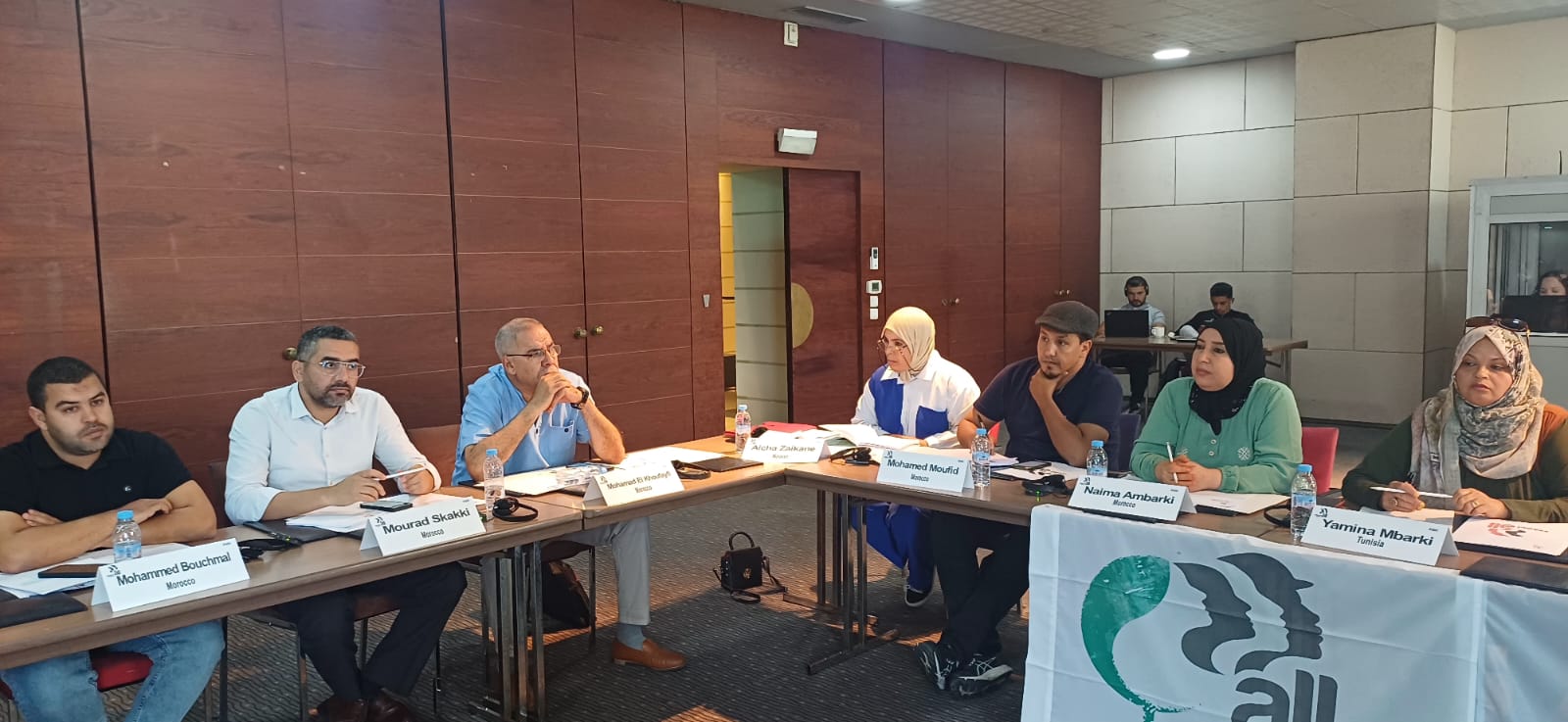
MENA automotive unions week
Georg Leutert, IndustriALL automotive director, stressed that workers are the most important issue in the transition as they bear the brunt of the consequences. Companies replace workers by introducing more automated manufacturing processes and by digitizing the entire business for the sake of efficiency and this is where unions must intervene to ensure a just transition.
The automotive industry is made up of two parts; the long-standing car manufacturers that have stable collective agreements with local unions and IndustriALL, and newer players, mainly Chinese and American companies , especially in the field of electric and autonomous vehicles.
“These are companies with huge investment capacities, but they don’t automatically recognise or understand trade unions, which is a major challenge. IndustriALL is now trying to bring the parties to the negotiating table to draft new agreements,“
said Georg Leutert.
Participating unions presented updates on their current situation, progress and action plans for 2025-2030 since the last meeting. Unions agreed to focus on two issues:
to include unions in negotiations related to the transformation of the labour market and industry
to negotiate with companies for solutions to offset negative repercussions of the transition, most notably layoffs and job losses
The network issued a statement on just transition, calling for the sustainability of existing jobs and the creation of new jobs that respect workers' rights and decent work principles. The statement also calls for social protection, alternatives and adequate compensation for workers exposed to job losses during transitions.
Network members also called for national and sectoral social dialogue on transition policies in the industrial sectors, with the active involvement of trade unions.
Ahmed Kamel, IndustriALL MENA regional secretary, said:
“The MENA region is an example of how the industry is evolving at a global level with the expansion of multinational, especially Chinese companies in the region, the technological and environmental changes due to climate change, and the challenges of union recognition. Having a work plan with structures to implement it allows us to strengthen the unions further.”
Hossam Eddine Dhayaf, assistant general secretary of Fédération Générale de la Métallurgie et de l'Electronique – FGME-UGTT Tunisia, said:
“Transition is already happening, at the expense of the South and at the expense of workers. We must unite trade union efforts and unify objectives in order to give the transition its just character. This can only be done through the formulation of a joint action plan."
Mohamed Moufid, general secretary of Syndicat Nationale des Industries de la Métallurgie et Electromécanique – SNIME-CDT Morocco, said:
“The reliance on new technologies represents a risk to the future of workers, forcing unions to take a position to make the transition fair and not at the expense of workers. Especially for women, who are in a difficult situation that needs to be overcome.”
Nora Elmoustahy, leader of Fédération Nationale de la Métallurgie et des Industries Synthétiques Métallurgiques et Electroniques – FNMISME – UMT Morocco, said:
“When Renault introduced robotics in the production cycle, the union negotiated to reintegrate the laid-off workers into a new department that deals with the maintenance of the robots that replaced them. Through negotiations, the union also succeeded in convincing the company to rely on the laid-off workers in new projects, meaning that the company prioritises the laid-off workers in new projects.”
Nouzha Elmarzouki leader at Fédération Générale de la Métallurgie et de l'Electronique – FGME-UGTT Tunisia, said:
“At Kromberg & Schubert, due to climate change we successfully negotiated improvements to the workplaces to address high temperatures by providing cooling systems for the workplace."
Attacks on trade union freedoms, ending dialogue with unions, and the expulsion of union members make the environment for unions very difficult. Employers shut unions out from workplaces, preventing unions from communicating with workers. Restrictions on trade union work and the governments' bias in favour of employers are big barriers to organizing. But in the face of adversity, unions have managed to increase membership through campaigns and will continue to work to increase membership, targeting a number of companies to increase membership by 15 per cent by 2030.
IndustriALL’s global framework agreements with multinational companies have been useful tools in organizing and have increased union membership in a number of companies. Affiliates linked organizing to the ability to win demands on the one hand, and to the trade union respect and freedoms and on the other. Participants emphasised the importance of supporting training and developing trade union skills in order to develop future plans.
Khaled Taher, general secretary of Fédération Nationale de la Métallurgie et des Industries Synthétiques Métallurgiques et Electroniques – FNMISME – UMT Morocco, said:
“We thank IndustriALL for the continuous support for union initiatives in the sector, and for trainings. This week will allow an exchange of experiences and strengthen solidarity in the sector, which is undergoing a qualitative leap in Morocco. A common struggle with a united will can remove obstacles and make the impossible possible.”
Abdelrahman Soliman, leader of Egyptian Industries unions of automotive sector, said:
“We are pleased to participate in this week, an important occasion for exchange and learning. We experience difficulties in trade union work, but the new generation of trade unionists are working hard to support workers' rights and strengthen trade union work."
Abdelaziz Arfaoui, general secretary of Fédération Générale de la Métallurgie et de l'Electronique – FGME-UGTT Tunisia, said:
“There is a lot of hard work in developing trade union work, especially at the level of networks, which have been an important addition to improve union work in the supply chain. For us, the results are important, and this is what is realised on the ground. We have set a number of trade union goals in the automotive sector and we are working to achieve them.”
Yamina Mbarki, assistant general secretary of Fédération Générale de la Métallurgie et de l'Electronique – FGME-UGTT Tunisia, said:
“The Covid pandemic, the Russian-Ukrainian war and now the war on Gaza, are all crisis affecting the sector, but this has not prevented us from achieving important progress on organizing through campaigns in workplaces. Good results have been achieved despite attempts of some management to obstruct the campaigns and prevent trade unionists from communicating with workers. We aim to increase membership by 15 per cent by 2030.”
Stellantis MENA union council meeting
The Stellantis MENA union council, made up of affiliates and suppliers in North Africa, met on 7-8 October 2024. Identifying main objectives and issues that hinder the work of trade unionists, participants developed work plans for the coming period. These which will focus on social dialogue and improving safety and health, while stressing the importance of greater coordination and concerted efforts to integrate suppliers into an effective social dialogue across the Stellantis production network in the region.
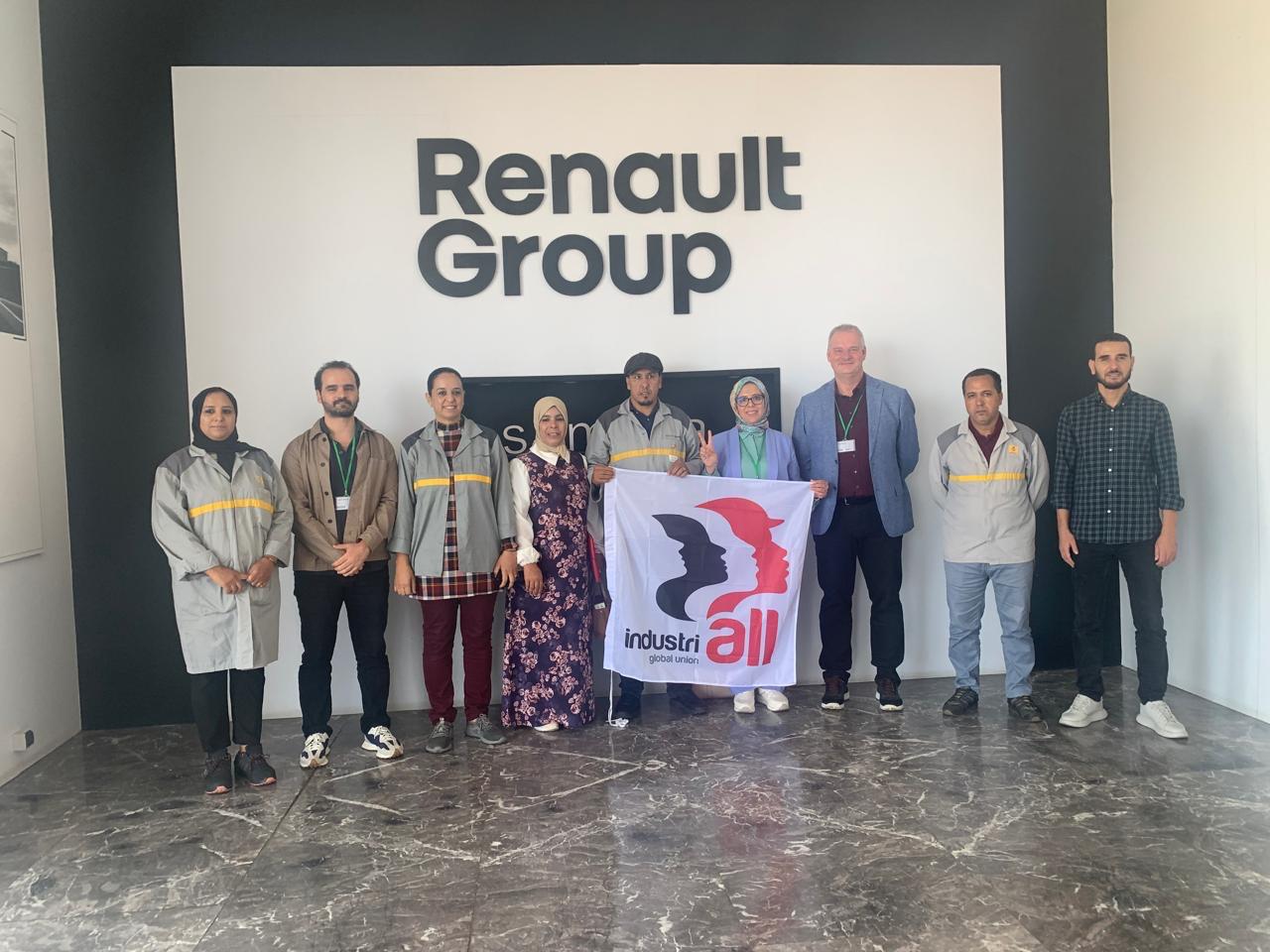
IndustriALL, Renault MENA union council and Renault global works council and management meeting
The meeting on 8 October 2024 was an important opportunity for unions and management to meet and raise important issues. The delegation of the Renault MENA union council presented its view on the most important developments in the automotive industry in the region and Morocco, focusing on important developments at Renault.
The delegation expressed its appreciation for the constructive social dialogue with management, which resulted in a collective agreement, and noted the importance of developing the dialogue to include a Just Transition, especially in light of the increasing reliance on robotics and the development of new types of cars that require different and new skills. The delegation presented the work priorities for the coming period and the importance of learning about different experiences. The delegation was briefed on the experiences of Renault's unions and workers in different regions around the world. For their part, the Renault global works council delegation and management expressed their appreciation for the meeting and the importance of continuing to communicate with Renault MENA union council and developing joint work.
This meeting was preceded by the Renault MENA union council, which examined various developments and prioritized the most pressing issues to be discussed with management.
Strategic planning update workshop for metal union in Morocco
Two workshops on strategic planning were organized for Moroccan metal unions SNIME-CDT and FNMISME–UMT, on 9-10 and 11-12 October 2024 respectively. The workshops assessed the reality and identified the most important challenges, after which the objectives were defined, action plans were drawn and the trade union team was selected to implement them. Special focus was given to increasing membership, improving safety and health, and developing social dialogue at industry level industry in Morocco.