New toolkit to tackle gender-based violence in the battery supply chain

Ending Gender-Based Violence and Harassment: The Case of the Battery Supply Chain (ENGLISH)

In many workplaces, women remain disproportionately vulnerable due to unsafe working conditions, lack of enforcement of labour rights and cultural norms that exacerbate discrimination. IndustriALL’s toolkit not only highlights the risks of GBVH in the battery supply chain but also equips workers and unions with actionable solutions.

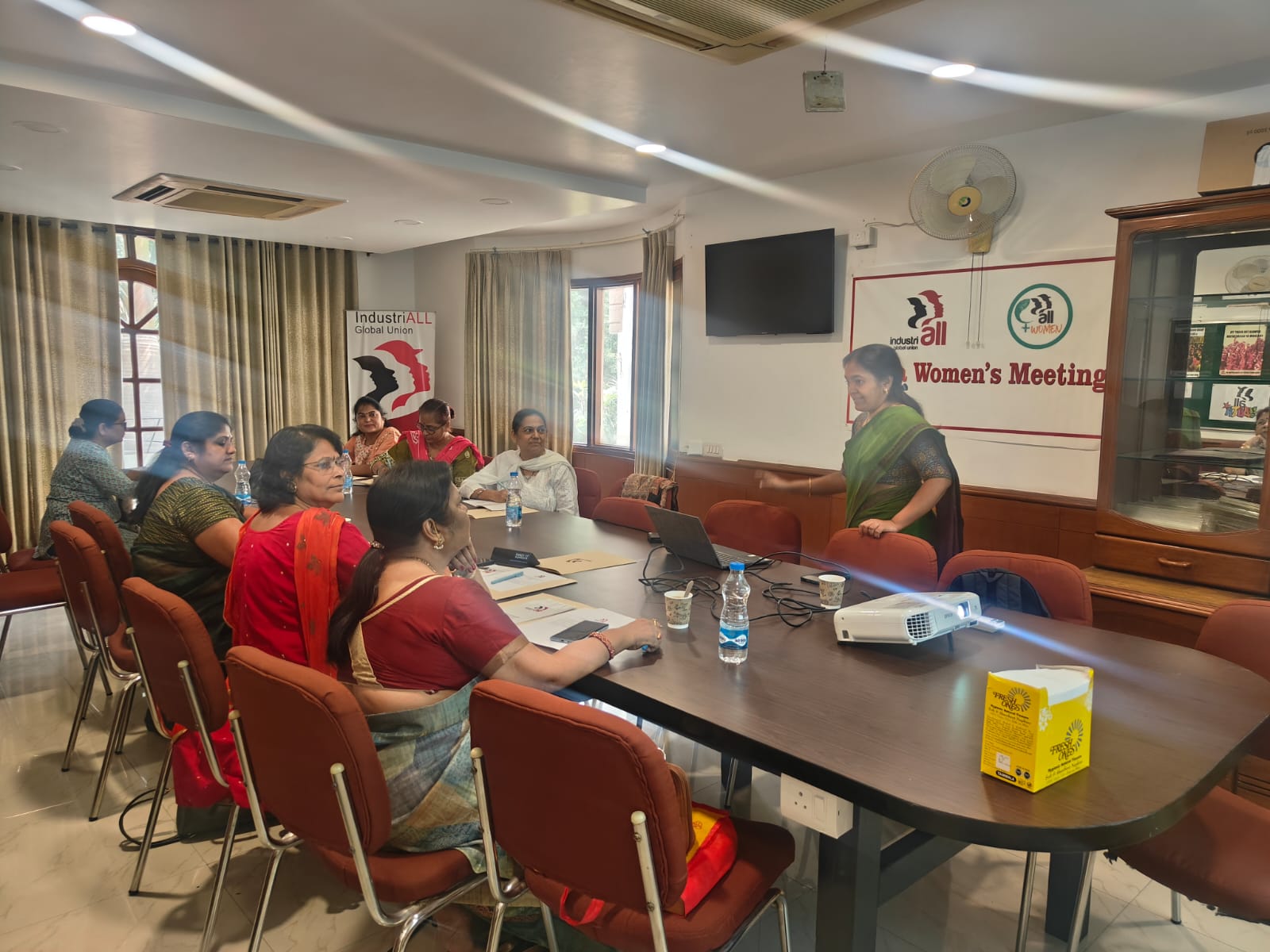
IndustriALL’s new toolkit, Ending Gender-Based Violence and Harassment: The Case of the Battery Supply Chain, provides trade unions, workers but also companies with the tools they need to identify and prevent GBVH in the world of work. The battery supply chain spans industries from mining and refineries to battery cell production and assembly, where women often endure unsafe conditions, harassment and exploitation.

IndustriALL encourages trade unions to bring a gender perspective into HRDD to address the root/structural causes of gender inequalities and identify multiple and intersecting forms of discrimination.

What’s inside the toolkit?

“With global frameworks like ILO C190, which establishes clear guidelines for addressing workplace violence, the time to act is now. Companies must be held accountable, and unions must be empowered to protect their members,”

says Christina Olivier, IndustriALL assistant general secretary.

“We can build a battery supply chain that prioritizes workers’ rights, safety, and dignity. Let’s make this transition to clean energy truly just and inclusive for all.”

What can I do?

Unions: Use this toolkit to demand stronger risk assessment and prevention processes of GBVH and a gender transformative HRDD.

Companies: Promote gender equality and norms that, implement zero-tolerance policies and strengthen risk management of GBVH.

Governments: Support the ratification and enforcement of ILO C190 to create safer workplaces worldwide.

Myanmar: the military regime’s dangerous attack on independent trade unions

IndustriALL has been informed its affiliate the Industrial Workers’ Federation of Myanmar (IWFM), who is a member of the Confederation of Trade Unions Myanmar (CTUM), that the SAC is promoting the Myanmar Labour Confederation (MLC), a state-backed body designed to replace independent unions like CTUM and IWFM.


The SAC launched the MLC in 2023, when its deputy minister of labour summoned workers in the Hlaing Tharyar industrial zone and instructed them to replace CTUM’s leadership. Since then, evidence has shown that the MLC has closely collaborated with the SAC’s ministry of labour (MOL), misrepresenting itself as CTUM to workers, employers and international stakeholders. These actions reveal the regime’s strategy to dismantle independent unions by using state control over the ministry of labour to elevate its own entity.


The SAC escalated its interference in January, this year, when the MLC organized an event falsely presented as a union education workshop. In reality, it served as a platform to install pro-SAC leadership within IWFM, conducted under heavy surveillance by police and special branch officers. This heavy-handed security presence demonstrated the SAC’s direct involvement in suppressing workers’ right to organize and associate freely, without fear of state intervention.


This state-backed assault on trade unions violates international labour standards, including the fundamental principles of Freedom of Association (Convention No. 87) and the Right to Organize and Collective Bargaining (Convention No. 98). Instead of adhering to the Commission of Inquiry (COI)’s recommendations, the SAC is intensifying its efforts to dismantle independent trade unions, replacing them with state-controlled entities that undermine workers’ rights.


The SAC’s actions directly contradict the COI’s findings, which condemned the military’s role in undermining trade unions through intimidation and interference. The COI report (paragraphs 173 and 174) highlighted the military’s systematic crackdown on union activities, and the recent developments confirm these concerns. The regime’s false claims about CTUM’s status, particularly its attempts to force re-election of CTUM’s leadership under SAC supervision, demonstrate the military’s strategy to fracture and control Myanmar’s union movement.


CTUM has also reported that the SAC has illegally appropriated the flags of CTUM and other independent unions, including IWFM, to promote yellow unions- state-controlled entities meant to weaken opposition to the junta. The theft of union symbols reveals the SAC’s ongoing campaign to strip workers of their rights and control the union movement.

IndustriALL Global Union has sent a letter to the ILO requesting that these developments be discussed under agenda item 12 of the 353rd Governing Body Session, regarding Myanmar's non-compliance with Conventions Nos 87 and 29 and related resolutions from the 102nd (2013) and 109th (2021) International Labour Conference sessions. IndustriALL Global and industriAll European Trade Union will jointly send a letter to the EU, urging condemnation of the attack and immediate action.


IndustriALL general secretary, Atle Høie, says:

“The situation in Myanmar demands urgent international action. The creation of the MLC represents a direct attack on workers’ rights and independent trade unionism in the country. The international community must hold the SAC accountable and demand the restoration of genuine freedom of association and the right to organize for Myanmar’s workers. International brands and investors who continue to operate in Myanmar must finally open their eyes and leave the country.”


Critical transition minerals key to African development

Most Sub-Saharan African countries have critical minerals needed for the transition from high carbon to low carbon renewable energy sources. The critical minerals include bauxite, cobalt, copper, graphite, lithium, manganese, nickel, platinum group metals and rare earth elements. Some of the critical minerals are used in improving battery performance whilst others are used in the manufacturing of electric vehicles, wind turbines and other components needed for renewable energy industries.
 
IndustriALL Global Union, its affiliated unions that organize mine workers from Botswana, Ghana and South Africa, as well as ITUC Africa, took part in the discussions in conference sessions and plenary discussions. The unions emphasized the importance of beneficiating critical transition minerals to create jobs through investments and the setting up of manufacturing industries on the continent to process raw minerals. Further, regional value chains could be developed in battery manufacturing and electric vehicles value chains, and these could be linked to global value chains. 
 
Currently, most minerals are exported in raw form which brings low value to the exporting countries. The unions cited the African Mining Vision (AMV) as an important guiding policy document which promoted unlocking the value of minerals and urged African countries to include the AMV into their national policies. Among other recommendations, the AMV calls for a “sustainable and well-governed mining sector” which promotes economic development, health and safety, “gender and ethnically inclusive, environmentally friendly, socially responsible and appreciated by surrounding communities.” The AMV is also one of the policies that can stimulate inter-African trade and regional integration through the African Continental Free Trade Area.
 
The unions stressed the importance of adherence to international labour standards and why the International Labour Organization’s (ILO) decent work agenda should be included in discussions on the mining of critical minerals. On health and safety, noting that fatalities in the mining sector in South Africa, for example, were declining, in artisanal and small-scale mining conditions were worsening especially in countries like the Democratic Republic of Congo. Thus the calls from unions for the ratification of Convention 176 on safety and health in mines – ratified by only six African countries. 
 
Other key issues highlighted by IndustriALL and the unions included the adoption of mining standards that included multistakeholder interests like the Initiative for Responsible Mining Assurance (IRMA) audits. The audits ensured that workers and community voices and interests were respected by mining companies.
 
The unions said communities should be at the centre of the multistakeholder approach because in most instances they were the rightsholders to the land on which the mines were located. To protect community interests, the mining companies should have inclusive environmental, social, and governance policies.
 
On human rights due diligence, the unions called for the adoption of mandatory measures as voluntary initiatives were difficult to enforce. However, the trade unions said they will continue to campaign for mining companies to include United Nations Guiding Principles on business and human rights in their policies.
 
Glen Mpufane, IndustriALL director for mining said: 

“A multistakeholder approach must be adopted on critical minerals and sustainable mining standards must be upheld to protect workers rights and interests.”

 
Kemal Özkan, IndustriALL assistant general secretary, said: 

“There is potential for job creation as the African continent has vast resources of critical minerals, but as trade unions we must insist on human rights’ due diligence and decent work so that workers and communities can enjoy the benefits. Governance of mineral resources is equally important to stop illicit financial flows and corruption which are taking away resources from development.”

No relief for dismissed Rieter India workers yet

Rieter India management have been threatening union officials with suspension, transfers and termination since the beginning of 2023, when members of RIEF went on strike and filed a complaint with the labour department regarding the company’s unfair labour practices after management refused to address the union’s concerns. 

As of May 2024, 33 of the 350 union members were terminated, including union office bearers, while 27 workers were suspended pending an inquiry against alleged protesting outside a management official’s house. Management also filed cases against union members in a civil court for holding a hunger strike outside the factory gate in July 2023 and for allegedly causing a US$1.2 million loss during the first strike in January 2023. In addition, union members have also been offered voluntary retirement schemes.

In November last year, after changes were made in the Indian management team, the union once again entered into good-faith dialogue with the new management. Despite positive discussions, on 19 December 2024, the current management took a decision to not reinstate the terminated workers and further dismiss the suspended workers as well.

Rohit Pawar, general secretary of Shramik Ekta Mahasangh, says:

“We have been continuously trying to cordially resolve the issues but it hasn’t worked. We have heard that the CEO of Rieter is scheduled to visit the plant in February. We have written to him requesting that he meets with the union members and address our concerns.”

Atle Høie, IndustriALL general secretary, says:

“We express solidarity with the struggling workers at Rieter India. IndustriALL calls on Rieter management to immediately address union’s concerns regarding Indian management’s unfair labour practices including dismissal of union members.”
 

Morocco braces for general strike on 5-6 February

A nationwide general strike will take place in Morocco on 5 and 6 February, as trade unions protest against government policies they say undermine workers' rights and erode purchasing power.

The Confédération Démocratique du Travail (CDT) announced the strike following a meeting of its National Council in Casablanca on 1 February. The Union Marocaine du Travail (UMT) confirmed its participation on 2 February. Other unions, including the Democratic Organisation of Labour, the Federation of Democratic Trade Unions, and the National Federation of Labour, are also backing the strike call.

At the heart of the dispute is the government’s proposed legislation on strike regulation, along with a controversial plan to merge the National Fund for Social Reserve Organisations (CNOPS) into the National Social Security Fund (CNSS). Unions argue that these reforms will erode workers' hard-won gains, weaken trade union rights, and harm the benefits of insured employees.

Union leaders have accused the government of:

Moroccan trade unions also criticise the government for its handling of inflation, arguing that rising prices are exacerbating poverty and social vulnerability.

In a statement issued on 2 February, the UMT, said the strike is called to demand price controls to limit inflation and speculation, the suspension of the draft strike law, due for discussion in the House of Councillors on 3 February, and urgent negotiations on labour rights and economic policies.

Says IndustriALL general secretary Atle Høie:

“We stand in solidarity with Morocco’s workers who are protesting against the government’s disregard for their rights and wellbeing. We urge the government of Morocco to heed the call and engage with the unions for a better future for the workers in the country. And we strongly call for all discussions on limiting the right to strike, a fundamental workers’ right, to end immediately.”

Photo: Protesting workers in Morocco, January 2025

A step towards safer workplaces in the leather and tanneries industry

As part of an EU-funded project, coordinated by the ILO, unions from around the world with members in the leather and tanning sector met for a workshop focusing on occupational safety and health (OSH) and the importance of social dialogue.

Participants shared experiences and identified good practices adopted by the sector. The discussion made clear that through strong social dialogue and strong collective bargaining agreements, OSH standards and accident prevention have been greatly improved. Participants brainstormed ways to promote the scale-up of these practices and discussed visions for safer tannery workplaces.

Christina Hajagos-Clausen, IndustriALL Global Union textile and garment director said:

“Social dialogue in the leather and tanning industry is key to ensure safe working conditions for workers in the sector. In countries with strong social dialogue and sectoral bargaining, it is clear that OSH standards are in compliance with the ILO conventions. It is essential to continue to develop global social dialogue with our social partners.”

The OSH risks from climate change and the green transition are receiving increasing attention. Working in extreme heat is also a problem for indoor workers in poorly insulated and ventilated workplaces. It can lead to acute and long-term health consequences, such as heatstroke, cramps, rashes, kidney and liver damage, chronic heat exhaustion or poor sleep, if not managed and reduced.

The green transition requires companies to switch to new technologies and materials. Thorough risk assessments are needed to determine potential exposure to hazardous chemicals or biological hazards, the risks of explosion, and the safe handling of new machinery.

The gender perspective was also underlined, and raising awareness of menopause as a workplace topic was discussed. This long-term, fluctuating health change, typically between the ages of 45 and 55, can involve dips in job performance. Symptoms must not be made worse by the workplace or workplace practices; it is important to adjust working conditions, e.g. to adapt work clothes, install fans, or adjust working hours, and to prevent any discrimination on these health grounds.

Judith Kirton-Darling, industriAll Europe general secretary, underscored the importance of worker safety and social dialogue:

"Every worker should be safe in their workplace, and social dialogue is an important tool to deal with health and safety issues. IndustriAll Europe continues to work on health and safety issues at European level with its social partner COTANCE and EU policymakers. The workshop in Turin with our sister organisation IndustriALL Global Union and international social partners was a step in the right direction.

“We stand in solidarity with workers across the world and call on all stakeholders to work together to ensure decent jobs in the supply chain, including tanning and leather. Workers’ safety should be everyone’s number one concern."

1,500 workers lose jobs as Yazaki shuts down in Uruguay

Workers were informed of the decision on 30 January. According to the union, the vehicle components manufacturer shut down its Las Piedras and Colonia plants without prior notice or negotiations, preventing discussions on alternatives to save jobs.

Danilo Dárdano, president of the National Union of Metal and Allied Workers (UNTMRA) and the Confederation of Industrial Trade Unions of Uruguay, said:

“A company cannot just leave overnight. Restructuring must be discussed in advance. The incoming government must change regulations to prevent this from happening again. They have shut the factory and won’t take our calls. The Labour Ministry has scheduled a meeting on redundancies, but we want to discuss reopening.”

In a statement, UNTMRA expressed shock at the closure, noting that throughout 2024 it had been working with industry bodies, the Labour Ministry, and Yazaki on policies to sustain the sector and attract investment. The company cited the low dollar exchange rate and labour disputes as key reasons for its exit, though the union insists it always prioritised job protection over other issues.

Uruguayan trade union federation PIT-CNT condemned the closure, arguing that a company with 240,000 employees in 46 countries cannot justify its exit on production costs and union disputes, given its history of collective bargaining.

At a press conference on 31 January, PIT-CNT president Marcelo Abdala said:

“Yazaki acted in a covert and disloyal manner towards workers and the country. It is unacceptable that they show no concern for the 1,500 workers, the majority women and young people. We call for tripartite talks on economic development and urge the authorities to intervene and defend these jobs.”

IndustriALL regional secretary Marino Vani also criticized the company’s actions:

“Yazaki’s attitude towards the workers and the community in Uruguay is regrettable. We urge management to engage with UNTMRA and reconsider this closure, which is unjustified and a major blow to Uruguay’s economy and MERCOSUR.”

Indian workers to stage mass protest on 5 February

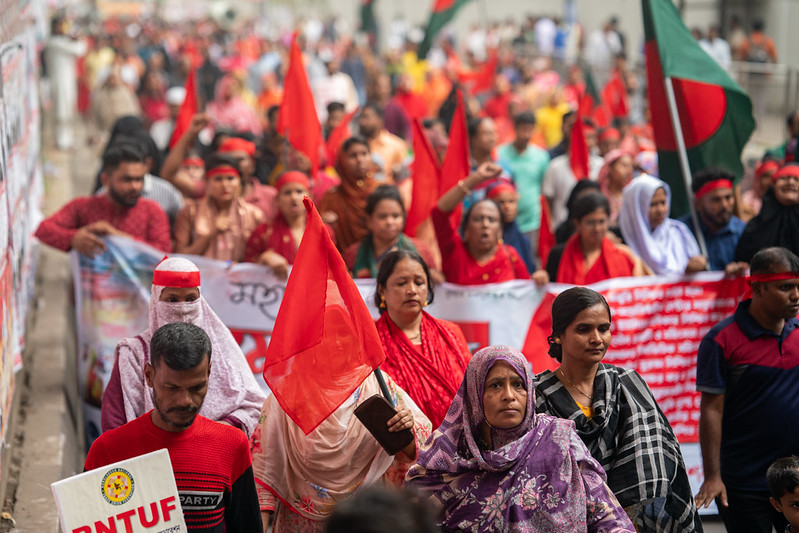
The protests are in response to the Indian government’s continued attacks on workers' rights, including the proposed implementation of anti-worker labour laws.

Indian trade unions have consistently raised concerns over deteriorating economic conditions and the erosion of constitutional and democratic rights under the current government. In a press statement issued on 7 January, union leaders condemned the government’s anti-worker policies, including privatization, disinvestment of public companies and services, and the refusal to restore the old pension scheme.

Unions are particularly alarmed about the forthcoming budget session, which they fear will prioritize corporate interests at the expense of the working class. They also warn that the controversial labour laws enacted in 2020, which have been stalled due to mass resistance from workers, are likely to be enforced this year. The unions are determined to intensify their struggle to prevent their implementation.

The joint platform is urging workers across India to launch a determined resistance against the government’s unjust policies, including the notification of new labour codes. A series of nationwide protest demonstrations will take place, culminating in a general strike, the date of which is yet to be announced.

IndustriALL Global Union’s General Secretary, Atle Høie, has expressed strong solidarity with Indian trade unions, stating:

“IndustriALL commends the resolve of Indian trade unions in their struggle against unjust government policies. The resilience and unity of India’s working class serve as an inspiration to trade unions globally. We urge the Government of India to respect workers' rights, engage in meaningful dialogue with trade unions, and ensure that labour laws align with international labour standards.”

Photo: image from a mass protest in India in 2022

Zambia ratifies Convention 190 to end violence and harassment at work

IndustriALL Global Union-affiliated unions in Zambia represent tens of thousands of workers across the energy, engineering, mining, cement, chemical, and manufacturing industries, where cases of workplace violence and harassment have been reported.

According to United Nations reports, one in three women and girls in Zambia have experienced physical violence, while 17 per cent have faced sexual violence. The reports attribute this to entrenched gender inequalities and patriarchal power structures, which are reinforced by social and cultural norms. These harmful practices—including domestic violence—are also prevalent in workplaces, making the fight against gender-based violence and harassment (GBVH) a critical issue for unions.

To push for the ratification of C190, Zambian trade unions led national campaigns in cooperation with the Zambian Congress of Trade Unions (ZCTU) and engaged with the government through social dialogue.

Astridah Matau Phiri, director for workers’ education and training at the National Union of Commercial & Industrial Workers (NUCIW), highlighted the role of unions in securing this milestone:

“This is an important achievement for trade unions in Zambia. We relentlessly campaigned for the ratification of Convention 190. We are also grateful for the campaign toolkits developed by IndustriALL, which helped us raise awareness among workers on the importance of the convention.”

 NUCIW’s campaign efforts included workplace visits, leaflet distribution on stopping GBVH, and training shop stewards on addressing gender inequality and discrimination. The union emphasized the need to foster a workplace culture that respects workers’ rights regardless of gender identity.

IndustriALL regional secretary for Sub-Saharan Africa, Paule France Ndessomin, emphasized that ratification is just the beginning:

“The regional office urges Zambian unions to view ratification as an important first step. However, the real challenge lies in implementation. It is crucial to develop workplace policies aligned with ILO Recommendation 206 and to integrate C190 into national labour laws so that real change can take effect in the world of work.”

IndustriALL Global Union continues to support Zambian unions in their efforts to ensure the convention translates into tangible protections for workers.

IndustriALL affiliates in Zambia include:

Zambia’s ratification of Convention 190 is a step forward in the fight against workplace violence and harassment. Now, unions will shift their focus to ensuring its effective implementation and enforcement.

EDF Global Framework Agreement renews with stronger worker protections

The agreement, originally signed in 2005 and renewed in 2018, has been updated to reflect new challenges and priorities, particularly in the areas of digital transformation, environmental sustainability, and workplace rights. The negotiations, which took place throughout 2024, resulted in significant advancements for EDF’s workforce worldwide.

Key improvements in the 2025-2030 agreement:

As part of the renewed agreement, EDF’s Global Dialogue Committee on Social and Environmental Responsibility (CMDRSE) will meet in February 2025 to develop an implementation strategy and ensure the commitments are effectively integrated into company policies and practices worldwide.

Atle Høie, IndustriALL general secretary, welcomed the renewed agreement, stating:

“This agreement marks a significant step forward for workers at EDF and across the energy sector. It strengthens our collective commitment to a Just Transition, ensuring that workers' rights are protected amid the shift to sustainable energy. The inclusion of digital transformation and AI policies ensures that workers are not left behind as new technologies reshape the industry. We will continue to closely monitor the implementation of these commitments through our ongoing social dialogue with EDF.”

Photo credit: EDF energy van on a residential street – Shutterstock photo ID: 2291763809