IndustriALL calls for a strong ILO convention addressing gender-based violence

The second ILO discussion on violence and harassment in the world of work will take place in June 2019 at the International Labour Conference in Geneva, Switzerland. It will be a historic opportunity to adopt a binding instrument that addresses this serious gap in international labour standards for the protection of millions of workers, especially women. So what kind of Convention do we want?

  1. We need a binding text

Employers at the ILO have questioned, along with some governments, the relevance of the adoption of a binding instrument on violence and harassment at work. This cannot be.

Having access to a world of work free from violence and harassment, including gender-based violence and harassment, is everyone’s right. However, GBV is prevalent at work. It has devastating effects on psychological, physical and sexual health, as well as repercussions on family and work environment.

It is why an international standard on violence and harassment at work is urgently needed to ensure minimum standards for ALL.

  1. We need a convention with a strong focus on GBV

GBV remains one of the most tolerated violations of workers’ human rights. According to the United Nations, 35 per cent of women – 818 million women globally – over the age of 15 have experienced sexual or physical violence at home, in their communities or in the workplace.

GBV at work affects labour market participation and can prevent women from entering male-dominated sectors and jobs.

A new convention must highlight the need to tackle the underlying causes and risk factors of GBV, including unequal gender-based power relations, multiple and intersecting forms of discrimination, and gender stereotypes.

  1. We need a convention that covers all forms of violence AND Harassment

We want a convention that deals with all types of “violence and harassment” , including bullying and psychological harassment.

An ILO standard is an opportunity to agree on an international definition of violence and harassment in the world of work, including sexual harassment, for the first time.

  1. All workers, including precarious workers should be protected by the convention

A new convention must cover all workers so that no one is left behind. According to the ILO, three-quarters of the world’s workers are in informal, temporary, self-employed or unpaid jobs. The world of work is evolving towards less formal employment status.

While all workers can be the victims of violence and harassment some are more vulnerable than others. Several studies have revealed that temporary and part-time workers, and workers in insecure jobs, are at greater risk of violence and harassment compared with full-time permanent workers. There is a clear link between violence and women’s economic vulnerability, poverty and low pay.

It is essential that the new convention adopt a broad definition of workers, independently of their employment status, that includes the informal economy.

  1. A convention should not be limited to physical workplaces

A convention should not only include the workplace but also all work-related situations, such as training, business trips, travelling to work, work-provided transportation and social events. A TUC study in 2016, showed that a significant minority of women (14 per cent) reported that harassment had taken place at a work-related social event such as a Christmas party.

An ACTRAV report highlighted that in employment involving global supply chains, notably in  the garment and electronics sectors, the pressure to complete orders, as well as long working hours and the need to travel late at night, compound risks for women workers. Young women working in economic processing zones are particularly vulnerable to violence and sexual abuse in factories, company accommodation or when travelling to work.

Research done in south African mines showed that women working on night or early morning shifts were at great risk of being assaulted while walking to the mines or waiting alone for buses at night.

  1. A convention should acknowledge the impact of domestic violence

Two-thirds of women around the world who experience intimate partner violence are in employment. Domestic violence, and efforts to escape it, affect workers’ lives. Lack of economic independence can also keep women trapped in violent relationships.

A new convention must acknowledge that the workplace can mitigate the impacts of domestic violence. If a woman can be helped to keep her job, it can prevent her from becoming trapped in a violent relationship for financial reasons.

  1. A convention should provide a solid framework for responsiblity

The convention should provide a framework for governments, employers, companies and unions to tackle violence and harassment at work.

While the convention would be addressed to governments, the primary responsibility to create a work environment free from violence and harassment lies with employers. Duties should be assigned to employers to introduce workplace policies, in consultation with unions, setting out: prevention measures; transparent and confidential procedures to deal with complaints; sanctions for perpetrators; information to ensure that workers understand policies and procedures; and support for victims of violence and harassment at work.

IndustriALL encourages our affiliates to use this International Women’s Day to take action along with their national centres in support of an ILO convention on GBV in the world of work.

Workers in Kyrgyzstan left without legal protection

The government of Kyrgyzstan first attempted to change the Labour Code in 2015, an attempt which was met with union protests supported by IndustriALL.

The new version of Kyrgyzstan’s Penal code no longer contains articles providing criminal liability for violating labour legislation and labour protection rules.

On 5 March, the Ministry of justice met with a working group with members from Federation of trade unions of Kyrgyzstan.

Eldar Tadzhibaev, president of the Mining and Metallurgy Trade Union of Kyrgyzstan, said:

“We showed the representatives of state bodies that new legislation does not contain responsibility for violations of the Labour code. We will propose measures to fill these gaps.”

In addition, a moratorium on labour inspections is in place since the New year. In the next two years, labour inspections will only be carried out in emergency cases where workers’ life and health are threatened. Scheduled inspections have been canceled.

Almabubu Zharkynbaeva, president of the National Committee of Trade union of Textile, light, paper and related sectors of the economy, the industry, the scope of services of the Kyrgyz Republic, said:

“Unions can arrange inspections at companies with union presence, which is the case on only 30 per cent of the companies. Labour inspectors must be allowed to arrange scheduled inspections again.”

Vadim Borisov, IndustriALL regional secretary, said:

“The new destroy the foundations of the existing system of labour relations  and violate ILO Conventions Freedom of Association and the Right to Organize, as well as other international core labour standards. IndustriALL stands in solidarity with our affiliates and offer our support.”

Why are so many auto plants closing?

Manufacturers are using the momentum of a profound transformation in the sector to close or consolidated both unprofitable auto plants and as well as profitable operations with slim margins. A falling demand for private cars among younger consumers, with a trend towards new, less individual mobility solutions means car companies are rethinking their manufacturing models globally.

General Motors is an extreme example: the company has shut a plant in Australia, sold its operations in Europe, Russia and Africa, and will close four plants in the US and one in Canada this year at a cost of almost 6,000 jobs.

Honda has announced that it will close its factory in Swindon, UK, with the loss of 3,500 jobs, and discontinue production of the Civic in Gebze, Turkey, affecting 1,000 workers.

Jaguar Land Rover will cut 4,500 jobs globally, and Nissan cancelled plans to build its new SUV in the UK. Ford is reviewing its operations in Europe, and announced that it will close the São Bernardo plant in Brazil, with the loss of 3,000 jobs.

What is behind the turmoil? Local factors, such as Brexit in Britain, influence decisions, but this is a major global restructuring: the industry needs massive investment to shift to the next stage. We need to be part of part of the conversation about managing this change.

What are the key drivers of change?

Stagnant demand

Car ownership patterns and consumer habits are changing, and most analysts believe demand has peaked. Younger people are far less likely to see car ownership as necessary. Cars are primarily seen as a means of transport, and many people find car pooling or ride sharing apps like Uber to be more convenient. There is also a growth in cycling, the use of electric bikes, scooters and other forms of personal transportation.

Peak oil and climate change

There is a growing awareness of the need to transition from a carbon-based economy. Some governments have already announced petrol and diesel bans that will come into place in future. But replacements like electric vehicles, and the infrastructure needed to maintain them, are not yet ready for mass adoption.

Electrified vehicles

Everyone knows that electrified vehicles are the future, and most auto manufacturers are developing models. However, this is expensive and the models are not yet profitable, so development is speculative. Electric cars have fewer moving parts than those with internal combustion engines, and require fewer workers. IG Metall in Germany expects the loss of 160,000 jobs due to electrified vehicles.

Autonomous vehicles

There is a significant debate about how widespread autonomous vehicles will be in the future, but most manufacturers are adding autonomous features to cars. This requires a lot of expensive development. Google’s Waymo project is investing heavily in self-driving taxis.

New competitors

Car companies face competition not just from new manufacturers like Tesla, but also from Google, Uber and other tech companies who offer alternative solutions to personal transport. Increasingly, value is added to cars by technology, and the danger manufacturers face is that they will become merely hardware providers. To mitigate this, they need to spend a lot of money acquiring technological expertise and software.

Industry 4.0 and the future of work

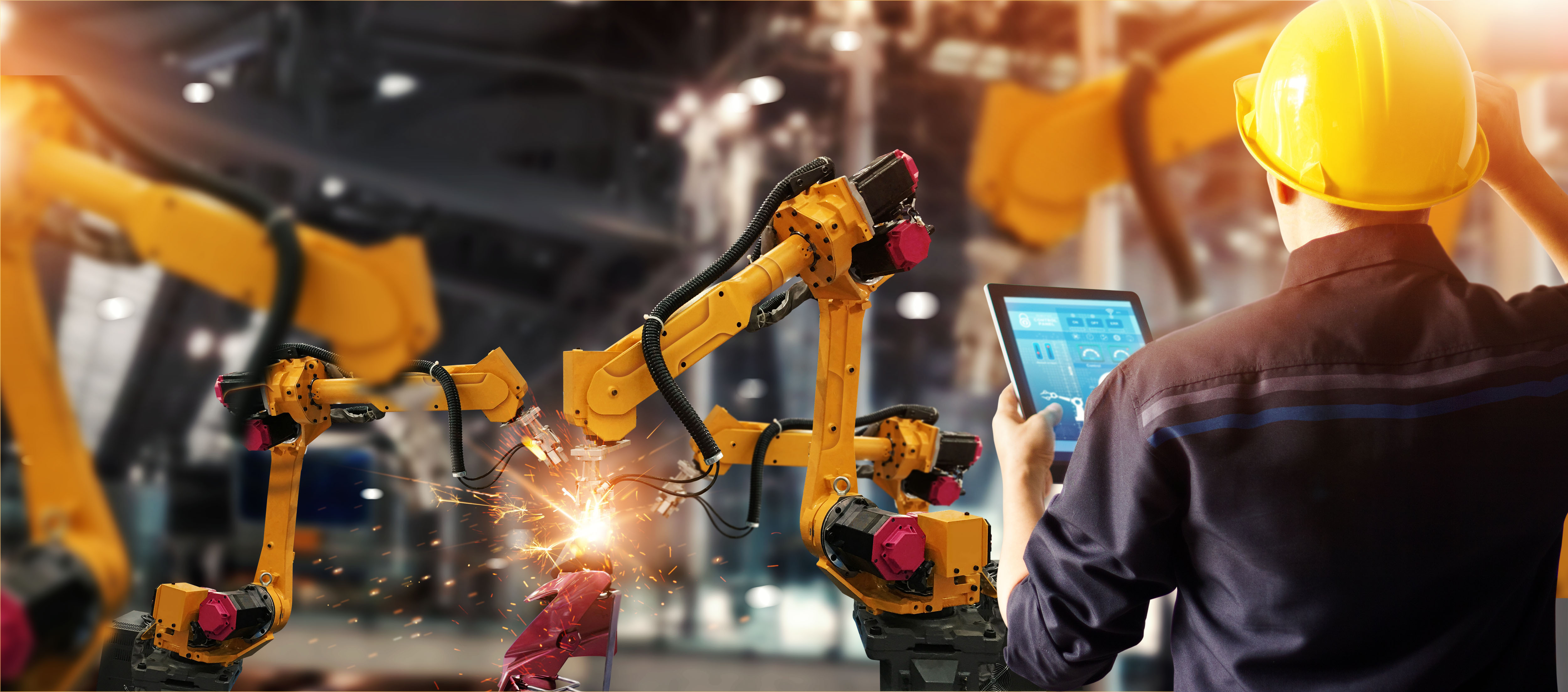
Auto manufacture is already highly automated, with robots doing a significant amount of the work. A new generation of electric and autonomous vehicles will mean the design of new, completely integrated systems, covering every process along the supply chain. Highly skilled workers will still be needed for assembly and machine maintenance, but a lot of auxiliary jobs will be cut.

What are the solutions?

Without intervention, the auto plants of the future will employ far fewer workers than they do today. While the principles of managing change in industry are familiar, unions must do a lot of focused work to develop credible plans.

Work with companies now

IndustriALL has global framework agreements with a number of auto companies. These facilitate high level discussions about the future of the industry, and provide an opportunity to negotiate the transition to new forms of production.

Lobby government and local authorities

Unions must work with governments to develop sustainable industrial policy and not wait for companies to create jobs. Infrastructure, transport policy and urban planning are crucial. The way cities are designed has major implications for the future of transport.

Repurpose auto factories

With the challenges presented above unions need to prepare for the new world of work. The competence of highly skilled auto workers needs to be preserved and developed to cater for the needs of the future auto industry, but also, when closures are unavoidable, for the needs of new industries that will fill the void. This work will have to be done in cooperation with companies and local and national governments.

Ultimately, unions, companies, governments and urban planners will have to work together on large scale industrial redeployment projects.

Developing an action plan

Over the course of this year, IndustriALL will host a series of meetings designed to develop best practice from affiliates who have experience of these changes.

As well as a series of company-specific network meetings, an expert meeting on changes in the industry will be held this year. In December, this will culminate in an auto meeting where recommendations for dealing with changes in the sector will be discussed.

Bangladesh Government must intervene to secure garment factory safety

At a hearing of the Appellate Court on 18 February, Accord lawyers reported on the failure of negotiations between the Accord, the Bangladesh Government and employers’ organization BGMEA on the conditions for transition of the Accord’s functions to the Government. Citing the importance of these matters to the country and economy of Bangladesh, the Chief Judge of the Appellate Court ordered the parties to continue the discussions to reach a resolution and ordered a further extension to 7 April 2019. This follows previous rulings by the Court on 29 November, 17 December and 21 January that negotiations should continue.

IndustriALL and UNI Global Unions, together with representatives of Accord signatory brands, have written to the Bangladesh Prime Minister and to the Minister of Commerce to request their direct intervention in resolving the impasse.

The letters state that a premature closure of the Accord office would mean that the Accord would need to be implemented through alternative means, and would have immediate negative and damaging consequences.  A substantial number of factories that have not completed remediation work would no longer be eligible to produce for Accord member brands, GSP benefits would be put at risk, and the viability of brands placing orders in Bangladesh RMG factories would be in doubt.

The fire on 20 February at Chawkbazar in Dhaka, which claimed the lives of at least 70 people, is a tragic confirmation that Bangladesh does not yet have a safety regime that is adequate to protect workers lives. Safety experts from the Bangladesh University of Engineering and Technology (BUET) stated after fire that the only reason why fires in the garment industry have decreased is because the Accord has constantly monitored the factories. BUET stated such safety assurance capacity does not exist otherwise. The head of RAJUK, the body responsible for planning and development in Dhaka, said that of the 208,000 buildings surveyed in the last six months, at least two-thirds have violated the national building code in some way.

Clearly there is a long way to go before the Accord can handover its responsibilities with confidence. The Bangladesh Government has so far published no reports on factory remediation progress or follow-up inspections, and remediation deadlines for factories inspected by the Government have passed in some cases by years.

In September 2018, the Bangladesh Compact, a cooperation between Bangladesh, the European Union, the United States, Canada, Bangladesh and the International Labour Organization, to improve conditions in the garment industry, reported:

The Bangladesh Government must end the uncertainty caused by failed negotiations and more court-mandated time extensions, and come to the table with a real commitment to a credible and responsible transfer of Accord functions based on genuine readiness of the Government to take over.

US locomotive workers strike to defend CBA after merger

The GE Transportation company, a subsidiary of General Electric, was sold to Wabtec on 25 February. The union wants the new owner to honour the existing collective bargaining agreement until a new agreement can be negotiated.

Wabtec, a Pittsburgh-based multinational railway equipment supplier that operates in 50 countries, has imposed new terms and conditions which include mandatory overtime and wages up to 38 per cent lower for new hires. Wabtec also plans to replace up to 20 per cent of its workforce with low-paid, temporary workers.

The company makes transport equipment, particularly locomotives, for the railway, marine, mining, drilling and energy generation industries. It is the first strike at the factory since 1969. About 23,000 locomotives are in active use, with 70 per cent under long-term service agreements. Wabtec plans to develop new digital technologies to control speed, switching, and other aspects of locomotive control.

Production workers at the Erie plants are represented by UE Local 506, while EU Local 618 represents white collar staff. The UE is affiliated to IndustriALL Global Union

“We are extremely disappointed that the company could not see its way to agree to continue the terms and conditions that we have worked under for decades. Their refusal leaves us with no choice but to go out on strike to protect our members’ and our children’s future,” said Scott Slawson, President of UE Local 506.

The workers have received solidarity support from the local community and other union locals, as well as from around the world. US presidential candidate Bernie Sanders sent a message of support.

Karlene Torrance, president of UE Local 618, said, “We are grateful for the outpouring of support we have received from our friends, neighbours and community in Erie.”

In a letter to Wabtec CEO Raymond Betler, Valter Sanches and Luc Triangle, general secretaries of IndustriALL Global and Europe respectively, wrote:

“Wabtec’s merger with GE Transportation should not be used to try to take away any of the hard-fought gains our UE brothers and sisters have achieved over these many decades. Their skills and experience in locomotive building are second to none and they should be compensated as such.”

600 Burkinabe mineworkers who lost jobs after mine closure demand fair compensation

The mine closure put 1,000 workers out of employment, including contract workers.

SMB is a private mining company which was sold to Avocet Mining, listed on the London Stock Exchange. Avocet then sold the company to the Balaji Group. The workers should have been paid compensation when ownership was transferred. They are former SMB and Avocet workers, now employed by the Balaji Group by virtue of their valid contracts.

“Workers efforts to negotiate are falling on deaf ears or met with bad faith from the Balaji Group, while the ministry of mines is notoriously negligent,” said Kiba Aidane and other workers in a statement.

To press for their demands, more than 200 workers picketed in Ouagadougou with placards alleging collusion between the government and the Balaji Group. The workers reject the employer’s proposal to reduce benefits by up to 40 per cent.

After buying Inata gold mine in 2018, the Balaji Group neither resumed production nor paid the workers what is due to them. Although they have been without jobs since the mine closed, the workers are not relenting. Their plight prompted IndustriALL Global Union affiliate, Federation des Industries Diverses (FID), to launch a campaign demanding that the Accra, Ghana based Balaji Group pay the workers.

The workers want a tripartite meeting in which their rights to fair compensation will be respected and to be paid wages backdated to November 2017. They also want pension benefits to be paid to those who were contributing. Retirement benefits should also be paid to those who were within five years of retirement. Medical benefits should be paid.

Charlotte Nguessan, IndustriALL project coordinator says: “The suffering of SMB workers shows the lengths to which some errant mining companies will go to avoid paying compensation. As part of the union building project, we are always alert to deal with these injustices against workers.”

Says Glen Mpufane, IndustriALL director for mining:

“Mining companies must respect workers’ rights. When mines are sold, the new employer must assume responsibility. It is unacceptable for multinational companies to close mines and abandon workers — leaving them without jobs, even robbing them of their benefits.”

The Balaji Group has operations in India, Iraq, Kuwait, Malaysia, Philippines, Qatar, and the United Arab Emirates. In India the group mines silica, garnet, quartz and iron ore.

Training advances collective bargaining skills in Ethiopia

The National Industrial Federation of Energy, Chemical and Mining Trade Union (NIFECMTU), which is affiliated to IndustriALL Global Union, organized a training workshop in Adama from 20 to 21 February, attended by 23 participants from base unions at 17 factories. NIFECMTU has over 20,000 members including 6,000 members from the Ethiopia Electricity Company, 2,000 from the Ethiopian Energy Company and 800 from the Ethiopian Petroleum and Biofuel Company.

The government’s development policies are focusing on diversifying economic sectors including in the chemical, energy, mining, and oil and gas sectors. With diversification and the rapid growth of the economy at 8.5 per cent in 2018, the highest in Sub-Saharan Africa, spurred by infrastructural development and light industrial manufacturing, there is potential for the unions to organize and recruit more workers.

The workshop discussed how base unions can strengthen collective bargaining and organizing skills to improve their capacity to confront strong management teams at plant level. The labour laws and International Labour Organization conventions that Ethiopia has ratified support collective bargaining.

The union at the national level agreed to support the base unions through training of members on financial sustainability, organizing and servicing members, and improving working conditions through better collective bargaining agreements. Further, it was agreed that unions should be more transparent and democratic and should have regular communication with members. Union dues, which make up over 80 per cent of the union’s income, should be used to strengthen organizing and collective bargaining.

Says Sisay Tulu, IndustriALL coordinator for Ethiopia:

“Strengthening the base unions is important for union membership growth because they are the heart-beat of the unions. The base unions are the where workers engage with the unions at the factories and the mines. If the base unions are strong, the union will also be strong.”

Adds Kenny Mogane, regional officer for IndustriALL Sub Saharan Africa: 

“Negotiating better deals through collective bargaining improves working conditions and living wages for workers. We will continue to support the NIFECMTU in its efforts for effective negotiations and collective bargaining agreements.”

Unions in solidarity with victims of Brumadinho dam disaster

February 25 marked one month after the catastrophic failure of mining company Vale’s tailings dam, situated in the town of Corrego do Feijão, in the municipality of Brumadinho (southeast Brazil). The death toll has since mounted to 179, and 131 people are still missing. The government of Minas Gerais has prohibited the consumption of untreated water for humans, animals or agricultural activities because the tailings (mine waste) have reached the Paraopeba River.

The unions carried out an act in solidarity with the victims affected by the greatest environmental, labour and human tragedy in the country, and demanded dignified health and safety working conditions.

CNQ/CUT union president, Lucineide Varjão, who is a member of IndustriALL Global Union Executive Committee and co-chair of the mining sector, participated in the action together with representatives of 11 unions affiliated to FITEM (CNQ-CUT), as well as social movements and researchers in the sector.

"In addition to providing solidarity to the victims, we seek to understand the reasons for the rupture of the Corrego do Feijão dam, the actions of Vale S.A and the organization of social movements.

“There are many other mine tailings dams in the country, and we believe that participating in these actions is fundamental for the strength and unity of the mining unions in Brazil and throughout the world," said Varjão.

The event was also used to alert society about the precarious conditions of tailings dams belonging to other mining companies in the country, where workers are extremely unprotected, and prevent a similar tragedy from happening again. In Brazil there are 88 tailings dams built in the same way as Brumadinho.”

Experts agree that the tragedy was not a surprise. Despite having all the elements for a possible catastrophe, Vale ignored the warning signs for years. Vale will have to pay compensation to all the inhabitants of Brumadinho, following a decision made by the Court of Justice of Minas Gerais, on 20 February.

Valter Sanches, General Secretary of IndustriALL, stated:

"This is a crime, not an accident. We mourn for the dead and we sympathize with the victims of this terrible tragedy. It's time for Vale to listen and take concrete steps to improve industry safety. "

Unions say no to violence against women!

“As trade unions, we are at the forefront of this fight. Let’s again show our strong determination to advance gender equality in the world of work on 8 March, International Women’s Day,” says Jenny Holdcroft, IndustriALL assistant general secretary.

Preconditions for gender equality include strengthening women’s voice and leadership, eliminating violence and harassment at work and the implementation of equal pay.

IndustriALL is also encouraging those affiliates that have not yet taken the Pledge to end violence and harassment against women in their workplaces and in the union, to #TakeThePledge.

There is artwork and a video that can be downloaded from IndustriALL’s website. On IndustriALL Women Facebook group, unions can share their plans for 8 March.

And please let IndustriALL know about your actions, in order to magnify the message on social media. Send photos to [email protected], and don’t forget to use the hashtags #ALLWomen #TakeThePledge on social media.

Radical change needed for gender equality at work

The recent landmark ILO report, Work for a Brighter Future, is calling for the implementation of a transformative agenda for gender equality in the future of work.

The trade union movement must take the lead in this agenda – in its own structures as well as the sectors it represents. However, gender equality cannot be achieved without first eliminating the epidemic of violence against women at work. 

This International Women’s Day on 8 March, IndustriALL is calling on affiliates to take action in support of an ILO Convention and Recommendation on violence and harassment at work, with a strong focus on gender-based violence.

Incredibly, no international standard addresses gender-based violence at work, even though 35 per cent of all women over the age of 15 have experienced sexual or physical violence at home, in their communities or in the workplace.

In order to eliminate violence against women and achieve gender equality, the new world of work must be free from the patriarchal structures that dominate the current model and only serve to undermine the working conditions, pay and prospects of women workers.

“Women continue to have to adjust to a world of work shaped by men for men,” said the ILO’s Global Commission for the Future of Work, which produced the new ILO report.

The Commission recommends that women’s voices, representation and leadership are strengthened. It encourages governments, employers and workers’ organizations to actively pursue and support greater representation by women.

Last November, IndustriALL’s Executive Committee adopted recommendations to increase women’s participation in its sectors. Women’s participation is not just about being present in meetings, it means that women have a genuine voice and take part in decision-making.

It is all the more important for unions to address the challenge of women's participation as industries undergo profound transformation led by digitalization. Digitalization is not a gender-neutral process. Industry will be increasingly driven by skills and innovation rather than physical strength, which should make it easier to achieve gender equality. But the emergence of these new technologies risks worsening the gender inequalities within the labour market.

Women still face barriers to access education and training. Women in STEM (Science, Technology, Engineering and Maths) studies represent a minority of students. While technological progress will create new jobs within Industry 4.0, those who are not prepared will not be able to gain access to them.

Women currently hold many of the underpaid manufacturing jobs that are likely to be replaced by new technologies over the long term. In some male-dominated industries, the number of female workers is set to increase as manual labour gives way to white-collar jobs, but action is needed to ensure that this work is properly valued and does not perpetuate existing patterns of undervaluing work that is predominately performed by women. Replacement of unionized jobs with non-unionized jobs will only increase the potential pay gap.

Furthermore, developing artificial intelligence and algorithms for recruitment processes tend to be based on historical data that are filled with gender stereotypes, which will only exacerbate existing inequalities. For example, algorithms used by taxi service, Uber, favour men who work longer and later hours, which often pose problems for women who often have more caring commitments and are reluctant to work riskier night shifts.

Let’s make sure that the future of work for women is based on equality and free from violence.  In June 2019, there will be a second discussion on violence and harassment at work during the International Labour Conference. Employers remain opposed to a binding Convention and much of the important content demanded by unions.

A new Convention is an historic opportunity to fill the gap in the protection of millions of workers, and more specifically women workers. But to achieve this, unions need to mobilize.