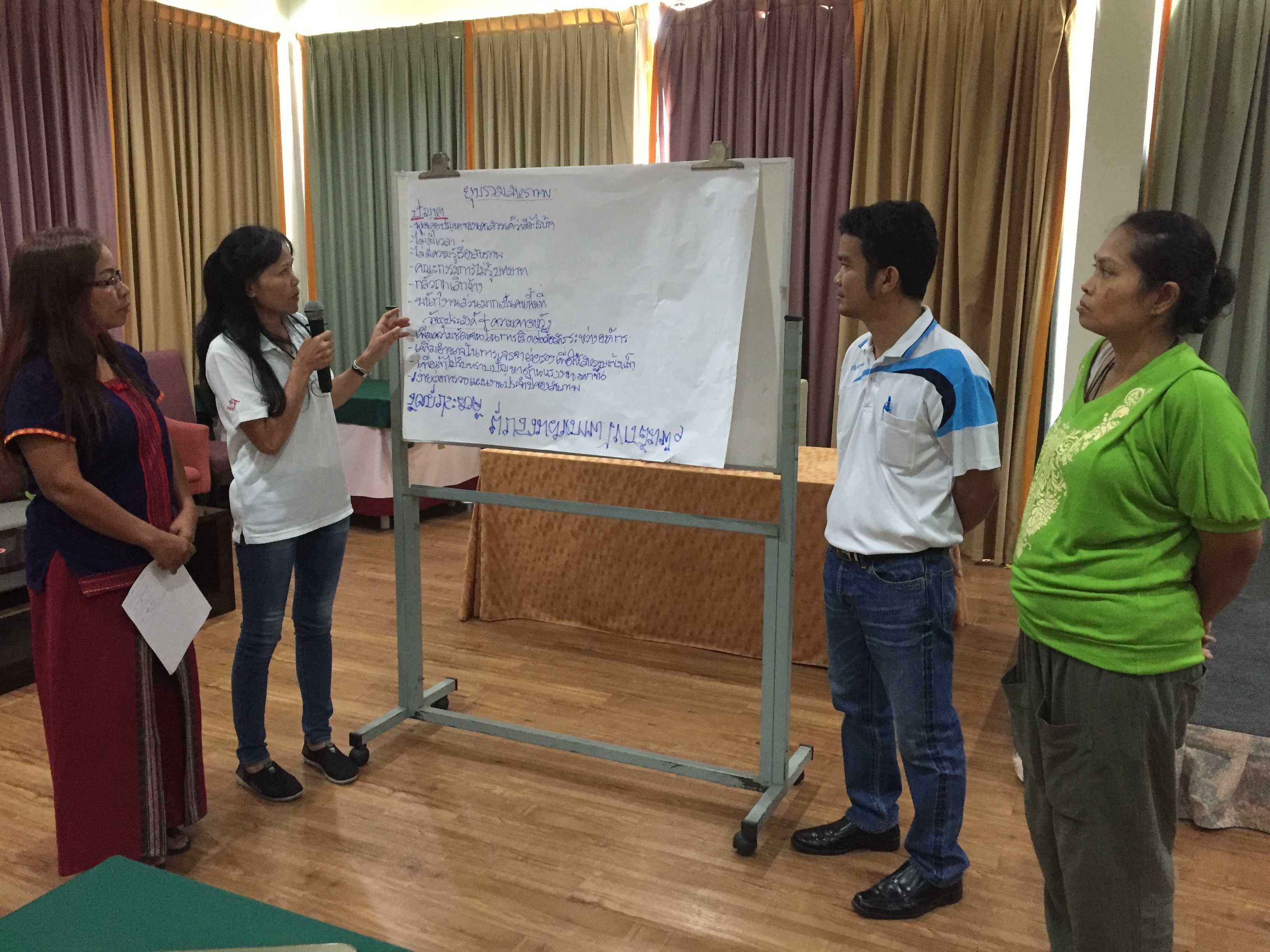
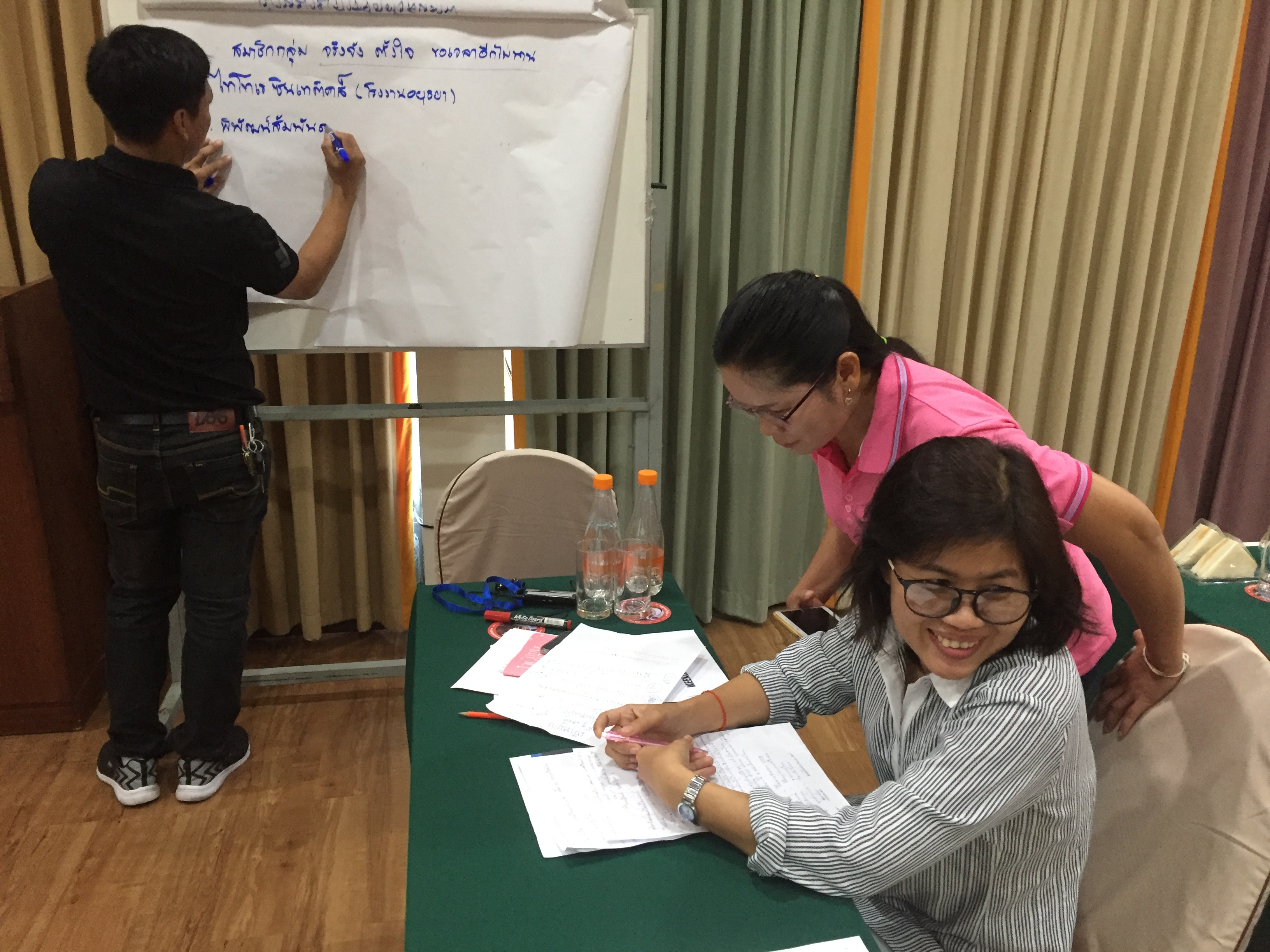
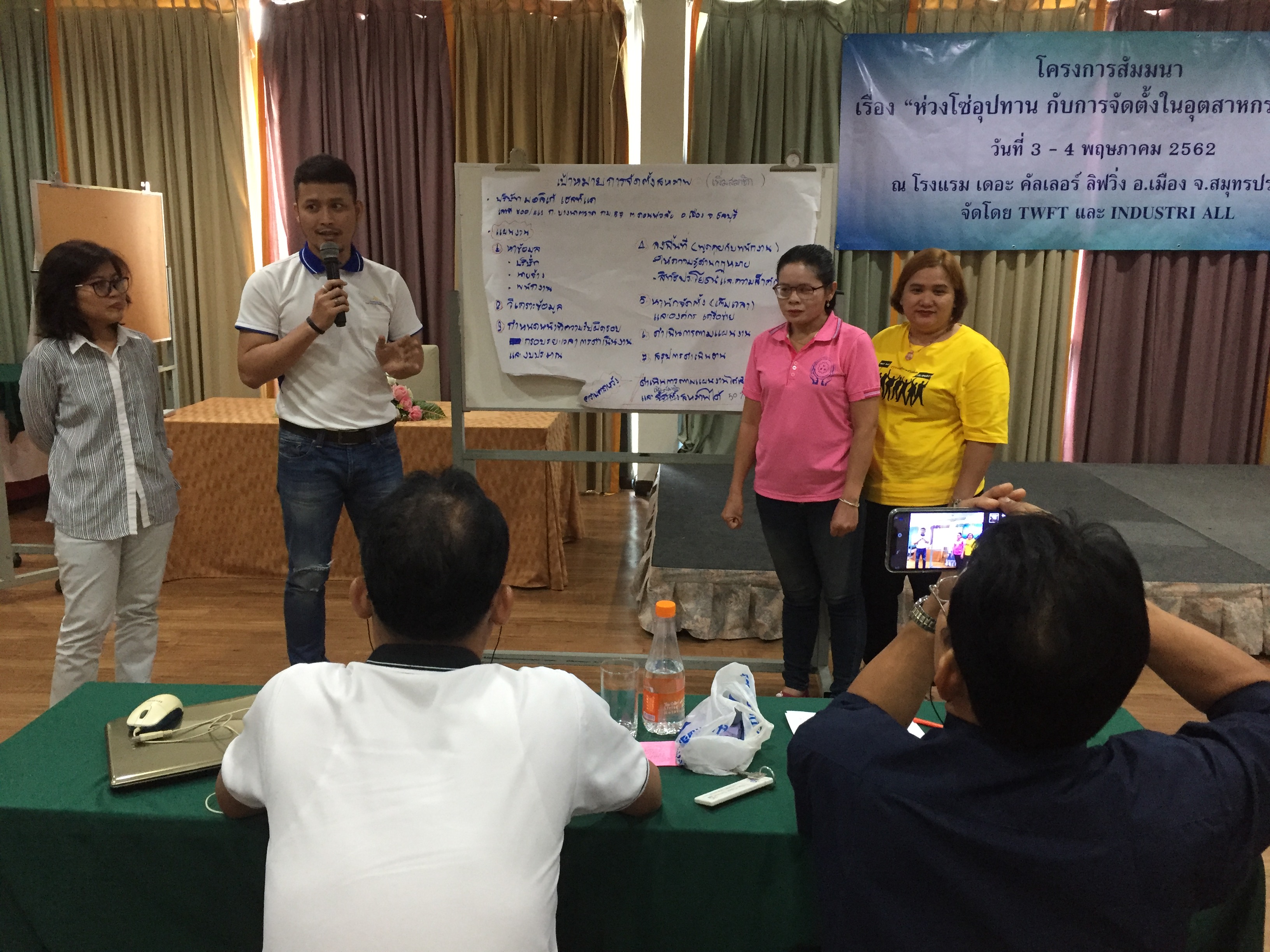
Organizing in the textile and garment sector in Thailand
“Lacking full time organizers is our biggest challenge. Union activists can only organize workers out of working hours. Given the circumstances, we must develop an effective organizing strategy, we need more capacity training for organizers,”
said Kornchanok from the Body Fashion Workers Union. She is also a part-time organizer with TWFT.
The workshop focused on multinational corporations and their supply chains in the country. IndustriALL has six global framework agreements (GFAs) with textile and garment brands. All these brands – Inditex, H&M, Tchibo, Mizuno, Asos and Esprit – have suppliers in Thailand.
The ILO estimates that there are 575,000 salaried workers in the sector in Thailand, providing huge potential to improve union density in Thailand. The participants gained better information about GFAs and suppliers to the brands in the country.
The participants concluded the two day workshop with a strong commitment to organize their new targets. By the end of this year, they will concentrate their efforts to organize 10,000 workers from six companies in the industry.
Annie Adviento
Annie Adviento, regional secretary of IndustriALL Southeast Asia Office said,
“TGSL is one of the biggest sectors in IndustriALL Global Union. We sign GFAs with global brands. We work with brands to ensure workers’ rights are respected; freedom of association is respected. Unionization is our priority. We must know our leverage before starting an organizing campaign and ask the right questions. We believe this workshop would help you to build your organization’s power.”
Thai unionists also seek the support of IndustriALL to resolve their union disputes with brands. They strongly felt that deeper understanding of GFAs will better equip them at negotiation tables.
The participants were trained on strategic corporate research for their organizing campaigns. They did their own research on the multinational targets of their unions and identified how they could use their research for leverage.
PHOTO PAGE: Trade unions lead the fight for gender equality and against gender-based violence
Unions are fighting to end violence and harassment at work and pushing for equal pay. Everyone has a responsibility to be part of this discussion and the solution: this is not an issue for women to resolve alone.
Gender equality is not a women’s issue, it is a trade union issue.
Affiliates from all corners of the world took action, along with their national centres, to support the call for an ILO Convention on gender-based violence in the world of work. This global action highlights the continuing and widespread violence against women in IndustriALL sectors and sends a strong message to the perpetrators and their employers that all forms of violence against women are unacceptable.
Women’s participation in IndustriALL’s sectoral work is still too low and has yet to improve significantly. IndustriALL’s women’s committee has endorsed a set of recommendations for new strategies to address the gender imbalance in industries with the lowest representation of women.
The recommendations include:
Each network and sector to set its own rules for increasing women’s participation in meetings
Sectors and networks to devise strategies to analyze the issues facing women in the workplace and in the union and develop campaigns to address them
Using global framework agreements to demand multinational companies to employ more women in male-dominated areas and challenge companies on their performance on gender equality
PROFILE: Organizing in the garment and textile sector in Ethiopia
Union: Industrial Federation of Textile, Leather and Garment Workers Union (IFTLGWU)
Country: Ethiopia
Text: Elijah Chiwota
Building unions in rough terrain: Organizing in the garment and textile sector in Ethiopia
The Industrial Federation of Textile, Leather and Garment Workers Union (IFTLGWU), affiliated to IndustriALL Global Union, has hit a brick wall in its attempts to organize at Hawassa, despite the country’s Constitution and labour laws providing for freedom of association.
Ethiopia’s economy has grown quickly over the last few years, from an agricultural economy to an industrializing one. The country now has one of the highest economic growth rates in
Sub-Saharan Africa. Industrial parks
like Hawassa are part of the government’s plan to create jobs.
The Ethiopian Investment Commission touts low wages and other benefits to attract investment. The government has set up the Ethiopian Textile Industry Development Institute, and industrial parks have been built across the country to promote light manufacturing. The largest is Hawassa, with the potential to employ over 60,000 workers on double shifts. It is expected to generate US$1 billion in exports.
This developmental state approach aims to create jobs and reduce unemployment, especially among the youth. With a growing population of over 105 million people, and two million young workers entering into the job market every year, the country needs to create more jobs.
Global garment brands and retailers have identified Ethiopia and Kenya as countries to source goods from over the next five years, mainly due to rising costs in countries they have traditionally produced in, like China and Vietnam. Factories in the industrial parks supply to big brands and retailers, including Adidas, Marks & Spencer, H&M, Primark, JC Penny, Phillips-Van Heusen, Tesco, Inditex, Tchibo, Kik, VF Corporation, Schöffel, Walmart, Ober Mayer, George (Asda), Levi Strauss and Hugo Boss.
Unions ask: who benefits from this low cost, labour-intensive, low skill manufacturing model?
Ethiopian workers are on the losing end of the equation. Denying unions access means that wages are low, and workers’ rights, including to health and safety and collective bargaining, are curtailed.
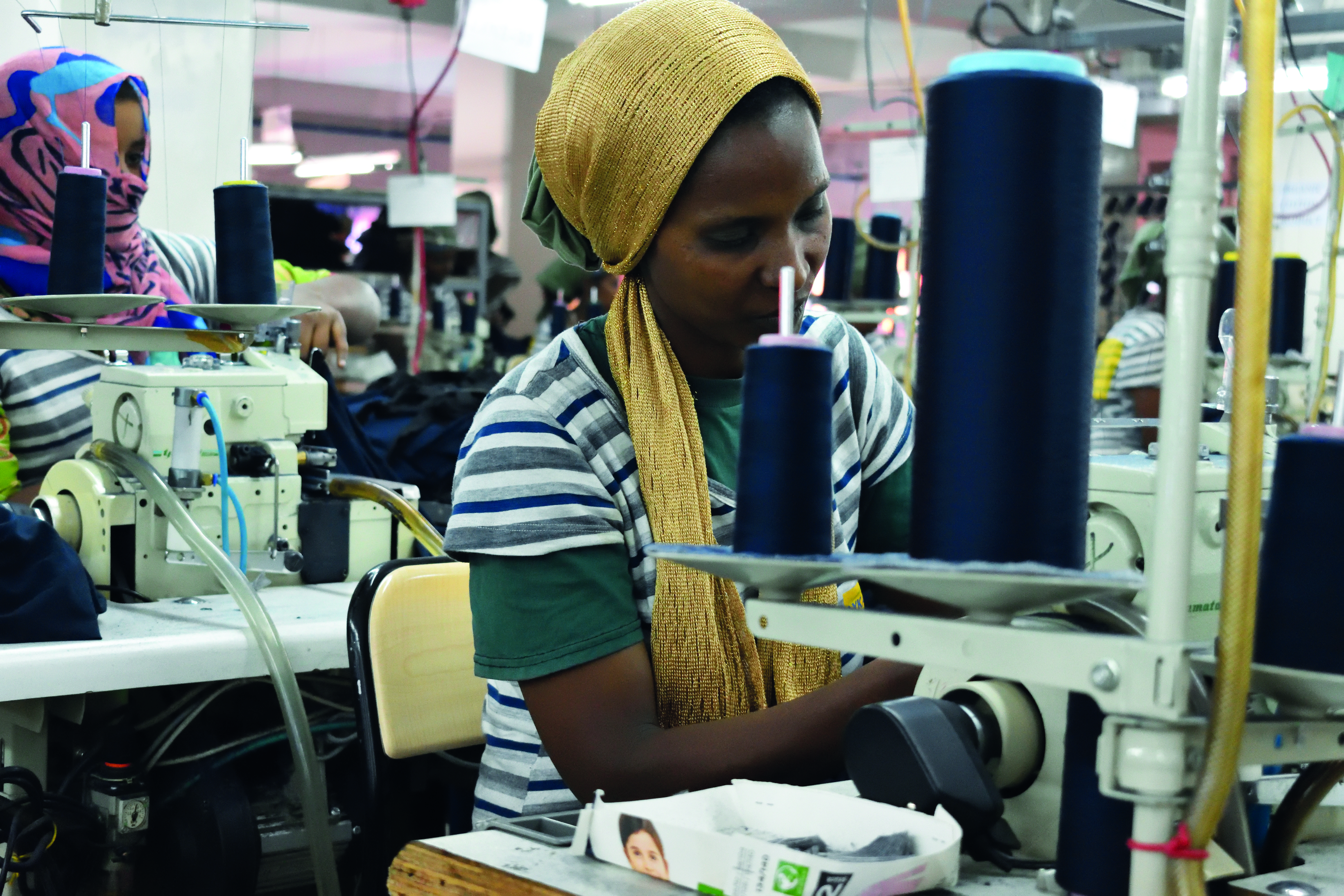
The face of the textile and garment sector in Ethiopia is that of a young woman. But at Hawassa, the union is unable to campaign for women workers’ rights, including against sexual harassment, for maternity protection and on child care issues. Housing is another issue as many women are forced to share a room, sometimes with more than four colleagues.
A long way away from a living wage
A recent study by global labour market analysts MyWage and Confederation of Ethiopian trade Unions (CETU), with support from FNV Mondiaal, concluded that a garment worker needs at least 4,130 Birr (US$146) per month to survive, and workers with families need more. Yet 92.5 per cent of the workers earn less than the minimum required to make a living, with 8 per cent earning below US$35. The survey, in which 1,052 workers from 52 factories were interviewed, was carried out in Addis Ababa, Oromia and Hawassa.
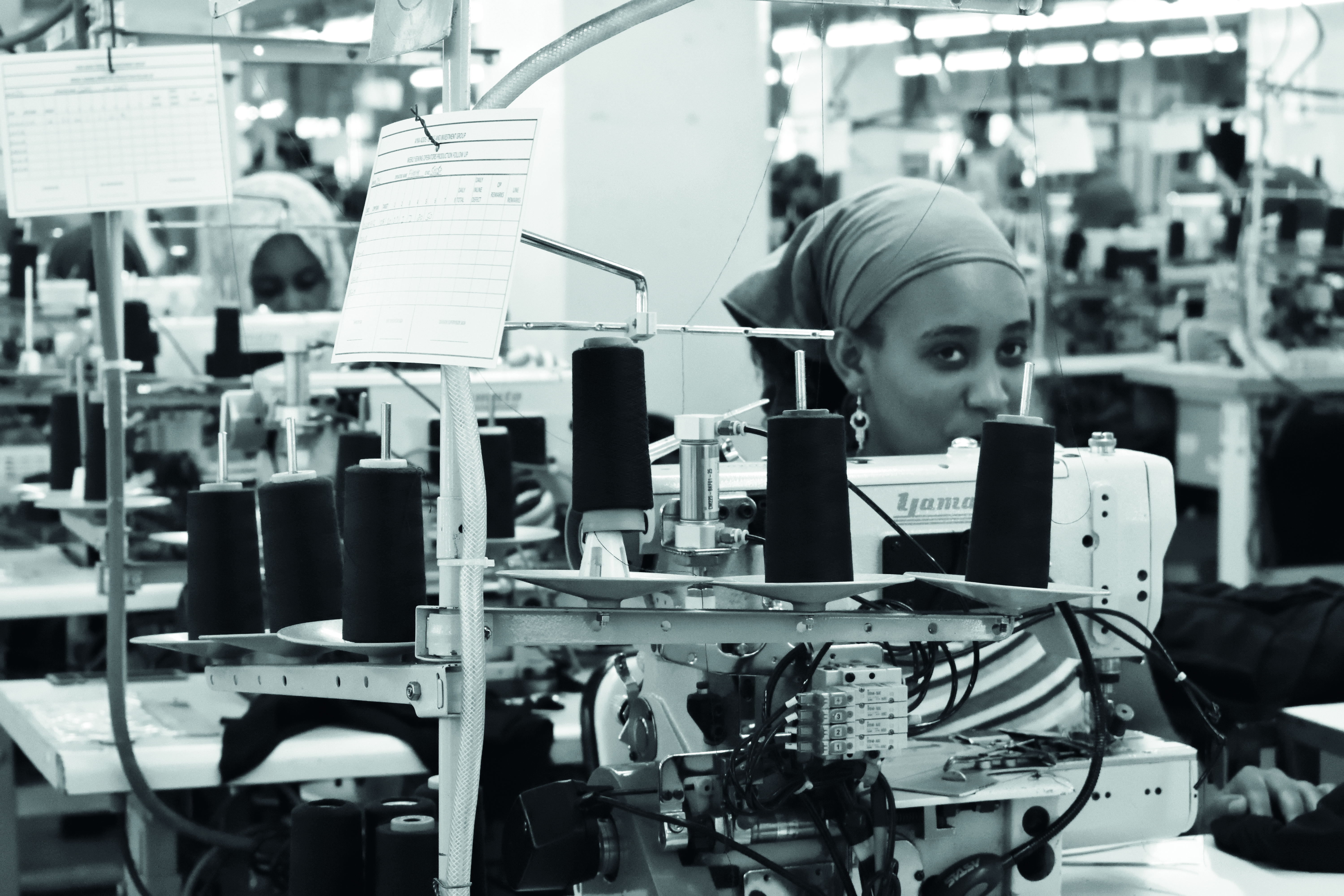
Workers at Ayka Addis factory, Addis Ababa. IndustriALL
Minimum and living wages are central to a campaign by the 55,000-strong IFTLGWU, affiliated to CETU. With the current wages most workers struggle to make ends meet and can be described as working poor. A low wage economy means jobs that will neither change living standards of the workers, nor end poverty.
The government promotes ‘industrial harmony’ – but unions say harmony can only be attained through inclusive social dialogue. To achieve this, the IFTLGWU is working with the CETU, the International Labour Organization, FNV Mondiaal, the Friedrich Ebert Stiftung, IndustriALL and other partners in various activities that include building union capacity for collective bargaining towards social dialogue.
IFTLGWU is using collective bargaining training as part their campaign for a living wage. Training shop stewards in the textile and garment sector means they can take the fight for workers’ rights to their factories.
Raising women’s voices
Unions in the country represent only a small portion of the workforce. Only 10 per cent of the country’s labour force of over 44 million workers is employed in the private sector and the law does not allow public sector workers to organize. In addition to low unionization, there is poor representation of women workers within the unions.
Even though more than 90 per cent of the workers in the textile and garment factories are women, the union leadership continues to be dominated by men. The IFTLGWU is working towards achieving gender equity and is holding training workshops as part of the strategy.
Workers at Ayka Addis factory, Addis Ababa. IndustriALL
It is a priority for the IFTLGWU to curb the exploitation of women workers in the factories by supporting women in the garment and textile sector to engage with management. For example, a recent workshop attended by 19 women shop stewards from the workplace unions of the IFTLGWU, with support from the IndustriALL regional office for Sub-Saharan Africa and FNV Mondiaal, aimed to increase women’s participation in leadership roles in the unions.
One of the participants, Gelane Senbetu, a shop steward and women’s council member from Kanoria Textile Factory, Bishoftu, says it is important for women to understand the labour laws and the context of collective bargaining in Ethiopia.
“Workshops like these are vital as they focus on how to be actively involved in union work and we identify the issues that we have to deal with in the workplace. We can freely discuss key issues like collective bargaining and how to advance women’s interests in the workplace.”
“The training has taught us a lot from a legal perspective and has strengthened the women’s councils’ ability to address women’s issues.”
A sustainable industrial policy for the textile and garment sector
According to the government’s growth strategy, Ethiopia’s main competitive advantage is low labour cost. Creating jobs will reduce poverty, and the sector is labour intensive. To support industrialization, the government is developing infrastructure. Roads are being built, airports and railways revamped and extended, and low-cost energy produced. The economic policies also aim to improve social services, including housing, health and education.
Ethiopia’s garment and textile sector has benefitted from preferential trade under the United States African Growth and Opportunity Act, as well as the Everything But Arms and duty-free quota free arrangements. In addition, there are bilateral agreements with China and India to promote the sector.
The government is promoting the growing of cotton, although production has remained low. The cotton to garment value chain includes cotton growing and harvesting, ginning, spinning, weaving or knitting, garment making, the traditional hand loom production methods, and shipping. This value chain is dominated by garment companies.
But what does the special focus given to the textile and garment sector mean for factory workers? What does it mean for union organizing? So far, the expected benefits, including skills and technology transfer, have yet to materialize. Unions are concerned that the country will replicate the mistakes of other low wage economies, undermining unions to keep wages low.
The president of the IFTLGWU, Mesfin Adenew, says:
Increasing membership is an issue we deal with daily. We will not be deterred by hostile employers and state institutions that deny us access to factories and industrial parks. The large number of non-unionized workers means that there is a lot of potential in organizing, and we are working with local and international partners to overcome the challenges.
PROFILE: Indian unions fight precarious work
Unions: All India Cement Employees Federation (AICEF) and Unions United
Country: India
Text: G Manicandan
Organizing in the cement industry
The AICEF was founded in 2008 when cement unions affiliated to trade union centre HMS came together to better defend workers in their sector.
The AICEF has a total membership of about 25,000 workers, the majority of whom are precarious workers. The members are found across cement plants in the states of Bihar, Gujarat, Haryana, Jharkhand, Madhya Pradesh, Maharashtra, Odisha, Rajasthan and Tamil Nadu.
The AICEF organizes in an environment where the majority of the workforce are precarious workers; the cement industry counts between 75 to 80 per cent contract workers. Almost all precarious workers are employed through third party contractors and face a lack of job security, poor wages and bad working conditions.
Defending the rights of precarious workers, trying to regularize their work and increase wages have been the principal goals of the AICEF.
Mukesh Galav, general secretary of AICEF, says:
“Through our struggles in the cement industry we have managed to reverse terminations and regularize precarious workers. Our unions have played an active role in ensuring that companies implement wage decisions not only for permanent workers, but also for precarious workers. This has meant significant wage increases and social security benefits for our members.”
A 98-day struggle by the AICEF’s Mangalam Cement Karamchari Union resulted in the reinstatement and regularization of terminated precarious workers. The agreement also ensures that when permanent workers retire those vacancies are filled through the regularization of precarious workers. This has led to precarious workers achieving similar benefits, including free uniforms and shoes, to permanent workers. In 2016, about 150 workers were made permanent, and there is a process under way for an additional 150 workers.
The cement industry in Rajasthan is notorious for poor working conditions. After the AICEF managed to end 12-hour working days for security staff employed by third-party contractors at the ACC Lakheri cement factory, the union plans to do the same for the factory workers on short-term contracts, also working up to 12 hours per day.
“Working conditions are deplorable in many of the cement units,” says Mukesh Galav. “Unfortunately, we often have to fight with yellow unions, recognized by the company as counterparts for collective bargaining, to win workers’ rights.”
The AICEF has a unique method for uniting permanent and precarious workers in union activities. The constitutions of many of its unions are designed to include precarious workers as members, with voting rights and the possibility to run for leadership positions like president or general secretary.
The AICEF has launched a campaign to win equal wages for precarious work and is engaged in a legal process to implement a recent judgment of the Supreme Court of India calling for equal wages for equal work.
“Being affiliated to IndustriALL Global Union is an important step to ensure AICEF’s efforts are complemented with international solidarity support,” says Mukesh Galav.
“And at the same time, the national and international trade union network led by IndustriALL in the cement sector helps to reinforce AICEF’s work at a national level. IndustriALL provides much needed platforms for training on occupational health and safety, learning from others’ experiences, as well as developing a union response to rapid technological developments in the face of increasing automation in the Indian cement industry.”
Unions United focus on women and precarious workers
Unions United taking action. IndustriALL
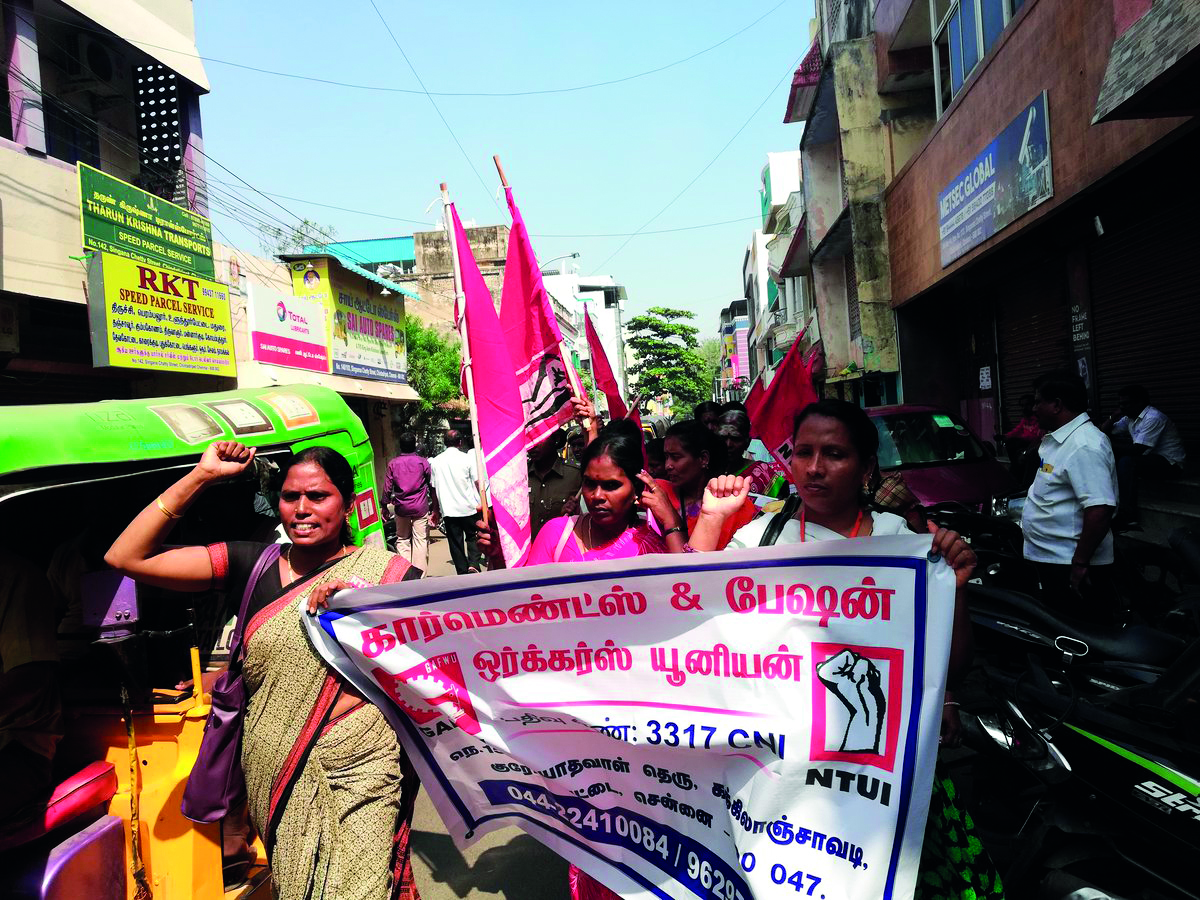
Unions United is an industrial federation formed in April 2018 with 55,000 members in base metals, textile, mining, mechanical engineering, electronics and energy sectors.
12,000 of the members are women.
Precarious workers make up over 90 per cent of Unions United’s total membership.
Union United’s membership of precarious workers include more or less all women workers, as well as a large number of male workers, in sectors like garment, base metals, and public sector steel plants and uranium and gold mining units.
Reaching out to women precarious workers in their homes and neighbourhoods and addressing women’s rights and social wages, including the demand to access housing and public transport, have been central to the organizing strategies of its members.
Powerful campaigning on women workers’ rights by the garment workers’ unions in Karnataka and Tamil Nadu, including equal wages, access to crèches, appropriate toilet facilities and an uncompromising struggle against sexual harassment to ensure a safe and fair work environment, are some of the core issues undertaken by its members.
Job security has always been a major challenge when organizing precarious workers. Members of Unions United built effective solidarity to resist large-scale victimization and employers’ violent attacks of union activists and precarious workers.
Gautam Mody, convener of Unions United says that “firm political will is the fundamental feature of organizing precarious workers.”
Winning regularization of precarious workers and equal wages in the public sector at employers such as the Uranium Corporation of India and the Steel Authority of India are some of the major milestones achieved by the members of Unions United.
While all members of Unions United are unions affiliated to the national centre New Trade Union Initiative (NTUI), the federation is open to all registered trade unions in the manufacturing industry and associated services across the India.
Currently, its membership is spread over several states, and in each of these states the member unions participate in joint calls to action from the central trade union organizations, including the recent historic countrywide general strike held on 8-9 January 2019.
Members of Unions United come from sectors closely tied to global supply chains and are conscious of the need to build unity and solidarity within and across the sectors nationally and globally to defend workers’ rights.
In multinational companies like Siemens and KEC International, in addition to signing collective bargaining agreements, unions have taken initiatives to build countrywide company councils together with affiliates of other national trade union centres. Such initiatives strengthen their capacities to engage in global works councils and to take advantage of global framework agreements signed with IndustriALL.
Unions United’s membership in the garment industry works in factories that supply to leading global garment and retail brands. Its members at US company Avery Dennison are currently engaged in a major struggle to regularize 600 contract workers and win recognition of the union.
Gautam Mody, says:
“It is important for our members to come together to strengthen union power and to build workers’ solidarity nationally and across the global supply chain. Our affiliation to IndustriALL is crucial to connect our members’ struggles internationally and to take advantage of the global union force.”
REPORT: The Future of Work, and IndustriALL Global Union
ILO Report
The ILO report calls for a new approach that puts people and the work they do at the centre of public policy and business practice. It demands the recognition of rights to equality and social protection. It calls for a Universal Labour Guarantee that will deliver decent work, living wages, and safe and healthy workplaces. It calls for an increased investment in people, and a revitalization of collective representation.
It is an impressive, visionary outline for a new social charter. It is therefore not surprising that the International Organization of Employers is already trying to distance itself from it.
IndustriALL Global Union has sought the same goals that are outlined in the ILO report for many years. They are contained in the five strategic goals, and discussed in, among others, IndustriALL’s documents on sustainable industrial policy, on Just Transition, and on Industry 4.0.
If sustainability is about meeting the social, environmental, and economic needs of today without compromising the ability of future generations to meet them, then the world is failing the test.
Social:
The world is sliding towards ever-greater economic inequality. According to Oxfam, 26 wealthy individuals control as much wealth as the 3.8 billion people who make up the poorest half of humanity. Social norms insist that wealth should be distributed in society primarily through employment. However, despite increasing labour productivity and strong wealth creation, jobs are not being created, social conditions are not improving and industrial wages are stagnant. This situation creates a combination of despair and anger, as people feel cheated. Social ills such as an epidemic of drug abuse, and political ills such as the rise of populist demagogues, are the result.
Environmental:
The natural environment is in crisis, with accelerating climate change (with related ocean acidification, severe weather events, wildfires and coastal flooding), catastrophic declines in biodiversity, contamination of land and water and air, deforestation, decreasing fresh water availability alongside increasing populations. Meanwhile, our consumption-based lifestyles have proven resistant to even the suggestion of change.
Economic:
Many products, goods, and resources are already being produced with the aid of a collection of disruptive new technologies including advanced digitalization, big data and artificial intelligence, next-generation robotics, the “internet of things”, 3-D printing, along with biotechnology and nanotechnology. Then, there are the new platforms of work: Uber, Clickwork, Amazon Mechanical Turk, Deliveroo, and a host of other forms of digital and crowd work that seek to make workers more precarious and powerless, and thus cheaper. This trend will continue, with no region or industrial sector immune. As for the natural environment, conventional economists insist that there can be infinite economic growth, despite the fact that we live on a finite planet.
Building a socially, environmentally, and economically sustainable future means re-thinking some of the basic rules of society, including what society expects of corporations. Many government policy thinkers have taken the position that society should not impose rules that might prevent new business models to grow. This thinking ignores the reasons why society allows any business model to grow, or indeed even to exist. In a theoretical sense, society does so because of the belief that there will be some benefit to society broadly – and this benefit has always been the expectation that jobs will be created. Not just one or two low-level jobs, but jobs of sufficient quality and quantity to enable a reasonable sharing of the wealth that is created and accumulated by the business. The wealth of one or two individuals is not a legitimate public goal. Politicians justify all changes to business or tax regulations as creating jobs, and business people use the jobs argument whenever they lobby for or against a regulation.
Type your caption
If new technologies and platforms do not create decent work in any reasonable proportion to the capital that owners control and accumulate, then why should society allow these business models to grow? Who benefits, and who pays the price?
Public policies, and the legislative and regulatory framework that flows from them, should be crafted to be in the public interest. Corporations should serve the public interest. Great challenges such as Industry 4.0, or platform work, or climate change, are often presented as though society is somehow powerless in the face of corporate interests. Yet at the end of the day they are society’s creatures and therefore must be subject to society’s control.
Control of wealth gives corporations, and the individuals that own them, immense power. Even governments fear that power. The truth is that there is no power in society capable of challenging or even balancing the might of corporations, other than the labour movement. This truth has led IndustriALL to position sustainable industrial policies as one of its main strategic goals, because we need long-term solutions to some of the problems discussed above. Along with sustainable industrial policy is our demand for a Just Transition for any workers affected by changes beyond their control. The principle behind a Just Transition is that the benefits and costs of the industrial transformation that is underway must be shared fairly.
It is not the technologies themselves that are the problem, it is the logic driving their introduction. As capital utilizes technology to re-organize work processes, lower labour standards and reduce costs, trade unions must respond. If we can guide the implementation of these new technologies, we could create quality work with reduced working time, and improve occupational health and safety. If we fail in that task, high-tech feudalism could be the end result. In any case, the task is ours: no-one else and no other organizations will fight this battle for us.
For trade unions, it means understanding the future of work and how it will affect us. It means considering the consequences of climate treaties, and the United Nations’ Sustainable Development Goals, as well as keeping up-to-date on emerging technologies. It means knowing how to use instruments like the OECD Guidelines for Multinational Enterprises, and the UN Guiding Principles on Business and Human Rights. It means holding governments accountable for the policies, legislation, and regulations that they enact and enforce. It means demanding that public policy be in the public interest. It means paying more attention to global institutions, including – or especially – their global unions. It means being politically active.
However, it also means that trade unionists must look at ourselves closely in a mirror and consider what changes we ourselves must make. What would “trade union 4.0” look like?
Obviously, it is futile to try to negotiate with a robot or an algorithm. Instead, trade unions must focus on the owners of these technologies and organize the workers they pay – whoever and wherever they are. Organizing these workers will require new approaches, as many of these workers are employed by multinational companies doing work that can be done anywhere, even in several countries. They may not even know who is paying them. Building cross-border solidarity will be critical – global unions like IndustriALL are needed now, more than ever.
We’ll need to use our tried-and-true tools of industrial action. Already, there have been labour disruptions at some of the new gig-work platforms. We must also try out new approaches. What are the needs, wants, hopes and dreams of today’s workers? How can trade unions help satisfy them? We must do a better job of appealing to women, youth, and other equity-seeking groups. We must think about white-collar workers, since the technological changes are leading to a white-collarization of the workforce of many of our industrial sectors. We must think about issues such as data, privacy, employment contracts, sustainable energy, and more.
No sector, and no region, will be immune to the far-reaching disruptions resulting from Industry 4.0. However, these changes will not be stopped, instead they must be managed.
If globalization of production, finance, and data is encouraged; why can we not globalize wage standards? No-one questions why there should be a world price for oil. If there’s a world price for oil, why cannot there be a world price for labour?
What of consent, and privacy? Informed consent for data collection, as well as the requirement for fair contracts, does not really recognize the imbalance of power. Refusing to consent to the collection of certain data, or to ask for a paragraph in an employment contract to be struck, is theoretically possible – but then quite simply the worker will not have work.
Can we re-define trade unions as spokespersons for fairness, justice, and equity, not just in the workplace but broadly? The two words that we need people to associate with trade unions are relevant, and credible. If we can make the case that global unions are relevant, and credible, we will succeed. We must tackle these issues, intelligently. Failure is not an option.
Welcome to global worker
A slowing economy has led to an even greater concentration of wealth and power in the hands of a few. Around the world, corporate greed, combined with weak regulation and legislation, is fuelling workers’ rights violations, abusive low wages and precarious working conditions. But as always, unions are on the frontline, defending working conditions.
In a profile, two of IndustriALL’s affiliated unions in India are featured, with the AICEF and Unions United fighting back against precarious work in their sectors.
In the special report, we take a closer look at why, in the wake of numerous tragic accidents, mining is still so dangerous. Despite safety regulations and the efforts of unions, mining accidents take the lives of thousands of workers every year and seriously damage the environment.
Responding to these tragedies, IndustriALL is continuing the campaign for countries to ratify and implement ILO Convention 176 on Safety and Health in Mines.
In January, the International Labour Organization (ILO) released a report on the Future of Work. The report itself has some limitations, but could be a positive influence for the approval of an ILO declaration at the International Labor Conference in June. It calls for a new approach that puts people and the work they do at the centre of public policy and business practice. IndustriALL has sought the same goals outlined in the report for many years; read more about our position in the special report.
To end violence against women in the workplace we need a strong, binding ILO Convention. Affiliates took to the streets on this year’s International Women’s Day on 8 March to mobilize in support of an ILO convention addressing gender-based violence, see more here.
Natalia Marynyuk from IndustriALL affiliate Metalworkers and Miners of Ukraine says that in the face of union busting, protecting their members is the goal of the union. Read the full interview, where she says that international solidarity and support was important in finding a solution to a conflict which lasted for many years.
Together with our affiliates, we continue to mobilize international solidarity and we achieve major victories along the way. A world in crisis needs a pathway to a better future, and unions can provide it. Why we need international union solidarity now more than ever is discussed in the feature.
Valter Sanches
General Secretary
Building union power in broader Europe
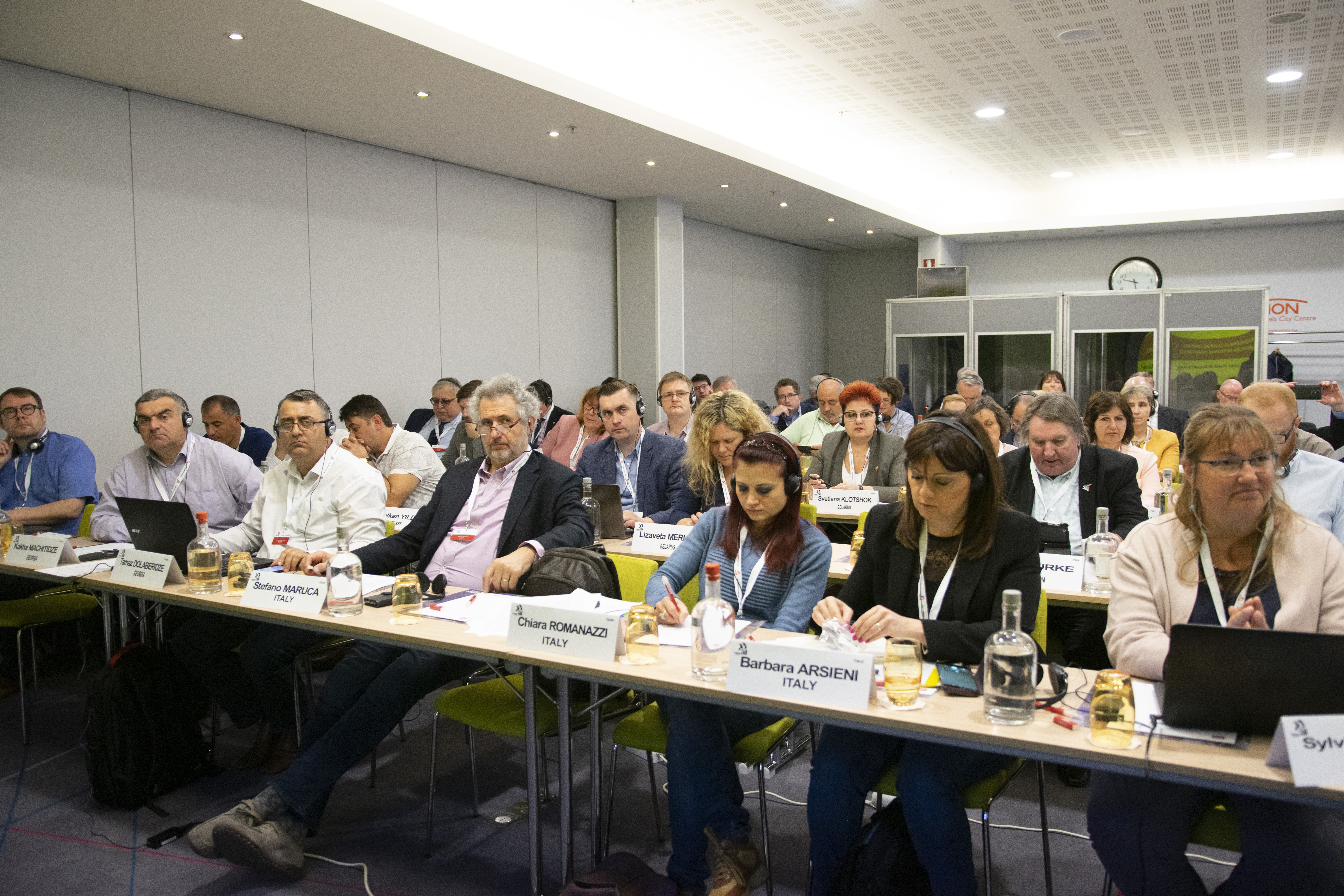
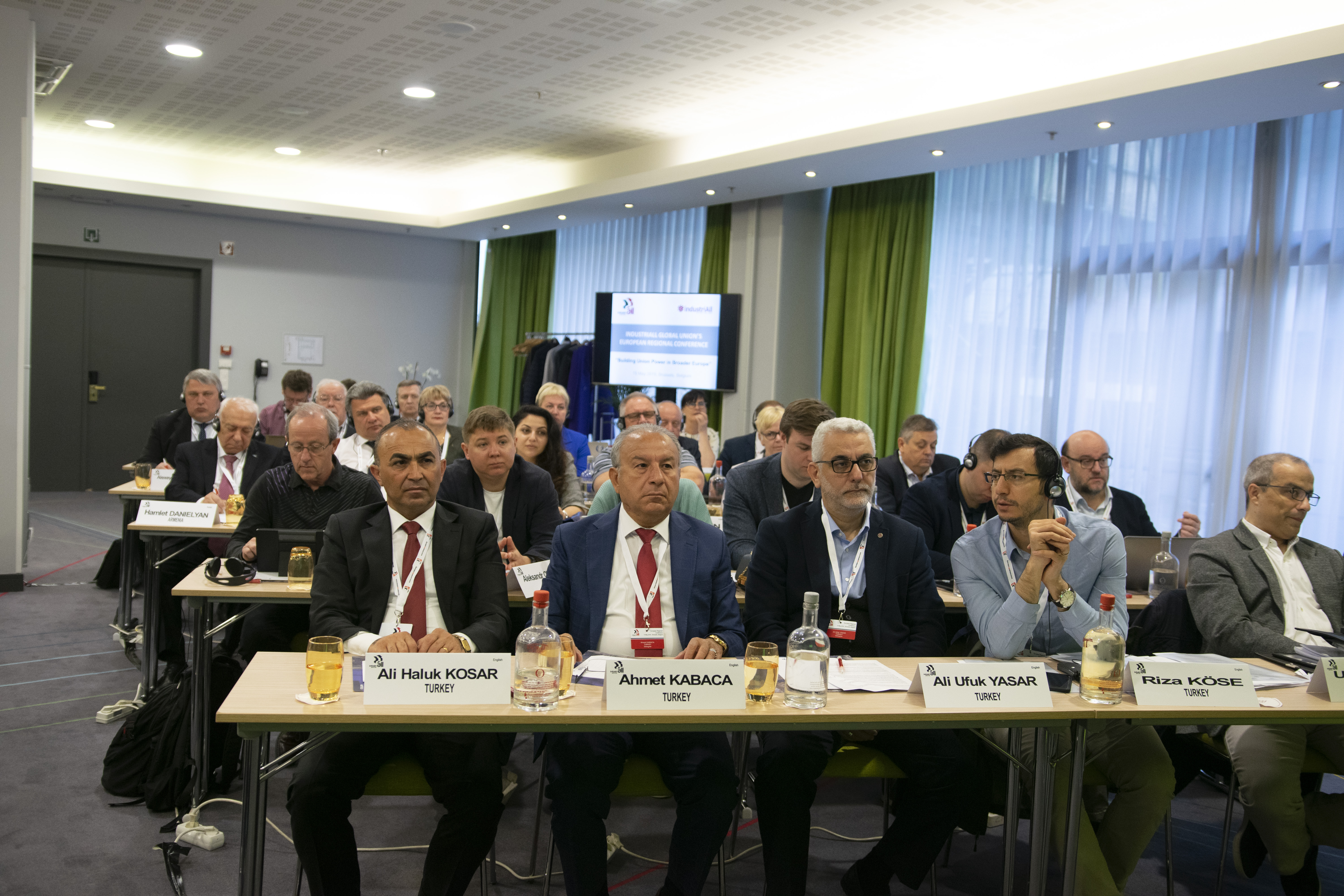
Over 80 delegates from across Europe came to Brussels, Belgium on 15 May 2019 for a productive comprehensive discussion at the Statutory European Regional Conference of IndustriALL Global Union, organized in cooperation with IndustriAll Europe, on how existing challenges are dealt with in different European and neighbouring countries and whether positive approaches could be replicated elsewhere.
All the discussions at the conference were focused around three main pillars: trade union rights and freedoms; building union power, organizing and retaining membership; and the necessity of building stronger union solidarity throughout and broader Europe.
On a broader scale, IndustriALL has organized similar discussions through its regional conferences in Latin America, Asia Pacific and MENA and the plan is now to follow up in the rest of the regions and give an update on progress in implementing IndustriALL’s Action Plan and strategic goals stemming from it.
Valter Sanches, IndustriALL Global Union general secretary opens the conference
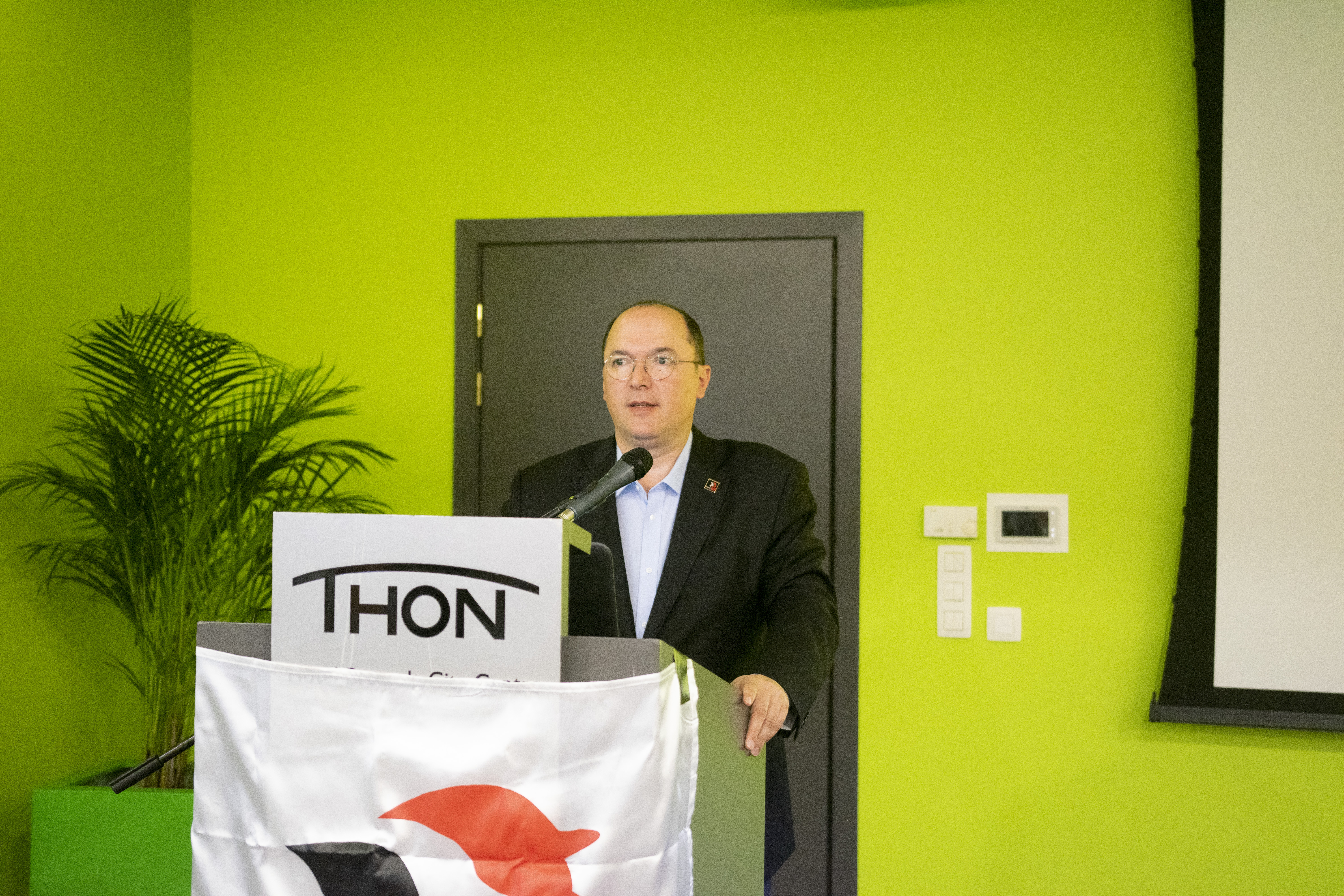
Addressing the meeting, Valter Sanches, IndustriALL general secretary, reiterated the importance of cooperation between IndustriALL Global Union and IndustriAll Europe and the use of the strong features of both organizations to achieve important synergies in advancing trade union rights.
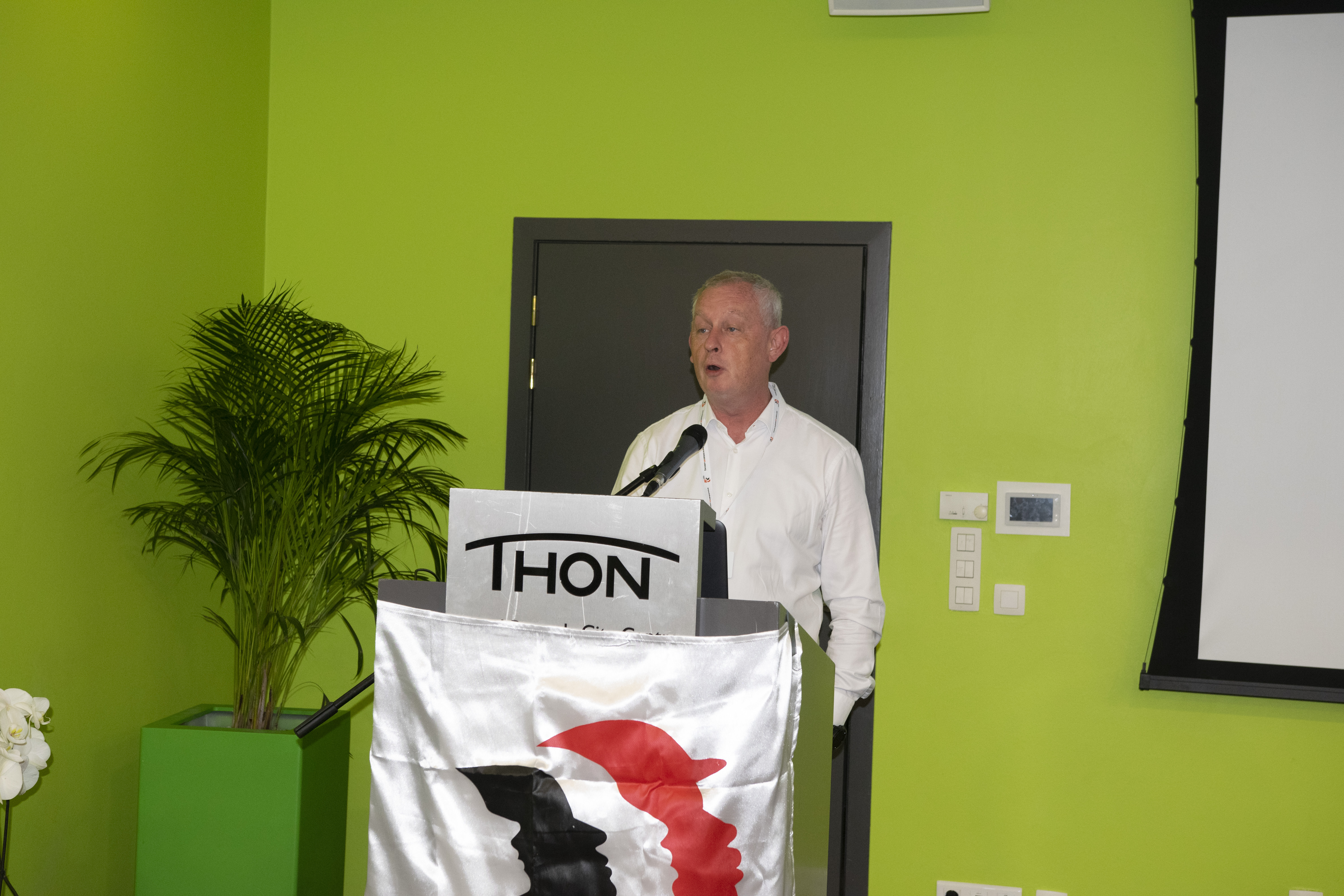
Luc Triangle, industriAll Europe general secretary addressing delegates of the conference
According to Kemal Özkan, IndustriALL assistant general secretary, European countries are not excluded from violations of fundamental trade union rights – on the contrary, in Eastern Europe they have alarmingly increased, although not to the same extent as in other parts of the world. Some 58 per cent of countries violated collective bargaining rights at least once, while three quarters of European countries violated the right to strike.
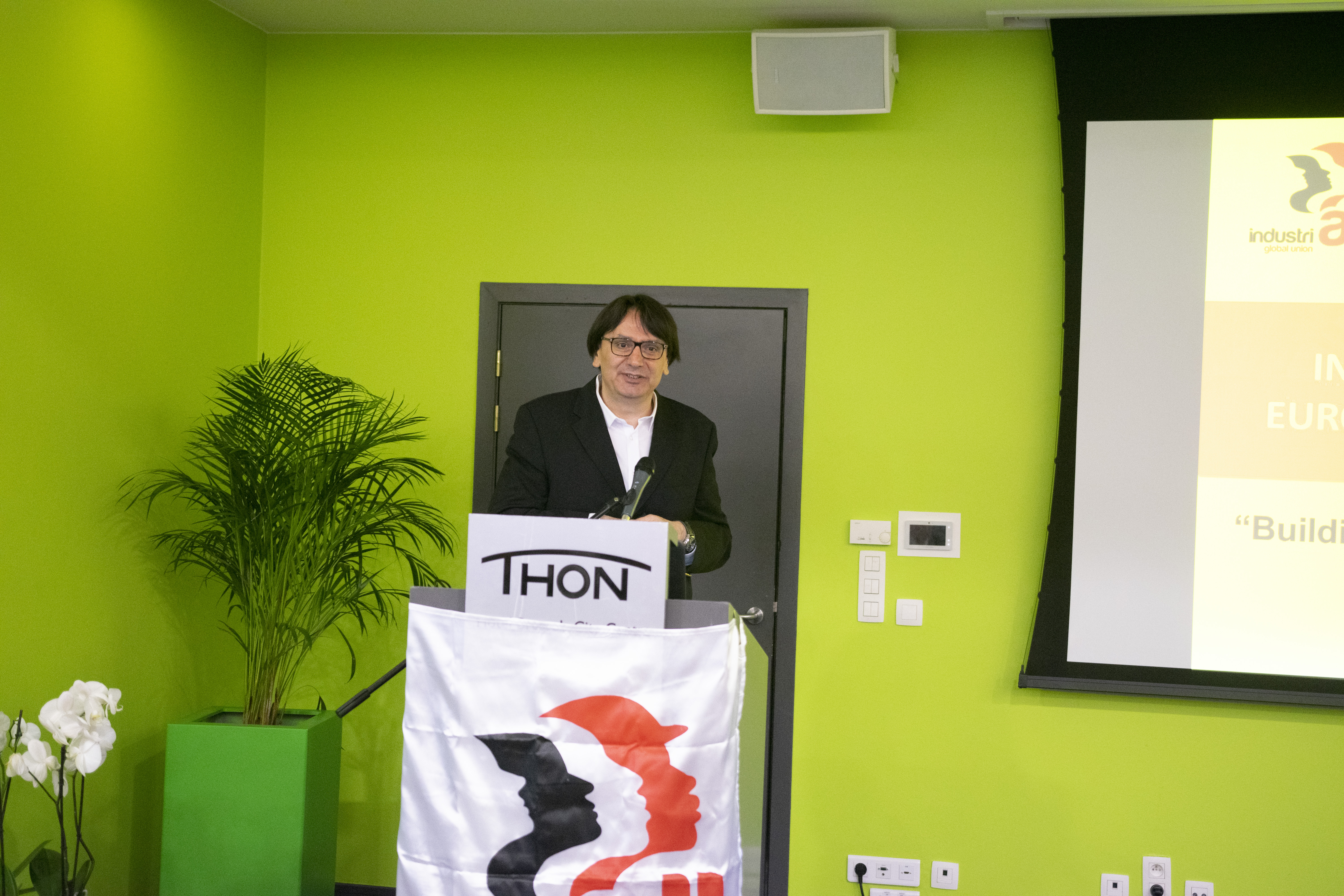
Kemal Ozkan, IndustriALL assistant general secretary, speaks about violations of fundamental trade union rights in Europe
ITUC PERC executive secretary, Anton Leppik presented the situation on trade union rights in the European region on the basis of the ITUC Global Rights Index. His report was complemented by IndustriALL regional secretary for CIS countries, Vadim Borisov, who paid special attention to an alarming trend that started in Belarus last year and now being used in other countries of the region, namely the attempt to criminalize trade union work through administrative and criminal procedures. He also underlined other serious attempts of government interreference in trade union internal affairs in Kazakhstan and attempts at legal restrictions on trade unions in Kyrgyzstan and Georgia. Challenges faced by unions doing organizing in Hungary and Turkey were also presented at the conference.
The delegates also discussed concrete examples of effective ways to build union power. In this regard Luc Triangle, IndustriAll Europe general secretary presented their project of “Building Trade Union Power – Our way forward”. Within the framework of this initiative IndustriAll Europe supports affiliates’ strategy to build up strong organizations, with better involvement of women, youth, white collars, and migrants and organizing new groups of workers, especially in countries and regions of Europe where trade unions are under-represented.
International solidarity in union organizing projects is extremely important. Delegates were informed of organizing projects in Russia, Ukraine and the UK. Special attention was given to two joint organizing projects of German trade union IG Metall and Hungarian union VASAS. The projects are ongoing, but have already brought positive results.
The last section of the conference focused on trade union solidarity in the face of such challenges as global trade and climate change.
Kemal Özkan introduced a new idea for leverage in international labour relations, the notion of ‘due diligence’ used by companies to show their respect to trade union, labour and human rights. IndustriALL increasingly uses it in international social and labour relations to promote and sustain cross-border social dialogue and prevent harm across all business operations and supply chains.
Luc Triangle paid attention to a growing inequality of wealth distribution between and inside the EU members states, the future of Europe questioned by different extreme right populist parties, a strong industrial policy strengthening European industry in conditions of fair trade and competition, energy policy, climate change and decarbonization and finally collective bargaining system under pressure.
Delegates of the conference
After global and European perspectives, affiliates presented their work and challenges including digitalization, climate and environmental issues and consecutive changes in industry faced in Sweden, Italy, Russia and Ukraine. Clearly, organizing and increasing the legitimacy of unions to represent their members remains the most appropriate answer to most of them, but cooperation and coordination between trade unions must be an important part in light of shrinking resources.
Delegates of the conference
Upon conclusion of the conference, Kemal Özkan, said
“Exchange of information is important and will feed our future actions. We will continue regional and country programmes in European and neighbouring countries in close cooperation with industriAll Europe at different levels on a number of issues like climate change, sustainable industry, due diligence, trade union rights and others.”
Valter Sanches said
“I congratulate all participants of this conference, which allowed us to have a very profound exchange of opinions and views among trade unions at European level. The conference allowed us to take another step to a better cooperation with industriAll Europe, confirming and setting new directions for our future mutual work.”
Photos from the conference are available on Flickr.
FEATURE: Why we need international union solidarity now more than ever
Text: Walton Pantland
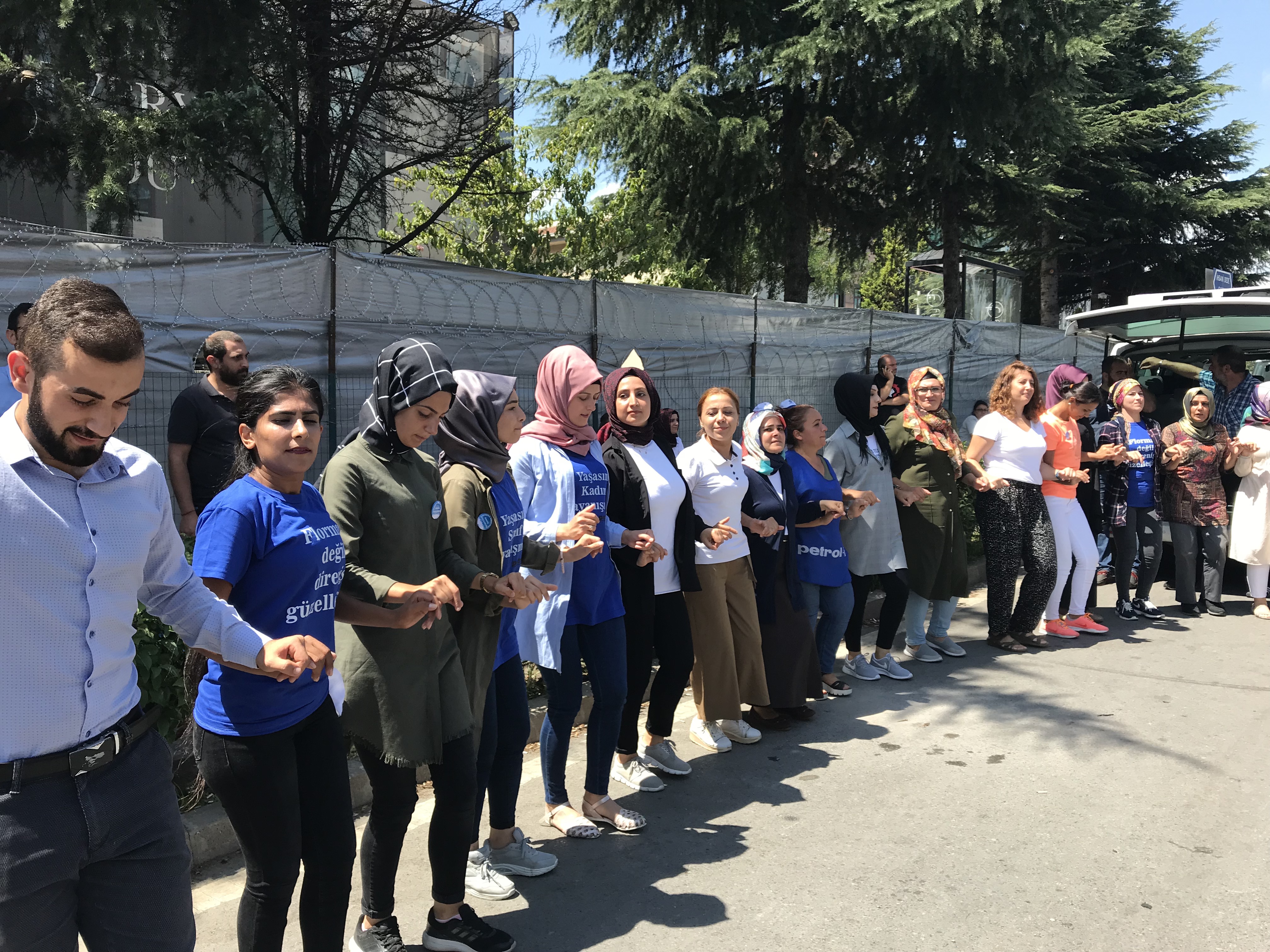
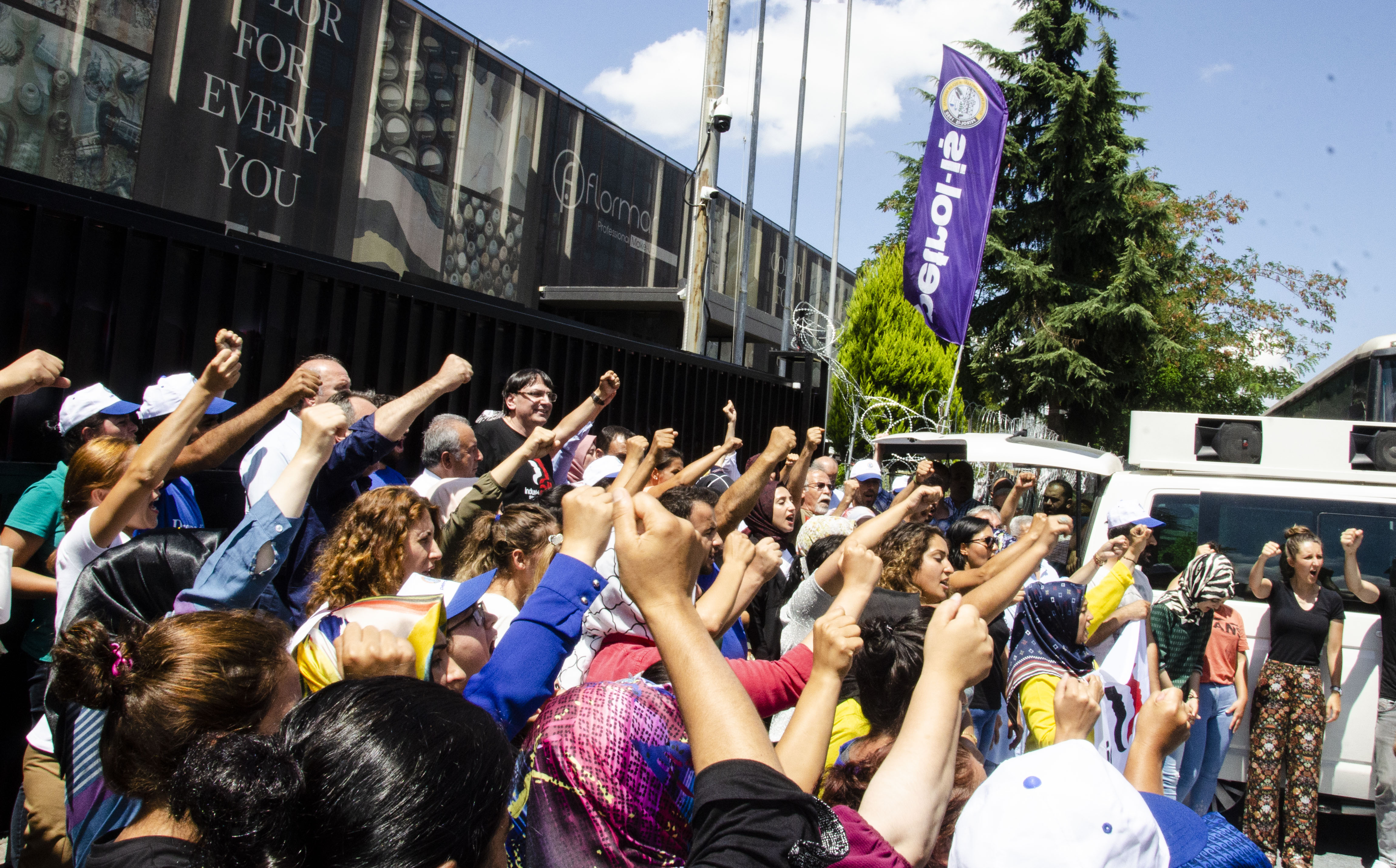
The women form a line outside their factory gate in an industrial park outside Istanbul, and link arms. They are old and young, modern or traditionally dressed, united in the moment. A mobile sound system with a battery powered amplifier starts playing a Turkish folk song.
“Resistance is beautiful!” shouts the young woman at the head of the line, and the dance starts, weaving back and forward, circling around. After being fired for joining a union, the women at Yves Rocher’s Flormar factory danced this dance every day for almost 300 days, in sun and snow, and streamed it live on Facebook, spread it on Twitter and Instagram. And because of networks of global solidarity, their voices are heard in the local community, in the Turkish parliament, at the company headquarters, at the ILO, and at retail outlets in France, Germany, Switzerland and the US.
Flormar factory in Gebze, Turkey. IndustriALL
Supported by unions in France, they have taken their picket line to Yves Rochers’ Paris headquarters. This is labour solidarity 4.0, enabled by global structures, amplified by social media, uniting unions and consumers around the world against a pillaging multinational. The picket line has come to your smartphone, tablet or desktop, and you can respond in real time.
Faced with this resolve, the company settles. Money has poured into the strike fund from all over the world, and growing global pressure threatens to damage the brand. It’s an emotional moment as the striking workers sign the deal and agree to a package that includes 16 months of salary.
The voiceless and marginalized have found their collective strength and successfully resisted an assault by a corporate giant. The union dusts itself off and goes back to organizing. It’s just another day on the front line of the global struggle between capital and labour.
When we stand together, we can win
Flormar factory in Gebze, Turkey. IndustriALL
There are many stories like this: ordinary people standing together in solidarity, finding strength in each other. A victory like this strengthens us, gives us hope, and teaches us lessons on running successful campaigns.
Unfortunately, we have even more stories which don’t have a happy ending. Stories where the company violates rights with impunity, fires union members, cuts corners on health and safety at the cost of workers’ lives. Plants that close because speculators want a quick profit.
Like the three thousand workers at the Grasberg mine in Indonesia who lost their jobs when they became a political football between the company and the government. An international campaign was not enough to change the situation. And there are countless others we don’t hear about because no union even gave them a voice.
A perfect storm of crises
Even when we win, most of our victories are defensive. Sometimes we successfully fight off an assault on our terms and conditions, but we’re not winning a lot of new ground. Labour is on the back foot. Jobs are becoming more precarious. Fewer workers have good pensions. Inequality is growing. Every year, the share of wealth hoarded by a tiny fraction of the super-rich grows, and the share left for the rest of us shrinks. The balance of power between capital and labour has tilted heavily in favour of capital.
The crisis faced by labour is part of a bigger political crisis. The centre ground collapses and the world is polarizing. Instead of working together for shared prosperity, we are competing in a zero-sum game. Institutions that build global consensus – from the UN and ILO through to the EU and global unions – are being undermined.
When the Soviet Union fell in 1991, for the first time in history the world was united in one economic system. The world moved away from any attempt by the state to regulate or control the economy. Markets had won the argument, and reigned supreme. For many, it was a time of great hope, a belief in a future of shared prosperity and an end to conflict, the End of History. Until history reasserted itself with a vengeance when the global financial system crashed.
In 2008, the global economy, and all the old certainties, collapsed. Banks were bailed out and investors were protected – at the expense of working people, who have now endured a decade of austerity that has torn apart the fabric of society. A new breed of disruptive, parasitic disaster capitalism makes cash from chaos rather than productive activity.
By saving the global economic system, we risk destroying the future. As the developing world is subsumed into the global economy at a breakneck pace, people in the industrialized West, for the first time, expect their children to be worse off than them. The arc of progress has ended, and the global order is collapsing. As the political centre spins out of control, things fall apart, and corporations and right-wing populists fill the gap.
We are living through a perfect storm of crises, interconnected and feeding off each other: climate change, the erosion of democracy, grinding proxy wars, refugees, fake news, conspiracy theories, jobs reduced to gigs before being automated out of existence.
We have 12 years to dramatically reduce our carbon emissions if we want to preserve any quality of life on Earth. Plastic pollution fills our seas and has entered our food chain, and climate change is wreaking havoc: floods, heatwaves and other extreme weather events are costing lives and billions of dollars. Climate protesters are being arrested for shutting down cities, but still the political response is inadequate and the most powerful man in the world denies climate science.
Democracy is being undermined, societies are polarizing and fascism is on the march again. As nation states lose power, calls to nationalism grow. The world’s biggest multinational companies have annual budgets far exceeding that of many countries. National governments have dwindling power to influence their behaviour, and they are reduced to a beauty contest and race to the bottom to provide the lowest wages and the most favourable tax rate for the best infrastructure.
Conflict rages around the world, fuelled by growing military budgets, making weapons development a booming industry. Democracy is collapsing under the weight of social media enabled populism, and truth is lost to conspiracy. Labour standards are eroded as work becomes precarious.
We need new forms of union organization, and new internationalisn. The global union movement is all we have, the only counterpoint to global capital.
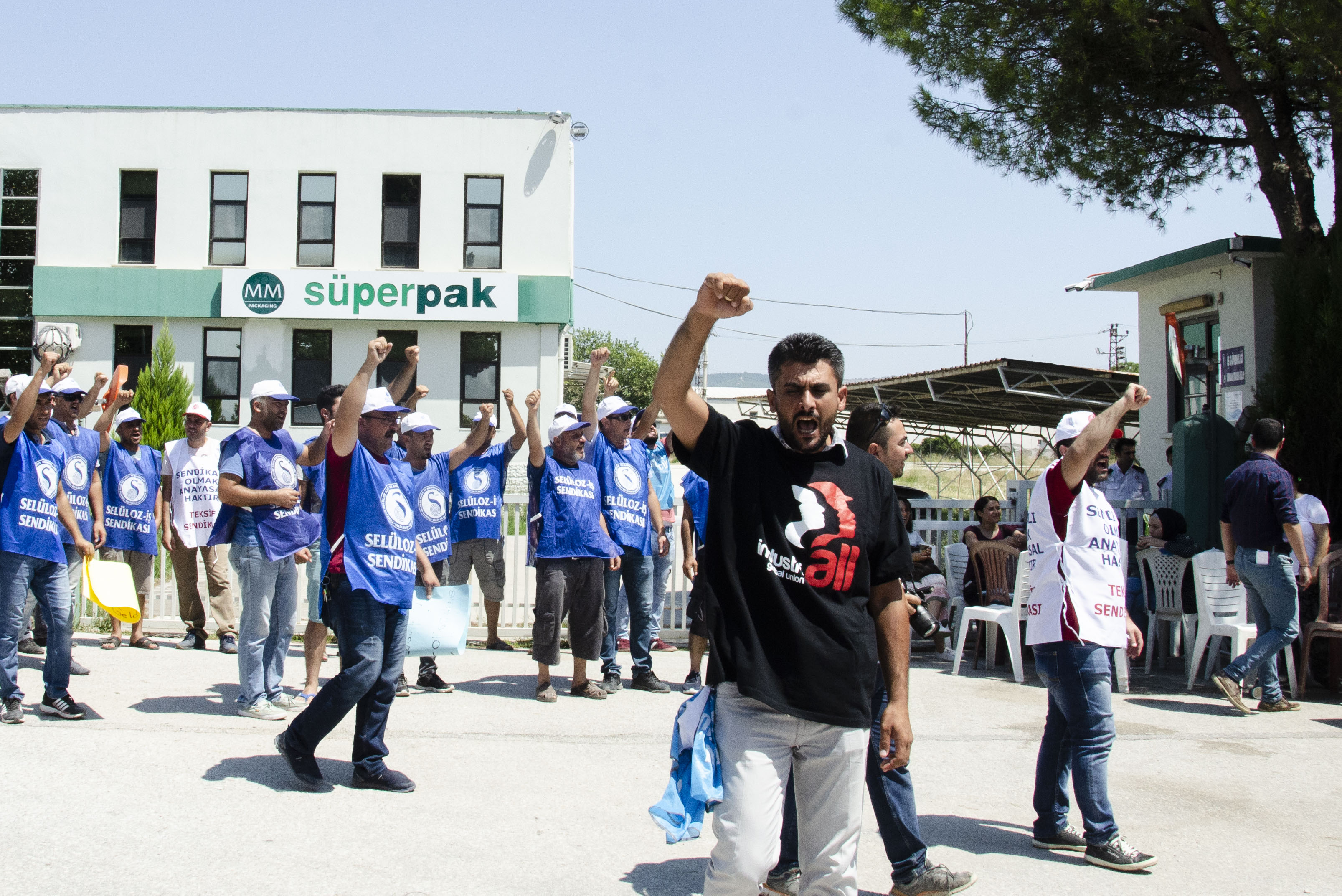
Strike at Mayr-Melnhof in September 2018, Izmir, Turkey. IndustriALL
We need new forms of union organization, and a new internationalism. The global union movement is all we have, the only counterpoint to global capital.
Strike at Mayr-Melnhof in September 2018, Izmir, Turkey. IndustriALL
The politics of despair
New forms of media mean that we are exposed to more news than ever before, unmediated, immediate: we feel like we are present as every event unfolds. This leaves us feeling overwhelmed and powerless. It is difficult to get a measured assessment of the world – we exist in a constant state of crisis. Instead of blaming corporations and a global economic system that prioritizes growth over people, right wing populists blame immigrants and foreigners. Working class people feel alienated from distant elites, but it is the Right who are speaking for them.
Right wing populist governments – in the US, UK, Israel, Brazil, Hungary, Turkey, India and elsewhere – are turning away from global alliances and looking inward: Make America Great Again, Take Our Country Back, Brazil above everything, God above everyone. As global development erodes local identities, identity reasserts itself in the most reactionary way.
The labour movement has yet to come to terms with the future of work. When the first unions were formed, workers were gathered in factories and we recruited at the factory gate. But as supply chains have lengthened, work has been outsourced and made precarious, and unions represent a shrinking core of permanent workers.
Capitalism is global, but our responses are still national. Workers are encouraged to distrust each other, and the version of events given by their own management and national politicians gets precedence over the accounts of labour violations reported by unions in other countries. But if the diagnosis is complicated, the prescription is simple: we need to reassert the human right to dignity at work. We need new forms of union organization, and a new internationalism. The global union movement is all we have, the only counterpoint to global capital.
A politics of hope – the union path to a fairer world
Whatever happened to “another world is possible”? The focus on crisis means that people don’t hear the good news – the small, undramatic ways in which we make the world better. Every time we sign a global framework agreement (GFA), we win a commitment from a company to do better, to establish industrial relations at an international level.
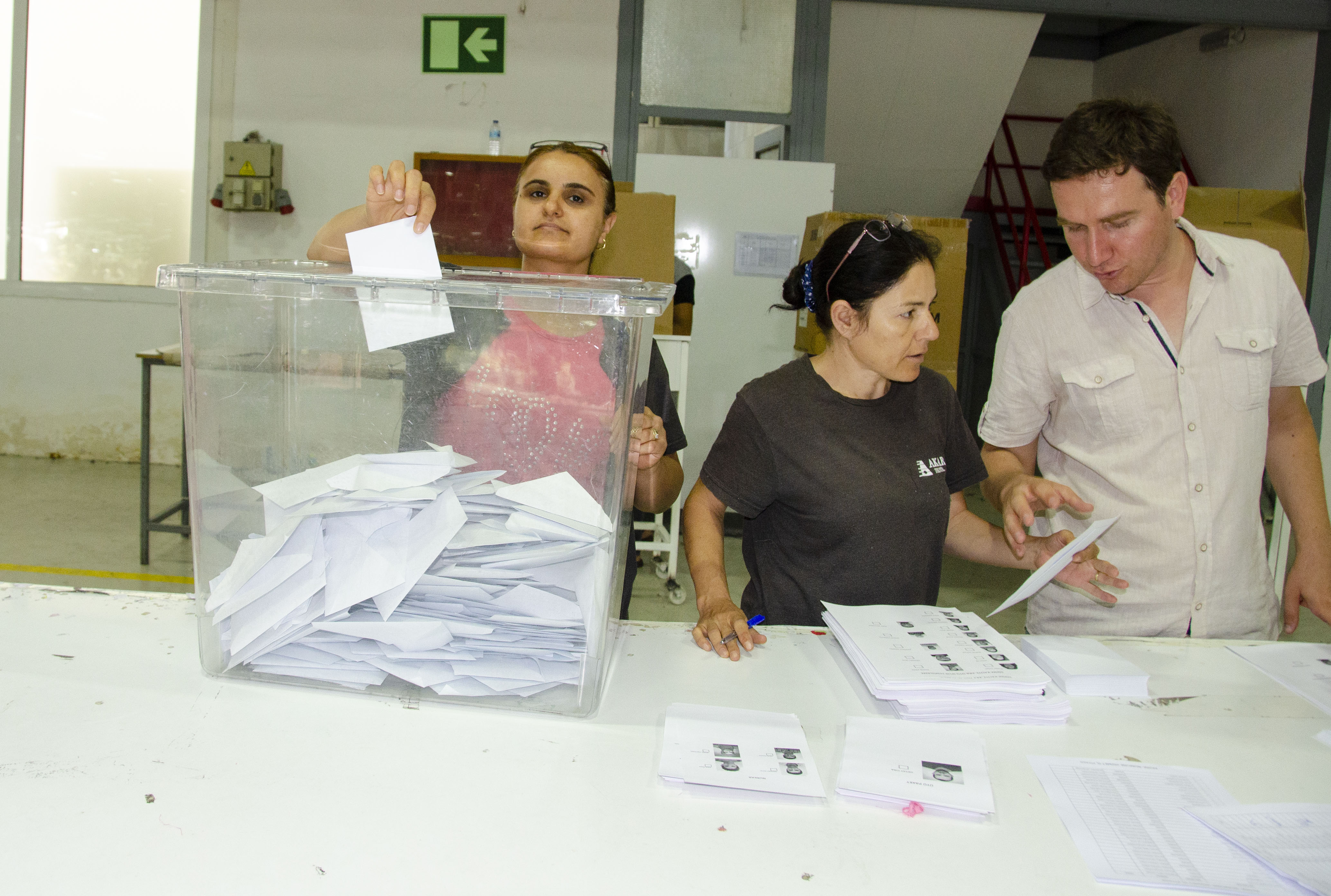
Union vote at Akar Tekstil in September 2018, Izmir, Turkey. IndustriALL
We are everywhere. Unions are the biggest democratic organizations in the world. Our members mine the minerals and the iron ore, produce the steel, create the components, assemble the cars and the ships, the mobile phones and the washing machines. Then break them down and recycle them.
From the bottom of the value chain to the top, union members build and maintain the world. IndustriALL represents 55 million workers, the other global unions many millions more. The ITUC represents 207 million. What other global organizations have this reach, and do so much with so little?
Unlike NGOs or consumer groups, unions have a mandate and democratic legitimacy. Unlike charities and pressure groups trying to solve problems from the outside, unions give people the power to stand together and solve their own problems.
And unlike political parties, unions unite workers regardless of their political views, gender, race, religion or nationality. Whoever you are, whatever your identity, if you work for a living you are united by a common economic interest. This produces inclusive politics rooted in experience rather than ideology: unions give us the opportunity for mass, democratic participation in the economy.
As global instability grows, many people feel a sense of impotence. Unions can provide hope, and a realistic pathway to a better future. This means building alliances with consumer groups and social movements, and speaking to the issues people care about, instead of being perceived as defending a narrow set of interests. We need to be present in the climate movement, in feminism, in all the places where people come together to prefigure a better world. We need to show that we are part of the future, not the past.
But we are only as strong as our unity. We can’t beat multinational companies with national strategies, and we can’t rely on national governments to protect us. All we have is each other. And we can take on multinationals when we organize their workers around the world – especially when we organize the supply chain too.
Organize along supply chains
Distributed global capitalism has long and intricate supply chains that outsource exploitation. Components are manufactured around the world, using just-in-time procurement, and shipped for assembly. The further down the supply chain you go, the lower the standards and the lower the unionization level. An advanced piece of machinery assembled in Europe by workers on good wages with strong union representation contains raw materials extracted from the earth by workers in desperate conditions, and components made by low wage precarious workers in repressive states.
Capital will always seek low wage, low standard countries, because production is cheaper and profit is higher. It is in the interest of unions in developed countries to care about this. Strong unions in developing countries make it harder for companies to undermine labour standards by moving. Organizing only at the top of the supply chain is not solidarity. We need to represent everyone.
The solidarity model
Union development is cyclical. The countries that first experienced the industrial revolution developed the first unions, and fought for the labour standards that we now take for granted. Those standards were incorporated into national law, and into ILO Conventions and other global standards. Although they are under assault now, union victories in the past mean that workers in advanced democracies experience relatively good conditions at work.
Production has shifted to developing countries. Many of them are industrializing for the first time, creating a new workforce from people who were recently subsistence farmers. These workers are exploited in the same way that workers in the West were at the time of the Industrial Revolution, and they are fighting back by building unions where none existed before.
But they don’t have to start from the beginning. They are learning from experience. Unions in advanced countries have resources and expertise, and spending money on union building is an important investment. At the same time, unions in developing countries need to build sustainable structures. To be truly independent, unions need to be funded through the dues collected from their members.
Defending and rebuilding institutions
Unions have always understood internationalism. IndustriALL’s predecessor the International Metalworkers’ Federation was founded in 1893. After witnessing the pointless and destructive horror of a world torn apart by competition and warfare, international institutions like the UN and ILO, non-government organizations like the Red Cross and countless thousands of others were created to build peace and dialogue.
But we are under attack. There is a global trend away from positive industrial relations: since 2012, the employers’ group at the ILO has tried to undermine the right to strike, and across the world, in hundreds of different ways every day, employers are chipping away at a century of labour gains. Workers – especially the young, and women – are bearing the brunt.
We need strong, democratic institutions to counter the power of multinational corporations. Representative institutions translate workers’ activism into structured power. For most of the 20th century, we relied on national governments to manage employment relations by legislating on workers’ rights and responsibilities. The law was a major weapon in the union arsenal. In the 21st century, we need a global legal system. Because capital is global, and countries compete, only globalized labour standards can ensure that workers everywhere can work with dignity.
The most effective way to do this is through the ILO. ILO Conventions represent years of expertise and best practice. When a country ratifies an ILO Convention, it incorporates it into national law. This is why pushing for the ratification of Conventions is such an important part of global union strategy.
The ILO is a hundred years old this year. We need an ILO for the 21st century, with a universal labour guarantee that provides all working people with the core rights of the ILO fundamental principles: freedom from child and forced labour, freedom from discrimination at work, and freedom of association and collective bargaining, as well as the right to a living wage, health and safety at work, and control over working time.
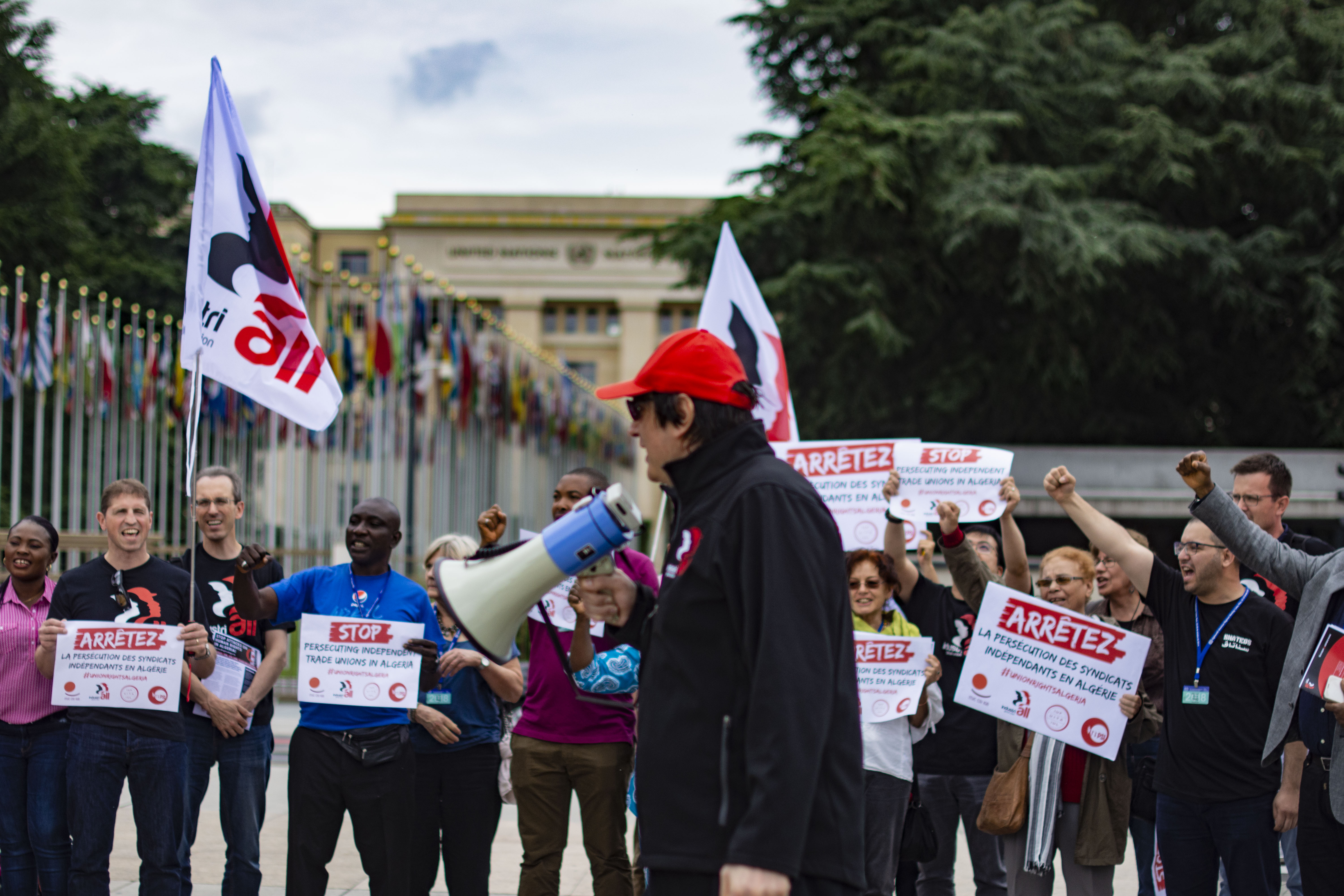
Algeria demonstration in Geneva, June 2018. IndustriALL
Binding global mechanisms
But it is not enough. Global corporations are often more powerful than national governments, and domestic labour law is an inadequate tool. Just as national collective agreements give workers enhanced, negotiated protection, so we need legally-binding global collective agreements.
GFAs contain the nucleus of this idea, reflecting a commitment to establish a global industrial relations standard. But they are not legally-binding instruments: the next generation of GFAs will need to be. The first example of an effective binding global mechanism is the Bangladesh Accord, a legally-binding commitment to improve factory safety. A precedent was set in 2016 when two global brands were taken to arbitration for failing to comply.
This is the future of international industrial relations, and we need to fight for it. IndustriALL is carrying out pioneering work in developing the mechanisms we need to negotiate and enforce binding global agreements, but a lot more will need to be done: agreements must be reached, cases fought and precedents set.
If not us, then who?
A global crisis needs a collective response that competing governments and corporations are unable to give. Despite warm words at Davos and other global meetings, the people in charge have opposing interests and cannot meaningfully work together. To counter the collapse of the centre, we need a people’s international, a global ecosystem of interrelated – intersectional – struggles.
The irony is that capitalism needs unions and strong institutions to create stability through higher wages and better working conditions, ensuring that workers earn enough to buy things and drive the economy.
Taxation recycles surplus capital, keeping it productive instead of hiding it offshore. State institutions provide the physical infrastructure, long term economic planning and support for emerging or changing industries that are necessary to navigate the changing world of work.
The internet, for example, was built on publicly funded research – and an effective and Just Transition to a carbon neutral future, with work and dignity for all, will not be achieved by the private sector.
The future will be built by global consensus. As unions, we are among the most representative organizations in the world. And global unions like IndustriALL link workers, from the shop floor throughout the supply chain, to the companies and institutions with the greatest power to shape our world.
Flormar factory in Gebze, Turkey. IndustriALL
To paraphrase an old saying:
If not us, then who?
If not this way, how?
If not now, then when?
Drummond wages anti-union campaign in Colombia
ASED has condemned Drummond, the country's second-largest coal mining company, for refusing to negotiate with the union concerning its list of demands. In addition to harassing union leaders and warning workers not to join the union, the firm has initiated special proceedings to try and disband the union, wrongly alleging that its members are "workers in positions of trust".
Furthermore, Drummond Ltd Colombia has fired union members and offered promotions to workers who leave the union. It has also held meetings with miners informing them that it will bring an end to ASED, and it has prevented the union from communicating with workers at the mine.
The refusal of Drummond Ltd Colombia to recognize a legitimately constituted trade union is a violation of ILO Convention 87, which guarantees freedom of association and protects the right to organize, and ILO Convention 98, which ensures the right to organize and collective bargaining.
General secretary of IndustriALL Global Union, Valter Sanches, wrote a letter to the CEO of Drummond Ltd Colombia, Mike Tracy, and to Colombia's Labour Minister, Alicia Victoria Arango Olmos, calling on them to ensure that Drummond Ltd Colombia complies with the country's laws.
He also urged the company to bring an end to its anti-union behaviour, recognize ASED and engage in good faith negotiations with the union.
Finally, IndustriALL called for intervention fromBettercoal, a global initiative to promote continuous improvement in the sustainability of the coal supply chain.
A methane gas explosion in a coal mine in Pakistan kills four workers, and traps another 40 underground. In Zimbabwe, 28 artisanal miners drown when the gold mine they are working in floods. An open cast mine in the Congo collapses. An explosion kills 304 at Soma in Turkey. Miners are trapped in a copper mine in Chile, coal miners in New Zealand and West Virginia are killed in accidents. In Brazil, as many as 300 people die when the Brumadinho tailings dam collapses. Explosion. Collapse. Flooding. Fire. Carbon monoxide poisoning. Lost bodies underground that are never retrieved. Grieving relatives who have no closure.
Miners die every day in China’s coal mines, while in Pakistan, accidents happen every week, in almost identical circumstances: a methane gas explosion in an illegal or unofficial mine, with no emergency service at hand, medical assistance, or protocol for dealing with accidents. Miners dig their colleagues out of the ground and give them first aid.
We face a numbing daily litany of terrible mining accidents, most so routine they are difficult to tell apart, barely making the local news. Mining is always going to be more dangerous than office work. But this inherent danger, and the relentless drumbeat of death, induces a fatalism, and is an obstacle to attempts to make mining safer. Miners are expected to accept that dying at work is part of the job.
And those who do make it to the surface face a host of diseases and injuries. Silicosis. Black lung. Lost limbs. A toxic environment that poisons the local community.
Occupational diseases kill more people than accidents. People have thousands of years of experience and expertise in mining. Surely by now we know how to stop so many workers dying?
The truth is that we do. But it is cheaper to kill workers than to make mines safer.
It is entirely possible to process mine tailings safely, but it costs more. Mines can be reinforced to prevent collapse, but this takes time
The biggest obstacle to mine safety – the reason so many miners die at work – is profit. It is entirely possible to process mine tailings safely, but it costs more. Mines can be reinforced to prevent collapse, but this takes time. Safety is expensive, and would make some marginal mines uneconomic. But can we allow companies to kill workers to haul the last remnants of an exhausted seam to the surface?
We have traffic lights, lanes for vehicles travelling in different directions and rules to make roads safer, instead of just expecting drivers to be careful. The way to make mining safer is to put systems in place, instead of allowing dangerous conditions to persist and then accusing mineworkers of carelessness when accidents happen.
The knowledge of how to make mining safer has been collated into codes of practice, guidelines, and ultimately, ILO Convention 176 on Health and Safety in Mines. Adopted in 1995, C176 sets out a framework for countries to create a safe mining environment, with requirements for companies and rights for workers. This means creating a legal framework, developing expertise in safety, and building an inspection mechanism that can enforce safety and sanction offenders.
Crucially, for workers this means:
The right to know and understand the dangers
The right to refuse dangerous work
The right to participate fully in health and safety decision making
Only 33 countries have ratified C176, with Pakistan and China notably absent. Creating inspection and enforcement mechanisms is expensive, and powerful mining lobbies are resistant. We need to assert that miners’ lives are more important than profit. The key to changing safety culture in the mining industry is to agree to a global standard on mine safety – C176 – and enforce it with powerful unions and well-trained union safety representatives.
The stronger the union, the safer the mine.
The case of Brumadinho
Barely a few months have passed since the Brumadinho mining tragedy, which killed 209 people and left 97 missing in the state of Minas Gerais, Brazil. On 25 January 2019, Vale’s Corrego do Feijão tailings dam burst, and the human and environmental consequences shocked Brazil and the entire world.
A red deluge of 13 million cubic metres of mud and toxic mining waste washed away everything in its path. An entire community was swamped and the use of untreated water from the Paraopeba River was suspended after the detection of metals at levels above what is allowed by environmental legislation.
The Brumadinho tailings dam failure is probably the worst industrial accident in the country’s history. It happened three years after a similar disaster in Mariana, also in Minas Gerais, when a dam belonging to the mining company Samarco Mineração, owned by Vale and BHP Billiton, collapsed on 5 November 2015. Nineteen people lost their lives and the mining waste reached the Doce River, a source of drinking water in southeast Brazil.
At the time, BHP Billiton issued a statement confirming that Samarco had signed a preliminary commitment with Brazilian prosecutors, assigning millions of dollars to finance a series of emergency and safety measures that included prevention, mitigation, correction and compensation for the environmental and social consequences of the incident.
Nevertheless, history repeated itself. What went wrong?
Although officials vowed to adopt strict safety protocols in their dams, that never happened. Unions allege that Vale knew about possible safety problems at other dams, but ignored the warning signs.
The Public Prosecutor’s Office for the state of Minas Gerais (MPMG) announced the opening of an investigation into Vale for corruption, on suspicion that its managers could have deceived the country’s authorities when it said it didn’t know about the safety risks posed by the dam that collapsed in Brumadinho.
So as not to hinder the process, the MPMG, together with the Federal Prosecutor’s office and the regional and Federal Police, recommended, on 1 March, that Vale temporarily suspend its CEO, Fabio Schvartsman, together with eight other managers and four people involved in the company’s risk management. The company complied.
The investigation confirmed the existence of a conflict of interest between the mining company and service providers with regard to the auditing of dam safety, allowing the external auditors to be pressured and threatened. This resulted in the undue reduction of the minimum safety factor standards used to assess the stability of the Corrego do Feijão dam in Brumadinho.
Brazil’s National Mining Agency began checking if other dams, similar to the one at Brumadinho, are at risk of collapse. There are 88 upstream tailings dams in Brazil built in the same way. The Agency has since banned the operation of some, ordering them to be removed by 2021.
The Brazilian Senate has approved a bill that would impose a series of measures to improve dam safety, in addition to requiring new monitoring technology and detailed emergency plans. The bill is now before the Chamber of Deputies.
Valter Sanches, general secretary of IndustriALL Global Union, explained:
“In Brazil there are currently several regulations on the way, emanating from the Minas Gerais state or federal governments, and they have removed dams that were in a similar condition. They took action after two very serious accidents.
“It is important to mention that in other parts of Brazil, Vale uses different retention methods that are dry and work well. Why do they do it in Pará (in the north of Brazil) and not in Minas Gerais? Because iron ore mining is cheaper than alumina, manganese and other minerals which are higher in value, covering the cost of the dry system which is more expensive, but not as risky.”
The response of unions
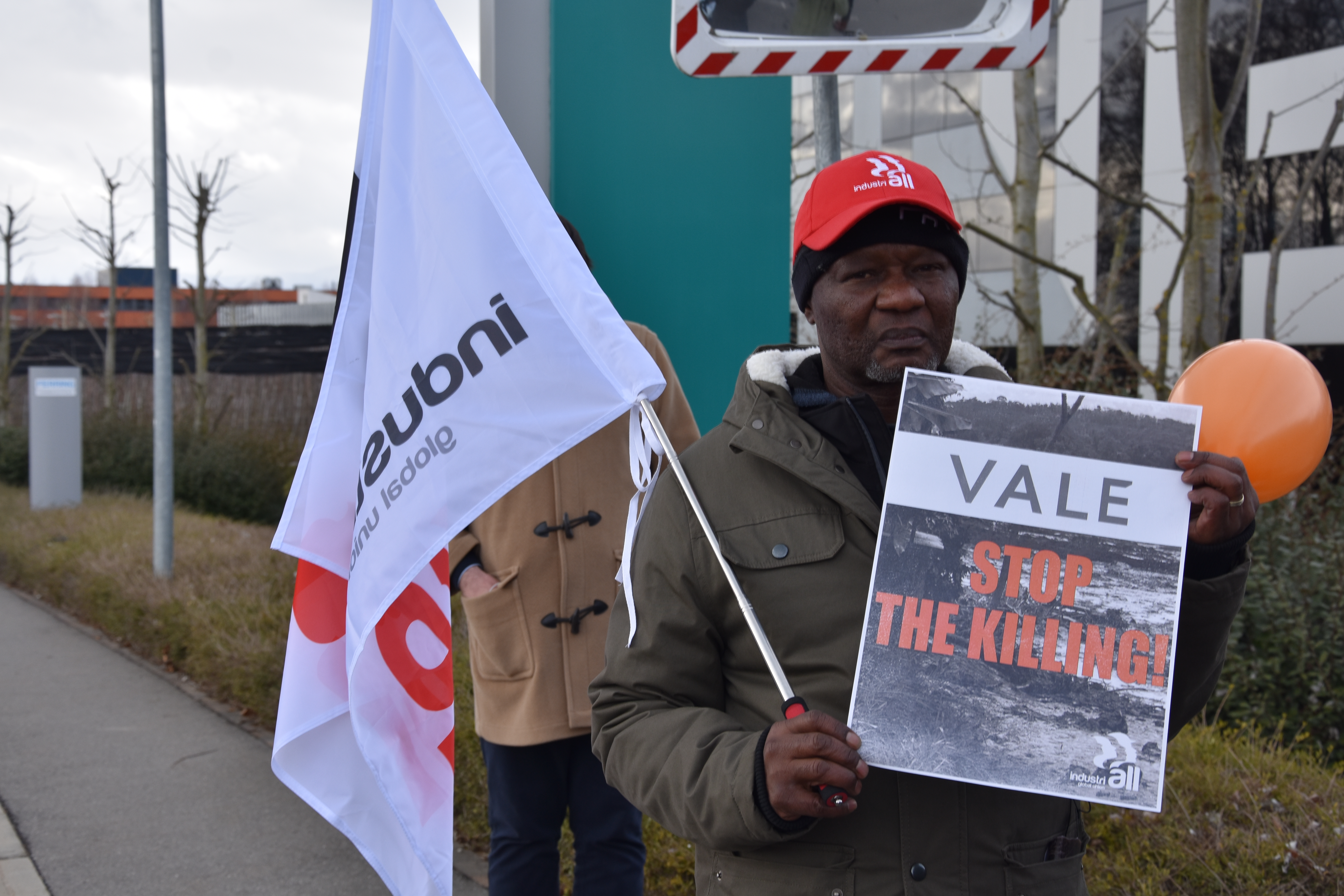
Protest against Vale, Switzerland, January 2019. IndustriALL
After the Mariana and Brumadinho tragedies, trade unions, both in Brazil and all around the world, have taken a number of different initiatives.
On 26 March 2018, IndustriALL together with Building and Wood Workers’ International (BWI) filed a complaint against BHP Billiton and Vale under the OECD Guidelines for Multinational Enterprises.
This complaint was also signed by BWI affiliate, the Trade Union of the Construction, Concessions and Engineering Consultancy Industries of the State of Minas Gerais (SITICOP), and by IndustriALL’s Brazilian affiliate, CNQ-CUT.
The complaint refers to the consequences of the collapse of the dam in Mariana, and identifies violations of the OECD Guidelines for Multinational Enterprises by Vale S.A. and BHP Billiton.
The companies failed to:
Provide adequate remedy and establish a legitimate remediation process involving affected communities and workers
Respect trade union rights
Ensure observance of adequate health and safety standards, including respect for laws on working time
Act with due diligence to procure the involvement of stakeholders, including trade unions
Almost a year after filing the complaint, disaster struck in Brumadinho. IndustriALL and the BWI immediately reprimanded the company for failing to heed the guidelines of the International Council on Mining and Metals concerning the prevention of catastrophic failure of tailings storage facilities, published after the collapse of the Mariana dam.
The global unions complained that the company also failed to adhere to standards for tailings dam management outlined by the multistakeholder Initiative for Responsible Mining (IRMA).
The unions demanded that Vale must greatly improve safety, consult with trade unions and civil society, and compensate the victims in an expeditious and fair manner in Brumadinho.
The co-chair of IndustriALL’s mining sector and CNQ/CUT union president, Lucineide Varjão, said:
“There is an urgent need for a new model of mineral exploitation to ensure the participation of people and workers, which gives foremost priority to the environment and society. Grievous events like these are not just in Brazil, they are part of the movement of capital for profit. Companies are becoming less and less concerned with production, and more with finance. Thus mobilization and trade union organization has to be supranational.
“That is why we have to continue to denounce and fight against the unbridled release of environmental licenses, and audits being placed in the hands of mining companies. We fight against that unbridled ambition for profit. Tragic crimes like this teach us how valuable life is.”
What are tailings dams and why are they dangerous?
What are mine tailings?
Tailings are the waste products from mining. Mechanical and chemical processes are used to grind up rock into a fine sand to extract the valuable mineral or metal from the rock ore. All the unrecoverable and uneconomic remnants from this process are waste. They include finely ground rock particles, chemicals, minerals and water. Depending on the type of mining, tailings can be liquid, solid or a slurry of fine particles. Many substances found in tailings are toxic, even radioactive, and it’s not uncommon to find large amounts of cyanide, mercury and arsenic in tailings.
What are tailings dams?
Tailings dams are used to store water and waste that come as by products from the mining process. It is estimated there are at least 3,500 tailings dams around the world. But as there are around 30,000 industrial mines, the number of tailings dams is likely to be much higher.
Tailings dams can be huge in size, as big as lakes, and reach 300 metres high. As the slurry of waste is piped into the dam, the solids settle to the bottom and the water is recycled to be used in the separation process again.
Rather than reinforced concrete, tailings dams use earth or rock to create a barrage. However, most tailings dams use the cheaper but more dangerous upstream method of construction, using the tailings themselves to create a barrier. The dam is then continually raised to accommodate more waste. These dams are more unstable and more prone to leakage.
Tailings dams need regular maintenance and monitoring to ensure that there is sufficient drainage and the dam is strong enough to contain the mining waste.
Tailings dams can pose a threat to local wildlife as birds and animals bathe in and drink from the contaminated waters. Leakage of toxic substances from tailings dams can also cause damage to the immediate environment.
What are the consequences of collapse?
In the past ten years, there have been 31 recorded major tailings dams failures, not including the devastating failure of mining company Vale’s dam in Brumadinho, Brazil on 25 January 2019, in which 300 people are presumed dead.
In Canada, the Mount Polley copper-gold mine dam collapse in 2014 released 25 million cubic metres of wastewater and tailings into adjacent water systems and lakes. That’s enough to fill 20,000 Olympic swimming pools.
A year earlier, the mine’s owner, Imperial Metals, reported that the tailings dam contained 84,831 kilograms of arsenic, 38,218 kilograms of lead and 562 kilograms of mercury along with other minerals and waste products.
In 2015, the Samarco dam collapse in Brazil released 33 million cubic metres of iron ore tailings slurry into the environment, killing 19 people, displacing 600 families and contaminating waterways for 620 km downriver until it reached the ocean. It is feared that precious ecosystems and fish life that support indigenous communities will never recover.
There are also grave concerns for the safety of legacy tailing dams that are no longer used but still pose a considerable threat to life and the environment if they fail.
Are tailings dams necessary?
Traditional storage facilities, such as the ones involved in the Brumadinho and Samarco tragedies, are used by the mining industry simply because they are cheap. New technologies are available that substantially reduce or mitigate the risk associated with potential dam failures, such as the filtered tailings process, which reduces the amount of water to minimize volume and improve stability. Dry tailings disposal is another alternative that offers significant benefits in terms of environmental sustainability, as well as worker and community safety.
What can be done to improve tailings dam safety?
Tailings dam failures are not inevitable and can be prevented. Mining companies must listen to workers and unions, who are frequently the first to flag safety issues but too often ignored. IndustriALL Global Union has worked with the multisector Initiative for Responsible Mining Assurance (IRMA) to set the highest standards of tailings dam safety along with the International Council on Mining & Metals which has produced guidelines on preventing catastrophic failure of tailings storage facilities. The mining industry must urgently adhere to these standards to prevent future disasters.