ILO Convention 176 is key for the mining industry

Several geographically dispersed calamitous events around the world in the mining industry have focused the attention of the world on health and safety on the global mining industry. The dramatic rescue of 33 trapped miners from the depths of a mid-sized copper mine in Chile, the gruesome deaths of 29 miners at the Pike River coal mine in New Zealand, the death of 29 miners at the Upper Big Branch mine in the state of West Virginia, Mexico, Turkey, Pakistan, China, Afghanistan etc. come to mind.

Beyond these calamitous events, almost hidden from the world, mineworkers continue to die in the course of their work from a slow painful and imminent death resulting from occupational diseases. The re-emergence of black lung disease recently, a disease proudly proclaimed by the mining industry as a disease of the past – completely eradicated from the face of the earth – is an indictment on the industry, confirming the lack of meaning in their sound bites and press statements.

Though the adoption of The Safety and Health in Mines Convention, 1995 (No.176) by the International Labour Organization (ILO), was a welcome development, with a concomitant decrease in the rate and frequency of fatalities in the mining industry, a worrying upward trend in fatalities is emerging, with Pakistan and China as the epicenter of this upward trend. South Africa, another important mining country indicator of occupational health and safety performance has seen a downward performance trajectory in mining fatalities in the recent past.

The Safety and Health in Mines Convention, 1995 (No.176) is central to achieving the ILO’s decent work agenda and a decent future of work, and is the key to resolving the challenge of occupational safety and health in the mining industry. Global Trade Union strategies on Occupational Health and Safety have proven to be effective contributors to the achievement of the decent work agenda of the ILO and they stand ready to contribute to the future of work. Global trade unions have proved that “Trade Unions Save Lives” with their strategic approach to occupational health and safety in the mining industry. These global trade union strategies are best guarantors of the future of work agenda with their insistence on the link between occupational health and safety and sustainability underpinned by the “Just Transition” concept.

The resolution of the inherent tension engendered by the future of work imperatives such as accelerated technological advances, as in industry 4.0 or the Internet of things (IoT) that best describe the future of work must of necessity be resolved by considering the impacts of the future of work on workers, their families, and the communities that depend upon them. A trade union proposal exists to address the implications of new technologies for labour – the Just Transition concept. This must become central when policy options are adopted by governments on the question of the implementation of new technologies and the mitigation of their social impacts, particularly in the mining industry.

Trade unions have an organic relationship with workers, who are mostly alienated from the production process in a globalised work environment – an alienation that is likely to become more acute as Industry 4.0 transformations play out. The intimate relationship that workers have with the trade unions facilitates the critical role played by trade unions in health and safety in the workplace, the decent work agenda and the future of work.

Read the whole article on the ILO website.

28 April – mourn for the dead; fight for the living

28 April of every year has been designated by trade unions worldwide as a day of sadness, anger, and public mourning to commemorate all workers who have died as the result of their work: whether as the result of a sudden violent accident, a slow wasting diseases, or even an act of suicide brought on by workplace stress. In 2018, IndustriALL's Executive Committee reaffirmed its commitment to recognize and renew the spirit of 28 April as a trade union day of mourning worldwide, for workers killed, injured, or made ill as the result of their work.

We will never compromise or cease in our demand for workers’ rights to:
• know fully about workplace hazards
• refuse or shut down unsafe work without fear of reprisals
• participate fully in all health and safety decision-making

All of our sectors, and all of our regions, are called upon to commemorate 28 April. Please let us know about any events you have held!

This article relates to IndustriALL's ongoing campaign for the ratification of ILO Convention 176 on safety and health in mining, is just one example of our activities.

Global unions target safety at work in pulp, paper, graphical and packaging

(1) The Right to Know – workers must know the hazards and risks in their workplace 

(2) The Right to Act (commonly known as the Right to Refuse Unsafe Work Without Punishment) 

(3) The Right to Participate in the safety programs and structures that manage safety in the workplace. Each of these Rights will be highlighted with action by workers across the global pulp, paper, graphical and packaging sectors.

May and June 2019 will focus on a Worker’s Right to Know. Current Right to Know laws typically focus on a worker’s right to know the hazardous substances and dangerous chemicals they work with, but workers have the right to much more information on dangers at work. Workers require:

“We invite the global pulp, paper and packaging sectors to work with workers and their representatives to fully facilitate the right to know and by doing so build safer and healthier workplaces,” said Joaquina Rodriguez, President, UNI Graphical and Packaging.

“All health and safety standards exist because of trade union action and we invite the pulp, paper, graphical and packaging industries to share information and build safety programs together with their workers who know the work and its hazards better than anyone one else,” said Leeann Foster, IndustriALL Pulp and Paper Working Group Co-Chair.

Similar international mobilizations will be conducted in September/October 2019 around the Right to Act (commonly known as the Right to Refuse Unsafe Work Without Punishment); and focusing March/April 2020 on the Right to Participate, culminating with Workers’ Memorial Day 2020.

Workers’ Memorial Day, observed by unions across the globe on April 28 of each year, is a day dedicated to remember those who have suffered and died on the job and to renew the struggle for safe jobs. Worldwide, each year more than 380,000 workers die tragically at work and another 2.4 million die from work-related illness. 

The pulp, paper, graphical and packaging sectors are extremely dangerous, with a number of fatalities and even more life altering injuries occurring across the globe annually. Transparency with workers on information relating to their health and safety and employer engagement with workers and their unions is fundamental to address loss of life and limb in the industry.

The two international unions, IndustriALL Global Union and UNI bring together unions on all continents across these four industries. 

Please contact Tom Grinter at [email protected] for more campaign materials. 

Russia: trade unions prepare for wage dispute at Volkswagen

At an IndustriALL workshop on 19 and 20 April, representatives from the Interregional Trade Union Workers Association (ITUWA) and the Automobile and Farm Machinery Workers' Union of Russia (AFW) at Volkswagen plant in Kaluga discussed ways to conclude a strong collective agreement, which is currently being negotiated with the employer. 

Unions insist on a 20 per cent increase in wages, arguing that Volkswagen workers' purchasing power has declined by 22 per cent in recent years due to inflation, and labour intensity has increased by at least 30 per cent. For example, currently two shifts at the plant produce the same output as three shifts three years ago. However, Volkswagen is offering a wage increase of only 2.9 per cent. 

The parties will not agree on fundamental issues until 11 May, when the three-month period provided by Russian legislation for collective bargaining expires. After that, the pending paragraphs of the collective agreement will be included in the protocol of disagreements, and a collective labour dispute will go into process. It means employees are allowed to carry out collective action in support of the negotiators' demands. 

Chair of the primary organization of AFW at Volkswagen Group Rus Alexander Abrosimov, said: 

“We have planned several scenarios of collective action in a collective labour dispute, from working precisely by the rules to a fully-fledged strike. We have also developed an information campaign, which consists of a communication strategy within the plant, as well as an external communication plan, targeting consumers.”

The trade unions have put aside their differences and now have a joint organizing campaign. As a result, both affiliates doubled their membership, covering more than 50 per cent of workers at the Kaluga plant. This allowed trade unions to initiate collective bargaining. 

ITUWA president, Dmitry Trudovoj, said,

“We found ways to bridge the gap between our trade union organizations. The workshop showed there is no fundamental difference in the ideology of trade unions at Volkswagen and allowed us to bring our positions closer together.”

Vadim Borisov, regional secretary of IndustriALL, commented:

“Here is an excellent example of how two trade union organizations, which had been in conflict for a long time, have managed to find a common language and moved from confrontation to real solidarity. We believe that joint coordinated actions will help the ITUWA and the AFW to defend workers’ just demands."

Kyrgyz unions oppose anti-union law

The bill was submitted on 12 April for public discussion on the website of the Kyrgyz parliament. However, it was prepared without participation of trade union representatives and does not include any of their proposals.

If adopted the bill will severely restrict the rights of trade unions to independently determine their organizational structure, type of association, trade union membership, as well as the right to establish union leadership bodies, time-frames for their election, and other constraints. All these issues have so far been successfully regulated by trade union statutes.

Furthermore, according to the bill, all trade unions will have to be subordinate to the Federation of Trade Unions of Kyrgyzstan, which will be the only union association recognized as a social partner for the Government of the Kyrgyz Republic at the national level. Thus, all regional and sectoral trade unions will be structural units of the Federation, and no other trade union would be able to operate in the country.

Eldar Tadzhibaev, president of the Mining and Metallurgy Trade Union of Kyrgyzstan, said:

“Labour legislation in Kyrgyzstan has been under attack for over the past seven to eight years. There were attempts to abolish the law on labour protection, change the labour code and so on. This process is influenced by the IMF and other international structures that lobby for the liberalization of legislation in favour of business. The purpose of the new bill is to make unions obedient and then easily change labour laws. We are under attack from different sides, it is important for us to resist them.”

The bill is in clear violation of the ILO Conventions No. 87 on freedom of association, No. 98 on right to organize and collective bargaining, No. 144 on tripartite consultations to promote the implementation of international labour standards as well as the Constitution and the labour code of the Kyrgyz Republic.

Eldar Tadzhibaev, is a member of the working group, created to study and make suggestions on improving legislation on trade unions. The working group was officially established on 20 March 2019 by the order of Prime Minister of Kyrgyzstan, but has not yet begun work.

Almabubu Zharkynbaeva, president of the trade union of textile, light, paper and related sectors in the Kyrgyz Republic, said:

“About 70 per cent of Kyrgyz workers are in the informal economy. Parliamentarians represent the interests of the business community, so they are not interested in legalizing workers and try to weaken trade unions.”

Vadim Borisov, IndustriALL regional secretary, stated:

“IndustriALL Global Union will use international instruments to help our affiliates to withdraw this bill, which is harmful both to workers and their trade unions. The purpose of the bill is to put independent trade unions in Kyrgyzstan under strict control, while centralizing unions and depriving them of any independence at industry and enterprise.”

IndustriALL condemns brutal arrest of Algerian union leader

Raouf Mellal, president of gas and electricity workers’ union, SNATEG, was violently arrested by police on Tuesday 23 April at a peaceful student demonstration in Algiers.

While in detention, he was handcuffed to an iron chair and interrogated by police before being strip-searched and sexually harassed.

“They took me to the police station and asked me to provide my phone’s code in order to check my mail and personal info. I refused to comply, as there was no judicial ruling ordering me to give it to the police, which made them start psychological torture,” says Mellal.

“I was handcuffed in a fixed iron chair and they started interrogating me by fabricating many charges, such as I stole my phone and that I exploited power and influence, and many other charges. When they realized that I was ready to go the prison, they searched me and took off my clothes in a very humiliating way. I was sexually harassed by one of the agents who tried to touch me on the pretext of searching.

"What happened to me yesterday was horrible and terrifying."

Raouf Mellal, president, SNATEG

Mellal was released later that evening but is now facing jail on charges of impersonating a trade unionist and slander against a director at state-owned gas and electricity provider, Sonelgaz. He is due in court on Sunday 28 April.

“It is very probable that I will be imprisoned on trumped-up charges, maybe because of my trade union activities, and because of our repeated calls for strikes and protests that have alarmed the regime,” says Mellal. “It is obvious that we are experiencing a counter-revolution led by the military and its followers.”

IndustriALL’s general secretary, Valter Sanches, says:

“We vehemently condemn the brutal treatment of Raouf Mellal, who as president of our independent Algerian affiliate, SNATEG, has been fearless in defending workers’ rights, exposing state corruption and calling for regime change. The charges against him are clearly fake and should be dropped at once. The Algerian government must respect the right of its citizens to peaceful protest and form democratic trade unions.”   

IndustriALL affiliates from the Middle East and North Africa, who are currently meeting in Beirut, have expressed their support for the SNATEG leader and for free and democratic unions in Algeria.

MENA women make progress in patriarchal societies


The IndustriALL MENA women’s network meeting opened with lively discussions, exploring the journey they had taken since the launch in 2015, and where they should go in the future. 

“We have a 40 per cent target for the representation of women within IndustriALL and our affiliated unions. But this will only work if there is genuine engagement from women, not just token participation. Women need real decision-making power,”

said Armelle Seby, IndustriALL gender coordinator.

Increasing women’s participation in unions and in leadership roles was raised by all participants as they considered how far they have come through years of work, together as a region as well as in their respective countries.

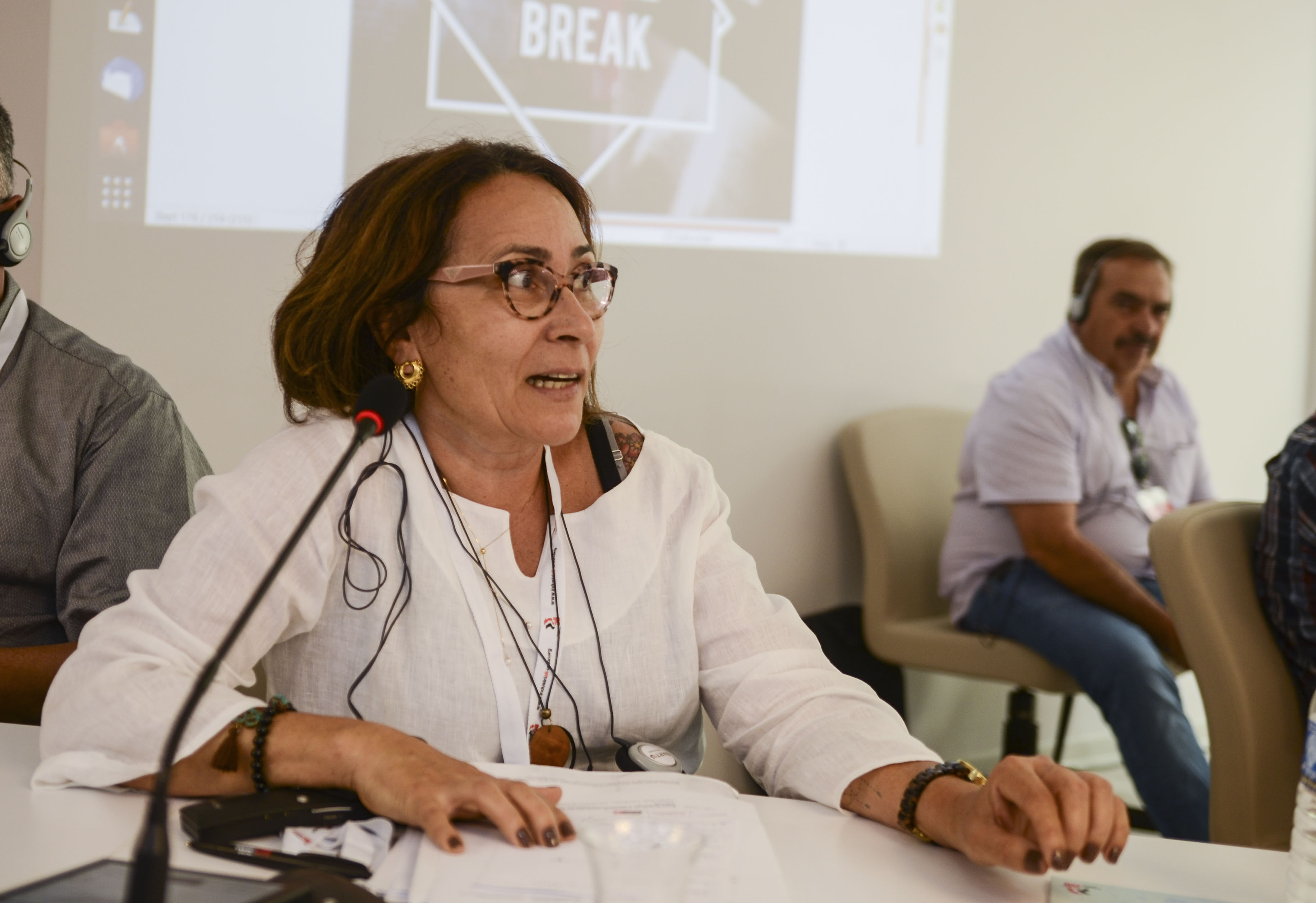
Hashemeya Alsadawe

“Despite the challenges that we face in the Middle East, including being blocked by some men with patriarchal attitudes, in 2003 I became the president of a union committee, and in 2004 I became the president of my union. But men supported me to achieve these positions, after I showed my value. We don’t have to see men as the enemy,”

said Hashemeya Alsadawe, IndustriALL MENA co-chair.

Although things are changing, women are still not fully part of economic and political life. Women face patriarchal societies with outdated traditions and norms that hold them back. The region has the lowest rate of women's participation in the labour market. Less than 30 per cent of women access the labour market, compared to 48,5 per cent worldwide. Unemployment rates reach 20 per cent, double that of men. Unions need to make the participation of women a priority. 

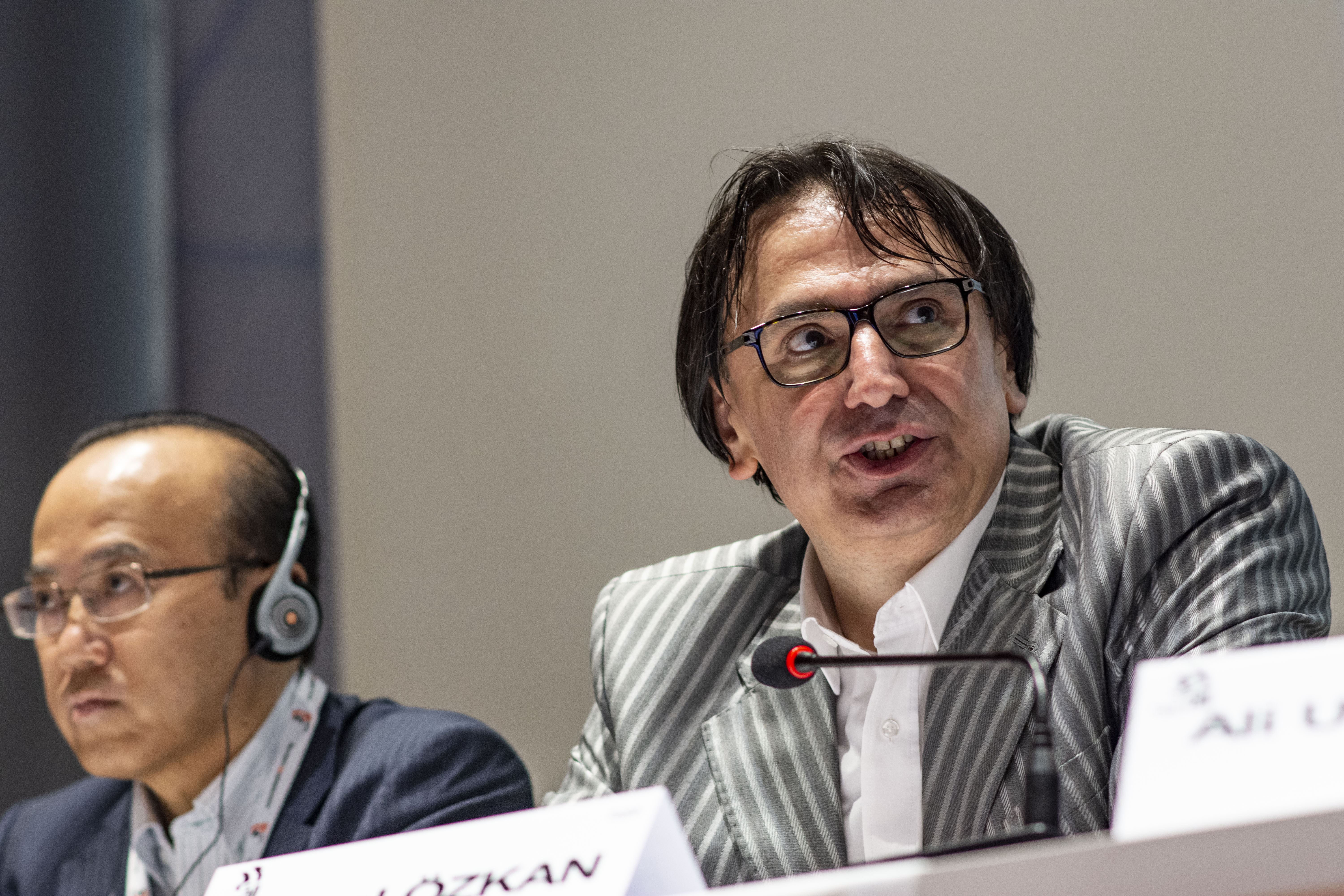
“Without the participation of women, a sustainable society will not be achieved. We must promote the employment of women regardless of the sector. We must create opportunity where women can participate,”

said Kemal Özkan, IndustriALL assistant general secretary.

The meeting addressed the recurring excuses used by people, including women, to explain their low participation and engagement in unions. A frequent myth was that women fight amongst themselves and therefore are not able to attain leadership positions. 

“Unions must look at the issues that are common to the collective workforce, but they must also look at the particularities. There are demands that are specific to women. If women are not at the bargaining table and in leadership positions their issues will be dropped,”

said Valter Sanches, IndustriALL general secretary.

Participants worked on establishing and implementing an action plan for 2019. To keep the momentum, they established core themes that participants were tasked to take back to their national networks. The themes raised included: pushing for a gender perspective on health and safety, improving maternity protection, organizing and ensuring real participation of women, and pushing to stop violence against women by using the IndustriALL pledge and supporting the international campaign in favor of the adoption of an ILO convention addressing gender-based violence.

In conclusion, Armelle Seby said that

“fighting for gender equality goes to the heart of what we do as unions. MENA women's regional and national networks are important platforms to discuss this issue and develop union strategies. But it is critical that gender issues are integrated into the core work of the unions in this region, and taken up as a priority issue by union leadership.”

IndustriALL MENA Women's Network

Oil and gas unions build sustainability in volatile MENA region

Ahmed Kamel of IndustriALL opened by noting that as this was the fifth meeting, the network had become sustainable:

“We have achieved a lot since the creation of this network. We need to decide where we want to be in five years. It is up to you to identify your priorities and develop an action plan. We will support you all the way.”

IndustriALL assistant general secretary Kemal Özkan introduced the political context, saying that the viability of different production methods is affected by the oil price, making the sector uniquely vulnerable to geopolitical pressures. The MENA region is the worst in the world for violations of trade union rights.

Kemal Özkan

Energy director Diana Junquera Curiel spoke about global trends in the industry, and the state of union organizing in the major companies.

“This sector faces a central contradiction. We need to balance the energy needs of a growing population and developing economies with the imperative to take action on climate change. Globally, there is an increase in energy demand, leading to the combined demand for more energy and less carbon. Our challenge is to ensure that it is not workers who are caught out by this contradiction.”

Lebanon country manager for Total, Daniel Alvarez, joined the meeting to express the company’s commitment to the global framework agreement with IndustriALL, and to developing healthy industrial relations in the region.

After sector co-chair Frode Alfheim of Norwegian affiliate Industri Energi explained the pressures the industry is under to become more sustainable and how this affects unions, general secretary Valter Sanches spoke about Just Transition. He said,

“The oil and gas sector is important to us. We want to retain it because it generates value, for workers as well as for society. Renewables are getting cheaper. There is now an economic incentive for energy transition as well as a political imperative. We need be part of this discussion, otherwise companies will use it as an excuse to restructure and fire workers.”

Valter Sanches

Health, safety and sustainability director Brian Kohler lead a session on occupational health and safety (OHS), which is neglected by the region's employers and governments. “This is a toxic job”, he said, “and occupational illness counts for 80 per cent of deaths. Unions can't wait for employers to identify and remedy hazards.”

Brian Kohler

“A union safety rep needs to learn to be a barefoot epidemiologist. A notebook is your most important tool. Look for patterns of diseases. Don't forget to follow up with retired workers. Identify agents known to cause these diseases. Look at the work processes and find overlaps.”

The delegates intend to create an OHS committee to share and translate material and develop a safety culture. They also expressed great interest in developing their understanding of oil and gas industry economics, so that they can counter the arguments that employers put to them.


Bangladesh unions call for Accord to continue on 6th anniversary of Rana Plaza

Some 150 people from IndustriALL’s trade union affiliates in Bangladesh took part in the protest in front of the press club in the capital Dhaka.

IndustriALL’s regional secretary, Apoorva Kaiwar, who was in Dhaka, said:

 “Today, we remember the victims of Rana Plaza tragedy, who perished on the darkest day in the history of the garment industry. They will never be forgotten, and we will never cease in our efforts to improve garment factory safety in Bangladesh.”

IndustriALL together with UNI global union, led the drive to set up the legally-binding Bangladesh Accord on Fire and Building Safety in the aftermath of the Rana Plaza disaster. More than a thousand workers were killed and 2,500 people were injured when the Dhaka garment factory complex collapsed on 24 April 2013.

"Six years on, the future of the Accord is hanging by a thread. Now is not the time to go backwards."

Jenny Holdcroft, assistant general secretary, IndustriALL Global Union

However, in recent months, the Accord has been under continuous threat of expulsion by the Bangladesh authorities. Last week, the Supreme Court of Bangladesh gave another short-term extension to the Bangladesh Accord, scheduling the next hearing to determine the safety programme’s fate on 19 May 2019. 

 “Thanks to the Bangladesh Accord, millions of garment workers can do their jobs in safety and without fear for their lives,” said IndustriALL’s assistant general secretary, Jenny Holdcroft. “And yet, six years on, the future of the Accord is hanging by a thread. Now is not the time to go backwards. Bangladesh has made great strides, but factory safety must still be maintained and improved and this requires ongoing training of workers and managers as well as an effective complaints mechanism.”

The Accord, which is signed by 190 global brands, has carried out over 30,000 safety inspections on more than 1,600 factories covering more than two million workers. Over 90 per cent of remediations of initial inspections have been completed.

“The Bangladesh Accord must be allowed to continue until the government is able to guarantee the same levels of transparency and accountability that the Accord has pioneered to give confidence to workers, brands and consumers that garments are manufactured safely in Bangladesh,” added Holdcroft.

Why transparency is key to transforming the fashion industry

Brands produce a lot of information about what they’re doing to improve conditions in their supply chains, but it’s only through transparency that this information can be verified. 

Transparency allows us to assess whether the strategies companies are using are effective, for example, checking to see if living wage strategies actually result in higher wages for workers.

This year’s Transparency Index produced by Fashion Revolution shows that just 17 per cent of brands reveal how they’re implementing their approach to paying living wages to workers in their supply chains, and only 4 per cent report on their progress.

With increased transparency, we can make the connection between corporate social responsibility policies and their impact on the ground. 

Extending transparency to cover purchasing practices is an essential next step. Whatever social responsibility measures a company is taking, these can be undermined by its own buying practices. There’s no point in brands saying they support decent working hours if they expect suppliers to meet increasingly tight lead times.

Only 9 per cent of brands surveyed by the Index have a formal process for gathering supplier feedback on brands’ purchasing practices. Transparency opens a conversation between companies and trade unions about what needs to change in the way brands do business with suppliers, to stop the downward pressure on wages and working conditions.

While an encouraging 76 per cent of brands publish a policy on freedom of association and collective bargaining in their Supplier Code of Conduct, only 4 per cent disclose the number of supplier facilities that have independent, democratically elected trade unions.

Transparency around the presence of trade unions in supplier factories, and the existence of collective bargaining agreements, will expose the devastating impact of decades of hostility to trade unions from employers and governments, resulting in extremely low levels of representation of workers.

The stark reality is that taking a supposedly neutral stance on freedom of association does nothing to remove the huge barriers to workers exercising their fundamental right to organize, and that if garment workers are to have better wages and working conditions, concrete measures need to be taken to make it easier to join a union and bargain collectively.

Unions in Sub-Saharan Africa strengthened by solidarity

During an IndustriALL mission to Nairobi, Kenya, IndustriALL Global Union general secretary Valter Sanches and regional secretary Paule France Ndessomin met the six IndustriALL affiliates to discuss issues faced by Kenyan workers, including precarious work. Precarious work is prevalent in most sectors, including the automotive, textile and garments, oil and gas, and manufacturing and is threatening the existence of the union.

Bata shoe company, Total, and Kenya Vehicle Manufacturers (KVM) which assembles cars for Volkswagen, are some examples where precarious work is found. KVM counts 39 permanent workers and more than 300 precarious workers. The latter are denied full benefits, including leave as guaranteed by the labour laws. They also work from 8 am to 5 pm without a lunch break.

Trying to put a stop to these abusive practices, the unions are organizing precarious workers. Employers often respond by dismissing workers who join a union. The unions have taken the unfair and unlawful dismissals to court in order to reverse the decisions.

Women often work in dire conditions with low wages, experience violations of maternity leave rights, and sexual harassment and rape is not unusual.

Rose Omano, the chairperson of the IndustriALL Kenya Women’s Council said:

“We appeal to IndustriALL to give more support to women activities since the Kenyan labour movement is highly dominated by men. Women issues are union issues and must be given more attention.”

Valter Sanches said,

“IndustriALL has global campaigns against multinationals to improve working conditions, respect freedom of association and improve wages. Unions must also be more involved in the legislative agenda in their respective countries to enable workers to influence policy processes,”"

Building union power in Lesotho

The textile and garment sector in Lesotho, like most countries in Sub Saharan Africa, employs mostly women, and sexual harassment is an issue.

At the Nien Hsing garment factory, the Independent Democratic Union of Lesotho (IDUL) confronted the company over a sex-for-jobs hiring scandal which resulted in the resignation of a human resources manager. IDUL also fought hard, with support from IndustriALL, to have Nien Hsing reinstate a collective bargaining agreement that it had withdrawn.

In the mining sector, IndustriALL wrote to the UK-based diamond mining company, Firestone Diamonds, to remind them of its obligation to respect workers’ and human rights. The company’s Liqhobong mine in Butha-Buthe district in the Maluti mountains is denying IDUL access to organize workers. This is disappointing from a company that is gaining a reputation for digging big stones while workers have little to show for it.

“The IDUL face a range of challenges; from precarious work, low wages, unfair labour practices, and violation of human and workers’ rights including sexual harassment. The adverse conditions caused by precarious work and union busting employers cannot go unchallenged and IndustriALL and our global diamond network will continue to support IDUL.”

Valter Sanches

Training workshops on how to counter sexual harassment will be held as part of the IndustriALL campaign to end gender-based violence in the workplace.

“The power of unions comes from fighting together”

Valter Sanches in Eswatini

“The power of unions comes from fighting together”

Valter Sanches in Eswatini

Uniting workers to fight for their rights and for living wages is important for unions in Eswatini, formerly Swaziland, and Sub-Saharan Africa.

Speaking to thousands of garment workers at Nhlangano factories, Valter Sanches, said:

“Some employers in the textile and garment sector are notorious for threatening workers in Eswatini with job losses with the ploy that they will take the production to Ethiopia.

"In turn Ethiopian workers receive similar threats when employers say they will relocate to Bangladesh. The employers do this to pay low wages, but we will not accept these games. IndustriALL will take the fight and that is why we unite workers from Eswatini, Lesotho, and South Africa. If we fight together, we will succeed.”

 The Eswatini affiliates said they were under “attack from different fronts” and welcomed the international solidarity and committed to “dirtying their hands in building a strong united workforce.”

Swaziland Electricity Supply Maintenance and Allied Workers Union is fighting for the reinstatement of four workers and the reversal of the suspension of 13 workers by the eSwatini Electricity Company who were suspended after taking part in a strike.

The Amalgamated Trade Unions of Swaziland (ATUSWA) is fighting against the victimization of its members. For instance, a factory at Fashion International at Matsapha is known to demote union leaders or threaten those that join the union. ATUSWA also faces the legal threats of being banned or deregistered.