Indonesian unions fight for health and safety at work
Only 20 out of the 190 ILO conventions have been ratified by the Indonesian government. More seriously, only ten out of the 177 technical conventions have been ratified. Two important ILO Instruments related to occupational health and safety, like the Occupational Safety & Health Convention (1981, No. 155) and the Safety and Health in Mines Convention (1995, No. 176) are yet to be ratified, resulting in a low quality and poor enforcement of relevant national legislation and regulations in Indonesia.
The chair of IndustriALL's Indonesian council, Iwan, said:
"It is time for us to take the first steps towards guaranteeing good health and safety at work through our joint efforts with employers and the government. The ILO Conventions on occupational health and safety are good instruments for a social dialogue."
Participants made their action plans through a group work: The Indonesian Council will set up its OSH team, consisting of the IndustriALL affiliates, to do a survey on OSH situation and to lead its campaigns for the ratification of ILO Conventions of No. 155 and No. 176; each affiliate will set up its OSH department, encourage its local unions to appoint OSH union reps at workplace and to reactivate the existing legal mechanism of OSH committee at work.
In concluding the meeting, Iwan, said:
"We will make health and safety a top priority for the IndustriALL Indonesian council, as well as in daily union activities like collective bargaining. We start our struggle and march to save workers' lives and protect their health at work today. Hidup Buruh!"
Calls for sustainable mining after 43 artisanal miners killed in DRC landslide
A landslide at an open excavation pit at KOV mine on 27 June killed 43 miners, with others still missing. The government of the Democratic Republic of the Congo (DRC) has responded by sending the army to the mine where over 2,000 artisanal miners dig for cobalt.
“IndustriALL condemns the decision of the government to deploy the army and regards this as mistaken and unfortunate as it only worsens an already volatile situation and could lead to further bloodshed and loss of life.
“It is a short-term solution to a complicated problem and reflects policy failure on the part of the government and the mining industry in the DRC,”
said Kemal Özkan, IndustriALL Global Union assistant general secretary.
Artisanal and small-scale mining (ASM) is legal in the DRC. Miners dig for copper and cobalt, which is in high demand for use in batteries for electric vehicles and smart phones. The miners, locally known as creuseurs, use basic tools such as picks, shovels and panning equipment.
In some cases, they mine the same concessions as large multinational companies. However, the companies are favoured by the government whilst the artisanal miners are ignored and blamed for damaging the environment and operating illegally. They work without support in dangerous conditions.
“In the DRC, the miners are arbitrarily and sometimes violently moved from one place to another after concessions they previously mined are sold to multinational corporations and Chinese companies. The cobalt they mine is sold in an unfair formal market exploited by traders who operate in a shady supply chain.”
Said Isaac Kiki, the chairperson of IndustriALL Lualaba Province, a committee of IndustriALL affiliates OTUC, UNTC and CDT:
“We are saddened by the death of so many miners; our brothers that we live with in the same community who died while trying to find means to escape poverty. The government must put in place measures to make artisanal mining safe.”
The unions support the revised Mining Code which promotes mining as a source of inclusive development. There are over 12 million artisanal miners in the DRC who mine 30 per cent of the country’s cobalt.
Despite ASM being ostracized and laws to formalize it being unclear in some countries, the African Union’s African Mining Vision recommends transforming “ASM communities from vulnerable and marginal enclaves of unorganized groups of miners and other actors into integrated and functionally sustainable and resilient communities.”
Glen Mpufane, IndustriALL director of mining concurs that ASM should be transformed using the International Labour Organization’s fundamental principles and rights at work.
“We recommend responsible mining which considers the ILO principles and national labour laws and support due diligence in the mining supply chain to ensure that sourcing of the minerals respects the human and labour rights of miners. Governments should also formulate policies that formalize and recognize ASM, especially its importance to social and economic development. ASM shouldn’t be marginalized as it contributes to poverty reduction.”
At the Alternative Mining Indaba in Cape Town, South Africa in February, one of the recommendations was for multinational companies to work with ASM for sustainable mining that is inclusive and beneficial to marginalized communities.
Mining unions work together to organize in Tanzania
Improved communications, worker education, participating in union activities, and maintaining workers’ unity also strengthen organizing. A workshop organized by IndustriALL Global Union Sub Saharan Africa region and IndustriALL affiliates, the National Union of Mineworkers (NUM), South Africa and Tanzania Mines Energy Construction and Allied Workers Union (TAMICO), attended by 14 participants in Dar Es Salaam 20-21 June discussed how to improve organizing in the mining sector in Tanzania
TAMICO has 11,000 members, 2,000 of whom are from the mining sector, but believes there is potential to double its membership. For example, at Nyanzaga Mine and Geita Gold Mine the union could recruit over 5,000 members.
After the workshop, six shop stewards facilitated an organizing drive with workers at North Mara Gold Mine where 120 workers joined the union. The new TAMICO members expect the union to improve its servicing of members and communicate better. The union must also negotiate collective bargaining agreements and make subscriptions affordable.
In response to the workers concerns, TAMICO general secretary, Saidi Nyungwa said:
“The union will engage members to address the challenges as this is important for the growth and future of the union. It is important for TAMICO to sustain its organizing efforts to improve the working conditions of mine workers in Tanzania.”
Tafa Moya, NUM’s mining house coordinator said TAMICO can learn from South African experiences.
“The NUM is negotiating for a clause to be included in the collective bargaining agreement to demand that workers be employed on a permanent basis and for equal pay for work of equal value. Additionally, after a long struggle, the NUM now sits in the Mine Health and Safety Council. It also trains shaft stewards to provide workplace service to members.”
The growth of the mining industry in Tanzania provides an opportunity for TAMICO to increase its membership. The government of Tanzania estimates that mining will contribute up to 10 per cent of the country’s Gross Domestic Product by 2025. Tanzania mines gold, iron ore, nickel, copper, cobalt, silver, diamond and tanzanite. Other industrial minerals including coal and uranium.
Long lockout at ABI, Canada, ends in win
"I am proud of the workers, of the struggle they have waged to preserve jobs and to defend basic principles such as seniority and their working conditions,” says Clément Masse, president of United Steelworkers (USW) Local 9700.
In the agreement, improvements were made to a return-to-work protocol, allowing all union members to return to their jobs within an eight-month period, compared to the company’s previous proposal which could have extended the return period to several years, during which union rights would have been suspended. An employer grievance demanding a US$19-million settlement from the union also has been dropped.
Seniority rights are respected in the agreement, and the employer will no longer be able to offer positions to people outside the plant without first offering them to union members.
Union leaders said they would have preferred a negotiated settlement, which would have created a better working environment as workers return to their jobs, and condemned the company's resistance to engage in meaningful, constructive negotiations throughout the 18-month lockout.
“We are proud of our brothers and sisters who stood up for themselves for so long, and have now reached a settlement that gives them the opportunity to return to their workplaces in dignity and with pride. This is an important win, not only for the region but for the trade union world, showing that the way to achievements is often a long and winding path,” says Matthias Hartwich, base metals director, IndustriALL Global Union.
IndustriALL's Executive Committee in May this year, gave public support for the struggle.
The union also denounced Quebec Premier François Legault’s blatant bias and interference in the negotiations, which emboldened the company in its agenda of refusing to engage in meaningful negotiations.
ABI is co-owned by multinational giants Alcoa, which holds a 75 per cent stake and Rio Tinto, which holds the remaining 25 per cent.
Asia-Pacific unions urge governments to ensure trade deal meets union demands
Unions are concerned that the secret RCEP negotiations will overrule democratic decisions and state sovereignty in favour of multinational corporations. The unions demand that:
Participating governments must comply with fundamental ILO Conventions
Investor-State Dispute settlement mechanisms – which threaten democracy by giving companies the right to sue governments – must be removed
Public procurement and public service should be excluded from RCEP
The negotiating texts must be made available for public scrutiny, with a consultation process for stakeholders
Governments must conduct a human rights impact assessment of RCEP and submit the findings to democratic assemblies.
RCEP is a proposed free trade agreement between the Association of South East Asian Nations (ASEAN) member states (Brunei, Cambodia, Indonesia, Laos, Malaysia, Myanmar, the Philippines, Singapore, Thailand and Vietnam), and China, Japan, South Korea, India, Australia and New Zealand.
The proposed agreement will govern trade in the world’s largest economic block, covering half the world’s population. In conjunction with the latest round of negotiations in Melbourne on 30 June 2019, Asia-Pacific trade unions – including IndustriALL Global Union, BWI, IUF, UNI, the International Domestic Workers’ Federation and the ASEAN Services Employees Trade Union Council and their affiliates – have jointly urged participating governments to ensure RCEP meets the unions’ five key demands.
“Representing millions of workers in the region, we hereby register our grave concern over the ongoing secret negotiations of the mega regional trade agreement since 2013, which covers a region of 50 percent population in the world, 30 percent global GDP and 25 percent of world exports.
“It has been a concern of trade unions and civil society organizations that trade agreements are increasingly used by multinational corporations to overrule state policies and to create a friendly business environment that can maximize its economic profits at the expense of workers and human rights.”
“A well-negotiated trade deal can lead to shared peace and prosperity for the people of the region. But we have to ensure that the deal benefits people, and not just capital. We will not allow multinational corporations to overturn our democracy and undermine our public services through deals negotiated in secret.”
Argentina – historic march to victory in Glencore mine
Workers from IndustriALL affiliate Asociación Obrera Minera Argentina (AOMA) stopped work at the El Aguilar mine for a week. They also organized a 270 kilometre long march.
The union demanded that authorities put pressure on Glencore into meeting the demands, including: • improvements of working conditions • an effective safety plan • dismissal of the general manager for mistreating workers and ignoring safety measures
After the march and a protest in front of the Government House on 24 June, union leaders met with authorities from the provincial government. AOMA denounced the increasingly dangerous work and abusive treatment received from management. Workers raised the issue of inadequate ventilation in the mine and lack of maintenance of the emergency exhaust stacks.
On 25 June, the company agreed to dismiss the general manager and to implement a plan, approved together with the Ministry of Labour during conciliation procedures, guaranteeing health and safety conditions in the mine.
AOMA Nacional general secretary Héctor Laplace, says:
“The agreement with the authorities and Glencore is a step to diminish the conflict. We will monitor the agreed plan, which means looking after the workers, respecting the agreements and the workers.”
IndustriALL regional secretary Marino Vani, says:
“We congratulate our affiliate for their work and for defending their members. With the current dialogue between IndustriALL and Glencore, we are confident that the agreements with the Argentinian authorities and AOMA will be respected, in order to improve health and safety conditions in the El Aguilar mine and apply fair work practices.”
Kazakh trade union leader faces 8 years in jail
The move comes just a week after Kazakhstan came under scrutiny for its poor record on trade union rights at the International Labour Conference.
Baltabay is on trial for the misappropriation of approximately US$28,000 of union dues. Baltabay says the money is still in his possession but denies fraud, saying he acted to protect the money for his members after his petrochemical workers’ union, Decent Work, was forcibly dissolved in 2015.
In an intervention at the Conference’s Committee of the Application of Standards on 18 June, IndustriALL condemned the inadmissible situation of workers’ rights in Kazakhstan. The country was examined for violating ILO Convention 87 on freedom of association and the right to organize.
The law on trade unions in Kazakhstan makes it extremely difficult for unions to be registered and the criminal code is being used to criminalize strike action in the country.
At the same time, independent union leaders, such as Larisa Kharkova, Amin Eleusinov and Nurbek Kushakbaev, have been punished and persecuted through the courts. The trio received the Arthur Svensson prize for trade union rights in 2018.
In a letter to the Kazakh president, Kassym-Jomart Tokayev, IndustriALL’s general secretary, Valter Sanches, said:
“We condemn both the ongoing trial (of Baltabay) and the earlier criminal procedures against Larisa Kharkova, Amin Eleusinov and Nurbek Kushakbaev, as well as attempts to repress leaders of independent trade unions and prevent them from performing their union related work. We further believe that the intention is to foster an atmosphere of fear and prevent other activists and workers from exercising their universally recognized fundamental rights and freedoms.”
Sanches also called on the president to adhere to the recommendations made by the Committee on the Application of Standards to improve trade union rights in the country after a “persistent” lack of progress.
From union congress resolution to new law in Albania
In June, the Albanian government passed a new law on “supplementary financial treatment of workers who have worked in underground mines as well as workers of the oil, gas and metallurgical industry", effectively turning the congress resolution into national law.
Under the law, former miners who worked for the state or private sector for six years or more, will receive a substantial increase in their annual pension payments.
An additional 1 per cent will be paid to those who suffer a disability as a result of their former occupation.
300 miners who had not been paid for six months will now receive their wages in full.
“This new law is a major achievement. Not only is it a pay and pension victory for Albanian mine workers, but it is also a testament to union power and that when we organize we win,” says IndustriALL general secretary Valter Sanches.
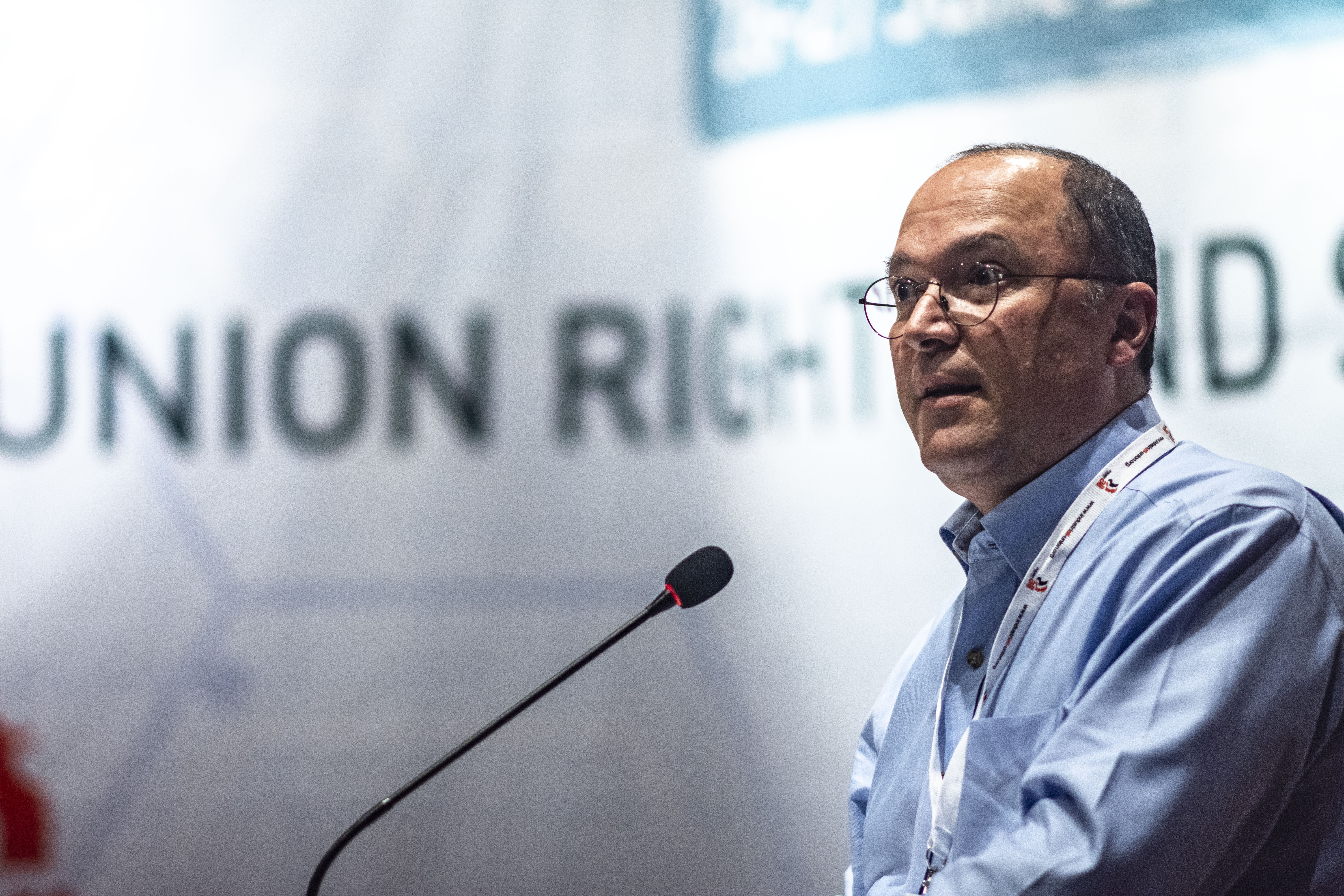
World chemical unions confront the future, united
The chemical unions last met in 2015 in Hannover, Germany. The meeting was opened by sector co-chairs Iris Wolf of IG BCE in Germany and Sergio Leite of Fequimfar in Brazil. Iris Wolf stressed that the industry faces tremendous change as it grapples with climate change, the backlash against plastic production and the introduction of new production technology.
Sergio Leite spoke about global attacks on trade unions, giving the example of Brazil.
Turkish union leaders Ali Ufuk Yaşar and Ihsan Malkoç, of Petrol-İş and Lastik-İş respectively, welcomed the delegates and shared their difficulties in union organizing campaigns in Turkey.
"The slowdown of the global economy is contributing to an erosion of workers' rights."
Valter Sanches
IndustriALL Global Union general secretary Valter Sanches said,
“The slowdown of the global economy is contributing to an erosion of workers' rights. In particular, we see constant violations from Turkey.”
Sanches also spoke about the necessity of acting on climate, saying:
"Young people are marching for the climate. We face a climate emergency, and we must act. But we are also responsible for quality jobs in chemical, mining and other sectors, and the communities they support. We fight for a Just Transition."
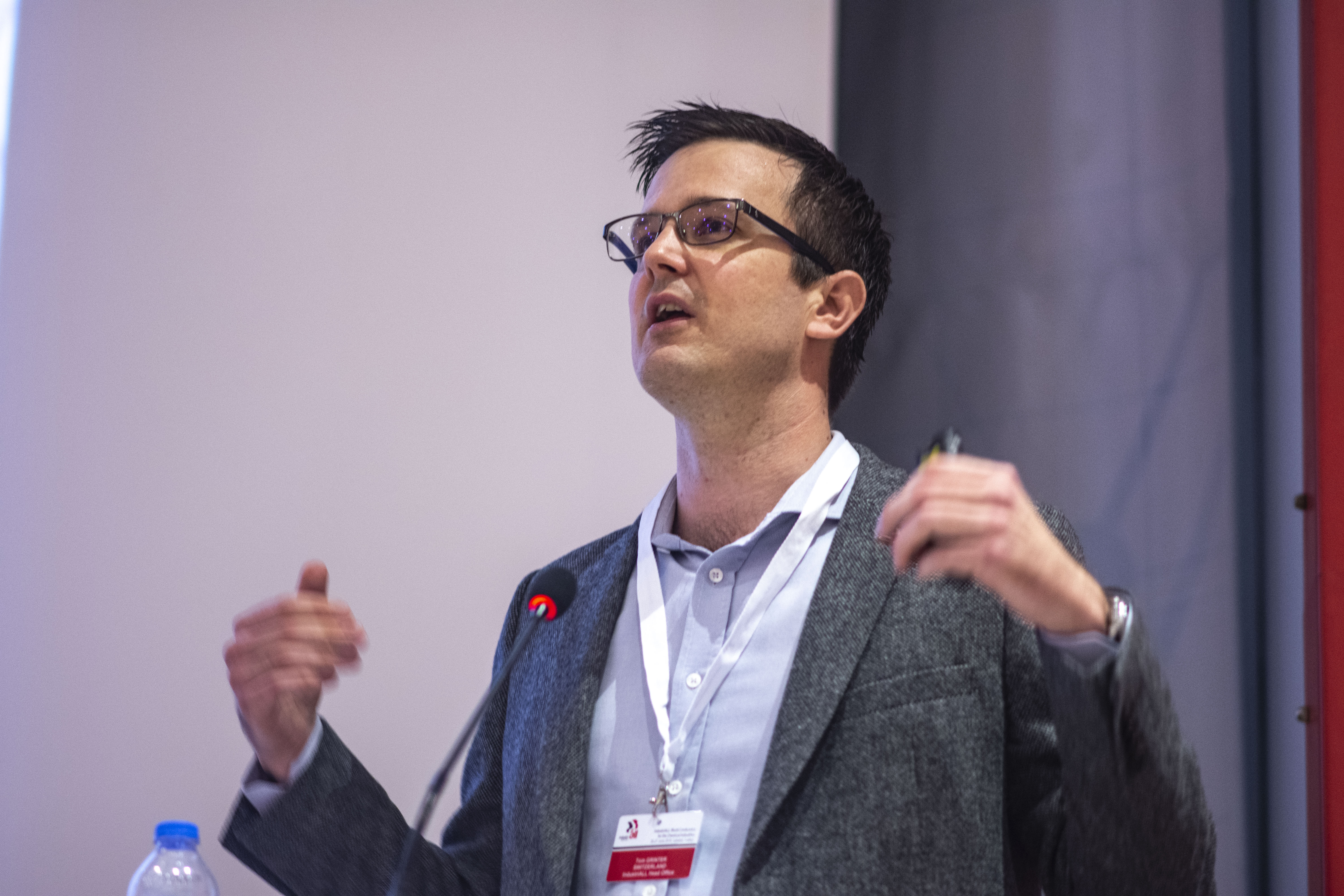
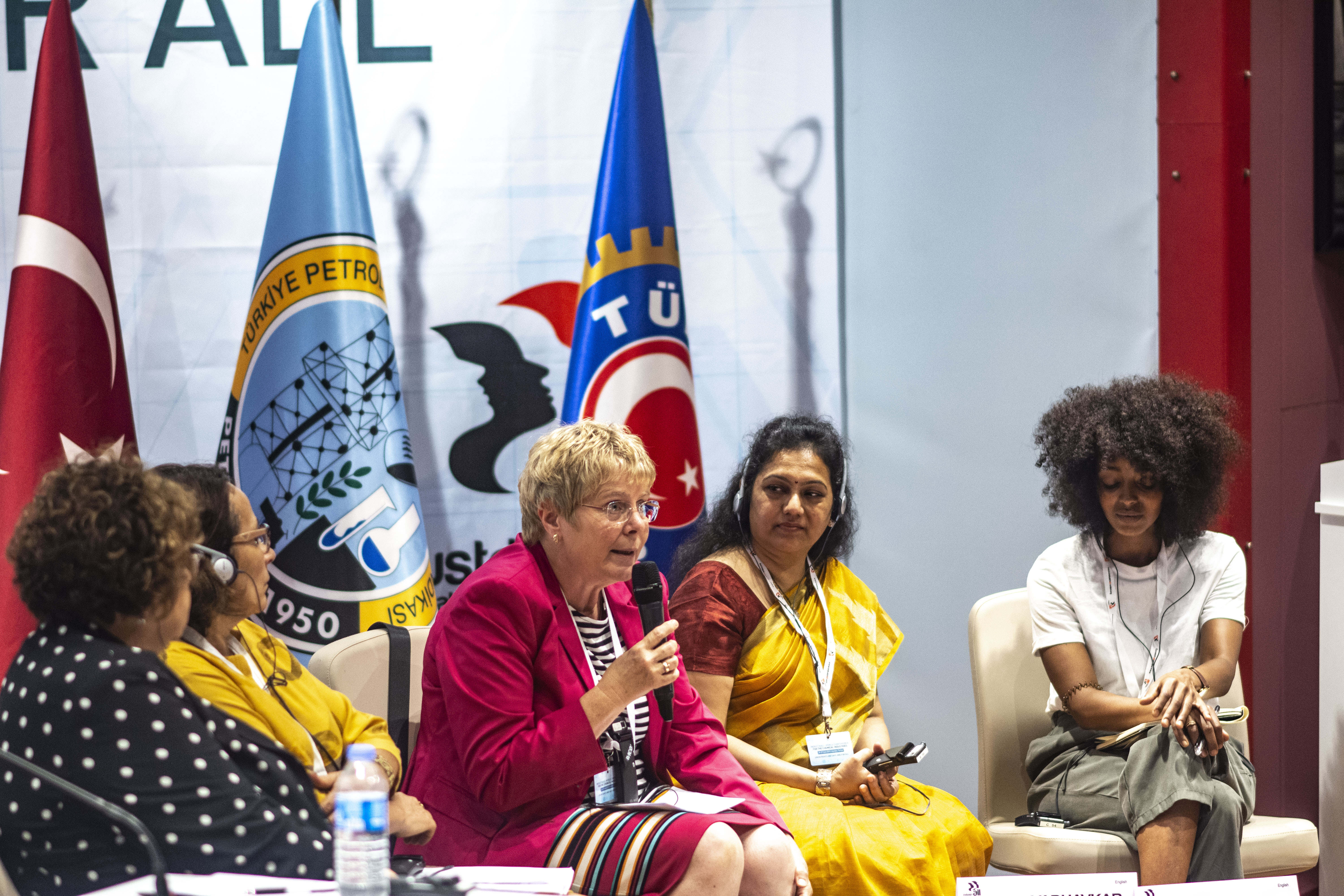
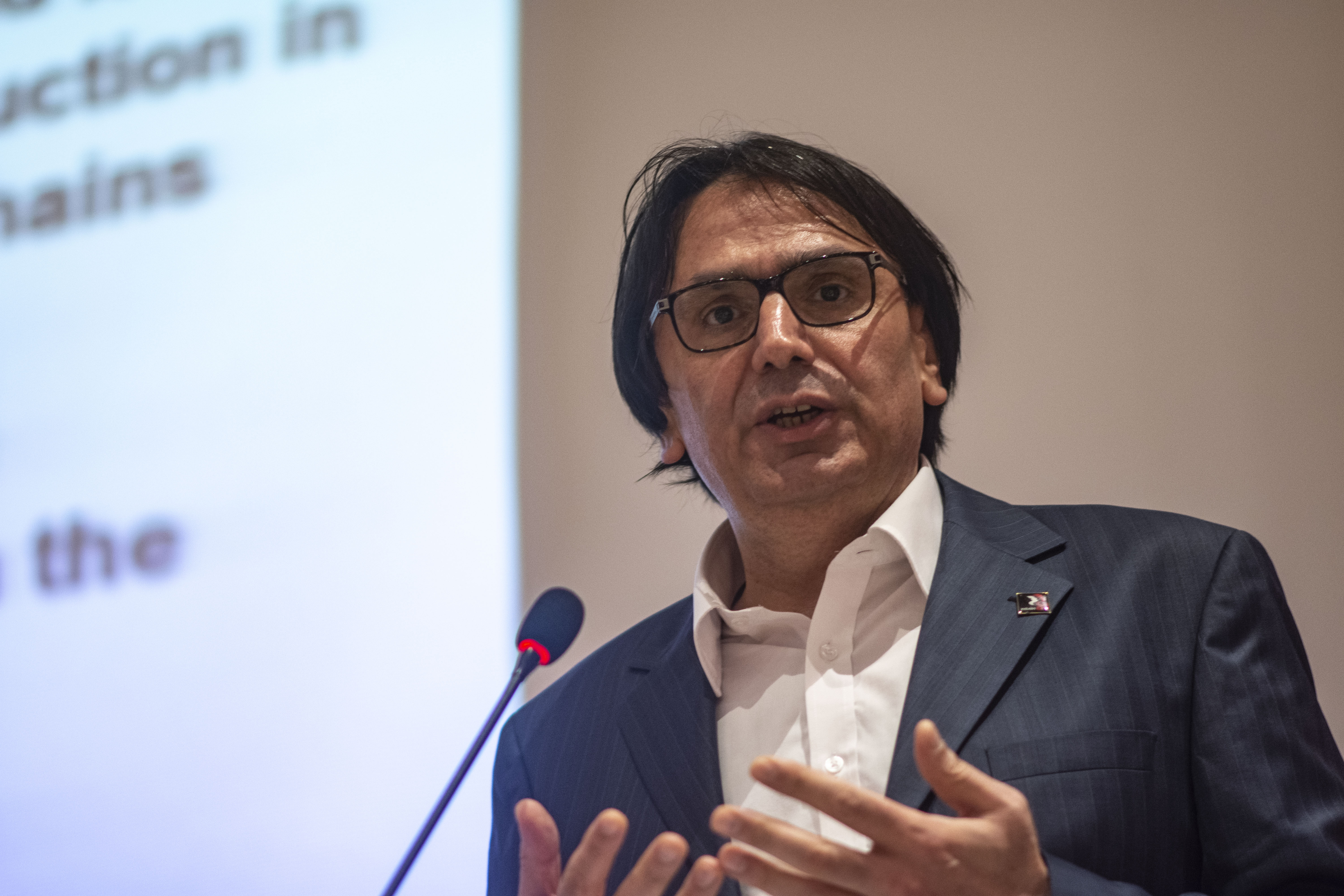
IndustriALL assistant general secretary Kemal Özkan and industry director Tom Grinter gave a detailed overview of the state of the chemical industry globally, highlighting important union campaigns. This was followed by a panel discussion, with participants from Germany, the UK, Singapore, Mozambique and Brazil comparing union actions, labour relations and social dialogue around the world.
Tom Grinter
In a discussion on the Fourth Industrial Revolution, participants expressed optimism, saying that new production technology can create skilled jobs and clean up the industry, making it safer and more secure. But concerns were also expressed that jobs would be lost, and that unions were not prepared for the changes.
This was followed by a discussion on using union networks and global framework agreements (GFAs) to boost global solidarity. Raghuram Theramkudalu and Thiago Rios spoke about the regional BASF union networks in Asia-Pacific and South America respectively. Albert Kruft spoke about the model industrial relations delivered by the Solvay GFA, and USW's Kent Holsing spoke about the grassroots, local-lead DowDuPont North American Labor Council.
"We need to make place for women."
In a session on empowering women, youth and migrant workers, participants celebrated the victory of the new ILO Convention on violence and harassment at work, and spoke about the need to engage more women in male-dominated sectors like the chemical industry.
A panel on occupational health and safety considered some terrible examples of industrial actions, and confirmed the need to campaign on workers’ right to know about risks, participate in safety programmes, and refuse unsafe work.
In the closing session, Kemal Özkan praised the high level of participation at the meeting, thanking the many delegates who spoke from the floor, and introduced the sector action plan.
He said:
“It’s up to us all to deliver it.”
Kemal Özkan
Tom Grinter
“This action plan sums up the conclusions of the panel discussions, aligns them with IndustriALL’s five strategic goals, and lays out a road map for global union organizing in the sector over the next four years.
“It’s up to us all to deliver it.”
Iris Wolf and Sergio Leite were re-elected as sector co-chairs, while Masato Shinoharo of UA Zensen in Japan will continue to chair the pharmaceutical sector.
Ending migrant workers’ rights violations in Mauritius
On arrival in Mauritius, workers are paid low wages, work long hours, live in squalid conditions sometimes in dormitories behind factories, and risk deportation when standing up against the violations.
The labour and human rights violations against the migrant workers can be described as modern slavery and was discussed at a workshop organized by IndustriALL Global Union with support from the Friedrich Ebert Stiftung on 18 – 19 June. The 30 participants were from unions in Bangladesh, Madagascar and Mauritius. Ovibashi Karmi Unnayan Programme (OKUP), a civil society organization that carries out pre-departure training for Bangladeshi workers going to work in other countries, also participated.
ASOS, which has signed a global framework agreement with IndustriALL and whose suppliers employ over 3,000 workers in Mauritius, said they want working conditions to improve and debt bondage to end. Debt bondage is a result of the fees, sometimes as much as US$800, recruitment agencies charge that take workers more than 14 months to pay. ASOS also said that workers should not pay the cost for travelling to the country of destination, or for training.
Said Christina Hajagos-Clausen, IndustriALL director for the textile and garment industry:
“The global framework agreement with ASOS will be key to begin to develop sound industrial relations with Mauritian textile and garment suppliers. Building sound industrial relations will help curtail labour rights violations.”
IndustriALL’s affiliate, Confederation des Travailleurs Secteurs et Prive (CTSP) representing over 50,000 workers is leading the fight against the exploitation and demanding the payment of the national minimum wage of 9,400 Mauritian Rupees (US$271) to migrant workers. The affiliates from Madagascar, Federation des Syndicats des Enterprises Franches et Textiles (FISEMA) and Sendika Kristanina Malagasy (SEKRIMA) and Syndicalisme et Vie des Societies (SVS), as well as a Bangladeshi affiliate, Sommilito Garments Sramik Federation, support the work of the CTSP.
Reeaz Chutto, CTSP president, said:
“We are fighting for migrant workers to enjoy the same rights as Mauritian workers under the Employment Rights Act. This will help to stop unfair dismissals and protect their rights to collective bargaining.”
Anti-Slavery International (ASI), which campaigns to protect workers against slavery and human trafficking and supports the employer pays principle, where employers pay for travel and other costs of migrant workers added its support to stop the violations. Other participants were from the International Organization for Migration and the University of Mauritius. The Confederation of Mauritius Business and the ministry of labour also attended and said they supported social dialogue and better industrial relations.
An ASI project with IndustriALL, ASOS, OKUP and CTSP aims to end modern slavery in the supply chain by promoting predeparture training, developing a smartphone app for Mauritius modelled on the IndustriALL/ASOS Workers’ Rights app currently being used in Turkey, that will explain migrant workers’ rights, and a trade union-based support centre to be based at CTSP where workers can go for support on complaints and grievances. The centre will assist workers in Bangla – the language of the Bangladeshi workers who constitute most of the workers.