Tenaris Brazil reverses dismissals after strike

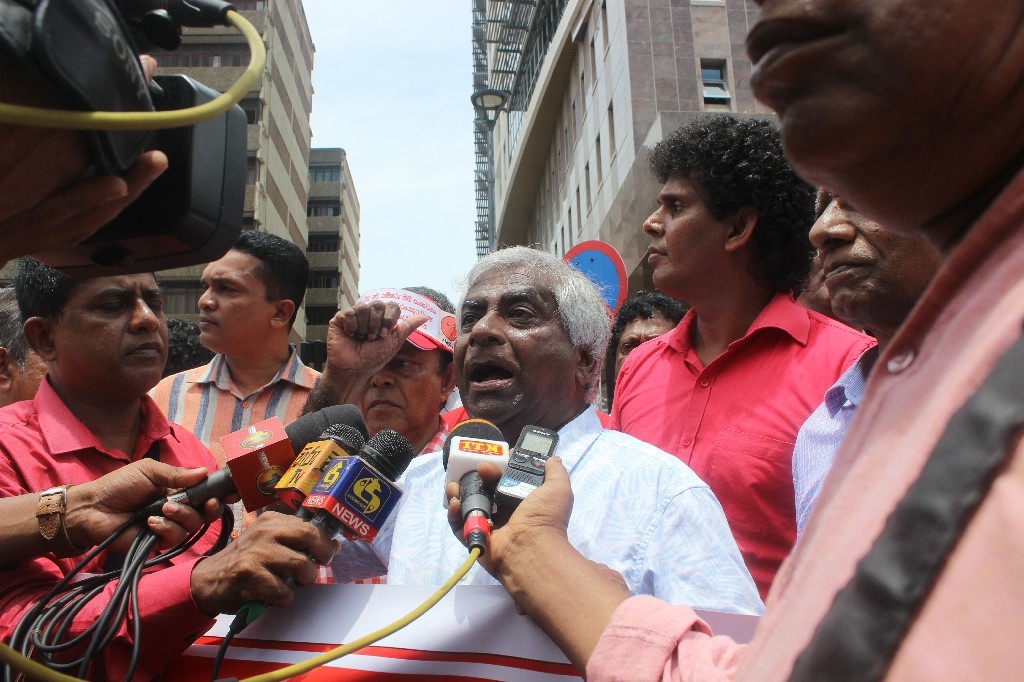
Workers from both the morning and afternoon shifts took part in the strike, leading to a complete shutdown of the firm's production line on 21 May. The workers are members of the Union of Metalworkers of Pindamonhangaba, Moreira Cesar and Roseira, which is affiliated to IndustriALL Global Union through the national confederation of metalworkers (CNM-CUT). 

Following the strike, Tenaris management agreed to negotiate an alternative for the dismissed workers, as well as 200 workers in the production sector they say they no longer need. It is possible that Tenaris will seek to bring in some kind of voluntary redundancy plan.

The union also says that five of the 25 workers who were fired on 17 May had been injured as a result of workplace safety issues and their dismissals were irregular. The company initially said that it would not negotiate any alternatives with the union, prompting members to go on strike.

The union asserted the lay-offs were not the only option and said it would do whatever it could to safeguard the workers' rights and find an alternative.

In November 2018, the firm announced that it would potentially have to dismiss large numbers of workers. The union then threatened to hold a strike and managed to negotiate temporary lay-offs for 165 workers.

"We're extremely relieved that the company reversed last week’s dismissals and agreed to negotiate. It's a very delicate situation, because we won't be able to negotiate any more temporary lay-offs. Back in November, we tried to discuss the possibility of some kind of voluntary redundancy plan, but the firm refused. But we can still bring that back to the table, so we have made significant progress here at Tenaris Confab," said the union's chairman, Herivelto Vela.

IndustriALL's general secretary, Valter Sanches, stated that:

"Tenaris is involved in anti-union practices all around the world and fails to comply with employment standards, especially in Guatemala and Colombia. We support the workers at Tenaris Confab and members of the CNM-CUT in their struggle and are pleased that their strike action has led to the dismissals being suspended.”

IndustriALL files complaint against Tokyo 2020 Olympic partner, Mitsubishi Electric

Mitsubishi Electric, an official partner of the Tokyo 2020 Olympics, is contravening the Fundamental Principles of the Games’ Sustainable Sourcing Code, through violations of core ILO Labour Standards at its subsidiary, Mitsubishi Electric Consumer Products Thailand.

Mitsubishi Electric’s Thai subsidiary has subjected workers to degrading and humiliating treatment, locked-out union members, forced workers to sign a document denouncing their union, and disobeyed a ruling by Thailand’s Labour Relation Committee (LRC) to reinstate union members.

The LRC has described Mitsubishi Electric Consumer Products behaviour as “vengeful” towards the union and found that the company violated Thai labour legislation on anti-union discrimination.

Mitsubishi Electric Labour Union Thailand, which represents the workers intimidated and harassed by the company, is affiliated to IndustriALL through the Confederation of Thai Electric Appliances, Electronics, Automotive, and Metal Workers (TEAM) and the Thailand Electronics and Electrical Appliances Workers' Federation (TEEF).

Twenty-three of the union’s members have been laid off at the plant in Chonburi province, while 27 others, including the former union president Cherd and vice president Thanaphat, have been locked out.

Among several violations, the company forced union leaders and 400 locked-out union members to: attend a four-day camp at a military base to “learn discipline and order”; undergo five days of training by an external human resources firm, where they were expected to “reflect on their wrong doing”; perform one day of cleaning old people’s homes to “earn merit”; and spend three days at a Buddhist temple, with no regard for their religious beliefs. The workers were also made to post apologies to the company on their personal social media accounts.

Mitsubishi workers in Thailand were made to attend a 4-day military camp.

IndustriALL has written to Mitsubishi Electric Consumer Products three times since the dispute began in December 2017, urging the company to reinstate and call back the locked-out workers, but has received no response.

“Mitsubishi Electric, as an official partner of the Olympic and Paralympic Games Tokyo 2020, has a responsibility to intervene and stop the violation of workers’ rights at its Thai subsidiary, and immediately end acts of intimidation and harassment aimed at weakening the power of the union,” says IndustriALL general secretary, Valter Sanches. “We expect the Tokyo Organising Committee of the Olympic and Paralympic Games to develop an appropriate solution with Mitsubishi to end the contravention of the fundamental principles of the Sourcing Code at Mitsubishi Electric Consumer Products in Thailand.

“IndustriALL wishes the Olympic and Paralympic Games Tokyo 2020 to be a real celebration of global diversity, tolerance and peace, that also reward real champions of corporate social responsibility and respect for workers’ rights.”

South African unions optimistic after election of new government

In his inauguration speech, South African president Cyril Ramaphosa said that under his administration the government will promote policies that create decent work and skills development especially for young people, empower women, fight corruption and end poverty in a generation.

President Ramaphosa cited the Fourth Industrial Revolution as a provider of new jobs, especially for young workers. Further, he said that during his tenure South African society will be guided by equality and solidarity and that he will promote a social compact between business and labour.

Additionally, sustainable economic development will be promoted “for productive lands and viable communities, for knowledge, for innovation, and for services that are affordable, accessible and sustainable.” Companies will be asked to “generate social value and propel human development.”

A march for jobs in Johannesburg

Said IndustriALL Global Union affiliate, the Southern African Clothing and Textile Workers Union:

“Growth and development of our manufacturing industry remains crucial for South Africa’s future overall economic well-being. We cannot be a country of raw material exporters and importers of finished goods, if we are to decisively address the triple crises of unemployment, inequality and poverty. The industrialization and beneficiation of our economy is key.”

“We especially appreciate the appointment of Minister Ebrahim Patel as Trade and Industry Minister. It bodes well for the future of the clothing, textile, leather and footwear sectors, and for the fast-tracked development of the manufacturing industry in general.”

Said Paule France Ndessomin, IndustriALL regional secretary for Sub Saharan Africa:

“We welcome the announcements by President Ramaphosa, especially the appointment of more women to the cabinet which led to the achievement of a 50/50 gender parity. Further, we expect that the announcements will result in the creation of decent jobs and living wages.”

A march for jobs in Johannesburg

The South African economic outlook is bleak. According to Statistics South Africa unemployment is high at 27.6 per cent and is even higher as seen in the extended rate of over 37 per cent — which includes discouraged job seekers who have stopped looking for work. Thousands of jobs are also being lost in the mines when operations are closed. But unions are optimistic that the government will turn things around and will continue their jobs and living wages campaigns as strategies to reduce inequality.

Malaysian union signs tenth collective agreement with Denso

After almost a year of marathon bargaining, NUTEAIW successfully negotiated a wage increment of 8.5 per cent for 950 union members. The collective agreement also covers other benefits such as meal allowance for overtime, canteen food subsidy and medical benefit for employees and immediate family members. 

“This is a meaningful moment because it marks the tenth collective agreement over a span of thirty years. However, we witness widening inequality over the same period of time, labour share of income per GDP remains low at 35.2 per cent. Therefore, wealth of companies should be shared with workers,”

said Gopal Kishnam, general secretary of NUTEAIW.

In the last financial year, the Denso group of companies generated US $48.3 billion in revenue and US $2.8 billion in profit globally. For its operation in the Asia region, the total revenue increased 7.1 per cent to US $12.8 billion, while its operating profit decreased 6.1 percent to US $1.157 million.

The managing director of Denso Malaysia, Tomoya Nakamura, said that he committed to improving the welfare of workers and sustainable development goals despite the company facing various challenges, with the business environment becoming very competitive and severe.      

Gopal added that Malaysian trade unions were looking at reforming labour laws. One proposal was to shorten the working hours to ensure workers’ physical and mental health. He urged employers to create a conducive working environment with reduced working hours.

Unionist elected Member of Parliament in South Africa

After working for more than four decades as a sample machinist, Beauty Zibula rose from being a shop steward to become the first vice president of the Southern African Clothing and Textile Workers Union (SACTWU), affiliated to IndustriALL Global Union. She is also an executive and women’s committee member of the IndustriALL Sub Saharan Africa region, and on 22 May she was sworn in as MP.

The Sub Saharan Africa region welcomes her election as one of the ruling African National Congress’ members of parliament for the KwaZulu-Natal Province.

Like most South African unionists, she became politically active in junior school and got her first job in the sector in 1978. Her history in the labour movement is illustrious. Active in the Garment and Allied Workers’ Union (GAWU) in Durban during the 1980s, she is part of a collective that turned the union into a militant organization that fought against apartheid.

She became chairperson of the Durban North local of GAWU from 1987 to 1989 and retained that position when SACTWU was formed. Other positions she has held include: SACTWU’s Kwazulu-Natal (KZN) regional treasurer, the KZN regional deputy chairperson, the KZN regional chairperson and first deputy president of SACTWU.

“We congratulate comrade Beauty Zibula, a trade unionist who has risen through the trenches of working class struggles. Having been a regional executive member, she knows how to fight for workers’ rights against precarious work and is a staunch defender of workers’ rights in the garment and textile and other sectors. We are confident that she will take the fight to the South African parliament as well,” said Valter Sanches, IndustriALL general secretary.

SACTWU has over 100,000 members that make up 85 per cent of the textile and garment sector including shoe and leather. It organizes workers in spinning mills, wool washeries, factory shops, clothing factories, cut make and trim operations, small businesses, footwear factories, cotton gins, laundries, tanneries, weaving sheds, finishing operations, dye-houses, retail outlets, and warehouses.

IndustriALL’s Executive Committee advancing workers’ rights

“An attack on one, is an attack on all,” said IndustriALL President Jörg Hofmann in his opening statement.

“We need to make sure that as many people as possible benefit from global solidarity, which we know can make a difference against global capital.”

During the two days of meeting, union leaders discussed a global response to challenges ahead, in a world where regimes attack opponents, its citizens and unions, like in Brazil and Algeria, or Colombia where Igor Diaz from Sintracarbón is receiving death threats.

Delegates listened to a testimony from USW Métallos in Canada, whose 1,000 members in Bécancour, Québec, have been locked out from work at the Alcoa plant for nearly 17 months after the company refuses to negotiate.

Volkswagen workers in, Chattanooga, Tennessee, US, are still being denied the right to join a union, which led IndustriALL to suspend a global framework agreement (GFA) for the first time.

Confronting global capital is a strategic goal and key in advancing workers’ rights. The 46 GFAs signed by IndustriALL and multinational companies are important tools in developing industrial relations on a global level, as the example of how the GFA with Solvay resolved an issue over bonuses at the company’s operations in India shows.

Currently, negotiations are ongoing with a major global auto company over an agreement on the future of work, providing an opportunity to respond to the huge transformation in the world of work and put Just Transition on the agenda. 

The ILO Global Commission on Future of Work examines how to achieve a better future work for all at a time of unprecedented change. Participants shared experiences and discussed the need for a strategy on a global level for the labour movement, as not all countries are as technologically advanced.

Acknowledging the need to exchange experiences, the Executive Committee endorsed the work to continue and:

IndustriALL’s trade union guide to a Just Transition, focusing on an implementation in the interest of the workers formed the basis for a discussion leading up to a commitment to an exchange of information and expectations to form policies on Just Transition, and making sure workers have a say on the future of their industries. 

Union building is a vital part of IndustriALL’s efforts to increase organizing and build union power. In 2018, 768 capacity building activities were held, with a staggering 23,000 participants.

The Executive Committee approved affiliations from six new unions, adding 224,000 new members, adding to the fighting power and proving that we are stronger together.

IndustriALL’s Women’s Committee is planning a Women’s Conference later this year, in November. The Executive Committee reiterated its support for an ILO Convention on gender-based violence, a convention IndustriALL is fighting for together with other global unions.

More than 100 affiliated unions have so far adopted IndustriALL's Pledge to end violence against women in the workplace, a campaign that is continuing. 

The two working groups on IndustriALL’s 3rd Congress, taking place in Cape Town in October 2020, have started preparations for bringing together union delegates from all over the world. Involvement from affiliated unions will be important for proposals on IndustriALL's action plan, priorities and structures.

IndustriALL’s Executive Committee adopted a number of solidarity resolutions:

Support for the Brazilian trade union movement
IndustriALL supports the general strike called for by the Brazilian trade union centres on 14 June, in the face of deteriorating labour legislation, social and trade union rights.

Resolution on Hyundai Heavy Industries’ Acquisition of Daewoo Shipbuilding and Marine Engineering in South Korea
IndustriALL is concerned about the lack of transparency in negotiations over the merger; restricting fair trade and competition is a significant threat to workers and unions along the supply chain of the shipbuilding industry.

Calling on South Korean government to stop regressive labour law revision and ratify ILO core conventions
These are basic human rights for workers, not bargaining chips for employers, and IndustriALL urges the South Korean government to show a sign of commitment.

All photos from IndustriALL Executive Committee can be found on Flickr.

Safety crisis in Bangladesh shipbreaking yards continues

The series of recent accidents point to a massive safety crisis in the Bangladeshi shipbreaking industry.

Employers’ negligence, coupled with poor inspections, a lack of implementation of safety measures by authorities, inadequate training on safe shipbreaking methods and workers unable to get appropriate protective equipment are major causes behind the accidents.

Kan Matsuzaki, IndustriALL shipbreaking director, says:

“The negligence of employers and government officials leads to frequent accidents and the Bangladesh Ship Recycling Act of 2018 needs to be strictly implemented.

“We reiterate our demand that the Bangladeshi government needs to move faster to ratify and implement the Hong Kong International Convention for the Safe and Environmentally Sound Recycling of Ships.”

Apoorva Kaiwar, IndustriALL South Asia regional secretary, says:

“It is unacceptable that the lives of shipbreaking workers are put at risk. IndustriALL calls upon the employers and the government to ensure that proper safety measures are in place.”

IndustriALL affiliates BMF and BMCGWF, together with members of Ship Breaking Workers' Trade Union Forum (SBWTUF) rallied in Chittagong on 19 May, protesting against the accidents and demanding improved safety measures and appropriate training for workers in the shipbreaking industry.

US judge orders new union vote at Kumho Tire

The judge also ordered South Korean-owned Kumho Tire to take action to repair the damage made by their violations at the workplace at the time of the previous ballot in October 2017.

USW narrowly lost the election by 28 votes, following a relentless campaign of intimidation and scaremongering at the Macon plant.

USW campaigns before the October  2017 vote

Consequently, the USW filed complaints with the National Labor Relations Board accusing the company of illegal conduct in its effort to suppress the union.

In his ruling on 14 May 2019, Administrative Law Judge Arthur J. Amchan wrote that the company’s illegal conduct was “pervasive” and that it warranted not only a new election, but the “extraordinary” remedy of requiring company officials to read a notice to all of its employees outlining the specific ways in which they violated the workers’ rights.

Kumho’s violations, Amchan said, included illegally interrogating employees, threatening to fire union supporters, threatening plant closure, and creating an impression of surveillance, among other threats to workers.

The day after the union’s initial election petition was filed in 2017, the company hired a firm of union busters, spending hundreds of thousands of dollars to attack the reputation of the Steelworkers. Seven full time union busters were employed.

Workers at the Macon plant were required to attend daily anti-union meetings that lasted for several hours, with managers telling them that the newly-opened factory would be forced to close if they voted for a union.

The Korean multinational is currently under control of Chinese company Quingdao Doublestar Group, and plant managers emphasized this to play on workers’ fears.

IndustriALL and its affiliate, the Korean Metal Workers’ Union (KMWU), which represents over 3,500 Kumho Tire workers in South Korea, have supported the Macon workers in their battle for union representation both before and after the October 2017 election.

IndustriALL’s assistant general secretary, Kemal Özkan, said:

“IndustriALL congratulates the USW campaigners that have fought for a fair election at this workplace. We will stand alongside our USW sisters and brothers until Kumho Tire workers in Macon, Georgia win their first collective agreement.”

British Steel workers deserve a future

IndustriALL’s affiliates, Unite, GMB and Community are calling on the UK government to find a solution that secures jobs and guarantees the long term future of British Steel as the company faces receivership. The company employs 5,000 people directly, and supports a further 20,000 jobs.

British Steel borrowed £120 million from the UK government in April, and requested a further loan of £75 million two weeks later to avoid going into administration. The troubled company was bought from Tata Steel in 2016 for £1 by private equity firm Greybull Capital. Greybull has been criticized by unions for a history of profiting from the collapse of successful businesses, including Monarch and Comet.

Unions have urged the government to find a solution for British Steel, including taking the company into public control if necessary. The government has subsequently agreed to underwrite British Steel’s receivership, meaning suppliers and wages will be paid until a buyer is found.

Unite assistant general secretary Steve Turner said,

“British Steel workers are top class and have battled through adversity and uncertainty. Any new owner will be lucky and privileged to have them as their employees. It is vital that any buyer acquires the whole of the company and that it isn’t sold off piecemeal to disaster capitalists wanting to make a quick buck.”

GMB general secretary Tim Roache said:

“Ministers should have been ready to make use of all the options – including nationalization – in order to save British Steel but they either don’t care or wouldn’t take off their ideological blinkers to save hard working people and communities.”

Roy Rickhuss, Community general secretary, said:

“It is clear that future should not involve Greybull. Greybull needs to do the right thing by getting out of the road and let those who are committed to our industry work together to save the business.

“While the coke ovens keep burning and the steel assets remain there continues to be hope both for steelmaking at Scunthorpe and for its downstream operations. What is needed is the right ownership.”

In letters to the affiliates, IndustriALL general secretary Valter Sanches expressed solidarity with the steel workers and said:

“British Steel is a troubled company that has been failed by successive governments and preyed on by financial speculators, with Greybull being the most recent. The worsening situation is the consequence of years of neglect, and has been compounded by the failure of the government to develop an industrial strategy for the steel industry. Therefore, it is imperative that all parties find an appropriate solution that takes full account of the importance of the steel industry, and the legitimate demands of workers.”

Innovative union organizing strategies tackled in Philippine workshop

Union density is low in the Philippines at 7.7 per cent (in 2014). Numerous factors such as difficulty in gaining legal recognition, intervention of employers and local governments, state repression, as well as the power of global corporations, make it more difficult than ever to organize.

“I recall that during the 80s, union organizing was easy and workers even used to walk into our office asking to be organized. Today it is so different as organizers must take innovative approaches to reach out and communicate to workers, as most of them, especially those in the ecozones, are being transported from plant to drop off points far from the organizers,” said Racquel Clavillas field organizer from Associated Labor Unions for 30 years.

With the growing power of multinational corporations, unions must think of better ways to deal with those companies, making sure workers can exercise their legitimate rights and negotiate for better working conditions. Domestic firms are mostly linked to big corporations as a supplier, agent or buyer through global supply chains.

Participants addressed the knowledge and skills gap in organizing in supply chains of multinational corporations and looked at how international tools, such as global framework agreements and trade union networks, can reinforce field organizing efforts.

Unions agreed to create two new networks: a sectoral network on textile and garment and a company-specific network for Essilor, a French-based international ophthalmic optics company, which has two operations in the Philippines.

“We learned a lot of new things in this workshop. Because most global corporations are consolidating, unions also need to consolidate and use our collective power. We need to build global solidarity to counter the power of global capital,” said Manuel Mallonga, local union president of Essilor in Bataan. 

“Organizing unions and solidarity at every level is an important lesson. We are committed to building a network among Essilor unions in the Philippines, in our neighboring countries in South-East Asia, and even at the global level,” he added.

All the participants agreed and signed a declaration on building network and solidarity that defines basic principles and areas of cooperation in organizing where they can work together, as well as continuing communication and joint actions.