French court orders Saint-Gobain to pay compensation to Oise workers

According to the court verdict, the company must pay compensation of 20,000 euro to each worker for "psychological harm" resulting from their exposure to asbestos in previous years.

According to media reports, the council of labour judges ruled that the current and former employees were "substantially exposed to the inhalation of asbestos fibres" under conditions "subsequent to a breach of the contractual obligation of safety provoked by their employer "and that they suffered “harm” that "should be repaired".

Workers were represented in court by lawyer Elisabeth Leroux, who commented that,

"This is a very good decision, the employees have been exposed to asbestos, they are now undergoing increased medical monitoring which provokes anxiety, they see their co-workers dying … It's a big satisfaction to obtain compensation for this harm."

The court verdict in favour of the workers sets a new precedent since the decision by the French Supreme Court dated to 5 April of extension of damage coverage to all workers in contact with asbestos in France. According to this decision, French workers exposed to asbestos can claim for damage caused by anxiety related to the consequences of their asbestos exposure regardless of where they worked, if they can prove they were exposed to and suffer from ‘anxiety damage’.

Since 2010, the Supreme Court has restricted this mechanism only to employees included in the lists entitling them to pre-retirement due to asbestos exposure, namely workers employed in the processing of asbestos or shipbuilding. Now since April 2019 the court has opened the ‘anxiety damage’ procedure to all workers who were in contact with asbestos.

Saint-Gobain has 30 days since the announcement of the verdict to appeal the decision of the court.

Asbestos has been banned in France since 1 January 1997. In 2014, the French High Council for Public Health estimated that asbestos could still kill between 68,000 and 100,000 people in France between 2009 and 2050.

At the global level, based on ILO estimates, some 2.3 million workers die annually from occupational causes, including some 736,000 cancer deaths.

Brian Kohler, IndustriALL director for health, safety and sustainability, commented,

“Estimates of the percentage of occupational cancer that is asbestos-related vary widely. Asbestos diseases are generally underestimated due to frequent misdiagnosis and even concealment. We believe that the true number could be 150,000 per year or even much higher.  In addition, there are large numbers of deaths from lung diseases other than cancer, that are caused by asbestos. We expect that Saint-Gobain takes this court decision seriously and supports all of their workers who were exposed to asbestos, and will organize proper compensation for them, respecting the court’s decision.”

Fighting poverty wages in Zimbabwe

Lameck Chineuruve, an artisan at the Zimbabwe Electricity Transmission and Distribution Company, has worked for the power company for 11 years and earns less than seven years ago.

“In 2012, I earned US$800 per month, but currently I earn less than US$200. This makes life hard for me because I must pay for transport, accommodation, school fees, and food, from this paltry amount,” says Chineuruve.

In February, the Zimbabwean currency was devalued by over 60 per cent. However, prices increased by the same value as they are pegged against the US dollar, while wage increases did not match the prices.
 
Poor wages in most of the sectors in Zimbabwe are one of the reasons why IndustriALL Global Union affiliates are campaigning for living wages.

In organizing drives under the union building project, young workers from the National Engineering Workers Union, National Union of Metal and Allied Industries of Zimbabwe, the Zimbabwe Chemicals Plastics and Allied Workers Union, and the Zimbabwe Energy Workers Union emphasized the importance of joining unions, fighting for workers’ rights including on collective bargaining. They also said workers should be paid living wages that will cushion them against the devaluation.
 
Says Paule France Ndessomin, IndustriALL regional secretary for Sub Saharan Africa:

“We are in solidarity with our Zimbabwean affiliates in their struggle for living wages and their organizing drives to increase membership. Union strength comes from organizing and participatory democracy. We also applaud the organizing by young workers who are the future leaders of the unions.”

With unemployment over 90 per cent and most of the population earning a living in the informal sector, the Zimbabwean economy is in the doldrums. Factory shells in the light and heavy industrial sites in Harare are deserted. Manufacturing and industrialization stagnated and has been replaced by the importing of finished goods.

The few companies that are still open are the targets for union organizing with the hope that when the economy improves the unions will also increase their members.

Essilor unions in the Philippines pledge to build trade union network

Local union officers of two Essilor unions in the Philippines, together with representatives of their respective federations, met for the first time on 8 June 2019 in the freeport area of Bataan to get to know each other and share information relative to their work.

The Essilor union located in the freeport area in Bataan was established in 1980 and is an affiliate of the Philippine Trade & General Workers' Organization (PTGWO). Optodev Inc, the manufacturing facility of Essilor in Laguna, was unionized four years ago, with its local union affiliated to the Metalworkers Alliance of the Philippines (MWAP).

The objective of the meeting is to introduce the concept of the trade union network as a space where unions in the same multinational company exchange information and best practices on collective bargaining and working conditions at different workplaces.

This follow-up activity is an offshoot of the recently concluded organizing and networking workshop on multinational corporations and global framework agreements, where participants from Essilor in Bataan and from MWAP agreed to work together to create an Essilor union network.

“We cannot exist in isolation anymore, we need to establish communication and foster greater collaboration among workers in the same company where we work for, be it at the local, regional and global level”,

said Manuel Mallonga, local union president at Essilor in Bataan.

“Trade union network is a useful strategy where our unions can exchange relevant and up-to-date information for collective bargaining purposes and other pressing issues such as safety and health,”

said Arvin Lambino, union president at Optodev Inc.

The meeting wrapped up with a commitment to sustain communication among both unions and reach out to unions in other countries, sharing collective bargaining practices and seeking support from IndustriALL Global Union on continuous capacity building and network building.

Essilor International is a French-based multinational ophthalmic optics company that designs, manufactures, and markets lenses to correct or protect eyesight. It has 80,000 employees across 70 countries.

Prohibiting violence and harassment in the world of work

#MeToo and similar movements have helped expose the scale of the problem in the world of work, encouraging women to speak out and demand justice. Whilst women are overwhelmingly and disproportionately affected, men are not immune. And discrimination against certain groups exacerbates violence ad harassment.

No sector, whether formal or informal, public, private or voluntary is untouched. However, higher rates are consistently recorded in sectors such as transport, health and social care, hotel and restaurant, media and entertainment, agriculture, in domestic work, in the garment industry as well as in the historically male-dominated sectors of manufacturing and extractives, particularly in mines. 

Violence and harassment at work can come from managers, supervisors, co-workers, customers and clients. It can happen at the physical workplace, at work-related social events or training, whilst getting to and from work, or anywhere the worker is required to be because of her or his work. Abusive workplace practices can also contribute to the toll of violence and harassment, with work-related stress and mental illness at an all-time high.  

There is a window of opportunity to take decisive action. This month, the International Labour Organization (ILO), the United Nations agency responsible for setting global legal standards for working conditions, will complete negotiations on a new law to prohibit, prevent and remedy violence and harassment. If the negotiations are successful, the new international law will place clear responsibilities on employers and governments for tackling the scourge of violence and harassment in the world of work. Workers, too, will have responsibilities to refrain from acts of violence and harassment and to comply with any policies, procedures or other steps taken by their employers to prevent it. 

Whilst there are differences to settle on the final content of the new law, there is broad support for its adoption amongst trade unions, governments and some employers. Ahead of the negotiations, some companies have made their support public, demonstrating how measures can be taken not only to prevent and respond to workplace violence and harassment, but also to address the effects of domestic violence on the world of work. Such measures include paid leave for victims of domestic violence, easy access to information, advice services or counselling, or varying working hours to minimise the risk of stalking by violent ex-partners. And companies are increasingly engaging in collective negotiations with trade unions at enterprise, sectoral and global levels to ensure that the people who work, or seek to work for them, are protected and free from fear.

Violence and harassment in the world of work is a global problem, requiring global solutions. The negotiations at the ILO are timely, not least as the UN agency celebrates 100 years of its existence this year.  Trade unions were campaigning for this new law long before the painful revelations of #MeToo. Our government and employers must now play their part in making this a reality. No one should go to work in fear of experiencing violence and harassment.

Tackling mine safety in Vietnam and Mongolia

Vietnam

Occupational safety and health (OSH) present a serious challenge for mineworkers in Vietnam and Mongolia. Both countries’ OSH performance is a serious concern, reflecting the lack of a national preventative safety and health culture. The ratification of ILO Convention 176 on Safety and Health in Mines (C176) provides the much-needed governance and management system necessary to address these challenges.

At a time when the coal mining industry faces an existential threat from climate change and Industry 4.0, which threatens to disrupt and radically transform their world of work, the Vietnam National Union of Coal Mining Workers (VNUCMW) and Mongolia’s Mining, Energy and General Workers Union (MEGM) benefited from strategic workshops conducted by IndustriALL Global Union.

The workshop in Vietnam

The workshops, while focusing on OSH, were situated against the background of global mining trends and challenges and IndustriALL’s Just Transition and industrialization policies.

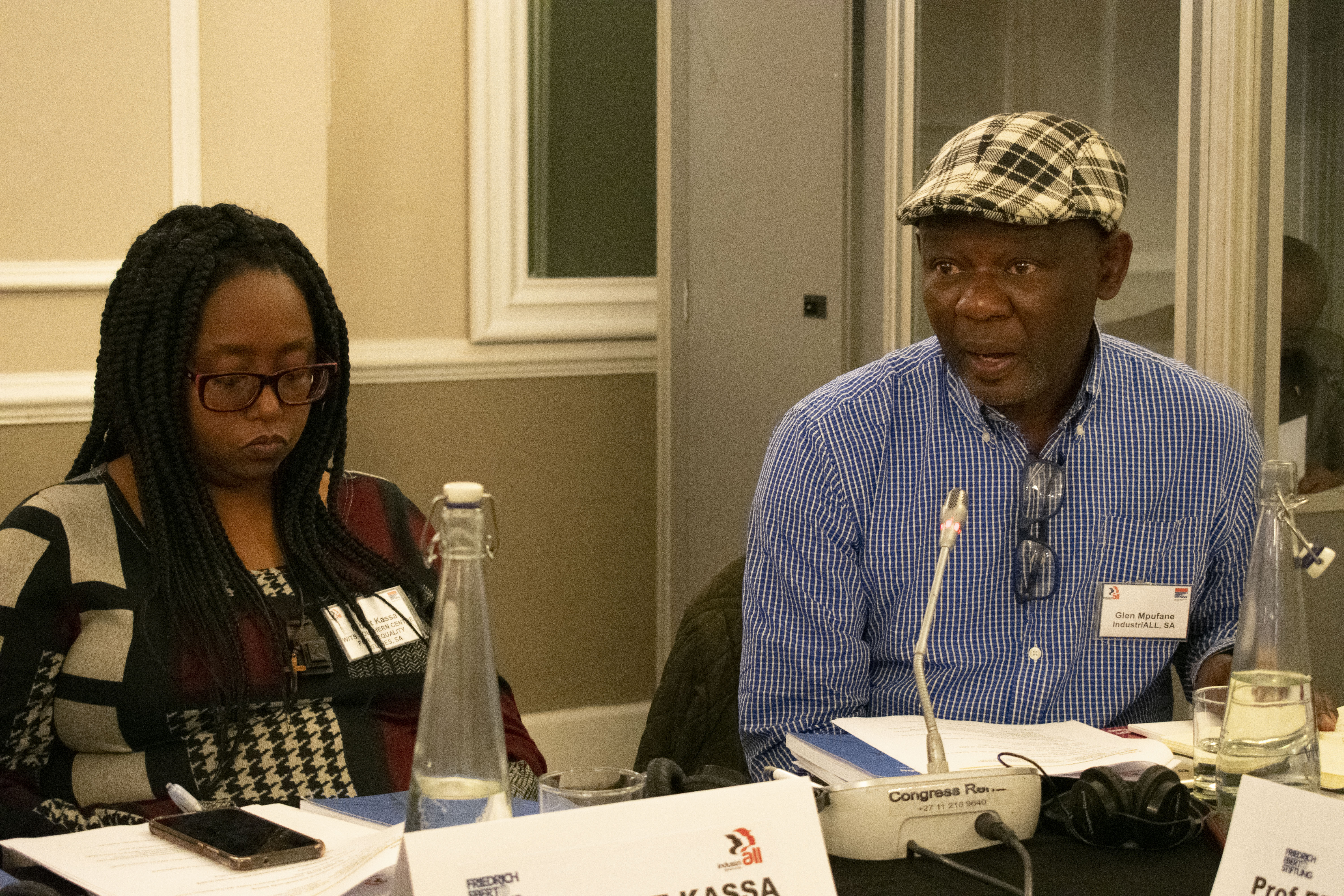
IndustriALL’s director for mining and diamond, gems, ornaments and jewelry production, Glen Mpufane, and Yoon Hywong, IndustriALL’s South East Asia projects coordinator, conducted the two workshops as part of collaboration between IndustriALL’s mining sector and the union building project. The strategic workshops were held on 30-31 May and 3-4 June for the VNUCMW and MEGM respectively.

While Mongolia, to its credit, ratified C176 on 26 November 2015, it is experiencing challenges with developing a national implementation roadmap. As for Vietnam, C176 is a relatively foreign concept, with the culture of blaming the worker rampant in the coal-mining sector. The action plan adopted at the end of the Vietnam workshop includes a proposal for a national OSH summit involving the tripartite stakeholders, together with an awareness-raising national campaign.

The workshop in Mongolia, where the government department of Minerals and Heavy Industries, as well as a representative from Rio Tinto’s Oyu Tolgoi mine, made presentations, brought into sharp focus the dysfunctional governance and OSH management failures in the mining industry in Mongolia.

“From a culture of unreported accidents, lack of inspections, lack of budget allocation, lack of accountability, to the complete absence of safety and health representatives and joint occupational safety and health committees, the challenges of implementing C176 are daunting but not insurmountable”

Glen Mpufane

In a meeting with Rio Tinto following the strategic workshop, IndustriALL requested that Rio Tinto Oyu Tolgoi offer technical and resource assistance to the development of the implementation roadmap, to which Rio Tinto responded positively. IndustriALL met with the Secretary of State to discuss the dismal state of OSH in Mongolia and the absence of an implementation roadmap following Mongolia’s ratification.

With the Secretary of State in Mongolia

The Secretary of State committed to resource the development of the roadmap and its implementation and to immediately set up a working group in consultation with both internal and external stakeholders.


Myanmar must reform labour laws to end union busting

They shared their views on topical issues such as law reform, minimum wage and collective bargaining. More activities and organizing targets were identified at the meeting.

Group work

Myanmar trade union leaders vowed to fight for the closure of a loopholes in the labour law to help end union busting and defend workers’ right to organize. A two-prong strategy was formulated to achieve the aim: to double lobbying efforts and build up capacity for unionized workers.

The IWFM president Ma Khaing Zar Aung complained that numerous union leaders were dismissed by their employers before they received registration certificates from the government. Owing to shortcomings in the current Labour Organization Law of 2011, union leaders’ right to organize is not protected until a trade union is officially registered.

Ma Khaing Zar Aung

 “We must eliminate anti-union discrimination. IWFM is working closely with the Confederation of Trade Unions Myanmar (CTUM) to present our proposed amendments to the government, including the protection of union leaders in the process of forming a union.

“The Myanmar parliament passed the Settlement of Labour Dispute Law 2012 (Amendment) in May 2019, which increased the penalty for unfair labour practice from 1 million kyat (US $656.5) to 10 million kyat (US $6565). The government will impose a penalty on employers if they failed to present at the Dispute Settlement Arbitration Council,” 

said Khaing Zar.

President of CTUM Maung Maung said the confederation has been actively lobbying government leaders to reform the labour laws. There have been some successes, but not 100 per cent. He was dissatisfied that civil servants were excluded from the mechanism, but nevertheless glad that individual worker dispute has been included in the conciliation process.

Maung Maung

“We are here today to assess the successes and challenges of our two affiliates IWFM and MWFM. We recognise the difficulties and review our strategies from time to time to overcome it,”

said Annie Adviento, the regional secretary of IndustriALL Southeast Asia Office.

Annie Adviento

Project sponsors FES, FNV and SASK, including Finnish Trade Union Pro, also participated in the meeting.

Young unionists hold second international exchange in Brazil

The second year of the International Youth Exchange and Training Project of IndustriALL Global Union and the Friedrich Ebert Foundation (FES) felt like a genuine reunion. Having held their previous meeting in Argentina in 2018, the participants held their next exchange week with enthusiasm on 27 to 31 May in Curitiba, Brazil.

The young Brazilians started to prepared the content and the presentations of the educational materials a month before. They started with a mystica – an artistic performance – about resistance, doing a live performance with music.

Before the sessions, the hosts presented relevant characters illustrating different struggles experienced by Brazilian people: former President Lula da Silva, Marielle, Dandara, Paulo Freire and Dorothy Stang.

They presented the history of the trade union movement in Brazil, the structure of trade union organizations, as well as the characteristics of negotiating and collective bargaining. The objective is that at the end of the three-year project, the participants will be able to compare union density in each country.

The main speakers were the young participants from Brazil, but they also but they also invited activists and specialists in education, gender, communication and research. A whole afternoon was spent debating with Brazilian social movement representatives, all women. Although they are different, they walk together for more social justice in this vast country.

The moment of greatest emotion and convergence of international solidarity was the visit to the #LulaLivre vigil organized just a few metres from the prison where ex-president of Brazil, Lula, is unjustly detained. The young leaders marched to the place where numerous social and union organizations meet to greet Lula three times a day and demand his release.

On his 417th day of incarceration, participants shouted their "good afternoon" in three languages (Portuguese, Spanish and German) and wrote him a letter to let him know that young people all around the world support him.

After a week of numerous exchanges and debates, on the final day, each participant presented their union action plan or project, which would be implemented before the next meeting in 2020 in Germany.

The purpose of these plans is to organize and empower working youth, and to respond to the challenges faced by young people in their countries.

Among other things, the participants proposed training courses to organize young workers, international educational exchange programs for young people from Germany and Argentina, workshops for young people on issues such as addictions, workshops on rights for young pregnant women and congresses for young women.

They also presented communication projects and campaigns against violence at the workplace, research and assessment projects about young people in Brazil, sports meetings for young people to attract them to the union and strategies to form youth committees in the unions.

“This exchange and training programme empowers young people so that they can act to renew and strengthen their unions. We focus on union practice and action. The commitments they all took on are inspiring,”

said IndustriALL youth and project officer Sarah Flores.

Photos from the week of exchange are in the photo gallery:

IndustriALL & FES Youth International Exchange Program - Curitiba, Brazil 2019

Historic opportunity for an ILO Convention on violence at work

The trade union movement has long campaigned for a strong and binding international instrument to fight violence and harassment at work. IndustriALL believes that it is now time for governments and employers to play their part in making this new international standard a reality.

During the discussion in the Standard Setting Committee at the ILC, the government, employers’ and workers’ groups will negotiate over a period of nine days a proposed text for both a Convention and recommendation on violence and harassment in the world of work. At the end of the ILC, the governments will vote on the adoption of these instruments.

Jenny Holdcroft, IndustriALL Global Union assistant general secretary, said:

“A new Convention is an historic opportunity to fill the gap in the protection of millions of workers, especially women workers. We should not miss it. No worker should be left unprotected.”

Trade unions are calling for the adoption of a strong, ambitious and progressive binding international standard. For two years, IndustriALL and its affiliates – along with the trade union movement around the world – have campaigned for this Convention to be adopted by the ILO this year.

Some employers have already taken up their responsibilities: ahead of the negotiations, companies including l’Oréal, Kering, Sodexo, ASOS, H&M, BNP Paribas, Avon, Diageo, M&S and Unilever, Tchibo and Esprit have made a public statement or have addressed a letter to the International Organisation of Employers to express their support for the Convention. Other companies have lobbied their national employer associations and governments in support of the adoption of a binding text.

IndustriALL calls on its affiliates to continue to voice their support for this Convention. It is time for trade unions to mobilize and put pressure on governments and employers during the next two weeks of negotiation.

Unions can post stories, quotes and pictures on social media that highlight the need and support for an ILO Convention on Violence and Harassment in the World of Work, using the hashtags #StopGBVatWork, #ILOendGBV and #ALLWomen.

Stora Enso GFA committee plans sustainable future

The parties to the GFA commit to an ongoing dialogue, and will meet once every two years to monitor the implementation of the agreement in the company. The committee brings together the three global unions, plus three national unions, Paperiliitto of Finland, and Pappers and GS Facket of Sweden. The steering committee of the Stora Enso European Works Council is another important part of the committee.

Stora Enso is committed to building a sustainable company, and the GFA is an important aspect of this strategy. Their policy sees sustainability as having three interlocking areas: environmental, economic and social. The company believes that a strong ethical approach gives them a competitive edge in the market. Consumers are becoming more aware and demanding when it comes to environmental and social behaviour.

The company is at the forefront of industrial change to environmentally sustainable production based on renewable technologies. Stora Enso aspires to develop solutions to make everything that is made with fossil fuels today out of trees in the future. That includes cars, planes, plastic bottles, solar panels and even skyscrapers.

The Stora Enso management presented the committee with their ongoing work in the specific areas of safety, working conditions, ethics, responsible sourcing and overall corporate development. The committee analysed ways in which union involvement could be increased in these different areas of work, and these discussions will be ongoing.

Malin Bendz, executive vice president of human resources in Stora Enso, stated:

“The GFA is part of everything we do. It fits with our beliefs, what we try to be as a company. We have a partnership and we explore how we can work together to make us stronger.”

Tom Grinter, pulp and paper sector director at IndustriALL said:

“Stora Enso are doing a lot of things well. One priority for our union reps at the company is to improve union consultation and involvement in the various ethical initiatives that Stora Enso is doing. This company’s importance will continue to grow, and our GFA dialogue will accompany that growth.”

Tenaris Brazil reverses dismissals after strike

Workers from both the morning and afternoon shifts took part in the strike, leading to a complete shutdown of the firm's production line on 21 May. The workers are members of the Union of Metalworkers of Pindamonhangaba, Moreira Cesar and Roseira, which is affiliated to IndustriALL Global Union through the national confederation of metalworkers (CNM-CUT). 

Following the strike, Tenaris management agreed to negotiate an alternative for the dismissed workers, as well as 200 workers in the production sector they say they no longer need. It is possible that Tenaris will seek to bring in some kind of voluntary redundancy plan.

The union also says that five of the 25 workers who were fired on 17 May had been injured as a result of workplace safety issues and their dismissals were irregular. The company initially said that it would not negotiate any alternatives with the union, prompting members to go on strike.

The union asserted the lay-offs were not the only option and said it would do whatever it could to safeguard the workers' rights and find an alternative.

In November 2018, the firm announced that it would potentially have to dismiss large numbers of workers. The union then threatened to hold a strike and managed to negotiate temporary lay-offs for 165 workers.

"We're extremely relieved that the company reversed last week’s dismissals and agreed to negotiate. It's a very delicate situation, because we won't be able to negotiate any more temporary lay-offs. Back in November, we tried to discuss the possibility of some kind of voluntary redundancy plan, but the firm refused. But we can still bring that back to the table, so we have made significant progress here at Tenaris Confab," said the union's chairman, Herivelto Vela.

IndustriALL's general secretary, Valter Sanches, stated that:

"Tenaris is involved in anti-union practices all around the world and fails to comply with employment standards, especially in Guatemala and Colombia. We support the workers at Tenaris Confab and members of the CNM-CUT in their struggle and are pleased that their strike action has led to the dismissals being suspended.”