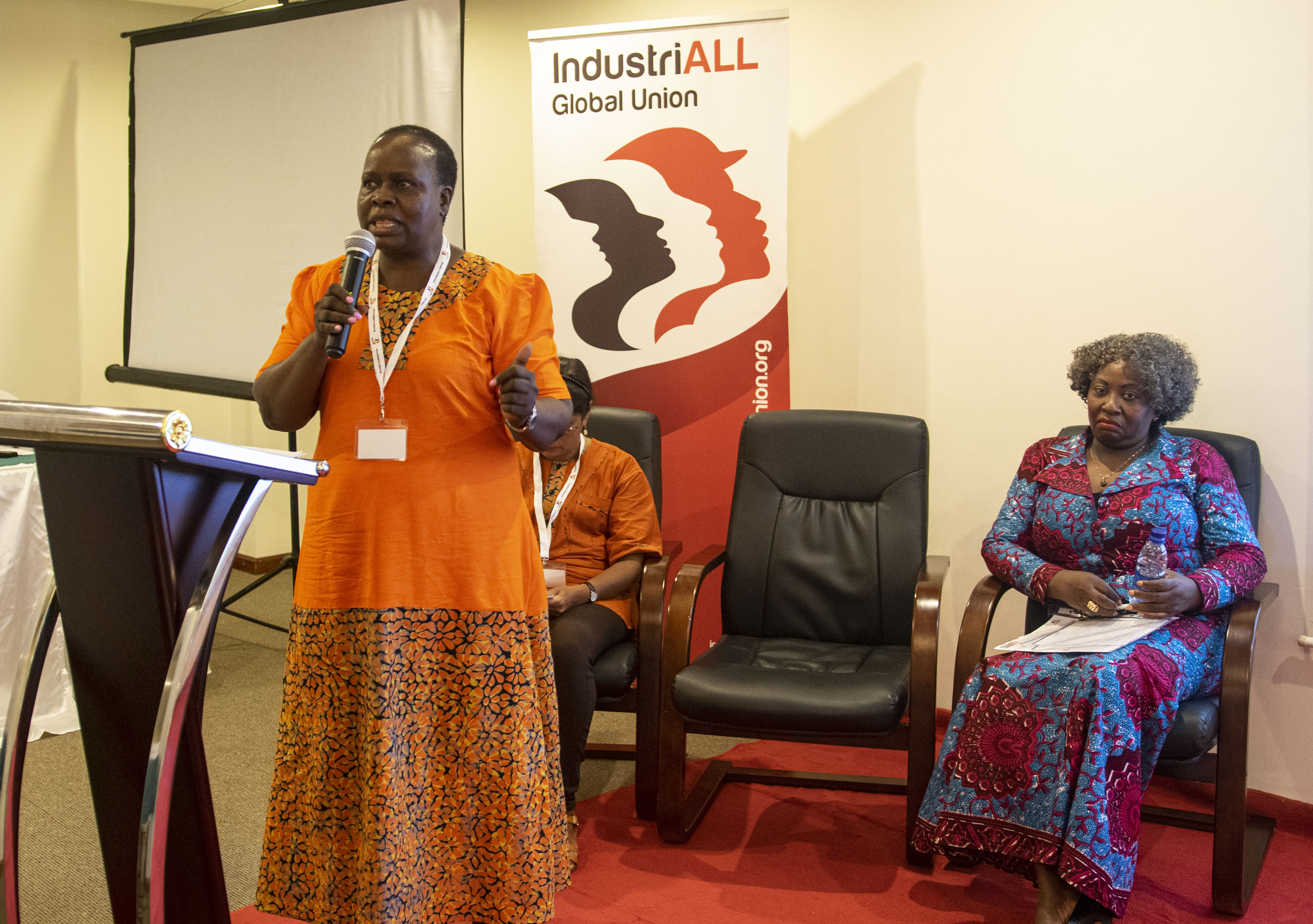
Cement unions in India commit to improve occupational health and safety

Trade union representatives reported that despite improvements in OHS in the cement industry and periodic health check-ups in many places, most of the workforce in the industry is not provided with comprehensive safety training.

As a result, a large number of cement industry workers are not aware of the occupational hazards they face due to their exposure to crystalline dust, alternative fuels, heat, heavy burdens, shift work and more.

The network paid special attention to the continuous use of asbestos in India despite its mining ban in 2011. Workers in the cement and other sectors remain exposed to this deadly substance, a situation which many define as a time bomb ready to explode at any moment.

Union representatives highlighted that while fatal and near fatal accidents attract more attention, a large number of occupational illnesses including musculoskeletal, respiratory, skin and circulatory diseases, are often not even recognized as occupational diseases, resulting in a lack of appropriate medical treatment and compensation for victims.

The enormous presence of precarious workers with poor working conditions and lack of social protection continues to pose major challenges in improving OHS. In recent times, almost all fatal accidents in the Indian cement industry have involved precarious workers.

Alexander Ivanou, IndustriALL materials officer said that,

“Indian cement industry employers have the responsibility to cooperate with unions on improving OHS at workplaces. Employers must recognize workers’ right to know hazards involved at work, participate in the decision-making process on OHS issues and refuse work or shutdown with no repercussions for them. A system of effective social dialogue with unions’ participation is the only possible way to improve workers’ safety and protect their health and life in India.”

Apoorva Kaiwar, regional secretary of IndustriALL said,

“It is encouraging to see that due to our continuous engagement, trade unions have increased their attention to OHS issues and in many cases designated OHS union representatives and taken initiatives to form OHS committees in their workplaces. Our efforts to support and build IndustriALL affiliates’ capacity will continue”.

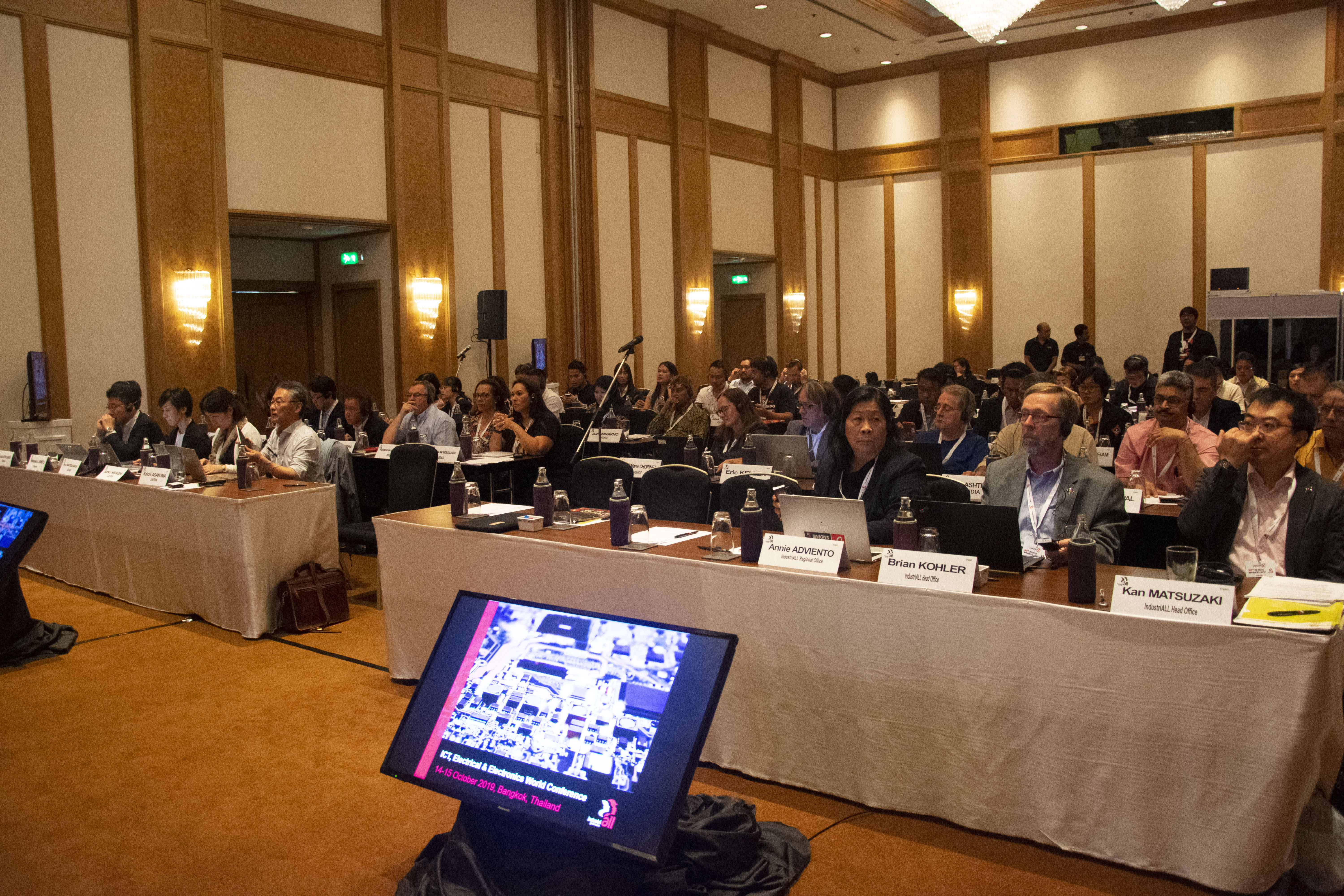
Trade union representatives resolved to intensify their focus on OHS issues, form and improve OHS committees, strengthen the capacity of union members, involve precarious workers in OHS training and organize periodic medical camps. They called for training by IndustriALL in international OHS best practice in the cement industry.

Union representatives continue working on enhanced union membership and regularization of precarious workers. They committed to putting more effort into organizing, solidarity support to precarious workers and improved participation of women and youth in union work.

The workshop also discussed sustainability challenges faced by the cement industry due to climate change and rapid technological transformation, often defined as Industry 4.0. The unions underlined the need to build union power to defend workers’ rights.

Initiatives towards strengthening social dialogue and building union networks in companies such as LafargeHolcim, HeidelbergCement, CRH, Cemex and others were also discussed.

The two-days workshop was organized under the IndustriALL South Asia union building and multinational companies supply chain project.

Young workers discuss strategies for the future of unions in Africa

These are some of the issues that were discussed at the youth activist school in Durban, South Africa, 23-25 July which concluded that the challenges are also an opportunity to transform unions.

The 26 participants at the school were drawn from five IndustriALL Global Union affiliates from Madagascar, Mauritius and South Africa: Union des Syndicats Autonomes de Madagascar-Federation des Syndicats Autonomes des Travailleurs d’Industrie and Confédération des Travailleurs du Secteur Prive from Mauritius participated. The South African affiliates represented were the National Union of Mineworkers, the National Union of Metalworkers of South Africa, the Southern African Clothing and Textile Workers Union, and UASA.

The issues discussed include youth involvement in organizing and building union power. Upskilling young workers for future union leadership, participation of young women in the unions, building union solidarity to confront multinational companies and deal with social issues including xenophobia in South Africa as well as migrant workers’ rights. Unions were also urged to engage governments, through social dialogue, on sustainable industrial policies and youth employment policies. Unions should also organize informal workers such as artisanal miners.

The school said unions should work with community groups on social issues such as land and housing. Abahlali baseMjondolo, a South African housing and land rights activist group, participated and suggested how unions can work with community movements. 

The school was organized by the IndustriALL Sub Saharan African region with support from the Friedrich Ebert Stiftung (FES) South Africa, and the FES Trade Union Competence Centre (FES-TUCC). The IndustriALL regional office and FES Nigeria and FES Tanzania have conducted similar youth schools in those countries.

Mbuso Moyo, programme manager for labour and social policy at FES South Africa said:

“We commend our partnership with IndustriALL for fighting for the rights of vulnerable workers and for accomplishing a lot with limited resources.”

Iris Nothofer, FES-TUCC added: 

“The formation of youth structures and the involvement of young workers in union activities plays a crucial role in transforming trade unions. If trade unions want to remain relevant actors in shaping societal and political change, they must become more inclusive, representative and democratic.”

Paule Ndessomin

Paule France Ndessomin, IndustriALL regional secretary for Sub Saharan Africa said the school is an opportunity for the youth:

“The school is an opportunity for young trade unionists to define the union that they want to see in the future. Unions should adapt to technological shifts and engage governments on sustainability and Just Transition policies.”

South East Asian cement workers demand an end to unfair competition

The unions unanimously passed a South East Asia cement network declaration at the end of IndustriALL regional cement industry workshop on 23-24 July 2019 in Bogor, Indonesia.

“We are convinced that only joint action can save a sustainable cement production in the South East Asian countries, hence the respective governments should ban ‘cheap’ cement through pricing carbon on imported cement and clinker if not done in the countries of origins”,

the declaration reads.

Demands include respecting ILO core conventions, particularly freedom of association, stopping the long distance transportation of cement and clinker to reduce the carbon footprint, ban the outsourcing of core business and subcontracting activities, and better health and safety protection for cement workers.


The president of the Federation of Indonesian Cement Workers' Union (FSPISI), Teguh Widodo, said the cement industry in Indonesia faces extraordinary decline with the entry of many new industry players, including Chinese companies, which are hostile to unions, pay low wages and unsafe working environment.

In agreement with Widodo, Denise Giron of Filipino affiliate the Associated Labor Unions said that affiliates in the Philippines face the same problem of the import of cheap cement driving down the domestic price and precipitating the layoff of workers.

Matthias Hartwich

“The oversupply of state-subsidised cement in some countries and the subsequent export to other countries is a growing concern in the world of work. Governments must impose stricter rules and regulations to safeguard local jobs and reduce carbon emissions. Cement and clinker should not be transported over long distances,”

said Matthias Hartwich, IndustriALL’s director of mechanical engineering and base metals.

Annie Adviento with the declaration

“The industry is fast changing and unions need to have effective networks to share information and bargaining experience. The last cement union meeting in Padang proves it is useful for our affiliates, but we must follow on our existing action plans to overcome challenges such as weak collective agreements or union mergers in Thailand,”

said Annie Adviento, regional secretary of IndustriALL.

Lena Yuliana of Indonesia talks about women in the sector

The 40 participants, including eight women, are from IndustriALL affiliates from Indonesia, Philippines, Vietnam and Thailand. They committed to increase women’s participation in leadership in near future. All groups adopted ambitious action plans for the following months.

Matthias Hartwich commented:

“These plans look good; they are ambitious but realistic. Now it is up to you to make it happen – I wish you all the success with that!

Moroccan unions reject strike-restricting law

Unions are demanding the proposed legislation, which limits the right to strike, is withdrawn for adoption by the Moroccan parliament.

The draft regulatory law No. 15.97 was written without consultation or negotiation with trade unions, contravening fundamental International Labour Organization Conventions 87 and 98.

The right to strike is upheld in chapter 29 of the Moroccan constitution, but now the government is trying to restrict the conditions for striking in law for the first time.

Moroccan unions say the bill would turn a universal human right into an instrument of oppression, directed primarily at protestors and trade unionists. Unions are collecting signatures against the bill, and plan to mobilize.

The legislation is part of a growing attack on trade union rights and freedoms in the country. Trade unions have mounted numerous demonstrations, strikes and marches in protest at the widespread violations against trade unions and trade union leaders, which go unpunished by the government. 

IndustriALL general secretary, Valter Sanches, said:

“IndustriALL Global Union urges the Government of Morocco to withdraw the draft law on the right to strike, which was written and submitted unilaterally to Parliament for adoption, and has not been the subject of tripartite discussions with partners.”

Unions are demanding that fundamental rights to freedom of association and collective bargaining are respected and that the Moroccan government commits to tripartite social dialogue.

Union picket at Spanish packaging company in Turkey enters ninth week

Workers are protesting against the company in Söğütlü town of Sakarya province after it unlawfully dismissed six trade union members on 29 May 2019.

The company is refusing to recognize the union, even though the Turkish Ministry of Labour issued official certification on 29 April stating that Selüloz-İş has a sufficient majority for being a bargaining partner.

The dismissals are part of an intimidation campaign launched by Saica Pack Sakarya after a large majority of workers joined the union in April. The sacked Selüloz-İş members were forced to sign papers indicating that they wanted to terminate their employment through public notary, but union members refused to do so.

Selüloz-İş members are not backing down.

IndustriALL wrote to the Saica Group in Spain on 31 May, urging the company to reinstate the trade unionists, stop harassing members on account of their union membership, and ensure respect for the right to freedom of association and collective bargaining under ILO Conventions.

IndustriALL's assistant general secretary, Kemal Özkan, visited the picket-line just after it began and addressed the workers. He said they had extensive international solidarity, and Spanish trade unions from UGT and CC.OO have been active in showing support for the Turkish workers. 

IndustriALL's assistant general secretary, Kemal Özkan, on the picket line. 

Ergin Alşan, general president of Selüloz-Iş said during the demonstration:

“Together with our global union IndustriALL, we will keep fighting for our dignity and fundamental rights until justice is done. We feel that we are not alone. The whole IndustriALL global family is with us, which makes us stronger”.

In a show of global solidarity, José Carlos Ruiz Palacios from FICA-UGT, visited the picket-line on 27 June. FICA-UGT also met with Saica at its headquarters in Spain urging the company to recognize the Turkish union as the legitimate social dialogue partner. Saica claims the dismissals are related to a loss of important customers, but not to trade union membership. The Spanish union also brought the case to the attention of Spanish Ministry of Labour.

José Carlos Ruiz Palacios from FICA-UGT visits the picket line on 27 June

IndustriALL’s general secretary, Valter Sanches, said: 

“As workers mark 57 days of picketing, we strongly urge Saica management to intervene and ensure that fundamental labour rights are respected at its operations in Turkey. It is time to reinstate the six leading union members who were sacked illegally, and recognize our affiliate  Selüloz-İş as the legitatimate bargaining partner. Saica’s behaviour would not be tolerated in Spain and cannot be allowed to continue in Turkey.”

Czech energy company denies rights to Georgian workers

The Georgian union launched a campaign for dignity and respect at work, union recognition, and negotiated wages that meet living costs and are indexed to inflation. However, the company has refused to meet with the union or address any of the workers’ demands.

The union pickets outside the company office in April

The union president, Amiran Zenaishvili, said:

"After the union took protest action in April, we sent a letter to the responsible ministry, listing our grievances on low wages, health and safety and union-busting.

"We asked the government to mediate in the dispute. The government assigned a mediator who met with the union and the employer. We are now waiting for a response.

"In the meantime, the company's anti-union campaign continues, and there has been open conflict since April."

IndustriALL general secretary Valter Sanches wrote to the CEO of the company, Jaromir Tesar, saying:

“IndustriALL Global Union calls on Energo-Pro to intervene immediately at Energo-Pro Georgia to guarantee that the local management acts in full accord with national labour law and international core labour standards, and, in consequence, agrees on engaging in a constructive social dialogue with the Georgian Trade Union of Energy Workers on the basis of full respect of the fundamental rights of workers.”

IndustriALL’s Czech affiliate OS KOVO – which has members at the Czech engineering plant that produces equipment – wrote to the Energo-Pro subsidiary that employs them, Litostroj Engineering. The company responded by saying they were not in a position to influence local management in Georgia.

Prague-headquartered Energo-Pro is a hydropower multinational, employing 9,000 workers in five countries through a number of subsidiaries. The company generates power at plants in Czechia, Georgia, Bulgaria and Turkey, and has engineering sites that develop technological equipment in Czechia and Slovenia.

The Georgian operation is the company’s biggest, with 6,180 workers at 15 hydro and one gas power plant. The company pays significantly less than industry standard, including the state-owned electricity company and other multinationals from Russia and Turkey.

IndustriALL calls for release of Kazakh trade union leader

Baltabay, who is leader of the Industrial Trade Union of the Fuel and Energy workers union, was also handed a seven-year ban on conducting any public activity, such as trade union activities. 

He is the fourth trade union leader to be criminally convicted or imprisoned in the last two years as the government of Kazakhstan continues its repression of independent trade unions in the country. 

Baltabay was sentenced on bogus charges of misappropriation of funds in retaliation for his trade union activism and support for leaders of the dissolved Confederation of Independent Trade Unions of Kazakhstan (CITUK). Larisa Kharkova, Amin Eleusinov and Nurbek Kushakpaev from the CITUK have also been punished and persecuted through the Kazakh courts. 

Last month, the International Labour Conference, at its Committee on the Application of Standards, singled out and sanctioned Kazakhstan for its “persistent lack of progress” to address abuses of core labour standards related to freedom of association and the right to organize.  

Kazakhstan has again been listed by the ITUC rights index as one of the top-ten workers’ rights oppressors in the world. While global civil society, including Human Rights Watch, has unequivocally condemned the unfair trial and persecution of Erlan Baltabay.

In a letter to the President of Kazakhstan, Kassym-Jomart Tokayev, IndustriALL’s general secretary, Valter Sanches, said:

“It is not too late for your government to redress this blatant violation of human rights and labour rights of Erlan Baltabay. Therefore, IndustriALL Global Union urges you to take the necessary immediate steps, in full accordance with international core labour standards, including Convention 87 on Freedom of Association and Protection of the Right to Organize, and in strict agreement with the decisions of the ILO’s Committee on the Application of Standards, to stop the persecution of the independent trade union movement.”

Help free Erlan Batalby!

IndustriALL has teamed up with the ITUC for an online petition with LabourStart calling on the Kazakh authorities to free Erlan Baltabay and ensure freedom and safety for trade union activities in the country.

Indonesian shoe and accessory workers picket for unpaid wages

The employer Kim Seong Rok failed to provide any severance payment for affected workers, and suspended payment of statutory minimum wages from 2013 to 2019.

Currently, the Indonesian police have put the South Korean investor under the wanted persons list. According to members of the National Industrial Workers Union Federation (SPN) in the factory, Kim has disappeared since November 2018.

SPN filed a complaint in court and obtained a judgement which allowed SPN to seal the factory and sell the assets to pay the workers’ severance package.

Concerned that the assets could be stolen, the workers take turns at the picket booth for 24 hours in order to monitor the movement of trucks at the factory premises.

“Even though we can successfully sell the machines and equipment of MPI, the rough estimation of the value is only US $ 214,000 (RP 3 billion), which is far from our target Rp US $ 859,000 (RP 12 billion). It is unfair for the workers”

Said Ardi Kurniawan, the chairman of SPN Tangerang district.

“Many working families face an extremely difficult situation after the closure of the factory. They are unable to pay housing loans and school expenses for children, several members even divorced from their spouses because of loss of income,”

Said Sanusi, the chief of SPN at MPI.

SPN is negotiating with MPI customers, PT Parkland World Indonesia (PWI), for a humanitarian fund with an amount of US $ 114,000 (RP 1.6 billion). PWI had previously paid the owed February wages to workers in good faith on behalf of MPI.

Regional secretary of IndustriALL South East Asia office, Annie Adviento, said the affected workers have a right to demand a severance payment and the shortfall in thestatutory minimum wage in the last seven years. IndustriALL pledges solidarity with MPI workers and calls upon the relevant parties to solve the dispute.

Union condemns plans to retrench 2,000 workers at ArcelorMittal South Africa

Steel producer, ArcelorMittal South Africa (AMSA), which employs more than 8,500 workers, made the announcement on 10 July. AMSA then wrote to NUMSA, stating that it did not know how many workers will be affected, even though it had just made an announcement.

Mokete Makoko, NUMSA regional secretary for Sedibeng where the AMSA Vanderbijlpark plant is located, said:

“AMSA has already gone ahead of the consultation process and decided on the number of workers who will be affected. Again, this is another example of the flagrant disregard which the management of AMSA has for workers and their right to due process.”

In March, IndustriALL Global Union affiliate, NUMSA , went on strike at AMSA demanding equal pay for work of equal value, and protesting against labour broking, deteriorating health and safety standards, and other labour rights violations.

One of NUMSA’s demands was to give permanent jobs to workers employed through labour broking companies. Instead of employing workers directly, AMSA used contractors it described as “service providers” to recruit the workers were paid 50 per cent or less than permanent workers doing the same work. Some workers employed through the contractors have been under precarious contracts with no benefits for many years. Now they have been given termination letters.

NUMSA members strike against ArcelorMittal in March 2019.

“It comes as no surprise that the management of AMSA is proceeding with this course of action, just a few months after our members embarked on a strike to end outsourcing at the company. They clearly want to punish workers for fighting to end the exploitation of contract workers supplied by so-called service providers. As NUMSA we will do everything in our power to minimize the number of jobs which will be lost,” said Mokete Makoko.

Paule France Ndessomin, IndustriALL regional secretary for Sub-Saharan Africa said: “It’s important for ArcelorMittal South Africa to consult with unions and to respect workers’ rights before making any public statements on retrenchments. We call upon the company to implement fair labour practices.”

Around 100,000 jobs have been lost in the steel industry in South Africa over the past decade.

AMSA is part of the global ArcelorMittal group and NUMSA has over 3 000 members at the company. ArcelorMittal employs some 200,000 workers in 60 countries worldwide.

Global dialogue needed at Deere and Caterpillar

Over 40 delegates from 10 countries convened for joint and individual IndustriALL Global Union meetings from 10 to 12 July to exchange experiences, improve dialogue and develop global solidarity.

The first day was dedicated to the Deere & Co union network, and the company’s Senior Vice President and Chief Administrative Officer, Marc Howze, introduced Deere’s concept of social relations and strategy.

Deere's Senior VP & Chief Administrative Officer, Marc Howze

Representatives from Deere’s European Works Council shared their experiences of social dialogue on a European level, and delegates adopted a plan to better coordinate their work and strengthen the Deere network. 

IndustriALL director for mechanical engineering, Matthias Hartwich, said:

“We want Deere to create an official dialogue between management and IndustriALL Global Union, preferably with a global framework agreement.”

Ray Curry, the host union UAW’s secretary treasurer and director of the agricultural implement department, opened the second day of the meeting. He said:

“The mechanical sector global networks provide a great opportunity for an exchange with colleagues from various global locations of both companies. The coordination of our trade union efforts provide recognizable assistance to every worker in Deere and Caterpillar. Our ultimate and attainable goal is to improve the working and living conditions for the workers and their families. The UAW will continue to support and drive the efforts to create global solidarity among workers in all agricultural implement, construction and mining machinery sectors.”

UAW's Ray Curry

Speaking at the meeting, IndustriALL’s assistant general secretary, Kemal Özkan, said:

“Trade union networks, like the ones at Deere and Caterpillar, are not a means in themselves; we need them as drivers of better working and living conditions for employees of the respective companies. If companies are willing to enter into dialogue, we are always open. But if they don’t respect fundamental rights of workers, then only remaining option for us to  campaign.”

In the joint meeting of both networks, participants underlined the importance of the exchange of information and experience as there are common issues across borders and across companies. The meeting discussed the opportunities and challenges of digitalization in the mechanical engineering industries, which require strong trade union coordination across the borders if workers are to get a share of wealth.   

At Caterpillar, employees have suffered many setbacks in recent years.  Radical restructuring in the company’s operations resulted in over 10,000 redundancies with several plant closures, showing that exchange and cooperation between trade unions is crucial. Caterpillar European Works Council members described the difficulties in getting proper information and having consultation with company management. Participants expressed their appreciation and commitment for the network newsletter as an important tool of communication. 

At the end of the meeting, attendees agreed to improve communication in-between meetings, which will be determined by the steering committees.     

Matthias Hartwich summarized:

“The issue of communication, that came up time and again in the meetings, is a serious call for us to strengthen the capacity of the trade union networks to interact and exchange information.”

Deere & Co manufactures agricultural, construction, and forestry machinery, employing more than 60,000 workers worldwide.

Caterpillar is the world's largest construction equipment manufacturer with more than 100,000 workers. Both corporations are American.

See more photos of the meeting on flickr