Kazakh union leader freed

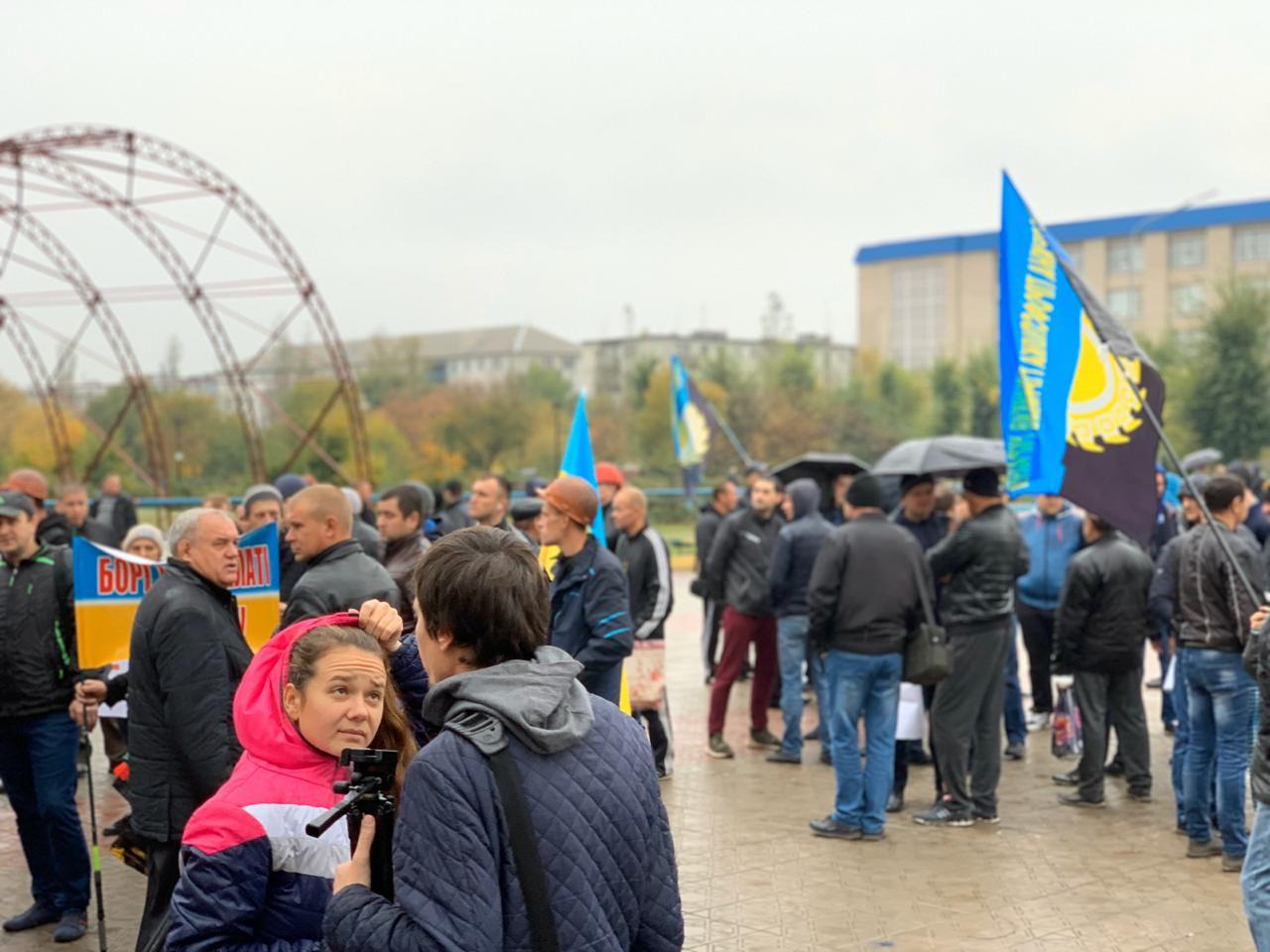
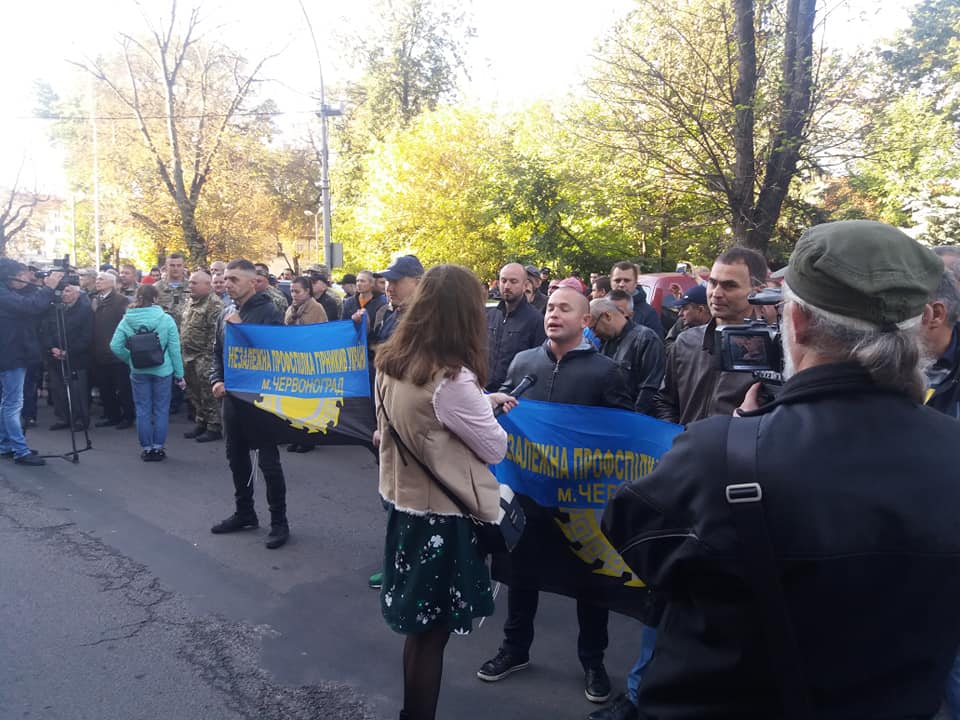
Convicted on bogus charges for misappropriation of funds in retaliation for his trade union work and support for leaders of the dissolved Confederation of Independent Trade Unions of Kazakhstan (KNPRK), Erlan Baltabay was sentenced to seven-years in jail and was served a ban on any public activity, such as trade union activities. The international trade union movement condemned the sentencing and launched a massive campaign for the liberation of the union leader.
 
During the International Labour Conference (ILC) in Geneva in June 2019, as well as during the session in 2017, Kazakhstan was put under a special scrutiny for systematic violations of the trade union and human rights. This, and the international campaign, allowed the union leader to be finally freed.
 
Just as his colleagues, KNPRK leaders Larisa Kharkova, Amin Eleusinov and Nurbek Kushakbaev, Erlan Baltabay was convicted on bogus charges. The cases against them aimed at oppressing and silencing trade union activists. Eleusinov and Kushakbaev were released in May 2018.
 
Valter Sanches, IndustriALL Global Union general secretary, says:

“We want to thank everyone who participated in the solidarity campaign that led to the release of Erlan Baltabay.

“Baltabay’s conviction was politically motivated and it is outrageous that workers are not allowed to exercise their fundamental freedoms and rights. We hope that Baltabay’s liberation signals a step towards improving public freedom in Kazakhstan, and we are calling for a restoration on fundamental trade union rights in the country.”

Retraining and upskilling: solutions for the future of (human) work?

These are some of the effects of globalisation and the Fourth Industrial Revolution set out in the 2018 Future of Jobs Report of the World Economic Forum. It also estimates that workers will need an average of 101 days of retraining and upskilling between now and 2022.

It was with this outlook in mind that, in May of last year, the EU Commissioner for Employment, Social Affairs, Skills and Labour Mobility at the time, Marianne Thyssen, presented a ‘strengthened’ European Globalisation Adjustment Fund (EGF), to ensure that people “have the right skills” and access to “modern social protection adapted to new forms of work”. Set up 12 years ago, the EGF offers co-funding for up to 60 per cent of the cost of initiatives such as training and retraining to reintegrate workers affected by factory closures or the decline in economic sectors affected by globalisation, such as the 4,500 Ericsson employees in Sweden who lost their jobs as a result of the “increasingly tough competition from Asian producers”.

Protecting people, not jobs

The EFG “is an attempt to compensate people that have lost out to automation but it is a mere fraction of EU social spending” – set at 37 per cent in the 2017-2022 budget – Andrés Ortega Klein, researcher at the Elcano Royal Institute think tank and author of La Imparable Marcha de los Robots [The Unstoppable March of the Robots], tells Equal Times. And whilst worldwide corporate spending on digital transformation (DX) is reaching dizzying heights, as shown in reports such as that of the International Data Corporation, “governments are lagging behind”, says the researcher, adding that public transition policies “should be protecting people rather than jobs, as we do not know if these will be salvaged”.

“Those who lose their jobs to automation are not ready for the new jobs. Not enough is being invested in upskilling,” Ortega warns.

Indeed, underfinancing – around €170 million a year (US$193 million) until 2020 for the whole of the European Union – is a serious handicap. “The EGF is a trial; there has not been [sufficient] funding; the thinking was that the market would absorb these people, and it has, but with poorer pay and conditions, leading to the shrinking and decline of the middle classes, and that represents a major threat to democratic stability.” The absence of a community-wide strategy is another setback.

“The EU should follow the example of Japan, which is retraining its workers, even those in good jobs, skilled work,”

says Ortega Klein.

The land of the rising sun already has a national artificial intelligence strategy. China is also ready with its artificial intelligence development plan and has commissioned search engine and tech company Baidu to set up a “deep learning laboratory” in partnership with the country’s leading universities.

Meanwhile, the ILO, in the Centenary Declaration for the Future of Work adopted in June, called for the right to “effective lifelong learning” at the same time as urging governments, employers and workers, as well as educational institutions, to pool their efforts.

For ILO economist and expert in technological change and its impact on employment, Irmgard Nübler, focusing on the development of skills such as critical thinking or creativity are key to developing a “long-term approach” to the future of work involving governments, employers and civil society:

"Skills basically fulfil two roles: they shape the thinking, mindset and attitude of a society and provide the technical skills enabling companies to develop new technologies.”

The future of work will be determined by technology and institutions

Technological retraining alone, however, will not provide us with quality jobs. “Over the last 30 to 40 years, we have shifted towards an economic paradigm whereby growth and economic development have become more important than anything else. That has led to a situation where many institutions have been adapted to support growth, efficiency and globalisation. When we look at decent work, for example, in many countries, the institutions that used to ensure decent work have been cut back or changed based on the argument that they could destroy jobs,” recalls Nübler.

"Technology is one thing that determines the type of jobs available, but we also need institutions to regulate the working hours, to ensure decent conditions and social protection, etc. Both technology and institutions will determine the future of work,” she says, alluding to the gig economy or platform economy. quote here"

she says, alluding to the gig economy or platform economy

Ortega Klein shares this realistic view of technology:

"The global foundation for a new social contract will be how technology is able to help economically depressed areas that offer insufficient employment; how it can be used to achieve the Sustainable Development Goals of the United Nations, although the key will continue to lie in how the work is distributed.

"We are already seeing it, throughout the OECD, where the number of hours worked is progressively declining, but the danger lies in building a more unequal society, with some people working long hours for little pay whilst others work much less yet have much higher incomes. Exploring the idea of a Universal Basic Income is an option."

In addition to the threat of inequality, the global youth unemployment crisis is, along with climate change, the great challenge of our time, as Joaquín Nieto, head of the ILO Office in Spain told Equal Times. According to the statistics portal Statista, the global rate of youth unemployment has been between 10.7 per cent and 11.8 per cent over the last decade. It is not likely to fall by 2020.

To the question of whether training is the solution, Nübler’s response is clear. “Social justice needs to be the compass for our choices as a society, we always have to ask ourselves the questions ‘Is it fair?’, ‘Who is benefiting and who is losing?’ and ‘Is there a balance?’. If, as a society, we think it is not fair, our governments should invest more in everything we need to give young people access to jobs,” she adds. The economist also stresses the importance of “listening to what young people want” and to create jobs that match, as well as providing them with incentives to work in sectors where more staff is needed, such as the care and ageing sectors.

As the economist underlines, however, the real challenge is understanding that “we cannot remain in this growth paradigm”.

“We need to fundamentally change our perspective and to find ways to balance these different targets in a way that protects the environment, and that will mean less consumption and less production for many developed countries,”

Nübler concludes.

This article was originally published on Equal Times

Here you can find information on The Future of Work, and IndustriALL Global Union, as well as guidance on the Just Transition that will be necessary to handle the coming transformations; A trade union guide to a Just Transition for workers

INTERVIEW: Natalia Marynyuk

Tell us how you rose through the union ranks at a male-dominated workplace 

“When I started working, I joined the Trade Union of Metalworkers and Miners of Ukraine (PMGU), affiliated to IndustriALL Global Union. In August 2017, more than 20 years after I first started, I was elected leader of the trade union committee. I became the first, and so far, the only woman elected chair of the local union in it 85-year existence. 

“Even though female workers represent slightly less than 30 per cent of the company workforce, women are far more active in the union than their male colleagues. Out of 114 PMGU activists at ArcelorMittal, almost 60 per cent are women.” 

Kryvyi Rih was a large iron-ore mining and metallurgy centre during the Soviet Union and Kryvorizhstal Steel Works exported products to over 30 countries around the world. 

Producing along the full metallurgical cycle, including mining of ore, production of concentrate, agglomerate, coke, cast iron, steel and rolled products, and with around 57,000 workers, the steel works was an attractive proposition to buyers when it was privatized in 2004. 

In 2005, the company was sold to Mittal Steel for US$4.81 billion, far exceeding the US$3 billion predicted by analysts. When Mittal Steel took over Arcelor in 2006, it became ArcelorMittal Kryvyi Rih.

What did privatization mean for you and your colleagues? 

“When the process of privatization was announced in 2003, workers and trade unions expressed concerns about the future of their jobs. There was a series of protests demanding what we called a social package to be adopted by the government. It was to protect workers and to be respected by a new owner after privatization. 

“As a consequence, Kryvorizhstal Steel Works was privatized with a compulsory social package, containing 19 conditions to be observed by the new owner. This was a first in Ukraine. However, due attention was not paid to all the 19 points, and the union responded by organizing protest actions and meetings to make the employer deliver on the commitments, including promises of wage increases. 

“Between 2005 and 2018, ArcelorMittal effectively more than halved the workforce, from some 57,000 workers to less than 21,000. The cuts were mainly done through voluntary retirement, although that did not make it easier for those who remained on the job. Despite a drastic reduction in the workforce, the company’s production of cast iron, steel and rolled products has remained more or less the same, even slightly increasing.

“Add to the increasing workload a lack of investment, leading to deteriorating buildings and equipment, and you can see a clear decline in workers’ conditions.”

How did your union handle union-busting from the company management? 

“Conditions for the workers in the plant started to seriously deteriorate when a new human resource director was employed in 2017. There was clear hostility towards unions from the start; the terms of the collective agreement were not respected and union proposals were ignored. 

“The situation deteriorated, there were fake union flyers, as well as social media posts and articles in local media slandering the union. The HR director even developed a special union-busting programme for 2018 called ‘Action plan aimed at reducing unions’ influence’. 

“Appeals from the union were ignored by the management. When we called workers for an assembly, the HR director promoted false information about the venue and agenda in an attempt to stop workers from expressing their collective demands. But the union and the workers managed to hold the rally. They also sent an appeal to the CEO of ArcelorMittal Kryvyi Rih, signed by 12,000 people, demanding higher wages, better safety and improved social dialogue. After getting no answer, the union voted to begin a collective dispute in April 2018. 

“The following month, through mediation during a marathon 26-hour mediation meeting, an agreement was reached between management and the unions. The CEO increased the wage fund to UAH1.1 billion (US$40 million), and also dismissed the questionable HR director who had failed to establish a social dialogue in good faith with the workforce.

“There are still problems, but at least today we have social dialogue with the company.

“Since June 2017, there has been an agreement on visa-free entry with the European Union, making it easier for Ukrainian citizens to travel to Europe. As a result, many people have left Ukraine looking for better working conditions and, consequently, for the first time this year, the company has had problems finding enough skilled drivers. 

“After a roof collapsed in March last year, killing a worker, assessment of the buildings and reparation works have started.

“So, the issue of better wages and conditions remains a crucial question for the company.”

Natalia Marynyuk. PMGU

How important is international solidarity for your union? 

“Recognition of our dispute and international solidarity to support it were important in finding a solution. Already in 2015, with the support of IndustriALL, trade unions at ArcelorMittal in Kazakhstan and Ukraine sent a request to the company CEO, asking to let their representatives become part of ArcelorMittal European Works Council. 

“At a meeting in Luxembourg in July 2018, unions at ArcelorMittal formed a global network and committed to pursue global social dialogue with the world’s largest steel company. And the Ukrainian unions were part of it. 

“This platform has allowed the union to raise its concerns on social dialogue with the top global leadership at ArcelorMittal. I am currently part of the ArcelorMittal Joint Global Health and Safety Council, which has also helped improve local social dialogue.”

PMGU 

PMGU is currently the largest union at ArcelorMittal Kryvyi Rih, representing over 70 per cent of the workers. Around 10 per cent of the workforce is not organized, and the remaining 20 per cent are represented by 10 other unions including IndustriALL affiliate, the Independent Trade Union of Miners of Ukraine.

Turkish glassworkers on strike over long-standing union busting

Union organizing campaign by Kristal-Is started in 2015 seeking legal recognition at the three subsidiaries of Okan Group, namely Okan Cam, Düzce Cam (both located in Düzce), and Çetaş Cam (located in Samsun). The Turkish Ministry of Labour issued an official document recognizing Kristal-İş as the legitimate workers’ bargaining representative at Düzce Cam.

However instead of entering into proper dialogue with Kristal-Is, Düzce Cam management challenged the certificate issued by the Ministry of Labour and tried to undermine the union. Two years later, the judicial process ended in favour of Kristal-Is, confirming the union’s sufficient majority for being a party to collective bargaining negotiations.

Dusze Cam glassworkers striking over recognition

In spite of repeated calls by IndustriALL Global Union, the Okan Group has failed to respect the rights of workers to join the union of their choice, and engage in collective bargaining negotiations with their representative trade union Kristal-Is.

Okan Group persistently continued its intimidation and anti-union actions against Kristal-İş members in a way to force them to leave the union. To date management has illegally dismissed around 80 union members, including officially nominated union representatives, for their union membership.

In addition, the Okan Group management failed to attend a mediation meeting facilitated by the Turkish Labour Ministry, categorically refusing any dialogue with Kristal-Is.

Kristal-İş demands from Okan Group to:

On 08 August 2019, over the 14th day of the strike, Kristal-İş organized a press conference in front of the plant of Düzce Cam in Düzce with the participation of the strikers, their families, sister unions’ and NGOs’ representatives and also IndustriALL Global Union.

“This struggle continues for more than four years” said General President of Kristal-İş Bilal Çetintaş. “Together with our global union and all allies, we will keep fighting until the justice is here”.

In his address to the strikers and press, Kemal Özkan, IndustriALL assistant general secretary said:

“IndustriALL Global Union, together with its 50-million-strong family, greets this strike and extends its full support and solidarity. We will not stay silent. We will do everything in power to get union recognition in this group”.

Kemal Özkan addresses Düzce Cam glassworkers

Düzce Cam is a growing glassmaker in Europe with two float lines open in 2010 and 2016 in Düzce and the third one to be installed soon. Since the factory produces overwhelmingly for exports, IndustriALL Global Union has already reached out the company’s business partners in the glass sector, including Saint-Gobain, Glaverbel, Pilkington, and Guardian, with a demand to do a proper due diligence over the violations of fundamental rights.

Unions build unity through collective bargaining training in Madagascar

These are the issues that were discussed at a two-day workshop held on 2-3 August in Fort Dauphin, organized by the United Steelworkers (USW) from Canada and IndustriALL Global Union with support from the Steelworkers Humanity Fund (SHF). The workshop fleshed out on what needs to be done by a union to be effective in collective bargaining.

Attended by 26 participants, mostly worker representatives and shop stewards from IndustriALL affiliates Sendika Kristanina Malagasy (Sekrima) and Syndicalisme et Vie des Societes (SVS) with facilitators from USW and IndustriALL, the workshop showed that unions from different continents can work together and exchange learning and knowledge sharing of strategies on collective bargaining.

In the workshop, participants took lessons from the recently concluded negotiations with Rio Tinto's QMM subsidiary and recognized the critical importance of greater communication and engagement with the union members and workers in order to address workers’ needs. This was highlighted as key to achieving stronger collective agreements in the future.


Denis Trottier and Guy Gaudette, the USW trainers, shared their experiences on the importance of preparing for negotiations with employers.

“There is need to keep workers updated with information to build support and solidarity in making sure that in the event that the negotiations fail, the workers should decide on the next steps.”

Paule France Ndessomin, IndustriALL regional secretary for Sub Saharan Africa said:

“We are working to bring together our affiliates SVS and Sekrima to work together on collective bargaining strategies. When unions are united, they stand a better chance in negotiations with the employer.”

As part of the project to build union solidarity between the SVS and Sekrima, the SHF will support a shared office for the two unions. The office will receive workers’ grievances and identify workers’ priorities on which the unions can build consensus. From this a list of demands will be made for the next round of negotiations.

The IndustriALL union building project will also contribute to this initiative by supporting organizing drives for both unions.

Indian unions hold nationwide protest against anti-worker labour law ‘reforms’

Workers across India, including those from IndustriALL’s affiliates, hit the streets in response to central trade unions’ call for nationwide protests on 2 August as the Modi government introduced the Code on Wages Bill and the Code on Occupational Safety, Health and Working Conditions Bill in Lok Sabha in the current parliament session.


The Code on Wages, which has now been passed by the parliament, amalgamates four separate labour laws that govern fixing and paying wages. Unions say the new code reneges on progress made in the recent past through social dialogue and undermines the participation of union representatives in the process of fixing minimum wages.

While unions demanded that minimum wages should be revised annually, the new code allows the revision at least once in five years.  The code on wages also grossly dilutes the inspection regime by replacing the labour inspector with an ‘inspector-cum-facilitator’ and introduces a web-based, randomized, computerized inspection scheme, jurisdiction-free inspections and reviewing information electronically for inspection.

Modi is attempting to amalgamate 44 existing labour laws into four simple labour codes.

The code on occupational safety, health and working conditions subsumes thirteen existing labour laws and is yet to be passed by the parliament. These and other two labour codes on industrial relations and social security are part of the Modi government’s attempt to amalgamate 44 existing labour laws into four simple labour codes.

Existing labour laws were originally enacted as a result of workers’ struggles and address specific needs and protections of workers’ rights in a variety of manufacturing, services and construction sectors. Trade unions have opposed the oversimplification of labour laws and contend that both the bills absolutely ignored objections raised by unions.

In a press release, the central trade unions stated that by repealing existing laws, the government, “in their most obedient services of their corporate masters” has grossly tampered with the workers’ rights and excluded a large number of workers from coverage by labour codes.

"Trade unions genuinely are ignored while the principal purposes of the labour code seem to be facilitating ease of doing business."

Dr. G Sanjeeva Reddy, IndustriALL executive committee member and the president of the Indian National Trade Union Congress said that,

“The working class in India is facing the worst ever onslaught on workers’ rights under the Modi government. All social dialogue institutions, traditions and practices that were painstakingly built for over seventy years are undermined. Trade unions genuinely are ignored while the principal purposes of the labour code seem to be facilitating ease of doing business. In coming days trade union movement’s united resistance will be intensified.”

Central trade unions participating in the nationwide action include INTUC, AITUC, HMS, CITU, AIUTUC, TUCC, SEWA, AICCTU, LPF, UTUC and independent federations and associations of workers and employees.

Northern Ireland shipyard workers occupy yard that built the Titanic

The 130 workers, members of IndustriALL Global Union affiliates Unite and GMB, are calling for the yard to be nationalized. The yard was put up for sale in December 2018 due to serious financial problems at its Norwegian parent company, Dolphin Drilling, and has so far failed to find a buyer. Administrators are expected to make an announcement this evening, and place the firm in administration on the morning of 6 August. The workers have been given redundancy notices.

Photo: Unite Northern Ireland

In addition to the occupation, workers protested outside Stormont, the Northern Ireland Assembly, and held a family day at the yard on Sunday. Messages of support and solidarity have flooded in from across the UK and Ireland, as well as further afield.

Photo: Unite Northern Ireland

The unions are concerned that the yard will be sold after administration and asset stripped, with the company’s expertise and skilled workforce discarded. Unions are calling for the yard to be nationalized as part of the UK government’s strategy to protect shipbuilding. The closure of the yard could also have an effect on other yards, as Harland and Wolff is part of a consortium which is bidding for a Royal Navy contract.

Photo: Susan Fitzgerald

The Harland and Wolff yard is an iconic part of Belfast’s industrial heritage and landscape. Founded in 1861, the yard employed 35,000 workers at its peak, building the Titanic and many other famous ships.

The yard has not built a ship since 2003, but has remained active repairing and refitting ships and oil rigs, and providing structural engineering to the offshore oil, gas and renewable energy sectors. In 2008, the yard built SeaGen, then the world’s largest tidal energy generator, and has subsequently built components and platforms for offshore wind farms.

Photo: Susan Fitzgerald

Susan Fitzgerald of Unite said,

“There is still time for the Government to put aside its ideological prejudices and re-nationalize Harland and Wolff.  Given the cost – in terms of lost purchasing power and taxes, as well as expenditure on benefits – of losing Harland and Wolff’s jobs, re-nationalization would be a sound commercial decision as well as an investment in Northern Ireland’s future.”

Michael Mulholland of the GMB said:

“Our members have been protesting for almost 24 hours straight – such is the strength of feeling for this famous yard. GMB demands Harland and Wolf is renationalized, securing hundreds of jobs and Belfast’s place as a global centre of shipbuilding.”

IndustriALL director for shipbuilding and shipbreaking, Kan Matsuzaki, said:

“This historic yard is part of Belfast’s industrial heritage. But it belongs to the future, too. There is surging demand for renewable energy, and Harland and Wolff workers have demonstrated that they have the expertise and experience to turn the yard around and supply the sector.

“It is deeply irresponsible to allow the yard to close. It must be saved.”

Bangladesh unions organize medical camp for shipbreaking workers

The temporary clinic to provide a basic health check-up and free medical treatment to shipbreaking workers was organized by IndustriALL affiliates the Bangladesh Metal Workers' Federation (BMF) and the Bangladesh Metal, Chemical, Garments and Tailors Workers' Federation (BMCGTWF) as part of the IndustriALL and FNV shipbreaking workers projects.

It was observed that most of the shipbreaking workers face general health issues like body pain, fever and physical weakness, and a few workers presented with intense pain in the legs, knees and bones. Doctors provided prescriptions and advice for follow up diagnostics.


Md. Halim (27), a shipbreaking worker, said,

"Doctors at this medical camp were very friendly and they carefully explained my health problem. I am very happy that in addition to some health tips I also received medicines. We hope there will be more such medical camps in coming days, which will be very useful for me and hundreds of shipbreaking workers in this area."

General physicians, orthopedics and skin specialists of Chattogram Medical College Hospital participated in the camp and provided treatment for shipbreaking workers.


Kan Matsuzaki, IndustriALL shipbuilding and shipbreaking director said,

 “The health camp was organized to provide some basic medical support to shipbreaking workers in the absence of medical facilities near shipbreaking yards. The government and employers need to take more meaningful steps to create good health infrastructure for shipbreaking workers”.

Apoorva Kaiwar, IndustriALL South Asia regional secretary said,

“We commend IndustriALL Bangladesh affiliates for taking this important solidarity initiative with the shipbreaking workers by organizing health camps successively for the second year. We look forward to having similar fruitful interventions in future.”

Four coal miners dead and nine injured in a Coal India accident

Bharatpur is in the Talcher coalfields of Mahanadi Coalfields, a subsidiary of Coal India Limited in the state of Odisha.

So far, nine coal miners have been rescued from the debris and are receiving medical treatment. The bodies of three miners, Papun Biswal (28), a driver, Rashmi Ranjan Behera (25), a supervisor and Raju Mohapatra (37) have been recovered, while one other workers’ body is yet to be recovered.

All the accident victims are precarious workers. According to local trade union representatives, the accident could have been prevented. The union safety committee had raised concerns with management in a meeting, but appropriate action was not taken. 

According to a recent estimate by the Directorate General of Mines Safety, mine accidents claim a large number of miners’ lives every year. From June 2016 to June 2019, a total of 417 miners were killed in fatal mine accidents, with 238 of the victims being coal miners.

Union representatives expressed deep concerns that high production targets, unplanned extraction of coal, outsourcing coal production to third parties, involvement of a large number of untrained precarious workers and management negligence of safety measures continues to result in such avoidable accidents in the mines of Coal India Limited.

Meanwhile, Coal India management has suspended the senior mine manager and announced compensation. For the past seven days, some workers have continued to protest demanding higher compensation and high-level investigation into the accident.

Glen Mpufane, IndustriALL director for the mining, diamond, gem, ornament and jewelry processing sectors said,

“It is unfortunate that management negligence continues to cause avoidable accidents and claim the precious lives of hundreds of miners in India. It is time that the government of India step up its efforts to improve mine safety and immediately ratify and implement ILO Convention 176 on Safety and Health in Mines.”

Apoorva Kaiwar, IndustriALL South Asia Regional Secretary, said,

“It is appalling that such completely avoidable ‘accidents’ are occurring in the mines owned by a subsidiary of Coal India, a public sector undertaking. It is high time that safety procedures and practices were overhauled so that workers lives are not constantly endangered.”

Union says corruption main cause of Zimbabwe’s power cuts

The level of corruption is so high that services have been crippled. In the few factories that remain open, thousands of jobs are being lost as there is no power to run machinery and equipment. The power utility is also unable to service its over US $20 million debt to South Africa’s Eskom, which has been supplying the country with power.

The Zimbabwe Energy Workers Union (ZEWU), affiliated to IndustriALL Global Union, says corruption has been going on for many years. Said Martin Chikuni, general secretary of ZEWU:

“The corruption can be traced to the time when the power utility was broken into five so-called strategic business units. The semi-autonomous entities, ZESA Holdings, Zimbabwe Electricity Transmission and Distribution Company, Zimbabwe Power Company, Powertel and ZESA Enterprises seem to have been created to syphon money from the power utility.”

For instance, millions of dollars were spent on unsuitable meters imported from India and money was paid to companies that never delivered.  Equipment at the power stations is old and not regularly maintained.

According to ZEWU, the management at ZESA has neither experience nor expertise on energy issues and failed to plan for the expansion of power production. Further, executives are overpaid, and funds meant for operations diverted to other issues. ZEWU argues that the five entities should be brought back into one. With no research done on renewable energy, the country continues to rely on hydro and thermal energy sources, says the union.

The power utility also ignores collective bargaining agreements it signed with unions and is being challenged for unfair labour practices in the courts. The utility is losing workers with critical skills because of the violations of workers’ rights and failure to pay living wages.

Paule-France Ndessomin, IndustriALL regional secretary for Sub Saharan Africa said:

“It is shocking that power cuts can last for more than 18 hours. We call upon the Ministry of Energy and Power Development to find solutions to deal with the energy crisis in Zimbabwe, and for ZESA to respect the collective agreements and workers’ rights.”

ZEWU is part of the Sub Saharan Africa Energy Network, which is campaigning for sustainable energy that includes energy mix and Just Transition policies. The network is made up of 17 IndustriALL affiliates from 13 countries.