Philippine President vetoes bill to end contract work

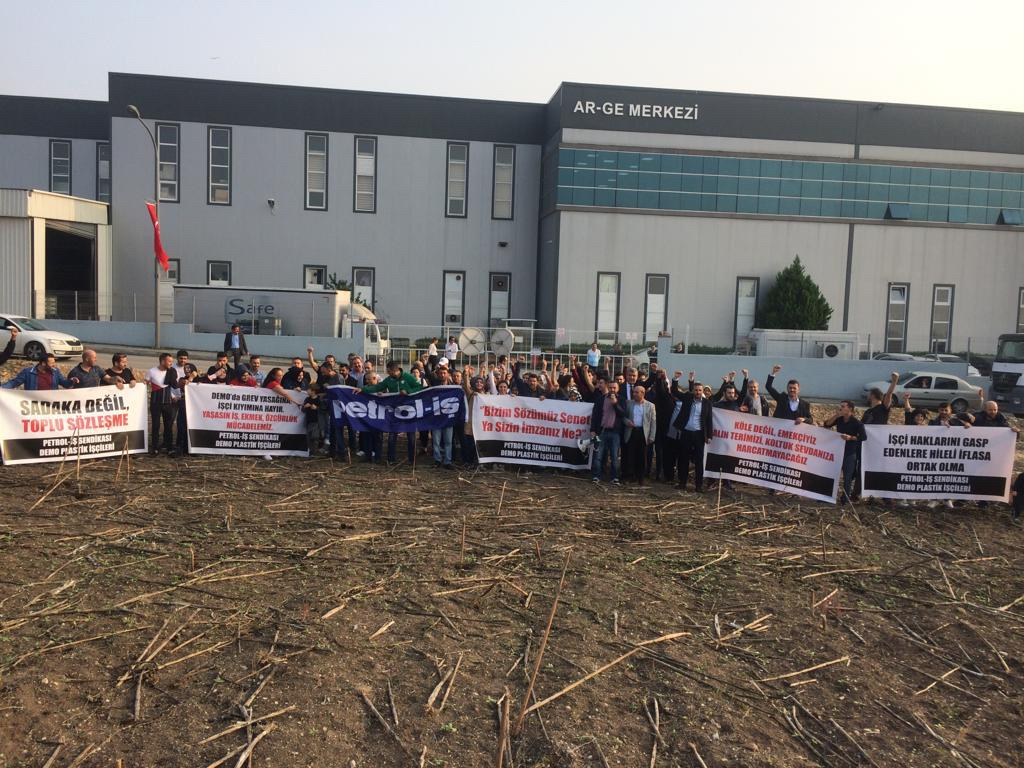
The President states that notwithstanding the veto, he will continue to stand by his “firm commitment to protect the workers’ right to security of tenure by eradicating all forms of abusive employment practices”. However, unions are wary and waiting to see what will be the President’s next steps to keep his campaign promise to end all forms of short-term employment.

“This bill would provide a legislative arena for working towards eradicating contract work, which the President had promised to end, but then vetoed,” says Eva Arcos, IndustriALL executive committee member. “And his reason was the bill was not fair, as it did not respect capital’s right to earn a profit.”

IndustriALL affiliates in the Philippines are continuing the campaign to end contract work on company level, raising awareness and increasing support for a law that will put a stop to the current abusive practice of short-term employment.

“The Philippine trade union movement has been fighting an uphill battle to eliminate all forms of precarious work including short-term employment. It is a practice that must end, as precarious work undermines workers’ rights to decent pay, benefits, just work terms and  conditions, right to organize and bargain collectively,”

says Annie Adviento, regional secretary of IndustriALL South East Asia office.

Workers discuss future of the mobility sector and employment in Latin America

At the meeting, which was attended by union representatives from Argentina, Brazil, Chile, Colombia, Mexico and Uruguay, the education coordinator at Brazil's Inter-union Department of Statistics and Socio-economic Studies (DIEESE), Fausto Augusto Junior, gave an overview of the current and future situation of the mobility sector in the region. He also looked at how further free trade agreements and the rise of new technologies might affect the sector.

IndustriALL's deputy regional secretary, Cristian Alejandro Valerio said:

"One of the things we agreed on was that, the global economic power is interested for Latin America to continue extracting and producing raw materials rather than be a manufacturing region. Participants also pointed out that governments in the region invest very little in R&D and technology, which makes it difficult to develop the manufacturing industry."

The head of IndustriALL's automotive and aerospace sector, Georg Leutert, moderated a discussion on new mobility concepts, electric vehicles, digitalization and Industry 4.0, with leaders providing details about the extent to which these technologies are used in the region.

IndustriALL's general secretary, Valter Sanches, joined the meeting via video call. He talked about IndustriALL's strategies and the action it was taking to prepare for the future world of work. He also highlighted the need for unions to help ensure a fair transition, given how much employment practices are changing worldwide.

Later on, IndustriALL's regional secretary, Marino Vani, set out IndustriALL's action plan for Latin American and the Caribbean, as well as its strategy and priorities. Finally, workers from the macro sector drew up a number of action plans, which they committed to developing further within their unions and sectors back in their home countries. The action plans had four main priority areas:

  1. Strengthening union power at the national and regional levels
  2. Building union networks and fostering dialogue with companies in Latin America
  3. Promoting and safeguarding sector-related policies at the national and regional levels
  4. Pressing ahead with the union agenda and priorities for the sector through joint actions and campaigns.

To sum up the meeting, Marino Vani said:

"Participants have come out of the meeting stronger and more confident. We have held in-depth discussions on the challenges facing the working class, and especially workers in the mobility sector in our region. We have also committed to being more united in our actions, further empowering unions and strengthening union representation. We are going to fight for a fair transition, for sustainable industrial policies and for decent and dignified jobs.”

Sri Lankan unions demand withdrawal of anti-worker labour law

The government of Sri Lanka as part of its attempt to change and replace the existing numerous labour laws has introduced a unified employment law also known as the Single Labour Law for consideration of the tripartite National Labour Advisory Council beginning of July this year. The new bill would integrate the existing laws such as the Wages Board Ordinance, the Factories Ordinance, Shop and Office Employees Act, Maternity Benefit Ordinance, and Factories Ordinance and others.

According to the unions, the proposed changes largely affecting private sector workers, in many ways undermine their rights and will eventually lead to poorer working conditions with longer working hours, lower wages, higher job insecurity and reduction in many other currently existing social benefits and protections.

Apoorva Kaiwar, South Asia regional secretary of IndustriALL Global Union said,

“In the process of changing the labour laws, the Sri Lanka government should take into account the views of trade unions. Enhancing protection of workers’ rights and labour standards towards sustainable development should be the primary purpose of labour laws.”

Anton Marcus,
Free Trade Zones & General Services Employees Union

Anton Marcus of IndustriALL Sri Lankan affiliate Free Trade Zones & General Services Employees Union said that,

“We are witnessing an unprecedented attack on workers’ rights. Proposed changes will affect basic working conditions of around eight million private sector workers and will make the eight-hour limit working day a thing of the past.

“It is unacceptable that the new proposal provides the employer with the right to decide on working conditions through employment contracts, making workers defenceless and vulnerable to the whims and fancies of the employers”.

Protesting unions also stated that the process of drafting the proposed law has been done without involvement of trade union representatives, violating traditions and norms in creating and amending labour laws in the country.

In their joint demonstration, 23 trade unions including many IndustriALL affiliates, called on the government to withdraw the proposed single labour law in its entirety without any further delay.

Thai workers demand to increase minimum wage

The union activists reminded that the 425 THB increase of national daily minimum wage was promised by the government party ‘Palang Pracharat’ during the general elections campaign and now that the party is leading the new government it should live up to their commitment and promise given to the working people.

“Wage increase is key to improve the living standards of workers, it contributes to a fairer income distribution and reduces income gap,” said Kampong Kampitoon, CWUA president.  

Prior to the general elections, the government party had made a strong policy to overcome the country’s ‘middle income trap’ by committing to national wage increase as the first step.

At the same time, Thailand is an aging society with increasing number of people approaching 60-year-old age. Currently there are at least 3 million people in Thailand who are categorized as aging poor and their lives depend on ‘old age monthly social benefit’.

“The rate of 600 THB (US$ 19) per month the government is providing is far too low and unrealistic for an old age person to cover basic needs. As a result, the old ages whose lives depend on this monthly social benefit have poor and undignified living standards,”

said Boonmee Wandee, a retired factory worker who has just turned 70.

CWUA’s statement reads:

“The government should halt all purchases of arms and weapons which do not generate any economic benefit for the people; these purchases are the causes of corruptions. Military generals and officers who hold more than one position and receive more than one salary should be removed to save up the country’s budget and increase social benefits for the people including old age benefit of 3000 THB. Such initiative will significantly improve living standards of the people and contribute to the country’s economic growth.”

Ethiopian and South African unions discuss collective bargaining strategies

According to the unions this is important to the living wage campaign in Ethiopia where garment workers earn low wages of less than US$30 per month. In South Africa, for instance, garment workers earn above the national minimum wage of R3500 (US$230). These wages are from gains in collective bargaining that have been made over time.


IndustriALL Global Union affiliates the Industrial Federation of Textile, Leather and Garment Workers Union (IFTLGWU) from Ethiopia and the Southern African Clothing and Textile Workers Union (SACTWU) from South Africa, together with the Confederation of Ethiopian Trade Unions, met to map out how social dialogue and collective bargaining can be improved. The international exchange was supported by IndustriALL Sub Saharan Africa region, SACTWU and Mondiaal FNV from the Netherlands.

Although Ethiopia and South Africa have different social dialogue and collective bargaining systems there were common areas where the unions could work together. Similarities between the countries are that the garment and textile sectors are dominated by women workers who constitute more than 80 per cent of the workforce. Therefore, working conditions that cater for women such as maternity benefits and childcare facilities should be accessible at all factories. Further, wages in the sectors are low and should be increased.


The unions agreed to cooperate on tactics such as improving negotiations at factory level bargaining through training. Centralized bargaining, which allowed SACTWU to sign collective agreements in clothing, textile, and leather sectors will also be further explored. Currently IFTLGWU negotiates only at the factory level. Participants discussed on how centralized bargaining could be beneficial to IFTLGWU and become part of Ethiopia’s labour laws. IndustriALL’s ACT initiative with garment brands will have a key role in supporting these efforts by ensuring that factories participate and that brand purchasing practices support the development of industry bargaining.


Said Andre Kriel, the general secretary of SACTWU:

“We are willing to help our comrades from the IFTLGWU. They can learn from our strategic unionism approach which recognizes collective bargaining, job creation, service to members, and membership growth as important activities for the union. Through international solidarity we will grow together and help each other as trade unions.”

Explaining the importance of the mission, Emebet Eshetu, the Vice President of IFTLGWU, said:

“It’s an opportunity for us to learn from SACTWU especially on how to take our struggle forward. Centralized bargaining is the way to go for the garment and textile sector in Ethiopia. We also need to use information and communication technologies as an organizing tool.”


The mission had a meeting with the National Clothing Industry Bargaining Council and visited towel factory, Colibri, and garment factory, House of Monatic.

Latin American unions condemn the rise of precarious work at General Motors

General Motors (GM) unions from Argentina, Brazil and Colombia came together to discuss the situation of their workers. GM, which produces cars, trucks and engines, is currently restructuring its activities at various plants and has undermined employees' rights in the process.

At the start of the year, GM leaders issued a memo threatening to shut down operations in South America unless they could find ways to return to profit, even though sales were on the rise.

Workers at the meeting said that GM is not in the midst of any kind of sales or production crisis. Instead, it decided to restructure as part of its strategic objective to turn in higher profits than its competitors.

GM is also looking to generate working capital in order to create new, innovative products such as electric and self-driving cars. One way the firm is looking to do this is by cutting labour costs, resulting in more precarious working conditions.

At the meeting, participants made a solidarity pact and agreed to take united action against the workforce casualization taking place at GM as a result of the restructuring, which has also pitted the plants against one another.

They also said that workers had a right to be kept informed about what GM had planned for its various Mercosur plants. They stood ready to negotiate but would ensure that workers’ rights were safeguarded and strengthened in the process.

They also agreed to work towards collective bargaining and said that they would not negotiate on points that would worsen their working conditions. And if GM did not agree to engage in a dialogue with the unions, they would organize a day of action and campaigning.

Finally, IndustriALL Global Union's regional secretary, Marino Vani, said:

"The meeting was great. We have started working as a network of General Motors employees, which is one of IndustriALL’s priorities. The unions were very well represented in the discussions.

IndustriALL and the unions will invite GM and other global affiliates to take part in the ongoing dialogue and in regional negotiations. This will enable us to set out the workers’ needs and demands so that together we can find solutions and reach minimum agreements that safeguard workers' interests."

Los Mineros wins workers their share of profits from Grupo Mexico

On 30 July, it was 12 years since the strikes began in three mines run by Grupo Mexico, in Taxco, Cananea and Sombrerete. Back in 2007, some 3,000 workers took action against Grupo Mexico after the company refused to amend their collective agreement or to improve health and safety conditions at the three mines.

One of the union’s demands was payment of profits for the period from January to July 2007. Grupo Mexico had said that it would only make the payment if workers agreed to take it as severance pay or to leave Los Mineros.

But on 2 August 2019, Grupo Mexico finally made the payments. In Mexico, profit sharing is a constitutional right, with companies required to pay their workers a percentage of earnings.

Los Mineros president Napoleón Gómez Urrutia, who is also a Mexican senator and IndustriALL’s co-president for Latin America and the Caribbean, has called the payment, which came after a lengthy legal battle, a major victory for workers and for union representation.

Workers at the three mines are continuing their strike action in the hope of finding solutions to other unresolved issues. They are calling on Grupo Mexico to put in place adequate health and safety measures, as there have been repeated incidents over the years.  

One of the worst incidents was the industrial homicide at Pasta de Conchos on 19 February 2006, in which 65 workers lost their lives. And on 6 August 2014, a spill caused 40 million litres of copper sulphate acid to run into the Bacanuchi and Sonora rivers, resulting in an environmental disaster that seriously affected the health of local communities.

The most recent incident, on 9 July 2019, occurred at a port in Sonora State, in north-east Mexico, with 3,000 litres of sulphuric acid ending up in the Gulf of California.

At a press conference, Mexico's president, Andrés Manuel López Obrador, announced that he would summon Los Mineros and Grupo Mexico for a round of negotiations in order to find an agreement over the strikes. He also said that a full enquiry would be held into the 2014 and 2019 spills and those responsible would be punished.

IndustriALL's regional secretary, Marino Vani, said:

"We wish to congratulate Los Mineros, the workers and their families. Persevering in a battle is the only way to achieve victory and dignity. And your struggle is a true example of teamwork and integrity. We hope that Grupo Mexico will show respect for its workers and help to find solutions to this injustice by engaging in dialogue and negotiation in order to reach a fair agreement for the workers."

Brazilians protest against reforms on pension and education

13 August was a national day of protest for Brazil's trade union centers and social movements. Protest actions, assemblies and strikes took place in 200 cities of Brazil. Unions, student and popular movements carried out a series of actions throughout the day to reinforce their opposition to Social Security reform and budget cuts for public universities.

For a second time on 7 August, the chamber of deputies approved a proposed amendment to the constitution (PEC) No. 006/2019, passing it on to the Senate where it also needs two rounds of approval.

From there, the social and trade union movements reinforced their plan of action because they believe that the reform has very harmful points and therefore must continue their struggle. Part of that plan includes putting pressure on senators to vote against and informing society about the risks.

Unions see the pension reform as start beginning of Bolsonaro's agenda to eliminate the rights of the working class, fearing that the promotion of a regressive fiscal reform will follow.

It is necessary to resist and fight back, to reject the constant attacks on the rights of workers and the majority of the population, especially the poorest. Unions are defending a sustainable growth of the economy, and the right to decent work and a decent retirement.

Valter Sanches, IndustriALL Global Union general secretary, congratulated the affiliated unions for an impressive show of resistance all over the country:

“This is the only way to stop the reforms against the working people and cuts on social investment. IndustriALL will continue to support our Brazilian affiliates defending their rights."

Photo credits: CUT Brasil, Ângela Guimarães UBM and Wládia Fernandes.

Workers fear job losses at Glencore cobalt mine

A letter to workers from management stated that the decision to mothball the mine was caused by a drop in cobalt prices on the international market, expensive cost of inputs especially sulphuric acid and increased taxes to mining companies following the Democratic Republic of the Congo (DRC) government’s recent amendments to the country’s Mining Code. According to the letter, these factors reduced the economic viability of the mine.

Cobalt prices peaked at US$43 a pound in March 2018 before collapsing to US$11.80 in July, but Glencore’s announcement on Mutanda has seen the prices begin to recover. Cobalt, a biproduct of copper and nickel in mining activities, is used in the manufacture of smartphone and electric vehicle batteries. The DRC produces over 60 per cent of the global cobalt.

At a meeting with workers, management said Mutanda Mine is not shutting down. Neither is Glencore selling the mine nor leaving the DRC. Management also said workers and their families will continue to enjoy benefits from a healthcare provider and that no jobs will be lost during the two years.

However, IndustriALL Global Union affiliates, Secretariat des Syndicats de IndustriALL (CSC) and Travailleurs des Mines, Metallurgies, Energie, Chimie et Industries Connexes (TUMEC) which have members at Mutanda Mine, say the matter is urgent.

Isaac Kiki, chairperson of IndustriALL Lualaba Province, a committee of IndustriALL affiliates, says:

"This is a serious situation which requires us to understand what the law says about the Glencore decision. As trade unions we must use our knowledge and experience to begin strategizing and preparing for negotiating now, so that we are not caught unawares."

Industriall echoes the sentiments of its affiliates in the DRC. In response to the worrying developments, IndustriALL Global Union demanded a priori consultation, consistent with the spirit of the global dialogue agreed with Glencore.

Glen Mpufane, IndustriALL director of mining, says:

"The livelihoods of workers should always be a priority when a mine is put on care and maintenance. The risk from demand and supply fluctuations on the cobalt market can be managed without sacrificing mine workers jobs. It is important for Glencore to keep its promise not to retrench the workers, and to find ways to keep the Mutanda Mine operational."

Glencore employs 158,000 workers globally, with 57,000 in Southern Africa.

Taiwanese workers demand fair distribution of income

Zhuang says that a decade of real wage stagnation is a serious concern for Taiwanese workers – the average real wage growth in the past ten years is zero. The wage of a university graduate is exactly same as the amount ten years ago.

“Companies are reluctant to share profits with workers; the labour share of income per GDP has declined from 51 per cent in 1992, to 44 per cent in 2017. This is in stark contrast to the steady rise of capital share of income,”says Zhuang.

“Other factors keeping wages down is the emergence of more short-term jobs and platform workers, like Uber drivers in Taiwan, and the fact that the number of migrant workers available has doubled in the last 20 years to 700,000,” explains Zhuang.

A sluggish economy contributes to stagnant wage. The GDP growth in Taiwan was 2.53 percent in 2018. In the midst of a US-China trade war that severely impacts the island country’s supply chain, the Taiwan Institute of Economic Research forecasts the 2019 GDP growth to be 2.12 per cent.

The Minimum Wage Review Committee under the Labour Ministry of Taiwan will convene a meeting on 14 August to deliberate adjustment to the minimum wage. Although the Taiwan Central Bank Governor Yang Chin-long has openly urged the government to boost the minimum wage, business leaders have been opposing the idea on the grounds that wage must link to productivity.

As a member of the committee representing trade unions, Zhuang says that the adjustment of the minimum wage should adhere to the key principle of safeguarding a minimum standard of living for workers:

“The productivity-linked wage is a false proposition which fails to understand the essence of minimum wage system.”