IndustriALL women’s conference to debate union transformation for gender equality
Under the theme, Our Future, Our Union, the Women’s Conference programme is designed to challenge the status quo, to challenge the way we see unions today, and to propose strategies to accelerate progress by tackling the systemic barriers to women’s equality.
IndustriALL’s assistant general secretary, Jenny Holdcroft, said:
“Although we have seen progress in women’s representation and equality in unions and at work, the pace of change has been too slow. It is not enough to expect women to fit into union structures and cultures that have been shaped without them. As unions face the challenges of organizing women and young workers in a changing world of work, now is the time to fully embrace equality.”
Over 200 women from IndustriALL affiliates from all corners of the globe will gather in Geneva, Switzerland on 18 and 19 November for the conference.
The event will ask women to forget their assumptions about unions, based on the models that we know today, and imagine what more inclusive unions could look like.
The conference will hear insights from women leaders about the state of gender equality in our unions and industries, and what unions are doing to improve it. Special focus will be placed on the achievement of the new ILO Convention 190 on violence and harassment in the world of work and the next steps to campaign for ratification.
Discussions will also address how unions need to respond to issues such as Industry 4.0 and its impact on women at work, as well as the challenge of organizing workers in new forms of employment and a changing workforce demographic, paying attention to the concerns and expectations of young women workers.
Finally, the conference will develop recommendations on how IndustriALL can drive a transformative agenda in its statutes and action plan, as well as how to fully engage male unionists and leaders in the fight for gender equality.
The World Women’s Conference will be livestreamed on Facebook to allow women from far and wide to follow and participate in the debate.
SPECIAL REPORT: BHP must #ShowRespect for workers' rights
Text: Kim Meyer, Laura Carter
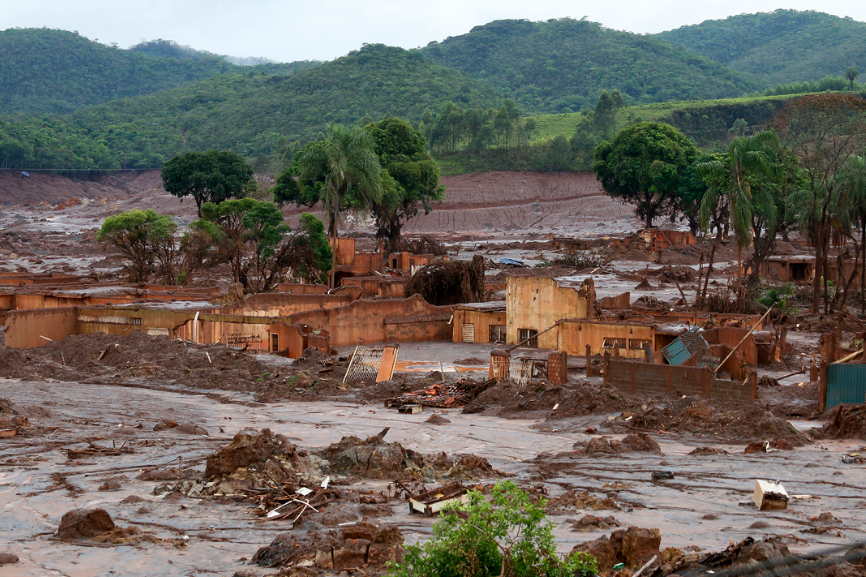
BHP has been in the eye of the storm for five years, due to one of the worst environmental disasters in Brazil’s history, when the Samarco tailings dam broke on 5 November 2015 in Mariana, Minas Gerais. The tailings dam belonged to Samarco Mineração, a joint venture between two of the world’s biggest mining companies, Australia’s BHP and Brazil’s Vale SA.
Nineteen people died in the tragedy, 700 families lost their homes and more than 2,000 workers in the mining, construction, commerce, electricity and agriculture sectors lost their jobs.
The collapse of the tailings dam unleashed a deluge of toxic sludge, spilling over the Dolce river, a source of drinking water in southern Brazil, obliterating towns along the stretch as the wave of mud travelled kilometres down the river into the Atlantic ocean.
The aftermath of the Samarco dam failure in Brazil
What are tailings dams?
No one ever hears about tailings dams until they go wrong. But when they fail, the results can be catastrophic. So, as their numbers increase, what exactly are tailings dams and why should we be worried?
In 2018, the Building and Wood Workers’ International (BWI) and IndustriALL Global Union filed a complaint against BHP and Vale S.A., under the OECD Guidelines for Multinational Enterprises. The specific complaint sought to address the conditions that contributed to the collapse of the tailings dam, in particular the extensive use of outsourcing, failure to respect the collective bargaining agreement, violations of trade union rights and inadequate health and safety.
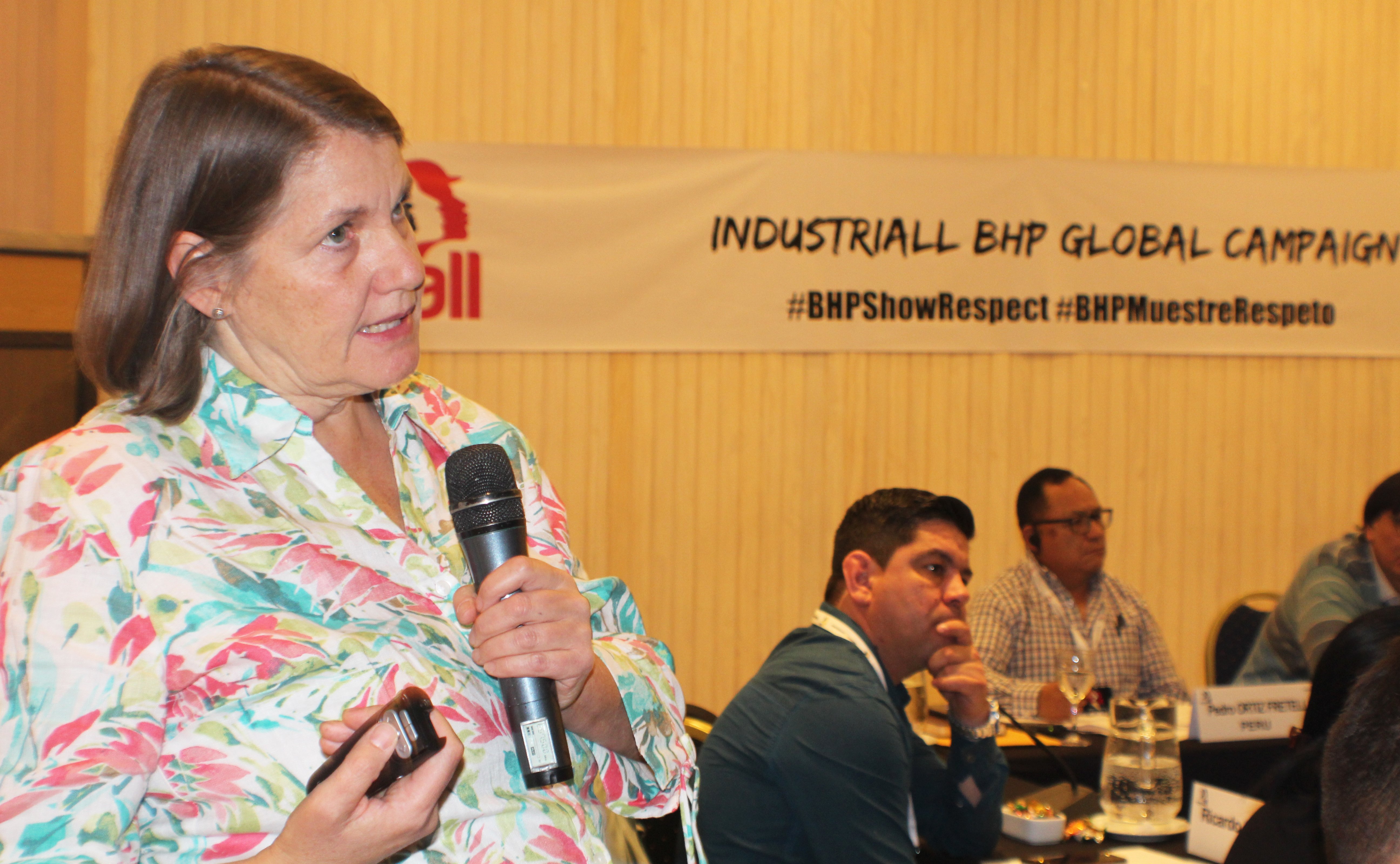
Trade union representatives from IndustriALL’s BHP global network from Australia, Brazil, Canada and Colombia met in London in October 2018, together with the London Mining Network, to address the rampant violations of union and human rights, as well as environmental destruction. The network took the issues to BHP’s annual general meeting, demanding accountability from shareholders and justice for the victims of the Samarco disaster, and remediation of the environment.
IndustriALL launches a global campaign against BHP
Demonstration at BHP's AGM in October, 2019
Marcelo Franco in front of BHP's annual general meeting in London, October 2019
Following the tragedy of the Samarco tailings dam in 2015 and failed attempts to establish global dialogue with BHP, IndustriALL’s Executive Committee agreed in 2018 to launch a campaign against BHP.
“Why a global campaign? Because the same practices exist in all of BHP’s operations: a policy of outsourcing to cut labour costs and a disrespect for the fundamental rights of its workers and communities.
"There have been crimes against the environment and there are risks of new ones happening. We continue this campaign for the dignity of BHP workers and those who died in mining accidents,”
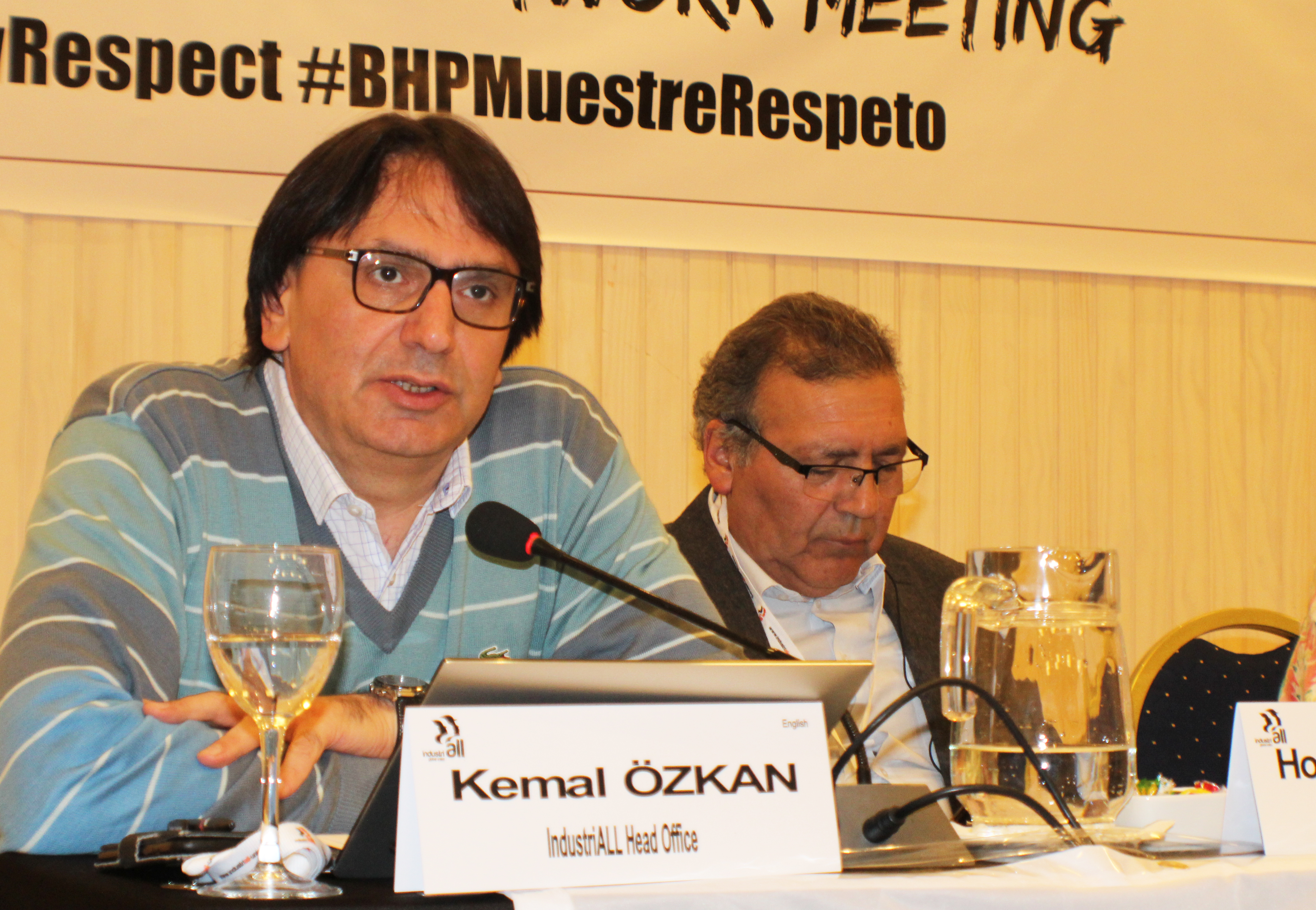
Kemal Özkan
IndustriALLassistant general secretary Kemal Özkan made these comments during the BHP network meeting in Santiago, Chile, in September 2019.
Outsourcing and loss of rights
BHP is the world’s largest mining company in terms of its market capitalization, valued at just under US$100 billion. The workforce has been significantly affected by one of the main elements of BHP’s strategy to boost labour productivity; outsourcing employment. The result is a very high proportion of temporary employment through the use of precarious contracts.
In 2018, BHP reduced its labour costs by 23 per cent and achieved a 29 per cent increase in material moved per employee. From 2000 to 2014, outsourcing increased exponentially. Figures from the company’s 2019 Sustainability Report show that contractors constitute 60 per cent on average of BHP’s global workforce.
In terms of BHP operated assets, the 2018 Sustainability Report figures state that in Australia it has 16,504 permanent employees and 21,267 subcontractors, that means that 56.3 per cent of its workers are outsourced.
"There are examples in Australia where they have not employed a permanent worker … in more than 7 years.”
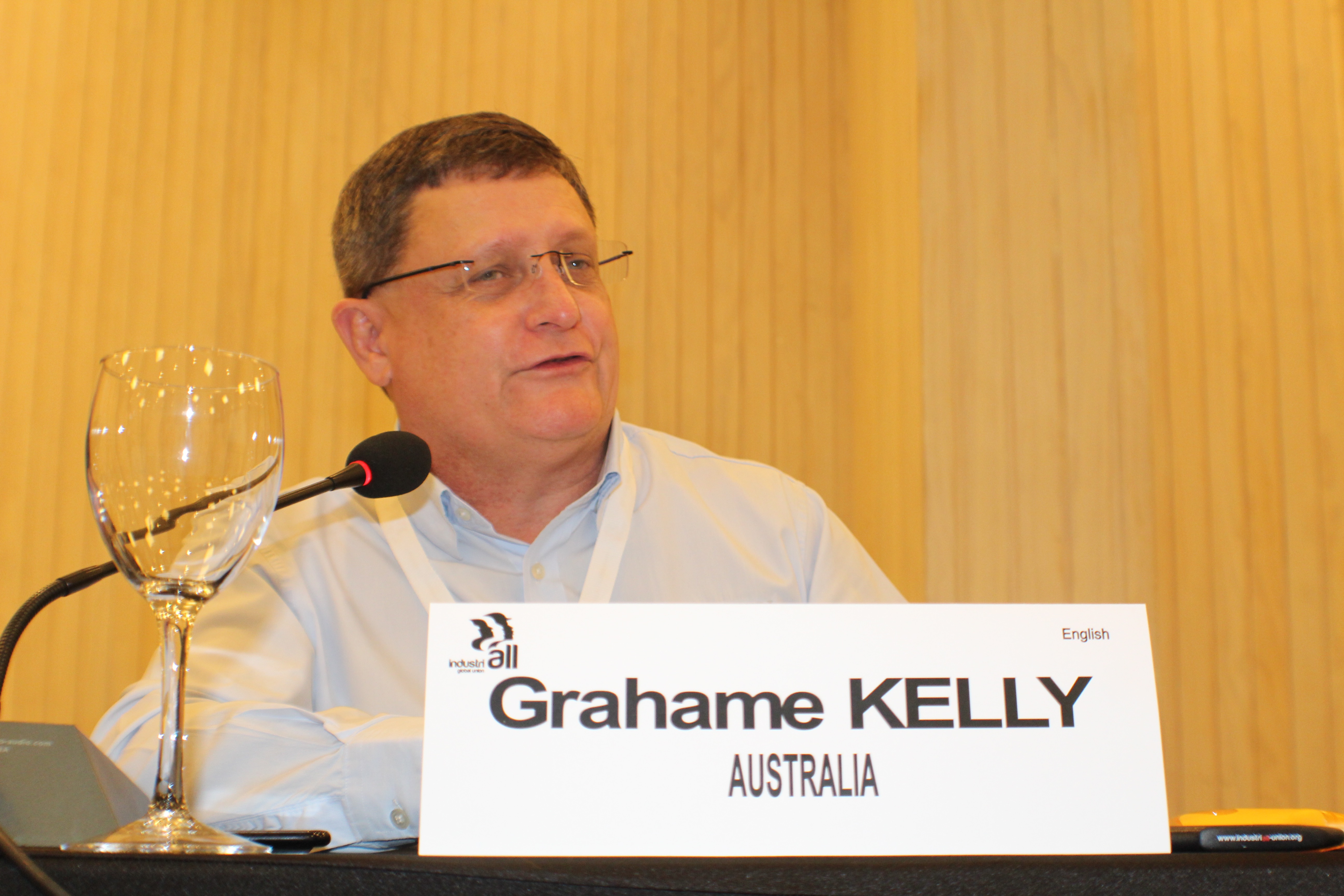
Graham Kelly
IndustriALL Australian affiliate CFMEU Mining and Energy national secretary Graham Kelly says:
“There are 450 permanent workers at the BHP mine in Queensland, 95 per cent of whom are unionized. In addition there are 6,300 workers hired on a temporary basis, who earn 30 or 40 per cent less than the permanent workers.
"From the point of view of unionized workers, it is very difficult to carry out collective bargaining for improvements because there is already a workforce that is outside the equation. In addition, there are examples in Australia where they have not employed a permanent worker in a BHP mine in more than 7 years.”
In Chile, BHP has 6,729 permanent employees and 12,521 subcontractors, i.e. 65 per cent of its workers are outsourced. BHP has an extremely high labour turnover, since subcontractors are considered a second-class workforce. It is also almost impossible for these workers to form a union because they are employees of different contracting companies, and it is difficult for them to exercise their union rights.
The president of the union Patricio Tapia at the BHP Escondida mine in Chile says:
“Chilean legislation unfortunately prevents subcontracted workers from making use of the right to strike, because it states that if they do strike, the company can replace them.”
In the case of the Cerrejón mine in Colombia, which is part-owned by BHP, outsourced workers far outnumber those with permanent contracts.
“Out of a total of 12,000 workers, only 5,000 have permanent contracts"
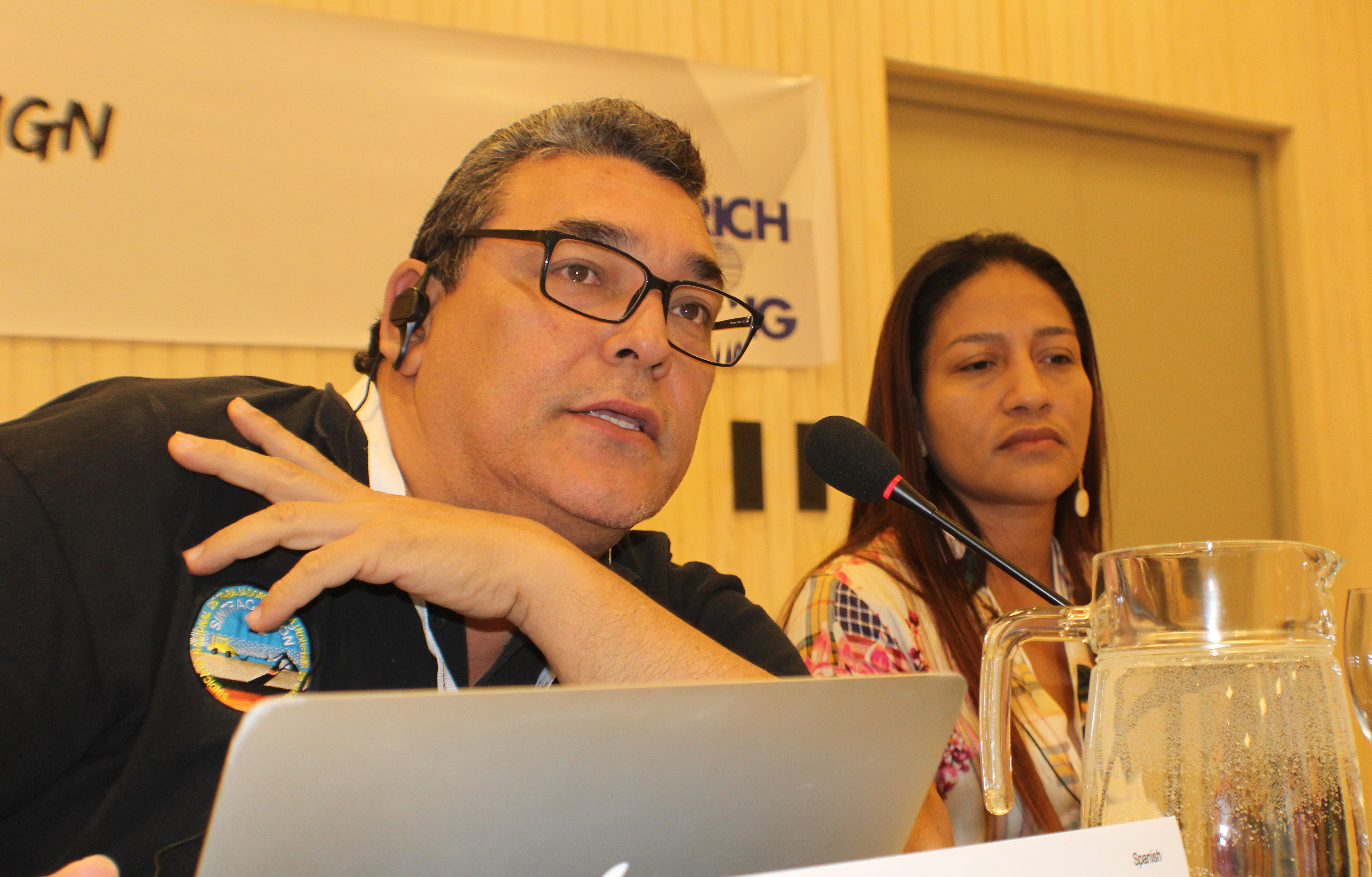
Igor Díaz
“Out of a total of 12,000 workers, only 5,000 have permanent contracts; the rest are outsourced. Outsourced labour is subject to precarious conditions of work, and they do not earn a large salary. But we have managed to affiliate these workers and improve their working and social conditions,”
Igor Díaz, president of IndustriALL affiliate Sintracarbón
In Chile, BHP workers in the Escondida mine went on strike for 44 days in 2017 after the company refused to negotiate in good faith with its workers. The union was asking the company to discard its plans which involved reducing wages, increasing working hours, and discriminating between long-standing and new employees.
“We are proud of the strike against BHP."
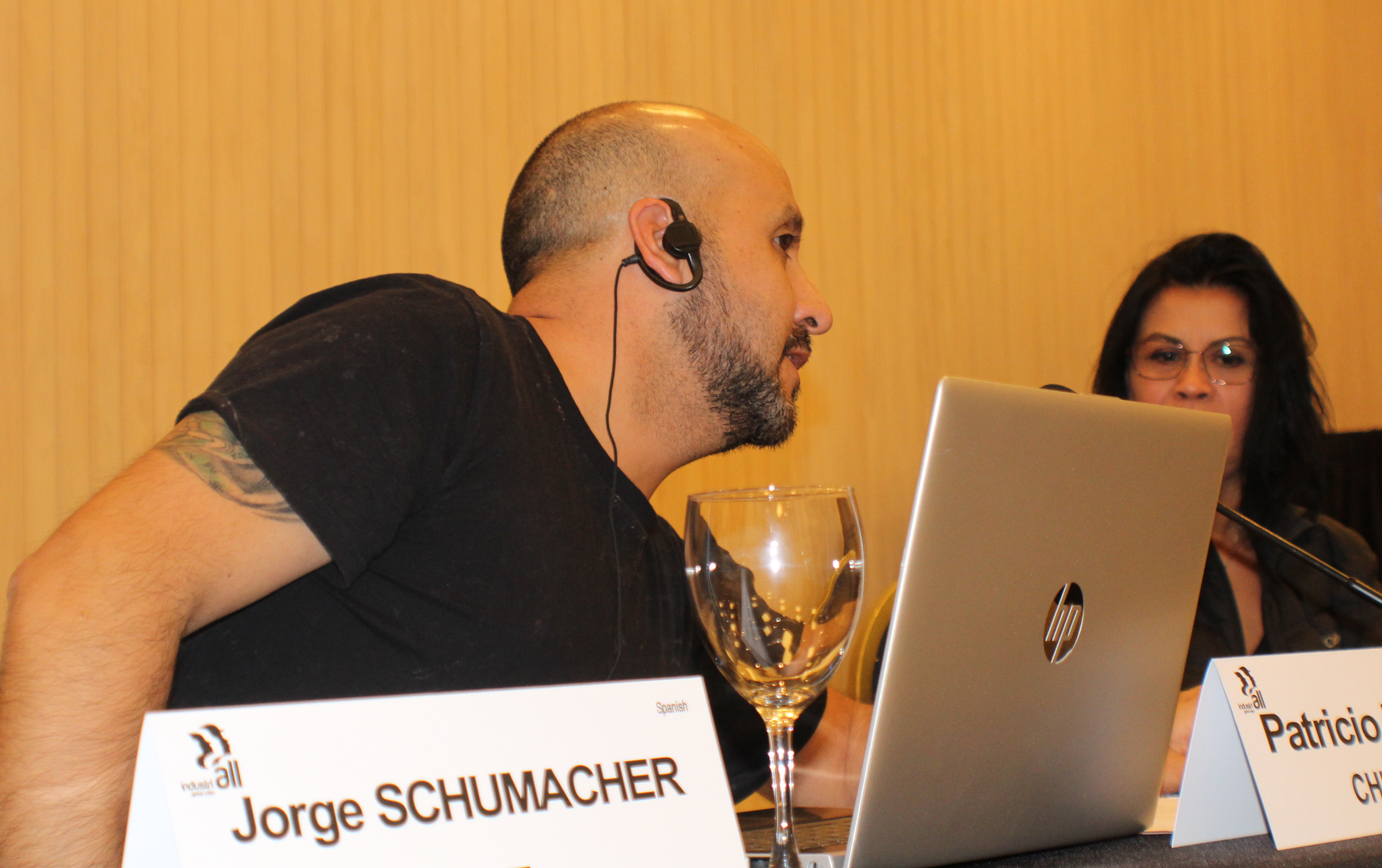
Jorge Schumacher
“We are proud of the strike against BHP because it proved to us that we have a strong union ready to fight. We have one of the best collective bargaining agreements for miners in Chile,”
says Jorge Schumacher from the union in the Escondida mine.
Unions at BHP operations have said that the company often has an anti-union attitude and refuses to engage in collective bargaining. CFMEU in Australia claims that the company uses an island strategy with the unions, i.e. avoiding trade unions and turning union members into an island in a sea of non-unionized workers. Instead, BHP often prefers their prerogative as management at the expense of consultation and negotiation with the unions.
Poor Health and Safety
Health and safety continues to be a problem in BHP’s operations. The coordinating committee for BHP unions in Chile said that they face longer working hours than what the law allows and a lack of transparency in how bonuses are calculated. In addition, in Cerro Colorado, doctors are under pressure not to identify work-related injuries.
Marcelo Franco, of Union 1 CMCC in Cerro Colorado, says:
“Health and safety conditions are very poor. Workers have problems with shoulders, arms, hands and the spine. One colleague injured her arms and the doctor gave her medical leave due to work-related illness. But upon receiving a call from the company he immediately cancelled the certificate, telling her the problem was the result of a congenital malformation.”
Meanwhile, workers at Minera Spence operations, owned by BHP in Chile, report on health problems due to toxic gas emissions produced by the company.
"Workers suffered gastric poisoning from hydrochloric acid emissions.”
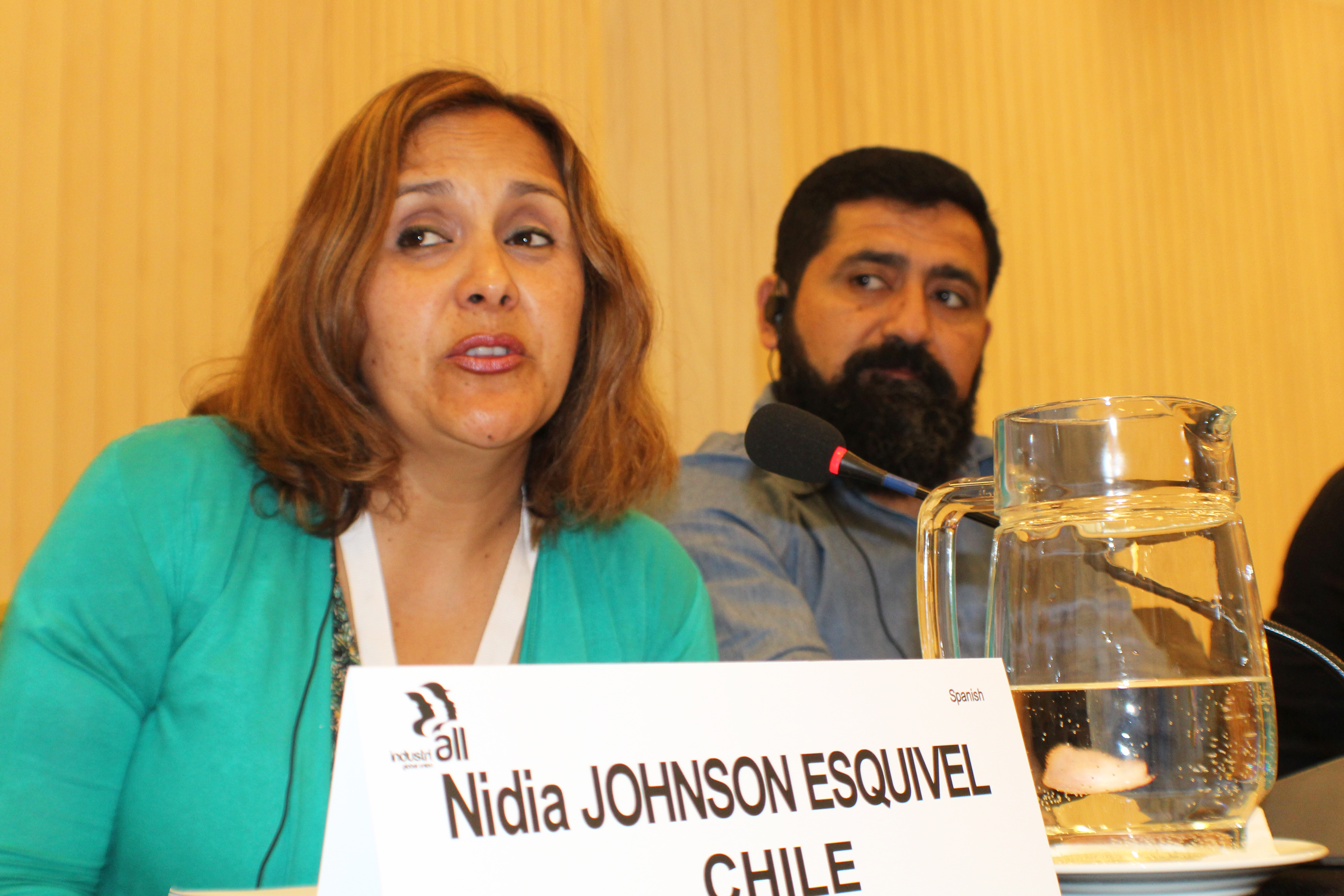
Nidia Johnson Esquivel
“To speed up the process of obtaining copper from leaching basins, sodium chloride is added. When coupled with sulphuric acid, this results in high emissions of hydrochloric acid. As a union we had to go to the regional secretariat of the Ministry of Health (Seremi) to make the request for inspection of gas emissions.
“Seremi told BHP that without the appropriate equipment to curb these emissions they would have to stop until there was improvement. Seremi also requested environmental and nutritional reports because workers had suffered gastric poisoning from hydrochloric acid emissions,”
says Nidia Johnson Esquivel from Minera Spence.
In 2017, a parliamentary investigation in Australia found that there had been a failure on almost all levels of the regulatory system designed to protect workers. The committee identified serious failures in industry-led health examinations, from poor X-ray readings to poorly executed lung tests and unqualified personnel.
"BHP workers affected by black lung disease were denied a meeting with the company."
Laura Carter
“One worker said it took two and a half years, three specialists and several doctors to get an official diagnosis. Doctors told him he had bronchitis, and he continued to work underground in dusty conditions while his condition remained unidentified. In March this year, BHP workers affected by black lung disease were denied a meeting with the company,”
says Laura Carter, IndustriALL assistant regional secretary.
Industry 4.0 and the need for a Just Transtion
BHP wishes to transform all its operations through the application of technology by 2025, implementing mining technologies to improve productivity, producing zero damage and lowering the structural cost of mining operations. BHP’s goal is to reduce human labour to a minimum.
In some of its operations it has already begun to make technological innovations. For example, in Pilbara, Australia, operations are carried out from Perth, Australia. Operations in Spence, located in Chile’s Atacama desert, are run from Santiago. Workers say that in the case of Spence, BHP failed to mention in the negotiations that they were planning to relocate the control centre to Santiago.
BHP has an overall plan to invest
US$3 billion to reduce costs through the use of technology in Australia, announcing plans to spend just under US$800 million on adding 500 autonomous trucks to their fleet in Pilbara. If BHP goes ahead, these will be rolled out over the next three years, and the new lorries will be deployed in the iron mines of Western Australia, and later in the coal mines in Queensland. BHP largely refuses to consult or negotiate with workers on these issues.
“As IndustriALL, we will fight for the transformation to be fair."
Kemal Özkan
“As IndustriALL, we will fight for the transformation to be fair. We need a series of strategies and actions, especially in the face of multinationals like BHP that don’t respect workers’ rights,”
says Kemal Özkan, IndustriALL assistant general secretary.
In Colombia, the franchise for mining in Cerrejón expires in 2034. According to the unions, BHP has yet to disclose a plan for the closure, causing great uncertainty for the workers and the population of La Guajira, which depends on Cerrejón for its economy.
Igor Díaz, from Sintracarbón, says:
“According to Colombian legislation, a decommissioning project must be defined 20 years before closing the mine, which has not happened. The government should provide alternative work for the 12,000 workers who will be affected, as well as for the region that is dependent on the mining operations.
“With the support of IndustriALL, the FNV in the Netherlands and the IGBC in Germany, we have held forums on energy transition to explain how these countries undertook the transition from coal. Unions, companies and governments took part in these discussions.
“The situation is complex for all workers, but mainly for outsourced workers who do not belong to a trade union. We want a Just Transition for them as well.”
Although BHP claims to be committed to making a “positive contribution to society”, with a “responsible and ethical business” and that it wants to “work with society to create a sustainable future,” it seems it must try harder.
Colombia’s Cerrejón mine is located in a dry region, with only one river, called Ranchería, crossing through the middle of the mine. BHP wanted to move the river as there are 500 million tons of top quality coal underneath it. The move was opposed by Sintracarbón and the local communities.
“Faced with opposition, the relocation of the riverbed was suspended. But the project, called P500, had already been designed and huge investments had been made, and instead an important tributary of the river, called Bruno, was diverted,”
says Igor Díaz of Sintracarbón, Colombia.
In Brazil, after the collapse of the Mariana dam in 2015, the communities say that BHP still has an awful lot to do to remedy all the damage it caused.
“Four communities were totally destroyed by the mud and not a single house has been rebuilt."
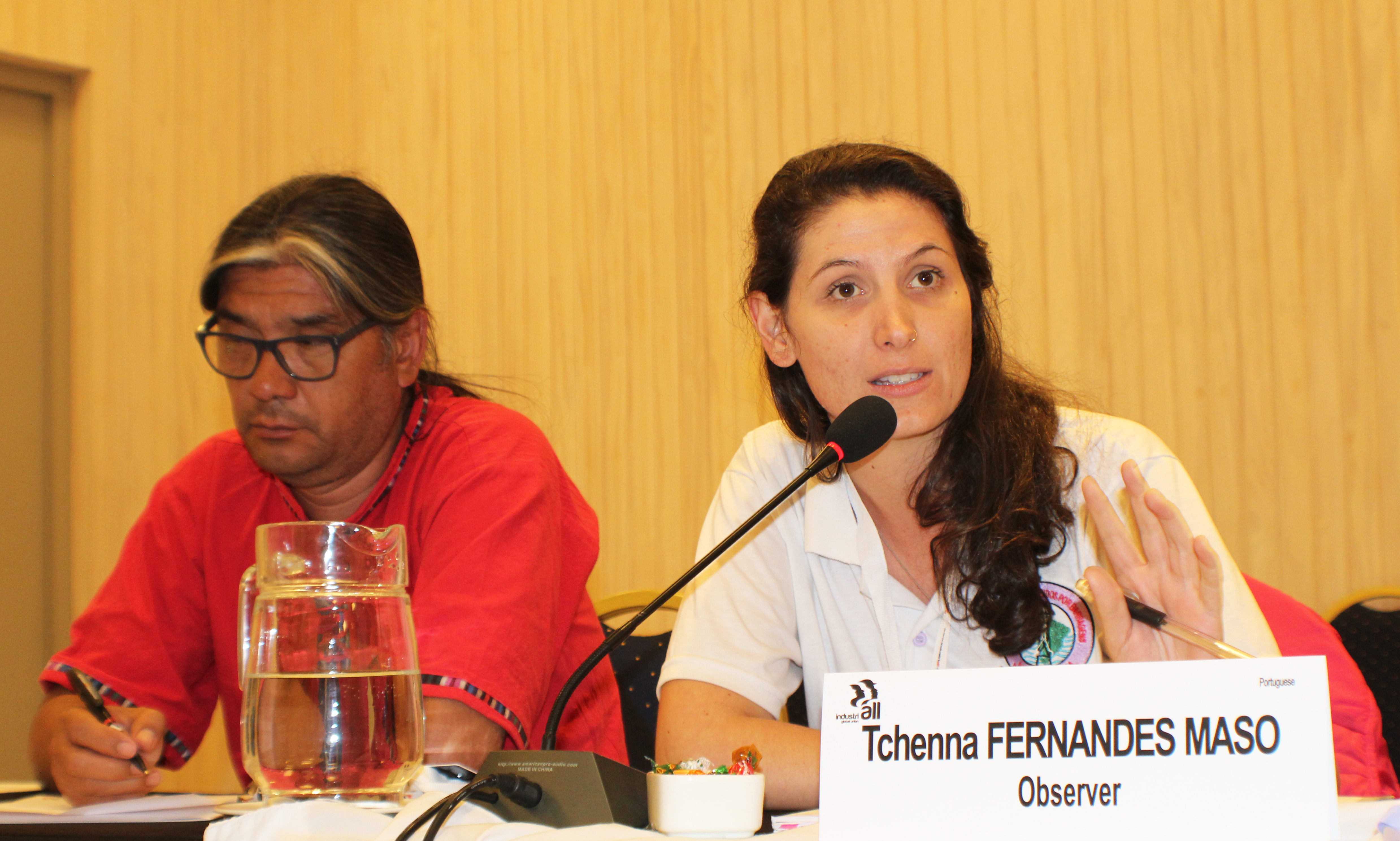
Tchenna Maso
Tchenna Maso, member of the Movement of those Affected by Dams (Movimento dos Atingidos por Barragens – MAB), says:
“Four communities were totally destroyed by the mud and not a single house has been rebuilt in the four years since the tragedy. The environmental damage is huge and we are engaged in a court fight to achieve recognition of the contamination.
“In addition, women are not recognized as affected by the disaster. Social contributions are usually made by men, the breadwinners, and women have informal jobs. So there is no way to prove that they lost their jobs. Only 15 per cent of women are recognized as breadwinners. The companies have effectively taken away women’s financial autonomy.”
Gender balance by 2025: Reality or Utopia?
BHP wants to achieve gender balance by 2025. Currently, 80.19 per cent of BHP employees are men and 19.81 per cent women.
Women with permanent contracts represent a disproportionately small part of the BHP workforce in South America and Australia. In South America, 85.34 per cent are men, but only 14.66 per cent of those are women. In Australia, 80.30 per cent are men and 19.70 per cent are women.
Women represent a small percentage of those working as operators and in general support services, and a disproportionately small percentage of full-time employees. Women earn less than men at all levels in BHP, and the discrepancy is most noticeable among operators and general support staff.
It is to fight for a Just Transition for both permanent and subcontracted BHP workers, and to defend safer and fairer labour practices in all of the company’s operations, that IndustriALL reaffirms its campaign against BHP and insists on the following:
That BHP engage in meaningful dialogue with trade unions worldwide
That the company take responsibility at global level for the treatment of workers at the local level
That the company adopt a less antagonistic and less oppressive approach to workers and industrial relations
That the company should not oppose the formation and growth of trade unions
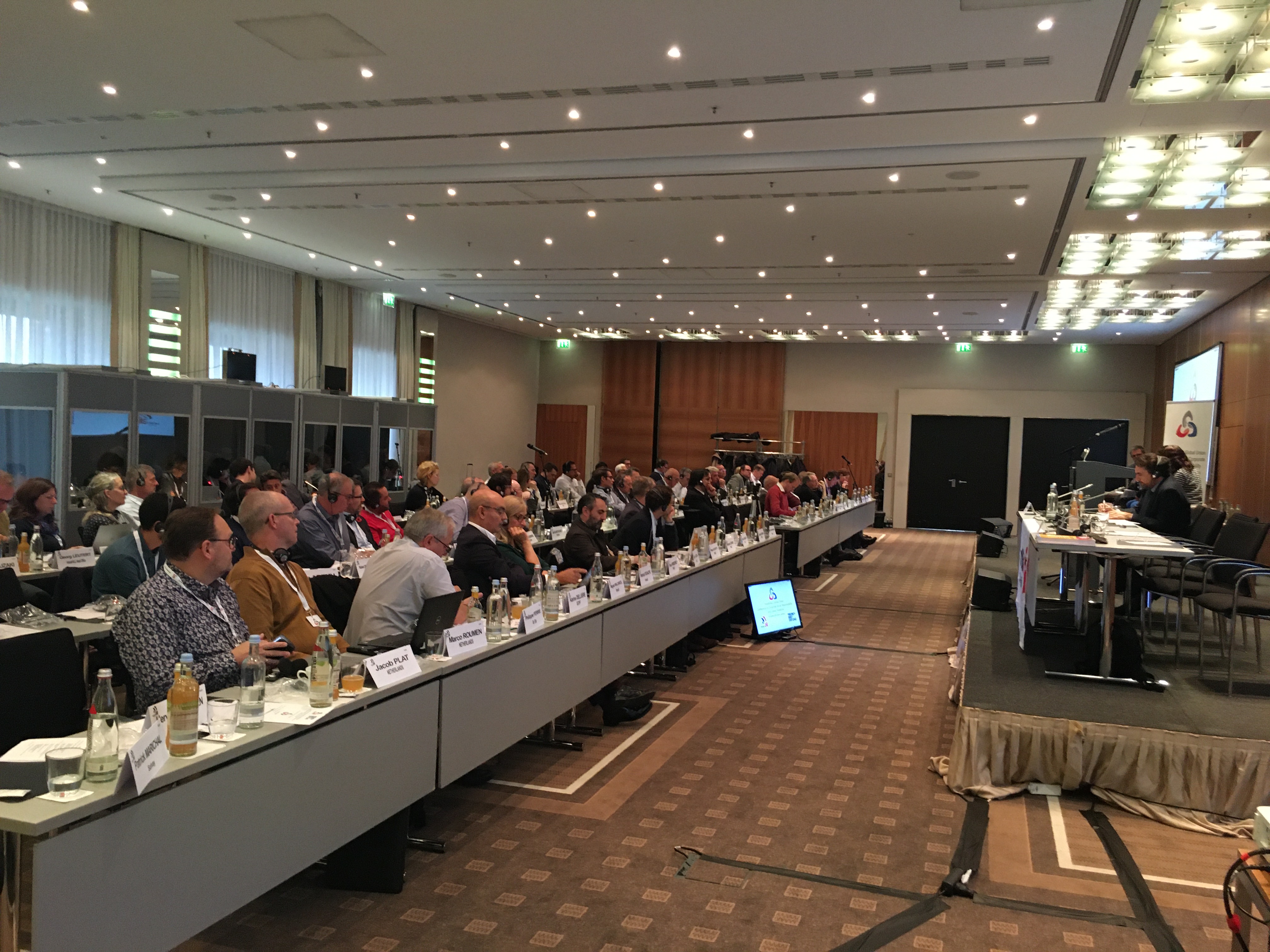
Global dialogue gains traction in Berlin
Speaking at the opening, IndustriALL’s general secretary, Valter Sanches, said:
“We decided to hold this conference here in Berlin because Germany, which has the fourth largest economy in the world, is successful due to its system of codetermination and respect for labour relations. It stands as a model for all the other countries.”
Addressing the conference, Björn Böhning, State Secretary at the Federal Ministry of Labour and Social Affairs, said that strong social dialogue needs strong unions behind it, especially as the world faces new challenges from digitalization and climate change. He called for respect for international institutions to achieve progress.
The conference, which is the first of its kind, addressed major themes including constructive industrial relations, global framework agreements, and managing global supply chains.
Mirko Herberg, from German organization, Friedrich-Ebert-Stiftung, which supported the conference, said:
“We want to look at workers not as cost factors but as citizens with inalienable human rights, and they have the right to enjoy those rights at work. Smart companies involve workers in decision-making, particularly when we look at the current challenges we have to face in terms of digital transformation.”
Representatives from companies Eni, H&M, Inditex, Renault, Solvay all took part in panel discussions which were streamed live on IndustriALL’s Facebook page.
Renault Group, which has 183,000 employees all over the world, entered into a global framework agreement with IndustriALL in 2013. Renault’s head of industrial relations, Miguel Valcarcel, said it was natural to enter into a GFA as the company became less European and French-centred:
“You realise local legislation, working conditions and social dialogue practices in other countries and regions are very different. The company needs a stable environment to do business…The GFA creates the conditions to share best practices. It gives the opportunity to anticipate when we have problems or conflicts when we have to intervene.”
However, Tracy Romero from UAW in North America, painted a different picture. She said anti-union avoidance firms that have been hired by companies such as Volkswagen and Nissan in the USA aggressively undermined their unionizing efforts which, combined with government interference, are undermining freedom of association, human rights and labour standards.
The conference brought together MNCs and unions in Berlin.
Elsewhere in the world, participants heard how GFAs with fashion brands, H&M and Inditex, are helping to improve freedom of association, unionization and labour rights in their supply chains.
Assistant general secretary, Kemal Özkan, said:
“This groundbreaking conference showed the benefit of constructive labour relations to the sustainability of companies, and as a means to improve working conditions and the fundamental rights of workers. We have deepened our mutual understanding and remain committed to social dialogue to improve the lives of workers.”
Australian union calls out BHP on contract work
Union delegates questioned covered the poor treatment of Operations Services (OS) workers and the very high turnover and staff shortages on OS crews at coal mines in NSW and Queensland, affecting production.
CFMEU are receiving reports about very high turnover and short-staffing at all mines where OS has been deployed, with people leaving due to a range of issues including payment for flights being cut.
As well working on much lower pay and worse conditions than direct BHP employees, resulting in high turnover, OS workers are being told they must work Christmas Day.
CFMEU Mining and Energy Northern District vice president Jeff Drayton, who represents workers at BHP’s Mount Arthur mine in the Hunter Valley, said shareholders deserved to know that the loss of permanent jobs held by experienced workers was hurting people and production.
“Workers are voting with their feet. There is very high turnover. Mining is hard work and if people aren’t getting the pay and conditions they won’t stick around. BHP needs the support of the communities it operates in. Alienating workers by cutting wages and cancelling Christmas is simply bad for business.
“Unfortunately, but not surprisingly, the response to our concerns was dismissive. We will continue to fight for the interests of mineworkers and mining communities affected by BHP’s poor corporate behaviour.”
After failed attempts to establish a global dialogue with BHP, IndustriALL launched a global campaign against BHP last year, and attended the company’s AGM in London in October.
“BHP favours a policy of outsourcing to cut labour costs and disrespects the fundamental rights of its workers and communities. We stand in solidarity with CFMEU and its members and reiterate the demands that BHP show respect and engage with unions,”
says IndustriALL assistant general secretary Kemal Özkan.
Mine closure huge blow to workers
IndustriALL Global Union affiliate SYNTRAMIN are pushing the Compagnie Minière d’Akouta (Cominak) management and the government of Niger to keep the mine in operation. The union wanted to present its proposals at the majority owner’s shareholder meeting in France in September, but management refused its participation.
Moutari Aboubacar, SYNTRAMIN general secretary, says: “It is as if workers don’t matter; as if our lives have no value in their eyes. They behave as if we are just a shop that they open and close when they want; without worrying about the consequences of their action.”
“We disagree with the decision of the board of directors of Cominak and call for national and international solidarity to highlight the harsh consequences a closure will have on workers, permanent as well as contractors.”
Niger has the world’s fourth largest uranium reserve, and the union does not agree that the ore is exhausted. Instead, SYNTRAMIN is proposing that the government, who owns 31 per cent of Cominak, look for additional shareholders to continue operations.
In a letter to the majority owner Orano, IndustriALL Global Union is urging the government of Niger to consider the workers’ interests:
“We hope and expect the government will keep its promise for workers to be offered favourable packages, and that Cominak workers will continue to be employed. We support SYNTRAMIN’s demands for special bonuses for workers who have been employed by the mine from one to 20 years.
“IndustriALL Global Union joins its affiliate SYNTRAMIN in urging the company and the government to engage in negotiations for a plan for a Just Transition.”
The main shareholders of Cominak is Orano (France) with 34 per cent, Sopamin (Niger) with 31 per cent, Ourd (Japan) with 25 per cent, and Enusa Industrias Avanzadas SA (Spain) with 10 per cent.
How IndustriALL project work helps unions in Indonesia
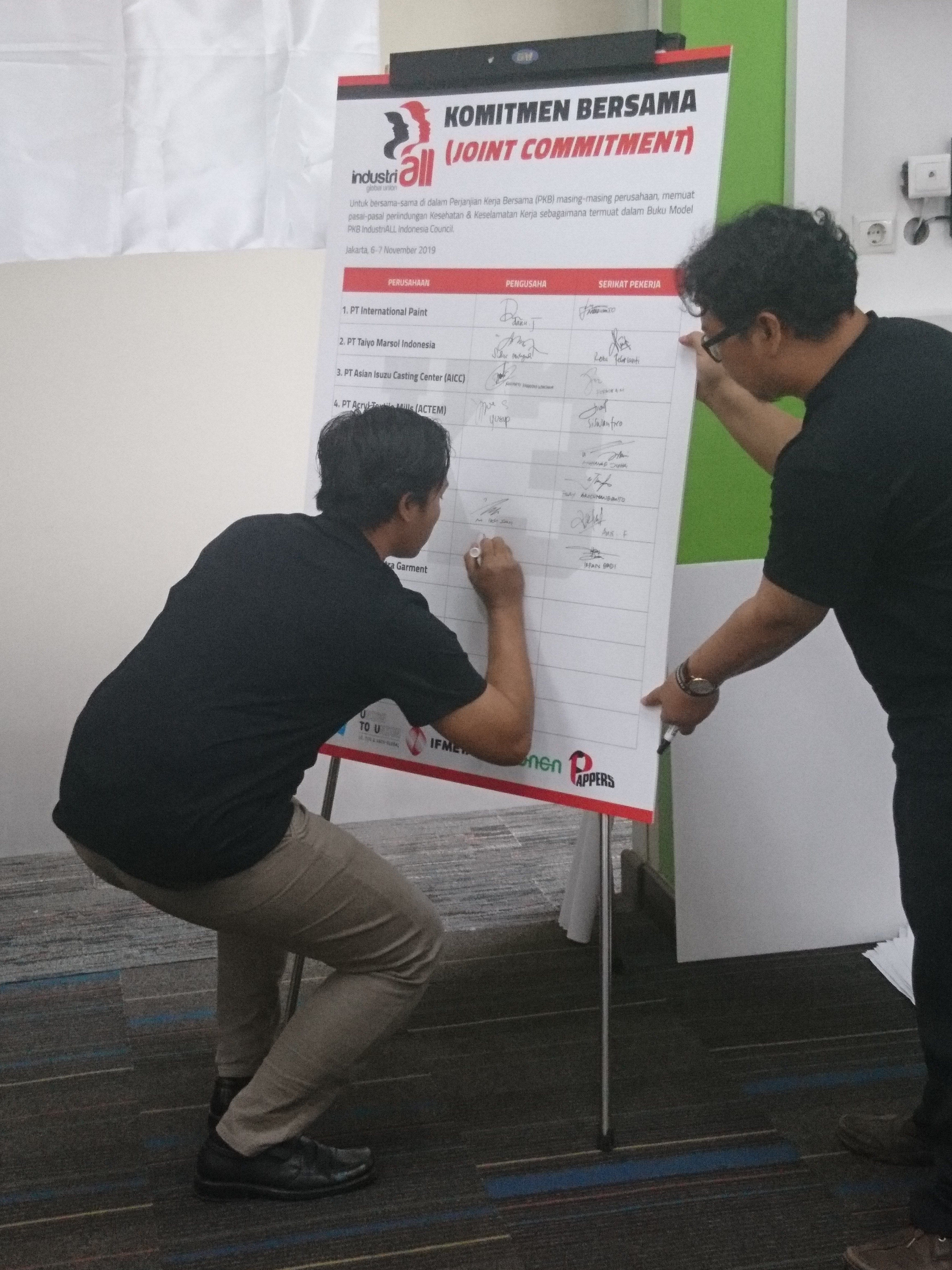
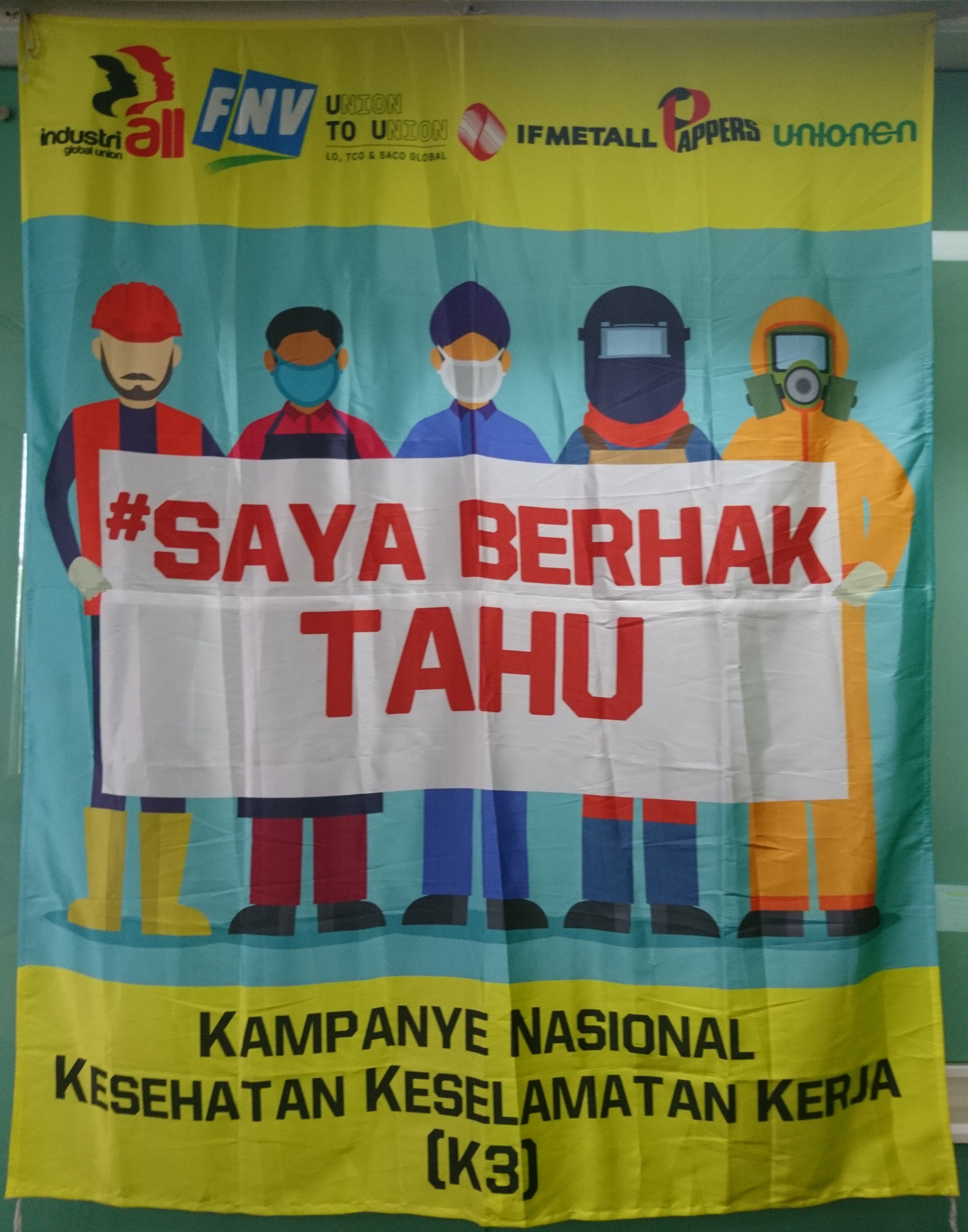
A workshop in Jakarta, with both unions and employers present, discussed how to improve Occupational Health and Safety (OHS) through collective bargaining at the workplace. The aim – and result – of the workshop was for both sides to sign a commitment.
The aim – and result – of the workshop was for both sides to sign a commitment.
Model collective agreement language on OHS, prepared through the project, was used as the basis for the commitment and for future agreements at the various workplaces.
Discussions centred on the fact that health is often overlooked at the workplace, with safety getting more attention. A medical doctor spoke about inserting language on occupational hazards at work into future agreements. Unions report on work accidents at times, but almost never on longer-term occupational diseases. Since 1945, only 22 cases have been lodged with the Indonesian government on occupational diseases that were not the direct result of accidents.
Other reoccurring topics were on workers being forced to buy their own protective clothing, on the lack of knowledge by workers of the dangers of chemicals and other products, and on lack of training. Issues specific to women were also brought up, such as not having enough toilets for women (or even not having any toilets for women) and sexual harassment.
Issues that will be brought to the bargaining table include the right to know about OHS dangers and regulations, the right to medical check-ups, the right to refuse dangerous work, the provision of an ambulance, asking employers for OHS reports, work with OHS committees through the involvement of top management, and health check-ups after retirement.
A second project workshop was gender and OHS training for women trade unionists in Batam, close to Singapore, with participants, mainly young female workers, from almost all IndustriALL Indonesian affiliates.
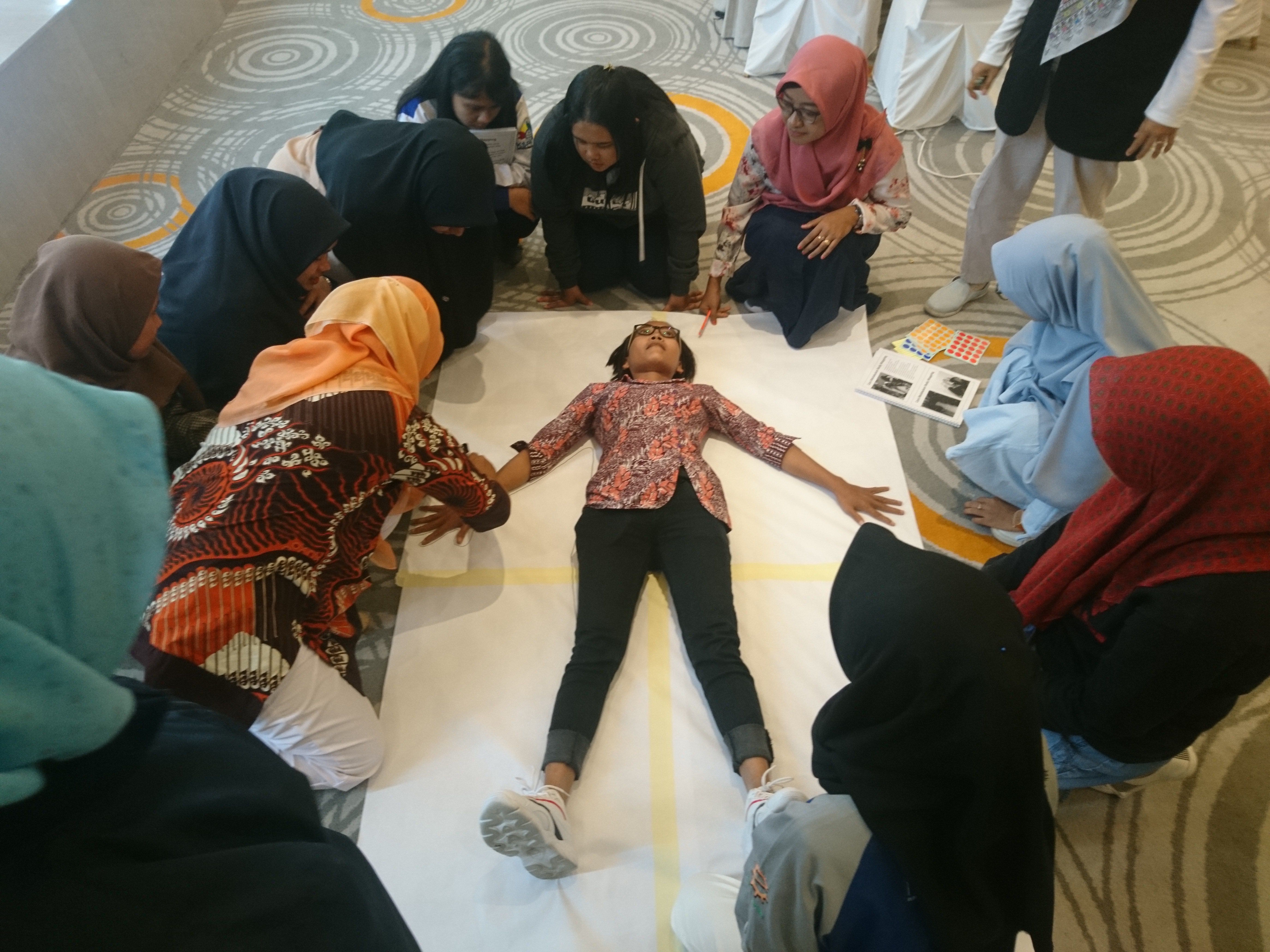
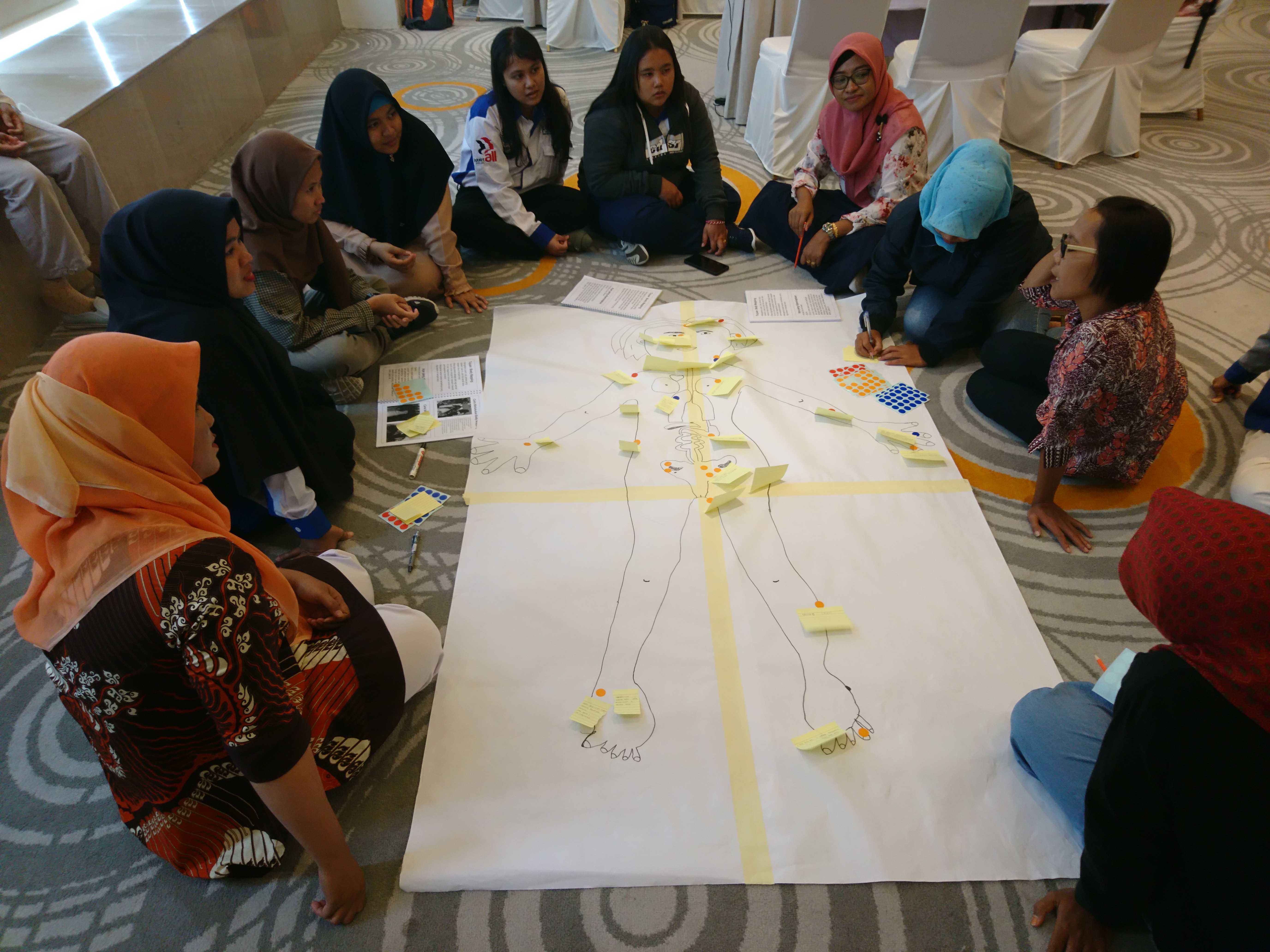
The meeting did a session on body mapping
Type your title here
Type your caption
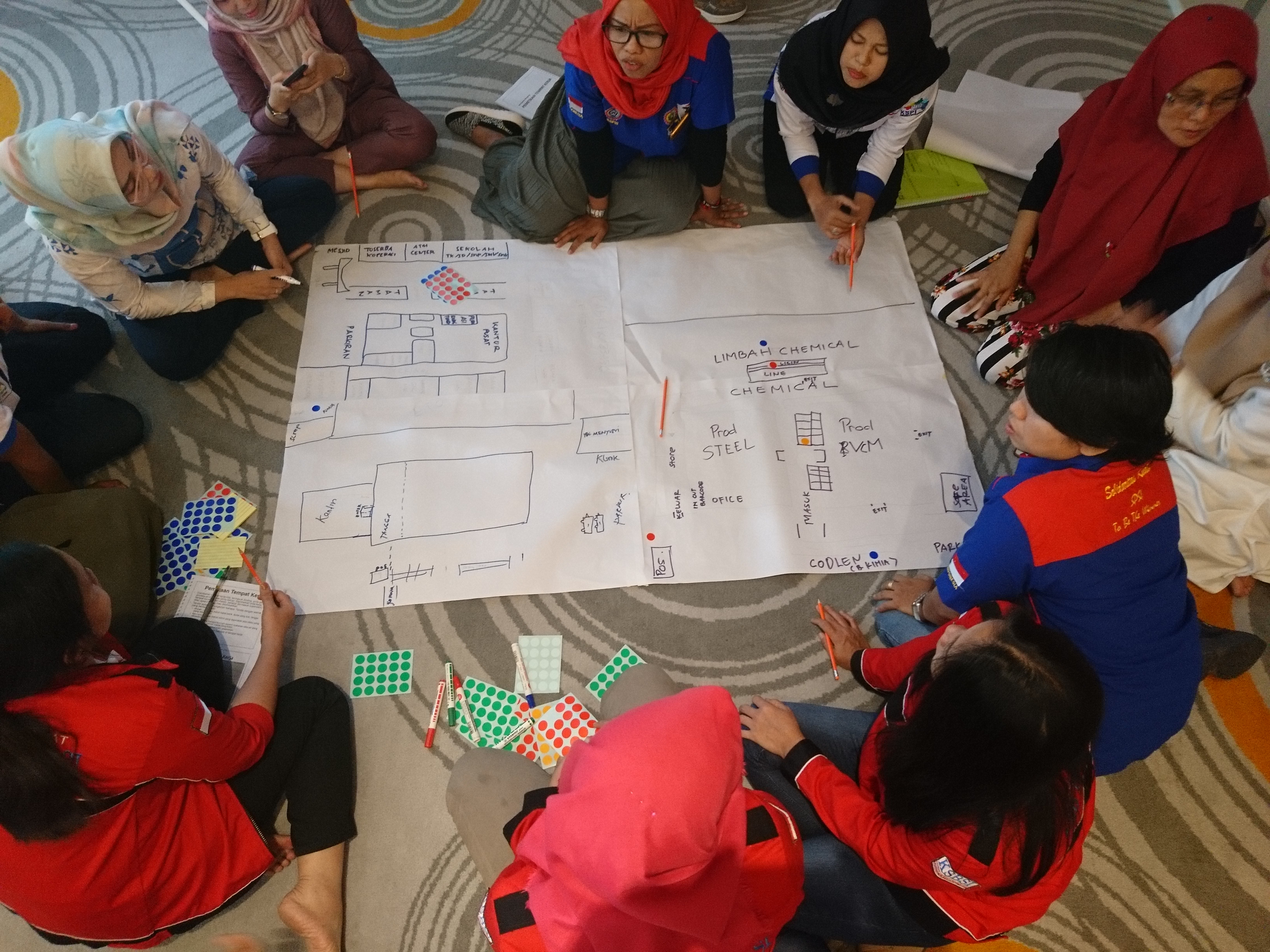
The meeting did a session on body mapping: identifying OHS problems on a life-size painting of a body. Colour codes indicated problems ranging from chemical hazards, itching annoyances and pains to sexual harassment. Similar mapping was also done on a drawing of a factory floor.
Similar mapping was also done on a drawing of a factory floor.
The group of 25 women came up with a surprisingly long list of problems: metal allergies, too many hours standing up, unwanted touching by supervisors, respiratory problems, itchy eyes, difficulties in discussing menstruation, blood pressure problems due to bad ergonomics, falling because of loose material lying around, slippery floors, chemical substances on the ground, noise, female and male toilets combined, no sanitary bins, fire hazards due to smoking close to chemicals and because of burning coal, lack of air conditioning, dust that gets into drinking water, and no place for breast feeding.
The group of 25 women came up with a surprisingly long list of problems.
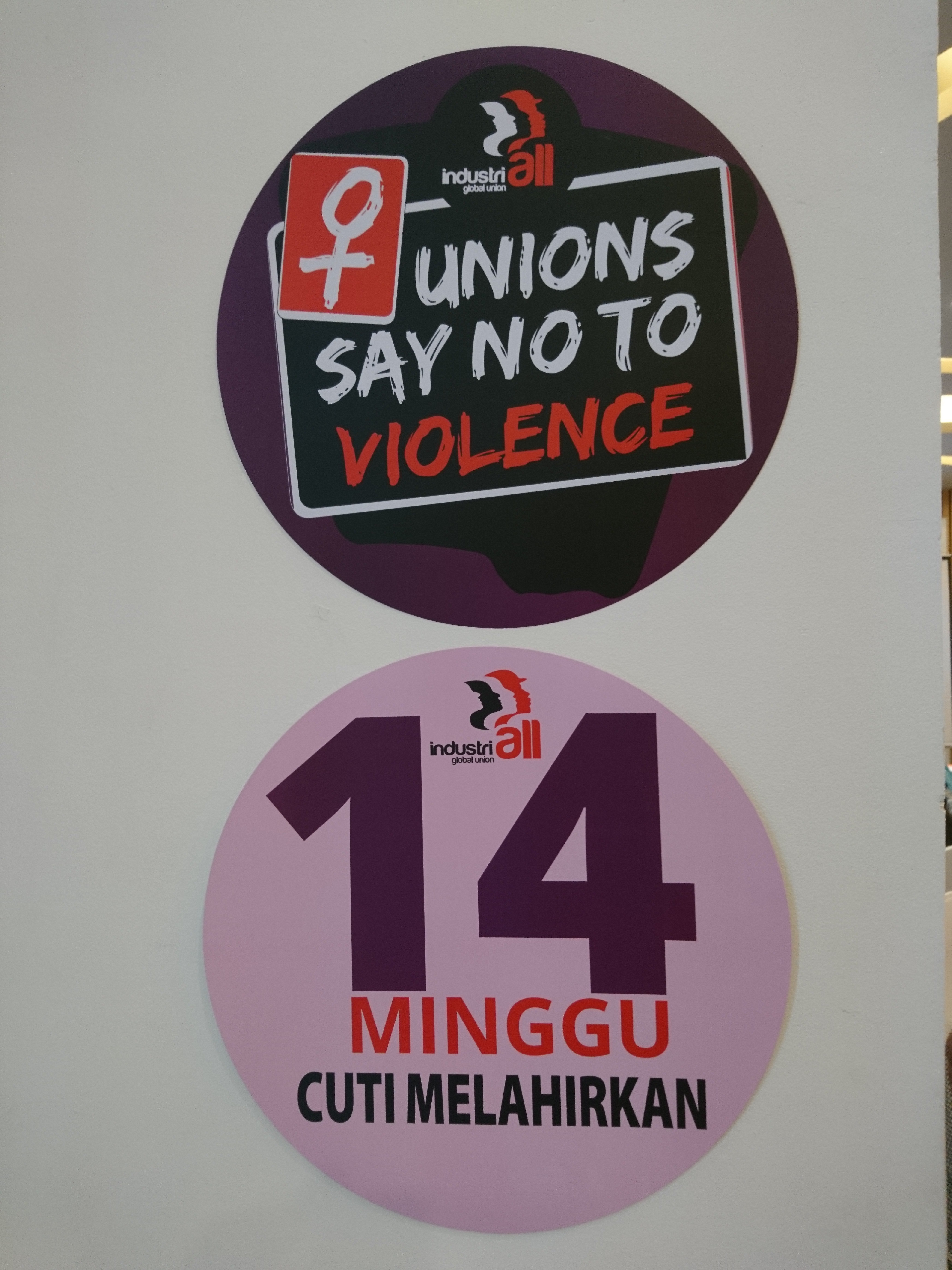
On the positive side, many participants also provided good examples on OHS issues being solved and problems overcome through union negotiations. Many women spoke on maternity issues, including on winning rooms for breast feeding, improving bad toilets or providing better work stations for pregnant workers. Hearing about the different lengths of maternity leave was interesting. Many told about how it had been possible to win 14 weeks maternity leave, a long-standing campaign target of the IndustriALL project in Indonesia, through collective agreements and social dialogue.
14 weeks maternity leave was a long-standing campaign target of the IndustriALL project in Indonesia.
Type your title here
Type your caption
The regional IndustriALL union building multinational corporation project, operating in four South-East Asian countries, is supported by both Mondiaal FNV and Swedish Union To Union, as well as by IndustriALL Swedish affiliates IFMetall, Unionen and Pappers.
Action in shipbuilding and shipbreaking
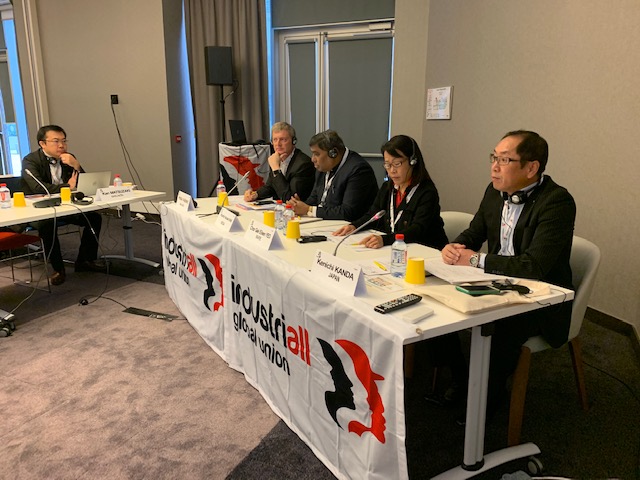
In his opening speech, Kenichi Kanda, sector co-chair, talked about the importance of protecting workers’ safety:
"This action group is advancing workers’ rights and we are seeing improvements. But there are still too many lives lost in this industry.”
Since China banned shipbreaking last year, India, Pakistan and Bangladesh account for 92 per cent of the gross tonnage of shipbreaking in the world.
India is in the process of adopting a new shipbreaking act for the industry. Although there is still work to be done, Rane Vidyadhar Vasuedo from SMEFI reported on an industry taking important steps forward; social dialogue has been initiated, and there have been improvements in working conditions and health and safety, including a new hospital. There have been investment in sustainable shipbreaking and 80 per cent of shipbreaking facilities in the country are green.
Nadir Aziz, from NTUF, painted a bleaker picture from Pakistan. Working conditions for the around 10,000 who toil in shipbreaking are characterized by low wages, a lack of safety measures like gloves and helmets, and no access to clean drinking water. Private contractors run the canteen, accommodation and the one ambulance at extortionate prices and sub-standard quality.
“Accidents have declined in India, but in Bangladesh, 14 people have already died this year. This difference shows the importance of complying with international standards and we owe it to the workers to clean up the industry,”
said IndustriALL assistant general secretary Atle Høie, urging for increased campaigning for the ratification of the Hong Kong Convention on safe shipbreaking.
So far, 13 countries have ratified the convention, which needs 15 signatory countries, representing 40 per cent of the gross tonnage of merchant shipping and on average 3 per cent of recycling tonnage, to enter into force.
Country experiences in shipbuilding
The shipbuilding industry globally is seeing an influx of migrant workers; in some countries, up to 30 per cent of the workforce are migrant workers, predominately from China, Vietnam, Philippines, Poland and Romania.
The Netherlands, for example, has seen a massive increase of migrant workers in an arrangement which benefits agencies and employers, but leaves workers in a situation where they are not informed of their rights and can't access the national social security system and pensions. In a precarious situation, making a complaint may land you on the street.
The action-group underlined the importance of defending the rights of migrant workers and a wish for collective agreements to include rights for them.
For a long time, workers in Chile's shipbuilding sector were not allowed to join a union, as it was considered a military sector. Since organizing became legal, Mikel Gotzon Capetillo Cardenas from Constramet reported that 80 per cent of the workers in his yard are unionized. However, the law still curbs basic union rights like negotiating a collective agreement.
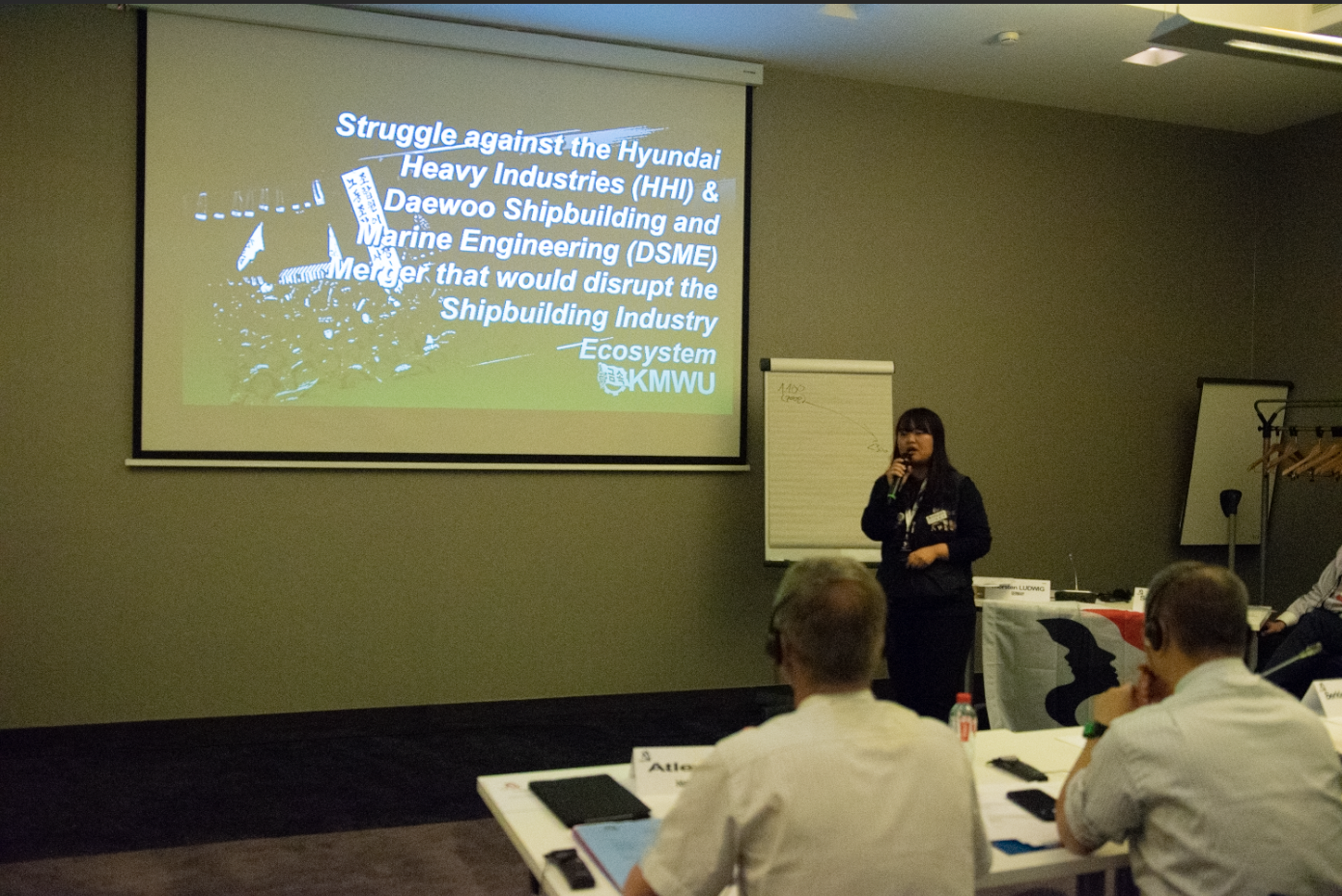
The Korean Metal Workers' Union is fighting back the merger between Hyundai Heavy Industries and Daewoo Shipbuilding and Marine Engineering. The union has held a series of strikes over the last months which have seen permanent and contract workers standing side by side.
The company has responded by disciplining more than 1,000 workers by dismissals, not paying salaries, as well as freezing the union bank account and suspending negotiations on the collective agreement.
Women are underrepresented in both shipbuilding and shipbreaking. Shipbreaking creates numerous, most often informal, work downstream from the yards. In India, women recycling plastics and scrap metal downstream have been organized by the Self Employed Women Association.
When we fight back, we win
In 2013, Australian union AMWU launched a campaign to “design, build and maintain our ships here”. The campaign ran for three years, mobilized workers and communities and lobbied politicians. Ultimately it saved jobs in the shipbuilding industry, and “they are good, well-paid jobs”.
To gain strength and speak with one voice, four Australian unions in the industry have come together to form the Australian Shipbuilding Federation of Unions (ASFU).
“The ASFU coordinates and streamlines the use of resources. It’s a show of solidarity and strength when dealing with employers, the government and the industry. Together, we organize and build industry power.”
said Glen Thompson.
Concluding the two days of meeting, Kan Matsuzaki, IndustriALL shipbuilding-shipbreaking director, said:
“Incorporating shipbreaking into this group in 2011 made us stronger and has led to an expansion of solidarity. We will continue to support each other, and to organize, educate and train for a sustainable future in the sector.”
In 2020, the action group will continue to defend workers’ rights and build union power, specifically:
Increase campaigning on the Hong Kong Convention
Improve women’s participation in the industry
Develop existing trade union networks (Fincantieri, BAE and Naval)
Research on multinational companies and their supply chains
Explore possibilities to negotiate global framework agreements
In depth mapping on precarious and migrant workers
Share good practices on limiting precarious work
Continued solidarity support for KMWU fight against merger
Shine bright like a diamond: unions will fight to improve working conditions
The 15 trade unionists of the global diamond network – from Belgium, Botswana, Congo (DRC), India, Lesotho, Namibia, South Africa and Zimbabwe – spoke about the challenges faced by workers in the sector: health and safety issues such as eye problems, the presence of home-based workers in cutting and polishing, and the need for artisanal mining to be recognized as a legitimate economic activity. Some workers do not even receive a minimum wage, even though they produce a very expensive product.
Precarious working conditions are common in diamond supply chains. The wages of workers polishing diamonds depend on the quality of the stone supplied to them. Since this is decided by management, wages vary, sometimes every month. In many countries, diamond polishing workers are not able to access social security. The unions from India – INMF Mines and SEWA – pledged to work together to improve conditions in diamond cutting and polishing workplaces to address this situation.
The unions will continue to engage with the Kimberley Process and other international multi-stakeholder initiatives. They aim to ensure that ethical standards for diamonds – which have until now been restricted to ‘conflict’ diamonds – will also include the working conditions of all workers in diamond mining and processing.
The global diamond unions will provide support to each other by strengthening the network. The experience of the network, working with the Sub-Saharan Africa regional office to assist the organizing efforts of the Independent Democratic Union of Lesotho, was seen as a template that should be replicated. Because the situation in the DRC and Zimbabwe needs urgent attention, the network resolved to extend solidarity to unions in those countries over the coming year.
Beverly Murangi, co-chair of the sector said,
“The value of a diamond should be reflected in the lives of the workers who work to produce it. The willingness of all the unions here to fight for diamond workers gives us hope that we can do it together.”
Population out in force for general strike in Algeria
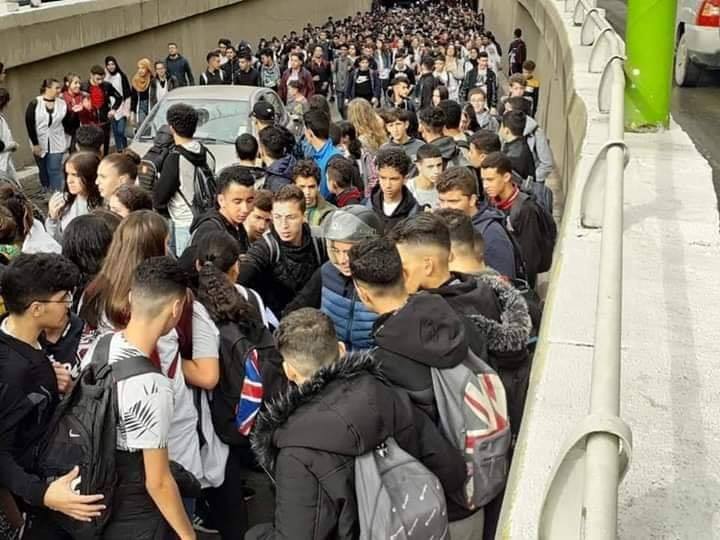
Workers from industry, energy, transport, the public sector, as well as thousands of students are backing the general strike which has been called by independent trade unions in Algeria on 5, 6 and 7 November.
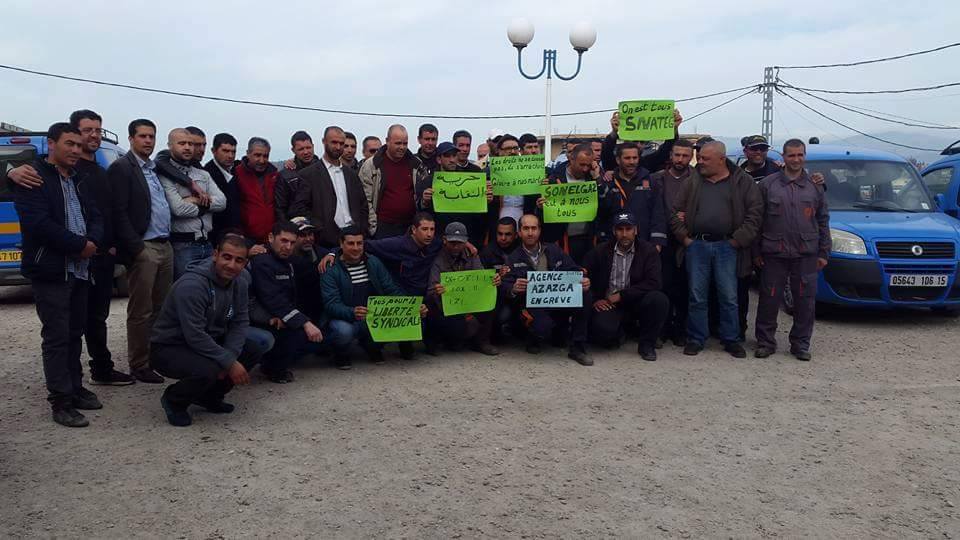
IndustriALL Global Union affiliate, SNATEG, which represents workers at state-owned gas and electricity provider, Sonelgaz, said 47 per cent of the population joined the first day of the general strike. Participation was particularly high at Sonelgaz, while higher education was completely paralyzed across the country as teachers and students joined workers to demand democracy, said SNATEG. The general strike has been adhered to in 37 provinces out of 48 in Algeria say independent unions.
SNATEG members strike at Sonelgaz in Algeria.
In a letter of support to independent trade union confederation, COSYFOP, which includes SNATEG, IndustriALL’s general secretary, Valter Sanches, said:
“We are very proud of the central role that the independent unions and your federation play in the democratic movement to fight for freedom of association, in order to end the repression and harassment of independent trade union organizations and to allow reintegration of all those who were fired for their union activities. We reaffirm our unconditional support for your struggle.”
High school students take part in the general strike.
Algeria’s ailing 82-year-old President Abdelaziz Bouteflika stood down in April this year, after millions of Algerian people took to the streets in outrage at his bid for a fifth term in office. Nonetheless, the weekly demonstrations have continued in an effort to oust the political regime.
A statement by SNATEG on the eve of the strike said:
“The departure of Bouteflika had given the group's workers hope for a change… (but) not only has nothing changed, our social situation continues to deteriorate.”
Elections for a new president have been announced for 12 December but all of the five candidates out of 23 that have made the final list are members of the political establishment, including two former prime ministers.
SNATEG President, Raouf Mellal, said:
“We categorically reject these rigged military elections, which aim to abort any kind of democratic change. This is our opportunity to create a law-abiding civil state, and we will go all the way to peacefully restore the sovereignty of the people.”
Release RCEP text immediately, say unions
After seven years and 28 rounds of Regional Comprehensive Economic Partnership (RCEP) trade negotiations, it was widely expected that at the third RCEP Leaders Summit in Bangkok on 4 November 2019, the conclusion of the deal would be announced.
However, against the backdrop of unprecedented domestic protest, India decided to withdraw from RCEP, as many outstanding issues remain unresolved.
According to the RCEP Leader’s joint statement, 15 countries have concluded negotiations for all 20 chapters and intend to sign the final text in 2020. The text has been sent for legal scrubbing – analysis by lawyers to ensure it is internally consistent, clear and compliant with relevant laws. RCEP countries will work together to address outstanding issues, and India’s final decision will depend on the satisfactory resolution of these issues.
Valter Sanches, general secretary of IndustriALL Global Union, said:
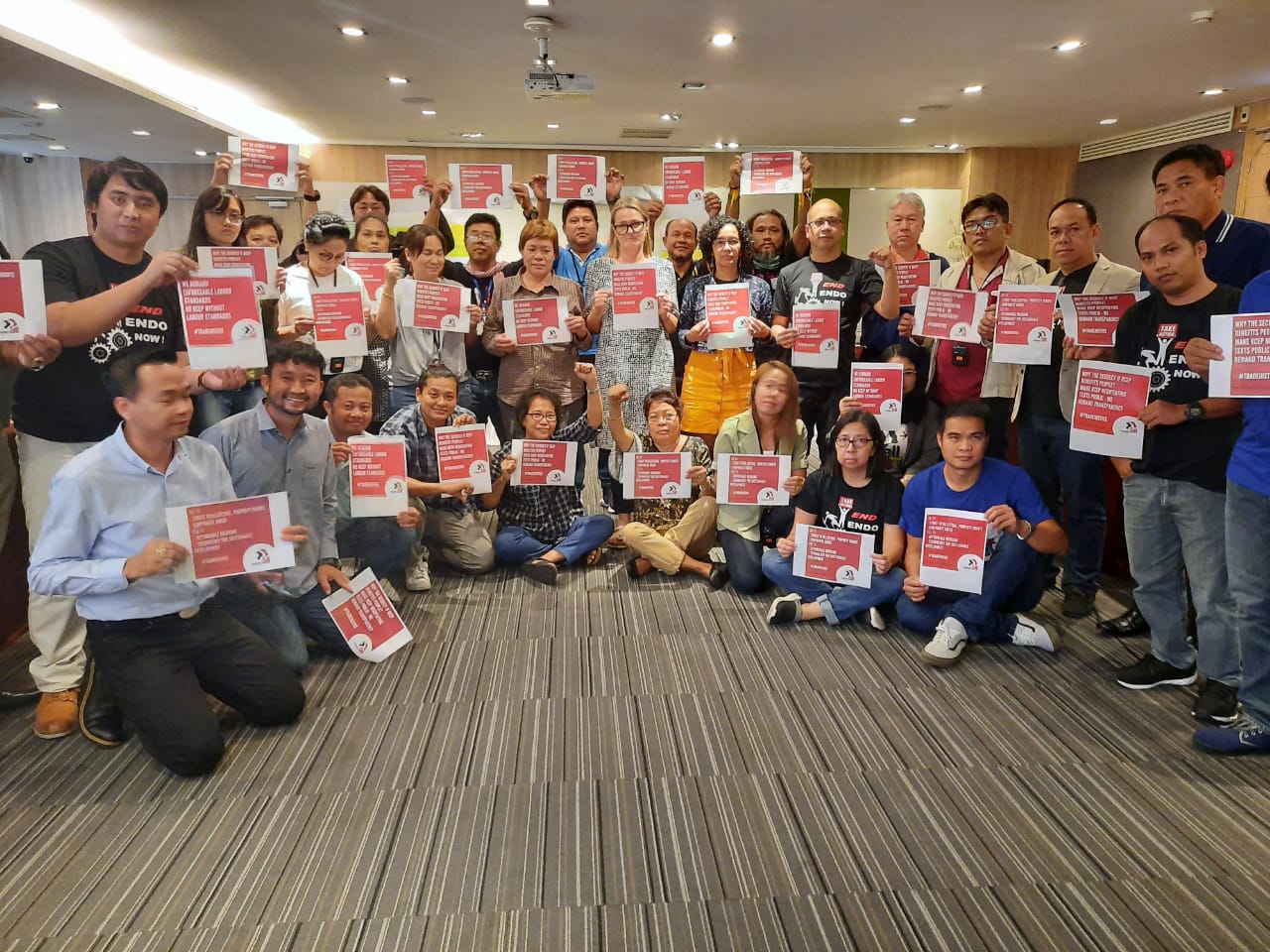
“We remain concerned over the lack of democratic process in the RCEP negotiations. Now that the 20 chapters are concluded, the RCEP text must be released immediately to facilitate informed public debate.
“RCEP should not affect government’s policy space to enact appropriate trade and industrial policies according to their current and future developmental needs. Any such hurdles in the current text should be removed.
“RCEP countries cannot remain spectators of violations of workers’ and human rights in member countries. The RCEP needs to include a sustainable development chapter with provisions to promote ILO core labour standards and to protect environment. It should include a commitment to an effective implementation and monitoring mechanism with the participation of trade unions.”
In line with the IndustriALL global trade and industrial policy action plan, earlier in June IndustriALL Asia-Pacific affiliates developed a regional action plan. Subsequently in July, IndustriALL affiliates along with other global union federations expressed serious concerns over the lack of a democratic process, the need to retain development policy space and other issues. They took action in August to demand a fair trade regime during Labour 20, the union counterpart to the G20 Summit.
Trade unions and civil society have highlighted their concerns on numerous occasions, saying that it is unacceptable that RCEP governments fall short of holding meaningful social dialogue with trade unions, farmers and other sections of the society.
According to reports, some of the issues raised by India include a special safeguard mechanism to check import surge, movement of professionals, shifting the base year for tariff cuts from 2014 to 2019 and rules on cross border data transfer. India also opposed ‘ratchet’ provisions and most favoured nation treatment on investment and services.
RCEP is an agreement between ten Association of Southeast Asian Nations (ASEAN) countries and their five partners, Australia, China, Japan, New Zealand and South Korea. The twenty concluded chapters cover trade in goods, rules of origin, trade facilitation, trade remedies, services, movement of natural persons, investment, intellectual property, electronic commerce, government procurement, competition and dispute settlement.
 Nineteen people died in the tragedy, 700 families lost their homes and more than 2,000 workers in the mining, construction, commerce, electricity and agriculture sectors lost their jobs.