Bosnia-Herzegovina unions demand living wages

Manufacturing industries in Bosnia-Herzegovina employ more than 170,000 workers, of whom 38,000 work in the textile sector. More than 80 percent are women.

The country’s textile sector has grown in recent years, but with a legal minimum wage just above €200 per month, it still has among the lowest wages in South-East Europe.

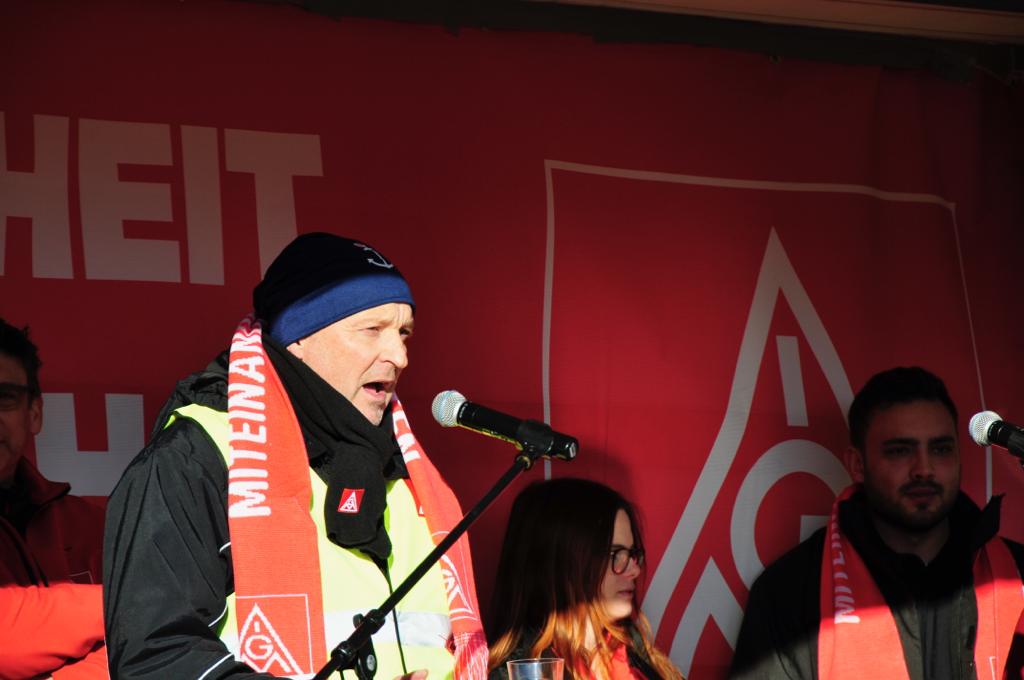
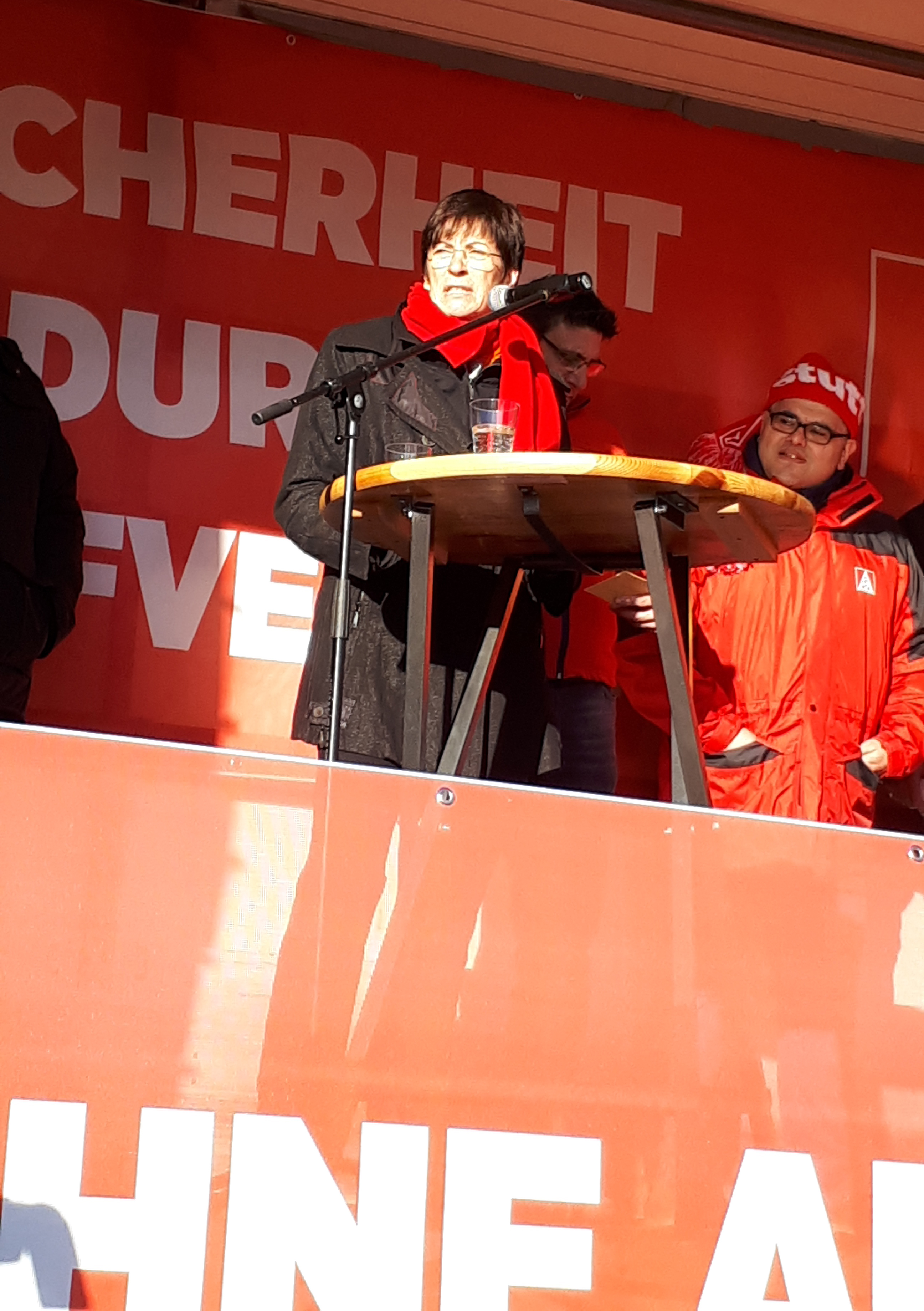
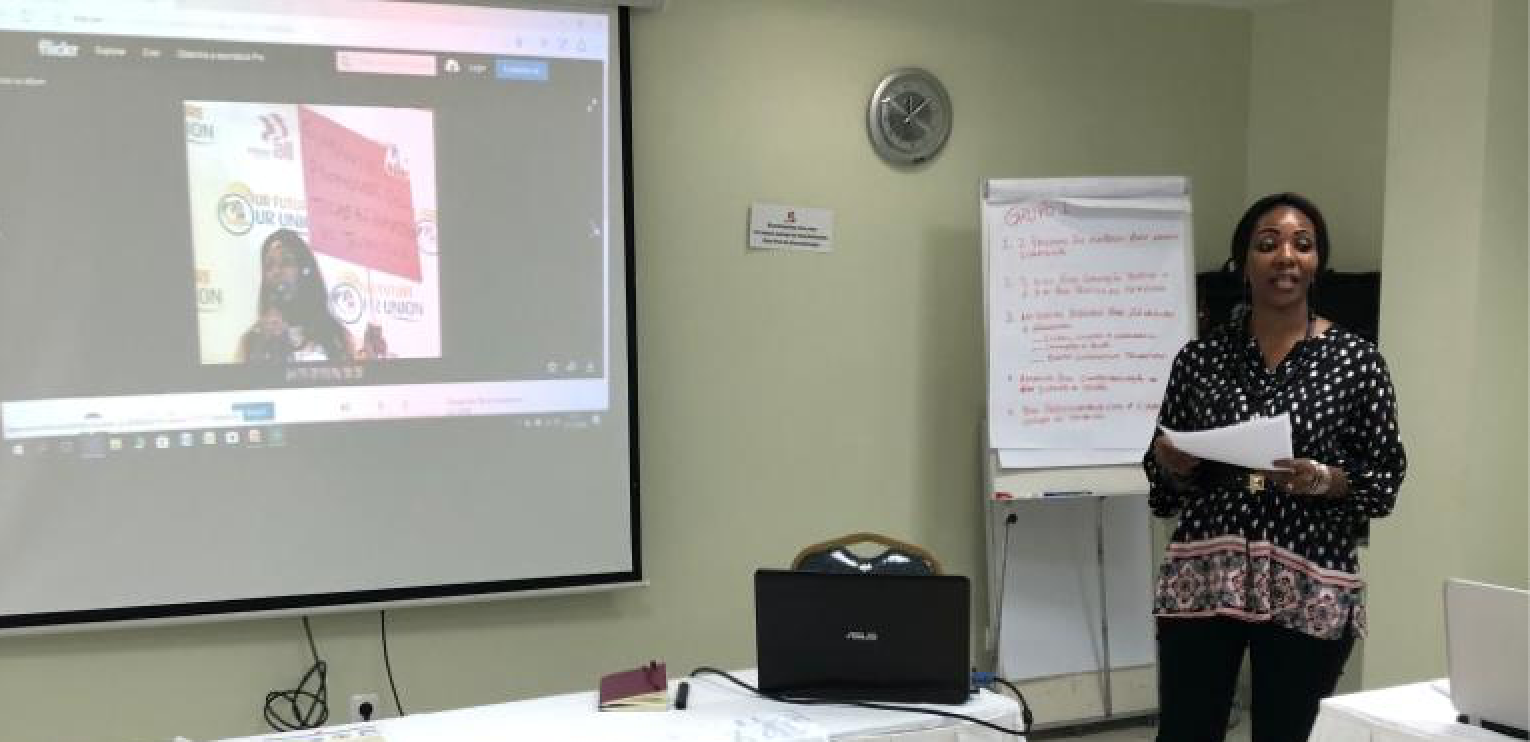
Building trade union power and organizing more workers were highlighted as crucial for unions to ensure decent wages, good working conditions and establish stable collective bargaining systems.

A detailed mapping of factories and brands present in the country will form the basis for organizing plans. The brands include global framework agreement signatory Tchibo, ACT members C&A and Next, Adidas, Benetton, Calzedonia, Burberry and Nike.

Kemal Özkan, IndustriALL Global Union’s assistant general secretary, says:

“Our affiliates in Bosnia-Herzegovina are fighting for the respect of fundamental workers’ rights in a complex and hostile constitutional and institutional setup.They will continue to receive our solidarity and full cooperation in building union power. Together with industriAll Europe, we support their struggle to achieve decent wages and working conditions for all.”

The two textile workers’ unions have 5,000 paying members, and several non-paying members. The estimated unionization rate is around 30 per cent, which is higher than other countries in the region.

However, unions are organizing in a hostile environment.

“70 per cent of companies don’t have a union. Many small business owners see unions as an enemy and resist us organizing their workers,”

says Danko Ruzičić, president of the Trade Union of Textile, Leather and Shoe Industry Workers of Republika Srpska.

In 2015, the government pushed through a Labour Code as part of its reform agenda without consulting social partners. It declared existing collective agreements null and void, forcing renegotiation. At national level, a collective agreement was concluded, but entity-level negotiations proved hard to achieve.

Bosnia-Herzegovina is made up of two entities: the Federation of Bosnia and Herzegovina, and  Republika Srpska. Bosnia-Herzegovina is made up of two entities: the Federation of Bosnia and Herzegovina, and  Republika Srpska. Only in September 2018 did the textile union of the Federation reach a sectoral collective agreement covering all 26,000 workers. In Republika Srpska, 12,000 workers are still without the protection of a branch accord.

“We reached the agreement after tough negotiations. But because many workers get the same benefits without being union members, they don’t see why they should pay union dues from their meagre salaries,”

says Zlatibor Kojčič, president of the Trade Union of Textile, Leather, Footwear and Rubber of the Federation of Bosnia and Herzegovina.

The employers and the government recognise the challenge of providing quality jobs for young people, many of whom have already left the country for Western Europe.

“Our objective is to raise wages, but the brands have to raise their prices to suppliers to enable higher pay. Nobody wants companies to close. And we need to invest in education, skills, modernization and new technology,”

says Amir Medic, general secretary of the Textile, Footwear and Leather Association.

Luc Triangle, industriAll Europe’s general secretary says:

“IndustriAll Europe supports affiliates in Bosnia-Herzegovina calling for a clear timeline for their country´s accession path to the European Union. Bosnia-Herzegovina should not be the poorhouse of Europe where companies in the manufacturing industries benefit from the closeness to the European market but are unwilling to ensure European labour standards.”

North America cement unions meet in Canada

The meeting was hosted by Teamsters Canada in their brand-new headquarters. The entire building, as well as all decorations and furniture, is union made!

The unions who participated in the meeting were the International Brotherhood of Teamsters from the USA and Canada, the United Steelworkers and the International Brotherhood of Boilermakers from the USA.

Teamsters-Canada hosts North America Cement Network meeting in their brand-new headquarters in Laval, Canada

The global prospective and trends in the sector worldwide was one of the main subjects of the meeting. The participants also exchanged ideas and views on the situation in the cement industry in their respective countries.

After water, cement is the second-most consumed construction material. But the sector faces numerous challenges. Overcapacity is still a serious problem for the sector worldwide, especially in Asia, where China holds by far the first place in cement production with 2,370 million tons out of 4,100 million tons of cement produced annually, according to 2018 results.

Some companies in the sector are making large investments in the digitalization of their production, which will change and potentially transform traditional workplaces. Unions need to start now to prepare adequate responses to protect the interests of their members. At the meeting the unions resolved to assess both the on-going and upcoming impact of Industry 4.0 in the cement sector.

The meeting served to bring trade unions closer together and coordinate their approach towards bargaining strategies, facilitating organizing precarious workers, youth and women and other sometimes neglected groups to make unions stronger than ever in the face of upcoming and existing challenges. With this aim the participants decided to continue building their joint database of collective agreements in the North America, and start analysing the most effective wording, which could be used by other unions in their bargaining.

Gary Kitchen, director of the construction division at Teamsters Canada said,

“I was extremely pleased with the content and information sharing between unions and IndustriALL. The cement industry presents many challenges for our members especially when dealing with multinational employers from a global perspective. It is critical in my opinion to continue these meetings.”

Alexander Ivanou, IndustriALL officer for the materials industries, commented,

”A strong cooperation and mutual respect between the unions at this meeting represents a solid basis for further union power building in the cement sector of North America. Together we will be able to find adequate answers to the challenges in the industry and protect interests of union members.”

IndustriALL rejects violence and repression against the people of Chile

According to the National Institute of Human Rights, a further 173 people have suffered firearm injuries, while thousands more have been arrested in the anti-government protests.

The disturbances in Chile began when President Sebastián Piñera announced an increase in the price of a metro ticket by 30 pesos, reaching a maximum 830 pesos (US$ 1.15). Following massive protests initiated by students, the government decreed a state of emergency in 10 of the 16 regions of Chile and established a curfew in Santiago and two provinces.

It is the first time a curfew has been declared in the country since the 1973-1990 right-wing dictatorship under General Augusto Pinochet. Furthermore, the Government has deployed the army in the streets of Santiago and other cities. There were disturbing accusations of excessive use of force by some members of the security forces and the army.

The rise in the subway fare generated outrage in Chile due to significant inequality in the country. A 2017 survey by the Economic Commission for Latin America and the Caribbean revealed that 50 per cent of the poorest households in Chile had only 2.1 per cent of the country's net wealth, while the richest 1 per cent of households held 26.5 per cent.

Half of the country’s workers receive a salary equal to or less than 400,000 pesos (US$ 552) per month. Considering the minimum wage in Chile is 301,000 pesos (US$ 415), a rise in the subway ticket is inconceivable to many Chileans. At the same time, there is general discontent among a large part of society due to inadequate pensions, a poor education system, and the high cost of electricity, gas, petrol and healthcare.  

IndustriALL General Secretary, Valter Sanches, said:

“The social and economic situation of Chile's population is down to years of ultra-neoliberal policies that have passed public services to companies and destroyed all social protection. We support the strike by our affiliated unions on October 23 and urge the authorities to respect the right of all people to freedom of expression and peaceful demonstration. In turn, we urge the government to bring all sectors of society to the table for dialogue, and to find solutions that help calm the situation and address the grievances of the population in the interest of the nation.”

Workers’ Rights Act amendments a victory for Mauritius unions

Under the act workers will get benefits in insolvencies, and portable retirement gratuity schemes will be introduced. The gratuity is an additional benefit to existing pension funds. The new law allows workers to carry their pensions and retirement benefits to the next employer. The law also makes it a must for employers to pay compensation for years of service and introduces unemployment benefits for up to 12 months.

A recent demonstration for decent work

A new tripartite council is also created which allows for negotiations and representation of workers by a lawyer, labour inspector or a trade union official. A wage guarantee fund pays workers when a factory closes. These benefits are enjoyed by all workers including migrant workers from Nepal and Bangladesh who are working in the country.

Unions are also campaigning for climate justice and against gender-based violence

The victory comes after 16 years in which IndustriALL Global Union affiliates from Mauritius carried out a sustained campaign for workers’ rights which included going on hunger strikes, pickets and demonstrations. These actions saw the union’s efforts being rewarded when the Workers’ Rights Act amendments were approved by the cabinet on 4 October.

Reeaz Chutto, president of the Confederation des Travailleurs des Secteurs Publique et Prive (CTSP) said:

“This victory adds to the union’s minimum wage campaign of 2017 in which we won minimum wages of $300 after a 10-day hunger strike. The union is also strengthening its organizing in other sectors in order to enjoy sectoral collective bargaining.”

Valter Sanches, IndustriALL general secretary said:

“I extend my solidarity greetings to all affiliates, and commend you on your dedication and commitment in fighting for over ten years for the Employment Rights Act of 2008 to be scrapped.

“The new labour law represents a major victory against precarious work and the casualization of labour. We appreciate the important advancement achieved in the protection of workers’ rights concerning, among others, fair compensation in case of termination, retirement benefits, strict restrictions on contract labour, strengthening of social dialogue, implementation of equal pay for equal work, improvements in paid vacation, harmonization of working conditions in different sectors, and an active campaign to stop gender-based violence at work.”

The CTSP is also campaigning against surveillance

The CTSP is also fighting against the invasion of privacy by surveillance systems that allow factory owners to spy on workers from their smartphones.

Young workers are active

Ukrainian miners demand payment of wage arrears

On 29 October, coal miners will come to Kiev from all regions of Ukraine to picket the parliament until their demands to eliminate wage arrears are met. 

Two IndustriALL affiliates in Ukraine, the Independent Trade Union of Miners of Ukraine and the Trade Union of Coal Industry Workers of Ukraine, are mobilizing their members for this mass protest action, as the total wage arrears now amount UAH 1,172 million (US $47 million). 

"Miners are extremely exhausted physically and psychologically as they haven’t received money for three months and have to protest",

said Mykhailo Volynets, the chairman of the Independent Trade Union of Miners of Ukraine. Some wage arrears date back to as far as 2016. In 2019, the average wage of a coal miner in Ukraine is UAH 15,000 (US $600).  

The state-owned coal mines of Ukraine employ 52,000 workers, said Victor Turmanov, chairman of the Trade Union of Coal Industry Workers of Ukraine. The majority of these workers are suffering from the months-long unpaid wages.

A protest in Severodonetsk on 11 October

Within the last few months, trade unions and workers have held protest actions against wage arrears across Ukraine in the Donbas, Luhansk, Lviv and Volyn regions. 

A protest in Lviv

Meanwhile trade union leaders held meetings with representatives of the government and the parliament of Ukraine demanding immediate measures to solve problems of state-owned coal mines. As a result, the government of Ukraine submitted a draft law On Amendments to the State Budget of Ukraine for 2019 that allocates an additional UAH 1 billion to cover wage arrears at state-owned coal mines. 

On 18 October, the draft law passed in the first reading at the parliament of Ukraine. It will take time until this law is finalized and signed by the president. The trade union leaders expect this to happen next week during the protest actions in Kiev.

However, time is moving on, and according to Mykhailo Volynets, on 1 November the wage arrears will increase by UAH 500 million (US $20 million). 

Therefore, the unions have prepared another draft law for the allocation of an additional UAH 1.5 billion (US $60 million) to pay coal miners' wages until the end of the year. It is expected that this draft law will pass the registration next week and will then go through the standard procedures in the government and the parliament, said Victor Turmanov.

Mykhailo Volynets said the coal miners will travel to Kiev with a one-way ticket and protest until the decision to eliminate wage arrears is made.  

IndustriALL Global Union supports the struggle of its Ukrainian affiliates and coal miners for elimination of wage arrears and timely wage payment, and urges the Ukrainian authorities to do all possible in order to cover all coal miners' wage arrears as soon as possible and avoid wage arrears in the future.  

IndustriALL demands release of 21 workers in Iran

Azarab workers, who have been on strike since 6 October, were viciously beaten in an attack by riot police on 20 October. Several people were injured and taken to hospital but have reportedly discharged themselves for fear of being arrested.

Workers are demanding payment of overdue wages and a return to state-ownership of the industrial manufacturing company that constructs power and petrochemical plants.

Workers say Azarab Industries was illegally sold to current owner Mr Qaleh-bani, who is ignorant of labour issues and has neglected to pay workers. 

On 21 October, Arak prosecutor, Abbas Qassemi, reportedly confirmed the arrest and detention of 21 workers. Meanwhile, the security situation in Arak is tense and the demands of the workers have not yet been met.

“It is extremely worrisome that exactly one month after sending you another letter deploring the brutal attacks on HEPCO workers, who were also exercising their legal right to peaceful protest, we are forced to contact you again to call attention to the brutal attack by security forces against peaceful Azarab workers in Arak,”

said IndustriALL General Secretary, Valter Sanches, in a letter to President Hassan Rouhani.

“IndustriALL Global Union urges the Iranian government to abide by national and international core labour standards, and in consequence, put an end to the repression of workers exercising their legitimate right to demonstrate peacefully in public, and release immediately all the Azarab workers detained in Arak on 20 and 21 October.”

Maziyar Gilaninejhad, spokesperson for the Union of Metalworkers and Mechanics of Iran (UMMI), called for the return of manufacturing and industrial plants to the public sector, and urged the government to cancel the privatization of Azarab Industries. He added:

"The government must commit Azarab Industries to pay all overdue wages and salaries as soon as possible. We demand that the police should not interfere in labour-related issues or in workers' legitimate strikes and protests."

Gilaninejhad called for the Minister of Labour to defend the rights of workers in accordance with the provisions of the Constitution and the labour law, and intervene in labour disputes before they reached crisis point.

US copper workers strike after decade with no pay rise

On 11 October, workers voted 77 per cent in favour of strike action at Asarco after rejecting the company’s “last, best and final” four-year contract offer, which includes no wage increase for nearly two-thirds of workers, freezes the existing pension plan, and more than doubles the out-of-pocket contribution workers pay for health care.

Asarco, originally founded in 1888, is now a subsidiary of Grupo México. Workers are striking at the Mission, Silver Bell and Ray open pit copper mines in Arizona, a smelter in Hayden, Arizona, and a refinery in Amarillo, Texas.

The company emerged from bankruptcy in 2009, and workers made sacrifices during the downturn to sustain the company. They have seen no pay rise for ten years, and the company has attempted to renege on paying bonuses linked to the copper price that it owes to workers.

Last week, the Supreme Court ruled that Asarco owed workers millions in copper bonuses. The unions believe those bonuses could be worth as much US $8,000 per worker, totaling around US $10 million. The company’s offer, which was rejected by the unions, aims to make it more difficult for workers to qualify for the bonus system.

The majority of the workers are represented by IndustriALL Global Union affiliate the United Steelworkers (USW). Other workers are represented by affiliates the Teamsters, Boilermakers (IBB), Machinists (IAM) and the UAW, as well as by the IBEW and IUOE. The workers have received solidarity support from other unions, including a delegation from Los Mineros in Mexico.

With Los Mineros

The previous contract expired on 1 December 2018, and the workers have been covered under an extension agreement on that contract, pending negotiations. However, after rejecting the company’s “final” offer, workers voted on 11 October to take strike action. Picketing outside the company’s facilities began late Sunday night on 13 October.

In a solidarity message to striking Asaro workers, IndustriALL general secretary Valter Sanches said:

"It is shameful that the company refuses to acknowledge your contribution, and it has not increased their wages since 2009, and the company owes workers millions in copper bonuses.

"Therefore, IndustriALL Global Union urges Grupo Mexico and its US subsidiary Asarco to negotiate with all the striking unions for a fair contract, and partake the profits of the company with the workers equitably, and reward them for their loyalty and sacrifices during the companies’ hard times."

Spanish union leaders occupy Endesa offices

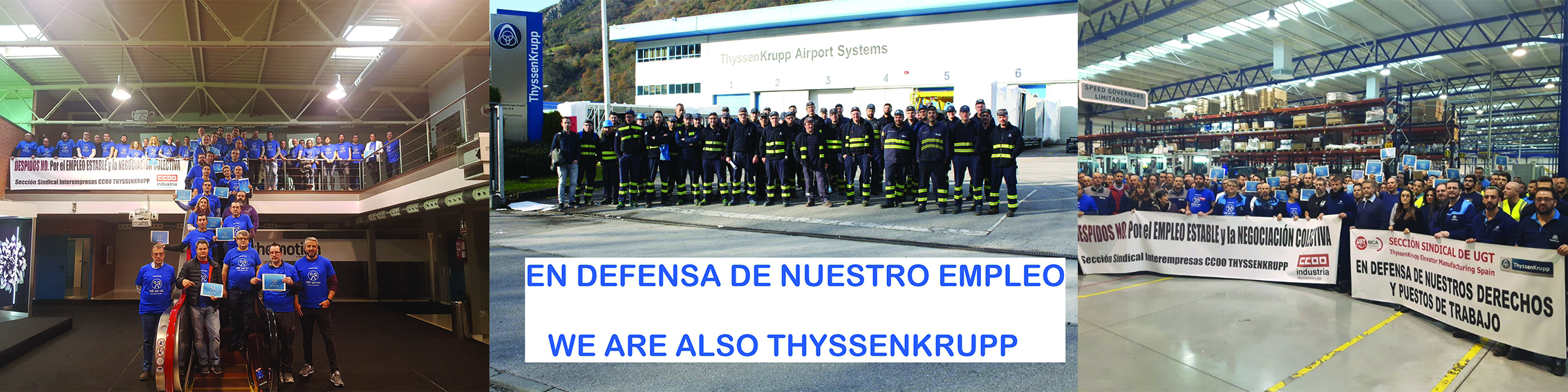
The energy company Endesa, Spanish subsidiary of the Italian multinational utility company Enel, has dragged out negotiations for a new collective agreement for so long that the terms have lapsed. The agreement should have been renewed two years ago, but Endesa has stalled negotiations to force through changes that are unacceptable to its employees. Workers have not been covered by a valid collective agreement since 1 January 2019.

This includes retired Endesa workers, who will lose the subsidized electricity they currently enjoy.

In protest, the general secretaries and other leaders of IndustriALL Global Union affiliates Comisiones Obreras de Industria (CC.OO. de Industria), Federación de Industria, Construcción y Agro de Unión General de Trabajadores (UGT-FICA) as well as Sindicato Independiente de la Energía de Endesa (SIE), have occupied Endesa offices in Madrid, across Andalucia and other cities.

In a joint statement, the union leaders say they will occupy the company’s offices “indefinitely”, and accuse the company of “arrogance” and “genuine contempt” for its workers. The unions claim that the company is trying to “blackmail” workers into accepting a considerable increase in job insecurity and a reduction in the social benefits won in previous years, disguised as modernity and flexibility. In addition, Endesa is adding to the insecurity by unbundling parts of the company that it identifies as non-core.

They demand that the company negotiates in good faith by making a reasonable offer.

IndustriALL Global Union has a global framework agreement (GFA) with Enel that defines a series of guidelines for social dialogue. In this agreement, Enel commits to collective bargaining as a tool for determining the terms and conditions of its employees, and regulating the relationship between management and the unions.

IndustriALL general secretary Valter Sanches sent a solidarity letter to the Spanish affiliated unions, as well as a letter of protest to the chief executive officer of Enel, calling on the company to honour the global commitment it had made and use the mechanism of the GFA to resolve the dispute.

“We urge you to ensure that Endesa changes its uncompromising attitude in the negotiations and makes an offer that enables the renewal of the collective agreement.

“We hope that Endesa not only resumes negotiations, but does so with an open spirit that allows for the concerns and proposals of the workers to be taken into account, to achieve labour relations that benefit both parties.”

Campaign to stop gender-based violence kicks off at South African factory

Music, poetry, and a six-a-side soccer tournament punctuated the event where the management, workers and communities signed the IndustriALL Pledge on stopping violence and harassment of women at workplaces and unions. 

Management, workers and communities signed the IndustriALL Pledge

Ruth Ntlokotse, the National Union of Metalworkers of South Africa’s Second Deputy President, and secretary of the IndustriALL Women’s Committee South Africa, one of organizers of the campaign, said:

“The crisis of gender-based violence in South Africa requires that we work together to stop the scourge as trade unions, communities, government and social groups. Employers also have an important role to play because gender-based violence also happens at the workplace. With the murder and rape of women and children in their homes, gender-based violence is tearing families and communities apart. This explains the importance of supporting advocacy groups that target men to stop gender-based violence as they are the main perpetrators.”

Ntlokotse, a chief laboratory chemist, has worked for JM for 22 years. JM, which has operations in 30 countries, employs 14,800 workers, and is a Financial Times Stock Exchange 100 listed company. Its products include emission and control technologies, chemical processes including oil and gas, battery materials, pharmaceutical and medical and metal chemicals and products.

Patrick Shai, a popular South African actor who has appeared in many television soapies and movies, and who leads the Khuluma Ndoda advocacy group, said:

“Women are living with lots of pain and in fear of getting stabbed with knives and being shot at with guns. So, we are saying to men: you can change and become better human beings. Loving doesn’t make you a lessor person. Let’s have that conversation and stop the violence against women.”

A woman activist from the nearby community said: “Why are we being violated all the time and how can this be stopped? We get protection orders from the courts, but we are killed even when we are holding those protection orders. Women have suffered enough.” 

According to crime statistics (2017/2018) from the South African Police Service 2930 women were murdered — which is about a death every three hours. This makes South Africa one of the most dangerous countries for women.

Workers condemn Sanofi decision to leave Bangladesh

Workers urged Sanofi to maintain its operations in Bangladesh in the interests of the company, for the thousands of employees, and for the population of Bangladesh who need access to quality pharmaceuticals.

The French drug maker recently announced its decision to leave Bangladesh for strategic reasons, by selling its 54.64 per cent share. It was announced that it may take between 12 and 18 months for Sanofi to start the process of selling its stake to a buyer. The remaining 45.36 per cent stake is owned by state-owned Bangladesh Chemical Industries Corporation.

The Sanofi production plant, which was established in 1966, has made considerable earnings and has gained a good reputation for the quality of its products and the expertise and dedication of its workforce. 

Sanofi’s decision has shocked the more than 1,100 workers, who came out to protest against the move and called on the company not proceed with the sale as they fear job losses. To highlight workers’ concerns and demand that the company hold meaningful dialogue with the union to find a suitable solution, on 19 October 2019, Sanofi Bangladesh Ltd Workers Union and the BCEF held a human chain demonstration in front of National Press Club in Dhaka.

Sanofi workers urged Sanofi not to shut down or sell the profit-making subsidiary, since its operation is in the greater interest of the company and the working people of Sanofi in Bangladesh. They are concerned that if the company quits the country, it would severely hamper the workers’ jobs and their dependent family members and society at large. There is a great concern that 170 million Bangladeshis would seriously struggle to access quality drugs.

In his letter to the chief executive officer of Sanofi, Valter Sanches, general secretary of IndustriALL said:

“We truly expect and demand that Sanofi central management intervene at its subsidiary Sanofi Bangladesh to ensure that through discussions between the company, the unions, and the government, an acceptable solution to all the parties concerned is found soon.”

Headquartered in Paris, France, Sanofi is one of the largest pharmaceutical companies with more than 110,000 workers worldwide.