The Federation of Energy, Geology and Mining Workers’ Trade Unions of Mongolia (MEGM), representing 22,000 mine workers and affiliated to IndustriALL Global Union, put forward the demands at a press conference in the country's capital Ulaanbaatar earlier this month.
Khuyag Buyanjargal, MEGM president, said that the union has received reports that many companies are implementing different rosters, like 40/20, 20/10, 28/14 or 14/7, at the expense of workers’ safety.
“Regulating rest time in the labour code would ensure that workers have sufficient rest time to avoid accidents.”
“Long working days, frequent shift changes and working in mines located far away from home, deprive workers of their rest time. Mining companies should take this feedback seriously, and understand that increasing workers’ rest time is a preventive measure,” said Buyanjargal.
328 mine accidents were recorded in Mongolia between 2015 and 2019, where 139 people were injured and 38 died. The number of mine accidents grew in 2018 and 2019.
An increasing divorce rate has followed the country’s booming mine industry, with 2.5 times more divorces in 2018 than in previous years.
“We had submitted an official demand to the Parliament speaker, Zandanshatar.G, and the Prime Minister, Khurelsukh.U. Mine workers have repeatedly ask for a reform of the labour code; we are urging the government to seriously consider the proposal,” Buyanjargal said.
IndustriALL mining director Glen Mpufane said:
“IndustriALL Global Union is in full support of its affiliate, MEGM’ s demand, which raises a crucial issue on the relationship between working time/shift rosters and health and safety, including work life balance, crucial for the family fabric of mineworkers and their families.”
Deadlock sets Turkish metalworkers en route to strike
The existing collective agreement covering around 200 workplaces, including large multinational companies, expired in August last year.
Negotiations started in October, with the three unions presenting their demands on wage increases between 26 and 34 per cent, and improved working conditions through a two-year contract. The Turkish Employers Association of Metal Industries (MESS) insisted on a three-year contract.
MESS offer of wage increase went from the inflation rate, 6,05 per cent, to eight per cent, and later to ten per cent, which was rejected by the unions as it was far from the demands and expectations of the workers.
“We create wealth and want our share. The demands of the metalworkers should be met. Otherwise, we will use our constitutional right, which is right to strike.”
As several rounds of negotiations failed, the three unions started taking action in the workplace in December, protesting against the employers through picketing, demonstrations, work stoppages and talking to the media.
On 19 January, hundreds of thousands metal workers joined rallies in Bursa, organized by Türk Metal, and in Gebze, organized by Birleşik Metal-İş, to show their determination for struggle for better wages and working conditions.
“This manifestation is for the millions of people who have been crushed in this country, who cannot afford their lives with today’s wages. This rally is a show of resistance, we will win this struggle together,”
said Pevrul Kavlak, Türk Metal president.
According to Turkish metalworkers, high levels of inflation, combined with a devaluation of the Turkish currency, has led to wages in the Turkish metal industry being barely above the national minimum wage.
“We condemn in the strongest terms the uncompromising stance of the employers concerning the legitimate demands of metal workers. We urge the employers to engage in a genuine dialogue with unions to reach an agreement to end poverty wages,"
said IndustriALL general secretary Valter Sanches.
IndustriAll Europe’s general secretary Luc Triangle said:
“We support our Turkish unions in their struggle for a fair wage increase. It is important that workers get their fair part of productivity increases. We support our affiliates in all actions they will take in the next days and weeks to come to a satisfying collective bargaining result.”
Sanofi unions continue building unity
While conditions and industrial relations differ from Bangladesh to Brazil, from France to Japan, the common goal of the IndustriALL Sanofi Trade Union Network is to establish respectful and serious social dialogue at the global level with this employer.
Significant restructuring has recently been carried out by the company especially in Europe, with 1,200 office jobs cut in the continent, and in Japan. One major flashpoint currently for the global network isSanofi’s operations in Bangladesh. The full network’s attention and solidarity is currently with the Bangladeshi Sanofi union, part of IndustriALL’s affiliate BCEF (Bangladesh Chemical, Energy & Allied Workers Federation). The union is mobilizing to persuade Sanofi not to downsize its operations in the country, and ensure that any changes are made through a strong social dialogue with the union. IndustriALL has raised its support for the Bangladeshi union’s demands directly with Sanofi.
Sanofi unions from throughout Asia
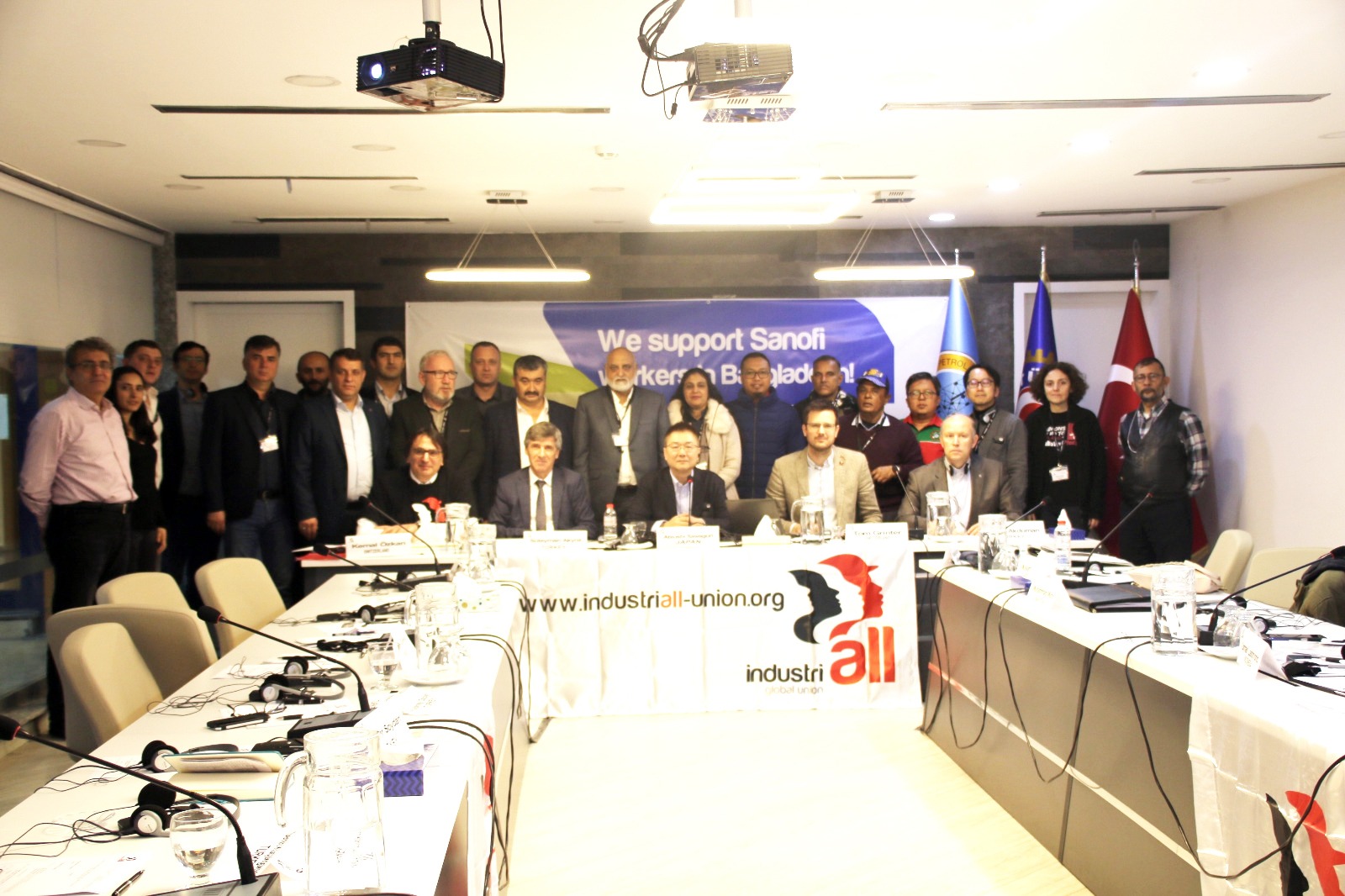
Istanbul. Turkey, 19-20 December 2019
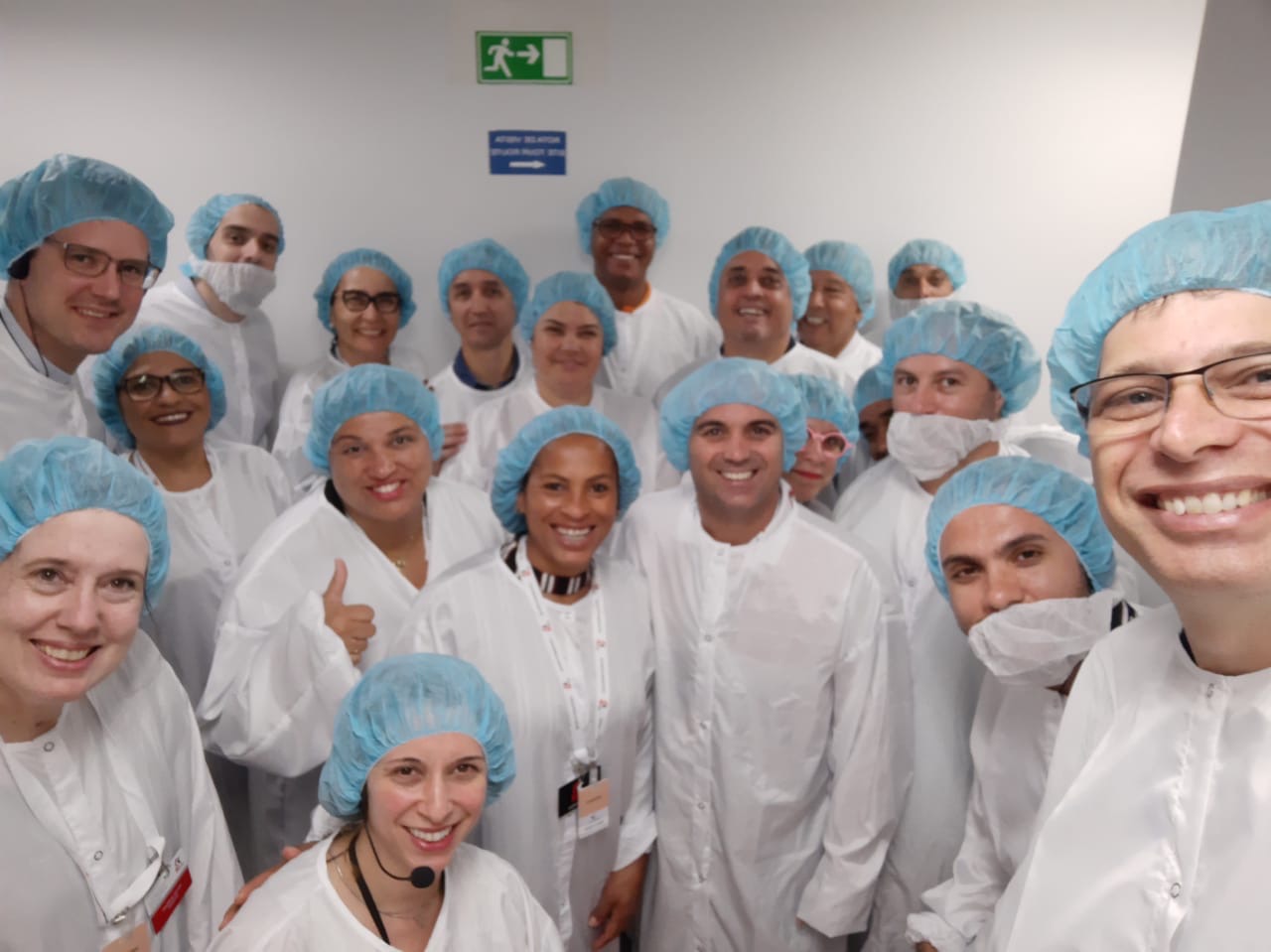
In the fourth quarter of 2019, IndustriALL conducted a regional Sanofi trade union network meeting for Latin America, in São Paulo on 30-31 October, and a regional Sanofi trade union network meeting for Asia Pacific, in Istanbul on 19-20 December. The São Paulo event comprised an analysis and coordination meeting at the trade union headquarters of Químicos da Força, Fequimfar, followed by a day at the nearby Suzano factory of the company, giving the local management and the network the chance to meet and exchange with each other. The activity benefitted from the participation of the Chair of the Sanofi EWC, Aline Eysseric.
Sanofi union network at their meeting in Brazil
Suzano, Brazil, 30-31 October 2019
In Latin America, the Sanofi trade unions have a well-established network, with a chosen coordinator, Ademar José de Oliveira. Both IndustriALL affiliates, Fequimfar and CNQ-CUT are well organized at the different sites in Brazil, Campinas, São Paulo, Suzano and Guarulhos. Collective agreements at the plants have been developed through a relationship of trust dialogue, bringing provisions on healthcare, transport, childcare, profit-sharing and much more.
IndustriALL Director for the Pharmaceuticals Sector, Tom Grinter said:
“This is the example that we want to encourage throughout Sanofi’s operations. At the Suzano plant the union and management do not agree on everything, but there is a strong spirit of trust and common interest for the benefit of both the company and employees.”
The Latin American Sanofi Trade Union Network set their action plan to include: the coordinator actively continuing communication and information of the group, aiming for a national collective agreement for Brazil, each member union reiterating their support for an international relationship between the company and the global union, permanent commitment to the global network building effort, and sending a special solidarity greeting to the Asian Sanofi Trade Union Network meeting.
Inside the Suzano factory
31 October 2019, Suzano, Brazil
The Sanofi Asia Pacific Sanofi Trade Union Network also has a settled structure, chaired by brother Atsushi SAWAGURI of Japan. Different challenges face Sanofi workers in each country. In Pakistan and Bangladesh, the vast majority of the workforce is hired on temporary, precarious contracts. In Indonesia there are court proceedings between the parties, instead of harmonious industrial relations. In Japan there has been a steady reduction in jobs. In Turkey there is a very high workload for members, and an unfair tax burden on salaries.
The Asian colleagues committed to an action plan that included: strong information sharing and communication, facilitated by the network chair; standing in solidarity with colleagues in need, at present this means with the Bangladeshis who need to retain employment, rights and union recognition; hoping to establish contact with the Chinese Sanofi union via the Japanese colleagues; seeking the company’s recognition of the global trade union network.
IndustriALL Global Union assistant general secretary Kemal Özkan stated:
“There is a strong expectation of our group that the new Sanofi CEO Paul Hudson will not turn down the opportunity of a global social dialogue relationship with the global union network and IndustriALL.”
Ukrainian unions oppose anti-worker labour law reform
Together with other drafts submitted in December last year, the latest draft, №2708, only protects employers’ interests and deprives workers of their rights and social guarantees. If adopted, the drafts would abolish union committees at company level, undermine union capacity to protect workers and would eventually lead to the elimination of trade unions in Ukraine.
Close to thousand union members picketed the building of the parliamentary committee for social politics on the day of the review of the draft law On Labour. The draft contradicts national law, including the Constitution of Ukraine, and core international labour standards, including ILO Conventions 87, 131 and 98.
The recent draft consists of 99 articles and is meant to regulate all labour relations. Both recent and the earlier drafts submitted to parliament in December 2019 are full of anti-worker legal provisions, including: the possibility to set a 12-hour working day instead of the current 8 hour limit; reduction of overtime payments, allowing the payment of 120 per cent instead of the current double time; additional opportunities for easier dismissals, including that of pregnant women and women on maternity leave at the employers’ discretion; abolishment of additional leave for workers employed in hazardous industries, for parents with many children and mothers of disabled children; and the elimination of social guarantees for vulnerable categories of employees.
On 16 January, leaders and representatives from 60,000 local unions that represent 7,000,000 union members in Ukraine gathered in Kiev for an activity by the All-Ukrainian Trade Union Council for the protection of workers’ constitutional, labour and socio-economic rights and unions. Although invited, neither the president nor prime minister attended the event.
The Council adopted a resolution with the unions’ demands, including:
Demand that the state authorities immediately withdraw the draft law On Labour №2708 and invite ILO experts to examine of any new drafts law on labour, trade unions and social security;
Demand that the government launch fair labour law reform through tripartite social dialogue in full compliance with national and international law;
Propose the adoption of a Labour Code of Ukraine on the basis of two drafts (№ 2410 and 2410-1) previously submitted to the parliament and already examined by the ILO;
After the adoption of the resolution, participants marched to the buildings of the president, parliament and government where they handed over a copy of the resolution.
Valeriy Matov, IndustriALL Global Union executive committee member and chairman of Atomprofspilka union said:
“The Council submitted the union resolution to the state authorities. We demand that they withdraw the draft law On Labour and enter into genuine social dialogue on labour law reform. Otherwise the unions will hold the All-Ukrainian protest action on 30 January”.
Kemal Ozkan, IndustriALL assistant general secretary said,
“Together with our affiliates, national and global unions, we strongly oppose to the labour law reform without proper consultations with unions in Ukraine. We urge the parliament of Ukraine to immediately remove the draft law On Labour №2708, and call on the government of Ukraine to launch tripartite negotiations with representatives of workers and employers with the view to adopt a Labour Code in strict compliance with the national and international labour legislation and conventions ratified by Ukraine.”
ThyssenKrupp unions urge company to keep elevator business
German multinational conglomerate thyssenkrupp is in financial trouble, with some of its business areas performing badly. The company faces a €4 billion hole in its balance sheet, and will sell some business areas to raise funds.
However, some parts of the business are extremely successful and profitable, such as the Elevator section. The company is considering several options to raise the money it needs: the first is to maintain control of Elevators, but list it on the stock market as an independent company and raise funds with an initial public offering of shares. A second is to find a partner and sell part of the business, but maintain control. A third option is to sell the business entirely, which risks seeing it carved up by the new owner.
Unions representing thyssenkrupp favour the first option. The Elevator Group Works Council has written to the executive board and supervisory board, saying,
“Any separation of Elevator will result in thyssenkrupp losing not only its most profitable business, but also around a third of its global workforce….
“A majority or complete sale will only generate a onetime financial effect. Thereafter it will no longer be possible to put the consistently good earnings of the Elevator division toward improving the balance sheet of thyssenkrupp AG.”
They urged the company not to split Elevator, saying:
“One reason why Elevator is so successful and profitable is that the division as a whole stands on a broad footing. Its diversity and global network are a fundamental strength. That is why the unity of the Elevator group must be maintained in the future.”
They reminded the company that should the sale go ahead, existing agreements mean that the potential buyer must conclude a best buyer agreement with IndustriALL Global Union’s German affiliate IG Metall. This agreement would cover all 53,000 employees around the world, the majority of whom are outside Europe.
IndustriALL industry director Matthias Hartwich said:
“Without a best buyer agreement the works councils and trade unions cannot agree any sale of the Elevator business of thyssenkrupp. IndustriALL will stand with the 53,000 employees worldwide and defend their rights and interests. Employees must not pay the price for bad management decisions of the past.”
Uruguay becomes first country to ratify ILO Convention 190
The new Convention and Recommendation were adopted at the International Labour Conference in June, 2019. The Convention recognizes that violence and harassment are a threat to equal opportunities and are unacceptable and incompatible with decent work.
The government of Uruguay submitted the ratification bill to Parliament in September 2019, and the House of Representatives unanimously adopted the bill on 17 December 2019, making Uruguay the first ILO Member State to ratify C190.
"As it has now ratified the ILO Convention, Uruguay will have to adopt an inclusive, integrated and gender-responsive approach to preventing and eliminating violence and harassment in the world of work. This will apply to both the private and public sectors, to the formal and informal economy, and in both urban or rural areas,"
said an official statement released by the Office of the President of Uruguay.
The statement also said that legislation will require employers to take appropriate steps to prevent violence and harassment in the world of work.
The ratification process was facilitated by the fact that Uruguay already has laws in place to address some of the issues covered by C190, such as legislation on sexual harassment in the workplace and concerning student-teacher relationships, as well as on gender-based violence against women.
In November last year, IndustriALL Global Union launched a campaign to encourage affiliates to work together to ensure the ratification of the Convention and incorporation into domestic law.
Through the gender office of Uruguay's central union PIT-CNT, IndustriALL's affiliates in Uruguay were actively involved in the tripartite talks on the ratification process.
Gender office representative and UNTMRA member Fernanda Ceballos says on the recent ratification:
"We promoted the ratification of C190 in Uruguay from the gender equality and diversity office of PIT-CNT. We have worked on the issue of sexual harassment and zero tolerance of violence in the workplace for a long time, and we are very aware of the issue of raising awareness with the different unions through workshops on gender violence.
"In turn, we work on gender clauses, in conjunction with companies and the labour ministry. Once C190 was ratified, we held assemblies with UNTMRA to inform people of its scope. Many workers affiliated with UNTMRA have faced of sexual harassment at work, so we believe that ratification is very important to fight for a world of violence-free work.”
"Convention 190 is an important tool for fighting discrimination and inequality in the workforce. We congratulate our affiliates in Uruguay for their tireless efforts to tackle gender-based violence, and the government for ratifying the new convention, which will help to create a world of work that is free of violence and harassment."
Stop the split of Eskom, say South Africa unions
This follows earlier announcements by the government that Eskom will be broken from a single entity into three companies for generation, transmission, and distribution of electricity. Unions say that the unbundling, a pretext for privatization, would lead to thousands of jobs losses. Currently Eskom employs close to 100,000 workers, including those along the value chain.
The unions are calling for the resignation of the minister of public enterprises Pravin Gordhan and the Eskom board be dissolved for failing to end the Eskom crisis. The Eskom crisis reached a peak last year when unprecedented levels of power outages plunged the country into darkness.
The National Union of Mineworkers (NUM) and the National Union of Metalworkers of South Africa (NUMSA), both affiliated to IndustriALL Global Union, wanted to present their memorandum of demands to the newly appointed group chief executive Andre De Ruyter, who did not show but instead sent members of the management team.
Among the unions’ demands are that Eskom be run by “credible and knowledgeable managers and not politicians” and for labour to be involved in decision making processes within the power utility. Unions want to be represented on the Eskom board and to be part of the executive committee.
The unions also said Eskom is buying expensive power from independent power producers only to sell to consumers at a loss. The utility is also failing to collect debt from municipalities and other debtors and fraudulent activities have left a huge dent on the utility’s finances. Eskom also has a debt of over 400 billion Rands (US$27.8 billion).
When Eskom amended the previous criteria for performance bonuses workers were not consulted, and the unions are now demanding it be reversed. The unions want outsourced services to be taken over by workers employed directly under Eskom’s conditions of service as this provides job security and end precarious working conditions.
Diana Junquera Curiel, IndustriALL director for the energy industry, says:
“We urge the South African government to recognize unions organizing in the energy sector as key stakeholders and consult them on issues affecting workers. We have seen similar cases in other countries and unbundling always leads to retrenchments and jeopardize workers’ conditions. Even in such cases unions have to be part of the negotiations for fair compensation.”
Accord transition agreement signed in Bangladesh
The Transition Agreement between the Accord and the Bangladesh garment employers’ association (BGMEA) outlines key principles and steps in the transition from the Accord to the RMG Sustainability Council (RSC).
The RSC will bring together industry, brands and trade unions to ensure a sustainable solution to carry forward the significant accomplishments made on workplace safety in Bangladesh.
The RSC will be governed by a Board of Directors consisting of an equal number of representatives from industry, brands and trade unions.
“The transition agreement, which provides the necessary guarantees that the work, key principles and all policies of the Accord will be carried forward in the RSC. Our affiliated unions in Bangladesh will play a strong role in the new RSC, participating directly with brands and BGMEA in the governance of the new body,”
says IndustriALL assistant general secretary Jenny Holdcroft.
To strengthen the global brands’ active participation in the RSC and to ensure their supply chain responsibility for workplace safety is met, the Accord trade union and brand signatories will be negotiating a new legally binding agreement that supersedes the current 2018 Accord.
“That agreement will enable us to continue to hold brands accountable for their factories and ensure the necessary support for the work of RSC,”
concludes Jenny Holdcroft.
A transition from the Accord to the RSC was agreed in May last year.
Among other things, the Transition Agreement includes:
The Safety and Health complaints mechanism established under the Accord will continue to operate independently and autonomously
Transferring all operations, staff, infrastructure, and functions of the Accord Office in Dhaka to the RSC
Factories currently covered by the Accord shall be carried over to the RSC retaining their remediation status and any outstanding remediation requirements as per the factory’s Corrective Action Plan
Documented decisions, policies and protocols developed by the Accord to be carried over to the RSC
Maintaining all existing transparency features of the Accord, including full public disclosure of inspection results and remediation activities
Indonesia: fears new bill will destroy workers’ welfare
In October 2019, Indonesian President Joko Widodo proposed to streamline overlapping Indonesian laws into two omnibus bills on job creation and taxation, with the primary purpose to attract foreign direct investment, ensure economic growth and create job opportunities. The two bills will amend total 82 Indonesian laws and 1,194 articles.
The Confederation of United Indonesian Workers (KPBI), the All Indonesian Trade Union Confederation (KSBSI) and Indonesian Trade Union Confederation (KSPI) are condemning the bill for violating workers’ rights and benefits; among the most contested issues are abolishing the severance pay system borne by employers, increasing labour flexibility and eliminating criminal sanctions on employers.
The President of KPSI and the Federation of Indonesian Metal Workers' Union (FSPMI), Said Iqbal, says that revising the minimum wage system to hourly-rate for those working below 35 hours per week is a regressive move that will fuel the informal economy and make workers poorer. Iqbal is concerned workers could lose the monthly-rate minimum wage for being on sick leave or fulfilling religious obligation.
“We strongly oppose the proposal to limit unemployment benefits six months. Under the current laws, workers enjoy a maximum severance pay of nine months, in some situations even 18 months, and on top of that workers can receive maximum ten-month service pay. All those benefits will disappear,”
says Iqbal.
"We demand that the government consults trade unions while drafting the bill and removes provisions detrimental to workers, like on severance payment, widening the scope of labour outsourcing from the existing five areas of work and abolishing criminal sanctions on employers who failed to pay minimum wage,"
says KSBSI president Elly Rosita Silaban.
She added that KSBSI supports the revision of labour law due to some crucial issues for example weak labour inspection, controversial issues on wages, pension and social security programmes were not resolved. The Omnibus bill was drafted in favour of investors, rather than addressing issues facing workers.
KPBI, KSBSI and KSPI are mobilizing workers for nationwide protests on 15 and 20 January.
INTERVIEW: Beauty Zibula
Union:
The Southern African Clothing and Textile Workers Union (SACTWU)
Country:
South Africa
Texto:
Elijah Chiwota
After 41 years as a sample machinist, Beauty Zibula was elected as a Member of Parliament for KwaZulu Natal province in South Africa in the country’s national elections in May 2019. The election ended her four decade long career as a shop steward, which saw her assuming many leadership positions in her union, the Southern African Clothing and Textile Workers Union (SACTWU).
At the time of the election she was the second Deputy President of SACTWU, which has over 108, 000 members in the textile, garment and leather sectors. Zibula was in her teens when she got her first job in a garment factory in Durban, South Africa in 1978.
What was it like to be a trade unionist under South Africa’s apartheid regime?
“I got my first job at IM Lockhat at the height of the struggle against apartheid. It was a difficult period for South African citizens, workers and trade unions. As activists for democracy we were always under surveillance by the notorious police special branch of the repressive apartheid regime. I was arrested and detained many times as I was not only a trade unionist but also campaigned for the African National Congress (ANC), which at the time was a banned organization. Some were jailed while others were killed. Nelson Mandela and our leaders from KwaZulu Natal – Dullah Omar and Harry Gwala – were in prison on Robben Island.
“It was under these tough conditions that I started organizing workers, who were reluctant to join a union. Moreover, the employers discouraged workers from joining the union. Wages were segregated according to race, with the black African workers earning the lowest compared to white, Indian and coloured1 workers. Unionists were always seen by employers with a lot of suspicion. But my unionist had explained to me that my important task was to unify workers at the factory; and I managed to bring many Indian and African workers into the union.”
Describe your 20-year experience at Prestige apparel. What would you describe as the main challenges after the democratic breakthrough in 1994?
“The ANC and other liberation movements were unbanned. Mandela and other ANC leaders had been released from Robben Island in 1990s, and freedom was in the air. There was the democratic breakthrough in 1994 and the ANC won the first democratic elections. I was thrilled. There was freedom at last after years of struggle. Then the new Constitution guaranteed workers’ rights; workers’ rights including the right to strike became constitutional rights.
“I moved to Prestige Apparel but was still employed as a sample machinist, but this company was different. The machines were new and better. The company really tried to update to new technologies unlike the old machines that we were used to at IM Lockhat.
“As unions, we started campaigning for the Labour Relations Act and when it was passed it was a victory for workers. The benefits of the LRA are still felt today. It gives organizational rights to trade unions, promotes collective bargaining, and provides for the resolution of labour disputes through conciliation, mediation and arbitration and labour courts. The law also provides for a simplified procedure for the registration of unions.
“Another victory was on maternity leave, as found in the Basic Conditions of Employment Act. We fought hard as unions for this to happen, and it was sweet victory for women when we got maternity leave benefits.”
Describe your rise through the union ranks from a factory shop steward to a second Deputy President?
“Being a union shop steward is hard work which requires dedication. As a union leader you learn a lot along the way through the meetings, representing workers when there are grievances with employers and when you sit in collective bargaining councils to negotiate for collective bargaining agreements. When you succeed in your work in the union, it is rare that you do it alone, but you work with others as a collective. In SACTWU we worked as a collective and participated in the activities of our federation, the Congress of South African Trade Unions (COSATU).
“I learnt a lot as the regional chairperson of COSATU because I worked with trade unions that organize in other sectors, thus giving me an opportunity to learn and understand what those unions were doing.
“I also gained valuable experience by sitting on the National Bargaining Council for the clothing industry – an important council for the garment sector in South Africa from where we have negotiated better wages and working conditions for the workers.”
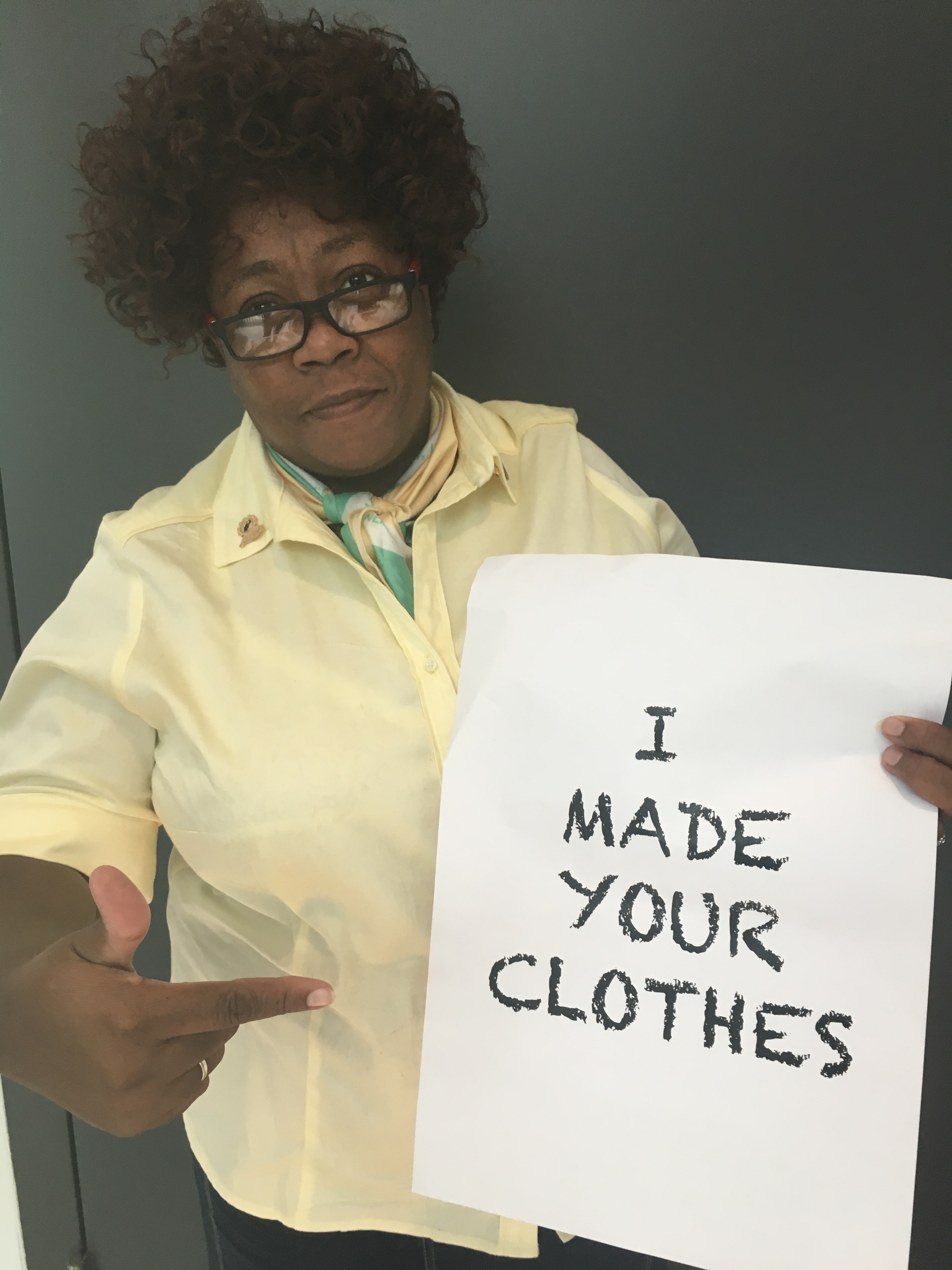
Beauty Zibula supporting IndustriALL's campaign in the textile sector
What are your comments on gender-based violence and femicide in South Africa?
“The levels of gender-based violence and femicide in South Africa are shocking. Working women are raped and killed in their homes, at workplaces and in the mines. At workplaces women are raped and killed by their male colleagues. Women are also killed by their partners or ex-boyfriends. Children are raped and killed. This is unacceptable and shouldn’t be allowed to continue. Therefore, as MPs we are supporting President Cyril Ramaphosa’s five-point plan against gender-based violence and femicide. This plan includes prevention, strengthening the criminal justice system, enhancing the legal and policy framework, ensuring adequate care, support and healing for victims of violence and economic empowerment of women.
“As an MP, I am taking this campaign to my constituency and am visiting communities to sensitize them and to get an understanding why this is happening and how we can stop it. We are carrying out this campaign together with various government departments.
“I have been involved in discussions that have been taking place within COSATU structures to deal with gender-based violence, sexual harassment and femicide.
“As SACTWU we have been involved in this campaign for some time now, and through IndustriALL Global Union we have been campaigning for the signing of the IndustriALL Pledge and took part in the recent marches against gender-based violence and femicide in Cape Town.”
How do you find your union experience useful in the National Assembly?
“I have not been on this journey alone, I have walked with others as well. And would like to use this opportunity to thank IndustriALL and all the comrades that I worked with in the regional women’s committee. I will miss the union but will cherish the valuable experience that I gained.
“After my studies at the Workers College in Durban, and my experience in the union, I have learnt to appreciate unions as organizations where you learn.”
To build a better South Africa we need strong unions, and these unions should be involved in social struggles.
“Again, from my experience I can conclude that unions gained a lot though struggle during apartheid when they gained their mobilizing skills and post-apartheid where they fought for workers’ rights and benefits including minimum and living wages.
“As part of the working class the union has power through its numbers, its social role and in its struggles for social justice. Its campaigns to end the triple crisis of poverty, inequality and unemployment are an example. The union should therefore continue to fight against exploitation and oppression of the workers and for social justice. It should also continue to build national and global solidarity. The union should continue to withhold labour power from capital as it fights for workers.
“Unions should continue to struggle for the society that we want, based on freedom and equality in the communities where we live and at our workplaces.
“This is what will inform my work as an MP. The values that we fight for in the union are also the values that we should fight for in parliament as we serve the same society but in different capacities. This is like wearing a different leadership hat.
"As trade unions, and as politicians with a union background, we all want a better world and to be involved in transforming societies. We are committed to ending the triple crisis of poverty, unemployment and inequality.”