Malaysia unions demand government action over widespread union-busting
Protesters from NUTEAIW, PPPMEU, the EIEU Coalition and NUTGFLP submitted a memorandum to the political secretary of the Minister of Human Resources, Kevin Yii, as well as two members of parliament. The memorandum detailed alleged acts of union-busting at XSD International Paper, Flextronics Malaysia, HICOM, Texas Instruments Malaysia, Nexperia and General Aluminium.
The unions criticised what they described as prolonged inaction by the Industrial relations department despite multiple complaints. Several cases, including those involving HICOM and General Aluminium, have reportedly seen no remedies after ten years.
Allegations of intimidation and employer interference in cases at Flextronics and XSD have also not resulted in prosecution, despite unions asserting that strong evidence was provided.
IndustriALL affiliates outlined four key demands:
Establish a high-level taskforce to investigate all union-busting cases
Enforce the Industrial Relations Act and prosecute employers who engage in union-busting
Reform laws and regulations to restrict employers from engaging in such practices
Ensure that collective bargaining begins within 60 days of a secret ballot victory
IndustriALL Malaysia council secretary Gopal Kishnam Nadesan said:
“We are very disappointed that the said union-busting cases have not been handled fairly and professionally by the authorities in the past 12 years. We urge the government to respect the freedom of association and the right to collective bargaining of workers. Stop siding with employers and oppressing trade unions!”
IndustriALL regional secretary for South East Asia Ramon Certeza added:
“As a state party to the ILO Convention 98 on Right to Organize and Collective Bargaining, the Malaysian government is obliged to provide adequate protection to workers suffering from anti-union discrimination. I urge the government to engage with our affiliates and resolve the disputes amicably.”
Sub Saharan Africa unions reflect on Congress
The unions said the theme prompted them to envision several mobilisation campaigns to defend workers’ and trade union rights, foster job creation and security, demand living wages, create green jobs, uphold fair trade, advance sustainable industrial policies, and champion industrialisation. They said campaigns must prioritise equity, reskilling, and local beneficiation while embedding gender equality as one of the cornerstones.
The Congress was held at a moment when SSA is confronting a pivotal crossroads with surging global demand for critical minerals — copper, cobalt, lithium, nickel, and rare earths — vital for electric vehicles and renewable energy technologies. The unions argued that channelling these riches into domestic industrialisation via beneficiation unlocks job creation potential and economic vitality while enforcing human rights due diligence.
Renewable energy production will also create green jobs. Unions said there should be emphasis on upskilling and reskilling of affected coal mineworkers in the case of thermal power station closures in South Africa and other countries.
SSA’s youth bulge, 78 per cent of the population under 35, per UN and World Bank data, holds potential as a demographic dividend. But high unemployment, trapping youth in precarious informal work, could squander it entirely. Unions thus support formalisation which will legitimise artisanal and small-scale mining in the Democratic Republic of Congo, Zambia, and Zimbabwe, alongside Kenya’s roadside auto artisans and Nigeria’s tailoring shops, to transform informal work into equitable, rights-secured formal economies.
While digital transformation will disrupt industries through automation and artificial intelligence, it will also benefit unions as they adopt digital tools of organizing and mapping industry supply chains. Meanwhile, intra-African trade which is promoted by the African Continental Free Trade Area (AfCFTA) emerges as a potential alternative for textiles and garments, reeling from US tariffs that have imploded factories and loom over Lesotho with 40,000 job losses. The non-renewal of the US African Growth and Opportunity Act has dire consequences for industries in Kenya. Regional trade and African industrialization could stitch back resilience and livelihoods, argued the unions. The unions’ arguments resonate with the theme for the African Industrialization Week (AIW2025) which is:
“Transforming Africa’s economy through sustainable industrialization, regional integration, and innovation.”
In Nigeria, unions are demanding living wages and respect for trade union rights from employers and the federal government. They continue to confront Dangote Industries over union busting.
Mpho Phakedi, National Union of Mineworkers general secretary said:
“Trade unions must push for industrial policies that promote beneficiation and localization instead of raw material exports, job losses, and employment. Global solidarity and campaigns against multinational corporations like Rio Tinto, Glencore and Sibanye, are important to unions’ fighting back and protecting workers’ rights.”
“For textile and garment workers, adapting our industries will require us to deal with new technologies which can improve industrial sustainability and competitiveness,”
said Bonita Loubser, Southern African Clothing and Textile Workers Union (SACTWU) general secretary. She urged technological adoption that empowers women through equal training and leadership development.
Prince William Akporeha, Nigeria Union of Petroleum and Natural Gas workers (NUPENG) president, said a just future is built upon defending workers’ rights:
“We continue to fight for workers’ rights in Nigeria through social dialogue and legal action where necessary.”
“We hail Congress’s bold resolutions on youth, feminism, and trade as they address SSA’s core struggles. We are a continent of young workers and must address their concerns and interests. Feminism supercharges ILO Convention 190 to end violence and harassment in the world of work while fair trade ignites our region’s growth imperative,”
said Rose Omamo, IndustriALL vice president.
Workers lead the charge for a Just Transition
Roxanne Brown, IndustriALL vice president and international vice president at United Steelworkers (USW), opened the session with a call for workers to take an active role in shaping the transition.
She reminded delegates that Just Transition is not about job loss, but about securing the future of work.
“Just Transition isn’t a ‘fancy funeral’ for jobs — it’s about building a secure and sustainable future for all workers.”
Diana Junquera Curiel, IndustriALL director for energy and Just Transition, reviewed the organization’s achievements since the last Congress under the theme “Four years building the Just Transition.”
She highlighted progress on global framework agreements and gender-responsive transition strategies, urging unions to stay united and organized for the next phase.
Kan Matsuzaki, IndustriALL assistant general secretary, noted that new technologies, climate change, and shifting industrial boundaries require stronger solidarity and dialogue.
“Only a large, well-organized, and determined trade union movement can ensure a Just Transition that leaves no one behind,”
he said.
Regional perspectives
Regional secretaries presented updates from around the world, showing how unions are addressing the challenges and opportunities of the transition in their regions. In Latin America, regional secretary Marino Vani described efforts to unite unions in mining, energy, mobility, textiles, and food to develop proposals for decent work and sustainable industry.
From Sub-Saharan Africa, Paule Ndessomin warned that workers are already facing severe impacts and emphasized the need for industrial transformation that creates jobs and supports social dialogue.
Delegates from across the globe contributed insights and demands:
Representatives from the Philippines called for stronger collaboration between labour, energy, and environment ministries.
Participants from Brazil and Mexico highlighted the importance of skills development, research, and industrial policy.
A speaker from South Africa raised concerns about financing Just Transition projects in developing countries.
From Colombia, Wilson Lopez, SINTRAELECOL, called for major investment in worker training and a return to public control of energy systems.
“Energy must once again serve the people. A Just Transition means clean energy, but it must also mean public, democratic control,”
he said.
In addition to these interventions, it was evident that many members — particularly from the energy and mining sectors — are increasingly worried about job losses and growing inequalities. They stressed that a meaningful Just Transition must respond with concrete measures, including the establishment of youth structures, equal access to education, and comprehensive retraining opportunities. Delegates also called for STEM-focused upskilling for women, expanded training and educational support across the Global South, and stronger engagement from governments and multinational companies to ensure that workers’ voices shape the transition.
Looking ahead
In her closing remarks, Roxanne Brown emphasized the need for strategy and collaboration among unions, governments, and industry to ensure that the transition benefits workers.
“We’re not preparing for a fancy funeral, we’re crafting a future,”
she said.
“This is about shaping the future we want, and ensuring that no one is left behind.”
The session concluded with a shared commitment to continue building union-led strategies for a fair and inclusive transition in all sectors.
IndustriALL 4th Congress: Organizing for a Just Future
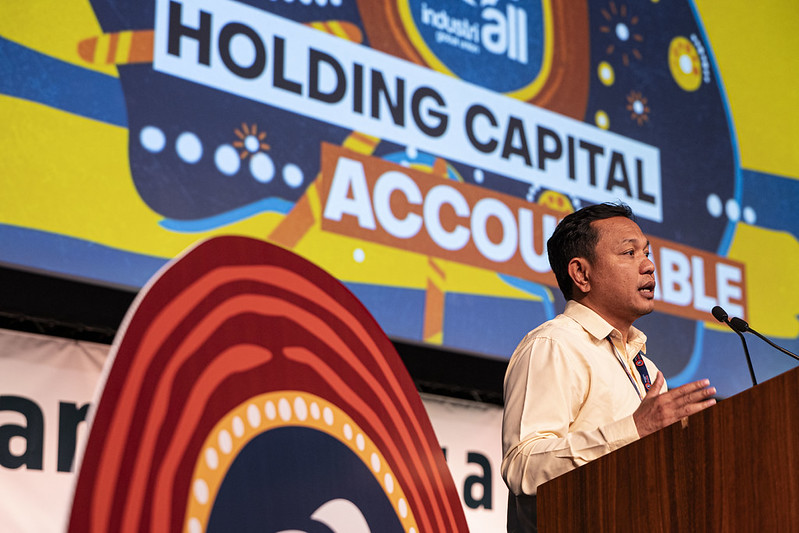
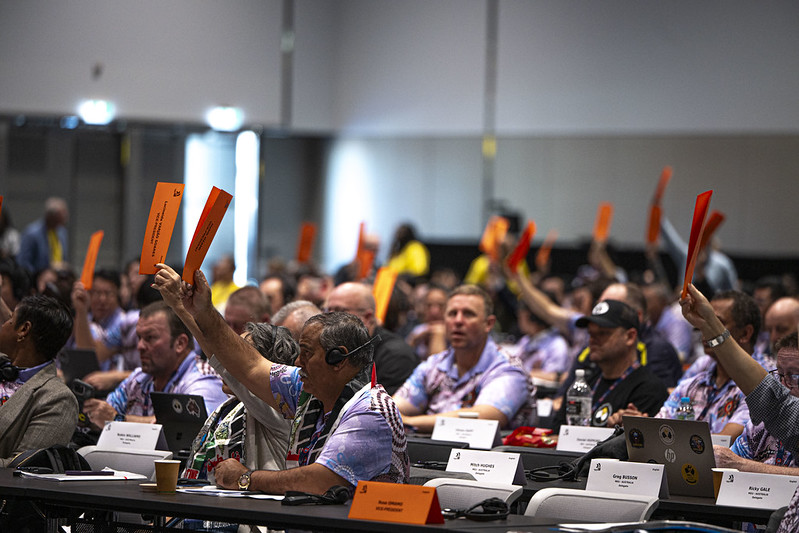
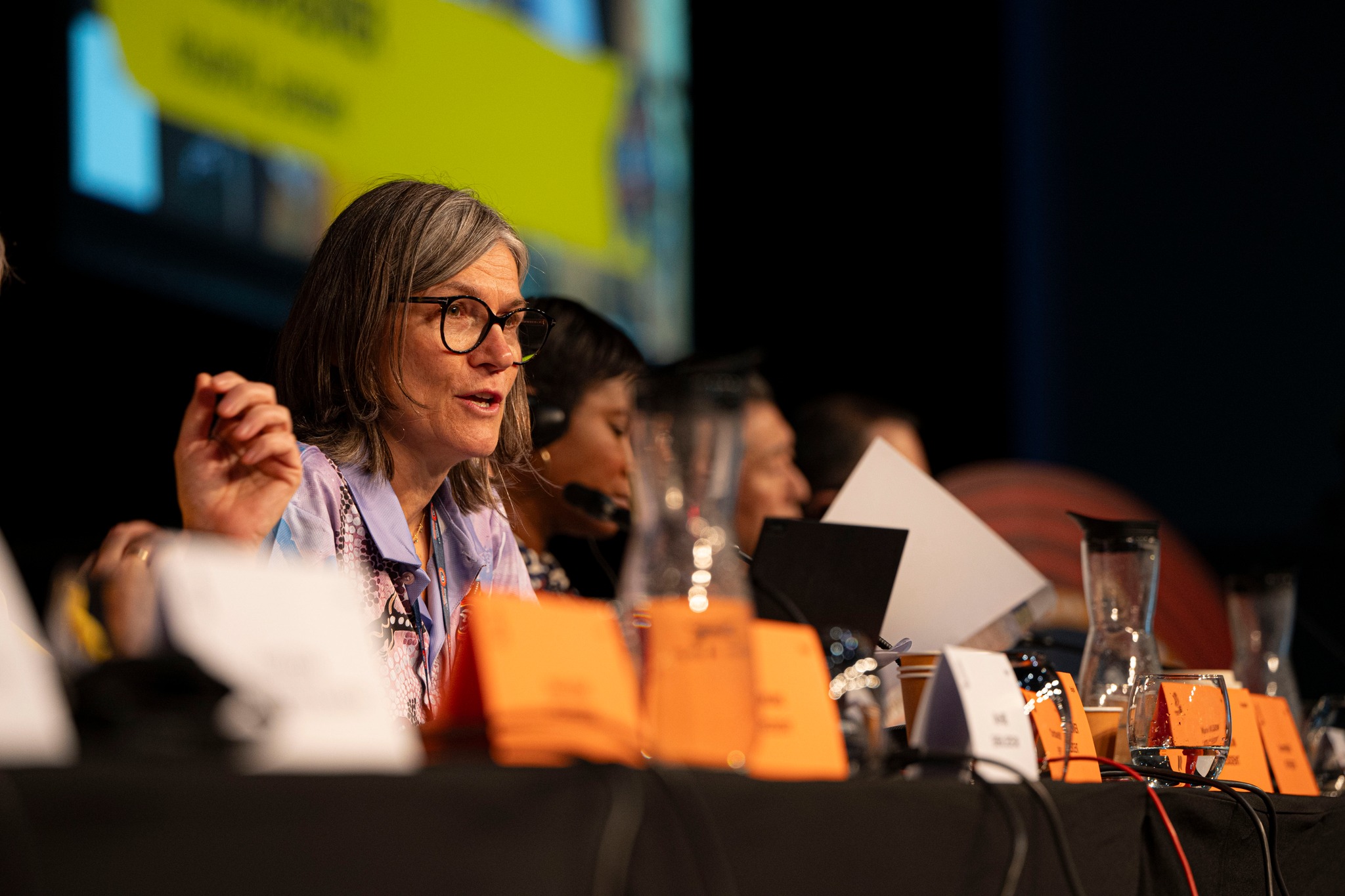
For three days, more than a thousand delegates from nearly a hundred countries debated strategies to strengthen unions, fight inequality, hold global capital accountable and ensure that the industrial transitions of the future leave no worker behind. Guided by the Congress theme, Organizing for a Just Future, IndustriALL’s affiliates renewed their collective determination to turn solidarity into power, and power into change.
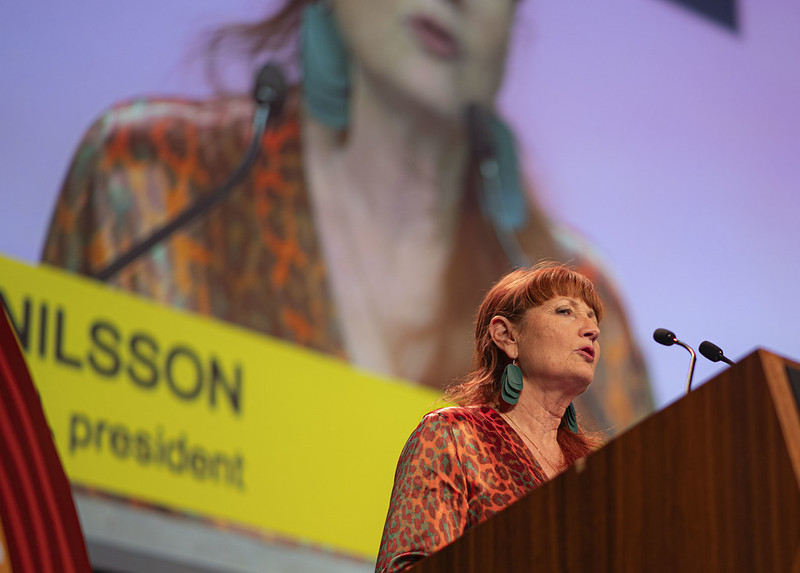
IndustriALL and IF Metall president Marie Nilsson opened the Congress by acknowledging that the world of work is being reshaped by technological change, authoritarian politics, and the climate emergency. Yet, she said, the answer lies in solidarity:
“We live in a time of rapid change… But when I look out over the Congress hall, I feel hopeful. I see our joint strength to face these challenges. We are determined to build a more sustainable future, mirrored in our slogan, Organizing for a Just Future.”
Marie Nilsson
Australian union leaders echoed that message. Michele O’Neil, president of the Australian Council of Trade Unions, reminded delegates that “there’s only one response to organized capital — and that is organized labour.” Tony Maher, general president of the Mining and Energy Union, welcomed participants on behalf of the host unions, stressing that Australia’s democracy and prosperity “are built on solidarity, not isolation.”
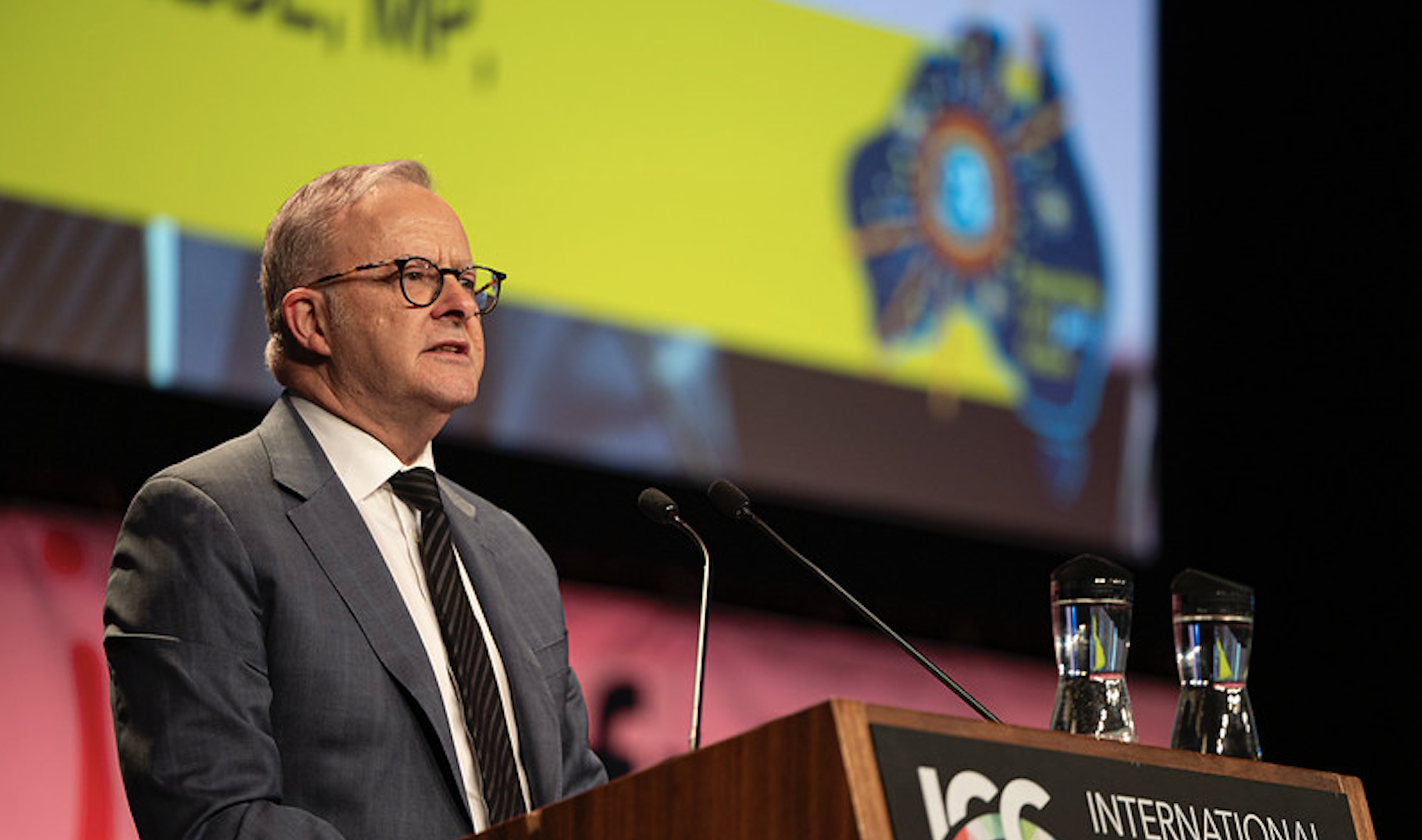
Australian Prime Minister Anthony Albanese, a lifelong ally of the labour movement linked Australia’s values to the global struggle for fairness:
“It is absolutely critical that no one is left behind as we go forward,” Albanese said. “We know that fairness, good working conditions and fair pay don’t undermine the labour market — growth and fairness are stronger together. Our purpose is eternal, and that is why solidarity is indeed forever.”
Prime Minister Albanese
Building union power
Across plenary sessions and action plan debates, delegates returned again and again to one central principle: only strong, democratic and inclusive unions can win justice for workers.
General secretary Atle Høie presented the Secretariat report for the Congress.
“Guided by the Action Plan adopted in 2021 and its four strategic goals, the Secretariat has carried out its work while devoting increasing attention to the growing attacks on democracy and fundamental rights, and to the vital role of unions in defending peace and social justice.
“Our focus is on strengthening trade unions, their capacity to negotiate collective agreements, to remedy violations of fundamental union rights, and to secure a better, more sustainable life for workers.”
General secretary Atle Høie
Highlights included:
The legally binding supply-chain-supported collective bargaining agreement in Cambodia, which will improve wages and working conditions for tens of thousands of workers across the country.
The coming into force of the Hong Kong Convention for Safe and Environmentally Sound Recycling of Ships, already having a dramatic impact on safety and environmental protection.
Indonesian unions’ fight and win against the country’s anti-labour Omnibus law
Capcity building that makes a difference – 52 new youth structures have been developed – 53 new women structures – at least 372,383 new trade union members were recruited – 60,944 unionists participated in capacity building events.
Succesfully increasing women’s participation at IndustriALL’s events. 43 per cent of delegates here in Sydney are women, compared to 28 per cent in Rio in 2016.
In the debate that followed, delegates from Palestine, Myanmar and Ukraine thanked IndustriALL and affiliates for their solidarity support. Trade unionists from Türkiye toThailand, from Brazil to South Africa, addressed Congress and shared how they are relentlessly fighting for workers’ rights and a fair, sustainable world.
Action plan debates
Inequality is a defining challenge of our time. IndustriALL’s action plan is clear that only stronger trade unions and collective agreeements can change this narrative. Assistant general secretary Kemal Özkan warned that inequality is
“not an accident; it is the predictable result of rules written by and for those at the top. Our action plan clearly says: today’s inequalities undermine growth, social cohesion and democracy. We must change the rules, so the economy serves all people, not a narrow elite.”
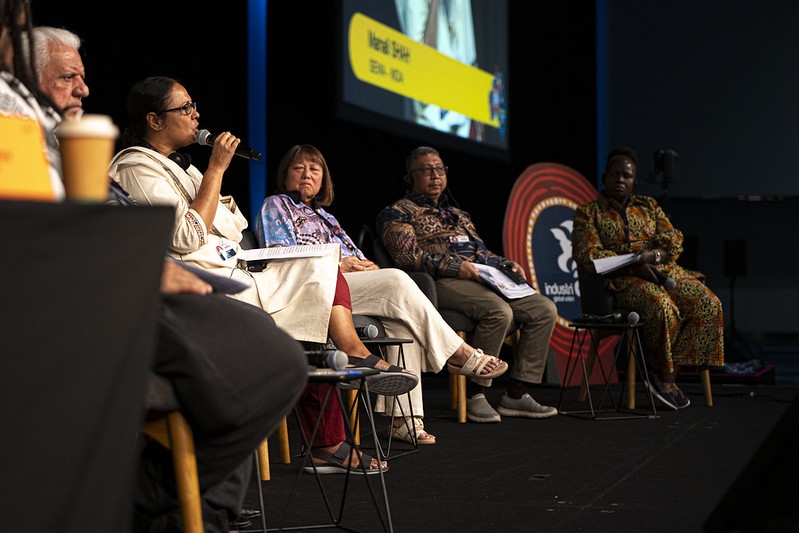
Panelists described how inequality plays out in their regions — through wage stagnation, precarious work, discrimination, and unsafe conditions — and how unions are fighting back. Speakers from Kenya, Brazil, the United States, Iraq, Indonesia and India shared examples of organizing across gender, race, and employment status.
Maria Somma, USW North America, said:
“Research shows that when we organize and bargain across whole companies and supply chains, wage floors rise, contractors get equal pay and safety is enforced. Strong unions are democracy at work. Unions don’t just lift individuals though; they lift the entire community.”
Speaking on the second session on the action plan, building union power general secretary Atle Høie reminded delegates of the importance of organizing.
“Building trade union power is not just our strategy — it is our survival. Only by organizing every worker, in every workplace, can we shape a future where labour stands stronger than capital.”
Delegates from across the world shared experiences showing how that power is built — from strengthening membership and leadership in Indonesia, to empowering younger generations in Peru, engaging white-collar workers in Ghana, defending workers’ dignity in India, and negotiating new agreements that deliver real gains in Morocco. Together, their stories reflected a shared commitment to expanding membership, unity, and solidarity across every sector.
Said Sanjay Vadhavkar, SMEFI, India:
“Building union power in this sector is not easy — it is a struggle that demands courage, persistence and vision. Organizing is not just about numbers — it’s about supporting workers, defending their dignity, and ensuring their rights are respected across the industry.”
A third pillar of the action plan is confronting the growing power of multinational corporations. Assistant general secretary Christine Olivier said that holding global capital accountable means
“demanding responsibility and insisting that corporations prioritize people over profit.”
Union leaders from Argentina, Italy, Tunisia, South Africa, the United States and Cambodia described their struggles and successes in winning fair wages, safety, and respect in global supply chains. From campaigning against union-busting at Mercedes-Benz in the U.S. to enforcing binding agreements in Cambodia’s garment sector, delegates made it clear that power must be organized at the same global scale as capital.
Athit Kong, CCAWDU Cambodia, said:
“We have the power to bring brands to the negotiating table. We organise from the ground up, from the supply chain up so we can put pressure on global companies and brands. When we have a binding agreement with a global brand then we can interpret that at the National and factory level. This brings results for our workers in the ground. By using our power, we can expand the benefits for our people.”
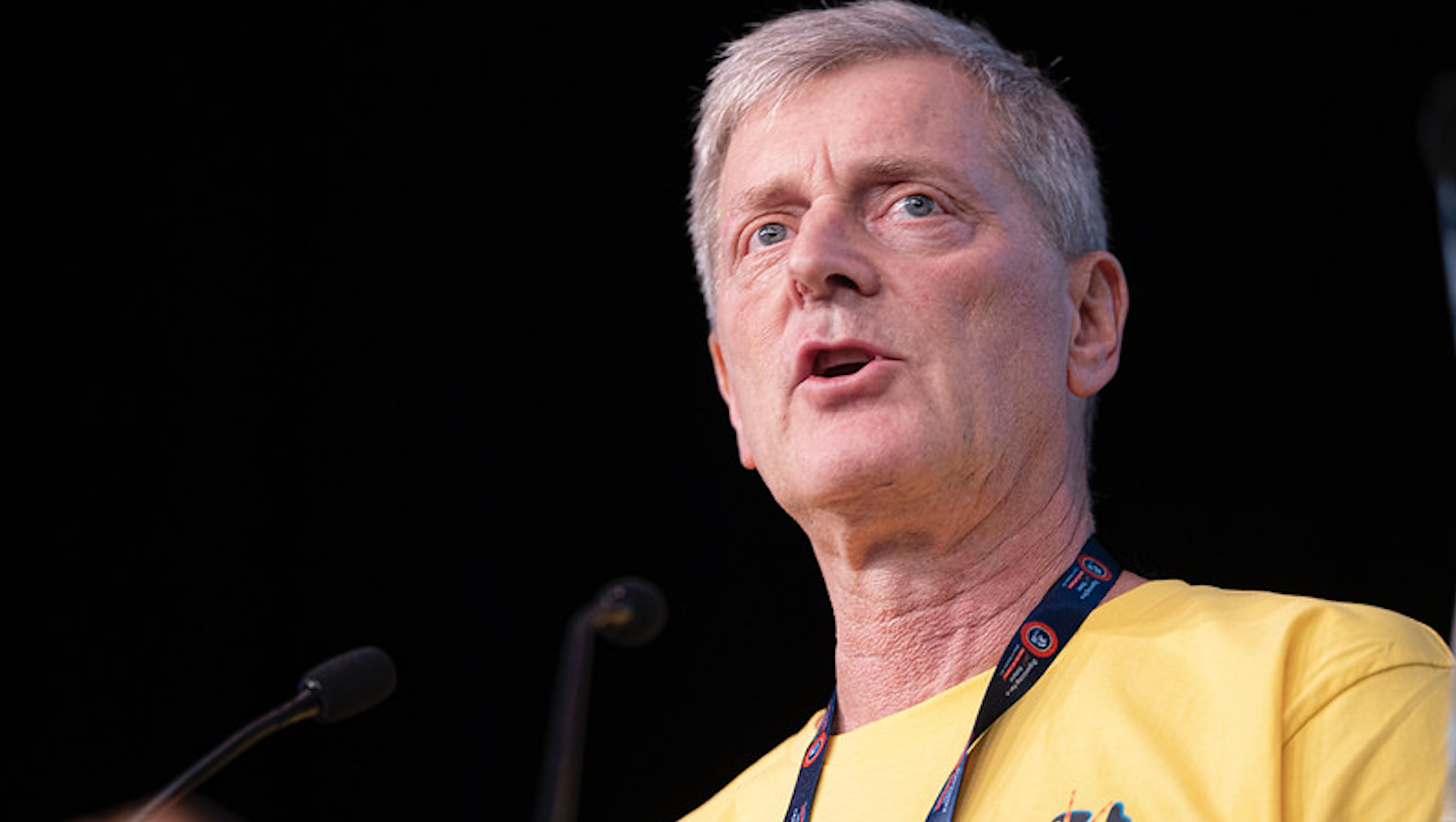
Athit Kong, Cambodia
A just transition led by workers
Climate change, automation and the shift to renewable energy are transforming industries. Congress delegates agreed that these changes must be shaped, not suffered, by workers. Assistant general secretary Kan Matsuzaki said that only a strong, organized labour movement can ensure a Just Transition that protects jobs, communities, and dignity.
Panelists from Australia, Germany, South Africa, Singapore, Morocco and Colombia shared lessons from real transitions underway: start early, protect workers and communities, train for new skills, and keep public control of energy.
Lively debates followed on each of the four action plan sessions where delegates reaffirmed IndustriALL’s commitment to equality, democracy and peace, discussing issues from their countries and industrial sectors, sharing wins and struggles and showcasing global solidarity.
Congress adopted a number of resolutions:
Resolution on trade – international trade must work for working people. We will defend sustainable, fair, union-protected jobs.
Feminist resolution – feminism is a tool to eliminate all forms of opression and discrimination and to build democratic unions.
Resolution on protecting global peace – a call to all states, institutions, NGOs and people to work together to build a world of lasting peace, where justice and human rights are achieved for all people.
Emergency resolution condemning the brutal attacks on SEGAL workers in Liberia, where striking security guards were beaten and arrested while protesting poverty wages and lack of social protection.
Congress elected Christiane Benner, president of IG Metall, as IndustriALL’s new president. Atle Høie was re-elected as general secretary, as were the three assistant general secretaries, Christina Olivier, Kemal Özkan and Kan Matsuzaki. Congress also elected vice presidents – Akihiro Kaneko, Asia-Pacific, Michel Maicon Vasconselos da Silva, Latin America and the Caribbean, Habib Hazemi, Middle East and North Africa, Roxanne Brown, North America, Rose Omamo, Sub-Saharan Africa, and Marie Nilsson, Europe –, as well as members for the Executive Committee for the next Congress period.
As the Congress closed, newly elected president Christiane Benner thanked delegates for the energy and courage that carried the event:
“Some of us risk our freedom and even our lives when we organize workers. We promise: we will fight side by side. Our common vision is a world where everybody has work security, income security, social security, and freedom of association and speech.”
IndustriALL president Christiane Benner
Unions demand urgent action as global steel crisis worsens
“ The steel sector is one of the clearest showcases of the challenges that imbalanced trade and capital flows pose at global level,”
said Veronica Nilsson, TUAC general secretary.
“Unless we shift the paradigm – from short-term profits and subsidy-fueled overcapacity to sustainable jobs, worker rights and domestic expenditure to boost demand – the steel sector will not withstand the twin challenges of unfair global trade and the climate transition.”
The joint statement from TUAC, IndustriALL Global Union and IndustriAll Europe stresses that while markets, capacities and trade flows are central to the debate, the human and social dimension must no longer be an afterthought.
“The transition cannot and must not rest on workers’ shoulders alone,”
added Atle Høie, general secretary of IndustriALL Global Union.
“Multinational steel companies must reinvest profits in their workforce, in safe workplaces, in upskilling and decarbonisation – not simply reward shareholders and relocate production to the lowest cost jurisdiction.”
In particular, the unions highlight that: • Global steel excess capacity is projected to reach 721 million tonnes by 2027, putting enormous pressure on even the most efficient producers. • Many closures or conversions in Europe and Latin America are of high-carbon blast-furnace/BOF plants, raising serious social and employment concerns about the future of the steel industry in those regions. • Public subsidies and trade measures must be linked to social conditionality – job retention, training, social dialogue, worker representation – to avoid a “just transition” turning into a “transition just for shareholders”. • Unions call on governments and the OECD Steel Committee to incorporate labour rights, worker participation and corporate duty of vigilance into industrial, trade and climate policy frameworks.
“Europe’s steel industry cannot thrive under the weight of global overcapacity. Trade measures must go hand in hand with a robust industrial policy to defend jobs and drive the green transition,”
said Judith Kirton-Darling, IndustriAll Europe general secretary.
“Steel workers are at the core of the global industrial and climate transformation — their voice and decent work must be guaranteed, or entire regions will be left behind.”
Unions stand ready to work with industry, governments and the OECD on practical solutions – including credible decarbonisation roadmaps, worker-led just transition plans, and strong global frameworks that protect jobs, rights and the environment.
A powerful opening: culture, solidarity and hope mark the start of IndustriALL’s 4th Congress in Sydney
Delegates from across the world filled the hall with anticipation and pride as the Congress began with a Welcome to Country, honouring the Gadigal people of the Eora Nation, the Traditional Owners of the land on which the Congress takes place. The opening paid respect to Elders past and present and was followed by an extraordinary Aboriginal performance of traditional song, dance and didgeridoo.
The deep resonance of the didgeridoo and the dancers’ powerful movements filled the room with emotion. Performers shared stories of how the instrument works and the different sounds it creates, echoing through the hall like the heartbeat of the land itself.
The welcome was followed by a sharing of Māori culture from Aotearoa/New Zealand, with a stirring sequence of Kaigaranga, Mihi, Waiata and Haka that embodied the values of respect, courage and solidarity. Together, these performances reminded everyone that our movement stands on the shared ground of history, struggle and humanity.
Stories on fabric: the Congress t-shirt
Every delegate at the Congress carried a piece of that connection with them, quite literally, through the Congress T-shirt.
Coal miner and artist Chris Dodd from Queensland created Connection, the painting reproduced on the shirts given to all delegates. Chris belongs to the Wulli Wulli Wakka Wakka tribe and his artwork tells the rich stories passed down to him by his father and grandparents. Importantly, it also represents the bond between him and his daughter, who helped create the piece.
A gift to all Congress participants, Connection symbolizes the links between generations, communities and cultures. Chris hopes that those who wear or view the artwork “can see the storyline, understand the meaning of the symbols and places and leave with pride and a deeper understanding of Aboriginal culture.”
Words that inspire action
IndustriALL and IF Metall president Marie Nilsson officially opened the Congress, setting the tone for the days ahead:
“We live in a time of rapid change; emerging technologies, democratic rights being questioned, authoritarian forces challenging freedom and climate change posing a threat. But when I look out over the Congress hall, I feel hopeful. I see our joint strength to face these challenges, I see power, solidarity. I see a global trade union movement refusing to accept injustice. We are determined to build a more sustainable future, mirrored in the Congress slogan, Organizing for a Just Future.
Let’s make this Congress a celebration of solidarity, equality and bravery!”
The sense of unity in the room grew as Michele O’Neil, president of the Australian Council of Trade Unions, took the stage:
“We know that there’s only one response to organized capital and that is organized labour. Now more than ever, international solidarity is essential. When we act with unity and determination, when we leave nobody behind, we show the power of organized labour.”
Representing the host unions, Tony Maher, general president of the Mining and Energy Union, brought warmth and pride from Australia’s labour movement:
“On behalf of the Mining and Energy Union and all the Australian and New Zealand host unions, I say G’day and welcome to the 4th Global Congress of IndustriALL. My union has been actively involved with IndustriALL since its formation and before that, with ICEM, the global confederation for mining unions. Big global companies run the show in Australia’s mining industry and we’ve always known that standing shoulder to shoulder with workers around the world is the best way to take on whatever challenges they throw at us.”
He reminded delegates that Australia’s prosperity and democracy are built on solidarity, not isolation:
“Our members are proud to contribute internationally, supporting mining unions in the Global South to improve safety for miners working in tough conditions. Raising standards and saving lives doesn’t stop at national borders.”
Maher closed with a warm welcome to Sydney, inviting delegates to enjoy its beauty and to take inspiration from Australia’s strong, active union movement, one that stands proudly with workers everywhere.
A Prime Minister who speaks for workers
The arrival of Australian Prime Minister Anthony Albanese was met with warmth and enthusiasm, not as a distant dignitary, but as one of us. He spoke to delegates as a friend of the labour movement, with sincerity and conviction:
“It is absolutely critical that no one is left behind as we go forward. We know that fairness, good working conditions and fair pay don’t undermine the labour market. Growth and fairness are stronger together. Our purpose is eternal and that is why solidarity is indeed forever.”
From the past, strength for the future
As vice president and co-chair of the region, Akihiro Kaneko reflected on the journey of workers in the Asia-Pacific region:
“In this region, workers have had to unite to make their voices heard. And we continue to stand shoulder to shoulder. I hope we will form an unbreakable bond between us, here at Congress.”
The opening session also featured a moving reflection on the roots of the labour movement through the Unshackled exhibition. Professor Tony Moore told delegates the story of Australia’s first coal miners, convicts who, against all odds, fought back through strikes, refusals to work and acts of resistance.
The exhibition traces how these 160,000 convict workers, brought to Australia as an unfree workforce, laid the foundation for collective action and solidarity. Their struggle is the labour movement’s story and it resonated powerfully in the room as workers everywhere fight for dignity and justice.
A Congress launched in spirit and solidarity
The opening of IndustriALL’s 4th Congress was not just a ceremony, it was a living expression of what binds us together. From the didgeridoo to the haka, from the voices of union leaders to the history of workers who came before us, it was a celebration of who we are and what we stand for.
The next three days will build on this foundation of courage, culture and collective strength, as delegates shape the future of IndustriALL, organizing for a just future where no one is left behind.
High Court orders regularization of 370 SAIL Bokaro workers
The petition, filed by the Jharkhand Krantikari Mazdoor Union (JKMU), affiliated to Unions United, concerned workers employed across key production units of the Bokaro steel plant. Each of the affected workers had been employed for more than seven years.
The union first raised the dispute in 2006, and the Industrial Tribunal ruled in favour of the workers. However, management appealed to the High Court, which has now upheld the earlier decision where the Industrial Tribunal ordered the permanent absorption of the workers, along with full wages and benefits.
Gautam Mody, convenor of Unions United, called the judgment as a “landmark victory for India’s working people.”
“More than 10,000 precarious workers at SAIL’s Bokaro steel plant perform in perennial jobs under hazardous conditions, yet remain denied regular employment, fair wages, and basic protections. Despite repeated recommendations for their regularization, the company continues to exploit them through contractors, suppress union efforts, and perpetuate insecurity and discrimination. This verdict reaffirms that those who build and sustain our industries deserve secure and dignified employment. Our fight against precarious work will continue until every worker wins justice, rights, and a future rooted in dignity and security.”
Said Atle Høie, IndustriALL general secretary: “This judgment is a powerful affirmation that the workers who have sustained India’s steel industry for decades must not remain precarious. SAIL must uphold dignity, equality and permanent employment for those doing permanent work."
Trade union rights violations at Lumileds Malaysia
According to reports from the Electronic Industry Employees Union Northern Region Peninsular Malaysia (EIEUNR), company management is engaging in a range of anti-union practices. These include manipulating voter eligibility by excluding around 200 known union supporters from the voter list, threatening migrant workers with deportation, non-renewal of work permits, and eviction from company housing if they supported the union, and holding captive audience meetings where wage increases and benefits were reportedly conditioned on rejecting the union. During these meetings, workers’ phones were confiscated to prevent documentation.
Additional allegations include harassment and slander of union supporters, the spreading of disinformation about union leaders, surveillance and disciplinary threats, as well as bribes and coercion urging workers to vote “NO” and providing incentives to reject union membership. Long-serving employees were reportedly excluded from the voter list, effectively denying them the right to participate.
IndustriALL Global Union has written to Lumileds CEO Steve Barlow, expressing deep concern over the reported conduct.
“These actions amount to blatant violations of workers’ rights to freedom of association and collective bargaining, guaranteed under Malaysian law and ILO Convention 98, ratified by Malaysia,”
said IndustriALL general secretary Atle Høie.
IndustriALL has called on Lumileds to take immediate corrective measures, including ending all anti-union activities to ensure a fair and intimidation-free election, respecting workers’ rights to organise and join a union of their choice, protecting union members and leaders from retaliation, and engaging in good-faith dialogue with EIEUNR as the legitimate representative of Lumileds Malaysia workers.
“These union-busting actions contradict Lumileds’ public commitments to ethical conduct, sustainability, and human rights,”
Høie added.
“As a supplier to major global brands, including Apple, Lumileds has a responsibility to uphold international labour standards throughout its operations.”
IndustriALL is also urging Apple, a major client of Lumileds, to address the violations of workers' rights to freedom of association at Lumileds Malaysia.
Two workers killed and eight injured in Basra oil pipeline fire
The Iraqi General Federation of Oil, Gas and Petrochemical Unions (IGFOGPU) criticized the government and company management for justifying the accident as an unavoidable event. IGFOGPU called for an investigation into the accident to determine the extent of the company's responsibility, especially given the poor health and safety conditions. In a statement, IGFOGPU said the company must use advanced fire prevention and control methods and train workers to handle this type of fires.
Hassan Juma, IGFOGPU president, said:
"This incident confirms the company's failure to provide adequate health and safety conditions. The ministry should have taken all necessary measures to prevent the accident. We will ensure that the state compensates the workers and their families.
"But the government must also address the root cause of the problem and maintain the pipelines to prevent any future accidents."
Young unionists unite to build global youth power
The conference highlighted various barriers faced by young unionists. Their lives are often dominated by work, family responsibilities, and financial struggles. Young women trade unionists often face stigma and fear when speaking up for youth representation, especially in male-dominated industries.
Youth delegates said that the proposed statute amendments to establish a global youth committee and optional regional youth committees would bring structural change, allowing young members to break the cycle and achieve the change they seek.
Jonathan Cook, member of the global ad hoc youth working group and SEA2PAC co-chair, said:
“The world is different from 30 years ago. Trade unions must understand the new world structure that we are living in. We must organise more young workers and preserve what unions have created. Through the statute amendment, the youth will be able to bring the change that we want, stand for the change that we want — we must fight and we will win!”
Participants discussed strategies for organizing more young workers into unions, sharing good practices such as reaching out to school students, organising museum visits and tree-planting activities, using mobile apps to provide economic incentives to young workers, and forming study circles to connect with youth. Most delegates viewed systematic education on organising young workers as extremely important.
They called for the creation of an organising academy with modules tailored to the needs of different regions. Some stressed that trade unions play a vital role in building communities and gaining community support for organising efforts.
IG Metall president and IndustriALL vice-president Christiane Benner said she herself is a product of youth structures and youth empowerment in Germany. IG Metall is committed to building stronger youth structures at national, regional, and enterprise levels.
“We must have union officials responsible for youth activities and adequate financial resources for youth structures and youth organizing.”
Drawing on her experience as a former national youth committee chairperson of IG Metall, Christiane Benner added that youth structures need adequate financial resources to function effectively, as well as dedicated union officials responsible for youth work.
IndustriALL and IF Metall president Marie Nilsson said:
“Young people, you are not the future — you are the present. You are affected by the changing world of work, and you should shape the response on how a sustainable workplace looks. Organising workers across borders is trade unions’ global struggle. We must do the same for young workers, as it gives the movement new energy. International solidarity is absolutely important. Please believe in change — the world needs young unionists. Please take a seat in the union movement and start to build a future around it.”