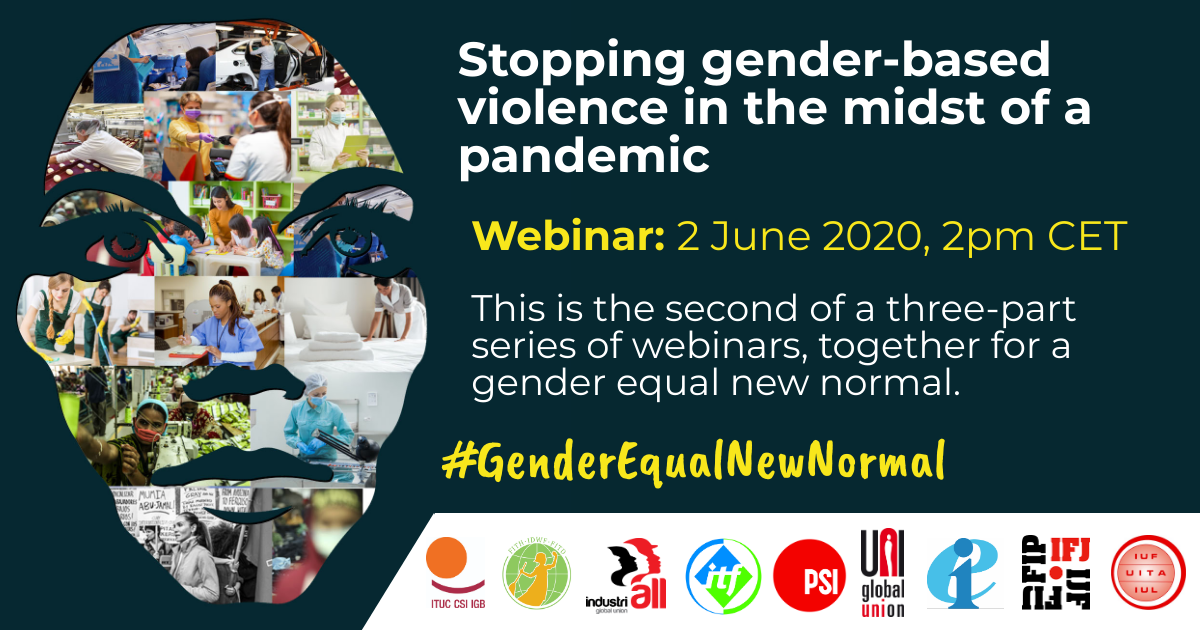
The webinar was the first in a series of three that will take place in the coming weeks.
Webinars available for viewing:
ENGLISH
FRENCH
SPANISH
“Whichever way you look at it, Coivd-19 has very distinct impact on women workers, and workers already marginalized with vulnerability, inequality and oppression. Workers in the informal economy, which is where the majority of women work, have been particularly hard hit, losing their livelyhood overnight, no social protection to fall back on, with the additional hurdle to access health and care services,”
said Chidi King, head of the ITUC equality department.
“The Covid-19 pandemic is having a significant impact on the supply chains in the garment industry. This crisis will mark a new beginning. We should fight for a new normal in solidarity. All policy responses to the crisis must include a gender dimension,”
said Fulya Pınar Özcan, president of Turkish union Öz İplik İş’ women’s committee.
Globally, the garment industry employs 80 per cent women.
“In the garment sector there is a need for a sectoral approach lead by trade unions. A new normal in textile and garment would be to put ahead sectoral agreements. On a global level, IndustriALL has been demanding that brands, employers and governments come together with trade unions to find ways to support workers […] in this unprecedented period. What is at stake here is the viability of the industry,”
said Christina Hajagos, IndustriALL textile director.
Upcoming webinar:
Shell AGM fails to address union concerns
IndustriALL submitted questions to Shell ahead of its closed, online AGM on 19 May. Shell answered the questions in an online shareholder’s engagement meeting on 13 May, which was attended by IndustriALL energy director Diana Junquera Curiel.
IndustriALL submitted a question about the health and safety situation of contractors in Nigeria, after conducting extensive research and finding a number of case studies from the families of workers who have lost their lives or become disabled.
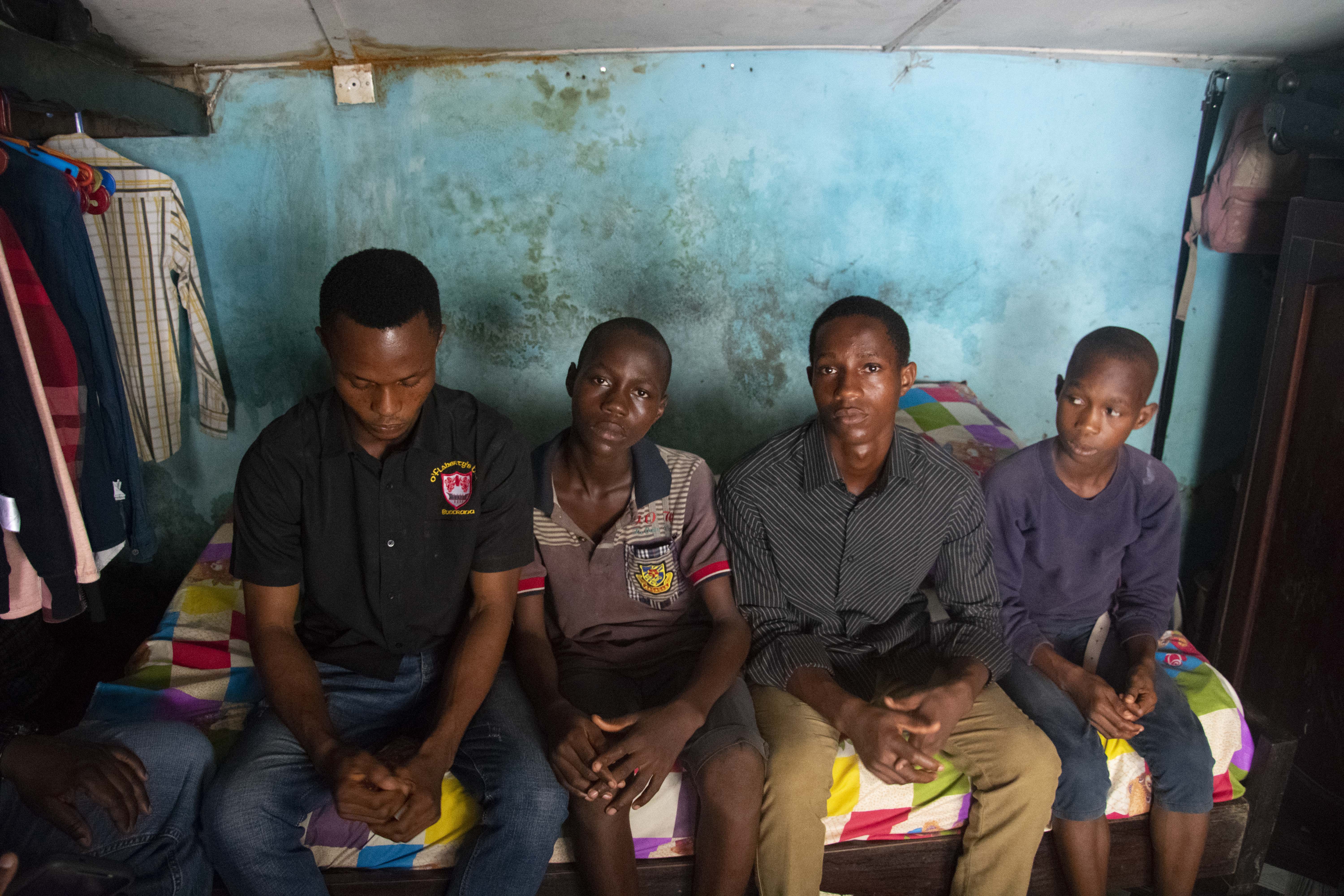
The children of a deceased Shell contract worker, visited by IndustriALL in 2018
In response, Shell CEO Ben van Beurden said that Shell “complies with local laws”, and endeavours to make “continuous performance improvements”. Contractors are “independent corporate entities”, however Shell “ensures” they comply with local law while “continually looking for ways to review” contractors. Shell denied allegations made in the question while failing to address the substance.
Shell addressed all questions in this manner. When IndustriALL raised issues of the violation of trade union and human rights in Nigeria, which are very well documented, Van Beurden replied that all allegations had been thoroughly investigated and found to be “fully unsubstantiated.” However, Shell did not consult with unions in the course of its investigations.
Junquera asked, once again, whether Shell would be willing to meet with IndustriALL so that these issues could be satisfactorily addressed. Van Beurden replied that Shell values its relations with unions, but that these are “most effective at the local level” due to country specific conditions. He made no commitment to meeting with IndustriALL.
This response is not unexpected: Shell has consistently failed to address union concerns. However, IndustriALL is mandated by its affiliated unions, who represent Shell workers globally, to seek global dialogue, and will continue to do so.
IndustriALL raised additional questions about Shell’s emissions targets and accordance with the Paris Agreement, and plans for a Just Transition for workers. Shell responded by referring to their Climate Change and Energy Transition document.
While IndustriALL commends Shell for addressing Just Transition explicitly, a number of concerns remain. The document fails to recognize the global labour movement and does not mention trade unions, fails to make firm commitments, and contains little detail about what the programme would consist of.
“I don’t understand why Shell refuses to meet with us. What are they afraid of?” asked Junquera.
“Shell engages with many critical organizations, including a number of NGOs, who do not represent Shell stakeholders. IndustriALL Global Union represents Shell workers worldwide. We have a mandate from those workers to initiate dialogue worldwide.”
“Shell refuses. Shell claims that it is ‘more efficient’ to work with unions at local level only. But Shell’s attempts to divide workers is exactly why our unions want global dialogue.”
The full transcript of the call, including IndustriALL’s questions and Shell’s responses, is available here.
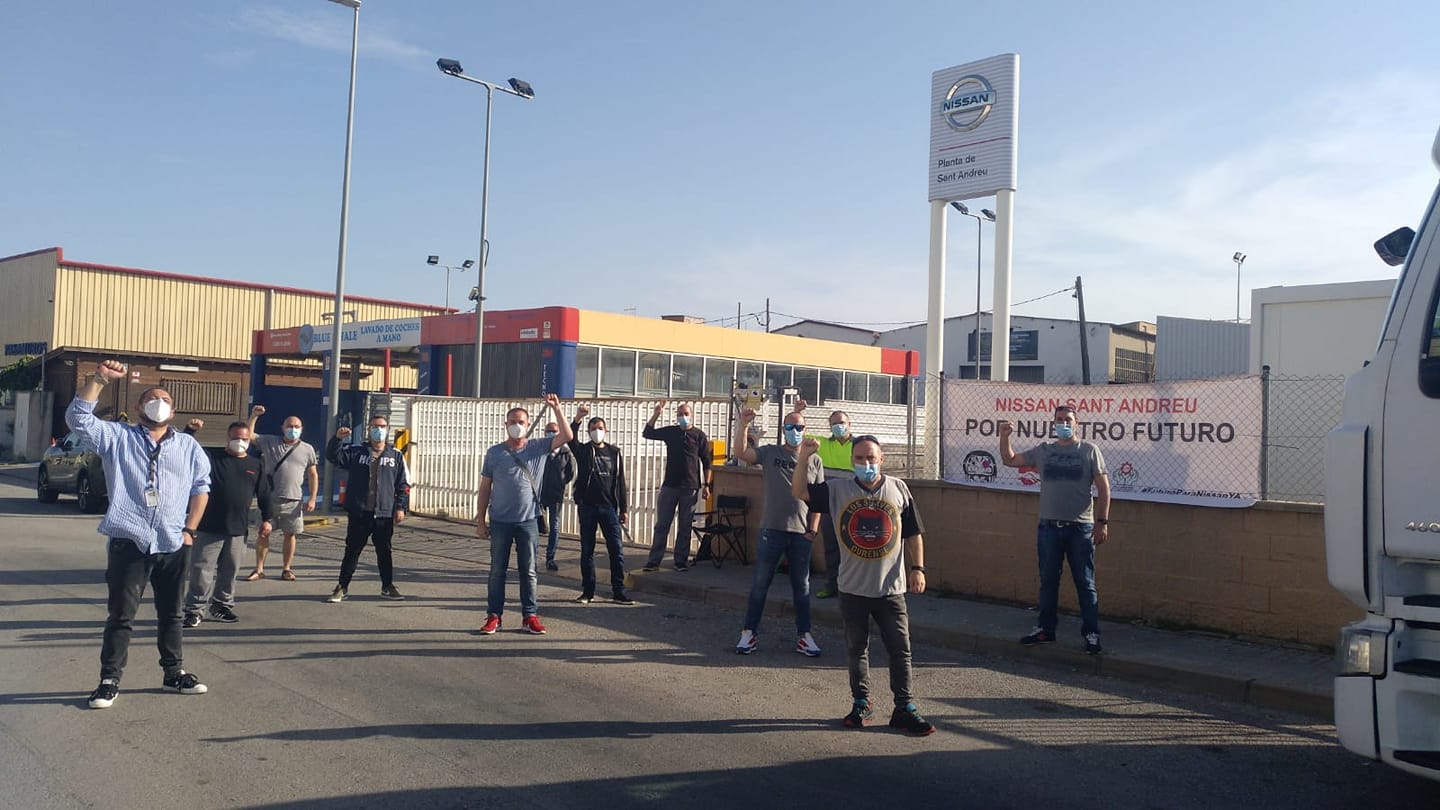
Strike at Nissan Spain over uncertain future
The Barcelona factories shut due to the coronavirus lockdown in mid-March, and partially reopened on 4 May, only to be hit almost immediately by strike action over a failure to confirm a commitment to maintaining employment levels.
The workers are striking due to reports, particularly in the Japanese media, that Nissan intends to reduce its staff by 20 per cent globally, and shut the Barcelona plants. There are fears that Nissan intends to shut all its European plants.
Nissan unions have been in communication with the company since last year about the global business plan and the future of the factories in Spain. These are still under consideration and no decisions have been communicated. European works council representatives confirm that they had not been consulted on any restructuring plan.
Nissan management has guaranteed the production of current models until the end of 2020, but not the volumes to be produced, and has rejected a commitment to guarantee the current level of employment. Production has already been reduced in Barcelona, with four models removed from production over the past two years.
If the Barcelona production centres at Zona Franca, Montcada and Sant Andreu de la Barca close, three thousand direct jobs and nearly twenty thousand indirect jobs are at risk. Two production centres outside Catalonia, Ávila and Corrales de Buelna in Cantabria, are also potentially threatened.
Nissan workers embarked on indefinite strike action at the Zona Franca and Montcada sites on May 4, following the failure of mediation on April 30. The strike will continue, pending an announcement by Nissan of a mid-term management plan and financial results on 28 May. The unions are taking strategic industrial action by only striking in smaller production areas. Only 40 employees are on strike, but this is enough to halt production.
IndustriALL auto sector director Georg Leutert said,
“If these plants close, Catalonia will lose 100 years of industrial heritage. It is important that Nissan communicates honestly with its workforce, and brings its plans to the bargaining table. The failure to communicate is causing great concern, not just in Spain, but across Europe.”
Three IndustriALL affiliated unions represent the Nissan workers: Federación de Industria de USO, UGT Federacíon de Industria, Construccíon y Agro and CC.OO de Industria.
In a joint letter to the affiliated unions, the general secretaries of IndustriALL Global Union and industriAll European Trade Union, Valter Sanches and Luc Triangle, expressed their solidarity and called for management to return to the negotiating table.
Spanish unions warn that the closures will have negative consequences for the company’s image. If Nissan goes ahead with Europe-wide closures, it will become the second Japanese auto company, after Honda, to pull out of Europe. If Nissan does pull out of Spain, unions have expectations that Renault, as part of the alliance between Nissan, Renault and Mitsubishi, will help, as the Ávila Nissan plant already produces Renault parts. However, the alliance is in deep crisis, with speculation about its immanent breakup.
Рабочие места на заводе Volkswagen в России под угрозой сокращения
В связи с закрытием ночной смены на калужском заводе Volkswagen автогигант хочет сократить 278 рабочих мест. С 12 мая работникам предлагают уволиться по программе "добровольного увольнения" за шесть окладов. Если необходимого числа "добровольцев" не наберется, Volkswagen намерен запустить процедуру сокращения численности работников.
По данным Межрегионального профсоюза "Рабочая Ассоциация" (МПРА), добровольно уволиться согласились 132 работника, в основном это работники предпенсионного возраста.
По информации другой членской организации IndustriALL, Профсоюза работников автомобильного и сельскохозяйственного машиностроения Российской Федерации (АСМ РФ), при добровольном увольнении после 18 мая работник завода получит пять окладов вместо шести.
МПРА призывает работников не поддаваться давлению компании, так как найти новую работу во время пандемии может оказаться проблематичным.
Дмитрий Трудовой, председатель МПРА, сказал:
“Если официальная процедура сокращения начнется через месяц, работники будут уволены 15 августа или 15 сентября, а не прямо сейчас, как в случае добровольного увольнения за пять-шесть окладов. При сокращении работники получат еще шесть-семь средних зарплат, а также премии, надбавки и отпускные за несколько следующих рабочих месяцев”.
“Это делает процедуру сокращения более выгодной для работников по сравнению с получением всего пяти-шести окладов, если они увольняются добровольно”.
В октябре 2019 года руководство Volkswagen приняло решение закрыть ночную смену к лету 2020 года и поэтому не продлило 80 срочных договоров в декабре 2019 года и еще 92 срочных договора в апреле этого года. И без того сложная ситуация усугубилась пандемией COVID-19.
По расчетам МПРА расходы на заработную плату составляют чуть больше двух процентов в бюджете предприятия, поэтому сокращение рабочих мест не является необходимой мерой. Профсоюз обратился к руководству Volkswagen с предложением отказаться от сокращения или перенести процедуру сокращения на период после окончания пандемии Covid-19, чтобы у уволенных работников было больше шансов найти новую работу.
С 18 мая завод Volkswagen в Калуге перешел на четырехдневную рабочую неделю; этот график, вероятнее всего, будет действовать до конца 2020 года.
Online campaign on ILO Conventions 190 and 183 in Cambodia
Since ILO C190 was adopted in June last year, IndustriALL’s office in South East Asia has prepared leaflets and posters in various languages for affiliates in the region.
“The pandemic has significantly restricted the movement of trade unionists and our ability to create awareness on the convention has also been restrained. So we have to find creative ways to continue the campaign on ratification of C190 and C183.
“People reduce outdoor activities and communication is concentrated on online platforms. So sharing the message on social media is very effective.”
Even though the Cambodian government has expressed its commitment to women’s rights by ratifying United Nations Convention on the Elimination of Discrimination of All Women (CEDAW), the current maternity protection falls short of international standards. Currently, women workers are entitled to 90 days maternity leave with half wages.
Annie Adviento says that ratifying C183 to realize 14 weeks maternity leave is crucial:
“Women workers must receive full wages during maternity leave. C183 clearly states that the maternity benefit shall ensure women and their children to remain healthy and enjoy adequate standard of living; the current 50 per cent of the national minimum wage, US$190 per month, is not enough for mothers and babies.”
Threat of job cuts at Volkswagen plant in Russia
Due to closure of the night shift at Volkswagen’s Kaluga plant, the auto giant wants to cut 278 jobs. On 12 May, workers were offered to quit their jobs under a "voluntary dismissal" programme; in return they would be paid five to six months wages. If there are not enough “volunteers”, Volkswagen intends to start an official process to reduce the number of employees.
132 workers have so far agreed, most of whom are close to retirement, says ITUWA.
According to the other IndustriALL affiliate at the plant, Automobile and Farm Machinery Workers' Union of Russia (AWF), the number of wages paid in return for a voluntary resignation was reduced from six to five if the decision was made after 18 May.
ITUWA is urging workers not to succumb to company pressure, as finding a new job during the pandemic may prove problematic.
Dmitry Trudovoy, ITUWA chairman, says:
“If an official job reduction process is launched in a month, workers would be laid off on 15 August or 15 September, instead of immediately if they leave voluntarily. According to Russian law, workers will receive another six to seven months’ wages from now, plus bonuses, sick leave and vacation allowances for the next few working months.
“This makes the legal reduction procedure substantially more profitable for workers compared to getting only six months’ wages if they resign now.”
In October 2019, Volkswagen management decided to close the night shift by summer 2020, and consequently did not extend 80 fixed-term contracts in December 2019 and another 92 fixed-term contracts in April this year. The already difficult situation was aggravated by COVID-19 pandemic.
ITUWA estimates that wage costs make up just over 2 per cent of the company’s budget and cutting jobs is not a necessary measure. The union has asked Volkswagen management to abandon or to postpone the job cuts until the end of the Covid-19 pandemic, giving workers a better chance to find new jobs.
On 18 May, the Volkswagen plant in Kaluga switched to a four-day working week, a schedule that will most likely remain in place untill the end of 2020.
Iraq: protest at Basra Gas Company/Shell over non-payment of salaries
Despite being faced with mass demonstrations in many places of the country, road closures and the ongoing Covid-19 pandemic, workers have continued to provide liquified natural gas for Iraq’s electricity and petrochemical plants.
But at the end of every month, the seconded workers remain uncertain as to when they will receive their salaries due to SGC and BGC issues around the payment.
The workers have repeatedly asked BGC to find a way to make sure salaries are paid regularly and on time, but as the end of May approached with no change in sight, workers launched a protest at the site of operation.
Hassan Juma, president of Iraqi Federation of Oil Unions, says that the workers should not have to pay the price of any financial problems between SGC and BGC:
"The two companies must resolve matters between themselves, as the workers are not implicated in the administrative and contractual frameworks. Since the affected workers were seconded from the SGC, their salaries and allocations are settled by BGC."
After the protest, union leaders and representatives of the protesting workers addressed the management of the company, urging them to expedite the payment of salaries.
Kemal Özkan IndustriALL assistant general secretary, says:
“The workers’ efforts to maintain essential production during the pandemic should be appreciated. But Shell in Iraq are forcing workers to protest and take further risks to demand what is owed them. It is unacceptable and the workers’ wages must be paid immediately.”
Basra Gas Company is a joint venture where South Gas Company holds 51 per cent and Shell 44 per cent. The remaining 5 per cent are held by Mitsubishi Corporation.
Jailed union leader in Cambodia must be released immediately!
According to CUMW president Pav Sina, Soy Sros’ health is deteriorating, and although she is receiving medical treatment in prison, she should be released as soon as possible and given access to medical treatment in a hospital.
You can help! Sign and share our campaign on LabourStart calling for the immediate release of Soy Sros from jail in Cambodia
Says Valter Sanches, IndustriALL general secretary:
“Soy Sros was rightfully exercising her freedom of speech to defend the interest of workers laid off by Superl Holdings Ltd and should be released immediately. Instead of imprisoning Soy Sros, the Cambodian government should act as a constructive mediator between the company and union.
“It’s totally unacceptable that companies and governments take advantage of the Covid-19 crisis to crackdown on unions. We will reach out to the company’s customers and mobilize international solidarity.”
Defending the union leader, IndustriALL sent a letter to Superl Holdings on 16 April, urging the company to withdraw the charges against Mrs. Soy Sros. The company has failed to respond.
Tunisian garment workers strike over dismissals of union leaders
Workers at Gartex in Tunisia went on strike for two days in May, as attempts to solve a wide range of labour issues have been stonewalled by the employer for more than two years.
In 2018, the union general secretary and assistant general secretary were dismissed after a meeting with workers to discuss problems in the workplace.
Due to poor health and safety in the workplace, the union requested a visit from the medical labour inspection in June last year. Various health and safety violations were confirmed and a long list of recommendations was issued.
FGTHCC-UGTT has repeatedly asked management to discuss the union’s demands. Management asked the union to send the list of demands, claiming it had no power to negotiate as the power lies with foreign investors. The union submitted details of demands and workplace issues in December 2019, but received no response. The union followed with various official requests for negotiations, which were all ignored.
On 20 February, 56 workers, including the elected leadership of the company union and members of the advisory committee, were dismissed. As attempts to resolve the conflict were unsuccessful, workers led by FGTHCC-UGTT organized a strike on 13 and 14 May, protesting against the violation of the right to organize and the dismissals.
Habib Hazami, FGTHCC-UGTT general secretary, says:
“Despite the goodwill and flexibility showed by the union to maintain the company’s sustainability and to defend workers’ rights, management continues to ignore the union on crucial issues and tries weaken its role among the workers.
“The company has not responded to any of our legitimate demands and we were forced to go on strike, which will be followed by other actions. We call on management to reinstate the 56 dismissed workers, including the union leaders.”
In a letter to the company, IndustriALL is voicing its concern over the serious problems faced by the workers and is urging the emplyoer to respect fundamental labour rights including the right to organize, and to immediately reinstate the dismissed union leaders and members.
IndustriALL assistant general secretary Kemal Özkan says:
“It is crucial that Gartex Tunisie strictly abide by national and international labour law. We expect the company to immediately take corrective measures and without further delay establish a productive dialogue with FGTHCC-UGTT.”
Gartex employs around 1,000 workers and is owned by German garment manufacturer Gardeur, which in its turn is owned by the Dutch Duijndam Group.
Union supports deal for small enterprises in South Africa to manufacture 14 million masks
The bargaining council accredited 388 manufacturers with a capacity to make 14 million masks that cover the nose and mouth.
Additionally, 217 were approved to make personal protective equipment and other essential products required to prevent the spread of the coronavirus.
SACTWU says the deals will assist thousands of SMMEs to survive and continue production under the harsh conditions of the Covid-19 lockdown.
SMMEs employ from 10 to 250 workers, and the recently registered ones from the townships employ at least six workers on average in their cut-make-trim operations. SMMEs are exempted from the main collective agreements but are considered as compliant companies in strategies to allow their growth. Despite SMMEs operations being highly informal, unions are organizing the workers.
SACTWU, the Department of Trade, Industry and Competition, and Business for South Africa, have partnered in setting up an online portal where individuals and companies can buy the masks.
The wearing of face masks became a requirement on 1 May as one of the preventive measures to stop the coronavirus pandemic. SACTWU is campaigning for the manufacturing of the masks using local material to save and create jobs.
The union is welcoming the announced Phase 4 of lockdown regulations for clothing manufacturing, which will help the local industry.
Andre Kriel general secretary of SACTWU says:
“It is a great boost for our struggling local manufacturing industry, and will assist tens of thousands of clothing, textile, footwear, and leather workers during this difficult period.
"We cannot emphasize enough how important it is that we take steps now to ensure that we still have a domestic manufacturing industry after lockdown.”
Christina Hajagos-Clausen, IndustriALL textile director, says:
“It is important to allow small garment operations to grow and be part of the supply chain, and it is commendable that SACTWU is involved in building the capacity of the SMMEs. It is equally crucial that workers are involved in efforts to fight Covid-19.”