Dismissed Belarusian union activist should be reinstated

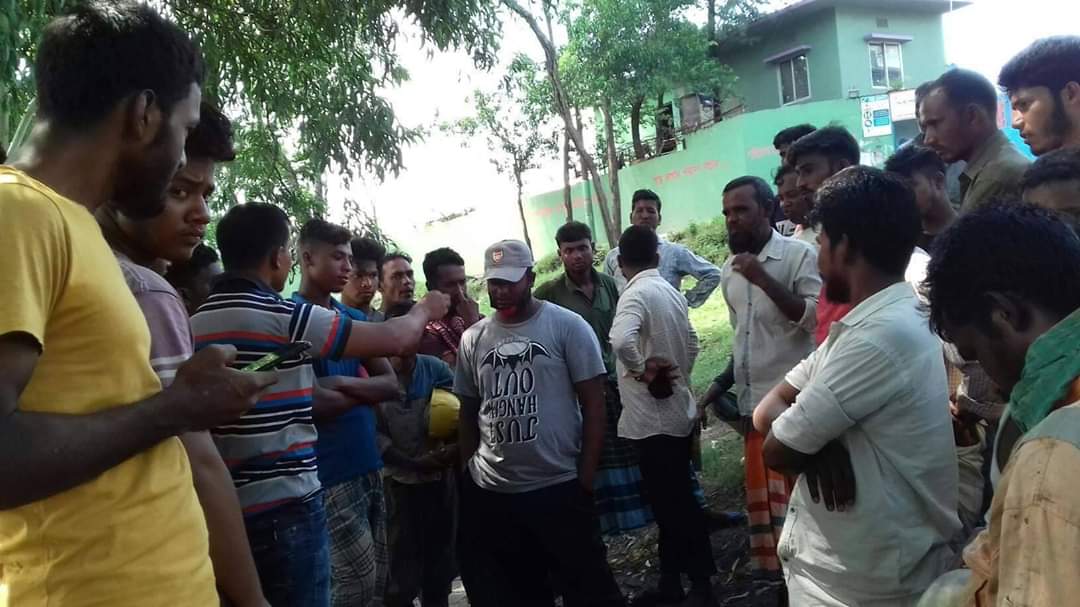
In 2019, Redpath Deilmann workers tried to obtain safety certification of their jobs, in compliance with Belarusian law. After six months of unsuccessful correspondence with state authorities, some workers joined forces and created a local branch of BITU to to protect their rights and interests in a more organized. Shortly after the union was created and Mikalaj Valadzko elected as its leader, the company management refused to renew his short-term employment contract.

On 26 May, Mikalaj Valadzko’s claim for reinstatement at work and payment of missed wages during a forced absence was dismissed by court. 

IndustriALL assistant general secretary, Kemal Özkan, says:

“The unfair court decision not to reinstate Mikalaj shows the government and business influence over Belarus’ judicial system. The government’s concerns over losing foreign investors go beyond the rules of a fair trial. In these circumstances, the use of short-term contracts as a way to get rid of workers who go against management will only increase.”

Maxim Poznyakov, Belarusian Independent Trade Union (BITU) chairman, says that the court decision is a consequence of state authorities’ actions over the past 20 years to “turn Belarusian workers into powerless slaves”.

“The lack of freedom of association in the country, the authorization-based procedure of starting a union, the lack of the possibility to strike and the system of short-term contracts have done their job. Workers’ current position is actively used not only by state-owned enterprises, but also private foreign capital.”

Together with BITU, IndustriALL has launched a LabourStart campaign calling for the reinstatement of Mikalaj Valadzko. Sign and share the campaign, sending a message to Redpath Deilmann.

Fair trade for all crucial in times of Covid-19

Maintaining open supply chains and trade is crucial amid the on-going pandemic. Making sure free trade agreements benefit all and that unions are consulted in the negotiations is equally crucial. In the midst of lockdown and social distancing measures implemented in most countries in the region, free trade negotiations continued over the past months.

First among these is the negotiation for the RCEP, with its latest round of talks in mid-April 2020 where the partner countries committed to conclude RCEP in 2020. The main concern of IndustriALL Global Union is not when and where the trade agreement will be signed or ratified, but whether trade agreements in the region comply with the ten principles on trade agreements of IndustriALL, which aim to protect workers’ rights and the benefit of people.

Still no enforceable labour rights

ASEAN officials informed that participating countries have completed six chapters and work towards conclusion of the remaining 14 chapters. Still, there appears to be no commitment for the inclusion of enforceable labour rights, incorporation of ILO conventions and recommendations in the agreement. The non-public negotiations of the RCEP have left workers in the dark. Governments must have proper consultations with trade unions, the negotiating texts must be deliberated in parliament, state or provincial assemblies and local governments. Democratic due process should be adhered to.

The withdrawal of India from RCEP due to pressure from Indian businesses, farmers and civil society indicates that Indian people and government have concerns as to the possible influx of import products that might eliminate local businesses. This reflects the importance of one of IndustriALL’s principle that each country must be able to utilize policy space to regulate trade activities. The Indian government has every right to impose trade tariffs to protect sectors of national interest.

Countries should not be sued for just social and economic policies

In August 2019, IndustriALL affiliates in the Asia-Pacific sent letters to respective governments and requested to adhere to the 10 principles in RCEP negotiation process. Subsequently, the Malaysian government announced that member countries of RCEP had agreed to drop investor-state dispute settlements for now from the trade deal and to revisit the issue once the agreement is in force. The decision is commendable because every country should be free to implement social and economic policies in the interest of its people without threat of being sued by a publicly unaccountable arbitration mechanism.

International trade must ensure access to medicine and food

The COVID-19 pandemic threatens lives and livelihoods of workers across the region. At the same time, it might provide an opportunity for governments and workers to rethink the intertwining relationship between trade, human rights, and a solidarity economy. The pandemic might strengthen mutual support among nation states in South East Asia.

Given that some countries imposed export bans on medical products, the World Trade Organization (WTO) emphasized the role of international trade in ensuring access to medicines. Nevertheless, the WTO respects member country's policy space to protect public health and make life-saving medicine affordable through a flexibility provision of the Agreement on Trade-Related Aspects of Intellectual Property Rights (TRIPS).

Export bans amid the pandemic asymmetrically impact least developed countries as they heavily rely on import of these products for domestic use. These countries do not have the manufacturing capacity to produce goods for local consumption. Hence, countries should utilize multilateral trade fora such as the WTO to mitigate the adverse impact of unilateral trade policies on LDCs.

It is crucial that trade facilitates people’s right to health and right to food. IndustriALL emphasizes that intellectual property regimes should help governments achieve sustainable development goals, not impede them. Life-saving medicine and personal protective equipment must be made available to workers and people throughout the health crisis.

Intensified cooperation between ASEAN countries in this crisis?

In fact, ASEAN has given a proactive response to COVID-19, calling for intensified cooperation when it comes to the provision of medicines and medical supplies, manifested by the development of regional reserves of medical supplies to cope with public health emergencies. The regional body also declared that it aims to ensure food security by utilizing the ASEAN Plus Three Emergency Rice Reserve.

On RCEP though, South East Asian governments ought to ensure that the negotiation process of trade agreements is participatory and transparent. All stakeholders including trade unions should be consulted and workers’ interests should be protected in the agreements.

Free trade must aid the realization of universal human rights – everyone should have adequate living standard with sufficient food and affordable medicine or medical supplies.  

This blogpost by IndustiALL South East Asia regional secretary Annie Adviento, was originally published on FES Asia

Four-hour strike at Italian ArcelorMittal sites brings results

As part of its support measures, the government publicly confirmed its intention to join the shareholding structure of the company, while in exchange, ArcelorMittal promised to maintain the group's presence in Italy. The CEO confirmed to formally and substantially keep all the commitments undertaken.

The pandemic and the subsequent downturn of demand aggravated the situation of the Italian steel mills, which are strongly dependent on the automotive industry, which is itself going through a very severe crisis itself at the moment. 

The strike became the second large protest since the easing of Covid-19 lockdown restrictions. During the first, hundreds of steelworkers rallied on 18 May outside the factory in Genoa protesting against layoffs and furloughs.

According to a statement by FIM-CISL general secretary Marco Bentivogli and national secretary Valerio D’Alò, during the meeting “the government communicated, especially considering the health emergency, that it had made exceptional measures available to the ArcelorMittal Group to enable it to manage the situation.” It was furthermore revealed that “an agreement was allegedly signed on March 4, 2020 and never presented to the trade unions.” 

FIM, FIOM, and UILM urged the government and ArcelorMittal to disclose their plans over the company’s future in Italy. In particular the unions demanded confirmation of the commitments made in the agreement concluded in September 2018, namely a pertinent business plan, consequent investments and corporate structures, employment levels and environmental remediation.

“To mitigate the occupational, economic and social disaster, the government must put in place special legislation for the ex-Ilva workers. It should foresee retirements or other legislative instruments for state-guaranteed employment outplacements. If this intervention is not done, there is a risk of strong social tensions, which we are not in a position to control”, commented UILM secretary general Rocco Palombella in his video conference.

In their turn, Francesca Re David, FIOM-CGIL general secretary and Gianni Venturi, FIOM-CGIL national secretary, and responsible for the steel sector, said, “If these commitments are confirmed, it means that at the end of the period covered by the new business plan, the total number of workers in ArcelorMittal would be 10,700, suggesting the exclusion of the approximately 1,700 workers still in extraordinary administration for whom a social safeguard clause was foreseen in the 2018 agreement.”

Valter Sanches, IndustriALL Global Union general secretary, jointly with Luc Triangle, European Trade Union industriAll general secretary, expressed solidarity with Italian affiliates and supported their demands, saying:

“It is imperative that ArcelorMittal minimize the economic and social impact of this pandemic on workers and their families and communities. The burden of the massive pressure on the steel industry in Europe and particularly in Italy resulting from the Covid-19 pandemic cannot only be carried by the workers.”

One dead and seven injured at Bokaro steel plant, India

On 6 May, a loco pilot working in the transport department, came in contact with the 25,000KV wire, which was broken after a heavy storm. He suffered deep burns from the high voltage shock and died in hospital on 16 May.

Just a few days later, on 11 May, a general manger and two workers became unconscious when nitrogen gas leaked while a transformer was being installed. The bitrogen gas should have been released in an open environment before the installation. According to union sources, the general manager was negligent and had been involved in an accident in the past. The victims were quickly moved to hospital and have now fully recovered.

Two contract workers from M/s Siva Electrical suffered burn injuries in a fire on 16 May, while they were working on a live electrical line. According to safety protocols, the electrical connection should have been shut down. The two victims were immediately taken to hospital.


Another fire occurred the following day at Ferro Scrap Nigam Limited, a subsidiary of SAIL located inside the Bokaro steel plant. Two contract workers suffered burns while welding the diesel tank of an automobile crane. Reports suggest they suffered 30 per cent burns and are said to be out of danger.

Sanjay Vadhavkar, general secretary of SMEFI and member of IndustriALL’s executive committee, says:

“Using untrained contract workers at crucial locations are causing accidents in the steel industry. We call on the Ministry of Steel and SAIL to recruit more permanent workers, enhance safety training and step up safety measures to avoid more accidents.”

Matthias Hartwich, IndustriALL director for mechanical engineering and base metals says:

“These kinds of accidents are unnecessary, it is a question of following the appropriate safety protocols. SAIL management must learn from these accidents, precarious work must be stopped and trade union representatives must be involved in safety planning and implementation. There can be no compromise on safety.”

Electronics multinational Jabil fires 190 Italian workers during pandemic

US headquartered electronics multinational Jabil announced that it was making 350 out of the 700 workers at the Marcianise plant redundant. After 160 workers took voluntary redundancy or were redeployed elsewhere, 190 workers find themselves on the streets from today, Monday 25 May.

This is despite a support package from the Italian government that bans layoffs until mid-August, in an attempt to save the economy in the midst of the health and economic emergency caused by Covid-19. The Italian government introduced the Relaunch Decree on 15 May, as part of a €155 billion package to get Italy back on its feet by supporting economic recovery, social cohesion and security.

The package includes a wage guarantee fund, grants to business, and moratoria on tax payments, utility bills and retrenchments. The company made commitments to the Ministry of Economic Development, which it has failed to honour.

IndustriALL Global Union affiliates FIOM-CGIL, FIM-CISL and UILM have reacted by pledging an indefinite strike. Unions are outraged at the lack of social solidarity, issuing a statement that condemned as “intolerable, illegal and villainous” the decision to "throw workers onto the street during a pandemic", and calling for a response from the government.


IndustriALL director for the electronics industry, Kan Matsuzaki said,

“Marcianise is in an economically depressed region near Naples in the south of Italy, and these layoffs with devastate local families. Jabil has taken advantage of the social security cushion provided by the Italian government and then laid off workers. This cynical and unethical action sets a very dangerous precedent.”

IndustriALL general secretary Valter Sanches wrote to the Italian subsidiary, demanding the reinstatement of the dismissed workers, saying:

“IndustriALL Global Union condemns in the strongest terms the company’s unilateral decision to dismiss 190 workers in the middle of the Covid-19 pandemic, without proper consultation with the concerned unions. We are extremely concerned about the lives and livelihoods of the dismissed workers and their families victimized by the company’s irresponsible action.”

Sanches also sent a letter of solidarity to the Italian unions.

Jabil, one of the world's largest electronics manufacturing multinationals, has 120 factories and two hundred thousand employees worldwide. The Marcianise plant primarily manufactures electronic circuit boards.

Tribute to former IMF AGS David Fowler

David Fowler was born in the United Kingdom and started his trade union carrier at the British Iron and Steel Trades Confederation (ISTC), now part of Community.

Before moving to the International Metalworkers’ Federation (IMF) in Geneva at the beginning of the 70’s, David worked in Brussels, Belgium, at the former European Metalworkers’ Federation (EMF).  At the IMF he first worked as chief editor of the weekly newsletter and other press releases and, quite often, also as speech writer.  He then took over responsibility for steel and non-ferrous, and later for the electrical and electronics sector. 

As part of his sectoral and regional responsibilities, David contributed a lot to union building activities in Africa and the Mediterranean region. After the fall of the Berlin Wall, he played an important role in developing cooperation with trade unions in Central and Eastern Europe. He led the first official IMF mission to China.

David Fowler was elected Assistant General Secretary in 1990 and kept that position until his retirement in 1996.  He devoted his whole life to the labor movement.  He served workers’ interests and promoted trade union principles and values in institutions of global governance with strong dedication and determination.  He will be remembered as a staunch advocate of international solidarity and social justice , leaving no stone unturned to advance workers’ rights across the world . 

Tripartite agreement to protect Sri Lankan workers

The government of Sri Lanka established a Covid-19 tripartite taskforce aiming to safeguard the interests of workers and employers through social dialogue. The taskforce reached an agreement applicable to all sectors on 5 May, ensuring payment of wages and employment within the existing legal framework. The agreement was endorsed by the Sri Lankan ministerial cabinet on 14 May. 

Members of the taskforce agreed that workers will continue to be employed and will not be retrenched from work due to Covid-19 lockdown measures. All employees will be deployed at work and allotted equal number of shifts through rotation. This will protect workers’ interests while respecting health and safety measures like social distancing.

If employees are not deployed at work during May and June, they will be paid 50 percent of their basic wages or LKR 14500 (US$77), whichever is more beneficial. In addition, employees provident fund (EPF) and employees’ trust fund (ETF) contributions on the wages will also be paid to workers.

Anton Marcus of IndustriALL affiliate Free Trade Zone & General Services Employees Union, and one of the members of the taskforce says:

“Given the difficult circumstances we are facing with Covid-19, this tripartite agreement is an instrument to safeguard workers’ interests. Now we are working to create more awareness among workers about this agreement to ensure that large number of companies implement it.”

Apoorva Kaiwar, IndustriALL South Asia regional secretary, says:

“The tripartite agreement is an important step forward to provide relief to Sri Lankan workers. IndustriALL Global Union stands in solidarity with Sri Lankan affiliates in their efforts to defend workers’ rights during this challenging period.”

The tripartite taskforce include representatives from Employers’ Federation of Ceylon (EFC), the trade unions, including many IndustriALL Sri Lankan affiliates and the Ministry of Skills Development, Employment and Labour Relations.

Unions in Madagascar protest against forced leave

According to a letter sent to workers by the Ambatovy management, the technical unemployment will start in May and end in October. During this period workers will be paid 100 per cent in June, 75 per cent in July, and 50 per cent for the remaining months.
 
The company has various operations, including a mine, pipeline, production, tailings, and port. At the Ambatovy factory site in Toamasina, the company employs 3000 workers of whom 60 per cent are on forced leave for six months while 1200 workers at Moramanga mining site are in the same situation.
 
Subcontractors to Ambatovy have also put workers on forced leave. For example, KPS put 250 workers on leave for six months while Madacan’s 150 workers for three months.
 
IndustriALL Global Union affiliates Syndicalisme et Vie des Societies (SVS), Sendika Kristanina Malagasy (SEKRIMA) and Fédération des Syndicats Autonomes des Travailleurs de l’Industrie (FESATI), that organize workers at the mines, are challenging the technical unemployment as they were never consulted.
 
The country’s labour code says before a company implements technical unemployment, there must be consultation with unions. The code defines technical unemployment, allowed for up to six months, as interruption to work caused by accidents, power interruptions, disasters, shortages of raw materials, tools, and transport problems.
 
Unions doubt if the Covid-19 pandemic fits into these categories and say it is unlawful for companies to implement technical unemployment without consulting unions. Workers also have the right to decide when to take leave and not be forced by the employer.
 
Glen Mpufane, IndustriALL mining director says:

“We urge Ambatovy to avoid unfair labour practices and to adopt Covid-19 protocols that protect workers’ rights including to health and safety, job security and income protection, as is becoming the norm globally. This should be done in consultation with trade unions.”

The unions are also campaigning against the stigma that the workers who test positive to COVID-19 are facing in the communities where they live.
 
Ambatovy is a nickel and cobalt mining enterprise in Madagascar which is a partnership of three companies; Sherritt International Corporation from Canada, Sumitomo Corporation from Japan, and Korea Resources Corporation from Korea.

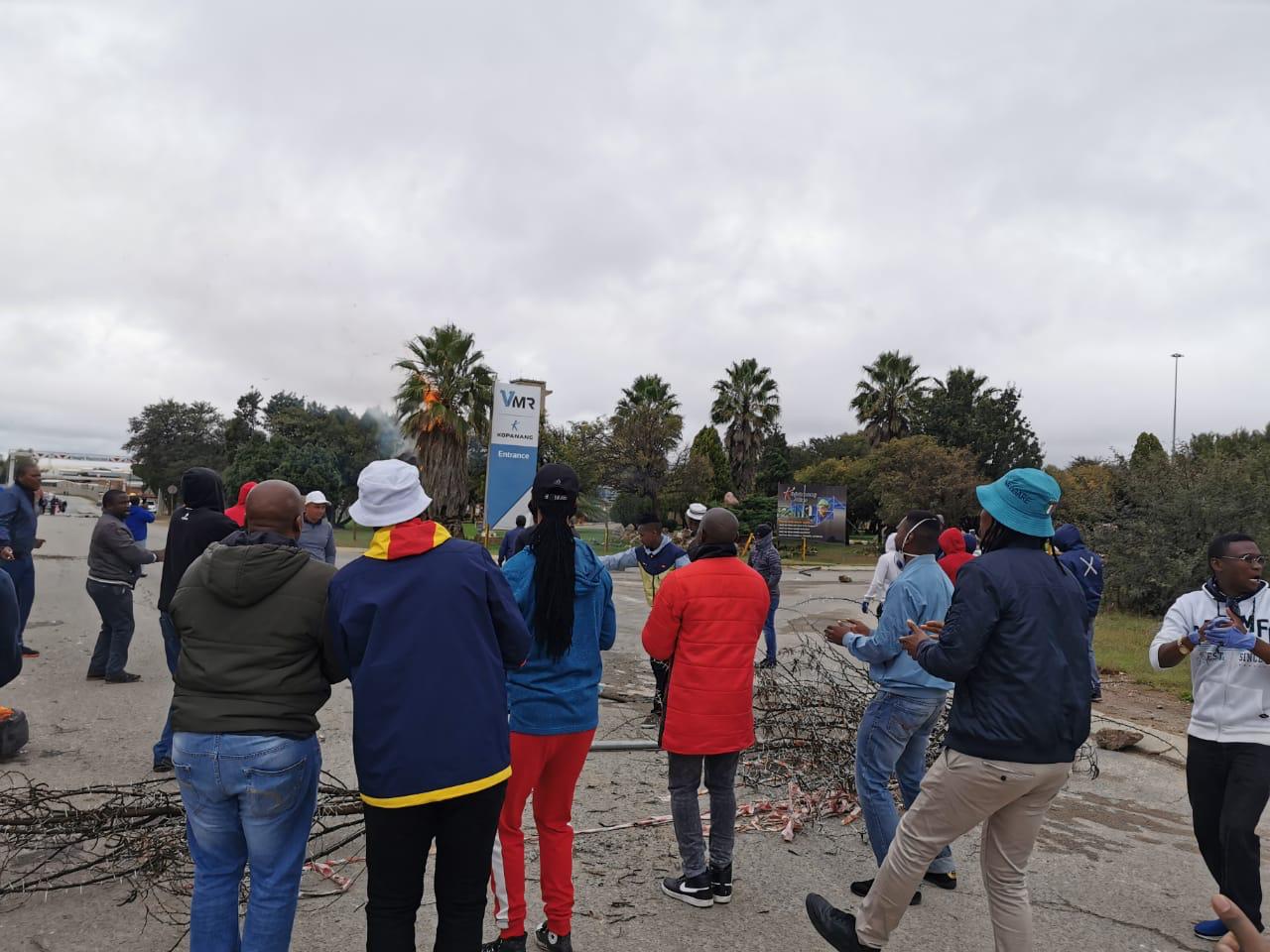
Returning mineworkers test positive to Covid-19 in South Africa

It is the same in other provinces as well. When platinum mines in Burgersfort in the Limpopo Province reopened after the relaxing of the Covid-19 regulations in South Africa, over 50 workers tested positive to the coronavirus confirming that community transmissions took place during the lockdown which began on 26 March.
 
When Marula Platinum Mine reopened, 19 workers tested positive to the coronavirus while Dwarsrivier mine confirmed another 30.

At Modikwa Platinum Mine, where IndustriALL Global Union affiliate, the National Union of Mineworkers (NUM), raised an alarm on the continued use of breathalyzers and biometric systems, workers have also tested positive to Covid-19.
 
Phillip Mankge, NUM North East regional secretary, says:

“The mines should have listened to the advice from the unions to implement regulations on rigorous screening and testing, and for employers to provide mineworkers with transport to work from their places of residence. The NUM is against the blanket approach that has been granted by the ministry of mineral resources and energy. Each mine should have been given a directive to put preventive measures in place first before being granted permission to open.”
 
Glen Mpufane, IndustriALL director for mining says:

“Mining companies must follow strict Covid-19 health and safety protocols in their screening and testing of workers to avoid situations where mines and mining communities become clusters of Covid-19 infections.”
 
Since the announcement of the lockdown the NUM has been fighting the no-pay-no-work practices at some mines and violations of the lockdown by others that continued operating despite the regulations prohibiting mining. The unions are also demanding payment of full wages at mines such as Kimberley Ekapa Mining where they were reduced by 33 per cent.

NUM also fought for the rights of workers when some companies, including Kangra and Zululand Anthracite Colliery in KwaZulu-Natal province and Village Main Reef in the North West Province, tried to use the lockdown to retrench workers.
 
The unions have carried out campaigns to prevent infection and exposure to the coronavirus especially for workers on treatment for tuberculosis, and those on antiretroviral drugs for HIV and AIDS. The union says these diseases are common amongst mineworkers.
 
According to statistics released by the department of health, on 24 May the country had 22,583 positive cases, 11,100 recoveries and 429 deaths.

Religious holiday allowance should not be deferred

According to Indonesian law, employers have to pay one month of THR to workers employed for more than 12 months. The allowance is to be paid out seven days before major celebrations of the six religions; Islam, Protestantism, Catholicism, Hinduism, Buddhism and Confucianism.

IndustriALL Global Union’s ten affiliates in Indonesia submitted a protest letter to the Ministry of Manpower on 12 May, calling on the government to revoke the decision on deferment on religious holiday allowance (THR) for workers.

Criticizing the circular as inhuman, IndustriALL Indonesia council chairperson Iwan Kusmawan says that workers are already suffering from workplace closures due to Covid-19, and some workers are receiving only 50 per cent of their wages.

“The deferment of THR before the Eid Al-Fitr is inhuman and a big blow. There is no level playing field for unions and employers in the bargaining process; this will give employers extra leeway to justify not paying THR amid the health crisis. This is adding insult to workers’ injury.”

The head of advocacy of Indonesian Chemical, Energy and Mines Workers Union (CEMWU), Saeful Anwar says:

“The circular goes against the interest of workers during the Covid-19 crisis. Official statistics show 2.8 million job losses so far, the Ministry of Manpower must fulfil its responsibility to protect the rights and benefits of workers.”

IndustriALL regional secretary Annie Adviento is urging the Indonesian government to review the circular and oblige employers to immediately pay THR.

“Thousands of workers in unions affiliated to IndustriALL, particularly those who work in the textile, garment, shoe and leather industry, have been either been laid off or furloughed due to Covid-19. It is time Indonesian employers shoulder the  responsibility to support the livelihood of workers in the country.”