Hyundai’s union busting in Germany

A committed trade unionist and member of the works council, this court case was another step in Hyundai’s efforts to get rid of the designer, hired at Hyundai’s Motor Europe Technical Center (HMETC), Germany, in March 2003.

The trial ended in a settlement between the two parties; the work contract will not expire before 31 December 2021 and he will receive a severance payment.

“On a personal note, the settlement is acceptable. But from a workers’ rights perspective it is unfortunate that the court favoured a settlement over a ruling of the case,”

says Georg Leutert, IndustriALL auto director. 

“Hyundai’s systematic approach to continue pushing him into a corner to finally get rid of him proved to be successful. It seems to be increasingly easy for companies to apply union busting tactics, often supported by specialized law firms.”

This court case was the second legal dispute that the union member had to bring against the Korean carmaker in order to fight the false accusations from the company whose objective is to fire him.

Hyundai’s behaviour is not only about this individual case; it is also about disdain for German union IG Metall, representing the large majority of German autoworkers. Hyundai has instead promoted a yellow union, AUB, created with support of Siemens management, to avoid any dialogue and confrontation.

Wage discrimination and corruption at Medis Dakar in Senegal

The unions say that the financial difficulties the company is facing are due to mismanagement and corruption. In a memorandum to the Medis Dakar management, which was also sent to government ministries of health, industry, and labour, the unions say it has become routine for the company to declare losses of billions of francs every year and announce that it is close to bankruptcy.
 
According to the union, which organizes 116 of the company’s 316 workers, the hope that came when the company was bought by the Medis Group from Winthrop Pharma Senegal in 2017 has vanished.
 
The unions wrote:

“The arrival of the Medis Group seen as a new beginning gave workers hope. However, this was for a short while as workers quickly became disillusioned as the financial situation worsened. The managers said this was caused by cash shortages, inadequate raw materials and packaging items and unexplained technical problems.”

 
The unions were not convinced and carried out their own investigations, which found some financial misappropriations that included overcharging for vehicle maintenance and excessive use of fuel by the management, payment of bonuses to some workers while excluding others, some unexplained deductions on pay slips, and wage differences for workers doing the same work.
 
To get the company out of the difficulties the unions are recommending improvements in financial and human resources management. This will allow workers to focus on their work priorities and contribute to the company's success. The workers also reaffirm their willingness to work with the Medis teams to sustain and develop the workplace and help in resolving technical and financial problems.
 
Paule France Ndessomin, IndustriALL regional secretary for Sub Sahara Africa says:

“Medis Dakar must engage in fair labour practices according to Senegal’s labour laws. The company must practice equity by paying workers doing work of equal value the same wages and must meet with unions to explain some management decisions that are unfair to the workers. Dialogue between Medis Dakar and the unions is key to building better industrial relations at the company.”

Mining unions in solidarity to confront COVID-19

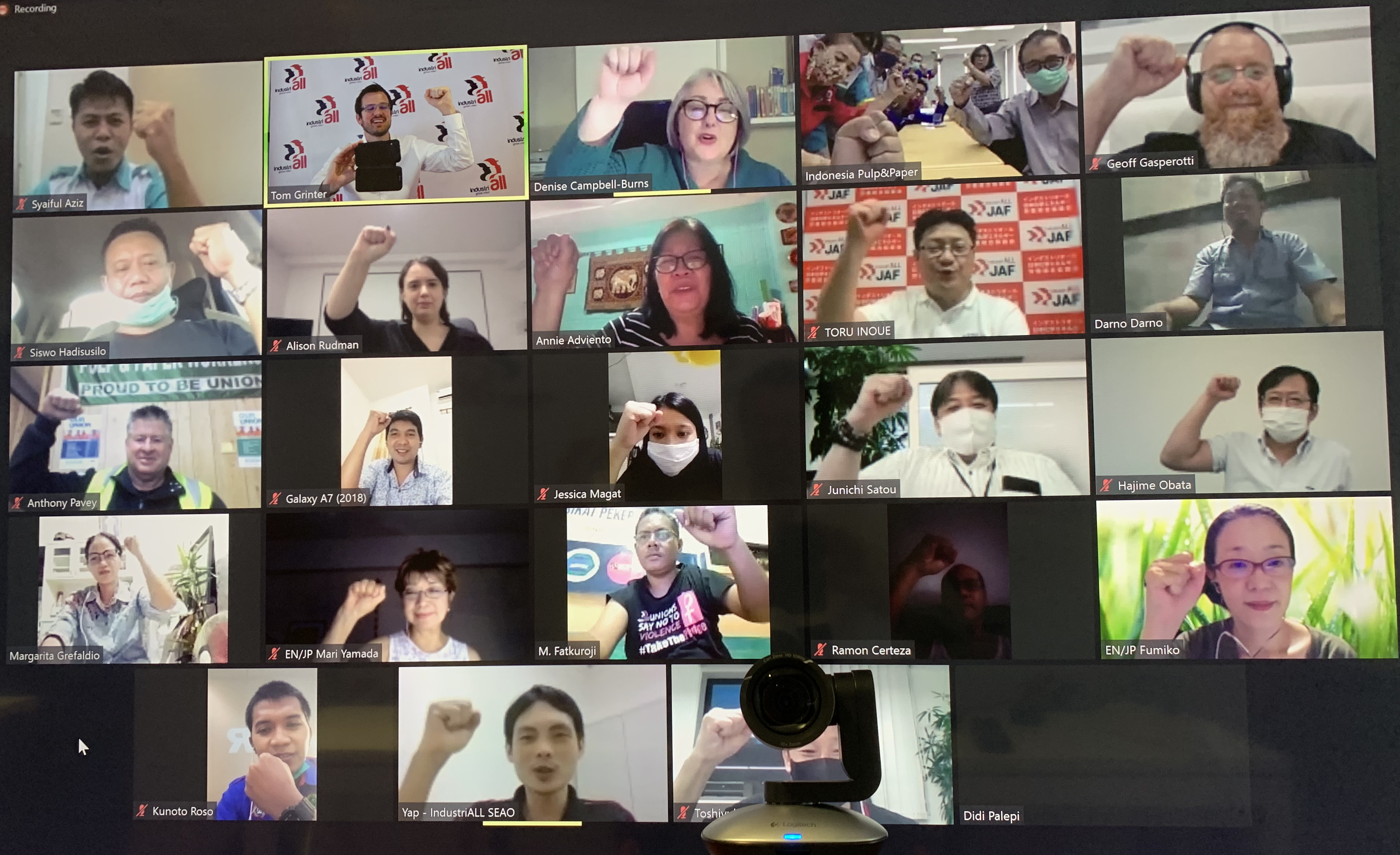
The mining unions came together for a virtual meeting on 30 June, with more than 130 participants from some 40 countries.

In the light of the devastating pandemic, participants paid tribute to the frontline public health workers, describing them as superheroes. Mineworkers were described as caught between national economic interests derived from mining and their own health and safety, as well as that of their communities, with mining coming companies putting profit above any other consideration, as mining is declared an essential service in most countries. 

Mines in Brazil, Chile, Peru, Poland, and South Africa have become epi-centres of the disease.

In his opening remark, sector co-chair Steve Hunt described the pandemic’s disproportionate impact on the poor and working class, and how global solidarity amongst mineworkers and the promotion and strict adherence to ILO Convention 176, was critical in combatting the impact of the crisis.

Lucineide Varjao Soares, sector co-chair, underlined how lack of democracy, violation of fundamental rights and bad governance has turned Covid-19 into an unprecedented crisis in Brazil, with more than 60,000 deaths and over a million people infected in Brazil and other Latin American countries.

Women are hard hit by the crisis. In addition to the hostile environment of the industry towards women, there is the additional burden of caring for the sick. In mines still operational, the practice of social distancing has brought some relief to women mineworkers, often subjected to sexual harassment through inappropriate touching by men in over-crowded lifts.

The meeting agreed that Covid-19 should be recognized as an occupational disease, noting the recognition by Argentina and South Africa. ILO C 176 on safety and health in mines should be used to deal with the coronavirus; articles 5 and 7 state that national regulations must ensure that the employer has a health and safety plan and “eliminate or minimize risks” at mines.

The campaign for ratification of ILO C176 should be intensified in Madagascar and India.  

Attacks against workers’ rights are increasing around the world, Unions confirmed that hundreds of thousands of jobs have been lost through retrenchments. Contractors are the most vulnerable, with most of the global mining industry under partial or full lockdown, and some on care and maintenance.

The plight of Ukraine mineworkers over their long struggle for the payment of their wage arrears was highlighted, as was the struggle in India against privatization of the coal industry. In Morocco, wages have been cut, and unpaid leave is common in most countries. Further, precarious conditions of short contracts, low wages, and poor working conditions are becoming common.

Glen Mpufane, IndustriALL director for mining and DGOJP, said that although Covid-19 has caused demand and supply side disruptions in the global mining industry, workers should not be sacrificial lambs.

“There needs to be a responsible and best practice approach in dealing with the pandemic that contains a minimum non-negotiable provisions; income security, respect for fundamental workers’ rights and collective bargaining and the striving for the highest level of occupational health and safety, as per ILO C176.

“Mining companies are obliged to adhere to national and international labour standards, and not use the pandemic as an excuse to violate workers’ rights."

In order to promote responsible mining during Covid-19, IndustriALL is working with the Initiative for Responsible Mining, the Responsible Mining Index, and is in direct conversations with Anglo American, Glencore and Rio Tinto, notwithstanding the challenges that exist with Glencore and Rio Tinto in some countries.

Kemal Özkan, IndustriALL assistant general secretary said solidarity is key and reminded the unions of their historic role to fight for their rights.

“To best protect and advance the rights of our members, international solidarity is critical in this challenging environment of the pandemic.”

Union protests lockout at Nycil chemical plant in Nigeria

The picketing workers have vowed to continue assembling at the gates until they are opened, and they can resume work. The workers are members of the National Union of Chemical Footwear Rubber Leather And Non-Metallic Products Employees (NUCFRLANMPE), affiliated to IndustriALL Global Union.

Although the company has not stated the reasons for the lock-out, NUCFRLANMPE suspect that they want to retrench the workers. The union is demanding dialogue with the company, saying that the company cannot make unilateral decisions without meeting with the union.

The union says the situation has been worsened by the “anti-worker attitude” of the owner of Nycil, Adetola Adebayo, who has consistently refused to engage with the union. Industrial relations worsened at the company when it was bought by the current owner in 2014, and NUCFRLANMPE’s efforts towards dialogue with the employer have been unsuccessful.

The ministry of labour and employment has been approached to intervene to end the lock-out at Nycil – a company that workers describe as “one of the worst employers in Nigeria”.

Tunde Olagoke, NUCFRLANMPE deputy national secretary said:

“We received information that Nycil wants to embark on a redundancy exercise. The union is rejecting this because Covid-19 is not the making of anyone. We need a collective strategy to manage the situation without job losses of the toiling workers.”

Workers disagree that Covid-19 should be used as an excuse at Nycil where operations were not affected by the pandemic.
 
Paule France Ndessomin, IndustriALL regional secretary for Sub Saharan Africa said:

“It is unacceptable for Nycil to lock-out workers. The management must meet with the union to address the issues. They cannot make unilateral decisions as this violates Nigerian labour laws, destroys trust and is unfair to the workers.”

Nycil Nigeria is a chemical manufacturing company specializing in the manufacture of synthetic polymers, acrylic polymers, polyester resins, and homo polymers emulsion among other products. These are used in the making of paints, textiles, packaging, and stationery.

Turkish tyre workers win Goodyear contract

In Turkish industrial relations, multi-employer collective bargaining negotiations have been in place for decades, particularly in the sectors where there is a strong union movement. The tyre industry is one of them and Lastik-İş negotiates with all the major tyre multinationals.

This time, Goodyear decided to leave the group bargaining between Lastik-İş and the big employers and at the same time demanded lower employment conditions than other companies. The same charter of demands was submitted to all the companies and Lastik-İş finalized negotiations with others, bringing good gains with the approval of rank-and-file membership in line with the union’s democratic tradition.

With the strong presence of Lastik-İş and the clearly powerful potential of eventual strike action, the US-based company accepted the two-year contract on 30 June as applicable from 1 January 2020.

This has ensured that working conditions are the same at all the multinational companies in the sector in Turkey.

Goodyear has two factories in Turkey, in the towns of Kocaeli and Adapazarı.

Lastik-İş has a famous success rate of totally removing precarious temporary employment at the major tyre employers in Turkey. This continues with the new agreement. 300 Goodyear employees were moved by this contract from contractor support worker status to full collective agreement coverage. Goodyear commits to not using any contract labour going forward.

Social benefits are significantly improved with the new collective agreement, by between 20 to 54 per cent, with wages up by a total of 8 per cent on top of inflation. Full production employees see their overall income increased by 8.3 per cent to 12,270 Turkish Lira per month, equal to 1,590 euros.


Alaaddin Sari, general president of Lastik-İş and vice president of the DİSK national centre, addressed the workers and said:

“You have been strong throughout this process; you never gave up. We have made important gains in family health insurance and bonuses, and we have achieved the same framework agreement with Goodyear as with the other tyre employers.”

IndustriALL assistant general secretary Kemal Özkan hailed the achievement:

“Goodyear has been concerning us with hostility towards unions in Indonesia, Mexico, Turkey and elsewhere. That context makes this victory by my original union even sweeter.”

Energy unions tackle effects of Covid-19

Around 130 participants from some 50 countries came together for a virtual meeting of the energy sector on Covid-19, to discuss impacts, approaches and responses.

In his opening statement, sector co-chair Frode Alfheim, from Norwegian union Industri Energi, explained about an agreement reached between unions, employers and the government.

“The agreement secures jobs today and for future generations and would not have been possible without the efforts from the unions.”

Other sector co-chair Apsorn Krissanasmit from PTT LU of Thailand underlined the importance of social dialogue at the time of the crisis.

Unions in Ukraine are under attack, with a number of new bills currently reviewed by parliament. If given a green light, they will deprive unions of rights and opportunities,

said Valery Matov, president of Ukrainian union Atomprofspilka and sector co-chair for nuclear.

IndustriALL energy director Diana Junquera Curiel underlined the importance of standing together in times of crisis and praised energy unions for defending workers' rights and taking solidarity action for workers and unions around the world.

“The action plan we developed at the world energy conference two years ago in St Petersburg, Russia, to support our affiliates guides our work. We have renewed global framework agreements with Lukoil, Siemens Gamesa and Eni, we are working on the renewal process of Total, Engie and Enel and we are working on the implementation of EDF.

“The Shell campaign continues, even though the company is reluctant to engage with us on a global level.”

IndustriALL is working with different institutions such as ILO and multinational energy companies to minimize the impact of the pandemic and address the massive job losses.

Covid-19 has presented energy companies with an opportunity to pursue an anti-union and union-busting agenda, using the cover of essential services under national lockdown regulations, or in the other side, when energy services are considered as essential services and workers experiment lack of protection. Collective bargaining, lack of consultation and health and safety have become the casualties of the attack by these global energy companies.

Hashmeya Alsadawe from of General Trade Union of Electricity Sector Employees of Iraq, as Executive committee member of IndustriALL underlined that women and contract workers are hit hard by the pandemic.

The energy industry in Australia employs a large number of contract workers and according to AWU – Australian Workers' Union, the impact of Covid-19 lands on those contractors. As the pandemic struck, employers argued for roster changes to incorporate quarantine periods and minimize infection, but also for pushing through changes resulting in worse conditions for workers.

Some countries have succeeded in reaching good solutions through social dialogue, like in Jordan, where the General Trade Union for Workers in Electricity, together with the employers found solutions for women workers with children, taking into consideration lack of child care for example.

In countries where lockdowns are being lifted, a safe return to work is a priority for the unions. GFA partner Engie is guaranteeing all its employees coverage of hospital costs related to Covid-19, as well as coverage of costs in case of a decease. 

"This crisis has significantly slowed down our sector. More than ever, unions are important as workers in the energy industry are hit hard,"

said IndustriALL assistant general secretary Kemal Özkan.

“Despite these difficult times, our actions in the energy sector will continue. Our jobs, our health, safety and livelihoods, including our communities, are at stake and more than ever, we need solidarity with each other.”

Facing challenges in the ICT, electrical and electronics sector

While some segments of ICT EE industry, like consumer electronics, aviation and automotive have seen massive dismissals of workers, the demand for semiconductors and devices related to data centres and next generation of high-speed communication network system like 5G, is steadily growing.

The pandemic is likely to accelerate technologies related to Industry 4.0, like robotization and artificial intelligence. ICT EE workers in telecommunication, energy and healthcare divisions report a higher workload than usual.

Unions from around the world are reporting cases of employers using Covid-19 as an excuse to dismiss workers, suspend CBAs and cancel wage increases.

Thai union TEAM filed a grievance when 12 subcontracted women were laid off.

Focusing on a functioning solution in times of crisis, Swedish union Unionen, reported on a tripartite agreement for short-term work with state support. As production was brought to a standstill, unions also pushed for using the time for skills development, vocational training, long distance learning.

There are strong concerns over securing workers’ health and safety rights, especially in factories in Latin America where the pandemic is still accelerating. Brazilian unions report that Covid-19 has revealed structural inequalities in the countries, with women facing great difficulties. For many, returning to work is difficult as many childcare facilities and schools are closed. The unions are negotiating with companies for provisions for women to continue to work from home for longer. The unions are also pushing hard for measures to be put in place to tackle the 25 per cent increase of domestic violence in Brazil.

As workers begin to return to work in other parts of the world, guaranteeing a safe return to work is of paramount importance.

In Japan, improvements have been made on a Covid-19 related directive on health and safety measures for pregnant women on the initiative of a woman parliament member from the JEIU union.

Sector co-chair, Prihanani Boenadi, from FSPMI in Indonesia, underlined the importance of a new organizing strategy to reach out to workers on teleworking, which looks likely to become normalized in the future:

“Unions need to develop new communication tools and methods to organize workers in the post Covid-19 era.”

With batteries becoming essential if the world is to reduce CO2 emissions, IndustriALL and its affiliates, representing workers throughout the entire battery supply chain, are developing a battery supply chain strategy. As battery production requires some key minerals, special attention must be given to ensuring decent working conditions and an environmental and socially sound industry.

The committee confirmed the sector specific activities for second half of 2020 – 2021:

•    Provide (online) education and training on occupational health and safety, especially Covid-19 related, and specific gender issues where necessary
•    Explore the possibility to create a new trade union network of sub-sector
•    Develop supply chain strategy with other sectors, like the battery supply chain
•    Continue to promote sustainable industrial policy as it is more important in the Covid-19 era

“We need to be involved in organizing the workers and securing their rights,”

said Kan Matsuzaki, IndustriALL ICT EE director.

IndustriALL’s political statement, adopted at the Executive Committee in May, will guide the sector work in the coming years. We see that cooperation and international solidarity are necessary to overcome the challenges ahead and unions must be at the table when industrial policies for post Covid-19 are discussed.”

Takahiro Nonaka, section co-chair, stated in his message: 

“We are experiencing an era of great change. The use of ICT will become more active and the arrival of the digital society will accelerate. However, no matter how we face the change, our mission is to have a society which puts people first."

Iranian court sentences workers to flogging, forced labour and prison

The workers are being punished for protesting the non-payment of wages after the privatization of Azarab Industries. Workers have not been paid for May and June of this year. The court ruled that the workers who took part in demonstrations are guilty of disrupting public order and insulting public officials. The sentence can be appealed.

Workers also protested against privatization and the failure to pay wages in October last year. IndustriALL intervened when 21 Azarab workers were arrested. Since the company was privatized, workers have seen a significant deterioration in their job security and benefits, and frequent delays in wages payments.

Over the past few years, a number of state-owned companies in Iran have been privatized, with control handed over to regime insiders. IndustriALL’s affiliate the Union of Metalworkers and Mechanics of Iran (UMMI) released a statement accusing the privatizers of being “embezzlers and criminal gangs” who have targeted the livelihoods of workers.

“The protests will not stop and the demands of the union movement will not be defeated”, the statement went on to say. 

“UMMI, together with its comrades, whether in Haft Tappeh, Azarab, Arak, Kerman and Assaluyeh mines, or in any corner of the country, calls for an end to the privatization of the country's industries, and punishment for employers who fail to pay wages.”

IndustriALL assistant general secretary Kemal Özkan said:

“Once again, workers in Iran are being brutally attacked for standing up for their basic rights. The Azarab workers must be immediately released. All charges must be dropped, and the delayed wages must be paid.

“We repeat our call on the government of the Islamic Republic of Iran to end the arrests and repression of workers, labour activists, and independent unions. In particular, we call for an end to the inhuman practice of capital punishment.”

Azarab is a large manufacturing company that constructs components for power plants and refineries. The main products are boilers, turbines and pressure vessels. 

Fighting precarious work in Indonesia's oil and gas sector

Following on the Indonesia oil and gas union network meeting in 2019, fifteen union leaders from Chemical, Energy and Mines Workers Union (CEMWU SPSI) and Federation of Chemical, Energy, Mining, Oil and Gas Workers’ Union (FSP KEP) met on 25 June to take stock of the approved action plan.

Both unions’ organizing drives have been severely impeded by the pandemic. Jakarta was in a state of emergency for more than a month and large-scale social distancing rules have been imposed nation-wide.

CEMWU members at PT CNOOC, the contract companies of national oil company Pertamina, are fighting an uphill legal battle to convert the status of non-permanent workers to permanent workers. Currently, the workers are waiting for a hearing at the Supreme Court, and the case has been going on for three years.

“Precarious work is a big problem in this sector,” says Edo Sasda from CEMWU. “We urge PT CNOOC to negotiate with CEMWU and take on all of our members as permanent workers.

Bambang Surjono, general secretary of FSP KEP, agrees with Sasda and says that it is common that 90 per cent of workers at oil companies are contract workers, leaving only 10 per cent permanent staff.

IndustriALL energy director Diana Junquera says :

“This phenomenon is widespread all over the world; 80 to 90 per cent of oil and gas workers are precarious workers. But the good thing in Indonesia is that contract workers can be organized into union.

Globally, many contract workers have been terminated due to the declining demand for oil. Now is a good opportunity to extend our solidarity to contract workers in the sector and organize them.”

IndustriALL regional secretary Annie Adviento emphasizes that giant oil companies are making billions of profits each year, and yet are reluctant to share profits with the workers.

“The Covid-19 pandemic has exacerbated inequalities. Trade unions must continue its works and fight for workers’ rights, global solidarity is even more important today.”

Unions in Africa campaign for ratification of ILO C190

“Workers must be part of creating a solution to end gender-based violence in the world of work by creating a space to end unacceptable behaviours and a culture of silence to create change in the workplace. We need to create a workplace that is free of violence and harassment,”

says Rose Omamo, general secretary of Amalgamated Union of Kenyan Metal Workers and IndustriALL Global Union Executive Committee member.

The Namibian cabinet has approved the proposal for ratification for ILO convention 190 and 189, which will soon be submitted to parliament for ratification.

The IndustriAll National Women Committee of Uganda is calling for the ratification of C190 at a rally in the Mbale region attended by union leaders, the President,the Speaker of Paliament and other dignitaries.

In Zimbabwe, the unions are meeting with the ministries of labour and social welfare and the women affairs before the ratification is brought to parliament.

The Mineworkers Union of Zambia celebrated International Women's Day on 8 March with a call for solidarity to the Zambian Congress of trade unions to push the government on the ratification of the ILO C190.

Trade unions in Africa are encouraged to lobby their governments to ratify C190. The Southern African Clothing and Textile Workers Union (SACTWU) has a daily social media campaign.
 
Andre Kriel, SACTWU general secretary says:

“Our main intention is to keep this matter in the public eye, until the ratification. We have consistently raised the matter at the Congress of South African Trade Unions (COSATU) Central Executive Committee (CEC), and COSATU has now taken up the campaign and raised ratification directly with the Minister of Employment and Labour, Thulas Nxesi. In addition, a call was raised directly with South Africa’s President Cyril Ramaphosa when he addressed the February 2020 CEC.”

COSATU has also raised the issue with the employment and labour portfolio committee in parliament.
 
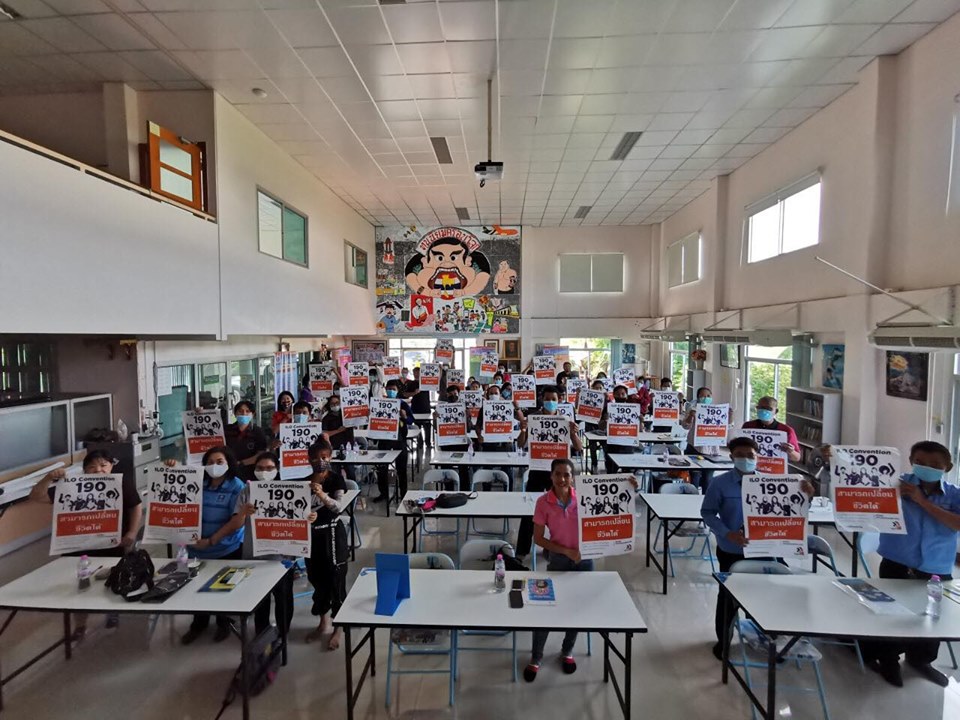
21 June was the first anniversary of the adoption of ILO Convention 190 and Recommendation 206 on Violence and harassment in the world of work. Uruguay is the first country to have ratified C190, with reports that Fiji will soon follow. 12 months after Fiji does so, C190 will enter into force.
 
Armelle Seby, IndustriALL gender coordinator says:

“The adoption of C190 is important in ending gender-based violence and sexual harassment at the workplace. In South Africa, several women have been killed at work; in the mines, at power sub-stations and other workplaces, and working women are raped in the communities where they live and killed in their homes.”