22 mineworkers killed in Pakistan

At the time of the accident, around 40 to 50 people were working in the mine located near the Afghanistan border in the Khyber Pakhtunkwa. The landslide covered several nearby mines.

Rescue operations have been impeded by subsequent landslides and it is feared that more people are still trapped under the debris. 25 hours after the accident, one person was rescued alive and search operations continue.

Glen Mpufane, IndustriALL mining director, says:

“Most mines in Pakistan still use old, traditional methods of mining and operate without adequate safety measures. It is unacceptable that most workers do not receive training on safe mining practices and there are no safety personnel at the mines. Government mine safety agencies need to implement strong measures to improve safety in Pakistan’s mines.”


The killings at the Ziarat marble mines appear to be the single biggest fatal mine accident in Pakistan this year. Since January, the country has witnessed incessant fatal accidents in the mines, and not even the Covid-19 lockdown reduced deaths.

According to local sources, at least 97 workers have been killed in the around 44 reported accidents in 2020.

Since 2010, the estimated number of workers killed in Pakistan’s mines is 523. The real number could be much higher.

Kemal Özkan, IndustriALL assistant general secretary, says:

“It’s a massacre. Both the central and provincial governments are well informed of the increasing fatalities in Pakistan’s mines. But despite frequent reminders and call for actions, such accidents continue.

“Pakistan cannot wait for more workers dying and must work with national and international agencies, including the ILO and global unions, to improve mine safety. The central and provincial governments must immediately take steps to ratify and implement ILO Convention 176 on Safety and Health in Mines. IndustriALL will continue to work with its affiliates and social actors to intensify the mine safety campaign.”

South Asia unions prioritize social protection, health and workers’ rights

As countries in South Asia experience a prolonged Covid-19 lockdown and containment measures, affiliates reporte job losses and increasing retrenchment of hundreds and thousands of workers.

Large numbers of precarious workers have lost their jobs, and many have not been paid at all or have received reduced wages during lockdown. The devastating impact of job losses are evident in the garment and textile, home-based work and informal sectors, where the majority of workers are women.

Lacking effective social protection, workers and people in the region are facing a humanitarian crisis. While governments have announced relief measures, large numbers of people have not received them. IndustriALL affiliates are involved in mobilizing resources, working with local social organizations and providing relief by distributing cooked food and food grains.

As lockdown measures have eased and factories resume operations, workers are gradually returning to work. Most workplaces cannot provide space for physical distancing and pose an enhanced health and safety risk. Large numbers of workers and their families face the risk of Covid-19 infection every day.

Unplanned stoppages and restarting industrial operations have led to a large number of accidents in India.

Many provincial governments in India have used Covid-19 as an excuse to announce anti-worker labour law changes. Labour law changes are also proposed in Sri Lanka. Retrenchment and lay off rules have not been followed and millions of workers across the region have not received their legally due compensation.

Collective bargaining agreements have not been implemented. Implementation of IndustriALL’s global framework agreements, particularly in the garment and textile sector have faced stiff challenges during this period.

Kemal Özkan, IndustriALL assistant general secretary, says:

“Covid-19 has caused unprecedented misery and despair and a dialogue with union representatives in the policymaking process is crucial. The increasing attacks on workers’ rights particularly in India and Sri Lanka are deplorable. The democratic decision-making process and unity among working people at all levels are central for protecting workers’ interests and a just future.

“IndustriALL will intensify the strategic efforts to strengthen solidarity support for our affiliates. We are working together with other global unions towards just economic and industrial polices, including universal social protection and ensuring the right to health and safety at the workplaces be considered a fundamental workers’ right.”

Apoorva Kaiwar, IndustriALL South Asia regional secretary, says:

“These online events were used to seek input from our affiliates and plan activities that will protect workers’ rights against the backdrop of the Covid-19 pandemic, strengthen union power, support affiliates’ actions on sustainable trade and industrial policies.”

The meetings to discuss national union actions and South Asia strategic plan started on 1 September with Sri Lankan affiliates, continued on 2 September with Bangladesh and Nepal, and subsequently Pakistan and India affiliates on 3 and 4 September respectively.

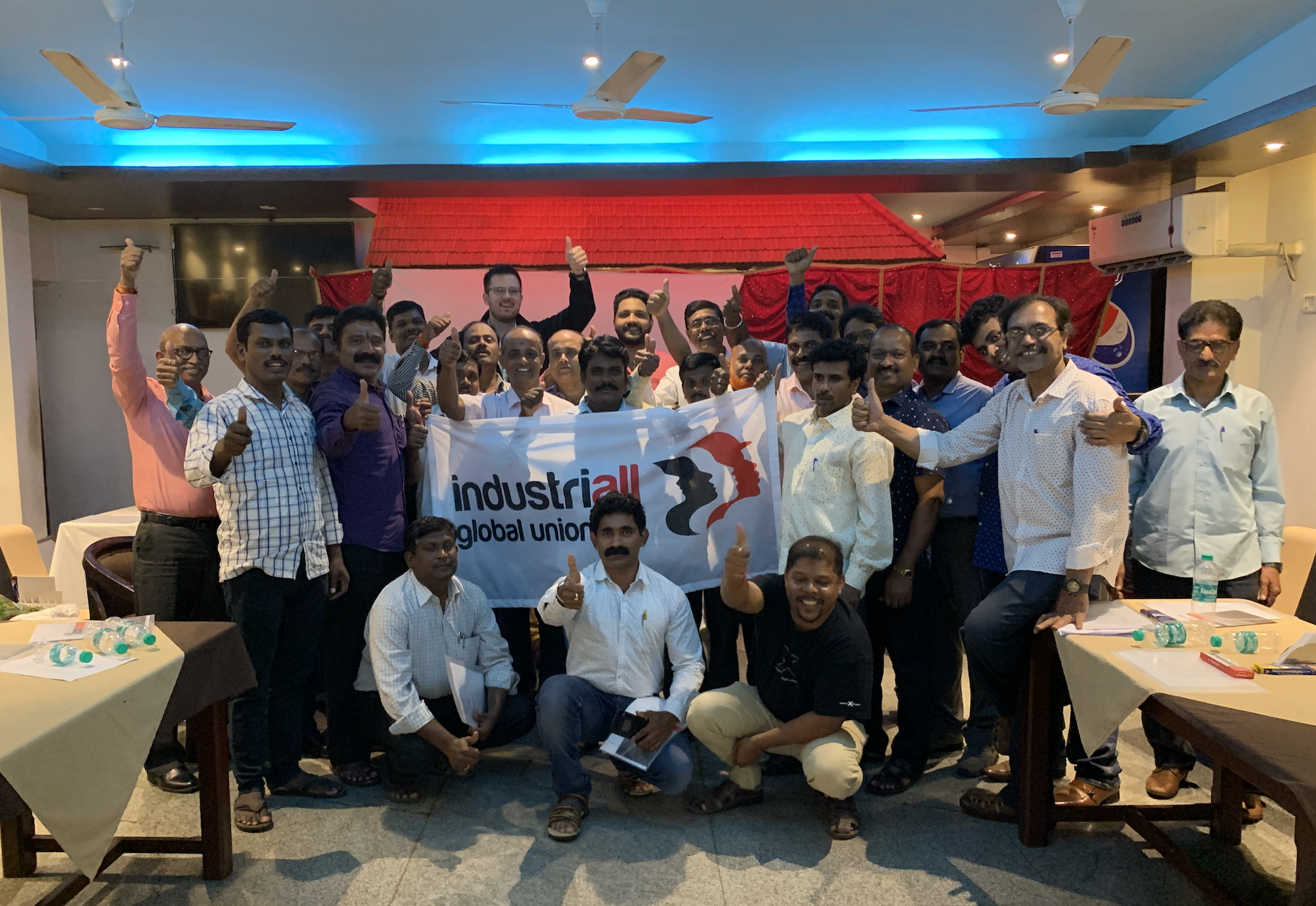
Photo from IndustriALL rally in Colombo, Sri Lanka, November 2017, together with affiliated unions from all over the world.

Union activists reinstated at Tanzila textile, Bangladesh

Tanzila Textile fired twelve workers in January this year, as they filed for union registration. The fired workers include the president, general secretary and executive body members of the proposed union.

The workers reached out to IndustriALL affiliate, Bangladesh Garment, Textile and Leather Workers' Federation (BGTLWF), for help. Following series of meetings involving IndustriALL, the Bangladesh Garment Manufacturers and Exporters Association (BGMEA) and brands supplying from Tanzila textile, an agreement was signed on 5 September to reinstate all 12 workers.


Kutubuddin Ahmed, BGTLWF president, says:

“This is an important victory for workers at Tanzila. IndustriALL’s strategic action ensured that stakeholders, including the suppliers and BGMEA, changed tack at Tanzila to protect workers’ right to freedom of association. Our struggle to defend union rights will continue.”

Eight of the fired workers have already gone back to work and the others are expected to join soon. All workers resuming their services will be paid equal wages and benefits as the other workers. The reinstated workers will also be paid for the time they were not working due to the company’s action.

The employer committed to not take any action against the workers, and the union agreed to withdraw their legal complaint against the employer.

Christina Hajagos-Clausen, IndustriALL textile director, says:

“We congratulate the BGTLWF and Tanzila workers for securing this significant success in these difficult times. IndustriALL will continue to take action to support affiliates’ efforts to protect the rights of their members.”

Tanzila textile is one of the leading garment and textile manufacturers in Dhaka, employing around 1,550 workers and supplying to, among others, Next, NKD, Li & Fung, Cotton On and ICA.

Ukrainian miners protest underground

29 miners have been protesting inside the Oktyabrskaya mine since 3 September. During this time, they have been exposed to harsh conditions with high levels of humidity and spreading fungus. Protesters are already reporting negative effects on their lungs and skin.

As management did not respond, on 7 and 8 September, 214 miners at the Rodina mine, 90 miners at the Gvardeyskaya mine and 60 miners at the Ternovskaya mine joined the underground protest.

The protests are widely supported on the surface. Since 5 September, hundreds of Kryvyi Rih miners and residents have held daily solidarity protests.


On 5 September, Sergei Novak, general director of Kryvyi Rih Iron Ore Plant, addressed the protesters in the street, and also went down the Oktyabrskaya mine to talk to the underground protesters for 1,5 hours.  However, since then the management has been silent.

Mykhailo Volynets, chairman of the Independent Trade Union of Miners of Ukraine, is calling on management to engage in social dialogue as soon as possible, as staying down the mine for a long time can have a negative effect on the miners’ health.

Ukrainian miners are fighting hard to bring attention to their challenges. On 5 September, coal miners came back to the surface from Nadezhda mine in Lviv region, where they held an underground protest for eight days demanding payment of wage arrears of UAH 61,54 million (US$ 2.2 million) that the state-owned mine owe them since March.

Kemal Özkan, IndustriALL assistant general secretary, says:

“We support the demands of the Ukrainian miners. We call on state authorities to pay all wage arrears to coal miners, and the Kryvyi Rih Iron Ore Plant management to engage in a social dialogue with unions to resolve the critical situation as soon as possible and avoid the dangerous underground protests in the future.”

Union takes Mauritian employer to court after migrant worker dies

Norul Amin, a Bangladeshi migrant worker, who died on 27 July, had a two-year contract with Fairy Textiles as a machine operator. When he got sick, he asked for leave to go to hospital but the employer refused; instead, he was asked to report for work. 

His health deteriorated further the following day while at work, and he was taken to hospital by his co-workers. Sadly, he did not receive enough attention because of the language barrier, as most Bangladeshi workers speak only Bangla. At the hospital he was given only pain killers, and later died of a heart attack.

Veer Gukhool, migrant workers specialist at CTSP says:

“For years, the union has sounded alarm bells on the unfair treatment of migrant workers. However, the government continues to amend laws to worsen their working conditions. With the increasing discrimination and limiting of workers’ rights, the union wants labour laws to be enforced, and adequate protection to be given to migrant workers in Mauritius.”

CTSP says Fairy Textiles, a textile and garment manufacturer exporting to Madagascar, South Africa, Europe, USA, and other countries, denied Amin his right to sick leave. This is contrary to Mauritian labour laws requiring the employer to not only grant sick leave but provide transport to sick workers who need to go to hospital. The union says workers are entitled to annual and sick leave.
 
The union hopes that the case will be heard as soon as possible after Fairy Textile initially refused to give time off to three workers who are witnesses. The workers have since given statements in support of the union court case.

Fairy Textile only released the workers after pressure from the union and the government. There are fears that the workers may be deported on the encouragement of the employer before the case is heard in court.

Christina Hajagos-Clausen, IndustriALL textile director, says:

“It is incumbent upon textile and garment companies to respect the rights of migrant workers to sick leave. It is inhuman that the Fairy Textiles management denied a sick worker his fundamental rights when he needed them most.”

To protect migrant workers’ rights in the textile and garment supply chains in Mauritius, IndustriALL and CTSP are working with  Anti-Slavery International, garment brand ASOS, and Ovibashi Karmi Unnayan Programme, a civil society organization that provides training to Bangladeshi migrant workers.
 

Sub Sahara Africa automotive sector: potential to boost manufacturing and create decent jobs

REPORT

In many cases, the Original Equipment Manufacturers (OEMs) do not plan to set up their own facilities from the beginning but are entering into arrangements with local contract manufacturers who assemble the vehicles in their plants. Moreover, the OEMs rarely introduce full-fledged manufacturing but start with semi-knocked down kits (SKD) and eventually have plans to move to completely knocked down kits (CKD) in the mid-term. Manufacturing value addition in SKD and CKD is rather low, and the small volumes at the plants often make investments in components manufacturing unlikely. Arguably, governments are overprotecting these small low-tech assembly plants. Some of the vehicles assembled in these plants would have been de-assembled to meet policy requirements for SKDs. The manufacturing value addition, in this instance, is small. 

SKDs are almost finished vehicles (completely build units) that are knocked down into a limited number of parts in the country of origin which will then be exported and reassembled in another country. A knock-down kit contains all the parts needed to make a car.

CKD refers to completely knocked down vehicles – about 40 per cent or higher of the equivalent of a complete vehicle. This means more parts will be assembled when compared to SKDs where there is minimal assembling.

Critics say SKDs and CKDs are not really manufacturing but “screw-driver” assembly plants that have little value addition.

In Kenya, for example, contract manufacturing is done through companies that have franchises to manufacture for the OEMs. For instance, Kenya Vehicle Manufacturers, where the government has shares hold franchises for Mercedes-Benz, Volkswagen and Chrysler. Another local company, AVA, assembles medium and heavy commercial vehicles for Mitsubishi and Fuso and Scania, Toyota, Hino and Tata.

There are also efforts to produce “homegrown” cars with several startups coming up with prototypes. In Kenya, Mobious Motors, started in 2009 by British entrepreneur Joel Jackson, plans to launch an all-terrain vehicle with an entry-level car that will cost US$12,500, which will be expensive for most people in the country. 

In South Africa, a joint venture between Mureza and Iran's SAIPA Group will see the production of a car that will retail for US$12,434. According to reports, the vehicle made from SKD and CKD kits will be manufactured in Zimbabwe and Botswana at ex-Mazda and ex-Hyundai factories. 

Kiira Motors also intends to launch a hybrid car in Uganda, while the Innoson Brand is another indigenous brand in Nigeria that started selling vehicles at US$9,555. Hopefully, when production begins, the jobs created will be decent.  

In SSA, one of the least developed regions in the world, most governments and policymakers see automotive manufacturing as critical to sustainable industrialization and economic development. Some African governments, for example in Ethiopia, Ghana, Kenya, Nigeria and South Africa are aware of the evidence from automotive manufacturing countries like Germany, the United States of America and Japan, South Korea, China and India, that the sector promotes industrialization. Processes like metal fabrication, plastics and electronics, and others contribute to this. Additionally, the global automotive sector value chain of vehicle manufacturers, importers, truck and bus assemblers, automotive parts makers and distributors, component manufacturers and suppliers, and retailers, can create thousands of much-needed decent jobs. These are essential in a region where unemployment is high and wages low.

Although technology is leading towards the development of electric vehicles (EVs) and autonomous vehicles (AVs), there is limited infrastructure to support these developments in SSA. However, the technological convergence between automotive, electrical and information technology companies can also create new jobs. SSA countries are seeing this as an opportunity to invest in research and development to tap into these emerging industries. This research and development can focus on components manufacturing and value addition to the locally available raw materials.

The automotive sector in SSA constitutes less than one per cent of global production. The industry is relatively small when compared to other parts of the globe and expected to produce only 2.3 per cent of the 82 million vehicles estimated to be built globally in 2020, when compared to China’s 30 per cent, Europe’s 22 per cent and North America’s 17 per cent. 

Considering this, the potential to increase production and create more decent jobs in SSA is vast. There is potential in SSA to build over 10 million passenger cars by 2030 to transport the growing population.

Unions on the organizing gear

IndustriALL affiliates organizing in the automotive sector are the Associated Union of Kenya Metalworkers (AUKMW), the Industrial & Commercial Workers Union (ICU) Ghana, Metal and Allied Namibian Workers Union (MANWU), the National Union of Metalworkers of South Africa (NUMSA), Steel and Engineering Workers Union of Nigeria, and Syndicat des Travailleurs de l’Industrie (Strigecomi) Rwanda. 

With the predicted expansion of the automotive sector in SSA, unions are already involved in recruitment and organizing. The union strategies are taking shape in different initiatives that include recruiting and organizing at the workplaces and factories and in the informal sector, collective bargaining workshops between unions across borders, and through IndustriALL global networks like the Volkswagen and Lear Networks. 

Global framework agreements (GFA) exist between IndustriALL and automotive companies Bosch, BMW, Ford, Daimler, Leoni, MAN, PSA Peugeot Citroen, Renault, Volkswagen and ZF, are essential for the unions. GFAs protect workers’ interests across a multinational company’s operations and are negotiated at the global level between trade unions and the company and include best standards of trade union rights, health, safety and environmental practices.

Recently, the AUKMW signed a collective bargaining agreement with Scania East Africa and a memorandum of understanding with informal mechanics and roadside workshops known as Jua Kali. Unions are using traditional organizing methods at factories while trying out new models of organizing the informal artisans who often work under precarious conditions. The unions want the informal workers to enjoy the same rights and benefits as other workers and for labour standards to protect them.

For example, the IndustriALL VW Network, supported by the Friedrich Ebert Stiftung Trade Union Competence Centre for Sub Saharan Africa, met in November 2019 to discuss trends on the expansion of VW in SSA. The meeting also discussed how to build the capacity of the network to promote social dialogue, collective bargaining and organizing and recruitment strategies, building solidarity and bilateral union support, building union power, and the implications of Industry 4.0 on the sector. IndustriALL affiliates from Ethiopia, Germany, Kenya, Rwanda, and South Africa attended the meeting.

The VW Network is also a platform for SSA unions to network with IG Metall and the European Works Council. The Lear network between the German union IG Metall and NUMSA is an example of a successful network in which European and African workers exchange ideas and strategies.

The Lear Network, started by the European Works Council in Lear and IG Metall, aims to establish a joint employee representative structure for Europe and Africa. This approach is strategic because the company treats Europe and Africa as a single entity. Further, strong company networks are useful in confronting global capital. Such networks also deal with the dominance of OEMs who undercut suppliers by dictating prices. The suppliers, in turn, reduce wages and sign precarious contracts with workers. For example, more than half the workers at Lear plants in South Africa are employed via temporary agencies and the network is campaigning for the workers to be given permanent jobs.

Georg Leutert, IndustriALL automotive director says: 

“In these times where more and more investments go into the auto sector in SSA, IndustriALL wants to cooperate even more closely with its African affiliates. We want to bring the relevant trade union actors together and make maximum use of our instruments of transnational cooperation and solidarity such as trade union networks, global framework agreements, workshops and global supply chain strategies.” 

Unions are building solidarity in different countries because they face similar problems in collective bargaining.For example, the AUKMW and NUMSA partnership focus on how the unions should carry out collective bargaining. At a recent meeting, the focus was on the mandate and report backs to given to union members during negotiations. Further, it highlights were on wage benchmarks, inflation adjustments, and promoting living wages. It was emphasized that unions also had to address economic issues like industrial growth, job opportunities and prospects for the automotive sector as part of collective bargaining negotiations. Ensuring that labour laws advanced job security and dispute resolution, and campaigns to end precarious work in the industry in Kenya and South Africa were also crucial.

Rose Omamo, AUKMW general secretary, says: 

“Investment in the automotive sector creates jobs and as unions we want those jobs to be decent jobs that pay living wages. The growth of the sector is an opportunity for unions to recruit more members and increase membership. Most of the precarious workers in the informal sector are unorganized and we are exploring how they can become union members. To improve our public and private transportation systems we need investment in the automotive sector as well as in infrastructure development. Even fleets for our local taxis – matatus – needs upgrading, and more buses should be put on the road to transport Kenyan workers.” 

Vusimuzi Mkhungo, NUMSA automotive sector coordinator, says: 

“Despite the challenges that we are facing we will continue to fight for better living and working conditions for our members. The standards that we have created through collective bargaining agreements signed with employers should be maintained, and this has been our message to our comrades in Kenya that they should persist in their fight to improve conditions. The exploitation of workers in other African countries should be confronted, and therefore we meet regularly to build our capacities.”

Government support crucial

Global experiences show that government industrial policies play a leading role in the success of the automotive sector. It should be the same in SSA where governments are playing a catalyst role to attract investment in the industry. The recently developed auto manufacturing zone with Ford in South Africa and the Peugeot and government agreement in Namibia are important. Automotive clusters like the Durban Automotive cluster in South Africa brings together private businesses, municipalities and automotive manufacturers to promote growth and competitiveness in local supply chains. The country clusters can be regional linked to form clusters for the development of the regional automotive supply chain. 

Further, SSA is rich in resources used to make vehicles. However, to get more out of the raw materials, governments are urged by unions, civil society organizations and communities to develop policies that promote value addition through the introduction of local content policies in the manufacturing of vehicles. 

Raw materials relevant for vehicle manufacturing have been described more like a curse than an advantage. The region is rich in raw materials, such as steel and aluminium. Over a dozen countries in SSA have vast reserves and can produce steel. For instance, in Mozambique, Mozal produces aluminium products and alloys. Liberia has provided natural rubber for decades at its Firestone rubber plantations. Regrettably, these raw materials are exported with no value addition resulting in the countries losing out on the revenue unlike if they were exported as finished products. The region also has platinum group metals and other base metals which are essential for vehicle manufacturing.

Recently, the increasing demand for electrical vehicles accelerated by the moving away from fossil fuels to renewable energy sees high demand for cobalt, a significant component in the manufacturing of batteries. The Democratic Republic of Congo has over 60 per cent of the world’s cobalt deposits. There is potential to produce battery cells in SSA. The challenge is that evidently, most African countries have no infrastructure for electric vehicles. 

Where the automotive sector succeeded, it was due to government support through favourable policies and subsidies. For example, in South Africa, where there is the Industrial Policy Action Plan from which the Automotive Production Development Programme is derived, both policy instruments are supported by the Department of Trade and Industry. Unions are involved in the policy processes through social dialogue. As a result, the automotive sector contributes 7.5 per cent to the country’s GDP, and South African vehicles are exported to over 140 countries. Unlike other African countries, South Africa has also banned used car imports to protect the local automotive industries. 

South Africa is an example of the potential of the automotive sector to create jobs. Despite the current decline, the industry still employs over 112,000 workers from component manufacturing to vehicle assembly while over 320,000 are employed on the value chain. However, the figures in other countries are low. South Africa has seven original OEMs which are BMW, Ford, Isuzu, Mercedes Benz, Nissan, Toyota and VW and other independent importers and distributors of passenger and heavy commercial vehicles. Government provides incentives such as tax rebates, reduced customs and excise duty.

Some of the challenges to African trade are from the many scattered small economies. With the signing of the African Continental Free Trade Area (AfCFTA) it is hoped that this will likely change. When fully operational the AfCFTA will integrate the regional economic communities into a single bloc. While the cooperation between Isuzu operations in Kenya and South Africa is an example of how regional integration can benefit the automotive sector, this can well be that Isuzu is evading high wages in South Africa to pay low wages in Kenya. In this case, over 3,000 light trucks are produced in South Africa with the final assembly of the SKD kits being done in Kenya where the vehicles are sold.

The success of the automotive sector is also dependent on controlling the influx of used cars from Europe, Japan, the United States and other countries. In countries such as Ghana, used car imports are causing stiff competition as most people opt for them because they are cheaper. To control this, the government is being requested to develop vehicle finance schemes for new cars. However, used cars come with risks that include not being suitable for the local conditions and are expensive to repair as most of the cars would have reached their lifespans.

Kenya, which also faces the same problem of used cars, has developed the National Automotive Policy that aims to curb the imports. In Kenya, like most SSA countries, 8 out of 10 vehicles are used cars.

In Nigeria, the National Automotive Industry Development Plan aims to revive the automotive sector by promoting the buying of locally produced vehicles. The plan also incentivizes global vehicle manufacturers through levy exemptions and charging high duty for imported used cars.

Further, rapid urbanization will lead to increased demand for transportation. Rising economic levels, asset ownership and educational levels that are leading to a growing middle-class of over 300 million are increasing the purchasing power of the continent’s populations making it possible for them to buy cars. However, the motorization rate for Sub Saharan Africa is currently low at 42 cars per 1,000 people, as compared to the US’s 837 and China’s 173. The global average is 180 per 1,000 people. More vehicles then are needed to transport the growing population and transform the mobility from animal-drawn carts and other traditional methods to modern forms of transportation.

Another demographic factor in the automotive industry favour is the growing population of the region, which has a current labour force of 500 million. According to the International Labour Organization, this labour force will grow to 676 million or about 20 per cent of the world’s workforce by 2030. There is enough labour for the automotive sector when more jobs become available.

With rising incomes through the payment of living wages and the increasing local demand for vehicles, there is a huge potential for the growth of the automotive sector in Sub Saharan Africa especially for passenger vehicles. Unions will gain new members as a result of job creation. But more jobs in the automotive industry and rapid industrialization in SSA will need strong industrial policies that promote automotive clusters to deal with, for instance, the influx of used cars often associated with corruption and smuggling.

IndustriALL’s regional automotive meeting will take place on a date and place to be announced because of the postponements that have been caused by the coronavirus disease pandemic. Trade unions representing auto workers from around the world will meet for the first time to exchange information and strategies on networks and GFAs and to finalize a related mapping exercise –where are all the plants, who is organized, who is not etc. 

South East Asia cement unions struggle for jobs and income at COVID-19 crisis

Around 35 union leaders from the cement sector in Indonesia, Philippines, Thailand and Vietnam discussed their experiences at a virtual regional workshop for South East Asia on 27 August.

Global cement production is immensely impacted by the pandemic. Cement multinationals, including LafargeHolcim, HeidelbergCement and CRH until recently were inclined to “retreat” from Asia region and their presence in Europe and North America was regarded as less risky. But pandemic might change this narrative. For instance LafargeHolcim was forced to keep its facilities in the Philippines through the decision by the antitrust national body in the country. But other players in view of pandemic may voluntary decide to stay or return to Asia where population is younger than in Europe.

Overcapacity entailing lower prices, economic losses and as consequence lower wages and worse conditions forkers in the cement industry remains a problem in the region. In Vietnam, some 30 per cent of the 103 million tons cement produced every year is exported, with the main importers being Bangladesh, China and the Philippines. Vietnam’s government is now launching a new strategy aimed at curbing their excessive capacity. The strategy includes an imposed rules to improve productivity and ecological footprint of the cement companies. In Vietnam there are close to 30 smaller 0.9 million ton per year producers. The new strategy is likely to affect them the most.

In fear of increased cement imports into already saturated cement market of Indonesia, unions have appealed to the government for a moratorium on new cement factories in the country and repeal the policy on cement and clinker imports. In case the imports continue cement workers may see increasing pressure on their wages and conditions.

Participants shared different measures adopted by the South East Asian governments to prevent further spread of the virus. Enhanced community quarantine in Philippines, large scale social restrictions in Indonesia and a night curfew in Thailand have severely affected trade union registration and restricted the movement and communication of unionists.

During quarantine in the Philippines, the Bureau of Labour Relations stopped processing all trade union applications from March till July, undermining organizing. In addition, because of dismissals during the pandemic workers end up in an informal economy. The unions try to assist workers who have lost their jobs until they find ones, and keep them as members.

In Indonesia, IndustriALL affiliate FSP ISI tries to engage young cement workers in the unions by educating them and inviting them to the union activities. In the next few years the union will also focus on organizing young women workers.

Cement unions in Thailand are planning to reform their union structure and to form a federation of cement unions with the view to create later an industry-based union.

With the view to continue and improve their communication on challenges and the ways to cope with them, the participants decided to explore the ways to stay in touch within the South East Asia cement network through a special group on Facebook.

IndustriALL South East Asia regional secretary Annie Adviento, says:

“Cement companies must ensure decent work for workers, while promoting employment. The issue of overcapacity must be addressed through social dialogue with unions, employers and the government.”

Alexander Ivanou, IndustriALL’s materials industries officer, says:

“All cement companies in South East Asia must provide social protection to their workers during the pandemic. This includes regular health checks, prevention protocols applied in close discussion with unions, and employers must restrain from dismissals in these uncertain times. As unions, we will continue to organize workers and fight for their safety at work.”

Toyo Tyres urged to recognize Malaysian rubber union

Toyo Tyre Malaysia, a subsidiary of Japanese Toyo Tires Group, has been discriminating against IndustriALL affiliate NUECMRP since the union sent a request of recognition in April 2014. An in-house union was quickly set up and recognized by the company.

With the intervention of Industrial Relations Department, NUECMRP won the first secret ballot and the support of 52 per cent of the workers. In accordance with the law, the Minister of Human Resources granted the recognition to NUECMRP.

Denying the recognition, Toyo Tyre applied for a judicial review to challenge the validity of the name list of workers used in the secret ballot, which had been provided by the company itself. After a long legal battle, the court overturned the Minister’s decision and ordered a new secret ballot.

IndustriALL Global Union general secretary Valter Sanches wrote to Toyo Tyre, urging the company to respect the first secret ballot result and recognize NUECMRP, but the request was ignored and discrimination against the union continued.

Abdullah Hussaini Bin Mohd Salleh, NUECMRP general secretary, says that in the days leading up to the second polling date on 18 August, the company allowed the in-house union to put up banners calling for the rejection of NUECMRP, workers were intimidated and the vote was not secret.

“On the day of the second ballot the workers’ identities were checked before they could cast their votes. The employer had engaged security guards on the company premises to intimidate the workers.”

“NUECMRP lost the second secret ballot because of the blatantly unfair practice. We have filed an official complaint on employer’s interference with the Industrial Relations Department. We will continue to fight until Toyo Tyre recognizes our right to represent the workers.”

Tom Grinter, IndustriALL rubber director, says:

"This is a clear case of blocking the workforce from exercising their right to organize. The Malaysian government is failing in its responsibilities under their ratification of ILO Convention 98, and the company is failing in its responsibilities under its own code of conduct."

Labour law changes and migrant workers' rights in India

In the webinar on ‘Labour law amendments and its implications for workers and unions in India’ on 4 August, Prof. K R Shyam Sundar of XLRI explained various aspects of labour law reforms and its implications for workers’ rights, and international labour standards towards paving the way for informed debate among IndustriALL affiliates.

Since 2014, the Modi government has restructured an expansive labour law regime of over 40 laws in to four codes, under the false assumption that the laws are archaic and need to be made more effective, flexible and in sync with the emerging economic and industrial scenario. The Code on wages was published in August 2019, and will come into effect.

The other three codes on occupational safety, health and working conditions, industrial relations, and social security were introduced in the lower house of the parliament and referred to parliamentary standing committee for further scrutiny.

These changes have been consistently opposed by trade unions. Under the banner of the Central Trade Unions, IndustriALL affiliates in India held massive demonstrations in January, July and August this year. The council of Global Unions has supported the Indian trade unions in their actions. IndustriALL Global Union has written to the government of India several times calling for the withdrawal of the anti-worker labour laws.

Sanjay Vadhavkar, general secretary of SMEFI and member of IndustriALL executive committee, said:

“The government’s attempt to simplify labour laws into four codes seem to serve corporate interests, while ignoring genuine concerns raised by trade unions. The Indian trade union movement is working together to stop state governments, which are using covid-19 as excuse, making far-reaching, anti-worker labour law changes.”

Ms. Ramapriya Gopalakrishnan, a lawyer specialized on labour laws, discussed ‘Rights of migrant workers’ on 25 August. With the backdrop of Covid-19 containment measures and lockdown, India has witnessed a massive crisis faced by migrant workers. Almost all migrant workers are engaged in contract work and most of them have no access to social security benefits. During the pandemic, many of the workers have lost their jobs and livelihood. The union leaders discussed and received clarification of various legal means to protect migrant workers rights.

Apoorva Kaiwar, South Asia IndustriALL regional secretary, said:

“The webinars were organized to increase awareness and to support our affiliates’ ongoing efforts in defending the rights of their members and migrant workers. IndustriALL will continue the discussions to strengthen workers’ rights.”

Union activist detained in Belarus over protest action

Two men in plain clothes approached the union activist as she was returning home together with her husband and small son in the afternoon. Without showing a warrant, the two men grabbed Lizaveta, took her telephone and put her in a car. One of the men briefly showed an id, not leaving enough time to read what it said and the intervention looked like a kidnapping.

Lizaveta was later taken to the local police station where she was interrogated by several people on her participation in the protest against rigged elections earlier the same day. She was released after a few hours, but the police kept her telephone and told her she would be summoned to a court hearing.

When Lizaveta was taken away by to the police, her husband called the local union leader and they informed other colleagues of the arrest. The police station allegedly received many calls both from inside and outside of Belarus, with union activists demanding explanations as for the reasons for the arrest. These acts of solidarity has certainly played a role in Lizaveta’s release.

Lizaveta Merliak says:

“I want to thank everyone; to a large extent I was released thanks to your solidarity. Unfortunately, right now other union members including Mikalaj Zimin, ex-chairman of BITU, and Anatoly Bokun, co-chairman of striking committee at Belaruskali, remain in prison. I urge you to extend your solidarity to them and all union and labour activists currently facing persecution in Belarus.”

BITU believes that the union’s active links with striking committees at different companies in Belarus can be the reasons behind Lizaveta’s arrest.

During the recent presidential elections in August, numerous cases of fraud and manipulation were reported in Belarus. A wave of spontaneous walkouts and wildcat protests of workers took place at large enterprises of Belarus in response to the extreme violence, arrests and detentions orchestrated by authoritarian President Alexander Lukashenko.

Workers created striking committees to coordinate protest activities and authorities replied with repressions and intimidations. Many members of the striking committees had to withdraw due to enormous pressure on themselves and members of their families. Some have even had even to escape to neighbouring countries over fears their life and freedom.

Photo credit: Piotr Markielau