Please send a message to the company management via LabourStart to express support and solidarity with the workers and their trade unions and urge the company management to engage in meaningful negotiations with miners and their unions.
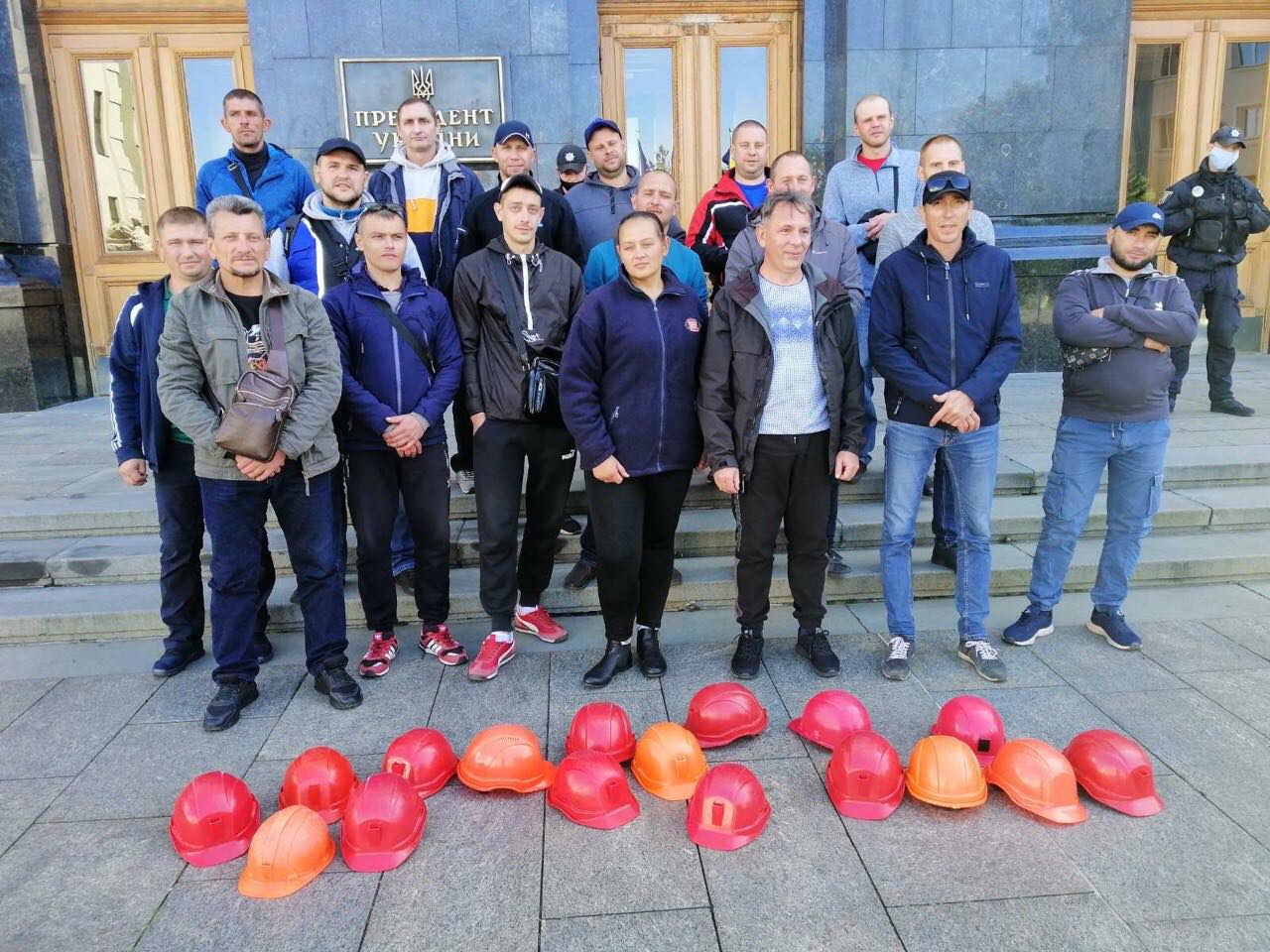
Miners demand a wage increase, better working conditions, pension preferences due to hazardous working conditions, an end to workplace safety assessment violations, and a change of management, which they believe is driving the company into crisis.
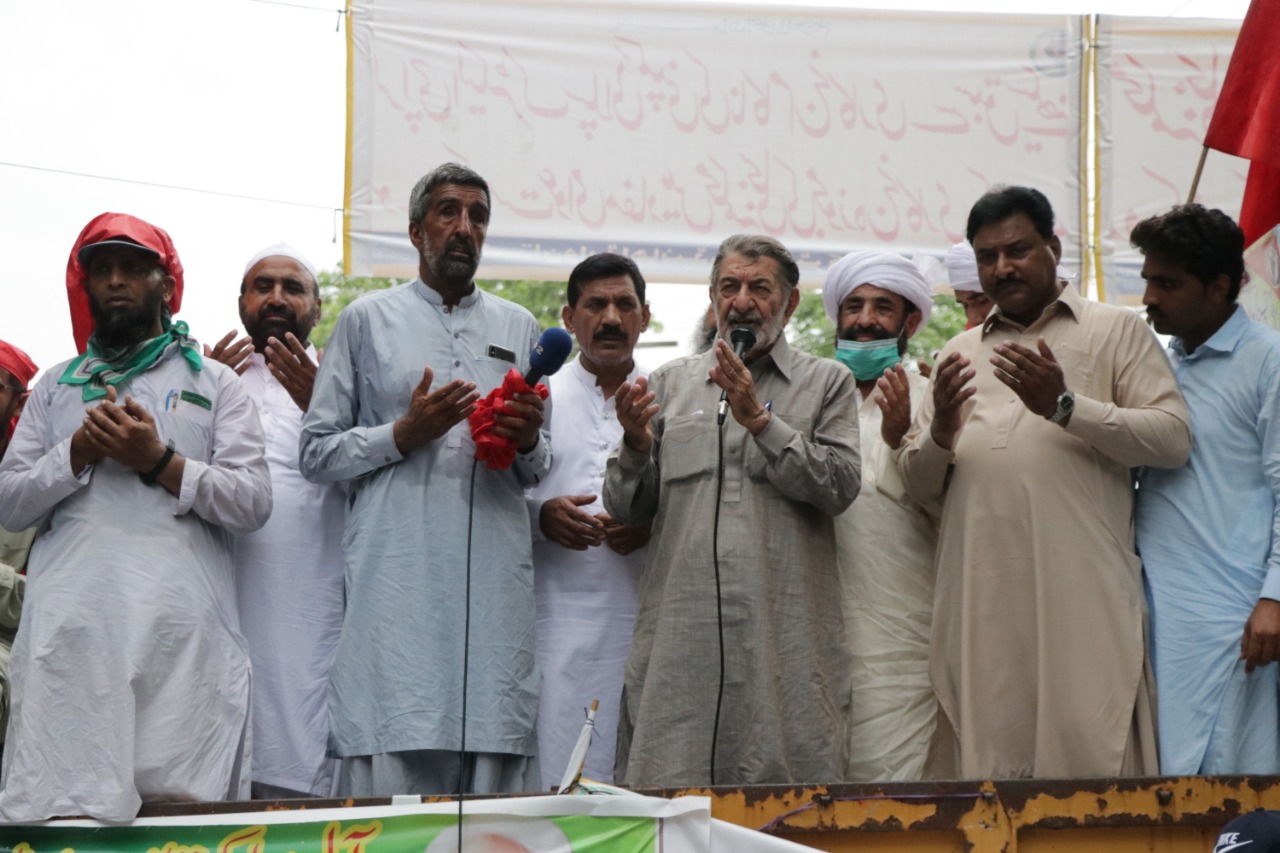
Family members, miners and local residents have held daily solidarity protests in Kryvyi Rih since the start of the dispute. Since last week, daily solidarity protests are being held in Kiev in front of the state authorities’ buildings.
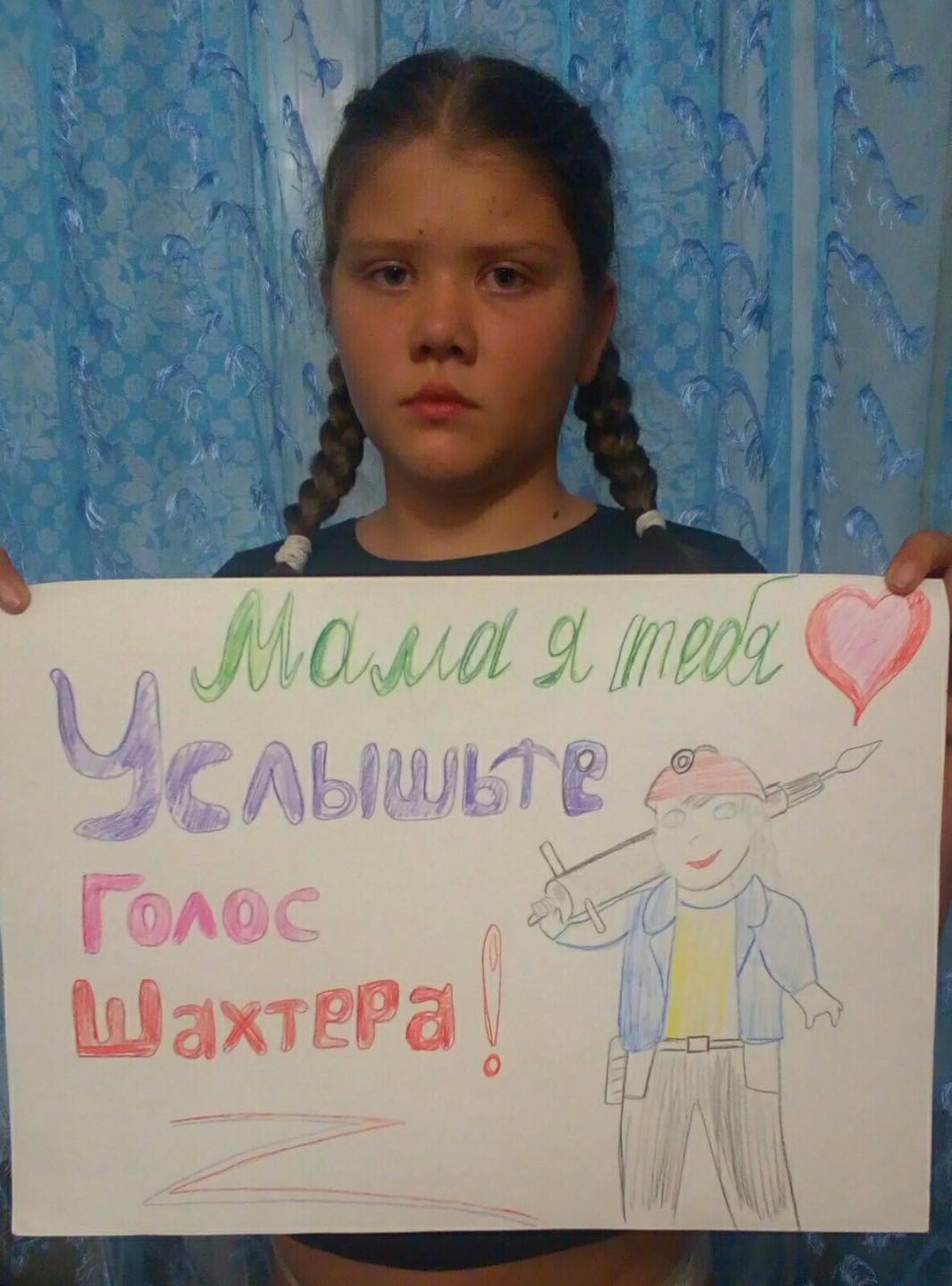
Miners’ children have also supported the protest by asking the company management to listen to the miners’ demands.
According to Mykhailo Volynets, chairman of the Independent Trade Union of Miners of Ukraine, negotiations between the protesting miners and the Kryvyi Rih Ore Plant management are scheduled for today.
Kemal Özkan, IndustriALL assistant general secretary, says:
“We urge the Kryvyi Rih Iron Ore Plant management to begin meaningful negotiations with miners and their unions and to refrain from any pressure against the protesters, union activists and their family members”.
The coronavirus crisis must be a call for unions to reshape the world
FEATURE
Text: Walton Pantland
The virus seems to have emerged at a fresh produce market in Wuhan, China, sometime late last year. Like the proverbial butterfly flapping its wings, the infected bat or pangolin has caused a storm of disruption across the world.
The pandemic perfectly exposes globalization, and its long, opaque supply chains. Everything is connected to everything else, but it’s not always clear how, or what we can do to influence the flow of money, power and information.
This is the environment trade unions have operated in since the 1980s: attempting to find local solutions to complex global problems, and learning to confront formless, footloose capital through growing international cooperation. Global unions pioneered a new workers’ internationalism, globalizing industrial relations with Global Framework Agreements, international solidarity campaigns, and leveraging consumer pressure on brands.
Shutterstock
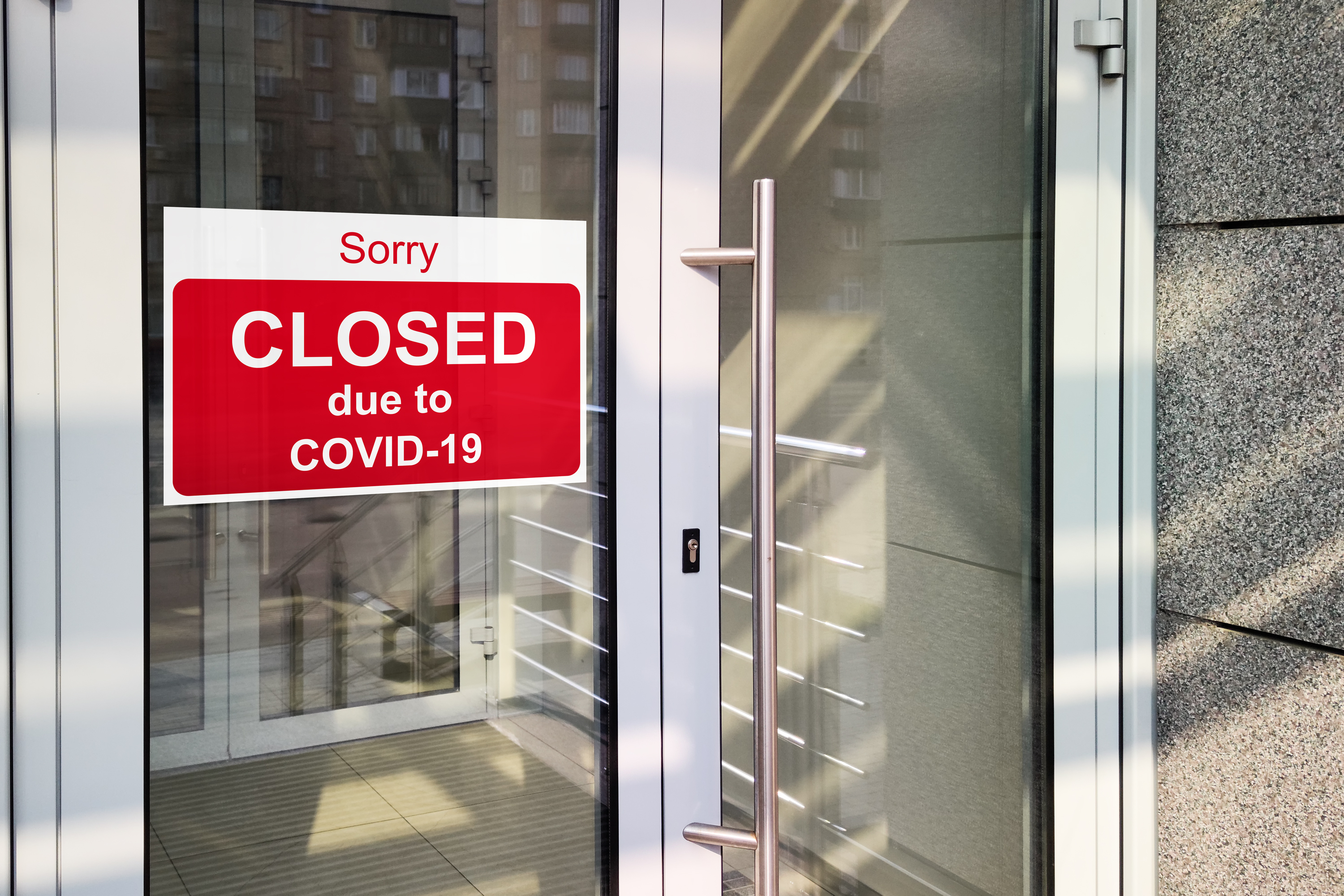
That world came to an abrupt halt in March this year. The global economy shut, borders closed and countries went into lockdown.
Now, as many countries begin a cautious reopening, the shape of the new world is yet to be defined. But the coronavirus crisis seems like a definitive break, a full stop.
The world will be different from now on.
The virus was hailed as a great leveler: rich or poor, we are all biologically susceptible to infection. In fact, it highlighted a distinct class divide. The virus first spread from China through the class of international business people who attend global meetings. It spread across Europe through the class that winters in Italian ski resorts, and to Africa and Latin America through the class that holidays in Europe.
The impact has also been uneven and unfair: the mobile, globalized people who spread the virus across the world are also the ones who are best placed to cope with it. Most can comfortably perform their white collar jobs from home, with the space and equipment they need.
Working class people – the ones who could never imagine a ski trip or a foreign holiday – have borne the brunt of the crisis: the unemployed on lockdown in overcrowded apartments; the health workers and hospital cleaners who have had to go to work without protective equipment, like soldiers going into battle without guns.
The supermarket, transport and delivery workers, until recently disparaged as low skilled, suddenly recognized as the essential glue that holds our societies together. And the workers in production who can’t build a car, sew a shirt, mine coal, or extract oil from the sofa.
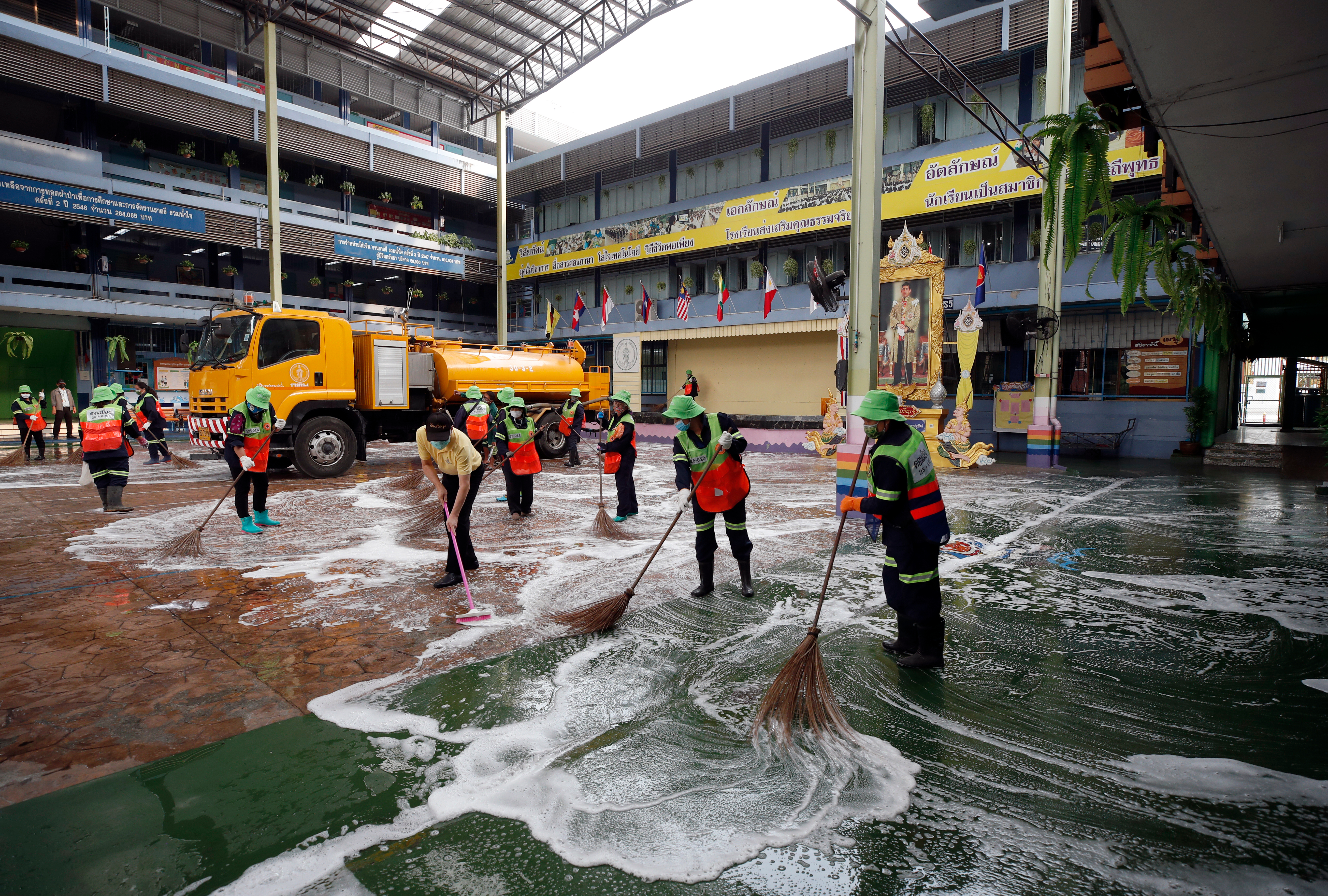
Workers cleaning in Thailand
Further inequalities have been exposed: there are more women than men in dangerous frontline jobs, and more people of colour. Those who were already vulnerable in this economy have been made more vulnerable.
Unions have responded well, mobilizing their activists and resources to defend working people. The furlough schemes that provide support for workers are the result of union campaigns, as is the pressure to provide protective equipment. Unions have highlighted the essential role played by underpaid workers in key areas of the economy. Many of our affiliates have negotiated lifesaving deals at national and company level, from South Africa to Brazil and Pakistan.
BREAKING: The govt has listened to unions and extended the job retention scheme till autumn.
Govt will still cover 80% of wages and has changed the rules to support short-time working, which is key to a gradual, safe return to work.
By negotiating pay during lockdown, millions of workers have been able to shelter safely, slowing the spread of the virus and saving countless lives. Unions have also been at the forefront of providing public health advice, and distributing sanitizer, masks and gloves. They have called for their workplaces to be repurposed to address the crisis, from auto plants making ventilators to clothes factories making face masks.
As a result, many countries are reporting a surge in people joining unions.
But the initial shape of the post-Covid-19 world is not good, at least if you’re a trade unionist. It is devastating to confront the carnage of lost jobs, recognizing that each one was supporting a family and a community. The sectors organized by IndustriALL are particularly hard hit: tens of thousands of garment workers were laid offas buyers cancelled orders. Nissan is shutting factories in Catalonia,Renault is cutting jobs, Rolls-Royce is slashing jobs at the Scottish factory that makes aeroplane engines, commodities prices are all over the place and we don’t know what the future holds for the oil and mining industries.
But we have to resist the conclusion that this carnage is the inevitable consequence of the coronavirus crisis, and see the different forces at work here:
Firstly, employers and right-wing governments are using coronavirus as an excuse to force through changes they wouldn’t be able to achieve in normal times. Indian states are suspending labour laws. BHP is forcing through shift changes. And many companies are cynically using the health crisis as an opportunity to lay off workers they wanted to get rid of anyway, while taking bail out money from governments.
The second factor is that coronavirus dramatically accelerated processes that were already underway. Auto plants have been closing for some time, and the labour movement is well aware that the future of mobility is uncertain.
We also know that fast fashion is not sustainable. We know that we need to transition from a fossil fuel-based economy to a green economy. We know there is no long-term future in oil or coal. We are clear that climate change requires a very different economy.
And we’ve done the policy work and made the preparations. We are ready for this. We’ve made the arguments for a Just Transition, and developed detailed policy proposals for how this will look in different sectors.
What has been missing so far is political will. Most governments have been content to take a hands-off approach, hoping that a few gentle nudges will be enough to entice the private sector to invest in transformation. And the private sector has waited for a clear sign of commitment from government about the direction of travel.
Coronavirus showed that it is possible for governments to act quickly and boldly, to take decisions that will have dramatic consequences. Conservative governments that spent years complaining of empty coffers suddenly found billions to stop the collapse of society. Millions of workers were placed on furlough, receiving public money, and companies received financial support.
Economists are realizing – or admitting – that government budgets are not like household budgets, and maybe huge deficits are not a problem: the money never has to be paid back. Austerity and precarity were always political projects, and never necessary for economic or social reasons.
I agree with Kelton about deficits not being a problem. But I get that from perfectly conventional macroeconomics, not MMT. What does MMT contribute here? https://t.co/1rrWDG0Dz1
These bold policy responses have reignited conversations around Universal Basic Income, the value of essential and frontline workers and many other aspects of the old normal that were taken for granted.
Shutterstock
The new normal must be different.
After World War Two, Europe lay in ruins. Money was found to reconstruct the continent, and that rebuilding laid the groundwork for the welfare state that was so successful until it was torn apart by Thatcher and Reagan’s neoliberal counter-revolution.
The Just Recovery from Covid-19 must be another moment like this. Governments and companies must find the resources to rebuild a just and green economy. We need a globally coordinated effort to create a New Deal. We need more than bailouts. We need massive public investment in the future. Our role as trade unionists is to demand this, to argue for it, to promote our policies, and to strike for the future if we have to.
On 13 and 15 August, women were the first to take to the streets, protesting against Lukashenko’s claims to have won the presidential elections. Thousands of protesters were arrested, and the images of tortured and beaten prisoners brought women to the streets to protest against police terror. Strikes in many state-owned factories followed the peaceful protests.
Since the beginning of the resistance against Lukashenko, women have been involved and women trade unionists continue to play an active role in the movement.
Patriarchy is deeply institutionalized in Belarus, reaching all the way to the top. When Lukashenko received news of the candidacy of Svetlana Tikhanovskaya, the wife of a jailed political opponent, he remarked that a housewife would never be a real competitor.
In May, Lukashenko claimed that the Belarusian society "has not yet matured enough to vote for a woman", saying this was "because according to the constitution, our president has strong powers".
The candidate and her two female allies during the campaign, Veronika Tsepkalo, also spouse of a male presidential candidate, and Maria Kolesnikova, member of the election office of another male political opponent Viktor Babaryko, have shown the Belarus society that women can raise their voices and be leaders. Their actions have inspired many of the thousands of women taking to the streets for more than a month.
The images of the violent police repression show that women have not been spared. During the presidential campaign, Amnesty international denounced the Belarusian authorities for targeting women activists and family members of political opposition representatives. The night of the alleged re-election of the dictator, women protesters were arrested and there were reports of rape of female prisoners.
Zinaida Mikhniuk, chair of the Radio and Electronics Industry Workers’ Union, an affiliate of IndustriALL, says:
“I support Svetlana Tikhanovskaya because as women we should be able to decide for ourselves whether we want to be housewives or not, and not be forced to take a bank loan in order to equip our children for school when both parents are working. We, the women in Belarus, are a benchmark for many men; they cannot afford to be weak next to us. We are courageous, strong and determined, we stand with our husbands, brothers and especially our children and we will not stop fighting for ours and their future.”
Unions call for rapid and sustainable industrialization of Africa
The United Nations marks 20 November as Africa Industrialization Day, saying that “the success of Africa’s industrialization programme will require the creation of enabling environment.” Unions insist that this requires the participation of the whole of society, particularly workers and trade unions.
IndustriALL and its affiliates in the region have consistently campaigned for the rapid industrialization and sustainable development of the continent and individual countries through various events, actions and activities.
Issa Aremu, IndustriALL vice president for the region said:
“Local level engagement on industrial policies is key, and trade unions should include sustainable industrial policies in their everyday work and also fight for beneficiation of industrial raw materials such as oil and minerals.”
The think tank, held on September 9, is part of a series of activities in preparation for Africa Industrialization Week, which runs from 17-23 November, after the Virtual Youth and Industrialization Conference on July 31.
The expert report discussed in the meeting outlined that “if proper institutions are set up at national level to support the implementation of the AfCFTA; then there is potential to address obstacles that African countries face in global production and trade systems.” The report also shows that the shocks that Covid-19 brought to African economies include reduced trade with China, Africa’s biggest trading partner. But domestic industries have manufacturing capacity, as recently seen in the production of Covid-19 supplies including hand sanitizers, gloves, masks, liquid soap, and ventilators.
The participants discussed the role of intergovernmental institutions, particularly the African Union (AU), in promoting faster industrialization through programmes, including the Accelerated Industrial Development of Africa (AIDA) programme that falls under the Agenda 2063 plan that promotes regional integration.
One of the plan’s flagship projects is the African Continental Free Trade Area (AfCFTA), which became operational in 2019 with a secretariat in Ghana. The AfCFTA is expected to boost intra-African trade and create thousands of jobs.
The African Development Bank was also highlighted as an institution where IndustriALL and its affiliates should seek policy development and concrete implementation for industrialization.
The think tank decided to take interact directly with these institutions to raise workers’ demands for a fairer economy.
The meeting also discussed union demands on sustainable mining as proposed in the African Mining Vision (AMV). “Minerals should be linked to greater sustainable socio-economic development through fiscal and economic linkages that are at the heart of the AMV,” said IndustriALL mining director Glen Mpufane.
“Sustainable mining means the existence of public policies that promote the use of mineral resources for economic and social development, and to avert the worst impacts on the environment through strict regulations,” added Brian Kohler, director for health, safety and sustainability.
The think tank coincides with a global debate on the transformation of economies, reconfiguration of international production and reshaping of global supply chains. The participants underlined the importance of a shift to sustainable economic development policies, especially after the disruption caused by the Covid-19 pandemic.
IndustriALL assistant general secretary Kemal Özkan said:
“As part of the Africa Industrialization campaign, over the next two months, we will continue to take action at regional and country level in Africa. We will continue to highlight the important role that unions can and should play to influence policy engagement at national and regional levels”.
Following a series of actions, the campaign programme for 2020 will have a virtual event on November 20 for voicing unions’ demands.
Paper, packaging and graphical unions team up on safety rights
This is the third global action of the 3R campaign led by IndustriALL Global Union and UNI Global Union. Each centres around one of three core rights:
Right to know about hazards at work
Right to refuse, or to shut down, unsafe work
Right to participate fully in health and safety decision-making
All multinational companies across the industry have workplace health and safety programmes. Some are designed in corporate offices and sent to local managers to implement. Other companies do it differently, with unions and worker safety representatives involved in the creation of policies, programmes and procedures. This month’s work promotes those that are jointly designed and monitored by providing resources to union workers across the industries.
Leeann Foster, IndustriALL Pulp and Paper Sector Co-Chair and USW International Vice-President leads this safety and health work. She said:
“In North America we rolled out this third coordinated action on our Labour Day, 7 September. Over 70,000 USW paper workers have received the action materials. Nobody wants death or injury to occur in their industry, not unions, nor employers. But to make the change we must take action to ensure the three core rights of safety are a reality, and not just words.”
As the world grapples with the pandemic, many companies are rolling out new rules on health and safety, from personal hygiene, to restricted visitors, to physical distancing. This is a vital time for worker participation in identifying the hazards, and how to mitigate them.
Effective safety management of the mills and factories in this industry can only be achieved if workers have the Right to Participate in the decision making. Unions make work safer.
Joint Health and Safety Committees are provided by law in many countries, but they were initially products of collective bargaining. The worker representatives on those committees must be elected, and not chosen by management.
The two global unions active in these sectors, IndustriALL Global Union and UNI Global Union are working together to support these international safety actions.
President of UNI Graphical & Packaging, Joaquina Rodriguez Torrejon said:
“Experience shows us that in matters as important as health and safety, the management of the company cannot be the only one to decide. It is imperative to establish joint structures in which trade unions and employers jointly decide on measures to protect workers.”
Electricity workers in Pakistan demand safety
Workers in electricity sector are faced with challenging working conditions to ensure that 27 million consumers in Pakistan receive electricity. On 16 September, workers from Pakistan Water and Power Development Authority (WAPDA) and several power distribution companies all over Pakistan, observed a safety day.
IndustriALL affiliate, All Pakistan WAPDA Hydro Electric Workers Union (APWHEWU), held the safety day to create awareness and promote a safety culture among field staff. They union discussed ways to prevent workplace accidents to ensure that the line staff work with the appropriate safety measures.
Khurshid Ahmed, APWHEWU general secretary, said:
“Electricity workers are risking their lives to provide electricity across the country and they should not work in unsafe conditions. Pakistan has witnessed a massive rise in electricity work, but the sector faces serious shortage of staff due to the government-imposed ban on recruitment of new staff, and retired staff are not replaced. The Ministry of Energy should fill the vacant posts. We also demand an end to the contract and daily workers system and instead make them regular workers, in both public and private companies. This would go a long way in improving safety.
“The government of Pakistan should reform the distribution companies to raise their operational efficiency and safety measures with the cooperation with workers, but should refrain from privatization.”
The APWHEWU says that given the steeply rising prices of essential commodities, the government should increase wages and pensions of those working in the public sector. The government should work with workers’ organizations to resolve the issues raised under the ILO Tripartite Consultation Convention 144, ratified by the government.
In his solidarity message, IndustriALL general secretary Valter Sanches, said:
“It is shocking to note that large number of workers continue to become victims of accidents. Workers should be informed and trained to handle hazardous work and they should have the right to refuse unsafe work.
“Management should take responsibility to improve safety, while involving the workforce in the decision-making process. IndustriALL Global Union will support its affiliate, APWHEWU in its efforts to improve workplace safety.”
Union says Covid-19 opportunism is behind wage disputes in South Africa
IndustriALL affiliate SACTWU says some employers are proposing to reduce wages by 20 per cent and to pay less towards pension funds. In addition, the employers do not want to pay annual bonuses and shift allowances.
If implemented, the employer proposals will reverse the gains of SACTWU’s living wage campaign. In March, SACTWU successfully negotiated a deal in which workers received full-pay during the early days of the country’s lockdown.
To defend the gains, SACTWU has declared a wage dispute in the textile and garment sectors. The sectors include workers employed in the manufacturing of non-woven goods such as nappies and bedding, woven goods like textile fabrics, handbags and leather products, manufactured fibre, industrial textiles, and the laundry sector that caters for hospitals and hotels. In the home textiles sector, a settlement has been reached.
The declaration of the dispute comes after three months of failed negotiations with employer associations under the National Bargaining Council for the Clothing Manufacturing Industry. The employers’ associations that were involved in the negotiations include the South African Apparel Association, Apparel and Textile Association of South Africa, Transvaal Clothing Manufacturing Association, Eastern Province Clothing Manufacturing Association, and the South African Clothing Manufacturers Association. SACTWU is also involved in plant-based bargaining where disputes have been declared.
Andre Kriel, SACTWU general secretary, says:
“While we acknowledge that the lockdown has been difficult for our industry, we will not just sit by and meekly accept these brutal employer attacks on our members’ standard of living. We are determined not to allow workers’ decades-long and hard-won conditions of employment and gains to be eradicated by employers who are hell-bent on opportunistically using the Covid-19 crisis to rob our members of what is rightfully theirs.”
Due to Covid-19, negotiations took place virtually. According to SACTWU, the disputes will now go for compulsory conciliation processes.
Christina Hajagos-Clausen, IndustriALL director for the textile and garment industry, says:
“Unions must stand firm against the push backs from employers. Jobs, wages, and benefits must be protected and not sacrificed.”
Employer sues Eswatini union for strike damages
ATUSWA, affiliated to IndustriALL Global Union, says it will challenge the claims that are meant to bankrupt the union and that employers are using this strategy to waste union resources through legal fees. The union argues that employers’ reasoning is that less money for the union means poor service to members and that a weak union will then lead to members becoming disgruntled with the union.
Wander Mkhonza, ATUSWA general secretary says:
“This is a classic case of union busting. Employers in the textile and garment sector are taking the legal route not because they seek redress in the courts but simply to frustrate unions and force them to incur huge legal fees.
"The employers are not even worried about whether they will win the cases; they simply go to court because they have the money for cases that drag forever fully aware that unions will lose financially in long court battles.”
In August 2018, ATUSWA, met with its members at Zheng Yong, Nhlangano, to decide on whether to go-ahead with a proposed strike action on living wages following a dispute with the employer. The meeting attracted thousands of workers from other factories.
However, workers opted for negotiations through the collective agreement that the union had with Zheng Yong. Living wages being one of the main grievances of workers in the textile and garment sector who are paid E1800 per month (US$108). The union is campaigning for a minimum living wage of E3500 (US$210).
When the workers went back to work after the meeting, the Zheng Yong management had locked the gates incensing the workers who then picketed, with workers from FTM garments and other factories joining in the action. The police worsened the tense situation by firing teargas into workers who had gathered, sparking the demonstrations.
Christina Hajagos-Clausen, IndustriALL director for the textile and garment industry says:
“Factory owners should strive to build better industrial relations with trade unions and not plot to destroy them. Taking the union to court on false charges is an act of bad faith by FTM Garments.”
Fighting for workers’ rights in South East Asia
Since August, IndustriALL has organized country strategic planning meetings with affiliates from Indonesia, Malaysia, Cambodia, Thailand, Myanmar and Philippines, with more than one hundred union leaders participating.
Workers in South East Asia have been hit hard by the coronavirus with mass layoffs, furlough or terminations. Employers have used Covid-19 as a pretext to dismiss union leaders and members in Cambodia, Myanmar, Thailand and Indonesia.
Trade unions have responded by staging strikes and demonstrations, requesting international solidarity campaign and using global framework agreements to exert pressure on manufacturers.
Unions in the Philippines and Indonesia are calling their governments to declare Covid-19 as occupational disease, which the Malaysian government did in April 2020.
Unions in the three countries have been advocating for labour law reforms to defend workers’ rights.
Malaysian unions formed a labour law reform coalition with other global union affiliates to campaign for a reform of colonial labour legislation.
Unions in the Philippines are working together with congressmen on the Security of tenure bill, urging the government to end contract work.
Indonesian affiliates are opposing the so called Omnibus bill on job creation, which they say will remove current rights and benefits.
Trade unions are increasingly concerned about health and safety as members contract Covid-19. Philippine metal sector unions are recommending strengthening safety and health provision in collective agreements. This was echoed in a recent meeting with young workers, where Singapore affiliates argued for improving collective agreements in term of safety and health, employment security and upskilling.
IndustriALL South East Asia regional secretary Annie Adviento says:
“Affiliates in the region are active in women’s rights campaigns, like the ratification of Conventions 183 and 190, and young workers are participating in annual exchange forums. We will continue to build capacity for women and youth, while building union power.”
IndustriALL assistant general secretary Kemal Özkan says:
“We need to overcome challenges with solidarity and commit to build a fair workplace, a sound health system and a democratic society. Let’s use occupational safety and health as a tool to organize workers and protect their rights.”
Inadequate minimum wage increase hits workers hard
The government in Cambodia failed to meet the demands of the unions as they set the minimum wage for 2021 at US$192. Unions argued for an increase of US$12.35 from the existing minimum wage of US $190, based inflation rate, productivity and profitability.
However, the employer associations wanted the minimum wage to be reduced to US$172.62, and a government study showed that the new minimum wage should be US$186.
The tripartite meeting, with representatives from unions, employer associations and the government, failed to reach a consensus at the National Council for Minimum Wage on 9-10 September in Phnom Penh.
Subsequently, Cambodia’s Prime Minister Hun Sen, announced the new rate, effective as of 1 January 2021.
Dismayed by the decision, the president of Coalition of Cambodian Apparel Workers Democratic Union (CCAWDU) Kong Athit, says:
“Our members are dissatisfied with the insignificant increase of US$2. During these hard times, workers have little bargaining power to challenge the decision.”
Agreeing with Athit, the vice president of Federation of Free Trade Union of Workers of the Kingdom of Cambodia (FTUWKC) Mann Senghak, adds:
“We are unhappy, but are left with no choice as both the employers’ and the government’s calculations indicate a negative growth rate. Moreover the governments of Vietnam and Bangladesh have decided to freeze minimum wages in 2021.“
IndustriALL South East Asia regional secretary Annie Adviento, says:
“The employers’ proposal to cut wages during the pandemic when the inflation rate on food has skyrocketed from 2.1 per cent in 2019 to 4.3 per cent in 2020 is appalling.
“Workers and their families are suffering; we will continue to support our Cambodian affiliates to ensure that workers’ right to a decent living standard is respected.”