Bangladesh: union win to reinstate pregnant garment workers

The Covid-19 pandemic has deeply affected the Bangladesh garment industry. Large numbers of workers have been retrenched, and some companies have used the pandemic as a pretext.

When managers at Adams Apparels found out that some of the employees were pregnant during an internal medical check-up, they proceeded to sack the pregnant workers one by one in May and June this year.

IndustriALL affiliate BGTLWF filed a complaint on behalf of the workers to the Bangladesh Garment Manufacturers and Exporters Association (BGMEA), seeking its intervention.

After comprehensive negotiations between BGMEA, Adams Apparels and the BGTLWF, the employer and the union reached an agreement and signed Memorandum of Understanding (MOU).  According to the MoU, the pregnant workers are to be paid compensation and be reinstated.

By 20 September, each pregnant worker has been paid Tk. 25,000.00 (US$ 289). It was also agreed that the women will resume their normal duties at work, once they feel fit to return after having given birth.

Kutubuddin Ahmed, BGTLWF president, says:

“This is an important victory, especially given the challenges faced by workers during Covid-19. Despite all our efforts, it is an uphill battle to win legally provided workers’ rights, like the right to maternity benefit.
 
“We signed the MoU in order to provide quick relief and ensure pregnant workers’ job security. We hope that, despite its limitations, this MoU will act as a deterrent and ensure that employers respect workers right to maternity benefits.”
Strike at Cerrejón Colombia continues

IndustriALL Global Union affiliate Sintracarbón is resisting the shift change that would mean a reduction of 2,500 direct and indirect jobs. According to Igor Díaz, Sintracarbón president, the decision was made without consulting the union and is in violation of Colombian law.

"We are continuing the strike as the company has taken a firm position to remove benefits that are historically included in our collective agreement, and also wants to implement a shift system that will affect workers’ health,"

he said.

The new shift system – which workers call the “death shift” – will require workers to work an additional 72 days per year with no wage increase. Workers will move directly from day to night shifts without recovery time in a seven day cycle, with no transport home between shifts. It will disrupt family life, generate greater exhaustion and, as a result, increase workplace accidents.

The company argues that the shift change is necessary to make the mine financially sustainable, and is not subject to negotiation. According to Sintracarbón, the company is trying to reduce benefits in the collective agreement to finance the cost of compensating the workers who will be dismissed as a result of the introduction of the new shift.

The Ministry of Labour summoned the parties to open dialogue to resolve the conflict, but Cerrejón did not respond. The union is willing to engage in  tripartite dialogue, but Cerrejón does not want the government to intervene.

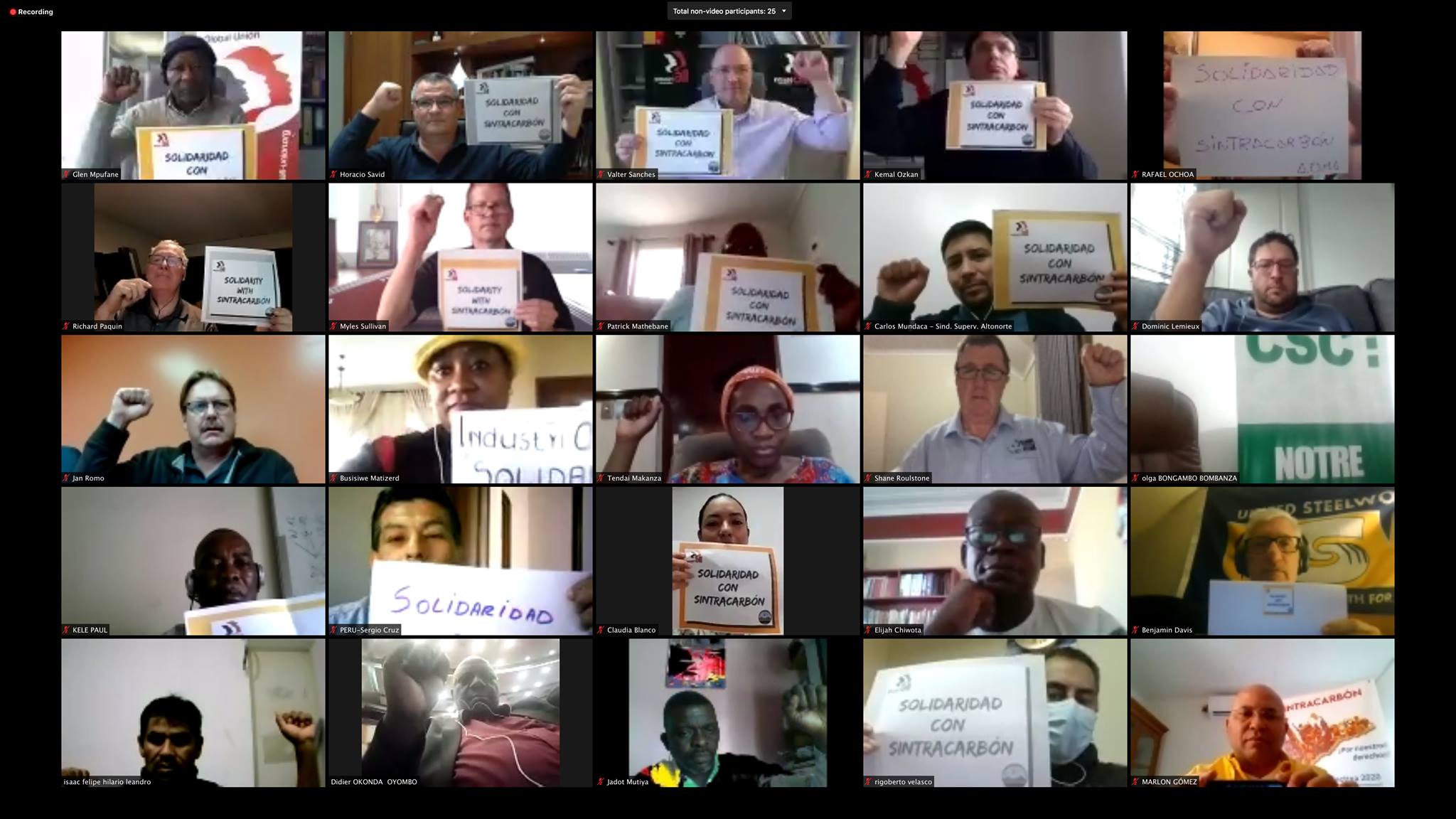
During its meeting on 25 September, the Glencore global union network expressed solidarity with members of Sintracarbón and called on Glencore to urge Cerrejón to return to the negotiating table and seek a solution that benefits workers, the community, the company and the country.


IndustriALL assistant general secretary Kemal Özkan says:

“It is unacceptable that Cerrejón uses workers to reduce costs, demanding that they make huge concessions that will worsen their working conditions, including the inhuman shift change. The IndustriALL global union family supports the strike for justice, equality and dignity. Sintracarbón can count on our support to ensure justice is done in the workplace.

“In accordance with the workers’ demands, Cerrejón must return to the negotiation table to find solutions in everyone’s interest. Otherwise, IndustriALL will continue to take action vis-à-vis the company's customers and major shareholders.”

Cerrejón produces coal for export to utility companies around the world.

Indonesian union FSPMI condemns illegal dismissal at ceramic company PT Jui Shin

In May 2020, PT Jui Shin Indonesia (PTJSI), a ceramic tile company located in North Sumatra province, informed workers about dismissals due to reduced profit during the Covid-19 pandemic. The unilateral dismissals violate Manpower Act No. 13 of 2003, which clearly states that a bipartite negotiation with trade union must be held before any dismissal.

To protest the company’s refusal to negotiate, workers went on strike on 11 May. In retaliation a few days later, the company dismissed 197 workers, including all local committee members of FSPMI.

The local and provincial-level union lodged complaints with the district labour department of North Sumatra. They criticized the labour department for failing to respond to workers’ demands.

Workers and their union organized a number of protest actions, including one on 12 September, when 30 workers dismissed by PTJSI organized a “sleep-in” protest at the industrial zone near the company location. The action sent a message that the labour law was dead.

FSPMI president Said Iqbal says :

“We demand the Minister of Manpower to visit the workers and resolve the dispute. The government must enforce the labour law and take stern action against PTJSI. It is a fact that Covid-19 has emboldened employers to break laws and bust unions.

“Since February, as many as 3,121 FSPMI members have been terminated, around ten thousand were furloughed without being paid or partially paid or discontinued their contracts. This is an acute job crisis. That’s why we ask the government to focus on the issue of mass dismissal rather than Omnibus bill.”

Valter Sanches, IndustriALL Global Union general secretary, wrote to the company, saying:

“We are outraged to learn that your company refused to go through the legally required preliminary bipartite negotiation with the FSPMI local union and unilaterally dismissed 197 workers in May 2020. This is a blatant violation of the Manpower Act No. 13 from 2003 and is also a serious breach of the rule of law in Indonesia.

“We urge PT Jui Shin Indonesia to immediately reinstate the 197 workers dismissed in May 2020 with all back pay, benefits and seniority.”

IndustriALL Global Union and TUAC raise concerns at OECD Steel Committee

Recent OECD analysis shows that global steel production declined in 2019, with the exception of Asia and the Middle East. The Covid-19 pandemic has marked “the steepest decline in steel demand since the global financial crisis of 2008-09”, if not in history.

In this context, the rising steel production capacity in China is of particular concern for countries worldwide. In its Latest Developments in Steelmaking Capacity 2020,  the OECD included plant-level data for China, revising the country’s output for 2019 upwards by 96 million metric tons, compared to the previous estimate (September 2019).

This more than offsets the country’s declared reduction in steel output between 2016 and 2018. Rising illegal new capacity in China, as well as the increase in capacity swaps both within and outside national borders, exasperates unfair global competition that further endangers the preservation of existing jobs in many countries.

The challenge is twofold. On the one hand, it is socially useful, and hence imperative, to preserve global employment levels in the steel industry throughout the current recession. Government measures taken in the first months of the Covid-19 crisis, including strengthened short-term work schemes and social protection, played a crucial role in safeguarding jobs and incomes in many OECD countries.

Yet, unless prolonged, most of these emergency measures have sunset clauses that are close to expiration or have already expired, making it difficult to predict developments in employment levels in the short term: once a blast furnace is shut down, it is extremely likely that it will never be re-started.

TUAC and IndustriALL Global Union demanded from governments and employers to ensure that the strictest occupational health and safety standards are applied, in order for employees to continue to work during the Covid-19 pandemic.

TUAC is managing an online mapping of trade union and social partners’ agreements to safeguard jobs and ensure occupational health & safety in response to the Covid-19 crisis. The most effective way to ensure appropriate occupational health and safety measures is to fully respect and use social dialogue structures, including establishing joint health and safety committees at plant and company level.

TUAC and IndustriALL Global Union encouraged the OECD Steel Committee to delve deeper into employment-related issues in the steel sector in their future work.

This includes working with other OECD Committees, in order to analyse how the structural changes in the steel sector (production overcapacity, falling demand and the need for a green transition) impact steel workers across the globe and identifying the best policies and practices available to safeguard jobs and ensure a Just Transition when necessary.

To this end, TUAC and IndustriALL Global Union encouraged both governments and employers to sit at the table with workers’ representatives and trade unions in order to find common solutions to the global challenges that the steel sector is facing today, and the Steel Committee to make best use of social dialogue mechanisms as promoted by other OECD Committees.

IndustriALL base metals director Matthias Hartwich, said:

“We are concerned about the future of steel production outside China, that even more jobs in the global steel industry will be lost. We cannot sit still and wait.

“It is a honour to address the government and business representatives and our own 20 attendees in the OECD steel committee to raise awareness of the concerns and needs of the steelmaking men and women around the world. Steel making is essential for functioning societies and economies. Only joint forces will help to create a future for steel, for “greener” steel.

“Steelworkers are entitled to have a voice and to be heard, by governments and by companies. Today, we tried to raise that voice and make it heard in the OECD steel committee.”

Workers’ rights and health are key issues for Indian cement unions

Over thirty cement sector union leaders from across India, representing workers in multinational corporations and Indian cement manufacturing companies, took part in a virtual meeting organized by IndustriALL South Asia office on 21 September. They took stock of the Covid-19 impact on the world of work and possible trade union strategies to address the challenges.

Unions reported that as production resumed after the lockdown, employers reduced their workforce by laying off a large number of contract workers after years of service. They subsequently recruited new contract workers who have less experience for lower wages. Employers are operating with a reduced workforce and have almost reached pre-Covid-19 production levels, leading to an increased workload.

Deoraj Singh of Indian National Cement Workers Federation, said,

“the employers should not trigger the race to bottom with various anti-worker strategies including non-payment of wages and benefits, partial payments and lack of medical support to Covid-19 infected workers. Interests of the contract workers must be protected.

“Using Covid-19 as an excuse, many cement factories across the country did not pay wages to the contract workers during the lockdown period. Unions had to struggle approaching respective labour commissioners to ensure payments, however, at many instances state apathy and employer’s indifference resulted in non-payment. Many of them were migrant workers and had to walk days together to reach their hometowns.”

Mukesh Galav, of All India Cement Employees Federation said,

“If the current trend of contract workers system continues, there will be no permanent workers in the cement sector. Trade unions in the cement sector need to forge unity and take united actions to find solutions to various problems of cement workers.”

Alexander Ivanou, IndustriALL Materials Industries and Communications Officer, said,

“It is shocking to note that, on the pretext of pandemic many cement companies have almost stopped recruiting permanent workers. It is unfair, that they also faltered on the initiatives to improve gender balance among cement workers by increasing training period of women workers whose services were supposed to be regularized.”

“While many multinationals have tall claims on their health and safety records, in reality, many precarious workers face an unsafe working environment. To contribute to sustainable development, the cement industry in India needs to increase its permanent workforce, improve health and safety, provide Covid-19 support to workers, and equal opportunities and gender balance among the workforce.”

The meeting also highlighted various aspects of improving health safety measures and union strategies to shield workers from Covid-19 at the workplace. At the end of the meeting the participants agreed on a plan of action to properly address the challenges workers confront in the cement industry in India. This includes the launch of a questionnaire, with the assistance of IndustriALL, to assess the current situation in the cement industry, as well as joint action to limit the use of precarious work and promote health and safety at work.

Shipbuilding and shipbreaking unions take action

In his opening remarks, sector co-chair Kenichi Kanda from Japanese union JBU/JCM said:

“I wish you all to stay safe, and reaffirm this action group’s commitment to achieve this, as Covid continues to wreak havoc, making it difficult to carry out activities as normal. But we must continue to mobilize our forces and strengthen the ties between us.”

Eileen Yeo Chor Gek, sector co-chair said:

“The pandemic has hit hard on employment in some segments. We need to find a way forward to upgrade skills and to advocate for jobs.”

A survey among the unions in the sectors on the impact of Covid-19 and union responses, reveals that:

Kan Matsuzaki, IndustriALL director for shipbuilding and shipbreaking, says:

“The survey shows that many shipbuilding unions have succeeded in securing health and safety and jobs of union members. However, we see that subcontractors, women, youth and migrant workers in many countries will face an employment crisis and we need to increase our organizing activities for them.”

Covid-19 is impacting the different sectors in different ways. The commercial sector of shipbuilding, especially cruise, ferry and offshore platform are struggling to get new orders or maintain its order book to secure levels of employment in the coming years. The supply chain in the maritime industry is gradually recovering. Most yards in the naval sector are operating at the same levels as in 2019.

The pandemic is accelerating the ongoing process of re-organizing and restructuring in the shipbuilding industry. After the merger between CSSC and CSIC (the world’s largest shipbuilder with 310,000 employees in China), mega shipyard merger such as Hyundai Heavy Industries-HHI/DSME and Fincantieri/Chantiers De L’Atlantique are in the pipeline.

IndustriALL’s Executive Committee adopted a resolution on Hyundai Heavy Industries’ Acquisition of Daewoo Shipbuilding and Marine Engineering in South Korea in 2019, over concerns about the lack of transparency in negotiations over the merger and the significant threat to workers and unions along the supply chain of the shipbuilding industry.

Shipbreaking is at its lowest level of activity in ten years. The industry in South Asia has resumed activities after the lockdown period from March to May, but levels of operation remain low. The shipbreaking unions in India, Bangladesh and Pakistan are working to secure jobs.

India is the world’s largest shipbreaking country and ratified the Hong Kong Convention for the Safe and Environmentally Sound Recycling of Ships in 2019. IndustriALL affiliate ASSRGWA will become a member of the Hong Kong Convention implementing committee set up by the government.

“The development of the Hong Kong Convention is very positive, as the number of countries needed is now achieved. One of the biggest flag states and one of the biggest shipbreaking states are needed, and then all requirements for the convention to come into force are in place,”

said Vidyahar Rane, sector vice chair.
 
In line with IndustriALL’s political statement on Covid-19, the action group agreed to: 

“Today’s meeting with unions from all continents confirms the need and willingness to stand together during this crisis. We celebrate that we are now very close to a global ratification of the Hong Kong Convention. But many workers in our industries are among the hardest hit by the pandemic; those without social protection. We must continue to fight to ensure that no one is left behind and IndustriALL will take action in line with the political statement on Covid-19,”

said Atle Høie, IndustriALL assistant general secretary.

We will not be silent on state-sponsored violence in Zimbabwe, say South African metalworkers

NUMSA, which is affiliated to IndustriALL Global Union, organized a picket at the Zimbabwean Embassy in Pretoria, 23 September, to protest workers and human rights’ abuses in the country. The picket is a response to the International Day of Action called by ITUC-Africa to protest labour and human rights violations in Zimbabwe.

The union was joined at the picket by civil society organizations that are protesting the violations using the online campaign #ZimbabweanLivesMatter that is highlighting the abuses and has received global support. The online campaign emerged after social media became one of the only ways to protest after the government of Zimbabwe banned demonstrations against Covid-19 procurement corruption and the deteriorating social and economic crisis in the country that were planned for 31 July.

Unemployment is high and wages for most workers are only US $30 per month, meaning that workers are living in poverty. When Zimbabwean unions campaigned for living wages to protect workers’ wages against the low wages and hyperinflation, which is over 800 per cent, they were labelled “terrorist organizations.”

According to the UN World Food Programme, over eight million people need emergency relief support to avoid starvation.

Activists, students, journalists, and the organizers of the 31 July demonstration were arrested, abducted and tortured, charged in the courts with trying to overthrow the government and accused of “inciting violence” or disregarding Covid-19 regulations. The demonstrations were stifled by a heavy police and army presence and the few who took placards out to the streets were arrested.

Booker prize nominee for 2020, Tsitsi Dangarembga, whose novel This Mournable Body has been shortlisted, was also arrested for “inciting violence” and “bigotry.”

NUMSA demands include that the African Union must investigate the human rights violations and hold the government accountable. Further, the judiciary must be independent, and freedom of association respected. Media freedoms should also be respected and charges against journalists and other political prisoners withdrawn.

Andrew Chirwa, NUMSA president said:

 “Instead of addressing the crisis, the Zimbabwean government has responded with brutality and repression. The country is in the grip of state-sponsored violence against its people. We demand workers’ freedom to participate in activities of any trade unions of their choice and that their right to strike be protected.”

Paule France Ndessomin, IndustriALL regional secretary for Sub Saharan Africa said:

“We call upon the government of Zimbabwe to respect international labour standards. Trade unions play an important role in improving the welfare of workers and working class communities, but they can only do so when their freedoms and rights are respected.”

IndustriALL’s 10 affiliates in Zimbabwe, that organize in the chemical and plastics, energy, engineering, metal, mining, manufacturing, and textile, garment shoe and leather sectors, welcomed the support from NUMSA which they said strengthened not only international solidarity, but their resolve to continue fighting for workers’ and human rights.

Modi government’s anti-worker laws met with union protests

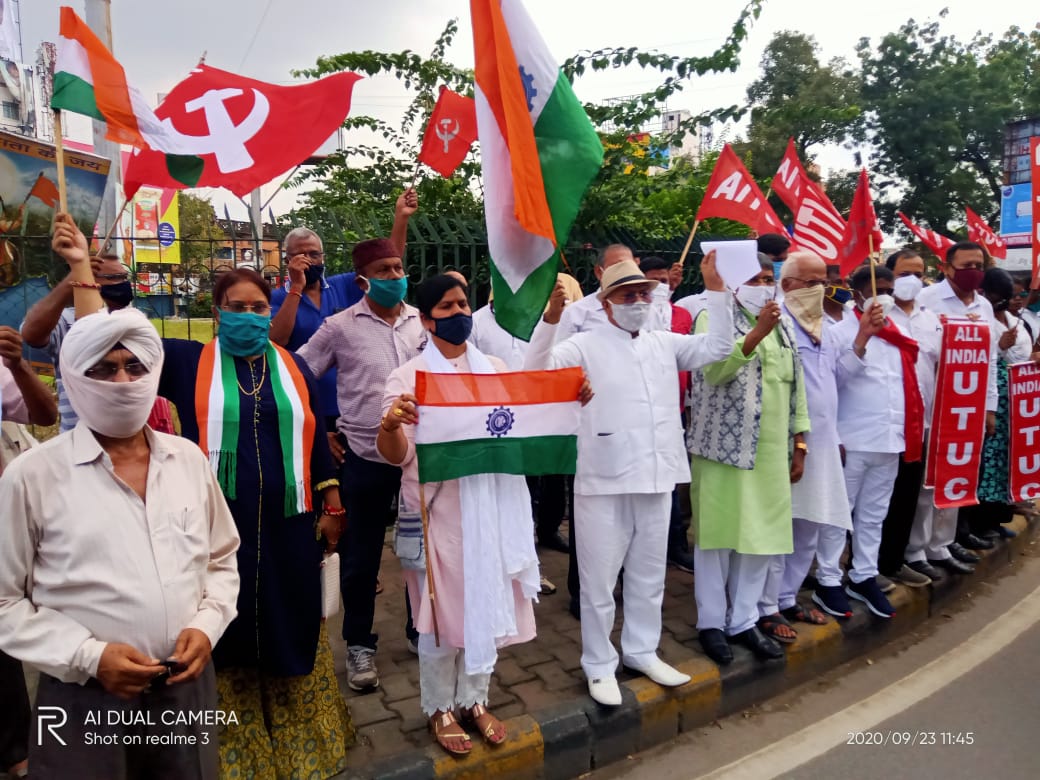
As workers torn up copies of the draconian labour legislation in the streets, the Modi government passed three key labour laws in an undemocratic way, fundamentally rewriting Indian labour laws. The laws include the Code on Industrial Relations, the Code on Social Security and the Code on Occupational Safety, Health and Working Conditions.

The legislation was passed in Parliament without debate, as opposition parties were boycotting the house over legislation affecting agriculture workers and farmers. The labour laws ignore the government’s own pre-legislative consultative guidelines, as there has not been adequate consultation with unions and workers in the informal sector, who are primarily affected by the changes. 

The changes increase workers’ vulnerability and facilitate corporate-friendly hire and fire policies without adequately protecting workers’ rights, promoting fixed-term and contract work without adequate social protection. Exercising the right to strike legally is virtually impossible. The new laws on social security is in many ways discriminatory, as it has removed welfare provisions for many informal sector workers.


Dr G Sanjeeva Reddy, INTUC president and IndustriALL affiliate, says:

“We strongly condemn the undemocratic way the anti-workers labour laws have been passed. With the steep fall in economic growth and increasing unemployment, workers across the country are facing a dire situation. The Indian central trade unions, moving beyond political affiliations, have formed a joint platform to defend workers’ interests. Indian unions also extended solidarity to agricultural workers and farmers’ organizations and their protests against anti-farmer policies on 25 September. We are working together to save the people from Modi’s dictatorial government.”

Union demands include:

Universal access to public distribution system to ensure food security for everyone

Kemal Özkan, IndustriALL assistant general secretary, says:

“We are dismayed over the lack of respect for the democratic process. India’s government need to engage in genuine dialogue with union representatives and ensure that labour laws incorporate internationally recognised human rights and fundamental principles, and rights at work. IndustriALL and the global union federations are looking to intensify global solidarity actions to support the Indian union movement in its struggle to save democracy and defend their members’ rights.”

The central trade unions INTUC, AITUC, HMS, CITU, AIUTUC, TUCC, SEWA, AICCTU, LPF, UTUC and several independent federations participated in the protest.

Cambodian union leader reinstated

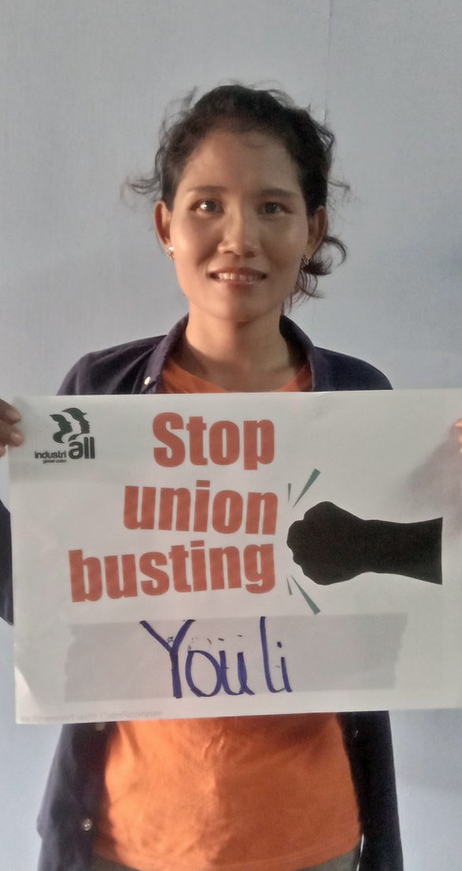
CUMW mobilized workers and protested at the Shandong Sunshell (Svay Rieng) special economic zone on 14 August. The provincial labour department then called for a mediation meeting between Youli management and the union, and the two workers were reinstated on 21 September.

There are incessant international and national campaigns for the reinstatement of the 724 garment workers dismissed in June. In a first victory in July, the union managed to get Youli to reinstate 11 pregnant workers and a local union leader.

IndustriALL general secretary Valter Sanches has written to the company, urging them to reinstate all 724 workers and to stop hiring new workers after the mass terminations.

Pav Sina, CUMW president, says:

“International solidarity has been important for the reinstatement of our members and local union leaders at Youli. The company has promised to continue negotiations for the remaining 712 workers, and we will monitor it closely. We will continue to fight for workers’ rights together with IndustriALL.”

On 4 September, IndustriALL called for a global day of action to end union busting in the garment industry. The response was great, and many people chose to call on Youli specifically to stop union busting.


Christina Hajagos-Clausen, IndustriALL textile director, says:

“This is an important union victory and we congratulate CUMW on the success.”

Unions approve agreement to save jobs at Volkswagen Brazil

In the face of the Covid-19 pandemic, workers at VW's plants in São Bernardo, Taubaté, Curituba and São Carlos voted in favour of a collective employment agreement that will protect their jobs for the next five years.

"The crisis at VW began several years ago and the pandemic has made things worse. We had to be realistic, given that production is set to be well below capacity. From the outset, our main aim was to protect our jobs,”

said Wagner Santana, president of the ABC union in São Bernardo, part of the national confederation of metal workers (CNM/CUT), affiliated to IndustriALL.

VW management had informed the four unions representing workers at the plants in Brazil that, due to the economic fallout from the pandemic, they intended to reduce the workforce by around 35 per cent by bringing in flexibility measures. That would equal 5,200 jobs, out of the total 15,000.

The unions spent four weeks negotiating alternatives to ensure that there were no job cuts and that the company remained competitive.

"Each plant is different, but union representatives managed to negotiate specific terms for each. It was important for the unions to work together so that they could reach an agreement, this can now serve as a reference for other unions,”

said Cláudio Batista, president of Sindmetau union in Taubaté, part of CNM/CUT.

The agreement includes a

Sérgio Butka, president of SMC at Gran Curitiba, part of CNTM, affiliated to IndustriALL, added:

"Both parties used their common sense to come up with a proposal that will protect workers' jobs for the next five years. That means that they can keep working with peace of mind, and VW can look at ways to weather the storm that the country is currently going through."

The São Carlos and Ibaté metal workers' union, part of CNM/CUT, have also approved the agreement. Union president Vanderlei Strano called it a great achievement that would bring workers peace of mind.

IndustriALL general secretary Valter Sanches, said:

"I'd like to congratulate the VW workers in Brazil and the four unions for working together. Securing jobs for five years and receiving financial guarantees is important not only for the 15,000 VW workers, but also for the thousands of people working in the supply chain.

The agreement is all the more important given that the Brazilian government is dismantling employment law and has no industrial relations policy – it's an inspiration for unions across Brazil and the world."