Organizing YouTube – IG Metall negotiates better rights

In 2018, YouTube content creator Jörg Sprave formed the YouTubers Union after changes in the algorithm negatively impacted the video rankings and incomes of YouTubers. Following a popular campaign, the union managed to negotiate more rights and better conditions for content creators.

Jörg Sprave built his first slingshot at the age of six but didn’t think of pursuing his hobby further until almost 40 years later. At that time Sprave, who holds a degree in economics, worked for a video editing software company. As they needed video content to test YouTube uploads, Sprave decided to film himself making slingshots.

Five years later, in 2013, Sprave decided to become a full-time, professional Youtuber. On the Slingshot Channel, he has been publishing tutorials in English and reviews about self-made slingshots, crossbows, knives and airguns. His account has amassed over 433 million views and is followed by more than 2.6 million people.

Back in 2012, when YouTube opened its Partner Program to everybody, content creators could easily monetise their videos, provided they had enough views and avoided controversial (sexual or violent) content and language. But in 2017, a series of scandals shook the platform when some advertisements were played alongside videos promoting extremism and hate speech. Several major companies pulled their ads and a total revenue loss of US$750 million was predicted for YouTube.

The scandal and drop in revenues pushed YouTube to review its algorithms, but this had a negative impact on creators’ content and revenues. Many professional YouTubers saw their videos demonetised, shadowbanned (blocking or partially blocking a user or their content in a way that is not obvious to the user) or their channels (temporarily) closed, thus putting many in a financially precarious position.

Sprave was one of them. He says the problem was not the algorithm change per se, but the fact that the process and new guidelines weren’t clearly communicated to creators. Although YouTube was his main source of income, he had other means to make a living, but he felt it was his duty to fight back. In March 2018, he created the YouTubers Union (YTU) in order to facilitate the exchange of information among creators, organise support campaigns and discuss changes on the platform.

Unity and visibility

Workers organising on large-scale digital platforms is still relatively uncommon and is fraught with challenges, notes the Friedrich-Ebert-Stiftung report Challenging the Giant: Collective Action of Content Creators on YouTube (Niebler, Kern). One of them is organisational fragmentation. Since workers are not formally integrated into the organisation they “lack rights to collectively bargain or organize.” They also “face technological fragmentation, entangled with high information asymmetries that prevent them from communicating with each other,” and are confronted with geographical separation, since they live and work in different areas of the world and are subject to different legislation.

But Sprave says there is another challenge: ideological differences.

“The group gathers people of different political beliefs. We have right-wing and left-wing channels and everything in between.”

Sprave made it clear that the union wasn’t set up to discuss political and ideological differences.

“Our goal was to enhance the working conditions of YouTubers. We said we were completely neutral regarding the content – as long as one’s channel follows the platforms’ guidelines.”

This means that the union didn’t support the demands of those who wanted YouTube to allow the airing of videos that promote hate speech and conspiracy theories. Sprave also makes it clear that he never wanted to “kill YouTube and start another platform” nor demand that content creators become YouTube’s employees. “We just wanted a fair partnership,” he says.

YTU was initially set up as a Facebook group which allowed Sprave not only to share timely updates but also create polls that could be used as a tool in group decision-making. However, there is still a hierarchy in the group, and Sprave moderates its content.

“If there are people that pursue things we don’t support, we delete it and kick them out,”

he explains.

In September 2018, Sprave published a video in the name of the union, Debunked: YouTube caught lying!, in which he criticised the tech giant’s opaque and misleading communication processes. This action resulted in an invitation from YouTube for a number of personal meetings between Sprave and their team.

FairTube campaign success

Although this was a fruitful start of a unionising effort, no institutional agreements were reached, and in 2018 YTU decided to join forces with a traditional trade union – IG Metall (the German Metalworkers‘ Union), which was founded in 1949 and represents over 2.2 million workers in Germany.

IG Metall had already been involved in other campaigns aimed at improving transparency and the working conditions of digital platform workers, who are usually regarded as self-employed.

“We work with the platforms that have signed the Crowdsourcing Code of Conduct and we operate the Ombuds Office that mediates disputes between workers on digital platforms and the platforms themselves,”

says Michael ’Six’ Silberman, a communication officer for IG Metall’s Crowdsourcing Project.

While creators knew the YouTube ecosystem, they lacked the resources to navigate it. “IG Metall had financial resources, lawyers and political influence,” says Sprave. Legal and financial means were important in the prospect of taking YouTube to court. YTU members were asked to approve the cooperation via a Facebook poll and vote on common demands. Not everyone was thrilled with the partnership.

“There were some people in the United States who said they hated the fact we were teaming up with a trade union. The unions are not very popular there,”

Sprave remembers.

For IG Metall it was important to make sure the communication would be in line with their guidelines.

“Hate speech, racism, sexism, homophobia, xenophobia, etc. are not welcome in any of our initiatives. We do not hesitate, for example, to delete comments with any of these characteristics in our online channels,”

explains Silberman.

In July 2019, YTU and IG Metall launched the FairTube campaign which consisted of three main elements: a viral 14 minute video in which Sprave outlined the ways in which “it seems like YouTube doesn’t want independent YouTubers anymore”, a campaign website, and six demands for YouTube. The key pressure points included a prospect of a lawsuit against YouTube/Google on the grounds of false self-employment and violation of the European Union’s General Data Protection Regulation (GDPR), and “collaborative brand attacks” (which would involve YouTubers working en-masse to create videos discrediting YouTube).

The campaign received a lot of attention – the size of YTU’s Facebook group almost doubled during the course of the campaign – and YouTube was ready to negotiate.

Thanks to the campaign, YouTube creators now have greater transparency (algorithms are now explained thoroughly), clearer rules, better communication with YouTube, arbitration power (access to senior YouTube managers to challenge decisions regarding cancellations and demonetisations), and greater participation (YouTube now asks its content creators for their feedback regarding innovations).

Sprave says that while he is content with the changes, he is currently looking into making FairTube a registered association that would also be open to other crowdworkers (such as Uber drivers) who would like to pull their knowledge and resources together to organise better conditions for all platform workers.

This story was originally published on Equal Times, and co-produced with the Friedrich-Ebert-Stiftung as part of its ’Trade Unions in Transformation 4.0’ series of articles and reports.
Gender and diversity equality in BHP and Glencore a long way away

During workshops in August and September on gender equality, IndustriALL affiliates revealed gender-based discrimination in both BHP and Glencore. 

Both companies are public in their efforts in training and hiring more women, as well as creating more work-friendly workplaces and equipment. BHP presents itself as a champion in promoting inclusion and diversity within their workforce, with the goal of 50 per cent women in the workforce by 2025. Glencore states that diversity and inclusion are integral to their success.

Unfortunately, these statements do not reflect the reality of their workforce gender composition. Behind the two mining companies’ narratives, there are still huge gaps as to how diversity and gender equality is addressed in reality.

Unions report that women face discrimination from male managers and colleagues, preventing their careers from evolving and achieving managerial positions.

Pregnancy and maternity remain an obstacle for women. Women with the same seniority as men would be on lower salary scales because of maternity leave, and they miss opportunities like training during pregnancy or maternity leave. A Glencore employee's testimony in NY Times corroborates the trade union reports.

Women workers are still denied personal protective equipment (PPE) properly designed for women, like gloves, overalls and boots. Ill-fitting PPE restricts the ability to move easily and exposes the worker to environmental hazards associated with mining. Not only does a poor fit lower physical protection, it can also increase the risk of tripping, or create a general inability to see or grip properly.

Trade unions also reported cases of gender based violence, mentioning that where policies are in place, they are not always properly implemented.

“IndustriALL and its affiliates will expose the existing gender discrimination and inequality at Glencore and BHP, and campaign for both companies to abide by their commitments. Gender and diversity whitewashing does not cut it for our members and we need to see quantum progress, not only at the upper echelons but across the business,”

says Armelle Seby, IndustriALL gender coordinator.

Both the BHP and the Glencore global networks have resolved to take specific action to address gender based violence and harassment and campaign for the implementation of the ILO Convention 190.

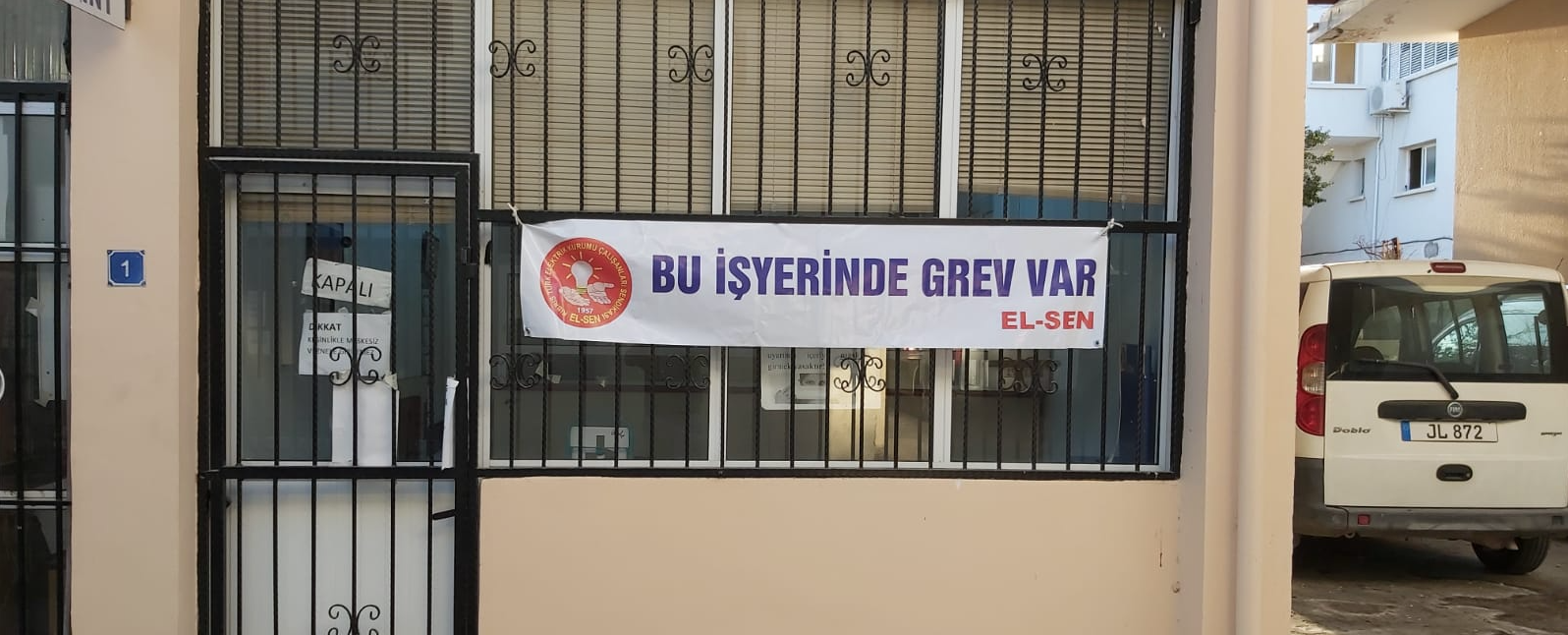
Northern Cyprus union fights privatization of electric power

The government is arguing that KIB-TEK’s unpaid debts are best resolved by privatizing the company, which employs 640 people.

El-SEN is campaigning for KIB-TEK to remain publicly-owned under the slogan of “No to privatization, but self-governing of KIB-TEK”, and has launched a strike.

EL-SEN says that there are ways for the government to lead the KIB-TEK out of debt and resist the essential services company falling into private hands.

“If workers pay their electricity bills, then the government should also be able to pay theirs. We will fight privatization of KIB-TEK,”

says EL-SEN president Kubilay Özkıraç.

The Turkish Cypriot government is trying to create a situation whereby KIB-TEK may easily be privatized due to the unpaid debts, particularly by government institutions and hotels.

Some time ago, EL-SEN signed a protocol with the government to invest for an additional 60 MW capacity, which could impact the situation positively. 

As part of the government's tactics, police forces went to Teknecik power plant and two EL-SEN members were interrogated.


IndustriALL Global Union fully supports the campaign and related actions, including the strike, and calls on the government address EL-SEN’s legitimate demands. 

IndustriALL general secretary Valter Sanches says:

“We call on the government to refrain from privatizing KIB-TEK and instead allocate public funds to the electricity sector in Northern Cyprus. Today, during the Covid-19 pandemic, the value of quality public services are more important than ever.”

Geneva votes for a decent legal living wage

At national level, Swiss unions and their political allies convinced voters to resist right wing attempts to divide workers over borders.

In a vote on 27 September, over 58 per cent of Geneva voters said ‘YES’ to the initiative "23 frs, c'est un minimum" (23 francs is a minimum). At the same time, 69 percent at national level said ‘NO’ to the right-wing initiative to limit the entry of workers from European Union member states, an attempt to blame foreign workforce for worsening conditions.

Through the system of direct democracy, the Swiss population can call for a referendum to change or introduce a law. Swiss unions and left-wing parties used this mechanism to launch an initiative on the minimum living wage in the canton of Geneva.

The association of Geneva unions, Communauté genevoise d’action syndicale, which includes IndustriALL affiliates  UNIA and SYNA, says in their statement that with their vote “Geneva has just given a very clear signal to employers and to all those who try to pit workers against each other: against precarity and abuse by employers, it is wages that must be protected and not borders.”

According to Travailler en Suisse, which provides statistics on working conditions in Switzerland, the Swiss monthly gross salary across all sectors in 2016 was on average CHF 6,502 (US $7,083). In the most qualified positions, the average gross monthly salary varied from CHF 4,825 CHF (US $5,256) in catering, to CHF 12,302 (US $13,400) in the banking and finance sector.

Most workers already received at least CHF 4,313 (US $4,698) per month, often through existing union collective agreements. However, in the absence of union agreements the lowest paid 10 per cent of employees fell through the cracks and were not paid this minimum for a full working day.

The Covid-19 pandemic exposed their precarious situation. The Swiss population, accustomed to decent living standards, was shocked at the poverty of the working poor who queued for food in specially organized food distribution centres while Covid-19 restrictions were in place.

The campaign launched by the unions and their progressive allies helped to further raise public awareness and, unlike in 2011 and 2014, finally win the campaign for the living minimum wage. Unlike in other countries, where the minimum wage is often not enough to live on, the Geneva minimum wage is a living wage, and the highest in the world.

The initiative establishing a legal minimum wage in Geneva is a historic victory, from which 30,000 employees will benefit directly, two thirds of them women. Geneva is the third canton in Switzerland to introduce a minimum wage after Neuchâtel and Jura. Ticino will follow soon.

Photo by Thierry Porchet, L'Evènement syndical

Ugandan oil and gas fields provide potential for union organizing

On 24 September, French oil company Total signed an agreement with the government of Uganda for the construction of the over 1,440 km East African Crude Oil Pipeline from Kabaale to Tanga in Tanzania.

With 13,000 jobs expected in the construction phase and 3,000 in the operational phase, the Uganda Mines Metal Oil and Gas and Allied Workers Union (UMMOGAWU) sees opportunities for the economic development of the country and an end to poverty. UMMOGAWU wants to recruit, and organize new members in the sector.

Vincent Ojiambo, UMMOGAWU general secretary, says:

“As the construction of the pipeline begins, our organizers will visit the sites to recruit more members to the union. We want better working conditions and living wages for the workers.”

The Lake Albert Basin holds some of the biggest oil and gas reserves in Sub Saharan Africa with potential to stimulate economic development and create thousands of decent jobs on the supply chain.
 
The oil and gas reserves are estimated to have over six billion barrels of oil, and 500 billion cubic feet of gas, and it is projected that the production of crude oil will start in 2023. Once production begins other petroleum based and electricity generating industries as well as providers of goods and services will be off shoots from the oil and gas sector. It is expected that these industries will provide services and manufactured goods for the domestic market as well as to neighbouring countries.

Diana Junquera Curiel, IndustriALL director for the energy industry, says:

“The growth of the oil and gas sector should be beneficial to Ugandan workers, and oil companies should use global best practices to ensure that they contribute to sustainable development in the country. IndustriALL has a GFA with TOTAL that will cover workers in Uganda and ensure that their labour rights are respected.”

Civil society organizations are calling upon the governments of Uganda and Tanzania to ensure the respect of the human rights of the 12,000 people and communities displaced by the pipeline route and who may have lost their land. Consideration should also be given to the environment.

The governments of Uganda and Tanzania have also signed an agreement to facilitate the construction. Other oil companies that are part of the joint venture in the oil fields are Tullow Oil and CNOCC. The companies have invested over three billion dollars in the oil and gas sector. There are also plans to build a refinery by the Albertine Graben Refinery Consortium.

European action day for steel

The European steel sector has suffered from the overcapacity in the global market for a number of years, and as in other countries, there are concerns about the future of the industry. The Covid-19 crisis has deepened the crisis: steel production in Europe has reduced by 40 per cent, and new orders have been cut by up to 70 per cent.

This has had a devastating impact on workers, with at least 45 per cent facing temporary lay-offs and reduced hours, and many others facing an uncertain future. In contrast, during this period China has increased its production of subsidized steel.

Many steel plants in Europe have been idled, and as the costs of shutting down a blast furnace are great, workers are extremely concerned that furnaces will not be restarted, leading to temporary layoffs becoming permanent redundancies.

European steel unions argue that steel is vital for the post-Covid recovery. Steel workers and their unions will take action across Europe today:

IndustriALL Global Union’s European sister organization industriAll Europe has developed an action plan with demands which are crucial for the sustainable future of the European steel industry. The action day will highlight the demands of the European Steel Action Plan as steel workers call on political and industrial leaders to safeguard jobs, to act against unfair trade and to create a pathway towards green steel, made in Europe.

Actions on 1 October will include demonstrations at steel production sites, worker assemblies, works council conferences, press activities, social media campaigns, meetings with government representatives, parliamentarians and steel sector employers. IndustriAll Europe will meet representatives of the German EU Presidency to present its steel action plan

IndustriALL base metals director, Matthias Hartwich, said:

“The steel industry globally has been suffering from the Covid crisis, from a globally sluggish market and from an over-supply, partly caused by subsidized steel from China. We stand in firm solidarity with you, brothers and sisters, to protect the steel industry, in Europe and worldwide. Today it is the turn of our European colleagues to fight back against the decline of the steel industry.”

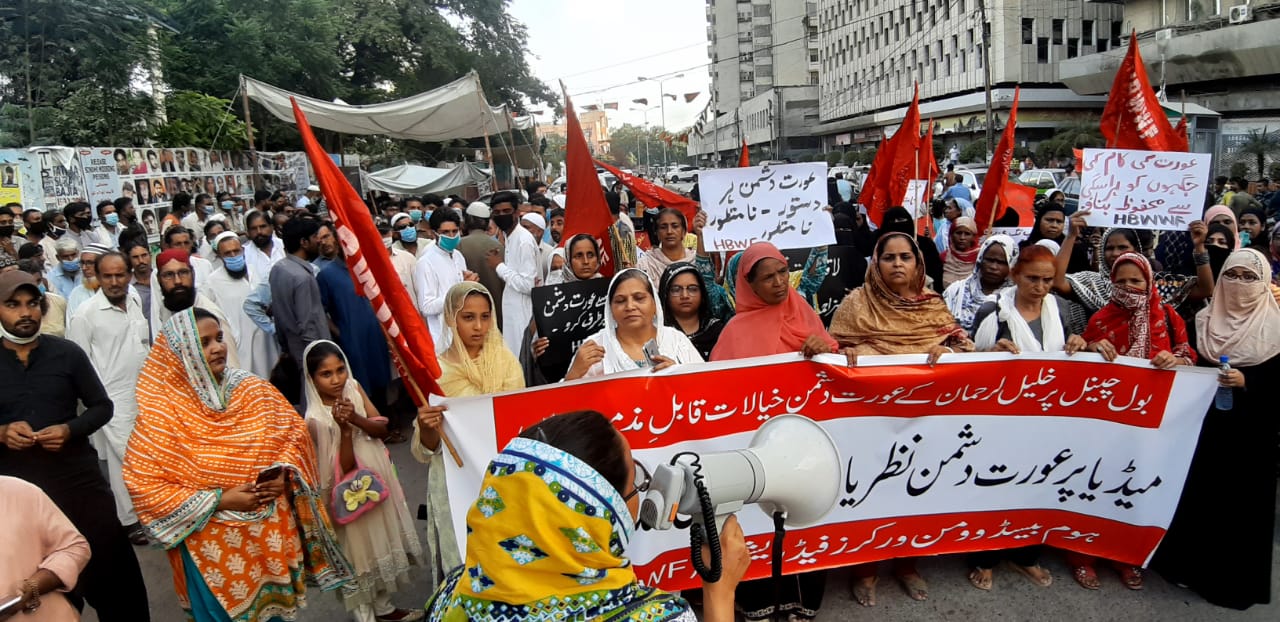
Pakistan women rise against anti-women tendencies in media

Taking a stand against growing anti-women tendencies in media, IndustriALL Pakistan affiliate Home-Based Women Workers Federation (HBWWF) staged a demonstration in Karachi on 25 September.

Speakers underlined that a renewal of archaic customs and traditions of feudal and tribal society weakens the foundations of a modern, pluralistic country, and contributes to the growing tendencies of discrimination against women. It also paves the way for exploitation of women, children, transgender, minorities and other vulnerable groups in society.

When forces against women and human rights are directly or indirectly encouraged by the state, it ultimately makes women, children, girls and transgender vulnerable in the streets, education institutions, workplaces and even in their own homes.


Zehera Khan, of HMBWWF, says:

“The misogynist comments by the writer Khalilur Rehman demonstrate a weakening of a progressive and democratic ethos in the society. This is also reflected in the increased violence against women, constituting a threat to their lives.

“Women in Pakistan can no longer be silent and we will come together to smash patriarchy in all its forms. The union movement, both in Pakistan and internationally, need to ensure that the way media portrays women is in line with modern views and that it respects internationally recognized women and human rights.”

Participants at the demonstration demanded that:

German unions stand up to Continental

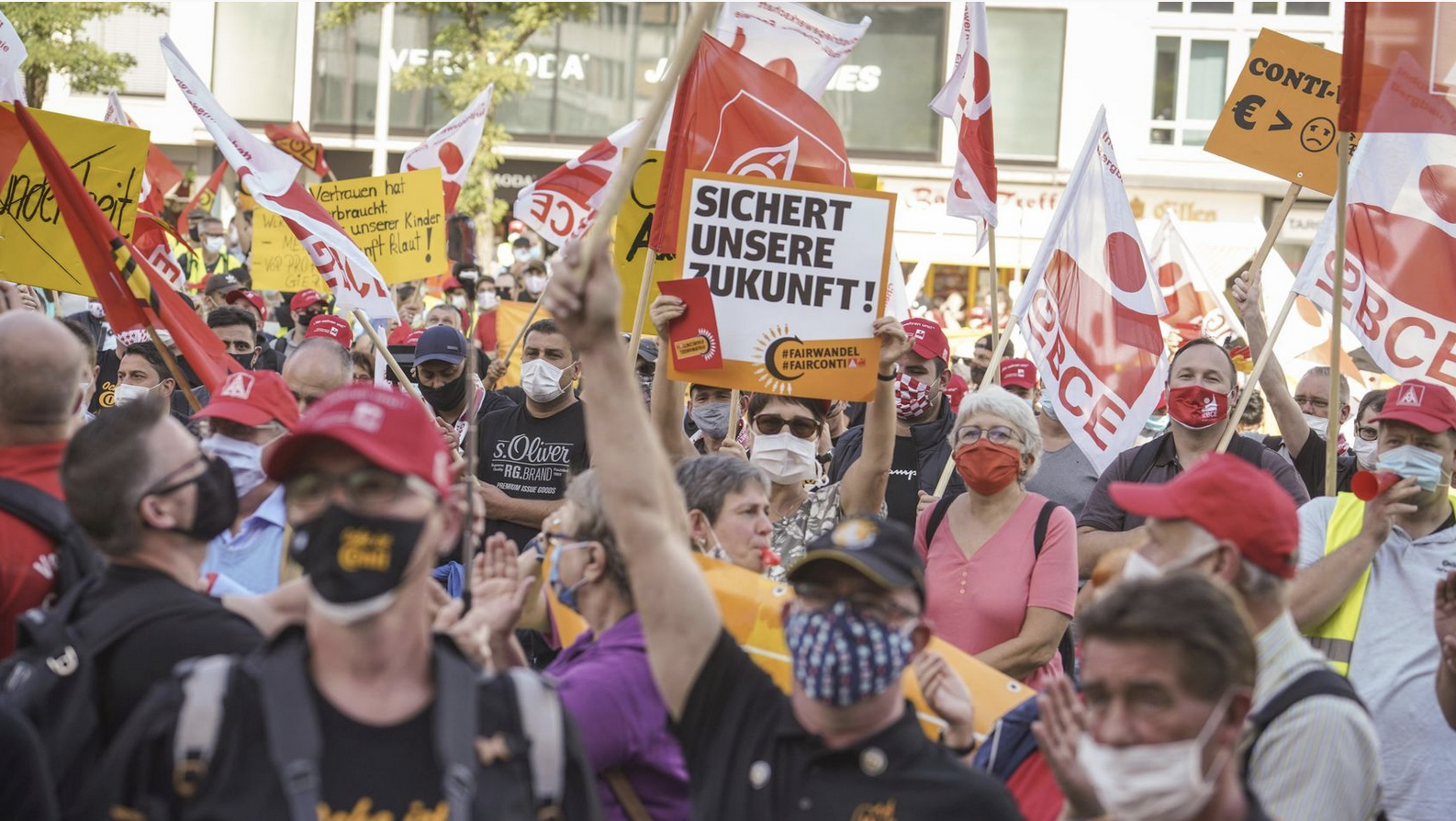
Continental says that a combination of low vehicle production and economic crisis caused by the pandemic is behind the announced cuts. In total, Continental plans to cut 13,000 jobs in Germany, adding up to 30,000 globally to be “modified, relocated or made redundant”.

German unions IG BCE and IG Metall say that the reasons for the surprise announcement are not true, calling it “cutting for the sake of cutting”.

In response to Continental’s announcement to close the factory in Aachen by end of 2021, thousands protested in the city on 23 September, wearing masks and keeping safe distances.


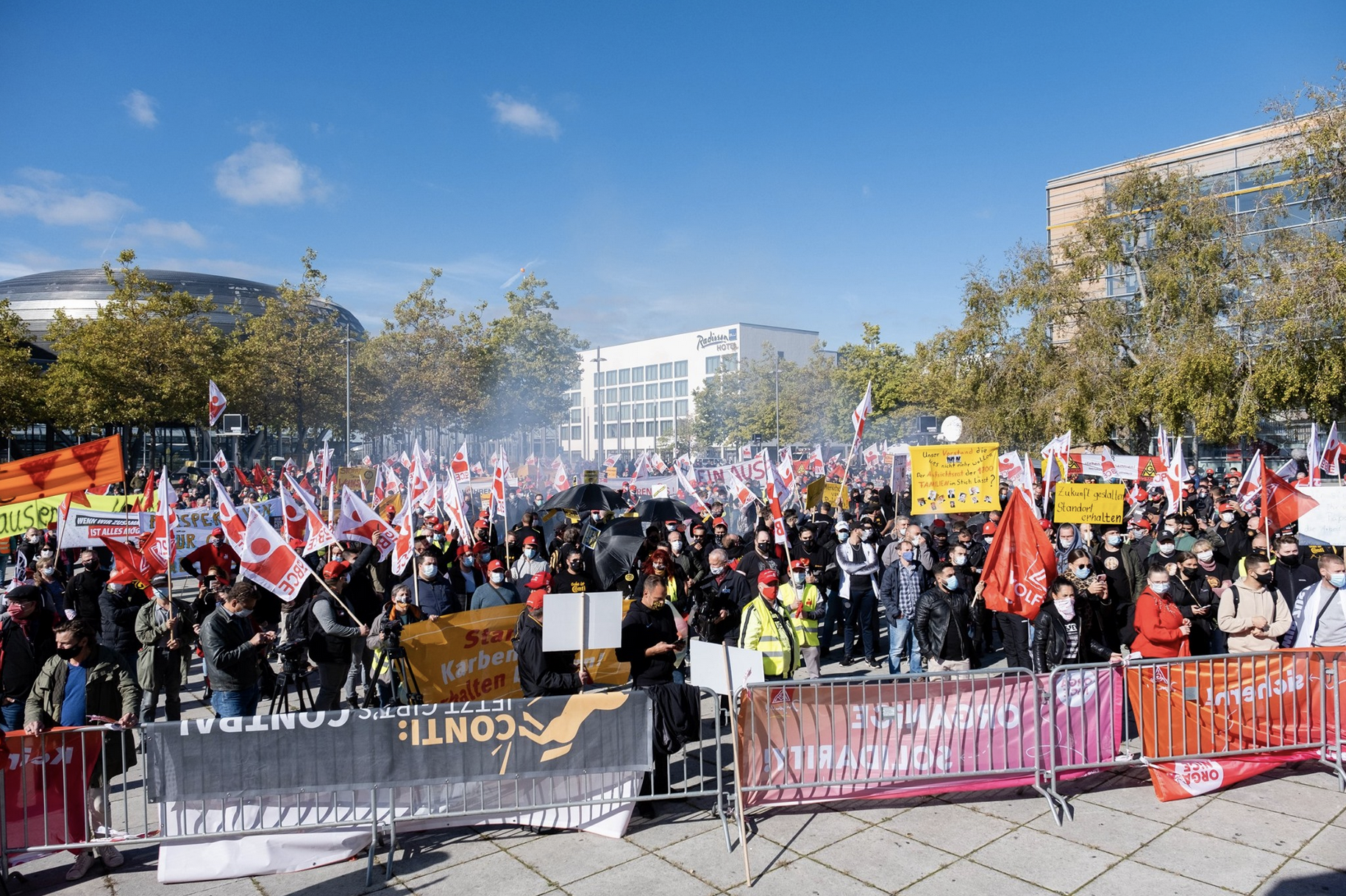
On 29 September, 2,000 people demonstrated in front of the building where Continental’s supervisory board was meeting in Hannover.


IG BCE president Michael Vassiliadis addressed the protestors:

“This is a case of a German company deciding to leave the path of solidarity and social responsibility that has so far guided us through this crisis, without considering the futures of people and communities affected. The owners must end this attack on staff and pave the way for intelligent alternatives."

IG Metall and IndustriALL president Jörg Hofmann, says:

“It is scandalous for a company to receive tax-financed support while taking advantage of the crisis to relocate work to low-wage countries. The longer the crisis continues, the more pressure there will be on employment. However, companies should invest in research and development to be able to adapt to decarbonization and digitization.”

The works council at Continental has launched a petition, demanding that the announced layoffs are suspended until negotiations with the unions have been finalized. The unions reiterate that job security and sustainable prospects for all employees remain their top priority, asking for a seat at the table in the coming decisions.

“As employee representatives, we have repeatedly demonstrated a willingness to find solutions and creativity in the interests of both the employees and the company,” says the works council.

IndustriALL assistant general secretary Kemal Özkan says that the global union shares the joint anger of its two German affiliates:

“The announcement of Continental to close the Aachen site and to cut 30,000 jobs worldwide, including 13,000 in Germany, is a betrayal. The German state is providing significant support to companies during the Covid crisis, so for companies to take the opportunity to relocate jobs to low-wage countries is absolutely unacceptable.”

National strike in Indonesia to stop controversial Omnibus law

Speaking at a press conference on 28 September, union leaders from Indonesian Trade Union Confederation (KSPI), Confederation of All Indonesian Workers' Union (KSPSI AGN), KSPSI Yorrys and national welfare movement (GEKANAS), called on Parliament and the government not to pass the Omnibus bill on 8 October.

KSPI president Said Iqbal says:

“5 million union members from 30 provinces and 300 cities or districts will stop production and join the peaceful national strike for three days. Starting 29 September, we will hold continuous protests in front of Parliament and the Coordinating Ministry for Economic Affairs.  

“We have no intention to worsen the Covid-19 situation, but we are forced to take public action because since government did not accept workers’ demands in the deliberation of Omnibus bill.”

Disappointed by the government’s proposals, the unions say that if the Omnibus bill is implemented, outsourcing provision will be relaxed without restrictions on length of contract and type of occupations. Lifelong contract work will become possible.

The unions criticized the government’s attempts to amend the rules on minimum wage and severance pay, slightly reducing the rate, but insert training clauses.

“There is nothing wrong with workers’ trainings.We actually agree with the government to revise rules to facilitate investment, but workers’ rights and benefits protected in the Manpower Act 2003 must not be reduced. Unions are concerned about the provisions that make hire and fire very easy, and workers’ holiday leave will also be affected.

“These proposals will jeopardize the welfare of Indonesian workers,”

says Iqbal.

IndustriALL South East Asia regional secretary Annie Adviento says:

“IndustriALL stands in solidarity with our affiliates fighting the Omnibus bill. We urge the government to immediately drop the Manpower cluster from the controversial bill. The government should instead focus on fighting Covid-19 and prevent mass dismissals in the country."

Hong Kong Convention key to South Asian shipbreaking recovery

South Asia governments’ response to the Covid-19 pandemic deeply affected shipbreaking workers in Bangladesh, India and Pakistan. Most shipbreaking workers are precarious contract workers and migrants, and the lockdown measures led to hundreds and thousands losing their jobs and wages.

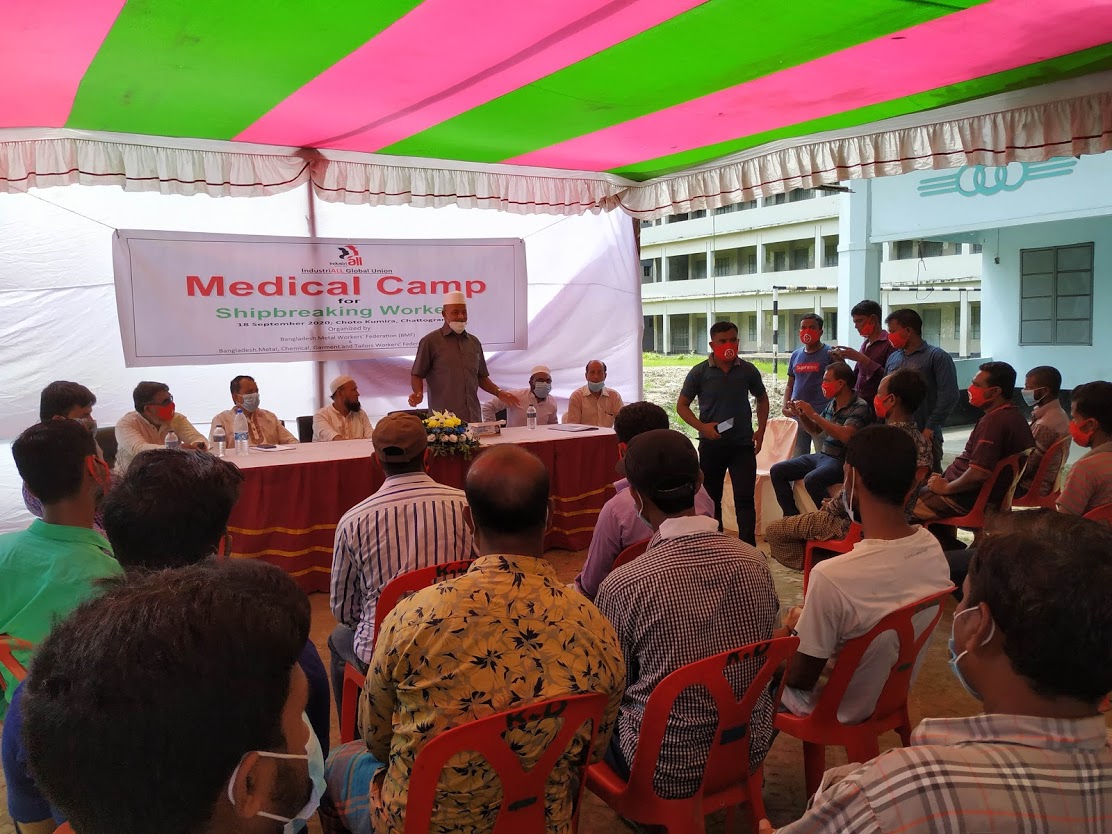
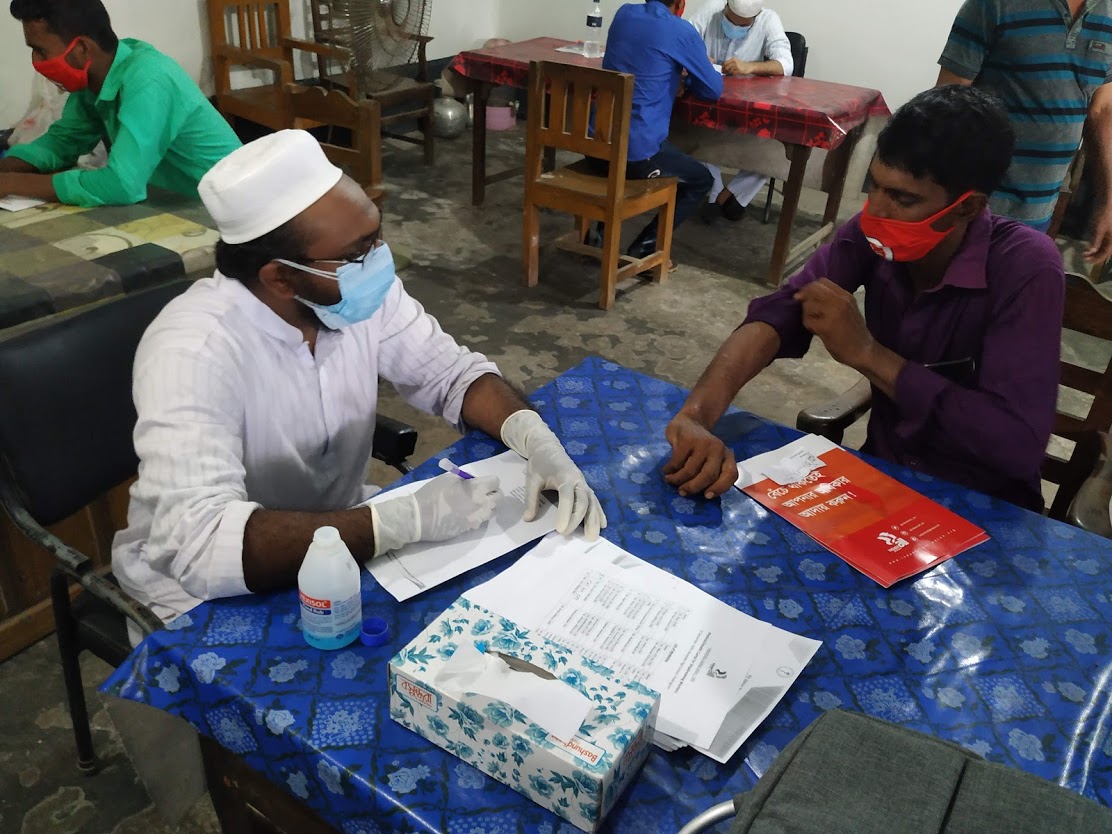
Union medical support in Bangladesh

Unions distributed dry and cooked food, organized transport so migrant workers could return to their homes, distributed masks and provided training and awareness on Covid-19 safety.


In India, shipbreaking union ASSRGWA worked with employers and the government to coordinate relief efforts. Downstream, SEWA representatives worked to ensure that workers did not face hunger. In Pakistan and Bangladesh, unions and NGOs provided relief to shipbreaking workers.

Kan Matsuzaki, IndustriALL director for shipbreaking and shipbuilding said,

“Shipbreaking operations in South Asian countries are limping back to normalcy. However, many yards are still not operational. There have been significant job losses and fewer accidents this year due to reduced activities, but workplace safety remains a major concern.

“South Asia shipbreaking unions want to improve occupational health and safety and social dialogue, strengthen union organizing and more importantly drive the campaign for the ratification and effective implementation of the Hong Kong Convention.”

ASSRGWA, a member of IndustriALL affiliate SMEFI, played crucial role in the ratification in India in November 2019, and is now part of the HKC committee set up by the government.

ASSRGWA has prioritized the appropriate implementation of the Recycling of Ships Act 2019 and the HKC, and taken measures to retain existing union members. It will evolve a union organizing strategy in the new Sachana yard and downstream, and continue to improve social dialogue with employers. Currently, more than 5,000 migrant workers have returned to work from their villages, and about 75 ships are being recycled, with 12,000 workers.

SEWA will focus on the creation of cooperatives for sustainable business, improve OHS, provide training on the use of communication tools, and work with the government to ensure the delivery of relief packages for workers.

Bangladeshi unions will improve OHS awareness and training and union structures, streamline membership records, strengthen the social dialogue system with the government and employers, and intensify lobbying with the governments and key stakeholders for the ratification of the HKC and the creation of compliant shipbreaking yards.

In Pakistan, shipbreaking operations have resumed at 60 out of 130 yards, with about 6,500 workers at work. The recycling supply chain, including the re-rolling mills, are gradually resuming their work. The NTUF will improve OHS awareness and training, expand organizing activities, improve the social dialogue system and lobby for the ratification of the HKC.

Atle Høie, IndustriALL assistant general secretary said, that

“IndustriALL appreciate the efforts of shipbreaking affiliates in providing relief to workers during the Covid-19 lockdown measures. The evaluation meetings highlighted achievements, particularly in India, and a long list of challenges ahead in defending workers’ rights in the Bangladesh and Pakistan shipbreaking sector.

“As shipbreaking operations gradually resume, we plan to replicate successful efforts and strengthen affiliates’ initiatives to improve safety and union organizing of shipbreaking workers. India’s ratification of the HKC is a significant step, and we will intensify the ratification campaign to create momentum in South Asia.

“We also thank FNV Mondiaal for extending financial support to IndustriALL shipbreaking affiliates and for their continued support in future”