International solidarity leads to release of jailed union leaders in Belarus

The jailings followed a strike at the JSC Belaruskali potash fertilizer plant, as workers peacefully demanded freedom, democracy and respect. The response of the authorities was to arrest Siarhei Charkasau, a vice chair of the Belarusian Independent Trade Union (BITU), and three others: Pavel Puchenia, Yury Korzun and Anatol Bokun. BITU is affiliated to IndustriALL Global Union.

The LabourStart campaign resulted in 6,291 messages being sent, demanding the release of our four brothers.
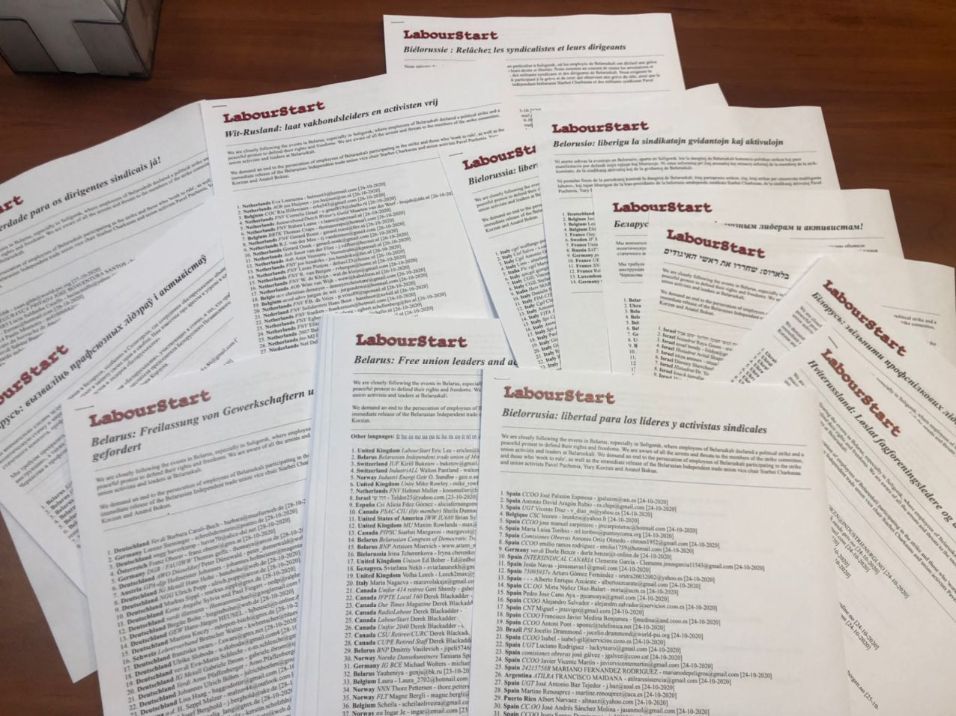
Printed messages in different languages

The Belarusian authorities were not happy to get the messages, and attempted block delivery. But trade unionists in Belarus printed out the lists of campaign supporters (in all 15 languages) as a petition.
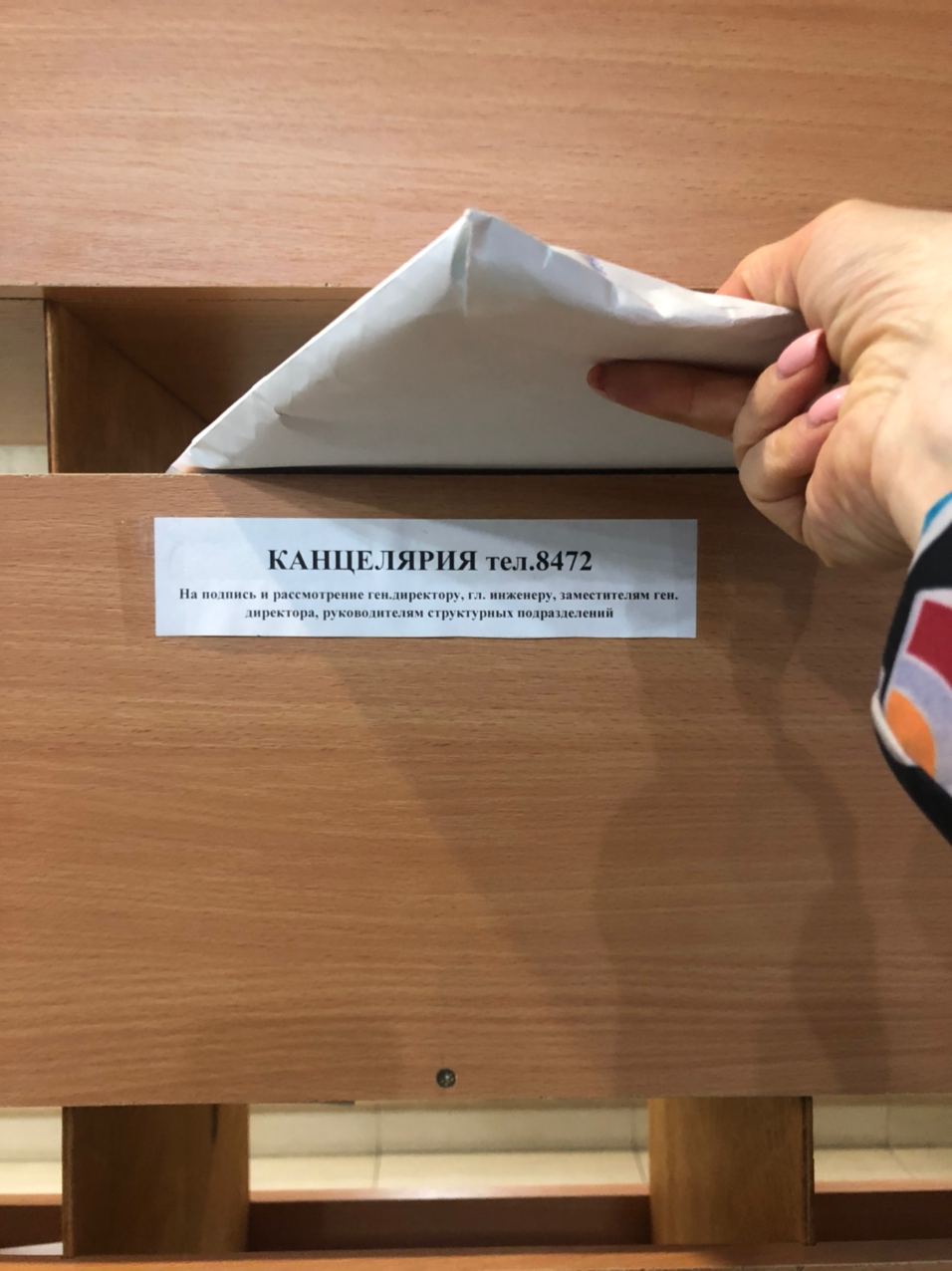
 

They delivered these by hand to the office of the CEO of Belaruskali, Ivan Halavaty. Due to Covid-19 regulations, they stuffed the petitions through the letterbox. 

As a result of their efforts, the voices of the 6,291 trade unionists who joined the campaign were heard, and the authorities were forced to listen.
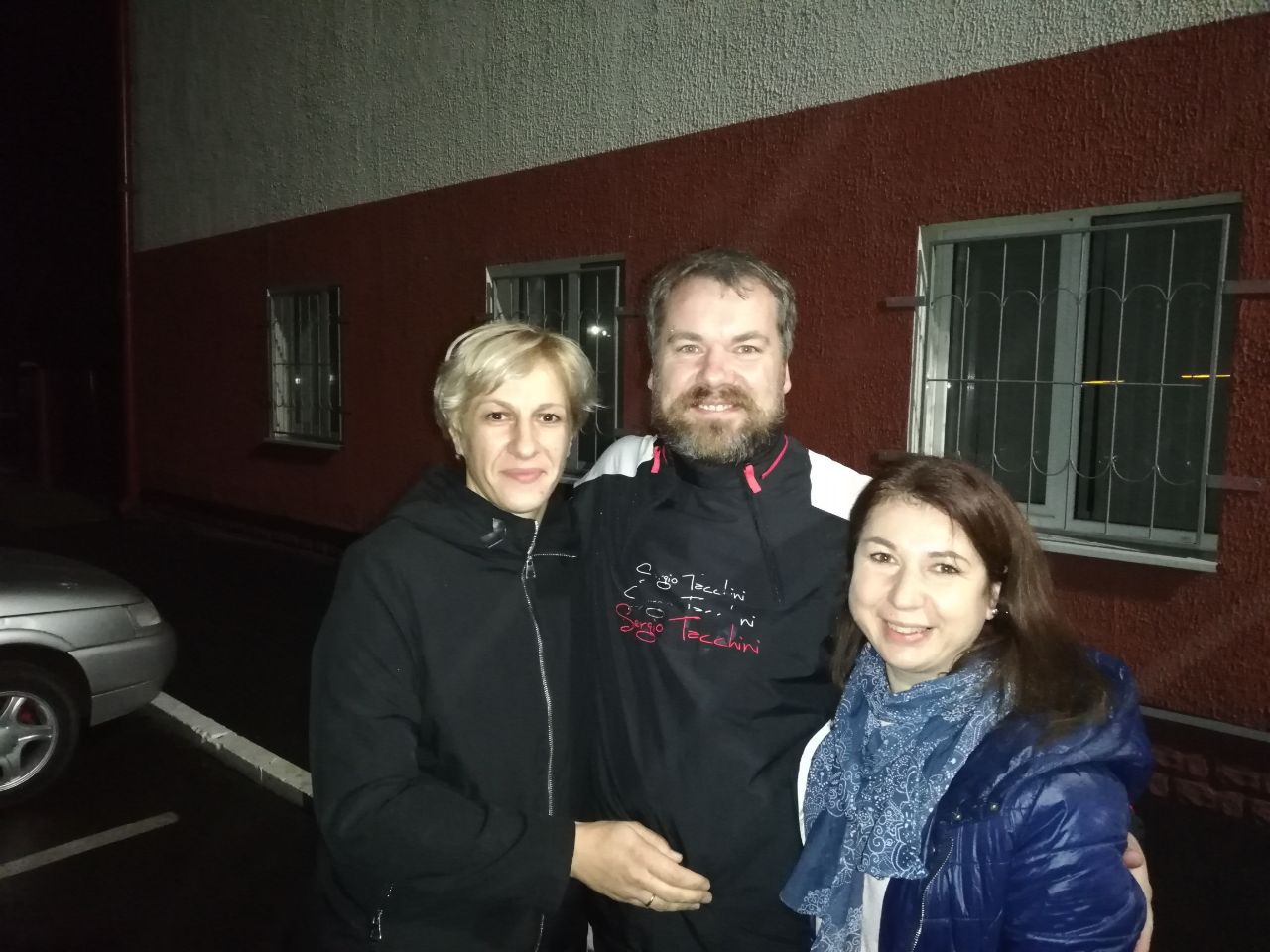
 

On Saturday, Anatol Bokun, the co-chairperson of the strike committee of Belaruskali, was released after 55 days in police custody. This afternoon the other three were finally set free.

BITU has confirmed that the campaign was a success because it brought a huge amount of international and local attention to the cases of our jailed brothers. Their jail terms were not extended. That is the real achievement of the campaign.

Global campaigns work, and support from union activists around the world really makes a difference. Siarhei, Pavel, Yury and Anatol are free today because of the power of international trade solidarity.
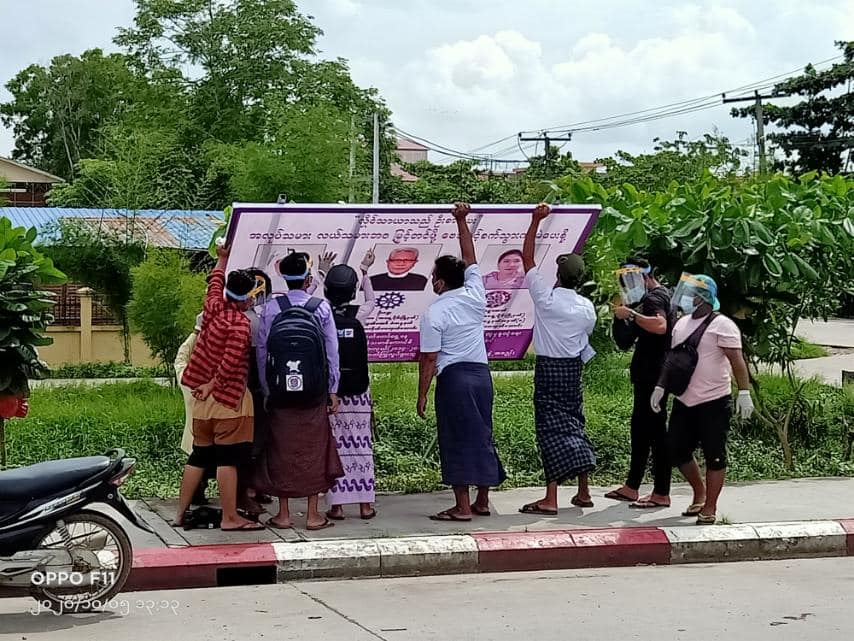
Union leaders in general election in Myanmar

The National League for Democracy (NLD) won a landslide victory in 2015, with 77 per cent of electable lower house seats. In Myanmar, 25 per cent of the total 440 lower house seats is reserved for military appointees.

But the NLD government, led by state counsellor Aung San Suu Kyi, has faced an increasingly divided society along ethnic lines and a range of unresolved workers’ issues.

“We want parliamentarians to fight for workers’ issues like unfair dismissals due to setting up of trade unions, suspension of workers’ benefits and freedom of assembly during the pandemic. Labour laws must be reformed to protect workers’ rights,”

says IWFM vice president Ma Soe Lay.

“We are also unhappy over the delay in implementing the minimum wage. The new rate should have been implemented in 2017, but the government only decided on 4,800 kyats (US$3.48) in May 2018. And it took around eight months for workers to receive the backdated rate.”


Ethnic parties have formed coalitions to run in the election, and the Confederation of Trade Unions of Myanmar (CTUM) has formed an alliance with Myanmar Farmers Union and other labour groups, sending eleven candidates, including three from IndustriALL affiliate IWFM, to join the election.

CTUM president U Maung Maung says:

“We have worked with the union, regional-level governments and parliamentarians for five years to deliver their promises to workers. But parliamentarians are not interested in freedom of association and industrial disputes.

“Therefore, CTUM and eleven other unions and networks have formed the Labour Alliance, deciding to have our own representatives to voice workers’ and farmers' concerns. There is also a need to amend the laws in accordance with international labour standards.

IndustriALL regional secretary for South East Asia Annie Adviento says:

“Myanmar trade unionism has progressed at an amazing pace since unions became legal in 2012. The trade union movement must fight at both the political and economic fronts to defend workers’ rights.”

IndustriALL renews GFA with Mizuno

IndustriALL general secretary Valter Sanches says:

“I truly appreciate the full cooperation provided by UA Zensen and Mizuno Workers’ Union in the support for monitoring the issues that arise throughout Mizuno’s operations and its supply chain globally.

“Access language and the integration of a strong dispute resolution mechanism, including a provision on binding arbitration, have been incorporated in the renewed GFA. We welcome that Mizuno shares our view that these are important points.”

Mizuno is the first Japanese multinational company to sign a global framework agreement (GFA) with IndustriALL. The GFA includes commitments to implement minimum standards of workers’ rights throughout Mizuno’s factories globally, as well as at its suppliers in several countries throughout Asia.

Mizuno Corporation says on the renewed agreement:

"We will continuously cooperate with all the parties to ensure proper application of the international labour standards in the global supply chain of Mizuno Corporation."

The previous GFA, was signed by one of IndustriALL’s founding organizations, International Textile, Garment and Leather Workers’ Federation (ITGLWF), dates from 2011. Over the experience from implementing the GFA, Mizuno and IndustriALL have worked together to improve the GFA that was signed on 1 October. 

Mizuno Workers’ Union says:

“We will continue to work together for better working environment so that people who are involved with Mizuno Group around the world can have comfortable life.”

“UA ZENSEN will extend its support to continuous cooperation among four signatories for workers’ rights and decent work in supply chain of Mizuno Corporation under the renewed GFA,”

says UA ZENSEN.

Mizuno produces sport related goods like clothing, golf clubs, and athletic shoes.

Photos: IndustriALL general secretary Valter Sanches signs the GFA; Matsuura-San, UA Zensen, signs the GFA.

Global unions in solidarity with Indian union movement

A joint webinar, labour law changes in India: An attack on the working class, organized by the council of global unions and hosted by IndustriALL on 28 October 2020, witnessed active participation of trade union leaders and representatives from around the world. This was part of a series of webinars organized by the council of global unions focusing on the grave attacks on workers rights and democracy during the pandemic.

The anti-worker changes to Indian labour law enacted by Prime Minister Modi have on many counts undermined international labour standards, fundamental principles and rights at work and social justice espoused in previous labour laws. The changes have a negative impact on freedom of association, collective bargaining and trade union rights, including the right to strike, central to ILO conventions and declarations.

 Sharan Burrow, general secretary of International Trade Union Confederation (ITUC), said:

“The labour law changes will lead to further informalization of the Indian workforce and deny millions of workers fundamental workers’ rights, social security and protection. It is not acceptable, that dignity and decent work is destroyed in India; this must change.

“We need a recovery with a new social contract, with the resilience of social protection, jobs and inclusive development framework. At this moment, the Indian trade union movement’s courage is extraordinary. People around the world admire the tenacity and courage of Indian unions standing together. The global trade union movement reaffirms the solidarity with the Indian unions.”

Valter Sanches, general secretary of IndustriALL Global Union, said:

“India’s fragile labour market regulatory framework has been exposed as the poor Covid -19 responses has had devastating impact on working people. During lockdown, hundreds and thousands of workers lost their livelihood and suffered while walking back to their homes from Indian cities. When factories resumed operations, a series of industrial accidents killed more than a hundred workers.

“Instead of strengthening existing laws, the law changes pushed forward against the backdrop of multiple crises will only benefit corporate interests and perpetuate informality and inequality in India. IndustriALL Indian affiliates are on the forefront against the antiworker policies of the government. IndustriALL stands shoulder to shoulder with the Indian union movement in their just struggle.”

G Sanjeeva Reddy, president, Indian National Trade Union Congress (INTUC) said:

"Since its inception, the Modi government has worked against workers’ interests. The government gains its political strength from divisive communal politics combined with crony corporate interests. Only through the steadfast struggle, can the Indian working people defeat this government.

"Indian trade unions cutting across political differences have formed a united platform for consistent struggles. On 26 November, yet another national strike will be organized to show the Modi government that our relentless struggle will continue."

Webinar participants included Harbhajan Singh Siddu, general secretary, Hind Mazdoor Sabha (HMS), Manali Shah, national secretary, Self Employed Women’s Association (SEWA) and professor Shyam Sundar, labour law expert. The webinar was moderated by Kate Lappin, Asia Pacific regional secretary, Public Services International (PSI).

Unions in South East Asia call on government to comply with ILO standards

In the second webinar on labour law reforms in Cambodia, Myanmar and Thailand on 27 October, trade union leaders could not hide their frustration over weak labour laws failing to protect workers’ right to organize and form unions.

Employers often dismiss trade union leaders when discovering workers attempting to form a local branch of an industrial union. Enormous pressure will be imposed on trade union leaders; management always find fault and terminate union leaders over the slightest offence.

Prasit Prasopsuk, president of the Confederation of Industrial Labour of Thailand (CILT), says:

“The Thai government must protect workers from dismissals when forming a union. ILO convention 87 on freedom of association and 98 on collective bargaining should be ratified immediately.

“The restrictive labour laws must be reformed to allow for peaceful strikes and demonstrations, strike breakers must be banned, and the segregation between public and private unions must be lifted.”

Troubled by similar anti-union discrimination, the assistant general secretary of Confederation of Trade Unions of Myanmar (CTUM), Daw Phyo Sandar Soe says:

“Myanmar’s government refuses to ratify Convention 98. Many companies illegally dismiss union leaders because there is no enforcement and the labour law is weak.

“The government intentionally delay registering unions and handling trade disputes. Many disputes are closed after long delays, putting unions are under pressure from employers and the government.”

Cambodian labour law is less problematic as the government has ratified all ILO fundamental conventions. Yet the law amendments in 2016 and 2020 has led to a deterioration of workers’ rights. President of Collective Union of Movement of Workers (CUMW) Pav Sina says:

“Under the new law, federations can no longer represent workers in trade disputes. unions are required to engage independent auditors to monitor our financial statement, the provision of night shift workers’ 130 per cent pay has been removed.”

Kemal Ozkan, IndustriALL Global Union assistant general secretary, says :

“Many governments have veered towards authoritarianism during the pandemic; democratic institutions are under attack and labour legislation is the next target. We must remain united, defend workers’ rights and a human-centric economy.”

Photo caption: TGSL meeting in July 2019 with Cambodian, Myanmar and Thai unionists.

Sintracarbón and Cerrejón begin dialogue to resolve dispute

On October 18, a first meeting was held to explore how to establish a negotiating table between the two parties. On 22 October, they agreed to start a round of meetings to find a way to resolve the conflict.

“There has been some progress in the discussions, but the big differences are still there. But both parties want to continue to explore ways to reach an agreement that is needed by the workers, the region and the company.

“So these meetings will continue, because our union is willing to have a dialogue and the company has also showed interest. But the strike continues as the big differences remains,”

says Sintracarbón president Igor Díaz.

While the union is not willing to negotiate some of the issues, it is open to review others. They do consider that the company still intends to eliminate benefits established in the current collective agreement.

Regarding the shift change, “the shift of death” that Cerrejón wants to impose, Sintracarbón says that after looking into the details; they are convinced that it would affect the health, life and social fabric of the workers. Still, the union is open to discuss it with the company.

Cerrejón has published an official statement, highlighting its willingness to continue the meetings to overcome the differences.

IndustriALL general secretary Valter Sanches says:

"IndustriALL salutes the workers of Cerrejón who have been on strike for almost two months under the leadership of Sintracarbón,. The restoration of negotiations is a great achievement and we hope the parties reach a good agreement soon."

Inditex GFA unlocks conflict in Romania

Many jobs have been lost in Romania due to Covid-19, and the pandemic has also brought a widespread issue of unpaid wages. But workers are reluctant to raise the issues with unions for fear of losing their jobs.  

This spring, a worker at Tanex went public after only half of her wage was paid. She was not the only worker among the 600-strong workforce in the garment factory that supplies to Spanish fashion giant Inditex that received what is called an “incomplete wage” in Romania. However, when she spoke publicly about it, Tanex fired her for talking to the media.

Dan Năstase, president of UNICONF, approached Tanex management, who was unaware of the existing global framework agreement (GFA) with Inditex and, initially, refused to allow union access to the factory.

According to the union, ahead of a visit by Inditex to the factory in June, an entire production line was sent home. The official reason was a lack of raw materials, but the union suspects that management wanted to make sure that no one would raise any issue with the delegation.

Instead the issue was discussed when the Inditex Global Union Committee met in June.  Víctor Garrido general coordinator of the global union committee at Inditex, raised the issue with Inditex management and shortly after UNICONF managed to meet with Tanex.  

An agreement was reached between Tanex management and UNICONF, based on the GFA and the Romanian law on social dialogue. Tanex management commits to:

Management also agreed to facilitate contacts between UNICONF and workers at the two Tanex factories in Romania. The two factories employ around 750 workers.
 
Dan Năstase says:

“This agreement is a good outcome considering that the labour law reform some ten years ago has severely damaged the conditions for social dialogue in Romania. We had the chance to openly discuss with Tanex management that unions are open to constructive dialogue and do not seek to destroy local industry. On the contrary, with mutually agreed tools, we can achieve positive results. Social peace can only be ensured through dialogue and unions have an active role to play."

IndustriALL general secretary Valter Sanches says:

“This shows the crucial importance of a GFA, with a monitoring instrument like a global union committee to oversee workers’ rights at suppliers. It will now also be used to start organizing and we hope to see workers building their union in the workplace very soon through UNICONF’s efforts.”

Union launches app for organizing Kenyan metalworkers

To join the union, members must download the app on their smartphones, provide their name and identity, as well as the sector where they currently work. The app, which was launched with support from the Solidarity Centre, allows the members to pay union dues using mobile money platforms.
 
With Covid-19 regulations that restrict large face-to-face union meetings in place, using online platforms is becoming the norm for the Kenyan metalworkers, who organize workers in the automotive sector, steel and metal manufacturing and other sectors. The union is also using online campaigns to end precarious work in the sectors especially the low wages and poor benefits for contract workers.
 
The AUKMW signed memoranda of understanding in 2019 with associations of roadside mechanics who represent thousands of informal workers. The agreements allow the union to represent the informal workers and to protect their rights according to the labour laws. The informal sector provides vehicle accessories, spare parts and repairs and maintenance for mostly imported used cars from Japan, Korea, and other countries. The mobile app increases the union’s accessibility to informal workers.
 
By working with informal worker associations, the AUKMW is responding to the “decent work deficit” as described by the International Labour Conference Recommendation 204 Transition from the Informal to the formal economy. The recommendation covers freedom of association, social dialogue, role of employers and workers organizations, and minimum wages, among issues that needs to be looked at to improve the working conditions of informal workers.
 
Rose Omamo, AUKMW general secretary says:

“Organizing at the big companies is not the same as at the small workplaces. At large factories we reach the required thresholds, according to the labour laws, and sign collective bargaining agreements. But at small companies that are located far away from the cities, we have fewer members that we still need to service them and give them access to union services.

"We are also extending our services to contract workers and those working in the informal sector who often work under precarious conditions. These are the workers who will benefit most from the app.”

Paule France Ndessomin, IndustriALL regional secretary for Sub Saharan Africa, says:

“The pandemic is making unions innovative and providing them with an opportunity to adopt digital technologies. Recruitment, organizing, campaigns and training now happens online using devices that include smartphones and laptops. Such innovation is commendable and transforms the trade union. The AUKMW is one of the pioneers of harnessing digital technologies to build union power.”

Right to strike breached in Belarus

After more than two months of protests against the rigged presidential elections in Belarus, exiled leader Svetlana Tikhanouskaya called for an indefinite national strike on 26 October to put an end to the dictatorship. The strike is widely supported by workers at both private and state-owned companies. Students and retired workers also join the protest.

But in breach of national and international labour legislation, ratified by Belarus, the regime is cracking down on the workers’ right to strike through manipulation, intimidation and violence.

Authorities are trying to block any signs of resistance at the big state-owned companies. Lukashenko’s power has traditionally relied on electoral support by workers of the big state-owned companies inherited from the Soviet Union. But unable to show a way out of the economic and political crisis in Belarus, Lukashenko has completely lost credibility among workers.

At plant level, authorities are trying to break the strike through a ban on holidays, blocking workers’ access to prevent stop them communicating with colleagues, or moving them to other shifts and also dismissals.

IndustriALL affiliate Free Trade Union of Metalworkers SPM reports of dismissals of their four activists from Minsk wheel tractor plant, including Viktor Tchaikovski leader of the SPM local and Alexander Lavrinovich, his deputy, who is also chair of the strike committee.

In the morning of 26 October, busses with riot police were spotted at many big companies.

Many workers who tried to exercise their right to protest were detained. There are reports of violent beatings during and after these detentions. At Grodno Azot, an important chemical company, at least 30 workers and their supporters were detained, some violently beaten.

On the eve of the publicly announced strike, authorities tried to block union leaders, like in the case of Belaruskali union activists led by Siarhei Charkasau, vice chairman of Belarusian Independent trade union, BITU. They still remain in jail.

Protest actions the day before the strike drew around 100,000 people to the streets of Minks, according to media reports. Some unionists were arrested, like acting president of the Radio and Electronic Industry Workers, Zinaida Mikhnyuk, who with her colleagues was detained in Brest on 25 October and also remains in detention. 

Valter Sanches, IndustriALL general secretary, says:

“The right to strike and freedom of expression are fundamental in a democratic society. They are now totally disregarded in Belarus. We call for an end to the violence against the workers and people of Belarus and that activists and political prisoners are released. 

 IndustriALL calls on an immediate investigation into the arbitrary use of power against the peaceful protesters and that democracy is restored, allowing people to freely choose their leaders.” 

Protecting garment workers’ lives in Myanmar

Manufacturing is allowed to continue despite a partial lockdown and Myanmar Ministry of Health and Sports (MOHS) has issued a comprehensive health protocol for all workplaces. After a dialogue between management and trade unions, several garment factories are providing enhanced personal protective equipment (PPE) for production workers.

Coats, hair nets, goggles and face shields are provided for free for every worker. Factory management will check the workers’ body temperature before entering the plant, production tables and canteens are arranged according to the stipulated distance.

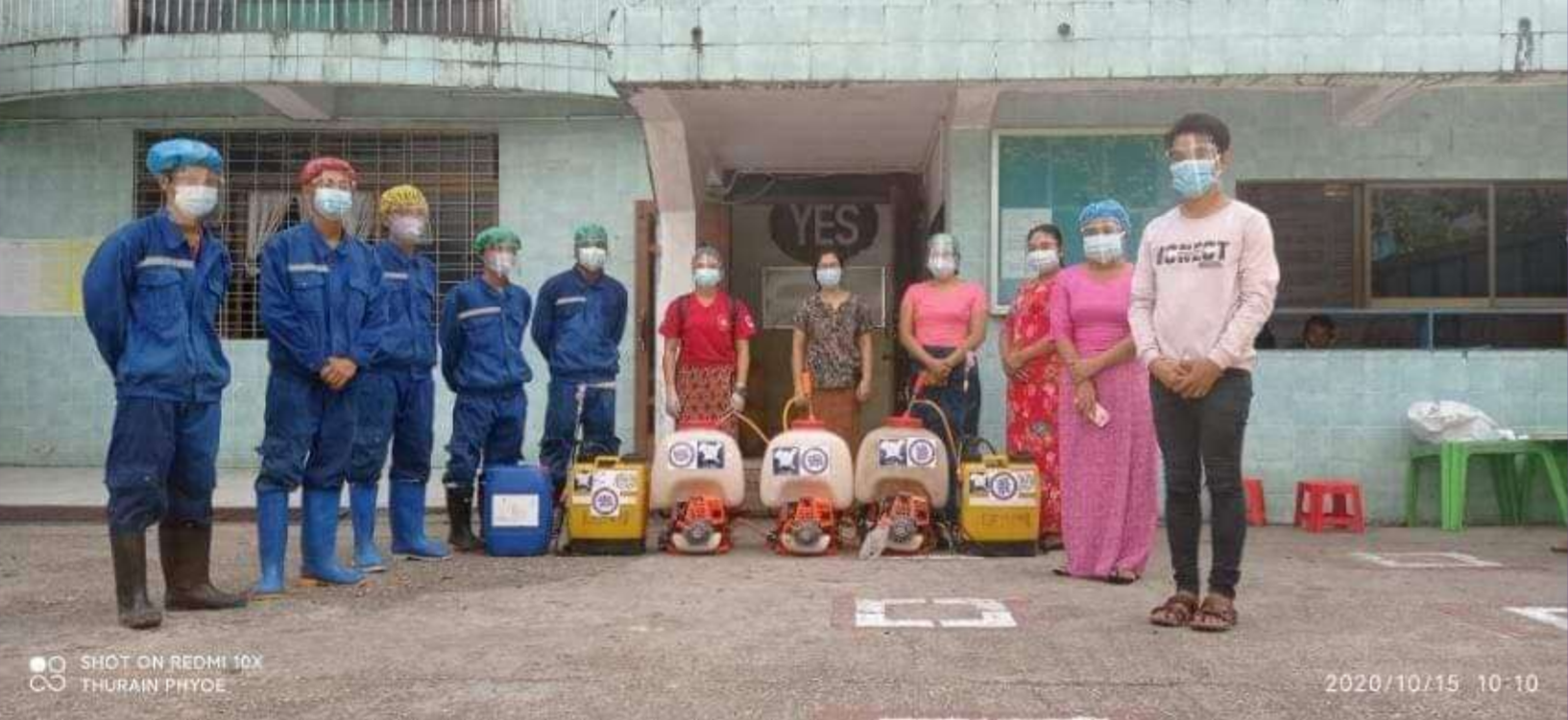
Yes garment factory, Myanmar

Vice president of Industrial Workers Federation of Myanmar (IWMF) Ma Soe Lay says:

“Our local unions have negotiated for enhanced safety measures with Yes One Garment Factory, Eslite Garment Factory and Popular Garment Factory. Managements agreed to abide by the MOHS rules to prevent further transmission of Covid-19. These are good examples of sound industrial relations.

“IWFM is working closely with the Confederation of Trade Unions in Myanmar (CTUM) to disinfect the workplaces. CTUM has established a strong Covid-19 response team  with ambulance vans and disinfectant spray teams.”

IndustriALL South East Asia regional secretary Annie Adviento says that IWFM’s efforts to negotiate with employers to provide adequate PPE are commendable.

“IWFM and the CTUM’s Covid-19 response team will ensure that workers will be better protected against the virus in workplaces. It is a best practice to be shared by unions and employers in other countries.”