US union calls on Safran to extend contract

Workers United has bargained with Safran since September for a new agreement. Negotiations broke down when the employer refused to accept pay increases for the coming three years and insisted that they would be able to use any criteria to lay-off or recall workers. Safran already has the right to lay-off and recall employees in tiers of most efficient workers and least efficient workers.

The union says that although they tried to find middle ground, they have been met by a brick wall.

“We are prepared to meet Safran, a multi-billion-dollar company, in the middle to find a way forward to come up with a reasonable contract that will benefit the success of the plant and the workers. How is it fair for Safran to ask for the women, who are already low-wage workers, to continue to sacrifice?”

IndustriALL and Safran signed a global framework agreement in 2017 on working conditions, corporate social responsibility and sustainable development.

IndustriALL general secretary Valter Sanches says:

“In the spirit of our joint global framework agreement, I urge you to intervene immediately to ensure that Safran in Mississippi extends the union contract and engages in genuine bargaining with Workers United.”

Photo credit: Adrien Daste / Safran

Building a green future with mechanical engineering

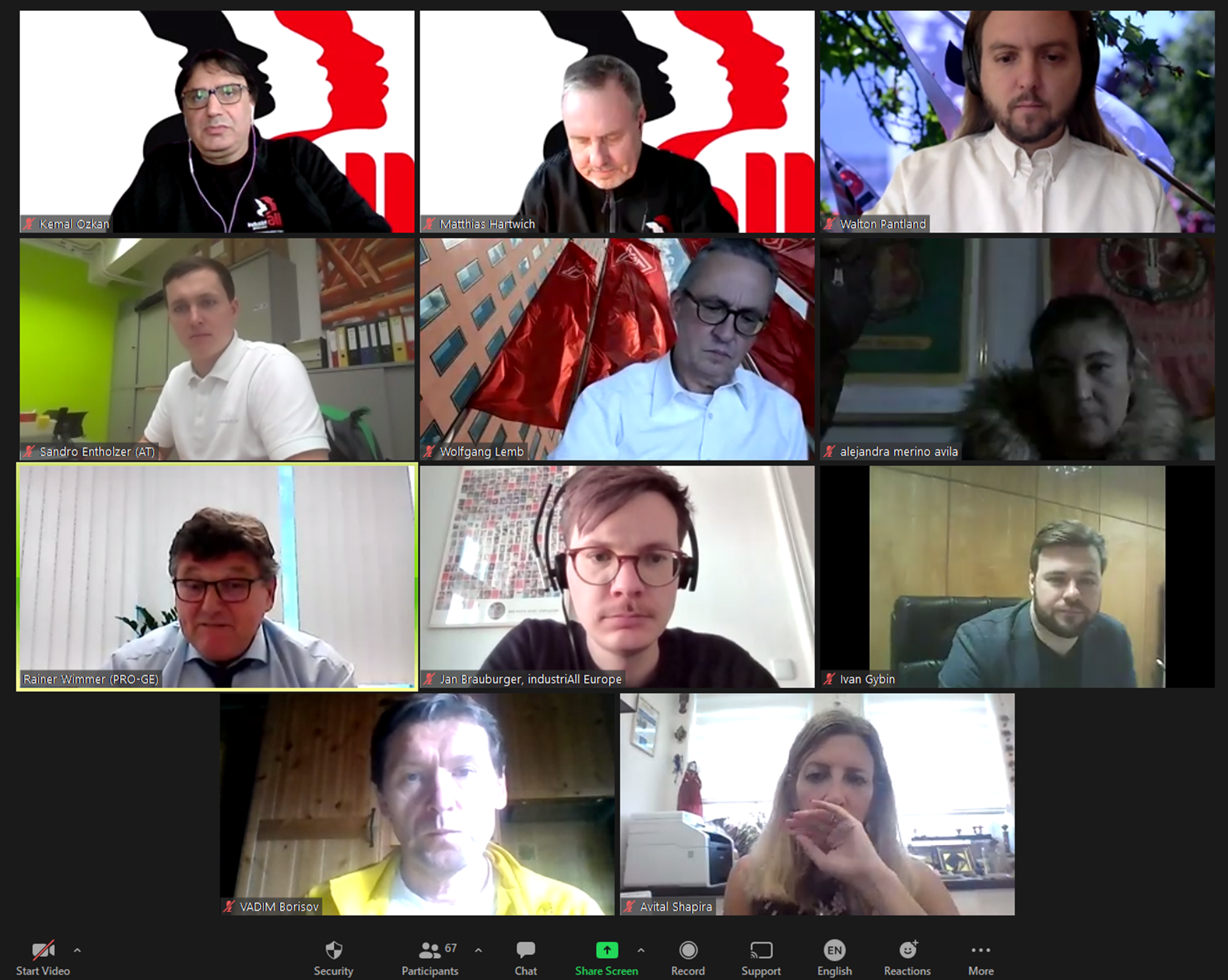
Opening the meeting, the president of Austrian affiliate PRO-GE and sector co-chair, Rainer Wimmer, referred to the devastation caused by the pandemic, and remarked that even after the virus has been dealt with as a public health crisis, the financial and social consequences will remain.

“Parts of our industry will come under severe pressure, particularly the parts related to the internal combustion engine. But there is potential for growth in building the green world. We need to be part of the process to ensure that green jobs are good jobs.”

Wolfgang Lemb, member of the executive board of IG Metall in Germany, said that there is a clear need to transform the global economy. Unions need to make sure that the change is socially acceptable, and happens according to social, ecological and democratic principles.

IndustriALL assistant general secretary Kemal Özkan noted how dramatically the pandemic had sped up processes that were already underway. The world had been thrown into turmoil, and many countries had seen significant attacks on workers’ rights.

IndustriALL sector director Matthias Hartwich explained that the UN Sustainable Development Goals need engineered solutions. The goals create a pathway to a world with abundant clean energy and water, sustainable cities, innovative cities, sustainable consumption and more. To achieve this, the world needs better technology.

Hartwich stressed that although the trend towards a massive transformation of the working environment in connection with greening industries and digitization had been apparent for some time, the Covid-19 pandemic had radically changed the situation in two ways: by intensifying the pace of change, and with the return of governments to direct intervention in the economy. Current workers – particularly those in blue collar jobs – need opportunities to retrain, and the trade union movement needs to be prepared to recruit and organize a new, highly skilled and mostly white-collar workforce.

Benjamin Denis of industriAll Europe explained the proposed European Green Deal, explaining that this must be translated into Industrial strategy. Klaudi Frieben of PRO-GE, who is a member of the IndustriALL women’s committee, explained that the process is not gender neutral. Mechanical engineering is a male dominated sector, and the shortage of women studying science, technology, engineering and mathematics means that unless action is taken, the sector will remain male dominated.

In a debate on trade union strategy, Wimmer introduced a Greentech Manifesto, prepared by the sector co-chairs and IndustriALL office. The Manifesto is an aspirational document meant to guide union strategy in coming years. The challenge will be to translate its ideas into concrete action.

Closing the meeting, Hartwich said:

“The work we have done so far is a first step. Discussions about green technology are very advanced in only a few unions. Our challenge is to take the best insights from these unions, and make them available around the world. We need to do regional work to prepare unions for green tech.”
Shell workers determined to overcome Covid-19 challenges

Unions have been asking Shell to be sustainable, limit precarious work and recognize IndustriALL as a counterpart for years, but the company continues to refuse to engage.

Some participants reported that Shell is closing refineries or disinvesting without clear plans for transforming those factories to produce green fuels. There is a need for a Just Transition for workers and the environment.

“Workers’, particularly oil and gas workers’, health and safety have been severely impacted by the pandemic. Shell management has not been responsive to our call for dialogue. WE must speak up for our voices to be heard, we must continue sharing and strategize for the next steps,”

said Kemal Ozkan, IndustriALL assistant general secretary.

The global lockdown in March saw oil prices drop drastically. Shell reported losses of US$18 billion from January to September as oil demand fell, yet on the same day the company also reported that it would raise dividends for shareholders by 4 per cent. 

Ejims Chinda, from Nupeng in Nigeria, reported that the pandemic has brought even more difficulties for the workers: 

“Workers are forced to accept unhealthy work conditions in order to not lose their jobs. Collective agreements are not being respected, management are finding ways to cut corners and cut costs. Workers are working long hours and not paid enough.

“Not even when workers have contracted Covid on the job and are forced to quarantine, are they taken care of by the employer. Those who used to work in offices now work from home; they do not have the necessary infrastructure at home and their jobs are in jeopardy.” 

Mike Smith, from US union USW, reported that the overall outlook for the industry is bleak and with Covid-19 cases skyrocketing, the union has had to intervene to make sure that Shell workers are protected. 

“Shell created a Covid-19 pay for two weeks in case of quarantine. Last month they informed us that it could only be used once, so from October, if you have used it already, you can’t benefit from it again. We have demanded to bargain some of the changes as workers impacted by Covid need to be protected.”

Ludwing Gomez from Colombia reported that as anticipated, Shell will launch operations in Colombia. In January, Shell signed a contract with Ecopetrol for three fields.

“Once the pandemic was upon us, we had to look at our strategy for organizing workers in difficult times. We have witnessed union busting, violence and threats which makes our work difficult. As a trade union, our purpose it to make sure that we can talk to Shell and organize workers,”

said Gomez.

Shell has said that they are far from where they should be when it comes to supporting workers in a Just Transition. 

Diana Junquera Curiel, IndustriALL Energy director said that Shell is clearly aware of their shortcomings, but still do nothing for their workforce globally.

“The trends are the same in all of the countries and the difficulties are similar. We need a Just Transition for workers. We need our unions now more than ever and we need them to be stronger. We will continue to confront Shell, and continue to demand adequate rights for Shell workers globally. They need to know that we are here and that we are not going to give up.”

OWTU’s restructuring plan rejected by the government

Since Trinidad and Tobago’s state-owned oil company Petrotrin closed in November 2018 due to restructuring, IndustriALL affiliate OWTU has been pushing to avoid the refinery going into private ownership, saying that would be tantamount to giving up sovereignty over natural resources.

In September 2019, the government selected Patriotic, owned by OWTU, as the preferred bidder among 77 other international bidders for the sale of the Pointe-a-Pierre refinery.

However, at a press conference on 31 October, Trinidad and Tobago’s Minister of Energy, Franklin Khan said that Patriotic’s final proposal does not meet the requirements and that it will resume operations with private capital.

“I regret to say that Patriotic’s final proposal does not address the outstanding issues that could lead to the signing of a contractual agreement. (…) The government is committed to restarting the refinery with private capital injections, understanding that it will have a significant impact on the economy and employment, and will act expeditiously to do so,”

the minister said.

The union is asking to continue negotiations on their proposal.

OWTU president Ancel Roget says that Khan’s announcement took them by surprise, but the union will not give up and requested that the proposal be objectively reviewed and evaluated.

“We humbly request that our latest proposal be presented to an independent committee appointed by the cabinet. We want it to thoroughly scrutinize all areas to determine if we have fallen short or meet all the requirements. We confidently say that we fulfill them all.”

He proposed to return to the negotiating table, saying that Patriotic could obtain the assets for the benefit of the people of Trinidad and Tobago.

IndustriALL regional secretary Marino Vani, says:

“We call on the government to give priority to national partners rather than the international market. We believe that Patriotic’s proposal is the only option that reinforces sovereignty, industrial sustainability and income distribution for future generations of the people of Trinidad and Tobago. The option for private capital is short-term gain for long-term pain.”

World needs UN binding treaty to end corporate impunity

Negotiations on the legally binding instrument were held in Geneva last week. If adopted, the instrument will make companies legally liable for human rights abuses in their supply chains, and represent an important step in establishing the accountability of corporations in international law.

Before the negotiations, global unions welcomed the release of the draft text, while stressing that worker’s rights are human rights. Unions welcomed the integration of a gender perspective, as well as measures for addressing accountability gaps in the structures of multinationals.

Unions criticize the instrument for not talking explicitly about workers’ human rights, and for not recognizing trade unionists as human rights defenders, or unions as an integral part of human rights due diligence processes.

During the negotiations, the International Organization of Employers and other business lobby groups found fault with every draft provision, and attempted to obstruct the process. The US government rejected the process, the UK challenged the content of the draft text, and the EU was unable to achieve a negotiating mandate from its member states. This round of negotiations concluded without significant developments, and will continue next year.

Commenting on the negotiations, IndustriALL general secretary Valter Sanches said:

“A shift is coming in the way the world sees corporate responsibility. This is long overdue. The need for this treaty has become even more acute during the Covid crisis, as workers have tirelessly kept global supply chains operating, often at great personal risk and without adequate protection, sick pay or security.”

Human rights campaigners, civil society groups and unions have long campaigned for changes to international and domestic law that would hold companies accountable for their actions in other jurisdictions. These campaigns are starting to bear fruit: at the domestic level, Switzerland will hold a referendum on corporate social responsibility in November 2020, while similar legislation is being proposed or has already passed in other countries.

Internationally, campaigners won an important victory at the United Nations Human Rights Council (UNHRC) in 2014, when the resolution was first adopted to develop the international legally binding instrument. Resolution 26/9 established an Intergovernmental Working Group (IGWG) to develop the details of that instrument in a series of negotiations. The sixth session of the IGWG was held in Geneva last week.

The UNHRC is made up of member states. Ecuador and South Africa proposed the 2014 resolution. Many Western governments voted against it. Progress is dependent on the negotiating positions of the member states. For this reason, unions believe that it is important to keep up the pressure on national governments, to prevent the draft text from being watered down.

Despite objections, a final report was adopted and the parties will move towards negotiations on the text. The IGWG will compile and distribute documents that address the issues raised in the negotiations by March 2021.

Valter Sanches concluded:

“This instrument will set a new global benchmark for business and human rights. Employers’ organizations and governments, particularly in rich countries, are trying to undermine the process. We need to maintain the momentum to drive it forward.”

ArcelorMittal workers demand secure and safe jobs

The meeting took place against the backdrop of the second wave of the Covid-19 pandemic, which has plummeted the steel and mining sectors into an economic crisis. Participants noted that ArcelorMittal same as other companies of the sector is using the pandemic as an excuse to accelerate changes by cutting jobs and worsening working conditions. The company embraces remote work and accelerates digitalization and automation. Even though not necessarily negative, in absence of consultations with workers’ representatives these changes can lead to further deterioration of conditions.

Matthias Hartwich

IndustriALL’s base metals and mechanical engineering director Matthias Hartwich said:

“This crisis is again showing that the current economy is not sustainable and is producing inequality victimizing workers.”

Now more than ever, genuine social dialogue between the company management and unions is needed to find a way out of the current crisis. This particularly refers to a constant exchange between the company and trade unions about the future strategy and evolution of the ArcelorMittal group involving workers and their representatives through a genuine dialogue at all levels.

Bart Wille

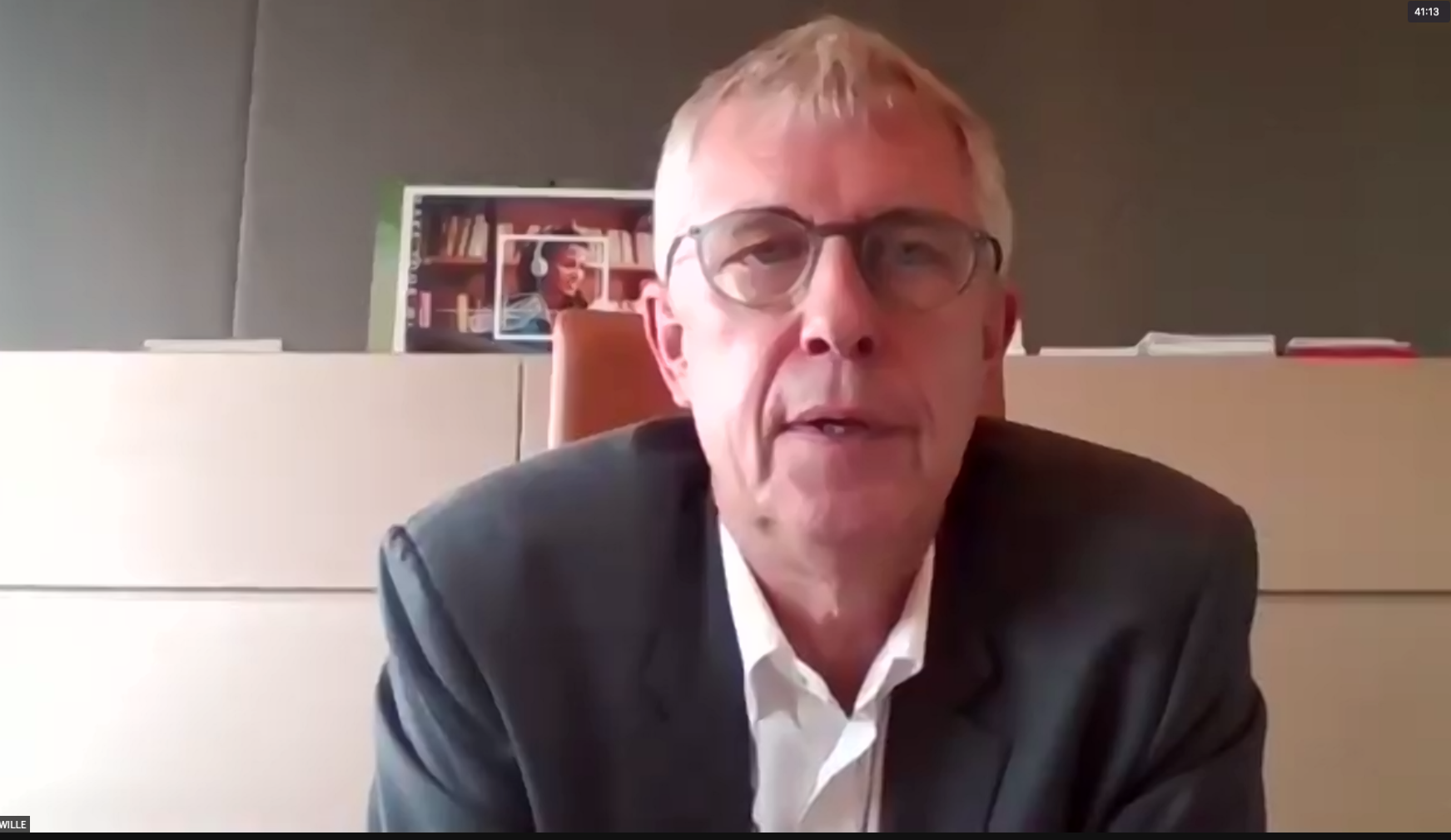
ArcelorMittal’s Group Head of Human Resources Bart Wille joined the two-day meeting to present at the company’s perspective and strategies. Wille received a series of questions, comments and criticisms from participants, particularly related to the quality of labour relations and social dialogue in the company.

Participants stressed that since the last global union network meeting in Rio de Janeiro, Brazil in April 2019, social dialogue in the company has declined. Social dialogue should be a two-way street providing sufficient, transparent and timely information about developments in the company, and trade unions should be consulted on critical issues, notably the future growth strategy and investments.

Based on the feedback in the meeting, as well as the exchange with management, participants adopted a declaration.

While recognizing the company’s efforts in addressing health and safety issues especially during the Covid-19 crisis, participants raised their expectations for better cooperation, collaboration and dialogue between management and trade unions. Particular reference was made to improving and strengthening the functioning of the ArcelorMittal Joint Global Health and Safety Committee, which was formed under a global agreement reached between the signatory unions and management in 2007.

The union network reiterated its strong demand to negotiate a global framework agreement with ArcelorMittal’s global management that includes company support for a global union committee with proper information and consultation processes over cross-country issues.

Kemal Özkan

IndustriALL assistant general secretary Kemal Özkan said:

“Our affiliates are faced with a number of conflicts over restructuring at ArcelorMittal with closures and job losses. Our global union network is disappointed with the deterioration in quality of the labour relations with ArcelorMittal. We urge the company to immediately address the ongoing problems in dialogue with our affiliates and to demonstrate a stronger commitment to the institutionalized social dialogue at global level.”

Ternium Guatemala union registers first collective agreement

In 2017, IndustriALL lodged a complaint against Ternium with the Organization for Economic Co-operation and Development (OECD), as the company refused to recognize and negotiate with the trade union in Guatemala. A year later, Ternium representatives agreed to negotiate a collective employment agreement with Sitraternium.   

The collective bargaining process formally began in 2019, and the first collective employment agreement was signed by both parties in January 2020. It then took eight months for the agreement, which is valid for three years, to be certified by the Ministry on 14 October.

"The agreement is nothing exceptional, but it provides employees with some rights that the company had tried to curtail. We now have a legal guarantee that those rights will be respected, and we can build a dialogue with the company.

"We're proud of the outcome as the process was not easy. It is the result of a collective effort by all our members, as well as of national and international unions. We couldn't have done it without this support,”

says Sitraternium general secretary, Walter Rodríguez.

When the union was founded in 2012, workers had to contend with anti-union behaviour by Ternium. In response, they launched a widespread campaign to protect their right to freedom and association, with support from IndustriALL.

The union says that relations with the company have improved, and a dialogue on Covid-19 protocols was possible. It is hoped that Ternium now will recognize the union as a legitimate organization and fully comply with the agreement.

IndustriALL regional secretary, Marino Vani, says:

"When workers come together we can achieve our goals. The national, regional and global unity of workers in the Tenaris – Ternium union network is truly commendable – they are writing history and working to ensure their rights are respected.

"This outcome was achieved through a combination of the network’s solidarity, local campaigns and the complaint lodged with the OECD. We can only build a dialogue with companies if we are united, and we will continue working together to create a world that is better for everyone."

Unions file constitutional challenge against Omnibus law calling it 'modern slavery'

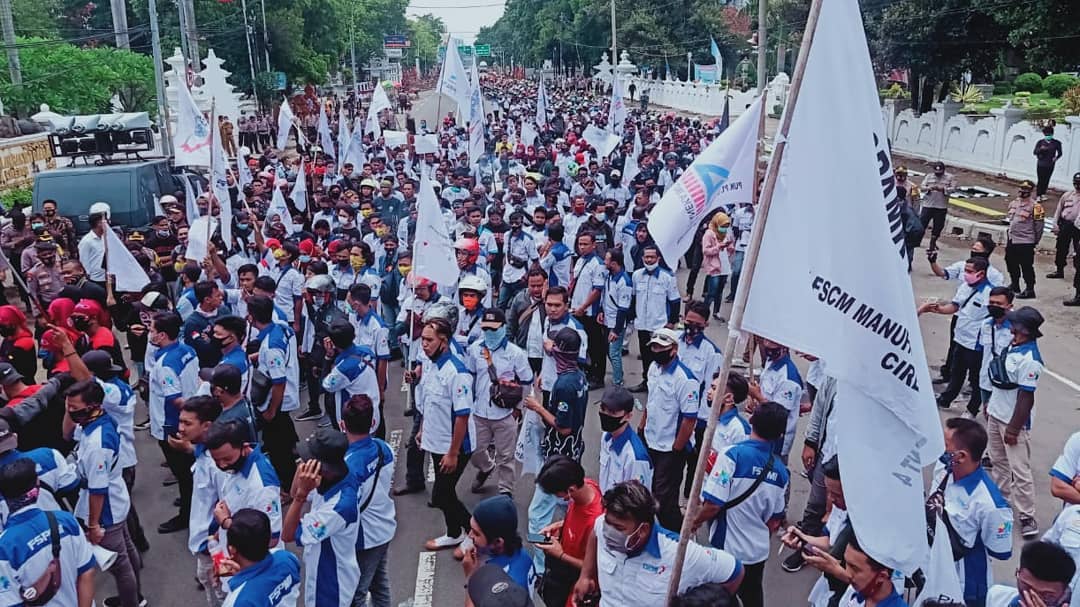
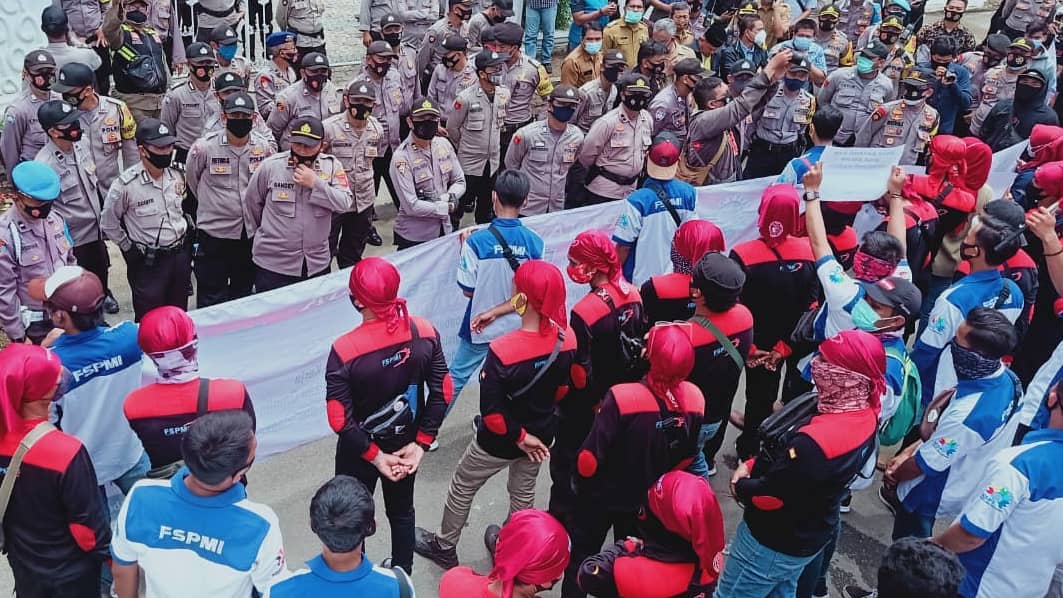
The unions, together with 32 federations including IndustriALL Global Union affiliates FSPMI, FSP KEP, SPN, CEMWU and others, filed the challenge at the Constitutional Court, arguing that the Omnibus Law on Job Creation is clearly violating constitutional provisions and the Manpower Act 2003 that protect workers’ rights.

Job security and a range of workers’ benefits have been compromised in the controversial law that signed by Indonesian President Joko Widodo on 2 November, despite thousands of Indonesian union members staging demonstrations around the country.

Said Iqbal, president of KSPI and FSPMI, says:

"We call on the government to immediately cancel the controversial law that has adverse effect on Indonesian workers. The removal of the sectoral minimum wage will lead to a low-wage regime as district governments or city councils are no longer dutybound to set a minimum wage for workers.

“If the new provision on outsourcing comes into force, Indonesian workers could be made life-long contract workers as contract periods can be extended indefinitely and the scope is no longer restricted to five types of jobs. In short, this is modern slavery.”

National action organized by KSPI, KSPSI AGN and 32 federations across the country on 2 November.

IndustriALL South East Asia regional secretary Asia Annie Adviento says:

“I congratulate Indonesias affiliates for taking the campaign to next stage by submitting a legal challenge. IndustriALL stands in solidarity and will provide the necessary support in the unwavering struggle against Omnibus law.”

Since January, the Omnibus Law on Job Creation that amends 73 legislations  has caused widespread protests across the country. Workers risked their lives to join demonstrations, which successfully forced the parliament to postpone the debate in April 2020.

National action organized by KSPI, KSPSI AGN and 32 federations across the country on 2 November

However, the parliament fast tracked the debate and approved the law on 5 October, forcing workers to take the matter to the streets again through national strikes. Millions of workers affiliated with KSPI, KSPSI and KSBSI joined the strikes and numerous unionists were arbitrarily arrested and detained by Indonesian police.

First meeting of COATS global trade union network

The network meeting is an important step to form global alliances and facilitate information exchange. IndustriALL and affiliated unions work towards a formal dialogue with COATS on a global level to navigate safe workplaces and ensure the income and employment of workers during the crisis.

Workers in the textile and garment industry have been heavily impacted by Covid-19; the ILO projects 400 million formal job losses in the first half of 2020 worldwide.

In light of this, participants shared how Covid-19 affects workers in their factories. Union leaders spoke about the effects of the pandemic on:

Several union leaders praised COATS for providing benefits for and maintaining a good relationship with workers. In these challenging times, unions are making great efforts to negotiate with the company and some challenges were reported.

Union leaders focus on ensuring workers’ health and safety; they provide masks, set up transportation to the factory, and inform workers on new developments.

Valter Sanches, IndustriALL general secretary, says:

“Networks are a great tool for exchange of experiences and support and we can help each other in solidarity. We will keep supporting this network, both at regional and global level. COATS is a steady global company that managed the crisis including by reconverting part of its production for personal protective equipment and the care front. Workers must be part of this development. We will insist in opening a global dialogue with company management.”

Union leaders expressed that in the current situation, a high level of unionization is important to protect jobs and show solidarity.

Szabolcs Beothy-Fehler, union leader from Hungary, says:

“Some salaries have fallen due to the pandemic, so this is a good opportunity to build union power.”

US and Canada autoworkers welcome GM and Fiat Chrysler investments

On 20 October, Terry Dittes, UAW international vice president announced an agreement with General Motors on plans to invest US$2 billion into six US plants and modernize the Spring Hill, Tennessee assembly plant to build the next generation all-electric vehicles.

The Tennessee site, organized by UAW Local 1853, will build the new electric crossover Cadillac Lyriq, while members of UAW Local 602 in Delta Township, Michigan, will build the new generation Acadia.

Dittes says:

“The future unveiled by General Motors is a commitment to UAW members’ future work based on their skill, sweat and craftsmanship. UAW members are committed to making GM’s investment in these new vehicles continued top sellers and best in class next generation electric vehicles.”

The day before, on 19 October, members of Canadian union Unifor at Fiat Chrysler in Brampton, Etobicoke, Windsor, Mississauga, Montreal and Red Deer ratified by a 78 per cent majority a new three-year collective bargaining agreement with the auto company. The agreement also includes significant investments, job security and economic gains for workers.

“This agreement solidifies and builds on FCA’s footprint, with a game changing investment of up to C$1.58 billion (US$1.2 billion) for a state-of-the-art platform to build both Plug–In Hybrid Vehicles and Battery Electric Vehicles, along with C$50 million (US$37.6 million) investment to bring multiple derivatives of the Dodge Charger and Challenger to the Brampton plant where production of the Chrysler 300 is being extended,”

says Jerry Dias, Unifor national president.

“Both deals are a good sign for a brighter future for workers in times of massive transformation in the auto industry,” says Atle Høie, IndustriALL assistant general secretary. “We welcome secure investments in technologies for the future, creating work at organized facilities.”