South East Asia call to action to promote ratification of C190

In observance of International Day for the Elimination of Violence Against Women and the start of the 16 days of activism against gender-based violence, 120 women and men from IndustriALL affiliates in South East Asia showed strong support for a call to action to promote the ratification of ILO Convention 190 on violence and harassment in the world of work.

While attending IndustriALL South East Asia Conversation #3 on ratification of Convention 190 on 25 November via Zoom, participants from Australia, Cambodia, Japan, Indonesia, Korea, Malaysia, Mongolia, Myanmar, Philippines, Thailand and Vietnam committed to organize workers around the campaign to end violence and harassment in workplaces.


In Indonesia, women unionists are focusing their energy on the inclusion of gender equality in collective agreements, after IndustriALL Indonesia women’s committee discovered that 77 per cent of the in total 186 surveyed agreements did not have provisions on sexual harassment.

Ira Laila Budiman, secretary of IndustriALL’s Indonesia women’s committee, says :

“We demand that all Indonesian affiliates insert a provision on violence and harassment at work in collective agreements. We believe this is achievable; since 2014 we have managed to include provisions of 14-weeks maternity leave in 33 collective agreements.”

Philippine women unionists are actively campaigning for gender-mainstreaming policies. After intense lobbying, the Philippine government enacted the Expanded Maternity Leave Act in 2019 that provides for 105 days paid maternity leave.

Eva Arcos, the Co-Chair of IndustriALL global women's committee and national vice president of Associated Labor Unions, says:

“IndustriALL Philippine affiliates have initiated dialogues with the Department of Labor and Employment and other stakeholders, we met women rights' champions in the Philippine senate to put forward the Convention 190 agenda. The campaign for ratification will go on.”

IndustriALL South East Asia regional secretary Annie Adviento says:

“The convention provides a momentum for unions to call for the elimination of all forms of violence and harassment in workplaces. IndustriALL will continue to support affiliates to use the convention to change the lives of women and men."

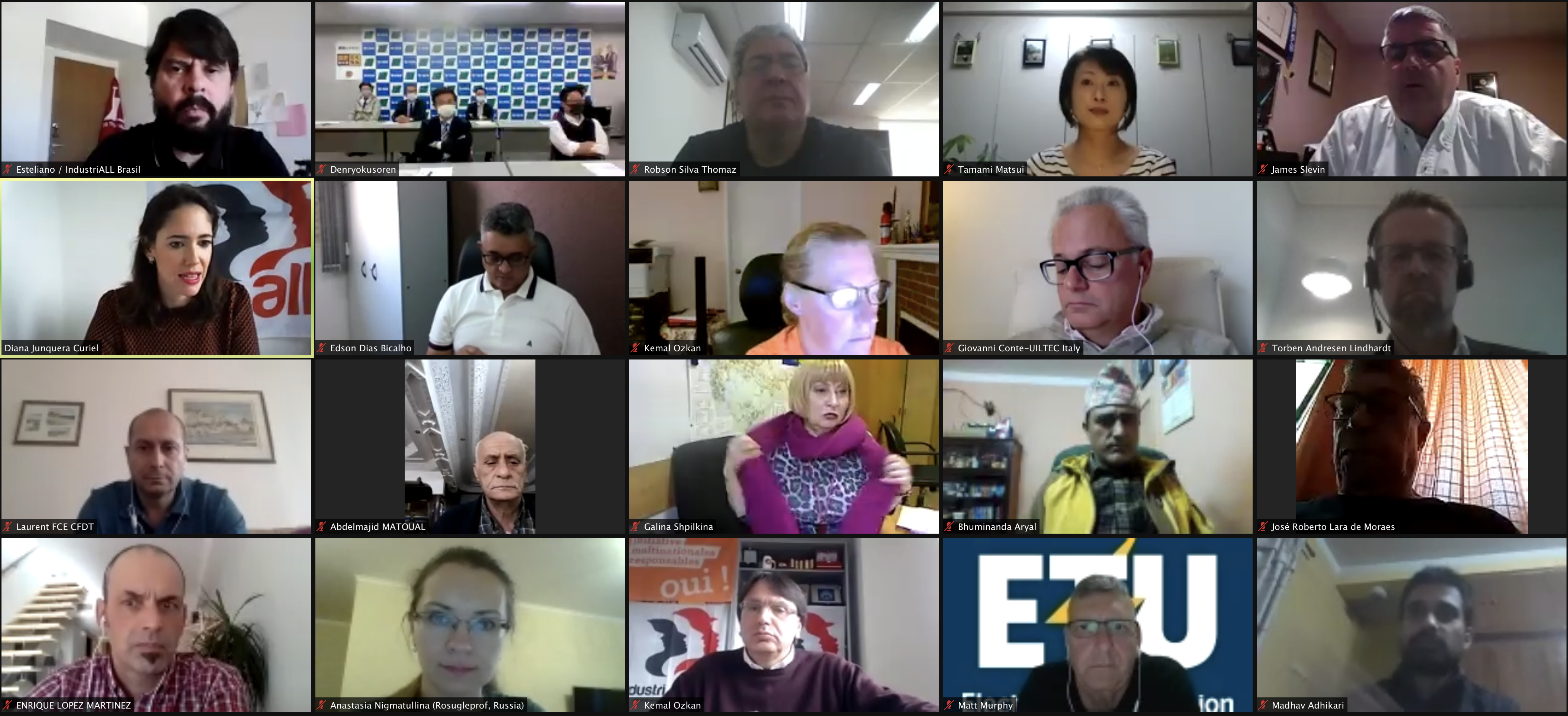
Electricity unions pledge to support each other


The electricity network meeting was opened by sector vice co-chair Gwenne Farrell from Canada, who spoke about how the pandemic has resulted in a wave of solidarity between ordinary people, and reminded us that we need to support for each other.

IndustriALL energy director Diana Junquera Curiel spoke about the state of the sector during the pandemic. Despite lockdown, global demand for electricity has only shrunk by two per cent this year, so the sector has not been as heavily impacted as others. Electricity workers are considered essential, and those who could not perform their tasks from home had to go to their workplaces despite lockdowns. Some companies, including those IndustriALL has global framework agreements with, such as ENGIE and ENEL, responded well, providing life insurance and health coverage to all staff globally, and introducing specific safety measures.

Junquera spoke about future trends in the sector. Electricity will be generated by more diverse sources, particularly solar photovoltaic energy, and power networks will need more flexibility to cope with the change in supply. This will require major infrastructure development, and unions must pressurize governments and companies to invest in the future of energy.

In particular, a massive expansion in grid capacity is needed, and well as ways to store energy for peak demand. This will include the development of batteries and energy storage systems. Possible scenarios include large scale investment in batteries by energy companies, or using the growing capacity of electric cars which are charged at night when demand is low.

In response, Matt Murphy of Australia said that experience had taught that it is critical for unions to have a strong presence in the national grid. Jesus Crespo Torres of Spain noted that companies are shifting to renewables – but it's up to unions to ensure the social aspect of the transition. Spanish delegates spoke about  the closure of coal mines and thermal power plants in Spain and the good agreements jointly negotiated with the Spanish government and the companies to guarantee a Just Transition for workers.

French union delegates spoke about the unbundling of EDF and ENGIE, and about the joint action that unions took on 26 November, to demand action from the European Commission, French government and the companies. Representatives from around the world expressed their solidarity with the French workers, many saying they face similar issues.

IndustriALL mining director Glen Mpufane spoke about the supply chain links between electricity and mining. He raised the case of the Cerrejón mine in Colombia, where workers have been on strike for almost 80 days against the imposition of terrible new conditions. The coal is exported, mostly to Europe and Turkey, for electricity generation.

Assistant general secretary Kemal Özkan spoke about the work IndustriALL is doing to organize the battery supply chain, and about how important it is for electricity workers to be part of that network.

“As batteries become more important, mapping and organizing the supply chain, from mining upwards, is essential,” he said.

Photo © Trevor Rickard (cc-by-sa/2.0)

Global unions call on Swiss to vote for corporate responsibility

Win or lose, the fight to hold multinational companies accountable has taken a huge step forward representing hope for workers globally.

For too long, multinational companies have been able to hide their abuses behind a veneer of respectability, using plausible deniability whenever bad behaviour is exposed. How the world views corporate responsibility is shifting. The Responsible Business Initiative is part of a global push by unions and civil society organizations to hold companies responsible for their unethical behaviour.

And our message is clear: we are coming for you, we will hold you accountable.

The Responsible Business Initiative was created by the Swiss Coalition for Corporate Justice, made up of Swiss human rights and environmental organizations, religious groups and trade unions. The initiative targets the activity of companies based in Switzerland, including multinational corporations that global unions engage with, such as Glencore and LafargeHolcim and Nestlé.

If the initiative succeeds, these companies, and all Swiss-based firms, will be legally responsible for human rights abuses and environmental violations anywhere in the world, caused by companies under their control or their influence.

In a major step forward, victims of human rights violations and environmental damage will be able to seek redress in Switzerland.

When a company can credibly demonstrate to the Court that it carried out adequate due diligence and that it took all necessary measures to prevent the violations, it will be exempted from liability. The initiative therefore has a preventive effect as it provides companies with an actual incentive to comply with their obligations.

This will also allow Switzerland and France, with its similar 2017 due diligence law, to increase pressure on multinationals by joining forces on the issue of human rights and the environment. As the draft European directive expected in 2021 continues to be debated even during the pandemic, there is clearly growing consensus around the need for accountability across Europe.

The pandemic can only reinforce the need for multinationals to be strongly regulated as it is unacceptable that they take advantage of the crisis to increase their profit at the expense of workers' rights.

As global unions, it is our role to ensure that workers’ rights are respected on a global level.

With this initiative, multinational companies headquartered in Switzerland can no longer hide behind flawed legislation in a production country on the other side of the world; they are legally accountable for the entire supply chain. The wrongdoing may be committed abroad, but recourse can be sought in a Swiss court.

Global unions BWI, IndustriALL, IUF and UNI Global Union together represent more than 90 million workers around the world. All four organizations are headquatered in Switzerland.

Make Amazon Pay

As another step of the global campaign on the textile, garment, shoe and leather sector, IndustriALL is joining the global action against Amazon together with UNI Global Union, ITUC, Oxfam, Tax Justice Network and others to call Amazon to account.

Among other things, we demand Amazon change its policies and pay workers in line with the increasing wealth of the corporation, introduce adequate break time to ensure safe work, extended paid sick leave to all workers, end union busting, respect workers’ rights to organize and immediately stop all forms of spying on workers and organizations.

IndustriALL general secretary Valter Sanches says:

“During the Covid-19 pandemic, with a sky-rocketing global growth of e-commerce, Amazon became a trillion-dollar corporation, with CEO Jeff Bezos becoming the first person in history to amass US$200 billion in personal wealth. Meanwhile, Amazon warehouse workers as essential workers and only briefly received an increase in pay.   

“Together with fellow global unions, workers, activists, and citizens from across the globe, IndustriALL is joining forces to Make Amazon Pay its workers fairly, for its impact on the environment and its taxes.”

Many of us know the name Amazon and think of massive warehouses that are the centres of a sophisticated, global distribution network. It is the largest online retailer in the world and you can order nearly anything on Amazon and have it delivered the next day.

You may also be aware of Amazon’s open anti-union tactics, its appalling health and safety records in the warehouses, and of owner Jeff Bezos unimaginable personal wealth as a result of founding Amazon in 1994.

But what is less known is that Amazon Fashion is a growing brand within the global garment supply chain. The company has become the leading apparel retailer in the United States, quoted as the number one destination for apparel shoppers, beating Target and Walmart.

Amazon’s fashion offerings are varied and complex with hundreds of private label brands like Amazon Essentials, Goodthreads, Daily Ritual, Lark&Ro, Cable Stitch and Buttoned Down. It currently has over US$30 billion in sales and is actively looking to expand its market share in Europe and the rest of the world.

Amazon’s supply chain stretches across the globe with production in Bangladesh, China, Malaysia, India, Sri Lanka, Turkey and Vietnam.

Following on 4 September and 7 October, this is the third global day of action for the garment and textile sector.

African unions united for Africa Industrialization campaign

The webinar voiced that African industrialization should be inclusive of multiple stakeholders, including investors, governments, trade unions, employers, civil society organizations, and communities. The webinar concurred that this inclusion is better coordinated through sustainable industrial policies that explained stakeholders’ roles.

This way, the narrative of Africa as a place of poverty could be changed to one of a developing resource rich continent. Further, the responses to the devastation of the Covid-19 pandemic on jobs could be used to grow economies through stimulus packages while the African Continental Free Trade Area (AfCFTA) provided an opportunity to create millions of jobs. Other factors to be included in the policymaking included climate change and Just Transition as well as adoption of technology through the Fourth Industrial Revolution’ automation and artificial intelligence.

The participants included representatives from the African Development Bank, and civil society organizations, such as the Third World Network Africa and the Labour and Economic Development Research Institute of Zimbabwe (LEDRIZ) and the Regional Network in Equity and Health in East and Southern Africa (EQUINET).

On the AfCFTA, there were calls for a shift in thinking towards a more developmental approach that avoided the disputed policies of the World Trade Organization (WTO). The meeting heard that the WTO’s trade liberalization policies did not benefit African economies.

Additionally, African economies were more integrated globally than they traded locally, and for development to take place the raw materials export dependent economic model had to be transformed. There should also be conditions on investments to protect workers’ rights and interests.

The webinar discussed that the role of trade is to integrate production and markets. For example, importing cheap tomatoes from Italy for processing plants in Ghana destroyed the local market. It was recommended that countries should remain vigilant on investment, intellectual property, and e-commerce. For instance, the proposal to the WTO by South Africa and India on Covid-19 vaccines was welcomed.

The webinar put special attention on the African Mining Vision (AMV) as an important action plan for strengthening mining and industrialization linkages along national and regional value chains. Further, mining benefited workers, communities, and broader society. However, there is need for better resource governance and respect for human and workers’ rights. To be effective, the AMV must be implemented, accountability improved, and ownership deficits resolved. Health and safety in the mines remain key and the ratification of Convention 176 on safety and health in the mines important. Recognition and support should also be given to artisanal and small-scale mining.

Valter Sanches, IndustriALL general secretary said:

“As trade unions we must put pressure on governments to use minerals to industrialize. We cannot continue to be producers of agricultural commodities, oil and gas resources, and rare minerals used for making batteries, electric vehicles, and smartphones. We have to manufacture and harness possibilities for recovery from the Covid-19 pandemic.”

The automotive sector was cited as having potential to create decent work. According to a research report by IndustriALL and Friedrich Ebert Stiftung Trade Union Competence Centre for Sub Saharan Africa the sector can attract sustainable investments.

Kemal Özkan, IndustriALL assistant general secretary said:

“We will continue to engage the African Union, the AfCFTA, AfDB and civil society organizations for policy engagement on African industrialization. In this respect, unions will continue to receive support to build their capacity to engage in sustainable industrial policies. The automotive, energy, mining, and the textile, garment, shoe and leather sectors, are important for industrialization to take off.”

Webinar part one:

Webinar part two:

Over 250 million workers join national strike in India

Indian trade unions condemned the arrests of workers’ and farmers’ leaders across the country as they demonstrate together in one of the biggest ever nationwide general strikes.   Indian trade union leaders issued a clarion call to the government to repeal anti-worker labour codes and anti-farmer farm laws as a massive mobilization of industrial and agricultural workers and farmers across the country disrupted normal life across the country, in rural and urban areas.

All over the country, both public and private sector employees participated in the strike. The united front of the over 250 farmers organizations, All India Kisan Sangharsh Co-ordination Committee (AIKSCC), extended support to the trade union strike and the unions extended their support to the farmers’ “Chalo Delhi” (Go to Delhi) mobilization on 26 and 27 November. Farmers are protesting against recent anti-farmer laws which would withdraw the government’s minimum support price for farm products, with serious implications for farmers’ income and livelihoods.

Trade union leaders expressed concerns that, using Covid-19 as an excuse, the government has unleashed widescale repression. Police used violent means to attempt to stop hundreds of thousands of workers and farmers who are on their way to Delhi to demonstrate peacefully in the capital city on 26 and 27 November.

Sanjay Vadhavkar, general secretary of SMEFI and IndustriALL executive committee member said,

“Despite the severe police actions across the country, workers enthusiastically participated in the strike. The recent labour law changes, including the new codes on social security, wages and industrial relations, should be revoked as they fall short of protecting fundamental principles and rights at work.

“On many aspects they go against India’s commitments in the international human rights and labour rights forums. Mishandling of Covid-19 and anti-people economic policies pushed millions into misery. This strike and the joint action with farmers will send a strong message to government demanding workers’ and people-oriented policies.”

Valter  Sanches, general secretary of IndustriALL Global union said,

“We condemn the violent means used to stop the democratic expression of dissent. IndustriALL stands in solidarity with the Indian trade union movement and commends their effort in forming a broad-based alliance with famers and agricultural workers against anti-people policies.

“Indian trade unions demands are genuine, especially in today’s situation with high unemployment and job losses, which have been exacerbated by the pandemic ravaging the world, and in particular India. The government should listen to the trade unions and hold genuine dialogue to resolve issues.”

The IndustriALL executive committee, which met online on Thursday 19 November, expressed its full support and solidary with general strike.

The joint trade union charter of demands:

  1. Direct cash transfer of Rs 7,500 (US $101) to all families who earn less than the income tax threshold
  2. 10kg free ration per person every month to all in need.
  3. Expansion of the Mahatma Gandhi National Rural Employment Guarantee Act to provide employment from the current 100 days to 200 days work in rural areas with enhanced wages, and extension of this programme to urban areas
  4. Withdrawal of all anti worker labour code changes and anti-farmer laws
  5. Stop privatization of public sector corporations, including those in the finance sector. Stop the corporatization of government-run manufacturing and services entities in railways, ordinance manufacturing, ports and similar areas.
  6. Withdraw the draconian circular of forced premature retirement of government and public sector employees.
  7. Provide a pension to all, restore earlier pension scheme and improve EPS 95.

The joint trade union platform includes central trade unions such as INTUC, AITUC, HMS, CITU, AIUTUC, TUCC, SEWA, AICCTU, LPF and UTUC.

Italian ArcelorMittal workers on nationwide strike for their jobs

For all the three Italian unions, former Ilva site is the strategic asset of the Italian steel industry, but since conclusion of the agreement on 6 September 2018,  ArcelorMittal has gradually weakened the site until it became unsustainable.

Considering the ongoing challenges faced by steel workers at ArcelorMittal Italia (ex Ilva), the unions insist on urgent measures to ensure the health and safety of the workers; immediate resumption of appropriate industrial relations, currently non-existent; and respect of the workers' rights to information and consultation.

In the same time workers demand for an industrial plan, defining the future of the group in Italy, including time for relaunch of installations that have been put on hold for years.

In addition, the unions find it imperative to create a social safety net to ease the hardships faced by workers, and the additional stress from the COVID-19 pandemic.

On 03-04 November 2020 IndustriALL Global Union’s ArcelorMittal Global Union Network with participation of more than 90 delegates from some 20 countries, met and received the reports from the union representatives about the situation at ex-Ilva site. The global union network extends their full support to their Italian fellow workers.

In his letter to the Italian affiliates, Valter Sanches, IndustriALL general secretary expressed solidarity with the unions’ strike action announced on 25 November and said,

“We strongly urge the company and the Italian government to meet with trade unions to agree on a clear way forward with solid and transparent plans for the future. We reiterate our full support to your struggle, and in particular we stand in solidarity with you tomorrow 25 November during nationwide day of action.”

WTO members should ensure access to affordable medicines

The Covid-19 pandemic has deeply affected the world of work, with millions of workers losing their jobs. The production, distribution and consumption of goods and services, and associated economic activities, are faced with unprecedented disruption and an uncertain future. As the global economy slips into recession, going beyond a health crisis, the pandemic challenges the fundamentals of the world’s social, political and economic security.

Access to affordable medicines, tools, vaccines, diagnostics and treatment for Covid-19 is paramount for a recovery from the crisis. No one should be left behind and no one is safe until everyone is protected.  Since the start of the pandemic, there have been calls for coordinated efforts to for the production of medical products, for sharing technology and for ensuring access to affordable treatments.

Many countries face shortages of medical products and access to diagnostics, testing and treatment. To overcome these challenges, in particular those caused by the WTO’s Trade Related aspects of Intellectual Property Rights (TRIPS), India and South Africa have proposed a waiver of certain provisions for the prevention, containment and treatment of Covid-19.

The waiver proposal underlines that

‘intellectual property rights including such as patents, industrial designs, copyright and protection of undisclosed information do not create barriers to the timely access to affordable medical products including vaccines and medicines or to scaling-up of research, development, manufacturing and supply of medical products essential to combat Covid-19.’

The World Health Organization (WHO) has welcomed these proposals. The waiver from the rules are important as existing flexibilities within TRIPS agreement have limitations and countries which do not have manufacturing capacity need to follow cumbersome procedures to import medical products, limiting their ability to save those in dire needs.

Valter Sanches, IndustriALL general secretary, says:

"Working people around the world need rapid access to affordable medical products and governments need to collaborate and act swiftly to ensure access and stop avoidable deaths. Monopoly and profiteering in a pandemic are unacceptable. Affordable and equitable distribution of therapeutics, diagnostics and vaccines should be the priority.

"To this end, we call on WTO members to support the adoption of the Covid-19 TRIPS waiver proposal."

Together with other global unions, IndustriALL has endorsed a global civil society statement, signed by over 400 national and international organizations.

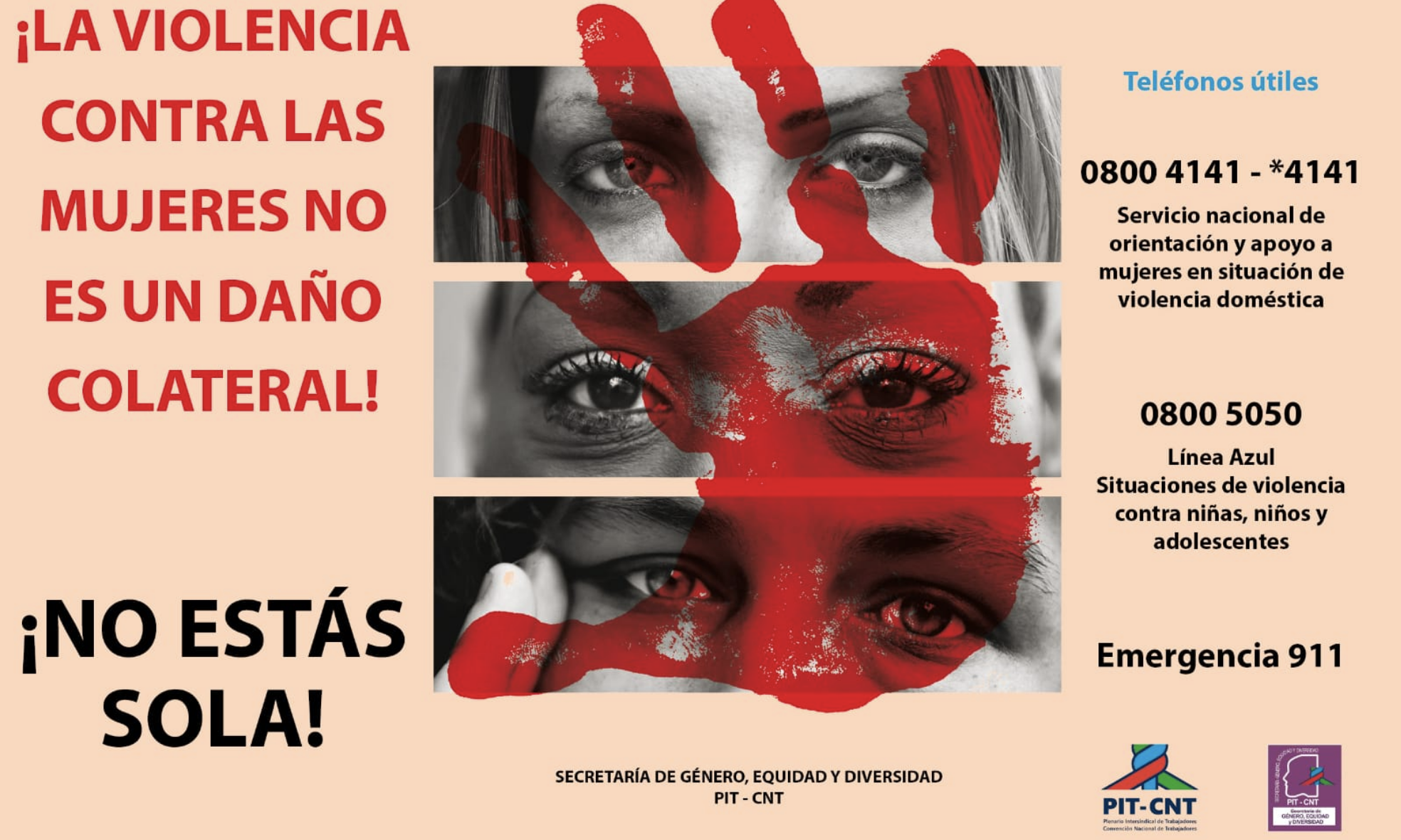
Domestic violence is a trade union issue

The inclusion of provisions regarding domestic violence in ILO C 190 and Recommendation No. 206 (R 206) reflects a fundamental change from being considered a private issue to now being acknowledged as having consequences for workers, companies and society at large.

Domestic violence can spill over into the world of work; perpetrators may follow victims to their workplaces or use their victim’s professional computer, emails or phone to harass and control them. The stress and trauma of domestic violence impacts the victim’s work.
But workplaces can be safe spaces where victims can seek support and protection, and protect their financial independence.

The ILO states:

Employers and co-workers can save lives by providing a place of safety and solidarity, serving as a nexus to community services, and also identifying cases of violence.

ILO R206 calls for awareness-raising about the effects of domestic violence; the provision of leave, flexible work arrangements, protection against dismissal for victims/survivors of domestic violence; and the inclusion of domestic violence in workplace risk assessments and occupational health and safety policies.

“Trade unions have an important role to play. Their members can be both victims of domestic violence as well as perpetrators. Trade unions can demand that employers provide safe workplaces for victims, as well as show solidarity to their members who are facing domestic violence by taking a strong stand against gender inequality and educating their membership on the need for trade union action against domestic violence,”

says Jenny Holdcroft, IndustriALL assistant general secretary.

NUM in South Africa launched a campaign in 2018, condemning all forms of violence against women. Awareness raising campaigns create a conducive environment that encourages victims to speak out and bystanders to take action.

In Canada, USW launched the programme: Be More Than a Bystander – Break the Silence on Violence Against Women, engaging their male members to speak up against abuse and violence and to intercede if they witness it.

Several IndustriALL affiliates have achieved paid leave provisions in law. In the Philippines and New Zealand, the law provides ten days paid leave for victims/survivors of domestic violence, in Australia it is five days of unpaid leave. In Canada, workers in federally regulated workplaces can have five days of paid domestic violence leave and all provinces have a law that gives leave (paid and unpaid).

IndustriALL affiliates have been informing their members about available domestic violence support. During the Covid-19 crisis, Uruguayan unions have been sharing a hotline number on social media.

Trade unions have developed guidelines and procedures on how to identify victims/survivors of domestic violence and support them effectively. The TUC, UK, have put together a guide for shop stewards on how to engage with domestic violence victims/survivors during Covid-19. 

Some trade unions have been training their own contact points to support victims/survivors. In Canada, UNIFOR’s women advocate programme trains workplace representatives who assist women with workplace harassment, domestic violence and abuse.

IndustriALL affiliates have put together guides for negotiators on domestic violence; Unite the Union’s Domestic Violence & Abuse – a negotiators guide; USW’s Bargaining guide on how to address domestic violence in collective agreements, providing model clauses for CBAs.

Protective measures can include enabling victims of domestic violence to adapt their work schedules, use pseudonyms, and have flexible working hours, allowing them to make the necessary changes to protect themselves from abusers who exploit knowledge of their working hours and location.

Dedicated leave for victims/survivors of domestic violence is key, as this enables victims/survivors to deal with any legal proceedings as well as to access support, services and remedies. Temporary protection against dismissal for an employee is critical for any worker whose absences or performance are related to domestic violence.

If your union is taking action against domestic violence, please let us know!

Domestic violence is the most pervasive form of gender-based violence. It can be understood as all acts of physical, sexual, psychological or economic violence that occur within the family or domestic unit or between former or current spouses or partners, whether or not the perpetrator shares or has shared the same residence with the victim.

Anyone can be a victim or perpetrator of domestic violence. However, the vast majority of reported cases are committed by men against women.

According to the ILO, domestic violence is an expression of unequal power relations between men and women. In the context of Covid 19, with increased uncertainty impacting individuals and households, women are experiencing more episodes of violence as perpetrators take out their frustrations and try to reassert their control.
 
These perceptions and norms lead to the acceptance and justification of domestic violence, and to victim-blaming that implies that women deserve it.

There is no justification for domestic violence. Woman’s behaviour is not to blame, it is fully the responsibility of the perpetrator.
Cement workers in North America move forward in solidarity

The cement industry in North America has quickly recovered to pre-Covid levels, as cement and concrete are key in developing societies. However, this has not spared workers of challenges during the ongoing pandemic.

Globally since last year the problem of cement overcapacity production did not disappear and the overall picture in the landscape of the construction materials did not change considerably either. The top ten cement producers share 45 per cent of the entire world cement production capacity, with two Chinese companies, CNBM and Anhui Conch, on top. Combined their production capacity is equal to almost 900 million tons of cement yearly. 

COVID-19 became a trigger for many companies including in the building materials sector to scale up remote work and accelerate digitalization and automation, which in its turn requires reskilling of at least 50 per cent of the workforce in the next five years by the OECD assessment.  

With the initial spread of Covid-19 and subsequent lockdowns, came a slowdown of the industry, accompanied by layoffs both in US and Canada. But since June-July, the construction sector, and together with it cement and concrete production, went back to normal. So most of the previously laid off workers were called back to work. Moreover, many noted a considerable increase in working hours and in some cases even a slight shortage of cement due to a high demand.  

In general, Covid-19 measures introduced in were quick and effective, and mostly workers felt well protected. Participants noted however that some companies, like LafargeHolcim, were unwilling to do more than the bare minimum required by local authorities and tried to avoid discussions and consultations with workers’ representatives on the subject. 

Participants welcomed the union win achieved by fellow cement workers from IndustriALL Canadian affiliate FIM-CSN, who after almost two months of lockout by cement multinational CRH, finally signed an agreement with their employer and went back to work.

The International Brotherhood of Teamsters reported about the ongoing organizing drive at Nevada and Southern California sites of CEMEX, a building materials producer of Mexican origin. Through the organizing drive Teamsters are trying to restore union presence in the ready-mix industry, which used to be dominated by organized labour. Workers faced a lot of resistance as the company applied different anti-union tactics, including employing specialized union busting lawyers. Teamsters brought 37 different charges of anti-union practices used by the company to the National Labor Relations Board; most of them were accepted. Union elections are foreseen to be held in some 30 different locations.

Participants agreed to hold another meeting and exchange on further developments in spring 2021.

Alexander Ivanou, industrial materials officer, says:

“The North American cement network exists since 2017 and has proved to be a good tool for reinforcing solidarity among our affiliates in the region. We learn from each other’s fights, victories and sometimes defeats, we never give up and we will keep working together, support each other and grow our strength every single day.”