Defending workers’ rights in a time of political turmoil

Speaking at the opening of IndustriALL’s Asia Pacific Executive Committee Meeting in Jakarta on 22 September, IndustriALL Global Union vice president Akihiro Kaneko highlighted the widespread violations of human rights and the erosion of democratic principles across the region.

Kaneko pointed to the ongoing military dictatorship in Myanmar, attacks on workers and democracy in Bangladesh, the Philippines and Korea, and the recent electoral gains of right-wing forces in Japan.

“When right-wing populists gain momentum, it is a serious concern for workers and unions going forward. As trade unions we must play an important role to protect social stability and workers’ livelihood. We must continue to build union power and organise workers across borders, tackling emerging issues such as artificial intelligence, human rights violations in global supply chains, climate change and just transition,”

said Kaneko.

In recent months, unions in the region have mobilized on an unprecedented scale. In India, 250 million workers participated in a general strike against regressive labour laws and job contractualisation. In Bangladesh, IndustriALL and global union federations rallied around the ILO roadmap to advance workers’ rights.

Korean unions mounted continuous protests against anti-union policies, resulting in the amendment of the Trade Union and Labour Relations Adjustment Act (TULRAA). The reform enables subcontracted workers to bargain collectively with principal employers and restricts employers’ ability to claim damages arising from strikes.

Occupational safety and health remain urgent concerns. In the first half of 2025, around 100 workers were killed in coalmine accidents in Pakistan. IndustriALL and the Australian Mining and Energy Union (MEU) are supporting demands for safer mines and campaigning for Pakistan to ratify ILO Convention 176.

Tripartite roundtable meetings have been held in South Asia following the entry into force of the Hong Kong Convention in June 2025. While some shipyards in Bangladesh have made technical upgrades, many still only comply on paper. In Pakistan, shipbreaking continues to operate outside the scope of the Convention, leaving workers vulnerable. South East Asian unions have also developed a 2025–2026 roadmap for health and safety, focusing on heat stress, campaigning for the ratification of ILO Convention 170 on chemical substances, and mapping occupational safety and health committees.

Participants at the Jakarta meeting also discussed the transformative agenda for the upcoming IndustriALL Congress in Sydney. Targets for women’s participation are set to be met, while a resolution to establish a global youth committee – and optional regional youth committees – will be debated.

With six weeks to go before the 4th Congress, the regional executive committee pledged support for Australian unions to ensure a successful event. Key themes will include global inequality, precarious work, occupational safety and health, global labour relations, human rights due diligence, accountability of capital, just transition, and sustainable industrial policy.

IndustriALL general secretary Atle Høie said:

“Our Congress in Sydney in just over a month is a defining moment for IndustriALL, let’s work hard together with Australian affiliates to make it a success. Please join me to push it over the lines; we should come out of Congress united, with a clear roadmap and fighting together for a just future.”

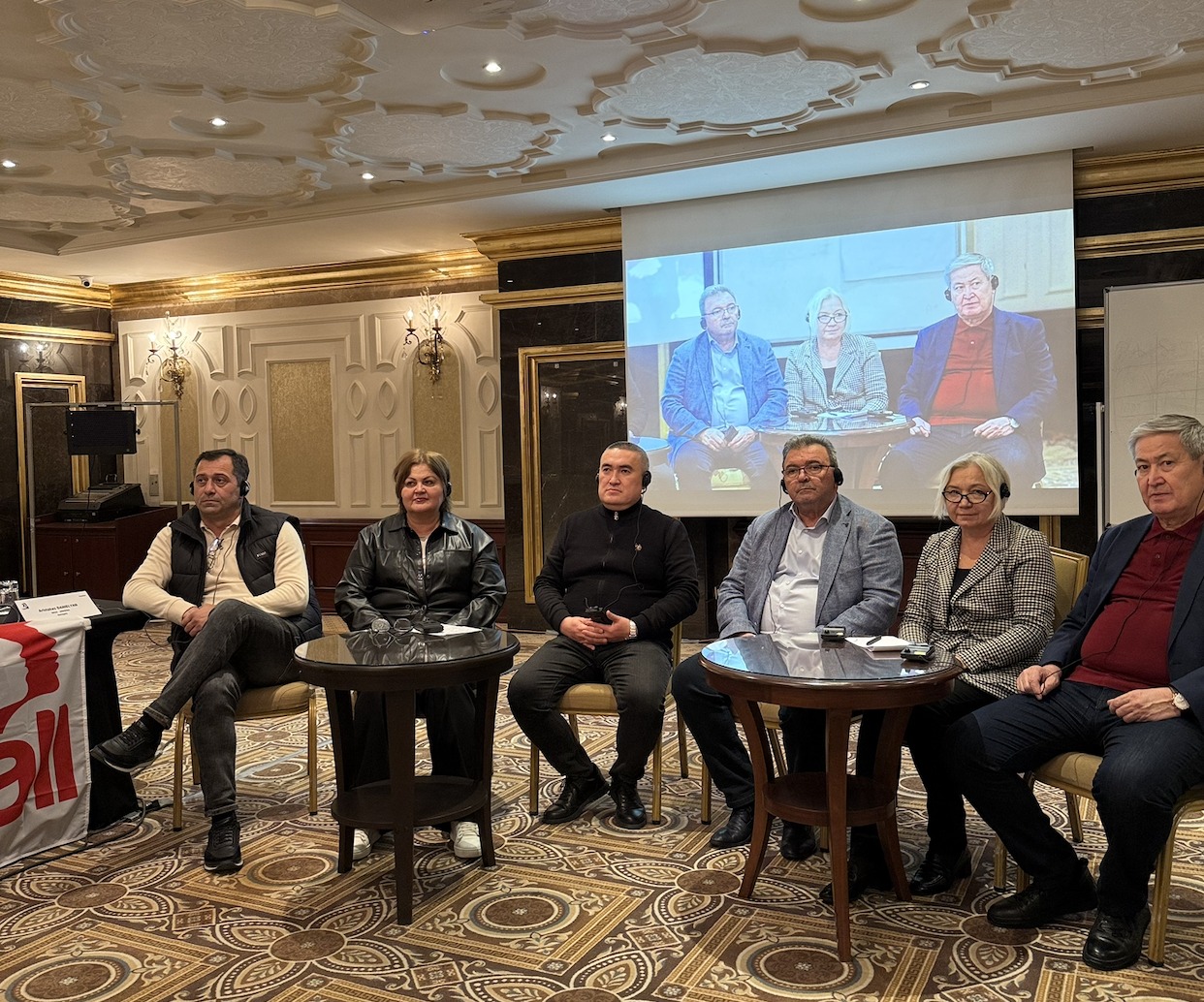
Kyrgyz unions plan joint organizing work

When Kyrgyzstan became independent after the collapse of the Soviet Union, there were mass job losses. Unions lost influence and were forced to reinvent themselves. Fifteen years ago, they took a decision to move from the servicing model to the organizing model, and sought to organize new workplaces. They were met with repression from the government. However, tripartite work with the ILO has led to a better environment, which unions are keen to make the most of

As well as being gender-balanced with 28 representatives from all three of IndustriALL’s affiliates in the central Asian republic: the mining and metalworkers’ union MMTUK, the light industry and textile union RK, and the industry and public services union, PRPKBOP, the workshop included strong youth presence. The Kyrgyz unions plan to follow up with a workshop for young workers later in the year, and have a plan to produce media, including podcasts and social media stories, to reach young people.

Participants came from a wide range of industries, including gold mines, public sector technical staff, and small garment workshops.

The first day of training covered organizing strategy, starting with the need to do research on target companies. This was followed by discussions on holding one to one conversations with workers, recruiting organic leaders, and building an organizing committee in the workplace.

The second day focused on winning a mandate from the workforce to conduct collective bargaining, and culminated with a negotiation role play, with participants divided into company and union sides to carry out negotiations.

IndustriALL campaigns and organizing director Walton Pantland, who conducted the workshop, said:

“There is a real hunger for knowledge in Kyrgyzstan. I was impressed with the commitment and professionalism of the participants, who are determined to work hard to improve employment conditions in the country.

“The strategy of focusing on young workers is a good one, and seeing the negotiations role play come to life was like watching a play, with participants trying tactics like intimidation, misdirection and points of order to gain the upper hand. It  was inspiring and great fun.”

The president of the MMTUK, Zhakypov Almazbek Zhakypovich, said:

“Activists and young members are participating and sharing experiences. There is fun and games, but there is also work.”

Shipbuilding and shipbreaking workers strengthen international cooperation

Around 40 participants from Japan, South Korea, Singapore, Australia, the UK, USA, Chile, Brazil, Finland, Denmark, Norway, India and Bangladesh took part in a rich discussion that reflected the growing international cooperation in the sector.

The shipbuilding industry is characterised by strong but uneven growth. Although orders for container ships remain high, this part of the industry is volatile due to the effect tariffs are expected to have on world trade. There is growing investment in defence, as well as international defence cooperation, which pose challenges for unions because of underlying geopolitical tension.

The industry is characterised by a shortage of skilled workers, and the use of precarious migrant workers remains an issue. Planned international transfers of workers for specialist work is increasingly common. Glenn Thompson of the Australian Federation of Shipbuilding Unions led a discussion on international union cooperation agreements, where unions agree to support each other’s members when working abroad.

ILO head of unit Casper Edmonds explained that East Asia dominates shipbuilding with 93 per cent of new build tonnage, with 47 per cent of this built in China. However, Europe has a specialist industry that builds highly complex vessels and is economically important.

The majority of the workforce remains older, male and blue collar, with women accounting for up to nine per cent of workers, and young workers just 16 per cent. There is significant variation in employment conditions, with good wages for formal workers, but worse conditions for precarious migrants.

The US is planning to massively increase its shipbuilding capacity, and to build polar vessels that can take advantage of Northern shipping lanes that are growing in importance due to the retreat of Artic ice. US unions dismissed Trump’s plan to Make Shipbuilding Great Again as an attempt to build ships cheaply with non-union labour, saying that the industry faces great uncertainty.

The ILO anticipates that the decarbonisation plan set by the IMO could lead to the potential creation of  up to four million green jobs in shipbuilding, retrofitting, alternative fuel production and bunkering.

Japanese unions reported that the country’s low birthrate means that there is a shortage of workers in the industry. The unions have developed a policy package to revive shipbuilding, including through government investment and partnerships with the private sector, listing ship hulls as critical materials, developing technology to improve ship design, establishing training hubs and accepting more foreign workers.

The Korean union KMWU reported that the recent passage of labour law reform was born out of a 51 day shipyard strike, showing that despite repression, the shipyards remain a bedrock of trade union militancy. The action group passed a resolution in support of Hyundai Heavy Branch Chair BAEK, Ho-Seon who is carrying out a sit in protest on a crane nearly 60 metres in the air amid a strike. 

In UK shipyards, five Type 26 frigates are being built, while another five have been ordered by the Norwegian navy. In Finland, two cruise ships are being built, while Norway produces wind turbine servicing vessels.

The meeting discussed the entry into force of the Hong Kong Convention (HKC) and the effect it is having on workers’ safety. The Convention is a major victory for a global campaign supported by affiliates in the sector. In India, the industry is largely HKC compliant and ready for the anticipated shipbreaking boom. However, in Bangladesh, a series of accidents shows that paper compliance has not filtered down to a change in working practice. This was confirmed when reports of eight workers being seriously injured in an explosion arrived during the course of the meeting.

Sector director Walton Pantland said:

“I am impressed with the commitment and solidarity shown by our affiliates. There is a willingness to work together to drive up wages and conditions globally, and international cooperation is having tangible results.”

Photo credit: ILO, Flickr

Challenges for industrial integration in Latin America amid global trade uncertainty

The seminar, held under the heading “Challenges for trade and industrial integration in Latin America and the Caribbean”, was attended by IndustriALL’s general secretary, Atle Høie, vice president for Latin America and the Caribbean, Lucineide Varjão, assistant general secretary, Kemal Özkan, members of the regional executive committee, union leaders from affiliated organisations and guest experts.

Atle Høie opened the event by congratulating IndustriALL regional office in Latin America and the Caribbean, its affiliates and the regional executive committee for the discussions underway on the issue. He also expressed concern about the challenges of establishing rules and international trade that includes all countries and provides stability and predictability.

He said:

“What we are seeing today is massive industrial job losses around the globe due to low investment and uncertainty about future trade between countries. The impact of this will be low growth and fewer jobs in 2026.”

Høie called on the affiliates in the region to contribute to the discussions on trade and industrialisation, based on their experiences, at the IndustriALL Congress to be held from 4 to 7 November 2025 in Australia.

The main political, economic and trade union challenges facing the region were addressed during the meeting, analysing the situation in the region and worldwide. The need was emphasised to build a trade union agenda that anticipates and responds to changes in international trade and production dynamics.

The main topics addressed included the impacts of US tariff policies on Latin America’s economies and regional supply chains. Strategies were also discussed for dealing with an international context marked by slowing economic growth and increasing geopolitical instability.

Virtual panel discussions were held with Camila Gramkow, economist and interim director at the ECLAC office in Brazil, and Pedro Silva Barrios, a doctor in Latin American integration and researcher at IPEA (Institute of Applied Economic Research – Ministry of Planning and Budget, Brazil). Both of them emphasised the importance of strengthening regional integration mechanisms and reindustrialisation policies, given the continued low growth forecasts for 2026.

Another focal point for discussion was presented by Kemal Özkan IndustriALL assistant general secretary, who outlined the due diligence laws in force in several European countries and their importance in the fight to ensure decent work, freedom of association and human rights. Özkan noted with concern the business trend of resisting their implementation in Europe, offering an international perspective to help strengthen trade union actions and strategies.

The meeting drew to a close with reflections on how to tackle the shared challenges affecting our economies, strengthening dialogue and joint action in the defence of workers’ rights and interests.

IndustriALL’s regional secretary for Latin America and the Caribbean, Marino Vani, concluded: 

“The seminar was a success, with high level discussions and quality contributions from members of the executive committee, affiliates and panellists. As industrial workers and trade unions, we came away with ideas and proposals to share with the various stakeholders and to contribute to this crucial and strategic debate on trade, production and industrial integration in Latin America and the Caribbean.”

South East Asia unions advance Just Transition demands

Building on last year’s meeting in Manila, where unions deepened their understanding of Just Transition and applied IndustriALL’s trade union guide of practice, the Bangkok workshop provided an opportunity to share updates on progress, achievements and challenges.

Workers across South East Asia are already experiencing the consequences of climate change, energy transitions, and the rapid introduction of digital technologies and artificial intelligence. These changes are reshaping industries, affecting jobs and income security, and often taking place without proper consultation or protections. For unions, the task is to address the risks of job losses, precarity and inequality, while at the same time pushing for new rights, training and safeguards in a changing world of work.

Participants reported on initiatives including:

As next steps, affiliates agreed to sustain and expand these efforts by:

IndustriALL assistant general secretary Kan Matsuzaki, highlighted:

"The current crisis is not only about climate change and digitalisation. It is also deepening inequalities, hitting the most vulnerable workers, women and young workers the hardest. A Just Transition must be rooted in human rights, labour rights, and social justice, ensuring that no one is left behind. Embedding Just Transition in industrial strategies is essential to avoid deregulated relocations, build sustainable value chains and protect jobs and labour standards.”

IndustriALL regional secretary Ramon Certeza, said:

“Grounded in workers’ realities, our Just Transition must be worker-centred, union-led, gender-responsive, and driven by shared learning, collective action and concrete campaigns.”

Prior to the workshop, a strategic planning meeting was held on organizing workers in the electric vehicle (EV) industry. Convened under the battery supply chain project supported by Friedrich-Ebert-Stiftung (FES), the meeting brought together Thai affiliate unions from CILT. Participants examined the impact of rising EV investment from China into Thailand and agreed an action plan to map the EV and battery supply chain across industrial areas, and to deliver safety and health training for EV workers, manufacturers and industry associations.

More benefits for ArcelorMittal workers in Liberia as union signs collective agreement

The three-year agreement delivers substantial gains for workers, reflecting both the union’s growing bargaining power and the critical role of international solidarity in supporting Liberia’s labour movement. The deal comes at a time when Liberia’s economy, heavily reliant on extractive industries, faces pressure to balance corporate profitability with equitable wealth distribution.

The new CBA includes a 14.5 per cent salary increase for ArcelorMittal Liberia’s workforce, a notable achievement given the inflationary pressures that have eroded real wages in recent years. Liberia’s consumer price index rose by about 10 per cent in 2024, according to estimates from the Liberia Institute of Statistics, making the salary increment a critical buffer for workers’ buying power. Additionally, the agreement secures a 75 per cent increase in housing allowances, addressing one of the most pressing concerns for workers in the country’s mining regions, where access to affordable housing remains scarce. The company has also committed to supporting homeownership for workers.

Further, the CBA introduces 15 days of annual leave without salary deductions, a significant improvement in work-life balance for employees. The inclusion of five days of paternity leave signals a progressive shift in Liberia’s labour landscape, acknowledging the importance of family responsibilities in a male-dominated industry. Health insurance coverage has also been expanded to include workers’ dependents. This is important in Liberia, where access to healthcare is limited, according to World Health Organization. By extending coverage, the agreement mitigates financial risks for workers’ families, a critical factor in a nation where out-of-pocket healthcare costs are high.

The agreement’s success is underpinned by international solidarity. UWUL credited technical support from the United Steelworkers (USW) of the USA, the Australian Mines and Energy Workers Union (MEU), and IndustriALL for strengthening its negotiating capacity.

ArcelorMittal, a global steel corporation with operations in over 60 countries, employs thousands in Liberia’s iron ore sector, a cornerstone of the country’s economy, which accounted for 65 per cent of export revenues in 2024 according to the Central Bank of Liberia.

For Liberia, the agreement sets a precedent for other industries, where collective bargaining remains underdeveloped. The mining sector, employing roughly 15,000 workers directly and supporting thousands more indirectly, is a key battleground for workers’ rights.

“Bravo to the ArcelorMittal workers for supporting the negotiating team,”

says Dave Seneh, UWUL secretary general.

“The collective bargaining agreement is a key tool for improving working conditions at ArcelorMittal Liberia and we applaud UWUL for securing a deal that improves workers livelihoods,”

says Paule-France Ndessomin, IndustriALL regional secretary for Sub Saharan Africa.

Mining unions forge global networks to strengthen worker protections

The workshop underscored the need for MNC trade union networks to adopt unified objectives, structured plans and enhanced communication strategies, leveraging social media and artificial intelligence tools to amplify organizing efforts. Key priorities included upholding freedom of association, collective bargaining, occupational health and safety, and living wages, while embedding human rights due diligence frameworks. The Initiative for Responsible Mining Assurance (IRMA) was cited as a benchmark for responsible mining practices.
 
A particular emphasis was placed on gender equity, with unions advocating for measures to combat gender-based violence and harassment faced by women miners. Proposals included ensuring access to sanitary products and fostering greater female participation to dismantle discriminatory practices.
 
Environmental accountability also featured prominently, with delegates citing the Kafue River pollution incident in Zambia where acidic, heavy metal-laden waste from a burst tailing at Sino-Metals Leach’s copper mine contaminated a vital water source for millions as a stark reminder of the need for strict governmental oversight and adherence to global environmental standards.
 
Theodore Kamwimbi, a researcher from the University of Western Cape, presented findings from IndustriALL report, Mapping Multinational Corporations in Mining in Sub-Saharan Africa. His recommendations included extending union networks to smaller mining firms, expanding collective bargaining to contract workers, and addressing wage disparities, particularly in the DRC, where expatriate workers often earn more than locals. Kamwimbi also called for action against child labour in artisanal and small-scale mining, alongside efforts to document and support women miners in adapting to technological advancements and automation.
 
Christian Denzin, Friedrich Ebert Stiftung Tanzania resident director described the workshop as a critical platform for regional unions to exchange strategies and promote sustainable practices within multinational frameworks.
 
Drawing on successful precedents like the ArcelorMittal, TK Elevator, and Inditex networks, Patrick Correa, IndustriALL director for mechanical engineering and base metals, emphasized the importance of engaging MNC management to ensure the sustainability of global networks. He pointed to ArcelorMittal’s global health and safety agreement as a model for collaboration.
 
Glen Mpufane, IndustriALL director for mining and diamonds, stressed the necessity of international solidarity to counter the influence of well-resourced global mining corporations:

“Unions must mobilize workers and leverage MNC networks to defend rights effectively,”

citing campaigns by the Anglo-American and Glencore networks as examples of impactful engagement, including protests on worker rights violations at Glencore.
 
The workshop concluded with the establishment of global networks for Barrick Gold and AngloGold Ashanti workers, to be coordinated by the Tanzania Mines, Energy, Construction, and Allied Workers Union (TAMICO) and the Ghana Mine Workers Union (GMWU), respectively.
 
These networks aim to complement national union activities, forming part of a broader IndustriALL project to build resilient trade union power within multinational mining companies.
 

Iran: 4,000 IRALCO workers on 50-day hunger strike

Rather than addressing the grievances, the authorities escalated repression. On 15 August, arrest warrants were issued for five workers, while thirty-one others were charged with disturbing public order and peace. IndustriALL Global Union calls for the immediate cancellation of the arrest warrants and the dismissal of all legal cases against the thirty-one other workers.

The Union of Metalworkers and Mechanics of Iran (UMMI), an IndustriALL affiliate, has been actively supporting the strike, echoing workers’ demands for safer working conditions and respect for fundamental labour rights. UMMI stresses that the strike is not only about immediate grievances but also about ensuring dignity and fairness at work.

Workers’ demands include ending the privatisation of the plant, which has blocked much-needed modernisation and contributed to the deterioration of working conditions. The consequences have been tragic, with fatal workplace accidents claiming the lives of Mahmoud Davoud Ayadi and Jabbar Abdi. Striking workers are also calling for an end to precarious, short-term and contractor-based employment in favour of job security guarantees. They demand proper implementation of the job classification scheme, the timely payment of wages, and the reinstatement of all unfairly dismissed colleagues.

IndustriALL assistant general secretary Kemal Özkan said: 

“The situation at IRALCO is completely unacceptable. Four thousand workers have been forced into a hunger strike simply to have their voices heard. Instead of repression, the Iranian government and the company must urgently engage in genuine dialogue, address the workers’ legitimate demands and ensure that their fundamental rights are fully respected.”

IndustriALL calls on the Iranian government to take immediate action to resolve the conflict at IRALCO. Intervention must lead to significantly improved working conditions, particularly in health and safety, the adequate and timely payment of wages, full respect for workers’ rights to freedom of association and collective bargaining, the elimination of precarious employment, and an end to interference by security agencies in labour relations.

Photo: Shutterstock

“They called It release, but it was forced deportation”

Was there any information in advance about your release?

“No, but there were the usual rumours going around the prison. In their view, I was one of the most influential political prisoners there. Everyone watched to see if I would suddenly be taken away, which would mean something was finally moving. There was even talk that our release might be the result of negotiations with Trump.”

How did it all happen? 

“At around 11 o’clock in the morning, when we were drinking tea, I was called into the office. A major told me I had five minutes to get ready.

“I asked where we were going; he said he didn’t know, and repeated that I had five minutes. So I had no chance to say goodbye to anyone or pack my things. Everything I had was loaded up and taken to the checkpoint at the exit from the zone, where I signed a paper saying that I was being taken to the KGB detention centre. They put handcuffs and a mask on me, loaded my things into the boot and took me from Bobruisk to Minsk.”

So you only discovered you were going to Lithuania once you were already on the bus?

“There were twelve of us in the KGB detention centre — actually 13, one of whom was sleeping on the floor. In the morning, they took us all out, loaded us into a minibus and said that we were going to a meeting where everything would be explained, and that our belongings had been loaded.

“We guessed it was probably Lithuania, because the border with Poland was closed at that time. We were constantly accompanied by masked men.

“In the forest, we were transferred from minibuses to buses. As it turned out later, all our documents were confiscated — all correspondence with relatives, all materials related to the criminal case, and most importantly, our passports and even my glucometer for measuring blood sugar. The twelve people who were in the KGB detention centre had no passports. So, it turns out this was forced deportation. And no one explained — and likely will never explain — the illegality of these actions.

“It only became clear when we crossed the Lithuanian border and handed over our documents. They said, “We have passports for some of you, but not for the rest. That information came from the Lithuanian side. We were taken by bus without stopping directly to the Lithuanian border. There, everyone in masks jumped out of the bus, and the bus drove straight to the Lithuanian side, where we were met by Americans and Lithuanians.”

Did they explain on what grounds you were being deported to Lithuania?

“No one said anything. Everything was done in secret, and no one told us anything until the very last moment. At the first press conference, it was said that Lukashenko had tricked Trump and the European Union with this deal. It is a violation of international law — to send people away and confiscate their passports.

“The issue must be raised that the passports must be returned. No one has explained on what basis they were confiscated, and no one will.

“Here, we were issued a temporary document for two weeks. We went to the migration department. They probably have experience, for example, with people who came from Ukraine without passports. They issue some kind of paper allowing travel within the European Union.”

While in prison, were you completely isolated from events in Belarus? Did you feel support from the international union movement ?

“Information came only through official Russian and Belarusian television, the only channels broadcast. I subscribed to the newspaper Minskaya Pravda. They had interesting journalists, and you could read things between the lines.

"Even while in prison, we received information about the strong support of the international trade union movement for all imprisoned trade union activists. So I’m really greatful to IndustriALL, this indeed helped us survive in such harsh conditions. And as for the brutality we faced, I believe it will ultimately destroy those who unleashed it."

Were you able to communicate with others?

“Communication with politicians was severely punished, and we were all considered troublemakers. While others could buy goods worth 240 roubles in the shop, we could only spend 80.

“Troublemakers were considered villains, and villains were regularly placed in solitary confinement. These punishments were imposed for supposed violations — they could invent anything. You could leave the punishment cell and be sent back there again after two weeks.” 

Were you isolated from fellow trade unionists?

“I was the only trade unionists in Bobruisk prison. There were some guys from Grodno from Azot who recognised me. Then they were put in a closed cell to isolate them completely. So yes, they made sure I had no contact.”

How is your health?

“My health is not good. I have many illnesses. I also developed diabetes in prison. I had planned to have a hernia operation in April 2022, but I was arrested before that. Some good people in prison warned me: if they offer you surgery in Minsk, it may be your last operation. They said people like me could simply be written off as “cardiac arrest”. I am grateful to them, they were frank and knowledgeable.”

How about your communication with people in Belarus now?

“It is the most difficult thing. If you give an interview, they say you support extremism and they can take your property, which they are doing. Everyone is at risk. You have to think about how to get in touch, which phones to use, not your own. It is not simple. It is like war.”

How do you view your trial and imprisonment?

“The authorities invented an “extremist group” in the union and the Leninsky District Court of Brest issued a ruling on this basis, but we never received it. When I asked the KGB about the basis, they had no answer.

“In the end, they gave us nine years. I asked the judge, why not 12, the maximum? She said, 'You are pensioners'. I replied, 'Well, your kindness knows no bounds'."

What did you say when the prison authorities first asked what you would do there?

“The head of operations called me in and asked what I planned to do in prison. 

“I said: 'if you give me the task, I can set up a trade union organisation.'

“He was frightened and said, 'What?!, No please don’t.'

“I said: I' was joking, Comrade Lieutenant Colonel.'”

Tesla dispute becomes longest strike in modern Swedish history

During the talks Tesla's opposition to collective agreements remained firm. IF Metall believes that the Swedish management currently lacks the mandate to sign a collective agreement or to make any agreements involving trade unions. 

“IF Metall’s clear goal is, of course, for collective agreements to apply across the entire Swedish labor market — including at Tesla. That goal remains unchanged and the long-running conflict continues with increased intensity,”

says IF Metall, and IndustriaLL, president Marie Nilsson. 

According to IF Metall, it was clear during the talks that Tesla is not even willing to consider making changes to conditions that would reflect the basic elements of Swedish collective agreements. These include: 

A number of other unions in Sweden have joined what is called sympathy strikes. After talks with the National Mediation Office ended, the union organizing electricians, Elektrikerna, are ramping up their blockade to include all work their members do that is connected to Tesla.

Says IndustriALL general secretary Atle Høie: 

“Tesla’s total disrespect for the Swedish labour market and their own workers is astonishing. Collective bargaining is a fundamental workers’ right and one of the foundations on which the Swedish labour market is built. We repeat our message that IndustriALL’s 50 million members around the world stand in solidarity with the striking workers in Sweden.”