Middle East and North Africa unions campaign for ratification of ILO C190

The Middle East and North Africa (MENA) region has not been spared the growing shadow pandemic of increased violence against women during the coronavirus crisis. Since the beginning of the pandemic, there has been an increase in calls to domestic violence hotlines. More than 40 women trade union leaders and activists who met online for the IndustriALL MENA women network in November denounced the increase in violence, expressing concerns about the mental health of many of their women members.

Union representatives from Tunisia and Iraq said that some women had committed suicide after losing their jobs or being left with lower income, while suffering domestic violence and doing additional unpaid work at home, taking care of children with schools closed.

IndustriALL MENA women called for urgent action from their trade unions to respond to the situation. Since 25 November, the International Day for the Elimination of Violence Against Women, unions have intensified their campaign against gender-based violence and in favour of the ratification of the ILO C190.

In Morocco, pictures of workers at their worksites, trade union leaders and parliamentarians holding placards calling for the ratification of ILO C190 were shared on social media. Both the Union Marocaine du travail (UMT) and the Confédération démocratique du travail (CDT) developed materials to raise awareness on C190 and gender-based violence, reached out to parliamentarians and sent letters to the government to lobby for the ratification of C190. They also developed training programmes for their members on working women’s rights and ILO C190.

A delegation representing the 190 Coalition for a World of Work Free of Violence and Harassment filed a request to meet the prime minister. Thuraya Lahrech, parliamentarian, CDT leader and national coordinator of the coalition, says: 

“The coalition was formed in 2019 and consists of artists, youth, women and trade unions, including UMT and CDT. We have organized several activities with the government, national institutions and international organizations on the Convention. We have developed a briefing paper on the Convention and we will soon launch an education programme targeting workers.”

Amal el Amri, UMT assistant general secretary, parliamentarian and president of the Union progressiste des femmes du Maroc (UPFM-UMT), said:

“Violence in the workplace has dire effects on women psychologically, socially and professionally due to the absence of legal protection. The pandemic has exposed the extent of domestic violence in our societies, as its percentage increased during quarantine. With the adoption of Convention 190, which recognizes the dangers and effects of domestic violence on working women and outlines many measures of protection, we will not remain victims of double violence. Let us mobilize to demand the ratification of the convention.” 

In Jordan, the JTGCU reached out to migrant women workers and distributed leaflets and posters. In Iraq, Hashmeya Al-Saadawi, co-chair of the MENA region for IndustriALL, led a delegation to request the government to ratify C190. Earlier in the year, the UGTT in Tunisia sent a team to parliament to ask for the ratification of C190.

Since the creation of the IndustriALL MENA women network in 2015, women leaders have put the issue of gender-based violence on their unions’ agendas, with significant achievements in Iraq, Tunisia, Jordan and Morocco. The adoption of ILO C190 and continued efforts by women to drive the issue has led it to become less of a taboo. IndustriALL affiliates from CDT and UMT in Morocco and most of the IndustriALL’s Iraqi affiliates have taken IndustriALL’s pledge.
IndustriALL Global Union statement on activists jailed in Hong Kong

IndustriALL Global Union calls for the immediate release of 53 activists who were arrested on 6 January in Hong Kong under the National Security Law for allegedly subverting state power by holding primaries for pro-democracy candidates in the postponed Hong Kong elections.

Carol Ng, Chair of the Hong Kong Confederation of Trade Unions, is among those detained. She is a dedicated trade union activist who is respected globally for her work supporting aviation workers. 

The arrest of 53 activists, including Carol Ng, is a shocking attack against fundamental human and workers’ rights in Hong Kong. The arrests are a clear indication on how people are punished when they peacefully fight for democracy in Hong Kong. 

The global trade union movement will not stand idly by as this continued repression worsens in Hong Kong. IndustriALL condemns the use of the new National Security Law to silence and intimidate trade union leaders and other activists.

Any legislation that forbids the rights to freedom of assembly and expression protected under international human rights law, must be repealed. IndustriALL calls on the Hong Kong government to repeal the National Security Law imposed since June.

IndustriALL Global Union statement on the attempted coup in the USA

On 6 January, supporters of Donald Trump stormed the Capitol building and entered the Senate chamber in an attempt to stop Congress from certifying Joe Biden as the next President of the United States. Trump’s supporters attempted to overturn the result of a democratic election, unfavourable to them, with a spectacle of violence and intimidation. This is both a predictable escalation of the violent rhetoric that has flourished under Trump, and a shocking attack on democracy.

IndustriALL Global Union stands in solidarity with all those fighting to defend democracy in the US, and in particular with the US labour movement.

We note that the rightwing protestors – despite openly calling for civil war in the days prior to the incident – were met with little opposition from the police, in stark contrast to Black Lives Matter protestors in June 2020. This gives further impetus to calls by many US unions to reform policing.

Trump’s presidency has been a sustained assault on not just democracy, but on truth itself, along with fundamental human and workers’ rights. His supporters have turned lies into propaganda weapons, highlighted by the spread of conspiracy theories about the election result.

However, Trump’s supporters’ assault on the Capitol failed: Congress confirmed Joe Biden's win, officially certifying the result today.

Attempting to overthrow a democratic election through violence is fascism. The labour movement has always been and remains an implacable opponent of fascism and defender of democracy. As one of the world’s largest democratic organizations, representing more than fifty million manufacturing, energy and mine workers worldwide, IndustriALL Global Union, together with its affiliates and allies, will always defend democracy.

The workers of the world won democracy through their blood. The anti-democratic and post-truth poison spread by Trump has infected democracies around the world. The global labour movement, with IndustriALL as one of its key actors, joins democrats everywhere to unite to push back against this assault on our hard-won rights.

The world needs genuine democracy. For workers and unions, democracy is the environment that enables us to live and survive. Democracy and its institutions must be rebuilt. We also seek to advance democracy into the economic sphere, and by supporting democratic movements in repressive countries.

Energy companies failing to invest in Just Transition

Energy transition perspectives and trends: patterns, scenarios and impacts
ENGESPFRA

The report, Energy transition perspectives and trends: patterns, scenarios and impacts, was carried out by Ineep, a Brazilian union-backed research agency specializing in the energy industry. Researchers subjected the corporate strategies, investments and market performance of the major energy companies to in depth scrutiny, as well as interviewing union members who work at the companies.

The report measures corporate strategy against the language on Just Transition included in the 2015 Paris Agreement and Silesia Declaration at COP24, and considers information from the International Energy Agency. It maps the current energy mix, and makes predictions about the future, by company and by region.

A trend that is immediately apparent is the gap between corporate rhetoric about greening the future and investment. Most energy companies have embarked on major public relations campaigns, sometimes entirely rebranding themselves, with language on energy transition. But the report shows that even Total, the company that has invested the highest proportion, has only invested 4.5 per cent of its capital expenditure in renewables. Most other companies have invested half or less of that amount.

This information is based on data from 2019. The coronavirus pandemic and volatility of the oil price has accelerated investment in renewables, but there is no clear evidence of a change to the overall trend.

A regional breakdown shows that in the EU – which has the most developed policy environment – companies have invested more in transition. Chinese and Russian companies have invested least. The report predicts that despite the electoral defeat of Donald Trump, the US is likely to largely maintain its current, fossil fuel-dependent energy policy.

Companies are spreading their renewables investments – in effect, hedging their bets on potential futures – while expecting to continue making the bulk of their income from fossil fuels. Transition strategies are contested within energy companies, as demonstrated by the recent departure of Shell executives due to frustration with the slow pace of energy transition.

The report shows current and projected employment in the renewable sector, with breakdowns by region and by energy source. There is no guarantee of quality jobs: by 2050, two thirds of the expected 25 million renewables jobs will be in solar, while most of the remainder will be in onshore wind. But the bulk of these jobs will be in the manufacture of components, and in construction and installation. There are expected to be about five million jobs in operation and maintenance, most of them blue collar.

Interviews with union members show that companies have largely failed to communicate with their workforce about energy transition.

IndustriALL energy director Diana Junquera Curiel said:

“This report shows that energy companies are investing in marketing, not in renewables. They intend to continue with business as usually until they are forced to change by external circumstances.

“Unless we act now to become part of the decision-making process, this will have very painful consequences for workers. We need to insist that companies lay out clear energy transition plans that meet the requirements of the Paris Agreement, and that they communicate these plans to their workforce. They need to open ongoing negotiations with unions to manage this transition and ensure that skills and jobs are retained.

“We also need to maintain pressure on our political representatives to plan and legislate for a Just Transition.”

2020: a year of carnage for Pakistan’s mineworkers

Mineworkers’ unions in Pakistan are outraged at the continued carnage in the country’s mines. Despite years of campaigning, both domestically and internationally, and a number of high-level meetings with government representatives and the ILO, there has been no change to the situation.

The roll call of mine deaths has a familiar rhythm: mine collapses, electric shocks, trolley accidents and poisonous gas continue to kill miners on an almost daily basis. In the aftermath of the accidents, the lack of adequate emergency response means that mineworkers have to rescue the living and dig the bodies of their colleagues out of the rubble. Bereaved families are paid a small amount in compensation, and no further action is taken.

Unions are shocked by the fatalistic acceptance of these deaths, and believe that the failure by Pakistan’s national and provincial governments and mine owners to learn from these preventable accidents is a terrible dereliction of duty.

Minework if often carried out in remote parts of the country where the rule of law is weak. Unions argue that a number of things must happen to change the situation: ILO Convention 176 on safety and health in mines must be ratified and implemented by incorporating its principles into national and provincial law. Both employers and workers need training in mine safety. Pakistan needs to develop its labour and health and safety inspectorate, and ensure that mine owners comply.

A number of organizations, including IndustriALL Global Union and the ILO, have offered to assist with this process. IndustriALL has produced mine safety guides in English and Urdu, and has long argued that the most important step is for the government of Pakistan to ratify ILO C176.

The precarious situation of mineworkers was further highlighted by a horrific terror attack in Mach, Balochistan, on 3 January, that left 11 mineworkers dead. The mineworkers were killed in a residential compound of a mine by a Pakistani affiliate of Islamic State, on an attack on members of the Shia Hazara minority.

On 7 January, federations of Pakistani mineworkers’ unions marched in Quetta, the provincial capital of Balochistan, and blockaded roads in a protest against the terror attacks and the lawlessness and lack of security in mining areas.

IndustriALL assistant general secretary Kemal Özkan said:

“It seems that the government of Pakistan does not care about the shameful carnage in the country’s mines. Both ourselves and the ILO have approached them on several occasions, in Islamabad and Geneva, to urge them to ratify and implement ILO C176. They have failed to do so. Once they do, we are ready to assist with mine safety training so we can change the situation.”

Global steel company POSCO guilty of corporate manslaughter, says union

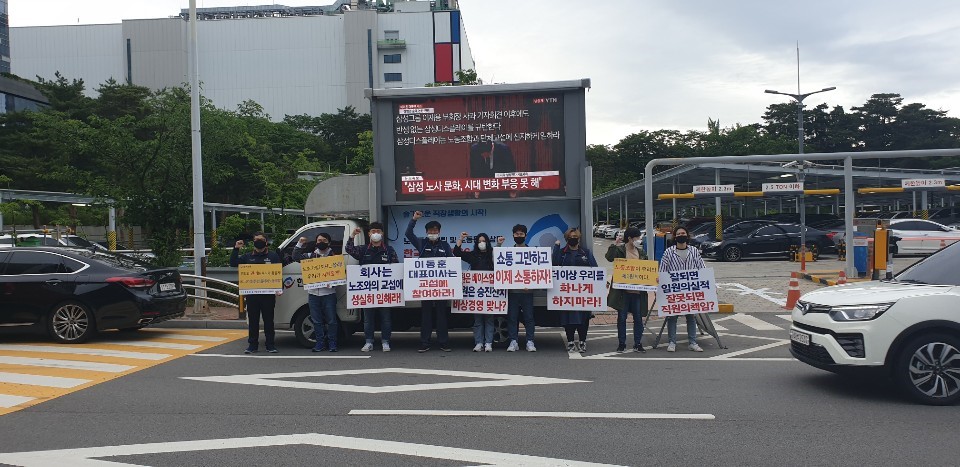
POSCO workers calling for imprisonment of CEO Choi

Accidents in November and December at POSCO’s Gwangyang steelworks in Korea resulted in the deaths of five workers. On 24 November, an explosion near a blast furnace lead to the deaths of three workers. In further incidents on 9 and 23 December, another two POSCO workers lost their lives.

A press conference held on 25 November

This is the 18th fatality in the past three years at the company’s Pohang and Gwangyang plants. POSCO workers have been killed by asphyxiation, explosions, fires, physical crush injuries, fatal falls, and overwork. The accidents have continued despite the plants being subject to an inspection conducted by the labour ministry.

A press conference held on 24 December

IndustriALL Global Union’s Korean affiliate the KMWU believes that POSCO workplaces will only become safer when union representatives are able to participate fully in safety structures. Instead, POSCO recently dismissed three union activists for exposing union busting, and failed to reinstate them after the National Labor Relations Commission ruled that the dismissal was unfair.

The KMWU argues that large-scale industrial disasters happen at POSCO due to management decisions to not upgrade aging facilities and equipment, to downsize subcontracted workers, and to outsource risks instead of eliminating them.

POSCO blocks the KMWU from accessing accident sites and refuses to allow union safety experts to participate in accident investigation. The company fails to disclose the true cause of an accident after an investigation is concluded, leaving workers to face the same risks that killed their colleagues.

South Korea has the highest occupational fatality rate among OECD countries and every year 2,400 workers die in industrial fatalities. In 2018, trade unions and civil society launched a campaign for a Corporate Manslaughter Bill after a young worker in his twenties was found dead in a power plant after the company violated standard operating procedures.

The signatures of 100,000 citizens placed this bill before the Korean National Assembly. The intent of the bill is to impose heavy penalties on employers who cause the death of workers, and to ensure that they adopt comprehensive preventative measures. 

The KMWU believes that if the bill becomes law, POSCO CEO Jeong-Woo Choi should the first person to be held accountable.

The KMWU demands labour inspection with guaranteed union participation, a joint labour-management response system, fundamental safety measures that address root causes, measures to improve aging equipment, and an end to outsourcing risks.

KMWU’s international officer, Hyewon Chong said:

“Allowing a democratic union to function freely is a precondition for setting up a credible safety system at the steelworks. But instead of working with the union to make POSCO workplaces safer, the company dismissed three union activists for exposing their plans to bust our union.”

IndustriALL’s base metals director, Matthias Hartwich, said:

“We join with the KMWU to demand accountability from POSCO for the frequent, preventable industrial disasters, and to call for those responsible to be prosecuted. We cannot stand by while our co-workers die in preventable fatal accidents. This must end – now!”

Rally to stop corporate manslaughter at POSCO

White-collar workers in a changing world of work

“As industries are becoming increasingly automated, there will be more white-collar workers; the technological transformation is blurring the lines between blue and white-collar workers. With Industry 4.0 and increasingly telework or online work, white-collar work risks becoming more increasingly stressful with no clear division between work and free time, a rapid change of skills and a constant pressure to readjust.

"Unions must organize and meet the needs of all workers, and regulate new ways of working,”

says Atle Høie, IndustriALL Global Union assistant general secretary.

The pandemic has brought increasing unemployment among white-collar workers as well. In India, white-collar experienced the biggest job loss; in Sweden, Unionen reports a rise in unemployment among consultants and workers in small companies. The CGC-CFE reported an increased number of dismissals among their members. Subcontracted workers are more affected as it is hard for these small and medium companies to withstand the economic downturn. The situation may worsen next year and it is unclear what employment will be like for these workers.

At the start of 2020, less than five per cent performed their jobs remotely, according to WEF. Today, more than half of high-skilled workers work remotely, and widespread telework may become a permanent feature. According to the report, 84 per cent of employers are set to rapidly digitalize the working processes, including a significant expansion of remote work—with the potential to move 44 per cent of their workforce to operate remotely.

According to surveys conducted by employers and trade unions among workers who have been working from home since the outbreak of the pandemic, workers would be keen to continue teleworking several days a week, citing autonomy and flexibility among the main reasons.

Issues that came up such as lack of proper IT material, poor ergonomic environment for workers, when establishing the teleworking at a large scale so quickly in March this year highlight the need for proper planning and regulation. 

ITUC’s Legal Guide on Telework summarizes the new concerns to be addressed, including ergonomic strains; the emergence of psychosocial health and safety risks linked to isolation from colleagues; issues related to workers’ privacy given that the employers’ ability to use electronic surveillance is enhanced; limit the career advancement of workers, particularly women; associated risk of domestic violence; blurred limit between work and family life and associated increased stress mainly for women workers; limited role of the labour inspectorates, making the enforcement of labour laws more challenging.

Unions need to urgently bargain new agreements to regulate telework. New legislation and agreements on telework have been negotiated. The ILO has published a practical guide on teleworking during the pandemic and beyond. Trade unions, like Unite in UK, have developed guidelines and model agreements.
 
Trade unions will also have to adapt to these new working conditions. How do unions perform their work when workers are working remotely? How to ensure that remote work will not be an excuse to move work to countries where workers’ rights are not respected?

The current crisis, together with new technologies, has made companies re-think ways of working and may contribute to an increase of crowdwork among white-collar workers. Crowdwork emerged in the early 2000s and is an outsourcing of work to a large pool of online, geographically dispersed, workers by the intermediary of digital platforms that provide the technical infrastructure for requesters to advertise tasks to potential workers.

In addition to matching clients and workers, the platforms also handle contracting, time tracking, monitoring, billing and dispute resolution, allowing the entire relationship to be carried out remotely. Jobs range from sophisticated computer programming, data analysis and graphic design to relatively straightforward microtasks of a clerical nature. 

It is difficult to get data on the extent of crowdwork, but according to the ILO, the online labour market growing by 25.5 per cent between July 2016 and June 2017.

The majority of employers are located in high-income countries while most of the workers are located in low- and middle-income countries. The largest share of online labour demand, 41 per cent, originates from employers based in the United States.

The pandemic has shown the potential of a digital workforce. Companies might now favour remote online contractors hired through web-based platforms over on-site contractors hired through conventional staffing agencies. For example, for IT set up and maintenance of digital tools, if large firms have existing IT services outsourcing providers, small- and medium-sized companies may be turning to online labour platforms for these needs.

Workers resort to crowdwork looking for more flexibility and autonomy, or additional pay from another job, or they could simply not find  traditional work. Advantages associated with crowdwork should not hide the precariousness and insecurity of this form of employment, as well as the low or inexistent social protection. Furthermore, this way of working may exacerbate the gender inequalities.

Most crowdwork is not subject to labour regulations, so workers have little control over when they will have work or their working conditions. They also have limited options for recourse in cases of unfair treatment.

IndustriALL affiliates are defending the rights of crowd- and platform workers and taking action to improve working conditions in several countries. In 2015, unions launched FairCrowdWork.org, which collects information about crowd work, app-based work, and other platform-based work from workers and unions. The site offers ratings of working conditions on different online labor platforms based on surveys with workers. It is a joint project of the Austrian Chamber of Labor, the Austrian Trade Union Confederation and Unionen.

In 2017, IG Metall, the signatory platforms, and the German Crowdsourcing Association established an Ombuds office to enforce a Code of Conduct and resolve disputes between workers and signatory platforms. The Ombuds office, handled by IG Metall, resolves any disputes.

“Unions need to take innovative action to address white-collar workers’ needs and concerns if we are to organize more white-collars and adapt and frame the future of work,”

says Atle Høie.

Samsung must stop delaying collective bargaining

Since November 2019, FKMTU has successfully established unions in Samsung Electronics, Samsung Display and Samsung SDI Ulsan. The jailing of Samsung group chairman Lee Sang-Hoon for union busting on 18 December 2019 further emboldened workers to join the union. To date approximately 2,600 Samsung workers have joined unions, most of them affiliated to FKMTU.

However, Samsung union members are increasingly dissatisfied with the slow pace of negotiation process. Ten negotiations have been held in Samsung Display since May 2020 with no concrete results. The company argued that some parts of the draft agreement were unacceptable, like guaranteeing union activities workers participation in management, occupational safety and health issues, which are guaranteed by ILO Conventions.

An organizing campaign of Samsung Display Union with FKMTU president, Kim Manjae
 

The union and Samsung Display are in mediation; should this fail the union will call a strike. The collective bargaining at Samsung SDI Ulsan and Samsung Electronics kicked off in September and November 2020, also at a snail’s pace.

Kim Manjae, FKMTU president, says:

“We are fighting for higher wages, the implementation of a social solidarity wage system for agency workers, and safer and healthier working conditions. Our union aims to eliminate occupational diseases, like musculoskeletal disease and noise induced deafness.

“FKMTU is urging the company to reform its employee evaluation system and address the issue of contract workers. Unionization in Samsung gives new hope to its workers, with strong unity and solidarity. We will struggle to the end to raise the unions flag at Samsung.”

Kan Matsuzaki, IndustriALL electronics director, congratulates the establishment of unions at Samsung, but underlines:

“Samsung Electronics, the flagship company of Samsung Group as well as the world leading multinational in the electronics industry has a responsibility to act together with the unions to achieve decent work for all, the one of SDGs. The company’s behaviour towards the negotiations with FKMTU will draw attention in the industry.”

Indonesia: local union leader must be reinstated

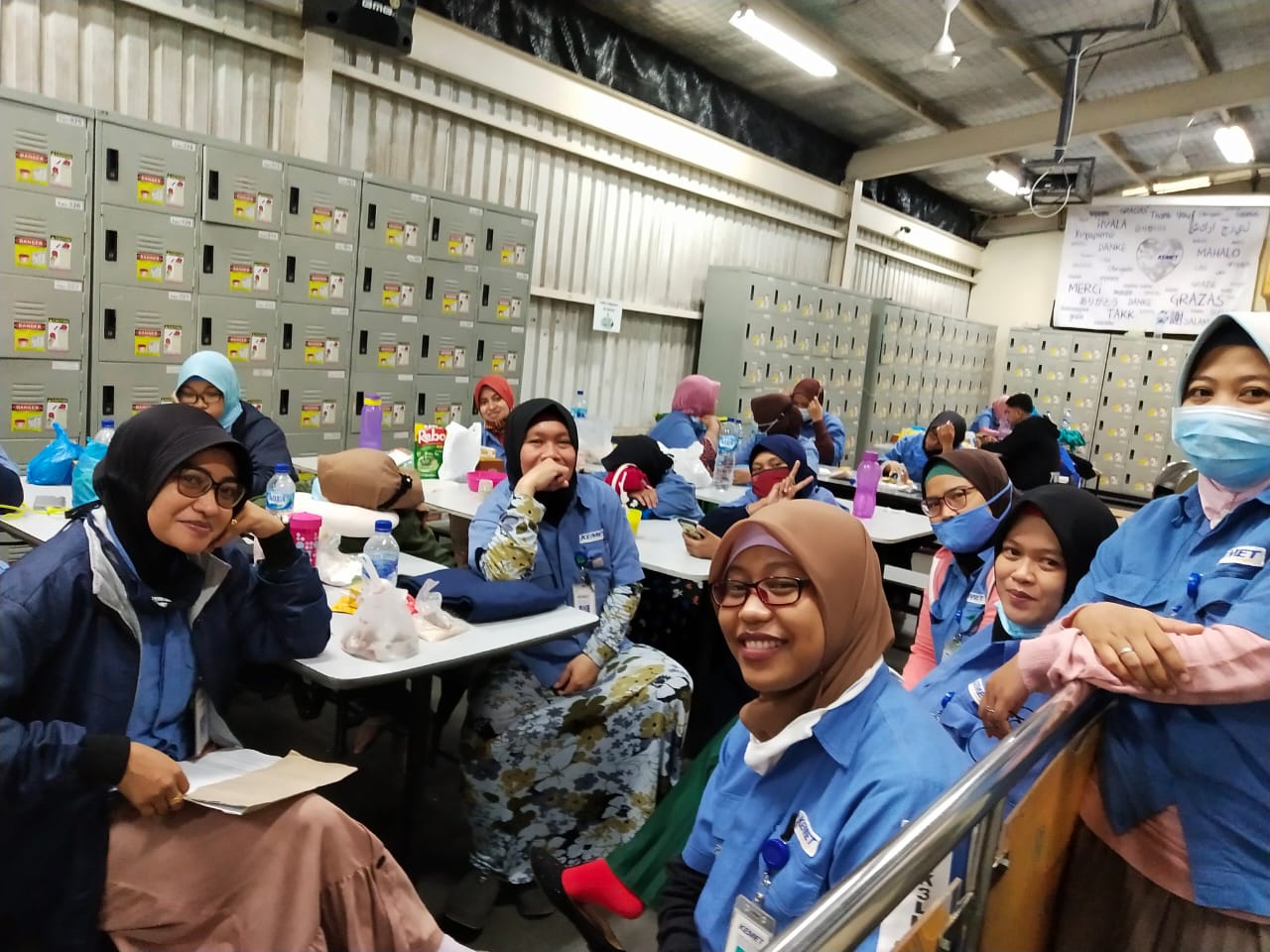
According to the collective agreement, Wisnu Nunky Saputra had as a union official, the right to take union leave, and informed his superior that he would be away. On that day Saputra organized Lomenik’s distribution of food to unemployed workers in Batam Island, and then went home to care for his son who had fallen ill.

Protesting against the unfair dismissal, Saputra colleagues launched a solidarity strike. In response, more than 100 Lomenik members received warning letters from the company for joining the strike.


IndustriALL Global Union sent a letter to PT Kemet Batam Electronics, stating that the company ought to be more tolerant towards the sick leave applied by a union official and welcome the social work of Saputra and Lomenik that improves the general welfare of people of Batam.

After the intervention of IndustriALL and Lomenik, the dispute has been referred to the Industrial Relations Court. While waiting for the ruling, Saputra continues to receive his wages.

Lomenik deputy president Eduard Marpaung says:

“We hope PT Kemet will reinstate Saputra in his original position. We need industrial peace and a win-win solution during the pandemic.”

Annie Adviento, IndustriALL South East Asia regional secretary says:

“At least 2.56 million workers have lost their jobs and 1.7 million have been furloughed in Indonesia as a result of the pandemic. Employers should exercise their social responsibility at this critical time and we urge PT Kemet to reconsider its decision and reinstate Saputra immediately.”

Moroccan miners end underground protest

100 Moroccan mine workers have spent the last ten days 700 metres underground in the Jebel Aouam mine near M’rirt in Khénifra province, after management of Compagnie Minière de Touissit (CMT) failed to implement an agreement with the union. Another 200 workers protested above ground, nearly halting production all together.

Workers demanded that management honour and implement the agreement signed with l’Union Marocaine du travail (UMT) in 2019, guaranteeing improved living conditions, better working conditions in the mine, and the provision of occupational health and safety measures.

After UMT and IndustriALL Global Union contacted the Moroccan Prime Minister, an urgent meeting took place between Miloudi Moukharik, UMT general secretary, and the general director of the mine. During the meeting, a framework for resolving the conflict was agreed on.

A follow-up meeting will take place on 24 December to negotiate workers’ demands of increased wages and compensation, working conditions in the mine, the issue of subcontracted workers, and a commitment to protect freedom of association, especially with regards to the striking workers.

Following the meeting and the guarantees of negotiations, workers decided to suspend the sit-in.

IndustriALL general secretary Valter Sanches says:

“Solidarity works! We congratulate UMT and the workers for the progress and welcome the important steps towards maintaining workers’ safety, as well as the launch of negotiations. We urge the company to seize the opportunity to engage in genuine dialogue with the union for a sustainable production and a respect for workers’ legitimate rights.”