Namibia: CNNC Rössing Uranium mine must reinstate nine dismissed union members

The nine members of the former branch executive committee at the mine are accused of gross negligence, bringing the mine owner, China National Nuclear Corporation (CNNC) Rössing Uranium, into disrepute, and for breaching confidentiality.

The charges came after the nine refused to accept CNNC’s proposals to amend the existing collective bargaining agreement. The union says the dismissed leaders also asked “uncomfortable questions” on the irregular appointment of some senior managers at the mine. The managers, who were recruited from China, had work permits for another company and not for Rössing.

MUN says when CNNC bought Rössing Uranium mine from Rio Tinto in July 2019, guarantees were made that working conditions would remain the same and that existing collective bargaining agreements would be respected.

However, a few months later, CNNC wanted changes in the agreement, including on leave, medical aid, wages, and retrenchment provisions. After facing resistance from the union and being notified of impending strike action, the company instead targeted the union leadership.

“These sound industrial relations, built over many years with Rio Tinto, are not only guaranteed as part of the asset sale to the current owners but are guaranteed in the constitution of Namibia. Unfortunately, the violations reflect a disturbing pattern of abuse by Chinese Investment in Africa which will not be allowed,”

says Glen Mpufane, IndustriALL mining director.

The matter is now before the labour commissioner for arbitration and conciliation.

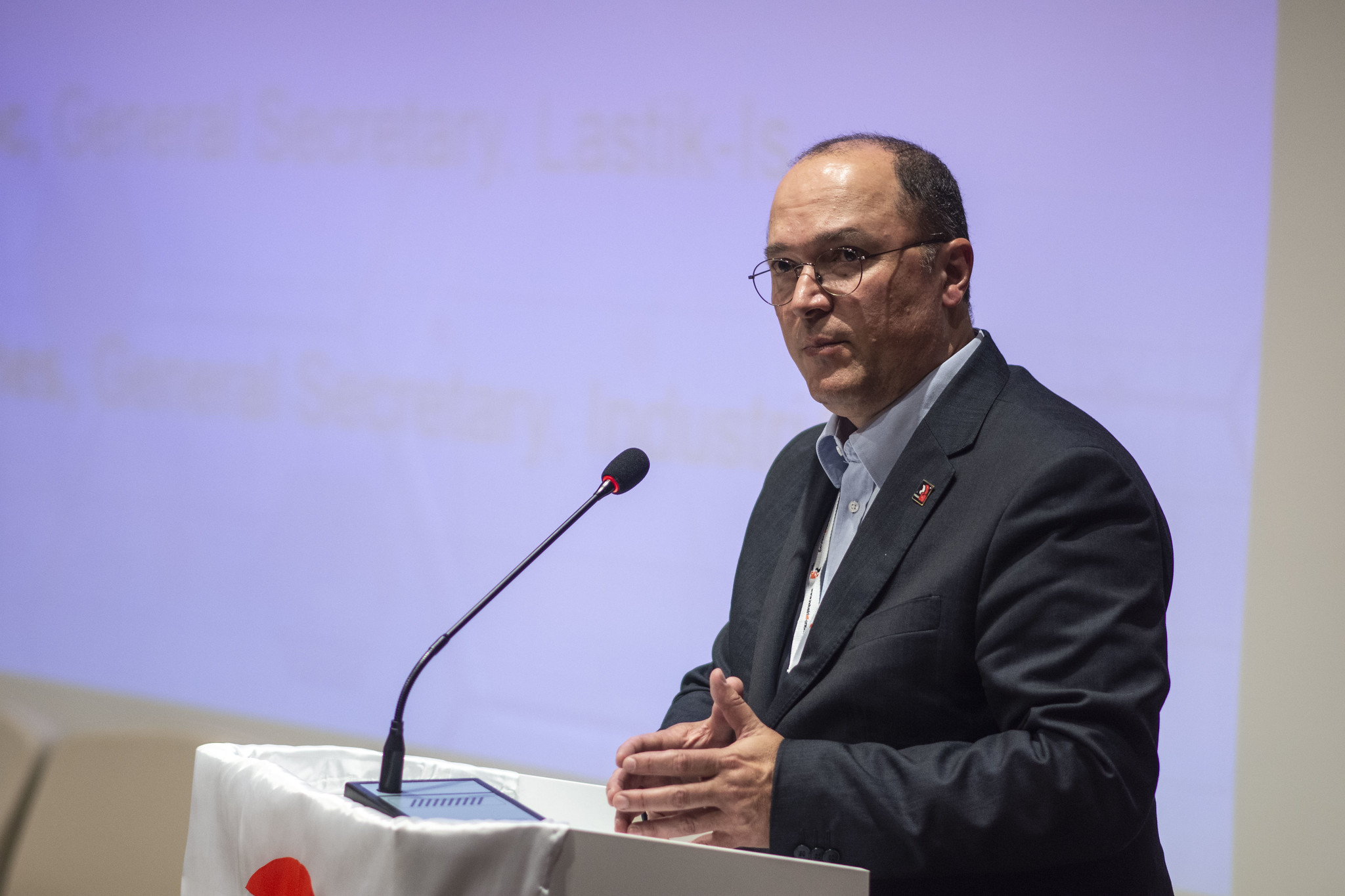
Valter Sanches, IndustriALL general secretary, says:

“CNCC is intent on busting the union through intimidation and attempting to instil fear in workers to stop them from joining the union. This anti-union approach to labour relations is against the existing collective bargaining agreements and threatens the cordial relations that exist with the workers.

“We urge the employer to respect the existing collective agreements and to not temper with the rights of workers to demand better working conditions.”

Rössing Uranium is an open pit mine whose lifespan is expected to last until 2032.

Photo Credit: Conleth Brady / IAEA
IndustriALL signs framework agreement with TK Elevator

IndustriALL already had a framework agreement with thyssenkrupp concluded in 2015. So, following the separation, it was only logical to take the old agreement and adapt in the new company. This was also the safest way to grant a seamless validity of core labour standards for this new group. Thanks to the strong and consolidated position of IG Metall, the works councils of the company and IndustriALL Global Union, the first ever Global Framework Agreement has been concluded in the lifts and escalators sector. IndustriALL Global Union proposes that other multinational corporations in the sector should follow this example.

Similarly to the previous agreement the ILO core labour standards made the basis of the text of the new agreement, but while designing the new agreement, several changes were made, namely:

Susanne Herberger
Chairperson of the TK Elevator Group Works Council and one of the signatories of the GFA:

"With this new Global Framework Agreement, we have created a centralized complaints institution at TK Elevator for its more than 50,000 employees worldwide. Here, each and every employee can lodge a complaint if fundamental workers' rights are violated. For us as works council and trade unionists, it was particularly important to keep this culture we built with thyssenkrupp also with the new owner of TK Elevator. TK Elevator thus commits to remain a fair and respectful employer for all colleagues.”

Valter Sanches, IndustriALL Global Union general secretary, comments:

“The new agreement is an important step. For the first time, one of the big six companies in the sector guarantees the adherence to the ILO core standards worldwide. This is a milestone for all production and maintenance employees in the sector. The work for IndustriALL and its affiliates has just begun: now this new global framework agreement needs to be invigorated through real social dialogue at a global level, involving the representative unions in all countries where the company operates.”

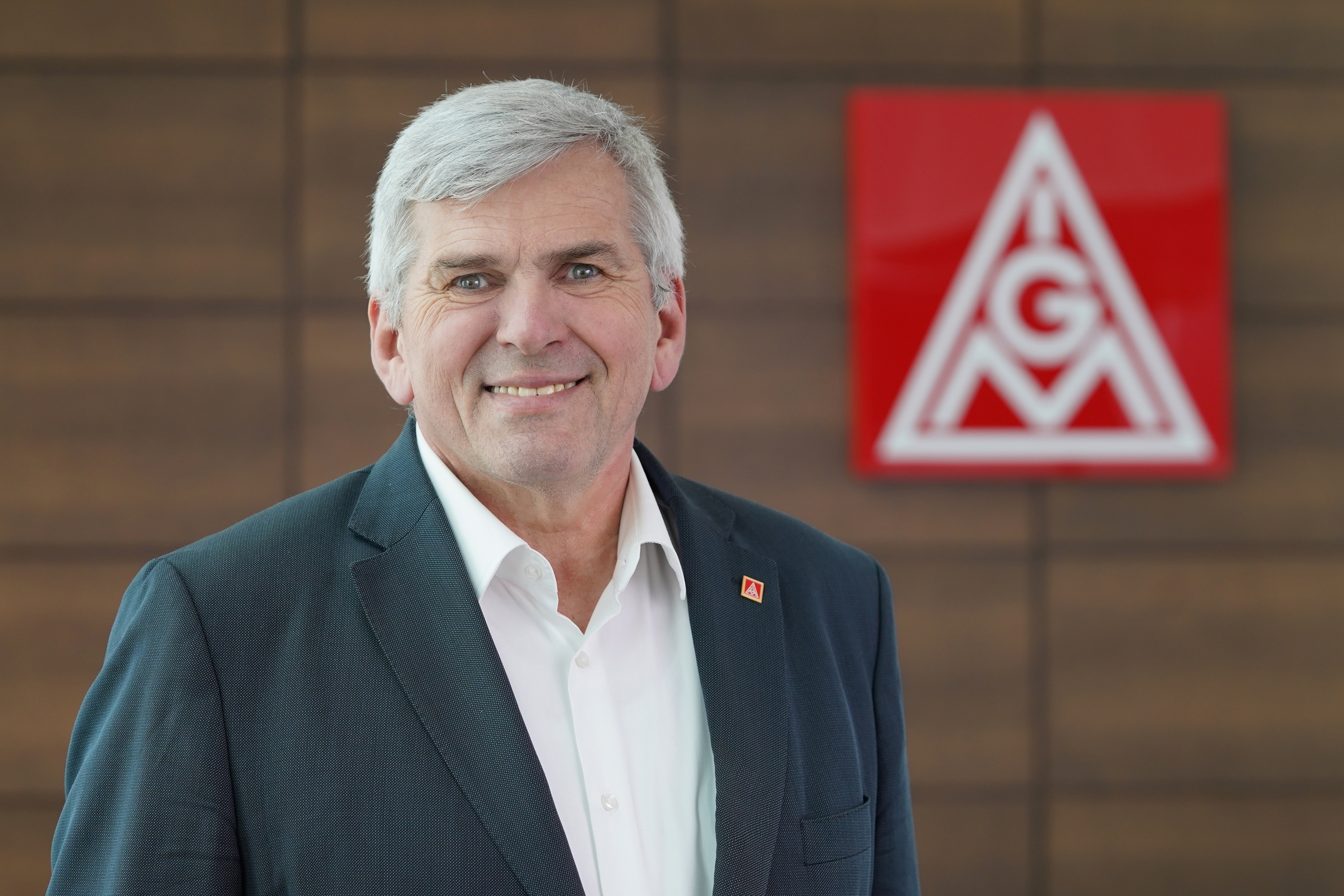
Jörg Hofmann, IG Metall and IndustriALL Global Union president said:

"The corona pandemic has led to an increase in global inequality. With the global framework agreement of thyssenkrupp Elevator GmbH we are sending a signal for the defence of workers' rights, that are more needed than ever, especially in times of crisis. We have also succeeded in establishing health and safety committees. The internal reporting system and an international committee ensure monitoring and implementation”.

Unions in Peru take action for a fair and sustainable textile industry

The platform contains a series of proposals directed at employers and the government to promote a sustainable industrial policy in the textile sector. It includes proposals to withdraw the anti-union laws that plague the sector, the establishment of measures to protect decent employment and others measures to safeguard national production.

Union representatives met with the vice president of the commission and the president of the Congress to explain that sustainable industrial policy must include an effective application of labour standards.

This includes respect for the right to organize, the promotion of collective bargaining, the promotion of social dialogue, the provision of resources for labour inspection and labour laws that restrict precarious work.

The demand to withdraw law no. 22342 promoting non-traditional exports is long-standing, but even more urgent now in order to protect workers during the crisis, according to the union.

The law allows companies that produce for export to hire staff on short-term contracts to fulfill specific export orders. The FNTTP argues that the functions that these workers carry out are permanent ones: the position existed before the worker was hired and will remain once the contract ends.

The FNTTP says that in addition, the law is used to deny workers their rights, such as job security, living wage, access to health coverage and pensions as well as the right to organize and bargain collectively. It violates international standards and the codes of conduct of global brands that source from Peru and is not sustainable.

“We thank the president of Congress for personally listening to the problems of thousands of unionized and non-unionized textile workers. With this, we have have resumed a fight that started a few years ago to repeal law no. 22342. We will continue to campaign and protest in the street. We will achieve it with actions and solidarity,”

says the FNTTP, who continued demonstrations to promote their demands throughout December and January.

IndustriALL deputy regional secretary Laura Carter says:

“When Fujimori introduced law no. 22342 in 1978 as a temporary measure, it was a disgrace. Today, 40 years later, it still is and to an even greater extent.

“These abusive working conditions must end. If Peru’s textile sector wants a future in a changing world, it has to be fair and sustainable, based on decent work and social dialogue.”

Brazilian unions fight to protect 5,000 jobs at Ford

After 102 years of building and selling cars in Brazil, Ford has announced that it intends to close three plants in Taubaté (São Paulo), Camaçari (Bahía) and Horizonte (Ceará).

The decision will leave Ford's 5,000 employees out of work, and will also affect around 70,000 jobs throughout Brazil's supply chain.

The announcement from Ford, who closed its São Bernardo plant in 2019, came without any discussions with unions or local authorities and in the midst of the global pandemic, which has hit Brazil hard. The decision is a devastating blow to the workers, their families and their communities.

In a letter from IndustriALL Global Union, general secretary Valter Sanches asked Ford’s chairman and CEO, James D. Farley Jr, to reconsider the decision and to engage with unions to discuss alternative solutions.

Sanches pointed out that the decision was a blatant violation of the global framework agreement signed with IndustriALL in April 2012. The GFA stipulates that timely information and consultation is а prerequisite for successful communication between management and workers’ representatives.

Union confederations in Brazil issued a joint statement calling for protests this week outside Ford dealerships. Ford unions are already organizing campaigns and meetings with authorities and have said that they won't give up.

Cláudio Batista, president of Taubaté Sindmetau metal workers' union, part of the national confederation of metal workers CNM/CUT, said:

"The workers won't simply walk out the door. We're going to keep fighting for our jobs."

Júlio Bonfim, president of Camaçari metal workers' union, affiliated to Fitmetal/CTB, said:

"Ford is closing its doors without negotiations. It's a terrible situation and shows their total disregard for thousands of workers. The union will remain firm and strong and keep fighting."

José Milton Pereira from the Maracanaú metal workers' union in Ceará, Horizonte, SindimetalMac, affiliated to CNTM/FS, said that the union is monitoring the situation and will try to save the jobs and ensure workers are not stripped of their rights.

In a letter to national confederations CNTM/FS and CNM/CUT, affiliated to IndustriALL, general secretary Valter Sanches said:

"I express our full support for Ford workers in Brazil as they fight to protect their jobs and keep production plants open. IndustriALL wholeheartedly condemns the unilateral way in which Ford has shut down operations in Brazil, with no prior discussions with unions or authorities. The management's unacceptable position is a blatant violation of the GFA.”

Union deal saves Rolls-Royce Barnoldswick

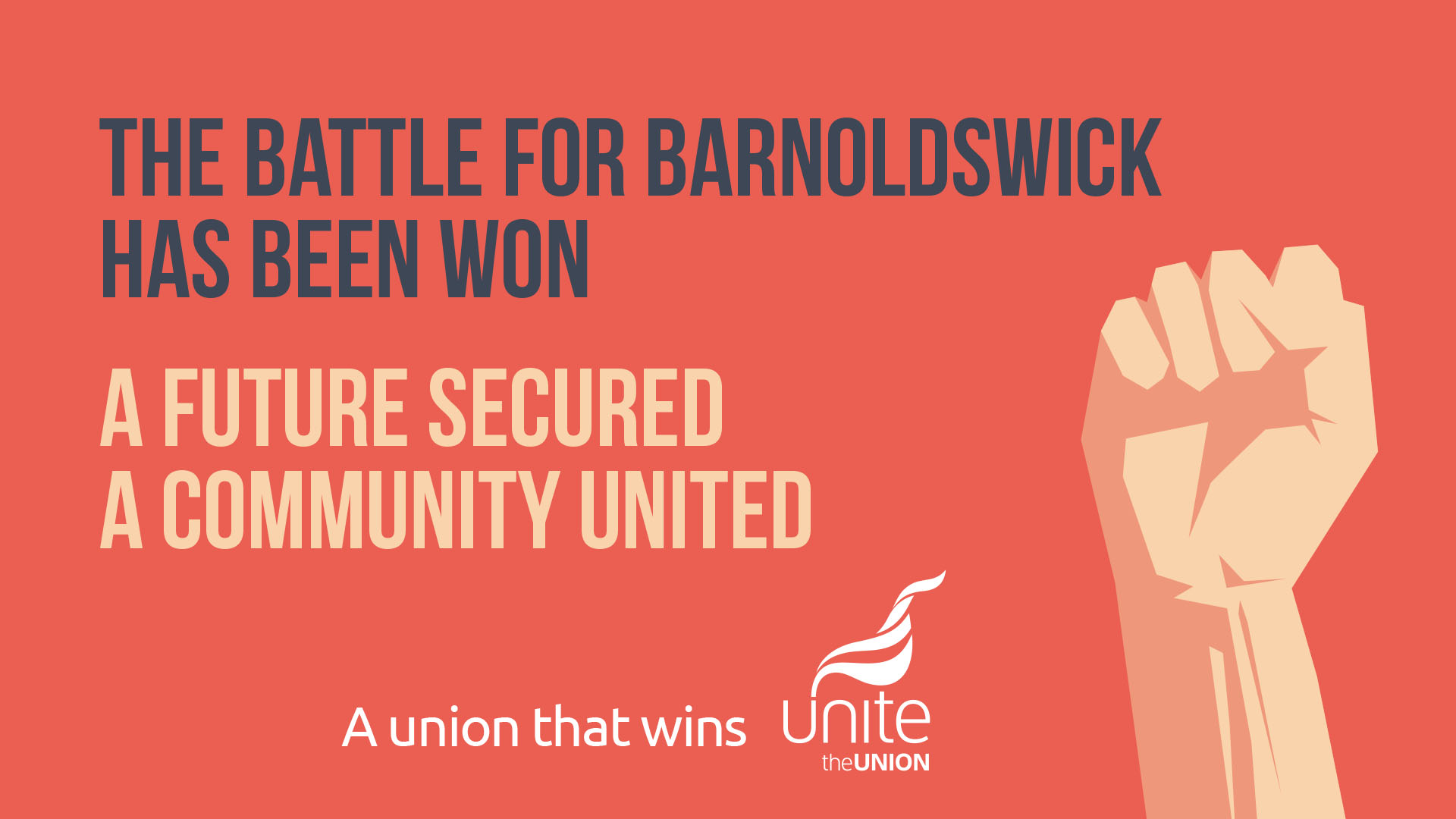
The Rolls-Royce jet engine factory in Barnoldswick in the United Kingdom has been saved after a nine weeks of strike action. The future of the factory was thrown into doubt last summer when Rolls-Royce announced that it was transferring the production of its Trent jet engine blade work to Singapore. The workforce balloted for industrial action and began targeted strike action on 6 November last year which ran until Christmas Eve. Workers returned to the picket lines at the start of 2021.

The small town of Barnoldswick, home to just 11,000 people, mobilized in defence of their community. The Rolls-Royce factory, which has been in operation since 1943, is the birthplace of the jet engine and the main employer. The closure of the site would have had devastating consequences for the prosperity of the local community.

The dispute was widely supported in the UK, and IndustriALL Global Union affiliates from around the globe stood shoulder to shoulder with the colleagues, sending messages of solidarity.

Unite has long criticized the UK government for its failure to develop an industrial strategy that invests in the development, growth and transition of manufacturing. Despite the lack of political support, the union negotiated a deal that saves jobs and manufacturing capacity while preparing for the future.

The deal, which is supported overwhelmingly by the workforce, will give the historic site a new lease of life as a core manufacturing facility and host to a new centre of excellence, training engineers to meet the challenges of the climate emergency.

The main details of the deal are:

IndustriALL assistant general secretary Atle Høie said:

“This dispute has been very important to the IndustriALL global aerospace steering committee because it sets such an important precedent. This deal is testament to the tenacity and courage of the members, as well as the willingness of the company to negotiate in good faith and listen to the union’s alternative business case. We believe that this groundbreaking deal shows a way forward for the sector, preserving jobs and skills while preparing for the future.

IndustriALL aerospace director Georg Leutert said:

“Rolls-Royce is one of the most important companies in the sector, and one of the few to allow trade unionists to meet regularly at a global level. Rolls-Royce reps have a permanent seat on the aerospace sector committee. IndustriALL, Unite and the company hope to meet soon to discuss social dialogue at global level.”

French energy unions plan day of action against dismantling of EDF

Type your title here

Type your caption


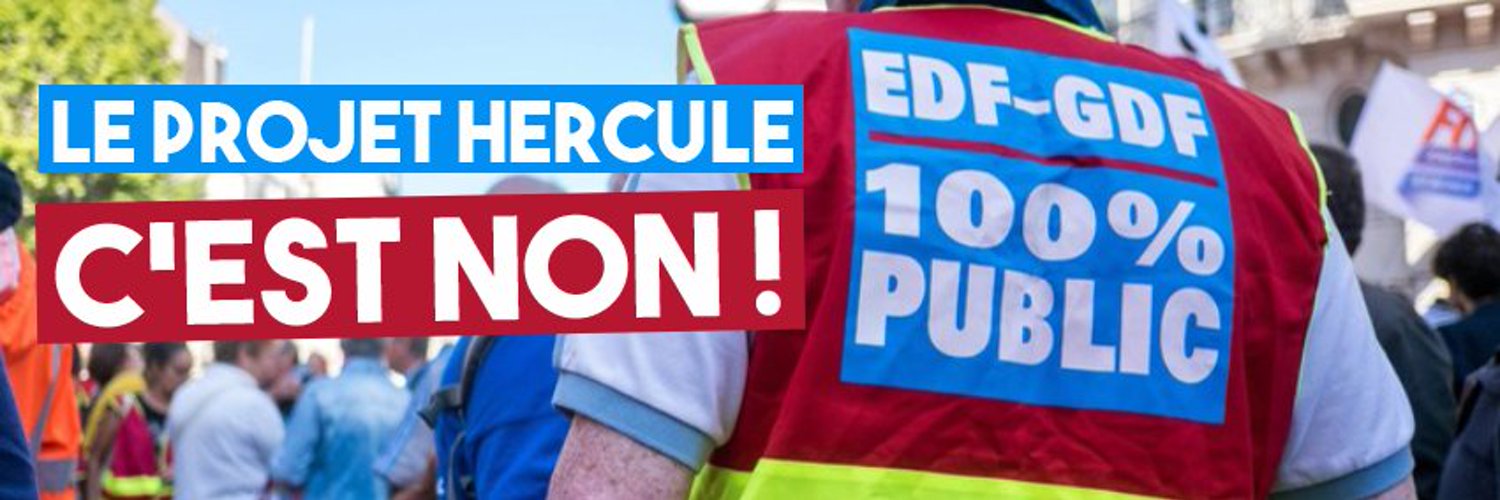
The four IndustriALL Global Union affiliates – FNME-CGT, CFE-CGC Énergies, FCE-CFDT and FO Énergies et Mines – held previous days of action on 26 November, 10 and 17 December, as well as strike action in 2019, to show their opposition to the plan to carve up a vital national asset.

The unions argue that EDF is a crucial resource, and that privatization will remove democratic accountability and social dialogue from energy transition. They are concerned by the lack of transparency, and the determination from the government and senior EDF leadership to push through the project despite strong opposition. Many prominent public figures, including members of parliament and mayors, have supported the call by the unions and condemned the Hercule project.

In a joint statement calling for a renewed push to stop the Hercule project, the unions said:

“Whatever the Hercule project's supporters say, the dismantling of EDF that it would set in motion would be an economic, industrial and social disaster, and would mean the end of EDF's very purpose in serving the general interest.

“We cannot allow political leaders and EDF's senior executives to destroy our company for the sake of bending to the dictates of competition, the market and finance, with no regard for the common good of the nation.”

IndustriALL general secretary Valter Sanches wrote to the unions to express solidarity, saying:

“IndustriALL Global Union strongly supports your belief that energy is a public good and a strategic sector. There can be no strong and sustainable economy without energy independence and infrastructure development. The splitting of energy activities through the Hercule project leads to nothing other than the gradual dismantling of the energy giants.”

Coats Honduras urged to reinstate dismissed workers

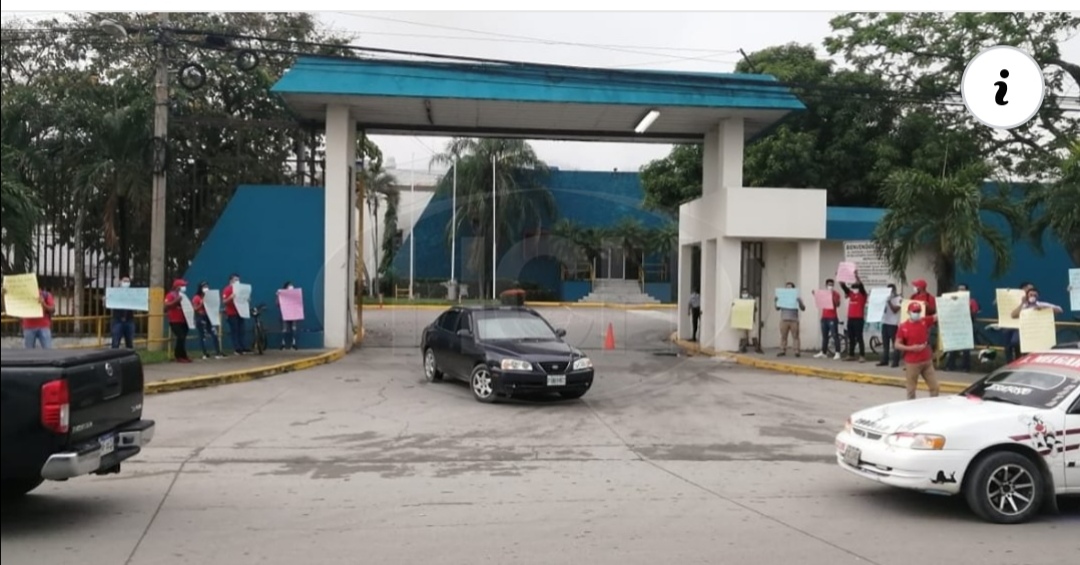
At the end of September, 15 workers were dismissed on the grounds of low production levels. Six of the fifteen workers are seeking reinstatement with the union at the plant, Sindicato de Trabajadores de la Empresa Coats Honduras S.A. (SITRACOATS), saying the decision was made without adequate consultation with the union, as required in the collective bargaining agreement.
 
The first collective agreement was signed with the company in 2019, which was the first step in a continuing process to build good relationships. SITRACOATS argues that reinstating the six workers will help consolidate that company-union relationship.

"As a union, we believe in fostering a good relationship with the company, but when rights are violated it’s our job not only to protest, but to seek redress. We are asking Coats to be reasonable and to reinstate the workers who were dismissed on 24 September of last year. The industry is changing, but the need for labour solidarity is as important as ever,"

says Marco García, SITRACOATS general secretary.
 
When raising the matter of the dismissed workers with the company, the union was repeatedly told that it was out of the hands of local management. The six workers seeking reinstatement have sought recourse with the labour authorities.

A peaceful protest outside the Coats’ industrial park on 19 October, 2020, over the dismissals.

In a letter to Coats’ Group CEO Rajiv Sharma, IndustriALL is urging the company to assist in solving the issue and to reinstate the six workers with back-pay.

"The union used to have a good relationship with the company and we hope there is a will to respect the integrity of the collective agreement and engage in genuine dialogue for the reinstatement of the workers.

I am sure the Coats global union network stands in solidarity with SITRACOATS,"

says IndustriALL general secretary Valter Sanches.
 
SITRACOATS is affiliated to the CGT and a member of IndustriALL’s global Coats network.


Union win to protect jobs in Philippine’s auto sector

According to PMA, the current policy has caused serious injury to the motor vehicle assembly industry in the country, as well as to its supply chain. Mitsubishi Motors Philippines Corp. and Isuzu Philippines Corp. downsized operations by cutting 400 and 100 plus jobs, respectively. In February 2020, Honda Motors Philippines closed its plant.

On  5 January, the Department of Trade and Industry (DTI) imposed the safeguard duty on imported vehicles ranging from Php 70,000-110,000 (US$ 1,457-2,289) for complete built-up (CBU) cars, claiming the number of imported passenger cars increased 35 per cent from 2014 to 2018 and captured 70 per cent of the market share. On the other hand, from 2017 to 2018, jobs in the automotive sector dropped eight per cent.

The decision is the result of a petition launched by PMA, with data on the negative impact of imported CBU vehicles. Most of the imported vehicles came from Thailand, Indonesia and South Korea.

PMA national president Ruel Punzalan says:

"We welcome DTI's decision, which is the first step in a long process. We still have to convince the Philippine Tariff Commission if after 200 days, they impose the safeguard measure to a maximum of four years. The move will hopefully deter unfair competition and give the local automotive industry a breathing space. The government must support the local manufacturing industry and retain employment opportunities."

IndustriALL South East Asia regional secretary Annie Adviento says:

“We congratulate PMA for successfully lobbying the government on a pro-worker industrial policy. This is excellent union intervention is in line with IndustriALL’s action plan on trade for the benefit of the people. Every country has freedom to use its policy space for the benefit of workers.”

Trade and industrial policy: implications for development and international labour standards

ENG

Attempts to protect and promote labour standards through trade agreements have not yielded desired results, due to a lack of enforceable provisions, absence of institutional mechanisms and political will.

The study, funded by Friedrich Ebert Stiftung, aims to raise awareness, help build solidarity among trade unions and take actions to resist the corporate trade agenda, promote an inclusive and sustainable industrialization process and influence policy outcomes to defend workers interests.

Focusing on Africa, Latin America, Asia-Pacific and the Middle East Asia, the study highlights binding commitments undertaken particularly through a new generation of trade and investment agreements that have significantly limited governments’ abilities to use industrial policy tools.

The study shows the need to protect policy space; renegotiating, termination of harmful agreements and being vigilant of ongoing negotiations are key to regain lost policy space and not to concede new grounds. 

“Over the years, international trade policies have been captured by the interests of multinational companies, leaving little space for sovereign industrial policies, especially in developing countries. Trade can be a strong factor for development, as long as it promotes social dialogue, links social and economic upgrading, generates and distributes wealth, revitalizes multilateralism and promotes Just Transition towards decent work and sustainable livelihoods. That’s why full transparency in negotiations is crucial, while trade unions demand to take part in decision-making processes, as pointed out in IndutriALL’s action plan on trade and industrial policy.”

PROFILE: Singaporean petroleum union negotiates with employers to protect jobs

UNION PROFILE

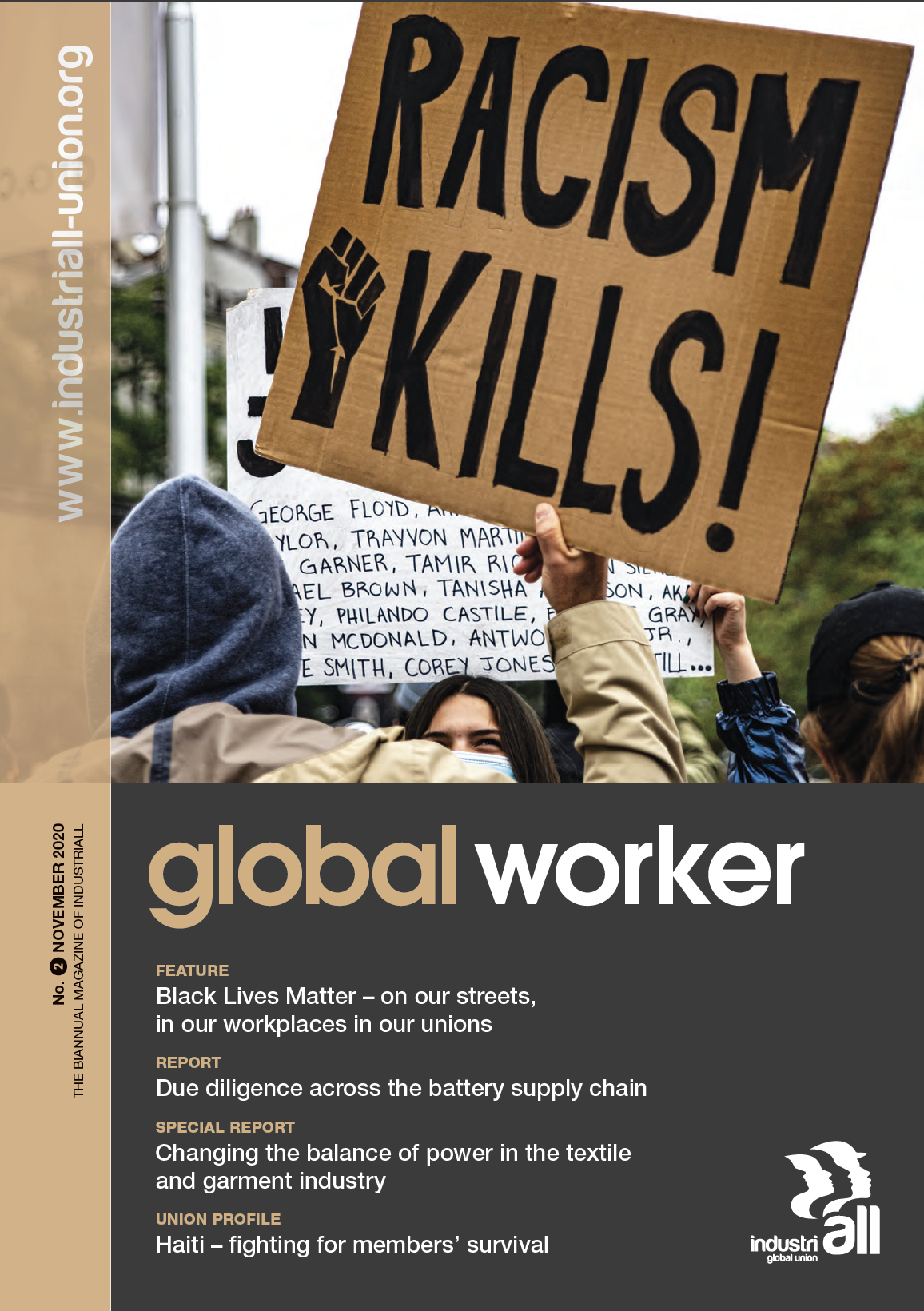
From Global Worker No. 2 November 2020

Text: Yap HWA NG

Country: Singapore

Union: United Workers of Petroleum Industry of Singapore (UWPI)

UWPI, founded in 1961, represents thousands of workers from Singapore’s oil and gas industry. There are 35 companies under UWPI umbrella, mainly petrochemical and chemical companies, storage terminals, aircraft refuelling services and energy related companies. The companies include Mitsui Phenol, Chevron Oronite, AkzoNobel, Bp, Infineum, Oiltanking Terminal, Ecogree Oleochemicals and others.

Oil demand in Singapore has dropped drastically since beginning of April, largely due to a reduced consumption of fuel by aircraft and private vehicles caused by the pandemic. 

Aware of the declining demands and its potential impact on workers, UWPI took the initiative to discuss matters with the employers in the petroleum-related industry. 

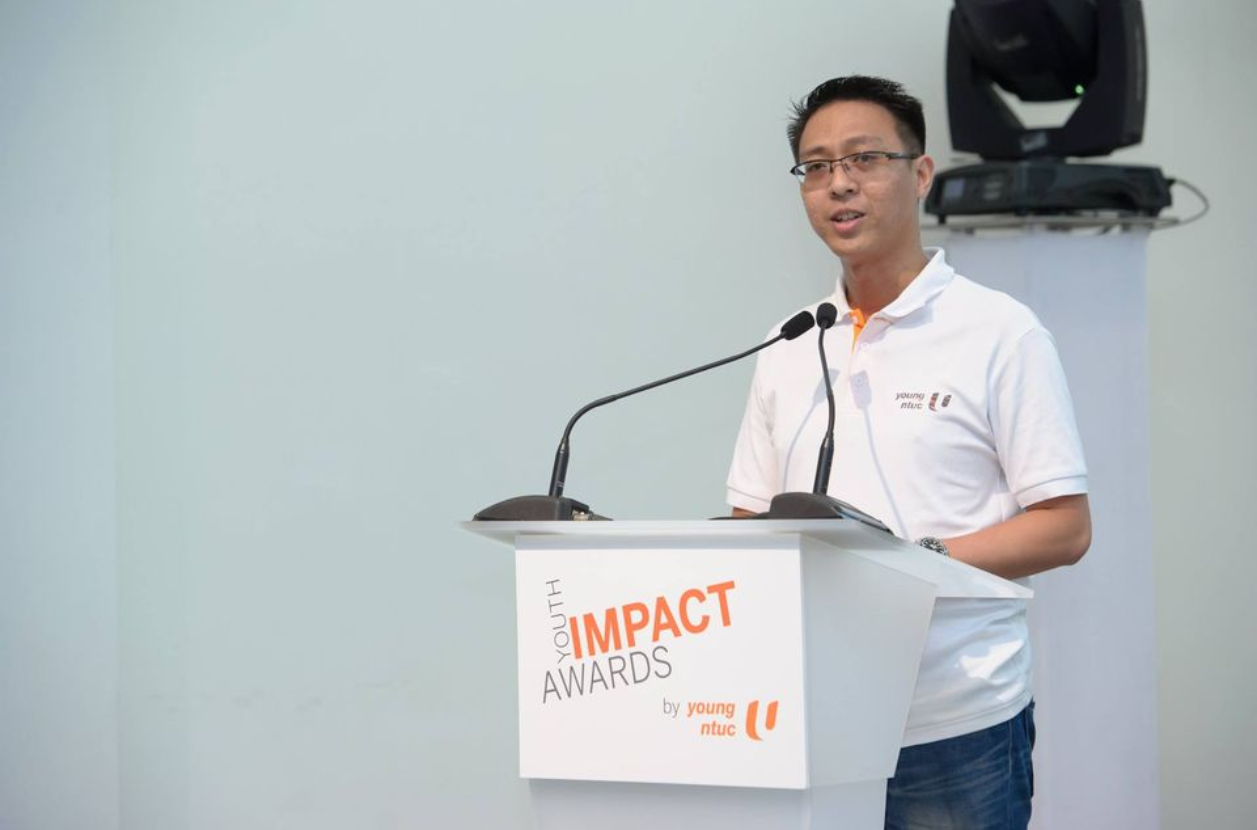
Seah Keng Tia, UWPI vice president

Seah Keng Tia, UWPI vice president, says:

As a union, our first priority is job security. Our members do not mind redistributing the workload among a smaller amount of staff, but the employers must be open about how they are planning the operations and provide reskilling for workers tasked with new responsibilities.

While some companies promised to keep local jobs, they were considering reducing the number of migrant workers and cutting any unnecessary cost. That meant requesting local workers to share the manual workload when the number of migrant workers was reduced. 

UWPI accepted the proposal to from the employers as a way of retaining the jobs for local workers.

Collective bargaining 

Before the rounds of collective bargaining every three years, UWPI looks at market trends and proposes new skills needed. The union also looks into the welfare and needs of workers, subject to company affordability.

Although the collective agreements are signed with individual companies, as the national union, UWPI oversees all terms and conditions and shares proposals with members companies to help maintain market standards.

Industry transformation, work arrangement and training committees are frequently discussed, once the discussions have reached far enough, they are included in the collective agreement. 

“Right now, our members’ main concerns are to prevent retrenchment or a change of working conditions during the Covid-19 pandemic. We are working with companies to avoid retrenchment, reskill workers and relocate them to other work areas where possible. So training and reskilling is important and we help the employer to identify courses available.” 

“We are also discussing flexible work arrangements to minimize workers’ exposure to Covid-19,”

says Seah Keng Tia.