IndustriALL Global Union and IndustriAll European Trade Union call for justice and solidarity in the fight against Covid-19

After an unprecedented effort to develop, approve and roll out cures, medicines and vaccinations, several are available. The world has come closer to overcoming the pandemic. And the common global endeavour and public-private cooperation to find drugs and vaccines demonstrated the best internationalism.

It is crucial that we do not leave the path of cooperation, solidarity and justice.

No continent, no country, no economy, no person will be safe until the whole world is safe. Vaccine nationalism is a short-sighted response to this global problem. It will prolong the pandemic and the threat of new variants endangering us all. We stand for the right of universal access to vaccination.

The pharmaceutical industry will for the next decades be judged by its conduct during the pandemic. 2020 saw an improvement of the reputation and importance of this crucial sector, but image gains are easily lost.

IndustriALL Global Union and IndustriAll Europe appeal to the industry to show its best side:

We have full understanding for the pressure on countries to secure medical products and bring relief to people. Bearing this in mind, IndustriALL Global Union and IndustriAll European Trade Union appeal to politicians:

Workers in the pharmaceutical industries around the globe, represented by IndustriALL Global Union and IndustriAll European Trade Union, are ready and eager to produce all the medication and vaccines needed and thus contribute to overcoming this crisis.
Unions urge Petro South Africa to reconsider retrenching 500 workers

PetroSA says it does not have enough money to continue operations.

However, IndustriALL Global Union affiliate the Chemical, Energy, Paper, Printing, Wood and Allied Workers Union (CEPPWAWU), says there are ways to avoid retrenchments, including accessing funds from the national fuel levy which can be used to transform the company.

Mhlangabezi Melani, CEPPWAWU regional secretary for the Western Cape, says:

“The consultations according to Section 189 of the Labour Relations Act were not done in good faith. It seems that the recommendations we made to save jobs at PetroSA were ignored and the company went ahead to issue the retrenchment letters. But we are convinced that if our proposals are considered there will be no need for the retrenchments.”

CEPPWAWU also supports the merger of PetroSA, the Strategic Fuel Fund and iGas into a single national oil company. According to the union, a diversified oil company has better potential for job creation and preservation. The three companies in the proposed merger are state-owned companies that are subsidiaries of the Central Energy Fund.

Paule France Ndessomin, IndustriALL regional secretary for Sub Saharan Africa, says:

“We urge PetroSA to engage with the union to avoid job losses. Retrenchments should a last resort and saving jobs should always be prioritized.”

IndustriALL webinar on trade and industrial policy

Attempts to protect and promote labour standards through trade agreements have not yielded desired results, due to a lack of enforceable provisions, absence of institutional mechanisms and political will.

A study, commissioned by IndustriALL Global Union and funded by Friedrich Ebert Stiftung, aims to raise awareness, help build solidarity among trade unions and take actions to resist the corporate trade agenda, promote an inclusive and sustainable industrialization process and influence policy outcomes to defend workers interests.

ENG

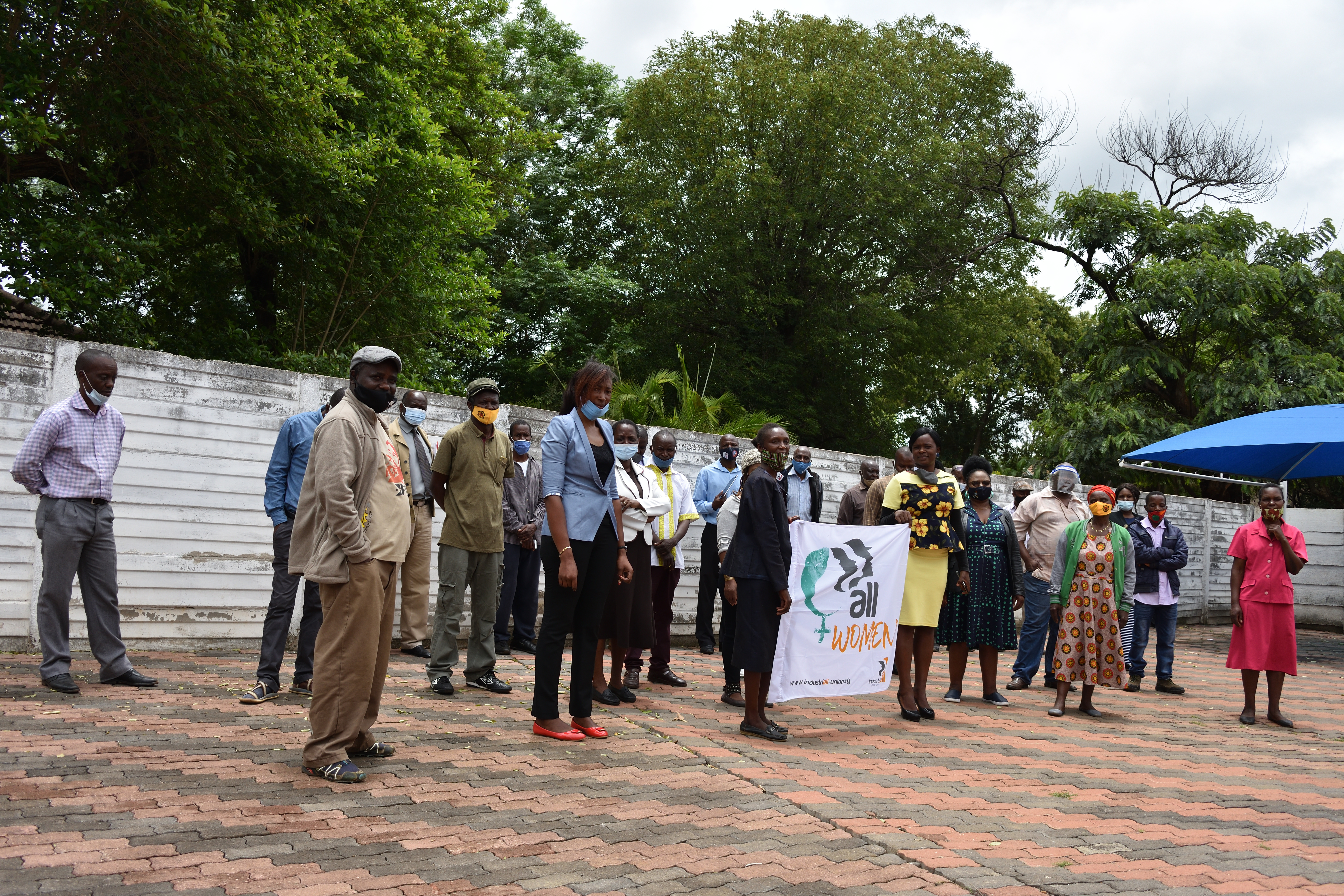
Gender audits in Zambia and Zimbabwe to protect women’s rights at work

The gender audits stressed that although the unions are complying with labour laws on gender more needs to be done to protect the rights of women workers.

ILO Convention 190 provides an opportunity to address gender-based violence and harassment in the world of work. It is argued in the audits that if Convention 190 is ratified and domesticated in Zambia and Zimbabwe, gender relations and equality will improve.

The unions in the two countries are involved in consultations on the ratification processes that are taking place with government ministries and labour federations.


The gender audits recommend that union constitutions be gender inclusive. This can be done by having more women in leadership positions and introducing quota systems that elevate women in the union.

Union gender policies should be regularly updated and be implemented and monitored. They should also integrate clauses to address violence and sexual harassment. The gender audits also recommend that unions must develop reporting mechanisms to enable victims of violence to seek recourse.

Capacity development programmes for women and men in unions are needed on topics that include gender mainstreaming.  More women-to-women engagement in union activities should be promoted, and the use of digital networking and social media encouraged to facilitate discussions on gender equality. Collective bargaining agreements should also include gender clauses.

Paule France Ndessomin, IndustriALL regional secretary for Sub Saharan Africa says:

“The gender audits point out that we do not only need to be firm but must act to stop sexual harassment and exploitation in the union and the world of work. Our campaigns for the ratification of Convention 190 must make this a priority. Women workers need protection and must not continue to suffer in silence.”

The audits were conducted with support from Union to Union as part of the IndustriALL Sub Saharan Africa Union Building Project, drawing on best practices from the women participation and integration work with Swedish unions Unionen and IF Metall.


Participating unions from Zambia: Mineworkers Union of Zambia, the National Union of Building, Engineering and General Workers, National Union of Commercial and Industrial Workers.

Participating unions from Zimbabwe: Zimbabwe Chemical Plastic and Allied Workers Union, Zimbabwe Diamond and Allied Minerals Workers Union, Zimbabwe Energy Workers Union.

Swedish Systemair union busting in Turkey

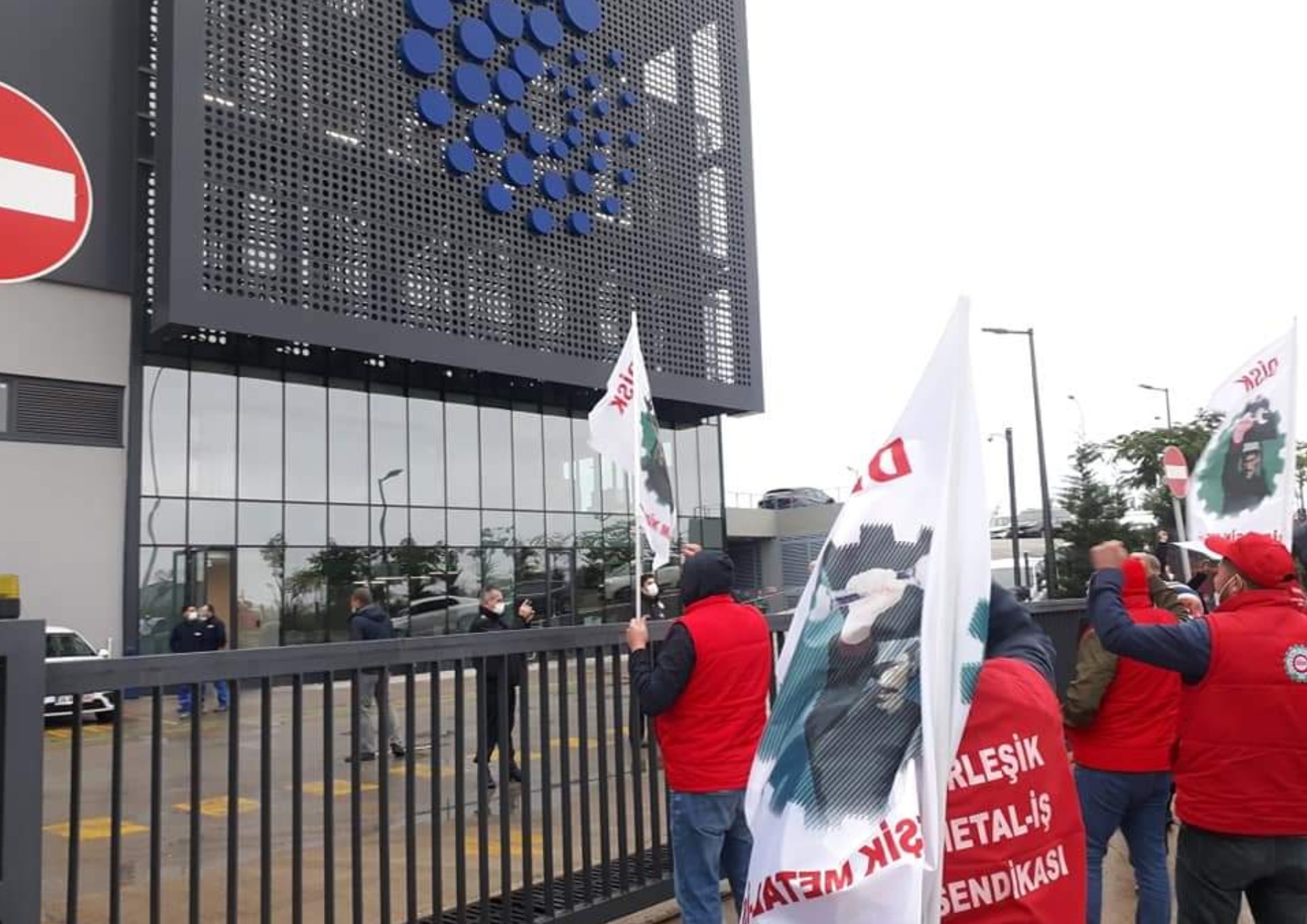
After organizing more than 50 per cent of the workers at Systemair’s Turkish manufacturing subsidiary Systemair HSK, the Turkish Ministry of Labour certified IndustriALL affiliate Birleşik Metal-İş as a bargaining agent in October last year.

But instead of engaging with the union, local management appealed the decision from MoL, a common union busting tactic by Turkish employers. In direct connection with the appeal, local management used Covid-19 measures as an excuse to force union members to go on unpaid leave. Currently 21 union members are on unpaid leave.

Systemair claims 100 per cent of its strategic suppliers comply with its code of conduct. But when workers took peaceful actions around the plant, local management proceeded to fire two workers for supporting the demonstrations held by the terminated workers.


According to Birleşik Metal-İş, the intimidation and union busting are continuing. Systemair HSK is still threatening organized workers with unpaid leave unless they renounce their union membership, while actively recruiting new staff.

Swedish unions Unionen and IF Metall are well represented with local unions at the company in Sweden, with good working relations with management.

“It’s sad and surprising that the Turkish management has not accepted the union and Turkish legislation,”

says Karin Ström, Unionen, and Mats Svensson, IF Metall.

“In dialogue with the Swedish management, we have to no avail tried to convey that the only way forward is to recognize Birlesik as representatives of the workers and to start a genuine dialogue with the local union. We hope that this unnecessary conflict will come to end soon and be replaced by a constructive dialogue.”

After numerous attempts at a dialogue were refused by local management, Birlesik Metal-Is filed a complaint at OECD’s National Contact Point in Sweden.

”Systemair HSK has refused to engage with the union, even after we were recognized as the certified majority union,”

says Özkan Atar, Birlesik Metal-Is general secretary.

”Instead, the employer has forced our members to leave the union by threatening with unpaid leave. And the parent company has chosen to turn a blind eye to the violations of fundamental workers’ rights, even after our Swedish sister organizations raised the issues. We will continue to fight until we get justice.”

In a solidarity statement, IndustriALL Global Union and industriAll European Trade Union, denounce Systemair’s behaviour, calling it

“completely unacceptable and in clear violation of its own policies, Turkish labour law and fundamental international standards”.

The statement also calls on Systemair to reinstate the union members forced on unpaid leave, to immediately stop union busting and to enter into constructive cooperation with Birlesik Metal-Is.

Systemair produces ventilation equipment and employs more than 6,000 people in 79 operating companies around the world. The Turkish subsidiary Systemair HSK is fully owned by Systemair.

Two years after Brumadinho disaster, safety concerns persist at Vale

In December 2020, Júlio César de Oliveira Cordeiro, a bulldozer operator, was killed in a landslide at the Córrego de Feijão iron-ore mine. Oliveira was employed by Vale Verde, a company contracted by Vale.

According to the leader of Minas Gerais’ heavy construction union, Eduardo Armond, ubcontracted workers regularly report that Vale managers bully them into working even when they are mentally unwell and that they are afraid to do their jobs due to the lack of workplace safety.

Despite asking to meet with Vale to discuss the health and safety conditions for all workers for the past year, no meeting has taken place.

"Júlio César de Oliveira Cordeiro’s death is another reminder of the Brumandinho murder, and that reminder won't go away until we have justice for everyone and Vale takes responsibility for its role in the disaster. It's also a reminder that workers' rights to health and safety are indivisible,”

says Glen Mpufane, IndustriALL health and safety and mining director.

Representatives from Vale and the Minas Gerais state government have discussed compensation to be paid in relation to the Brumadinho disaster for the last two months. However, on 21 January it was announced that the talks had broken down

The Movement for Dam Victims (MAB) has condemned the fact that the people affected by the disaster have not been involved in the talks, as it implies that a secret deal will be reached, one that is unfair and that will only benefit Vale.

MAB is calling for emergency financial aid, independent technical experts to ensure that dams are safe, and for the right to participate in compensation discussions to safeguard the rights of those affected.

Lucineide Varjão Soares, president of IndustriALL affiliate CNQ/CUT, member of IndustriALL Executive Committee and mining sector co-chair, said:

“How much is a life worth? It's been two years since the Brumadinho disaster and Vale has still not admitted its guilt or accepted responsibility for the crime it committed against the workers, society and the environment.

“Vale has been using legal mechanisms to hold off the court case and has not put forward a proposal that meets the needs of the victims' families or that reflects the extent of the damage caused. The courts have bowed to big business instead of forcing them to pay for what they have done.

“It's time for justice to be delivered. That's why MAB, together with unions and other social organizations, is calling for the situation to be resolved once and for all."

On 25 January 2019, the tailings dam owned by Vale collapsed, releasing more than 10 million cubic metres of toxic waste onto the municipality of Brumadinho in the state of Minas Gerais. A total of 272 people lost their lives and eleven people are still missing.

PROFILE: Haiti, fighting for members’ survival

PROFILE

From Global Worker No. 2 November 2020

Text: Laura Carter

Country: Haiti

Union: Groupement des Travailleurs (euses) du Textile pour la Réexportation d'Assemblage (GOSTTRA)

The young union has nearly doubled its membership in the past eight years and now represents 2,300 workers in eleven factories, but the hostility of employers and the government’s failure to protect workers’ rights pose a real challenge to membership growth at a time when Haitian garment workers desperately need strong unions.

Haiti’s garment workers face an uncertain future. Roughly a third of the country’s 57,000 garment workers are currently suspended or terminated and have yet to receive any compensation from the government in spite of earlier promises. In spite of objections from GOSTTRA and other unions, the rest are working reduced hours in unsafe factories that lack even the most basic precautions to help prevent the spread of the coronavirus. 

Decades of economic policies aimed at attracting foreign investment, including wage suppression, duty-free production and 15-year tax holidays for companies located in free trade zones have left workers on the knife-edge of poverty and have deprived the government of the tax revenue needed to build proper health care and social safety nets. 

Says GOSTTRA general secretary Reginald Lafontant: 

“Workers were stretched to the limit even before the pandemic, so they have no savings to fall back on – in fact, most of them were already in debt before the crisis hit.”  

A survey conducted last year by US Solidarity Center showed that the minimum wage for a 48-hour week covered less than a quarter of the amount workers need in order to adequately provide for themselves and their families. 

Haitian garment workers wrestle with the predicament of starvation wages on a daily basis, and the situation has worsened as food prices have skyrocketed. 

Much to GOSTTRA’s frustration, the government seems shockingly out of touch with the extreme hardships workers face. At a recent meeting with trade unionists, President Jovenel Moïse flatly ignored demands for an increase in the minimum wage. “You know”, he said, “I get pressures from all sides. Employers are asking me to lower wages.”

Lafontant wrote out a list of the daily expenses incurred by garment workers and handed it to President. It showed how a worker’s entire daily minimum wage of 500 gourdes is spent before he or she even gets home. 

“A worker typically leaves home at 5am and doesn’t get home till 7pm. Transport to and from the factory costs about 150 gourdes. A meal outside the factory gate costs 75 gourdes; a modest lunch will take up a further 155 gourdes; a couple of soft drinks during the course of the day will cost 120 gourdes, and that’s it, there’s nothing left of the minimum wage. So how are we supposed to survive?” 

Not satisfied with paying rock-bottom wages, employers routinely cheat their workers. Two workers died during the summer after being denied hospital treatment because their employer had not remitted the social security contributions deduced from their wages. This sparked weeks of protests at the factory. 

Employers are clamping down against GOSTTRA union leaders who are trying to defend their members’ interests.Hundreds of union leaders and members have been dismissed or terminated following protests over unfair treatment. A peaceful October 7 demonstration organized by GOSTTRA in the SONAPI free trade zone was repressed by police.

Haiti’s garment industry

Type Not surprisingly, Haiti is one of eight priority countries for ILO’s Call to action to support the garment industry which is just getting underway in the country. GOSSTRA, along with its national center CTSP and other garment unions are coordinating their efforts to push for protection for garment workers.

Workers’ and human rights violations in Belarus must stop

On 20 January, Belarus Supreme Court rejected the appeal of the Belaruskali strike committee and judged last year’s strike illegal.

After protesting against the result of presidential elections in August 2020, many workers and members of independent unions have received disproportionate reprisals.

On 19 January, Daria Polyakova, youth network coordinator of the Belarusian Radio and Electronic Industry Workers' Union REP, affiliated to IndustriALL, was sentenced to two years of restricted freedom (house arrest) for “violence or threat of violence against an employee of the internal affairs agency”. Daria damaged the sleeve of a police officer’s jacket when she tried to prevent a colleague from being detained. Daria is a widow and mother of two children.

Members of the Belarusian Independent Trade Union BITU, Vladimir Berdnikovich and Andrey Prilutsky, were also accused of violence against the police. Vladimir was sentenced to four years after running away after a protest in October. Andrey Prilutsky intervened when an elderly man was being beaten up in August, and in response he was beaten, detained and sentenced to 15 days. Prilutsky is currently detained in Russia, waiting to be extradited to Belarus.

BITU member Igor Povarov is subject to criminal prosecution over his participation in the protest on 17 August, when he, along with other workers at the Belarusian Metallurgical Plant, blocked the road. He is accused of organizing, preparing or actively participating in actions that grossly violate public order.

And there are many more similar cases in Belarus.

“Cases can be initiated against anyone who has expressed disagreement and put up resistance. If there are information to initiate not an administrative, but a criminal case, authorities will use it,”

says Elizaveta Merlyak, BITU international secretary, also victim of the regime.

On 18 January, REP lawyer and human rights activist Leonid Sudalenko has been detained in Gomel for “organization and preparation of actions that grossly violate public order”. The union assumes that Sudalenko is being accused of financing the riots, since he helped the victims of repression to pay fines.

REP considers the arrest of Leonid Sudalenko and other trade union activists as a continuation of repressions by the regime towards activists of independent trade unions and people who are not afraid to express their civil position, who are ready to help those whose rights have been violated.

Kemal Õzkan, IndustriALL Global Union assistant general secretary, says:

“The Supreme Court’s verdict on the Belaruskali strike is a dangerous precedent and a clear sign that Belarusian authorities are not ready for a real dialogue with workers and people of the country.

“IndustriALL once again strongly denounces the repression in Belarus and demands an end to the prosecution of all union members and activists, as well as the release of all political prisoners. We are committed to supporting our Belarusian affiliates and workers in their fight for fundamental human and workers’ rights.”

Thousands of British Gas workers continue strike action

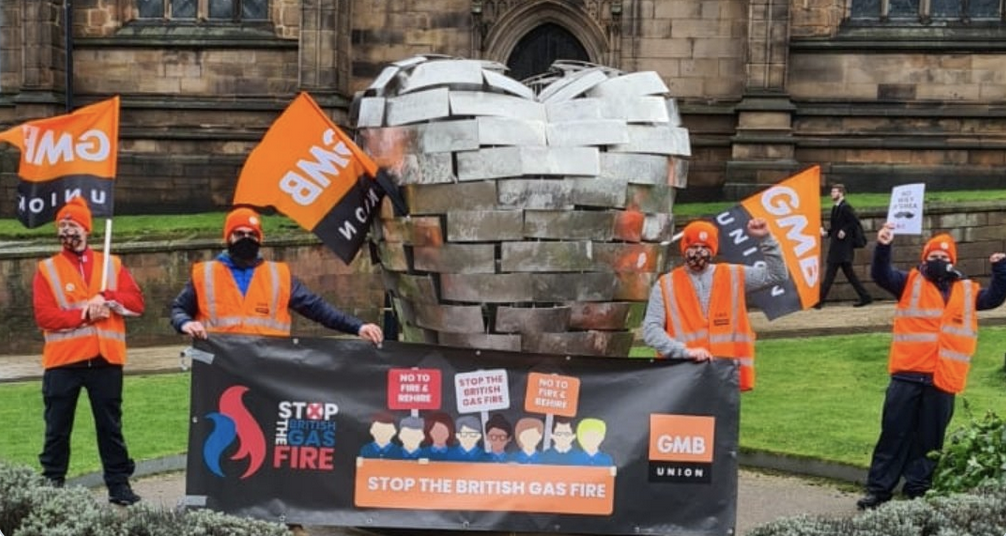
On 20 January, GMB members at British Gas launched the first of seven one-day strikes over the company’s strategy to fire them all and rehire them on worse terms and conditions. Around 7,000 workers downed tools across the UK, as cities across the country lit up with “Stop the British Gas Fire” messages of support.

89 per cent of British Gas workers voted in favour of the strike after the CEO of parent company Centrica, Chris O’Shea, threatened to fire them all if they didn’t “accept” cuts to pay and terms and conditions.


Justin Bowden, GMB national secretary, says:

“This is yet another attempt to get through to Mr O’Shea that staff accepting cuts of this magnitude in a profitable company is wishful thinking in the extreme. The company needs to put customers and staff first by abandoning wishful thinking and taking ‘fire and rehire’ off the table."

The strikes provoked by the company have caused massive disruption for the company’s customers, with an estimated 100,000 homes waiting for service across the country.

Workers will continue the strike 22, 25, 29, 30, 31 January and 1 February.

IndustriALL Global Union condemns in the strongest terms the ‘fire and rehire’ plans and its recalcitrant stance during the long negotiations with the union over plans to reduce the workforce and shift employees on to new contracts last year.

“British Gas/Centrica is aggressively seeking to cut the pay and worsen the terms and conditions of employment of thousands of workers. We find it unacceptable that the company is forcing workers to accept worse employment contracts or lose their jobs, particularly in the middle of a terrible pandemic,”

says IndustriALL general secretary Valter Sanches.

”IndustriALL is calling on British Gas to treat union members with the respect they deserve, and return to the negotiating table with GMB to reach a fair and just solution.”

British Gas parent company Centrica reported an operating profit (before exceptional items and tax) of £901 million in 2019.

IndustriALL webinar on energy transition

Are energy companies investing in marketing, rather than in renewables? A new report commissioned by IndustriALL demonstrates the gap between rhetoric and reality as major energy companies fail to back climate commitments with investment.

Read the report

Energy transition perspectives and trends: patterns, scenarios and impacts
ENGESPFRA