Myanmar’s cyber security law threatens democracy and labour movement

Approximately one week after the military coup, the self-installed state administrative council requested internet service providers to give feedback on a draft cyber security law by 15 February.

The hasty introduction of the restrictive law is an attempt to stifle the fast-growing civil disobedience movement across the country. Authorities have cut internet services on a number of times and have temporarily suspended social media.

Once adopted, the vaguely worded law will criminalize any person “creating misinformation and disinformation with the intent of causing public panic, loss of trust or social division on a cyber space”. A conviction carries imprisonment for not more than three years or a fine not more than 10 million kyats (US$7,525) or both.

Khaing Zar, president of Industrial Workers’ Federation of Myanmar (IWFM), says:

“The draft cyber security law is a serious threat to Myanmar’s democracy and labour movement. It violates the very principle of democracy that citizens must be able to access to free information.

“Trade unions cannot function and continue to organize workers under such a restrictive cyber security law, we urge the government to restore democracy and release parliamentarians before deliberating the law.”

Protests against the military rule in Myanmar continue, with hundreds of thousands of workers across the country participating in peaceful civil disobedience. Trade unions play a vocal and visible role, and IndustriALL affiliate IWFM has released a statement calling on in Myanmar’s garment industry to respect workers’ fundamental rights of freedom of association, expression and peaceful assembly.

“The ongoing demonstrations in Myanmar are critical to pushing back military intrusion into fundamental rights and freedoms that are essential to ensuring a stable environment for industrial relations. The future of the Myanmar garment industry depends upon a peaceful and sensible solution to the current political crisis as the looming threat to democracy is also a threat to the business environment for foreign investors.

“Myanmar’s workers are exercising universally protected human rights to assemble and peacefully protest the military coup and call for a return to the civilian-led government elected by the people.”

IndustriALL Global Union general secretary Valter Sanches says:

“The cyber law effectively eliminates free speech in Myanmar and hands over control of communications to the military, which is wholly unacceptable. We stand in solidarity with the workers who are peacefully pushing back against the military in their fight to restore democracy.”
IndustriALL condemns brutal raids on unions in Belarus

The office of IndustriALL affiliate the Belarusian Radio and Electronic Industry Workers' Union (REP) was raided, with police conducting the search over the whole day. The search was disruptive, with documents and other items thrown on the ground and walked over.

All communication devices and laptops were seized, along with almost all basic documentation, including accounting documents, various printed and campaign materials, and personal money. Officials refused to give a copy of the search record, or supply an inventory of the seized items.

The union leadership stated that police found a hunting shotgun cartridge in a couch in the kitchen, which is believed to be a provocation.

The same morning, police searched the home of the REP lawyer for the Brest region, Vladimir Maley, and confiscated his personal equipment, books and money. He was detained.

The apartment of the chairman of the REP primary trade union at the Minsk Motor Plant, Andrei Komlik-Yamatin, was also searched on 16 February, and he was detained for refusing to open the door. The next day the court sentenced him to 25 days of administrative arrest “for disobedience to an order or request of an official on duty”. The whereabouts of the REP representative in Minsk, Igor Komlik, is currently unknown.

The raids constitute a new round of brutal repression by the authorities against the civil society organizations who have been struggling against gross human rights violations committed by the security forces following the rigged presidential elections in August last year.

According to the state security agency the Investigative Committee of Belarus, the mass searches and interrogations are aimed at “establishing the circumstances of the financing of protest activities” and were carried out as part of criminal proceedings under Article 342 of the Criminal Code on the “organization and preparation of actions that grossly violate public order”.

However, IndustriALL Global Union believes that Belarus needs to know that its attempts to intimidate will not discourage others from carrying out their legitimate human rights activities. The international community will continue to support the Belarusian people, workers and trade unions in their struggle for democracy and human rights, and to oppose the repression of civil society.

Kemal Özkan, IndustriALL assistant general secretary said:

“This outrageous attack on independent trade union activists and human rights defenders is clearly an attempt by the state to destroy the country’s civil society organizations who have been fighting for fundamental human and workers’ rights in harsh undemocratic conditions.

 “IndustriALL strongly condemns these brutal raids carried out under false pretexts, and calls for the immediate release of all who have been detained and imprisoned for the peaceful exercise of their rights.”

UPDATE: This article was updated on 18 February with details about the arrest of Andrei Komlik-Yamatin.

Somalia ratifies C190 and six other ILO conventions

The Federation of Somali Trade Unions (FESTU) says the ratification will benefit workers during the current Covid-19 pandemic and will assist in “resilient social and economic recovery.” IndustriALL affiliate, the Somalia Union of Petroleum and Gas Workers (SUPEGW), which also belongs to FESTU, took part in the ratification campaign.

FESTU secretary general Omar Faruk Osman says:

“We championed the ratifications by pursuing  the ILO principles of tripartism, social dialogue, harmonious labour relations and met with the Prime Minister, Mohamed Hussein Roble, the Ministry of Labour and Social Affairs, and the Somali Chamber of Commerce and Industry. By ratifying these internationally recognized frameworks that set legal guarantees for workers, the Somali government is now obliged to ensure that the country’s domestic laws and policies are aligned to international standards and practice.”

FESTU says C190 — Violence and Harassment Convention — will promote gender equality at the workplace and help stop sexual and gender-based violence which is adversely affecting women in the world of work. The convention will also assist unions in their campaigns for the introduction of a sexual offences bill in the federal parliament.

Convention 144 on tripartite consultation will promote better industrial relations and improve stakeholder relations with government, employers, and trade unions.

Further, Conventions 187 and C155 on health and safety protect workers’ rights and will help to end unsafe working conditions that have injured many workers and will also improve workers well-being.

According to FESTU, Conventions 97 on migration for employment, C143 on migrant workers and C181 on private employment agencies seek to address the abuse and exploitation faced by Somali migrant workers abroad by providing legal protection. An ILO report states that most Somali migrant workers are employed as casual and domestic workers in the Intergovernmental Authority on Development region made up of Djibouti, Eritrea, Ethiopia, Kenya, South Sudan, Sudan, and Uganda, to which Somalia also belongs, and the Middle East, especially Yemen. The unions say the conventions lay a foundation on which the country can build a national labour migration policy.

The country’s federal parliament endorsed the ratification on 26 December 2020 and documents have since been submitted to the ILO. The unions attribute the success of the campaign to the willingness of social dialogue partners to work together and ensure that the country adheres to international labour standards.

Paule France Ndessomin, IndustriALL regional secretary for Sub Saharan Africa says:

“It is commendable that FESTU successfully campaigned for the ratification of multiple conventions which is strategic in that it provides wider instruments to deal with diverse issues affecting workers. We continue to urge unions to vigorously campaign for the ratification of C190 and the adoptions of recommendation 206 as a strategy to end violence against women at work.”

Photo of Somalia's flag from Wikimedia Commons

German unions win the argument on due diligence in supply chains

The law will incorporate the provisions of the UN Guiding Principles for Business and Human Rights and the OECD Guidelines for Multinational Enterprises into German domestic legislation. Although the draft text of the law has not been published yet, ministers announced details at a press conference on 12 February.

The law will place legal obligations on companies headquartered in Germany to ensure that human rights and related environmental standards are observed at all levels of the supply chain. The law is expected to come into force at the beginning of 2023, and will initially cover companies with more than 3,000 employees. From 2024, it will cover companies with more than 1,000.

Subcontractors in other countries will have to comply with the same standards, although indirect suppliers will only be examined if issues are raised. This would make German companies liable for abuses that occur in their supply chains. If they fail to remedy these abuses, trade unions and NGOs would be able to take companies to court in Germany on behalf of the victims.

“The supply chain law needs to strengthen local freedom of association and take action against union busting. We need strong trade unions in the countries along the supply chains. Together with the workers, trade unions can detect abuse and punish violations to safeguard the rights of workers.”

Said Wolfgang Lemb, member of the executive committee of IndustriALL affiliate IG Metall.

Companies should be able to limit their liability if they implement a government-approved industry standard, called a Safe Harbour. German unions argue that a minimum requirement of Safe Harbour status would be that the company sign a global framework agreement (GFA) with the relevant global union. This would provide another mechanism for resolving complaints – as well as negative consequences for companies, like Volkswagen, who violate the terms of GFAs.

Globally, there is a growing tendency towards due diligence legislation. In 2017, France became the first country to introduce a national law based on the UN guiding principles. The Netherlands adopted a law on child labour in 2019, and the United Kingdom has a Modern Slavery Act. Laws have been passed in the United States and Switzerland, and are in preparation in Hong Kong and Canada. IndustriALL Global Union’s sister organization, IndustriAll Europe, is calling for due diligence rules at the EU level.

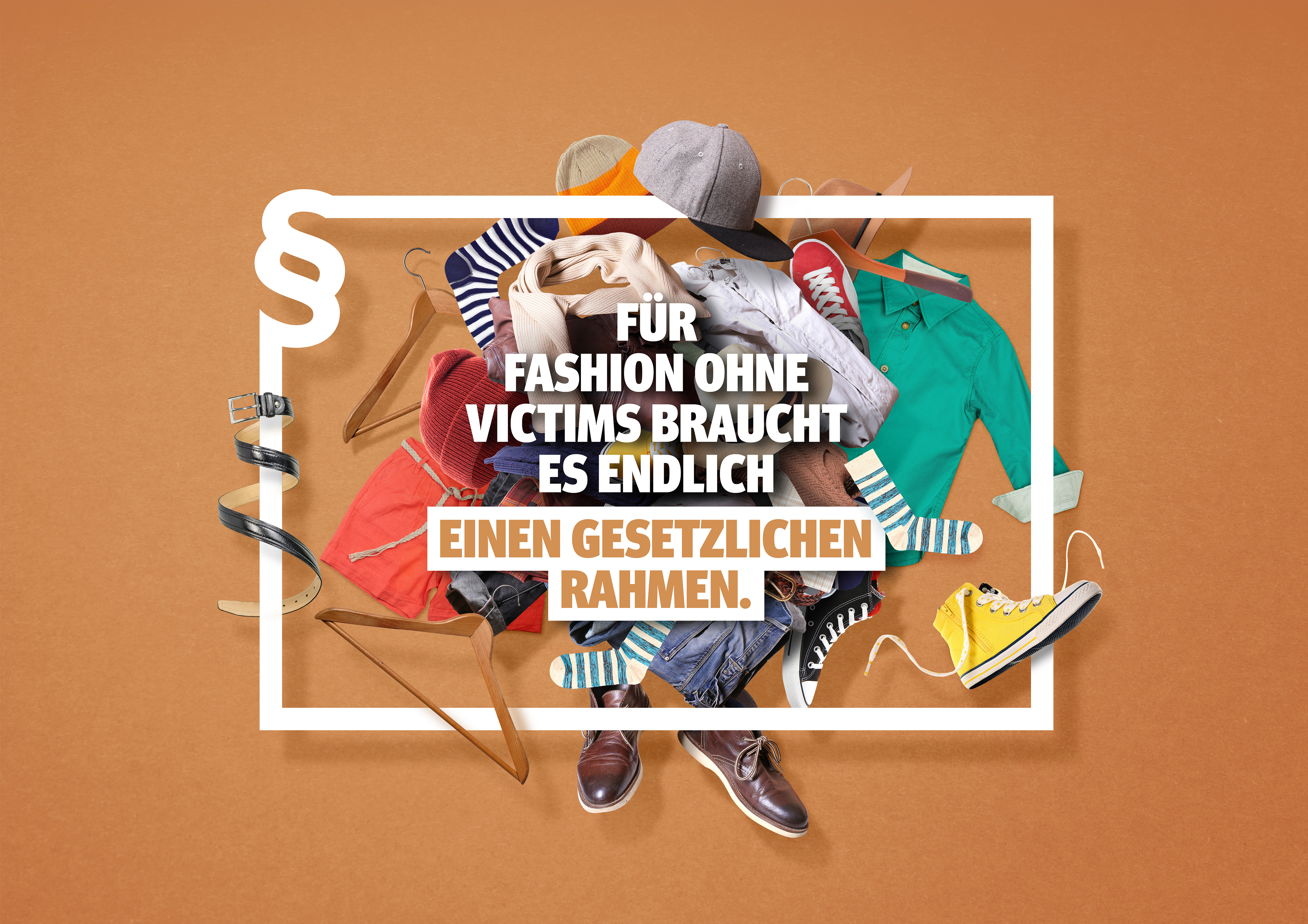
Initiative Lieferkettengesetz image: "For fashion without victims, we need a legal framework"

Unions in Germany have consistently made the case for a similar law, joining forces with more than 120 member organizations in the Initiative Lieferkettengesetz, and working hard to campaign and lobby for the law. They built political support over the years by highlighting the failures of a voluntary approach, and the law has been endorsed by prominent economists. Some companies, including Tchibo, which has a GFA with IndustriALL, also support the law.

The argument has now been won. Surveys show that 75 per cent of citizens favour a supply chain law. Increasingly, politicians from across the political spectrum recognize the need for a legal framework to create a just, level playing field for the activities of German-headquartered companies across the world.

Most multinational corporations claim that due diligence legislation is not necessary, and that they can police their own operations through voluntary codes of conduct. However, unions have shown that this is not true. They have demonstrated repeatedly that companies fail to abide by voluntary codes when it is not in their economic interest.

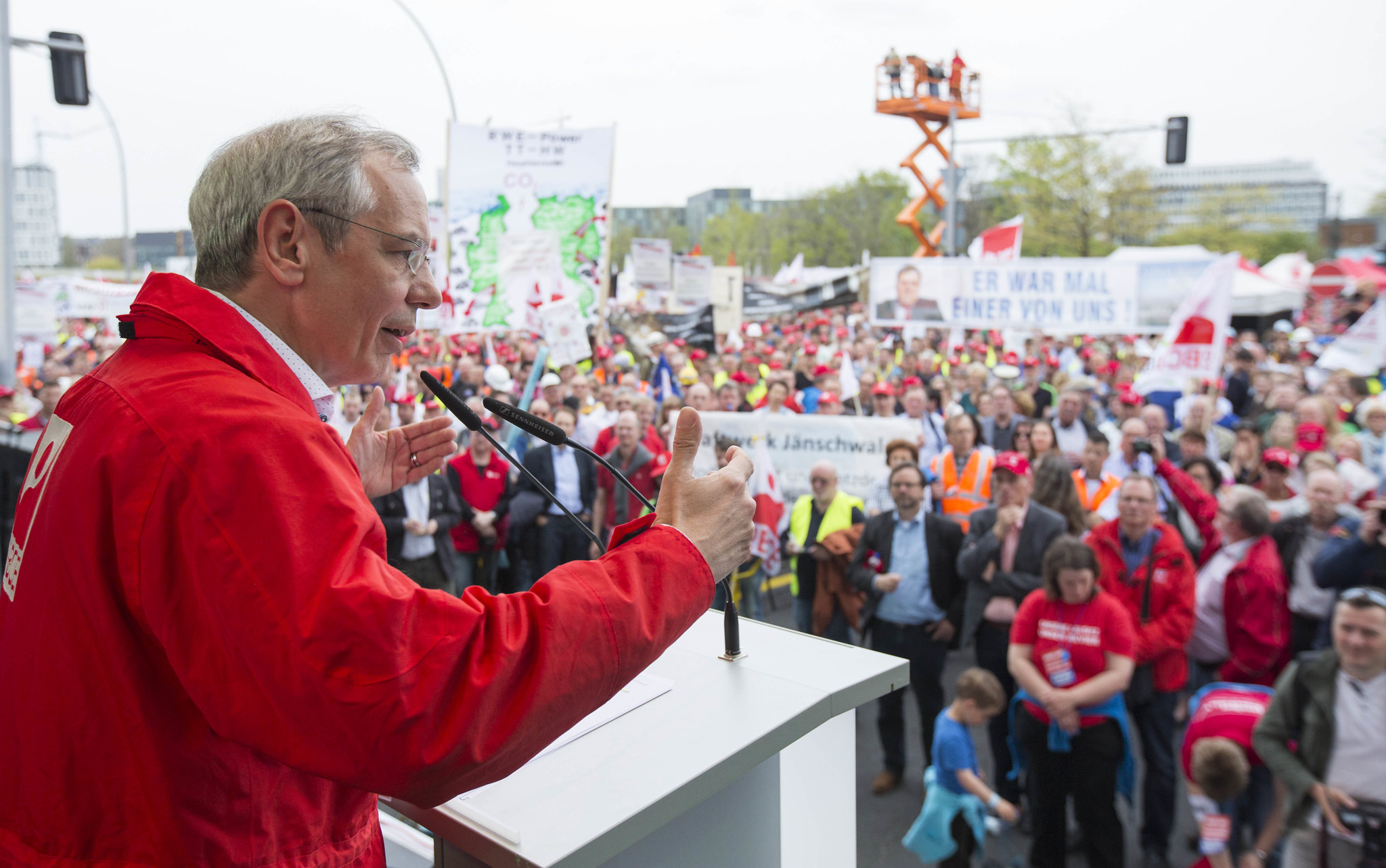
Michael Vassiliadis

The president of IndustriALL affiliate IG BCE, Michael Vassiliadis, said:

“Multinationals have had plenty of time to show that they can solve these challenges through a voluntary process. They have failed. Now, they need to accept the logical consequence: a law.”

Germany is governed by a grand coalition made up of the centre-right CDU/CSU and the centre-left SPD. The SPD has consistently supported the law, but even conservative politicians are coming on board. The CSU minister in charge of the BMZ, the German ministry for economic cooperation and development, which is responsible for overseas aid and development, joined the SPD labour minister in a call for the legislation.

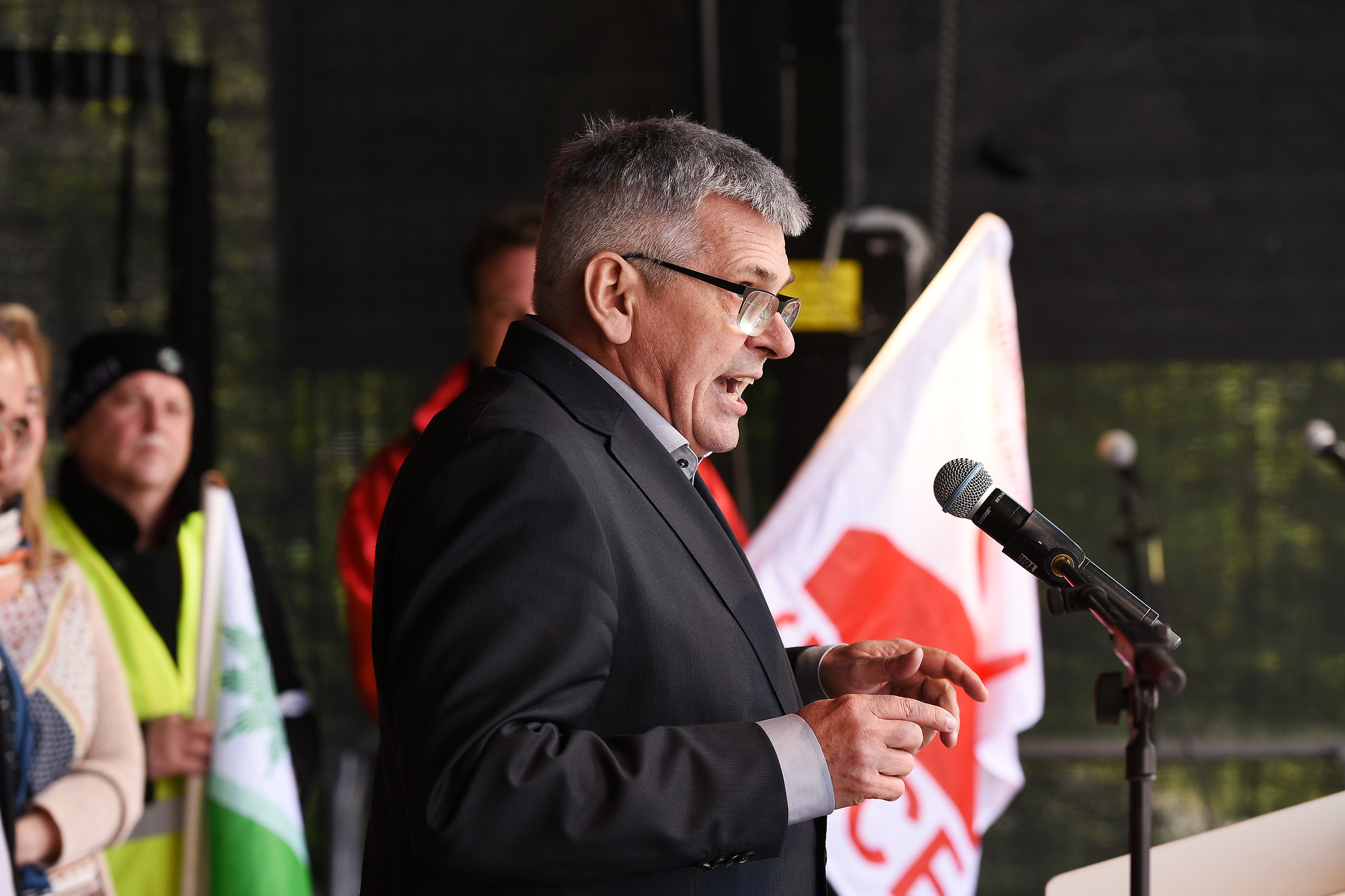
Jörg Hofmann

IG Metall and IndustriALL Global Union president Jörg Hofmann said:

“The German federal government has achieved an agreement! The efforts of employment minister Hubertus Heil and the development minister Gerd Müller have led to this breakthrough. IG Metall welcomes the agreement on a law on due diligence. After a long and tough struggle, this is a positive signal.

“There is a downside: It will take too long for the law to come into force. We urge employers to meet the standards set by the law beforehand. In the medium term, it has to be evaluated whether the occasion-based examination of indirect suppliers within the value chain turns out to be sufficient.”

UPDATE 23.02.21

Although unions argued for a Safe Harbour provision linked to GFAs, Safe Harbours have not been included in the draft law. A word in the original paragraph ("will" to "should") was changed to reflect this.

Bahraini unions demand annual wage increase payment

IndustriALL affiliate the GFBTU is calling for the start of genuine social dialogue with the trade unions to improve the situation for workers and the safety of the production process.

In a statement issued on February 1, 2021, the GFBTU said that companies have seen an increase in profits and an expansion of activity, which makes the decision to introduce a pay freeze strange, especially since the importance of people’s efforts in achieving these profits has been recognized. Companies usually pay an average increase of three per cent, linked to a satisfactory work performance. However, this year increases were not paid.

In its statement, the GFBTU said that this is the first time that the annual wage increase for private sector workers has been stopped, and stands in contrast to their colleagues in the public sector who have enjoyed the increase. Because social security payments are linked to wage levels, failing to pay the annual increase deprives thousands of workers and pensioners of the ability to keep up with inflation, affecting different segments of society, directly and indirectly.

The GFBTU believes that the size of the increase is small compared to the profits of companies. Stopping it will have a disproportionately negative impact on the financial situation and purchasing power of workers, and will reduce the middle class and increase poverty.

The GFBTU pointed out that the annual increase, the wage ladder and the promotions system are part of an integrated system within the production facility. Failure to pay the increase threatens the integrity of the entire system.

The GFBTU has presented a comprehensive plan for the labour market and social insurance funds that would ensure the continuation of the annual increase payment to all workers and pensioners, and the employment of the unemployed, while ensuring the sustainability of social insurance funds and achieving sustainable development.

The GFBTU highlighted the role of workers and pensioners in helping companies and institutions overcome the economic crisis, and showed that their loyalty and dedication, and what they paid towards the insurance fund against disruption, contributed to the doubling of profits. They should be rewarded and not have their annual wage increase stopped.

 The general secretary of the GFBTU, Abdulqader Al-Shehabi, said:

 "The issue concerns key companies in various sectors including oil and gas and metals. The annual increase in wages would offset the continuous increase in prices and inflation. Depriving workers of this would increase poverty, weaken the purchasing power of workers and negatively affect investment."

IndustriALL assistant general secretary Kemal Özkan said:

“This issue affects workers’ and pensioners’ living standards. We call on the respective companies to enter into social dialogue with the GFBTU and discuss this issue in good faith to find solutions.”

Image: A blacksmith's workshop. GFBTU

Victims of Brumadinho disaster call for settlement with Vale to be overturned

Photo credit: Jornalistas Livres and MAB.

In the settlement deal, Vale is required to pay compensation of 37.68 billion reais (US$7 billion) for the crime committed at Brumadinho. During the settlement hearing on 4 February, victims protested that they had been left out of negotiations and that the settlement had been reached without any information being made public.

On 10 February, the affected communities filed a petition with the Federal Supreme Court calling on it to overturn its approval of the settlement agreement signed by Vale and the Minas Gerais state government.

They say that those affected are entitled to be directly involved in negotiations on equal terms. In addition, the settlement does not achieve their main aim, which is to guarantee economic, social and environmental reparations for the collective moral and economic damage that was caused when Vale's tailings dam burst at the Córrego de Feijão mine.

The state governor Romeu Zema had assured them that all affected parties would be included in the process and that their voices would be heard. Yet the group filing the petition has said that the victims, their representatives and related committees had been left of negotiations on the settlement since October 2020.

While the state will receive close to 27 billion reais (US$5 billion), those affected will receive only 9 billion reais (US$1.6 billion), a difference they consider absurd. And the amount set aside for emergency aid payments is not enough to cover all communities affected, excluding some 20,000 people.

The Movement for Dam Victims, one of the organizations petitioning the court, has pointed out that the Brumadinho Parliamentary Inquiry Committee, which oversaw the Brumadinho settlement negotiations, was not informed of the terms of the agreement and could therefore not analyse the final settlement. The Committee recently held a meeting with victims and has said that it will schedule a public hearing with those affected and representatives from the Minas Gerais state government, the state department of justice, the public prosecutor's office and the ombudsman's office.

Kemal Özkan, IndustriALL assistant secretary general, says:

"IndustriALL Global Union is extremely angry over the injustice for the victims of Brumadinho. No amount of money can alleviate the pain suffered by so many. We stand in solidarity with all those affected and will continue to fight until justice is served."

Alternative Mining Indaba discusses sustainable mining under Covid-19

Participants included trade unions, faith-based organizations, community-based organizations, civil society organizations, mining companies, and other stakeholders.

The AMI, which supports a “just and people centred” approach to mining, started as a civil society and community grassroots organizations platform to engage with the business-oriented African Mining Indaba, held annually in Cape Town, South Africa. This year, both events were hosted virtually.

This year’s AMI theme was “Building forward together pivoting the extractives sector for adaptation and resilience against Covid-19” – reinforced previous resolutions on how to transition to sustainable mining. One of the AMI’s declarations stated:

“The Covid-19 health pandemic is a moment of crisis but also presents us with an opportunity to agitate for a broad scale green transition, and this requires an unprecedented level of international cooperation and solidarity. This is the time for mining corporates to change the way they do things particularly with regards to corporate social responsibility, social labour plans and ecological responsibilities, and to forge social cohesion.”

Glen Mpufane, IndustriALL director for mining says:

“Trade unions are an important constituency in the AMI because workers and their families are part of the mining communities. As labour, we support the mobilization of mineral resources for community development, and for sustainable industrialization of Africa.”

The AMI said mining companies should promote health and safety and be involved in Covid-19 awareness campaigns, provide personal protective equipment and hand sanitizers to mineworkers and communities.

Issues discussed included accountability on tax justice by mining companies as one of the ways to deal with tax evasion and how to stop illicit financial flows. There were recommendations to use the African Minerals Governance Framework to curb the illicit financial flows. According to the United Nations Office on Drugs and Crime, Africa loses US$88.6 billion in illicit capital flight.

Discussions also focused on demands for the implementation of the African Mining Vision (AMV). Other debates focused on dealing with corruption, campaigning for debt cancellation for African countries to release resources towards Covid-19, and how to make regional and legislative policy frameworks effective. Environmental justice and Just Transition issues were identified as key to community development.

Mining affected communities said they have learnt from past experiences that when mining companies started operations, this came with poverty, inequality, and marginalization. In some instances, they lost their agricultural land through environmental degradation and air, water, and soil pollution. Further, the communities received little or no compensation for this loss of land and livelihoods. The AMI concluded that laws and regulations that existed in most countries should be enforced to protect communities.

However, the AMI heard that the Initiative for Responsible Mining Assurance (IRMA) has useful tools that can be used by mining affected communities to demand accountability from mining companies. These include the IRMA Standard for Responsible Mining and as well as some strategies for working together between large scale mining companies and artisanal and small-scale miners. To protect community interests, South African-based Mine Affected Communities United in Action (MACUA) is represented in IRMA while IndustriALL is the labour representative.

Photo from last year's Alternative Mining Indaba

Iranian auto workers strike against non-payment of wages

The Iran Khodro Company is the principal automaker in Iran, manufacturing vehicles, including Peugeot, Renault and Suzuki cars under license, and trucks, minibuses and buses.

There have been problems at the company, and accusations of corruption, for some time, as well as reports from September and October last year of the company failing to pay wages and workers’ contributions to social security.

This has resulted in some workers reaching retirement age but having to keep working, because the social security system refuses to pay their pensions until the contribution shortfall is made up.

Iran Khodro has six production sites in Iran, with the Tabriz factory having a capacity of 120,000 vehicles per year. The multinational auto company, which also has factories in Azerbaijan, Belarus, Senagal, Syria and Venezuela, blames the Covid-19 pandemic for the problems with payment. Workers at Tabriz started wildcat strike action on 30 January. Several workers were reportedly fired as a consequence.

IndustriALL Global Union’s affiliate the Union of Metalworkers and Machinists of Iran (UMMI) reports that conditions in industrial plants is catastrophic across Iran as the economic impact of the pandemic is added to the ongoing consequences of US sanctions. Major auto factories and their suppliers are affected, and many companies are failing to pay wages and make social security contributions. This leaves workers unable to receive benefits or receive healthcare.

The Khodro autoworkers are just the latest to rise up against impossible living and working conditions. Protests in the South Pars oil and gas fields have been ongoing since August last year, with a growing number of disputes by workers who want decent conditions and to be employed directly, rather than through labour brokers.

There are also protests by pensioners across the country due to the low levels of pensions which have left retired workers in poverty after a lifetime of service. The poverty level is currently four times the average pension. Retired members of UMMI are active in organizing the protests.

IndustriALL assistant general secretary Kemal Özkan said:

“The government of Iran has failed in its responsibility to its citizens. It has allowed companies to abuse workers, and left the social security system with a terrible shortfall at the moment it is needed most, during a global pandemic.

“Iranian workers are rising up to defend themselves. They are right to do so, and courageous to stand up against a repressive regime and companies that fail to meet their responsibilities. Iran needs to recognize independent trade unions so that the country’s workers and pensioners can win justice.”

United Italian metalworkers sign new national agreement

IndustriALL Global Union Italian affiliates FIOM-CGIL, FIM-CISL and UIL-UILM have concluded negotiations of a national collective agreement with significant results. An overall average salary increase of €112 (US$135) will be divided over four occasions during the agreement, which is valid from January 2021 until June 2024.  

“With this renewed agreement we want to defeat an unprecedented crisis through the salary increase of €112, plus protection and guarantees for many workers,”

says Rocco Palombella, UIL-UILM general secretary.

In addition to the increase, the agreement also includes a €12 (US$14) increase based on inflation for the minimum wage from June 2020. Other increases include €200 (US$242) per year of flexible benefits, as well as an increase of the employer’s contributions to the supplementary pension fund by 2.2 per cent from 2022 for young workers under 35.

A main achievement of the agreement is reforming the system of job classification, in place since 1973.

Francesca Re David, FIOM-CGIL general secretary, says:

“The agreement strengthens the legislation regarding trade union relations, information and participation rights, the right to training, the issue of health and safety and the fight against gender-based violence”.

The unions also managed to strengthen the industrial relations part of the agreement, and as a result, employment rights will be better protected. Workers will also enjoy improved rights for information, discussion, participation and training.

The new agreement will better protect workers’ individual rights, and the wording on gender-based violence and smart working including workers’ right to disconnect in off-office hours have significantly improved.

In addition, the clause on obligation to maintain the employment when the company concludes public procurement contracts will be introduced.

Roberto Benaglia, FIM-CISL general secretary, says:  

”It was a very difficult agreement to negotiate, perhaps one of the most difficult in recent decades, with the pandemic, an economic and social crisis to which we now add a political one.”

In the coming weeks, the agreement will be presented to workers in the country to vote on it.

Valter Sanches, IndustriALL general secretary, says:

“I congratulate our three affiliates FIM/CISL, FIOM/CGIL and UILM for the important achievement in very challenging times. It is certainly an inspiration for us all, not only because of the positive economic aspects but also because of the unity among the unions making this victory possible.”

Lifts and escalators workers commit to fight for their rights

Lifts and escalators remain one of the safest means of transport, and workers together with their unions in the sector want to keep it that way, which means that safety measures are necessary to maintain the low levels of accidents for both users and workers in production, installation and maintenance.

Wolfgang Lemb, board member of IndustriALL German affiliate IG Metall, spoke about the current situation where the Covid-19 pandemic has revealed iinequalities between countries. 

Wolfgang Lemb, IG Metall board member

When giving an update about the global situation, Matthias Hartwich, IndustriALL mechanical engineering director, focused on the challenges faced by workers and their unions.

Matthias Hartwich, IndustriALL mechanical engineering director

The pandemic has triggered and sped up changes in the lifts and escalators sector, like increased remote work, accelerated digitalization and automation, but also increased platform work and outsourcing. Although the sector has not suffered a harsh economic downturn, inspections are subcontracted, posing a severe threat to jobs. There are fears that a continued outsourcing may endanger the safety.

The discussion further focused on the so called big five in the sector; OTIS, Mitsubishi Electric, Schindler, KONE and Thyssenkrupp (sold to a private equity company in 2020, now a separate company called TK Elevator), controlling around 60 per cent of the global production, installation and services, with a combined turnover of US$ 56 billion.

IndustriALL and affiliates join forces to challenge the transnationals’ power. In line with these efforts, IndustriALL recently signed a global framework agreement with TK Elevator.

Daisuke Narus, president of Japanese IndustriALL affiliate Hitachi Building Systems Workers’ Union

Daisuke Narus, president of Japanese IndustriALL affiliate Hitachi Building Systems Workers’ Union, reported on the union’s work after a series of serious accidents in 2019. Thanks to the union’s efforts, the company is reviewing the work style to prevent any further incidents.

Wolfgang Thurner, trade union secretary at IG Metall

Wolfgang Thurner, trade union secretary at IG Metall, reported on the ongoing collective bargaining, focusing on increased wages, reduced working time, and a specific agreement for the lifts and elevators sector.

French unions reported on a general attack on social dialogue by employers. Activists who speak up are increasingly subject to repression from management

A special showcase on union-busting was reported from Norway, where a shop steward and trade union vice president was dismissed in November in order to break union-resistance against new systems of surveillance and checks on working hours. The union won the conflict in February with the reinstatement of the fired unionist. 

Markus Hansen, HMF president

HMF president Markus Hansen told the network:

“This is a big win! Thanks for all the solidarity messages. We managed to strengthen our union as never before in this fight. 95 per cent of workers are now union members!”

Based on the discussions taken place during the meeting, the delegates are discussing a joint statement, which will be published soon.

IndustriALL assistant general secretary Kemal Özkan

IndustriALL assistant general secretary Kemal Özkan, said:

“I congratulate the network for their commitment and solidarity. With the changes taking place in the industry, there are serious challenges ahead like the growing trend of subcontracting, remote working and digitalization. But together we can provide a clear and strong answer and protect our workers’ lives and wellbeing.”