South Asia unions demand strong universal social protection

During an online meeting on 25 March, with over 125 trade unionists from Bangladesh, India, Nepal, Pakistan and Sri Lanka, unions reported that large number of workers in the region are not covered by social protection systems.

Across South Asia, two per cent of the GDP is spent on social protection, while the global average GDP spending on social protection is eleven per cent.

IndustriALL executive committee members Anton Marcus of FTZ&GSEU and Sanjay Vadhavkar of SMEFI underlined that Covid-19 containment measures, including draconian lockdowns for months, have caused a major social crisis and called for strong universal social protection system in South Asia.

“The vast majority of informal sector workers in South Asia don’t benefit from the social protection system. The absence of mechanisms like unemployment benefits has pushed many into crisis, particularly during the pandemic. In countries like Nepal and Bangladesh, social protection is highly donor driven, which is not sustainable. Working people need more resources for universal and comprehensive social protection system. Social security should not be piece meal or charity based, but a right,”

said Apoorva Kaiwar, IndustriALL South Asia regional secretary.

Kemal Özkan, IndustriALL assistant general secretary, said:

“The pandemic has exposed the failed model of neo-liberal globalization. The impact of the crisis is uneven and unfair. Social protection is central to the political discussion on what kind of society we want. IndustriALL fights for universal social protection and global stability. The global unions are demanding a global social protection fund. Social protection is essential for humanity, a tool to prevent and reduce poverty and inequality, social exclusion and social insecurity. It has huge potential to promote equal opportunity, gender and racial equality.”

The ILO is reviewing social protection policies in South Asia. Syed Sultan U Ahmmed, ILO Specialist on workers' activities in South Asia, underlined that unions are important for creating awareness among informal sector workers on the right to social protection, as well as for using collective bargaining to win social protection for their members.

“According to our study, only 33 per cent of the workers received the government’s relief package during lockdown. As the new social security code is to be introduced, the government has stopped many existing social protection schemes. The new social security code excludes informal sector workers from social protection system on many levels. We need to demand adequate women’s representation in setting up social protection systems,” said  setup by the government,”

said Shalini Trivedi, Self Employed Women’s Association (SEWA).

A mapping of the existing social protection laws for industrial workers in South Asia highlighted the need for strengthening social protection system in the region. The study was undertaken by Neha Louis of Tata institute of social sciences as part of an internship with IndustriALL South Asia Office.

Photo credit: ILO Asia Pacific

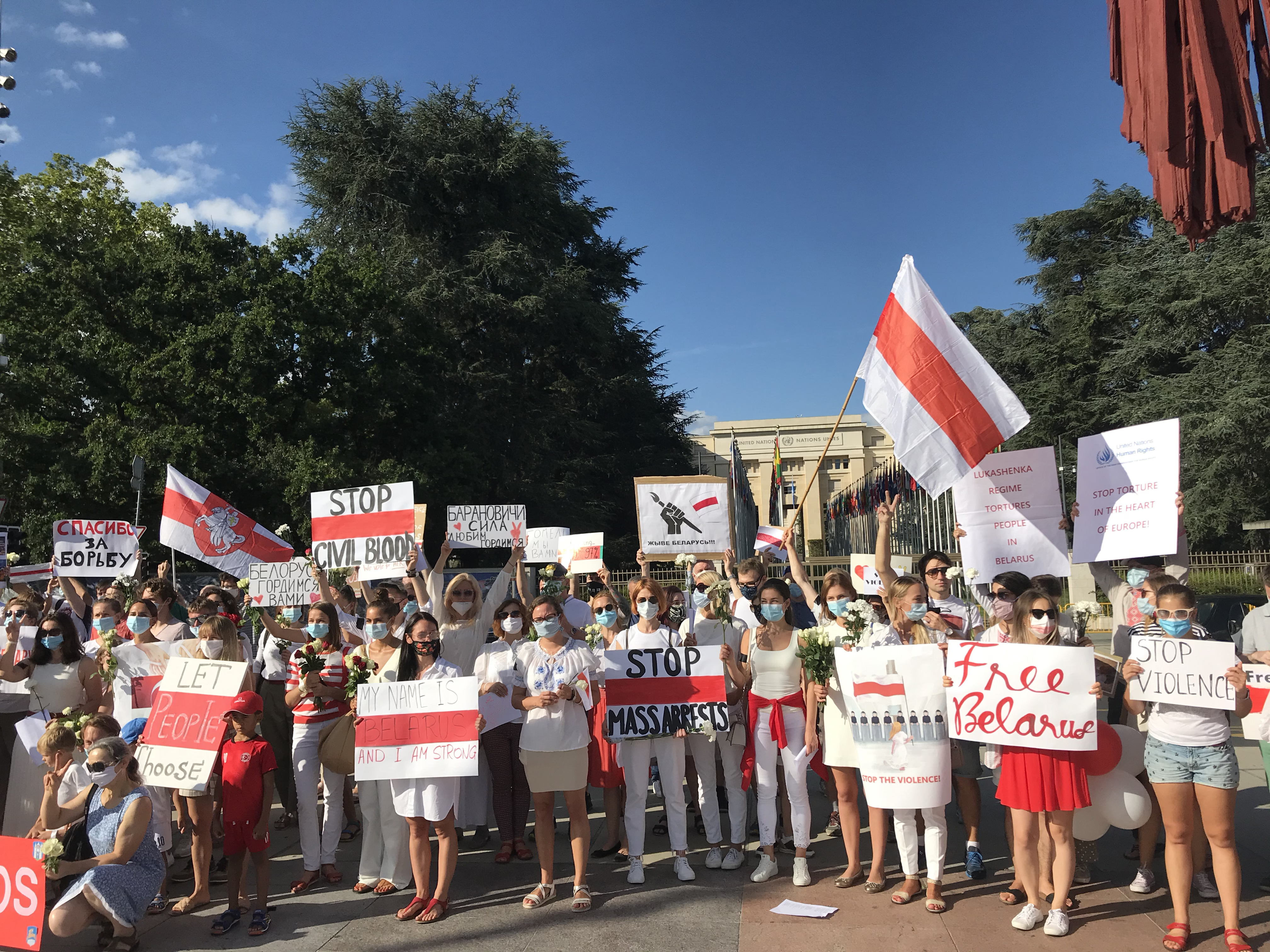
Belarusian independent unions receive 2021 Arthur Svensson prize

This year’s winner of the Arthur Svensson international prize for trade union rights is the Belarusian Congress of Democratic Trade Unions (BKDP) and its affiliated unions, including three IndustriALL affiliates; Belarusian Independent Trade Union (BITU), Free Metal Workers’ Union (SPM) and Belarusian Radio and Electronic Industry Workers' Union (REP).

Says Industri Energi president Frode Alfheim:

"The independent trade union movement has been central in the fight against the falsification of election result and the fight for democracy. Trade union representatives and activists have been fired and many have been imprisoned or forced to flee the country. Nevertheless, the unions in the BKDP have recruited new members, formed new local unions and continued the struggle. This will be crucial for the Lukashenko regime to fall in the end."


“We are grateful that our work to protect the rights of working people has been noted at such a high level. It inspires us and stimulates us to continue. Despite severe repressions, 17 members of our union were sentenced to different prison terms only this year, REP continues to fight for the workers. I am sure that no amount of repression can stop our struggle freedom, independence and solidarity,”

says REP leader Gennady Fedynich.

For the past 26 years in Belarus, normal union work, like organizing and retaining new members, registering new unions, collective bargaining, organizing strikes or protests, has been subject to complete or partial limitation by Lukashenko’ regime, trying to control the independent trade union movement.

Belarus is considered one of the worst countries in the world for violating workers' rights. However, the independent trade unions BITU, SPM and REP, refuse to give up and continue fighting for their members, even in the face of increasing difficulties.

“This is a great honour, we believe that this award belongs to all Belarusian workers who have shown the strength of solidarity over the past year. We will do our outmost to ensure that the next reward is be the observance of rights in Belarus, in particular, freedom of association, freedom of assembly and the right to strike,”

says BITU chair Maxim Poznyakov.

After the rigged presidential election in August 2020, the situation further deteriorated. Any form of protest was met with mass repression, including unjustified detentions and harsh prison sentences. A number of union activists and leaders have been fired and arrested, their homes and union offices have been searched. REP chair Vasily Zavadsky was forced to flee Belarus.

Nevertheless, Belarusian independent unions continue their daily struggle for democracy, workers’ and human rights.

“SPM is grateful for the recognition of Belarusian independent unions’ role in the struggle for democratic transition and protection of workers' rights. We have always felt the support of IndustriALL and the international labour movement. The struggle continues, and we will make sure that workers in Belarus get rid of the political dictatorship and can freely unite in their organizations to protect their rights,”

says SPM chair Aleksander Bukhvostov.

The Prize Committee states that in shaping a new political and economic regime after the fall of Lukashenko, a vibrant trade union movement, independent of political authorities, will be crucial in creating a society that serves the vast majority.

IndustriALL supported the nomination and congratulates the recipients IndustriALL general secretary Valter Sanches says:

“All three unions have fought tirelessly for workers’ rights. We admire their continued courageous struggle for democracy in Belarus in general, and for genuine workers’ representation in the workplace in particular. These unions will play a key role in drawing up a new political and economic agenda for Belarus, safeguarding the social and economic interests of the whole population.”

Arthur Svensson international prize for trade union rights was established by Norwegian union Industri Energi to promote and strengthen trade unions and trade union rights internationally.

Vaccine roll-out framework agreement reached in South Africa’s garment sector

SACTWU says the agreement aims to reach an immunity target of at least 80 per cent of the workers and will be extended to other sectors in which the union organizes that include textile, leather, and shoe.
 
The framework agreement reached on 6 April with the National Bargaining Council for the Clothing Manufacturing Industry of South Africa which represents five garment employer associations, aims to building a close working relationship with the national government and the Department of Health.
 
The agreement also encourages the development of workplace guidelines and plans that will facilitate vaccine rollouts which will be made available to the workers.
 
On workers’ rights, the agreement states that there will be no employment contract that will discriminate a worker based on whether the worker has been vaccinated or not. Additionally, to counter fake information, the agreement also aims to debunk myths on Covid-19 vaccines, provide credible information and training of shop stewards on the vaccine rollout campaign.
 
The agreement promotes initiatives to fast-track the buying of adequate and affordable vaccines for the country. These include supporting plans to produce vaccines locally. For example, there are plans for Aspen, a South Africa pharmaceutical company to start delivering the Johnson and Johnson vaccine in June from its factory in Gqberha formerly Port Elizabeth. The vaccine will be received in a frozen state then thawed and packaged for local distribution.
 
The South African government has ordered about 43 million vaccines and is expecting deliveries from Pfizer and the Covax facility. In the long term, the agreement supports the development of a domestic Covid-19 vaccine. So far 278,909 health care workers have been vaccinated.
 
Christina Hajagos-Clausen, IndustriALL director for the textile and garment industry says:

“Covid-19 is a call to innovate in the way we carry out campaigns as trade unions. In this sense, we commend SACTWU for being a pioneer and campaigning for the prevention of Covid-19 when the pandemic started; to now campaigning for vaccine access, equity and rollout amongst garment workers.”

 André Kriel, SACTWU, general secretary says:

“The union regards this as an important next step to help combat the spread of the COVID-19 pandemic. We are pleased that clothing employers have embraced this campaign and have consented to this framework agreement and contributed constructively to its finally agreed-to terms.”

New Kyrgyz trade union law must be revoked

Trade unions in Kyrgyzstan have rallied in front of the presidential administration building since the beginning of April. On April 6, a union delegation met the deputy head of the presidential administration and the heads of several administration departments to voice concerns over the law on trade unions.


The law was approved by Kyrgyzstan’s parliament in the third reading on 31 March, despite objections over the past two years by international organizations, including IndustriALL, the ITUC, the ILO and the UN, as it is in contravention of the national constitution and ILO Conventions 87 and 98, ratified by Kyrgyzstan.

If signed by the President, this law would seriously undermine freedom of association in Kyrgyzstan and deprive unions of their independence.

All unions in the country would fall under the total control of the Federation of Trade Unions of Kyrgyzstan. All sectoral unions’ chairs will be appointed and dismissed by the FTUK chair, and union charters would be subject to FTUK’s approval. Workers would be deprived of the possibility to create another union confederation, as the Law on Trade Unions specifies the FTUK as the only social partner.

These and other provisions of the proposed law contradict to Kyrgyzstan’s constitution and ILO Conventions 87 and 98, according to which workers are guaranteed the right to establish and join organizations of their own choosing without previous authorization; and trade unions shall have the right to draw up their charters, to elect their representatives in full freedom, to organize their administration and activities and to formulate their programmes.

IndustriALL general secretary Valter Sanches says:

“We call on the President to veto the law on trade unions, and at the same time urge that Kyrgyzstan seeks ILO technical expert advice and support in developing trade union legislation ensuring full compliance with international core labour standards and norms.”

IndustriALL and industriAll Europe are calling on the European Commission to intervene as compliance with ILO Conventions 87 and 98 are part of Kyrgyzstan’s GSP+ commitments and overall obligations to the ILO. Currently the Kyrgyz economy is benefiting from the trade preferences unilaterally offered by the European Union to Kyrgyzstan through the Generalised System of Preferences Plus (GSP+), in return for the implementation by Kyrgyzstan of 27 international conventions related to, inter alia, human rights, and labour rights.

IndustriALL assistant general secretary Kemal Özkan says:

“While the world is suffering from a pandemic, instead of addressing real problems in society, the Kyrgyz parliament prefers to change the trade union law in violation of international norms and standards. This is incomprehensible and we urge the President to put an end to this nonsense and revoke the new union law.”

Support the trade union movement in Kyrgyzstan and send a letter to the President, urging him to veto the law on trade unions and to ensure full compliance of Kyrgyz legislation with ILO Conventions 87 and 98. A model letter is found below.

Workers at Petrobras Brazil condemn union busting

Part of IndustriALL affiliate CNQ/CUT, the FUP launched a 30-day strike in response to how Petrobras' privatization is affecting labour relations. According to the union, the drastic reduction of the workforce has led to employees being overworked, increased the risk of accidents and goes against the collective agreement.

The union is also protesting against the sale of the Landulpho Alves Refinery (RLAM), which it says was sold for less than the minimum amount set by Petrobras. The process resulted in large payments and bonuses for the company’s senior management, raising suspicions about the deal.

The FUP says that from the beginning, Petrobras had been trying to disrupt the strike, using anti-union practices against FUP leaders and both permanent and subcontracted staff.

RLAM's has suspended FUP leader Deyvid Bacelar for 29 days for leading the strike and is preparing to dismiss him. The FUP says that Petrobras is doing this to intimidate him and to dissuade other workers from taking action to protect their rights and their jobs.

Workers are not allowed to use face masks with the slogan "privatization is bad for Brazil" and the union logo. The company has fined the Bahía union and taken repressive action against it.

According to the FUP, the actions by Petrobras management are violating ILO Conventions 98 and 135, both ratified by Brazil, and are in breach of the precedent set by Brazil’s high court of employment.

On 3 April, the FUP temporarily suspended the strike in response to the company’s request for negotiations. Bacelar says that they will take up the strike again if talks don’t progress or if there is an increase in Covid-19 infections or deaths at Petrobras oil platforms and refineries.

In a letter to Petrobras president Joaquim da Silva e Luna, IndustriALL general secretary Valter Sanches, said:

"IndustriALL rejects and condemns the company's union busting and bullying of union leaders. We demand that freedom of association is respected and that the current labour legislation is complied with by immediately ending the arbitrary suspension of Deyvid Bacelar."

Union fights for fair collective bargaining at ArcelorMittal in Ukraine

One thousand workers took part in a protest rally organized by PMGU on 30 March to express their objection to the company’s unilateral decision to increase wages by only five per cent from 1 May 2021. Ukraine has a high inflation rate and increase of consumer prices, which for 2020 reached 27 per cent for utility bills, 37 per cent for electricity tariffs, 19 to 56 per cent for bread, pasta, flour, cereals, eggs and sugar. The increase of 5 per cent imposed by company management is in fact a significant wage cut.

The management decision on wage levels was taken unilaterally, without union involvement, in violation of the collective agreement that states that determination of the increase shall be carried out annually based on the company’s performance, and with union approval. The previous wage increase took place in May 2019, with workers patiently waiting two years for an increase, mindful of the employer’s challenges related to the Covid-19 pandemic in 2020. The unilateral decision is seen as a blatant breach of the principle of negotiation in good faith.

The PMGU insists that now is the time for a proper wage increase. The economic situation at the industry and company levels has improved due to the revival of the steel products sales market and significant growth in steel products and concentrate prices, growth in the volume of production and sales of products in the fourth quarter of 2020 at ArcelorMittal Kryvyi Rih, profit from the main operating activities in 2020, the attainment of designed indicators by the main production capacities, and the growth of the rate of foreign currency that the company earns for its products.

Moreover, the current low wage at ArcelorMittal Kryvyi Rih and its affiliated companies, Steel Service and Foundry and Mechanical Plant, forces workers to seek employment at competitor companies with higher wages, which results in understaffing at most subdivisions with difficult and harmful working conditions, eventually leading to higher occupational accident rates. There were 33 accidents in 2020, compared to 22 accidents in 2018. Therefore, on top of the wage increase, the union also demands the timely implementation of measures to improve working conditions, and prevent accidents and occupational diseases.

Natalya Marynyuk, local chair of PMGU at ArcelorMittal Kryvyi Rih said that since September 2020 the union has addressed the CEO seven times regarding the wage increase and insisted that negotiations be sped up. However, for almost half a year, management has deliberately impeded the negotiation process to postpone the date of the wage increase for as long as possible.

“This is the first time in 15 years that the company management has announced such an unreasonably low percentage wage increase, adopted unilaterally without the union’s consent. PMGU strongly objects to this decision, considers it unfair and a deliberately underestimate in the context of the company’s financial capacity, obtained thanks to the hard work of its workers.

“Together we will achieve a fair level of salary for all workers!”

On 5 April, PMGU submitted a letter to the President of Ukraine, Volodymyr Zelensky, urging him to intervene with the company to meet the union’s and workers’ demands.

In the letter to the company management, IndustriALL general secretary Valter Sanches said:

“We stand firm in solidarity with the Trade Union of Metalworkers and Miners of Ukraine and supports the union’s demands to significantly increase wages by 30 percent for all workers at PJSC ArcelorMittal Kryvyi and its affiliated companies. In this sense, it is imperative that ArcelorMittal Kryvyi Rih engage in a genuine social dialogue with the union.”

Myanmar miner Chan Myae Kyaw sacrifices his life for democracy

They laid flowers on his body, emotionally shouted slogans and criticized the cruel military regime. The funeral ended with the cremation of his body.

Chan Myae Kyaw

Chan Myae Kyaw was one of them. He had frequently joined the civil disobedience movement in the copper mining city of Monywa, 700km north of Yangon, since the military coup on 1 February.

A few days after the coup, he wrote on his Facebook page:

“I am one of the common people

We will stand with the government staff and join civil disobedience movement

I will stand with the public servants as much as I can, either through voice or action

May all dictators fail”

Chan Myae Kyaw with the civil disobedience movement

Chan Myae Kyaw, 29 years old, was a 100-ton dump truck driver at SinoHydro copper mine and member of IndustriALL Global Union affiliate the Mining Workers’ Federation of Myanmar (MWFM) and Confederation of Trade Unions in Myanmar (CTUM).

Despite his parents and four siblings relying on his income for a living, he courageously joined almost every protest movement in the area. His Facebook page is virtually a diary of the anti-coup movement in the remote mining town.

Chan Myae Kyaw put the country before himself. He wrote on Facebook on 17 February:

“Are we afraid of losing our jobs?

I'm afraid, but

The country is more important than losing the job

We are more afraid of living under military authority

We did the civil disobedience movement for this

Not sure I'll get back to work

We are fighting this battle consciously”

He said he would run whenever the soldiers shoot, but would always return to the protest scene.

“When there is shooting, I run away

But I will be back the next day

The world will not end”

At all decisive moments in history, runing away is not a moral option.

On 27 March, while Chan Myae Kyaw was protesting together with 6,000 workers and local people at the intersection of Pathein-Monywa road and Yargyi-Kalaywa road, 150 soldiers and riot police crossed Chin Dwin river and shot at the crowd without warning.

Chan Myae Kyae was shot multiple times while protecting other demonstrators. His comrades carried him away by motorcycle. He died soon after.

When the news of his death spread, condolences poured in to Facebook.

Htet Htet Mar said :

“(You said) If there is shooting, you will run

Can you come back now?

How far are you running?”

IndustriALL South East Asia regional secretary Annie Adviento, who had met the bright young man several times in Monywa and Yangon, says:

“Gone too soon. We just lost one of our brother trade unionists who at a young age has shown how to be a trade unionist with strong passion for freedom and democracy, fighting for what is right in the midst of restlessness and chaos in the streets of Myanmar. He will be an inspiration to our continuing work for a strong and democratic labour movement in Myanmar.”

Nuclear workers worldwide commemorate Fukushima disaster

In his opening speech, Valery Matov, IndustriALL vice co-chair for the nuclear sector and president of Atomprofspilka, Ukraine, said:

“It is very important for us to discuss the priorities of nuclear power workers, environmental issues, to learn from mistakes and to use technologies to prevent such tragedies and protect workers at nuclear power plants, and the population around.”

As many as 160,000 residents were evacuated when radioactive leak was detected at Daiichi nuclear reactors. When a 15-metre tsunami hit the power plant, the cooling system lost power.

In the past ten years, Japanese nuclear workers have carried out front line recovery work, removing fuel residue from the reactors, purified contaminated water and monitored the cementation of contaminated land surfaces.

The Federation of Electric Power Related Industry Worker's Unions of Japan (DENRYOKU SOREN) and Japan Trade Union Confederation (RENGO) have been sending volunteers to participate in community recovery works.

Tokyo Electric Power Company Holdings (TEPCO), has strengthened disaster prevention measures; a 22-metre heigh seawall to block tsunamis has been built, off-site power generators are in place as back-up power supplies, and various facilities are put in place to mitigate earthquakes, tornados, hydrogen explosions and terrorist attacks. 

Koji Sakata, president of Federation of electric power related industry workers’ unions of Japan (DENRYOKU SOREN), says:

“We are grateful for the encouraging messages and donations from the international community. Nuclear workers in Fukushima face great challenges in the decommissioning work, especially related to the disposal of purified waters as storage capacity has been exceeded. We need your support on this.”

The Fukushima disaster has brought enormous changes in nuclear strategies for all countries. The 75 unionists from Spain, France, Turkey, Belgium, UK and Ukraine praised the enhanced safety measures and reported that nuclear operators in Europe had stepped-up efforts to prevent nuclear reactor accidents. In the Ukraine, operators have conducted stress tests for all nuclear reactors.

European nuclear workers are engaging with their governments and the general public on decommissioning nuclear power plants. They called for a Just Transition to cushion impacts of employment loss as European countries are moving towards renewable energies.

Diana Junquera Curiel, IndustriALL energy director, said:

“Despite great investment in renewables, there must be an energy mix to guarantee energy security. Countries that have decided to get rid of nuclear power must put proper energy just transition plans in place in order to provide a future for nuclear workers.”

Governments need to take into account that nuclear plants are found in faraway locations. To close-down, decommission and dismantle these plants, governments must bet on industrialization, which will be indicated by the market and by the governments itself.

“IndustriALL is working on concrete recommendations for a Just Transition in the energy, mining and mechanical sectors. We cannot ask workers to stop what they are doing today without telling them what they are going to do tomorrow,”

says Kemal Özkan, IndustriALL assistant general secretary.

International solidarity ends precarious work at Kenya auto plant

This is welcome news to the workers. For instance, Anisa, who has worked at KVM for 20 years on a piece rate basis says:

“We are delighted that our wages have increased and look forward to longer contracts that will give us job security. Currently we are on monthly contracts. Job security is important to us as it improves our livelihoods and those of the families that we provide for.”

Rose Omamo, AUKMW general secretary says:

“We applaud this move by the KVM management which we consider a victory for the workers. This is an important step in ending precarious working conditions in the automotive sector in Kenya, and we are grateful for the support that we received from our comrades in the Works Council of Volkswagen. This follows up from our engagements in the Sub-Saharan Africa VW network.”

Bernd Osterloh, president of the European and World Group Works Council of Volkswagen AG, says:

“We are pleased that the 42 piece-rate workers at KVM have received a proper contract through our support. This is also a strong achievement of the AUKMW. This success could not have been achieved without the passionate commitment of the colleagues of this trade union. As the World Group Works Council at Volkswagen, we are committed to improving working conditions worldwide, both in our own plants and at our suppliers. An important key for this is our culture of cooperative conflict management. KVM also shows that it takes responsibility for its workforce and cooperates with the union.” 

 Dariusz Dabrowski, secretary general of the European and World Group Works Council of Volkswagen AG, says:

“The cooperation through the Sub-Saharan network, which we have established together with various trade unions in the region, the Friedrich Ebert Foundation and IndustriALL, shows through this example an exemplary opportunity for international solidarity. We look forward to continuing this cooperation with our sibling unions in Africa in the future.”

KVM is involved in contract assembly at its Thika plant – about 40km outside Nairobi. It assembles vehicles for VW and other clients, including models from Nissan, Land Rover, Foton and Hyundai. Other manufacturing operations by KVM include bus body building, fabrication, and surface branding. With 35 per cent of the company’s shares, the Government of Kenya is the majority shareholder.

Building sustainable unions in Malawi

The unions discussed how to develop communications strategies and the importance of using digital organizing tools and social media to improve the efficiency of the union.

The unions carried out self-evaluation of the activities that were implemented in the last three years. Emphasis was put on how improving competencies and coordination can assist in union growth.

The project activities, which were implemented with support from SASK, included strengthening recruitment and organizing, negotiating for better collective bargaining agreements, understanding labour laws, grievance handling, improving service to members, and prioritizing youth and women integration.

However, in 2020 the project was adversely affected by the impact of the Covid-19 pandemic as some workers were paid reduced wages whilst others were retrenchments. The unions also discussed how they are fighting workers’ rights violations by some Chinese owned companies that ignored national labour laws.

The unions which are affiliated to IndustriALL are Building Construction, Civil Engineering and Allied Workers Union (BCCEAWU) Chemical Energy Mining and Allied Workers Union (CEMAWU), Commercial Industrial and Allied Workers Union (CIAWU), Escom Staff Union (ESU), and Textile, Garment, Leather and Security Services Workers Union (TGLSSWU).

Simião Simbine, Trade Union Solidarity Centre of Finland (SASK) Regional Representative for Southern Africa said:

“The aim of doing self-assessments is to identify gaps that are stopping unions from achieving their goals. Once the gaps are addressed, the union is then able to progress and build on its strengths. The information from the assessments identifies what needs to be done and is a useful resource from which the unions can learn.”

Tendai Makanza, IndustriALL regional officer for Sub Saharan Africa said:

“It is important for unions to think strategically when planning project activities. For example, what changes does the union want to make in the future? If it wants to improve services to members, how will that be done? It is also important to include the youth and women in building union power as this strengthens union democracy and lays solid foundations for the future leadership of the labour movement in Malawi.”