Ukrainian uranium miners fight for their jobs

The publicly-owned Eastern Mining and Processing Plant, SkhidGZK, has been in crisis for some time and recently halted operations, putting at serious risk the jobs of 8,000 workers as well as the safety of the mines, with potentially devastating environmental consequences.

On 7 July, Atomprofspilka, the Nuclear Power and Industry Workers Union of Ukraine, picketed the ministry of energy in Kiev, demanding immediate solutions to ensure the sustainable operation, maintenance and development of the plant and to preserve the jobs of its 8,000 workers. 

The Independent Miners’ Union of Ukraine (NPGU) mobilized its members for a protest in the Kirovograd region, where uranium mine workers and their family members blocked the road from 12 to 16 July, while other miners refused to enter the uranium mines, demanding the sustainable operation of the company and the elimination of wage arrears that have reached UAH 89 million (US$ 3.26 million).

The unions’ demands are as follows:

IndustriALL general secretary Valter Sanches, in a letter to the Prime Minister of Ukraine, called on the government:

“…to act immediately to ensure the development and implementation of sustainable industrial policy, including energy policy, with genuine social dialogue with unions as the only way to solve issues while reforming the energy sector, and to ensure, in particular, the sustainable operation and development of the SE SkhidGZK and timely wage payments for its workers”.

Union busting at PT Schneider Electric in Indonesia

As part of a strategy to get rid of union leader Mr Zulkarnain, PT Schneider Electric changed his job to one that do not match his skills and work experience. Despite being employed as a metrology engineer for more than 10 years, the company arbitrarily changed his position to supplier quality engineer in May 2020, with new responsibilities. The company claimed it was for his self-development, and that his current work load was too light.

He was forced to accept the position, because management said he could either take the offer or leave.

On 10 March 2021, management gave him both a first and second warning letter, alleging under-performance. Mr Zulkarnain was dismissed on 21 May 2021, with the company claiming that the union leader was incapable of carrying out his work.

Management threatened Mr Zulkarnain not to appeal the dismissal through the union, otherwise he would receive only 50 percent of the compensation package.

FSPMI has filed a complaint with the district labour department. PT Schneider Electric failed to attend the mediation meetings on 1 July and 8 July. The district labour department said under-performance could not be a reason of dismissal.

The president of FSPMI, Riden Hatam Aziz, says :

“The dismissal at PT Schneider Batam is clearly union busting. This is a real threat for workers to continue to fight for their fundamental rights in the workplace. We will continue to fight against the unfair dismissal, and international support is very much needed.”

Kan Matsuzaki, IndustriALL director of ICT Electrical and Electronics says:

“It is not acceptable that the company is bullying Mr Zulkarnain. The attitude taken by the management violates the company’s Global Anti-Harassment Policy.”

General secretary of IndustriALL, Valter Sanches, wrote to the company, saying:

“The dismissal of Mr Zulkarnain is an act of union busting disguised as a job transfer.

“The threat not to be involved in trade union activities blatantly violates Indonesian labour law as well as international norms and standards.

“We urge you to stop all acts of union busting, and accept the demand of FSPMI to immediately reinstate Mr Zulkarnain.”

PT Schneider Electric Manufacturing Batam produces electrical devices used in automation, electrical installation and distribution systems.

Main photo: The union demonstrates against the Omnibus Law outside Schneider Electric, October 2020. FPSMI

Call for tenders – the Future of Work and Just Transition

Please download the specification below.

To submit a tender or for further information, please contact Diana Junquera Curiel.

Unions discuss revival of the textile and garment sector in Africa

Other threats include a lack of clarity on how the African Continental Free Trade Area will benefit smaller economies, and how regional economic integration will be implemented. The meeting also discussed how unions can continue organizing and strengthening their capacity under the Covid-19 pandemic which is forcing some garment buyers to cancel orders. The unions also discussed energy transition and manufacture by robots.

Cheap Chinese imports have decimated the textile industries in Ghana, Nigeria, Uganda, and other countries. In Ghana, only 4 out of 30 textile companies remain operational, said the Industrial and Commercial Workers Union (ICU). The union said the country used to manufacture yarn for fabrics that were sold locally and in Sub Saharan Africa but not anymore.

Solomon Kotei, the general secretary of ICU said:

“The unbridled influx of cheap, inferior, Chinese textiles onto the Ghanaian textile market due to the so-called globalization, trade liberalization, trade agreements and protocols, dealt a devastating blow to the textile industry. Established patrons of the textile industry, switched loyalty and started buying the cheap, inferior Chinese textile imports.”

“What broke the back of the textile industry is that the Chinese pirated the designs of the Ghana textile manufacturers, especially the Tex Styles Ghana Limited, printed the inferior quality designs, and flooded the Ghanaian textile market at cheaper prices.”

 The unions have raised the issue with the government to tighten import licensing to protect the local industries.

In Nigeria, although the unions engaged the government in the formulation of the cotton, textile, and garment (CTG) policy that is meant to revive the sector, the meeting heard that cheap imports from China continue to undermine these efforts. This is worsened by insecurity in some parts of the country which facilitates smuggling and corruption.

Joachim Opara, the deputy general secretary of the National Union of Textile Garment and Tailoring Workers of Nigeria said:

“Under the CTG policy, unions reached an agreement with the government to source the army, police, and navy uniforms from the local garment industries. Further, the farmers also grew enough cotton and unions supported the manufacturing of better quality and quantity of textiles for the local market.”

The meeting heard that there are several ways to make unions sustainable. For example, the Southern African Clothing and Textile Workers Union (SACTWU) has implemented several strategies that included campaigning for a decent work agenda, collective bargaining agreements, social dialogue, and building the “social power of trade unions” to better service their members.

Simon Eppel, a SACTWU researcher, said:

“The union took a multilayered approach which identified that it is necessary to industrialize rather than export raw materials. We developed a monitoring system to detect fraud because we were losing factories. There were also boardroom negotiations, and we had allies in the media. To win employers support, we argued that factories should be run better with quick deliveries of quality goods at affordable prices. There were also street protests against job losses, and coalitions were formed with retail workers.”

Unions were also fighting against sexual and gender-based violence at garment factories in Lesotho.

“We partnered with international organizations that include the Workers’ Rights Consortium and local non-governmental organizations to stop sexual and gender-based violence at Nien Hsing and Hippo Knitting factories,” May Rathakane, the Independent Democratic Union of Lesotho, deputy general secretary told the meeting.

“Economic recovery in the textile and garment sector in Sub Saharan Africa must be fair, inclusive, and equitable. It must not be only to preserve shareholder value but to defend workers’ rights to job security and fair severance payments,” said Valter Sanches, IndustriALL general secretary.

Sector director Christina Hajagos-Clausen said:

“We support the call-to-action proposal by key stakeholders to form a global social protection fund for garment workers which will provide effective social protection to mitigate against the Covid-19 pandemic.”

The stakeholders include governments, banks and financial institutions, international organizations, brands and retailers, manufacturers, employers’ organizations, trade unions and development partners.

Unions allege severe violations of workers’ rights at eyewear giant Luxottica

The Communications Workers of American (CWA), joined by the AFL-CIO and two Geneva-based global unions, say that Luxottica plant managers in Georgia have unleashed an aggressive, fear-inducing campaign to thwart workers’ organizing rights, and that global management in Paris and Milan have failed to exercise due diligence to ensure compliance with OECD Guidelines. Those guidelines require multinational firms not to interfere with workers’ organizing rights, according to standards of the International Labour Organization. Instead, they call for “a positive approach towards trade unions and an open attitude towards organizational activities of workers.”

Luxottica is a division of the EssilorLuxottica group, the world’s largest provider of vision care and eyewear products, serving a global market with over 150,000 employees around the world. The company was formed by the 2018 merger of France-based Essilor, the world’s largest lens manufacturer, and Italy-based Luxottica, the world’s largest eyeglasses manufacturer and distributor. The Luxottica manufacturing and distribution center in Georgia employs 2,000 U.S. workers.

The unions’ complaint cites management’s use of company-issued app called “LiveSafe.” It was meant to inform workers on Covid-19 issues in the workplace, but instead management uses it to send anti-union broadsides about purported “risks” of union organizing, including that workers might lose pay and benefits if they succeed in forming a union. In addition to the app, management has created an anti-union website vilifying unions and suggesting dire consequences if workers sign a union card or choose representation. The company also has hired anti-union consultants and required workers to attend mandatory, union-bashing “captive-audience” meetings with no opportunity for response by union supporters.

The Paris-based OECD is a policy coordinating body for advanced industrial democracies and key trading partners. The OECD Guidelines aim to promote ethical behavior by multinational corporations in their foreign operations. Each OECD country maintains a National Contact Point (NCP) to serve as a forum for confidential mediation and conciliation in disputes over the Guidelines.

With the organizing efforts in Georgia and corporate headquarters in Paris and Milan, the labour group is filing their complaint simultaneously with the National Contact Points of the United States, France, and Italy. The latter two venues are important because OECD Guidelines require due diligence by global “home country” headquarters to ensure responsible business conduct in “host country” locations. The three NCPs will coordinate their handling of the case. The OECD Guidelines are a “soft law” mechanism and NCPs are administrative bodies, not courts. They do not impose sanctions for violations, but rather sponsor mediation and conciliation that can lead to resolution of the dispute.

"I have been an employee at Luxottica for 4 years, I am proud to work hard at my job every day,"

said Lisa Ragsdale, a worker at Luxottica in McDonough, Georgia. 

"My co-workers and I are fighting to form a union so we can have a voice on the job. We are coming together to fight for respect, safe working conditions and fair wages. We want to join with our sisters and brothers at Luxottica in Italy, who already have a union.  We believe Luxottica should support a union for its workers, whether they are in Italy, or in the US."

“We’re turning an international spotlight on Luxottica’s interference with workers’ organizing rights in Georgia,” said CWA President Chris Shelton. “Luxottica workers in Italy have long been represented by trade unions, who have a positive, mutually respectful and productive relationship with Italian management. We want to ensure that Luxottica workers in the United States are treated with the same respect,” he said.

AFL-CIO President Richard Trumka said, “What’s going on at the Georgia plant – the fear-mongering and the ratcheting up of pressure on workers – confirms the need for the Protecting the Right to Organize (PRO) Act now before Congress. In the meantime, workers and our unions will use every available mechanism, including the OECD Guidelines and ILO standards, to hold companies accountable for violations of international standards on freedom of association.”

IndustriALL is the Geneva-based global union federation for the manufacturing sector worldwide, representing more than 50 million workers in 140 countries, including thousands of EssilorLuxottica workers. General secretary Valter Sanches said,

“Unions affiliated with IndustriALL enjoy good-faith collective bargaining relationships with EssilorLuxottica management around the world. The US should not be an exception. We are calling on European headquarters management to exercise due diligence to bring their American management into compliance with OECD Guidelines and ILO standards.”

UNI is the global federation in retail, finance, communications, and other service sectors in the global economy. UNI-affiliated unions represent more than 20 million workers in 150 countries, including thousands of EssilorLuxottica retail workers worldwide. General secretary Christy Hoffman said,

“Having been an American union organizer for many years, I know how the aggressive, fear-promoting anti-union campaign by Luxottica’s US management frustrates employees’ organizing rights. We hope that mediation under the OECD Guidelines and their ‘positive approach’ toward union organizing can restore respect for workers’ freedom of association in McDonough.  With the potential acquisition of the Dutch retailer GrandVision, the company is set to expand its footprint in the industry—making it even more important that it respects human rights throughout its operations.”

OECD Guidelines call for NCPs to decide within three months whether to accept the case for review and sponsor mediation of the dispute, after giving workers, unions, companies and investors an opportunity to submit their views.

“We hope that a mediation sponsored by the NCPs can align U.S. management policy with Luxottica’s home-based policy of bargaining with unions on a mutually respectful basis,” said Carl Kennebrew, president of IUE-CWA, the union’s manufacturing division, who is overseeing the organizing effort at the McDonough, Georgia facility.

Record participation in global auto meeting

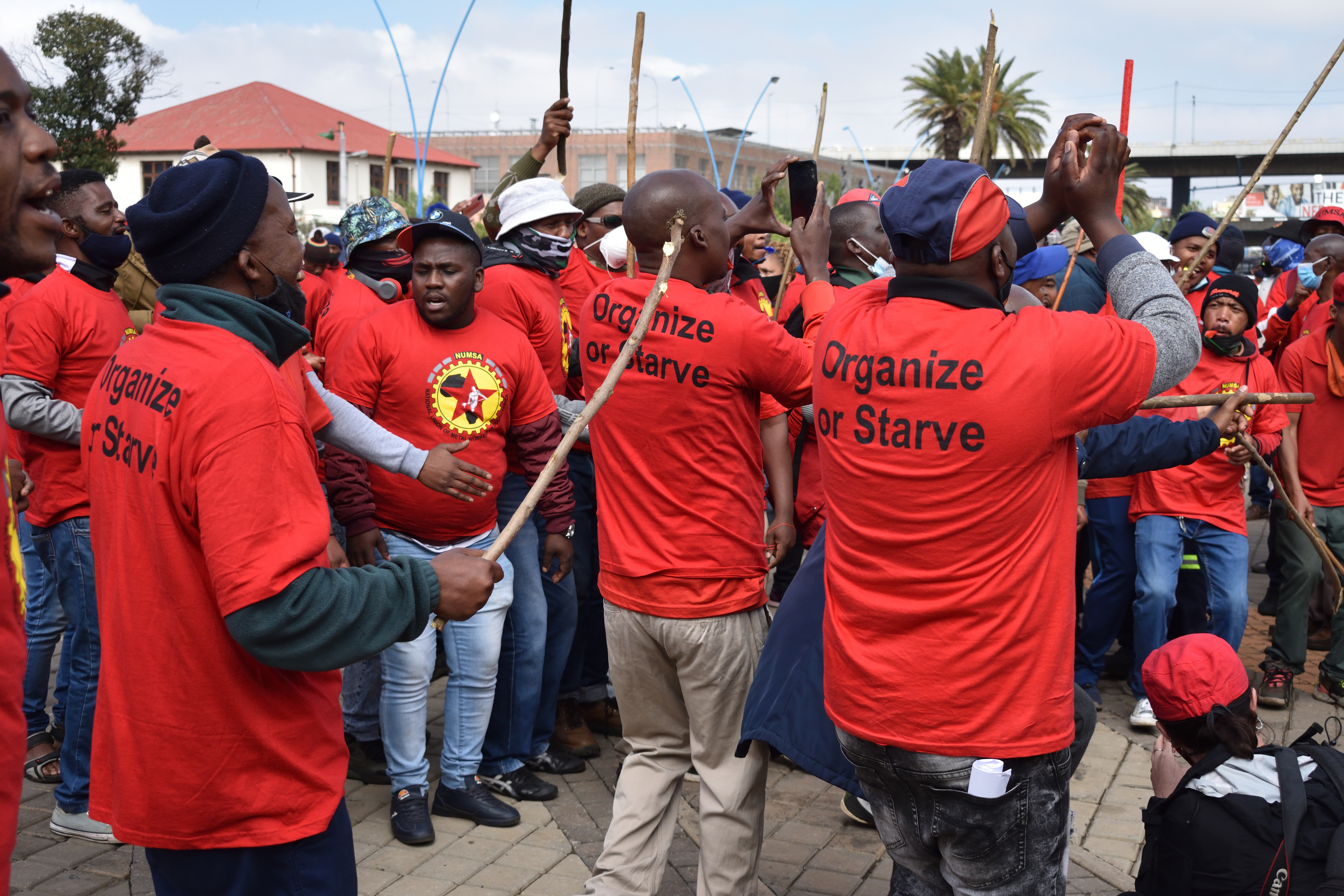
The meeting was chaired by Christine Olivier, sector co-chair and the international secretary of the National Union of Metalworkers of South Africa (NUMSA). Olivier acknowledged that the pandemic had affected the sector, saying that employers had used Covid as an excuse to casualize the workforce.

Ray Curry, the president of the United Autoworkers (UAW), said that strong health and safety agreements meant that during the pandemic, many workers were safer at work than outside. Some auto producers switched production to masks and ventilators.

Industry director Georg Leutert gave an overview of the major challenges facing the sector, and developments since the last major auto meeting in Düren, Germany, in 2019. The merger of PSA and FCA to form Stellantis, the fourth largest automotive group worldwide, has brought on comprehensive global trade union coordination work with the objective of ensuring sound future industrial relations with the company, both at European and at global level.

Leutert also spoke about the importance of the new global agreement on telework with Renault. Leutert said that outsourcing to low-cost countries with poorer working conditions and worse industrial relations is still a major issue in the sector, and gave a number of examples from Serbia, Romania and Turkey.

Rosa Omamo, general secretary of the the Amalgamated Union of Kenya Metal Workers, spoke about how global solidarity could change the situation, giving the example of how the support of the VW works council had ended piece rate work at a Kenyan contract manufacturer.

Christine Olivier explained that a major purpose of the meeting was to explore ways to build union strength across the value chain, with a particular focus on the battery supply chain, which stretches from dangerous, casualized artisanal mining all the way to the highly organized auto manufacturing sector.

IndustriALL Global Union assistant general secretary Atle Høie introduced a project that IndustriALL will conduct, with support from the Friedrich Ebert-Stiftung, on organizing the battery supply chain and making the voice of workers heard in due diligence processes:

“We have affiliates across the supply chain, in mines, chemical processing, battery producing, and in end use, including auto manufacturing. Unions in auto manufacturing are typically strong, with high density and good relationships with the company. In other sectors, less so. How can we use the leverage of the stronger unions to organize and improve conditions across the supply chain?”

Judith Kirton-Darling of IndustriAll Europe spoke about the development of due diligence legislation in Europe, and how this gives momentum to campaigns to clean up supply chains. Dr Fredrik von Bothmer, human rights manager at Daimler, gave a corporate perspective on due diligence, saying that companies are very conscious of three factors: pressure from social partners like unions and NGOs, publicity and media scrutiny, and the possibility of strategic litigation. Clearly defined due diligence legislation helps companies to be able to map their responsibilities.

Georg Leutert said:

“All our affiliates along the supply chains need to get involved in due diligence. IndustriALL will do a mapping exercise to identify the affiliates involved, train them, and assist them in confronting companies about the risks of violations of basic trade union rights in their supply chains.”

South African unions condemn unrest, violence, and looting

Over the last few days, South Africa has been engulfed by what began as protests following the imprisonment of former president Jacob Zuma on contempt of court charges. Zuma was summoned to appear before a judiciary commission of enquiry on state capture and boycotted some of the sessions.

However, amid widespread poverty exacerbated by the pandemic, and the recent withdrawal of a Covid-19 grant, the protests, mainly in Gauteng and KwaZulu-Natal provinces, turned into food riots and general unrest.

This led to the looting of shopping malls, grocery shops, food and industrial warehouses, garment and shoe shops, and furniture stores, among others. Some factories and malls were burnt in the mayhem including a garment factory in KwaZulu-Natal province. 

According to reports, 117 people have been killed and several injured. Some of the rioters have been arrested. The government says it is taking steps to curb further violence by deploying soldiers to the hotspots to assist the police.

Andre Kriel, the general secretary of the Southern African Clothing and Textile Workers Union (SACTWU) says:

“We cannot accept that while, together with national government and employers, we have been working extremely hard to save and create local industrial jobs, the future sustainability of our efforts is being undermined by such horrific and unashamed criminal activity.”

“For example, in Isithebe, a brand-new clothing factory, Kingspark Manufacturers, which was set up only in September last year, has been completely destroyed. Machinery and raw materials have been looted, and nothing remains. In the process, 600 much-needed jobs supporting 3,000 family members in the poorest part of the country are now lost.”

William Mabapa, National Union of Mineworkers, acting general secretary says:

“In the aftermath of this situation many workers will lose their jobs. Many families will be left with no means of earning a living as many shops and trucks are completely burnt and destroyed. The looting of these businesses destroys the working class families' source of earning and sustainability. While we support effective law enforcement, unnecessary deaths resulting from such interventions should be avoided.”

Phakamile Hlubi-Majola, the spokesperson of the National Union of Metalworkers of South Africa adds:

“We are deeply concerned about the acts of criminality and the unrest but believe the uprising was inevitable after two decades of neoliberal capitalism that has caused the crisis of inequality, poverty and unemployment. The working class and the poor have been under pressure for a long time. We need reforms and economic policies that benefit the working class.”

South Africa is one of the most unequal countries in the world, with high wage inequality and the poor having limited access to education and healthcare. Nearly half of the adult population, mostly women, live in poverty. With job losses caused by Covid-19 lockdowns, poverty levels are increasing.

The union federation COSATU yesterday tabled a Disaster Relief Package at Nedlac, South Africa’s tripartite industrial relations council. The federation recognizes that hundreds of thousands of jobs will be lost, and that this represents a “national disaster”.

COSATU is calling for a range of immediate measures, including food parcels, the restoration of the Covid-19 grant, and economic stimulus to help business to recover. The federation is also calling for long term measures to transform the economy.

Paule France Ndessomin, the IndustriALL regional secretary for Sub Saharan Africa says:

“Over many years South Africa has developed social dialogue mechanisms to address social and economic problems. These should be used to diffuse the current tensions, while the government has a responsibility for law enforcement while protecting workers’ and human rights.”

Photo: Community volunteers clean up after rioting, by Athi Geleba

The future is ours; the future is now!

IndustriALL general secretary Valter Sanches opened the forum by saying:

“We have a lot to fight for: an equitable economic recovery, a Just Transition in face of the transformations in the world of work. We cannot face these challenges if we don’t challenge our union structures. We must overcome the compartmentalization of unions by sectors or geographic barriers. We need radical inclusiveness in our unions, we need young people in decision making bodies. If we don’t make these changes, we will never truly represent workers. It’s a matter of survival for unions.” 

A marathon of regional youth meetings took place in June, in preparation for the global forum. The regional reports made it clear that the struggle faced by young workers around the world is the same: precarious work, a lack of representation, discrimination, union irrelevance and the need for capacity building for young activists. Young participants already working in union structures said that tackling these issues is tough – but they are ready to face it head on.

Nassima El Guennouni from Morrocco said:

“Youth are not joining trade unions as much as they should because they fear being laid off by employers. Youth are the leaders of tomorrow. It is important to increase their presence in union structures to guarantee the sustainability of our unions.” 

Romain Decalles from France explained:

“We will have to communicate to young people differently than our older counterparts if we want to include them in the union”

 In Sub Saharan Africa, unions have setup a functioning youth committee. Incoming chairperson Geoffrey Akedi from Kenya said that “We must make sure that we have functioning youth structures in our unions”.

Sweeshta Soomungill from Mauritius gave an overview of how the Sub Saharan Africa youth committee was set up and how they are improving cross-generational cooperation. She explained that “young workers are the future of trade unions, and they can innovate and transform unions to be more relevant entities, in the workplace and beyond”. 

A session around social movements such as feminist movements, Black Lives Matter, Asian Lives Matter and LGBTQA+ opened the discussion about how unions can be true allies not only by standing in solidarity but also by genuinely transforming to ensure that we do not perpetuate discrimination in our own structures.

 The pañuelo verde (green scarf) has become the defining symbol of contemporary Latin American reproductive rights activism. Yamila Picasso, from the National Campaign for the Right to Legal, Safe and Free Abortion in Argentina explained how this campaign was used as a tool for political transformation.

The campaign had three main strategies: drafting a bill; protests by taking over public space; and solid communications. Members focused on one objective, and despite coming from different groups, this fostered unity. The struggle lasted 15 years but finally, last year the bill was passed.

Participants recognized that these social movements are fluid, inclusive, and they recognize one another, but most importantly, they are driven by young people. Because unions are very bureaucratic, the synergies are more difficult, which is why unions need more diversity.

For this reason, they need more young people to make them more relevant.

Participants were encouraged to join the congress as delegates or observers and finalized their youth resolution to be submitted to IndustriALL’s Congress in September. The resolution deals with issues such as organizing campaigns, union education and a fair representation for youth, among other topics.

Bangladesh factory fire deaths demonstrate need for new Accord

A fire broke out on the evening of Thursday, 8 July, in a seven-story building where fruit drinks, packing material and plastic packaging are made. An estimated 200 workers were in the building. At least 49 workers burned to death on the third floor. Three others died jumping from the building, and 25 workers were rescued from the roof. Relatives allege that the only exit to the factory was locked.

At least 16 children are missing. There are allegations that children as young as 11 were working in the factory.

IndustriALL Global Union general secretary Valter Sanches said:

“The combination of child labour and workers locked into an unsafe factory has led to a particularly heartbreaking and distressing result. This horrific case of industrial homicide brings home to us the barbaric conditions and complete lack of safety in some Bangladeshi factories.

“The factory owner has reportedly been arrested, and relatives will receive compensation. But the focus of the Bangladesh government on punishment and compensation will not bring back the lives that have been lost.

“So much progress has been made over the years in terms of safety in the textile and garment sector in Bangladesh thanks to the Accord on Fire and Building Safety. This must be ensured into the future through a successor legally binding agreement between the brands sourcing from Bangladesh and the trade unions.”

UNI Global Union general secretary Christy Hoffman said:

“Eight years after Rana Plaza, this shocking and needless tragedy shows that deadly working conditions in Bangladeshi factories persist. While huge strides have been made in garment industry safety – thanks to the Bangladesh Accord – it is a reminder that without robust and independent systems to enforce safe working conditions, the very worst can happen.

“A locked fire exit is a disaster waiting to happen and we cannot afford to be complacent. We must continue to push for credible and enforceable commitments from companies sourcing in Bangladesh – workers’ lives depend upon it.”

Bangladesh has a long history of fatal factory accidents, mostly in the country’s large garment sector. In November 2012, 112 workers died in the Tazreen Fashions fire after being locked in the building. In April 2013, 1,133 people were killed when the Rana Plaza factory complex collapsed.

The Bangladesh Accord on Fire and Building Safety was created soon after to create a working environment where accidents can be prevented with reasonable health and safety measures.

The Accord is an independent, legally binding agreement between fashion brands sourcing from Bangladesh and trade unions to work towards a safe garment and textile industry.

The Accord is time limited, and a successor agreement is currently being negotiated. Since 2020, safety in the sector has been coordinated by a local tripartite body, the Ready-Made Garments Sustainability Council (RSC). However, the RSC can only be successful as long as the brands are bound by their commitment to the unions through a health and safety agreement that is currently being negotiated as a successor of the Accord. The local manufacturing industry must live up to the standards established by the Accord.

120 brands have signed an agreement to extend the mandate of the Accord. The collective power of the brands and the unions puts tremendous pressure on the Bangladeshi government and on local factory owners to take safety seriously.

Although the Accord only covers the garment industry, it sets an important precedent for factory safety.

Photo: © Parvez Ahmad Rony. Grief-stricken family members at Hashem Foods.

Organizing along the battery supply chain

On 28 and 29 June, IndustriALL affiliates participated in a workshop to discuss the next steps in developing a strategy on battery supply chains.

“We need to use our leverage along the battery supply chain, which starts in the mines, goes through chemical industry with the refineries, the packing of batteries, into end use,”

said IndustriALL assistant general secretary Atle Høie.

“We need to use our influence in the best way we can, and we need the active involvement of our affiliates.”

With the demand for electric cars rapidly increasing, the project will focus on the auto industry. The level of organized workers is high at many auto manufacturers, but it decreases along the supply, the further you get from the end product. IndustriALL’s global networks will be central to the work, with increased cooperation between the different sectorial networks along the supply chain.

Legislation plays an important role and new due diligence laws have been introduced in some European countries. The laws provide increased transparency for governments and the general public and gives space for raising the voice of workers. The OECD’s due diligence guidelines and principles are important for leveraging in the supply chain. Participants from Belgium told the meeting that their union has started training members on due diligence to fully benefit from what due diligence brings.

Following the battery supply chain starting with the mining of the raw material for batteries underground, the number of working women increases as it goes above ground. Trade unions have a key role to play to ensure that gender issues, including gender-based violence, are explicitly investigated in due diligence processes, and that they are addressed by companies.

The two-day meeting was an important step in preparing for the start of an FES-funded project on the battery supply chain. It is a pilot project where IndustriALL will collaborate with companies, NGOs and other stakeholders to strengthen trade union work. The battery supply chain is the fastest growing supply chain with demand outgrowing supply, and the project aims to understand how it works, to increase organizing, and to improve working conditions along it.

“There is a strong political will to push for batteries and the value of the battery supply chain is enormous. To distribute this value, we need a supply chain policy to tell the world what is happening. For this project to be successful, we need or affiliates to be involved, to help us map the supply chain and use the leverage we have along it,”

said Atle Høie.