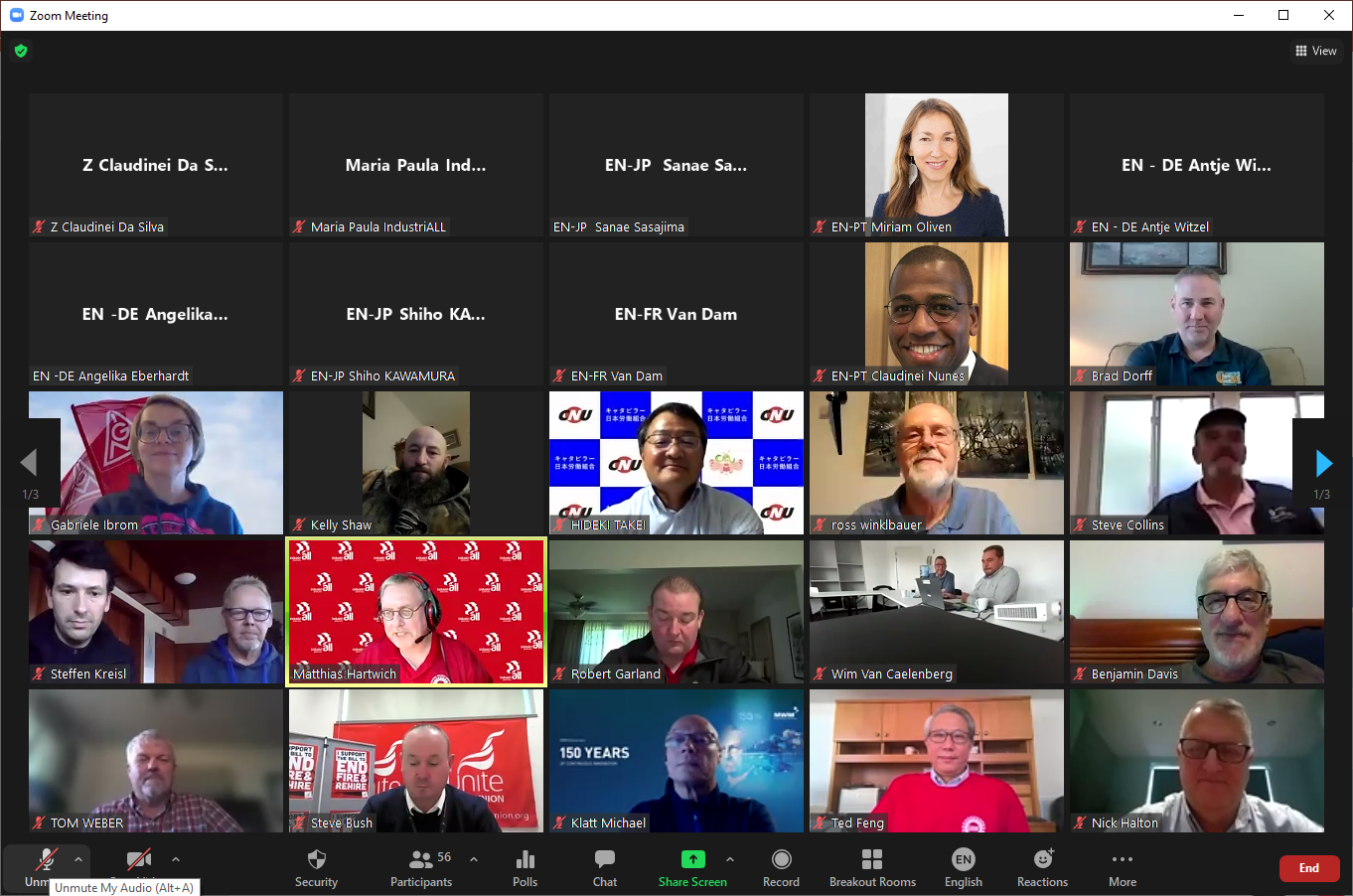
Workers call for solutions after DOW announces plant closure in Argentina

Once the plant in Puerto General San Martín, Argentina, is closed, DOW will supply the whole of South America from its factory in Brazil. The multinational says that the decision has nothing to do with the economic crisis – the factory is a success, turns a profit and plays a key role in the country's economy. The firm's move is part of a global restructuring affecting factories in other countries as well.

After the shutdown was announced, the San Lorenzo General Workers’ Union (CGT) expressed its support for the SOEPU union of petrochemicals workers at DOW and said that it was ready to take action. The unions are calling for a dialogue in order to find a solution and intend to exhaust all possible avenues for negotiation.

"The CGT stands ready to help the union and is prepared to take any regional measures necessary,"

said Jesús Monzón, CGT's general secretary.

DOW has been reluctant to negotiate and intends to lay off the workers and shut down the factory. It would appear that DOW wants to maintain its monopoly and control over prices and is not prepared to negotiate with a potential competitor.

After a press conference at the San Lorenzo CGT headquarters, Mauricio Brizuela, SOEPU's secretary general, said:

"We want the plant will be declared a public utility, and we will keep campaigning if DOW doesn’t come up with a solution."

The workers want to keep their jobs and are calling for other companies to take over the running of the factory. Several companies have come forward and said that they would like to keep the factory running, like Petroquímica Río Tercero, part of the Piero Group producing related products. Some mattress producers have also shown interest.

Tom Grinter, director of chemicals and pharmaceuticals, pulp and paper, and rubber industries at IndustriALL, said:

"The SOEPU union at DOW is a key component of the international network of DOW and Du Pont unions. The network, which is run by USW, has the full support of IndustriALL Global Union. We stand firmly with our friends as they fight to keep the factory open."

IndustriALL Global Union condemns arrest of KCTU president YANG Kyeung-soo and demands his immediate release

An arrest warrant had been issued 20 days earlier by the Seoul Central District Court for organizing a rally, allegedly violating the Criminal Act provisions against general obstruction of traffic, the Assembly and Demonstration Act and the Act on Infectious Disease Control and Prevention.

IndustriALL Global Union vehemently condemns the arrest and considers it an outrageous, unacceptable attack on fundamental workers’ rights to freedom of association and peaceful assembly.

IndustriALL joins the International Trade Union Confederation in labelling the arrest warrant “wrong and disproportionate”, as participants observed social distancing rules and necessary precautions to prevent the spread of Covid-19, including wearing of masks and temperature checks.

IndustriALL Global Union demands that YANG Kyeung-soo is immediately released and that the Korean government stop using the pandemic as an excuse to crack down on the democratic union movement.

IndustriALL expresses its solidarity with KCTU.

Chinese smart phone producer violates workers’ rights in Turkey

Salcomp produces smart phones for Chinese Xiaomi, the second largest smartphone maker in the world. Salcomp was acquired by Chinese Lingyi ITech in 2019, but is headquartered in Finland with a production site in Turkey. There are around 800 workers on the site in Istanbul, with plans to increase the workforce to 2,000.

Working conditions at the Salcomp Turkey plant in Istanbul are untenable. During the pandemic, workers were forced to work eleven hours per day, although their contracts say eight hours. Overtime was imposed without workers’ consent and only partly paid. Breaks could only be taken at the managers’ discretion and since there was no canteen, workers had to eat in containers for a while. Many workers have been infected with Corona.

As a large part of the workers decided to join IndustriALL affiliate, Turkish Metalworkers’ Union (Türk Metal), Salcomp management launched a union busting campaign. Workers were intimidated, threatened and nine union members were dismissed, allegedly over a decline in performance.

However, it is clear to the workers and the union that the dismissals were done to scare off others from joining Türk Metal.

Salcomp management summoned workers to say that “union members have to resign from their affiliation with Türk Metal”, and that “the company will make the necessary improvements in their wages and working conditions”.


 Management surrounded the factory with wire mesh to prevent any demonstrations. Workers are banned from using use their mobile phones, cutting off their communication with other workers.
 
Although the Turkish constitution rules that “workers have the right to form and join a union of their choice, and no one should be forced to withdraw from membership”, the reality is very different.
 
Earlier this year, company management proposed to provide shelters for workers to sleep in, to save time on transport. Dormitories in the workplace is a well-known concept for workers in Turkey.

IndustriALL assistant general secretary Kemal Özkan says:

“It is wholly unacceptable to treat workers like this in the 21st century with low wages, bad working conditions and union busting union. We urge Salcomp to immediately reinstate the dismissed union members and engage in good faith negotiations with Türk Metal, and we urge Xiaomi to assume its responsibilities and put an end to the exploitation.

"Chinese companies must learn to treat workers with dignity."

Xiaomi is a multinational electronics company founded in April 2010 and headquartered in Beijing. Xiaomi makes a wide range of electronics products, such as smartphones, laptops, home appliances, and consumer electronics.

Zimbabwean unions campaign against Covid-19 vaccine hesitancy

The unions announced their plans during an online health and safety meeting on 20 August. Several topics and questions were discussed during the meeting, including whether it is lawful for the employer to ask workers to produce vaccination certificates or negative Covid-19 test results taken in the last 24 hours as a condition for reporting for work. Health and safety rights that workers enjoyed during a global pandemic were discussed with reference to Zimbabwean labour laws and international labour standards.

The unions raised the issues as a response to a recent trend in which employers in the country were demanding vaccination cards, or negative Covid-19 test results when workers reported for work. This began after the government announcement that although workers will not be forced to vaccinate, those who chose not to will not be offered jobs, will be banned from commuting on public buses, and be excluded from Covid-19 benefits. However, unions say the employers must engage workers through social dialogue platforms and consult with unions to address vaccine hesitancy before issuing the notices.

As a response to the employers’ notices, the Zimbabwe Congress of Trade Unions has gone to court to challenge actions by state-owned telecommunications company TelOne which wrote to workers informing them that the unvaccinated would no longer receive Covid-19 allowances and be required to take immediate leave.

“Whilst workers have mixed emotions on Covid-19 vaccination, employers on the other hand must ensure the health and safety and well-being of workers. However, it seems information gaps are negatively impacting on the uptake of vaccines but slowly some workers are beginning to see the benefits after vaccination. As unions we are emphasizing that workers should be given enough information to convince them to agree to vaccination,”

says Eustace Chidhindi, the affiliates' occupational health and safety coordinator.

“It has been proven that vaccines can stop severe disease and death when one becomes infected with the coronavirus and encourage Zimbabwean workers to get vaccinated. Further, we urge workplace cooperation between unions and employers, and social dialogue on Covid-19 prevention and workers health and safety,”

says Paule France Ndessomin, IndustriALL regional secretary for Sub Saharan Africa.

According to the Ministry of Health and Childcare, the country has procured 13 million vaccines and vaccinated 2,582,705 people (single dose) and 1,636,498 (double dose) using mainly the Sinopharm vaccine from China. Current cumulative confirmed positive cases on 31 August were 124,773 with 4,419 deaths and 113,057 recoveries. The ministry says to reach population immunity 10 million people must be vaccinated.

IndustriALL affiliates in Zimbabwe are National Union of Metal and Allied Industries of Zimbabwe (NUMAIZ), National Union of the Clothing Industry (NUCI), the Zimbabwe Chemical, Plastics and Allied Workers Union (ZCPAWU), Zimbabwe Diamond and Allied Minerals Workers Union (ZDAMWU), Zimbabwe Energy Workers Union (ZEWU), Zimbabwe Leather, Shoe and Allied Workers Union (ZLSAWU), and the Zimbabwe Textile Workers Union (ZTWU).

Independent union next for workers at General Motors' Silao plant

In a historic vote on 17 and 18 August, workers rejected the current collective bargaining agreement, controlled by the corrupt Miguel Trujillo López union, affiliated to the Confederation of Mexican Workers (CTM).

An alternative, independent and legitimate union has been created, backed by the "Generando Movimiento" collective, run by current and former GM workers and who has been the subject of reprisals by the company over the past two years. The aim is to build a representative union ready to engage in dialogue with the company to safeguard workers' rights.

At the press conference, SINTTIA general secretary María Alejandra Morales, who has worked at GM for eleven years, said that the new union has been officially approved by and registered with Mexico's labour ministry:

"In the end, we spoke up. Our workers stand united and are ready to fight for their rights and overthrow the CTM, which does not protect them or do anything to improve the benefits they receive."

SINTTIA's legal advisor, Patricia Juan Pineda, said that on 17 September the labour ministry should declare CTM's collective employment agreement null and void. After that, SINTTIA will take steps to bring in a new agreement and would call a strike demanding that GM sign the new deal, adding that:

"Calling a strike does not mean that a strike will actually happen. A timeline will be set out, providing plenty of time for talks with the company to take place first."

IndustriALL Global Union's regional secretary, Marino Vani, said:

"When workers are unified and take action together, and when they support their leaders, they can ensure respect and dignity at work. SINTTIA is the way to create a dignified workplace – only through an organized campaign can you gain momentum and secure the collective agreement you deserve."

Sierra Leone ratification of ILO instruments is opportunity to transform industrial relations, says union

ILO general secretary Guy Ryder at the signing. Photo: ILO

The ILO says the ratifications of eight conventions and a protocol, which took place on 25 August, were unprecedented. The eight conventions are the Migration for Employment Convention (Revised, 1949) (C97), Migrant Workers (Supplementary Provisions) Convention, 1975 (C143), Occupational Safety and Health Convention, 1981 (C155), Labour Statistics Convention (C160), Private Employment Agencies Convention, 1997 (C181)Promotional Framework for Occupational Safety and Health Convention, 2006 (C187) and Domestic Workers Convention, 2011 (C189).

The conventions are aimed at addressing the decent work deficit common among workers in the country, including for migrant workers, and improving working conditions for precarious workers who have no job security and are poorly paid. In most instances, precarious workers are employed through third parties such as private employment agencies who often exploit them and violate their rights. The conventions include those on occupational health and safety, which has been worsened by the Covid-19 pandemic.

The 2014 protocol to the forced labour convention 1930 was also ratified. This is important for ending human trafficking of migrant workers and women in the country and abroad. Forced labour has been reported in the country involving migrant workers, while thousands of Sierra Leoneans have been victims of slavery in other West African countries, Libya, and the Middle East.

Muluku Tarawally, general secretary of ASGEmU says:

“This is one of the best things that has happened for the workers of Sierra Leone in a long time. It is an opportunity to complete the labour law review activities in which unions are participating. Additionally, the ratification of the conventions strengthens union demands for the inclusion of all ratified conventions into national labour laws. It is important that government is backing the adoption of international labour standards, and this shows that it is committed.”

Paule France Ndessomin, IndustriALL regional secretary for Sub Saharan Africa says:

“The ratification of the nine instruments shows the power of social dialogue in which unions and the government show commitment towards decent work. This ensures the protection of workers’ rights and better working conditions for workers through national laws and international labour standards. It is important that unions are not only supporting but are also taking part in the domestication of the conventions into national labour laws.”

IndustriALL calls on Thai government to stop persecuting union leader

Irregularities in Thailand’s general election in 2019, and the subsequent forced dissolution of an opposition party by the constitutional court, resulted in mass protests. The ensuing youth uprising in Mid-2020 drew international attention to the pro-democracy movement in the country.

The four labour activists were summoned by the police for speaking at rallies organized by the student movements between February and August this year. They are associated with the Labour Network for People's Rights, a network formed in 2020 to demand that the Thai government stops harassing people participating in pro-democracy protests, dissolves parliament, starts drafting a new constitution, and institutionalizes a comprehensive welfare scheme to reduce class inequality.

The labour network has also joined students in criticizing the government for mismanaging the Covid-19 pandemic and delaying the distribution of vaccines to the people.

Together with its affiliate, IndustriALL Global Union and the Confederation of Industrial Labour of Thailand (CILT) calls on Prime Minister Prayuth Chan-o-cha to stop persecuting labour activists participating in pro-democracy protests.

Prasit Prasopsuk, CILT president says:

“We condemn the government for using laws to attack labour leaders’ democratic rights. It is unacceptable that the government suppresses workers’ freedom of expression, especially the failure in managing the Covid-19 and delaying the vaccinations that has caused a large number of deaths. The harassment must end immediately.”

In a letter to the Prime Minister and Minister of Labour, IndustriALL general secretary Valter Sanches says:

“The Emergency Decree and the Disease Control Act are being misused to suppress people participating in pro-democracy rallies. IndustriALL calls on the government of Thailand to guarantee the right of people to participate in peaceful demonstrations, enshrined in the Universal Declaration of Human Rights, and respect of international core labour standards.”

International Safety Accord begins with 91 garment brands and retailers

The garment brands and retailers that have signed the International Accord commit to support the independent RSC, which has already undertaken health and safety related programmes in Bangladesh; the brands and retailers further commit to the global expansion of additional country-specific health and safety programs based on the principles of the 2013 and 2018 Accord agreements and on feasibility studies. The new agreement will be implemented through the International Accord Foundation in the Netherlands.*
 
On 25 August 2021, a group of representatives of international garment retailers and the global trade unions IndustriALL Global Union and UNI Global Union announced their agreement on a new, expanded worker safety pact. Since then, 91 brands have signed the new agreement and are therefore part of the first wave of companies that commit to continue and expand their collective efforts with the trade unions to make garment factories safe.

“It is encouraging to see the large number of brands that have already signed on to the International Accord, taking responsibility for a safe and sustainable garment and textile industry. From these first 91 signatories there is already a major coverage of the sector. But we call on all textile and garment brands to take responsibility for their supply chain and to the expanded International Accord,”

says IndustriALL general secretary Valter Sanches.
 
Please see here a list of all garment and textile companies that have signed the International Accord.

* The Foundation based in the Netherlands is currently named the Stichting Bangladesh Accord Foundation and will be renamed Stichting International Accord Foundation.

UPDATE: This article was updated on 2 September to reflect the growing number of signatories. At the time it was first published, 77 brands had signed.

IndustriALL and Daimler sign innovative global agreement

The renewed agreement, ‘Principles of Social Responsibility and Human Rights’, was signed by Daimler corporate management, the Daimler World Employee Committee and IndustriALL Global Union on 1 September.

Key aspects of the agreement include:

Valter Sanches, a former Daimler worker who also served on the World Employee Committee (WEC) and on  Daimler supervisory board, says:

“I am particularly grateful that we have renewed this agreement with improvements, as I participated as WEC member in negotiations of the original GFA, signed in 2002 with the International Metalworkers Federation. Daimler was among the pioneering companies to sign a GFA. The agreement contains a number of innovative points, like on the role and the protection of human rights defenders and whistleblowers, as well as the importance of data protection and the use of artificial intelligence, underlining that the digital world has to remain under human control. It has also a strong language related to business partners and suppliers to follow the same principles.

“The commitment to training and lifelong learning is key to prevent the risk that a significant number of workers are left behind as the automotive industry is going through a profound transformation. The agreement sets a playfield for unions and management to promote a Just Transition to ensure that there is a fair chance for everybody to manage the challenges of today and of tomorrow.”

IndustriALL supports campaign for comprehensive economic sanctions against Myanmar junta

The announcement was made during a webinar on the “Campaign for comprehensive economic sanctions against Myanmar’s military junta” on 27 August, bringing together trade union leaders, civil society and brand representatives from around the world.

Myanmar’s labour movement says there is no ethical way to do business in the country and is calling for comprehensive sanctions, and for companies – including fashion brands – to divest and cease their operations in Myanmar.

Since the military coup in February, thousands of workers have been arrested, over 950 people have been killed, and the uncontrolled spread of Covid-19 left 1,500 bodies in Yangon in one day alone in July. Under the military regime, workers in Myanmar are denied the right to freedom of association, health and safety and freedom of speech.

Representatives of the Myanmar Labour Alliance, Khaing Zar, Moe Sandar Myint and Nandar Sit Aung, exposed severe violations of workers’ rights in Myanmar: trade unionists have been dismissed when employers have collaborated with the authorities, collective agreements have not been respected, and Covid-19 protocols not followed.

Valter Sanches, IndustriALL general secretary, said:

“The situation in Myanmar is certainly not a normal situation; people are killed and tortured, workers cannot go to work due to repression. How can workers’ rights be protected in that kind of extreme situation?

“That is why we support the campaign calling for comprehensive economic sanctions, spearheaded by our affiliate Industrial Workers’ Federation of Myanmar (IWFM), our partners Confederation of Trade Unions of Myanmar (CTUM) and the Myanmar Labour Alliance. Economic sanctions proved to be effective in ending apartheid in South Africa and could be so in Myanmar.”

IndustriALL textile and garment sector director Christina Hajagos-Clausen stressed the importance of maintaining a dialogue with brands sourcing from Myanmar on human rights violations, due diligence and how to withdraw orders responsibly.

Sharan Burrow, International Trade Union Confederation (ITUC) general secretary, said:

“You are not alone in the fight for democracy in Myanmar. Global union federations are organizing a global day of action on 15 September to demand the restoration of the civilian government in Myanmar. The ITUC supports the campaign for comprehensive sanctions and will take solidarity action to demand that banks to stop international transfers to Myanmar.”

What can you do?

  • Call on brands and multinational companies to cease business operations and stop placing new orders in Myanmar
  • Organize demonstrations or press conferences at the offices of multinational companies with a presence in Myanmar
  • Take photos with a solidarity message and share on social media with the hashtag #Workers4Myanmar
  • Hand over memoranda to ASEAN embassies in your country to put pressure on multinationals
  • Reach out to media to highlight the campaign and the plight of Myanmar workers