Launch of initiative for a Just Transition in the energy sector

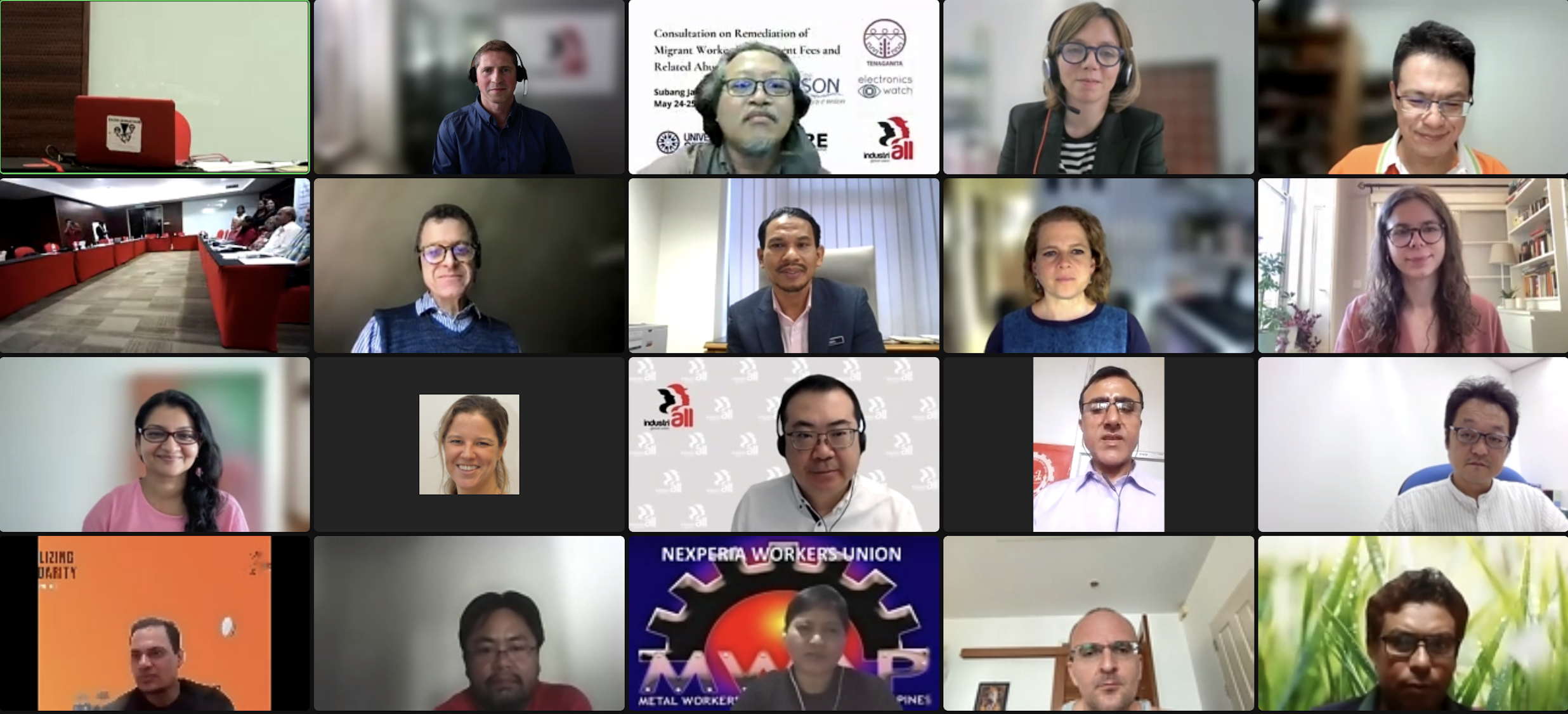
121 participants from unions in 32 countries exchanged information at the launch of the Initiative for a Just Transition in the energy sector. Unions expressed strong support for this initiative, seeing it as timely and important to address concerns about progress on a Just Transition in different countries and the lack of union involvement.  

“We need a strong labour movement, if we can’t manage a Just Transition, then we leave workers stranded. There is a timeframe on which the Earth will not repair itself for a stable future if we don't transition. 

“On the other hand, there are good jobs in energy sources beyond fossil fuel, and we need to organize them. We know that investment in climate action brings jobs, but we need to make sure they're good jobs. And that means organizing,”

said ITUC General Secretary Sharan Burrow.

The energy sector plays a critical role in national and regional economies. National and international energy companies have provided millions of organized direct jobs in the past. Energy sector revenues are key for state, regional and national budgets. 

LO Norway President Peggy Hessen Folsvik explained that in Norway, the petroleum industry has been one of the most important industries for the past 50 years. It accounts for 22 per cent of the state income and employs over 220,000 workers.

“Transitions will be challenging, but not impossible.

“Our trade unions support the Paris Agreement, and we understand that jobs might shift sooner rather than later. It is an important task to ensure a Just Transition for the workers in this sector,”

Folsvik continued.

Political conflicts, growing instability, strategic competition, and security threats have made many countries reassess their energy systems; from importing fossil fuels to speeding up the buildout of all forms of clean energy. Energy security is a critical issue that, combined with climate concerns, is accelerating efforts to develop clean energy with secure and domestic supply chains. 

Large countries have plans to invest in clean energy transition technologies, but unions argued that there is no guarantee that a move to these technologies will keep and create good jobs.  

Participants also made it clear that companies are investing in energy transition unilaterally; workers are left out of the process; and companies are not investing enough to accomplish the commitment set by the Paris Agreement.

Trade unions are not satisfied with efforts by the energy companies so far. Existing collective bargaining, climate target-setting, and responsible business initiatives are not getting enough results in the sector. 

Today’s launch includes two initiatives; the first one will look at technologies and country examples to get the facts on jobs. Unions and experts will share information on jobs, skills, markets, investments, and emissions for technologies such as hydrogen, CCS, offshore wind and other renewables, alternative fuels, and energy services. 

With the second initiative, the ITUC, LO Norway and IndustriALL plan to explore the potential for a new, tripartite process anchored in the UN and focused on Just Transition in the energy sector, starting with oil and gas. The initiative would help get and enforce global decent jobs and Just Transition agreements between oil and gas companies and trade unions. If successful, global unions plan to expand to include other energy and industrial companies. 

“One of the aims of the partnership launched today is to develop Just Transition agreements with multinational corporations under the auspices of the United Nations. These can become powerful tools for energy workers of the world. Trade unions need a seat at the table and society should recognize the need for trade unions at this table. I really look forward to seeing how far this initiative can take us,”

said Atle Høie, IndustriALL general secretary.

Workers at Natura Brazil call for better working conditions

Workers at Brazil’s largest cosmetics multinational, Natura, presented the company with a list of demands for better working conditions and asked for a meeting to discuss them. In the absence of a response from the management, the union staged a protest outside the company on 25 March.

Following this action, Natura agreed to negotiate with the union on 29 March. During the meeting, the workers also explained that, following the dismissal of numerous workers over the past year, the remaining employees were having to overstretch themselves to meet the targets and felt that the company should pay them the amounts owed in profit sharing.

Natura worker and union leader, Ivani Souza, said:

“The work pressure has increased, but there are fewer people working, and we end up paying the price. The workload is excessive and many workers suffer injuries. That’s why we’re asking for decent pay and conditions.”

After a 4-hour meeting, Natura agreed to take measures to improve working conditions by solving some of the problems in the factory. The points discussed included:
•    a change of health provider
•    the provision of appropriate work gear for each task
•    improving the quality of the food
•    reducing occupational hazards linked to heat stress as a result of exposure to excessive heat or cold

In relation to the request for profit sharing payments and the hiring of personnel for the production lines, the company proposed another meeting for 8 April, at which it intends to present a financial counteroffer.

“There is no doubt that the pressure placed on Natura has borne fruit. Still, this is not the time to sit back and let the company act in its own interests. We have to be vigilant and organised, to assess what solutions the company presents at the meeting on 8 April and to make sure that they are not simply buying time so that the workers feel threatened and give up their fight,”

said the union in an official communiqué.

IndustriALL’s regional secretary, Marino Vani, concluded:

“We congratulate the Químicos Unificados union for fighting for better working conditions. We hope that Natura will honour its commitment and present a proposal in line with the workers’ needs at the meeting on 8 April.

"We will keep track of the developments and continue to stand in solidarity with the workers, the union, its federation and our affiliate, CNQ/CUT, which is also supporting this struggle.”

Les travailleurs et travailleuses de Natura Brasil réclament de meilleures conditions de travail

Le Syndicat unifié de la chimie, qui représente les travailleurs de Natura Brasil, a mis les activités à l’arrêt pour réclamer de meilleures conditions de travail. À la suite de cette action, l’entreprise a accepté de rencontrer le syndicat et d’améliorer la situation dans l’usine.

Les travailleurs et travailleuses de la plus grande multinationale de cosmétiques du Brésil, Natura, ont présenté à l’entreprise un cahier de revendications pour de meilleures conditions de travail et ont sollicité une réunion pour en discuter. En l’absence de réponse de la part de la direction, le syndicat a organisé une manifestation devant l’entreprise le 25 mars.

À la suite à cette action, Natura a accepté de négocier avec le syndicat le 29 mars. Au cours de la réunion, les travailleurs et travailleuses ont également expliqué que, suite au licenciement de nombreuses personnes au cours de l’année écoulée, les salariés restants devaient se démener pour atteindre les objectifs et estimaient que l’entreprise devait leur verser les montants dus au titre de la participation aux bénéfices.

Ivani Souza, travailleur de Natura et dirigeant syndical, a déclaré :

“La pression subie au plan professionnel a augmenté, mais il y a moins de personnes qui travaillent et nous finissons par en payer le prix. La charge de travail est excessive et de nombreux travailleurs et travailleuses se blessent. C’est pourquoi nous demandons des salaires et des conditions décentes.”

À l’issue d’une réunion de 4 heures, Natura a accepté de prendre des mesures pour améliorer les conditions de travail en résolvant certains des problèmes de l’usine. Les points abordés comprenaient :

En ce qui concerne la demande d’intéressement aux bénéfices et l’embauche de personnel pour les lignes de production, la société a proposé une autre réunion pour le 8 avril, au cours de laquelle elle a l’intention de présenter une contre-proposition de nature financière.

“Il ne fait aucun doute que la pression exercée sur Natura a porté ses fruits. Mais ce n’est pas le moment de rester les bras croisés et de laisser l’entreprise agir dans son unique intérêt. Nous devons être vigilants et organisés, évaluer les solutions que l’entreprise présentera lors de la réunion du 8 avril et nous assurer qu’elle ne fait pas que gagner du temps pour que les travailleurs et travailleuses se sentent en danger et abandonnent leur lutte,”

a déclaré le syndicat dans un communiqué officiel.

Le Secrétaire régional d’IndustriALL, Marino Vani, a conclu :

“Nous félicitons le Syndicat unifié de la chimie pour sa lutte en faveur de meilleures conditions de travail. Nous espérons que Natura honorera ses engagements et présentera une proposition conforme aux besoins des travailleurs et travailleuses lors de la réunion du 8 avril.

Nous suivrons l’évolution de la situation et resterons solidaires des travailleurs et travailleuses, du syndicat, de sa fédération et de notre affilié, la CNQ/CUT, qui soutient également cette lutte.”

Работники Natura Brazil требуют улучшить условия труда

Работники крупнейшей бразильской косметической компании Natura представили компании список требований об улучшении условий труда и попросили назначить встречу для их обсуждения. Не получив ответа от руководства, 25 марта профсоюз организовал акцию протеста возле офиса компании.

После этой акции компания Natura согласилась провести переговоры с профсоюзом 29 марта. Во время встречи представители профсоюза объяснили, что после того, как за последний год была уволена значительная часть работников, оставшимся приходится гораздо больше трудиться, чтобы выполнить поставленные задачи. Поэтому работники считают, что компания должна выплатить причитающуюся им часть прибыли в дополнение к зарплате.

Работница Natura и профсоюзный лидер Ивани Соуза сказала:

“Рабочая нагрузка увеличилась, а работников стало меньше, и в итоге расплачиваемся мы. Чрезмерная нагрузка причиняет вред здоровью работников. Вот почему мы требуем достойной оплаты и условий труда”.

После 4-часовых переговоров Natura согласилась принять меры по улучшению условий труда, решив некоторые проблемы на фабрике. Стороны обсудили следующие вопросы:

Что касается требования об участии в прибыли предприятия и найма персонала на производственные линии, компания предложила провести еще одну встречу 8 апреля, на которой она намерена сделать финансовое контрпредложение.

“Нет сомнений, что давление, оказанное на Natura, принесло свои плоды. Тем не менее, сейчас не время сидеть сложа руки и позволять компании действовать в своих интересах. Мы должны быть бдительными и организованными, оценить, какие решения предложит компания на встрече 8 апреля, и убедиться, что они не просто выигрывают время, чтобы рабочие почувствовали угрозу и отказались от борьбы”,

– заявил профсоюз в официальном коммюнике.

Региональный секретарь IndustriALL Марино Вани заключил:

“Мы поздравляем профсоюз Químicos Unificados, борющийся за улучшение условий труда. Мы надеемся, что Natura выполнит свое обязательство и представит на встрече 8 апреля предложение, удовлетворяющее нужды работников”.

“Мы будем следить за развитием событий и продолжать проявлять солидарность с рабочими, профсоюзом, его федерацией и нашей членской организацией CNQ/CUT, поддерживающей эту борьбу”.

Indonesia: eleven mine workers injured in accident

Following an initial investigation by IndustriALL affiliate Federation of Indonesian Metal Workers' Union (FSPMI), the cause of the accident is believed to be brake failure. The dumping truck driver lost control and crashed into two other dumping trucks.

During the investigation, mine workers at PT IWIP said the company forced drivers to meet high targets or they would be punished. It is believed that the dumping truck was at full speed when the accident happened; the hasty and profit-oriented culture has led to preventable equipment failure and accidents.

FSPMI is demanding that PT IWIP take full responsibility for the accident and make adequate compensations to the injured workers. The union is urging the company to provide health and safety training for all mine workers and conduct regular inspection on machinery and equipment. The Occupational Safety and Health (OSH) committee must also function effectively to avoid future accidents.

“This is not the first workplace accident at PT IWIP; last year a worker died in an accident. The negligence of the company and the ineffective OSH committee are causing repetitive accidents. We call on the local government to strengthen supervision – human lives cannot be revived,”

says FSPMI president Riden Hatam Aziz.

“CEMWU regrets the accident and urges the company to treat the injured in accordance to the law. The company should cooperate with trade unions to increase awareness on occupational health and safety for zero accidents in the future,”

says Chemical, Energy and Mines Workers Union (CEMWU SPSI) president R. Abdullah.

Four of the eleven workers were seriously injured, and all were immediately hospitalized.

IndustriALL mining and health and safety director Glen Mpufane says:

"PT Weda Bay Nickel must understand that the low carbon energy transition does not need critical raw materials that are dropping with bloods from the death and injuries of mineworkers. It must ensure that the critical minerals they produce are clean and part of ensuring that is to ensure respect for health and safety of their workers."

Currently, approximately 29,000 workers are employed by 3 major companies and 15 subcontracting companies at the industrial park.
 
PT Weda Bay Nickel targets to produce 30,000 tonne Nickel per year. PT Yashi Indonesia builds ferronickel smelters for the industrial park, while PT Youshan Nickel Indonesia is a battery component manufacturer for electric cars

Women mine workers share traumatic experiences on sexual harassment

Some participants at the gender-based violence and harassment (GBVH) workshop, which is part of IndustriALL Global Union’s training to implement Convention 190 on eliminating violence and harassment in the world of work, shared touching stories of attempted rape and sexual harassment in Sub Saharan Africa.

The workshop also heard of cases of sexual exploitation in exchange for monetary benefits, also by supervisors, in the energy sector in Zimbabwe. Further, the groping of women in cages that transport workers to underground mines was raised as an issue of concern that needed immediate attention by unions and mine companies as it continues to occur.
 
Mosela who works as a machine operator at a South African goldmine narrated her attempted rape ordeal:

“I was five months pregnant at the time, and at work with a male colleague in the control room. I was doing overtime to supplement my wages as pregnant women workers do not work underground according to the law. But there were reductions on my job card as I could only work on the surface. The supervisor asked me to make coffee for him in his office as we had run out of supplies in the control room.

"He then followed me and said he wanted to have sex with me to ‘contribute to the growth of your unborn baby.’ I felt offended and disrespected by his utterances and pretence; and how he talked to me as if we were dating. He advanced towards me to trap me against the office desk, but I pushed him away and ran out of the office. I was traumatized; he was a senior colleague whom I respected and trusted. I had nightmares for months after the attempted rape.”

The workshop heard of another case of attempted rape that happened at a union workshop in Rwanda. For five days Nambi faced sexual harassment from a union leader while attending a workshop. The leader would send her inappropriate messages and photos.

“It was a terrible experience. He insinuated that he wanted to have sex with me and followed me everywhere; even when I took the hotel lift. And I was shocked when I found him naked in my hotel room. The hotel had given him spare keys to my room!”

In Nelly’s case, she faced sexual harassment shortly after getting a job at an open pit coal mine in South Africa.

“I was surprised by the undue attention I got from the assistant supervisor who provided me with transport to work every day. However, I felt overwhelmed and reported to the supervisor who warned the assistant. The assistant then started ignoring my calls and messages when I wanted transport from the pit after work and had to walk to the surface – endangering my life as the pit roads have traffic of heavy mining machinery. Although I reported to the shop stewards; they did not act timely, and I had to find transport from another woman worker."

Following a presentation by Hermien Botes from Anglo-America on how the company is addressing GBVH, the participants appreciated the efforts by the mining company but said they wanted the mining industry to address GBVH and not individual mining companies.

Lisa Sumi from the Initiative for Responsible Mining Assurance (IRMA) said the IRMA standards make it imperative for mines to take action to prevent and address discrimination, sexual harassment, and violence in the mines. Additionally, there must be worker grievance mechanisms to timely address the complaints and these are the requirements for the IRMA certification processes.
 
Rose Omamo, IndustriALL co-chair for Sub Saharan Africa says:

“Exhaustive information shared at this workshop points to the need to end GBVH and what we need to do to promote the implementation of Convention 190. Participants shared personal information arising from their work experiences including in trade union organizations. There is need for more such workshops to provide workers with spaces to share their experiences.”

“We strongly support the proposals of the union representatives to create internal policies towards stopping gender-based violence and sexual harassment at work and in the union,”

says Kathrin Meißner Friedrich Ebert Stiftung Trade Union Competence Centre for Sub Saharan Africa (FES-TUCC) director.
 
The workshop was held with support from the FES-TUCC, and facilitated by gender and labour expert, Bashiratu Kamal from Ghana.
 

IndustriALL and Solvay renew and improve benchmark GFA

The agreement content was strengthened around several important areas, including:

The four-year agreement includes serious commitments on due diligence along the supply chain. Taking note of the different international standards on this issue, including the upcoming EU Directive on corporate sustainability due diligence, the agreement establishes a new working group of workers and management to investigate respect of core labor rights in suppliers and seek remediation where problems are found. Solvay commits to suspend contracts with suppliers that fail to remedy human rights and environmental abuses following warnings.


Signing the new agreement, IndustriALL general secretary Atle Høie said:

“Several years of joint work between our organisations has built something special. This is a benchmark agreement in content, implementation, and spirit. We will continue to build and improve with a constant drive to progress workers’ rights and conditions throughout the company and its supply chain.”

Solvay CEO Ilham Kadri said:

“Social dialogue is precious to me and the company. The year 2020 was tough for this company, but together we built trust and came out stronger. Good social dialogue and being profitable go hand in hand. Thank you for your collaboration and for making us stronger.”

A total of three agreements were signed during the ceremony, including a renewed Memorandum of Understanding for Labor Relations in the USA, and the Solvay Global Forum Agreement signed by the CEO and Solvay Global Forum Coordinator Albert Kruft.

These agreements come as an important restructuring of the company has been announced, with a split into two new entities to be completed by the second half of 2023. One will cover the soda ash, peroxides, silica, and Latin American solvents businesses. These mostly commodity operations generated sales last year of US$4.5 billion.

The second new company will encompass Solvay’s faster growing and more profitable businesses, including specialty polymers, aerospace composites, consumer product ingredients, and aroma chemicals, which last year reported sales of US$6.6 billion.

The negotiation was supported by an inclusive consultation process of key Solvay unions. An important role was played by the Solvay Global Forum which is a consultative body of key worker reps from the company’s operations around the world, established in 2015.

Trabajadores de Natura Brasil reclaman mejores condiciones laborales

Los trabajadores de la mayor multinacional brasileña de cosméticos, Natura, (afiliados al Sindicato de químicos unificados) le entregaron a la empresa un listado con reclamos de mejores condiciones laborales y le solicitaron una reunión para debatirlos. Ante la falta de respuesta de la compañía, la organización sindical desarrolló una protesta en la puerta de la empresa el 25 de marzo.

Luego de la medida de acción, Natura accedió a negociar con el sindicato el 29 de marzo. En el encuentro, los trabajadores también explicaron que, debido al despido de numerosos trabajadores en el último año, los empleados restantes se vieron sobrecargados para alcanzar las metas. Por ello, consideran que la empresa les debe pagar los montos adeudados en el reparto de utilidades.

La trabajadora de Natura y líder sindical, Ivani Souza, dijo:

“La demanda de trabajo aumentó, pero hay menos personas trabajando y eso nos termina perjudicando. Hay sobrecarga de trabajo y muchos trabajadores se lastiman. Por eso pedimos un beneficio digno.”

Tras 4 horas reunidos, Natura se comprometió a tomar medidas para solucionar algunos problemas en la fábrica y mejorar así las condiciones de trabajo. Algunos puntos debatidos incluyeron:

En relación a la solicitud del pago de utilidades y a la contratación de personal para las líneas, la empresa propuso una nueva reunión para el 8 de abril, en la que pretende presentar una contrapropuesta de compensación económica.

“No hay duda de que la presión ejercida sobre Natura ha dado sus frutos. Aún así, no es momento de relajarse y dejar que la empresa actúe en beneficio propio.

Nos tenemos que mantener atentos y organizados para evaluar las soluciones que presente la empresa en la reunión del 8 de abril, o si simplemente está ganando tiempo para los trabajadores se sienten amenazados y se den por vencidos en su lucha”

señaló el Sindicato en una comunicación oficial.

Finalmente, el secretario regional de IndustriALL, Marino Vani, expresó:

“Felicitamos al Sindicato de químicos unificados por luchar por mejores condiciones laborales. Esperamos que la empresa Natura cumpla con su compromiso y que presente una propuesta acorde a las necesidades de los trabajadores en la reunión del 8 de abril.

Seguiremos atentos a los avances y solidarios con los trabajadores, el sindicato, su federación y con nuestra afiliada CNQ/CUT, la cual también acompaña esta lucha.”

OECD Steel Committee: workers’ delegation stands in solidarity with steel workers in Ukraine

On this sad occasion, TUAC, industriALL Global Union and industriAll European Trade Union, took to the floor to jointly express their full solidarity with steel workers, and the wider population of Ukraine, and to call for an end to the war as soon as possible.

Addressing the Committee, Matthias Hartwich, IndustriALL director for base metals and mechanical engineering, said:

“IndustriALL has affiliates both in Russia and in Ukraine. The Putin administration started this war on February 24, 2022, and it is their responsibility. We demand an end to the war and the withdrawal of Russian troops. We must not allow for workers and their families to pay the price. While we talk, Ukrainian men, women and children are trying to escape the war. In Kryvyi Rih alone. 26,000 steel workers, miners and their families are fighting to survive and to protect their steel plant.

“IndustriALL is asking its affiliates to make donations to support the affected trade unions directly. Our goal is to continue to help those affected and refugees with concrete solidarity in the form of donations and aid deliveries. We are in constant dialogue with our Ukrainian affiliates to provide financial and organizational support during this dark period in Europe. We stand with Ukraine.”

The OECD Steel Committee focuses on the global steel market situation, steel demand and steel trade developments. As such, international sanctions and their impact on the international steel sector were discussed with various countries raising their concerns about the impact of sanctions on trade flows, the cost of energy, and access to raw materials.

Judith Kirton‒Darling, deputy general secretary of industriAll European Trade Union, said:

‘’We stand in solidarity with the people of Ukraine and call for the immediate withdrawal of the Russian armed forces. We urge policy makers from Ukraine, the Russian Federation, the USA, the EU and international organisations, including the OECD, to redouble their efforts to focus the process towards one of dialogue and political solutions to ensure a stable and peaceful outcome for a united Ukraine.
“We also call for sanctions not to impact ordinary workers noting a reported case in Romania at TMK Artrom, makers of industrial pipes, with workers having their wages frozen due to their company being owned by an oligarch. We must prevent the terrible actions of Russia from punishing ordinary workers.’’

Furthermore, on 1 March , TUAC promptly suspended the associate membership of its Russian affiliate, the FNPR, following its statement in support of the Russian invasion of Ukraine. Therefore, from henceforth, representatives of the FNPR are no longer invited to attend the OECD Steel Committee, or any other OECD committee.

Marc Leemans, TUAC Acting President, concluded:

TUAC condemns the invasion of Ukraine by the Russian Federation as a violent and barbaric act against a sovereign nation, its people and workers, and  calls on OECD governments to deploy all possible efforts to bring an end to the suffering of the people of Ukraine and Russia. The attack on workers and their families, production facilities and cities in Ukraine by the Russian army is unacceptable and must be stopped. To this end, we fully support the OECD Council’s decision to formally terminate the accession process with Russia.
“The TUAC has further ceased collaboration with the main Russian trade union confederation, the FNPR, after its public support of Putin’s operations in Ukraine, halting all invitations to the OECD.’’  

Kenya: union calls for improved safety standards as worker dies in furnace accident

According to the Kenya Engineering Workers Union (KEWU), Caleb Otieno, a health and safety shop steward for the union, is said to have fallen into the open furnace on 25 March during his normal work routines as one of his hands got stuck as he pushed metal bars into the furnace. The family was given only his ashes for burial.

Kenya’s Occupational Safety and Health Act outlines the responsibilities of the employers and the workers on health and safety at workplaces. For example, employers are responsible for ensuring that plant and factory procedures reduce the risks to health and safety. This contributes to accident prevention. Further, employers must provide a safe working environment and conduct regular risk assessments. The law also states that employers must provide information and training on OHS as well as personal protective equipment.

Rose Omamo, IndustriALL Sub Saharan Africa regional co-chairperson says:

“This is an unfortunate and preventable, horrific accident. The steel manufacturers must adhere to health and safety standards as set out in the laws. We commiserate with the family which is going through the trauma of the death of their relative and pass our condolences. As trade unions we will continue to demand safety at work and compensation for the employer’s negligence.”

“We call on the government of Kenya to investigate this accident and to deploy OHS inspectors to conduct compliance visits aimed at improving safety standards and saving workers’ lives. The implementation of national and international standards is crucial to the elimination of accidents from the factories and in making them safer for workers,”

says Paule France Ndessomin, IndustriALL regional secretary for Sub Saharan Africa.

IndustriALL Sub Saharan Africa region has set up an online health and safety platform to discuss how unions can demand better demand health and safety standards at work as part of the decent work agenda. The platform will assist workers to deal with OHS challenges at the workplaces, conduct training and policy development, revive and strengthen trade union structures, and improve social dialogue on OHS matters.

File photo: steel plant in Egypt, 2008

Copyright : Marcel Crozet / ILO