Workplace safety still a major concern in Pakistani mines
Since several mines in the country are unlicensed and illegally run. few miners are covered by national laws governing the health, safety, and welfare of mining and quarrying employees. This makes it difficult for injured workers or deceased workers’ families to claim compensation in case of an accident. The inadequate compensation and the absence of government department inspection of mines act as an incentive for employers to forego investing in safety infrastructure in mines as mandated under the law.
Sultan Khan, general secretary of IndustriALL affiliate Pakistan Central Mines Labour Federation, says:
“The unregulated mining industry and the lack of implementation of existing laws kill miners every day. The government must commit to strictly enforcing the existing policies related to mining, and register all miners under social security schemes. We also demand that mine owners should maintain an attendance register of workers going underground.”
Nine coal miners, including a twelve-year-old boy, were killed on 6 July after rains inundated Pakistan's Sindh province's coal mine. The rainwater had accumulated 50 to 60 feet inside the mine when about 40 workers were engaged in mining work.
Despite heavy rainfall causing havoc throughout the country, coal mining has continued in Pakistan, worsening already bad working conditions. Surging food and fuel prices force miners to continue working in such hazardous conditions. There is also an increased pressure on miners in Pakistan to increase output as the country is facing an energy crisis due to a shortage of foreign reserves to purchase natural gas or oil from the international market to run its power plants. Instead, Pakistan has to rely on domestic coal production and coal imports.
Apoorva Kaiwar, IndustriALL South Asia regional secretary, says:
“The working conditions in mining sites in Pakistan are appalling. Employers must ensure that safety protocols are implemented in mines. IndustriALL calls upon the government of Pakistan to ratify the ILO Safety and Health in Mines Convention 176 and stop the killing of mineworkers."
Strengthening the Essilor union network in South East Asia
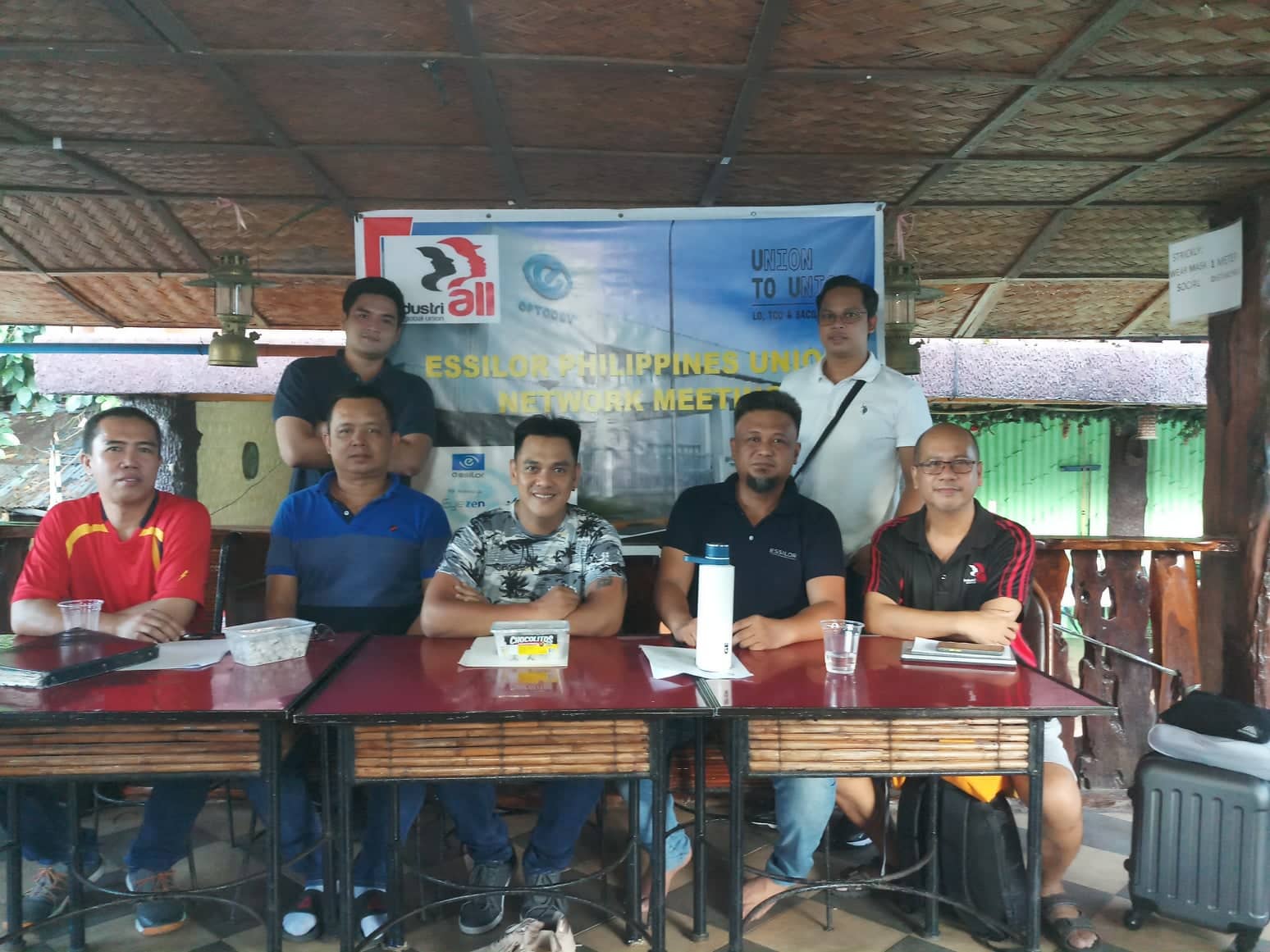
Twenty-one Philippine unionists from the local Essilor union and Optodev Inc union met in Laguna on 17-18 June to exchange information on company policies, practices, union initiatives and collective agreement provisions.
Issues like wages, contract work, closed shop provision and organizing were discussed in the meeting.
Occupational health and safety, in particularly chemical hazards, was identified as a main concern among lens manufacturing workers.
“We have identified more lens manufacturing facilities across the Philippines and both the Essilor union and the Optodev Inc union will formulate organizing plans. It is crucial to form an industry-wide union network to advance workers’ rights in the sector,” said Arvin Lambino, union president of Optodev Inc union in Laguna.
"The Essilor union wants to work with IndustriALL to reach out to Essilor unions in other South East Asia countries, like Vietnam, Indonesia, Malaysia, Thailand and Japan. Transnational workers’ solidarity is key to balance the power of multinational companies," said Manuel Mallonga of the Essilor union in Bataan.
"This company employs members of IndustriALL unions around the world. Management does not respect fundamental rights in an equal manner everywhere. The IndustriALL Philippine and South East Asia union networks strengthen our global organizing at the company. Solidarity forever!”
said Tom Grinter, IndustriALL chemicals and pharmaceuticals director.
The two unions also issued a statement in solidarity with Essilor workers in Ukraine, who have been severely affected by the Russian invasion.
Saint-Gobain workers in Mexico reject employer protection contract
A total of 1,539 workers at the Saint-Gobain glass factory in Cuautla, Morelos, voted in the direct, free and secret ballot on 5 and 6 July. According to the Federal Centre for Conciliation and Labour Registration, 700 workers voted in favour of the existing agreement, 814 voted against it and 25 ballots were spoiled.
Joaquín Guzmán, general secretary of the Independent Union of Free and Democratic Workers of Saint-Gobain Mexico, welcomed the outcome. He said that the union would now focus on obtaining the right to represent workers in negotiations for a new collective agreement that would protect the employees and help them to improve working conditions and wages.
"We, the workers, have voted and made history. Through our courage, bravery, drive and determination, we have demonstrated that if we are united and organized we can bring about great change. Thank you to everyone who showed solidarity and trusted in us. We are now going to seek to represent workers in the negotiations for a new collective agreement,"
said Guzmán.
For a long time, workers had been subject to an employer protection contract signed with a union that was part of the employer-friendly CTC union. This put employees in a unfair situation and created poor working conditions, as the union negotiated behind the employees’ backs and did not represent their interests.
Under Mexico’s recent labour reform, all workers have the right to elect their union leaders and choose which union will represent them in future collective bargaining processes. In addition, all existing employment agreements must be put to a ballot by 1 May 2023.
In the days leading up to the vote, workers told IndustriALL that they had been intimidated and pressured into voting for the agreement. In response, IndustriALL’s general secretary Atle Høie wrote to Régis Blugeon, director of social affairs and human resources at Saint-Gobain Group.
In the letter, he asked Blugeon to ensure that the local management team complied with Mexico’s labour reform and ILO conventions on freedom of association, showed respect for labour-related human rights and the voting process, and allowed for a free and fair ballot to take place.
After hearing the outcome of the vote, Høie said:
"Employer protection contracts are a curse in Mexico and should be abolished. 80,000 contracts are pending approval in the coming year. IndustriALL will support all efforts to ensure that fair collective agreements are negotiated, with workers represented by independent unions, as we have done with Saint- Gobain. We congratulate the workers for their victory in this first step of their struggle."
Union busting at Tainan Enterprises Indonesia
When IndustriALL affiliate Garteks formed a factory-level union at the company's factory in North Jakarta in August last year, union president Ahmad Faisal, vice president Tulam and vice secretary Hendra Radista were dismissed on the pretext of refusing to transfer to a different factory.
Disregarding IndustriALL’s outreach to solve the situation, Tainan Enterprises Indonesia has instead escalated the conflict with the union.
Under intense pressure, the union secretary Edison was forced to resign from Garteks and join a yellow union. The union treasurer Ibran Susan was forced to resign from his job. The deputy union secretary Sriwahyuni was transferred from North Jakarta, and union member Undi Cahyadi was demoted. In May, the company dismissed vice union secretary Rahmawati.
The union busting runs deep. During the engagement with IndustriALL, Tainan Enterprises Indonesia concealed the recommendation given by the Indonesian Ministry of Manpower on 24 December 2021 that the three Garteks union leaders should be reinstated.
“Acting on good will, Ahmad Faisal, Tulam and Hendra Radista signed a settlement agreement with the company in February, accepting severance pay on the condition that the company stop union busting. And yet management has continued to persecute union members. It is unethical and must stop, and all unionists must be reinstated,”
says Garteks general secretary Trisnur Priyanto.
IndustriALL general secretary Atle Høie says:
"We urge the company stop deceiving Garteks’ members and stop violating national law in place to protect workers from anti-union discrimination. Tainan Enterprises Indonesia should adhere to the Ministry of Manpower’s recommendation and reinstate all Garteks members with back pay and seniority."
The trials of BKDP and its affiliates will continue in the Supreme Court this month:
12 July – Belarusian Independent Trade Union (BITU or BNP) 12 July – Union of Radio and Electronics Workers (REP) 14 July – Free Trade Union of Belarus (SPB) 18 July – Belarusian Congress of Democratic trade unions (BKDP) No trial date is yet set for Free Trade Union of Metalworkers (SPM)
IndustriALL general secretary Atle Høie joins ITUC general secretary Sharan Burrow in condemning the Belarusian authorities’ total disregard for due process and the basic rights of working people.
“IndustriALL will continue to call out the government’s relentless oppression of democratic unions. The global labour movement stands firmly with the workers and activists in Belarus fighting to exercise their fundamental workers’ rights,”
says Høie.
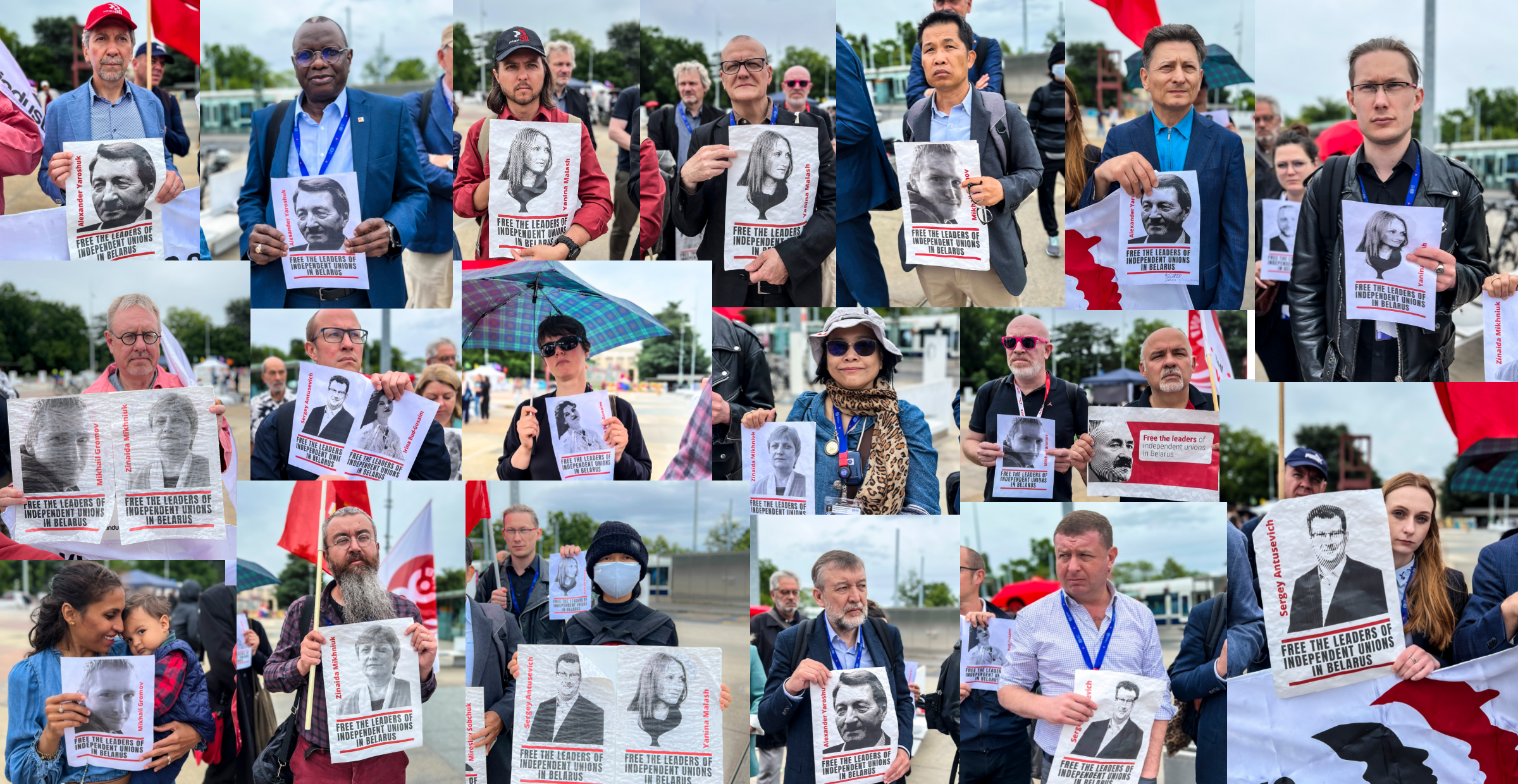
At least 15 BKDP leaders and activists have been arrested, with some already having stood trial and are in prison.
Aliaksandr Yarashuk – BKDP chairperson, arrested on 19 April, in prison.
Siarhei Antusevich – BKDP vice-chairperson, arrested on 19 April, in prison.
Hennadz Fiadynich – REP vice-chairperson, arrested on 18t April, in prison.
Vatslau Areshka – REP activist, arrested on 19 April, in prison.
Mikhail Hromau – Member and secretary of SPM Council, arrested on 19 April, in prison.
Iryna But-Husaim – BKDP media team officer and book-keeper, arrested on 19 April, held in prison at KGB pre-trial detention center.
Miraslau Sabchuk – SPM activist, drafted an appeal by Minsk Tractor Plant (MTZ) in which workers condemned the violence and demanded new fair elections in 2020. Arrested on 19 April.
Yanina Malash – SPM deputy chairperson and organizer, arrested on 19 April, in prison.
Vitali Chychmarou – SPM council member and labour inspector. Fired in 2020 over trade union activities, arrested on 19 April.
Vasil Berasneu – Acting REP chairperson, arrested on 19 April.
Zinaida Mikhniuk – REP deputy chairperson, arrested on 25 March 25 charged with defamation of the president, prison for two years.
Aliaksandr Mishuk – BITU vice-chairperson at JSC Belaruskali. Arrested on 25 May, in prison at KGB pre-trial detention center.
Ihar Povarau – BITU activist at Belarusian Metallurgical Plant, BMZ, in prison for 3,5 years for an attempted warning strike in August 2020.
Yauhen Hovar – BITU activist at Belarusian Metallurgical Plant, BMZ, in prison for 2,5 years for an attempted warning strike in August 2020.
Artsiom Zhernak – SPM chairperson at Minsk automobile plant, arrested on 17 November, 2021, in prison at a pre-trial detention center.
The KGB has arrested the chairperson of the SPB primary organization at the Belarusian Research Center for Pediatric Oncology, Hematology and Immunology, Yulia Zharankova. Aliaksandr Mialeshka was detained the same day. He had previously been a member of the governing body of the same primary union. According to the union, several members from the health sector have been subjected to interrogation and are not allowed to disclose any details.
If you haven’t already done so, please help put pressure on the authorities; sign and share the LabourStart solidarity campaign.
UNION PROFILE: Collective action builds union power, says Rose Omamo
UNION PROFILE
From Global Worker No 1 June 2022
Country: Kenya
Union: AWKMW
Text: Elijah Chiwota
According to Sister Rose, as she is affectionately known, another valuable quality of a trade unionist that union leadership must always keep in mind is to remain loyal to the collective’s cause. This means that as a union leader you must ensure that the union provides service, listens to its members, adequately represents them in labour disputes, and fights for living wages.
But for a unionist to confidently stand up for workers’ rights they must find their voice and be able to speak about the workers struggles with more clarity, commitment, and passion.
“It took me many years to find my voice. But now that I have a voice, I use it to advance the rights of women workers, demand decent working conditions, and for the ratification of Convention 190 to eliminate violence and harassment in the world of work. For example, we must use the power of our voices to name and shame the perpetrators of GBVH, act against them, and bring them to account,”
she reiterates.
Sister Rose has appeared on various media platforms and forums to advocate for gender equity and equality as well as for the setting up of gender champions as a strategy to fight GBVH at the workplace. She has also campaigned against domestic violence which increased during the Covid-19 lockdowns.
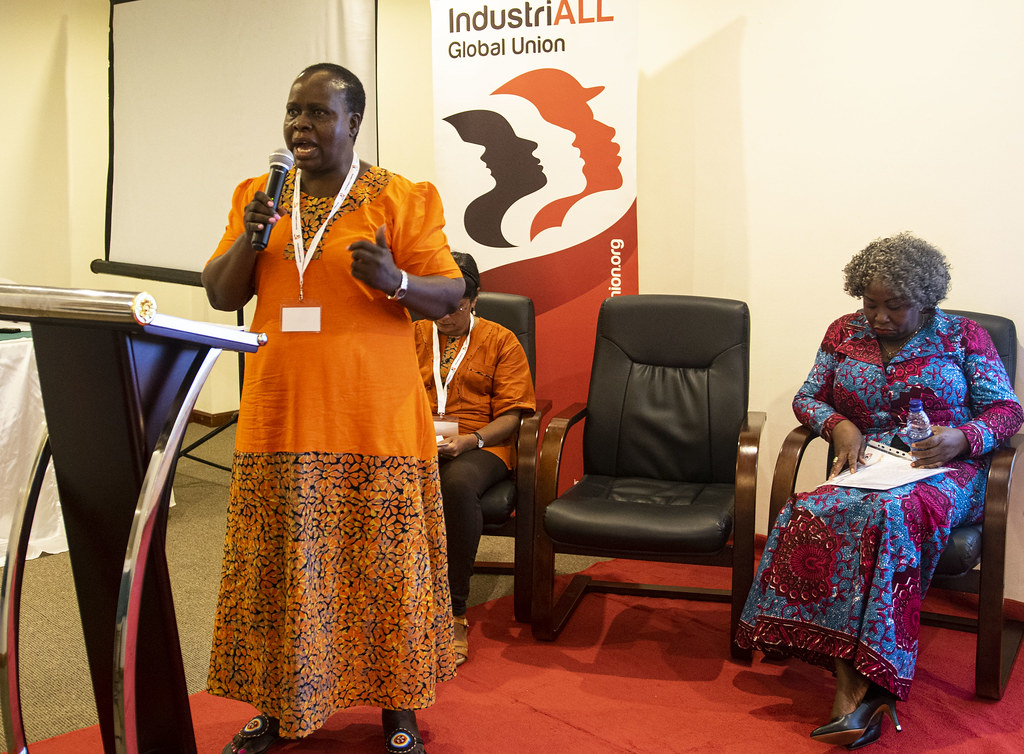
At a Sub-Saharan Africa GBVH workshop in Johannesburg, South Africa, in April, Sister Rose, said one of her unique personal qualities is to sing and dance after a union victory. She describes this as part of the repertoire for celebrating workers wins. Together with other campaigners, she danced when Convention 190 and Recommendation 206 were adopted at the International Labour Conference in Geneva, Switzerland in 2019. She says celebrating union victories is joyful especially as it comes after tough negotiations that take a lot of time and effort. In most instances this will be against employers who are unwilling to agree to the workers’ demands.
A board member and women’s leader at the Central Organization of Trade Unions (COTU) – a confederation of Kenyan trade unions – and co-chair of the IndustriALL Sub Saharan Africa region, Sister Rose was recently appointed to yet another leadership position. This time as a trustee of Kenya’s National Social Security Fund (NSSF) which administers a national pension fund with responsibilities in health insurance, occupational health and safety, and social protection. She will be one of the two workers’ representatives on the board as per national laws and says she will approach her responsibilities in ways that are influenced by her rich union background.
“As unions we will work together in solidarity with other social partners that include the ministry of labour and employers to protect the NSSF, and to ensure that there is investment to grow the fund. Further, we will provide oversight so that the workers money is safe and is invested as per the fund mandates. Again, the experience that I gained in working with other organizations to protect workers interests will be useful because the board represents the collective interests of all key stakeholders,”
she says.
Rose Omamo – AUKMW
Lifelong learning is an integral feature of the trade union movement, and this is the path that Sister Rose, walked in the last 30 years. Her union journey began as a shop steward at an automotive assembly plant in Mombasa before emerging into her current positions as general secretary in 2016, and re-elected at the quinquennial conference in 2021. Her union experience shows that the trade union movement is a learning space for workers because of the diverse skills that unionists acquire over the years: from organizing workers at the shop floor, negotiating with employers and governments in the board rooms, to campaigning for workers and human rights at the global level.
Sister Rose suggests that unions should explore ways of working with the informal sector workers, and to that end the AUKMW has signed an agreement with the Jua Kali Association of road-side mechanics and informal artisans. She sees this as some of the first steps to organize the informal sector. Jua Kali, means hot sun in Swahili and is the name that has become common in describing the informal sector workers. They work under the hot sun, exposed to the elements but with unionization their working conditions can be changed.
Rose IndustriALL co-chair of Sub-Saharan Africa, as well as vice president of the region.
AUKMW
AUKMW was founded in 1971 and has 4160 members, 800 from the informal sector
The union organizes in the automotive sector and its value chain, including artisans and panel beaters in tyre manufacturing, spray painting, exhaust systems, and other auto components. The union also organizes workers who manufacture electrical appliances such as fridges, insulated wires and electrical cables, and telecommunications cables. It also organizes workers in suppliers and manufacturers of medical equipment, and those who manufacture mobile construction equipment e.g. wheel barrows.
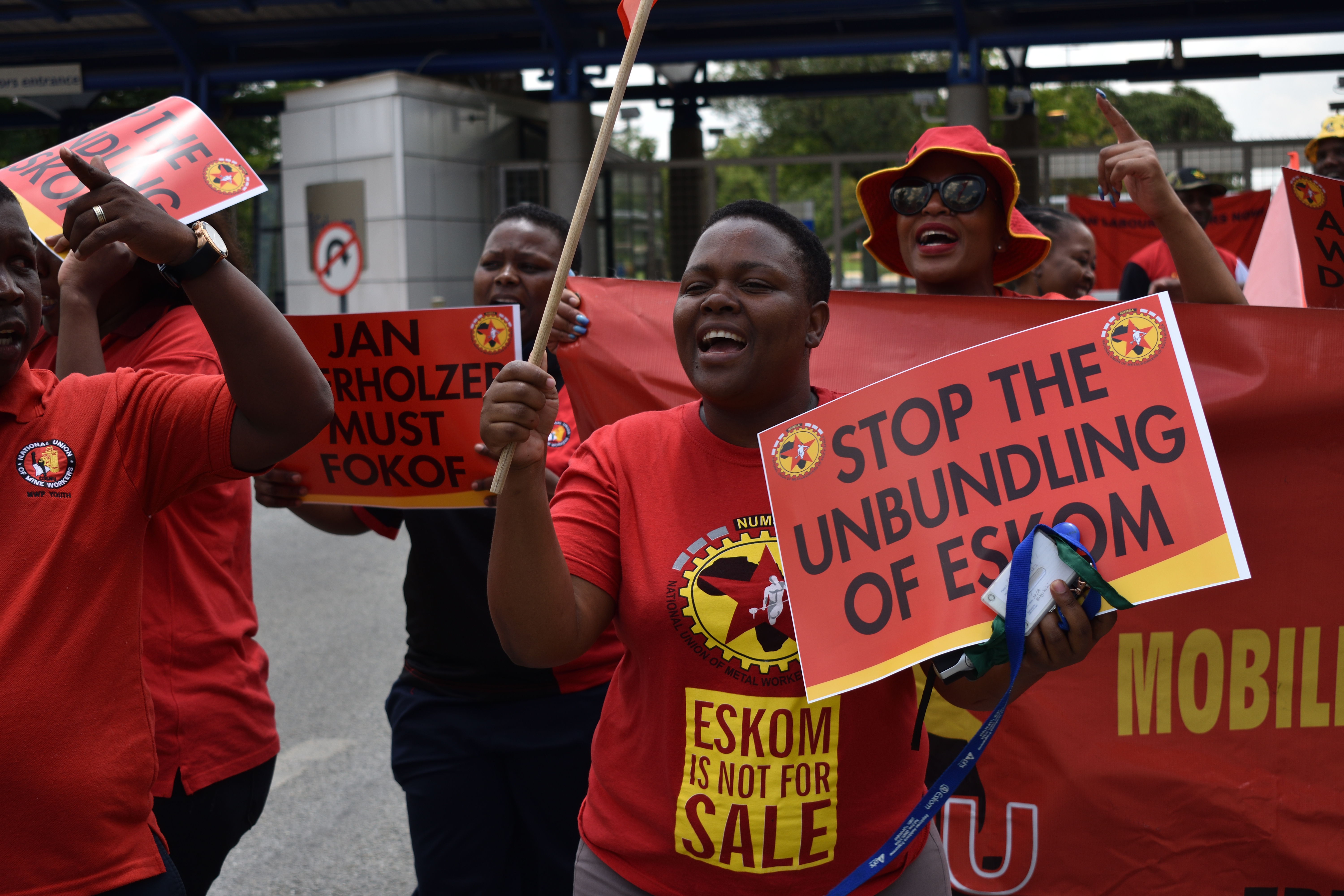
Unions sign wage deal at power utility Eskom in South Africa
The deal, which was signed at the Central Bargaining Forum (CBF), includes a 7 per cent wage increase over a year (1 July 2022 to 30 June 2023), a R400 (US$24) housing allowance increase, and a commitment to continue negotiations to improve wages and working conditions.
Additionally, the deal reinstates working conditions prevailing on 30 June in which workers would have lost R9 000 (US$547) in benefits had the unions not protested. The CBF, which represents 28,300 workers at the state-owned enterprise, is a forum where employers negotiate with the unions.
“We are pleased to have finally resolved this round of wage talks, particularly given the difficult circumstances we faced. The conditions of service, which were unilaterally withdrawn and caused so much pain to our members, have been restored. We have also secured an improvement from last year, after Eskom imposed 1.5 per cent, and we want to thank the negotiating team for their tireless efforts in finding a solution. NUMSA will always fight to improve the conditions of the working class,”
says Irvin Jim, NUMSA general secretary.
During the strike and the negotiations, which deadlocked after Eskom management declared a dispute and walked out of the talks, the workers argued that Eskom could afford the increase and were against an increase that was below inflation increase as what happened last year. Inflation in the country for 2021 was 5.9 per cent.
“The NUM wishes to express its sincere gratitude to its members at Eskom for their conduct during the negotiations until when they gave us a mandate to sign the agreement. On disciplinary and grievance procedures and the recognition agreement a task team will be established consisting of at least three persons from each party. The task team will report back to the CBF within three months,”
says William Mabapa, NUM general secretary.
On-going electricity outages due to insufficient power generation were blamed by some media outlets on the striking workers as part of a disinformation campaign, says the unions. For example, fake news announced that an agreement had been reached before the unions had even signed or consulted their members on the wage offer.
“We call on media houses to be responsible in their reporting. When they publish fake news, this can have a detrimental impact on the negotiations,”
cautioned NUMSA and the NUM, who are affiliated to IndustriALL, in a statement.
Paule France Ndessomin, IndustriALL Global Union regional secretary for Sub Saharan Africa says:
“We are pleased that NUMSA and the NUM continue to fight for living wages and better working conditions for workers at Eskom. As Eskom embarks on a transition to renewable energy sources, workers' interests remain paramount and must be protected. This is why IndustriALL campaigns for a Just Transition that is inclusive of the decent work agenda.”
Atle Høie: Welcome to Global Worker (#1 2022)
GS Corner
From Global Worker No 1 June 2022
Welcome: from general secretary Atle Høie
The report on future mobility concepts details how unions arepreparing for the mobility sector of the future. What are the main elements and what are the challenges? And most importantly, how are unions best positioned to defend workers’ rights, as well as decent work and pay going forward?
Finnish paper union Paperliitto won a resounding victory this spring, when a collective agreement was finally signed after 112 days of strike. The employer wanted to break the right to collective bargaining, but the union stood strong and defended this fundamental right. Read about the union win in the Union profile.
In the interview I say that as general secretary, defending the right to collective bargaining is key to what we do. Basic trade union rights – the right to organize and to collective bargaining –provide workers with the foundation for everything else, like safe workplaces and freedom from discrimination.
Collective bargaining is also the best tool to address the gender pay gap, which currently stands at an average of 20 per cent across the world. How do we raise the wage floor and what can unions do to include pay equity in all that we do?
It is the collective that builds union power and that is where its strength lies, says Rose Omamo from Kenya in the Union profile. As an international trade union, we have called for solidarity and action for our brothers and sister in Myanmar. The situation for workers has drastically deteriorated since the military coup in February last year. Most unions are banned, and many workers who were once protected by collective agreements have been fired and replaced by casual workers with no rights. As a collective we must act, and IndustriALL reiterates our call for comprehensive economic sanctions. The longer companies act like it is business as usual, the more prolonged the agony of Myanmar will be.
Atle Høie
General secretary
Making workers heard along the battery supply chain
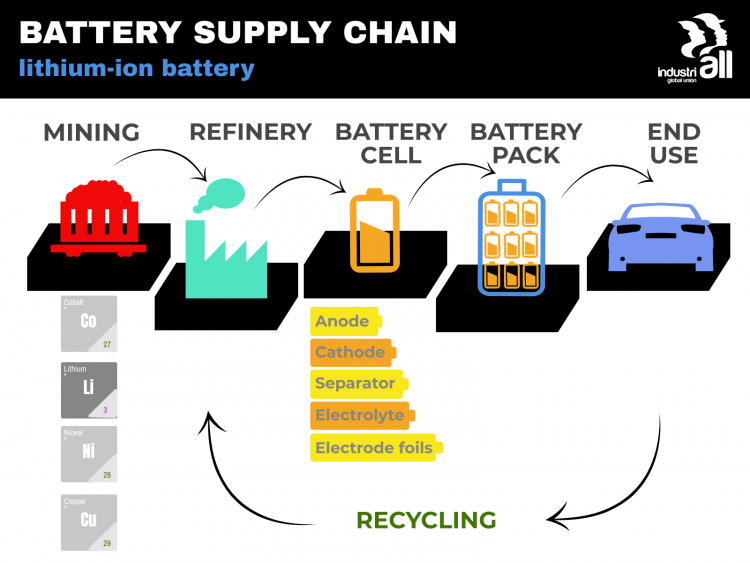
The battery supply chain is growing fast, fuelled by the increasing demand for electric vehicles (EV), and with that the creation of new jobs. In Europe alone, employment related to the EV industry is estimated to increase by 500,000 to 850,000 by 2030. The auto industry has a relatively high level of unionized workers, but the number decreases along the supply chain, where workers’ rights violations, as well as forced and child labour, increase.
Every region makes up different parts of the battery supply chain. There is a lithium triangle in Latin America, most mining is done in Africa, Asia Pacific is seeing new battery investments and there is booming investment in electric vehicles in North America and Europe.
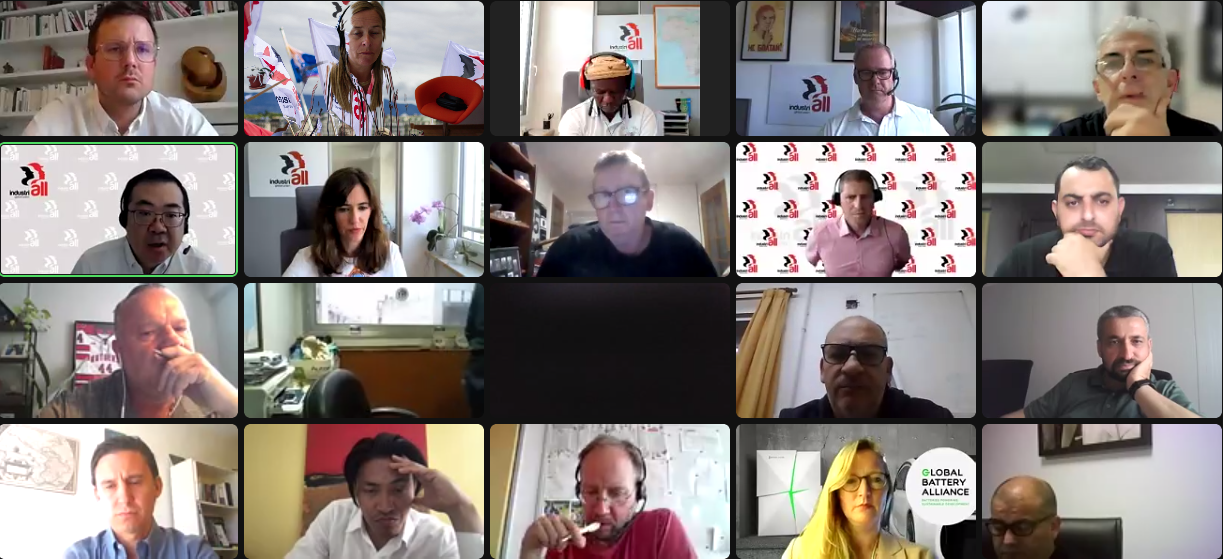
Among the challenges for unions, Jojo Nem Singh from the International Institute of Social Studies, mentioned that focus on mining policies is important. The access to raw materials is a battlefield in the global south.
China is the world’s largest battery producer, a country where even though unions may be present, they play no role in sector bargaining. IndustriALL’s electronics director Alex Ivanou talked about the Foxconnization of the car manufacturing industry, with lwith harsh living and working conditions and internal labour migration.
“We want to increase our leverage along the battery supply chain, which starts in the mines, passes through the chemical industry with its refineries, to the packaging of batteries, to the end-user. We need to accelerate our organizing drive to match the expansion,”
said IndustriALL assistant general secretary Kan Matsuzaki.
“We need to develop due diligence tools and have an increased focus on the growing number of women workers and gender issues, including gender-based violence."
Inga Petersen from the Global Battery Alliance, a global public-private platform mobilizing to ensure that battery production not only supports green energy, but also safeguards human rights and promotes health and environmental sustainability. The organization is behind the Battery Passport Action Partnership, which, if it works, could be a way to establish global criteria, data and benchmarks for a sustainable and transparent battery market.
Alejandro Gonzalez from the Centre for Research on Multinational Corporations talked about the EU batteries regulation proposal with requirements on sustainability, labelling and information on batteries, as well as on the collection, treatment and recycling. The proposed regulation lays down supply chain due diligence obligations covering human and workers’ rights, as well as health and safety.
Building capacity on how to integrate the gender perspective is crucial, as is advancing gender equality in the battery supply chain. That means equal rights, treatment and opportunities for women and men, said IndustriALL women director Armelle Seby.
“One of our main challenges is to move from principles to action,”
said Glen Mpufane and Georg Leutert, IndustriALL mining and auto directors.
“Real due diligence needs the voice of workers in social dialogue to safeguard freedom of association, collective bargaining, health and safety and decent work.”
Going forward, IndustriALL will build union capacity in the battery supply chain through:
developing effective due diligence tools to organize workers
creating platforms with multinational companies and other stakeholders
developing communications with Chinese companies and workers
ensuring gender is integrated in union activities and that
focusing on sustainable industrial policy and Just Transition
“Levi's is dangerously behind the curve when it comes to making garment factories safe places to work. Levi's has decided to pursue a voluntary approach to factory safety, which we know from many years of experience does not work. It is well past time for Levi’s to sign the Accord and ensure the safety of their workers,”
said Kalpona Akter, president of Bangladesh Garment and Industrial Workers Federation.
It’s been nine years since 1,138 workers died at Rana Plaza and nearly one year since the Accord–the most successful workplace safety programme in modern fashion history–was renewed and expanded into an international agreement.
Under the Accord, Bangladesh’s brutal history of garment factory deaths was halted. And even though 175 other brands, including Uniqlo, Zara, and H&M support the new International Accord agreement, Levi’s has refused to sign, threatening to undo progress.
"Since its inception in 2013, the Accord has achieved immense progress in making garment factories in Bangladesh measurably safer, saving countless lives. As a company that prides itself on sustainability in action and living its values, Levi's has a responsibility to sign the International Accord and ensure safe workplaces for the workers in its supply chain. No worker should have to risk their life in order to go to work,”
said Edgar Romney, secretary-treasurer, Workers United.
Christina Hajagos-Clausen, IndustriALL textile director, said:
“Levi’s claiming commitment to ethical supply chains without signing onto the Accord is just lip-service in a world where complacence is a matter of life and death. We join our affiliates’ call and urge Levi’s to sign this effective and legally binding safety agreement.”