NUMSA demands state-lender intervention in steel crisis

NUMSA, an IndustriALL Global Union affiliate, has over 80 per cent membership at SASM and majority status at AMSA, handed a memorandum to the state-owned development financier, the largest creditor in both cases. The union gave the IDC until 12 December to respond.
 
At SA Steel Mills, which entered business rescue in July 2024, workers have gone for months with irregular or no pay. The union says the process has been affected by delays and is not transparent. NUMSA prefers bidders who will provide protection to workers as per Section 197 of the Labour Relations Act. Further, NUMSA demands binding job creation schedules, priority re-hiring of existing staff and the creation of a joint labour–IDC monitoring forum.
 

“NUMSA will not stand by silently while workers are treated as an afterthought in a process that directly affects their lives, families and communities. Workers at SASM have been without proper income and security for long. The IDC as a key stakeholder and funder must intervene decisively and act in line with its developmental mandate,” 

said Andrew Chirwa, NUMSA president.
 
A labour court recently ordered AMSA to reinstate over 3,500 affected workers with back pay, but the company is appealing the decision and has refused to pay salaries in the interim, leaving workers and their families without income over the festive season. The union argues that there is mismanagement at AMSA which despite receiving billions of rands in past state support, is refusing to pay workers.

“Workers are being punished by the AMSA management because the union took them to court. They are using workers to compel the state into giving them more money, yet they are giving workers nothing in return,”

said NUMSA in the petition.
 
The union’s demands to the IDC on AMSA include immediate financial relief for retrenched workers and nationalisation of the company and its return to full state ownership. Further, the union will support buyers that consider labour demands and an independent audit of assets and measures to halt any further stripping at plants as observed by NUMSA shop stewards.

Patrick Correa, IndustriALL director of mechanical engineering and base metals said:

“We support NUMSA demands for labour protections and initiatives to save jobs in South Africa’s steel industries and urge the IDC to respond timely to the union petition.”

South Africa’s primary steel industry has lost thousands of direct jobs amid high electricity costs, rail and port logistical bottlenecks, and cheap imports while hundreds of thousands of jobs are at risk along the value chain.

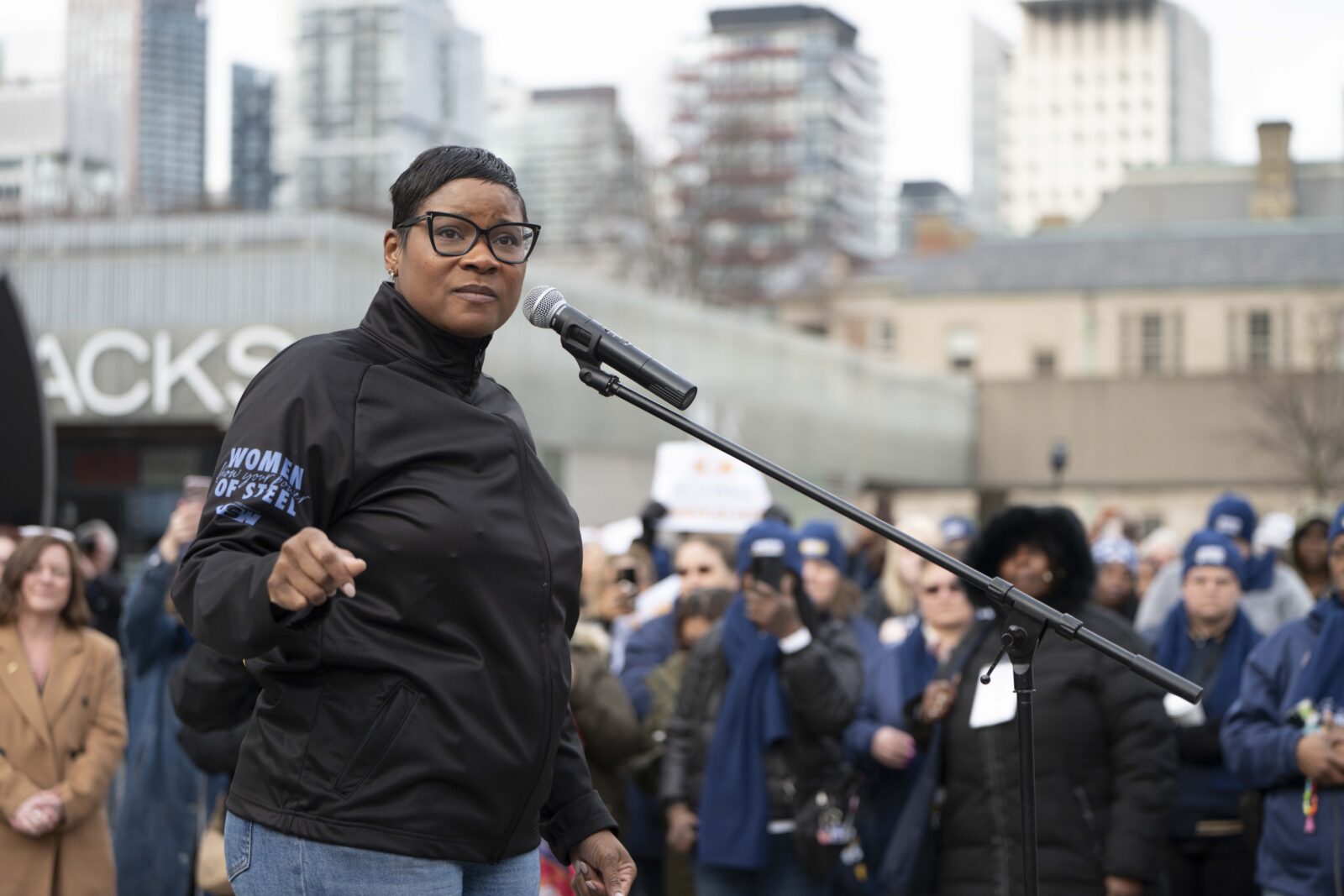
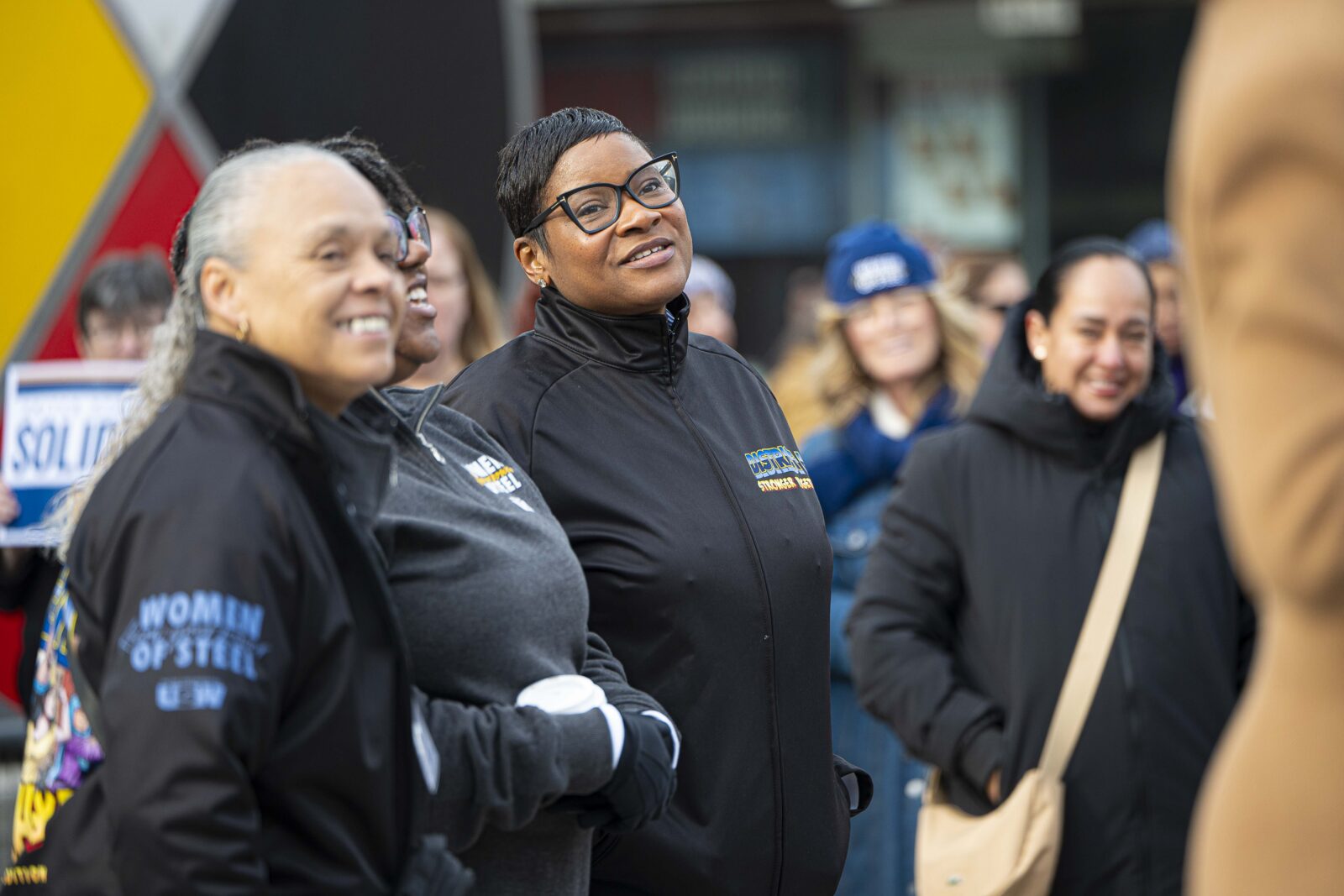
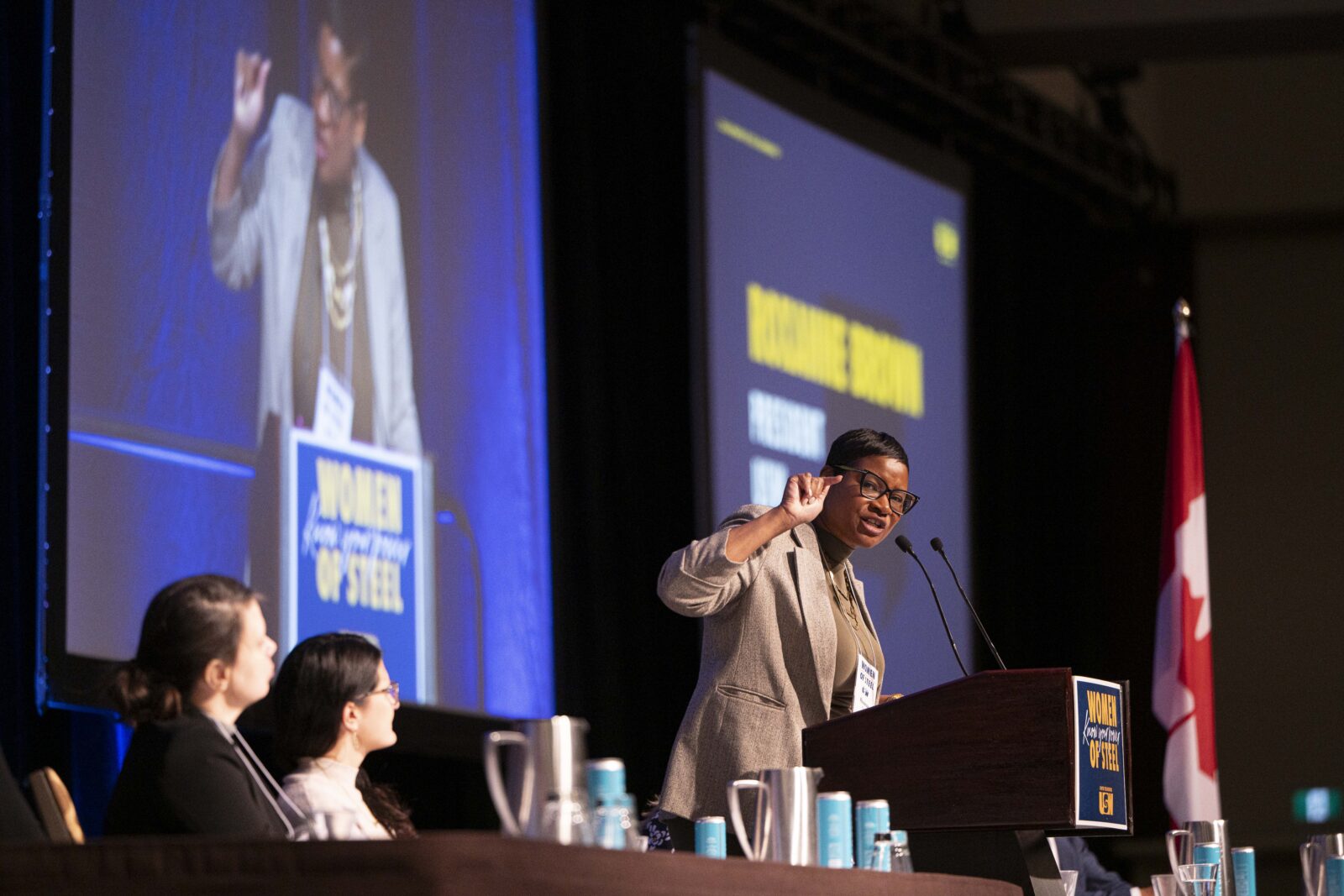
Photos: NUMSA

Kenyan court upholds trade union rights

The dispute began in July 2025 when Springtech management, in what the union described as a deliberate attempt to derail an organising drive, demanded that newly unionised employees resign from being members of the AUKMW. Eleven workers who refused to budge staged a brief shopfloor picket, prompting their arrest by police on charges of violence – allegations later dropped by the Director of Public Prosecutions for lack of evidence. The employer simultaneously suspended the workers and halted the remittance of union dues collected through the check-off system, effectively disrupting an ongoing conciliation process. The AUKMW sought and obtained a certificate of urgency that blocked further dismissals.
 
In a judgment delivered on 8 December, Justice M. Mbaru of the Mombasa court ruled that employees enjoy explicit constitutional protection under Article 41 for joining or participating in lawful trade union activities, whether outside working hours or, with or without the employer’s consent. Termination of employment on such grounds, the judge held, constitutes an unfair labour practice under sections 46(c) and (d) of the Employment Act.

The court ordered Springtech to grant the union immediate access to the workplace for recruitment until it secures a simple majority of the workforce – the threshold required under Kenyan law for formal recognition – and to resume deducting and remitting dues within 30 days. The 11 suspended workers are to return to work immediately and to receive full back pay from July 15, 2025.

Welcoming the judgment, Rose Omamo, general secretary of the AUKMW and vice president of IndustriALL said:

“This is a timely reminder to employers that the rights to organise and participate in union activities without intimidation and harassment are firmly enshrined in both the constitution and labour laws.”

The ruling, she added, clears the path for the union to achieve the membership level needed for statutory recognition at the plant.
 
The case is the latest in a series of labour court victories for AUKMW and other unions that are strengthening organising rights in Kenya’s manufacturing and export-processing zones, where employers are resorting to unfair dismissals and other union busting tactics to thwart unionization.

GSK workers build their first worldwide union network

“This meeting shows what is possible when workers refuse to stay isolated,”

said Tom Grinter, IndustriALL sector director, opening the session.

“Management is acting globally, so workers must be organized globally too. Today, we begin building the structure that will allow every GSK worker, no matter their country, to be heard.”

European Works Council (EWC) chair Denis Suire echoed this message, stressing that unions have long struggled to connect beyond Europe:

“For years we knew there were issues in Pakistan, in Asia, in Latin America, but we had no official space to address them. Today is the beginning of something new, a global family of GSK unions who will stand together.”

Why now? A company reshaped by transformations

Participants began the meeting by examining the global picture: GSK’s workforce has been shrinking across regions and functions even while profits rise. Major restructuring has hit the UK, Belgium, Italy and the United States with shifts in production, digital transformation, outsourcing and the spread of new operating models placing workers under intense pressure. With only 32 per cent of the workforce covered by collective bargaining and union representation uneven globally the need for stronger international coordination has become urgent.

Against this backdrop, the unions agreed: a global structure is no longer optional, it is necessary.

A global map of workers’ realities

The heart of the meeting was the exchange of updates from unions across the world, revealing both common threads and unique local challenges.

Europe: strength, restructuring and the need for coherence

In the UK, unions described an industrial landscape shaped by austerity, political volatility and post-Brexit pressures. GSK’s UK operations face uncertainty linked to shifting investments, trade tariffs and constant restructuring. Participants added detailed insight into the challenges of transparency and worker protection.

In Belgium, once one of GSK’s strongest bases, headcount reductions continue as roles and production shift toward the United States. Unions stressed the need for stable employmentcontracts and fair distribution of work, highlighting growing geopolitical pressures.

From France, delegates shared their experience negotiating unified agreements across sites, ensuring wage coherence and gender equality measures and using social funds to support workers’ well-being, demonstrating the value of strong, structured industrial relations systems.

In Hungary, the union explained how their collective agreement guarantees powerful protections, bonuses, extra pay for difficult work, cultural funds, but also described the immense pressure created by workforce reductions and rising production demands under the Standard Operating Model (SOM).

Polish representatives highlighted strong employer–union cooperation in social activities, but stressed the need to protect democratic worker representation in the European Works Council, especially ensuring that Polish seats must be elected workers.

As exchanges moved eastward, participants highlighted how structural inequalities and fragmented organizing landscapes deepen the challenges faced by workers.

Asia: fragmentation, inequality and the cost of disunity

The situation in Pakistan illustrated why a global network is indispensable. With four separate CBAs weakening worker unity, outsourced workforce, inequality across sites, unresolved mass dismissals dating back to 2014 and failures to provide statutory funds, participants recognized Pakistan as one of the most urgent cases requiring coordinated international support.

In Indonesia, unions described the consequences of the GSK–Haleon demerger, which drastically reduced membership and left only a handful of workers representing GSK at the Pulogadung site. Wage issues and outsourcing pressures remain key concerns requiring global escalation.

Across Asia, participants emphasised that the Standard Operating Model, rolled out globally, is creating safety risks, higher workloads and operational problems that must be addressed with GSK at a global level.

Latin America: subcontracting and gender equality

Brazilian delegates reported the increasing use of subcontracting, with major pharmaceutical players, including GSK, moving production into third-party facilities. Gender equality initiatives are advancing under government requirements although restructuring trends mirror those in Europe.

North America: negotiating under threat

In Canada, CUPE representatives described difficult negotiations in the context of a 15 per cent restructuring push by GSK. Despite being a major flu-vaccine producer and employing hundreds of highly skilled workers, the site faces constant threats of closure and pressure to concede on wages and seniority rights. Lack of transparency from management was a recurring theme.

US operations were also referenced in the global discussion with delegates noting the company’s massive USD$30 billion expansion in the United States and its consequences for job security in other regions.

A shared vision: from isolation to collective power

Every region, despite different conditions, expressed the same message: GSK workers need each other.

Julie Blondeel, GSK EWC coordinator, celebrated the creation of a space where experiences, strategies and solutions could finally be shared across borders. She concluded that:

“Management is global. Restructuring is global. Our solidarity must be global too.”

Building the future: what the network will do next

Through collective discussion unions agreed on concrete priorities that will guide the next phase of the network.

The IndustriALL GSK global union network will:

Initiate discussions with GSK on establishing a Global Trade Union Works Council, as part of a comprehensive global industrial relations strategy.

Seek dialogue on urgent cases, including:

Submit a detailed information request to GSK covering workforce data, strategy and country-by-country performance.

Advance occupational health and safety as a central pillar of the global agenda.

Express active solidarity with Unia’s campaign to defend 700 jobs at Novartis, with participants signing a solidarity petition and committing to continue support.

“This is only the beginning,” 

Tom Grinter concluded.

“For too long, GSK workers have faced global challenges with local tools. Today we choose to build something bigger, something that belongs to all of us. We are not just reacting to change, we are shaping the future.”

A new chapter for GSK workers worldwide

The Paris meeting was more than a gathering, it was the foundation of a new global movement inside GSK. Workers left with a shared conviction that cross-border solidarity is the strongest protection against restructuring, outsourcing and insecurity.

As one participant said as the meeting ended:

“We arrived as separate unions. We leave as a global voice.”

The 16 days of action are over but our fight isn’t

By Christine Olivier, IndustriALL assistant general secretary

This year, unions across industries and continents confronted gender-based violence and harassment (GBVH) in all its forms, including one of the fastest-growing and most insidious: technological violence. They organized, educated, bargained, trained and amplified the voices of survivors.

Here are just a few exampled of actions taken by our affilites this year that remind us why we fight and why we must continue.

Armenia: leading on digital violence and C190 implementation

The Republican Branch Union of Industry Workers of Armenia joined UNiTE to End Digital Violence against Women and Girls campaign with a powerful seminar bringing together 19 member unions.

The Republican Branch Union of Trade Union Organizations of Industry Workers of Armenia

They raised the alarm on technology-facilitated harassment, online threats, stalking, dissemination of personal information and linked their work directly to Armenia’s recent ratification of ILO Convention 190. Their commitment to updating policies, building awareness and creating safe digital workspaces sets an important precedent for the region.

Pakistan: strengthening awareness and worker engagement

In Pakistan, affiliates held discussions and meetings with workers and members to shed light on GBVH. These quiet, persistent conversations, creating safe space, building trust, breaking silence, are the foundation on which stronger reporting mechanisms and safer workplaces are built.

Germany: tackling harassment with a bold, systemic campaign

IGBCE’s survey revealed alarming statistics:

KlarkantIGBCE

Their response was the powerful KlarkantIGBCE campaign, declaring zero tolerance for sexism and sexual harassment. They created tools for workers, support for works councils, model bargaining clauses, surveys and awareness measures integrated throughout their own events and staff trainings.

This is how culture shifts: through clarity, courage and systemic change.

Israel: exposing technological violence and elevating survivor voices

Na’amat, the women’s movement of the Histadrut, dedicated its annual conference to technological violence against women, from AI-generated intimate images to digital surveillance and coercive control.

Expert testimonies highlighted how violence evolves with technology and why protections must evolve too.

Activist Shira Isakov

One of the most powerful contributions came from domestic violence survivor and activist Shira Isakov, who bravely shared her story of surviving an attempted murder and choosing life. Her courage, turning trauma into activism and legislative advocacy, embodies the power and resilience of women workers everywhere.

Mexico: SITIMM advancing leadership, prevention and collective bargaining

In Mexico, the metal, automotive and allied industries union SITIMM implemented a multi-layered approach during the 16 days:

Continuing its Diplomado de Desarrollo y Liderazgo de la Mujer Trabajadora, integrating GBVH, leadership and empowerment into long-term training for women workers.

Publishing posters across 170 workplaces where SITIMM holds collective agreements, ensuring every worker sees the message that violence and harassment have no place at work.

Introducing demands in their bargaining proposals to include gender-responsive protocols and immediate-response mechanisms in all collective agreements.

This is union power in action: education, awareness and binding commitments through collective bargaining.

Together, these actions show the strength of our movement

Across Armenia, Pakistan, Germany, Israel and Mexico, affiliates took action that reflects the core of our mission:

Many used IndustriALL’s own tools, including our GBVH Toolkit, C190 bargaining guide and our sectoral equality materials, demonstrating how shared resources can feed collective strength.

But today is not a conclusion. It is a recommitment

GBVH does not end on 10 December.

Survivors do not stop needing support.

Workplace inequality does not pause.

The end of the 16 days should strengthen our resolve to work even harder:

To our affiliates: you are shaping the future of safe work

Your actions, in training halls, factories, universities, conference rooms, union offices and digital spaces, are changing the lives of women workers.

You are proving, every day, that violence is not inevitable.

Silence is not acceptable.

And unions are essential.

As we close this year’s 16 days of activism, I want to say this clearly:

We are not done.

We are not backing down.

And we will not stop until every woman, in every workplace, everywhere, is safe and free from violence and harassment.

Investor webinar highlights mounting labour concerns at Next plc

Khaing Zar, president of the Industrial Workers’ Federation of Myanmar, delivered a stark account of the situation under the military regime and the risks tied to sourcing from the country.

“Myanmar is experiencing a full-scale humanitarian catastrophe with regional implications… Brands must be able to show they can prevent these violations, but that’s impossible, and therefore companies must leave the country.”

Her warning underscored concerns about Next’s continued sourcing from Myanmar even after workers and unions asked multinationals to withdraw. With the ILO invoking Article 33 in June—its highest sanctioning instrument—member constituents are expected to take measures to address grave rights violations, potentially including ending commercial relations. Beyond reputational damage, Next faces operational and legal risks linked to the potential for forced labour in garments from Myanmar, a danger identified by the US government in 2024.

The webinar also cast a light on escalating tensions in Sri Lanka. Anton Marcus, general secretary of the Free Trade Zones & General Services Employees Union (FTZGSEU), described the abrupt May closure of a factory run by its wholly owned subsidiary, Next Manufacturing Ltd (NML), in the Katunayake Free Trade Zone, where more than 1,400 workers lost their jobs via text message and were locked out of the factory. The facility had been the only one in Sri Lanka with a trade union and a collective bargaining agreement.

“Over 1,200 workers are in the street, suffering even more since the cyclone. The only way to justice would be for Next to reopen the factory,”

he said, noting that relations had previously been good.

These international disputes come at a time when Next — one of the UK’s largest retailers by market capitalization — is reporting its strongest financial performance ever, surpassing £1 billion (US$1.33 billion) in profits even as other retailers struggle. Yet critics argue that the company is prioritizing profits over people.

Next’s approach to wages has become a flashpoint in two key markets. In Cambodia, it remains the only ACT on Living Wages brand not to sign a binding agreement supporting collective bargaining as the route to living wages—effectively reversing earlier commitments under the programme. Meanwhile in the UK, the company has come under fire for refusing to pay a living wage to its 40,000 retail workers. A shareholder resolution filed in May asked Next to disclose how many employees and regular offsite contract workers earn below a living wage; it received 27 per cent support, unusually high for a labour-related proposal. Nonetheless, the company’s CEO dismissed concerns, claiming the largely female and young workforce were not breadwinners.

In his remarks to investors, IndustriALL general secretary Atle Høie said the company’s shifting stance across multiple countries was becoming a serious concern.

“IndustriALL had a good relationship with Next for years, but it has taken an inexplicable turn for the worse. It’s not clear what happened, but this should be a red flag for its investors.”

IndustriALL has also published an investor brief providing detailed information on each case.

Photo: fired Next workers in Sri Lanka, July 2025. 

Pushing for gender transformative agenda in South East Asia

At country-levels, unions in the Philippines will continue its campaign for the passage of a House of Representative Bill to implement the Convention 190 in the Philippines. They continue to organize women and young workers at local unions and strengthen the youth and women committees at country-levels. 

Indonesian women unionists will initiate social dialogues with stakeholders on a zero tolerance policy on violence and harassment. The Malaysia women’s committee will create posters and campaigns for the implementation of the anti-sexual harassment policy at workplace levels. Thailand’s women activists will integrate LGBTQI+ programs in workplace unions. Cambodia will hold a planning-meeting with members of the women’s committee.

Delegates from each country shared the achievements their unions have made in promoting gender equality, pushing for inclusive workplaces and stronger worker protections. Despite progress, participants also acknowledged persistent challenges rooted in structural barriers, cultural norms and capacity limitations. 


IndustriALL South East Asia regional secretary, Ramon Certeza, said:

“Although women have achieved major milestones in promoting feminism and advocating for workplaces free from discrimination, harassment and violence, more sustained and transformative efforts are still needed. This forum plays an important role in translating the decisions and commitments of the 4th IndustriALL Congress into concrete regional actions.”

IndustriALL director of gender and white-collar workers, Armelle Seby, said:

“The recent IndustriALL Congress has adopted a comprehensive roadmap for gender equality (2025–2029) and a powerful feminist resolution. These initiatives will guide global efforts to eliminate gender-based violence and harassment, promote women’s leadership and ensure gender equality remains central to the global labour movement.”

Six months after entry into force, the HKC still is not being implemented

IndustriALL has been a long-time advocate for safer, cleaner and fair ship recycling, campaigning for years to make the HKC more than a paper exercise. As the HKC came into force in June 2025, IndustriALL highlighted that this represents both a “great test and greatest opportunity” for the shipbreaking sector globally.

India has not yet gazetted its new ship recycling legislation. Without the legislation in place, the country is not able to issue the all-important document of authorization for ship recycling (DASR), to certify that a yard meets HKC requirements. This is a serious issue for ship owners wanting to send their ships to compliant yards.

However, in India the ship recycling process is robust, with most yards meeting HKC standards and yard owners following the correct procedures. There is a strong union, a high level of social dialogue and a significant reduction in the number and severity of accidents.

In Bangladesh, the picture is mixed: the government created a ship recycling board to act as the competent authority and is issuing the DASR, which means ship owners sending ships to the country are complying on paper.

In addition, Bangladesh recently ratified three new ILO Conventions, including C155, which gives workers the right to refuse unsafe work and supports the creation of joint health and safety committees in the workplace. 

However, many yard owners are not breaking ships according to the HKC, resulting in 30 accidents, four fatalities and many serious injuries this year. The government seems to lack the capacity or political will to enforce the new regulations.

Pakistan is still very much in development, with the area around the Gadani yards lacking adequate infrastructure. In this years’ budget, the federal government announced an investment of US$42 million, but this has not yet resulted in improvements. In the meantime, the first three upgraded yards have got their green certificates.

“The bottom line is that the HKC has its enemies: people who always said that it is an inadequate instrument for cleaning up ship recycling. It is the responsibility of everyone who championed the HKC to make it work. If it fails to protect workers' lives and the environment, it is no use at all, and we are back to square one. It is in everyone's interest to make it work,”

says Walton Pantland IndustriALL shipbuilding and shipbreaking director.

Uniting Asia-Pacific MNC unions across chemicals and pharmaceuticals

Despite Asia Pacific dominating chemical manufacturing and continues growing, trade unions face pertinent challenges such as unsatisfactory wage and collective bargaining agreements, job losses, contractualization, violation of workers' rights, weak enforcement of labour laws and safety and health regulations.

The participants call on governments to take steps to enhance skills, improve working conditions including wages and benefits. Trade unions must strengthen workers solidarity and union network and oversee implementation of human rights due diligence in the global supply chain.

Drawing on experiences from BASF, the participants agreed to strengthen company networks such as Syngenta and Unilever. They further agreed to conduct a mapping of working conditions of both unions and companies in the region and to develop an online database to consolidate and share this information.

They also reflected on the IndustriALL Congress debates held on 4–7 November, noting that several of the themes discussed at Congress closely align with the priorities of the chemical and pharmaceutical sector. Participants agreed that the outcomes of this meeting will help advance the follow-up actions identified during the Congress.

In a separate Asia Pacific BASF union network meeting, trade unionists from India, Indonesia, Malaysia and Vietnam followed-up on the progress and outcomes from the 2024 meeting. 

The BASF unions united to push for a global framework agreement and proposed a social dialogue with employers in the Asia Pacific region for recognition. A communication platform will also be created for regular information-exchange. Other action points of the meeting included empowering and recruiting women to be more active in unions, organizing more BASF workers including those in the supply chain. 

The network welcomes Nadya Miranti, a woman union leader, of BASF Indonesia as the subregional co-coordinator of the network to work hand in hand with Raghuram T.C. of BASF India. A meeting in Malaysia and a site-visit at the Kuantan plant is planned to be held next year.  

Tom Grinter, IndustriALL director of chemicals, pharmaceuticals, pulp and paper, rubber sectors said:

“The progress achieved by chemicals and BASF union networks is inspiring. IndustriALL will continue to strengthen trade union networks in the region including Sanofi, Takeda, and Unilever. Trade unions must be alerted of the development of artificial intelligence, the importance of map supply chains to identify areas where leverage can be exerted.”

Ashutosh Bhattacharya and Ramon Certeza, regional secretaries for South Asia and South East Asia, said: 

“A trade union network is an important strategy to ensure human rights due diligence in the global supply chain. We will pay extra attention on building and strengthening the union networks in chemical and pharmaceutical sectors in the regions. The regional offices will work hand in hand with our affiliates in carrying out mapping activities and fostering solidarity among our affiliates along the supply chain.”

The meetings were supported by Friedrich-Ebert-Stiftung.

Employment in the circular economy

The study is the first global analysis of employment in the circular economy and shows that most circular economy activities are concentrated in the Global South. The Americas and Asia and the Pacific regions report the highest shares of circular employment, at 6.4 percent and 5.8 percent respectively. 

More than half of all circular economy workers—over 74 million people—are employed in the informal economy, where jobs are not regulated and lack state protection. This is particularly prevalent in the Global South, leaving many of the workers driving sustainable development and caring for our planet among the most disadvantaged. They often face precarious working conditions, unstable incomes, and low wages. 

“This report is a strategic tool for trade unions. It provides solid evidence to anticipate the impacts of the circular economy on employment and will empowers us to demand industrial and labour policies that ensure a real Just Transition. Now it is time for changes in production and consumption models, but those have to be built with and for workers,”

says Diana Junquera Curiel, IndustriALL director for Just Transition and member of the advisory board for the Circular Employment Global Baseline. 

Titled Employment in the Circular Economy: Leveraging circularity to create decent work, the study aims to equip policymakers and decision-makers with data and practical tools to accelerate a just and job-rich transition to the circular economy.

“With this report, we are casting a new light on the businesses and workers that every day in every country and every sector of our economies provide essential services for our societies and planet,”

says Casper Edmonds, head of the extractives, energy & manufacturing Unit at the ILO.

“Some are at the forefront of innovation. But for many, circularity is not a choice, but a way of getting by. If we combine investments in circularity with measures to advance decent work, we accelerate a just and job-rich transition to the circular economy.”

A selection of sectors dominate circular economy employment. Repair and maintenance account for nearly half (46 per cent), followed by manufacturing (24.5 percent) and waste management (8 per cent). By contrast, industries that are crucial to advancing the circular transition—such as construction and mining—have a very low share of circular employment. The report stresses the need for targeted policies to ‘green’ jobs in these sectors and accelerate their transition toward a circular economy. 

The findings call on policymakers to integrate workers’ rights and social protections into circular economy strategies. Too often, environmental legislation prioritises climate goals while neglecting the social dimension and the people driving the transition.

To ensure a just transition to the circular economy, the report recommends:

Photo credit: ILO, Limpopo Province, Waterberg District. Mokopane, South Africa.

Yves Rocher must be held accountable over workers’ rights violations in Türkiye

Kosan Kozmetik, a subsidiary of the Yves Rocher group from 2012 to 2024, manufactured Flormar-brand beauty products for global markets. Workers there faced very low wages, exposure to harmful chemicals, imposed overtime, management intimidation and systemic gender discrimination. In early 2018, Petrol-İş launched a membership campaign within the factory.

Union representatives, dismissed workers and lawyers presented testimony in court, arguing that Yves Rocher failed to meet its obligations under the French Duty of Vigilance Law law to ensure respect for fundamental labour rights throughout its supply chain. Former employees, Petrol-İş, Sherpa and ActionAid France are asking the court to recognise that the Yves Rocher Group failed in its duty of vigilance and to award compensation for the harm suffered.

A ruling is expected on 12 March 2026. The case is widely considered a test of whether parent companies can be held accountable for violations in their global operations. It is the first time foreign employees of a French-affiliated company have sought damages from the parent company under this law.

What’s at stake:

IndustriAll Europe and IndustriALL global union call on Yves Rocher, and on all multinational companies to adopt robust, enforceable due-diligence policies that protect fundamental labour rights throughout their global supply chains. We call on Yves Rocher Group to uphold the same fundamental rights for its employees everywhere.

Judith Kirton-Darling, industriAll Europe’s general secretary says:

“This case shows why Europe must uphold strong and enforceable due-diligence rules. Workers should never be dismissed or intimidated for exercising their fundamental rights, whether in France or Türkiye. European companies must respect the same standards across all operations. We stand in solidarity with Petrol İş and all workers fighting for their rights, including the right to organise.”

Kemal Özkan, IndustriALL Global Union assistant general secretary, adds:

“The case of Flormar (Yves Rocher) is a clear case of violations of fundamental rights, and puts forward the need for holding capital accountable. It is an important test case if the French Due Diligence Law is instrumental in protecting workers, and we do expect that the judiciary process in France brings justice to the members of Petrol-Is, who want to exercise their guaranteed freedoms”.

Photo: Picket outside Flormar factory in Gebze, Türkiye on 9 August 2018.