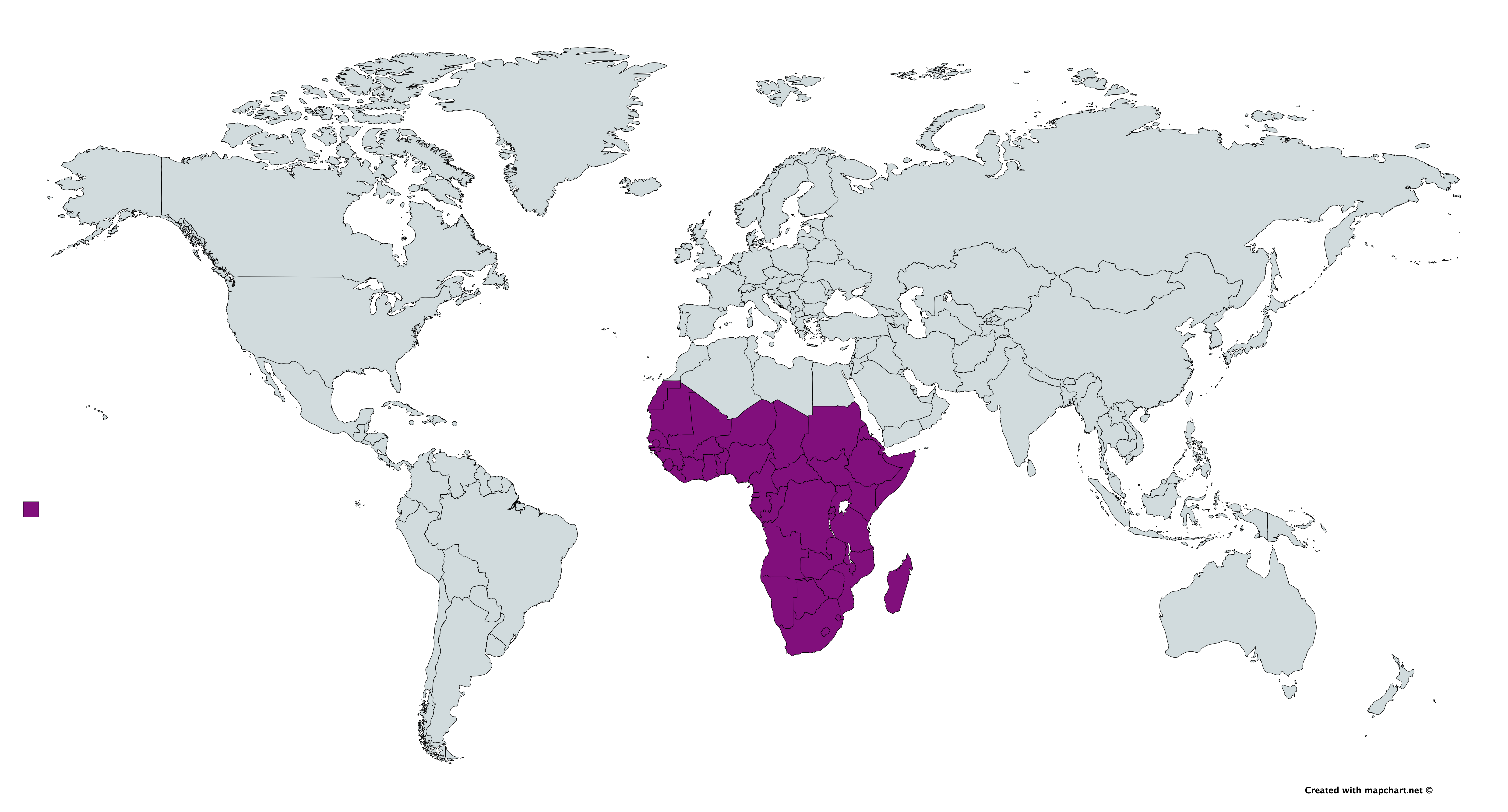
Sub-Saharan Africa

Sub-Saharan Africa office

Physical address:

Sunnyside Office Park, 32 Princess Wales, Parktown Building C

Johannesburg 2193

South Africa

Email: aro

Paule France Ndessomin 
Regional secretary

+27 11 242 8684

PNdessomin

Marino Vani

Regional secretary

Kenny Mogane 
Regional officer 

+27 11 242 8682 

KMogane

Charles Kumbi 
Regional programme officer

+27 11 242 8686 

CKumbi

Elijah Chiwota 
Regional communications & research officer

+2711242 8683 

EChiwota

Tendai Makanza 
Regional officer

+27 82 9 43 78 86 

TMakanza

Kamla Naidoo Finance & administrative officer

+27 11 242 8693 

KNaidoo

Ngwako Jack Malatji  Project cost accountant

+ 27 242 8680 

JMalatji

Related publications

REPORTPAMPHLET
The auto industry in Sub Saharan Africa: Investment, sustainability and Decent JobsWe want decent jobs! Sustainable investment in the SSA auto industry

600 Burkinabe mineworkers who lost jobs after mine closure demand fair compensation

The mine closure put 1,000 workers out of employment, including contract workers.

SMB is a private mining company which was sold to Avocet Mining, listed on the London Stock Exchange. Avocet then sold the company to the Balaji Group. The workers should have been paid compensation when ownership was transferred. They are former SMB and Avocet workers, now employed by the Balaji Group by virtue of their valid contracts.

“Workers efforts to negotiate are falling on deaf ears or met with bad faith from the Balaji Group, while the ministry of mines is notoriously negligent,” said Kiba Aidane and other workers in a statement.

To press for their demands, more than 200 workers picketed in Ouagadougou with placards alleging collusion between the government and the Balaji Group. The workers reject the employer’s proposal to reduce benefits by up to 40 per cent.

After buying Inata gold mine in 2018, the Balaji Group neither resumed production nor paid the workers what is due to them. Although they have been without jobs since the mine closed, the workers are not relenting. Their plight prompted IndustriALL Global Union affiliate, Federation des Industries Diverses (FID), to launch a campaign demanding that the Accra, Ghana based Balaji Group pay the workers.

The workers want a tripartite meeting in which their rights to fair compensation will be respected and to be paid wages backdated to November 2017. They also want pension benefits to be paid to those who were contributing. Retirement benefits should also be paid to those who were within five years of retirement. Medical benefits should be paid.

Charlotte Nguessan, IndustriALL project coordinator says: “The suffering of SMB workers shows the lengths to which some errant mining companies will go to avoid paying compensation. As part of the union building project, we are always alert to deal with these injustices against workers.”

Says Glen Mpufane, IndustriALL director for mining:

“Mining companies must respect workers’ rights. When mines are sold, the new employer must assume responsibility. It is unacceptable for multinational companies to close mines and abandon workers — leaving them without jobs, even robbing them of their benefits.”

The Balaji Group has operations in India, Iraq, Kuwait, Malaysia, Philippines, Qatar, and the United Arab Emirates. In India the group mines silica, garnet, quartz and iron ore.

Training advances collective bargaining skills in Ethiopia

The National Industrial Federation of Energy, Chemical and Mining Trade Union (NIFECMTU), which is affiliated to IndustriALL Global Union, organized a training workshop in Adama from 20 to 21 February, attended by 23 participants from base unions at 17 factories. NIFECMTU has over 20,000 members including 6,000 members from the Ethiopia Electricity Company, 2,000 from the Ethiopian Energy Company and 800 from the Ethiopian Petroleum and Biofuel Company.

The government’s development policies are focusing on diversifying economic sectors including in the chemical, energy, mining, and oil and gas sectors. With diversification and the rapid growth of the economy at 8.5 per cent in 2018, the highest in Sub-Saharan Africa, spurred by infrastructural development and light industrial manufacturing, there is potential for the unions to organize and recruit more workers.

The workshop discussed how base unions can strengthen collective bargaining and organizing skills to improve their capacity to confront strong management teams at plant level. The labour laws and International Labour Organization conventions that Ethiopia has ratified support collective bargaining.

The union at the national level agreed to support the base unions through training of members on financial sustainability, organizing and servicing members, and improving working conditions through better collective bargaining agreements. Further, it was agreed that unions should be more transparent and democratic and should have regular communication with members. Union dues, which make up over 80 per cent of the union’s income, should be used to strengthen organizing and collective bargaining.

Says Sisay Tulu, IndustriALL coordinator for Ethiopia:

“Strengthening the base unions is important for union membership growth because they are the heart-beat of the unions. The base unions are the where workers engage with the unions at the factories and the mines. If the base unions are strong, the union will also be strong.”

Adds Kenny Mogane, regional officer for IndustriALL Sub Saharan Africa: 

“Negotiating better deals through collective bargaining improves working conditions and living wages for workers. We will continue to support the NIFECMTU in its efforts for effective negotiations and collective bargaining agreements.”

Glencore African union network opens dialogue with company

Union representatives from the African countries where Swiss-based mining and commodities giant has operations, Democratic Republic of the Congo (DRC), South Africa and Zambia, met Glencore’s human resources (HR) management team for the first time at the launch of IndustriALL Global Union’s regional union network. The Glencore team included the HR managers from Mutanda Mining and Katanga Mining in the DRC, Mopani Copper Mines in Zambia, and Alloys Assets and Coal Assets in South Africa.

The benefits and effectiveness of constructive dialogue become a reality when a company works together with unions to improve working conditions, respect workers’ rights, pays decent living wages, employs more permanent workers, and improves health and safety, said participants at the meeting, which was facilitated by the IndustriALL central and regional offices.

IndustriALL’s affiliates elaborated the progress they expect from Glencore, which includes equal pay for work of equal value, good health and safety practices, maternity leave, and access to health services. Union representatives raised their demand that Glencore should hire more permanent workers and ensure that contractors enjoy the same rights under labour laws. Unions noted improvements in working conditions and community development.

The Glencore HR management team provided extensive information about the company and its labour-related policies and practices. They explained what they are doing at their operations to resolve the grievances raised by unions, how they engage with the unions, and the community projects that they are involved in.

Says Gerda Schwindt, the Glencore group head of HR:

“We welcomed the opportunity to engage with IndustriALL, allowing us to understand their concerns as well as highlighting our commitment to our ambition of being recognized as a top employer in all of our operating regions.”

Says Kemal Özkan, IndustriALL assistant general secretary:

“We have started the interaction with Glencore in a form of constructive dialogue. The company should be able to listen to the concerns of the workers recognizing and respecting their fundamental rights with working conditions. I believe this dialogue with Glencore furthers labour relations in the operations of the company”.

The meeting ended up with a common understanding to develop similar dialogue at country level.

IndustriALL’s Glencore Global Union Network will be held in Colombia in September, and the company management is expected to be present with the same commitment to dialogue at global level.

Calls for safety standards in artisanal mining as Zimbabwe’s flooded gold mines claim 28 lives

Mining companies Zimplats and Rio Zim are assisting in the rescue effort by providing machinery and equipment. Rescuers say they need water pumps with more horsepower to reach the missing miners as the water level keeps rising.

Glen Mpufane, IndustriALL Global Union director for mining, diamonds, gems, ornaments and precious stones says such tragedies are avoidable if key stakeholders prioritize health and safety in artisanal and small-scale miners (ASM) operations. In particular, governments must develop policy to formalize relations with ASM and mining companies with operations in their vicinity.

“Promoting the health and safety of ASM is a social responsibility and stakeholders mustn’t turn a blind eye. Therefore, we support initiatives in which mining companies engage with trade unions and communities on safe and sustainable mining such as the Initiative for Responsible Mining Assurance (IRMA), which calls for engagement between large scale mining (LSM), ASM and communities in its standard.”

Zed Banda, the general secretary of the National Mineworkers Union of Zimbabwe, an affiliate of IndustriALL, adds:

“Artisanal and small-scale mining is one of the ways in which workers are surviving Zimbabwe’s economic crisis. In a country with limited opportunities, and where unemployment is very high at over 90 per cent, ASM helps the youth put food on the table. We are calling on the government to recognize and support ASM to end the deadly mining conditions under which they toil to eke a living.”

Although ASM use basic tools like picks, shovels, ropes and buckets, they have been producing most of Zimbabwe’s gold. According to Fidelity Printers and Refiners, a subsidiary of the Reserve Bank of Zimbabwe, and sole buyer of the precious metal, gold production increased mainly due to ASM. For instance, in 2018 ASM produced 21.7 tonnes compared to mining companies’ 11. 5 tonnes.

However, despite this high production, the laws are skewed against ASM who mine under appalling and dangerous conditions with weak adherence to health and safety standards expected in mining. To improve conditions ASM are asking for inclusion in current discussions on the Mines and Minerals Amendment Bill. They argue that policy regulation can improve health and safety and promote sustainable mining.

The Parliament of Zimbabwe says there are 500,000 ASM in the country who support up to three million dependents but operate with neither policy regulation nor government support.

The Alternative Mining Indaba, held annually parallel to the Mining Indaba, calls upon governments to:

“…decriminalize artisanal mining, so that miners can be trained; safety standards maintained, and communities liberated from the operations of criminal gangs. The African Mining Vision also recognizes artisanal and small-scale mining potential to end poverty and recommends that it be linked to development initiatives."

IndustriALL and Rio Tinto set QIT Madagascar Minerals on the path to constructive social dialogue

The mission was part of an IndustriALL union building activity in Antananarivo, Madagascar on 11 and 12 February 2019. IndustriALL and Rio Tinto are making a joint effort to set Rio Tinto’s QIT Madagascar Minerals (QMM) operation on the right path to sustainable constructive dialogue, consistent with Rio Tinto’s global industrial relations principles. QMM is 80 per cent owned by Rio Tinto and 20 per cent owned by the government of Madagascar.

The mining operation, situated near Fort Dauphin on the south-eastern tip of Madagascar, has been the scene of hostile and acrimonious industrial relations between local management and IndustriALL affiliates. A labour dispute over the implementation of provisions of a collective bargaining agreement erupted following IndustriALL’s high-level joint mission to the QMM operations in February 2018. 

The labour dispute followed a long history of industrial strife at the operation, where contractors constitute the majority of the workforce. Since then, IndustriALL and Rio Tinto have undertaken several interventions, individual and jointly, to facilitate constructive industrial relations at QMM built on dialogue.

A two-day evaluation and planning union building workshop took place on 11 and 12 February, facilitated by IndustriALL’s union building team, comprising Sub-Saharan Africa regional secretary, Paule Ndessomin, the region’s programme officer, Tendai Makanza and the programme officer responsible for the region from IndustriALL’s central office in Geneva, Switzerland, Fanja Rasolomanana.

It was followed by a two-day joint intervention facilitated by Rio Tinto’s employee relations manager for the region, Philippe Ferrie, the employee relations manager for the Oyu Tolgoi mine in Mongolia, Munkh-Orgil Lkhaasuren, and Glen Mpufane, IndustriALL director for mining, diamonds, gems and ornaments.

Late last year, IndustriALL conducted a successful joint mission to the Oyu Tolgoi mine, as part of a delegation including Union to Union and Swedish affiliate IF Metall. A comprehensive report is available here. The operation’s employee relations manager came to Madagascar to share his experiences.

The joint intervention workshop was part of ongoing efforts to build constructive industrial relations at QMM between IndustriALL’s affiliates, Sendika Kristanina Malagasy (Sekrima) and Syndicalisme et Vie des Sociétés (SVS), and QMM management.

Glen Mpufane, commenting on the importance of the joint intervention workshop, said:

“The success or failure of the joint efforts to put QMM on the right pathway towards constructive industrial relations dialogue depends on the commitment to and implementation of the outcomes of the workshop by both QMM management and the trade unions”.

The outcomes also include a commitment by Rio Tinto to its contractors’ supplier code of conduct, and to sustainable communities.

Commenting on Rio Tinto’s commitment to a constructive dialogue roadmap for QMM Philippe Ferrie said,

“The workshop will help to improve QMM processes, to learn from what went well and where there is room for improvement in terms of process and relationship, and put all of this on a roadmap (within the overall Rio Tinto roadmap) that also keeps in mind the overall business framework of QMM.”
Zambia: Three mineworkers die in underground fire

While refuelling a loader, the engine caught fire, igniting materials around it and causing a larger fire. Noxious fumes from the fire entered the adjacent workshop making it impossible to breahte.

The deceased mineworkers were working at a level 1,380 metres below the surface. They were members of the Mineworkers Union of Zambia (MUZ) — an affiliate of IndustriALL Global Union.

Mopani Mine says in a statement that it will carry out an investigation in conjunction with the country’s mine safety department and announced that it had suspended operations until further notice. Zambia has passed an Occupational Health and Safety Act and ratified Convention 176 on health and safety in mines.

However, despite the laws there is poor inspection and compliance by companies. The companies also do not adhere to operational health and safety requirements. Further, enforcement by cash-strapped institutions to ensure compliance through inspections is often weak.

Says Glen Mpufane, IndustriALL director for mining: “Mopani should take responsibility over the death of the workers, and we hope that the investigations into the circumstances leading to the fire will provide more information as to the cause of the blaze. We reiterate once again that it is the responsibility of mining companies to always ensure the safety of the workers at their operations above all else.”

In paying condolences, the union’s president Joseph Chewe described the mineworkers in a social media post as “vibrant members who had potential to contribute immensely to the growth of the union” and said the accident was “tragic”. The youngest of the deceased workers was 27, while the other two were 32 and 33-years-old respectively, testimony to MUZ’s recent recruitment and organizing drive targeting young workers.

Chewe says “MUZ will continue to mourn with the bereaved families and work closely with the families and Mopani management to ensure that all the necessary arrangements are put in place during this trying moment.”

Mopani Mine, which produces copper and cobalt, is owned 73 per cent by Glencore. The other owners are the Zambia Consolidated Copper Mines (10 per cent) and First Quantum Minerals (16.9 per cent).

South African unions oppose plans to privatize power utility Eskom

The proposal is to break Eskom into three parts — generation, transmission and distribution. Other parts of Eskom considered to be non-core will be privatized.

IndustriALL Global Union affiliates, the National Union of Mineworkers (NUM) and the National Union of Metalworkers of South Africa (NUMSA) are against the proposed dismantling and privatization and says they will respond through mass action, protests and strikes should the government proceed with the plans.

Says David Sipunzi, the general secretary of NUM:

“NUM is against any attempt to unbundle Eskom. It is the privatization of Eskom to enrich the elites and not about saving costs. We, therefore, call upon the government to reconsider its position because it is anti-working class and the poor. It will result in electricity being expensive and unaffordable to the poor. The NUM is going to fight tooth and nail against the unbundling.”

Irvin Jim, general secretary of NUMSA concurs:

“The government took the decision to privatize a national asset, which is owned by the public, without bothering to consult the most important stakeholder, which is labour and the community at large. The working class is opposed to any privatization plans of our state-owned enterprises, particularly, Eskom.” Jim says the government must come up with a social plan that includes a Just Transition after consulting unions. He adds that consulting after making an announcement is a “box-ticking exercise.”

The union positions on Eskom were presented to the government during a march to the Union building in 2018, and they include an energy mix policy that considers coal mines and a socially-owned renewable energy sector that benefits workers and communities and not only a few independent power producers. Last year the government gave contracts to 27 independent power producers in the renewable energy sector to the disappointment of the unions.

Says Paule France Ndessomin, IndustriALL regional secretary for Sub Saharan Africa:

“There is need for social dialogue between government, unions and communities on the Eskom proposals. Unions are willing to engage as stakeholders representing thousands of workers who will be affected by the unbundling through job losses and retrenchments.”

African Mining Indaba: decent and sustainable work must be the future of mining in 2050

These are some of the questions that framed debate at the African Mining Indaba and Alternative African Mining Indaba, held in Cape Town 4-7 February.

The theme for the Mining Indaba, a forum bringing together thousands of representatives from governments, mining companies and investors, was “Championing Africa’s sustainable economic growth”.

Kemal Özkan, IndustriALL Global Union assistant general secretary, spoke on a Mining Indaba panel called Transforming the future of the workforce and communities: What is the role of technologies and local content policies:

 “The technological transformation taking place in mining should protect the rights and interests of workers as well as those of mine-affected communities. New jobs must be created and there must be a fair and Just Transition, lifelong learning through reskilling and upskilling of mineworkers, and improved health and safety. The recommendations of the ILO Global Commission on the Future of Work report should be adopted.”

On the panel were representatives from the ILO, African Rainbow Minerals, and the Zimbabwe Environmental Lawyers Association.

The theme of the Alternative Indaba, composed of civil society actors and communities, was “going stronger, forging forward” as part of celebrating its ten years of activity. The second day of the Alternative Indaba focused on sustainable development with participants from the two indabas engaging in discussions. Alternative Indaba participants marched to the venue of the Mining Indaba to present their list of demands to mining companies for communities to benefit equally from mining and for sustainable mining that respects communities.

The Alternative Indaba, which this year had 500 delegates from 26 countries, is a movement for mine-affected communities to raise voices, reflect, learn and share, and mobilize on the rights of communities.

Some of its successes include improved policy engagement with governments, forcing mining companies to have dialogue with communities, including women and, in some instances, forcing the companies through community mobilization to comply with environmental laws. The Alternative Indaba, which received support from IndustriALL and other organizations, is also campaigning for the implementation of the African Mining Vision and engaging the African Union and governments, and represents artisanal and small-scale miners.

Glen Mpufane, IndustriALL director for mining, emphasized on another panel that “the social and environmental costs of mining are not reflected on companies’ balance sheets but externalised and passed on to workers, their families, poor communities and the state. Occupational injuries and ill-health have huge social and economic implications for society. Indirect costs include the costs of livelihoods lost, lost income to dependents, and the cost associated with caregiving by families and the community.”

Presidents Nana Akufo-Addo of Ghana, and Cyril Ramaphosa of South Africa, said at the Mining Indaba that mining had potential to lead on sustainable economic development in Africa through infrastructure development and job creation.

Nigerian unions welcome minimum wage progress

Nigerian unions, including seven IndustriALL Global Union affiliates, will now lobby the Senate to pass the legislation when it resumes sitting. 

If that is successful, all that will be left is for President Muhammadu Buhari to sign the minimum wage proposal into law. The new minimum wage is meant to cushion lowly paid workers in both the public and private sectors. 

Attempts to have a two-tier minimum wage structure in which state and private sector workers would be paid N27,000 (US$74), sponsored by the National Council of States, were rejected by the Nigeria Labour Congress, the Trade Union Congress of Nigeria and the United Labour Congress. 

Further, the federations demanded that there be no retrenchments because of the minimum wage. They rejected N27,000 because it is not the one recommended by the Tripartite Committee on National Minimum Wage in which the labour federations were represented. The committee held public hearings across the country and consulted widely before presenting their recommendations to the federal government.

The unions say the depreciation of the Naira has reduced the value of the minimum wage. For instance, in 2011 the N18,000 minimum wage was equal to US$150 but the approved minimum wage is less than US$100. This means going below N30,000 (US$83) is further pushing workers into poverty. 

Afolabi Olawale Olufemi, acting general secretary of the National Union of Petroleum and Natural Gas Workers, said: 

“We welcome the approval of the national minimum wage by the National Assembly and commend them for adopting the recommendations of the minimum wage committee which came out of a protracted consultative process.”

IndustriALL’s seven affiliates in Nigeria organize in sectors including chemical, energy, oil and gas, steel and engineering, and textile, garment, leather and footwear.