Botswana union challenges leader’s unfair dismissal

The union is demanding her immediate reinstatement and an end to all of forms of victimization and union busting. Botshome, who has worked for the company for nine years, was dismissed in November 2018 on allegations of poor work performance and negligence, but she is challenging the dismissal in the Industrial Court in Gaborone.

She says the disciplinary process that she went through at Pluczenik is a sham. BDWU, an IndustriALL Global Union affiliate, adds that the decision is “unprocedural, harsh, vindictive and calculated to eliminate a staunch union leader.”

Pluczenik is funded by the US government agency, the Overseas Private Investment Corporation.

Diamond companies in Botswana are increasingly ignoring the labour laws and victimizing workers, but the BDWU is equally determined to confront them on malpractices. The union is campaigning for real wages in the diamond cutting and polishing sector and feels that workers are being excluded from enjoying the diamonds profits. It argues that only diamond companies and their shareholders, and the government enjoy the benefits at the workers’ expense. The union adds that training and localization policies meant to upskill workers are being implemented half-heartedly with expatriates still occupying top well-paying positions.

The companies are even failing on health and safety standards by not properly cleaning factory toilets, and not issuing of personal protective equipment to protect workers from dust, chemicals, and injuries.

On retrenchments, the union says workers are getting raw deals. For example, Eurostar Diamonds is left with only 70 workers from a previous workforce of over 500. The union expected government intervention to ensure saving jobs and fair retrenchments, but this did not happen. Precarious working conditions of short-term contracts are common even for workers with 10 years-experience at the same company. Further, freedom of association is being hindered when the union is ignored. Workers’ right to leave is being denied and doctors’ notes for sick leave ignored at diamond companies including KGK, Dalumi, Yerushalmi, Laurelton, Leoschter and Msuresh.

The IndustriALL director of mining, diamonds, gems, ornaments and jewellery production, Glen Mpufane, is shocked by the violations:

“We demand the immediate reinstatement of comrade Goleba and condemn the appalling impunity with which diamond companies are operating in Botswana. This is against national labour laws and the International Labour Organization Conventions. As a counter measure, the IndustriALL Global Diamond Network will launch a campaign to end the employers’ tyranny and anti-union behaviour.” 

These violations validate IndustriALL’s complaint to the ILO Committee of Application of Standards on the Botswana government’s violation of trade union rights in 2018. 
Organizing diamond mineworkers in Lesotho

The rough terrain is no deterrent to IndustriALL Global Union affiliate, the Independent Democratic Union of Lesotho (IDUL), which is increasing its membership against all odds and began organizing diamond mineworkers in a similar drive last year. The union aims to recruit over 50 per cent of the 659-strong workforce at Storm Mountain to enable negotiating for a collective bargaining agreement with the company.

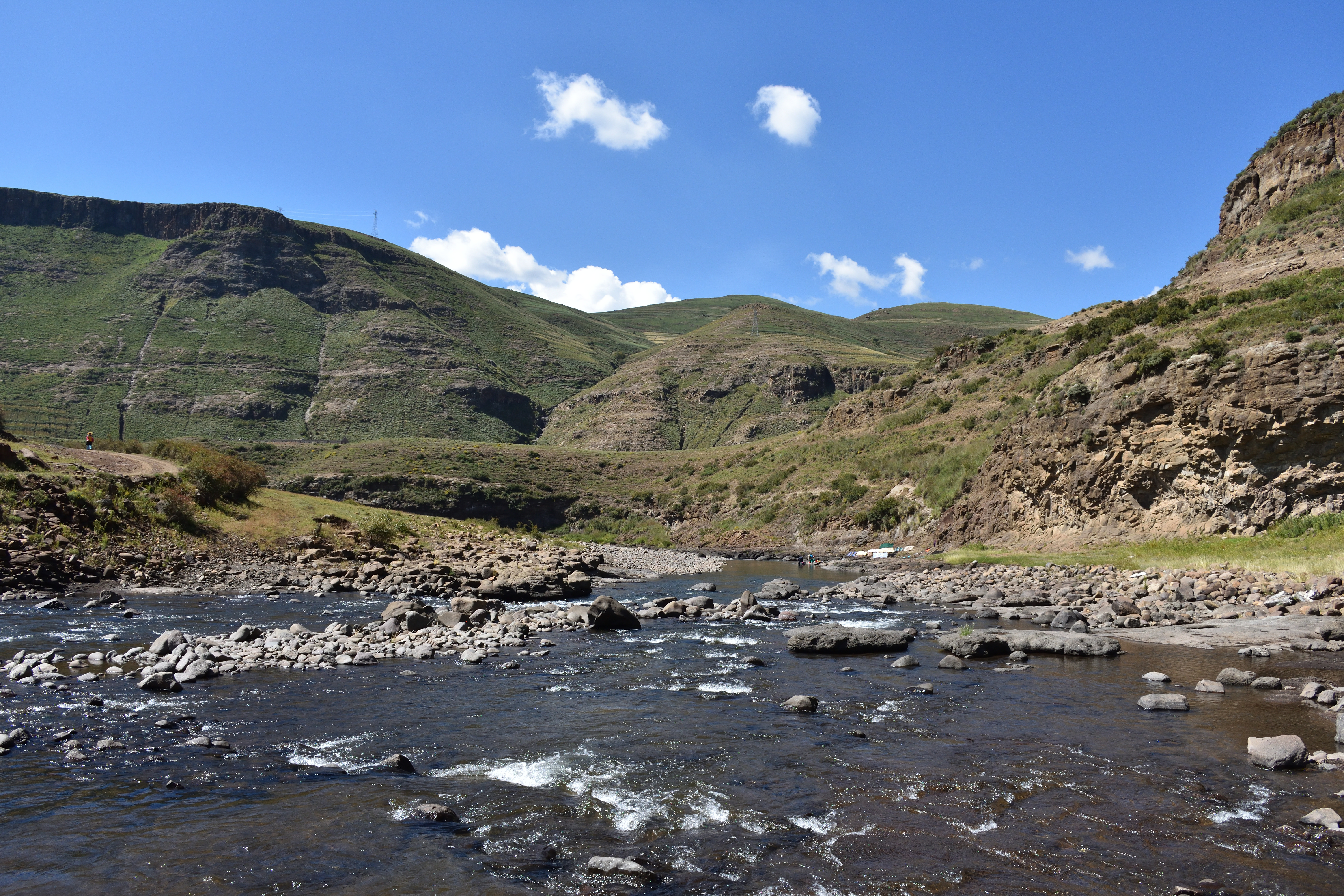
The Maluti Mountains. Photo: IndustriALL

The Maluti Mountains are behind Lesotho’s emerging status as one of Africa’s significant new diamond producing countries and home to global diamond mining companies. The UK’s Firestone Diamonds, which owns the Liqhobong Diamond Mine in Lesotho, employes over 550 workers and recently dug up a 72-carat whole “makeable” — which allows for a large diamond to be cut.

However, the union is facing stiff resistance from management at the Liqhobong mine, who are refusing the union access to meet its members. Although the country’s labour code gives unions access to the mines to organize, there are clauses in the Mining and Minerals Act which allows for “exemptions”. The unions are fighting for the clauses to be removed.

Says IDUL general secretary, Dan Theko:

“We will not be intimidated by management’s intransigence and will continue to demand just labour laws. We stand firm against union busting tactics and condemn employers’ refusal to process signed membership forms. We also have a right to meet and organize workers, and its illegal for employers to deny us that right.”

The team included the IndustriALL director of mining, diamonds, gems, ornaments, and jewellery production (DGOJP), Glen Mpufane, and the programme officer for the IndustriALL Sub Saharan Africa region, Charles Kumbi. Lesotho is part of IndustriALL’s union building project.

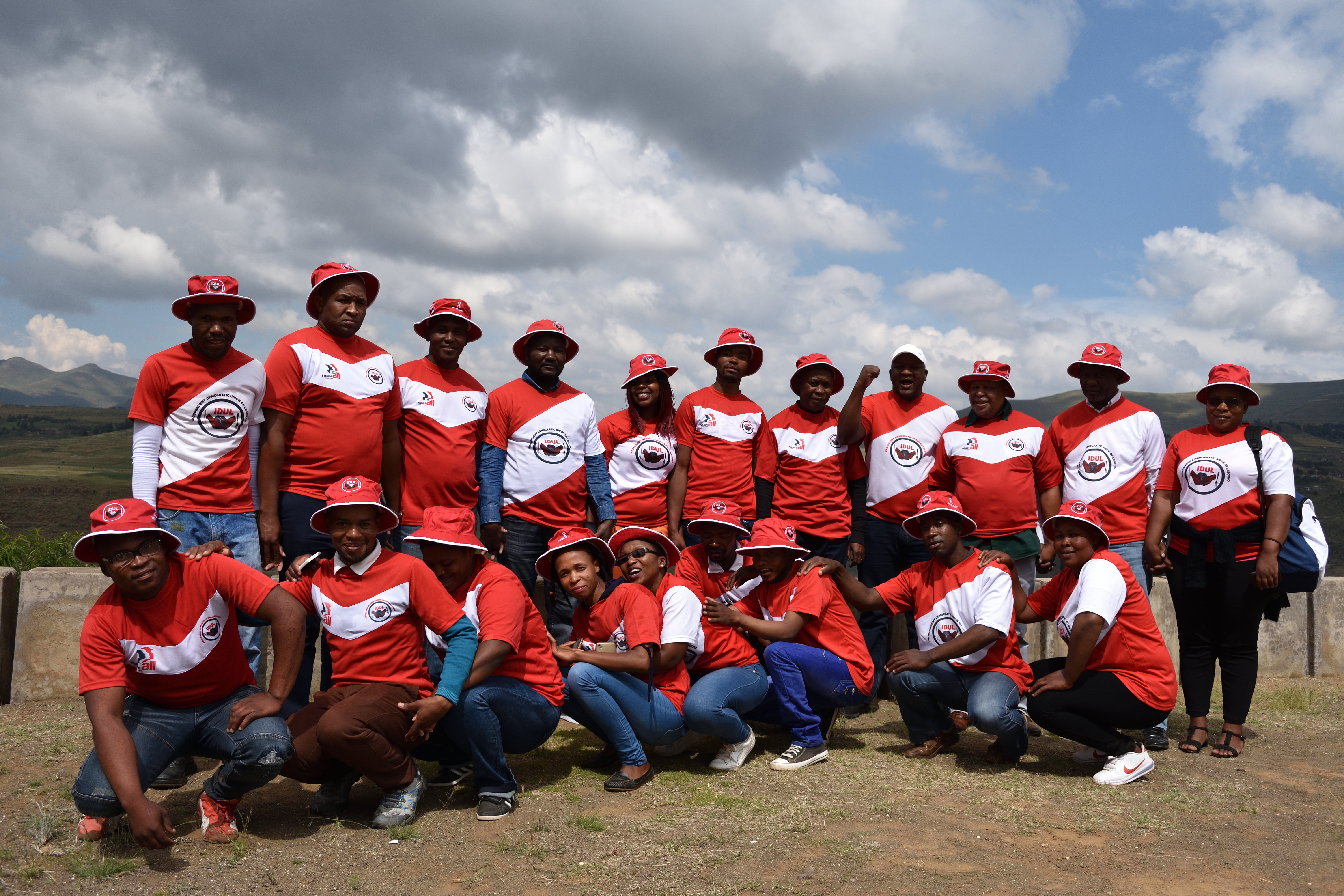
As part of the IndustriALL Global Diamond Network (IGDN) meeting resolution to support IDUL’s organizing drives, made in Johannesburg in 2018, three South African affiliates sent their organizers and educators — Lucky Mabiletsa (National Union of Mineworkers), Joseph Mosia, (National Union of Metalworkers of South Africa) and Thabo Mpete (United Association of Southern Africa). They shared strategies on dispute resolution, collective bargaining, understanding labour laws, and building skills on health and safety at a two-day workshop for 20 shop stewards. Besides training, the affiliates are supporting IDUL’s initiative to set up an office at Kao and will invite the union to their international schools, as well as help in securing an all-terrain vehicle.

Shopstewards from the Independent Democratic Union of Lesotho. Photo: IndustriALL

Glen Mpufane, IndustriALL mining director, applauded the solidarity:

“Regional solidarity is crucial and shows the strength of the unions’ collective power. It is also an assurance to diamond mineworkers in Lesotho that they are not in an isolated struggle but are part of a global workforce fighting for workers’ rights and better working conditions through the global diamond network.”

South African women’s council pickets against sexual harassment at UNISA

The picket took place at the main campus of the university in Pretoria on 29 March, and was supported by other civil society groups. INWC-SA consists of IndustriALL affiliates, the Chemical Energy Paper Printing Wood and Allied Workers Union, the National Union of Mineworkers, National Union of Metalworkers of South Africa (NUMSA), the Southern African Clothing and Textile Workers Union and the United Association of South Africa.

Gugu, who is a NUMSA member and was at the picket, is challenging her dismissal by the University of South Africa Centre of Early Childhood Education (UCECE) and says she was sexually harassed and unfairly dismissed. When she demonstrated outside the the seat of government and the President's office, the Union Buildings in Pretoria, a few weeks ago, she was roughed up and arrested by the police. She has made reports to the police and the Commission for Conciliation Mediation and Arbitration. Further, the Commission for Gender Equality, an official body set up by South Africa’s constitution, is also looking into her case.

Officials from UNISA and UCECE received the petition and said they will reopen investigations into the matter and will meet with the INWC-SA on 2 April. The petition, which was read and signed by Ruth Ntlokose, the second deputy president of NUMSA stated:

“Gugu Ncube, like many survivors of sexual assault and/or sexual harassment who have taken the brave step of naming their abuse or abusers have routinely encountered disbelief, trivialization or minimalization of their experience or expectation, doubt and undermining of their accounts. Sexual harassment causes harm and trauma; it forms part of the continuum of violence against women that includes sexual assault, exploitation and abuse.”

Says Paule France Ndessomin, IndustriALL regional secretary for Sub Saharan Africa:

“We stand for Gugu’s fight for justice in line with the IndustriALL Pledge which is our commitment to stand firm and say no to sexual harassment at the workplace. We are committed to uprooting all forms of gender-based violence from the workplace.”

In 2018 the South African government convened a national summit against gender-based violence and femicide and recently opened a sexual offences court to curb violence against women.

Zambian union on organizing blitz for contract mineworkers

Of the country’s 65,000 mineworkers, nearly half, 30,000, are employed through contractors.

The Mineworkers Union of Zambia (MUZ) is on a recruitment drive for contract workers who are often employed on short-term contracts with low pay and little or no benefits. The same workers are put under pressure to perform dangerous work to meet targets sometimes with disregard to health and safety standards. However, when injuries and death happen, employers shift the blame to the contractors.
 
On 18-19 March MUZ, affiliated to IndustriALL Global Union, with support from the Sub Saharan regional office had a recruitment and organizing blitz in Chililabombwe district at EMR’s Lubambe, and the London-listed Vedanta Mining Resources’ Konkola Shaft 3 copper mines, where the union emphasized the importance of belonging to a union to fight for workers' rights collectively. At Lubambe, all contracts will end in August, creating an uncertain future. 

In the last few months, MUZ has signed recognition agreements with the multinational mining contractors, Reliant Drilling and Redpath Rig Resources, among other mining companies. One of the benefits of these agreements is the extension of contracts from three months to two years, but the goal for MUZ is for permanent jobs for the workers.
 
Brenda Mufika,  IndustriALL coordinator for MUZ says:

“Short contracts make workers reluctant to join a union because there is no job security. To counter the short contracts, we are campaigning for decent work and permanent jobs.”
 
Charles Kumbi, IndustriALL project officer says:

“Organizing is key to building union power as it allows the union to effectively engage the employer in collective bargaining. Recognition agreements are an important tool not only to increase membership but to build the strength of the union.”

Zambia is in the IndustriALL union building programme, which also includes seven other countries in the Sub Sahara region.

Ethiopia: workers strike for a union in Hawassa industrial park

IndustriALL affiliate, the Industrial Federation of Textile, Leather and Garment Workers Union, says that the strike is the result of unions being denied access to organize in the park.

When fully operational, Hawassa will have the potential to employ over 60,000 workers, with more than 20 global brands and retailers sourcing garments from the park.

Teklu Shewarega, IFTLGWTU’s organizing and industrial relations department head says:

“The recent strike is not a surprise. With no unions representing workers, low wages and bad working conditions are prevalent.

We have tried to organize the workers for more than two years without a clear permission from the government so far. We continue our efforts and ask our international partners and the global brands and retailers sourcing from the park for support in putting pressure on the government to allow organizing.“

Wages in the industry are as low as 750 Ethiopian Birr (US$27). To improve wages, the IFTLGWTU is working with different partners, including the Confederation of Ethiopian Trade Unions (CETU) and FNV Mondiaal. According to a recent wage survey, 65 per cent earn less than US$70, while 35 per cent are paid less than US$35, making some of Ethiopia’s textile and garment workers the working poor.

To survive, a worker needs at least US$144.

Workers are also asking for other benefits including housing and transport. The provision of housing next to the parks, will improve workers welfare as most are living in squalid conditions where four or more workers share a room with colleagues to be able to afford the rent.

Paule France Ndessomin, IndustriALL regional secretary says:

“Women have a right to a safe workplace and we strongly condemn the sexual harassment of women workers at Hawassa, which violates both labour laws and the Ethiopian Constitution. We call in employers a to urgently address the workers' grievances through dialogue with the union. It is unacceptable for the government to continue denying unions access to organize in the park.”

Africa energy network demands Just Transition

The network, which is supported by the Friedrich Ebert Stiftung, Trade Union Competence Centre for Sub Saharan South Africa (FES-TUCC), met 12-13 March, Johannesburg, and rejected the unbundling of state-owned enterprises as a disguise for privatization. It supported the positions taken by South African affiliates, the National Union of Mineworkers (NUM) and the National Union of Metalworkers of South Africa (NUMSA) which strongly oppose the recent announcement by the government that the country’s power utility, Eskom, will be broken into three parts – generation, transmission and distribution.

In Zimbabwe, the network is supporting the Zimbabwe Electricity Supply Authority’s bring together of its companies into one but with no job losses or removing of workers’ benefits. This move is reversing an earlier decision to unbundle.

In Eswatini the network condemned unfair dismissals and suspensions. It called for the reinstatement of 11 workers. Four were dismissed and 17 suspended by the eSwatini Electricity Company after a strike in January.

Participants at the meeting were drawn from 13 Sub-Saharan African countries that organize in the energy sector including in oil and gas. Formed a few years ago, the network initially catered for Southern Africa but has since been expanded to Sub Saharan Africa.

Bastian Schulz, director, FES-TUCC says:

“A sustainable energy transition in Sub-Saharan Africa and the final energy mix is of great interest to the FES because of the impact on jobs, communities, and sustainable development policies. It must be central to the labour movement in Africa, and unions must be included in the policy making.”

Diana Junquera Curiel, IndustriALL energy industry director stressed the importance of networks:

“As part of IndustriALL’s energy networks, SSAEN will align with other networks from Asia, MENA Region and Latin America. This is important in building the strength of the network. Importantly, the ability to create a rich pool of solidarity and learning among the affiliates is useful. Experiences that resonate with national issues can be adapted. This also builds the network’s knowledge and informs its response to the current issues.”

Diana Junquera Curiel presented the Shell Campaign as an example of the work of IndustriALL Global Union to confront global capital and that existing global framework agreements in multinational companies, Total and Eni, were useful examples of global social dialogue.

Brian Kohler, IndustriALL director of health, safety and sustainability says:

“A Just Transition is a pathway towards a sustainable future and reduces fear amongst workers by promoting fairness. It rests on sustainable industrial policy, robust social protection, and creative labour adjustment programmes.”

Brian Kohler further explained the energy options that exist for Sub Saharan Africa which include biofuel, biomass, co-generation, fossil fuel (coal, oil and gas), geothermal, landfill gas, nuclear, solar (photovoltaic and thermal), tidal, wave and wind.

IndustriALL National Women’s Council of South Africa is founded

The Council, made up of NUM, NUMSA, SACTWU, CEPPAWU and UASA, is meant to initiate and facilitate collective action to:

In the meeting, the INWC-SA agreed on a statement on the case of Gugu Ncube, a young woman who put forward allegations of sexual harassment by her manager, while employed by a service contractor of UNISA Early Childhood Centre.

While the allegations are yet to be determined, how the police has handled the case, the public shaming of Gugu, and UNISA’s refusal to take responsibility, arguing that she was hired through a subcontractor, has led to an outcry in South Africa.

The INWC-SA is calling for a picketing action to be held on the 29 March at UNISA in Pretoria.

South Africa: Workers striking against precarious work at Arcelor Mittal

IndustriALL affiliate, the National Union of Metalworkers of South Africa (NUMSA), has 3,000 members at ArcelorMittal’s six South African operations and is calling on all workers to join the strike.

Most of the workers are employed through labour broking firms, Real Tree Trading, Monyetla and others. Real Tree Trading tried to stop the strike through a court interdict, but the request was thrown out. NUMSA is questioning why Real Tree Trading considers itself a ‘service provider’ and not a labour broker when it is one of the subcontractors to ArcelorMittal.

Workers say ArcelorMittal is paying contracted artisans with the same qualifications and experience about 50 per cent of what permanent workers earn. Further, newly qualified artisans are underpaid, with entry level pay pegged at the minimum wage of R3500 (US$244).

NUMSA won a landmark Constitutional Court case in 2018, which ruled that labour brokers cannot employ a worker beyond three months. When that happens, the contract becomes permanent according to the law.


Type your caption

“We must shutdown the operations of the company in order to defend the rights of all workers. It is immoral for workers who do the same work, to earn less, just because they were brought in by a contractor,“ says Mokete Makoko, NUMSA regional secretary for Sedibeng.

"They do the same work as other workers directly employed by ArcelorMittal, yet they earn lower salaries and do not receive the same benefits. NUMSA’s ultimate demand has always been to ban labour brokers.”

ArcelorMittal’s offer of permanent jobs for contractors after three years was rejected by NUMSA.

The striking workers also want health and safety standards at the company to be improved after recent accidents.

Says Adam Lee, IndustriALL director of organizing, campaigns and base metals:

“IndustriALL supports NUMSA’s struggle for permanent jobs. We urge ArcelorMittal to act as a responsible employer and provide all of its workers with stable, decent work.”

Ten striking workers were arrested by the police, but have since been released.

IndustriALL Global Union organizes a global network of unions at ArcelorMittal, which will meet in Brazil in April and discuss the strike.

Shell worker abuses in Nigeria taken to UN Human Rights Council

In a joint statement to the General Assembly of the Human Rights Council, IndustriALL Global Union and Swiss organization, Europe-Third World Center (CETIM), said:

“Contract workers at Shell Nigeria are living in poverty, with no job security and poor healthcare that is costing workers’ lives. Contract workers face dismissal if they join a union or ask for a pay rise. They lack safety equipment and risk death in the field.”

IndustriALL, through its oil and gas trade union affiliate, NUPENG, represents contract workers at Shell Nigeria.

A recent IndustriALL mission to Port Harcourt in Nigeria found that most, if not all, of Shell Nigeria’s blue-collar workforce are employed by a complex network of recruitment companies on behalf of Shell, making it extremely difficult for workers to organize into trade unions and defend their rights.

A full written statement of the human rights violations of Shell contract workers in Nigeria was submitted to the General Assembly of the UN Human Rights Council and officially published last week.

“My recruiter doesn’t pay on time,” says a Shell contract worker in the statement. “I haven’t been paid for six months. My wage is only 50,000 naira (US$137) per month. I'm going to go home and beg my neighbour for food. For six months, my children can’t go to school. I’ve been working at Shell for 11 years, but I don’t have a carpet in my house. I don’t have a radio at home.”

IndustriALL has informed Shell of its mission findings but the energy giant has shrugged off the report and refuses to enter into discussions with IndustriALL.

“Shell is violating the human and labour rights of Nigerian workers with impunity, highlighting the urgent need for an international legally-binding instrument to regulate the activities of transnational companies,” continues the oral statement.

IndustiALL and CETIM are calling on the authorities in Nigeria to honour their commitment to human rights and international labour standards by taking action to ensure that Shell Nigeria respects the rights of workers working on its behalf to safety, health, a decent income and freedom of association. They also call on the Human Rights Council to urge the Dutch government to hold Shell to account for violations committed on Nigerian soil.

In addition to the written and oral statement, CETIM and IndustriALL also organized a side-event on 7 March in parallel with the 40th session of the Human Rights Council to denounce human rights violations by Shell, and mining companies, BHP and Vale.

Senegal: Unions build strength through organizing and collaboration

Participants discussed strategies to build sustainable unions through leadership training, strengthening union solidarity instead of competition, supporting union capacity development and forming a national coordinating committee that will be responsible for joint actions and campaigns.

An organizational assessment exercise evaluated the unions to see what is working and what needs to be attended to. The strategies to strengthen the unions in Senegal will be implemented through the union building project activities.

The workshop also commended the recently concluded precarious work project (2015-2017), which saw over 11,000 workers getting permanent jobs after the conversion of their contracts from short-term and casual to permanent ones in Burkina Faso, Cameroon, Nigeria and Senegal.

About 29,000 precarious workers were recruited into trade unions from the four countries. The project also led to better wages and working conditions including improvements in health and safety at workplaces and the payment of benefits such as medical support, leave, housing and transport allowances.

Organized by the IndustriALL Global Union Sub Saharan Africa regional office, with support from the Belgian trade union confederation (ACV-CSC BIE), and the French Chemical and Energy Union (FCE CFDT), the workshop and meeting had participants, mainly women, from IndustriALL affiliates SNTIT, SNTICS, SYNTICS and SUTIDS.

These affiliates organize in the chemical, mining, textile and garment and industrial manufacturing sectors. The other countries that are part of the project, which is co-funded by Swedish Union to Union, and where similar activities are taking place, are Burkina Faso, the Democratic Republic of the Congo, Lesotho, Madagascar, Zambia and Zimbabwe.

Says Jan Franco, international officer of ACV-CSC:

“The challenges for Senegalese unions are enormous. During the planning meeting the participants identified priorities and achievable goals. What struck me is the willingness of the trade unions to cooperate and the active presence of women and young unionists. The open atmosphere and debates on methods of approach and action showed a readiness to strengthen capacity.”

Paule France Ndessomin, regional secretary for the Sub Saharan Africa concurs:

“We applaud the Senegalese unions’ commitment to collaboration because this is where unions draw their strength from. As discussed at the women’s meeting, it is important to prioritize the issues confronting women at the workplace including sexual harassment and gender-based violence. Unions must ensure that these are addressed.”