South African unions optimistic after election of new government
In his inauguration speech, South African president Cyril Ramaphosa said that under his administration the government will promote policies that create decent work and skills development especially for young people, empower women, fight corruption and end poverty in a generation.
President Ramaphosa cited the Fourth Industrial Revolution as a provider of new jobs, especially for young workers. Further, he said that during his tenure South African society will be guided by equality and solidarity and that he will promote a social compact between business and labour.
Additionally, sustainable economic development will be promoted “for productive lands and viable communities, for knowledge, for innovation, and for services that are affordable, accessible and sustainable.” Companies will be asked to “generate social value and propel human development.”
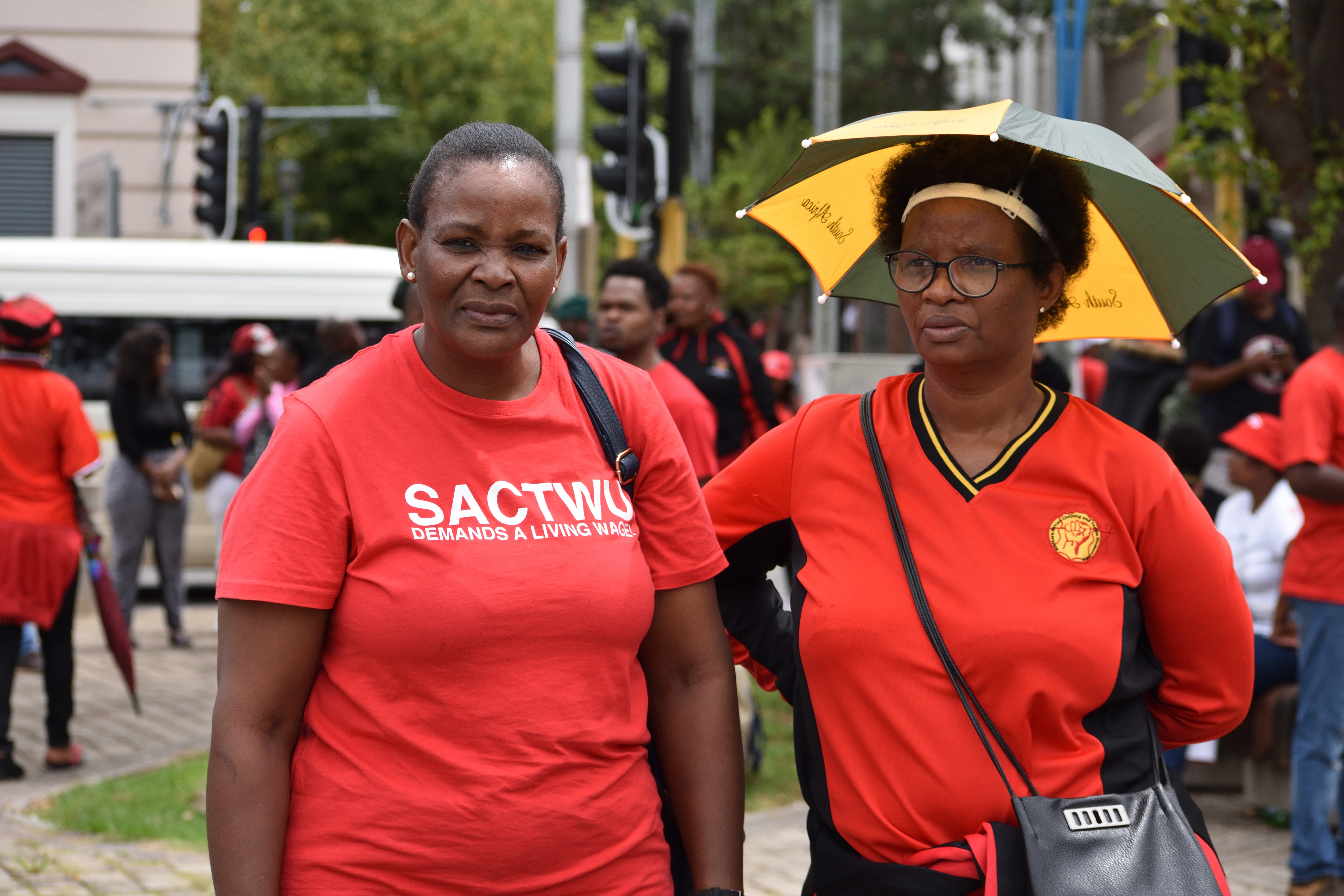
A march for jobs in Johannesburg
Said IndustriALL Global Union affiliate, the Southern African Clothing and Textile Workers Union:
“Growth and development of our manufacturing industry remains crucial for South Africa’s future overall economic well-being. We cannot be a country of raw material exporters and importers of finished goods, if we are to decisively address the triple crises of unemployment, inequality and poverty. The industrialization and beneficiation of our economy is key.”
“We especially appreciate the appointment of Minister Ebrahim Patel as Trade and Industry Minister. It bodes well for the future of the clothing, textile, leather and footwear sectors, and for the fast-tracked development of the manufacturing industry in general.”
Said Paule France Ndessomin, IndustriALL regional secretary for Sub Saharan Africa:
“We welcome the announcements by President Ramaphosa, especially the appointment of more women to the cabinet which led to the achievement of a 50/50 gender parity. Further, we expect that the announcements will result in the creation of decent jobs and living wages.”
A march for jobs in Johannesburg
The South African economic outlook is bleak. According to Statistics South Africa unemployment is high at 27.6 per cent and is even higher as seen in the extended rate of over 37 per cent — which includes discouraged job seekers who have stopped looking for work. Thousands of jobs are also being lost in the mines when operations are closed. But unions are optimistic that the government will turn things around and will continue their jobs and living wages campaigns as strategies to reduce inequality.
Unionist elected Member of Parliament in South Africa
After working for more than four decades as a sample machinist, Beauty Zibula rose from being a shop steward to become the first vice president of the Southern African Clothing and Textile Workers Union (SACTWU), affiliated to IndustriALL Global Union. She is also an executive and women’s committee member of the IndustriALL Sub Saharan Africa region, and on 22 May she was sworn in as MP.
The Sub Saharan Africa region welcomes her election as one of the ruling African National Congress’ members of parliament for the KwaZulu-Natal Province.
Like most South African unionists, she became politically active in junior school and got her first job in the sector in 1978. Her history in the labour movement is illustrious. Active in the Garment and Allied Workers’ Union (GAWU) in Durban during the 1980s, she is part of a collective that turned the union into a militant organization that fought against apartheid.
She became chairperson of the Durban North local of GAWU from 1987 to 1989 and retained that position when SACTWU was formed. Other positions she has held include: SACTWU’s Kwazulu-Natal (KZN) regional treasurer, the KZN regional deputy chairperson, the KZN regional chairperson and first deputy president of SACTWU.
“We congratulate comrade Beauty Zibula, a trade unionist who has risen through the trenches of working class struggles. Having been a regional executive member, she knows how to fight for workers’ rights against precarious work and is a staunch defender of workers’ rights in the garment and textile and other sectors. We are confident that she will take the fight to the South African parliament as well,” said Valter Sanches, IndustriALL general secretary.
SACTWU has over 100,000 members that make up 85 per cent of the textile and garment sector including shoe and leather. It organizes workers in spinning mills, wool washeries, factory shops, clothing factories, cut make and trim operations, small businesses, footwear factories, cotton gins, laundries, tanneries, weaving sheds, finishing operations, dye-houses, retail outlets, and warehouses.
IndustriALL again demands Shell address violations in supply chain
Shell has refused to recognize serious breaches of its own code of conduct by its suppliers, which were raised at Shell’s AGM last year.
An IndustriALL mission to Nigeria in September 2018 witnessed first-hand how contract workers at Shell in Nigeria are living in poverty, with no job security and inadequate medical cover, while being denied the right to join a union.
Speaking at the AGM, IndustriALL energy director, Diana Junquera Curiel, said:
“In September, I personally went to Nigeria and I saw these violations for myself. For your information, we have raised these violations with the International Labour Organiziation, the UN Global Compact and the United Nations Human Rights Council.”
Last year, Shell made a commitment with three other oil companies to create a common framework for monitoring labour rights in their supply chains. However, the scheme is not transparent and excludes trade union participation.
“If Shell really wants to improve labour rights in its global supply chain, why does Shell refuse to work together with IndustriALL Global Union to address these issues?” asked Diana Junquera Curiel at the meeting.
“Shell says it only works with local unions, but problems in Shell’s global supply chain need global dialogue to find global solutions. Other multinational energy companies, such as Total and Eni, work with IndustriALL to improve workers’ rights in their supply chains, why can’t Shell do the same?”
Afolabi Olawale Olufemi, general secretary of NUPENG, which represents contract workers in the Nigerian oil and gas industry, called on Shell CEO, Ben van Beurden, to commission an independent study into the impact of Shell outsourcing in Nigeria:
“Workers have been on the same wage since 2014. We signed a new collective bargaining agreement with Shell contractors last year but it has never been implemented. Oil and gas workers are toiling hard in Nigeria. The dividends you are earning are tainted by the tears of Nigerian workers.”
Shell’s CEO agreed to look into the matter but said that Shell does not have control over how suppliers pay or negotiate with workers. However, Van Beurden admitted that Shell contractors should honour Shell’s supplier principles. These include “compliance with all applicable laws and regulations on freedom of association and collective bargaining.”
NUPENG general secretary, Afolabe Olufemi, and president Williams Akporeha, raise their problems directly with the Shell CEO, Ben van Beurden after the AGM.
Joosje de Lang from IndustriALL’s Dutch affiliate, FNV, also made an appeal to the Shell Board on behalf of Shell members in the Netherlands. She called on Shell to apply the same international standards of workers’ rights enjoyed by workers in the Netherlands to all Shell workers around the world.
“It is clear that Shell contractors in Nigeria are breaking Shell supplier principles. We urge Shell to take action to ensure contractor companies adhere to fundamental labour rights, as in accordance with its own standards,” said IndustriALL assistant general secretary Kemal Özkan. “We are, as ever, open to dialogue with Shell to help resolve these issues.”
PROFILE: Organizing in the garment and textile sector in Ethiopia
Union: Industrial Federation of Textile, Leather and Garment Workers Union (IFTLGWU)
Country: Ethiopia
Text: Elijah Chiwota
Building unions in rough terrain: Organizing in the garment and textile sector in Ethiopia
The Industrial Federation of Textile, Leather and Garment Workers Union (IFTLGWU), affiliated to IndustriALL Global Union, has hit a brick wall in its attempts to organize at Hawassa, despite the country’s Constitution and labour laws providing for freedom of association.
Ethiopia’s economy has grown quickly over the last few years, from an agricultural economy to an industrializing one. The country now has one of the highest economic growth rates in
Sub-Saharan Africa. Industrial parks
like Hawassa are part of the government’s plan to create jobs.
The Ethiopian Investment Commission touts low wages and other benefits to attract investment. The government has set up the Ethiopian Textile Industry Development Institute, and industrial parks have been built across the country to promote light manufacturing. The largest is Hawassa, with the potential to employ over 60,000 workers on double shifts. It is expected to generate US$1 billion in exports.
This developmental state approach aims to create jobs and reduce unemployment, especially among the youth. With a growing population of over 105 million people, and two million young workers entering into the job market every year, the country needs to create more jobs.
Global garment brands and retailers have identified Ethiopia and Kenya as countries to source goods from over the next five years, mainly due to rising costs in countries they have traditionally produced in, like China and Vietnam. Factories in the industrial parks supply to big brands and retailers, including Adidas, Marks & Spencer, H&M, Primark, JC Penny, Phillips-Van Heusen, Tesco, Inditex, Tchibo, Kik, VF Corporation, Schöffel, Walmart, Ober Mayer, George (Asda), Levi Strauss and Hugo Boss.
Unions ask: who benefits from this low cost, labour-intensive, low skill manufacturing model?
Ethiopian workers are on the losing end of the equation. Denying unions access means that wages are low, and workers’ rights, including to health and safety and collective bargaining, are curtailed.
The face of the textile and garment sector in Ethiopia is that of a young woman. But at Hawassa, the union is unable to campaign for women workers’ rights, including against sexual harassment, for maternity protection and on child care issues. Housing is another issue as many women are forced to share a room, sometimes with more than four colleagues.
A long way away from a living wage
A recent study by global labour market analysts MyWage and Confederation of Ethiopian trade Unions (CETU), with support from FNV Mondiaal, concluded that a garment worker needs at least 4,130 Birr (US$146) per month to survive, and workers with families need more. Yet 92.5 per cent of the workers earn less than the minimum required to make a living, with 8 per cent earning below US$35. The survey, in which 1,052 workers from 52 factories were interviewed, was carried out in Addis Ababa, Oromia and Hawassa.
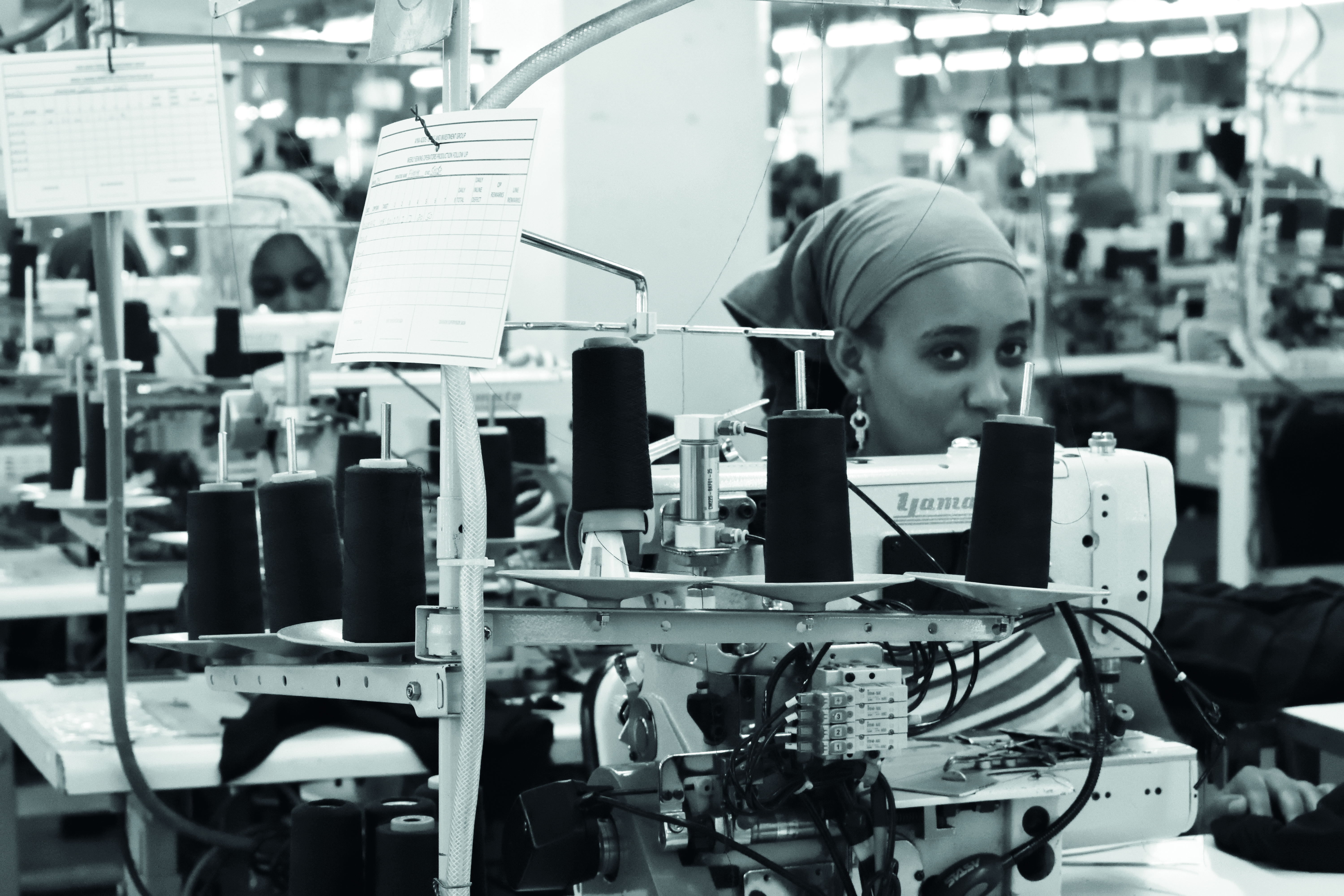
Workers at Ayka Addis factory, Addis Ababa. IndustriALL
Minimum and living wages are central to a campaign by the 55,000-strong IFTLGWU, affiliated to CETU. With the current wages most workers struggle to make ends meet and can be described as working poor. A low wage economy means jobs that will neither change living standards of the workers, nor end poverty.
The government promotes ‘industrial harmony’ – but unions say harmony can only be attained through inclusive social dialogue. To achieve this, the IFTLGWU is working with the CETU, the International Labour Organization, FNV Mondiaal, the Friedrich Ebert Stiftung, IndustriALL and other partners in various activities that include building union capacity for collective bargaining towards social dialogue.
IFTLGWU is using collective bargaining training as part their campaign for a living wage. Training shop stewards in the textile and garment sector means they can take the fight for workers’ rights to their factories.
Raising women’s voices
Unions in the country represent only a small portion of the workforce. Only 10 per cent of the country’s labour force of over 44 million workers is employed in the private sector and the law does not allow public sector workers to organize. In addition to low unionization, there is poor representation of women workers within the unions.
Even though more than 90 per cent of the workers in the textile and garment factories are women, the union leadership continues to be dominated by men. The IFTLGWU is working towards achieving gender equity and is holding training workshops as part of the strategy.
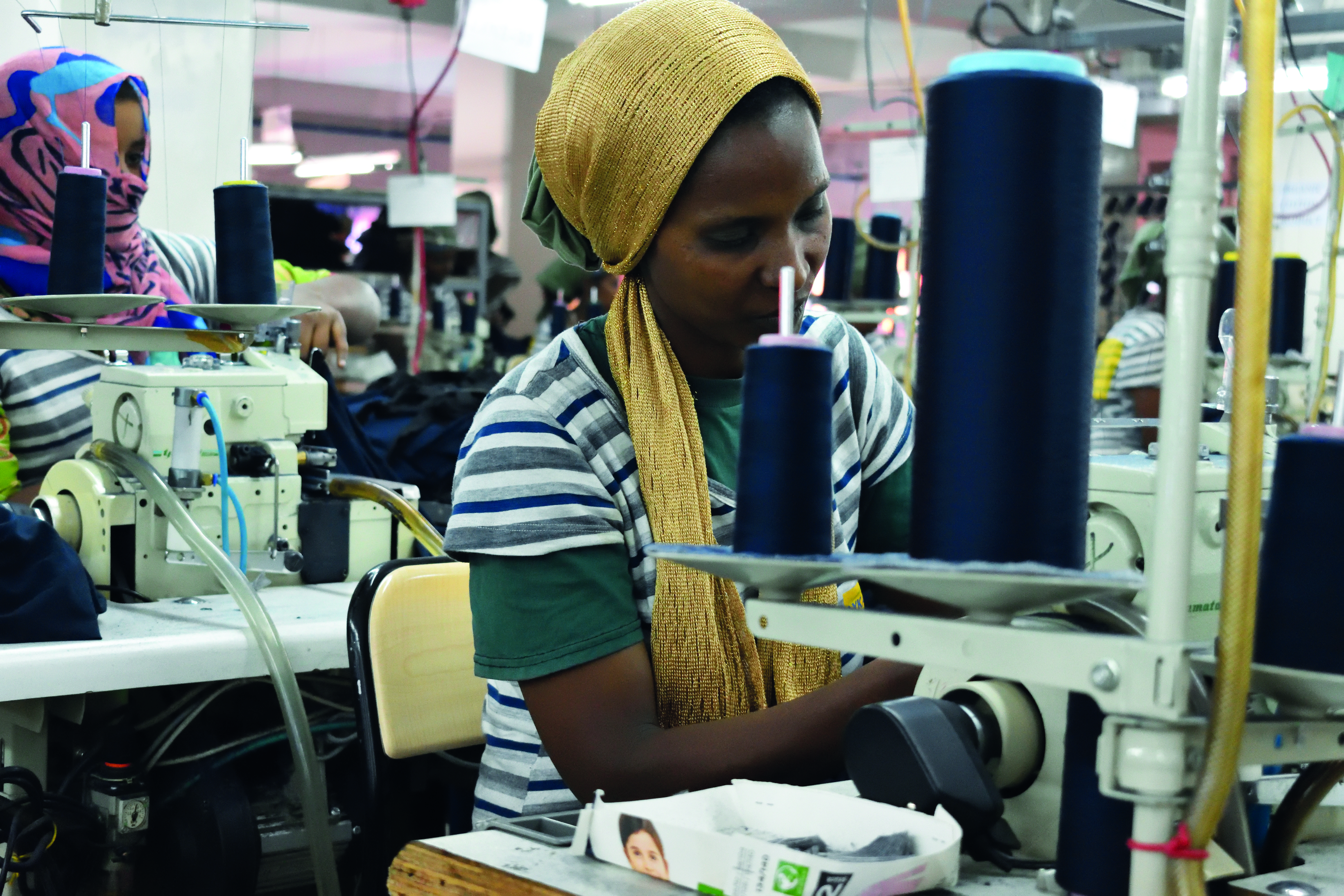
Workers at Ayka Addis factory, Addis Ababa. IndustriALL
It is a priority for the IFTLGWU to curb the exploitation of women workers in the factories by supporting women in the garment and textile sector to engage with management. For example, a recent workshop attended by 19 women shop stewards from the workplace unions of the IFTLGWU, with support from the IndustriALL regional office for Sub-Saharan Africa and FNV Mondiaal, aimed to increase women’s participation in leadership roles in the unions.
One of the participants, Gelane Senbetu, a shop steward and women’s council member from Kanoria Textile Factory, Bishoftu, says it is important for women to understand the labour laws and the context of collective bargaining in Ethiopia.
“Workshops like these are vital as they focus on how to be actively involved in union work and we identify the issues that we have to deal with in the workplace. We can freely discuss key issues like collective bargaining and how to advance women’s interests in the workplace.”
“The training has taught us a lot from a legal perspective and has strengthened the women’s councils’ ability to address women’s issues.”
A sustainable industrial policy for the textile and garment sector
According to the government’s growth strategy, Ethiopia’s main competitive advantage is low labour cost. Creating jobs will reduce poverty, and the sector is labour intensive. To support industrialization, the government is developing infrastructure. Roads are being built, airports and railways revamped and extended, and low-cost energy produced. The economic policies also aim to improve social services, including housing, health and education.
Ethiopia’s garment and textile sector has benefitted from preferential trade under the United States African Growth and Opportunity Act, as well as the Everything But Arms and duty-free quota free arrangements. In addition, there are bilateral agreements with China and India to promote the sector.
The government is promoting the growing of cotton, although production has remained low. The cotton to garment value chain includes cotton growing and harvesting, ginning, spinning, weaving or knitting, garment making, the traditional hand loom production methods, and shipping. This value chain is dominated by garment companies.
But what does the special focus given to the textile and garment sector mean for factory workers? What does it mean for union organizing? So far, the expected benefits, including skills and technology transfer, have yet to materialize. Unions are concerned that the country will replicate the mistakes of other low wage economies, undermining unions to keep wages low.
The president of the IFTLGWU, Mesfin Adenew, says:
Increasing membership is an issue we deal with daily. We will not be deterred by hostile employers and state institutions that deny us access to factories and industrial parks. The large number of non-unionized workers means that there is a lot of potential in organizing, and we are working with local and international partners to overcome the challenges.
Kenyan union signs collective agreement with Isuzu East Africa
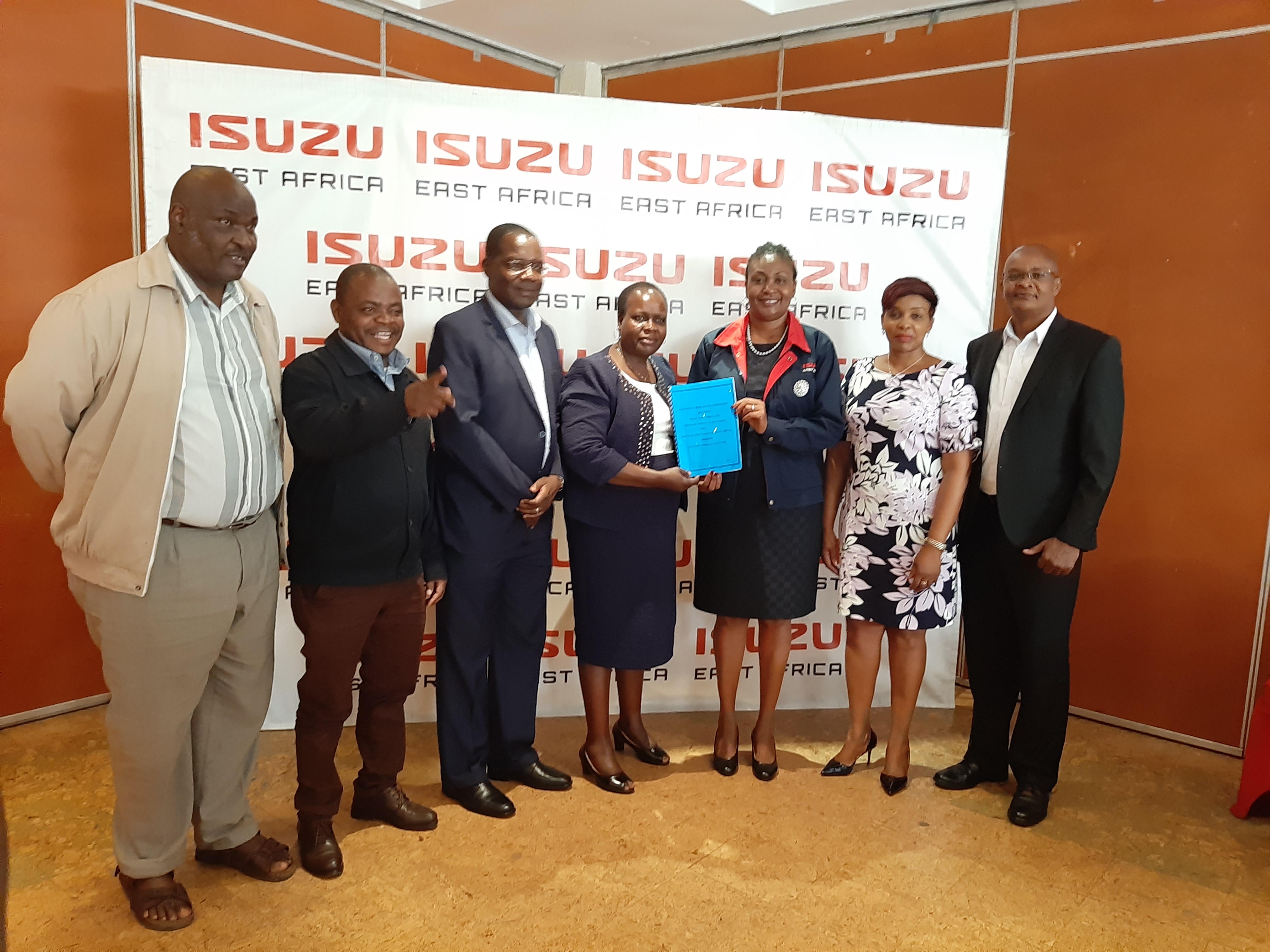
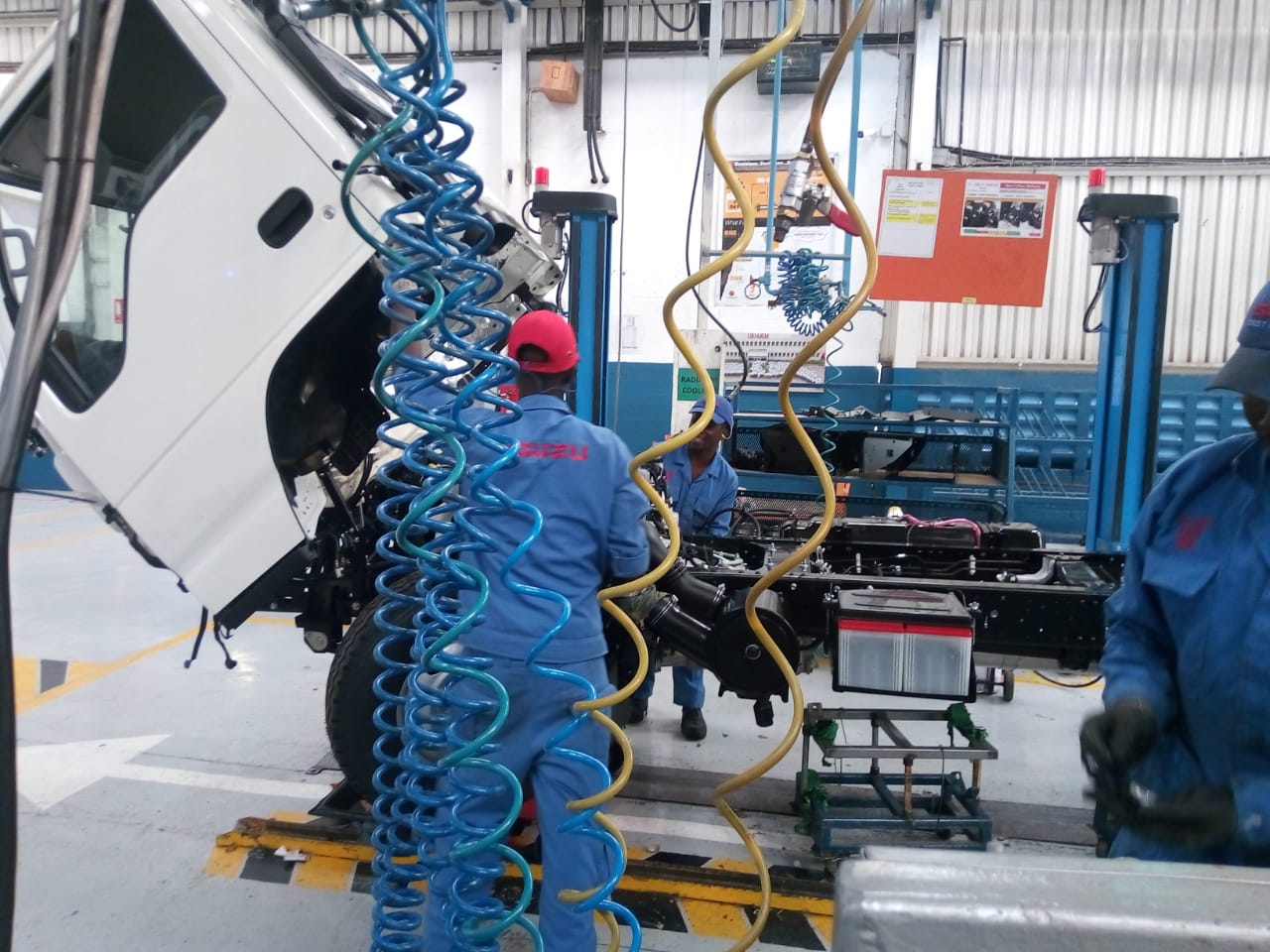
IndustriALL Global Union affiliate the Amalgamated Union of Kenya Metalworkers (AUKM) signed the agreement on 8 May, after five months of negotiations. The agreement strengthens a long history of cordial relations between Isuzu East Africa and AUKM, which contributes to building a harmonious relationship between unions and automotive companies.
Isuzu East Africa employs 228 workers, of whom 27 are contract workers and only 13 are women — an issue that the AUKM is campaigning on by encouraging the employment of more women and creating a conducive environment for women workers.
According to the agreement, wages will be increased by 8 to 9.7 per cent, with a wage range from Kenya Shillings 51,560 to 85,329 (US $517 to $855). The increase will remove inequalities by closing wage gaps between different grades of workers doing similar work. Travel allowances will be increased by 8 per cent and housing allowances by 10 per cent. Other benefits that were increased include the shift allowance. The company also has a social security benefit of 20 per cent of the worker’s wage that is paid by the employer.
Rose Omamo, the general secretary of AUKM said:
“This is one of the best collective bargaining agreements that the parties have negotiated and comes from the good will and trust that we have built over time. Collective bargaining agreements are the backbone of a strong trade union and that is why we are happy when we sign them.”
Paule-France Ndessomin, IndustriALL regional secretary for Sub Saharan Africa said:
“The signing of the collective bargaining agreement should be applauded because better working conditions improve the livelihoods of workers and their families. Improved benefits lead to living wages that we are campaigning for the automotive sector to pay.”
Isuzu East Africa, formerly General Motors East Africa, manufactures light commercial vehicles. To attract local manufacturing and as part of industrialization efforts, the government of Kenya has introduced tariff exemptions to imports of vehicle components. The government is also giving first preference to locally assembled vehicles in its purchases as a boost to local manufacturing.
3,000 jobs lost expose precarious working conditions in Zambia’s copper mines
While Mopani says the shafts are old and costly to maintain, the unions say the mining companies don’t care about job security. The current global dialogue between IndustriALL Global Union and London Stock Exchange (LSE) listed Glencore is meant to improve industrial relations and the mine closures are a test of Glencore’s commitment. The announcement is a cause of concern for IndustriALL which expects Glencore to be transparent in its engagement with unions, specially to mitigate the impact of the closures on mineworkers and communities.
On Vedanta Resources’ Konkola Copper Mine, also listed on the LSE, the unions say it is better for the company to resume operations instead of mothballing the shafts. Mining operations at Nchanga underground and open pit mines stopped in January resulting in the retrenchment of 905 workers. The mining sector employs over 65,000 workers, 30,000 directly and 35,000 through contractors. However, the contractors employ workers under precarious working conditions on short contracts, and low wages and benefits with an appalling adherence to health and safety standards which has led to deaths and injuries.
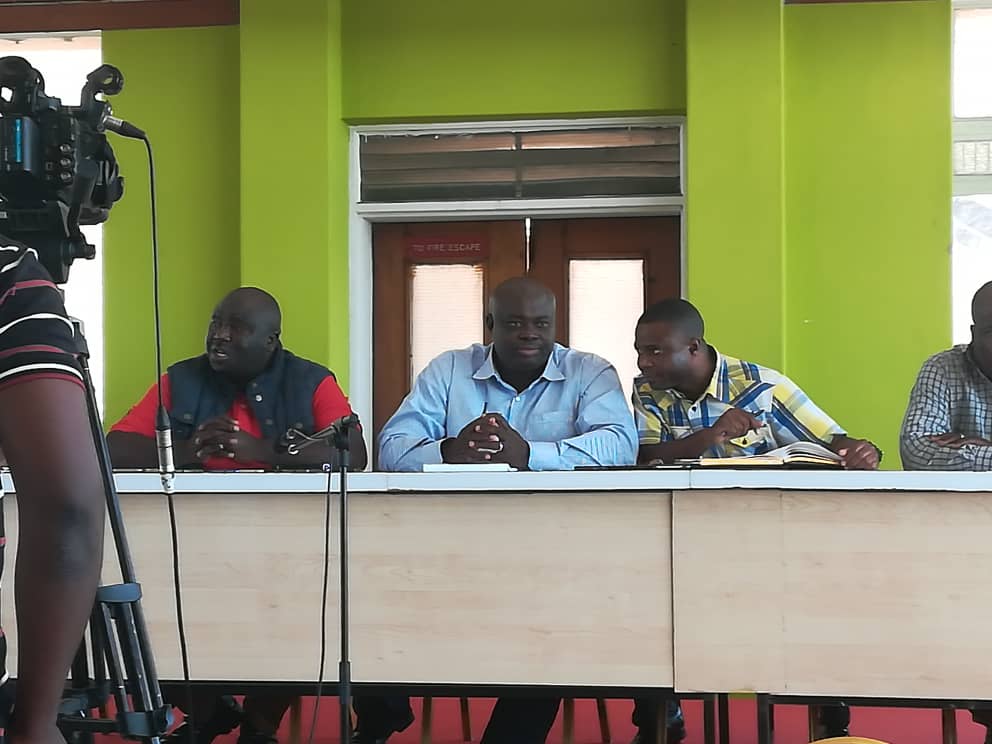
At a press conference with two other Zambian unions, NUMAW and UMUZ, on 10 May, Joseph Chewe, the president of the Mineworkers Union of Zambia, which is affiliated to IndustriALL, said:
“Mopani Copper Mine should ensure that the affected workers are redeployed to other operations. It’s sad that it is now a risk to work for Mopani because of the uncertainty and job insecurity. The claim that the mine is investing in the future is hollow as this is being done at the workers’ expense. Workers are targeted in cost cutting measures by management whenever there is a challenge. To protect workers’ interests the unions are demanding to be part of the technical team that will inspect the shafts.”
Glen Mpufane, IndustriALL director for mining, said the multinational companies should implement fair labour practices:
“The era of discarding mine workers who toiled for many years digging valuable minerals from which the mining companies enjoyed profits and sending them home with a pittance has to come to an end. Mining companies must act responsibly by either reassigning workers to other shafts or paying fair compensation for the job losses. Workers must not be retrenched into poverty as has happened in the past.”
Law amendment will rid sham cooperatives from South Africa's textile sector
The previous law treated workers in cooperatives as self-employed and exempt from paying minimum wages and conforming to labour standards. However, this will change with the Regulations for the Cooperative Amendment Act (2013) which came into effect on 1 April.
According to the new regulations, cooperatives must comply with labour laws and demonstrate their protection of members’ interests – a requirement that will make it difficult for false coops to exist.
“In the clothing industry alone, an estimated 15,000 workers are abused by such cooperatives that are exploiting workers. They are established through threats by factory owners to retrench workers unless the workers become members of the cooperative, which remains under the control of the factory owner who decides on working hours and conditions of work.
"If workers raise concerns about anything they are disciplined and fired on the spot,” says Andre Kriel, general secretary of IndustriALL affiliate Southern African Clothing and Textile Workers Union (SACTWU).
Paule-France Ndessomin, IndustriALL regional secretary for Sub Saharan Africa said it is commendable when legal gaps that allow worker exploitation are closed.
“It is important for laws to continue strengthening workers’ rights to living wages and decent working conditions. Allowing environments where workers’ rights are trampled upon with impunity is unacceptable.”
Garment factories in Isithebe, in the KwaZulu-Natal province, are infamous for using bogus cooperatives and paying low wages, and have been accused of human rights abuses including human trafficking. In February, 100 undocumented workers from Lesotho and Eswatini were found living in squalid conditions at textile factories in New Castle during a provincial government exercise to check business compliance with regulations. The workers lived in a small unventilated room at the factories which were built with high walls to conceal the shocking living conditions.
UK court rules in favour of hearing case of mine water pollution in Zambia
IndustriALL Global Union affiliate, the Mineworkers Union of Zambia, welcomed the court ruling in which Vedanta Resources will be tried for polluting water and making it toxic for drinking, irrigation, and for livestock thus destroying the livelihoods of local farmers in the villages around the Nchanga Copper Mine owned by the company’s subsidiary Konkola Copper Company.
In 2015, 1,826 villagers from communities living around the mining operations in Chingola District took the case to the UK courts. Although Vedanta wanted the case to be heard in Zambia, the court ruled that the villagers had the right to choose where they wanted the case to be heard.
The villagers probably took this route because of little adherence by mining companies to Zambian laws including the Environmental protection and Pollution Control Act (1990), Mines and Minerals Development Act (2008), and the Environment Management Act (2011). Lackluster enforcement by the policy bodies also diminishes the villagers confidence in ever getting justice.
Said Joseph Chewe, the president of the Mineworkers Union of Zambia: “The union wants to see justice prevail and hopes that the affected villages whose main source of survival is farming get proper compensation from the mining giant. The ruling sends a warning to mining companies that pollute the environment and threaten the lives of communities. The Zambia Environmental Management Authority must strictly supervise the mines to ensure that environmental regulations are adhered to.”
Civil society organization under the banner of the recent 2nd Copperbelt Alternative Mining Indaba in Chingola, said companies not only pollute the environment, but also promote precarious working conditions with short contracts and low wages. This has resulted in most workers living in poverty. The indaba also called on mining companies to create decent jobs.
Glen Mpufane, IndustriALL director for mining, said:
“Mining must be carried out in a sustainable way that considers the livelihoods of affected communities and should benefit communities and not poison their water sources. Further, the communities should also benefit from decent jobs and living wages.”
African textile, leather and garment unions meeting strategizes on AGOA
A strategy workshop organized by the Solidarity Centre Kenya in Nairobi 16-17 April, attended by 27 participants that included IndustriALL Global Union affiliates from Ethiopia, Eswatini, Kenya and Lesotho, confederations from the four countries, and regional bodies, EATUC and SATUCC, discussed how workers’ rights can be protected using the US trade law, the African Growth and Opportunity Act (AGOA).
AGOA, from which 40 African countries are beneficiaries, and 26 enjoy duty free garment exports to the US, has provisions to protect workers’ rights including freedom of association and collective bargaining. Eswatini’s removal and restoration of AGOA benefits was discussed as a case study on how the trade law can be used to protect workers’ rights.
The US law also aims to promote industrialization through economic policies that reduce poverty, develop infrastructure and provide social services as well as support private enterprise. The integration of African economies into global trade through building trade capacity and linking African to US businesses are some of the goals.
However, the law is silent on women workers’ rights, the environment, and Just Transition issues. It doesn’t also adequately cover supply chains and brands that are sourcing from the AGOA benefiting countries. For instance, targeting brands and supply chains is important for the living wage campaign that unions are carrying out. Most AGOA benefitting countries are not paying living wages and regrettably promoting a race to the bottom on wages. For instance, in the garment sector in Ethiopia wages are as low as US$30.
The AGOA Forum, a civil society grouping that includes trade unions, criticizes the trade law for missing an opportunity to stimulate the transformation of African economies and for using a discredited economic model based on oil and mineral extraction with very little value addition. The Forum says AGOA can do better on women and historically marginalized communities instead of becoming yet another elite project.
Speaking at the workshop Jeffrey Vogt, Solidarity Center’s director for the rule of law department said:
“Recognizing that AGOA has failed to promote trade, the US government included a requirement for beneficiary countries to develop a utilization strategy on a biennial basis as to how more effectively and strategically they will utilize benefits available under AGOA.”
Paule France Ndessomin, IndustriALL regional secretary for Sub Saharan Africa said:
“International trade laws such as AGOA are important to Africa’s industrialization, which is lagging behind other continents. AGOA’s support for regional integration is in line with the African Union Agenda 2063 and the African Continental Free Trade Area. By boosting exports, through duty-free access to US markets, AGOA has potential to create jobs in Sub Saharan Africa.”
Unions in Sub-Saharan Africa strengthened by solidarity
During an IndustriALL mission to Nairobi, Kenya, IndustriALL Global Union general secretary Valter Sanches and regional secretary Paule France Ndessomin met the six IndustriALL affiliates to discuss issues faced by Kenyan workers, including precarious work. Precarious work is prevalent in most sectors, including the automotive, textile and garments, oil and gas, and manufacturing and is threatening the existence of the union.
Bata shoe company, Total, and Kenya Vehicle Manufacturers (KVM) which assembles cars for Volkswagen, are some examples where precarious work is found. KVM counts 39 permanent workers and more than 300 precarious workers. The latter are denied full benefits, including leave as guaranteed by the labour laws. They also work from 8 am to 5 pm without a lunch break.
Trying to put a stop to these abusive practices, the unions are organizing precarious workers. Employers often respond by dismissing workers who join a union. The unions have taken the unfair and unlawful dismissals to court in order to reverse the decisions.
Women often work in dire conditions with low wages, experience violations of maternity leave rights, and sexual harassment and rape is not unusual.
Rose Omano, the chairperson of the IndustriALL Kenya Women’s Council said:
“We appeal to IndustriALL to give more support to women activities since the Kenyan labour movement is highly dominated by men. Women issues are union issues and must be given more attention.”
Valter Sanches said,
“IndustriALL has global campaigns against multinationals to improve working conditions, respect freedom of association and improve wages. Unions must also be more involved in the legislative agenda in their respective countries to enable workers to influence policy processes,”"
Building union power in Lesotho
The textile and garment sector in Lesotho, like most countries in Sub Saharan Africa, employs mostly women, and sexual harassment is an issue.
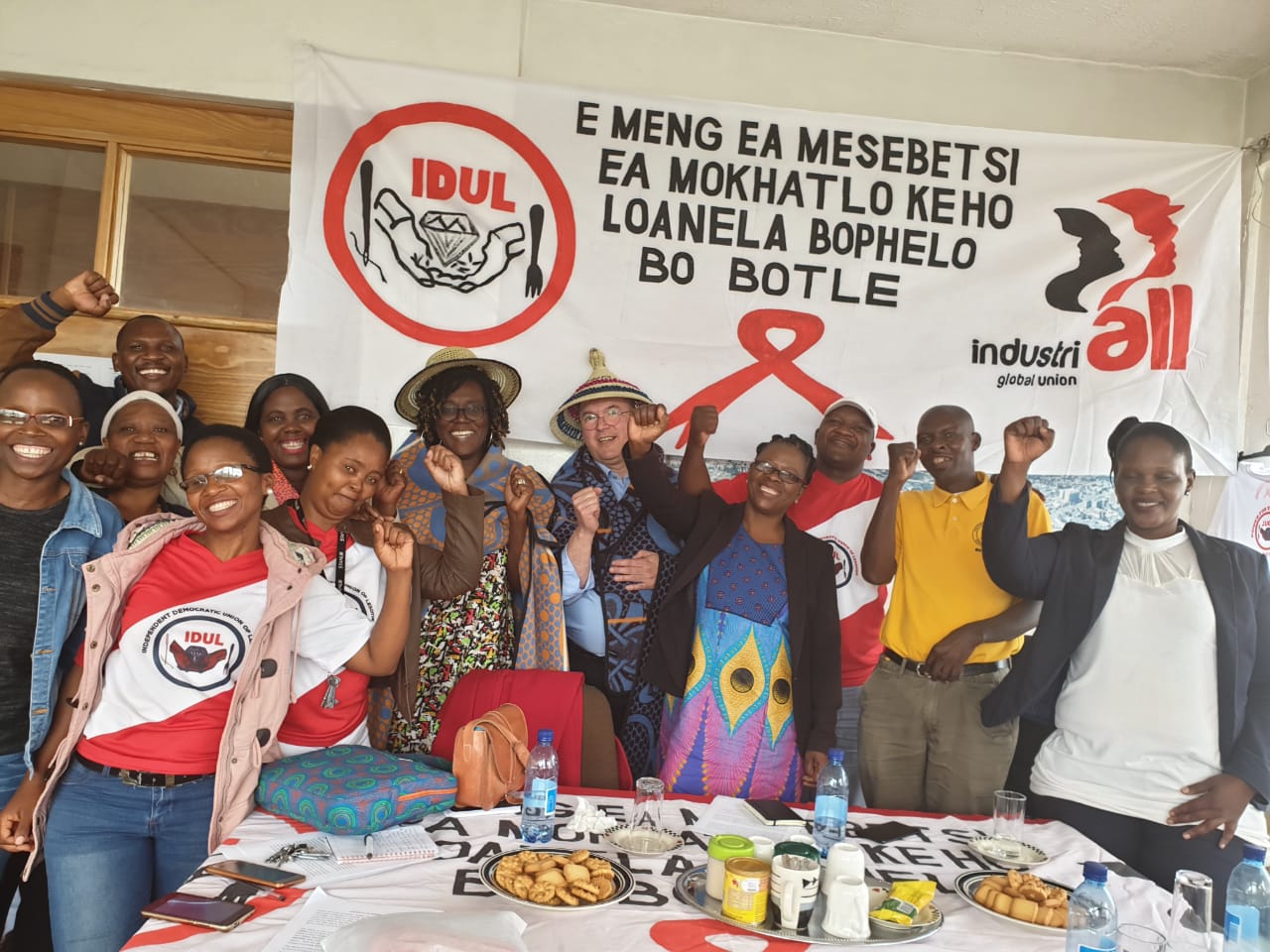
At the Nien Hsing garment factory, the Independent Democratic Union of Lesotho (IDUL) confronted the company over a sex-for-jobs hiring scandal which resulted in the resignation of a human resources manager. IDUL also fought hard, with support from IndustriALL, to have Nien Hsing reinstate a collective bargaining agreement that it had withdrawn.
In the mining sector, IndustriALL wrote to the UK-based diamond mining company, Firestone Diamonds, to remind them of its obligation to respect workers’ and human rights. The company’s Liqhobong mine in Butha-Buthe district in the Maluti mountains is denying IDUL access to organize workers. This is disappointing from a company that is gaining a reputation for digging big stones while workers have little to show for it.
“The IDUL face a range of challenges; from precarious work, low wages, unfair labour practices, and violation of human and workers’ rights including sexual harassment. The adverse conditions caused by precarious work and union busting employers cannot go unchallenged and IndustriALL and our global diamond network will continue to support IDUL.”
Valter Sanches
Training workshops on how to counter sexual harassment will be held as part of the IndustriALL campaign to end gender-based violence in the workplace.
“The power of unions comes from fighting together”
Valter Sanches in Eswatini
“The power of unions comes from fighting together”
Valter Sanches in Eswatini
Uniting workers to fight for their rights and for living wages is important for unions in Eswatini, formerly Swaziland, and Sub-Saharan Africa.
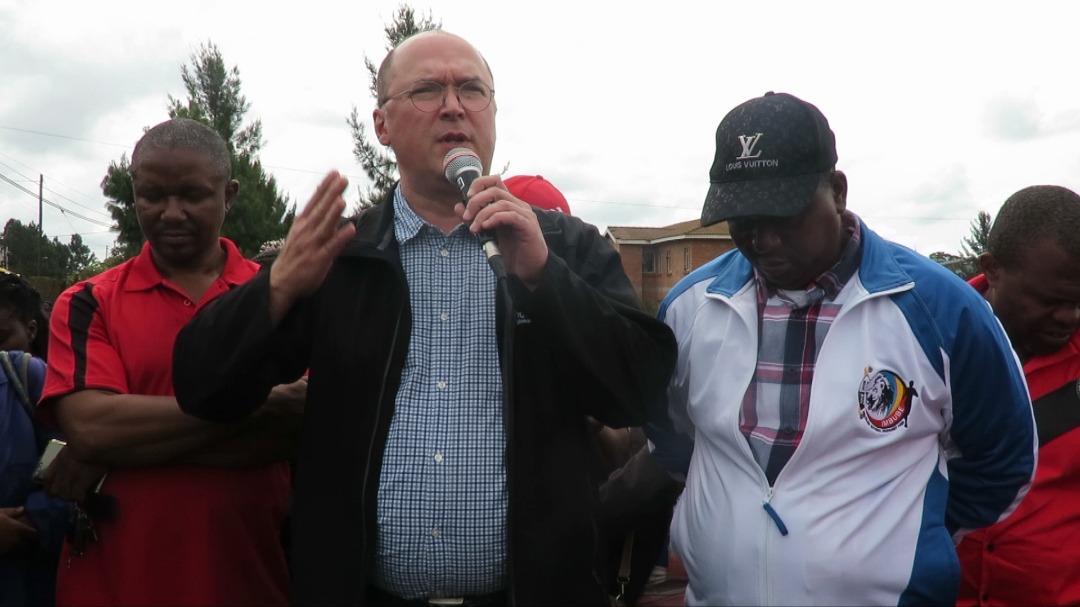
Speaking to thousands of garment workers at Nhlangano factories, Valter Sanches, said:
“Some employers in the textile and garment sector are notorious for threatening workers in Eswatini with job losses with the ploy that they will take the production to Ethiopia.
"In turn Ethiopian workers receive similar threats when employers say they will relocate to Bangladesh. The employers do this to pay low wages, but we will not accept these games. IndustriALL will take the fight and that is why we unite workers from Eswatini, Lesotho, and South Africa. If we fight together, we will succeed.”
The Eswatini affiliates said they were under “attack from different fronts” and welcomed the international solidarity and committed to “dirtying their hands in building a strong united workforce.”
Swaziland Electricity Supply Maintenance and Allied Workers Union is fighting for the reinstatement of four workers and the reversal of the suspension of 13 workers by the eSwatini Electricity Company who were suspended after taking part in a strike.
The Amalgamated Trade Unions of Swaziland (ATUSWA) is fighting against the victimization of its members. For instance, a factory at Fashion International at Matsapha is known to demote union leaders or threaten those that join the union. ATUSWA also faces the legal threats of being banned or deregistered.