Young workers discuss strategies for the future of unions in Africa

These are some of the issues that were discussed at the youth activist school in Durban, South Africa, 23-25 July which concluded that the challenges are also an opportunity to transform unions.

The 26 participants at the school were drawn from five IndustriALL Global Union affiliates from Madagascar, Mauritius and South Africa: Union des Syndicats Autonomes de Madagascar-Federation des Syndicats Autonomes des Travailleurs d’Industrie and Confédération des Travailleurs du Secteur Prive from Mauritius participated. The South African affiliates represented were the National Union of Mineworkers, the National Union of Metalworkers of South Africa, the Southern African Clothing and Textile Workers Union, and UASA.

The issues discussed include youth involvement in organizing and building union power. Upskilling young workers for future union leadership, participation of young women in the unions, building union solidarity to confront multinational companies and deal with social issues including xenophobia in South Africa as well as migrant workers’ rights. Unions were also urged to engage governments, through social dialogue, on sustainable industrial policies and youth employment policies. Unions should also organize informal workers such as artisanal miners.

The school said unions should work with community groups on social issues such as land and housing. Abahlali baseMjondolo, a South African housing and land rights activist group, participated and suggested how unions can work with community movements. 

The school was organized by the IndustriALL Sub Saharan African region with support from the Friedrich Ebert Stiftung (FES) South Africa, and the FES Trade Union Competence Centre (FES-TUCC). The IndustriALL regional office and FES Nigeria and FES Tanzania have conducted similar youth schools in those countries.

Mbuso Moyo, programme manager for labour and social policy at FES South Africa said:

“We commend our partnership with IndustriALL for fighting for the rights of vulnerable workers and for accomplishing a lot with limited resources.”

Iris Nothofer, FES-TUCC added: 

“The formation of youth structures and the involvement of young workers in union activities plays a crucial role in transforming trade unions. If trade unions want to remain relevant actors in shaping societal and political change, they must become more inclusive, representative and democratic.”
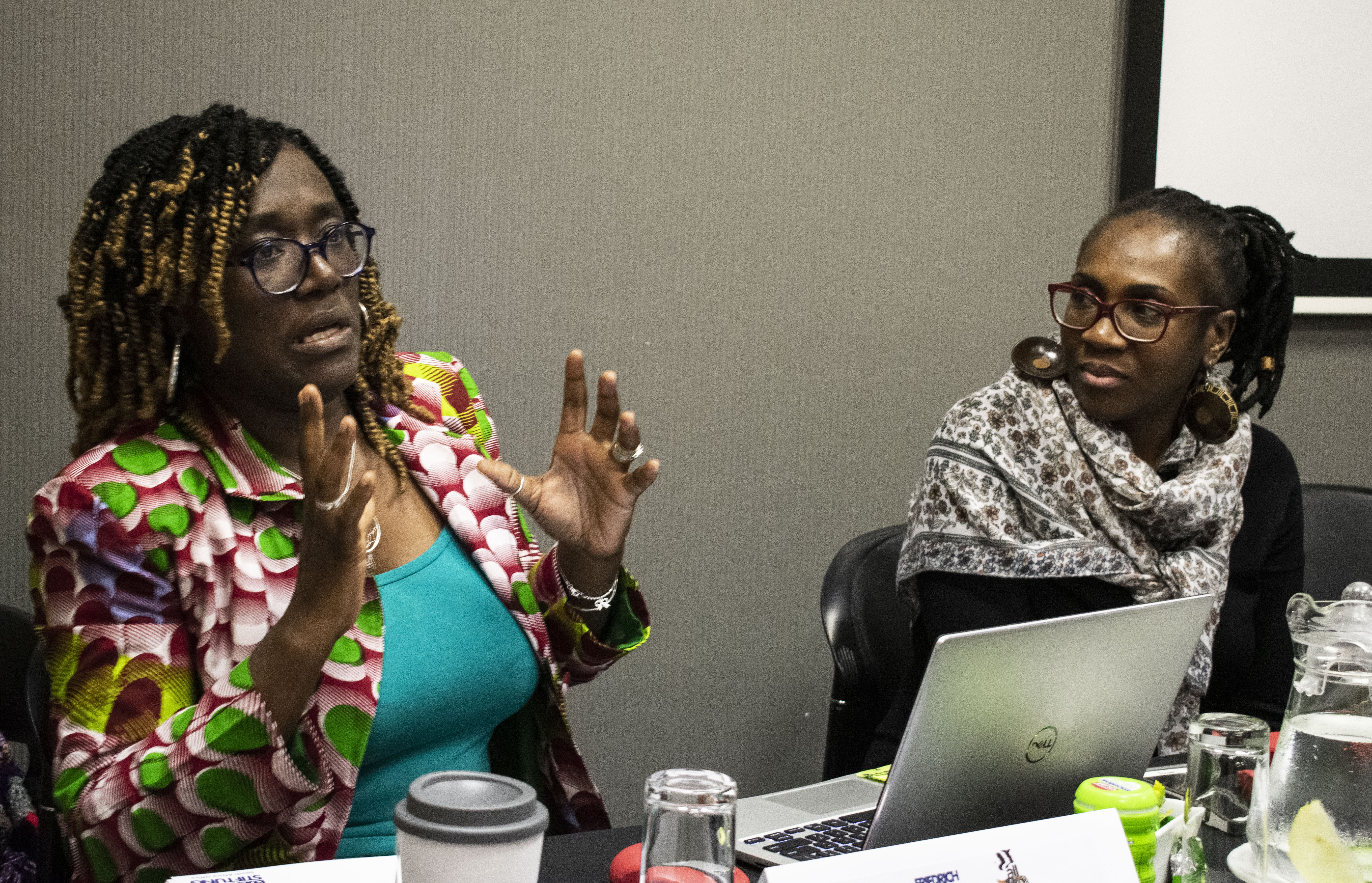
Paule Ndessomin

Paule France Ndessomin, IndustriALL regional secretary for Sub Saharan Africa said the school is an opportunity for the youth:

“The school is an opportunity for young trade unionists to define the union that they want to see in the future. Unions should adapt to technological shifts and engage governments on sustainability and Just Transition policies.”
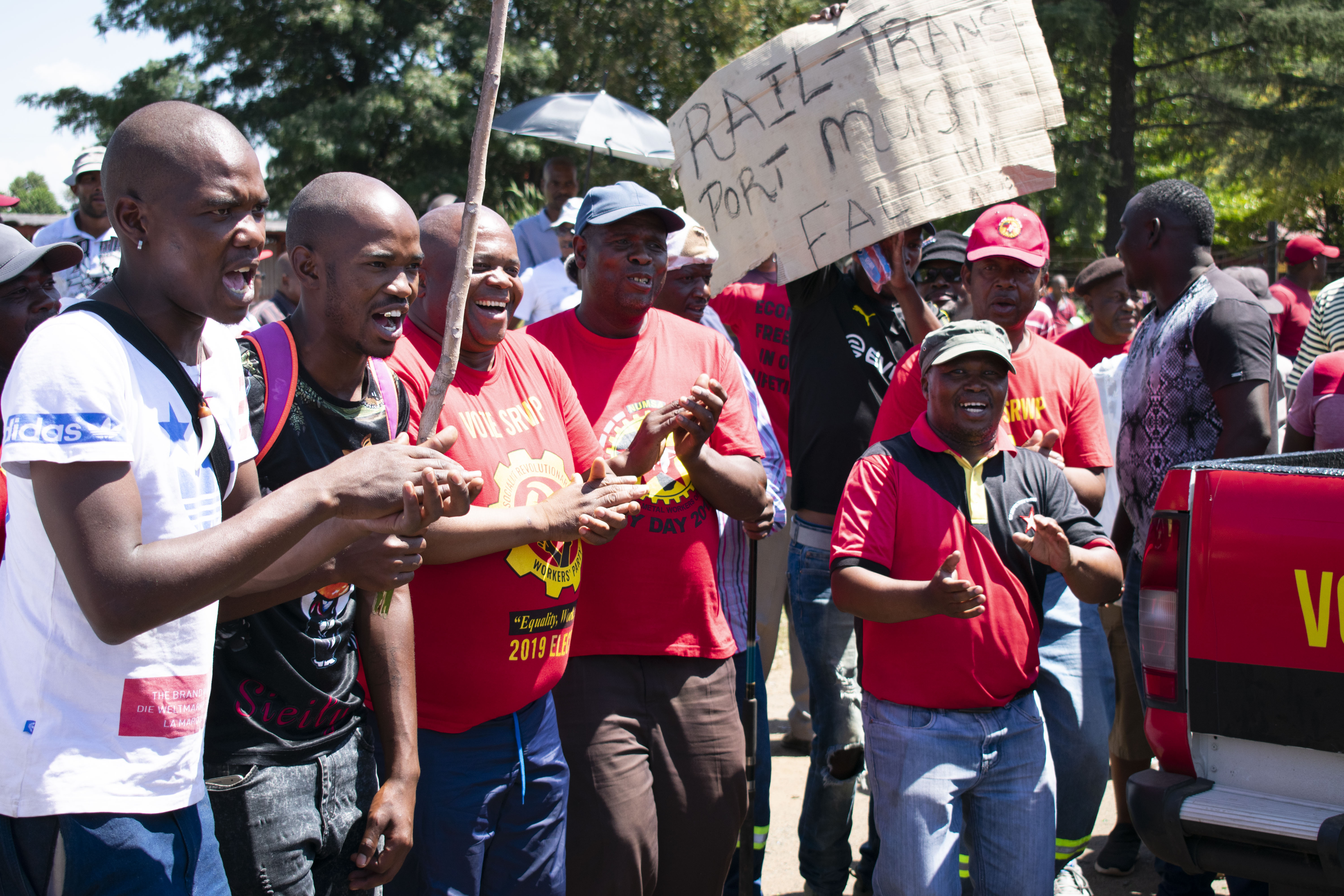
Union condemns plans to retrench 2,000 workers at ArcelorMittal South Africa

Steel producer, ArcelorMittal South Africa (AMSA), which employs more than 8,500 workers, made the announcement on 10 July. AMSA then wrote to NUMSA, stating that it did not know how many workers will be affected, even though it had just made an announcement.

Mokete Makoko, NUMSA regional secretary for Sedibeng where the AMSA Vanderbijlpark plant is located, said:

“AMSA has already gone ahead of the consultation process and decided on the number of workers who will be affected. Again, this is another example of the flagrant disregard which the management of AMSA has for workers and their right to due process.”

In March, IndustriALL Global Union affiliate, NUMSA , went on strike at AMSA demanding equal pay for work of equal value, and protesting against labour broking, deteriorating health and safety standards, and other labour rights violations.

One of NUMSA’s demands was to give permanent jobs to workers employed through labour broking companies. Instead of employing workers directly, AMSA used contractors it described as “service providers” to recruit the workers were paid 50 per cent or less than permanent workers doing the same work. Some workers employed through the contractors have been under precarious contracts with no benefits for many years. Now they have been given termination letters.

NUMSA members strike against ArcelorMittal in March 2019.

“It comes as no surprise that the management of AMSA is proceeding with this course of action, just a few months after our members embarked on a strike to end outsourcing at the company. They clearly want to punish workers for fighting to end the exploitation of contract workers supplied by so-called service providers. As NUMSA we will do everything in our power to minimize the number of jobs which will be lost,” said Mokete Makoko.

Paule France Ndessomin, IndustriALL regional secretary for Sub-Saharan Africa said: “It’s important for ArcelorMittal South Africa to consult with unions and to respect workers’ rights before making any public statements on retrenchments. We call upon the company to implement fair labour practices.”

Around 100,000 jobs have been lost in the steel industry in South Africa over the past decade.

AMSA is part of the global ArcelorMittal group and NUMSA has over 3 000 members at the company. ArcelorMittal employs some 200,000 workers in 60 countries worldwide.

Social dialogue key to better industrial relations in Ghana

A seminar in Accra on 3 July attended by 38 participants from the Public Utilities Workers Union, Timber and Wood Workers Union, Ghana Transport, Petroleum and Chemical Workers Union, Ghana Mine Workers Union, and Industrial and Commercial Workers Union, affiliated to IndustriALL Global Union and Building and Wood Workers International (BWI) discussed how to improve social dialogue at enterprise, sectoral and national levels.

The seminar organized by IndustriALL Sub Saharan Africa Region, BWI Africa and Middle East Region and Industri Energi (IE) Norway discussed how to build union and employer capacity to effectively engage in social dialogue and improve the participation of women and youth who are often marginalized. Further, the seminar recommended that legal and institutional reforms be made to recognize unions’ role in social dialogue. 

Solomon Kotei, chairperson of the IndustriALL Council Ghana emphasized: “Social dialogue brings cordial industrial relations. Without such engagement it is difficult to improve working conditions at workplaces. This underlines why we need to continuously find means to improve social dialogue and build union capacity.”

Ole-Kristian Paulsen, IE international advisor who facilitated said: “The well-conducted seminar shared Norwegian experiences of social dialogue with a focus on Industri Energi and showed major differences between systems in Norway and Ghana. Through discussions Ghanaian unions saw the need to change their systems. Distinguishing between negotiations and an active-inclusive-involving social dialogue that creates development for the future at the workplaces is important.”  

The seminar discussed that social dialogue plays a critical role in not just creating a productive and progressive environment for collective bargaining, but also improves industrial relations between workers and employers. It also contributed more effectively to improving productivity in the workplace, strengthened enterprise viability and secured decent jobs. Participants urged trade unions to use social dialogue beyond considering it as a platform to put forward labour demands. Social dialogue also provides unions with an opportunity to contribute to enterprise growth and achieving development goals. 

Garikanai Shoko, regional education officer for BWI Africa and Middle East added: “Social dialogue promotes consensus building and democratic involvement among stakeholders in the world of work. For BWI, meaningful dialogue is important to improve institutional capacity and to support tripartite industry structures in our sectors.”

We don’t support low wages says Ethiopian labour minister

“We support living wages, not low wages. We are not for cheap labour,” said Dr Ergogie Tesfaye, the Ethiopian Minister of Labour and Social Affairs at the programme launch of the ILO’s Advancing Decent Work and Inclusive Industrialization Programme on 3 July in Addis Ababa.

According to a survey by Mywage and FNV Mondiaal, over 90 per cent of the garment workers in Ethiopia earn less than the 4130 Ethiopia Birr (US$144) needed to cover monthly living expenses. To reverse this, the Industrial Federation of Textile, Leather, and Garment Workers Trade Union (IFTLGWTU), affiliated to IndustriALL Global Union, is campaigning for living wages. 

The Confederation of Ethiopian Trade Unions, to which IFTLGWTU is also affiliated to IndustriALL, said at the meeting that it is unacceptable to pay Ethiopian workers such low wages.

IFTLGWTU president, Mesfin Adenew, said the union is waiting for the government to make an announcement on the minimum wages:

“The new labour law amendments passed by parliament are recommending the setting up of a wage commission to study the national and sectoral minimum wages. As part of our living wage campaign, we are waiting for the commission to make announcements first, make careful considerations, and then consult with the workers on what action to take.”

Global fashion brands, H&M and PVH, also said they were working with their suppliers to ensure that they pay better wages and improve working conditions.

Said Christina Hajagos-Clausen, the IndustriALL Director for the textile and garment sector:

“The emphasis on social dialogue is an important step towards minimum living wages and better working conditions for the textile and garment sector, especially for the women who are the majority in the factories. Global brands sourcing in Ethiopia need to join ACT in order to work with the trade unions to increase wages in the sector.”

ACT (Action, Collaboration, Transformation) is a ground-breaking agreement between global brands and retailers and trade unions to transform garment, textile and footwear industry and achieve living wages for workers through collective bargaining at industry level linked to purchasing practices. Find out more here.

Bridgestone global network builds on longstanding health and safety effort

On 11-12 June, 2019, the IndustriALL Bridgestone Global Network Steering Committee met for its 18th annual activity, in Johannesburg, South Africa.

Following the group’s protocol, the body is chaired by the Japanese Rubber Workers’ Union Confederation, Gomu Rengo, an important affiliate of IndustriALL Global Union. The Japanese Bridgestone Workers’ Union organizes and coordinates the meetings which rotate annually between Japan and other important locations for the company.

The factory visit

Both South African plants of Bridgestone are organized by the IndustriALL affiliated National Union of Metalworkers of South Africa (NUMSA), and as hosts of this year’s activity, NUMSA arranged for the group to visit the nearby Brits factory and exchange with management. The plant employs 766 workers and the local NUMSA shop stewards are accompanying the transition of the tyre factory to upskill workers and adapt to modern machines and production techniques.

Gomu Rengo president, and chair of the network, Hiroyuki Ishitsuka opened the meeting by outlining the importance of mature industrial relations at global tyre manufacturers such as Bridgestone. Under the current climate of new technologies giving the potential to new companies to grow and take market share from the big three, Bridgestone, Michelin and Goodyear, president Ishitsuka said:

“We must remain vigilant. Workers and management must establish common rules, understanding, and communication. And occupational health and safety is a huge priority. We count on IndustriALL’s unchanged support in building the strength of this network.”

The issue of dumping of cheap tyres from China, and elsewhere in Asia, is a major issue for tyre manufacturers in South Africa, Japan and Europe. The cheap tyres are flooding the market and threatening the jobs of IndustriALL members around the world.

The current global slowdown in the car industry, as well as the mining industry are directly affecting the tyre industry. NUMSA will be working with the Japanese union colleagues to seek assurances for the future of the second Bridgestone factory in South Africa, at Port Elizabeth, which employs 250 workers.

The chair of the Bridgestone European Works Council, Marco Argilli plays an important role in this global body. Marco presented to the group regarding Bridgestone’s progress in the field of health and safety, with a positive record of no serious injuries in Europe in 22 months. However, Marco raised the issue that is present in the South African factories of worker contact with carbon black.

In Europe, Bridgestone is investing US $41 million over the coming four years to digitize the manufacturing processes at its eight European plants in France, Hungary, Italy, Poland and Spain. The investment will include upskilling and training for Bridgestone employees in order to operate digital technologies that are designed to help improve resource efficiency and job satisfaction. The improvements also will address energy savings, efficiency increases, waste reduction and process simplification.

Heinz Evertz, coordinator of the Bridgestone European Works Council, made an important contribution to the meeting with a focus on cancer. Heinz argues that occupational cancer should receive more attention from Bridgestone, with health just as important as safety. The meeting agreed that further research is needed into the real cancer risks of the materials used in tyre production.

The Japanese Bridgestone Workers’ Union’s Takahiro Nakajima reported that an active union is the only way to a safe workplace:

“Safety is improving in Bridgestone Japan because of the union involvement and our improved equipment. If our members raise a safety issue from the workplace, we take it to management and make sure that they are listened to.”

Tom Grinter, IndustriALL rubber sector director said:

Tom Grinter

 “IndustriALL believes in campaigning for the core rights around health and safety. Our members have a right to know, to participate, and to act. This means that Bridgestone must make information on the risks and hazards in the workplace available to all employees, workers must always have the right to refuse a task if she or he sees a danger, and our members must have the right to jointly plan and implement the health and safety programs in their workplaces.”

NUMSA shop steward James Selala and international officer Christine Olivier reported positive action from Bridgestone management under the three core rights of health and safety. However, it was stressed that efforts are needed to increase understanding on occupational cancer. Information gathering will be conducted into health of workers retiring after a long career at the Bridgestone facilities, as it is common that workers die within three years of retirement.

Next year’s annual activity will be held outside of Japan due to the Olympic Games being held in Tokyo in 2020.

Calls for sustainable mining after 43 artisanal miners killed in DRC landslide

A landslide at an open excavation pit at KOV mine on 27 June killed 43 miners, with others still missing. The government of the Democratic Republic of the Congo (DRC) has responded by sending the army to the mine where over 2,000 artisanal miners dig for cobalt.

“IndustriALL condemns the decision of the government to deploy the army and regards this as mistaken and unfortunate as it only worsens an already volatile situation and could lead to further bloodshed and loss of life.

“It is a short-term solution to a complicated problem and reflects policy failure on the part of the government and the mining industry in the DRC,”

said Kemal Özkan, IndustriALL Global Union assistant general secretary.

Artisanal and small-scale mining (ASM) is legal in the DRC. Miners dig for copper and cobalt, which is in high demand for use in batteries for electric vehicles and smart phones. The miners, locally known as creuseurs, use basic tools such as picks, shovels and panning equipment.

In some cases, they mine the same concessions as large multinational companies. However, the companies are favoured by the government whilst the artisanal miners are ignored and blamed for damaging the environment and operating illegally. They work without support in dangerous conditions.

IndustriALL regional secretary Paule Ndessomin said:

“In the DRC, the miners are arbitrarily and sometimes violently moved from one place to another after concessions they previously mined are sold to multinational corporations and Chinese companies. The cobalt they mine is sold in an unfair formal market exploited by traders who operate in a shady supply chain.”

Said Isaac Kiki, the chairperson of IndustriALL Lualaba Province, a committee of IndustriALL affiliates OTUC, UNTC and CDT:

“We are saddened by the death of so many miners; our brothers that we live with in the same community who died while trying to find means to escape poverty. The government must put in place measures to make artisanal mining safe.”

The unions support the revised Mining Code which promotes mining as a source of inclusive development. There are over 12 million artisanal miners in the DRC who mine 30 per cent of the country’s cobalt.

Despite ASM being ostracized and laws to formalize it being unclear in some countries, the African Union’s African Mining Vision recommends transforming “ASM communities from vulnerable and marginal enclaves of unorganized groups of miners and other actors into integrated and functionally sustainable and resilient communities.”

Glen Mpufane, IndustriALL director of mining concurs that ASM should be transformed using the International Labour Organization’s fundamental principles and rights at work.

“We recommend responsible mining which considers the ILO principles and national labour laws and support due diligence in the mining supply chain to ensure that sourcing of the minerals respects the human and labour rights of miners. Governments should also formulate policies that formalize and recognize ASM, especially its importance to social and economic development. ASM shouldn’t be marginalized as it contributes to poverty reduction.”

At the Alternative Mining Indaba in Cape Town, South Africa in February, one of the recommendations was for multinational companies to work with ASM for sustainable mining that is inclusive and beneficial to marginalized communities.

Mining unions work together to organize in Tanzania

Improved communications, worker education, participating in union activities, and maintaining workers’ unity also strengthen organizing. A workshop organized by IndustriALL Global Union Sub Saharan Africa region and IndustriALL affiliates, the National Union of Mineworkers (NUM), South Africa and Tanzania Mines Energy Construction and Allied Workers Union (TAMICO), attended by 14 participants in Dar Es Salaam 20-21 June discussed how to improve organizing in the mining sector in Tanzania

TAMICO has 11,000 members, 2,000 of whom are from the mining sector, but believes there is potential to double its membership. For example, at Nyanzaga Mine and Geita Gold Mine the union could recruit over 5,000 members.

After the workshop, six shop stewards facilitated an organizing drive with workers at North Mara Gold Mine where 120 workers joined the union. The new TAMICO members expect the union to improve its servicing of members and communicate better. The union must also negotiate collective bargaining agreements and make subscriptions affordable.

In response to the workers concerns, TAMICO general secretary, Saidi Nyungwa said:

“The union will engage members to address the challenges as this is important for the growth and future of the union. It is important for TAMICO to sustain its organizing efforts to improve the working conditions of mine workers in Tanzania.”

Tafa Moya, NUM’s mining house coordinator said TAMICO can learn from South African experiences.

“The NUM is negotiating for a clause to be included in the collective bargaining agreement to demand that workers be employed on a permanent basis and for equal pay for work of equal value. Additionally, after a long struggle, the NUM now sits in the Mine Health and Safety Council. It also trains shaft stewards to provide workplace service to members.”

The growth of the mining industry in Tanzania provides an opportunity for TAMICO to increase its membership. The government of Tanzania estimates that mining will contribute up to 10 per cent of the country’s Gross Domestic Product by 2025. Tanzania mines gold, iron ore, nickel, copper, cobalt, silver, diamond and tanzanite. Other industrial minerals including coal and uranium.

Ending migrant workers’ rights violations in Mauritius

On arrival in Mauritius, workers are paid low wages, work long hours, live in squalid conditions sometimes in dormitories behind factories, and risk deportation when standing up against the violations.

The labour and human rights violations against the migrant workers can be described as modern slavery and was discussed at a workshop organized by IndustriALL Global Union with support from the Friedrich Ebert Stiftung on 18 – 19 June. The 30 participants were from unions in Bangladesh, Madagascar and Mauritius. Ovibashi Karmi Unnayan Programme (OKUP), a civil society organization that carries out pre-departure training for Bangladeshi workers going to work in other countries, also participated.
 
ASOS, which has signed a global framework agreement with IndustriALL and whose suppliers employ over 3,000 workers in Mauritius, said they want working conditions to improve and debt bondage to end. Debt bondage is a result of the fees, sometimes as much as US$800, recruitment agencies charge that take workers more than 14 months to pay. ASOS also said that workers should not pay the cost for travelling to the country of destination, or for training.

Said Christina Hajagos-Clausen, IndustriALL director for the textile and garment industry:

“The global framework agreement with ASOS will be key to begin to develop sound industrial relations with Mauritian textile and garment suppliers. Building sound industrial relations will help curtail labour rights violations.”

IndustriALL’s affiliate, Confederation des Travailleurs Secteurs et Prive (CTSP) representing over 50,000 workers is leading the fight against the exploitation and demanding the payment of the national minimum wage of 9,400 Mauritian Rupees (US$271) to migrant workers. The affiliates from Madagascar, Federation des Syndicats des Enterprises Franches et Textiles (FISEMA) and Sendika Kristanina Malagasy (SEKRIMA) and Syndicalisme et Vie des Societies (SVS), as well as a Bangladeshi affiliate, Sommilito Garments Sramik Federation, support the work of the CTSP.

Reeaz Chutto, CTSP president, said:

“We are fighting for migrant workers to enjoy the same rights as Mauritian workers under the Employment Rights Act. This will help to stop unfair dismissals and protect their rights to collective bargaining.”

Anti-Slavery International (ASI), which campaigns to protect workers against slavery and human trafficking and supports the employer pays principle, where employers pay for travel and other costs of migrant workers added its support to stop the violations. Other participants were from the International Organization for Migration and the University of Mauritius. The Confederation of Mauritius Business and the ministry of labour also attended and said they supported social dialogue and better industrial relations.

An ASI project with IndustriALL, ASOS, OKUP and CTSP aims to end modern slavery in the supply chain by promoting predeparture training, developing a smartphone app for Mauritius modelled on the IndustriALL/ASOS Workers’ Rights app currently being used in Turkey, that will explain migrant workers’ rights, and a trade union-based support centre to be based at CTSP where workers can go for support on complaints and grievances. The centre will assist workers in Bangla – the language of the Bangladeshi workers who constitute most of the workers.

If you are unhappy resign, Ethiopian workers told

Garment workers with more than 30 years-experience work in deplorable conditions and earn 900-1300 Ethiopian Birr – less than US $45 per month. The low wages make it difficult for workers to make a decent living.

At a women’s meeting in Adama on 6-7 June, three women with more than three decades each of work experience spoke about the terrible working conditions in their factories. The meeting was organized by IndustriALL Global Union affiliate the Industrial Federation of Textile Leather and Garment Workers Trade Union (IFTLGWTU) with support from FNV Mondiaal and attended by 26 participants, mainly women.

"I have asthma and had kidney failure. I’m often told that if I am unhappy, I can resign. "

Mulutesfa Anbachew

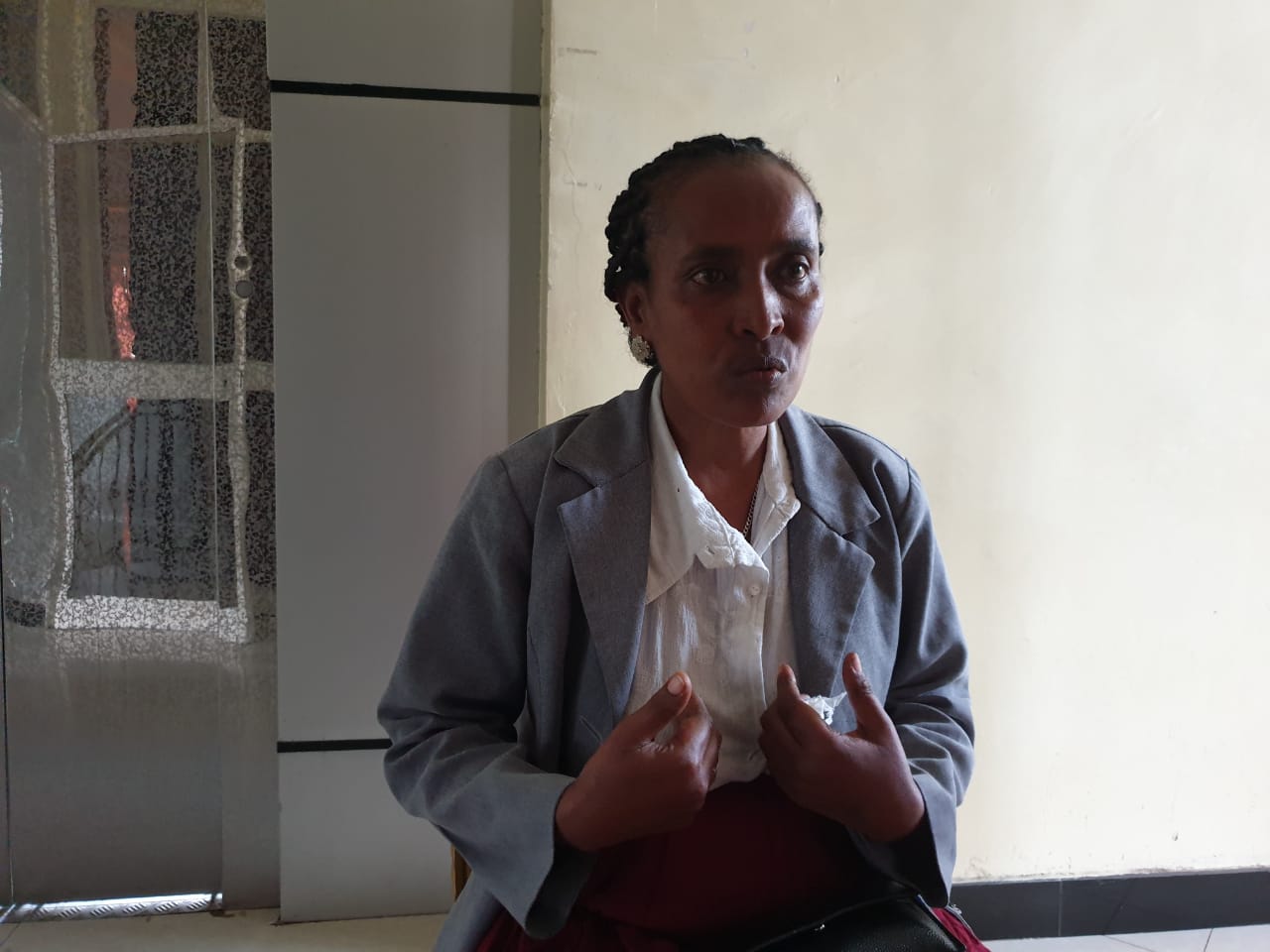
Mulutesfa Anbachew (42), who started working at 12 when the Falcon BM garment factory opened, told her story in tears.

“When I started working to help my family after leaving school, I got exposed over the years to unsafe drinking water and dusty floors. Workers are also not given personal and protective equipment. Now I have asthma and had a kidney failure.

“Although the illnesses are directly linked to my unsafe work environment, the employer is not helping, with pleas ignored. I’m often told that if I am unhappy, I can resign. With kidney failure, one uses the toilet frequently. But at our factory there is one toilet token for 45 workers, and you wait for your turn. This worsens my condition.”

Type your title here

Type your caption

“My shift starts at 8 pm and ends at 4 am.  We sleep on the factory’s concrete floor."

Etalemahn Tadesse

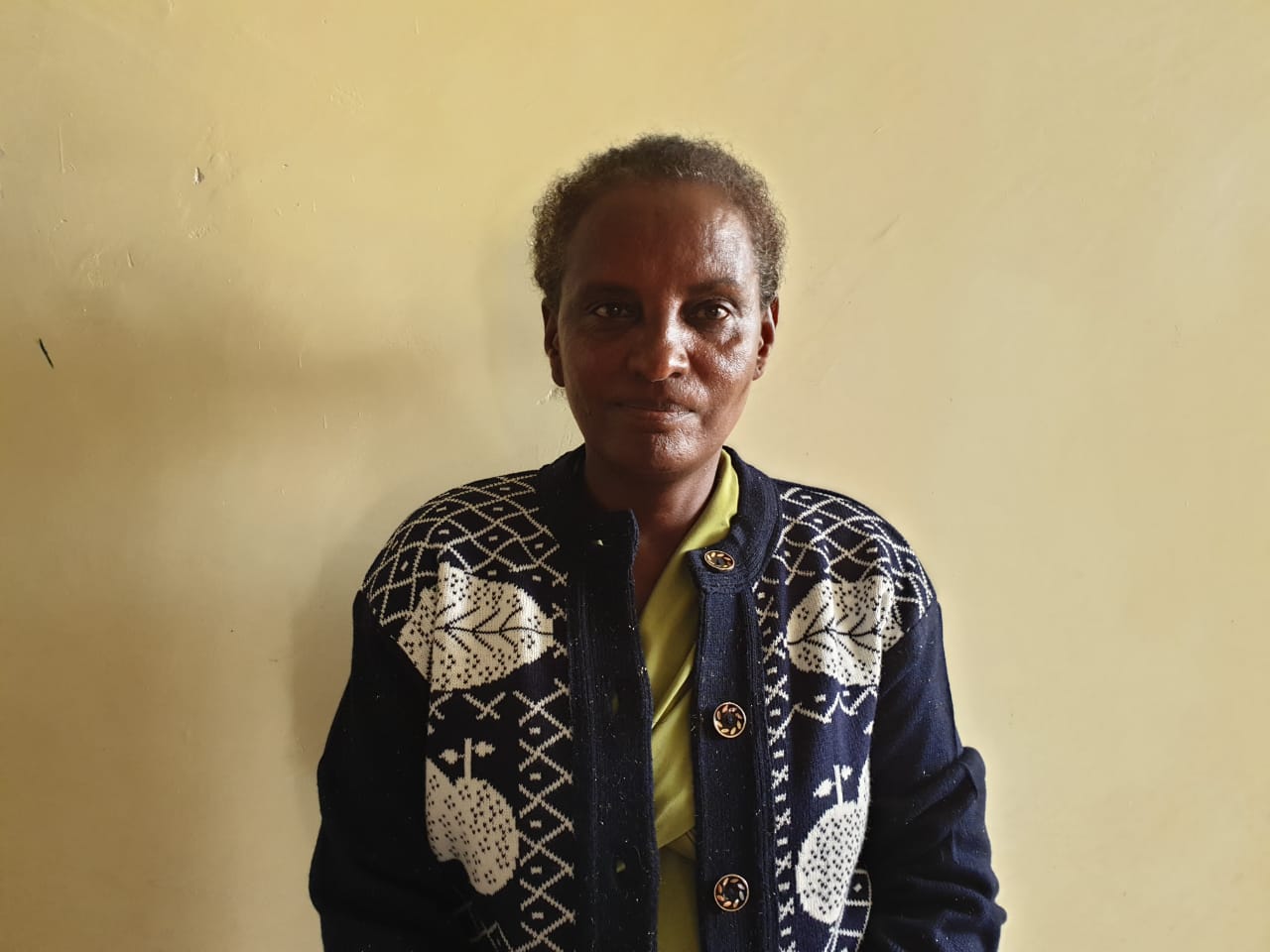
Etalemahn Tadesse (53) from Yirgalem Textile’s knitting department complains of pain in her knees and the employer’s failure to provide transport.

“My shift starts at 8 pm and ends at 4 am. As management doesn’t provide transport to workers; we sleep on the factory’s concrete floor because it is not safe to leave until the day breaks. Despite our complaints, nothing is changing.”

“On wages, there is discrimination against older workers with no efforts made to improve their working conditions. The aim is to frustrate them, force them to resign and avoid paying severance packages.”

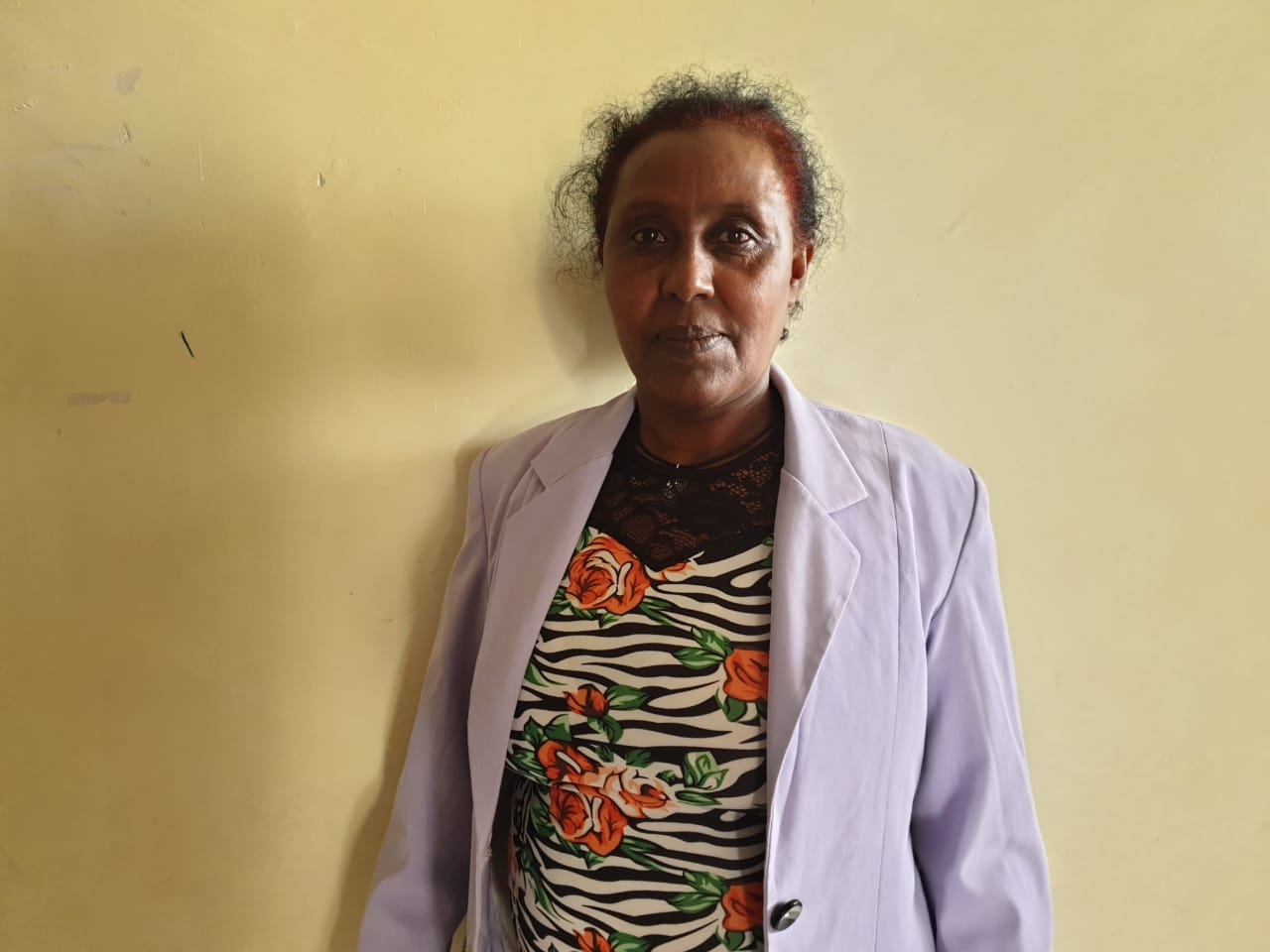
Elsabeth Mekonen (50), also from Yirgalem, refused to sign a wage grid that discriminated against older workers.

"The IndustriALL workshop in Addis Ababa 2018 taught me to stand up for workers’ rights."

Elsabeth Mekonen

“What the IndustriALL workshop in Addis Ababa 2018 taught me is to stand up for workers’ rights. I have nothing to lose because my years of experience count to nothing.”

Paule France Ndessomin, the IndustriALL Sub Saharan Africa regional secretary who spoke to the women said:

“We will continue to sensitize women to speak and act against labour rights violation at the workplace. Social dialogue with key stakeholders that include government, employers and unions in improving working conditions for textile and garments workers should be prioritized.”

Fighting poverty wages in Zimbabwe

Lameck Chineuruve, an artisan at the Zimbabwe Electricity Transmission and Distribution Company, has worked for the power company for 11 years and earns less than seven years ago.

“In 2012, I earned US$800 per month, but currently I earn less than US$200. This makes life hard for me because I must pay for transport, accommodation, school fees, and food, from this paltry amount,” says Chineuruve.

In February, the Zimbabwean currency was devalued by over 60 per cent. However, prices increased by the same value as they are pegged against the US dollar, while wage increases did not match the prices.
 
Poor wages in most of the sectors in Zimbabwe are one of the reasons why IndustriALL Global Union affiliates are campaigning for living wages.

In organizing drives under the union building project, young workers from the National Engineering Workers Union, National Union of Metal and Allied Industries of Zimbabwe, the Zimbabwe Chemicals Plastics and Allied Workers Union, and the Zimbabwe Energy Workers Union emphasized the importance of joining unions, fighting for workers’ rights including on collective bargaining. They also said workers should be paid living wages that will cushion them against the devaluation.
 
Says Paule France Ndessomin, IndustriALL regional secretary for Sub Saharan Africa:

“We are in solidarity with our Zimbabwean affiliates in their struggle for living wages and their organizing drives to increase membership. Union strength comes from organizing and participatory democracy. We also applaud the organizing by young workers who are the future leaders of the unions.”

With unemployment over 90 per cent and most of the population earning a living in the informal sector, the Zimbabwean economy is in the doldrums. Factory shells in the light and heavy industrial sites in Harare are deserted. Manufacturing and industrialization stagnated and has been replaced by the importing of finished goods.

The few companies that are still open are the targets for union organizing with the hope that when the economy improves the unions will also increase their members.