Ethiopia: workers strike for a union in Hawassa industrial park

IndustriALL affiliate, the Industrial Federation of Textile, Leather and Garment Workers Union, says that the strike is the result of unions being denied access to organize in the park.

When fully operational, Hawassa will have the potential to employ over 60,000 workers, with more than 20 global brands and retailers sourcing garments from the park.

Teklu Shewarega, IFTLGWTU’s organizing and industrial relations department head says:

“The recent strike is not a surprise. With no unions representing workers, low wages and bad working conditions are prevalent.

We have tried to organize the workers for more than two years without a clear permission from the government so far. We continue our efforts and ask our international partners and the global brands and retailers sourcing from the park for support in putting pressure on the government to allow organizing.“

Wages in the industry are as low as 750 Ethiopian Birr (US$27). To improve wages, the IFTLGWTU is working with different partners, including the Confederation of Ethiopian Trade Unions (CETU) and FNV Mondiaal. According to a recent wage survey, 65 per cent earn less than US$70, while 35 per cent are paid less than US$35, making some of Ethiopia’s textile and garment workers the working poor.

To survive, a worker needs at least US$144.

Workers are also asking for other benefits including housing and transport. The provision of housing next to the parks, will improve workers welfare as most are living in squalid conditions where four or more workers share a room with colleagues to be able to afford the rent.

Paule France Ndessomin, IndustriALL regional secretary says:

“Women have a right to a safe workplace and we strongly condemn the sexual harassment of women workers at Hawassa, which violates both labour laws and the Ethiopian Constitution. We call in employers a to urgently address the workers' grievances through dialogue with the union. It is unacceptable for the government to continue denying unions access to organize in the park.”
Africa energy network demands Just Transition

The network, which is supported by the Friedrich Ebert Stiftung, Trade Union Competence Centre for Sub Saharan South Africa (FES-TUCC), met 12-13 March, Johannesburg, and rejected the unbundling of state-owned enterprises as a disguise for privatization. It supported the positions taken by South African affiliates, the National Union of Mineworkers (NUM) and the National Union of Metalworkers of South Africa (NUMSA) which strongly oppose the recent announcement by the government that the country’s power utility, Eskom, will be broken into three parts – generation, transmission and distribution.

In Zimbabwe, the network is supporting the Zimbabwe Electricity Supply Authority’s bring together of its companies into one but with no job losses or removing of workers’ benefits. This move is reversing an earlier decision to unbundle.

In Eswatini the network condemned unfair dismissals and suspensions. It called for the reinstatement of 11 workers. Four were dismissed and 17 suspended by the eSwatini Electricity Company after a strike in January.

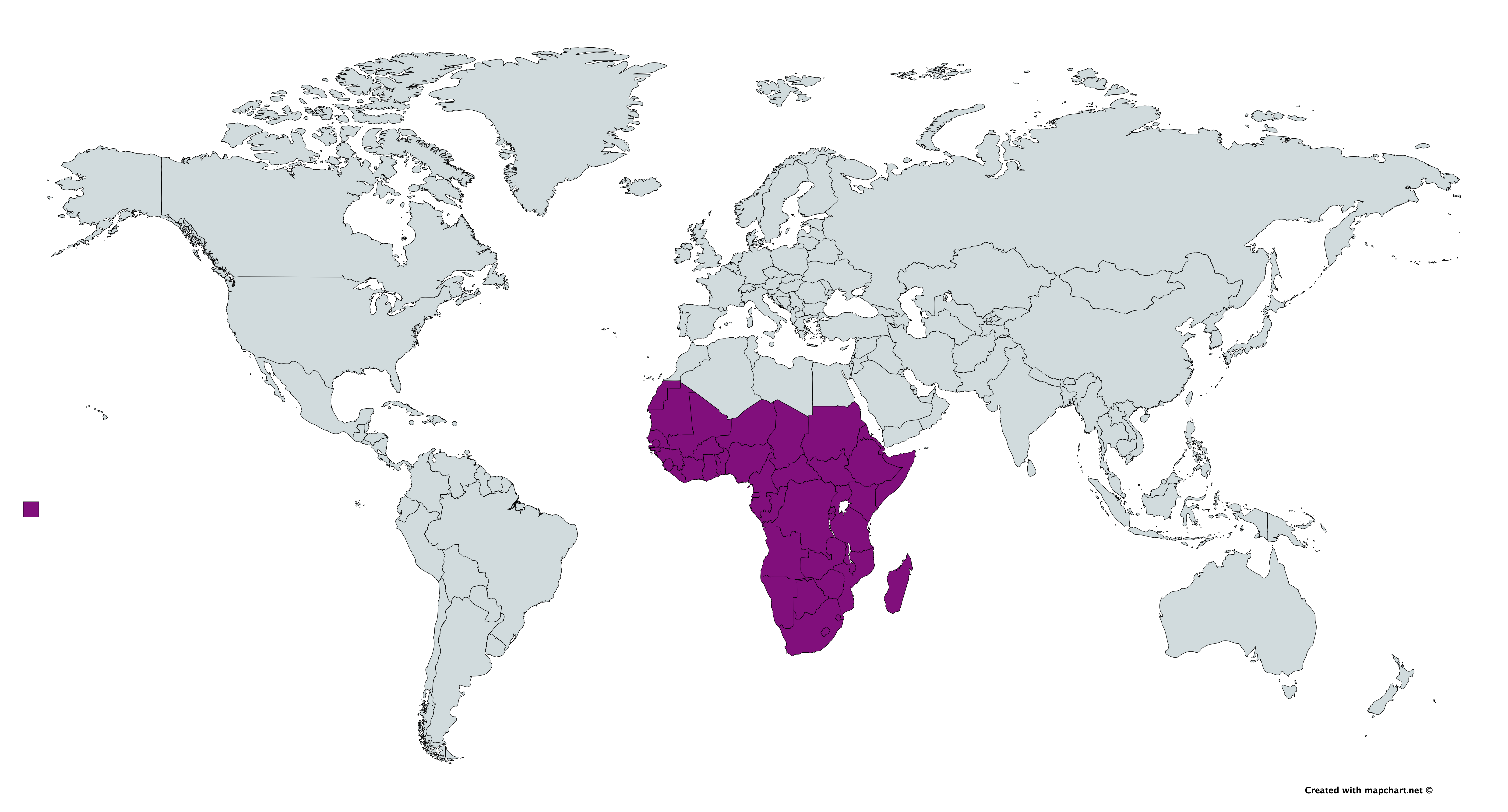
Participants at the meeting were drawn from 13 Sub-Saharan African countries that organize in the energy sector including in oil and gas. Formed a few years ago, the network initially catered for Southern Africa but has since been expanded to Sub Saharan Africa.

Bastian Schulz, director, FES-TUCC says:

“A sustainable energy transition in Sub-Saharan Africa and the final energy mix is of great interest to the FES because of the impact on jobs, communities, and sustainable development policies. It must be central to the labour movement in Africa, and unions must be included in the policy making.”

Diana Junquera Curiel, IndustriALL energy industry director stressed the importance of networks:

“As part of IndustriALL’s energy networks, SSAEN will align with other networks from Asia, MENA Region and Latin America. This is important in building the strength of the network. Importantly, the ability to create a rich pool of solidarity and learning among the affiliates is useful. Experiences that resonate with national issues can be adapted. This also builds the network’s knowledge and informs its response to the current issues.”

Diana Junquera Curiel presented the Shell Campaign as an example of the work of IndustriALL Global Union to confront global capital and that existing global framework agreements in multinational companies, Total and Eni, were useful examples of global social dialogue.

Brian Kohler, IndustriALL director of health, safety and sustainability says:

“A Just Transition is a pathway towards a sustainable future and reduces fear amongst workers by promoting fairness. It rests on sustainable industrial policy, robust social protection, and creative labour adjustment programmes.”

Brian Kohler further explained the energy options that exist for Sub Saharan Africa which include biofuel, biomass, co-generation, fossil fuel (coal, oil and gas), geothermal, landfill gas, nuclear, solar (photovoltaic and thermal), tidal, wave and wind.

IndustriALL National Women’s Council of South Africa is founded

The Council, made up of NUM, NUMSA, SACTWU, CEPPAWU and UASA, is meant to initiate and facilitate collective action to:

In the meeting, the INWC-SA agreed on a statement on the case of Gugu Ncube, a young woman who put forward allegations of sexual harassment by her manager, while employed by a service contractor of UNISA Early Childhood Centre.

While the allegations are yet to be determined, how the police has handled the case, the public shaming of Gugu, and UNISA’s refusal to take responsibility, arguing that she was hired through a subcontractor, has led to an outcry in South Africa.

The INWC-SA is calling for a picketing action to be held on the 29 March at UNISA in Pretoria.

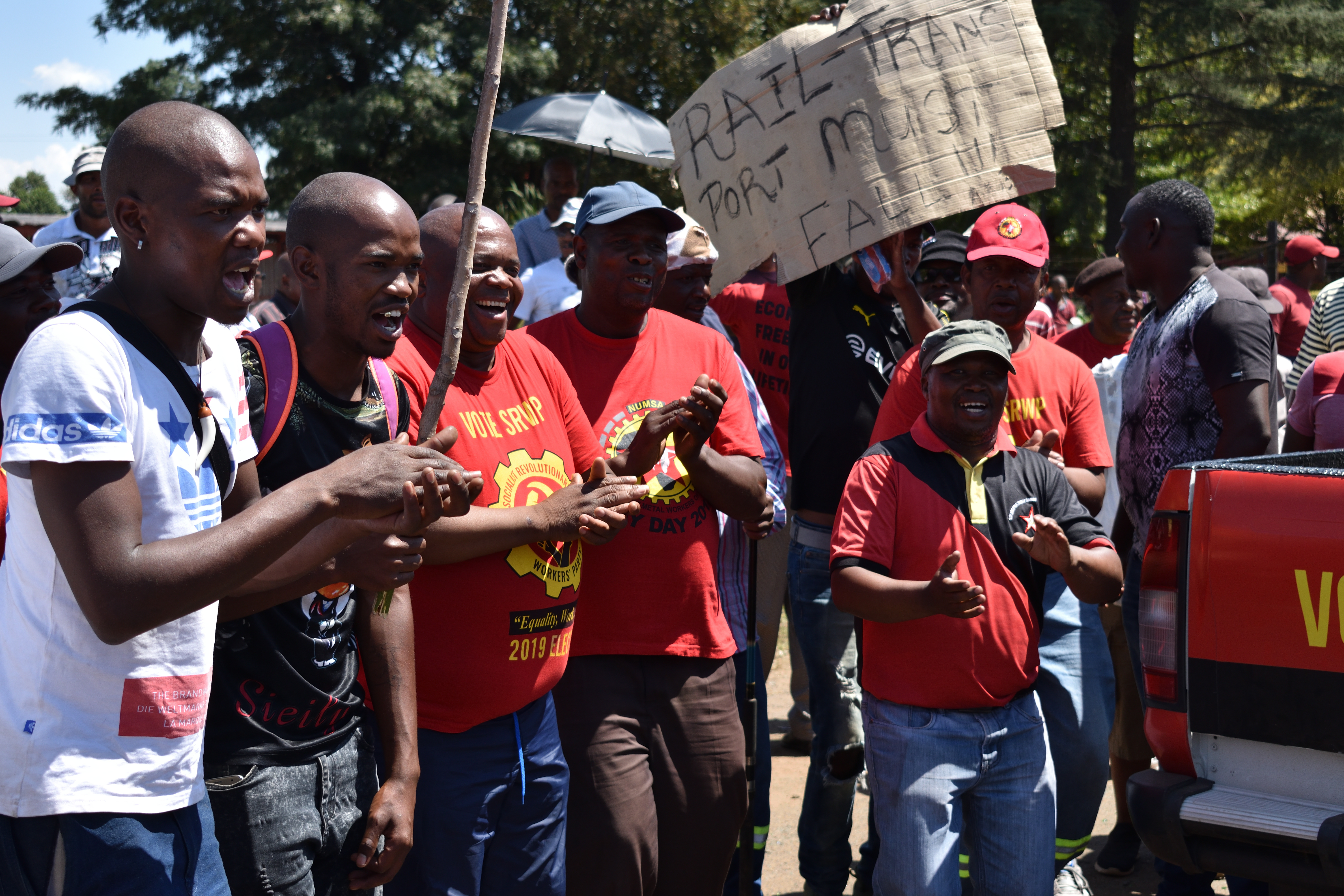
South Africa: Workers striking against precarious work at Arcelor Mittal

IndustriALL affiliate, the National Union of Metalworkers of South Africa (NUMSA), has 3,000 members at ArcelorMittal’s six South African operations and is calling on all workers to join the strike.

Most of the workers are employed through labour broking firms, Real Tree Trading, Monyetla and others. Real Tree Trading tried to stop the strike through a court interdict, but the request was thrown out. NUMSA is questioning why Real Tree Trading considers itself a ‘service provider’ and not a labour broker when it is one of the subcontractors to ArcelorMittal.

Workers say ArcelorMittal is paying contracted artisans with the same qualifications and experience about 50 per cent of what permanent workers earn. Further, newly qualified artisans are underpaid, with entry level pay pegged at the minimum wage of R3500 (US$244).

NUMSA won a landmark Constitutional Court case in 2018, which ruled that labour brokers cannot employ a worker beyond three months. When that happens, the contract becomes permanent according to the law.


Type your caption

“We must shutdown the operations of the company in order to defend the rights of all workers. It is immoral for workers who do the same work, to earn less, just because they were brought in by a contractor,“ says Mokete Makoko, NUMSA regional secretary for Sedibeng.

"They do the same work as other workers directly employed by ArcelorMittal, yet they earn lower salaries and do not receive the same benefits. NUMSA’s ultimate demand has always been to ban labour brokers.”

ArcelorMittal’s offer of permanent jobs for contractors after three years was rejected by NUMSA.

The striking workers also want health and safety standards at the company to be improved after recent accidents.

Says Adam Lee, IndustriALL director of organizing, campaigns and base metals:

“IndustriALL supports NUMSA’s struggle for permanent jobs. We urge ArcelorMittal to act as a responsible employer and provide all of its workers with stable, decent work.”

Ten striking workers were arrested by the police, but have since been released.

IndustriALL Global Union organizes a global network of unions at ArcelorMittal, which will meet in Brazil in April and discuss the strike.

Shell worker abuses in Nigeria taken to UN Human Rights Council

In a joint statement to the General Assembly of the Human Rights Council, IndustriALL Global Union and Swiss organization, Europe-Third World Center (CETIM), said:

“Contract workers at Shell Nigeria are living in poverty, with no job security and poor healthcare that is costing workers’ lives. Contract workers face dismissal if they join a union or ask for a pay rise. They lack safety equipment and risk death in the field.”

IndustriALL, through its oil and gas trade union affiliate, NUPENG, represents contract workers at Shell Nigeria.

A recent IndustriALL mission to Port Harcourt in Nigeria found that most, if not all, of Shell Nigeria’s blue-collar workforce are employed by a complex network of recruitment companies on behalf of Shell, making it extremely difficult for workers to organize into trade unions and defend their rights.

A full written statement of the human rights violations of Shell contract workers in Nigeria was submitted to the General Assembly of the UN Human Rights Council and officially published last week.

“My recruiter doesn’t pay on time,” says a Shell contract worker in the statement. “I haven’t been paid for six months. My wage is only 50,000 naira (US$137) per month. I'm going to go home and beg my neighbour for food. For six months, my children can’t go to school. I’ve been working at Shell for 11 years, but I don’t have a carpet in my house. I don’t have a radio at home.”

IndustriALL has informed Shell of its mission findings but the energy giant has shrugged off the report and refuses to enter into discussions with IndustriALL.

“Shell is violating the human and labour rights of Nigerian workers with impunity, highlighting the urgent need for an international legally-binding instrument to regulate the activities of transnational companies,” continues the oral statement.

IndustiALL and CETIM are calling on the authorities in Nigeria to honour their commitment to human rights and international labour standards by taking action to ensure that Shell Nigeria respects the rights of workers working on its behalf to safety, health, a decent income and freedom of association. They also call on the Human Rights Council to urge the Dutch government to hold Shell to account for violations committed on Nigerian soil.

In addition to the written and oral statement, CETIM and IndustriALL also organized a side-event on 7 March in parallel with the 40th session of the Human Rights Council to denounce human rights violations by Shell, and mining companies, BHP and Vale.

Senegal: Unions build strength through organizing and collaboration

Participants discussed strategies to build sustainable unions through leadership training, strengthening union solidarity instead of competition, supporting union capacity development and forming a national coordinating committee that will be responsible for joint actions and campaigns.

An organizational assessment exercise evaluated the unions to see what is working and what needs to be attended to. The strategies to strengthen the unions in Senegal will be implemented through the union building project activities.

The workshop also commended the recently concluded precarious work project (2015-2017), which saw over 11,000 workers getting permanent jobs after the conversion of their contracts from short-term and casual to permanent ones in Burkina Faso, Cameroon, Nigeria and Senegal.

About 29,000 precarious workers were recruited into trade unions from the four countries. The project also led to better wages and working conditions including improvements in health and safety at workplaces and the payment of benefits such as medical support, leave, housing and transport allowances.

Organized by the IndustriALL Global Union Sub Saharan Africa regional office, with support from the Belgian trade union confederation (ACV-CSC BIE), and the French Chemical and Energy Union (FCE CFDT), the workshop and meeting had participants, mainly women, from IndustriALL affiliates SNTIT, SNTICS, SYNTICS and SUTIDS.

These affiliates organize in the chemical, mining, textile and garment and industrial manufacturing sectors. The other countries that are part of the project, which is co-funded by Swedish Union to Union, and where similar activities are taking place, are Burkina Faso, the Democratic Republic of the Congo, Lesotho, Madagascar, Zambia and Zimbabwe.

Says Jan Franco, international officer of ACV-CSC:

“The challenges for Senegalese unions are enormous. During the planning meeting the participants identified priorities and achievable goals. What struck me is the willingness of the trade unions to cooperate and the active presence of women and young unionists. The open atmosphere and debates on methods of approach and action showed a readiness to strengthen capacity.”

Paule France Ndessomin, regional secretary for the Sub Saharan Africa concurs:

“We applaud the Senegalese unions’ commitment to collaboration because this is where unions draw their strength from. As discussed at the women’s meeting, it is important to prioritize the issues confronting women at the workplace including sexual harassment and gender-based violence. Unions must ensure that these are addressed.”

Sub-Saharan Africa

Sub-Saharan Africa office

Physical address:

Sunnyside Office Park, 32 Princess Wales, Parktown Building C

Johannesburg 2193

South Africa

Email: aro

Paule France Ndessomin 
Regional secretary

+27 11 242 8684

PNdessomin

Marino Vani

Regional secretary

Kenny Mogane 
Regional officer 

+27 11 242 8682 

KMogane

Charles Kumbi 
Regional programme officer

+27 11 242 8686 

CKumbi

Elijah Chiwota 
Regional communications & research officer

+2711242 8683 

EChiwota

Tendai Makanza 
Regional officer

+27 82 9 43 78 86 

TMakanza

Kamla Naidoo Finance & administrative officer

+27 11 242 8693 

KNaidoo

Ngwako Jack Malatji  Project cost accountant

+ 27 242 8680 

JMalatji

Related publications

REPORTPAMPHLET
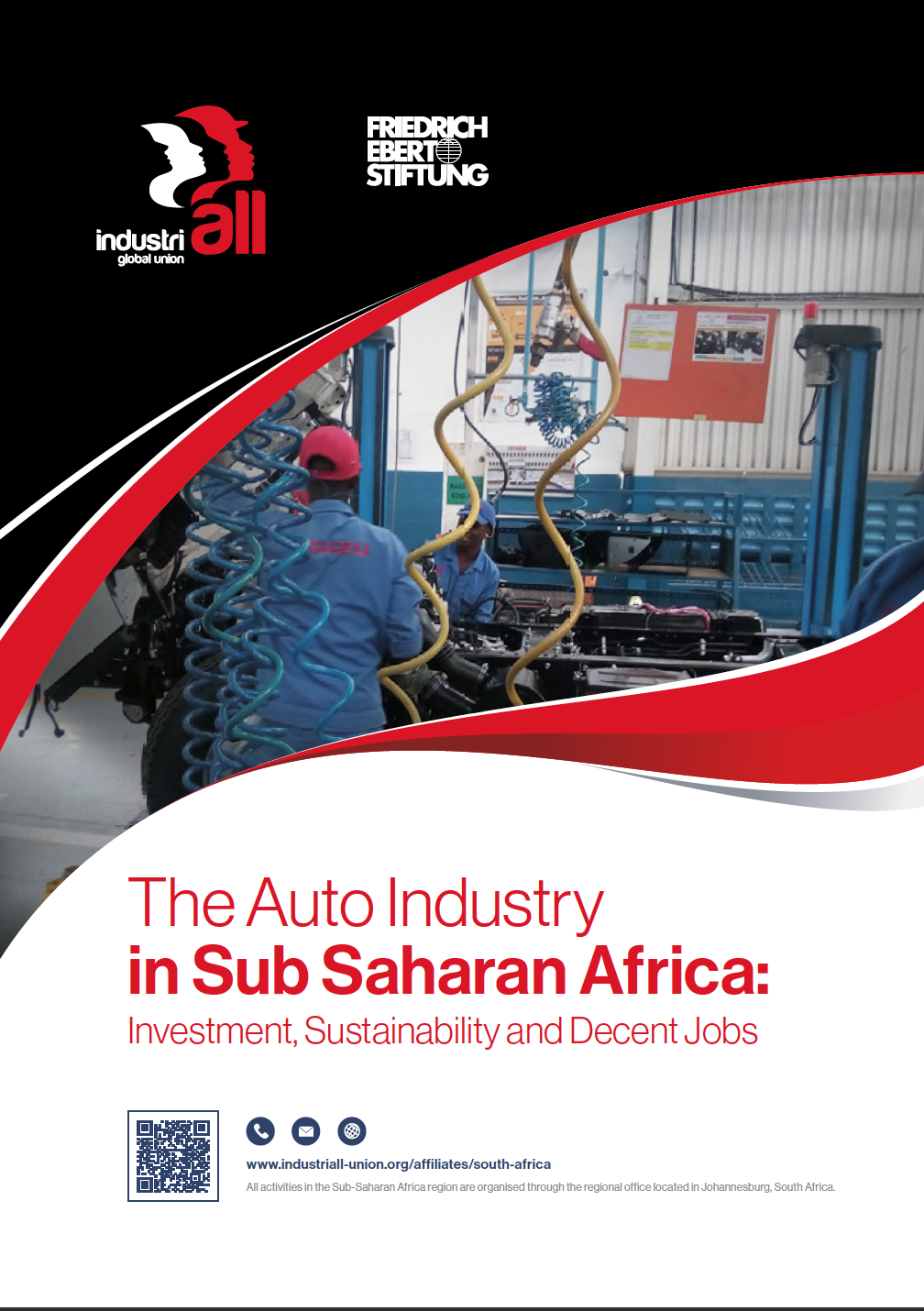
The auto industry in Sub Saharan Africa: Investment, sustainability and Decent JobsWe want decent jobs! Sustainable investment in the SSA auto industry

600 Burkinabe mineworkers who lost jobs after mine closure demand fair compensation

The mine closure put 1,000 workers out of employment, including contract workers.

SMB is a private mining company which was sold to Avocet Mining, listed on the London Stock Exchange. Avocet then sold the company to the Balaji Group. The workers should have been paid compensation when ownership was transferred. They are former SMB and Avocet workers, now employed by the Balaji Group by virtue of their valid contracts.

“Workers efforts to negotiate are falling on deaf ears or met with bad faith from the Balaji Group, while the ministry of mines is notoriously negligent,” said Kiba Aidane and other workers in a statement.

To press for their demands, more than 200 workers picketed in Ouagadougou with placards alleging collusion between the government and the Balaji Group. The workers reject the employer’s proposal to reduce benefits by up to 40 per cent.

After buying Inata gold mine in 2018, the Balaji Group neither resumed production nor paid the workers what is due to them. Although they have been without jobs since the mine closed, the workers are not relenting. Their plight prompted IndustriALL Global Union affiliate, Federation des Industries Diverses (FID), to launch a campaign demanding that the Accra, Ghana based Balaji Group pay the workers.

The workers want a tripartite meeting in which their rights to fair compensation will be respected and to be paid wages backdated to November 2017. They also want pension benefits to be paid to those who were contributing. Retirement benefits should also be paid to those who were within five years of retirement. Medical benefits should be paid.

Charlotte Nguessan, IndustriALL project coordinator says: “The suffering of SMB workers shows the lengths to which some errant mining companies will go to avoid paying compensation. As part of the union building project, we are always alert to deal with these injustices against workers.”

Says Glen Mpufane, IndustriALL director for mining:

“Mining companies must respect workers’ rights. When mines are sold, the new employer must assume responsibility. It is unacceptable for multinational companies to close mines and abandon workers — leaving them without jobs, even robbing them of their benefits.”

The Balaji Group has operations in India, Iraq, Kuwait, Malaysia, Philippines, Qatar, and the United Arab Emirates. In India the group mines silica, garnet, quartz and iron ore.

Training advances collective bargaining skills in Ethiopia

The National Industrial Federation of Energy, Chemical and Mining Trade Union (NIFECMTU), which is affiliated to IndustriALL Global Union, organized a training workshop in Adama from 20 to 21 February, attended by 23 participants from base unions at 17 factories. NIFECMTU has over 20,000 members including 6,000 members from the Ethiopia Electricity Company, 2,000 from the Ethiopian Energy Company and 800 from the Ethiopian Petroleum and Biofuel Company.

The government’s development policies are focusing on diversifying economic sectors including in the chemical, energy, mining, and oil and gas sectors. With diversification and the rapid growth of the economy at 8.5 per cent in 2018, the highest in Sub-Saharan Africa, spurred by infrastructural development and light industrial manufacturing, there is potential for the unions to organize and recruit more workers.

The workshop discussed how base unions can strengthen collective bargaining and organizing skills to improve their capacity to confront strong management teams at plant level. The labour laws and International Labour Organization conventions that Ethiopia has ratified support collective bargaining.

The union at the national level agreed to support the base unions through training of members on financial sustainability, organizing and servicing members, and improving working conditions through better collective bargaining agreements. Further, it was agreed that unions should be more transparent and democratic and should have regular communication with members. Union dues, which make up over 80 per cent of the union’s income, should be used to strengthen organizing and collective bargaining.

Says Sisay Tulu, IndustriALL coordinator for Ethiopia:

“Strengthening the base unions is important for union membership growth because they are the heart-beat of the unions. The base unions are the where workers engage with the unions at the factories and the mines. If the base unions are strong, the union will also be strong.”

Adds Kenny Mogane, regional officer for IndustriALL Sub Saharan Africa: 

“Negotiating better deals through collective bargaining improves working conditions and living wages for workers. We will continue to support the NIFECMTU in its efforts for effective negotiations and collective bargaining agreements.”

Glencore African union network opens dialogue with company

Union representatives from the African countries where Swiss-based mining and commodities giant has operations, Democratic Republic of the Congo (DRC), South Africa and Zambia, met Glencore’s human resources (HR) management team for the first time at the launch of IndustriALL Global Union’s regional union network. The Glencore team included the HR managers from Mutanda Mining and Katanga Mining in the DRC, Mopani Copper Mines in Zambia, and Alloys Assets and Coal Assets in South Africa.

The benefits and effectiveness of constructive dialogue become a reality when a company works together with unions to improve working conditions, respect workers’ rights, pays decent living wages, employs more permanent workers, and improves health and safety, said participants at the meeting, which was facilitated by the IndustriALL central and regional offices.

IndustriALL’s affiliates elaborated the progress they expect from Glencore, which includes equal pay for work of equal value, good health and safety practices, maternity leave, and access to health services. Union representatives raised their demand that Glencore should hire more permanent workers and ensure that contractors enjoy the same rights under labour laws. Unions noted improvements in working conditions and community development.

The Glencore HR management team provided extensive information about the company and its labour-related policies and practices. They explained what they are doing at their operations to resolve the grievances raised by unions, how they engage with the unions, and the community projects that they are involved in.

Says Gerda Schwindt, the Glencore group head of HR:

“We welcomed the opportunity to engage with IndustriALL, allowing us to understand their concerns as well as highlighting our commitment to our ambition of being recognized as a top employer in all of our operating regions.”

Says Kemal Özkan, IndustriALL assistant general secretary:

“We have started the interaction with Glencore in a form of constructive dialogue. The company should be able to listen to the concerns of the workers recognizing and respecting their fundamental rights with working conditions. I believe this dialogue with Glencore furthers labour relations in the operations of the company”.

The meeting ended up with a common understanding to develop similar dialogue at country level.

IndustriALL’s Glencore Global Union Network will be held in Colombia in September, and the company management is expected to be present with the same commitment to dialogue at global level.