Bridgestone global network builds on longstanding health and safety effort

On 11-12 June, 2019, the IndustriALL Bridgestone Global Network Steering Committee met for its 18th annual activity, in Johannesburg, South Africa.

Following the group’s protocol, the body is chaired by the Japanese Rubber Workers’ Union Confederation, Gomu Rengo, an important affiliate of IndustriALL Global Union. The Japanese Bridgestone Workers’ Union organizes and coordinates the meetings which rotate annually between Japan and other important locations for the company.

The factory visit

Both South African plants of Bridgestone are organized by the IndustriALL affiliated National Union of Metalworkers of South Africa (NUMSA), and as hosts of this year’s activity, NUMSA arranged for the group to visit the nearby Brits factory and exchange with management. The plant employs 766 workers and the local NUMSA shop stewards are accompanying the transition of the tyre factory to upskill workers and adapt to modern machines and production techniques.

Gomu Rengo president, and chair of the network, Hiroyuki Ishitsuka opened the meeting by outlining the importance of mature industrial relations at global tyre manufacturers such as Bridgestone. Under the current climate of new technologies giving the potential to new companies to grow and take market share from the big three, Bridgestone, Michelin and Goodyear, president Ishitsuka said:

“We must remain vigilant. Workers and management must establish common rules, understanding, and communication. And occupational health and safety is a huge priority. We count on IndustriALL’s unchanged support in building the strength of this network.”

The issue of dumping of cheap tyres from China, and elsewhere in Asia, is a major issue for tyre manufacturers in South Africa, Japan and Europe. The cheap tyres are flooding the market and threatening the jobs of IndustriALL members around the world.

The current global slowdown in the car industry, as well as the mining industry are directly affecting the tyre industry. NUMSA will be working with the Japanese union colleagues to seek assurances for the future of the second Bridgestone factory in South Africa, at Port Elizabeth, which employs 250 workers.

The chair of the Bridgestone European Works Council, Marco Argilli plays an important role in this global body. Marco presented to the group regarding Bridgestone’s progress in the field of health and safety, with a positive record of no serious injuries in Europe in 22 months. However, Marco raised the issue that is present in the South African factories of worker contact with carbon black.

In Europe, Bridgestone is investing US $41 million over the coming four years to digitize the manufacturing processes at its eight European plants in France, Hungary, Italy, Poland and Spain. The investment will include upskilling and training for Bridgestone employees in order to operate digital technologies that are designed to help improve resource efficiency and job satisfaction. The improvements also will address energy savings, efficiency increases, waste reduction and process simplification.

Heinz Evertz, coordinator of the Bridgestone European Works Council, made an important contribution to the meeting with a focus on cancer. Heinz argues that occupational cancer should receive more attention from Bridgestone, with health just as important as safety. The meeting agreed that further research is needed into the real cancer risks of the materials used in tyre production.

The Japanese Bridgestone Workers’ Union’s Takahiro Nakajima reported that an active union is the only way to a safe workplace:

“Safety is improving in Bridgestone Japan because of the union involvement and our improved equipment. If our members raise a safety issue from the workplace, we take it to management and make sure that they are listened to.”

Tom Grinter, IndustriALL rubber sector director said:

Tom Grinter

 “IndustriALL believes in campaigning for the core rights around health and safety. Our members have a right to know, to participate, and to act. This means that Bridgestone must make information on the risks and hazards in the workplace available to all employees, workers must always have the right to refuse a task if she or he sees a danger, and our members must have the right to jointly plan and implement the health and safety programs in their workplaces.”

NUMSA shop steward James Selala and international officer Christine Olivier reported positive action from Bridgestone management under the three core rights of health and safety. However, it was stressed that efforts are needed to increase understanding on occupational cancer. Information gathering will be conducted into health of workers retiring after a long career at the Bridgestone facilities, as it is common that workers die within three years of retirement.

Next year’s annual activity will be held outside of Japan due to the Olympic Games being held in Tokyo in 2020.
Calls for sustainable mining after 43 artisanal miners killed in DRC landslide

A landslide at an open excavation pit at KOV mine on 27 June killed 43 miners, with others still missing. The government of the Democratic Republic of the Congo (DRC) has responded by sending the army to the mine where over 2,000 artisanal miners dig for cobalt.

“IndustriALL condemns the decision of the government to deploy the army and regards this as mistaken and unfortunate as it only worsens an already volatile situation and could lead to further bloodshed and loss of life.

“It is a short-term solution to a complicated problem and reflects policy failure on the part of the government and the mining industry in the DRC,”

said Kemal Özkan, IndustriALL Global Union assistant general secretary.

Artisanal and small-scale mining (ASM) is legal in the DRC. Miners dig for copper and cobalt, which is in high demand for use in batteries for electric vehicles and smart phones. The miners, locally known as creuseurs, use basic tools such as picks, shovels and panning equipment.

In some cases, they mine the same concessions as large multinational companies. However, the companies are favoured by the government whilst the artisanal miners are ignored and blamed for damaging the environment and operating illegally. They work without support in dangerous conditions.

IndustriALL regional secretary Paule Ndessomin said:

“In the DRC, the miners are arbitrarily and sometimes violently moved from one place to another after concessions they previously mined are sold to multinational corporations and Chinese companies. The cobalt they mine is sold in an unfair formal market exploited by traders who operate in a shady supply chain.”

Said Isaac Kiki, the chairperson of IndustriALL Lualaba Province, a committee of IndustriALL affiliates OTUC, UNTC and CDT:

“We are saddened by the death of so many miners; our brothers that we live with in the same community who died while trying to find means to escape poverty. The government must put in place measures to make artisanal mining safe.”

The unions support the revised Mining Code which promotes mining as a source of inclusive development. There are over 12 million artisanal miners in the DRC who mine 30 per cent of the country’s cobalt.

Despite ASM being ostracized and laws to formalize it being unclear in some countries, the African Union’s African Mining Vision recommends transforming “ASM communities from vulnerable and marginal enclaves of unorganized groups of miners and other actors into integrated and functionally sustainable and resilient communities.”

Glen Mpufane, IndustriALL director of mining concurs that ASM should be transformed using the International Labour Organization’s fundamental principles and rights at work.

“We recommend responsible mining which considers the ILO principles and national labour laws and support due diligence in the mining supply chain to ensure that sourcing of the minerals respects the human and labour rights of miners. Governments should also formulate policies that formalize and recognize ASM, especially its importance to social and economic development. ASM shouldn’t be marginalized as it contributes to poverty reduction.”

At the Alternative Mining Indaba in Cape Town, South Africa in February, one of the recommendations was for multinational companies to work with ASM for sustainable mining that is inclusive and beneficial to marginalized communities.

Mining unions work together to organize in Tanzania

Improved communications, worker education, participating in union activities, and maintaining workers’ unity also strengthen organizing. A workshop organized by IndustriALL Global Union Sub Saharan Africa region and IndustriALL affiliates, the National Union of Mineworkers (NUM), South Africa and Tanzania Mines Energy Construction and Allied Workers Union (TAMICO), attended by 14 participants in Dar Es Salaam 20-21 June discussed how to improve organizing in the mining sector in Tanzania

TAMICO has 11,000 members, 2,000 of whom are from the mining sector, but believes there is potential to double its membership. For example, at Nyanzaga Mine and Geita Gold Mine the union could recruit over 5,000 members.

After the workshop, six shop stewards facilitated an organizing drive with workers at North Mara Gold Mine where 120 workers joined the union. The new TAMICO members expect the union to improve its servicing of members and communicate better. The union must also negotiate collective bargaining agreements and make subscriptions affordable.

In response to the workers concerns, TAMICO general secretary, Saidi Nyungwa said:

“The union will engage members to address the challenges as this is important for the growth and future of the union. It is important for TAMICO to sustain its organizing efforts to improve the working conditions of mine workers in Tanzania.”

Tafa Moya, NUM’s mining house coordinator said TAMICO can learn from South African experiences.

“The NUM is negotiating for a clause to be included in the collective bargaining agreement to demand that workers be employed on a permanent basis and for equal pay for work of equal value. Additionally, after a long struggle, the NUM now sits in the Mine Health and Safety Council. It also trains shaft stewards to provide workplace service to members.”

The growth of the mining industry in Tanzania provides an opportunity for TAMICO to increase its membership. The government of Tanzania estimates that mining will contribute up to 10 per cent of the country’s Gross Domestic Product by 2025. Tanzania mines gold, iron ore, nickel, copper, cobalt, silver, diamond and tanzanite. Other industrial minerals including coal and uranium.

Ending migrant workers’ rights violations in Mauritius

On arrival in Mauritius, workers are paid low wages, work long hours, live in squalid conditions sometimes in dormitories behind factories, and risk deportation when standing up against the violations.

The labour and human rights violations against the migrant workers can be described as modern slavery and was discussed at a workshop organized by IndustriALL Global Union with support from the Friedrich Ebert Stiftung on 18 – 19 June. The 30 participants were from unions in Bangladesh, Madagascar and Mauritius. Ovibashi Karmi Unnayan Programme (OKUP), a civil society organization that carries out pre-departure training for Bangladeshi workers going to work in other countries, also participated.
 
ASOS, which has signed a global framework agreement with IndustriALL and whose suppliers employ over 3,000 workers in Mauritius, said they want working conditions to improve and debt bondage to end. Debt bondage is a result of the fees, sometimes as much as US$800, recruitment agencies charge that take workers more than 14 months to pay. ASOS also said that workers should not pay the cost for travelling to the country of destination, or for training.

Said Christina Hajagos-Clausen, IndustriALL director for the textile and garment industry:

“The global framework agreement with ASOS will be key to begin to develop sound industrial relations with Mauritian textile and garment suppliers. Building sound industrial relations will help curtail labour rights violations.”

IndustriALL’s affiliate, Confederation des Travailleurs Secteurs et Prive (CTSP) representing over 50,000 workers is leading the fight against the exploitation and demanding the payment of the national minimum wage of 9,400 Mauritian Rupees (US$271) to migrant workers. The affiliates from Madagascar, Federation des Syndicats des Enterprises Franches et Textiles (FISEMA) and Sendika Kristanina Malagasy (SEKRIMA) and Syndicalisme et Vie des Societies (SVS), as well as a Bangladeshi affiliate, Sommilito Garments Sramik Federation, support the work of the CTSP.

Reeaz Chutto, CTSP president, said:

“We are fighting for migrant workers to enjoy the same rights as Mauritian workers under the Employment Rights Act. This will help to stop unfair dismissals and protect their rights to collective bargaining.”

Anti-Slavery International (ASI), which campaigns to protect workers against slavery and human trafficking and supports the employer pays principle, where employers pay for travel and other costs of migrant workers added its support to stop the violations. Other participants were from the International Organization for Migration and the University of Mauritius. The Confederation of Mauritius Business and the ministry of labour also attended and said they supported social dialogue and better industrial relations.

An ASI project with IndustriALL, ASOS, OKUP and CTSP aims to end modern slavery in the supply chain by promoting predeparture training, developing a smartphone app for Mauritius modelled on the IndustriALL/ASOS Workers’ Rights app currently being used in Turkey, that will explain migrant workers’ rights, and a trade union-based support centre to be based at CTSP where workers can go for support on complaints and grievances. The centre will assist workers in Bangla – the language of the Bangladeshi workers who constitute most of the workers.

If you are unhappy resign, Ethiopian workers told

Garment workers with more than 30 years-experience work in deplorable conditions and earn 900-1300 Ethiopian Birr – less than US $45 per month. The low wages make it difficult for workers to make a decent living.

At a women’s meeting in Adama on 6-7 June, three women with more than three decades each of work experience spoke about the terrible working conditions in their factories. The meeting was organized by IndustriALL Global Union affiliate the Industrial Federation of Textile Leather and Garment Workers Trade Union (IFTLGWTU) with support from FNV Mondiaal and attended by 26 participants, mainly women.

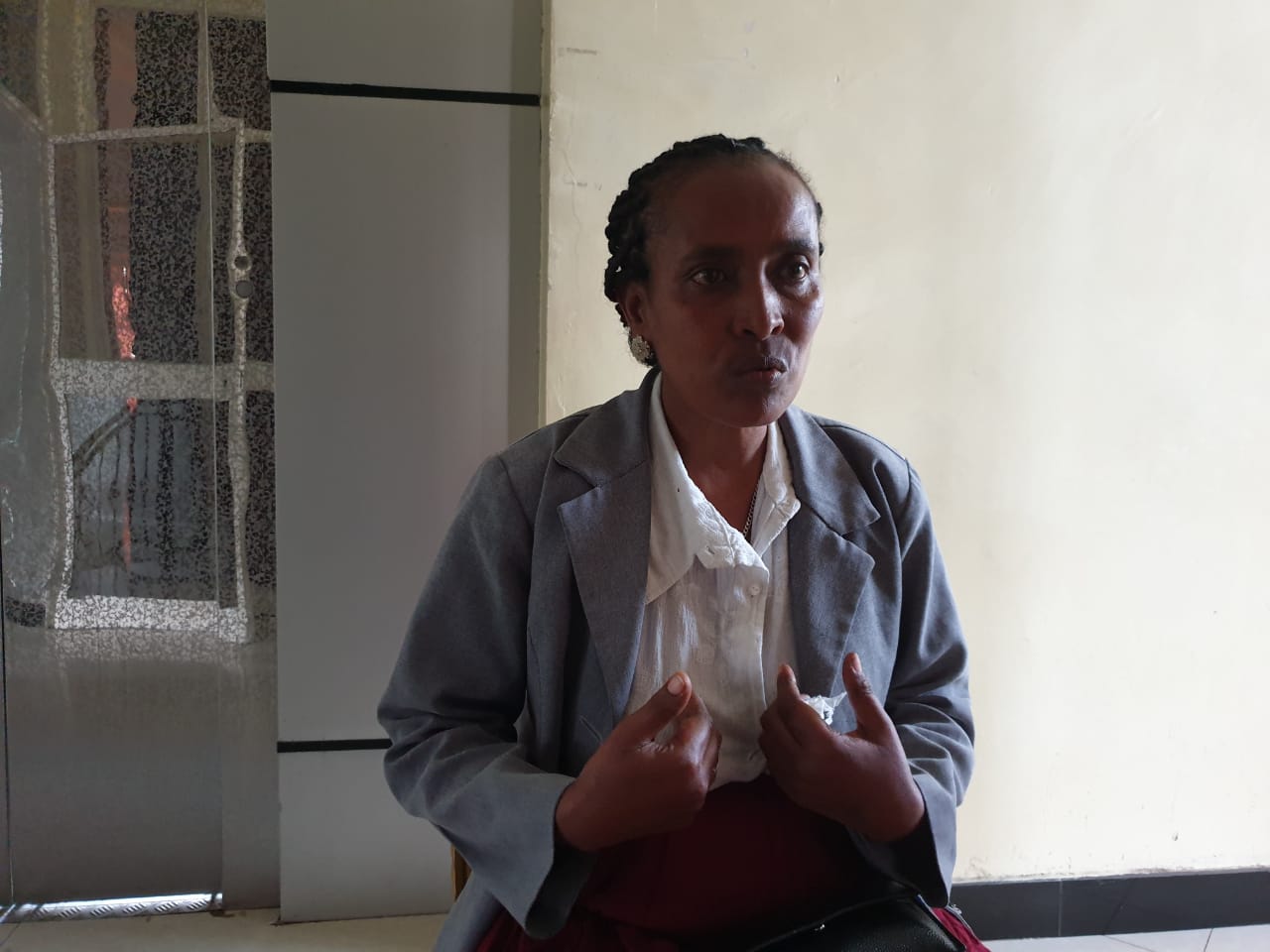
"I have asthma and had kidney failure. I’m often told that if I am unhappy, I can resign. "

Mulutesfa Anbachew

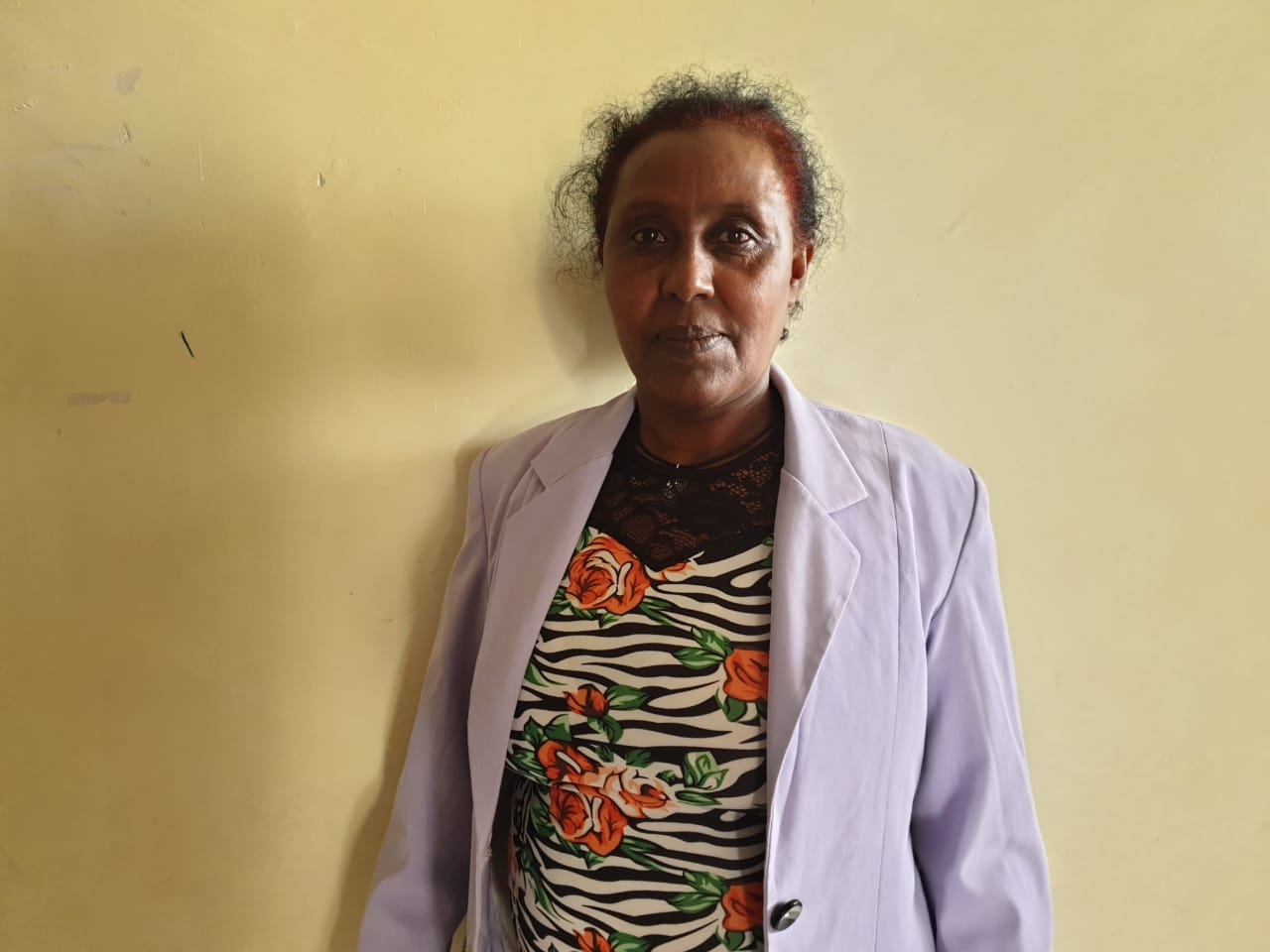
Mulutesfa Anbachew (42), who started working at 12 when the Falcon BM garment factory opened, told her story in tears.

“When I started working to help my family after leaving school, I got exposed over the years to unsafe drinking water and dusty floors. Workers are also not given personal and protective equipment. Now I have asthma and had a kidney failure.

“Although the illnesses are directly linked to my unsafe work environment, the employer is not helping, with pleas ignored. I’m often told that if I am unhappy, I can resign. With kidney failure, one uses the toilet frequently. But at our factory there is one toilet token for 45 workers, and you wait for your turn. This worsens my condition.”

Type your title here

Type your caption

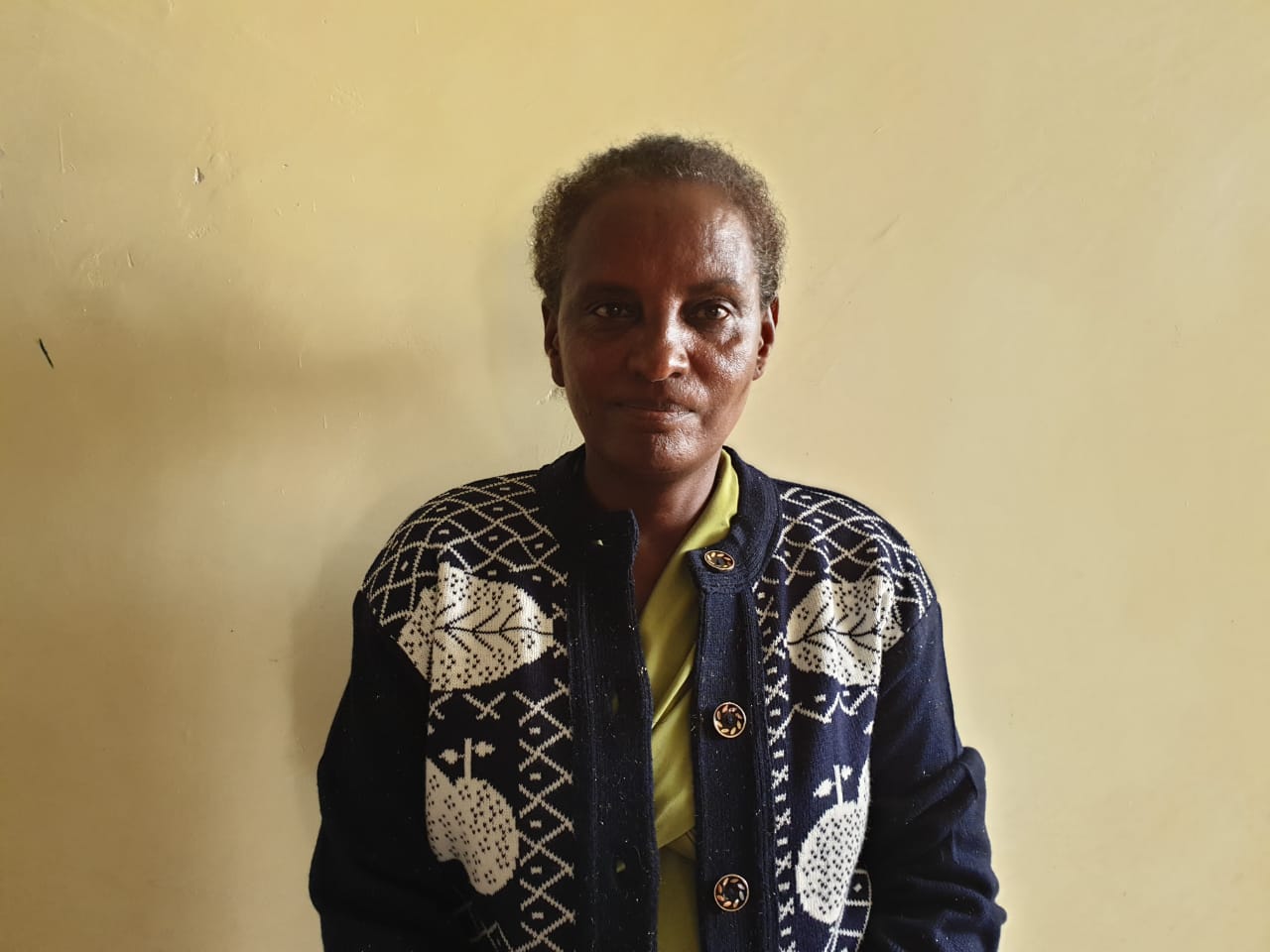
“My shift starts at 8 pm and ends at 4 am.  We sleep on the factory’s concrete floor."

Etalemahn Tadesse

Etalemahn Tadesse (53) from Yirgalem Textile’s knitting department complains of pain in her knees and the employer’s failure to provide transport.

“My shift starts at 8 pm and ends at 4 am. As management doesn’t provide transport to workers; we sleep on the factory’s concrete floor because it is not safe to leave until the day breaks. Despite our complaints, nothing is changing.”

“On wages, there is discrimination against older workers with no efforts made to improve their working conditions. The aim is to frustrate them, force them to resign and avoid paying severance packages.”

Elsabeth Mekonen (50), also from Yirgalem, refused to sign a wage grid that discriminated against older workers.

"The IndustriALL workshop in Addis Ababa 2018 taught me to stand up for workers’ rights."

Elsabeth Mekonen

“What the IndustriALL workshop in Addis Ababa 2018 taught me is to stand up for workers’ rights. I have nothing to lose because my years of experience count to nothing.”

Paule France Ndessomin, the IndustriALL Sub Saharan Africa regional secretary who spoke to the women said:

“We will continue to sensitize women to speak and act against labour rights violation at the workplace. Social dialogue with key stakeholders that include government, employers and unions in improving working conditions for textile and garments workers should be prioritized.”

Fighting poverty wages in Zimbabwe

Lameck Chineuruve, an artisan at the Zimbabwe Electricity Transmission and Distribution Company, has worked for the power company for 11 years and earns less than seven years ago.

“In 2012, I earned US$800 per month, but currently I earn less than US$200. This makes life hard for me because I must pay for transport, accommodation, school fees, and food, from this paltry amount,” says Chineuruve.

In February, the Zimbabwean currency was devalued by over 60 per cent. However, prices increased by the same value as they are pegged against the US dollar, while wage increases did not match the prices.
 
Poor wages in most of the sectors in Zimbabwe are one of the reasons why IndustriALL Global Union affiliates are campaigning for living wages.

In organizing drives under the union building project, young workers from the National Engineering Workers Union, National Union of Metal and Allied Industries of Zimbabwe, the Zimbabwe Chemicals Plastics and Allied Workers Union, and the Zimbabwe Energy Workers Union emphasized the importance of joining unions, fighting for workers’ rights including on collective bargaining. They also said workers should be paid living wages that will cushion them against the devaluation.
 
Says Paule France Ndessomin, IndustriALL regional secretary for Sub Saharan Africa:

“We are in solidarity with our Zimbabwean affiliates in their struggle for living wages and their organizing drives to increase membership. Union strength comes from organizing and participatory democracy. We also applaud the organizing by young workers who are the future leaders of the unions.”

With unemployment over 90 per cent and most of the population earning a living in the informal sector, the Zimbabwean economy is in the doldrums. Factory shells in the light and heavy industrial sites in Harare are deserted. Manufacturing and industrialization stagnated and has been replaced by the importing of finished goods.

The few companies that are still open are the targets for union organizing with the hope that when the economy improves the unions will also increase their members.

South African unions optimistic after election of new government

In his inauguration speech, South African president Cyril Ramaphosa said that under his administration the government will promote policies that create decent work and skills development especially for young people, empower women, fight corruption and end poverty in a generation.

President Ramaphosa cited the Fourth Industrial Revolution as a provider of new jobs, especially for young workers. Further, he said that during his tenure South African society will be guided by equality and solidarity and that he will promote a social compact between business and labour.

Additionally, sustainable economic development will be promoted “for productive lands and viable communities, for knowledge, for innovation, and for services that are affordable, accessible and sustainable.” Companies will be asked to “generate social value and propel human development.”

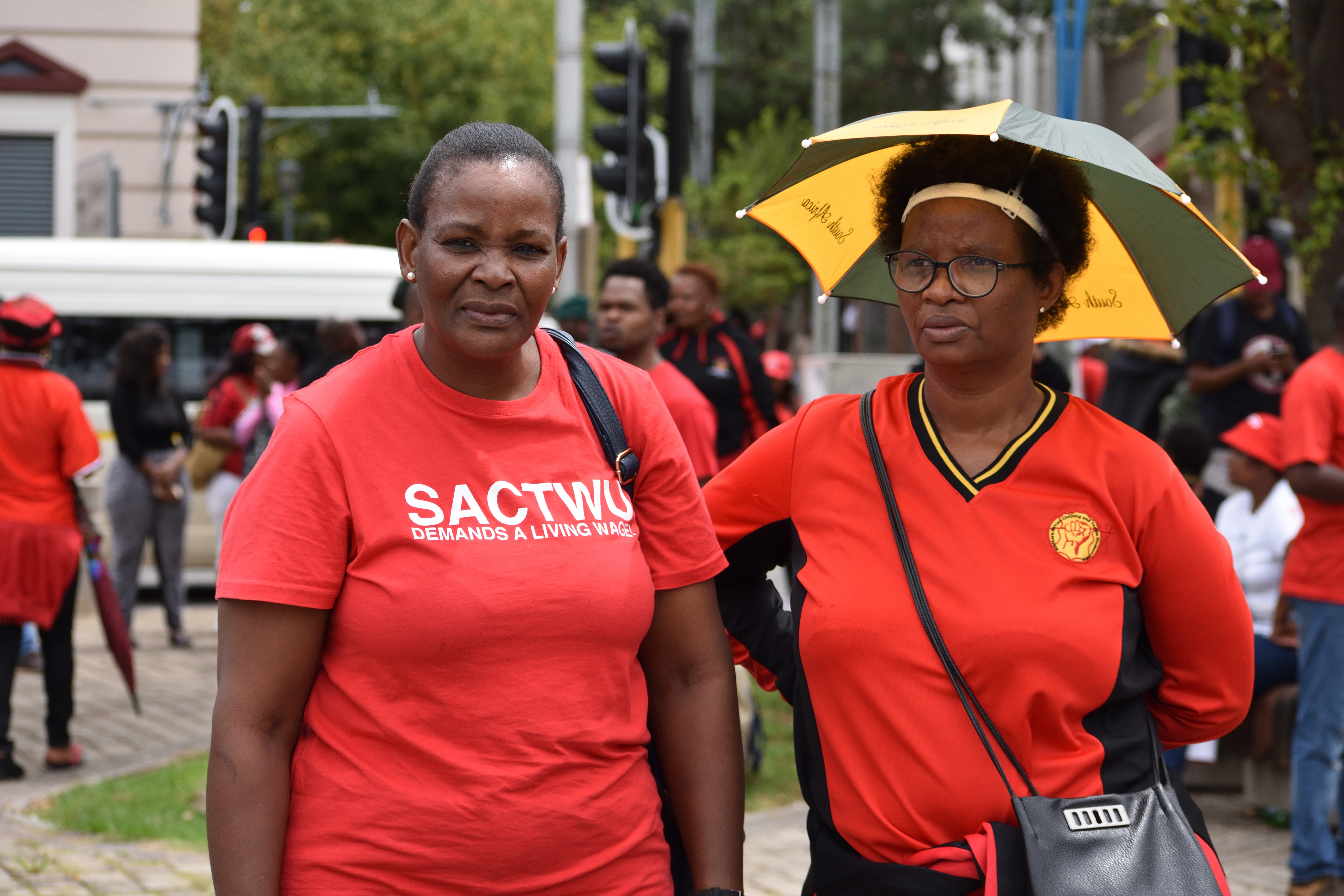
A march for jobs in Johannesburg

Said IndustriALL Global Union affiliate, the Southern African Clothing and Textile Workers Union:

“Growth and development of our manufacturing industry remains crucial for South Africa’s future overall economic well-being. We cannot be a country of raw material exporters and importers of finished goods, if we are to decisively address the triple crises of unemployment, inequality and poverty. The industrialization and beneficiation of our economy is key.”

“We especially appreciate the appointment of Minister Ebrahim Patel as Trade and Industry Minister. It bodes well for the future of the clothing, textile, leather and footwear sectors, and for the fast-tracked development of the manufacturing industry in general.”

Said Paule France Ndessomin, IndustriALL regional secretary for Sub Saharan Africa:

“We welcome the announcements by President Ramaphosa, especially the appointment of more women to the cabinet which led to the achievement of a 50/50 gender parity. Further, we expect that the announcements will result in the creation of decent jobs and living wages.”

A march for jobs in Johannesburg

The South African economic outlook is bleak. According to Statistics South Africa unemployment is high at 27.6 per cent and is even higher as seen in the extended rate of over 37 per cent — which includes discouraged job seekers who have stopped looking for work. Thousands of jobs are also being lost in the mines when operations are closed. But unions are optimistic that the government will turn things around and will continue their jobs and living wages campaigns as strategies to reduce inequality.

Unionist elected Member of Parliament in South Africa

After working for more than four decades as a sample machinist, Beauty Zibula rose from being a shop steward to become the first vice president of the Southern African Clothing and Textile Workers Union (SACTWU), affiliated to IndustriALL Global Union. She is also an executive and women’s committee member of the IndustriALL Sub Saharan Africa region, and on 22 May she was sworn in as MP.

The Sub Saharan Africa region welcomes her election as one of the ruling African National Congress’ members of parliament for the KwaZulu-Natal Province.

Like most South African unionists, she became politically active in junior school and got her first job in the sector in 1978. Her history in the labour movement is illustrious. Active in the Garment and Allied Workers’ Union (GAWU) in Durban during the 1980s, she is part of a collective that turned the union into a militant organization that fought against apartheid.

She became chairperson of the Durban North local of GAWU from 1987 to 1989 and retained that position when SACTWU was formed. Other positions she has held include: SACTWU’s Kwazulu-Natal (KZN) regional treasurer, the KZN regional deputy chairperson, the KZN regional chairperson and first deputy president of SACTWU.

“We congratulate comrade Beauty Zibula, a trade unionist who has risen through the trenches of working class struggles. Having been a regional executive member, she knows how to fight for workers’ rights against precarious work and is a staunch defender of workers’ rights in the garment and textile and other sectors. We are confident that she will take the fight to the South African parliament as well,” said Valter Sanches, IndustriALL general secretary.

SACTWU has over 100,000 members that make up 85 per cent of the textile and garment sector including shoe and leather. It organizes workers in spinning mills, wool washeries, factory shops, clothing factories, cut make and trim operations, small businesses, footwear factories, cotton gins, laundries, tanneries, weaving sheds, finishing operations, dye-houses, retail outlets, and warehouses.

IndustriALL again demands Shell address violations in supply chain

Shell has refused to recognize serious breaches of its own code of conduct by its suppliers, which were raised at Shell’s AGM last year.

An IndustriALL mission to Nigeria in September 2018 witnessed first-hand how contract workers at Shell in Nigeria are living in poverty, with no job security and inadequate medical cover, while being denied the right to join a union.  

Speaking at the AGM, IndustriALL energy director, Diana Junquera Curiel, said:

“In September, I personally went to Nigeria and I saw these violations for myself. For your information, we have raised these violations with the International Labour Organiziation, the UN Global Compact and the United Nations Human Rights Council.” 

Last year, Shell made a commitment with three other oil companies to create a common framework for monitoring labour rights in their supply chains. However, the scheme is not transparent and excludes trade union participation.

“If Shell really wants to improve labour rights in its global supply chain, why does Shell refuse to work together with IndustriALL Global Union to address these issues?” asked Diana Junquera Curiel at the meeting.

“Shell says it only works with local unions, but problems in Shell’s global supply chain need global dialogue to find global solutions. Other multinational energy companies, such as Total and Eni, work with IndustriALL to improve workers’ rights in their supply chains, why can’t Shell do the same?”

Afolabi Olawale Olufemi, general secretary of NUPENG, which represents contract workers in the Nigerian oil and gas industry, called on Shell CEO, Ben van Beurden, to commission an independent study into the impact of Shell outsourcing in Nigeria:  

“Workers have been on the same wage since 2014. We signed a new collective bargaining agreement with Shell contractors last year but it has never been implemented. Oil and gas workers are toiling hard in Nigeria. The dividends you are earning are tainted by the tears of Nigerian workers.”

Shell’s CEO agreed to look into the matter but said that Shell does not have control over how suppliers pay or negotiate with workers. However, Van Beurden admitted that Shell contractors should honour Shell’s supplier principles. These include “compliance with all applicable laws and regulations on freedom of association and collective bargaining.”

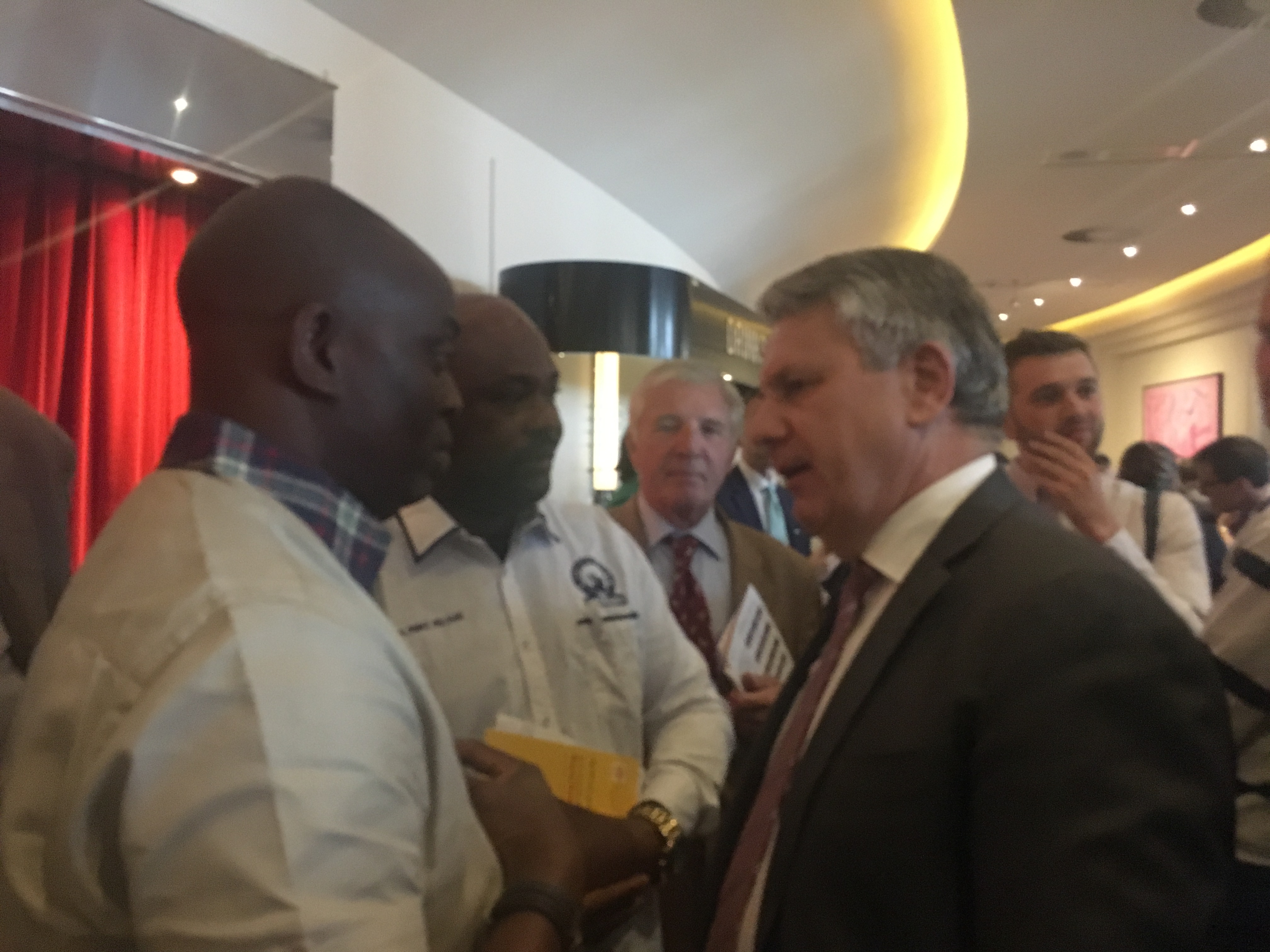
NUPENG general secretary, Afolabe Olufemi, and president Williams Akporeha, raise their problems directly with the Shell CEO, Ben van Beurden after the AGM.

Joosje de Lang from IndustriALL’s Dutch affiliate, FNV, also made an appeal to the Shell Board on behalf of Shell members in the Netherlands. She called on Shell to apply the same international standards of workers’ rights enjoyed by workers in the Netherlands to all Shell workers around the world.

“It is clear that Shell contractors in Nigeria are breaking Shell supplier principles. We urge Shell to take action to ensure contractor companies adhere to fundamental labour rights, as in accordance with its own standards,” said IndustriALL assistant general secretary Kemal Özkan. “We are, as ever, open to dialogue with Shell to help resolve these issues.”

PROFILE: Organizing in the garment and textile sector in Ethiopia

Union: Industrial Federation of Textile, Leather and Garment Workers Union (IFTLGWU)

Country: Ethiopia

Text: Elijah Chiwota

Building unions in rough terrain: Organizing in the garment and textile sector in Ethiopia

The Industrial Federation of Textile, Leather and Garment Workers Union (IFTLGWU), affiliated to IndustriALL Global Union, has hit a brick wall in its attempts to organize at Hawassa, despite the country’s Constitution and labour laws providing for freedom of association. 

Ethiopia’s economy has grown quickly over the last few years, from an agricultural economy to an industrializing one. The country now has one of the highest economic growth rates in 

Sub-Saharan Africa. Industrial parks 

like Hawassa are part of the government’s plan to create jobs.

The Ethiopian Investment Commission touts low wages and other benefits to attract investment. The government has set up the Ethiopian Textile Industry Development Institute, and industrial parks have been built across the country to promote light manufacturing. The largest is Hawassa, with the potential to employ over 60,000 workers on double shifts. It is expected to generate US$1 billion in exports.

This developmental state approach aims to create jobs and reduce unemployment, especially among the youth. With a growing population of over 105 million people, and two million young workers entering into the job market every year, the country needs to create more jobs.

Global garment brands and retailers have identified Ethiopia and Kenya as countries to source goods from over the next five years, mainly due to rising costs in countries they have traditionally produced in, like China and Vietnam. Factories in the industrial parks supply to big brands and retailers, including Adidas, Marks & Spencer, H&M, Primark, JC Penny, Phillips-Van Heusen, Tesco, Inditex, Tchibo, Kik, VF Corporation, Schöffel, Walmart, Ober Mayer, George (Asda), Levi Strauss and Hugo Boss.

Unions ask: who benefits from this low cost, labour-intensive, low skill manufacturing model? 

Ethiopian workers are on the losing end of the equation. Denying unions access means that wages are low, and workers’ rights, including to health and safety and collective bargaining, are curtailed. 

The face of the textile and garment sector in Ethiopia is that of a young woman. But at Hawassa, the union is unable to campaign for women workers’ rights, including against sexual harassment, for maternity protection and on child care issues. Housing is another issue as many women are forced to share a room, sometimes with more than four colleagues.


A long way away from a living wage

A recent study by global labour market analysts MyWage and Confederation of Ethiopian trade Unions (CETU), with support from FNV Mondiaal, concluded that a garment worker needs at least 4,130 Birr (US$146) per month to survive, and workers with families need more. Yet 92.5 per cent of the workers earn less than the minimum required to make a living, with 8 per cent earning below US$35. The survey, in which 1,052 workers from 52 factories were interviewed, was carried out in Addis Ababa, Oromia and Hawassa.

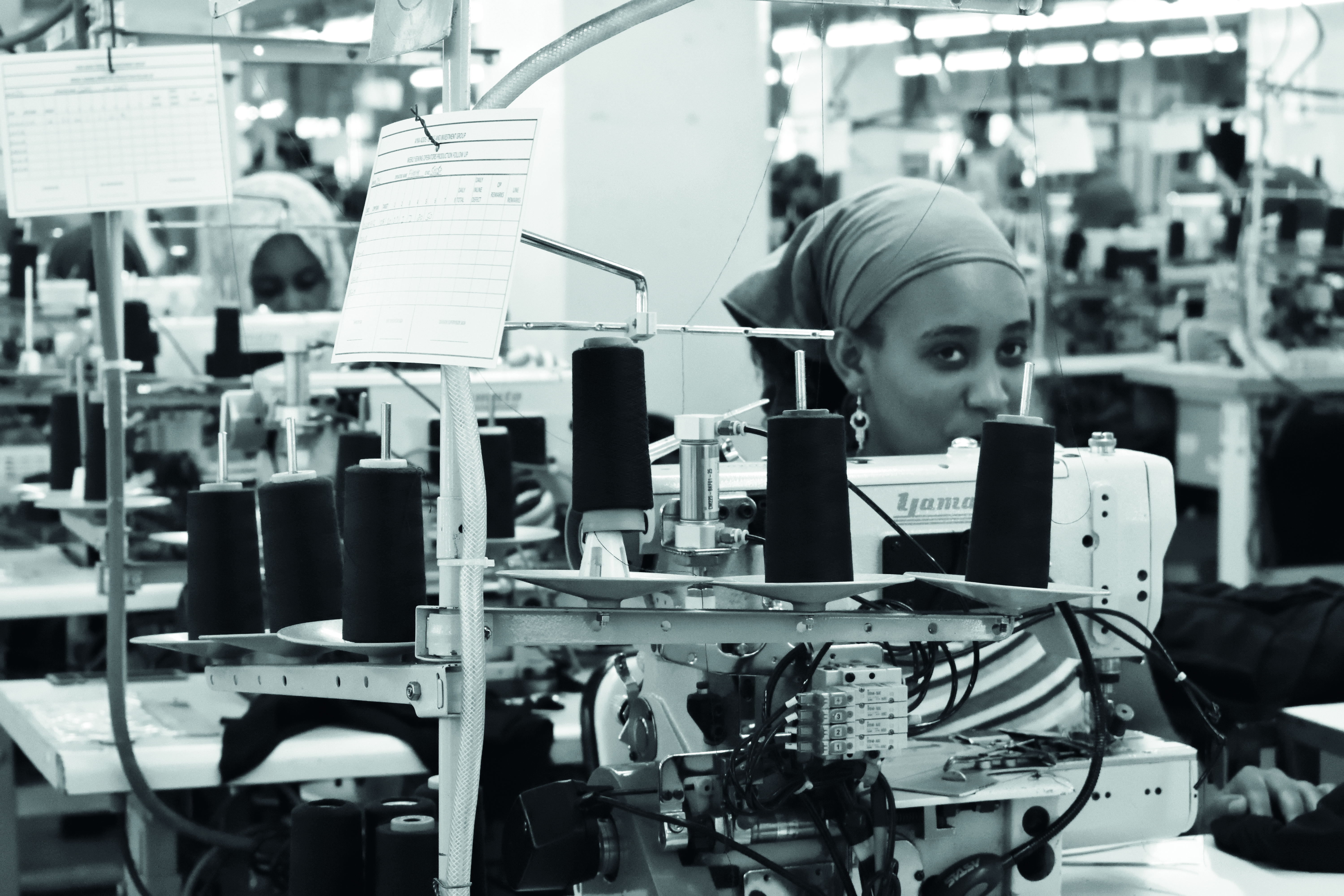
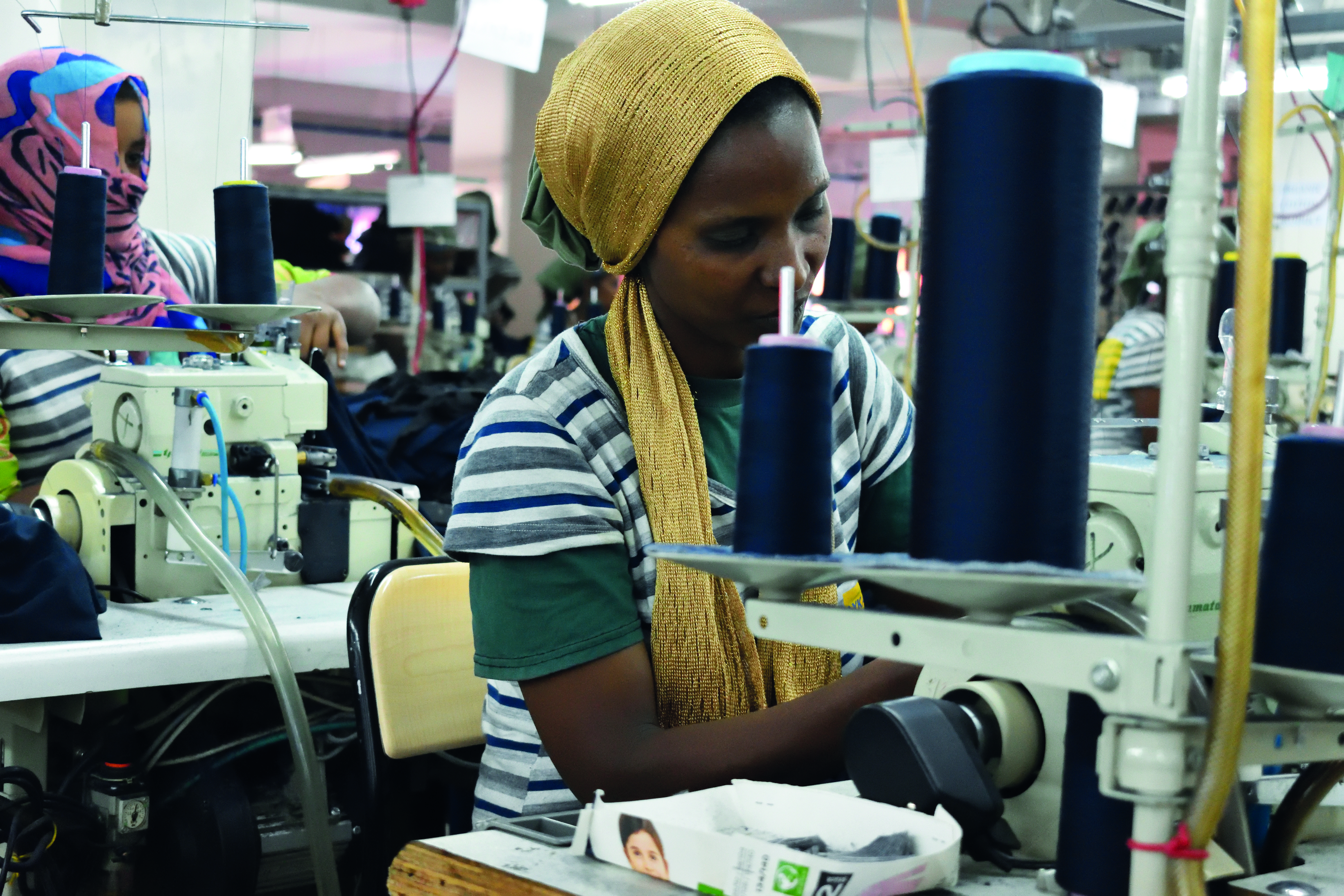
Workers at Ayka Addis factory, Addis Ababa. IndustriALL

Minimum and living wages are central to a campaign by the 55,000-strong IFTLGWU, affiliated to CETU. With the current wages most workers struggle to make ends meet and can be described as working poor. A low wage economy means jobs that will neither change living standards of the workers, nor end poverty. 

The government promotes ‘industrial harmony’ – but unions say harmony can only be attained through inclusive social dialogue. To achieve this, the IFTLGWU is working with the CETU, the International Labour Organization, FNV Mondiaal, the Friedrich Ebert Stiftung, IndustriALL and other partners in various activities that include building union capacity for collective bargaining towards social dialogue.

IFTLGWU is using collective bargaining training as part their campaign for a living wage. Training shop stewards in the textile and garment sector means they can take the fight for workers’ rights to their factories.

Raising women’s voices

Unions in the country represent only a small portion of the workforce. Only 10 per cent of the country’s labour force of over 44 million workers is employed in the private sector and the law does not allow public sector workers to organize. In addition to low unionization, there is poor representation of women workers within the unions.

Even though more than 90 per cent of the workers in the textile and garment factories are women, the union leadership continues to be dominated by men. The IFTLGWU is working towards achieving gender equity and is holding training workshops as part of the strategy. 

Workers at Ayka Addis factory, Addis Ababa. IndustriALL

It is a priority for the IFTLGWU to curb the exploitation of women workers in the factories by supporting women in the garment and textile sector to engage with management. For example, a recent workshop attended by 19 women shop stewards from the workplace unions of the IFTLGWU, with support from the IndustriALL regional office for Sub-Saharan Africa and FNV Mondiaal, aimed to increase women’s participation in leadership roles in the unions. 

One of the participants, Gelane Senbetu, a shop steward and women’s council member from Kanoria Textile Factory, Bishoftu, says it is important for women to understand the labour laws and the context of collective bargaining in Ethiopia.

“Workshops like these are vital as they focus on how to be actively involved in union work and we identify the issues that we have to deal with in the workplace. We can freely discuss key issues like collective bargaining and how to advance women’s interests in the workplace.”

“The training has taught us a lot from a legal perspective and has strengthened the women’s councils’ ability to address women’s issues.”

A sustainable industrial policy for the textile and garment sector

According to the government’s growth strategy, Ethiopia’s main competitive advantage is low labour cost. Creating jobs will reduce poverty, and the sector is labour intensive. To support industrialization, the government is developing infrastructure. Roads are being built, airports and railways revamped and extended, and low-cost energy produced. The economic policies also aim to improve social services, including housing, health and education.

Ethiopia’s garment and textile sector has benefitted from preferential trade under the United States African Growth and Opportunity Act, as well as the Everything But Arms and duty-free quota free arrangements. In addition, there are bilateral agreements with China and India to promote the sector.

The government is promoting the growing of cotton, although production has remained low. The cotton to garment value chain includes cotton growing and harvesting, ginning, spinning, weaving or knitting, garment making, the traditional hand loom production methods, and shipping. This value chain is dominated by garment companies.

But what does the special focus given to the textile and garment sector mean for factory workers? What does it mean for union organizing? So far, the expected benefits, including skills and technology transfer, have yet to materialize. Unions are concerned that the country will replicate the mistakes of other low wage economies, undermining unions to keep wages low.

The president of the IFTLGWU, Mesfin Adenew, says:

Increasing membership is an issue we deal with daily. We will not be deterred by hostile employers and state institutions that deny us access to factories and industrial parks. The large number of non-unionized workers means that there is a lot of potential in organizing, and we are working with local and international partners to overcome the challenges.