South African unions shocked by xenophobia and looting

The violence is a repeat of what has happened in previous xenophobic attacks in the country, and the police say they made several arrests.

Louise Modikwe from IndustriALL Global Union affiliate, the Southern African Clothing and Textile Union, who is also the Congress of South African Trade Unions (COSATU) provincial secretary for Gauteng province said: 

“COSATU is shocked by the violence against foreign nationals, in particular Nigerians, that started last week after a taxi driver was killed in Pretoria. This violence is perpetuated by the economic challenges in South Africa and in Africa as well, and results from failures by governments to develop economic policies that grow economies and create jobs. Government interventions in job creation, management of undocumented foreign nationals, and drug control in communities are often poor.”

The South African Federation of Trade Unions (SAFTU) to which IndustriALL affiliate, the National Union of Metalworkers of South Africa is also affiliated said:

“SAFTU reiterates that foreign migrants have nothing to do with the expanded unemployment rate of 38 per cent. They have nothing to do with the fact that two thirds of South Africans live in poverty. The inequalities faced by South Africans are not created by poor African and Asian migrants but are manifesting from the capitalist system that divides and exploits the black working class.”

The unions said safety and security is poor as the South African Police Service is failing in its duties to maintain law and order. They said this could be one the reasons why crime is rampant in the country.

The unions also condemned the practice by some employers of preferring undocumented over South African workers. The undocumented workers were paid wages below the minimum wage of ZAR 3,500 (US $230). They said this created conflict between workers.

With sluggish economic growth of 2.8 per cent per annum in Sub Saharan Africa, jobs are hard to come by, with South Africa seen as providing better opportunities than other countries. Efforts currently being made to create jobs on the continent include the African Union’s Agenda 2063 and the African Continental Free Trade Area, among other initiatives.

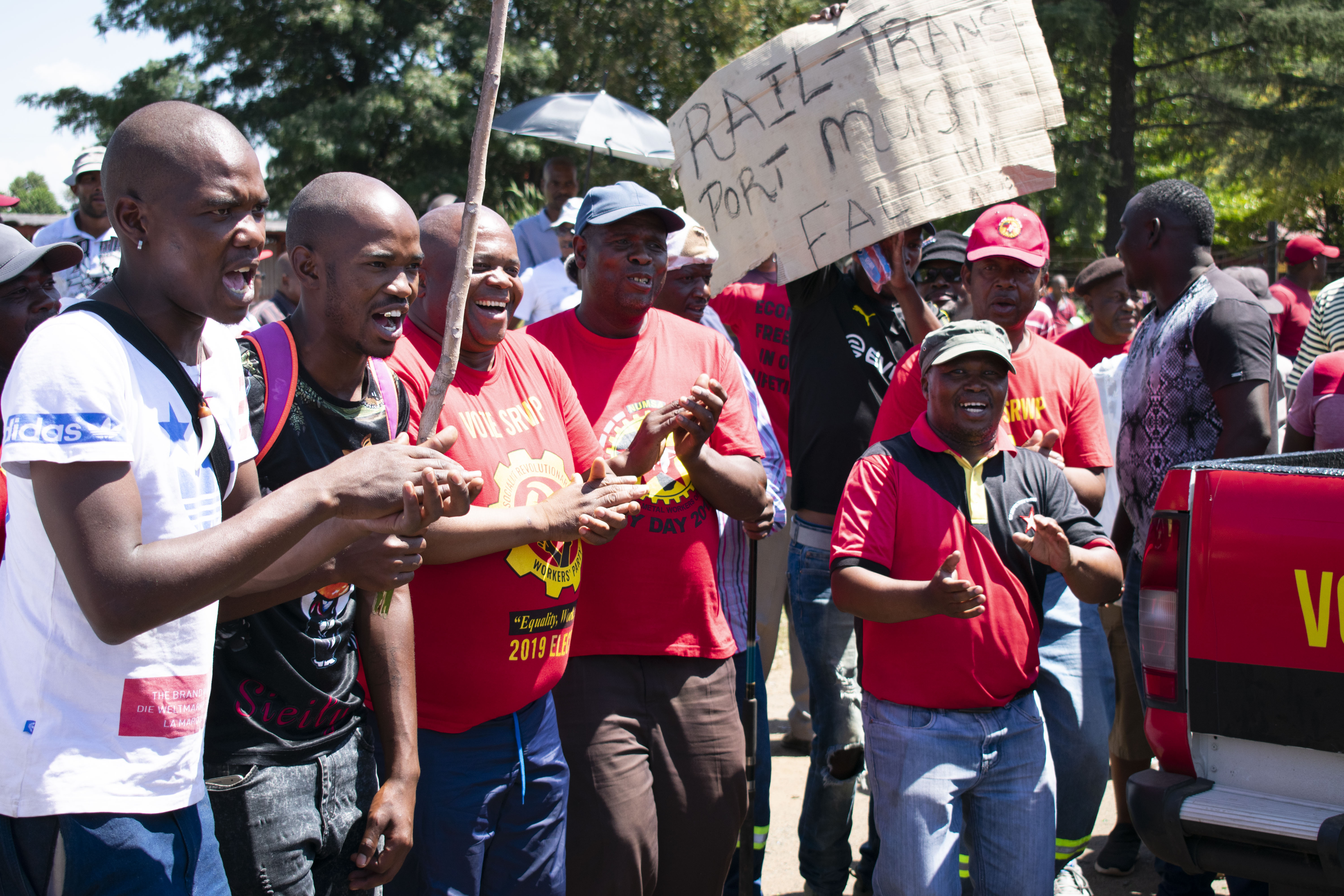
Photo: © Ihsaan Haffejee, New Frame: 2 September – People run away from the police who tried to disperse a mob attempting to loot migrant owned businesses
Calls to formalize artisanal and small-scale mining in Africa

ASM provides livelihoods to over 10 million people in Sub-Saharan Africa, and yet is inherently dangerous claiming an incalculable number of lives every year. In June, more than 40 artisanal miners were killed at a mine collapse at Glencore’s cobalt mine in the Democratic Republic of Congo (DRC). 

Formalization will not only improve safety and allow for decriminalization of the activity, but also open the door to opportunities provided by ASM, including new forms of organizing for trade unions.

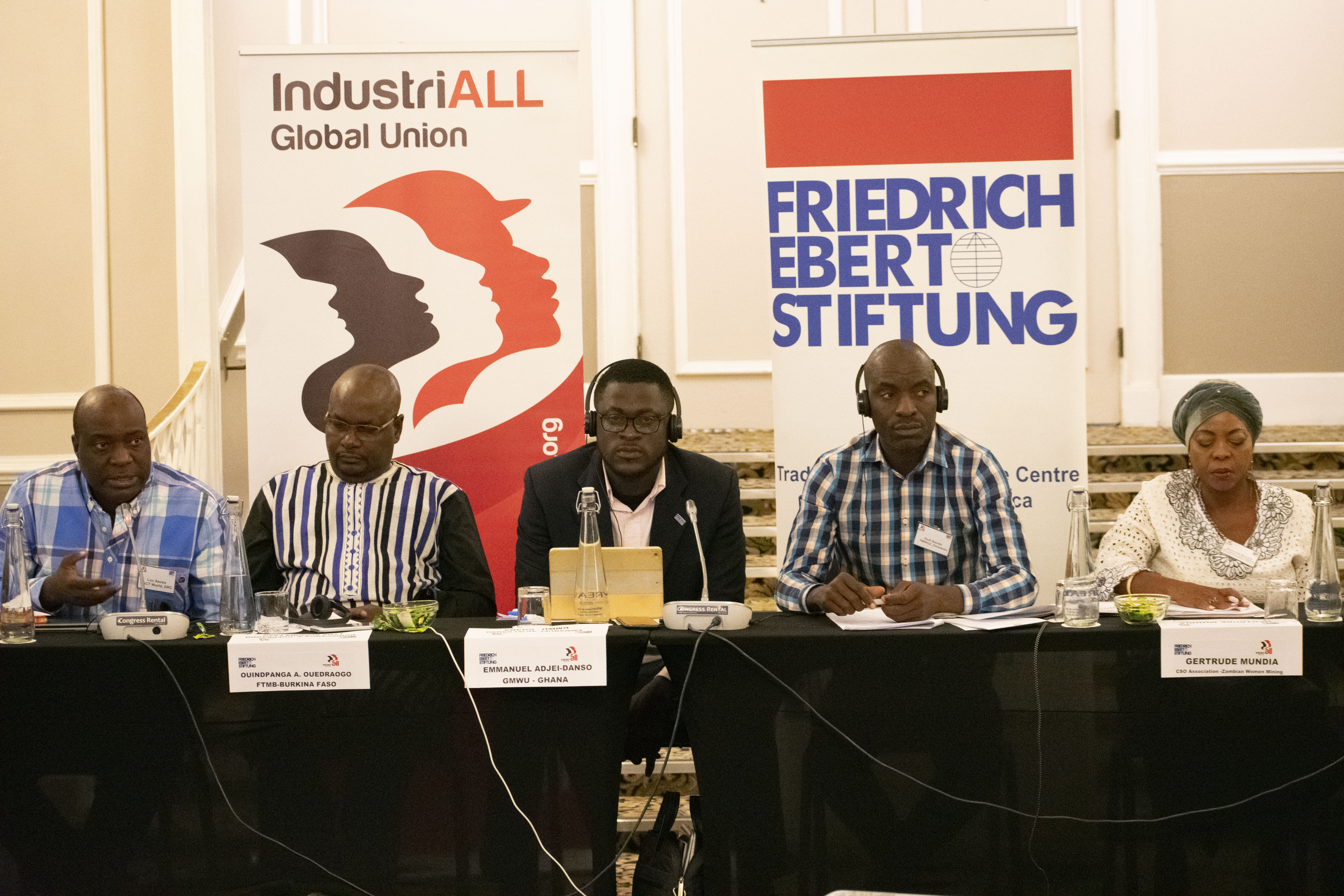
Speaking at the meeting of trade unions from DRC, Ghana, Mali, Namibia, South Africa, Zambia and Zimbabwe, IndustriALL’s director for mining, Glen Mpufane, said: 

“Recognition of the role of the sector in the mainstream economy by the authorities can lead to a relationship where ASM or informal mining can co-exist with large scale industrial mining. A process of certification that legalizes and integrates ASM into the economy can bring certainty, order and stability to the industry and help remedy the ills of the sector.” 

He added that the multi-stakeholder Initiative for Responsible Mining Assurance (IRMA) recommends cooperation between mining companies and ASM. IRMA promotes the exercise of due diligence to stop child and forced labour in the mining supply chain and aims to minimize social and environmental risks.

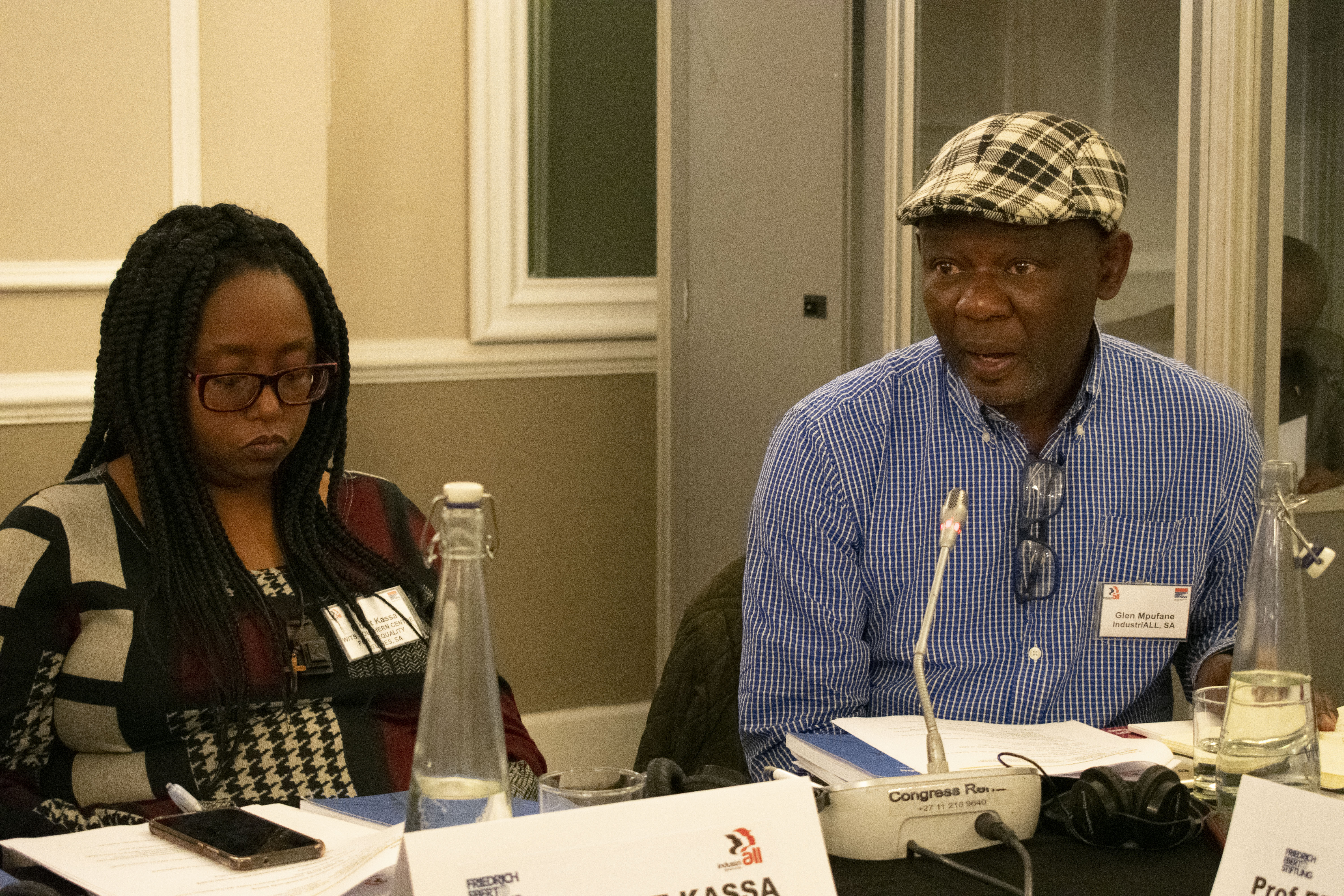
IndustriALL director for mining, Glen Mpufane

ASM covers informal, subsistence mining by families and individuals, as well as small formal commercial mining operations. While it makes a significant contribution to the economies of the countries where it operates, mostly in the global south, it lacks policy recognition by governments, the mining industry and even trade unions. ASM is consequently pushed to the margins of economic activity, and often considered illegal and criminalized.  

The meeting acknowledged that formalization is a complex process which needs enabling laws and financial support from governments and the mining industry. Further, artisanal and small-scale miners should be given permits, while the rights of women to work in mining should be protected and cultural stigma reduced.

Artisanal mining must be formalized say unions in Sub-Saharan Africa

Legal and policy frameworks ensure the inclusion of health and safety standards, women’s rights and community participation. For instance, community participation helps to prevent conflicts when mining encroaches on agricultural land. 

The meeting heard that formalization also means improving miners’ knowledge on health and safety and environmental issues. The use of mercury in small scale gold mining and its adverse health effects was highlighted.

Trade unions were urged to organize artisanal miners and, as per the International Labour Organization Recommendation 204, can help transition workers from the informal to the formal economy.

A starting point could be through creating forums that include ASM workers. Union constitutions could also be amended to allow for membership. On becoming members, the miners are then integrated into union activities on education, social dialogue and collective bargaining. 

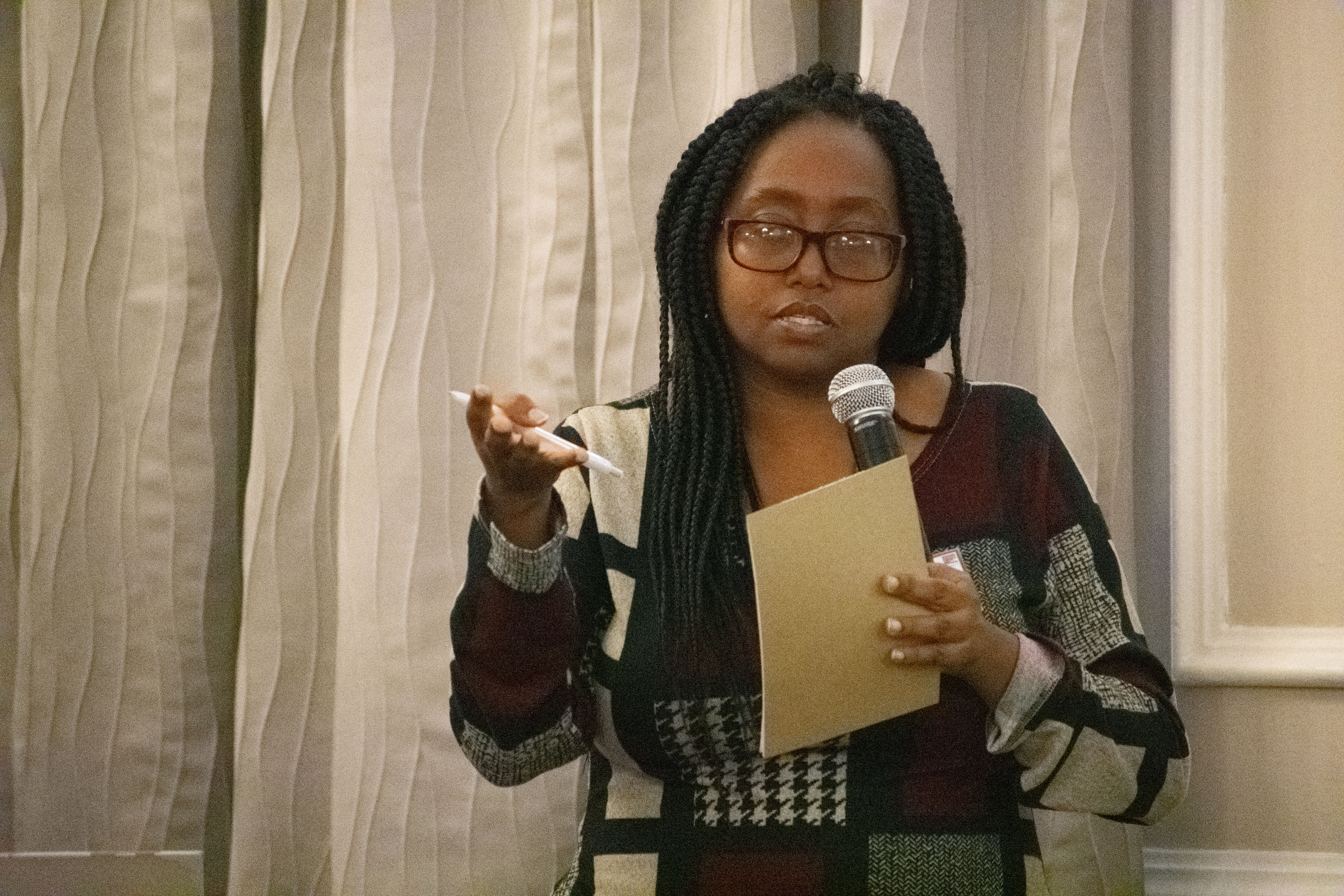
Dr Hibist Kassa presents at the meeting.

Dr Hibist Kassa, ASM researcher from the University of the Witwatersrand, indicated that although artisanal mining is legal in some countries, workers are not given adequate protections:

“The apparent contradictory interventions by the state are underscored by an overriding interest in preserving the dominance of large-scale mining operations.”

She emphasized that formalization is important to ending the criminalization of ASM.

The meeting was supported by Friedrich Ebert Stiftung’s Trade Union Competence Centre.

Ethiopian and South African unions discuss collective bargaining strategies

According to the unions this is important to the living wage campaign in Ethiopia where garment workers earn low wages of less than US$30 per month. In South Africa, for instance, garment workers earn above the national minimum wage of R3500 (US$230). These wages are from gains in collective bargaining that have been made over time.


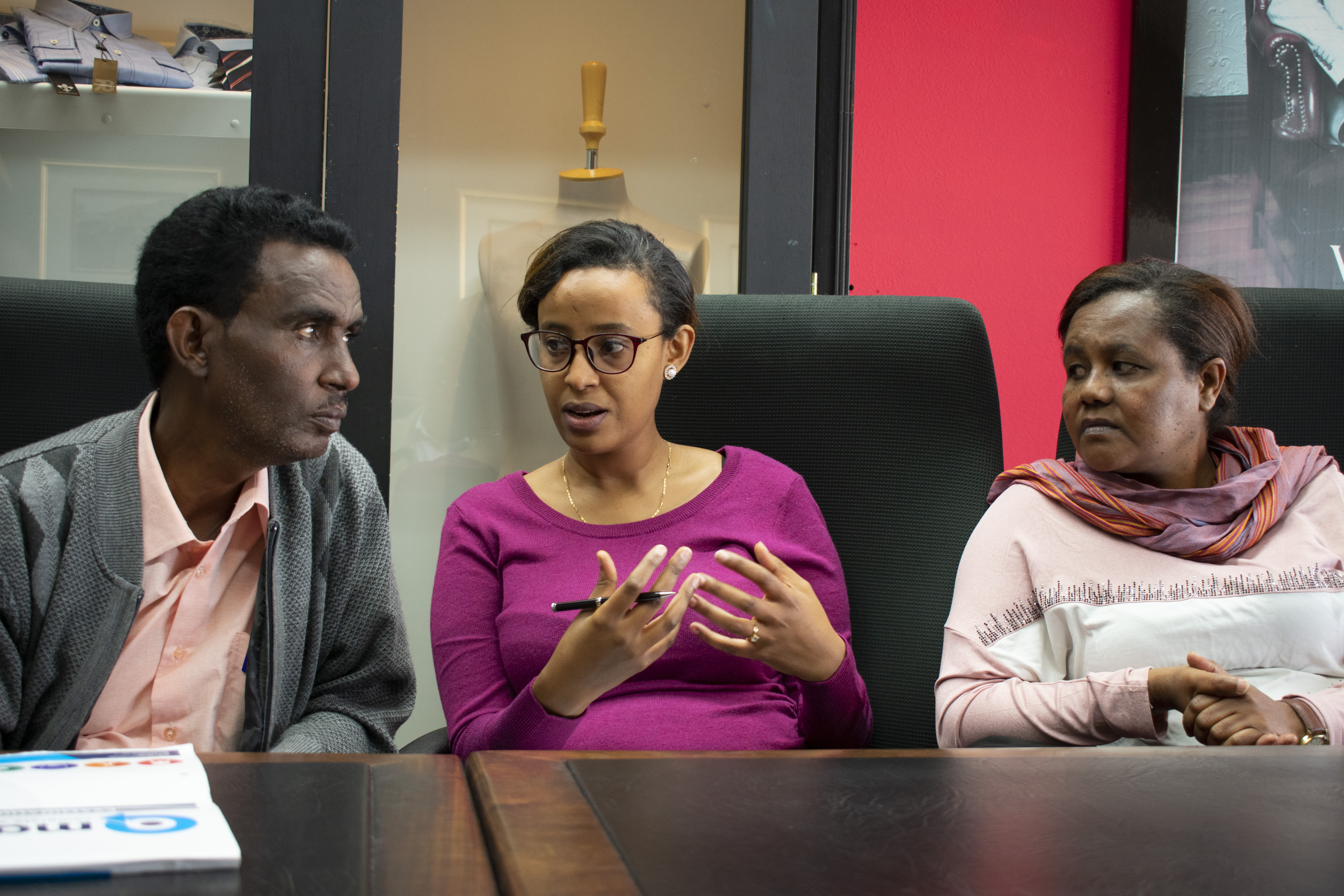
IndustriALL Global Union affiliates the Industrial Federation of Textile, Leather and Garment Workers Union (IFTLGWU) from Ethiopia and the Southern African Clothing and Textile Workers Union (SACTWU) from South Africa, together with the Confederation of Ethiopian Trade Unions, met to map out how social dialogue and collective bargaining can be improved. The international exchange was supported by IndustriALL Sub Saharan Africa region, SACTWU and Mondiaal FNV from the Netherlands.

Although Ethiopia and South Africa have different social dialogue and collective bargaining systems there were common areas where the unions could work together. Similarities between the countries are that the garment and textile sectors are dominated by women workers who constitute more than 80 per cent of the workforce. Therefore, working conditions that cater for women such as maternity benefits and childcare facilities should be accessible at all factories. Further, wages in the sectors are low and should be increased.


The unions agreed to cooperate on tactics such as improving negotiations at factory level bargaining through training. Centralized bargaining, which allowed SACTWU to sign collective agreements in clothing, textile, and leather sectors will also be further explored. Currently IFTLGWU negotiates only at the factory level. Participants discussed on how centralized bargaining could be beneficial to IFTLGWU and become part of Ethiopia’s labour laws. IndustriALL’s ACT initiative with garment brands will have a key role in supporting these efforts by ensuring that factories participate and that brand purchasing practices support the development of industry bargaining.


Said Andre Kriel, the general secretary of SACTWU:

“We are willing to help our comrades from the IFTLGWU. They can learn from our strategic unionism approach which recognizes collective bargaining, job creation, service to members, and membership growth as important activities for the union. Through international solidarity we will grow together and help each other as trade unions.”

Explaining the importance of the mission, Emebet Eshetu, the Vice President of IFTLGWU, said:

“It’s an opportunity for us to learn from SACTWU especially on how to take our struggle forward. Centralized bargaining is the way to go for the garment and textile sector in Ethiopia. We also need to use information and communication technologies as an organizing tool.”


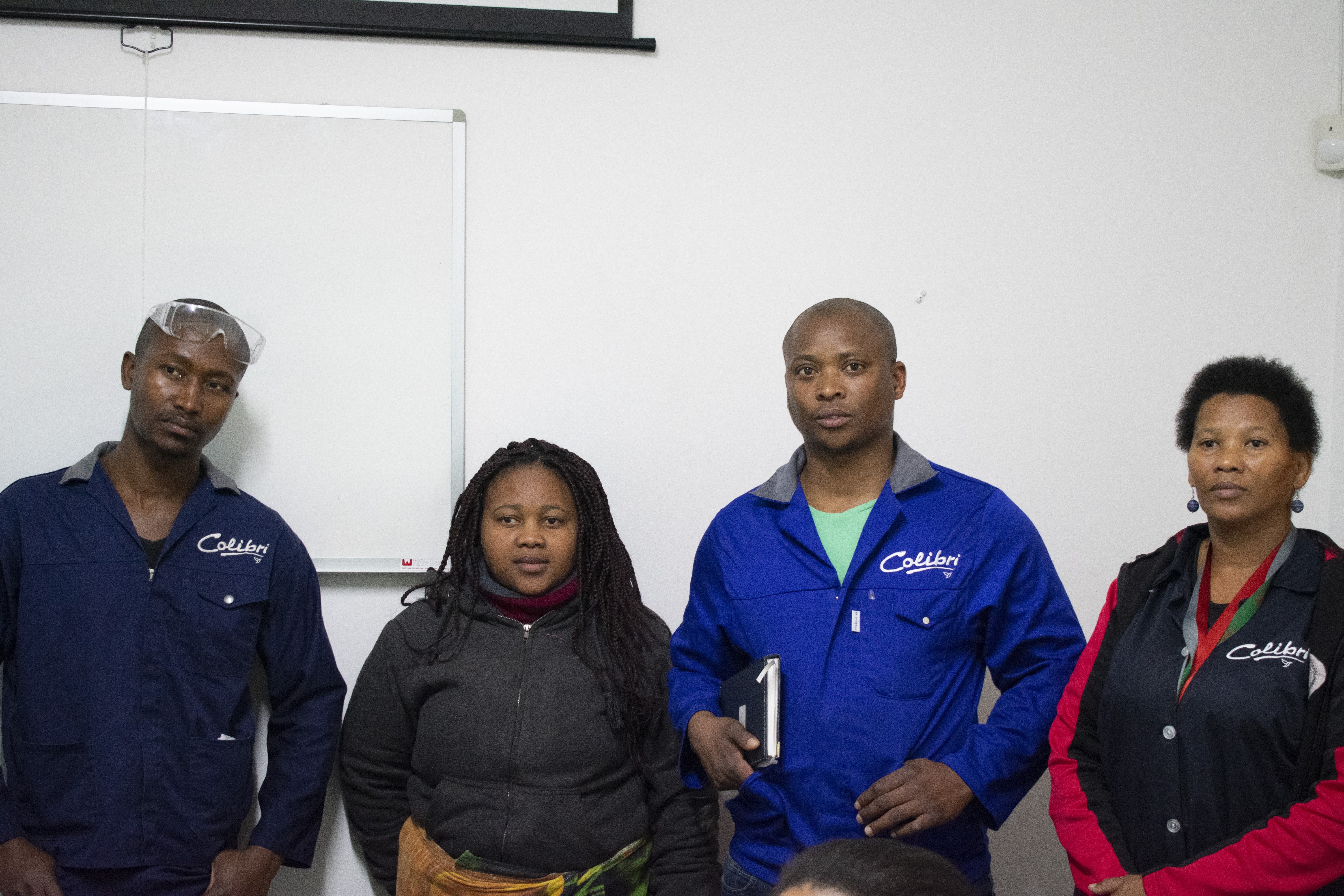
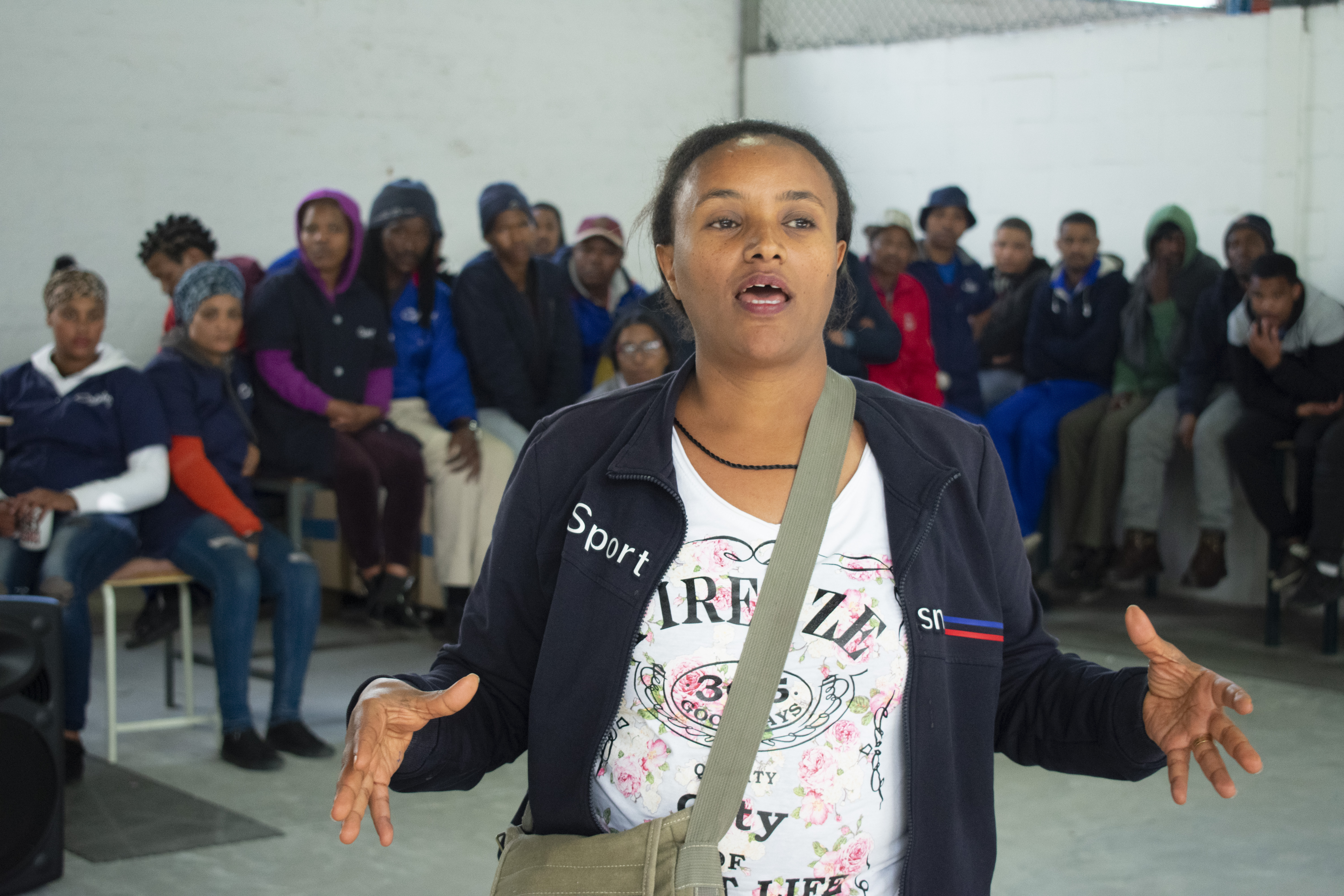
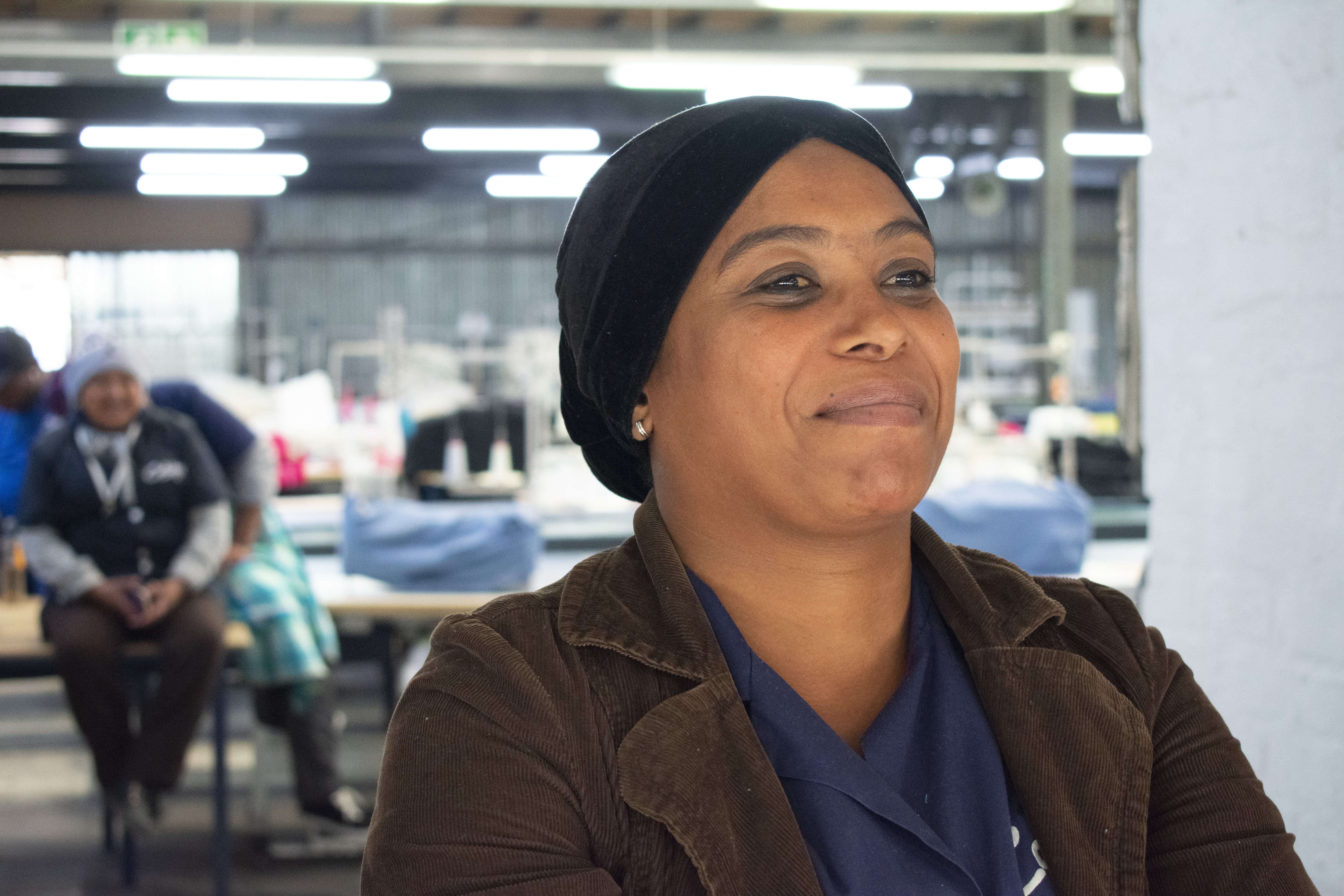
The mission had a meeting with the National Clothing Industry Bargaining Council and visited towel factory, Colibri, and garment factory, House of Monatic.

Workers fear job losses at Glencore cobalt mine

A letter to workers from management stated that the decision to mothball the mine was caused by a drop in cobalt prices on the international market, expensive cost of inputs especially sulphuric acid and increased taxes to mining companies following the Democratic Republic of the Congo (DRC) government’s recent amendments to the country’s Mining Code. According to the letter, these factors reduced the economic viability of the mine.

Cobalt prices peaked at US$43 a pound in March 2018 before collapsing to US$11.80 in July, but Glencore’s announcement on Mutanda has seen the prices begin to recover. Cobalt, a biproduct of copper and nickel in mining activities, is used in the manufacture of smartphone and electric vehicle batteries. The DRC produces over 60 per cent of the global cobalt.

At a meeting with workers, management said Mutanda Mine is not shutting down. Neither is Glencore selling the mine nor leaving the DRC. Management also said workers and their families will continue to enjoy benefits from a healthcare provider and that no jobs will be lost during the two years.

However, IndustriALL Global Union affiliates, Secretariat des Syndicats de IndustriALL (CSC) and Travailleurs des Mines, Metallurgies, Energie, Chimie et Industries Connexes (TUMEC) which have members at Mutanda Mine, say the matter is urgent.

Isaac Kiki, chairperson of IndustriALL Lualaba Province, a committee of IndustriALL affiliates, says:

"This is a serious situation which requires us to understand what the law says about the Glencore decision. As trade unions we must use our knowledge and experience to begin strategizing and preparing for negotiating now, so that we are not caught unawares."

Industriall echoes the sentiments of its affiliates in the DRC. In response to the worrying developments, IndustriALL Global Union demanded a priori consultation, consistent with the spirit of the global dialogue agreed with Glencore.

Glen Mpufane, IndustriALL director of mining, says:

"The livelihoods of workers should always be a priority when a mine is put on care and maintenance. The risk from demand and supply fluctuations on the cobalt market can be managed without sacrificing mine workers jobs. It is important for Glencore to keep its promise not to retrench the workers, and to find ways to keep the Mutanda Mine operational."

Glencore employs 158,000 workers globally, with 57,000 in Southern Africa.

Unions build unity through collective bargaining training in Madagascar

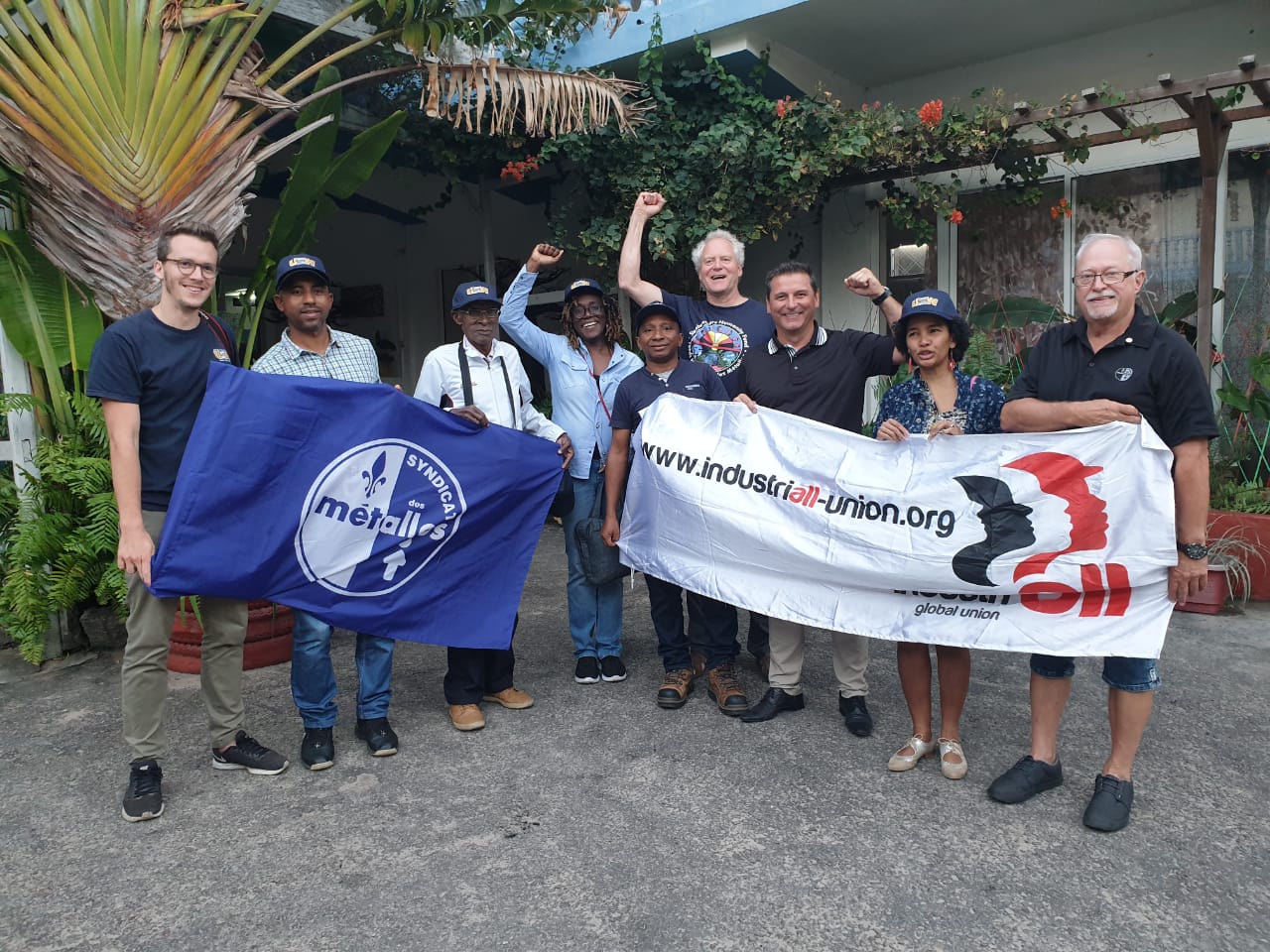
These are the issues that were discussed at a two-day workshop held on 2-3 August in Fort Dauphin, organized by the United Steelworkers (USW) from Canada and IndustriALL Global Union with support from the Steelworkers Humanity Fund (SHF). The workshop fleshed out on what needs to be done by a union to be effective in collective bargaining.

Attended by 26 participants, mostly worker representatives and shop stewards from IndustriALL affiliates Sendika Kristanina Malagasy (Sekrima) and Syndicalisme et Vie des Societes (SVS) with facilitators from USW and IndustriALL, the workshop showed that unions from different continents can work together and exchange learning and knowledge sharing of strategies on collective bargaining.

In the workshop, participants took lessons from the recently concluded negotiations with Rio Tinto's QMM subsidiary and recognized the critical importance of greater communication and engagement with the union members and workers in order to address workers’ needs. This was highlighted as key to achieving stronger collective agreements in the future.


Denis Trottier and Guy Gaudette, the USW trainers, shared their experiences on the importance of preparing for negotiations with employers.

“There is need to keep workers updated with information to build support and solidarity in making sure that in the event that the negotiations fail, the workers should decide on the next steps.”

Paule France Ndessomin, IndustriALL regional secretary for Sub Saharan Africa said:

“We are working to bring together our affiliates SVS and Sekrima to work together on collective bargaining strategies. When unions are united, they stand a better chance in negotiations with the employer.”

As part of the project to build union solidarity between the SVS and Sekrima, the SHF will support a shared office for the two unions. The office will receive workers’ grievances and identify workers’ priorities on which the unions can build consensus. From this a list of demands will be made for the next round of negotiations.

The IndustriALL union building project will also contribute to this initiative by supporting organizing drives for both unions.

Union says corruption main cause of Zimbabwe’s power cuts

The level of corruption is so high that services have been crippled. In the few factories that remain open, thousands of jobs are being lost as there is no power to run machinery and equipment. The power utility is also unable to service its over US $20 million debt to South Africa’s Eskom, which has been supplying the country with power.

The Zimbabwe Energy Workers Union (ZEWU), affiliated to IndustriALL Global Union, says corruption has been going on for many years. Said Martin Chikuni, general secretary of ZEWU:

“The corruption can be traced to the time when the power utility was broken into five so-called strategic business units. The semi-autonomous entities, ZESA Holdings, Zimbabwe Electricity Transmission and Distribution Company, Zimbabwe Power Company, Powertel and ZESA Enterprises seem to have been created to syphon money from the power utility.”

For instance, millions of dollars were spent on unsuitable meters imported from India and money was paid to companies that never delivered.  Equipment at the power stations is old and not regularly maintained.

According to ZEWU, the management at ZESA has neither experience nor expertise on energy issues and failed to plan for the expansion of power production. Further, executives are overpaid, and funds meant for operations diverted to other issues. ZEWU argues that the five entities should be brought back into one. With no research done on renewable energy, the country continues to rely on hydro and thermal energy sources, says the union.

The power utility also ignores collective bargaining agreements it signed with unions and is being challenged for unfair labour practices in the courts. The utility is losing workers with critical skills because of the violations of workers’ rights and failure to pay living wages.

Paule-France Ndessomin, IndustriALL regional secretary for Sub Saharan Africa said:

“It is shocking that power cuts can last for more than 18 hours. We call upon the Ministry of Energy and Power Development to find solutions to deal with the energy crisis in Zimbabwe, and for ZESA to respect the collective agreements and workers’ rights.”

ZEWU is part of the Sub Saharan Africa Energy Network, which is campaigning for sustainable energy that includes energy mix and Just Transition policies. The network is made up of 17 IndustriALL affiliates from 13 countries.

Young workers discuss strategies for the future of unions in Africa

These are some of the issues that were discussed at the youth activist school in Durban, South Africa, 23-25 July which concluded that the challenges are also an opportunity to transform unions.

The 26 participants at the school were drawn from five IndustriALL Global Union affiliates from Madagascar, Mauritius and South Africa: Union des Syndicats Autonomes de Madagascar-Federation des Syndicats Autonomes des Travailleurs d’Industrie and Confédération des Travailleurs du Secteur Prive from Mauritius participated. The South African affiliates represented were the National Union of Mineworkers, the National Union of Metalworkers of South Africa, the Southern African Clothing and Textile Workers Union, and UASA.

The issues discussed include youth involvement in organizing and building union power. Upskilling young workers for future union leadership, participation of young women in the unions, building union solidarity to confront multinational companies and deal with social issues including xenophobia in South Africa as well as migrant workers’ rights. Unions were also urged to engage governments, through social dialogue, on sustainable industrial policies and youth employment policies. Unions should also organize informal workers such as artisanal miners.

The school said unions should work with community groups on social issues such as land and housing. Abahlali baseMjondolo, a South African housing and land rights activist group, participated and suggested how unions can work with community movements. 

The school was organized by the IndustriALL Sub Saharan African region with support from the Friedrich Ebert Stiftung (FES) South Africa, and the FES Trade Union Competence Centre (FES-TUCC). The IndustriALL regional office and FES Nigeria and FES Tanzania have conducted similar youth schools in those countries.

Mbuso Moyo, programme manager for labour and social policy at FES South Africa said:

“We commend our partnership with IndustriALL for fighting for the rights of vulnerable workers and for accomplishing a lot with limited resources.”

Iris Nothofer, FES-TUCC added: 

“The formation of youth structures and the involvement of young workers in union activities plays a crucial role in transforming trade unions. If trade unions want to remain relevant actors in shaping societal and political change, they must become more inclusive, representative and democratic.”

Paule Ndessomin

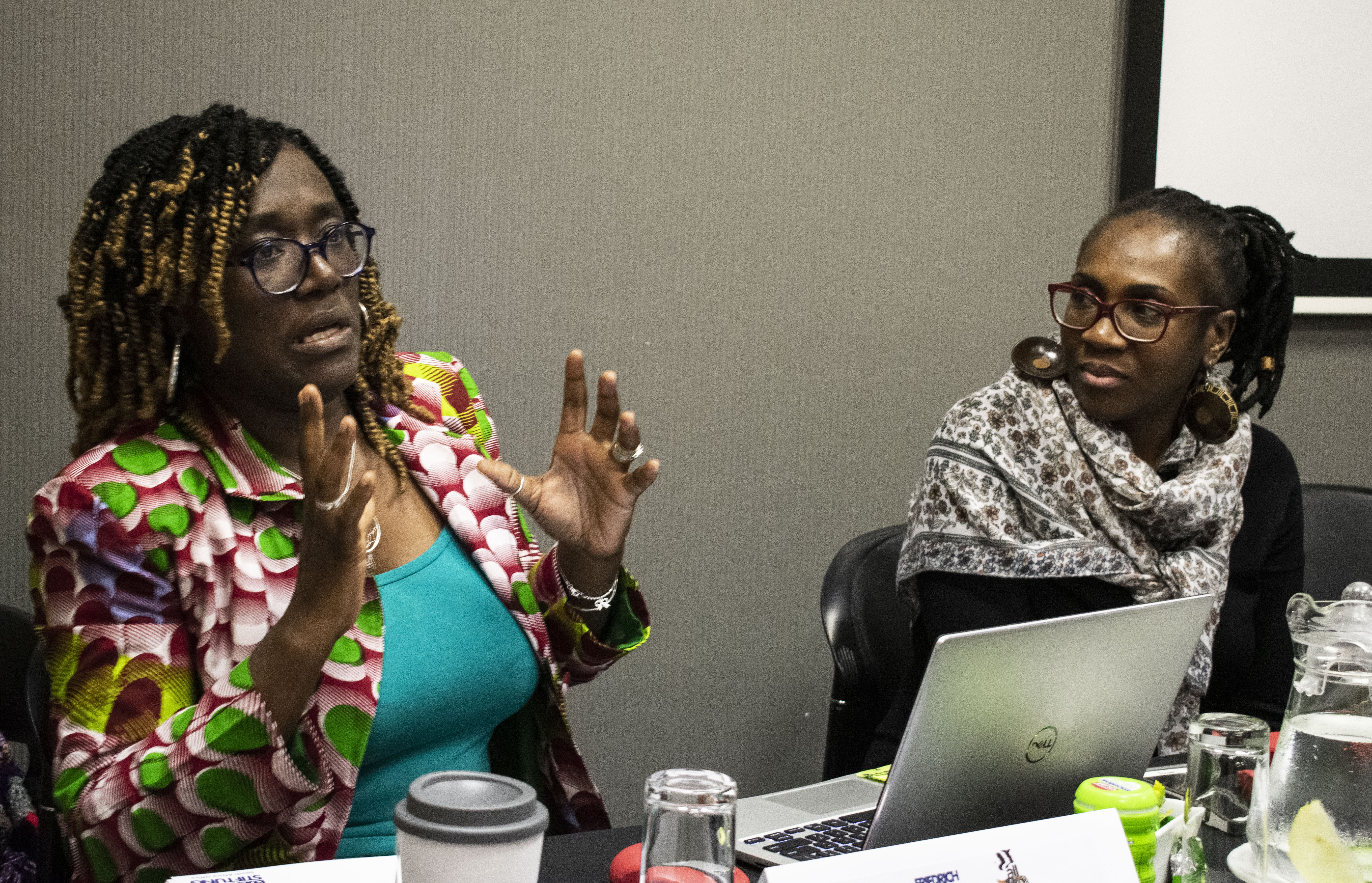
Paule France Ndessomin, IndustriALL regional secretary for Sub Saharan Africa said the school is an opportunity for the youth:

“The school is an opportunity for young trade unionists to define the union that they want to see in the future. Unions should adapt to technological shifts and engage governments on sustainability and Just Transition policies.”

Union condemns plans to retrench 2,000 workers at ArcelorMittal South Africa

Steel producer, ArcelorMittal South Africa (AMSA), which employs more than 8,500 workers, made the announcement on 10 July. AMSA then wrote to NUMSA, stating that it did not know how many workers will be affected, even though it had just made an announcement.

Mokete Makoko, NUMSA regional secretary for Sedibeng where the AMSA Vanderbijlpark plant is located, said:

“AMSA has already gone ahead of the consultation process and decided on the number of workers who will be affected. Again, this is another example of the flagrant disregard which the management of AMSA has for workers and their right to due process.”

In March, IndustriALL Global Union affiliate, NUMSA , went on strike at AMSA demanding equal pay for work of equal value, and protesting against labour broking, deteriorating health and safety standards, and other labour rights violations.

One of NUMSA’s demands was to give permanent jobs to workers employed through labour broking companies. Instead of employing workers directly, AMSA used contractors it described as “service providers” to recruit the workers were paid 50 per cent or less than permanent workers doing the same work. Some workers employed through the contractors have been under precarious contracts with no benefits for many years. Now they have been given termination letters.

NUMSA members strike against ArcelorMittal in March 2019.

“It comes as no surprise that the management of AMSA is proceeding with this course of action, just a few months after our members embarked on a strike to end outsourcing at the company. They clearly want to punish workers for fighting to end the exploitation of contract workers supplied by so-called service providers. As NUMSA we will do everything in our power to minimize the number of jobs which will be lost,” said Mokete Makoko.

Paule France Ndessomin, IndustriALL regional secretary for Sub-Saharan Africa said: “It’s important for ArcelorMittal South Africa to consult with unions and to respect workers’ rights before making any public statements on retrenchments. We call upon the company to implement fair labour practices.”

Around 100,000 jobs have been lost in the steel industry in South Africa over the past decade.

AMSA is part of the global ArcelorMittal group and NUMSA has over 3 000 members at the company. ArcelorMittal employs some 200,000 workers in 60 countries worldwide.

Social dialogue key to better industrial relations in Ghana

A seminar in Accra on 3 July attended by 38 participants from the Public Utilities Workers Union, Timber and Wood Workers Union, Ghana Transport, Petroleum and Chemical Workers Union, Ghana Mine Workers Union, and Industrial and Commercial Workers Union, affiliated to IndustriALL Global Union and Building and Wood Workers International (BWI) discussed how to improve social dialogue at enterprise, sectoral and national levels.

The seminar organized by IndustriALL Sub Saharan Africa Region, BWI Africa and Middle East Region and Industri Energi (IE) Norway discussed how to build union and employer capacity to effectively engage in social dialogue and improve the participation of women and youth who are often marginalized. Further, the seminar recommended that legal and institutional reforms be made to recognize unions’ role in social dialogue. 

Solomon Kotei, chairperson of the IndustriALL Council Ghana emphasized: “Social dialogue brings cordial industrial relations. Without such engagement it is difficult to improve working conditions at workplaces. This underlines why we need to continuously find means to improve social dialogue and build union capacity.”

Ole-Kristian Paulsen, IE international advisor who facilitated said: “The well-conducted seminar shared Norwegian experiences of social dialogue with a focus on Industri Energi and showed major differences between systems in Norway and Ghana. Through discussions Ghanaian unions saw the need to change their systems. Distinguishing between negotiations and an active-inclusive-involving social dialogue that creates development for the future at the workplaces is important.”  

The seminar discussed that social dialogue plays a critical role in not just creating a productive and progressive environment for collective bargaining, but also improves industrial relations between workers and employers. It also contributed more effectively to improving productivity in the workplace, strengthened enterprise viability and secured decent jobs. Participants urged trade unions to use social dialogue beyond considering it as a platform to put forward labour demands. Social dialogue also provides unions with an opportunity to contribute to enterprise growth and achieving development goals. 

Garikanai Shoko, regional education officer for BWI Africa and Middle East added: “Social dialogue promotes consensus building and democratic involvement among stakeholders in the world of work. For BWI, meaningful dialogue is important to improve institutional capacity and to support tripartite industry structures in our sectors.”

We don’t support low wages says Ethiopian labour minister

“We support living wages, not low wages. We are not for cheap labour,” said Dr Ergogie Tesfaye, the Ethiopian Minister of Labour and Social Affairs at the programme launch of the ILO’s Advancing Decent Work and Inclusive Industrialization Programme on 3 July in Addis Ababa.

According to a survey by Mywage and FNV Mondiaal, over 90 per cent of the garment workers in Ethiopia earn less than the 4130 Ethiopia Birr (US$144) needed to cover monthly living expenses. To reverse this, the Industrial Federation of Textile, Leather, and Garment Workers Trade Union (IFTLGWTU), affiliated to IndustriALL Global Union, is campaigning for living wages. 

The Confederation of Ethiopian Trade Unions, to which IFTLGWTU is also affiliated to IndustriALL, said at the meeting that it is unacceptable to pay Ethiopian workers such low wages.

IFTLGWTU president, Mesfin Adenew, said the union is waiting for the government to make an announcement on the minimum wages:

“The new labour law amendments passed by parliament are recommending the setting up of a wage commission to study the national and sectoral minimum wages. As part of our living wage campaign, we are waiting for the commission to make announcements first, make careful considerations, and then consult with the workers on what action to take.”

Global fashion brands, H&M and PVH, also said they were working with their suppliers to ensure that they pay better wages and improve working conditions.

Said Christina Hajagos-Clausen, the IndustriALL Director for the textile and garment sector:

“The emphasis on social dialogue is an important step towards minimum living wages and better working conditions for the textile and garment sector, especially for the women who are the majority in the factories. Global brands sourcing in Ethiopia need to join ACT in order to work with the trade unions to increase wages in the sector.”

ACT (Action, Collaboration, Transformation) is a ground-breaking agreement between global brands and retailers and trade unions to transform garment, textile and footwear industry and achieve living wages for workers through collective bargaining at industry level linked to purchasing practices. Find out more here.