The laws are in place and the Constitution affirms workers’ rights. Additionally, the new labour Proclamation (2019) recognizes that
“worker-employer relations are governed by basic principles of rights and obligations with a view to enabling workers and employers to secure durable industrial peace.”
The country is also a signatory to the International Labour Organization (ILO) Conventions 87 (freedom of association and the protection of the right to organize) and 98 (right to organize and collective bargaining).
How then can unions seize this moment?
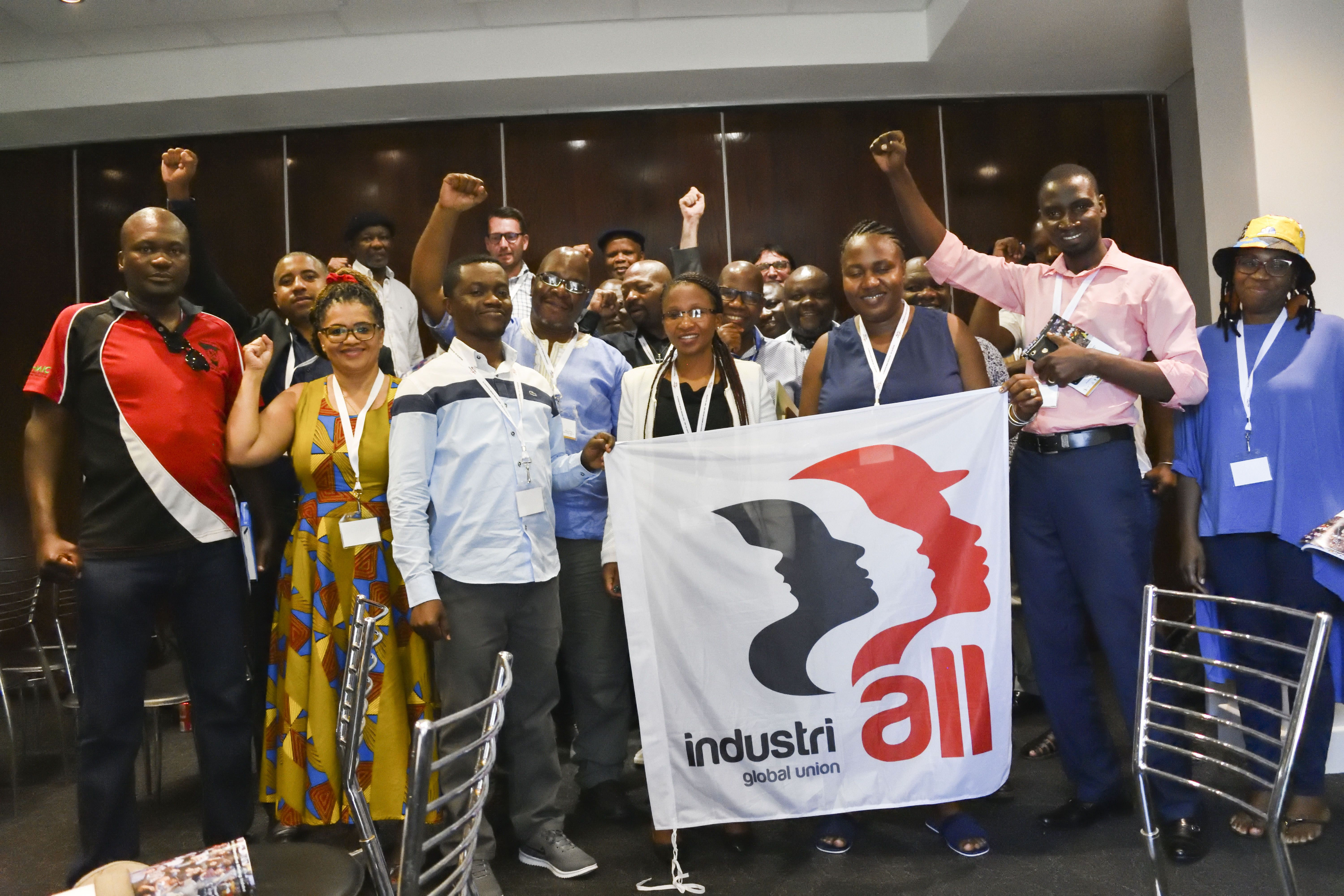
These and other issues including unrestricted recruitment, and organizing by unions in the industrial parks, collective bargaining, and social dialogue, were the main issues discussed at the ILO roundtable meeting on Advancing decent work and inclusive industrialization in Ethiopia, 26-27 February, Addis Ababa.
The government of Ethiopia was represented by the state minister for labour and social affairs, Ayelech Eshete, who said to promote decent work labour stakeholders should build trust. Those who participated included employers, global brands, and trade unions including the Confederation of Ethiopian Trade Unions.
The ACT initiative was represented by IndustriALL, H&M, and PVH. ACT supports living wages, better working conditions and genuine representation of workers, national collective bargaining agreements and better purchasing practices by global brands.
For instance, through ACT, factory owners benefit through motivated workers, higher productivity and stronger long-term business relationships because of legally binding agreements. Further, brands will have reliable quality suppliers who respect workers and human rights including those of women workers, and respect due diligence to supply chains.
IndustriALL affiliate, the Industrial Federation of Textile Leather & Garment Workers Trade Union (IFTLGWTU) invited H&M, and PVH to discuss with the union ways in which they can work together towards living wages in Ethiopia.
Angesome Yohannes, president of IFTLGWTU said:
“The brands are an important bridge between employers and workers and important to our campaign to organize and recruit in the industrial parks. Currently, unions have no access and thousands of workers are being denied the right to join the union.”
Jenny Holdcroft, IndustriALL assistant general secretary, said:
“Employers must talk to unions and there should be mutual understanding, communication and dialogue at all levels. The engagement should be at the industry level and requires the allaying of fears and mindset changes to build trust. All this can happen through ACT which addresses systemic problems within the garment supply chain which are not unique to Ethiopia.”
According to the ILO, Ethiopia’s garment and textile sector is made up of 200 factories that employ 62,000 workers of whom 95 per cent are women.
Unions optimistic as AngloGold Ashanti's Obuasi mine in Ghana resumes operations
Ghanaian President Nana Akufo-Addo officiated at the AngloGold Ashanti's Obuasi mine reopening ceremony, signifying the importance of gold mining to Ghana's economy. With mining having resumed last year, the company says it hopes to produce on average 350,000 to 400,000 ounces per year for the next 10 years.
According to the company's Obuasi Redevelopment Project, over 550 local jobs will be created, and a Community Trust Fund, to which the company will contribute, will facilitate local development in areas that include health, education and provision of clean water.
Abdul-Moomin Gbana, general secretary of the Ghana Mineworkers Union, said:
“The opening of the Obuasi mine is pleasant news for the union, the community and the country. There is potential for job creation, and AngloGold Ashanti is working closely with the union as well as respecting workers' rights, including freedom of association.
“The company also conformed to labour norms and standards during the period when the mine was under care and maintenance. Further, we successfully negotiated for an increase in wages for the workers two weeks ago and have started negotiations for a collective agreement.”
Glen Mpufane, IndustriALL director for mining, said:
“We hope that the reopening of the Obuasi Mine and AngloGold Ashanti's redevelopment project will continue to include the interests of mineworkers and the community of Obuasi including artisanal and small-scale miners. To promote responsible mining in Ghana, artisanal miners should be formalized, not criminalized, and the mining company should consider the interests of all stakeholders.”
In 2015, over 3,000 artisanal and small-scale miners (ASM) began digging for ore at the mine. The government of Ghana sent the army to occupy Obuasi and banned the operations of the ASM while arresting some miners. However, discussions continued between the Minerals Commission, Adansi Traditional Council, Obuasi Small Scale Miners Association and the Ghana National Small-scale Miners Association, the Obuasi Provincial Assembly and the Ghana Police Service to defuse the conflict.
While reopening Obuasi Mine in Ghana, AngloGold Ashanti sold its last mine in South Africa, Mponeng, to Harmony Gold, this month. The other mines, Kopanang and Moab Khotsong, were sold in 2018.
Unions picket General Electric Nigeria over unpaid benefits to 150 workers
IndustriALL Global Union affiliates, the Nigerian Union of Petroleum & Natural Gas Workers (NUPENG) and the Petroleum & Natural Gas Senior Staff Association of Nigeria (PENGASSAN) picketed at GEION offices in Lagos on 3 February demanding immediate payment of the benefits due since 2016.
The unions met with the Minister of Labour and Employment, Chris Ngige, on 10 February and asked the federal government to once again intervene in the dispute to stop the suffering of the workers. According to the unions, five workers from the Arco Group have since died, while most live in poverty mainly due to loss of income as a result of the retrenchments and are failing to send their children to school.
The Arco Group had a contract with GEION to hire workers and maintain gas plants and turbines for French Company AGIP in the Niger Delta and River State which ended in 2016. AGIP paid GEION which was supposed to pay the Arco Group. The Arco Group then had to pay workers in terms of the contract. The Arco Group says it is unable to pay because it is owed money by GEION which overcharged by withholding tax, deducting 10 per cent instead of the 5 per cent required by law. According to the Arco Group, this double taxation happened from 2006-2015.
Lanre Badmus, head of the Lagos Zone of NUPENG said:
“The Ministry of Labour and Employment intervened, and a memorandum of understanding was signed with NUPENG and other parties. In December 2019, the companies even promised to pay the workers in seven days. However, General Electric claimed that it needed time to reconcile excess withholding tax deductions with the Federal Inland Revenue System (FIRS). The protesting workers are only asking for their severance benefits. Nigerian workers cannot continue to be treated with contempt, and their rights abused without consequences.”
Badmus added that since the FIRS have done the reconciliations, unions are shocked that no payments were made to the workers to date.
Diana Junquera Curiel, IndustriALL director for the energy industry, said:
“We support our affiliates demands for the immediate payment of the pension benefits and gratuities to the Arco Group workers. General Electric must respect International labour standards and the national laws of Nigeria and stop further delays that are causing heartbreaking misery to the workers.”
Unions can play an important role in intra-African trade
At a meeting on 5 February at the Mining Indaba, Cape Town, with the President of Sierra Leone, Julius Maada Bio, the Government of South Africa, the Public Investment Corporation (PIC), the NUM as labour representatives, the South African Mining Development Association and other stakeholders, it was discussed that opportunities existed for expanding trade in minerals and other manufactured products between the countries.
Currently the countries trade in machinery, iron and steel products, electrical equipment, rubber, plastic, railway equipment, mineral fuels and other products. Sierra Leone’s mineral resources include diamonds, bauxite, gold and iron.
According to the Trade Law Centre, in 2018 37 per cent of Sierra Leone’s intra-Africa imports were from South Africa. The countries have also signed the African Continental Free Trade Area which seeks to integrate regional economic communities that includes the Economic Community of West African States and the Southern Africa Development Community to which the countries belong.
President Maada Bio said:
“Sierra Leone is coming from a situation of war and corruption. I inherited a government on the brink of collapse from Ebola and war. We need to promote trade amongst African countries, and have done a survey, collected data, developed a strategic plan, and identified strategic mineral resources. We are also establishing a sovereign wealth fund for human capital development. Foreign direct investment must not be the only source of funds for African countries.”
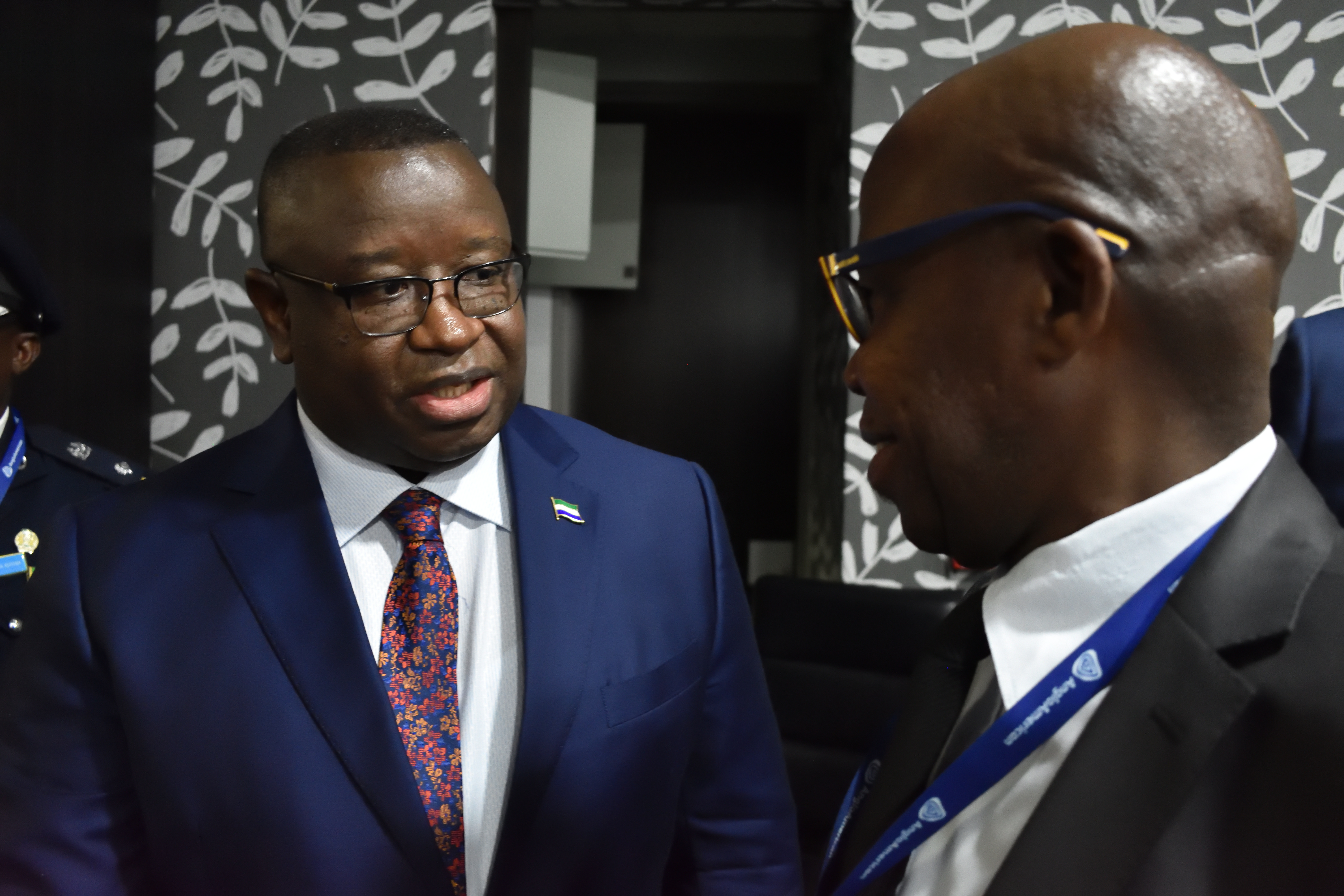
Sierra Leone President, Julius Maada Bio, speaks to NUM President Joseph Montisetse
Joseph Montisetse president of the NUM said:
“Trade agreements between African countries should include workers’ interests. Workers create wealth through their labour in the mines, and governments should work with trade unions. Further, laws should promote social dialogue and education should align to Industry 4.0 and cater for social needs.”
He added that the NUM is prepared to work in solidarity with unions in Sierra Leone and gave the union’s Mineworkers Investment Trust’s bursary scheme as a useful example of what unions can do to improve workers welfare.
Bridgette Motsepe Radebe, ambassador of the Pan African Parliament, facilitated the meeting and stressed that trade agreements can benefit from the inclusion of policies like South Africa’s Mineral and Petroleum Resources Development Act’s requirements on social labour plans that benefited mining communities.
The PIC, whose funds are mainly from pensions, is interested in investing in Sierra Leone, has assets valued at ZAR 2.3 trillion (US $1.6 billion).
Sustainability and Just Transition key to the future of mining in Africa
These were the themes at both the Investing in Africa Mining Indaba and the Alternative Mining Indaba, which took place from 3-6 February in Cape Town, South Africa. The business-organized Mining Indaba’s theme was “Optimizing growth and investment in the digitized mining economy” while the civil society Alternative Mining Indaba (AMI) focused on “Environmentally and economically sustainable mineral economies in an era of climate change catastrophe”. IndustriALL Global Union participated in both events.
The Mining Indaba and AMI are separate events held concurrently. On the “sustainability day” at the Mining Indaba, the two events converge to discuss common issues. There are efforts to find common ground on sustainable mining and Just Transition.
IndustriALL mining affiliates from the Democratic Republic of the Congo, Ghana, Madagascar, Namibia, South Africa and Zambia participated in the Mining Indaba, with support from the Friedrich Ebert Stiftung.
AMI aims to provide mining affected communities in African with a space to dialogue and seek solutions to their concerns with the mining sector. IndustriALL and its affiliates were active in sessions on climate change, Just Transition, and the social license to operate. Over 50 participants debated cooperation between trade unions and civil society in determining industry’s social license, emphasizing that the rights of mineworkers and interests of mine-affected communities should be central to mining operations. The session discussed organizing artisanal and small-scale miners into unions.
The AMI recommended in a petition to the Mining Indaba that the legacy of past liabilities cannot be forgotten, with the tuberculosis/silicosis class action in South Africa given as an example. Industry must provide fair compensation to ex-mine workers and communities whose health was damaged by mining, and include them in discussions on how this is to be done.
Governments must ratify and implement ILO Convention 176 on safety and health in mines, as well as Convention 190 on violence and harassment at the workplace, particularly to protect women mine workers who are vulnerable to violence at work.
IndustriALL was present in a series of discussions at the Mining Indaba. A panel chaired by mining director Glen Mpufane addressed safety with the theme of “Achieving a ‘Zero Harm’ Approach”. Attended by Joseph Montisetse, the president of South African affiliate the National Union of Mineworkers, the session discussed Convention 176. Montisetse addressed the alarming rate of incidents globally and the need to fundamentally change the approach to mine leadership by putting people first.
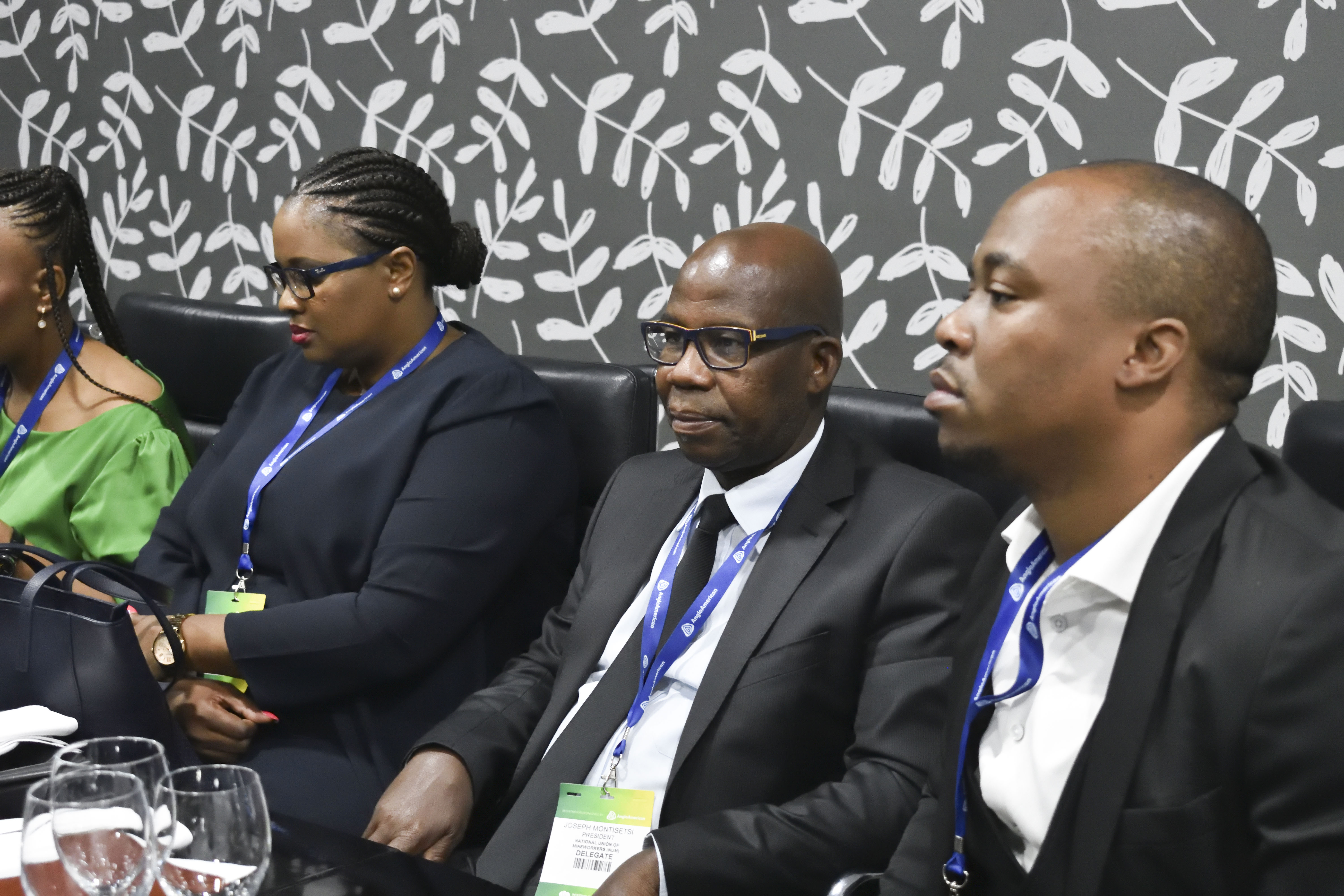
Joseph Montisetse
A session on “Mining 4.0” focused on how technology and innovation are transforming mining. Addressed by IndustriALL’s assistant general secretary Kemal Özkan, the session asked what new mining technologies will mean for the future of work: what skills will be needed, and how can mining companies, governments and others ensure that locals have the right skills to allow mining to make its full contribution to sustainable development?
A digital mining economy can only come through a shift from old mining technologies to high-tech mining of automation, data and artificial intelligence. Unions want a Just Transition plan that includes replacing fossil fuels with renewable energy, retraining and reskilling workers, fair compensation when retrenchments take place, and social dialogue. Dialogue between communities and trade unions should lead to joint work, and Governments and civil society organizations should be involved.
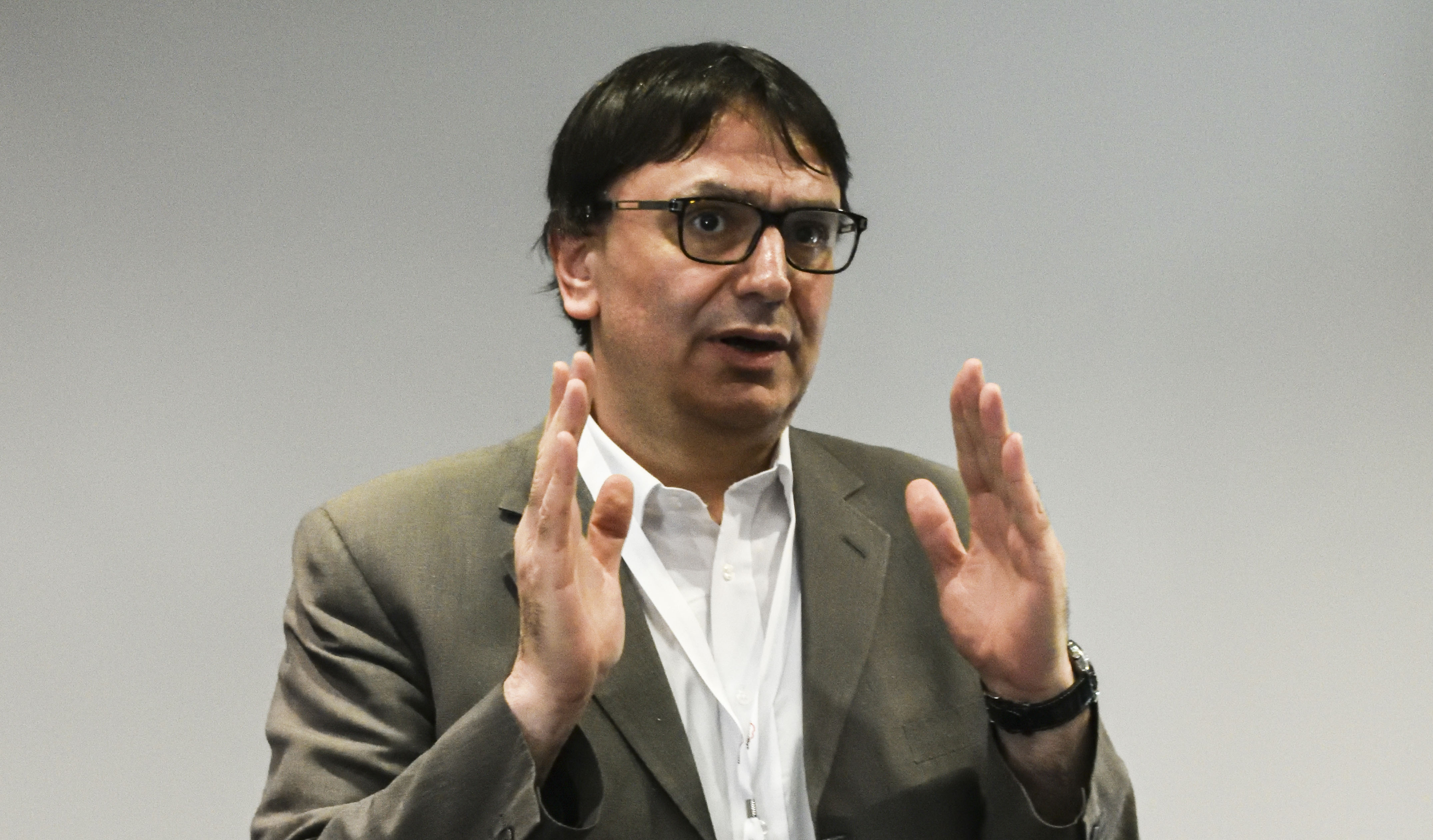
Kemal Özkan
In his intervention, Kemal Özkan said:
“The millions of mining jobs are our jobs. No one can or should decide about the future of our jobs without workers and unions. Employment is the only tool that connects us to society and the economy.
“We need genuine global, national and local dialogue to discuss and project our future. Information, consultation, training, retraining, reskilling, and requalification are the main rights we demand. Dialogue on sustainable mining is essential to create decent jobs and to reduce poverty, as explained in the African Mining Vision.”
Responsible mining protects workers’ and communities’ rights
The standard for responsible mining is a tool that unions and communities can use to protect workers and human rights, environmental sustainability and the social performance of mining companies at mines and along the supply chain.
The IRMA tool consists of a set of metrics for environmental and social responsibility that can be used at industrial scale mines to increase transparency and provide a credible way to measure a mine’s performance.
On workers’ rights, the standard supports rights to collective bargaining and freedom of association, living wages, maternity leave, health and safety, consultation before retrenchments, grievance handling mechanisms and is against harassment, intimidation and child labour.
Kemal Ozkan, IndustriALL assistant general secretary, says:
"Trade unions should use the standard for responsible mining to address mine level issues. It’s important for unions to participate in the audit processes and to use the complaint mechanisms provided. This is an important leverage for our mining affiliates in protecting and advancing rights of their members."
Speaking at the Alternative Mining Indaba (AMI), Mark Curtifani, the chief executive officer of Anglo American said the mining company is using the standard for responsible mining as one of their strategies to engage and respect the human rights of communities as well as to “understand people better.” For example, Anglo American’s Unki Mine in Zimbabwe has been audited using the standard.
The AMI also acknowledged the IRMA standard as an objective tool for promoting responsible mining and unions hope the standard recommendations on artisanal and small-scale mining can be used to formalize the miners in the Democratic Republic of the Congo, Ghana, South Africa, Zimbabwe and other countries.
Aimee Boulanger, IRMA executive director says:
The standard for responsible mining has been developed over time, making it a robust tool that provides a resource for unions and communities to engage with mining companies.
The standard has 26 chapters on social issues like community health and safety, human rights, anti-corruption, and free prior and informed consent. On environmental issues, it protects water sources, aims to reduce air pollution, protects biodiversity and promote safe waste management.
IRMA is a multi-stakeholder initiative,
offering independent third-party verification and certification against a comprehensive standard for all mined materials. The governance of IRMA is shared by civil society, communities, unions and the private sector. IndustriALL and its North American affiliate United Steelworkers (USW) became involved at an early stage with demands for more socially and environmentally responsible mining. IndustriALL’s mining director Glen Mpufane is a board-member.
Union to negotiate with Glencore over retrenchments at South African smelter
The meetings will discuss the notice given to NUMSA by Rustenburg Smelter which says, “the business is no longer financially viable.”
NUMSA says it will go into the consultations to save the 665 jobs that will be lost if Rustenburg Smelter is closed. The management at the smelter, which is owned by Glencore (79.5 per cent) and Merafe (20.5 per cent), said in a notice to NUMSA that the smelter is no longer profitable and is operating at a loss.
This is due to aging technology, expensive energy which accounts for 30 per cent of production cost from power utility Eskom, as well as other subsidies paid by industrial customers to Eskom. Further, the introduction of a carbon tax, increased transport and other import costs have contributed to the loss. The company also says that producing ferrochrome in South Africa is more expensive than in other countries.
Phestus Motshabi, NUMSA’s local secretary for the Rustenburg local said:
“We are still waiting for the announcement of the dates by the CCMA when the mediation will begin, and will do our best to save as many jobs as possible and urge the management to approach these discussions in good faith. They must fully disclose so that we can work together to find solutions. The working class is clearly under attack because workers in many sectors of our economy are being served with retrenchment notices.”
Glen Mpufane, IndustriALL director of mining said:
“We hope that a solution will be found that involves saving jobs and that the ongoing negotiations with Glencore will come up with an amicable way forward for the union and the company. Mining companies shouldn’t be too quick to retrench workers when market conditions are tough but should first explore options to preserve jobs.”
According to the Department of Mineral Resources and Energy, South Africa is the world’s largest producer of chromite and ferrochrome in the world with reserves over 72 per cent. Most of the ferrochrome is sold to China which is growing its own industry in the metal. China also buys chrome from other countries.
Union confronts workers’ rights violations at Petro Oil Kenya
Since 2011, Petrol Oil Kenya has been denying workers their rights to join a union. KPOWU took the matter to court and on 13 December 2019, the Employment and Labour Relations Court in Mombasa ruled that the company must recognize the union within 30 days of the judgment.
However, instead of complying with the judgment, Petrol Oil Kenya began changing conditions of service for the workers, refusing to allow workers to take off days, and outsourced stations where the union had more members.
According to Kenyan labour laws an employer “shall recognize a trade union for purposes of collective bargaining if that trade union represents the simple majority of unionizable employees.”
By dismissing the unionized workers, Petro Oil Kenya, is denying the KPOWU the right to collective bargaining with the employer which is protected by the law. The union has a simple majority at most of the petrol stations and should be recognized.
Raphael Olala, the general secretary of KPOWU says:
“We are challenging the timing and intention of the termination of more than 30 of our members, and the outsourcing of several stations immediately after workers had signed union membership forms. The harassment, victimization and termination of contracts by Petro Oil Kenya because workers would have joined a union must stop.”
In a letter to the company, IndustriALL general secretary Valter Sanches, underlines the support for the union’s fight to bring the malpractices to an end:
“We are appalled by Petro Oil Kenya’s blatant denial of workers’ rights to freedom of association, organizing, collective bargaining and fair labour practices which are protected by Kenya’s Constitution, labour laws and International Labour Organization conventions. It is shocking that a company can ignore a court judgment that rules against it and in the union’s favour. As IndustriALL we will continue to fight against the unfair labour practices.”
Stop the split of Eskom, say South Africa unions
This follows earlier announcements by the government that Eskom will be broken from a single entity into three companies for generation, transmission, and distribution of electricity. Unions say that the unbundling, a pretext for privatization, would lead to thousands of jobs losses. Currently Eskom employs close to 100,000 workers, including those along the value chain.
The unions are calling for the resignation of the minister of public enterprises Pravin Gordhan and the Eskom board be dissolved for failing to end the Eskom crisis. The Eskom crisis reached a peak last year when unprecedented levels of power outages plunged the country into darkness.
The National Union of Mineworkers (NUM) and the National Union of Metalworkers of South Africa (NUMSA), both affiliated to IndustriALL Global Union, wanted to present their memorandum of demands to the newly appointed group chief executive Andre De Ruyter, who did not show but instead sent members of the management team.
Among the unions’ demands are that Eskom be run by “credible and knowledgeable managers and not politicians” and for labour to be involved in decision making processes within the power utility. Unions want to be represented on the Eskom board and to be part of the executive committee.
The unions also said Eskom is buying expensive power from independent power producers only to sell to consumers at a loss. The utility is also failing to collect debt from municipalities and other debtors and fraudulent activities have left a huge dent on the utility’s finances. Eskom also has a debt of over 400 billion Rands (US$27.8 billion).
When Eskom amended the previous criteria for performance bonuses workers were not consulted, and the unions are now demanding it be reversed. The unions want outsourced services to be taken over by workers employed directly under Eskom’s conditions of service as this provides job security and end precarious working conditions.
Diana Junquera Curiel, IndustriALL director for the energy industry, says:
“We urge the South African government to recognize unions organizing in the energy sector as key stakeholders and consult them on issues affecting workers. We have seen similar cases in other countries and unbundling always leads to retrenchments and jeopardize workers’ conditions. Even in such cases unions have to be part of the negotiations for fair compensation.”
INTERVIEW: Beauty Zibula
Union:
The Southern African Clothing and Textile Workers Union (SACTWU)
Country:
South Africa
Texto:
Elijah Chiwota
After 41 years as a sample machinist, Beauty Zibula was elected as a Member of Parliament for KwaZulu Natal province in South Africa in the country’s national elections in May 2019. The election ended her four decade long career as a shop steward, which saw her assuming many leadership positions in her union, the Southern African Clothing and Textile Workers Union (SACTWU).
At the time of the election she was the second Deputy President of SACTWU, which has over 108, 000 members in the textile, garment and leather sectors. Zibula was in her teens when she got her first job in a garment factory in Durban, South Africa in 1978.
What was it like to be a trade unionist under South Africa’s apartheid regime?
“I got my first job at IM Lockhat at the height of the struggle against apartheid. It was a difficult period for South African citizens, workers and trade unions. As activists for democracy we were always under surveillance by the notorious police special branch of the repressive apartheid regime. I was arrested and detained many times as I was not only a trade unionist but also campaigned for the African National Congress (ANC), which at the time was a banned organization. Some were jailed while others were killed. Nelson Mandela and our leaders from KwaZulu Natal – Dullah Omar and Harry Gwala – were in prison on Robben Island.
“It was under these tough conditions that I started organizing workers, who were reluctant to join a union. Moreover, the employers discouraged workers from joining the union. Wages were segregated according to race, with the black African workers earning the lowest compared to white, Indian and coloured1 workers. Unionists were always seen by employers with a lot of suspicion. But my unionist had explained to me that my important task was to unify workers at the factory; and I managed to bring many Indian and African workers into the union.”
Describe your 20-year experience at Prestige apparel. What would you describe as the main challenges after the democratic breakthrough in 1994?
“The ANC and other liberation movements were unbanned. Mandela and other ANC leaders had been released from Robben Island in 1990s, and freedom was in the air. There was the democratic breakthrough in 1994 and the ANC won the first democratic elections. I was thrilled. There was freedom at last after years of struggle. Then the new Constitution guaranteed workers’ rights; workers’ rights including the right to strike became constitutional rights.
“I moved to Prestige Apparel but was still employed as a sample machinist, but this company was different. The machines were new and better. The company really tried to update to new technologies unlike the old machines that we were used to at IM Lockhat.
“As unions, we started campaigning for the Labour Relations Act and when it was passed it was a victory for workers. The benefits of the LRA are still felt today. It gives organizational rights to trade unions, promotes collective bargaining, and provides for the resolution of labour disputes through conciliation, mediation and arbitration and labour courts. The law also provides for a simplified procedure for the registration of unions.
“Another victory was on maternity leave, as found in the Basic Conditions of Employment Act. We fought hard as unions for this to happen, and it was sweet victory for women when we got maternity leave benefits.”
Describe your rise through the union ranks from a factory shop steward to a second Deputy President?
“Being a union shop steward is hard work which requires dedication. As a union leader you learn a lot along the way through the meetings, representing workers when there are grievances with employers and when you sit in collective bargaining councils to negotiate for collective bargaining agreements. When you succeed in your work in the union, it is rare that you do it alone, but you work with others as a collective. In SACTWU we worked as a collective and participated in the activities of our federation, the Congress of South African Trade Unions (COSATU).
“I learnt a lot as the regional chairperson of COSATU because I worked with trade unions that organize in other sectors, thus giving me an opportunity to learn and understand what those unions were doing.
“I also gained valuable experience by sitting on the National Bargaining Council for the clothing industry – an important council for the garment sector in South Africa from where we have negotiated better wages and working conditions for the workers.”
Beauty Zibula supporting IndustriALL's campaign in the textile sector
What are your comments on gender-based violence and femicide in South Africa?
“The levels of gender-based violence and femicide in South Africa are shocking. Working women are raped and killed in their homes, at workplaces and in the mines. At workplaces women are raped and killed by their male colleagues. Women are also killed by their partners or ex-boyfriends. Children are raped and killed. This is unacceptable and shouldn’t be allowed to continue. Therefore, as MPs we are supporting President Cyril Ramaphosa’s five-point plan against gender-based violence and femicide. This plan includes prevention, strengthening the criminal justice system, enhancing the legal and policy framework, ensuring adequate care, support and healing for victims of violence and economic empowerment of women.
“As an MP, I am taking this campaign to my constituency and am visiting communities to sensitize them and to get an understanding why this is happening and how we can stop it. We are carrying out this campaign together with various government departments.
“I have been involved in discussions that have been taking place within COSATU structures to deal with gender-based violence, sexual harassment and femicide.
“As SACTWU we have been involved in this campaign for some time now, and through IndustriALL Global Union we have been campaigning for the signing of the IndustriALL Pledge and took part in the recent marches against gender-based violence and femicide in Cape Town.”
How do you find your union experience useful in the National Assembly?
“I have not been on this journey alone, I have walked with others as well. And would like to use this opportunity to thank IndustriALL and all the comrades that I worked with in the regional women’s committee. I will miss the union but will cherish the valuable experience that I gained.
“After my studies at the Workers College in Durban, and my experience in the union, I have learnt to appreciate unions as organizations where you learn.”
To build a better South Africa we need strong unions, and these unions should be involved in social struggles.
“Again, from my experience I can conclude that unions gained a lot though struggle during apartheid when they gained their mobilizing skills and post-apartheid where they fought for workers’ rights and benefits including minimum and living wages.
“As part of the working class the union has power through its numbers, its social role and in its struggles for social justice. Its campaigns to end the triple crisis of poverty, inequality and unemployment are an example. The union should therefore continue to fight against exploitation and oppression of the workers and for social justice. It should also continue to build national and global solidarity. The union should continue to withhold labour power from capital as it fights for workers.
“Unions should continue to struggle for the society that we want, based on freedom and equality in the communities where we live and at our workplaces.
“This is what will inform my work as an MP. The values that we fight for in the union are also the values that we should fight for in parliament as we serve the same society but in different capacities. This is like wearing a different leadership hat.
"As trade unions, and as politicians with a union background, we all want a better world and to be involved in transforming societies. We are committed to ending the triple crisis of poverty, unemployment and inequality.”