Campaign to stop gender-based violence kicks off at South African factory

Music, poetry, and a six-a-side soccer tournament punctuated the event where the management, workers and communities signed the IndustriALL Pledge on stopping violence and harassment of women at workplaces and unions. 

Management, workers and communities signed the IndustriALL Pledge

Ruth Ntlokotse, the National Union of Metalworkers of South Africa’s Second Deputy President, and secretary of the IndustriALL Women’s Committee South Africa, one of organizers of the campaign, said:

“The crisis of gender-based violence in South Africa requires that we work together to stop the scourge as trade unions, communities, government and social groups. Employers also have an important role to play because gender-based violence also happens at the workplace. With the murder and rape of women and children in their homes, gender-based violence is tearing families and communities apart. This explains the importance of supporting advocacy groups that target men to stop gender-based violence as they are the main perpetrators.”

Ntlokotse, a chief laboratory chemist, has worked for JM for 22 years. JM, which has operations in 30 countries, employs 14,800 workers, and is a Financial Times Stock Exchange 100 listed company. Its products include emission and control technologies, chemical processes including oil and gas, battery materials, pharmaceutical and medical and metal chemicals and products.

Patrick Shai, a popular South African actor who has appeared in many television soapies and movies, and who leads the Khuluma Ndoda advocacy group, said:

“Women are living with lots of pain and in fear of getting stabbed with knives and being shot at with guns. So, we are saying to men: you can change and become better human beings. Loving doesn’t make you a lessor person. Let’s have that conversation and stop the violence against women.”

A woman activist from the nearby community said: “Why are we being violated all the time and how can this be stopped? We get protection orders from the courts, but we are killed even when we are holding those protection orders. Women have suffered enough.” 

According to crime statistics (2017/2018) from the South African Police Service 2930 women were murdered — which is about a death every three hours. This makes South Africa one of the most dangerous countries for women.
Sub-Saharan Africa sets ambitious union agenda

The conference was a culmination of a week of meetings designed to build common purpose among IndustriALL Global Union affiliates on the continent: the Youth Conference, the African Mining Summit, the African Industrialization Conference, and the Women’s Conference.

Each meeting, under the overarching theme of Sub-Sahara African unions in the Fourth Industrial Revolution, considered a particular aspect of trade union work on the continent and developed an action plan which it brought to the executive meeting for adoption and endorsement.

The regional conference was opened by IndustriALL co-chair Joseph Montisetse and vice president Issa Aremu. After a detailed overview of trade union struggles on the continent by IndustriALL regional secretary Paule Ndessomin, affiliates raised problems of workers’ rights violations and called for support.

General secretary Valter Sanches stressed the importance of solidarity. He said:

“We deal with violations of trade union rights like firefighters. We need to be systematic.

“We raise issues with the ILO and the OECD. But institutions won't save us. What works is solidarity. We have had a number of successful union wins over the past few years. In every case, it was because of an international solidarity campaign.

“We are developing a roadmap of instruments to fight violations. But the key is building stronger unions.”

He also stressed the importance of global framework agreements, which are a very powerful tool if used well.

The young workers presented their structure and action plan to the conference. The affiliates formally recognized the youth committee, and committed to improving youth work on the continent.

The women’s committee presented its proposed structure. This was adopted by the conference, which committed to campaign for the ratification of ILO 190 and to strengthen national women’s structures.

Executive committee member Ousmane Diop of Senegal reported on the African industrialization conference. Affiliates resolved to implement IndustriALL’s action plans on industrial policy and trade, and to support the regional energy network.

IndustriALL mining director Glen Mpufane reported on the mining summit. Affiliates resolved to promote the African Mining Vision at national level, and campaign for the ratification of ILO Convention 176 on Safety and Health in mines. They also pledged to campaign for AngloGold Ashanti to sign a global framework agreement, to support diamond miners in Lesotho and to work towards regularizing and organizing small scale and artisanal miners.

Affiliates resolved to establish a task team to identify emerging issues and develop responses, and to develop policy on industrialization, mineral pricing and beneficiation.

They resolved to support unions in Eswatini against rights violations, and campaign against attacks on workers by multinational corporations. They condemned the abuse of workers’ rights by Chinese-owned companies while also noting with disappointment that companies with African origins also violate the rights of workers.

Valter Sanches concluded:

“One year from now we will have our Congress in Cape Town. We have set an ambitious agenda for the continent. Let’s work together so that at Congress we can demonstrate the power of unity in struggle.”

Unions intensify campaign for African industrialization

IndustriALL’s ongoing campaign for African industrialization is part of its strategic goal of promoting sustainable industrial policy: no country or region has achieved prosperity and a decent standard of living for its citizens without a robust industrial sector. 

Africa’s low level of industrialization is linked to its colonial past. After independence, attempts were made to industrialize the economy, but IMF structural adjustment programmes and trade liberalization undermined newly independent African economies, letting market forces “kick away the ladder”.

The result is that the continent is still as a source of raw materials, and value is added elsewhere. According to some reports, on average, African industry generates US $700 of GDP per capita, which is less than a third of that measure in Latin America and a fifth of that in East Asia.

African economies are resource dependent. It is home to the top five oil producing countries with around 10 per cent of the world’s oil output, while 40 per cent of its gold and between 80 and 90 percent of chromium and platinum are from the continent.

The participants stressed the importance of industrialization as a transformation away from an agricultural- or resource-based economy to an economy based on manufacturing, which will increase incomes and living standards.

IndustriALL assistant general secretary Kemal Özkan said:

“This is a rich continent that has been systematically plundered. Africa needs a human-centred economy that brings democracy to economic life.

“Some of the fastest growing economies in the world are in Africa. But growth is not the same as development.”

Assistant general secretary Atle Høie spoke about the importance of understanding trade agreements, and the danger of unaccountable investor-state dispute settlement mechanisms.

Affiliates discussed the potential of the African Continental Free Trade Area, and committed to implementing IndustriALL’s action plan on trade, which calls on governments to respect ILO conventions and ensure labour rights are included in trade agreements.

Industrialization requires financing. The Mbeki report shows that Africa loses $52 billion per year through illicit financial flows, which needs to be addressed.

The role of industrialization is articulated in the African Union’s action plan, AIDA, and the United Nations’ Third Industrial Development Decade for Africa. Debates took place on routes to industrialization that consider climate change, industry 4.0 and the future of work. Unions agreed that focusing on national strategies will not work, and that regional industrial hubs, infrastructure, skills development and internal trade were essential. The conference agreed on campaign strategies for industrialization.

Unions will act on Africa Industrialization Day on November 20, lobbying global and African intergovernmental agencies. IndustriALL will conduct programmes on aspects of industrialization, such as sustainability, energy policy, supply chains, Industry 4.0 and trade.

“African industrialization is critically important to IndustriALL,” said Kemal Özkan.

“If we don’t break the trajectory of the continent, Africa will remain a place where people live in extreme poverty, which is completely unacceptable”.

African women rise for gender equality

The meeting was opened by regional secretary Paule Ndessomin, who encouraged women to maintain the momentum of the work that had been done. A major part of the discussion focused on the adoption of ILO Convention 190 on Violence and Harassment by the 2019 International Labour Conference.

Mwila Chigaga, a gender expert from the International Labour Organization, said that the Convention is a global mandate to end violence and harassment in the world of work, but warned that the adoption is not the victory: the work starts now. She reminded participants that the Convention needs to be ratified by at least two countries to come into force, and encouraged them to ensure that these are African countries.

“We can't celebrate now. We can celebrate when the Convention is ratified and implemented.”

Mwila Chigaga

“We can't celebrate now. We can celebrate when the Convention is ratified and implemented,”

she said.

“We should primarily see C190 as an international labour standard on gender equality, and see it the context of other conventions: C100 on Equal Pay, C111 on Discrimination, C156 on Workers with Family Responsibilities, C183 on Maternity Protection and C189 on Domestic Work.

“Many of these have not been ratified and implemented. Let's not forget them while we celebrate C190.”

IndustriALL gender coordinator Armelle Seby said,

“Unions have to mobilize and push for ratification. But unions do not need to wait: they should use this instrument to change the lives of workers now. This new instrument is a key tool for trade unions to advance non-discrimination and equality, and fight against gender-based violence in the world of work.”

"I am a gender champion."

Rose Omamo

Rose Omamo introduced herself by saying

“I am the general secretary of the Almagamated Union of Kenya Metal Workers, and I am a gender champion.”

Both Chigaga and Omamo spoke about the need to take the work of gender equality out of the womens’ structure and use male allies to mainstream it in the union.

Chigaga said,

“We need women in leadership positions in unions. But we also need to ensure that the men who are elected are gender champions and feminists.”

There was a discussion about making a practical difference in the workplace, and participants shared that violence and harassment is commonplace.

“As women, we need to have each other's backs,” said one participant. “Sisterhood works.”

Tendai Makanza of the IndustriALL regional office urged affiliates to use the tools that we have, especially the Pledge.

“We hope to start a young feminist movement for the region.”

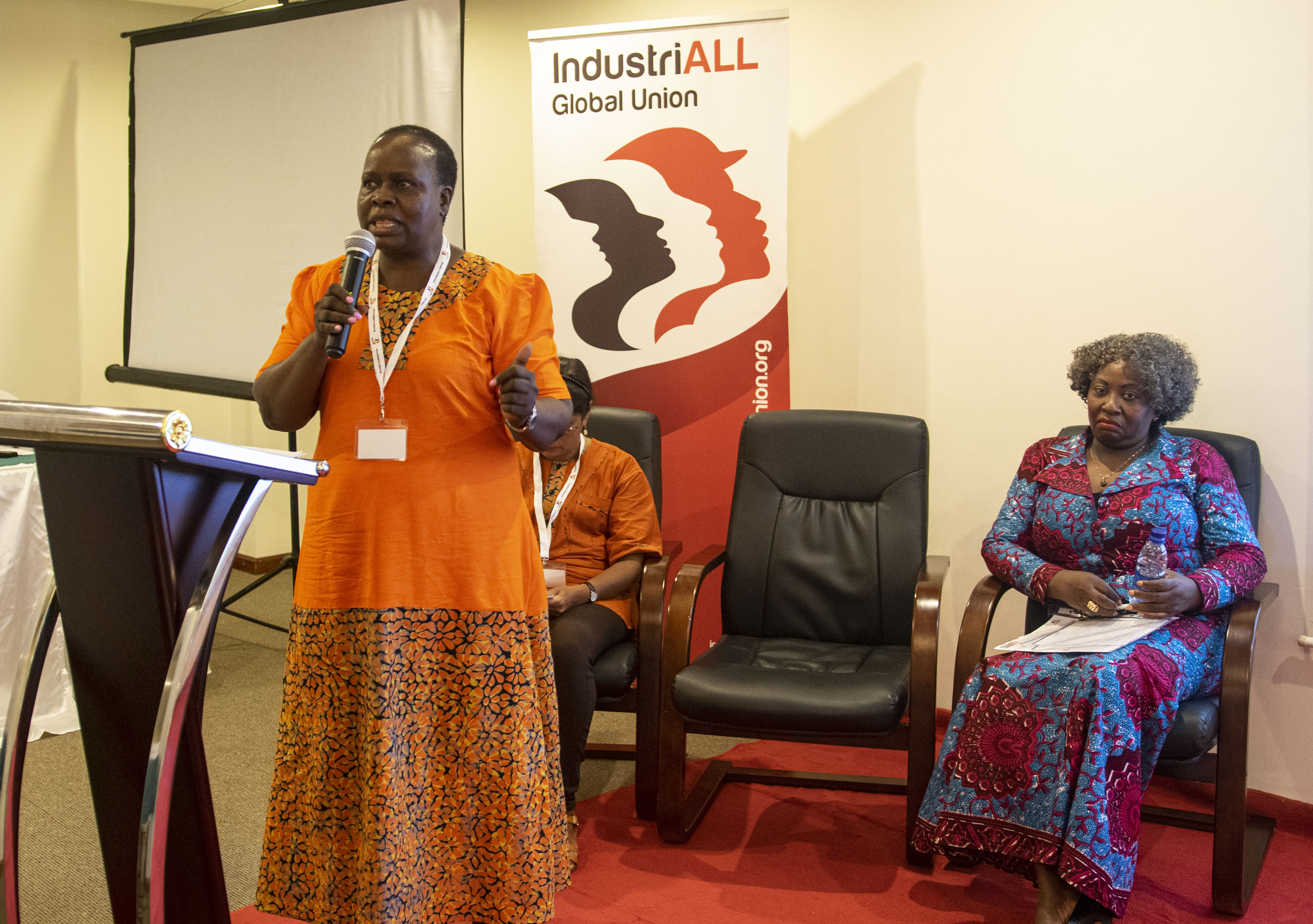
Lydia Nkopane chaired a session which formed the regional women's committee, as follows:

Additional members:

African miners say mineral wealth must benefit continent

Major themes of the conference included beneficiation, artisanal and small scale mining, safety and ILO Convention 176, and illicit financial flows.

Kemal Özkan

The meeting was opened by IndustriALL assistant general secretary Kemal Özkan, who explained that there is a crisis of inequality worldwide, but mining unions are at the forefront of developing a union response. He gave the example of the Goodbye Neoliberalism report released by Australian affiliate the CFMEU.

Fred Hans Kipamila

Leaders of local affiliates, Tamim Salehe of TUICO and Fred Hans Kipamila of TAMICO, introduced the work of their unions, and Tanzania's mineral commissioner David Mulabwa welcomed the delegates to Tanzania. He outlined the government's priorities for the sector.

Industry director Glen Mpufane spoke about the boom and bust cycle in the commodities market. The current boom is driven by electric vehicles, but mineral wealth often doesn’t contribute to general economic development.

Glen Mpufane

"The mining industry is like a parallel state, with illicit capital flows which bleed resources from the continent. The African Mining Vision is a pathway for a change to a new economic vision, developed by Africans, to benefit the whole continent,"

he said.

Regional co-chair and NUM president Joseph Montisetse said:

Joseph Montisetse

"Our raw materials are exported and we are left in poverty. That's why beneficiation must be on the agenda of every union."

IndustriALL vice president Issa Aremu of Nigeria said,

"We need to turn the resource curse into a resource blessing."

Issa Aremu

"We need to turn the resource curse into a resource blessing."

Pierre de Pasquale spoke about using the Responsible Mining Index to evaluate how compliant companies are with their stated principles, and Peneyamboko Alina Munkawa of the ILO gave a detailed explanation of ILO Convention 176 on safety and health in mines.

Lydia Nkopane

Lydia Nkopane of the NUM spoke about violence against women. Women in the mining industry face gender-based violence at work, a lack of protective equipment and facilities suitable for women and discrimination in jobs and union positions.

Claude Kabemba of Southern Africa Resource Watch and Luc Assosa of PACT spoke about the situation of small scale and artisanal miners. There are nine million in Sub Saharan Africa.

Kabemba said,

"Artisanal and small scale miners are miners, and they belong in mining unions."

Tendai Makanza of IndustriALL addressed the US$50 billion which is lost annually in Africa through illicit financial flows, through criminal activity, public sector fraud and corporate activity, including tax dodging and under-reporting the value of exported minerals.

Kemal Özkan said:

“We have raised many issues which need to be addressed, both at the world mining conference and tomorrow’s conference on industrialization. Our affiliates need to take the lead in deciding their priorities for action, whether it is campaigning on C176 or something else, and IndustriALL will be there to support them.”

Youth in Sub Saharan Africa create regional structure

The 44 delegates from 11 countries were joined by guests from a number of organizations, including the ILO, BWI, UNI Global Union, SASK and the Friedrich Ebert Stiftung, which sponsored the event.

The delegates displayed spirit and enthusiasm, frequently breaking into call and response chants celebrating union power, and songs to create a sense of unity and movement. They sang songs from the trade union struggle, including Asinamali (“We don’t have any money”), Asifuni Agenda yama Capitalist (“We don’t want the capitalist agenda”) and My Mother was a Kitchen Girl.

A panel discussion was held with participants exploring different aspects of youth organizing in their countries.

“Youth are marginalized. People put us down, not by the power of their arguments, but with the weight of their years,”

said Tafadzwa Eustace Chidhindi of Zimbabwe.

Tolulope Fagbamigbe of Nigeria pointed out that young women workers are doubly oppressed by ageism and patriarchy. When there is an invitation to a youth meeting, men old enough to be their fathers are first in line to attend.

After a presentation on the ILO Centenary Declaration by Mban Kabu of ILO ACTRAV, participants discussed how the future of work was likely to play out in the African context and developed proposals for young workers marginalized by a growing informal sector.

They felt that their familiarity with new technology meant that they could benefit from new forms of work. Sweshta Soomungull of Mauritius asked:

“Since when have unions been afraid of challenges?”

There were debates about the suitability of union structures for organizing young workers. Iris Nothofer of the FES Trade Union Competence Centre Sub-Saharan Africa raised a provocative question: is there a conflict between union democracy and efficiency?

“Democratic structures and procedures are necessary but not sufficient. We need vibrant rank and file networks,”

she concluded.

IndustriALL youth coordinator Sarah Flores spoke about the importance of youth developing autonomous structures and their own way of working. The participants divided into three groups to develop their policy and the structure.

They identified the following priorities:

  1. Formulate a regional structure
  2. Develop youth leadership
  3. Develop a union education programme for youth
  4. Formalize alliances with civil society
  5. Including youth in collective bargaining
  6. Integrate youth into industrial policy

Rose Omamo, general secretary of AUKM in Kenya, led the election process.

The vote was as follows:

Chair: Emmanual Adjei-Danso of Ghana
Vice chair: Christian Rutendo Ranji of Zimbabwe
Secretary: Victor Notaye Ngwane of South Africa

Committee:

Sweshta Soomungull of Mauritius
Tolulope Fagbamigbe of Nigeria
Prisqua Miharilala of Madagascar
Maria John Bange of Tanzania

IndustriALL regional secretary Paule Ndessomin said:

“I am impressed by the passion and commitment we saw here today. The future looks bright! Now that a structure has been created, young unionists can work together effectively.”

Unions condemn rights violations in Zimbabwe

The violations take place against the backdrop of misery brought by austerity economic policies and annual hyperinflation of over 900 per cent, which has eroded wages.

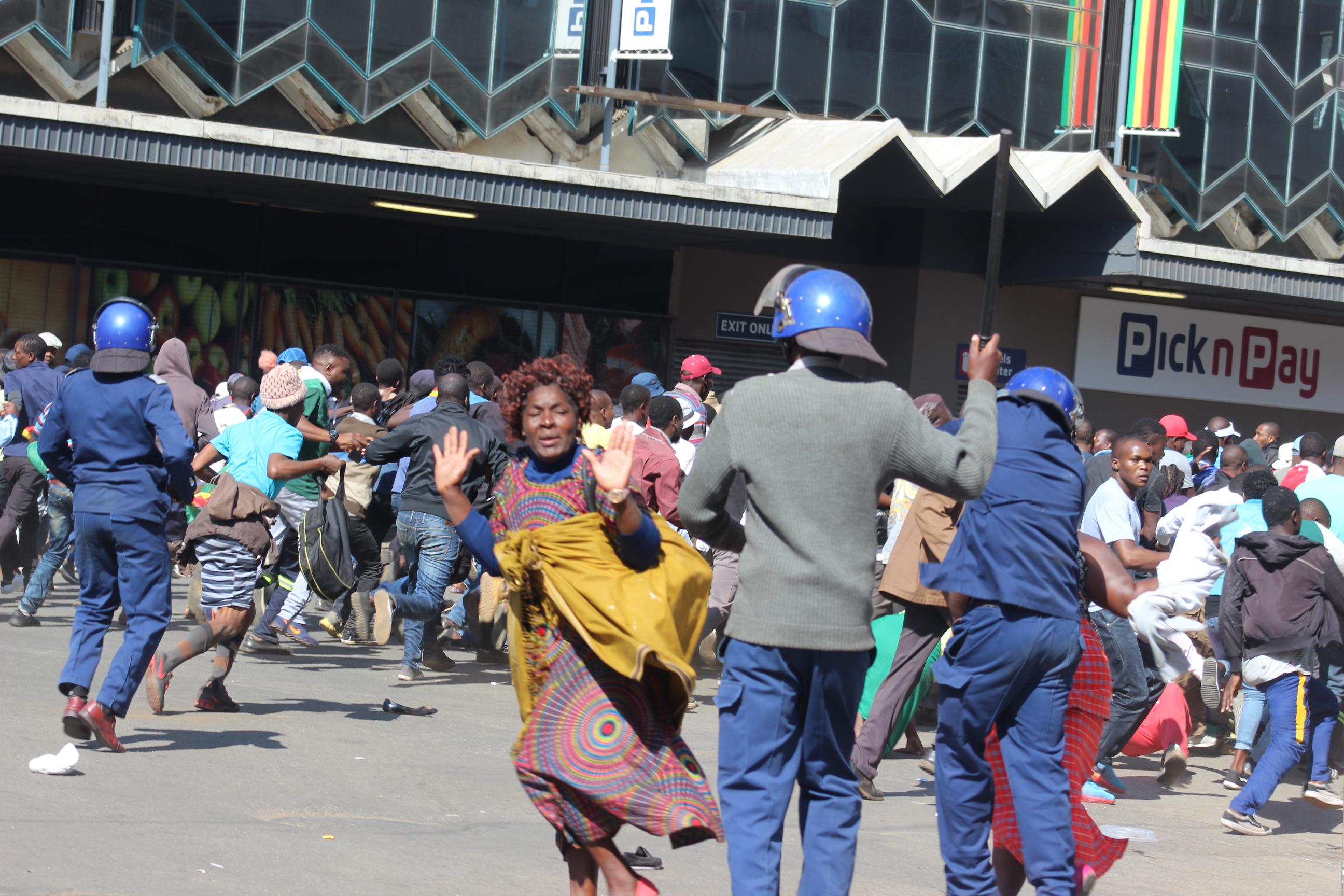
Police are banning demonstrations, and protestors have been beaten in a clear violation of international workers’ and human rights standards. The Zimbabwe Congress of Trade Unions president, Peter Mutasa, and secretary general, Japhet Moyo, face treason charges that carry a death penalty.

When the Zimbabwe Hospital Doctors Association acting president, Peter Magombeyi, was abducted by armed men from his home in Harare on 15 September, doctors and nurses in major hospitals went on strike demanding his immediate release. Human rights groups and trade unions joined in the campaign.

Following national and international pressure, the government joined the call for his release, suggesting that he was abducted by a “third force” which they had no control over. This explanation was viewed with suspicion, as the Zimbabwean president Emmerson Mnangagwa had earlier warned at a public rally that the government would go after “those who chose demonstrations”, adding that “their lives will be shortened.”

Magombeyi, who is leading a strike for living wages, better working conditions and adequate funding for public hospitals, was found alive, outside Harare, after five days and is in hospital being treated for suspected torture. The basic wage for a newly qualified doctor in Zimbabwe is $400 Zimbabwe Dollars (US $27) and the government offer of a 60 per cent increase was rejected.

Police beat up anti-austerity protesters in Harare, Zimbabwe. Photo: Lovejoy Mtongwiza.

IndustriALL Global Union’s Zimbabwe affiliates, who organize in garment and textile, manufacturing, and mining sectors, condemn the government crackdown on unions.

The chairperson of the IndustriALL Zimbabwe affiliates, Joseph Tanyanyiwa said:

“We condemn the ongoing abductions and torture of political activists by suspected state security agents and call upon the government to protect citizens against inhuman and degrading treatment. We also condemn police brutality against peaceful civilians and the involvement of the army in crowd control which has resulted in the deaths of innocent people and injuries to many. We call upon the government to uphold the rule of law and respect constitutional and workers’ rights.”

Paule France Ndessomin, IndustriALL regional secretary for Sub Saharan Africa said:

"We are concerned by the deteriorating situation in Zimbabwe. The Zimbabwean government should respect the rights of workers including to freedom of expression and to fight for living wages. Workers should not be beaten up or face persecution for exercising their rights.”

Header photo: Police beat up anti-austerity protesters in Harare, Zimbabwe: Lovejoy Mtongwiza.

Unions support government plan to stop gender-based violence in South Africa

According to the recently released South African Police Service crime statistics a woman is killed every three hours. From April 2018 and March 2019, 2,771 women were killed, and rape and sexual offences are on the increase.

In an address to the joint sitting of Parliament on 18 September, South African President Cyril Ramaphosa announced a government’s emergency plan to “remove the cancer of gender-based violence”.

The plan, to be implemented in the next six months, focuses on prevention of gender-based violence, strengthening the response of the criminal justice system, and firming up the legal and policy frameworks. It also provides for the care, support and healing of victims of gender-based violence. Women economic empowerment is also recognized in the plan as a strategy to reduce the vulnerability of women.

The rape and murder of Uyinene Mrwetyana, a 19-year-old University of Cape Town student, at Clairemont post office in Cape Town ignited a wave of protests to end the widespread gender-based violence and femicide in South Africa.

IndustriALL affiliates took action and demonstrations took place in many citites across the country. 10,000 people demonstrated in Cape Town, saying “enough is enough”. In Johannesburg, demonstrators petitioned the Johannesburg Stock Exchange, to support campaigns to end gender-based violence. Social media campaigns such as #AmINext and #stopviolenceagainstwomen supported the protests.

Lydia Nkopane, chairperson of the IndustriALL National Women’s Council South Africa (INWC-SA) said:

“We are appalled by the increasing number of women who are murdered in their homes and at workplaces. This makes South Africa one of the most violent countries for women to live in. Therefore, we welcome the government’s plan to curb gender-based violence, and to improve the safety of women.”

The affiliates have signed the IndustriALL pledge, commiting to stop gender-based violence in the union and at workplaces. The affiliates are also campaigning for the ratification and implementation of the new International Labour Convention 190/Recommendation 206 on Violence and Harassment in the World of Work.

INWC-SA comprises women workers from the following IndustriALL affiliates: Chemical, Energy, Paper, Printing, Wood and Allied Workers' Union, the National Union of Mineworkers, the National Union of Metalworkers of South Africa, and the Southern African Clothing and Textile Workers' Union.

South African union signs wage deal

According to the three-year wage deal signed on 12 September, which expires in 2022, workers in the sector will receive a nine per cent increase in 2019 and seven per cent increases in the following years. The wage increases will also be adjusted annually to inflation levels and transport allowances will increase from R1540 to R2500 (US$105 to US$171).

The deal includes other benefits such family responsibility leave, and payments in the event of temporary layoffs. A once off gratuity of R7500 (US$510) will be paid to workers in the bargaining unit. Further, discussions between the union and the employers will finalize proposals on medical aid and skills grading.

Irvin Jim, NUMSA general secretary says:

“Our negotiation team worked tirelessly to get us to this point of the talks, and we are grateful to them for their hard work.”

Georg Leutert, IndustriALL automotive director says:

“We applaud the collective agreement signed by NUMSA and AMEO as this continues to improve working conditions in South Africa's automotive sector. As the sector embraces Industry 4.0, we also commend the skills development initiatives that are benefitting the workers.”

As the largest manufacturing sector in South Africa, contributing to nearly 30 per cent of manufacturing, and producing over 600,000 vehicles per annum, the automotive sector is important to the economy. The sector contributes about 6.8 per cent of the country’s gross domestic product. Further, it employs over 100,000 workers along the value chain, and contributes to skills development, technology and innovative, and foreign direct investment.
 
South Africa’s automotive sector includes manufacturing, distribution, servicing and maintenance of motor vehicles and components. The Automotive Production Development Programme (2013), which will be replaced in 2020 by the South African Automotive Masterplan, supports original equipment manufacturers (OEMs) and aims at focusing on producing for the export market. The programme gives the OEMs subsidies such as duty rebates to increase the local content of South African produced cars which is currently at 37 per cent.

African countries urged to ratify ILO C176 on mine safety

Deaths from mine accidents have increased since 2016; in coal mines deaths have risen by 400 per cent, whilst in other mines by 67 per cent globally. Deaths have also increased in the gold and platinum mines.

A meeting on 22-23 August organized by IndustriALL Global Union urged Sub Saharan countries that have not ratified ILO C176 to do so. Attended by 30 participants from IndustriALL affiliates in Burkina Faso, Democratic Republic of the Congo, Ghana, Guinea, Lesotho, Madagascar, Namibia, Niger, South Africa, Zambia and Zimbabwe, the meeting discussed how public debates on health and safety in the mines are important. Laws and regulations also needed to be strengthened as well as implementing and enforcing of the laws.

Trade unions were urged to include mine health and safety in collective bargaining agreements. Workers were also encouraged to exercise their rights of refusal to do dangerous work when forced by employers to work in unsafe environments. Unions should also challenge employers who did not comply with health and safety standards.

Nancy Coulson from the University of the Witwatersrand’s emphasized the critical role of the union health and safety representative citing international best practices and examples from South African mines. She stressed the importance of representatives to always serve the interests of the mineworkers and not the employers:

“The health and safety representative should perform their role according to the laws, and these include the right to inform on hazards, investigate the workplace to ensure compliance, listen to worker complaints, point out lapses to the employer, and be involved in consultations on health and safety plans.”

Of the countries present at the meeting Guinea, South Africa, Zambia and Zimbabwe have ratified ILO C176. Other countries that have ratified are Botswana and Mozambique.

Glen Mpufane, IndustriALL director of mining said:

“Protecting the lives of mineworkers is a crucial function of trade unions and unions must vigorously campaign for better health and safety in the mines. Ratifying and implementing C176 is important to achieving this goal. In countries that have not ratified, unions should campaign not only for ratification, but for implementation of existing safety and health laws.”

The meeting was also attended by the International Labour Organization, government officials from the South African department of mineral resources and energy.