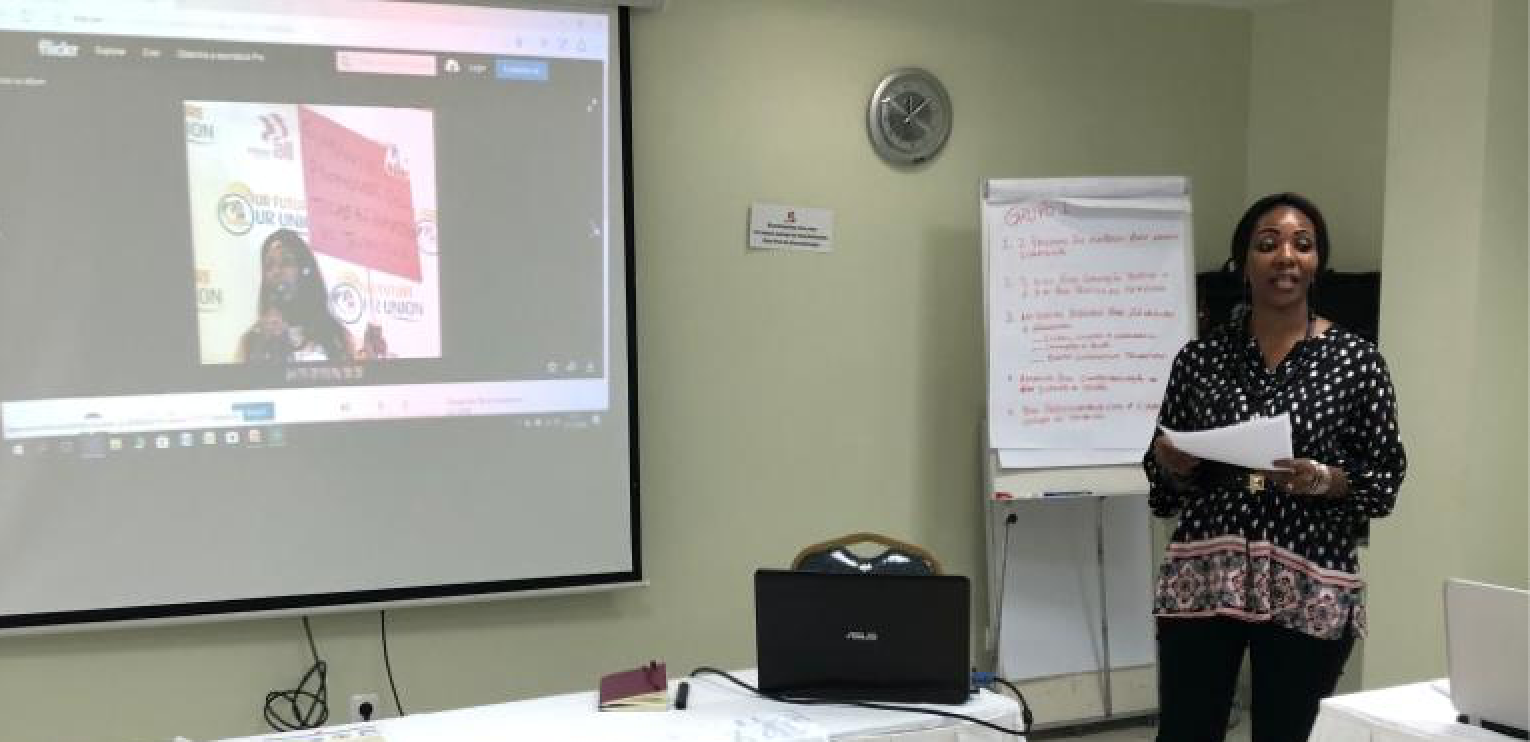
Sustainability and Just Transition key to the future of mining in Africa

These were the themes at both the Investing in Africa Mining Indaba and the Alternative Mining Indaba, which took place from 3-6 February in Cape Town, South Africa. The business-organized Mining Indaba’s theme was “Optimizing growth and investment in the digitized mining economy” while the civil society Alternative Mining Indaba (AMI) focused on “Environmentally and economically sustainable mineral economies in an era of climate change catastrophe”. IndustriALL Global Union participated in both events.

The Mining Indaba and AMI are separate events held concurrently. On the “sustainability day” at the Mining Indaba, the two events converge to discuss common issues. There are efforts to find common ground on sustainable mining and Just Transition.
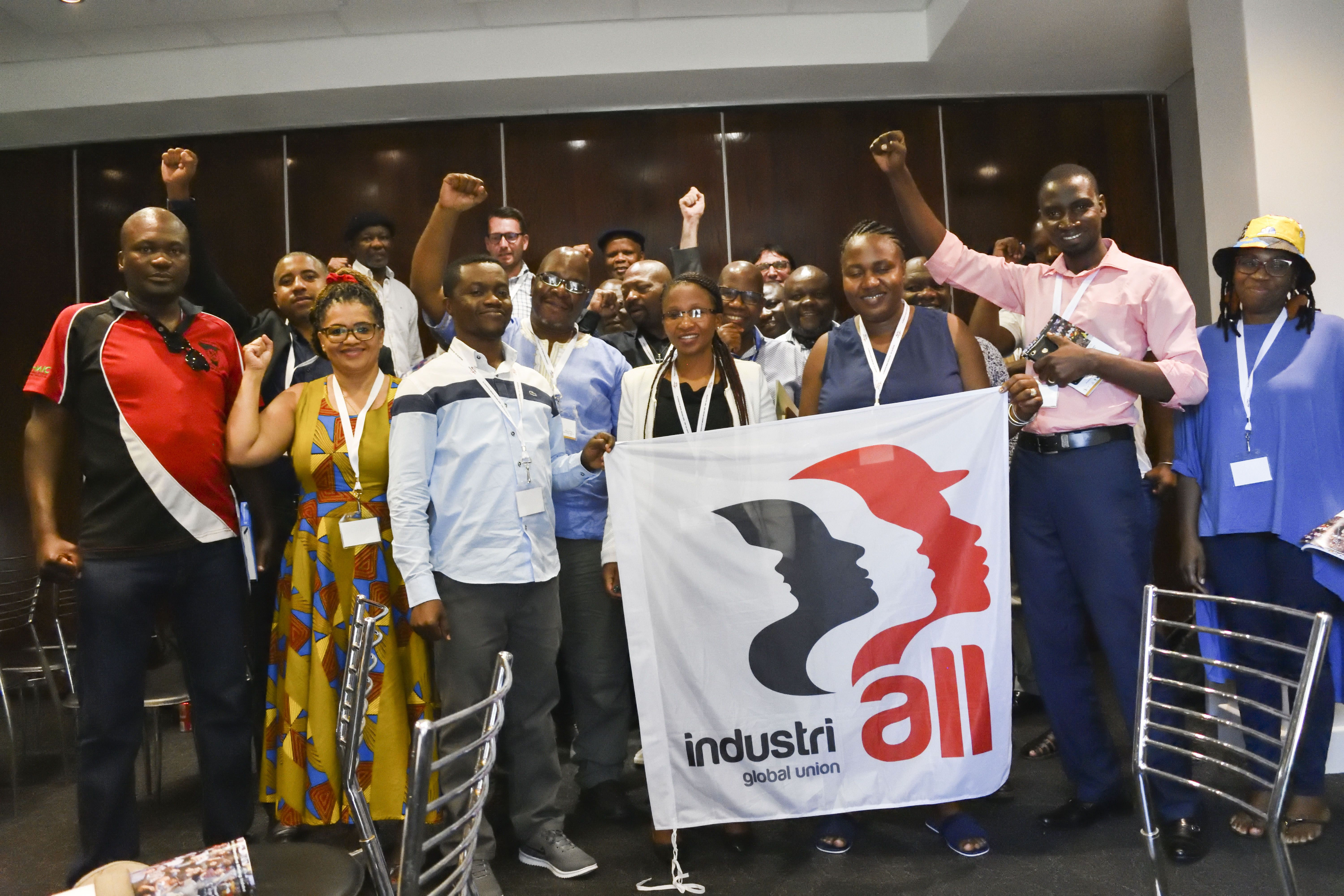
 

IndustriALL mining affiliates from the Democratic Republic of the Congo, Ghana, Madagascar, Namibia, South Africa and Zambia participated in the Mining Indaba, with support from the Friedrich Ebert Stiftung.

AMI aims to provide mining affected communities in African with a space to dialogue and seek solutions to their concerns with the mining sector. IndustriALL and its affiliates were active in sessions on climate change, Just Transition, and the social license to operate. Over 50 participants debated cooperation between trade unions and civil society in determining industry’s social license, emphasizing that the rights of mineworkers and interests of mine-affected communities should be central to mining operations. The session discussed organizing artisanal and small-scale miners into unions.

The AMI recommended in a petition to the Mining Indaba that the legacy of past liabilities cannot be forgotten, with the tuberculosis/silicosis class action in South Africa given as an example. Industry must provide fair compensation to ex-mine workers and communities whose health was damaged by mining, and include them in discussions on how this is to be done.

Governments must ratify and implement ILO Convention 176 on safety and health in mines, as well as Convention 190 on violence and harassment at the workplace, particularly to protect women mine workers who are vulnerable to violence at work.

IndustriALL was present in a series of discussions at the Mining Indaba. A panel chaired by mining director Glen Mpufane addressed safety with the theme of “Achieving a ‘Zero Harm’ Approach”. Attended by Joseph Montisetse, the president of South African affiliate the National Union of Mineworkers, the session discussed Convention 176. Montisetse addressed the alarming rate of incidents globally and the need to fundamentally change the approach to mine leadership by putting people first.
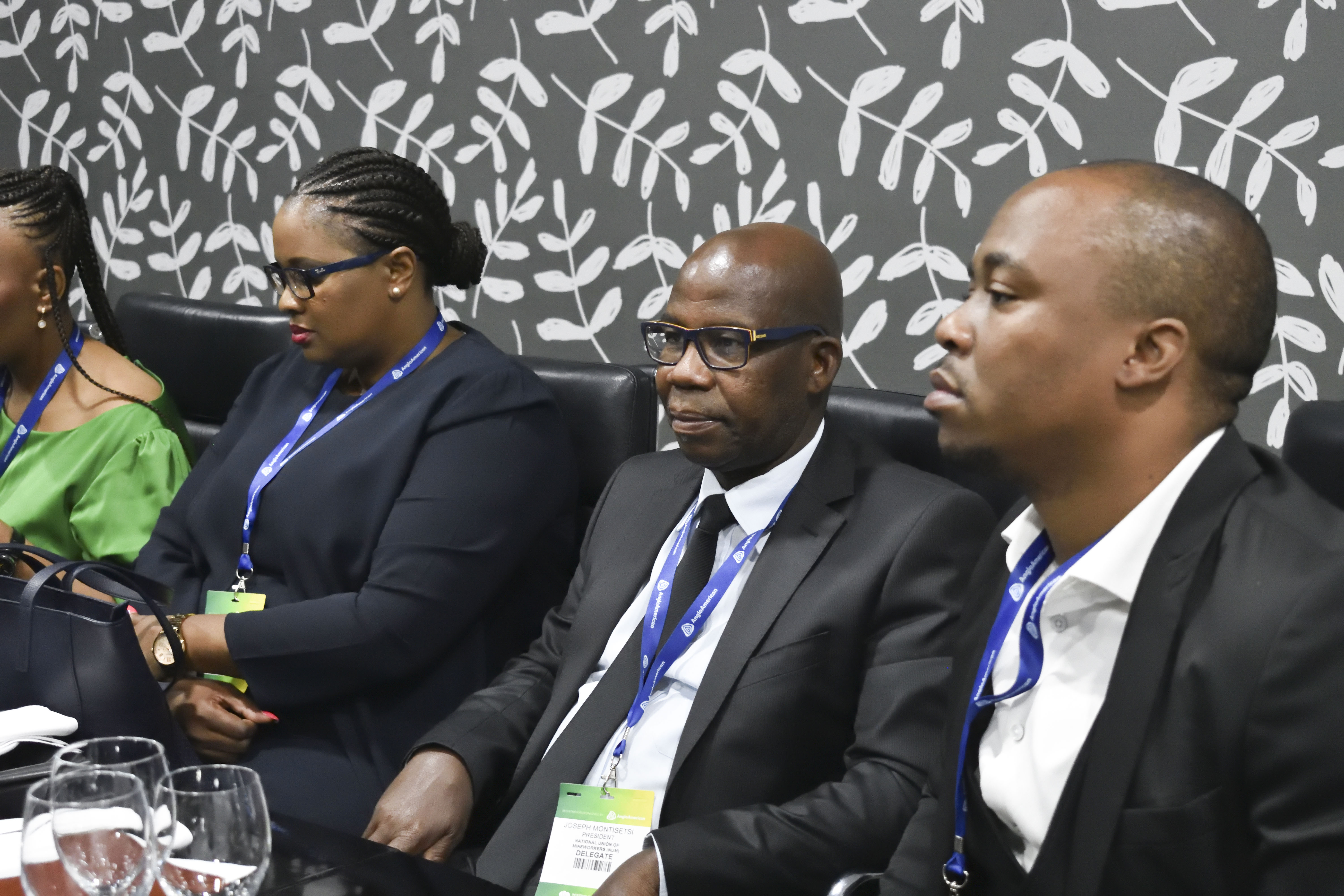
Joseph Montisetse

A session on “Mining 4.0” focused on how technology and innovation are transforming mining. Addressed by IndustriALL’s assistant general secretary Kemal Özkan, the session asked what new mining technologies will mean for the future of work: what skills will be needed, and how can mining companies, governments and others ensure that locals have the right skills to allow mining to make its full contribution to sustainable development?

A digital mining economy can only come through a shift from old mining technologies to high-tech mining of automation, data and artificial intelligence. Unions want a Just Transition plan that includes replacing fossil fuels with renewable energy, retraining and reskilling workers, fair compensation when retrenchments take place, and social dialogue. Dialogue between communities and trade unions should lead to joint work, and Governments and civil society organizations should be involved.
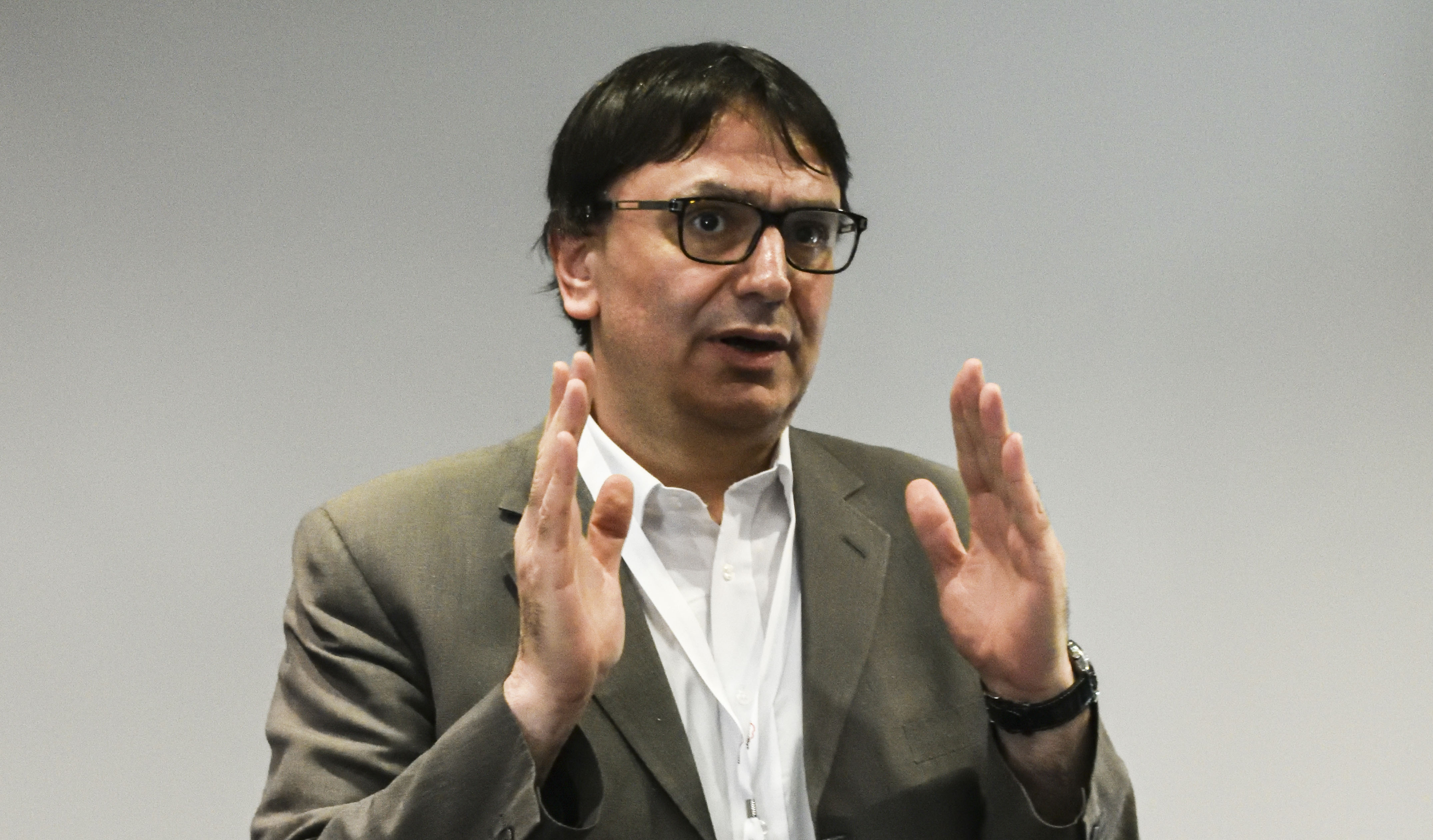
Kemal Özkan

In his intervention, Kemal Özkan said:

“The millions of mining jobs are our jobs. No one can or should decide about the future of our jobs without workers and unions. Employment is the only tool that connects us to society and the economy.

“We need genuine global, national and local dialogue to discuss and project our future. Information, consultation, training, retraining, reskilling, and requalification are the main rights we demand. Dialogue on sustainable mining is essential to create decent jobs and to reduce poverty, as explained in the African Mining Vision.”
Responsible mining protects workers’ and communities’ rights

The standard for responsible mining is a tool that unions and communities can use to protect workers and human rights, environmental sustainability and the social performance of mining companies at mines and along the supply chain.

The IRMA tool consists of a set of metrics for environmental and social responsibility that can be used at industrial scale mines to increase transparency and provide a credible way to measure a mine’s performance.

On workers’ rights, the standard supports rights to collective bargaining and freedom of association, living wages, maternity leave, health and safety, consultation before retrenchments, grievance handling mechanisms and is against harassment, intimidation and child labour.

Kemal Ozkan, IndustriALL assistant general secretary, says:

"Trade unions should use the standard for responsible mining to address mine level issues. It’s important for unions to participate in the audit processes and to use the complaint mechanisms provided. This is an important leverage for our mining affiliates in protecting and advancing rights of their members."

Speaking at the Alternative Mining Indaba (AMI), Mark Curtifani, the chief executive officer of Anglo American said the mining company is using the standard for responsible mining as one of their strategies to engage and respect the human rights of communities as well as to “understand people better.” For example, Anglo American’s Unki Mine in Zimbabwe has been audited using the standard.
 
The AMI also acknowledged the IRMA standard as an objective tool for promoting responsible mining and unions hope the standard recommendations on artisanal and small-scale mining can be used to formalize the miners in the Democratic Republic of the Congo, Ghana, South Africa, Zimbabwe and other countries.
 
Aimee Boulanger, IRMA executive director says:

The standard for responsible mining has been developed over time, making it a robust tool that provides a resource for unions and communities to engage with mining companies.

The standard has 26 chapters on social issues like community health and safety, human rights, anti-corruption, and free prior and informed consent. On environmental issues, it protects water sources, aims to reduce air pollution, protects biodiversity and promote safe waste management.

IRMA is a multi-stakeholder initiative,

offering independent third-party verification and certification against a comprehensive standard for all mined materials. The governance of IRMA is shared by civil society, communities, unions and the private sector. IndustriALL and its North American affiliate United Steelworkers (USW) became involved at an early stage with demands for more socially and environmentally responsible mining. IndustriALL’s mining director Glen Mpufane is a board-member.

Union to negotiate with Glencore over retrenchments at South African smelter

The meetings will discuss the notice given to NUMSA by Rustenburg Smelter which says, “the business is no longer financially viable.”

NUMSA says it will go into the consultations to save the 665 jobs that will be lost if Rustenburg Smelter is closed. The management at the smelter, which is owned by Glencore (79.5 per cent) and Merafe (20.5 per cent), said in a notice to NUMSA that the smelter is no longer profitable and is operating at a loss.

This is due to aging technology, expensive energy which accounts for 30 per cent of production cost from power utility Eskom, as well as other subsidies paid by industrial customers to Eskom. Further, the introduction of a carbon tax, increased transport and other import costs have contributed to the loss. The company also says that producing ferrochrome in South Africa is more expensive than in other countries.

Phestus Motshabi, NUMSA’s local secretary for the Rustenburg local said:

“We are still waiting for the announcement of the dates by the CCMA when the mediation will begin, and will do our best to save as many jobs as possible and urge the management to approach these discussions in good faith. They must fully disclose so that we can work together to find solutions. The working class is clearly under attack because workers in many sectors of our economy are being served with retrenchment notices.”

Glen Mpufane, IndustriALL director of mining said:

“We hope that a solution will be found that involves saving jobs and that the ongoing negotiations with Glencore will come up with an amicable way forward for the union and the company. Mining companies shouldn’t be too quick to retrench workers when market conditions are tough but should first explore options to preserve jobs.”

According to the Department of Mineral Resources and Energy, South Africa is the world’s largest producer of chromite and ferrochrome in the world with reserves over 72 per cent. Most of the ferrochrome is sold to China which is growing its own industry in the metal. China also buys chrome from other countries.

Union confronts workers’ rights violations at Petro Oil Kenya

Since 2011, Petrol Oil Kenya has been denying workers their rights to join a union. KPOWU took the matter to court and on 13 December 2019, the Employment and Labour Relations Court in Mombasa ruled that the company must recognize the union within 30 days of the judgment.

However, instead of complying with the judgment, Petrol Oil Kenya began changing conditions of service for the workers, refusing to allow workers to take off days, and outsourced stations where the union had more members.

According to Kenyan labour laws an employer “shall recognize a trade union for purposes of collective bargaining if that trade union represents the simple majority of unionizable employees.”

By dismissing the unionized workers, Petro Oil Kenya, is denying the KPOWU the right to collective bargaining with the employer which is protected by the law. The union has a simple majority at most of the petrol stations and should be recognized.

Raphael Olala, the general secretary of KPOWU says:

“We are challenging the timing and intention of the termination of more than 30 of our members, and the outsourcing of several stations immediately after workers had signed union membership forms. The harassment, victimization and termination of contracts by Petro Oil Kenya because workers would have joined a union must stop.”

In a letter to the company, IndustriALL general secretary Valter Sanches, underlines the support for the union’s fight to bring the malpractices to an end:

“We are appalled by Petro Oil Kenya’s blatant denial of workers’ rights to freedom of association, organizing, collective bargaining and fair labour practices which are protected by Kenya’s Constitution, labour laws and International Labour Organization conventions. It is shocking that a company can ignore a court judgment that rules against it and in the union’s favour. As IndustriALL we will continue to fight against the unfair labour practices.”

Stop the split of Eskom, say South Africa unions

This follows earlier announcements by the government that Eskom will be broken from a single entity into three companies for generation, transmission, and distribution of electricity. Unions say that the unbundling, a pretext for privatization, would lead to thousands of jobs losses. Currently Eskom employs close to 100,000 workers, including those along the value chain.

The unions are calling for the resignation of the minister of public enterprises Pravin Gordhan and the Eskom board be dissolved for failing to end the Eskom crisis. The Eskom crisis reached a peak last year when unprecedented levels of power outages plunged the country into darkness.

The National Union of Mineworkers (NUM) and the National Union of Metalworkers of South Africa (NUMSA), both affiliated to IndustriALL Global Union, wanted to present their memorandum of demands to the newly appointed group chief executive Andre De Ruyter, who did not show but instead sent members of the management team.

Among the unions’ demands are that Eskom be run by “credible and knowledgeable managers and not politicians” and for labour to be involved in decision making processes within the power utility. Unions want to be represented on the Eskom board and to be part of the executive committee.

The unions also said Eskom is buying expensive power from independent power producers only to sell to consumers at a loss. The utility is also failing to collect debt from municipalities and other debtors and fraudulent activities have left a huge dent on the utility’s finances. Eskom also has a debt of over 400 billion Rands (US$27.8 billion).

When Eskom amended the previous criteria for performance bonuses workers were not consulted, and the unions are now demanding it be reversed. The unions want outsourced services to be taken over by workers employed directly under Eskom’s conditions of service as this provides job security and end precarious working conditions.

Diana Junquera Curiel, IndustriALL director for the energy industry, says:

“We urge the South African government to recognize unions organizing in the energy sector as key stakeholders and consult them on issues affecting workers. We have seen similar cases in other countries and unbundling always leads to retrenchments and jeopardize workers’ conditions. Even in such cases unions have to be part of the negotiations for fair compensation.”

INTERVIEW: Beauty Zibula

Union:The Southern African Clothing and Textile Workers Union (SACTWU)
Country:South Africa
Texto: Elijah Chiwota

After 41 years as a sample machinist, Beauty Zibula was elected as a Member of Parliament for KwaZulu Natal province in South Africa in the country’s national elections in May 2019. The election ended her four decade long career as a shop steward, which saw her assuming many leadership positions in her union, the Southern African Clothing and Textile Workers Union (SACTWU).

At the time of the election she was the second Deputy President of SACTWU, which has over 108, 000 members in the textile, garment and leather sectors. Zibula was in her teens when she got her first job in a garment factory in Durban, South Africa in 1978.

What was it like to be a trade unionist under South Africa’s apartheid regime?

“I got my first job at IM Lockhat at the height of the struggle against apartheid. It was a difficult period for South African citizens, workers and trade unions. As activists for democracy we were always under surveillance by the notorious police special branch of the repressive apartheid regime. I was arrested and detained many times as I was not only a trade unionist but also campaigned for the African National Congress (ANC), which at the time was a banned organization. Some were jailed while others were killed. Nelson Mandela and our leaders from KwaZulu Natal – Dullah Omar and Harry Gwala – were in prison on Robben Island.

“It was under these tough conditions that I started organizing workers, who were reluctant to join a union. Moreover, the employers discouraged workers from joining the union. Wages were segregated according to race, with the black African workers earning the lowest compared to white, Indian and coloured1 workers. Unionists were always seen by employers with a lot of suspicion. But my unionist had explained to me that my important task was to unify workers at the factory; and I managed to bring many Indian and African workers into the union.”

Describe your 20-year experience at Prestige apparel. What would you describe as the main challenges after the democratic breakthrough in 1994?

“The ANC and other liberation movements were unbanned. Mandela and other ANC leaders had been released from Robben Island in 1990s, and freedom was in the air. There was the democratic breakthrough in 1994 and the ANC won the first democratic elections. I was thrilled. There was freedom at last after years of struggle. Then the new Constitution guaranteed workers’ rights; workers’ rights including the right to strike became constitutional rights.

“I moved to Prestige Apparel but was still employed as a sample machinist, but this company was different. The machines were new and better. The company really tried to update to new technologies unlike the old machines that we were used to at IM Lockhat.

“As unions, we started campaigning for the Labour Relations Act and when it was passed it was a victory for workers. The benefits of the LRA are still felt today. It gives organizational rights to trade unions, promotes collective bargaining, and provides for the resolution of labour disputes through conciliation, mediation and arbitration and labour courts. The law also provides for a simplified procedure for the registration of unions.

“Another victory was on maternity leave, as found in the Basic Conditions of Employment Act. We fought hard as unions for this to happen, and it was sweet victory for women when we got maternity leave benefits.”

Describe your rise through the union ranks from a factory shop steward to a second Deputy President?

“Being a union shop steward is hard work which requires dedication. As a union leader you learn a lot along the way through the meetings, representing workers when there are grievances with employers and when you sit in collective bargaining councils to negotiate for collective bargaining agreements. When you succeed in your work in the union, it is rare that you do it alone, but you work with others as a collective. In SACTWU we worked as a collective and participated in the activities of our federation, the Congress of South African Trade Unions (COSATU).

“I learnt a lot as the regional chairperson of COSATU because I worked with trade unions that organize in other sectors, thus giving me an opportunity to learn and understand what those unions were doing.

“I also gained valuable experience by sitting on the National Bargaining Council for the clothing industry – an important council for the garment sector in South Africa from where we have negotiated better wages and working conditions for the workers.”

Beauty Zibula supporting IndustriALL's campaign in the textile sector

What are your comments on gender-based violence and femicide in South Africa?

“The levels of gender-based violence and femicide in South Africa are shocking. Working women are raped and killed in their homes, at workplaces and in the mines. At workplaces women are raped and killed by their male colleagues. Women are also killed by their partners or ex-boyfriends. Children are raped and killed. This is unacceptable and shouldn’t be allowed to continue. Therefore, as MPs we are supporting President Cyril Ramaphosa’s five-point plan against gender-based violence and femicide. This plan includes prevention, strengthening the criminal justice system, enhancing the legal and policy framework, ensuring adequate care, support and healing for victims of violence and economic empowerment of women.

“As an MP, I am taking this campaign to my constituency and am visiting communities to sensitize them and to get an understanding why this is happening and how we can stop it. We are carrying out this campaign together with various government departments.

“I have been involved in discussions that have been taking place within COSATU structures to deal with gender-based violence, sexual harassment and femicide.

“As SACTWU we have been involved in this campaign for some time now, and through IndustriALL Global Union we have been campaigning for the signing of the IndustriALL Pledge and took part in the recent marches against gender-based violence and femicide in Cape Town.”

How do you find your union experience useful in the National Assembly?

“I have not been on this journey alone, I have walked with others as well. And would like to use this opportunity to thank IndustriALL and all the comrades that I worked with in the regional women’s committee. I will miss the union but will cherish the valuable experience that I gained.

“After my studies at the Workers College in Durban, and my experience in the union, I have learnt to appreciate unions as organizations where you learn.”

To build a better South Africa we need strong unions, and these unions should be involved in social struggles.

“Again, from my experience I can conclude that unions gained a lot though struggle during apartheid when they gained their mobilizing skills and post-apartheid where they fought for workers’ rights and benefits including minimum and living wages.

“As part of the working class the union has power through its numbers, its social role and in its struggles for social justice. Its campaigns to end the triple crisis of poverty, inequality and unemployment are an example. The union should therefore continue to fight against exploitation and oppression of the workers and for social justice. It should also continue to build national and global solidarity. The union should continue to withhold labour power from capital as it fights for workers.

“Unions should continue to struggle for the society that we want, based on freedom and equality in the communities where we live and at our workplaces.

“This is what will inform my work as an MP. The values that we fight for in the union are also the values that we should fight for in parliament as we serve the same society but in different capacities. This is like wearing a different leadership hat.

"As trade unions, and as politicians with a union background, we all want a better world and to be involved in transforming societies. We are committed to ending the triple crisis of poverty, unemployment and inequality.”

Global network meeting resolves to pursue dialogue with Anglo American

Senior executives from Anglo American attended the meeting, comprising over 30 delegates from IndustriALL affiliates that represent the company’s workforce in Australia, Botswana, Brazil, Lesotho, Namibia, South Africa, and Zimbabwe. The Friedrich Ebert Stiftung Trade Union Competence Centre for Sub Saharan Africa also attended the meeting, which was chaired by Lucineide Varjão Soares, the sector co-chair and president of CNQ-CUT in Brazil.

Nolitha Fakude, chair of the management board of Anglo American in South Africa, lead the company delegation and said the company is committed to improving workers and communities’ lives through responsible mining. She was accompanied by Froydis Cameron, international and government relations, and Hermien Botes, head of sustainability engagement.

The proposed framework of global dialogue between Anglo American and IndustriALL will be a platform for meaningful conversation about issues and challenges facing the company at global level, such as improving industrial relations, occupational health and safety, gender equity, Just Transition measures for climate change and the impact of Industry 4.0.

Further, the dialogue is an opportunity for exploring working together on Anglo American’s Sustainable Mining Plan and the UN Sustainable Development Goals. This will provide an opportunity to work jointly on diverse issues that include health, education, livelihoods, youth development, and community safety and health. The dialogue will also deal with responsible mining and the commitment to the Initiative for Responsible Mining Assurance (IRMA), a multi-stakeholder governance standard and independently third-party auditing initiative.

The global network agreed to continue with efforts to organize and strengthen collective bargaining.

Kemal Özkan

IndustriALL assistant general secretary Kemal Özkan said:

“As a global union we are effective organizers with capacity to improve the lives of mineworkers, and we are also campaigners for living wages. Our success comes from working together through global solidarity from Australia, to Africa and Latin America and sharing information and experiences.

“We would like to build on previous meetings with Anglo American to negotiate a formal agreement that will meet some of our demands.”

Unions in Mozambique empowering workers

Union presence in Mozambique has been centred around the capital, Maputo. Through the project with the Finnish trade unions PRO and Teollisuusliitto and Finnish trade union solidarity centre SASK, union density in the provinces has grown significantly between 2015 and 2018:

However, local structures have remained weak, the next phase focuses on empowering local structures and incorporating more women and youth.

The effort to raise the profile of unions has meant empowering local shop-stewards, woman, and youth through training. Local shop stewards have been trained as “circle study leaders”, and have then organized local workshops facilitating discussions with members around trade union issues.

“Everyone has basic workplace knowledge and experience. They then come to these discussions and learn through exchanging; it’s not just training it’s learning through experience and reflection. The idea is that they take the method back to their workplace and spread the knowledge. Through the study circles we can already see the leaders of tomorrow,”

says Sarah Flores, IndustriALL youth project officer.

Jointly within the three unions, women and youth have been working on policies. The policies will then need to be approved by their national council before they can be adopted. Each union will develop an implementation strategy, ensuring inclusion of women and youth throughout their structures.

Sonia Nhampossa from SINTIME

“It is important to have policies for youth and women because we have seen violations of their rights in the workplace. Women and young people must be encouraged to occupy decision-making roles within unions,”

“This is a great example of how long-term work in the spirit of unity can make unions stronger, we are looking forward to these policies being adopted and implemented,” says Atle Hoie, IndustriALL assistant general secretary.

Garment workers in Ethiopia need strong unions

The industrial parks' strategy is meant to transform rural towns into industrial manufacturing zones.

However, an interview with workers from the park on 28 November confirm that they do not belong to trade unions but working conditions are rather negotiated through employers/workers committees formed by the factory owners.

The committees discuss wages, working conditions, skills training, health and safety, transport for workers and disciplinary issues.

Wages for the garment workers remain low, especially for sewing machine operators whose basic salary is 750 Ethiopian Birr. In addition, the workers are paid 300 Birr for accommodation and a further 100 Birr for reporting for work.

The total, 1,150 Birr, equals around US$38. Yet a room in Hawassa costs about 2,000 Birr. To make ends meet in some instances four workers share a single room.

During a factory visit by IndustriALL Global Union, workers said the shirts they were making would sell in the US for about US$70, which is substantially more that their monthly wages. The factory makes 3,500-3,750 shirts per 8-hour shift and employs 450 workers.

Worsening matters is the irregular pay day; sometimes wages are paid 11 days late. Although production bonuses sometimes bring relief, workers say it is not every week there is a production bonus. They need to earn better wages.

At some factories the lunch break is only 30 minutes. Some factories provide food at  canteens, while others do not. With the low wages, workers who do not have lunch provided can sometines go without food until the end of the shift and will only eat when they get home.

IndustriALL director for the textile and garment sector Christina Hajagos-Clausen says:

“We are supporting our affiliate in Ethiopia, the Industrial Federation of Garment Leather Textile Workers Union, in their efforts to unionize workers at Hawassa.

“As a collective the workers can demand minimum living wages and better working conditions. Without representation by a strong union the workers will continue to work under terrible conditions. We will also discuss with international brands sourcing from Hawassa to respect workers’ rights and pay living wages.”

Leading American brand PVH has a factory at the park and is one of several brands that are sourcing garments from Hawassa.

Mondiaal FNV is working with the IFTLGWU on organizing workers in the Hawassa Industrial Park and also supporting research on minimum and living wages in Ethiopia.

Swedish and Zambian unions tackle gender issues

These are some of the recommendations from a gender workshop whose goal was to identify ways to develop policies to stop sexual harassment in unions, to educate women workers, and come up with procedures to prevent unwanted behaviours.
 
The 18 participants who attended the workshop in Lusaka on 26 November were from the IndustriALL Global Union Sub Saharan Africa regional office, Zambian IndustriALL affiliates, and Swedish unions. 

The workshop discussed norms and gender roles, linking them to power analysis, which is important in sexual harassment cases. Gender inequality was discussed as one of the drivers of sexual harassment.

Issues discussed included definitions of feminism and patriarchy considering similarities and differences in the Zambian and Swedish contexts. Other concepts discussed included empowerment and disempowerment and structural oppression.

The concept of intersectionality and how different systems of power, like age, gender and nationality, interact in oppression and how this shaped gender was discussed.
 
Karin Ström, international policy officer, and Lina Andersson, gender policy officer from Unionen and Fanny Högrell, trade union officer, IF Metall, explained their unions systematic work on gender equality, the long struggle for recognition on these issues, the battles won and the challenges ahead.
 
Paule France Ndessomin IndustriALL regional secretary for Sub Saharan Africa, said:

”Global solidarity is important in building the capacity of unions to confront sexual harassment and gender based violence. The campaign for countries to adopt ILO C190 on violence and harassment in the world of work is gaining momentum. We are calling on our affiliates to put pressure on their governments to ratify the convention.”