Union educates on COVID-19 as South Africa confirms more cases

In the last two weeks, the union held COVID-19 awareness campaigns in the Western Cape, Durban, Johannesburg and Mpumalanga. Tests have so far confirmed 150 positive cases nationally.

South African President, Cyril Ramaphosa, declared the COVID-19 pandemic “a national state of disaster” on 15 March, and announced a raft of measures to control its spread. These included flight bans and restrictions of visitors from countries with high COVID-19 cases, limitations on public gatherings to only 100 people, and school, border and ports closures. Other preventive measures are campaigns to frequently wash hands and other public health measures to halt COVID-19.

The National Economic Development and Labour Council – a social dialogue forum for labour, government, employers and communities – meeting recommended adoption of customized workplace responses to COVID-19.

Andre Kriel, SACTWU general secretary said:

“The union has issued a directive to its 2,800 shop stewards in the 1,500 workplaces where we are organized to immediately engage employers to formulate a customized response plan, specific to each workplace. Difficult as this may be, a response plan should include matters such as the managing of short-time, shift work, and changing working hours and lunch breaks to reduce many workers assembling in one place. We are implementing awareness training of workers on specific concrete prevention interventions. These include making available hand and industrial sanitizers, safety work wear, safe and hygienic clocking stations and canteen protocols, as well as reviving health and safety committees at workplaces.”

Valter Sanches, IndustriALL Global Union general secretary said a collective effort is needed to contain the COVID-19 global pandemic:

“As trade unionists, we want to actively contribute to slow down the spread of the virus, protect the most vulnerable groups and give time to the public health institutions worldwide to get ready, avoid being overwhelmed, and thus assist those most in need.”

SACTWU wants the customized workplace response plans to neither prejudice workers nor undermine national and collective bargaining agreements.

According to South African labour law, employers have an obligation to protect workers from the coronavirus disease. Failure to do so makes the employers liable to a breach of employment obligations under the Occupational Health and Safety Act. Further, if the employers fail to pay workers who they ask to stay away from work because of the coronavirus, they will be in breach of the Basic Conditions of Employment Act.

The awareness campaigns benefit from experiences gained from the union’s worker health programme that was developed to deal with the HIV-AIDS pandemic. The knowledge from the programme on prevention, treatment and support to workers, their families and communities is being used in the COVID-19 campaigns. The programme also included home-based care and emphasized peer education. 
South Africa: 378 trapped mineworkers safely rescued

According to IndustriALL affiliate, the National Union of Mineworkers (NUM), the mineworkers were taken to three different refugee bays for safety. The bays can hold 40-50 workers at a time, but at the time of the incident, there were over 125 workers in each bay.
 
The single escape route in use delayed the workers' rescue as workers were only brought safely to the surface after nine hours. A woman worker who fainted was taken to hospital where she recovered. No worker was injured.

Justice Mabaso, NUM Rustenburg health and safety secretary, says:

“We are worried that there was no plan B for the escape route. The Department of Mineral Resources and Energy must address this, and we are also concerned that the fire extinguishers are manually operated and not automatic.”

When the fire started underground, the driver of the vehicle scurried for cover. The NUM is questioning why the driver is supposed to use a manual fire extinguisher to put out the fire, putting his own safety is at risk. 

Glen Mpufane, IndustriALL director for mining, says:

“We are shocked by the number of deaths and mining incidents that are threatening mineworkers' lives in South Africa. While we are satisfied that everyone was safely brought to the surface, we want to know why the UV 72 caught fire in the first place, and why the rescue took so long.”
 
In another accident that show how dangerous South African deep mines are, three workers were killed, while four were rescued with broken limbs at AngloGold’s Mponeng mine last week. The rockfall happened at 3.5 km underground at the world’s deepest mine.

Union challenges unfair retrenchments at Scaw metals in South Africa

NUMSA wants the retrenchments to be reversed and for the workers' benefits to be restored.

Further, the union is advising the company to approach the government’s Department of Trade and Industry for business rescue – a process that is meant to save a company from liquidation which includes debt and operational restructuring. Instead of the retrenchments, NUMSA wants a training lay-off scheme, cross transfers, upskilling, reskilling, and multiskilling as some of the ways to avoid the job losses. However, according to the union, Scaw went ahead because the company wants to introduce new technologies, outsource and subcontract some of its operations without engaging the union on the issues.

To push for their demands, the workers picketed at the company premises on 27 February and presented a petition with a list of their demands to the management.

Kabelo Ramokhathali, the NUMSA regional secretary for Sedibeng, where the company is located said:

“Scaw management is interested only in maximising, profit and minimizing costs. In order to achieve this, workers are sacrificed. We oppose the retrenchment of the workers because they are not in line with the operational requirements as defined in the Labour Relations Act and are an attempt to vary downwards the terms and conditions of employment of the workers.”

NUMSA demands to be consulted especially when the company makes decisions that affect workers by removing benefits that were gained through collective bargaining agreements over the years in terms of the law.

Paule France Ndessomin, regional secretary for Sub Saharan Africa said:

“We call upon Scaw McKinnon to avoid short-cuts and unfair dismissals. The company must protect the interests of workers and consult with NUMSA before dismissing workers. Scaw Mckinnon Chain must maintain wages and conditions of employment as agreed in the collective bargaining agreements.”

Scaw McKinnon Chain is part of the Scaw Metals Group with interests in power generation, mining, engineering and other sectors in South Africa and globally.

The South African economy is in recession having contracted 1.4 per cent in the last quarter in 2019 and unions are concerned about the continued job losses.

Photo: A file photo of NUMSA members in Johannesburg in 2018

Fighting gender inequality and violence in Madagascar

The activities brought together female and male leaders, staff and union representatives from all of IndustriALL’s Malagasy affiliates; SEKRIMA, FISEMA, USAM, and SVS.

The objective was to engage trade unions in combating gender discrimination in the world of work and within their organisations.  Concrete steps were defined to increase women leadership and membership. Women’s structures will be re-activated and better connected to decision making bodies.

A recent study conducted at global level by the UNDP shows that 90 per cent of people are biased against women. Madagascar is not an exception. Century-old cultural and social norms have given a secondary role for Malagasy women, in particular in the public sphere. The belief that men should be the ones leading and talking in public is widely spread.

Discriminatory stereotypes are still prevalent in the union movement in Madagascar. Thus mentoring as well as trainings, are fundamental to build confidence in women and support their participation and representation in unions.

“Mentalities must change in our unions. Men should be ready to leave their seats to women and should accept that they can be represented by women,”

said Armelle Seby IndustriALL gender officer.

Unions in Madagascar are developing efforts to increase women’s participation and representation. USAM set up a national quota of 40 per cent for women’s representation. In 2018, at the Sheritt mine site in Moramanga , Sekrima , SVS and USAM established a mixed gender equality committee which launched an organizing campaign for women and organized training for women on leadership and women's rights. As a result, for the first time two women were elected to the SVS regional executive team. A new local union was established in one of Sheritt sub-contractors with 90 per cent of women members.

“The commitment of trade union leaders, more particularly of male leaders is fundamental if trade unions want to become more inclusive for women in Madagascar. Trade unions should adapt to a changing world of work. They should be able to respond to the needs of women workers who are often more affected by precarious work.”

Paule Ndessomin, IndustriALL Regional Secretary

Malagasy women face discrimination in hiring, glass ceiling and gender pay gap. The lack of wage transparency in many companies favours these inequalities. Unions also reported some cases of violation of maternity leave.

The unions are actively fighting gender based violence. Unions in the mining and garment industries have had to bring several cases of sexual harassment to court. Women in the textile and garment sector in export processing zones are particularly vulnerable. Malagasy unions launched a campaign for the ratification by the government of ILO convention 190. This year on IWD, they demonstrated with a few hundred members in the streets of Antananarivo for the promotion of this new convention.

Symposium adopts plan to organize and fight precarious work in South Africa’s transport sector

It is estimated that 76 per cent of the transport workers are unorganized and the situation is worsened by a lack of investment in infrastructure. Violence against women is rife.

The dire situation in the transport sector was discussed at a high-level transport symposium 26-27 February, Johannesburg, which was organized by the International Transport Workers Federation (ITF) with support from the Friedrich Ebert Stiftung Trade Union Competence Centre for Sub Saharan Africa. The symposium was attended by 59 participants from nine unions, including IndustriALL Global Union affiliate, the National Union of Metalworkers of South Africa. ITF and IndustriALL agreed to work together to promote organizing across the value chains.

ITF general secretary, Stephen Cotton, said:

“The ITF is fully invested in the future of transport workers in South Africa.”

Speaking at the symposium, IndustriALL general secretary, Valter Sanches, said:

“There is continued precarization of work through Uber-like platforms which impact on employment and working conditions in the transport sector. Unions are better positioned to counter the trends of precarization through building unity and organizing workers inclusive of the high-end white-collar workers across all sectors.”

The symposium aimed at providing unions with a joint platform to build unity and establish a national coordinating committee, develop organizing strategies for non-unionized workers, build a national plan on strategic directions, agree on a road map, develop a dispute resolution mechanism, and identify potential allies, support organizations and available resources.

Further, the symposium agreed in a declaration that the participating trade unions need to build unity and cooperation in their diversity and recognize the right to co-exist in the sector. This can be done by respecting the independence and autonomy of the unions. Additionally, a coordinating strategy will be built to assist in growing trade union density in the sector from 22 to 90 per cent. Research will also be done to map the industry, build the capacity of shop stewards to enhance recruitment programmes, develop a coordinating committee that will include women and youth, and to develop programmes for collective action by the unions.

Presentations included the ITF survey on South African unions which aims to address issues facing the sector. The National Labour and Economic Development Institute presented its baseline survey on the transport sector.

There are similarities in the IndustriALL and ITF objectives on the decent work agenda, women empowerment, and youth programmes. The global unions are also campaigning for the ratification of Convention 190.

Major unions join high-level transport symposium in South Africa

South African transport workers face many challenges including violence against women workers, unsafe working conditions, failing infrastructure and a chronic lack of investment

The purpose of the symposium was to see if there was a desire to build unity among unions to address these issues for the benefit of organised and unorganised workers.

Jack Mazibuko, general secretary of the South African Transport and Allied Workers Union (SATAWU), attended the event:

When the unions don’t work together, we send a confused message to the people we are supposed to represent. We need to put our differences to one side and focus on advancing the interests of working people.”

ITF general secretary, Stephen Cotton, spoke at the symposium:

“We understand the impact that a strong message of unity among South African unions would have on unorganised workers. The outcomes from the symposium have gone beyond our expectations and give you the opportunity to change things for the better for working people here.”

Leaders at the symposium agreed in principle a declaration that would establish a forum in which all the unions would develop a common theme and a day of action collectively.

Participants also committed to ensure that the new forum would focus on initiatives to involve women and young workers in those areas in the forum. Currently, both women and young workers are under represented in South Africa’s transport sector.

Valter Sanches, general secretary of IndustriALL Global Union, said:

“Unity is key. We must overcome old structures and divisions and focus collectively on the issues that all working people are facing. Transportation and manufacturing are directly linked through supply chains and economic employers. By being organized and working together we can make a big impact.”

The event was supported by the Friedrich-Ebert-Stiftung.

ACT initiative: a potential strategy for living wages in Ethiopia

IndustriALL Global Union’s ACT (Action, Collaboration, Transformation) initiative provides a possible strategy as it finds solutions to systemic problems in the garment industry’s global supply chain.

The laws are in place and the Constitution affirms workers’ rights. Additionally, the new labour Proclamation (2019) recognizes that

“worker-employer relations are governed by basic principles of rights and obligations with a view to enabling workers and employers to secure durable industrial peace.”

The country is also a signatory to the International Labour Organization (ILO) Conventions 87 (freedom of association and the protection of the right to organize) and 98 (right to organize and collective bargaining).

How then can unions seize this moment?

These and other issues including unrestricted recruitment, and organizing by unions in the industrial parks, collective bargaining, and social dialogue, were the main issues discussed at the ILO roundtable meeting on Advancing decent work and inclusive industrialization in Ethiopia, 26-27 February, Addis Ababa.

The government of Ethiopia was represented by the state minister for labour and social affairs, Ayelech Eshete, who said to promote decent work labour stakeholders should build trust. Those who participated included employers, global brands, and trade unions including the Confederation of Ethiopian Trade Unions.

The ACT initiative was represented by IndustriALL, H&M, and PVH. ACT supports living wages, better working conditions and genuine representation of workers, national collective bargaining agreements and better purchasing practices by global brands.

For instance, through ACT, factory owners benefit through motivated workers, higher productivity and stronger long-term business relationships because of legally binding agreements. Further, brands will have reliable quality suppliers who respect workers and human rights including those of women workers, and respect due diligence to supply chains.

IndustriALL affiliate, the Industrial Federation of Textile Leather & Garment Workers Trade Union (IFTLGWTU) invited H&M, and PVH to discuss with the union ways in which they can work together towards living wages in Ethiopia.

Angesome Yohannes, president of IFTLGWTU said:

“The brands are an important bridge between employers and workers and important to our campaign to organize and recruit in the industrial parks. Currently, unions have no access and thousands of workers are being denied the right to join the union.”

Jenny Holdcroft, IndustriALL assistant general secretary, said:

“Employers must talk to unions and there should be mutual understanding, communication and dialogue at all levels. The engagement should be at the industry level and requires the allaying of fears and mindset changes to build trust. All this can happen through ACT which addresses systemic problems within the garment supply chain which are not unique to Ethiopia.”

According to the ILO, Ethiopia’s garment and textile sector is made up of 200 factories that employ 62,000 workers of whom 95 per cent are women.

Unions optimistic as AngloGold Ashanti's Obuasi mine in Ghana resumes operations

Ghanaian President Nana Akufo-Addo officiated at the AngloGold Ashanti's Obuasi mine reopening ceremony, signifying the importance of gold mining to Ghana's economy. With mining having resumed last year, the company says it hopes to produce on average 350,000 to 400,000 ounces per year for the next 10 years.

According to the company's Obuasi Redevelopment Project, over 550 local jobs will be created, and a Community Trust Fund, to which the company will contribute, will facilitate local development in areas that include health, education and provision of clean water.

Abdul-Moomin Gbana, general secretary of the Ghana Mineworkers Union, said:

“The opening of the Obuasi mine is pleasant news for the union, the community and the country. There is potential for job creation, and AngloGold Ashanti is working closely with the union as well as respecting workers' rights, including freedom of association.

“The company also conformed to labour norms and standards during the period when the mine was under care and maintenance. Further, we successfully negotiated for an increase in wages for the workers two weeks ago and have started negotiations for a collective agreement.”

Glen Mpufane, IndustriALL director for mining, said:

“We hope that the reopening of the Obuasi Mine and AngloGold Ashanti's redevelopment project will continue to include the interests of mineworkers and the community of Obuasi including artisanal and small-scale miners. To promote responsible mining in Ghana, artisanal miners should be formalized, not criminalized, and the mining company should consider the interests of all stakeholders.”

In 2015, over 3,000 artisanal and small-scale miners (ASM) began digging for ore at the mine. The government of Ghana sent the army to occupy Obuasi and banned the operations of the ASM while arresting some miners. However, discussions continued between the Minerals Commission, Adansi Traditional Council, Obuasi Small Scale Miners Association and the Ghana National Small-scale Miners Association, the Obuasi Provincial Assembly and the Ghana Police Service to defuse the conflict.

While reopening Obuasi Mine in Ghana, AngloGold Ashanti sold its last mine in South Africa, Mponeng, to Harmony Gold, this month. The other mines, Kopanang and Moab Khotsong, were sold in 2018.

Photo: Workers in the Anglo Ashanti gold mine at a depth of about 330m in Obuasi, Ghana. © Jonathan Ernst/World Bank

Unions picket General Electric Nigeria over unpaid benefits to 150 workers

IndustriALL Global Union affiliates, the Nigerian Union of Petroleum & Natural Gas Workers (NUPENG) and the Petroleum & Natural Gas Senior Staff Association of Nigeria (PENGASSAN) picketed at GEION offices in Lagos on 3 February demanding immediate payment of the benefits due since 2016.

The unions met with the Minister of Labour and Employment, Chris Ngige, on 10 February and asked the federal government to once again intervene in the dispute to stop the suffering of the workers. According to the unions, five workers from the Arco Group have since died, while most live in poverty mainly due to loss of income as a result of the retrenchments and are failing to send their children to school.

The Arco Group had a contract with GEION to hire workers and maintain gas plants and turbines for French Company AGIP in the Niger Delta and River State which ended in 2016. AGIP paid GEION which was supposed to pay the Arco Group. The Arco Group then had to pay workers in terms of the contract. The Arco Group says it is unable to pay because it is owed money by GEION which overcharged by withholding tax, deducting 10 per cent instead of the 5 per cent required by law. According to the Arco Group, this double taxation happened from 2006-2015.

Lanre Badmus, head of the Lagos Zone of NUPENG said:

“The Ministry of Labour and Employment intervened, and a memorandum of understanding was signed with NUPENG and other parties. In December 2019, the companies even promised to pay the workers in seven days. However, General Electric claimed that it needed time to reconcile excess withholding tax deductions with the Federal Inland Revenue System (FIRS). The protesting workers are only asking for their severance benefits. Nigerian workers cannot continue to be treated with contempt, and their rights abused without consequences.”

Badmus added that since the FIRS have done the reconciliations, unions are shocked that no payments were made to the workers to date.

Diana Junquera Curiel, IndustriALL director for the energy industry, said:

“We support our affiliates demands for the immediate payment of the pension benefits and gratuities to the Arco Group workers. General Electric must respect International labour standards and the national laws of Nigeria and stop further delays that are causing heartbreaking misery to the workers.”

Unions can play an important role in intra-African trade

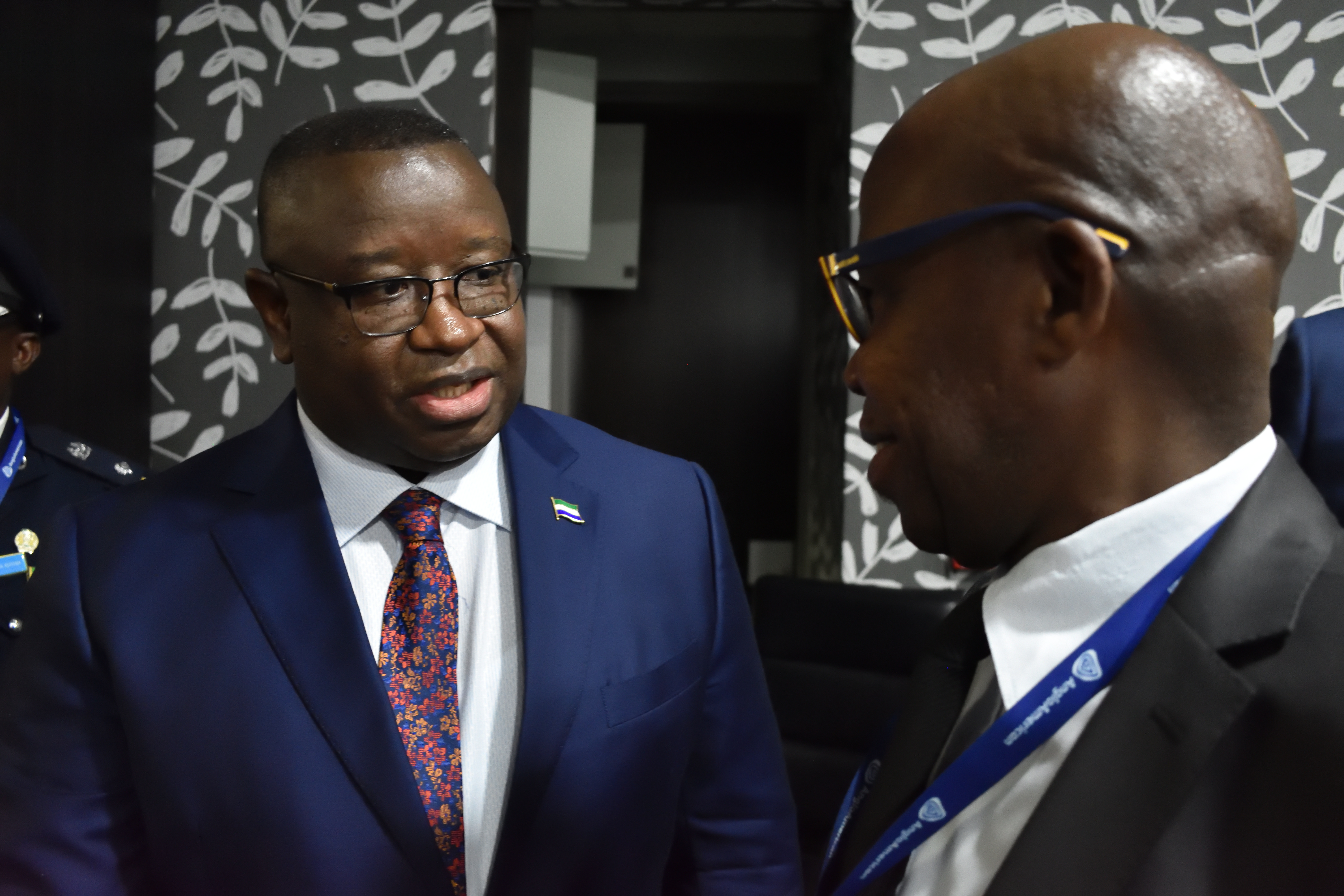
At a meeting on 5 February at the Mining Indaba, Cape Town, with the President of Sierra Leone, Julius Maada Bio, the Government of South Africa, the Public Investment Corporation (PIC), the NUM as labour representatives, the South African Mining Development Association and other stakeholders, it was discussed that opportunities existed for expanding trade in minerals and other manufactured products between the countries.

Currently the countries trade in machinery, iron and steel products, electrical equipment, rubber, plastic, railway equipment, mineral fuels and other products. Sierra Leone’s mineral resources include diamonds, bauxite, gold and iron.

According to the Trade Law Centre, in 2018 37 per cent of Sierra Leone’s intra-Africa imports were from South Africa. The countries have also signed the African Continental Free Trade Area which seeks to integrate regional economic communities that includes the Economic Community of West African States and the Southern Africa Development Community to which the countries belong.

President Maada Bio said:

“Sierra Leone is coming from a situation of war and corruption. I inherited a government on the brink of collapse from Ebola and war. We need to promote trade amongst African countries, and have done a survey, collected data, developed a strategic plan, and identified strategic mineral resources. We are also establishing a sovereign wealth fund for human capital development. Foreign direct investment must not be the only source of funds for African countries.”

Sierra Leone President, Julius Maada Bio, speaks to NUM President Joseph Montisetse

Joseph Montisetse president of the NUM said:

“Trade agreements between African countries should include workers’ interests. Workers create wealth through their labour in the mines, and governments should work with trade unions. Further, laws should promote social dialogue and education should align to Industry 4.0 and cater for social needs.”

He added that the NUM is prepared to work in solidarity with unions in Sierra Leone and gave the union’s Mineworkers Investment Trust’s bursary scheme as a useful example of what unions can do to improve workers welfare.

Bridgette Motsepe Radebe, ambassador of the Pan African Parliament, facilitated the meeting and stressed that trade agreements can benefit from the inclusion of policies like South Africa’s Mineral and Petroleum Resources Development Act’s requirements on social labour plans that benefited mining communities.

The PIC, whose funds are mainly from pensions, is interested in investing in Sierra Leone, has assets valued at ZAR 2.3 trillion (US $1.6 billion).