Lesotho garment factory fires workers for demanding payment

The workers were fired last week after gathering to ask the company why a payment of 800 maLoti (US $46) from the government had been delayed. Workers believe the company deliberately delayed the payment. The company accused them of taking wildcat strike action and fired 253 workers.

When the workers asked for their severance packages on Friday last week, the company rehired them. Bull said the workers would be treated as new employees, losing all their accrued benefits, including their packages. They would also need to go through a three-month probation period at a significantly reduced wage. Severance packages are linked to wages and years of service, and represent a significant asset to workers. 

The workers are represented by IndustriALL Global Union affiliate the Independent Democratic Union of Lesotho (IDUL). After attempting to negotiate with the company, the union met with the labour ministry in an attempt to find a solution. However, the company did not cooperate. The unions escalated the case to the DDPR conciliation tribunal, but a backlog at the tribunal means the situation will not be resolved soon.

The union also raised the issue with a government sector development committee, who have summoned a company representative. The situation is complicated by the fact that factory owner is based in South Africa, and is unable to travel to Lesotho because of Covid-19 restrictions.

The union is concerned that the company has secret plans to close the Lesotho factory and move the operation to South Africa. By firing the workers, they are attempted to reduce their liability for severance packages which workers have earned over many years of service.

The Post newspaper reports that ever since the government of Lesotho introduced a minimum wage for the sector of M 2,020 (US $117) per month two years ago, companies have attempted to fire and rehire workers to reduce the cost of severance packages. A Bull worker told the paper,

“I can see through their trick and I will never accept to be cheated like that”.

IndustriALL regional secretary Paule Ndessomin said:

“Bull Clothing has played a dirty trick on its loyal workforce. By delaying the government payment, they provoked a reaction from the workforce. They used this reaction to accuse workers of taking wildcat strike action. Bull then fired them, stripped them of their benefits, and rehired them.

“This is a dishonest manouever engineered to reduce the company’s liability to its workers. We will not accept this, and we will fight until their benefits are restored.”

Bull Clothing produces wholesale workwear, primarily for the South African market.
Covid-19 has made workers’ health and safety a priority in Mozambique

These are some of the issues that were discussed during a virtual workshop on health and safety under Covid-19, held on 11 August. Leaders and shop stewards from IndustriALL Global Union affiliate SINTIME participated in the meeting. SINTIME organizes workers in the mining and base metals sector in Mozambique, including at South32 – a demerged mining and metals multinational created in 2014 by BHP Billiton.

The workshop emphasized the importance of International Labour Organization Convention 176 on health and safety in the mines, the right to refuse dangerous work, and how unions can use collective bargaining agreements to deal with Covid-19 at the workplace.

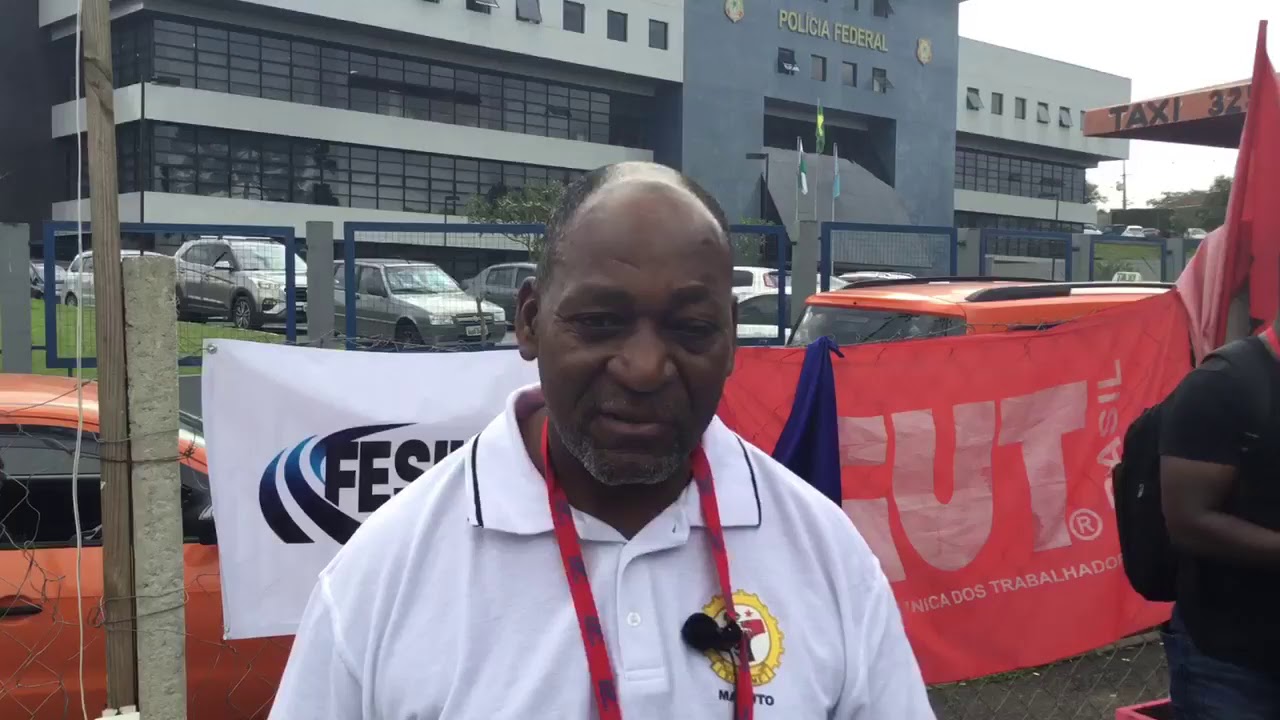
Americo Pedro Macamo

Americo Pedro Macamo, SINTIME general secretary said:

“Workers are heeding the calls and adhering to government regulations on the state of emergency and production is at one third capacity. The union has successfully negotiated with companies not to dismiss workers and there have been no retrenchments or job losses.”

Brian Kohler, IndustriALL director for health and safety said:

“Unions should continue demanding workers’ rights to occupational health and safety through full knowledge of hazards and how to work safely. Additionally, workers demand the right to refuse or shut down unsafe work without fear of discipline or discharge; and to participate in the development and implementation of all health and safety policies, programmes, procedures, hazard and risk assessments, accident and incident investigations, workplace inspections and audits. These rights must be fought for.”

Further, the workshop concurred on the importance of knowing some of the ways in which multinational mining and commodity companies like BHP organize their businesses. For instance, knowledge of the global value chain approach is critical as it shows linkages to different production sectors in which multinational companies are involved such as oil and gas, fertilizer manufacturing and commodity trading. Trade unions must know how low-cost and long-term assets models exploit workers through precarious working conditions of short contracts, low pay, and dangerous work.

With BHP Billiton Holdings having demerged South32 in 2014, it was recommended that the IndustriALL BHP Billiton network should consider including the company in its campaign activities to consider BHP’s environmental, social and governance legacies that still remain with South32.

South32 owns 47.1 per cent of Mozal Aluminium, with other shareholders Mitsubishi Corporation Metals Holding with 25 per cent, Industrial Development Corporation South Africa 24 per cent, and the government of Mozambique 3.9 per cent.

Glen Mpufane, IndustriALL mining director said:

“Knowing the value chain dynamics allow unions to engage more effectively on health and safety and Covid-19 protocols through sharing of joint strategies and campaigns. For example, the BHP Billiton network brings together workers solidarity from Latin America, Southern Africa, and Australia. The formation of a South32 global network seems a very practical approach to dealing with the challenges workers experience across South32’s operations globally where violations occur.”

Image credit: Mozal Aluminium, South32

VW neglected Covid-19 health and safety protocols, says union

On 17 July, workers at the plant exercised their right to withdraw from an unsafe workplace as granted by the Occupational Safety and Health Act after 120 workers tested positive for the coronavirus.

An investigation by the department of employment and labour confirmed that the auto company had violated the return to work regulations.

The union disputes the claim by VW that the workers were infected in the community and not at work. NUMSA says workers' health and safety was further compromised by VW’s “irrational and unfair policy” that workers who get Covid-19 through community transmission are not entitled to special sick leave, and periods of isolation. Instead the quarantine days are taken off the normal annual leave.

Fourteen shop stewards were suspended for refusing to work in an unsafe workplace. NUMSA has negotiated the lifting of their suspension, and says VW must stop threatening workers for exercising their rights. Instead the company should deal with the workers’ demands for a safer workplace.

The Volkswagen global works council has raised the issue with the headquarters of the company, and negotiations are now underway to resolve the issue.

Irvin Jim, NUMSA general secretary says:

 “VW insulated its managers and office staff from Covid-19 by allowing them to work from home, whilst ordinary workers were required to return to work in May 2020 without complying with the 50 per cent stipulation in the regulations.

“Morning and afternoon shifts continued to operate at full capacity, thereby not only transgressing the regulations, but also forcing ordinary workers to work in unsafe circumstances where social distancing is impossible. Not surprisingly, from an initial two confirmed cases, the infection rate amongst workers increased rapidly.”

Paule France Ndessomin, IndustriALL regional secretary for Sub Saharan Africa says:

“Social distancing is a challenge in the automotive plants, and this means companies like VW should carefully follow the regulations as stipulated in the return to work controls in order to minimize the spread of the coronavirus.”

With the Covid-19 pandemic spreading, South Africa’s national department of health said on 11 August the Eastern Cape had 82,715 confirmed cases, 2,286 deaths, and 13,478 recoveries.

However, workers welcomed VW’s donation of a disused vehicle parts warehouse and ZAR 25 million (US$1,4 million) for use as a Covid-19 field hospital in Port Elizabeth saying it is a “good gesture” that will help the public. The field hospital, which is also supported by the German government, will have a capacity of 3,300 beds that will help to ease the pressure on public hospitals that are running out of beds due to the pandemic.

Union busting at Shints garments in Ethiopia condemned

The Industrial Federation of Textile Leather and Garment Workers Trade Union (IFTLGWTU), affiliated to IndustriALL Global Union, says the management of the garment manufacturer that exports outdoor clothing and sportswear under the US trade policy the African Growth and Opportunity Act (AGOA), is discouraging workers from joining the union.

Shints, which employs 4,414 workers at Bole Lemi, has also stopped deducting union dues from wages. Efforts to meet the management have been unsuccessful as they are resistant to resolving the issues raised by the union. According to the IFTLGWTU, Shints falsely claims that they are the only company in the industrial park that allows unions to recruit and organize – yet their actions show otherwise.


The union is worried that the anti-union campaign is responsible for a loss of membership, which dropped from 3,800 to 2,500. Further, it is raising concerns on health and safety, including Covid-19 prevention measures at the factory, after 60 workers, presently in quarantine, tested positive for the coronavirus.

Angesome Geberyohannes, the president of the IFTLGWTU, is dismayed by what is happening. He says:

“Around mid-2019 things began to change for the worst as the friendly environment was replaced by hostility and suppression of union and workers’ rights. Some vibrant union leaders were forced to resign from union positions, and it is now difficult to replace them because meetings are prohibited by the management. This is weakening the union. On Covid-19, the company must follow strict adherence to prevent the spread in the factory.”

Valter Sanches, IndustriALL general secretary, wrote to the CEO of the Korean-headquartered parent company, Shin Textile Solutions, condemning the union-busting.

He says:

“It is unacceptable that management at Shints are violating workers’ rights that are protected by the Ethiopian constitution and labour laws. These rights are also protected by International Labour Organization Convention 87 on freedom of association and protection of the right to organize, and Convention 98 on the right to organize and collective bargaining. We call upon the management to stop this push back and allow the union to operate as before.”

Gas is the future for the Nigerian economy, say unions

The Federal Government of Nigeria announced on 30 June that the construction of the 614km gas pipeline had begun.

The National Union of Petroleum and Natural Gas Workers (NUPENG) and the Petroleum and Natural Gas Senior Staff Association (PENGASSAN), both affiliated to IndustriALL Global Union, see the development as an opportunity to create decent jobs and reduce the high levels of unemployment. According to the country’s National Bureau of Statistics, unemployment is over 23 per cent or 21 million unemployed, and underemployment is 20.1 per cent or 18 million. The underemployed are those who work less than 40 hours a week.

The government and the state-owned enterprise, the Nigeria National Petroleum Corporation, said the pipeline will provide gas for power generation and stimulate the creation of new industries in the towns of Kogi, Niger, Kaduna, and Abuja. It is hoped that the new industries will create thousands of local jobs, transfer technology and promote local manufacturing. The pipeline will also benefit existing industries that rely on gas.

The construction is being carried out as part of China’s new Silk Road, where energy investments supported by China’s Belt and Road Initiative (BRI), which Nigeria joined in 2019. Through this initiative, the Bank of China and Sinosure (China Export Credit Agency) will finance the pipeline by $2.8 billion. Chinese construction and engineering companies are contracted, and the Nigerian partner is Oilserve, an oil and gas company.

Nigeria’s current production of 7,000 megawatts falls short of the country’s electricity demands for domestic and industrial use. It is hoped that the pipeline will close the gap by adding 3,600 megawatts to the national grid. Upon completion of the project, 2.2 billion cubic feet per day of gas will be produced according to the government.

The pipeline will join the Trans-Saharan gas pipeline which will export the natural gas to Europe. With Nigeria’s oil reserves expected to last three or four decades, the huge gas deposits allow for economic diversity.

Lumumba Ogbawa, the general secretary of PENGASSAN says:

“We welcome this development. Gas is the future of Nigeria, and developmental efforts like these from the government are appreciated. The 600 km pipeline from Ajaokuta to Kano will run through several communities – creating jobs along the way during the construction phase. This is the diversification of the economy that we have been clamouring for. It is a timely strategic development.”

Diana Junquera Curiel, IndustriALL director for energy says:

“Natural gas will be the main energy source in the transition from fossil fuels to green energies. It has the potential to develop economies and improve the livelihoods of workers and communities through decent jobs. It is also an important source of energy for households and factories. We hope this gas pipeline will meet the expectations.”

Picture: A pipeline being fabricated on Snake Island, Lagos. Photo CC by Alex Aghomi.

Mauritian employers use Covid-19 to push back against labour laws

Mauritian unions, including IndustriALL affiliate the Confederation of Workers in the Public and Private Sectors (CTSP), celebrated new labour law amendments as an important win after 16 years of sustained pressure on government. The new laws were a big step forwards in protecting workers in all industries, including migrant and precarious workers.

But shortly after the new laws were passed, the Covid-19 global pandemic forced the country into confinement. The labour law amendments would have been a tremendous benefit to workers during the pandemic – but employers were quick to lobby government into going backwards.

“The CTSP sincerely believed that with Covid-19 we could never go back to business as usual and everybody without exception will have a change of heart and truly understand that we have to put our heads together and push for a new normal.

“Employers from the biggest companies in Mauritius used this time to lobby Government so that the law gained with so much effort be changed to their own advantage,”

said Reeaz Chutto, CTSP president.

In May 2020, the government amended clauses of the new Workers’ Rights Act to benefit employers. Trade unions fought hard to keep as much of the original law as possible, but only managed to block one of the amendments.

The provision that the unions managed to keep is the Portable Severance Fund, which protects workers who are laid off, including precarious workers. All employers have to contribute to the fund for each worker, regardless of contract type. Workers who lose their jobs are able to draw from the fund.

The Prime Minister, Pravin Jugnauth, told the unions that the amendments would be returned to workers by 2024. Trade unions made it clear that they would not sit idly and wait: they will continue their fight to have all of the amendments restored to benefit workers.

The CTSP has seen union membership increase since the pandemic. Employers are on the offensive, using tactics to intimidate and threaten workers, and undermine their conditions. Workers are seeking union support to keep their previous working conditions.

CTSP has recruited more than 250 migrant workers from the textile and garment, seafood, and construction sectors. These migrant workers are mostly from Madgascar, India and Bangladesh.

“Many migrant workers have not received their salaries for over three months and the CTSP is currently in negotiation with the Minister of Labour to have a special redeployment desk for them.  We are also advocating for a One Stop Shop office for their voices to be heard so that they do not have to run to many ministries and departmenst to raise their issues,”

said Jane Ragoo, CTSP general secretary.

“IndustriALL congratulates the CTSP for their resilience in these difficult times. The union fought hard to achieve this legislation. However, the government has now, under pressure from employers, taken unfortunate steps backwards. Unions are seeing increased membership because they defend workers. This is the time where workers see the value of being part of a fighting union”

said IndustriALL general secretary Valter Sanches.

Covid-19 union solidarity from Canada to Madagascar

With Covid-19 affecting livelihoods of farming and fishing communities in Madagascar, IndustriALL Global Union affiliated unions are working together to respond. The SHF was created by IndustriALL affiliate, the United Steelworkers (USW), and is funded in Canada by individual union member contributions.

The objective of the project is to reach 600 households and benefit over 2,100 people from the farming and fishing communities as well as the informal sector around QMM operations in Fort Dauphin.

The SHF is funding the project with CAN$18,800, and SVS and SEKRIMA will conduct activities in the communities of Andrakaraka and Amposinahampoina. Activities will include Covid-19 awareness campaigns, distribution of masks, soap, and setting up of water points in every home, and providing food baskets for the most vulnerable.

Paule France Ndessomin, IndustriALL regional secretary for Sub Saharan Africa, says:

“Covid-19 is a global pandemic and this requires us to be responsive to local contexts. It is commendable that the SHF, SVS and SEKRIMA are joining forces for Covid-19 prevention in communities. This is a reminder that trade unions represent workers who live in communities, and that it is in their interests to ensure that the spread of the coronavirus is stopped.”

Ken Neumann, SHF president and Canadian National Director for the USW, says:

“Solidarity means that we, as trade unionists, have to be concerned with the needs of the vulnerable in the community, and to respond when we can. The pandemic threatens to further impoverish already poor communities in Fort Dauphin near Rio Tinto’s QMM mine.

"Our union members are employed by the same global mining company in Canada, and we are pleased to be able to support the community outreach of our partner unions.”

The World Bank estimates that poverty will increase by 23 per cent in Sub Saharan Africa because of Covid-19. Regulations to control the disease introduced by most countries including Madagascar have led to the contractions of economies by 30 per cent and increased the number of those living in poverty.

With Covid-19 cases picking up, it is feared that the region will be the worst affected because of inadequate and poorly equipped health care facilities that are operate with limited resources.

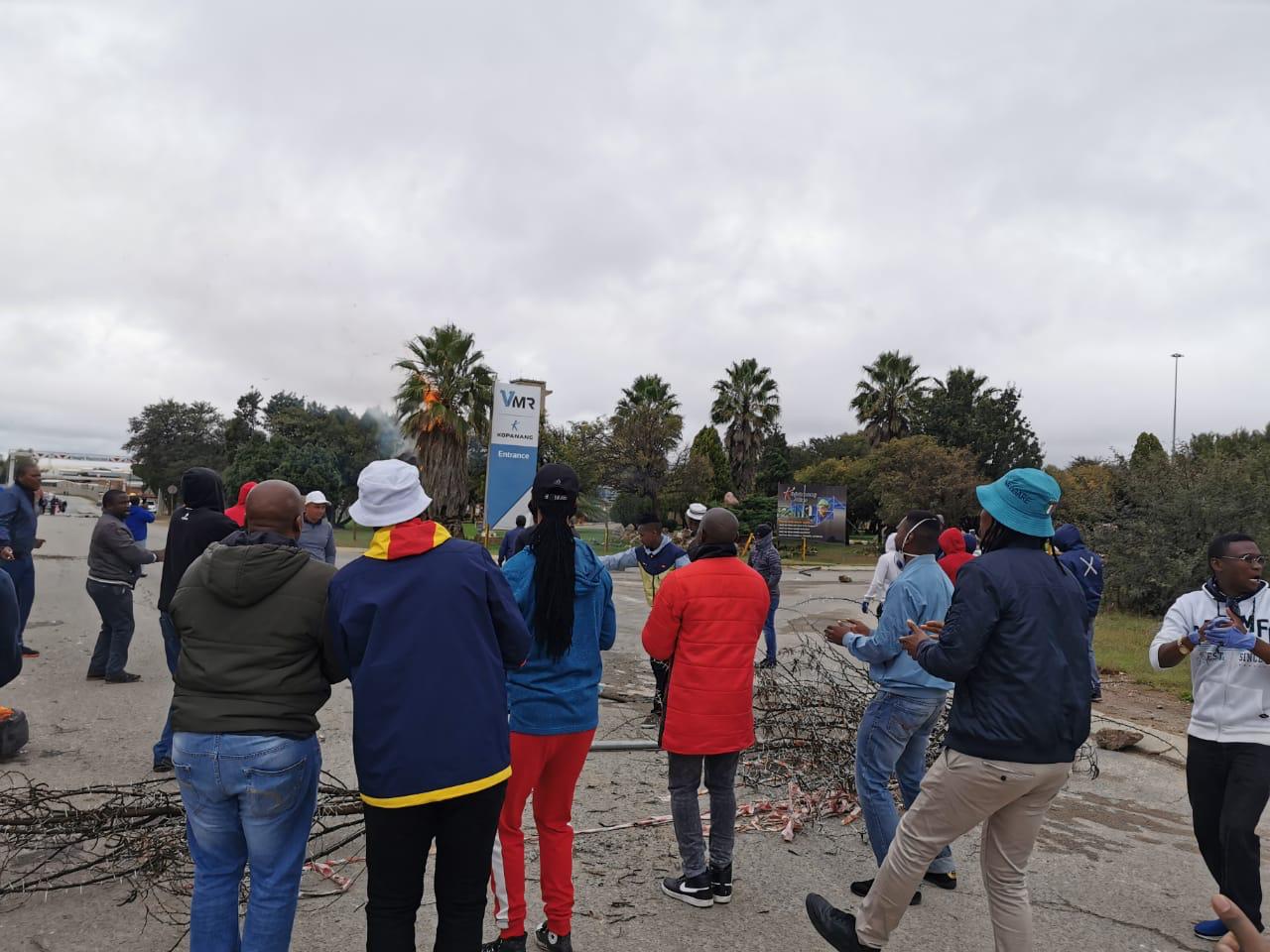
Workers protest unpaid wages and retrenchments at South African gold mines

The workers, who include members of IndustriALL Global Union affiliates the National Union of Mineworkers (NUM) and the National Union of Metalworkers of South Africa, have been picketing since April for the payment of wages and for the retrenchments to be stopped.

Picketing worker, Junior Kgoedi, from Kopanang mine says:

“If the retrenchments were made during the lockdown; why can’t we protest during the lockdown? Why did they decide to retrench during our absence? They took advantage because most workers had gone home to other provinces.”

1,500 migrant workers from Botswana, Eswatini, Lesotho, and Mozambique working at the operations, have not been paid since South Africa went into lockdown in March. The workers are unable to travel to their home countries because of closed borders. A further 146 local workers are also unpaid.


Realeboha Majara, from Lesotho, has worked at Kopanang mine for 30 years, from his first job of maintaining pipes. His past positions are locomotive operator, driller, supervisor, team leader, and miner before becoming a shift boss. He is the NUM branch chairperson at the mine and says the situation is dire for the migrant workers.

“We are demanding the immediate payment of the wages. Without income workers are struggling and surviving on handouts from friends. Although workers qualify for Unemployment Insurance Benefits under the Covid-19 Temporary Employee Relief Scheme, they are yet to be paid.”

NUM is challenging the retrenchments in court and demanding VMR to respect existing collective bargaining agreements that have been signed with unions. The issues are also before the Commission for Conciliation, Mediation and Arbitration.

Joseph Montisetse, NUM president says:

“We are appealing to the department of mineral resources to reject the irregular retrenchment notices that were issued without due process as per labour laws.”

Glen Mpufane, IndustriALL director for mining says:

“Mining companies must consult unions on retrenchments and mine closures. Covid-19 is not an excuse to trample on workers’ rights and VMR must adhere to fair labour practices.”

Village Main Reef (VMR), owner of the mines and plant, is part of the Hong Kong-based Heaven-Sent Gold Group. VMR bought the operations as going concerns from AngloGold Ashanti in 2017.

Wage discrimination and corruption at Medis Dakar in Senegal

The unions say that the financial difficulties the company is facing are due to mismanagement and corruption. In a memorandum to the Medis Dakar management, which was also sent to government ministries of health, industry, and labour, the unions say it has become routine for the company to declare losses of billions of francs every year and announce that it is close to bankruptcy.
 
According to the union, which organizes 116 of the company’s 316 workers, the hope that came when the company was bought by the Medis Group from Winthrop Pharma Senegal in 2017 has vanished.
 
The unions wrote:

“The arrival of the Medis Group seen as a new beginning gave workers hope. However, this was for a short while as workers quickly became disillusioned as the financial situation worsened. The managers said this was caused by cash shortages, inadequate raw materials and packaging items and unexplained technical problems.”

 
The unions were not convinced and carried out their own investigations, which found some financial misappropriations that included overcharging for vehicle maintenance and excessive use of fuel by the management, payment of bonuses to some workers while excluding others, some unexplained deductions on pay slips, and wage differences for workers doing the same work.
 
To get the company out of the difficulties the unions are recommending improvements in financial and human resources management. This will allow workers to focus on their work priorities and contribute to the company's success. The workers also reaffirm their willingness to work with the Medis teams to sustain and develop the workplace and help in resolving technical and financial problems.
 
Paule France Ndessomin, IndustriALL regional secretary for Sub Sahara Africa says:

“Medis Dakar must engage in fair labour practices according to Senegal’s labour laws. The company must practice equity by paying workers doing work of equal value the same wages and must meet with unions to explain some management decisions that are unfair to the workers. Dialogue between Medis Dakar and the unions is key to building better industrial relations at the company.”

Union protests lockout at Nycil chemical plant in Nigeria

The picketing workers have vowed to continue assembling at the gates until they are opened, and they can resume work. The workers are members of the National Union of Chemical Footwear Rubber Leather And Non-Metallic Products Employees (NUCFRLANMPE), affiliated to IndustriALL Global Union.

Although the company has not stated the reasons for the lock-out, NUCFRLANMPE suspect that they want to retrench the workers. The union is demanding dialogue with the company, saying that the company cannot make unilateral decisions without meeting with the union.

The union says the situation has been worsened by the “anti-worker attitude” of the owner of Nycil, Adetola Adebayo, who has consistently refused to engage with the union. Industrial relations worsened at the company when it was bought by the current owner in 2014, and NUCFRLANMPE’s efforts towards dialogue with the employer have been unsuccessful.

The ministry of labour and employment has been approached to intervene to end the lock-out at Nycil – a company that workers describe as “one of the worst employers in Nigeria”.

Tunde Olagoke, NUCFRLANMPE deputy national secretary said:

“We received information that Nycil wants to embark on a redundancy exercise. The union is rejecting this because Covid-19 is not the making of anyone. We need a collective strategy to manage the situation without job losses of the toiling workers.”

Workers disagree that Covid-19 should be used as an excuse at Nycil where operations were not affected by the pandemic.
 
Paule France Ndessomin, IndustriALL regional secretary for Sub Saharan Africa said:

“It is unacceptable for Nycil to lock-out workers. The management must meet with the union to address the issues. They cannot make unilateral decisions as this violates Nigerian labour laws, destroys trust and is unfair to the workers.”

Nycil Nigeria is a chemical manufacturing company specializing in the manufacture of synthetic polymers, acrylic polymers, polyester resins, and homo polymers emulsion among other products. These are used in the making of paints, textiles, packaging, and stationery.