Ethiopian unions campaign for Covid-19 awareness

To get the message across to as many workers as possible, the union is publicizing the campaign through mainstream media, including television stations run by the Ethiopian Broadcasting Corporation and Walta Broadcasting. Radio stations that include Awash FM, and the Fortune Weekly newspaper are also publicizing the campaign.

Angesome Yohannes, IFTLGWTU president says:

“Covid-19 is a global pandemic that is spreading at an alarming rate causing huge social and economic disruptions.  As a union, this is the time for joint efforts to minimize the impact. When workers get sick, the consequences for them and their families are dire as the pandemic increases job insecurity and slows down economies.”

The Confederation of Ethiopian Trade Unions, to which IFTLGWTU is a member, signed a Covid-19 workplace response protocol with the government and employers in March. The protocol outlines how factories should respond to the pandemic. IFTLGWU has set up health and safety committees at factories. However, the union is concerned by the slow pace at which some factories are adhering to health and safety standards to stop Covid-19.

Like most garment producing countries, Ethiopia has been affected by low demand due to lockdowns in most European countries and the USA where the garments are exported.

Paule France Ndessomin, IndustriALL regional secretary for Sub Saharan Africa says:

“We applaud the efforts by unions in Ethiopia to curb the spread of COVID-19. The pandemic will only be overcome through collective efforts. For this to happen, unions, employers and government must work together.”

Ethiopia introduced the World Health Organization recommended Covid-19 protocols but did not lockdown the country. The government says its approach is based on the country’s context. Over 2,500 cases of Covid-19 have been reported with 35 deaths.

Workers paid allowance after strike at DRC mine

The strike led to negotiations with the mine management that then led to the payment of a special allowance of US$600 to the 6,000 mineworkers confined to the mine site during the quarantine. The company has so far paid US$500 to each of the workers. The allowance workers also want to be paid for the overtime that they worked during this period.

Work continued at the mine during the quarantine because mining is defined as an essential service under Congolese law.

IndustriALL Global Union affiliates Secrétariat des Syndicats de IndustriALL (CSC) and Travailleurs Unis des Mines, Métallurgies, Energie, Chimie et Industries Connexes (TUMEC) are some of the unions that organize the over 15,000 workers employed at the mine.
 
Glen Mpufane, IndustriALL director for mining says:

“We support unions for continuing to fight for better working conditions and benefits at TFM. Even in the midst of Covid-19 mineworkers are pushing back and fighting mine bosses’ attempts to undermine their rights and benefits.

"Essential service status is not a code for exploitation under the guise of Covid-19. Mining companies should make efforts to cushion mineworkers’ benefits.”

China Molybdenum, is listed on the Shanghai Stock Exchange, owns 80 per cent of the Tenke Fungurume Mining (TFM) shares, with state-owned Gecamines having the remainder. The TFM site holds one the largest cobalt reserves in the world.
 

IndustriALL affiliates are working with other unions to organize more workers at the mine. One of the organizing strategies that the unions are using is to campaign for job security, and better working conditions. About 12,000 workers at the mine are precarious workers with short contracts and the unions want them to be given permanent employment.
 
The unions are demanding transport allowances to enable the mineworkers to regularly visit their families who live far away from the mine. The unions also want the company to pay medical benefits to workers and their families.

 
With the first Covid-19 cases reported in March, the DRC has over 4,000 reported cases, with 96 deaths.

Union in Tanzania stops attempt to cut wages

Over 90 per cent of the workers at the sports jersey factory in Morogoro’s export processing zone are women. Monthly wages range from 120,000-180 000 Tanzanian Shillings (US$52-78).

The company said the closure, effective from 24 May to 6 September, was caused by cancelled US orders  due to Covid-19.

IndustriALL Global Union affiliate, Tanzania Union of Industrial and Commercial Workers (TUICO), challenged the company’s decision that was made without consulting the union.

On 12 May, TUICO filed a dispute with the Commission for Mediation and Arbitration (CMA) Morogoro Region against the employer for not involving the union in the matter, and for violating  workers’ rights and interests of the union’s 819 members and other workers at the factory.

The employer argued that it did not consult TUICO because the union did not have a majority at the factory.

After two weeks, TUICO won the dispute at the CMA and the employer agreed to pay 70 per cent for the period when the factory will be closed.

The victory at the CMA saw TUICO gaining 229 new members at the factory, thus making the union reach a majority of over 50 per cent. With this majority, the union is now preparing for collective bargaining agreement negotiations when the factory reopens. The union also intends to organize the remaining workers as well as introduce programmes on health and safety.

Margaret Ndagile, TUICO’s head of sector services says:

“Workers at Mazava fabrics now see the union as one that fights for their rights. The union continues to build trust and confidence among the workers who now realise the power of solidarity. We will continue emphasizing to our members that solidarity remains one of our key strategies.”

Paule France Ndessomin, IndustriALL regional secretary for Sub Saharan Africa, says:

“The cost of the Covid-19 pandemic should not be paid by workers alone. This is a crisis which calls for negotiations between employers and unions. We commend TUICO for going for conciliation and mediation to protect workers’ rights and wages.”

Union intervenes to release mineworkers from Covid-19 quarantine camp

While the mine said the quarantine is part of the efforts to stop the spread of the coronavirus among the workers, MUZ says that workers should not be forced to stay in the camp away from their families.

According to the union, the living conditions that include dormitories and partly open toilets infringe on privacy and are an insult to workers dignity. The workers also complained about a poor diet.


MUZ met with the mine management and reached an agreement that workers be allowed to go home. The mine would provide transport to and from work for different shifts.
 
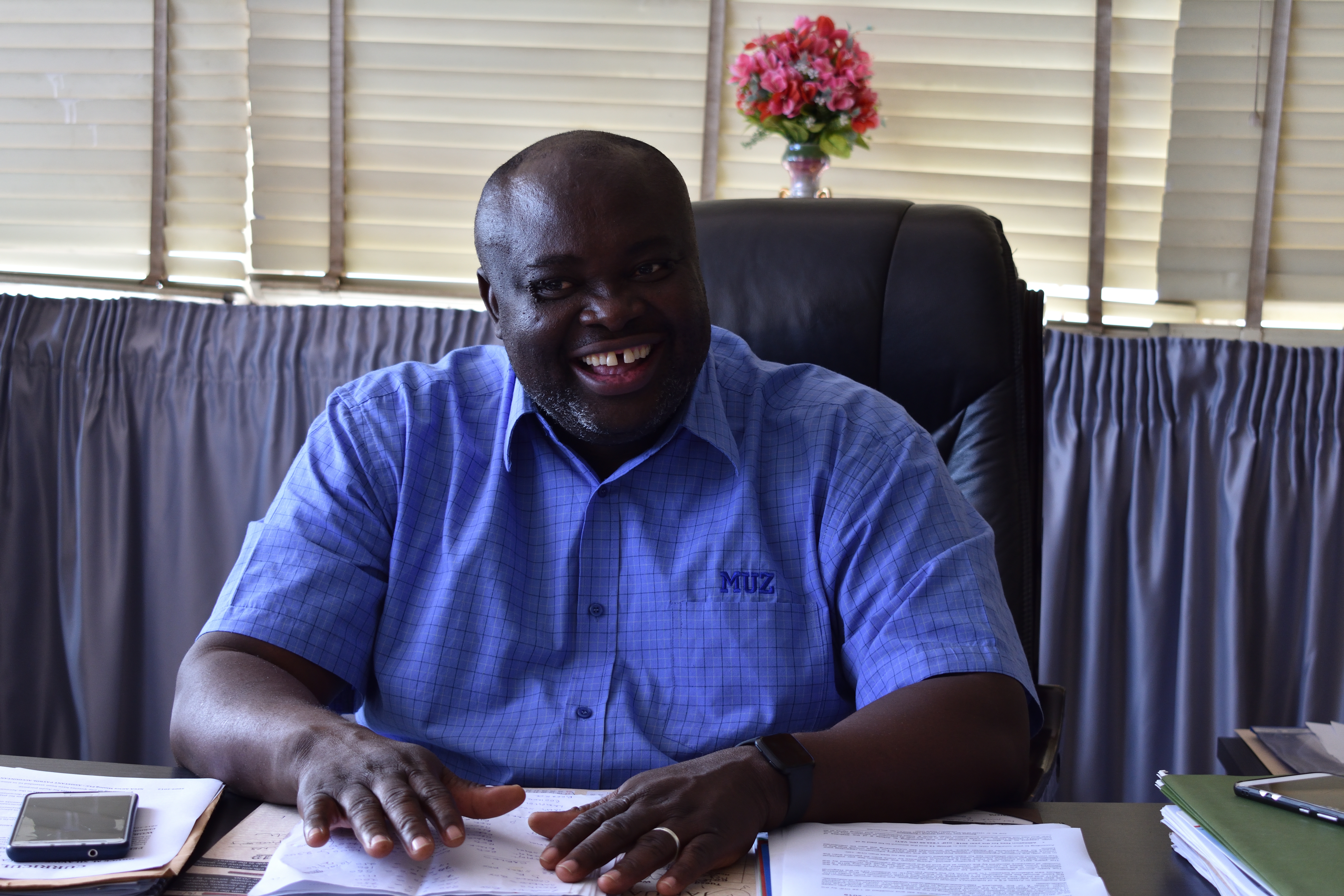
Joseph Chewe, MUZ president, said during a meeting with the workers:

“As a union it is our duty to speak for the miners against any mistreatment. We applaud your unity in rejecting the terrible living conditions that you were put under by the management and have told the mine to stop forcing workers to live in the camp.”

Despite the agreement, the management distributed “quarantine application forms” to entice workers to stay in the camp. Included on the form are promises to provide food and an allowance of K1,500 (US$82) to those workers who agree to continue living in the camp.

Some clauses on the form that workers are supposed to sign disregard workers’ rights that are protected by the law including from summary dismissals.

For example, one section reads: “I understand I cannot leave camp or withdraw from the camp without management approval as this will amount to summary dismissal.”

Glen Mpufane IndustriALL mining director, says:

“Mineworkers should not be forced under any circumstances to live in such deplorable conditions. Mining companies have a responsibility to respect human and workers’ rights, and this includes providing proper housing and sanitation facilities.”

Of the more than 2,500 workers employed at Chambishi mine, 1,450 are MUZ members.
 
The mine and copper smelter are jointly owned by the China Non-ferrous Metals Company Limited (85 per cent) and the Zambia Consolidated Copper Mines Limited (15 per cent).

Global dialogue with Glencore addresses Southern African Coronavirus crisis

Mineworkers in South Africa and Zambia faced job and wage losses as a result of disruptions caused to mining operations by coronavirus shutdowns. IndustriALL Global Union faciliated dialogue between Glencore and mineworkers’ unions in the two countries, leading to negotiations that resulted in constructive solutions.

Christine Olivier

Christine Olivier, international officer with the National Union of Metalworkers of South Africa (NUMSA), said:

“The Covid-19 crisis is not an employer or worker’s fault. Therefore, there is need for the two parties to sit down and negotiate for an outcome that works for all. This is what happened when we had meetings with the Glencore management when the lockdown began.”

In the negotiations, NUMSA stressed the employers’ social and community responsibilities during the coronavirus lockdowns. Workers support up to eight members of their extended families, and failing to pay wages would starve families.

A 2019 meeting with IndustriALL, Glencore, and Sub Saharan Africa mining unions

An agreement was reached in which the employer agreed to pay workers their wages, housing allowance and medical aid during the lockdown. As mines operated at 50 per cent capacity because of Covid-19 restrictions, workers were paid shift bonuses and transport costs only when they went to work.

An agreement reached with the government of Zambia, with support from the Mineworkers Union of Zambia (MUZ), saw 5,672 workers at Glencore-owned Mopani mine going back to work. However, the union is fighting for the rehiring of over 5,000 contract workers whose contracts were terminated due to Covid-19. The workers were employed by companies sub-contracted to Mopani.

Joseph Chewe

Joseph Chewe, MUZ president, in welcoming Mopani’s decision to reverse putting the mines under care and maintenance, said:

“We want to see Mopani, through Glencore, investing more money to keep the mines operational. The union will interrogate measures to reduce the cost of production and to ensure that the company is kept afloat. Job losses should be prevented during the coronavirus pandemic. Unions must be consulted, and engagement done according to the laws.”

NUMSA and MUZ are affiliated to IndustriALL. Glencore has copper, cobalt, coal, and ferroalloys mining operations in these countries.

Glen Mpufane, IndustriALL director for mining said:

“Negotiations and agreements are important in the prevailing Covid-19 pandemic which is bringing a lot of uncertainty because of disruptions to global mining value chains due to lockdowns in most countries.

"This is a global crisis that calls for amicable agreements between unions and mining companies. Governments should also engage in social dialogue, enforce international labour standards, and promote Covid-19 protocols as critical responses to the pandemic.”

Speaking today on a shareholder call ahead of the Glencore annual general meeting, Mpufane praised the success of the dialogue at the Southern African mines. He raised the desperate situation at Glencore operations in Peru and Bolivia, particularly at the Antimina mine in Peru, where hundreds of workers have been infected with Covid-19 and at least one has died. Antimina is a joint venture between Glencore and other companies, including BHP Billiton. Mpufane asked Glencore to use its influence to improve the situation.

Chairman Tony Hayward, speaking on behalf of the CEO Ivan Glasenberg, acknowledged the extent of the coronavirus crisis in Peru, and pledged to work with IndustriALL to alleviate the situation of miners.

Unions in Madagascar protest against forced leave

According to a letter sent to workers by the Ambatovy management, the technical unemployment will start in May and end in October. During this period workers will be paid 100 per cent in June, 75 per cent in July, and 50 per cent for the remaining months.
 
The company has various operations, including a mine, pipeline, production, tailings, and port. At the Ambatovy factory site in Toamasina, the company employs 3000 workers of whom 60 per cent are on forced leave for six months while 1200 workers at Moramanga mining site are in the same situation.
 
Subcontractors to Ambatovy have also put workers on forced leave. For example, KPS put 250 workers on leave for six months while Madacan’s 150 workers for three months.
 
IndustriALL Global Union affiliates Syndicalisme et Vie des Societies (SVS), Sendika Kristanina Malagasy (SEKRIMA) and Fédération des Syndicats Autonomes des Travailleurs de l’Industrie (FESATI), that organize workers at the mines, are challenging the technical unemployment as they were never consulted.
 
The country’s labour code says before a company implements technical unemployment, there must be consultation with unions. The code defines technical unemployment, allowed for up to six months, as interruption to work caused by accidents, power interruptions, disasters, shortages of raw materials, tools, and transport problems.
 
Unions doubt if the Covid-19 pandemic fits into these categories and say it is unlawful for companies to implement technical unemployment without consulting unions. Workers also have the right to decide when to take leave and not be forced by the employer.
 
Glen Mpufane, IndustriALL mining director says:

“We urge Ambatovy to avoid unfair labour practices and to adopt Covid-19 protocols that protect workers’ rights including to health and safety, job security and income protection, as is becoming the norm globally. This should be done in consultation with trade unions.”

The unions are also campaigning against the stigma that the workers who test positive to COVID-19 are facing in the communities where they live.
 
Ambatovy is a nickel and cobalt mining enterprise in Madagascar which is a partnership of three companies; Sherritt International Corporation from Canada, Sumitomo Corporation from Japan, and Korea Resources Corporation from Korea.

Returning mineworkers test positive to Covid-19 in South Africa

It is the same in other provinces as well. When platinum mines in Burgersfort in the Limpopo Province reopened after the relaxing of the Covid-19 regulations in South Africa, over 50 workers tested positive to the coronavirus confirming that community transmissions took place during the lockdown which began on 26 March.
 
When Marula Platinum Mine reopened, 19 workers tested positive to the coronavirus while Dwarsrivier mine confirmed another 30.

At Modikwa Platinum Mine, where IndustriALL Global Union affiliate, the National Union of Mineworkers (NUM), raised an alarm on the continued use of breathalyzers and biometric systems, workers have also tested positive to Covid-19.
 
Phillip Mankge, NUM North East regional secretary, says:

“The mines should have listened to the advice from the unions to implement regulations on rigorous screening and testing, and for employers to provide mineworkers with transport to work from their places of residence. The NUM is against the blanket approach that has been granted by the ministry of mineral resources and energy. Each mine should have been given a directive to put preventive measures in place first before being granted permission to open.”
 
Glen Mpufane, IndustriALL director for mining says:

“Mining companies must follow strict Covid-19 health and safety protocols in their screening and testing of workers to avoid situations where mines and mining communities become clusters of Covid-19 infections.”
 
Since the announcement of the lockdown the NUM has been fighting the no-pay-no-work practices at some mines and violations of the lockdown by others that continued operating despite the regulations prohibiting mining. The unions are also demanding payment of full wages at mines such as Kimberley Ekapa Mining where they were reduced by 33 per cent.

NUM also fought for the rights of workers when some companies, including Kangra and Zululand Anthracite Colliery in KwaZulu-Natal province and Village Main Reef in the North West Province, tried to use the lockdown to retrench workers.
 
The unions have carried out campaigns to prevent infection and exposure to the coronavirus especially for workers on treatment for tuberculosis, and those on antiretroviral drugs for HIV and AIDS. The union says these diseases are common amongst mineworkers.
 
According to statistics released by the department of health, on 24 May the country had 22,583 positive cases, 11,100 recoveries and 429 deaths.

Shell AGM fails to address union concerns

IndustriALL submitted questions to Shell ahead of its closed, online AGM on 19 May. Shell answered the questions in an online shareholder’s engagement meeting on 13 May, which was attended by IndustriALL energy director Diana Junquera Curiel.

IndustriALL submitted a question about the health and safety situation of contractors in Nigeria, after conducting extensive research and finding a number of case studies from the families of workers who have lost their lives or become disabled.

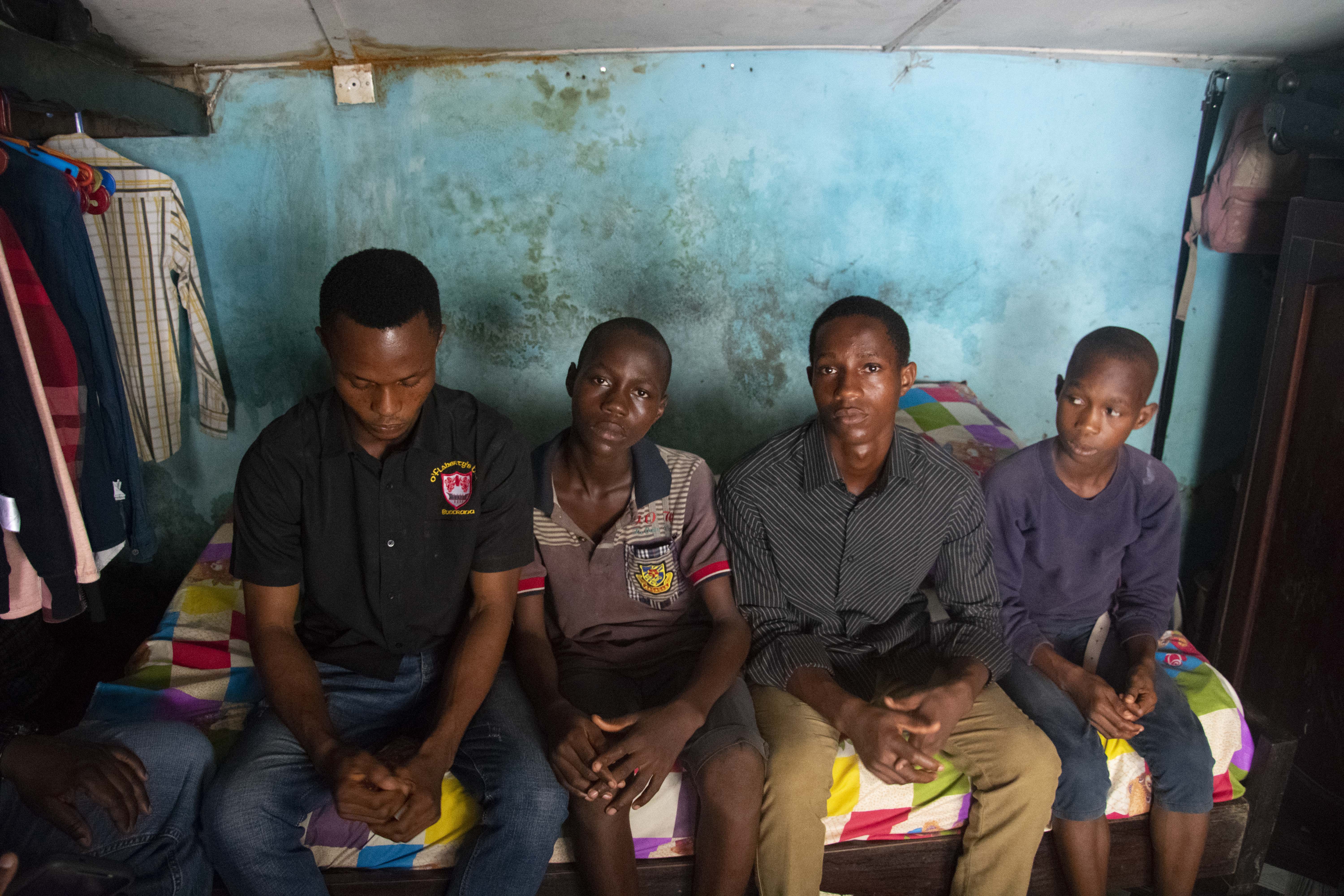
The children of a deceased Shell contract worker, visited by IndustriALL in 2018

In response, Shell CEO Ben van Beurden said that Shell “complies with local laws”, and endeavours to make “continuous performance improvements”. Contractors are “independent corporate entities”, however Shell “ensures” they comply with local law while “continually looking for ways to review” contractors. Shell denied allegations made in the question while failing to address the substance.

Shell addressed all questions in this manner. When IndustriALL raised issues of the violation of trade union and human rights in Nigeria, which are very well documented, Van Beurden replied that all allegations had been thoroughly investigated and found to be “fully unsubstantiated.” However, Shell did not consult with unions in the course of its investigations.

Junquera asked, once again, whether Shell would be willing to meet with IndustriALL so that these issues could be satisfactorily addressed. Van Beurden replied that Shell values its relations with unions, but that these are “most effective at the local level” due to country specific conditions. He made no commitment to meeting with IndustriALL.

This response is not unexpected: Shell has consistently failed to address union concerns. However, IndustriALL is mandated by its affiliated unions, who represent Shell workers globally, to seek global dialogue, and will continue to do so.

IndustriALL raised additional questions about Shell’s emissions targets and accordance with the Paris Agreement, and plans for a Just Transition for workers. Shell responded by referring to their Climate Change and Energy Transition document.

While IndustriALL commends Shell for addressing Just Transition explicitly, a number of concerns remain. The document fails to recognize the global labour movement and does not mention trade unions, fails to make firm commitments, and contains little detail about what the programme would consist of. 

“I don’t understand why Shell refuses to meet with us. What are they afraid of?” asked Junquera.

“Shell engages with many critical organizations, including a number of NGOs, who do not represent Shell stakeholders. IndustriALL Global Union represents Shell workers worldwide. We have a mandate from those workers to initiate dialogue worldwide.”

“Shell refuses. Shell claims that it is ‘more efficient’ to work with unions at local level only. But Shell’s attempts to divide workers is exactly why our unions want global dialogue.”

The full transcript of the call, including IndustriALL’s questions and Shell’s responses, is available here.

Union supports deal for small enterprises in South Africa to manufacture 14 million masks

The bargaining council accredited 388 manufacturers with a capacity to make 14 million masks that cover the nose and mouth.

Additionally, 217 were approved to make personal protective equipment and other essential products required to prevent the spread of the coronavirus.

SACTWU says the deals will assist thousands of SMMEs to survive and continue production under the harsh conditions of the Covid-19 lockdown.

SMMEs employ from 10 to 250 workers, and the recently registered ones from the townships employ at least six workers on average in their cut-make-trim operations. SMMEs are exempted from the main collective agreements but are considered as compliant companies in strategies to allow their growth. Despite SMMEs operations being highly informal, unions are organizing the workers.

SACTWU, the Department of Trade, Industry and Competition, and Business for South Africa, have partnered in setting up an online portal where individuals and companies can buy the masks.

The wearing of face masks became a requirement on 1 May as one of the preventive measures to stop the coronavirus pandemic. SACTWU is campaigning for the manufacturing of the masks using local material to save and create jobs.

The union is welcoming the announced Phase 4 of lockdown regulations for clothing manufacturing, which will help the local industry.

Andre Kriel general secretary of SACTWU says:

“It is a great boost for our struggling local manufacturing industry, and will assist tens of thousands of clothing, textile, footwear, and leather workers during this difficult period. 

"We cannot emphasize enough how important it is that we take steps now to ensure that we still have a domestic manufacturing industry after lockdown.”

Christina Hajagos-Clausen, IndustriALL textile director, says:

“It is important to allow small garment operations to grow and be part of the supply chain, and it is commendable that SACTWU is involved in building the capacity of the SMMEs. It is equally crucial that workers are involved in efforts to fight Covid-19.”

Unions fight to protect Nigeria’s oil and gas workers

IndustriALL Global Union affiliates, the Nigeria Union of Petroleum and Natural Gas Workers (NUPENG) and the Natural Gas Senior Staff Association of Nigeria (PENGASSAN) organize in the sector in Africa’s biggest oil producing country.

NUPENG president, Williams Eniredonana Akporeha, and general secretary, Afolabi Olawale, and PENGASSAN president, Ndukaku Ohaeri, and general secretary, Lumumba Okugbawa, recently raised concerns over reports from workers who fear that they may lose their jobs.

A statement from the union leaders says:

“Unions empathize with employers over the negative impact of COVID-19 on the industry, business operations and earnings. Nevertheless, we strongly feel that downsizing, arbitrary dismissals and termination of workers contracts, introducing precarious and indecent working conditions, and reducing salaries and allowances, should be avoided at all costs. This outrageous behaviour will not benefit anyone.”

Appealing to the Federal Government of Nigeria to ensure that multinational and national oil companies follow laws and regulations, the unions say they will fight unfair retrenchments.

“We condemn these moves and vow to resist them with all our might. They are unfair to the selfless and patriotic services that the Nigerian oil and gas workers provided to these companies and the nation during the highly productive years. The workers are still rendering essential services and on the frontline of the struggle against the pandemic.”

Diana Junquera Curiel, IndustriALL energy director says:

“Although Covid-19 is having an unprecedented impact on the oil and gas sector, employers should consult with unions, respect workers’ rights and adhere to the labour laws. Employers cannot make decisions that violate national and international labour standards.”

The Covid-19 pandemic has heavily impacted the oil and gas industry globally. With less mobility due to coronavirus induced lockdowns, demand has dropped and oil prices crashed. The impact is worse on Nigeria, Africa’s biggest oil producer, because oil revenues do not only fund the budget but also stabilizes the local currency, the Naira.

The country, which is a member of the Organization of Petroleum Exporting Countries (OPEC) gets revenue of around 90 per cent from oil exports and might need to revise its annual budget again because of the low prices.

Oil contributes 9 per cent to Nigeria’s Gross Domestic Product, and the government says the economy will contract by 3.4 per cent because of the lost revenue.

Multinational oil companies with operations in Nigeria include Exxon Mobil, Chevron, Equinor, Shell, Eni and Total. Local companies include the Nigerian National Petroleum Corporation (NNPC) and others.